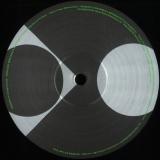
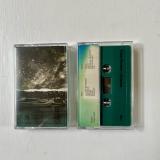
KITCHEN. LABEL is proud to present AGATE, the latest album by Japanese artist MEITEI, marking a deepening of the world he first shaped through his Kofū trilogy released between 2020 - 2023.
Named after the mineral agate, a stone formed through slow accumulation, pressure, and time, the album reflects MEITEI’s patient approach to sound. AGATE brings together extended and newly rearranged works from across the Kofū cycle alongside new compositions and passages, refining material developed through years of performance and sustained practice.
The album presents seven tracks:
HAŌ (Previously unreleased track)
SHIN-OIRAN (Remodeled from Oiran I, Kofū 2020)
SHIN-SADAYAKKO (Remodeled from Sadayakko, Kofū 2020)
SHIN-WAROSOKU (Remodeled from Wa-rōsoku, Kofū III 2023)
KYŪGEKI (Remodeled from Shinobi and Akira Kurosawa, Kofū II 2021)
SHIN-OIRAN II (Remodeled from Oiran II, Kofū 2020)
SHIN-EDOGAWARANPO (Remodeled from Edogawa Ranpo, Kofū III 2023)
Across these works, MEITEI expands the musical vocabulary first introduced in Kofū, a sound he once described as “lost Japanese mood.” While Kofū drew from fragments of folklore, theatre, ghost stories, and forgotten urban memory, it was never an act of historical reconstruction. Rather, it reflected a sensibility of the past observed from the present. With AGATE, this worldview is clarified as Shinpu, a process of discovery in which historical awareness becomes a foundation for contemporary creation rather than a constraint.
During five years of Kofū tours across Japan, Europe, and Asia, MEITEI performed this material in a wide range of spaces, from underground live houses and listening rooms to culturally significant sites. These environments influenced pacing, dynamics, and structure, shaping how the material evolved over time. AGATE is therefore not only a studio album, but the result of material refined through repeated performance.
If the Kofū albums were windows into forgotten eras, AGATE explores what lies beneath, sediment and strata formed through time and pressure. MEITEI’s approach to sound mirrors the nature of agate itself. Grains become texture. Texture becomes narrative. Voices drift through decaying layers of sound, while ancient instruments are used in non-traditional ways, forming distinctive percussive rhythms and melodies that appear and vanish without fixed resolution.
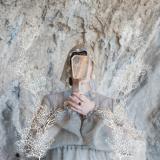
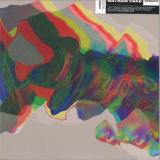
The album’s visual materials were developed under MEITEI’s direction through physical art-making processes. The cover artwork originates from a letterpress print created by Kamisoe, a Karakami atelier in Nishijin, Kyoto, using Kyo-karakami paper. The original artwork, produced through traditional woodblock techniques on handmade washi, was subsequently reproduced on print for the album edition. Kamisoe continues to reinterpret this historical Kyoto craft with a contemporary sensibility.
The title calligraphy was created by Bio Xie, whom MEITEI personally invited to participate in the project. During his performances abroad, MEITEI encountered in Taiwan a lingering atmosphere reminiscent of “Shitsunihon” — a sense of old Japanese memory that quietly endures beyond time. He was deeply drawn to Bio Xie’s distinctive use of Chinese characters, which resonated with this experience, and asked him to contribute to the visual expression of AGATE.
In parallel, MEITEI continues to reinterpret Japanese sensibility through his concept of “Shitsunihon,” presenting it as a contemporary musical language. The refined Kyoto motifs envisioned by Kamisoe and the distinctive calligraphic expression by Bio Xie intersect with MEITEI’s singular artistic direction, weaving together a newly articulated worldview.
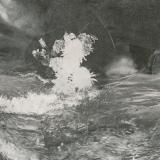
The accompanying visual imagery, including the liner photographs, was created by photographer Hiroshi Okamoto, who was also responsible for the visual direction of MEITEI’s previous work, “Sen'nyū.” It draws from MEITEI’s lived experiences of winter seas, solitary cliffs, and breaking waves. These scenes symbolize the inner conflicts of the ten years he spent living in Hiroshima, and his confrontation with solitude and the sounds he creates.
AGATE will be released on 17 April 2025 via KITCHEN. LABEL on 180g vinyl, CD, and digital formats. The album is mastered by Kelly Hibbert, known for his work with Flying Lotus, Madlib, and J Dilla.
With AGATE, MEITEI returns to the material of Kofū with greater focus and discipline, continuing an ongoing process of working forward with inherited material.

Search:this becomes us
Concert at Prades-le-Lez marks the origins of the Intercommunal Free Dance Music Orchestra. In 1974, François Tusques and his companions (Michel Marre, Jo Maka, Adolf Winkler and Guem), in the spirit of Don Cherry or Chris McGregor, playfully dismantle all borders and all styles of creative music.
On this second volume, the Intercommunal builds unprecedented soundscapes around a song of revolt, a dance tune, or a burst of dissonance. The journey is unforgettable, no question about it. On repeat listening, it even becomes… lunar!
“The music that we make is primarily meant to be listened to live,” warned a leaflet from the Intercommunal Free Dance Music Orchestra. This is precisely why the (restored!) reissue of the two volumes of Concert at Prades-le-Lez, recorded on January 25 and 26, 1974 by François Tusques and his comrades, is such an important event.
In 1971, after recording a series of albums that would leave a lasting mark on French jazz (Free Jazz, of course, with Michel Portal, François Jeanneau, Bernard Vitet, Beb Guérin and Charles Saudrais, but also Le Nouveau Jazz with Barney Wilen, or the solo Piano Dazibao), François Tusques founded the Intercommunal—a grouping whose very name called for the fraternization of the various communities making up the country: Our music will help, we hope, to resolve the contradictions that exist between workers be longing to different communities, by breaking down various forms of national chauvinism, and more particularly the chauvinism of certain French people toward the cultures of Third World countries… Long live the friendship between the peoples of the whole world!
Among the great records made by the Intercommunal Free Dance Music Orchestra, the two volumes of Concert at Prades-le-Lez come first, before L’Inter Communal, Vol. 4, Le Musichien, and Après la marée noire (four titles already reissued by Souffle Continu). François Tusques and his companions (Michel Marre and Jo Maka on saxophones, Adolf Winkler on trombone, and Guem on percussion) performed on January 25 and 26, 1974 at the Moulin de Prades-le-Lez, a few kilometers from Montpellier. It was thus in the southern region of Occitanie that the first echoes of this musical vision of a borderless brotherhood were recorded.
“We’re not among the Colonels,” the Intercommunal reassures us right away, performing a stride piano tune carried by African winds that the audience cannot resist for long. The energy is already striking and it never lets up throughout these two recordings, from start to finish: jazz, blues, traditional music, minimalism, even funk… The musicians of the Intercommunal have heard a lot of great music and now delight in reinventing it by mixing it all together.
“We want the song form to take its place as a weapon in the struggle against capitalist exploitation and all those who oppress us morally and materially,” declared an Intercommunal leaflet, quoting Jean-Baptiste Clément, author of the lyrics to “Le Temps des cerises.” The struggle was therefore serious—but it did not prevent François Tusques and his group from waging it in a festive spirit: each piece on Concert at Prades-le- Lez sends out a call for love and fraternity. Fifty years later, the message remains as relevant as ever—and once again, it is François Tusques who makes it heard.
Death Is Not The End collaborate with Uzbek label Maqom Soul to deliver an LP counterpart to last year's mixtape of the same title, compiling specially picked & fully licensed individual belters from the ex-soviet studios of Central Asian republics between 1978 and 1989 - incl. Uzbek, Tajik, Kurdish & Uyghur artists pulling traditional folk motifs together with pop & rock and psych elements.
"These recordings do not form a smooth or coherent history. They feel more like a sequence of discoveries made at different moments and in different circumstances. Songs and instrumental pieces that once lived inside specific contexts radio broadcasts, philharmonic programs, touring routes now sit side by side, revealing hidden connections as well as clear fractures between them.
Nasiba Abdullaeva appears here as a voice from the end of an era. Trained within a conservatory system, she worked inside the format of the Soviet pop song while filling it with melodic logic that did not come from Moscow or Leningrad. Her voice is soft and sustained, shaped by Eastern melisma, and it never functions as decoration. Even in tightly structured songs there is a sense of resistance, an effort to preserve a musical language rooted in Uzbek tradition rather than fully adapted to an all Union standard.
The ensemble Sintez, later renamed Navo, represents a different path. Beginning as a student rock group, the band was gradually absorbed into the official VIA system with all its limitations and compromises. Yet it was precisely within those boundaries that Sintez and Navo developed a recognizable sound. Electric guitars and jazz rock harmonies do not overpower the folk material but remain in tension with it. Their recordings feel like negotiations between what the musicians wanted to play and what they were allowed to perform.
The Tajik ensemble Gulshan reflects an institutional approach carried to a high professional level. Formed under television and radio structures, the group treated folk material almost as a written score. Carefully constructed arrangements, close attention to orchestration, and restrained use of pop techniques define their sound. There is less spontaneity here, but a strong sense of discipline and structure, where national melody becomes part of a carefully controlled sonic framework.
Koma Wetan occupies a very different space. Formed in the 1970s, this Kurdish rock group approached poetry and folklore as tools of cultural assertion. Their psychedelic rock never feels like a stylistic borrowing. Instead it functions as a contemporary vessel for language and themes that might otherwise have remained unheard. Even today these recordings sound fragile and stubborn at the same time.
The Uyghur ensemble Yashlik, closely connected to a musical drama theatre, operated somewhere between stage performance and popular music. Their songs are built on folk melodies but shaped for wide audiences. What emerges is a constant attempt to preserve the recognizability of Uyghur musical identity without freezing it in a folkloric frame. Yashlik's music exists in a state of balance between representation and development.
Digging Central Asia does not attempt to establish hierarchies or offer a single wayof listening. Names and dates matter less than the sound itself. Tape noise, abrupt transitions, and unexpected timbres remain part of the material rather than flaws to be corrected. This music existed at the crossroads of multiple routes geographic, cultural, and ideological. Heard today in a new context, it no longer feels peripheral. Instead it stands as a reminder that the history of popular music is far more fragmented, layered, and polyphonic than it is usually allowed to be."
For her new and most radical album »Electroacoustic Works for Halldorophone«, Martina Bertoni used the electronic instrument at EMS Stockholm to create four pieces that are massive in scale and incredibly intimate, sonically restrained and emotionally overwhelming—almost ambient and always demanding your full attention.
Martina Bertoni returns to Karlrecords with »Electroacoustic Works for Halldorophone,« her most radical album yet. The foundation for the four electroacoustic pieces was laid during a residency at Stockholm’s legendary Elektronmusikstudion (EMS) that the Berlin-based cellist and composer used to explore the curious instrument, originally designed by Halldór Úlfarsson in 2008, as an algorithmic system in order to examine tunings and the mathematical relationships between Aiming to analyse and understand their interaction beyond the composer’s control, Bertoni sought to engage more deeply with the concepts of time, tuning, and, most importantly, control. Accordingly, her four »Electroacoustic Works for Halldorophone« seem both massive in scale and incredibly intimate, sonically restrained and emotionally overwhelming— almost ambient and always demanding your full attention.
While the halldorophone—famously used by Hildur Guðnadóttir for her »Joker« score—roughly resembles a cello and can be played like one, it is an electronic instrument. The vibration of its strings is being picked up, amplified, and then routed through a speaker. This creates a feedback loop that becomes increasingly complex depending on how much gain is added to individual strings. Úlfarsson gave Bertoni a carte blanche for how to handle the instrument, but she stresses that she relied on »minimal interventions—some string strumming and plucking« that set the interactions of different sounds and frequencies into motion. »I decided to not approach it like a cellist would,« she explains. »Instead I used it as a kind of generative organ by turning it into a feedback machine, with tuned feedback triggering more feedback depending on the tuning, which was based on tetraphonic scales that I could apply on the four main strings as well as the sympathetic group of strings.«
Bertoni recorded the material in the EMS studio, later composing and arranging the four complex pieces in her home in Berlin, after which they were mixed and mastered by Ciaran O’Shea. While this can be considered a compositional abstraction process, traces of her concrete work as a performer are firmly ingrained in the music. »The halldorophone doesn’t have a line output, just a double set of speakers, which is why I recorded all sounds with two microphones in the EMS studio,« she explains. »That’s why there’s plenty of breathing sounds here and there—label owner Thomas Herbst and I jokingly refer to the album as my ›chamber music record‹.« And indeed, there is a striking sense of intimacy to these four pieces throughout which individual sounds, harmonic frequencies, and even subtle rhythmic figures seem to move both on their own accord but also according to a underlying vision that steers their interplay.
Indeed, »Electroacoustic Works for Halldorophone« is an album built on and marked by contrasts. The soothing polylogue of single sounds in the higher register on opener »Omen in G« is counterpointed by massive bass drones, while the second piece, »Nominal in D,« plays a cunning game of repetition and difference by combining thick textures with all kinds of rhythmic elements. »Fades in C«—the longest of the four pieces, clocking in at 17 minutes—unlocks the emotional potentials of the sonic qualities of the halldorophone, sounding at once serene and anthemic, and »Organon in D« closes the album by underscoring how Bertoni’s unconventional approach allows her to seamlessly transform simple, quiet tones into complex, towering walls of sound.
- Sea Ceremony (With Karen Vogt)
- Coral And Bones (With Laryssa Kim)
- Heartsea (With Vargkvint)
- Naiade (With Mt Fog)
- Moon And Mirrors (With Elska)
- Daughter Of The Abyss (With Singer Mali)
- Serpentine (With Nightbird)
- Their Voices Rise Above The Waves (With Yellow Belly)
- For All The Sea-Girls (With Nadine Khouri)
- Ondine (With Astrid Williamson)
- Coda (With Camilla Battaglia)
Oceanine, Jolanda Moletta’s third album and her first for Beacon Sound, is a powerful and ethereal statement of artistic community. Expanding on her previous work, each track represents a collaboration with a different female vocalist, with the foundational elements being generated entirely by her own voice. By turns haunting, enchanting, and inspiring, you won’t want to come up for air once you’ve been pulled under. Representing a
musical practice that is distinctly feminist, this is an album with a longer view in mind, to an age when the altars were to goddesses and women were centered as powerful beings representing the earth’s cycles of regeneration and renewal. Oceanine then, in all its beauty, can be viewed as an album of survival. It is deeply transportive, accessing something that lies within all of us. As the late, great Lithuanian folklorist and archaeologist Marija Gimbutas noted, “We must refocus our collective memory. The necessity for this has never been greater as we discover that the path of 'progress' is extinguishing the very conditions for life on earth.”
Jolanda Moletta is a multimedia artist and one-woman electronic choir. She creates wordless compositions through extended vocal techniques, integrating wearable-controlled live processing, alongside symbolic visuals. Moletta considers her performances to be a collective ritual and creates her Sonic & Visual Spells following the cycles of nature and the moon. Jolanda's 2022 critically acclaimed album Nine Spells was released on the Ambientologist label, followed by Night Caves on Whitelabrecs in 2025. Moletta’s artistic practice is a radical and spiritual journey through sound art, ritual, and the symbolic archaeology of the feminine.
Oceanine is inspired by sirens, water nymphs, and the timeless call of the sea. At its core lies Jolanda’s deep, lifelong connection to the Mediterranean Sea and to the ancient and modern myths and folklore that have emerged from its waters. Growing up by the Mar Ligure, Jolanda was surrounded by stories carried by salt, wind, and waves: legends of sirens, echoes of ancient voices, and the sea as both origin and oracle. This intimate relationship with the Mediterranean is not merely a backdrop, but a living source that shapes Oceanine’s emotional, symbolic, and sonic world.
Each track features a different female vocalist, creating a rich tapestry of voices, styles, and perspectives. This artistic choice not only broadens the album’s sonic palette, but also deepens its narrative core: celebrating the power, beauty, and mystique of feminine energy through myth, history, and sound.
The entire album is built exclusively from the human voice, processed and layered, yet always remaining voice, and nothing else. For each piece, Jolanda invited every vocalist involved to contribute a raw stem: a short, unedited melodic fragment of just a few seconds, inspired by the album’s themes. These intimate vocal seeds became the foundation of each track: the guest artists’ voices appear as brief, melodic stems, while the entire surrounding “orchestral” fabric is created solely from Jolanda’s own layered and processed voice. In this way, Jolanda’s voice becomes the Ocean itself, embracing, absorbing, and carrying the sirens’ calls within a vast, immersive soundscape. Every song is a unique expression of the feminine experience, revealing its depth, complexity, and emotional range, echoing the call of the sea and the many faces of the siren archetype.
The figure of the siren has transformed across centuries. In myths of Ancient Greece and Rome, sirens were hybrid beings, part woman, part bird, whose irresistible songs lured sailors to their doom. During the Middle Ages, the image shifted toward the half-woman, half-fish figure, often associated with temptation and danger. Historically, the voice of women has often been feared. Sirens were considered harbingers of misfortune not simply because they seduced or destroyed, but because they were powerful liminal beings.
In Ancient Greek, sirens functioned as psychopomps: figures who existed between worlds and guided souls, especially between life and death. Their songs were believed to carry forbidden knowledge, including prophetic insight and the ability to reveal truths about fate and the future. The danger of the sirens lay in what they revealed: knowledge that humans were not meant, or ready, to hear.
Oceanine confronts this legacy head-on. The voices heard throughout the album are not merely beautiful: they are dark and luminous, wild and enchanting, magical, soothing, dreamy, and at times fractured or distorted. They whisper, lament, beckon, and enchant. Like sirens, they skim the surface of the water and sink into its depths, hovering on the edge between tenderness and danger, vulnerability and power. They rise toward the sky, dissolve into mist, and return as echoes charged with raw, elemental emotion: voices that seduce, warn, mourn, and remember. They refuse to be reduced to decoration.
Alongside the album’s release in May, Oceanine will also unfold as a visual and performative work through a short art film. The film includes a live session recorded inside a sea cave facing the Mar Ligure, the very coastline where Jolanda spent her childhood, dreaming of sirens and listening to the sea as if it were speaking directly to her. This site-specific performance reconnects the music to its place of origin, allowing the voice to resonate within stone, water, and air, and transforming the cave into both a sanctuary and a threshold between myth and reality.
What if the sirens’ songs were considered dangerous because they carried another truth, an ancient truth long forgotten?
Oceanine embraces the idea that we are still deeply woven into myth. Though we may see ourselves as rational and modern beings, our world is saturated with ancient symbols and archetypes, often distorted, simplified, or stripped of their original meaning. And if those symbols are allowed to shift, if the mirror once held by the siren becomes an invitation to look beyond appearances and into what has been obscured, then we may finally uncover a deeper truth and reclaim the voice that was always ours.
Oceanine is not just an album. It is a reclamation, a spell, and a call from the depths.
As Nathan Fake rises from the nocturnal subterranea and rave catharsis of his previous records, on Evaporator, he resurfaces into the domain of daylight, bringing a tangible sense of air rushing against your face, of big skies, and endless landscapes. The idea of pop accessibility that trickled into 2023’s Crystal Vision is refracted here through the prism of sweeping ambient, deep electronica, and trance uplift. Evaporator is Fake’s idea of “airy daytime music”, with each track a different barometer reading across the album’s varying atmospheres, which range from vibrant sunbursts, bracing rainscapes, and fine mists of clement melodics. “It’s not overtly confrontational electronic club music,” states Fake. “It’s quite pleasant, it’s accessible. As I was progressing through making the tracklist, I called it a daytime album. It doesn’t feel like an afterparty album.” For the past decade Fake has been gingerly introducing collaborations with heroes and friends alike into his lone, idiosyncratic working process. Border Community alumni Dextro AKA Ewan Mackenzie transmutes his ferocious drumming for Pigs Pigs Pigs Pigs Pigs Pigs Pigs into the blurred choral thump of ‘Baltasound’. ‘Orbiting Meadows’, meanwhile, is his second collaboration with Clark, an eerily idyllic duet where microtonal 18EDO piano clangs slowly twirl around wailing pads. Evaporator marks the junction point of old technology and ever fresh creativity for Nathan. The trusty “dinosaur” age software, particularly Cubase VST5, that has powered two decades of music is rarely updated. “I used to sort of feel a bit ashamed of using such old software, and then I kind of had an epiphany – that’s just how I work”, comments Fake. “That’s just how I play. I’m very fond of these old tools, and I get the most joy out of them, but now I’ve incorporated new technology too.” When an artist accumulates so much synergy with their instrument, music making becomes instinctual. By Fake’s account, much of Evaporator just fell into place. The album title arrived randomly in his head (“it felt completely perfect. Airy.”), ideas looped and developed until things locked into place and just felt right. ‘The Ice House’ is a fleeting glimpse of the sonic world he taps into in this creative state, its glassy FM synths built around a counterpoint between rough-hewn crystalline arpeggios and sparse yet gravitas-bearing bass. “That riff I just wrote out on the keyboard, I just played it forever and ever and ever. The original track ended up being really short. Here you go, and it’s gone!” These unplanned channellings of sound call forth records from Fake’s past while he looks ahead, perhaps getting at the very essence of his musicianship. The opener ‘Aiwa’ (“the breeziest,” he muses) reminds of the introspection that characterised Providence, excited by the fire and grit of Steam Days’ textural experiments, its chunky slams and clatters surging into a flood of harmonic buzzing as they reach out for old wisdom. ‘Hypercube’ stampedes in a similar chronological confluence, infusing an incessant synth line reminiscent of the golden age of rave with the crackling, ecstatic energy of modern festival anthems. Like the vaporisation of liquid to particles, everything that Evaporator presents has a mutant desire to be amorphous. Sounds rarely settle; the irradiated garage beat of ‘Bialystok’ is pitched downwards to driving, rebounding effect, while ‘You’ll Find a Way’ warps static into shivering energy, cinematic synth strings building anticipation into a gradual gush of chords. This translates into a more expansive stereo field than Fake has explored before. ‘Slow Yamaha’ saves the wildest, most kinetic transformations for last with a cornucopia of crispy melodies and fried drums; a sibilance of cymbals on the left, a susurrus of shakers on the right, and kaleidoscopic lasers pulsing and fizzing all around. Evaporation culminating in pure excited atoms. In a world where music has increasingly become background content, making albums remains lifeblood for Fake: “It makes me realise how long; twenty years is ages! It’s weird to see how much the world has changed. Release day back then you did fuck all, now you spend all day on socials. When I grew up the people who made the electronic music I was into were quite mysterious, and the artwork was very abstract. There was a massive distance between you and that music, and that was a key part of it, really. Now it helps to be an extrovert, and I'm just not, but the album marks the first time my face has graced the cover art. I’ve never wanted to do this before, I'm very shy, and generally I don’t like being seen,” he professes. “But, twenty years in, I supposed I could try something new. I'm very lucky that I'm somehow surviving in this world, where the media world favours extroverts and interesting looking people. It’s not my world but somehow I’m still in it.” Evaporator continues to prove Nathan’s necessary presence, with some of his most engaging, varied, and magical music yet.
Developer returns to his personal vinyl imprint Developer Archive with the label’s 17th release, continuing a focused exploration of raw, hypnotic techno built for physical spaces. Known globally as the driving force behind Modularz, Developer uses the Archive series as a more direct and uncompromising outlet—stripped back, functional, and deeply immersive.
This latest release locks into groove-based cuts powered by tension and restraint, where repetition becomes ritual and subtle shifts create sustained drama. The rhythms are dense and forward-moving, designed to work equally well in the pressure of a warehouse or the precision of a darkened club.
With Developer Archive 17, Developer reinforces his commitment to vinyl as a medium and to techno as a tool for controlled intensity—music that doesn’t chase trends, but instead sharpens its purpose with each release.
- A1: Outro
- A2: Les Monstres
- A3: La Fenêtre
- A4: Être Une Fille
- A5: Sidequest Feat. Asfar Shamsi
- B1: Avec Ça
- B2: Bonhomme De Neige
- B3: Vivant
- B4: Les Rois
- C1: Cowgirl Feat. Tuerie
- C2: Eh Le Reuf
- C3: Kodak Blue
- C4: Vol De Nuit Feat. Jazzy Bazz
- D1: L'école Primaire Feat. Chilly Gonzales
New album by french rapper Sheldon, including featurings with Chilly Gonzales, Jazzy Bazz, Tuerie, Asfar Shamsi...
Monsters are never where we expect them to be. They take shape in silences, in vague fears, in the baggage we carry without always understanding it. Sometimes, we also encounter them along the course of a life. On this new album, Sheldon chooses to dance with them, to tame them with wit, grace, and a sense of peace.
Following a powerful return with Grünt 75, an iconic format to which the 75e Session collective brought particularly ambitious visual staging, Sheldon unveils a fourth album that unfolds across fourteen tracks like a chiaroscuro landscape, revealing the full depth of his emotional and musical range. Through intimate narratives, the record explores identity (Être une fille), family and fatherhood (La Fenêtre and Les Monstres, the title track), as well as friendship (Eh le reuf). These are themes that run through all of us, approached here with writing that is vivid, demanding, and deeply sensitive.
Driven by a strong narrative arc, the album features songs like Être une fille, which challenges and questions us. On it, Sheldon reflects on his relationship to gender, his doubts and discomfort with the codes of masculinity, and the idea that he has sometimes imagined himself elsewhere. Tracks like La Fenêtre and Avec ça illuminate the album like moments of communion, sincere, warm, and unifying, carried by a childlike lightness that makes tomorrow disappear.
True to his open minded and ever curious artistic approach, Sheldon draws from a wide range of musical genres while keeping rap as the album’s guiding thread, giving each song its own singular identity and contributing to the balance of the whole. To shape the project, Sheldon surrounded himself with a new generation of musicians and beatmakers whose influences span rap, indie rock, pop, and experimental music. Among them are Johnny Ola, who has notably composed for Zamdane, Jazzy Bazz, and Edge, Rodolphe Babignan, Carbonne’s flamenco guitarist, and Jeune Oji, an artist signed to Friends of Friends Music. Together, they bring melodic and acoustic richness, as well as a collective generosity that deepens the album’s intimacy.
This new album also opens the door to new collaborations.
On L’école primaire, Chilly Gonzales joins Sheldon for an unconventional piano and vocals piece, driven by cinematic, deeply intimate storytelling. Using his primary school as a point of reference, Sheldon retraces his path from childhood to adulthood, somewhere between nostalgia and serenity.
On Cowgirl, Tuerie joins Sheldon for a soft, melodic ballad with an 80s tint, capturing the weightlessness of a sunlit summer.
On Sidequest, Sheldon reunites with Asfar Shamsi, who had already appeared on his Grünt. Over a delicate cloud trap production, the two artists open up about everyday pain, finding in introspection a way to put things into perspective.
Finally, Vol de nuit brings Jazzy Bazz and Sheldon together for an intimate exchange over an ethereal, mysterious production, as both artists look back on their journeys with calm and clarity.
Conceived alongside Sheldon’s closest circle, the project celebrates family, friendship, and love as its founding pillars. Sheldon chooses to step away from the images, allowing his story to be embodied instead through the faces and gestures of those around him. This approach runs through all of the project’s visuals. Rejecting the excess of spectacular image making, he chose instead to hand a camera to his loved ones so they could offer their own vision of a song from the album. By opening a small window onto his intimacy, and that of the people closest to him, Sheldon finds a way to say a great deal with very little, turning deeply personal trajectories into something universal.
Like the music videos, the album cover is rooted in a deliberately simple approach, where the fantasy of childhood disrupts reality. Designed by Tenzin, the graphic designer behind Sheldon’s recent projects, Ptite Sœur, and also work for Jul, it is based on an archival photograph taken during a traditional carnival in Tenzin’s native village. With no staging involved, the image captures children in costume mid parade, caught in a spontaneous burst of movement, embodying the free innocence of childhood.
Les Monstres marks a new chapter in Sheldon’s journey. Like a rainbow after the storm, this fourth album reveals new colours in the artist’s discography, as he delivers a record that is both demanding and accessible, intimate and open, one in which music becomes a love letter to friendship and to love itself. Set for release on April 24, 2026, the album will be followed by a tour culminating at La Cigale in Paris on December 3, 2026.
- Pure Comedy
- Total Entertainment Forever
- Things It Would Have Been Helpful To Know Before The Revolution
- Ballad Of The Dying Man
- Birdie
- Leaving La
- A Bigger Paper Bag
- When The God Of Love Returns There'll Be Hell To Pay
- Smoochie
- Two Wildly Different Perspectives
- The Memo
- So I'm Growing Old On Magic Mountain
- In Twenty Years Or So
Blue & White Corona Vinyl[32,35 €]
Schwarzes Vinyl! Doppel-LP im Klappcover. Ursprünglich 2017 rausgebracht und jetzt zum ersten Mal in Europa über Sub Pop erhältlich! Pure Comedy, das dritte Album von Father John Misty, ist eine komplexe, oft sarkastische und ebenso oft berührende Reflexion über die verwirrende Torheit der modernen Menschheit. Father John Misty ist das Projekt von Singer-Songwriter Josh Tillman. Wir könnten viel über Pure Comedy sagen, zum Beispiel, dass es ein mutiges, wichtiges Album in der Tradition amerikanischer Songwriting-Größen wie Harry Nilsson, Randy Newman und Leonard Cohen ist, aber wir denken, es ist am besten, wenn sein Schöpfer es selbst beschreibt. Los geht's, Mr. Tillman: Pure Comedy ist die Geschichte einer Spezies, die mit einem unvollständig entwickelten Gehirn geboren wurde. Die einzige Überlebenschance dieser Spezies, die sich auf einem grausamen, unberechenbaren Felsen wiederfindet, umgeben von anderen Spezies, die in dieser ganzen Sache viel geschickter zu sein scheinen (und für die sie eine Delikatesse sind), besteht darin, sich auf andere, etwas ältere, halb ausgebildete Gehirne zu verlassen. Diese Abhängigkeit bekommt im Laufe der Geschichte verschiedene Namen, wie ,Liebe", ,Kultur", ,Familie" usw. Mit der Zeit und da sich ihre Gehirne als bemerkenswert gut darin erweisen, Bedeutung zu erfinden, wo keine ist, wird die Spezies zum Lieferanten immer bizarrerer und raffinierterer Ironien. Diese Ironien sollen helfen, mit der abscheulichen Verletzlichkeit der Spezies fertig zu werden und zu versuchen, ihre Fantasie mit der Monotonie ihrer Existenz in Einklang zu bringen. So in etwa. Pure Comedy wurde 2016 in den legendären United Studios (Frank Sinatra, Ray Charles, Beck) in Hollywood, Kalifornien, aufgenommen. Produziert wurde es von Father John Misty und Jonathan Wilson, die Tonarbeit übernahm Mistys langjähriger Tontechniker Trevor Spencer und die Orchesterarrangements stammen vom bekannten Komponisten und Kontrabassisten Gavin Bryars (bekannt für seine umfangreichen Soloarbeiten und seine Zusammenarbeit mit Brian Eno, Tom Waits und Derek Bailey). Black Vinyl. Originally released in 2017 & now available for the first time in Europe via Sub Pop! Pure Comedy, Father John Misty's third album, is a complex, often-sardonic, and, equally often, touching meditation on the confounding folly of modern humanity. Father John Misty is the brainchild of singer-songwriter Josh Tillman. While we could say a lot about Pure Comedy including that it is a bold, important album in the tradition of American songwriting greats like Harry Nilsson, Randy Newman, and Leonard Cohen we think it's best to let its creator describe it himself. Take it away, Mr. Tillman: Pure Comedy is the story of a species born with a half-formed brain. The species' only hope for survival, nding itself on a cruel, unpredictable rock surrounded by other species who seem far more adept at this whole thing (and to whom they are delicious), is the reliance on other, slightly older, half-formed brains. This reliance takes on a few different names as their story unfolds, like "love," "culture," "family," etc. Over time, and as their brains prove to be remarkably good at inventing meaning where there is none, the species becomes the purveyor of increasingly bizarre and sophisticated ironies. These ironies are designed to help cope with the species' loathsome vulnerability and to try and reconcile how disproportionate their imagination is to the monotony of their existence. Something like that. Pure Comedy was recorded in 2016 at the legendary United Studios (Frank Sinatra, Ray Charles, Beck) in Hollywood, CA. It was produced by Father John Misty and Jonathan Wilson, with engineering by Misty's longtime sound-person Trevor Spencer and orchestral arrangements by renowned composer/double-bassist Gavin Bryars (known for extensive solo work, and work with Brian Eno, Tom Waits, Derek Bailey).
Maybe it was inevitable that Vilhelm Bromander and Fredrik Rasten would find each other. A symbiotic musical alliance of suggestive combinatory magic that stretches back to the interstitial two day space that separates their dates of birth and manifests here as the movement between ‘perfect’ or ‘just’ intonation and the ragged, psychoactive energy of the slippages from and towards that togetherness that render otherwise simple patterns or generally understood repetitions as wildly other and alive.
Astral Twins shares ‘twin’ works by each composer. The patiently unfolding real time retuning of Fredrik Rasten’s guitars on the a-side’s Sojourns and Vilhelm Bromander’s quickened steps and spry looping melodies on the flip’s Partially Dancing.
Both artists have history of going deep into the aesthetic and acoustic impact of intonation (how you think about what is ‘in tune’). Where their first LP (...for some reason that escapes us, 2019, Differ Records) shared a gorgeous set of sustained tone colour fields, this time they lean more explicitly into the folk music traditions of Scandinavia and further afield, whilst echoing the zoned minimalist atmosphere of Arthur Russell’s classic Instrumentals.
Recorded up close and in real time at Fylkingen’s soon-to-be-abandoned temporary location in Stockholm’s southern suburb of Bredäng, Astral Twins sings with the possibility that one plus one can equal more than two.
Fredrik Rasten:
Sojourns explores the live retuning of guitar and double bass in a sequence of just intonation harmonies. A guitar ostinato runs throughout the piece where the retuning becomes an integral part of the composition. The slow pace reveals every detail in the transition from one harmonic arpeggio to another — how interfering waves emerge and disappear as the tonal interactions settle in electric clarity. The double bass shadows the guitar's process and comments with occasional pizzicato tones and register jumps, at times providing a low foundation for the sound and sometimes soaring together with the guitar. This is music that is deeply listening; experimental and at the same time humbly inviting many kinds of being with sound.
Vilhelm Bromander:
As the title suggests, this song has a partially dancing character. The title also has a double meaning with reference to the partials and harmonics that dance together. The basic idea was to write music in just intonation that instead of being drone-based is reminiscent of a lightly dancing folk music, where the joyous feeling of just being in the music — “musicking" — is allowed to lead the way.
The double bass plays repeated overtone double stops in an open harmonic progression with subtle modulations that is inspired in equal parts by Steve Lacy's persistent repetition of phrases as east-asian khaen music. The guitars and mandolin have a freer role, with plucked retuned strings that enhance the bass's modulations and provide forward movement. The music invites to both melodic and spectral listening, suddenly halting so that other focal points can reveal themselves. For example, a chord sequence suddenly transitions to a more spectral part where Fredrik is playing a bowed guitar with a chain, several plucking guitars, voices, and pitch pipes. I wanted to make something ‘orchestral’ with just two people and no overdubs: a dance of overtones and open resonant strings, where we seamlessly take turns standing in the foreground.
As the so-called “Latin boom” becomes a new anchor for hard-swung club sounds, it is crucial to recognize that the region’s musical culture extends far beyond dembow edits and the pop-trap hybrids that have edged into the mainstream. Monterrey-born, New York City-based producer and DJ Delia Beatriz, aka Debit, returns to NAAFI with Potpourri, a generous and kinetic collection of dancefloor-oriented tracks filled with percussive flourishes, squelching 303 basslines, and rhythmic mutations that actively challenge the status quo. Rather than rebuilding “Latin sounds” as a fixed category, the album rethinks their internal logic, tracing the evolution of techno and house in cities like Detroit, Chicago, and New York alongside parallel innovations emerging in Mexico, Colombia, and across the wider Latin world. Positioned on the bridge between Mexico and the US, Potpourri does not seek synthesis as a gesture of smooth fusion, but as a site of disruption.
The album can be heard as a loose follow-up to System (2018), Debit’s NAAFI-released EP that expanded the sonic potential of tribal guarachero through triplet-driven rhythms, industrial pressure, and noisy reconstruction. Potpourri retains guaracha as a structural backbone while drawing further influence from veteran DJ and producer Javier Estrada—who also appeared on System—and particularly from his fast-paced, nonlinear style of mixing. That approach becomes a formal principle here: canonical structures are dismantled, repetition is avoided, and tracks evolve without sacrificing propulsion. Coming after the introspective temporal inquiry of Desaceleradas and the speculative historical acoustics of The Long Count, Potpourri arrives as a deliberate surge of energy. As Beatriz explains: “It’s a manifesto for rethinking form and sound in dance music. By stepping outside traditional structures and embracing the potpourri approach, I’m creating new meaning with familiar rhythms. I’ve also been applying this to my DJ sets, using it as a tool to break free from established norms and explore new narrative possibilities.”
Years in the making, Potpourri imagines an alternate timeline in which the psychedelic squelch of acid—echoing pioneers such as DJ Pierre and Mr. Fingers—and the dub-inflected atmospheres of Basic Channel entered into direct and sustained contact with Latin American club mutations. Those references are legible, but never merely quoted. Instead, they are folded into syncopated hi-hats, overdriven kicks, and unstable arrangements that absorb both the intensity of the parties Beatriz remembers from Monterrey and the abrasive edge she sharpened at DIY noise shows in New England. The result is unmistakably a dancefloor record—heard in tracks as forceful as “Pero like” and the peak-time pressure of “tuvesuerte”—but one saturated with grotesque, psychedelic atmospheres, where sounds dissolve into hoarse croaks, acidic smears, and anxiety-inducing growls. Here, the rave becomes not simply a site of release, but a platform for navigating identity, hybridity, and artistic formation across borders. Moving through peaks and ruptures, Potpourri reveals a party narrative that is not linear but multidimensional.
By folding together the fluidity of DJ culture, the experimental charge of acid, and the rhythmic vitality of guaracha, Potpourri proposes a space of formal and political innovation within Latin America’s rapidly expanding electronic music landscape. It is a record that refuses containment, pushing against the templates through which Latin electronic music is often consumed, and insisting instead on friction, instability, and transformation as generative conditions for the dancefloor.
Rhiza Semar presents its fourth chapter with Yildizlara, a four-track odyssey shaped from shadow, rhythm, and elemental texture. Crafted as both visceral tools and introspective journeys, the record navigates between ominous density and luminous release, guided by a deep awareness of space, myth, and matter. As an artist, Hitam paves the way for a new sound emerging from his burrows to build bridges between electronic subgenres while shaping a landscape unmistakably his own. Orb Weaver opens the cycle with jagged IDM rhythms that coil and release like threads of a web pulled taut. Originally composed for the graduation project of fashion designer Tim van der Plas, who's collection was inspired on climbing out of depression, its atmosphere is dark and ceremonial, with textures scraping against silence until catharsis emerges from the tension. A confrontation between inner turmoil and release. On Vanishing of the Anasazi, cavernous reverbs carry traces of lost structures, percussion echoing as if across ruins. A relentless drive holds the ghost of ritual processions, summoning a spectral energy that feels at once monumental and hollowed-out. The track suspends itself between presence and absence, architecture and collapse, leaving the listener in a space where echoes become the only surviving form of memory. Mesh Grip plunges downward into subterranean force. A thundering groove rumbles like minerals being unearthed, goblin-like figures at work in hidden shafts, chiseling away at stone in endless rhythm. From this pressure, a sudden swell of melancholy pads rises, reframing the heaviness with emotional resonance as if the whispers of angelic guardians seep into the caverns, transforming extraction into elegy. What begins as pure drive of endurance evolves into an introspective meditation. Closing the release, Yildizlara unfolds as an epic ascent. Layered rhythms rush forward with urgency, intricate yet propulsive, while chopped vocals bring back a sensual human element, scattering like signals across the night sky. Animalistic atmospheres dart through the mix as spectral cries and furtive movements, adding a primal dimension to the drive. What begins as erratic and untamed slowly converges into warmth and ultimate catharsis: a cosmic tale inscribed in sound, both intimate and monumental, familiar yet born of hidden memory. Yildizlara is both innovative and ancestral; a release where turbulence becomes ritual, and where rhythmic complexity unearths fragments of hidden memory. Beneath its dark and erratic surfaces lies a strange familiarity, like echoes of a primal past resurfacing through sound, reminding us of worlds once known but long concealed. Words by A. Veyra
Chaos is fundamental for creating something powerful. It teaches us to be at ease with how things are, to listen to ourselves, and find our own order’. (Enrico Sangiuliano)
Pioneering, avant garde yet chart-storming sound designer/producer/live performer Enrico Sangiuliano drops EP ‘Order In Chaos’ as release #1 in his self-destructing countdown imprint ‘NINETOZERO’, out 20th November. The EP’s three tracks respectively represent a triptych of sound exploring tension, release, and dissolution, with violinist and composer Vito Gatto joining Italian techno/melodic maestro Sangiuliano for tracks 1 and 3. The EP blends electronic, classical and electro-acoustic genres, resulting in a fresh, unique product that defies typical techno expectation, as Sangiuliano and Gatto explore the concept of disorder as a creative playground.
‘With this chapter, we dive into chaos – something that can be uncomfortable, but is the place in which you can find unexpected or new ideas. Chaos is fundamental for creating something powerful. It teaches us to be at ease with how things are, to listen to ourselves, and find our own order’. (Sangiuliano)
The ‘Order In Chaos’ EP continues a momentous year for Enrico Sangiuliano, and heralds his upcoming all-night-long SOLO show at Nitsa in Barcelona (Nov 28th, tickets here). His highly acclaimed NINETOZERO label has also previously featured Charlotte de Witte, Antonio d’Africa, Mattia Saviolo, GMS, Alex Lentini, STOMP BOXX, Zimmz, Secret Cinema and About Sofiya.
Vito Gatto is a Milan-based violinist, composer and sound explorer. He is the founder of label/collective NeMu (‘Neutral Mutation’) producing Italian projects at the interface of electronic and organic sound. His self-description as ‘Making sounds, looking for silence’ makes him the perfect collab partner for ‘Order In Chaos’, which ‘embraces the paradox: chaos births order, and order dissolves back into chaos.’
‘Whilst classically trained, I have always been fascinated by the world of electronic music, in all its expressive forms’ Gatto says. ‘I use real instruments and natural sound sources processing them through electronics to enhance their unpredictability, always remembering that the core of music - whether classical or electronic - is communication and storytelling. This philosophy guided our creative synthesis on this release.’
The collaborative workflow combined remote and in-person studio work over roughly a year, culminating in these three key tracks reflecting different musical and conceptual layers.
‘Order In Chaos’ EP tracks:
Enrico Sangiuliano & Vito Gatto ‘Adaptation for Strings and 909’: A cinematic overture built from the raw intimacy of Vito Gatto’s violin, processed and layered with unquantized 909 drums. Out of grid, out of rules. Drama and turbulence surge until thunderous kicks strike like sudden storms. ‘This track symbolises both of us. Vito sent the strings, I added the iconic Roland 909. It has no structure and no grid, the arrangement is not precise, it’s a very pure track and a great example of disorder and freedom.’
Enrico Sangiuliano ‘Order in Chaos’: The title track is a pure techno weapon and dancefloor igniter: rolling, stripped, euphoric. A shape-shifting lead synth constantly mutates, flirting with disorder until the kick restores gravity. Chaos becomes dancefloor order.
Enrico Sangiuliano & Vito Gatto ‘Dissolution’: The closing moment. Strings and drums dissolve into a weightless drone. Beatless and infinite, it invites surrender into space. ‘This cinematic track slowly melts ‘Order in Chaos’, adding processed organic sounds and field recordings from the mountains.. coming back to nature, and silence.’ (Gatto).
Still #0 to go in the NINETOZERO countdown… And then what? With Sangiuliano, it’ll be something unexpected and brilliantly innovative.
Vibe Ride is the sixth release of Adam Rudolph's Hu Vibrational project and marks his 60th release as a leader or co-leader. Comes with insert and download code.
“With every record, the goal is to explore new creative territory,” explains Rudolph. Vibe Ride continues a deeper exploration of a trance-like groove and a conceptual framework known as Sonic Mandala. This album marks the most complete realization of that idea, partly due to the group's experience touring beforehand. That time on the road helped to refine ideas and strengthen musical chemistry. The recording process unfolded organically—likely due to the long-standing collaboration within ensembles like Go: Organic Orchestra and Moving Pictures, where the musicians have developed a deep familiarity with the shared musical language.
Sonic Mandala refers to a musical approach distinct from traditional linear structures of theme and development. Found in cultures across the globe, it may represent one of the oldest forms of musical expression—predating written history by tens of thousands of years. Today, it is most vividly preserved in the music of the Ituri Forest peoples (Aka, Baka, Ba Benzele, Mbuti), whose sound traditions revolve in cyclical, orbit-like patterns. Vibe Ride seeks to bring that ancient sense of circularity into a contemporary—and perhaps even futuristic—context.
The ensemble of Vibe Ride—Alexis Marcelo, Jerome Harris, Harris Eisenstadt, Neel Murgai, Tim Kieper, and Tripp Dudley—brings exceptional creativity and skill to the project. While grounded in the sonic languages of today, their performance channels an ancient vibrational lineage, connecting with ancestral sound makers who were attuned to the rhythms of the sun, moon, stars, and seasons. Human beings have always been deeply responsive to natural cycles.
Like a mandala, where the circle reveals itself as a spiral—always returning, but never to the exact same point—the Sonic Mandala musical experience spirals through motion. Refined signal patterns emerge through overtone-rich instrumentation. The groove becomes a threshold, shifting the listener from passive observation into active, even transcendent, participation. With open ears and an open mind, the sound spirals inward—toward a primal center—and outward into the cosmos. When this elevated state is shared among participants, it creates what mystics describe as resonance.
Vibe Ride thrives on the distinctive sonic voices of its players, interwoven with care and nuance into the compositions. Hu Vibrational merges elements of world music, electronica, and improvised jazz into something both funky and spiritual, intense and soothing.
Using signature techniques of organic orchestration, layered arrangement, and electronic processing, the compositions are sculpted from percussion, electronics, and ethereal textures. Rhythmic foundations drawn from diverse traditions serve not as endpoints, but as building blocks. As the saying goes, “Orchestration is the key.” In shaping the sound, the aim was to discover fresh ways of balancing structure and sonic color. As Don Cherry once said: “The swing is in the sound.”
The audiophile LP was carefully recorded, mixed, and mastered by James Dellatacoma—longtime engineer for both Bill Laswell and Rudolph—at Laswell’s Orange Studio.
“This crew artfully blends together to create a seamless tapestry of rhythm… the end results are mesmerizing. Hu Vibrational is all about communing with the groove spirits and creating worlds where earthy rhythms and other-worldly sounds are one.”
— Dan Bilawsky, All Music Guide
“You can be sure that when Adam Rudolph and an ensemble of breathtaking drummers get together mystical and wonderful things will happen.”
— Raul da Gama,
“A stunning effort, enjoyable and grows with repeated listening.”
— Stefan Wood, Freejazzcollective
A surefire Salsoul classic and comfortably one of the label's finest moments, the self-titled LP from The Strangers was originally released in that golden year of 1983 and is one of the greatest albums of the post-disco era. It’s one of Be With's favourite ever LPs and it's a complete honour to be giving it our reissue treatment.
Still strangely overlooked but not for much longer, The Strangers contains flawless tracks with truly top tier production and includes the eternal Paradise Garage favourite "Step Into My Dream."
Are they Strangers to us? Well, no, they shouldn't be. The Strangers were a US electronic-funk studio concept group comprising Edward "Tree" Moore, Howard King and Hubert Eaves III, all key members of Mtume and Gary Bartz NTU Troop and, in the case of Eaves, one half of D-Train.
Now I KNOW you're gonna dig this!
We kick off with the dope electro-funk of "Wanna Take Your Body" which features Gary Bartz on sax (!) and becomes more sensational and irresistible the longer it plays. The wonky super-bomb "Let Me Take You Home" has a punk-funk, post-Prince feel, driving and delicate all at the same time while "Show Me How You Like It" is pure FUNK, the groove just pure fire.
Side B is perfection. It kicks off with the NTS favourite "Love Rescue", a track so slick it positively SLAPS out the gate and, while it bangs throughout, the vocals and melodies elevate this to the status of EMOTIONAL POP.
Next up, "Step Out Of My Dream" swaggers forth, the undisputed masterpiece that was huge with the London DJs and UK Soul fraternity; it's not hard to see why. It's a gliding, smooth, soulful piece of once-in-a-lifetime magic.
The electronic producer Franz Kirmann returns to Bytes for his eighth solo album. The “Almadies” are long wooden boats used by Senegalese fishermen. It is also the name of the neighborhood where Kirmann grew up, in the suburbs of Dakar, Senegal, near the Atlantic Ocean. "These new compositions are the result of sound experiments conducted over the past few months and reflections on the concept of mind-constructed geographies," Kirmann explains. "The way memories and souvenirs shape an image of a place or country that is part reality, part fantasy, part cliché, yet also deeply personal. This experience is influenced by education, social background, history, and other socio-economic factors. " The ten tracks are crafted from collages of electronic sounds blended with field recordings from various places Kirmann has visited — from Dakar to the Caribbean, as well as London and Paris. His aim is to blur the line between electronically generated sounds and real soundscapes, creating music where it becomes difficult to distinguish the real from the constructed. All the sounds on the album were produced using synthesizers and field recordings. No drum machines, percussion or traditional acoustic instruments were used. Influences include Brian Eno and John Hassell’s Fourth World, Vol. 1: Possible Musics (1980), described by Hassell as "a unified primitive/futuristic sound combining features of world ethnic styles with advanced electronic techniques" , which also works in the context of Almadies. Another big influence was Ariel Kalma’s Le Temps Des Moissons (1975) as well as artists including O Yuki Conjugate and Robert Aiki Aubrey Lowe to Susumu Yokota and Michael Banabila.
The Danish/Norwegian duo of Ida Urd and Ingri Høyland believe that music is an extension of one’s immediate sensory environment. Duvet, their collaborative full-length debut, explores the way that creating sounds together is intertwined with various quotidian actions: establishing surroundings, rearranging furniture, moving towards the light, collecting flowers or other objects for aesthetic and sensuous impulses. Through a quiet and attentive process, music becomes a way of nurturing space: a soft architecture for play, writing, care, or simply rest.
Sonically, Duvet feels like an extension of Høyland’s last album, 2023’s Ode to Stone, which also featured Urd along with ambient musician Sofie Birch and visual artist Lea Guldditte Hestelund. But where that album, created in response to an open call for work themed around Denmark’s national parks, suggested rolling landscapes and endless horizons, Duvet turns inward, countering chill winds with glowing warmth. Its eight tracks seek a balance between abstraction and melody, intention and happenstance.
“We had a truly inspiring and rewarding process working with Birk Gjerlufsen Nielsen from Vanessa Amara, who co-produced and mixed the album with us,” Ingri adds. “He approached the material with great care and sensitivity, while also bringing his own distinct presence and creativity into the sound.”
Høyland and Urd both studied at the Rhythmic Music Conservatory in Copenhagen, which has turned out many acclaimed artists over the past few years, including Erica de Casier, Astrid Sonne, and Smerz. Over many years, the two composers have developed a collaborative method based on connection and trust. A practice, they write, “where composing, or rather suggesting, sounds and melodies for one another is a way of carefully talking, mending emotions and obstacles. Saying yes to one another. The compositional space becomes a nest for entangling whatever emotions, thoughts, or barriers one of the composers brings to the given day or moment.”
Quiet and contemplative, Duvet is simple on the surface but rich in timbral, textural, and emotional complexity. Høyland and Urd sourced their sounds from an array of instruments and techniques—electronic devices, modules, pedals, and also electroacoustic treatments of various wind instruments.
Mixing primarily through analog tape units added further mystery and depth, weaving together wordless voices and unknown sounds—breathing, rustling, perhaps the coppery gleam of Urd’s electric bass—into a dynamic matrix. Like a nest, pull one twig and the whole thing unravels.
In the winter of 2023, Ingri Høyland and Ida Urd retreated to a summer house along the coast to create the album. Picture the scene: an abiding quiet all around. Gardens carpeted by snow; beach grass silvery against the silvery sky; a tendril of smoke rising from the chimney. Not another soul in earshot. This sanctuary was the perfect setting to yield this meditation on shelter, trust, and communication. The two composers hope the album can be a similar space for others—a temporary space of residence, it can represent a summerhouse, a cabin in the woods, your favorite bench or wherever you need to go. “The album also works really well when picking out apples in the supermarket” Urd laughs.
Space Echo is proud to present the new single by Derane Obika and Go.Soul.Map., arranged and performed by Sicilian
mastermind producer Salvo Dub - an overwhelming fusion of electronic sounds and soulful vibes. This track is a balance
of pulsating rhythms and enveloping melodies, a sonic journey that invites dancing and reflection.
The production stands out with its electronic soul — a rich blend of synthesizers and deep bass lines that pull the listener
into an energetic and immersive atmosphere. Every beat is crafted to move your feet and light up even the most
sophisticated dance floors.
It’s an explosion of energy, set against the unmistakable voice of Derane Obika. With his warm, soulful tone reminiscent of
Seal, Derane brings a unique spirit to the track, infusing every word with raw emotion and deep.
Here, Derane and Go.Soul.Map. don’t just celebrate dance music — they invite the listener into a full-bodied sensory
experience, where electronic beats meet soul tradition to create something truly extraordinary.
The lyrics expresses the idea of a complete fulfilment found in someone or something essential. It suggests that this
presence — a person, an emotion, or a spiritual guide — is so fundamental and complete that everything else becomes
unnecessary.
It evokes a profound sense of connection, purpose, and clarity. Like a path that leads directly to the essence of existence,
it conveys the feeling of being guided, inspired, and grounded all at once. It is a declaration of absolute trust, of love or
devotion — where the journey and the destination fully coincide.
Side B features a new version of “Walkin’ a Dream” from the debut album “Peaceful Sound for Broken Minds”. The new
rework 25, offers us futuristic and electronic sounds with 70s and 80s disco influences, mixing with space and cinematic
themes - very interesting!
180g
Repress
Supported by Deepbass, Svreca, Pris, A Sacred Geometry, Amandra, Etapp Kyle, Takaaki Itoh and Abstract Division to name a few.
The Hypnus clergy is proud to present the 6th solo record by Feral. 'Ultraviolet Radiation' throws us head first into a sound that's been brooding for a time and now finally started to blossom, revealing the massive potential of this gifted producer. Those who heard his contribution to our latest Various Adepts record or have managed to catch one of his mind-bending live performances will recognize his uniquely psychedelic deep techno sound.
Marked by an awakened sense of depth, Feral consistently carries a thread of spirituality throughout his work. Embodying the sound of deep techno through his passion for audio engineering, hardware experimentation and fascination for percussive instruments, as well as an affinity for the shamanic becomes apparent when we swirl in tribal timbres and rhythms.
Finding comfort in the solitude of his studio; the sounds of Feral unearth the path of his multidimensional world, transporting the listener to a haunting, yet grounding refuge within.
2025 Repress
Dom Dolla makes a triumphant return, with 'Take It', a deep, dark, heaving club mix that combines an evocatively catchy vocal, with a deep groove beat to create one hooky production. Off the back of his 2017 ARIA nomination for Best Dance Release for the huge collaboration with Torren Foot on 'Be Randy', Dom has been busy touring the globe, stewing away in the dark corners of clubs, tweaking 'Take It', until it reached tech-house perfection.
"I put the bones of this tune together in a hotel room while road tripping between gigs in Arizona earlier this year, feeling heavily inspired by the west coast club audiences I was playing to. The vocals were written and recorded while sick in bed, using my tour manager's iPhone earbud microphone and a duvet as my vocal booth. At the time I had planned on replacing my recording with a cleaner take when I got home to Australia, but was never able to recreate something I liked as much, so it stayed! It's been slaying it for me ever since.", Dom Dolla had to say on explaining the origins of 'Take It'.
Having received over 20 million streams and consecutive ARIA Club Chart #1s for the former and Define, his 2016 collaboration with Go Freek, it becomes obvious that perfection is a common occurrence for Dom Dolla. Also, giving reason to why Dom has been cherry picked for official remixes by the likes of RUFUS DU SOL, Flight Facilities, Peking Duk, Madison Avenue, Motez and Sneaky Sound System and ongoing festival slots at Beyond The Valley (closing out the festival 4 years running), Splendour In The Grass, EDC Las Vegas and Splash House Palm Springs.
With Chris Lake, Kyle Watson and Billy Kenny already jumping on board, 'Take It' will be sure to garner a solid amount of support from the big-dogs. This goes without saying when Pete Tong is your biggest supporter, playing a spate of Dom Dolla releases across BBC Radio 1, a guest mix on All Gone Pete Tong and chosen as support for Pete Tong's huge orchestrated Ibiza Classics show at Melbourne's Sidney Myer Music Bowl.
After being tried and tested, this track is 100% guaranteed to rip your heart out and 'take it' straight onto the darkest dance floor out there. Australia, hold tight for a tour announce very soon, otherwise you can catch Dom on dance-floors throughout the US from July.
11 million streams across Spotify, SoundCloud + YouTube
#1 ARIA Club Chart
#1 Beatport Overall
Named as Pete Tong's artist to watch for 2019