2026 Repress
Mihai Popoviciu, one of the most esteemed names in the deep house and minimal scene, is set to unveil his anticipated new album, ‘Puzzle Box’, on Bondage Music. As one of the label’s core artists, Popoviciu returns for his second full-length album release on the imprint following his successful 2016 album, ‘Home’ - available on vinyl from 15th November 2024.
With a career spanning over a decade and with releases on numerous influential labels such as 8Bit to Berg Audio, Popoviciu has firmly established himself as a go-to within the minimal-leaning realms of house music. Known for intricate soundscapes and deep, hypnotic grooves, his work continues to captivate audiences globally. On ‘Puzzle Box’, he delves deeper into his signature stripped-back yet soulful aesthetic, offering a diverse collection of tracks that traverse through various sonic textures.
“With Puzzle Box, each track unlocks something deeper with every listen” - Mihai Popoviciu.
Consisting of thirteen tracks in total, ‘Puzzle Box’ showcases the Romanian’s sound to its fullest. On the vinyl edition, fans are treated to standout tracks like ‘Batiscaf’, ‘Storm Rider’, and ‘Far Gone’ — vinyl-only gems that capture Popoviciu’s talent for layering subtle, dubby tones with groovy rhythms. The opening track, ‘They All Say’, sets the mood with smooth, atmospheric beats with a skippy groove, followed by the dynamic “Video” and the driving, pulsating energy of “Frankfurt.”
Popoviciu’s skill in crafting versatile productions is showcased throughout the album, with each track offering something unique.
From the sleek, melodic strains of ‘Puzzle Box’ to the hypnotic, rolling basslines of ‘Kinetic’, this LP is a journey into his meticulously constructed sound. The digital version also features the bonus track ‘Body Count 2’, offering a final, rhythmic flourish to round off the release.
‘Puzzle Box’ further cements Mihai Popoviciu’s role as a mainstay on Bondage Music, a label which continues to champion forward-thinking, minimal-leaning house music. With this latest LP, Popoviciu once again proves why he remains a favourite, building on his storied career with another masterclass in refined, deep electronic music.
Search:this is electronic body music
Between her elaborately conceptual Drag City singer-songwriter albums and celebrated soundtracks for Ryusuke Hamaguchi, in recent years Eiko Ishibashi has quietly self-released a significant body of solo and collaborative work on her Bandcamp page. At times resembling her solo live performances in their organic interweaving of instrumental, electronic, and concrete sounds, each of these less feted online releases offers a snapshot of the experiments always underway at Atelier Eiko. Some Fine Legacy is pleased to announce a vinyl edition of one of the most intriguing of these works, Gasping_Sighing_Sobbing, made in collaboration with Hiroshi Minami and first released in 2021.
Active since the 1980s, Hiroshi Minami is a key figure in the Tokyo jazz scene, as well as a respected memoirist. Devoted to the great standards, which he explores with an Evans-ish delicacy of touch and Impressionist harmonic extensions, he is equally at home working up variations on tunes by Ryuichi Sakomoto and The Beatles or experimenting with ambient electronics. A single note from his piano is the first thing we hear on Gasping_Sighing_Sobbing, the space left by its decay unexpectedly filled by a synth arpeggio that quickly fades away as the piano returns with a balladic chord sequence.
Like her frequent collaborator Jim O’Rourke, Ishibashi possesses the virtue of patience, recognising the beauty of lingering at length in a single musical environment. Throughout its 40-minute duration, Gasping_Sighing_Sobbing remains lost in this maze of obstructed and fragmented piano balladry. The musical surface is in one respect placid, but close listening reveals dynamics and processes that are deeply strange: the resonance of a chord dying away is frozen, expanding to become a cloud that suddenly makes way for the piano’s return; or the piano is looped into a ticking glitch or a time-stretched shudder, momentarily sinking under lapping waves, distant bells, and snatches of conversation. Ishibashi’s subtle vocals and synths colour the piano passages like views through distorted glass. The metaphor of cinéma pour l’oreille is perhaps overused in discussions of the musique concrète tradition, but here the visual associations are almost unavoidable: especially when Daisuke Ijichi joins on upright bass, it’s hard to shake the cinematic image of a smoky jazz bar—shown in a sequence, perhaps, that cuts repeatedly to the musicians’ and audience’s thoughts and dreams. Like much of Ishibashi’s work, this collaboration with Hiroshi Minami is inconspicuously radical, shaped at the deepest level by electro-acoustic procedures even as it luxuriates in melancholic beauty.
expected to be published on 10.07.2026
NU-S3RVO Vol. 2 is the second compilation released by NU-S3RVO. In this release, we continue our exploration of the sounds of modern East Asia, shifting our focus toward female creators within the local scene. This album features works from seven producers based in Beijing, Shanghai, Hong Kong, Guangzhou, and Chengdu, spanning genres from Ambient and Bass to IDM and Techno.
The juxtaposition of “Eastern” and “Female” is not intended to annotate a specific identity, but rather to present an entirely autonomous field. For too long, the “East” has been constructed as a feminine, mysterious, and sensory-indulgent mirror of the “Other.” Such aesthetic norms act not only as gendered shackles but as extensions of colonial logic, forcing both women and the East to share a fate of being “spectacularized” for the gaze. Electronic music, as a creative medium, derives its radical freedom precisely from its departure from this destiny of “spectacle.” It represents the oscillator’s transcendence of physical acoustics and functions as a liberatory technology, offering creators a sanctuary to dismantle traditional constraints and reconstruct the self. In fact, since the inception of modern sound, women have been at the very core of inventing and defining the technologies, interfaces, and expressive techniques of the craft.
Stripping away the romanticized and semioticized cultural shells, each local artist in this compilation is a master of diverse technical crafts. Through their unique logic and emotional resonance, we aim to establish a decentralized acoustic language within the fissures of modern civilization.
Order now and we will order the item for you at our supplier.
Mannequin Records presents Electronic Corporation 1998–2006, a compilation bringing together rare and long unavailable recordings by the German electronic projects H.E.I.M. Elektronik and MAS 2008.
Active around the turn of the millennium, both projects share the involvement of producer Ive Müller while developing distinct collaborations and approaches to electronic music. H.E.I.M. Elektronik was founded in 1996 by Holger Erlenwein and Ive Müller (after the two artists split in 1999, Müller continued using the name), while MAS 2008 is the project of Ive Müller together with René Kirchner. Though separate entities, the two projects explored a similar sonic territory: stripped-down electro, minimal electronics and machine-driven body music shaped by analog hardware and a raw DIY production ethos.
The roots of Müller’s work go back to the final years of the DDR. As a teenager he worked as a licensed DJ — officially known as a “Schallplattenunterhalter” — operating a travelling disco across Saxony. With limited access to official Western releases, music circulated through cassette recordings taped from West German radio stations such as RIAS Berlin, NDR2 and Bayern3. Together with friends he travelled between youth clubs and discos around Leipzig with a “rolling discotheque”: a Russian Wolga pulling a trailer loaded with Electro-Voice sound systems sourced through the black market.
At the turn of the 2000s this background in underground electronic culture resurfaced in a series of recordings rooted in electro, EBM and minimal machine music. The tracks collected on Electronic Corporation 2000–2002 capture this moment: cold sequences, driving rhythms and stark synthetic textures produced with a direct and uncompromising approach.
Compiled and remastered by Rude 66 from the original sources, Electronic Corporation 2000–2002 documents a small but fascinating chapter of German underground electronics from the early digital era.
Order now and we will order the item for you at our supplier.
- Song about the beauty of women
- Afar Jinele Divination
- Fila Flute Dance
- Hold it in my stomach
- You sting my eyes
- Nawa Dorze song
- The Stork came down
- Bagana Prayer to Angels
- Bagana (My beloved Gabriel, my beloved St Michael)
- Craar instrumental (Mary Armede)
- Secret Affair (Mary Armede)
- Tej Beit Song
- Bitter Lemon (Mary Armede Duet)
- Anuak Toum
- Nuer Dance
- Fila Flute Dance 2
- Bagana
- Love Song (Mary Armede)
- Drum Song (Jigsaw)
- He-le-le Ampapa (Dorze work song)
- Nuer Harp
- Anuak Toum (sanza)
- Afar Flute (The hunting of the Oryx)
For nearly four decades, since its founding during the mid 1980s, the Belgian imprint, Sub Rosa, has continuously plumbed the depths of numerous, radical creative histories, assembling a catalog of releases that has almost no equivalent, while remaining nearly impossible to nail down. That said, for most of its run, Sub Rosa has been primarily recognized for its rigorous explorations of the lesser explored shadows of experimental sound practice (sound-art, sound-poetry, early electronic and electroacoustic music, free-improvisation, etc.), delivering a remarkable body of artifacts that have collectively helped to rewrite history in their wake. While it's always been impossible to anticipate where the label might take us next, threading their catalog are plenty of releases that throw further wrenches in the cogs, expanding our understanding of what they pursue, as in the case of a handful of titles, appearing as early as the 1980s, dedicated to ethnographic field-recordings from various parts of the world. Among the most striking and celebrated of these was 2017's Ethiopian Urban And Tribal Music: Mindanoo Mistiru / Gold From Wax, comprising an astounding body of recordings made by Ragnar Johnson and Ralph Harrisson in Ethiopia during 1971, reissuing material originally released by Lyrichord the following year. Now, Sub Rosa returns to the incredible work embarked upon by the pair and captured on that same trip with Ethiopian Musics 1971, comprising the recordings originally released by Ocora shortly after their completion, expanded in this edition to include an entire disc of never before released music. Widely regarded as some of the most important field-recordings ever made of indigenous Ethiopian folk music (as captivating and intoxicating as they are revelatory: providing insights into the roots of the country's singular traditions of popular music and jazz that have come to be celebrated the world over), this incredible collection is issued by Sub Rosa in a beautifully produced 2LP edition, complemented by a four page insert providing detailed descriptions of each song, as well as notes by the ethnomusicologists and recordists, as well as a 2CD edition, with a twelve page booklet. Insanely good and absolutely essential for any fan of field-recording, ethnomusicology, the music of Ethiopia, or the label's mission at large. Once again, Sub Rosa has defied our expectations and delivered a remarkably important intervention in the history of recorded sound.
Located in the Horn of Africa region of East Africa, few cultures are distinctly singular, while being so diverse (containing 80 distinct ethnic groups who speak 70 languages and 200 dialects) as that of Ethiopia. The home to some of the oldest surviving sects of Judaism, Christianity, and Islam (each contributing important aspects of its collective cultural body), particularly the country's culinary and musical traditions have become celebrated the world over, and (generally speaking) feel entirely independent of those of its neighbors. Given this, it's unsurprising that, during the summer of 1971, the young ethnographer, Ragnar Johnson, accompanied by Ralph Harrisson, traveled to Ethiopia to begin his brief career as a field recording ethnomusicologist, capturing material on reels of magnetic tape that would be subsequently released across three LPs for Lyrichord and Ocora, respectively, coming to form a cornerstone of documentation and study of the country's many indigenous musical traditions, as well as providing wide, global access to them for the first time. While Johnson's recording career was relatively brief, ending toward the end of the decade when he began to focus more on teaching in UK universities, with a focus on the anthropology of art and social anthropology, his impact on the field was lasting. Between 1971 and 1979, in addition to those he made in Ethiopia, he made hugely significant recordings in Yemen (also issued by Lyrichord before being reissued by Sub Rosa) and Papua New Guinea, which were originally released by David Toop's Quartz Publications to wide celebration, before being revisited by Ideologic Organ in 2023.
While it's worth noting that commercial releases of ethnomusicological recordings by labels like Folkways, Lyrichord, and Ocora were still in their relatively early days when he entered the field, Johnson's recordings quickly stood apart for their vivid qualities and clarity of space, allowing them to stand the test of time. As he later stated: "I used a Uher Report L stereo tape recorder, BASF quarter inch tapes at a recording speed of seven and a half inches per second with two directional microphones mounted to record an isosceles triangle of stereo sound," he reveals. "The location of the microphones and musicians was critical. The musicians were fully informed of all aspects of the recording process."
Johnson's recordings are extremely vivid, there is a clear sense of space and the cries of the flutes exist across the entire stereo field. It's a reflection of Johnson's skill as a field recordist that his recordings continue to be reissued over forty years later. "I used a Uher Report L stereo tape recorder, BASF quarter inch tapes at a recording speed of seven and a half inches per second with two directional microphones mounted to record an isosceles triangle of stereo sound," he reveals. "The location of the microphones and musicians was critical. The musicians were fully informed of all aspects of the recording process… I used to enjoy being in the moment and hearing something wonderful despite the stress of the vigilance required to ensure that the recordings were accomplished according to plan. The responsibility is to record and document the music as effectively as possible so that it has been preserved for posterity. It is better to actually record music than to sit in a seminar room debating the ethics of recording music." It is this very ethos and sense of clarity that can be encountered across the length of Ethiopian Musics 1971.
For the sake of clarity, the two LPs of material that comprise Ethiopian Musics 1971 should be regarded as a single body of recordings alongside those made in Ethiopia by Ragnar Johnson and Ralph Harrisson during the summer of 1971 (previously issued by Lyrichord and reissued by Sub Rosa), and as two that have, until now, remained historically distinct. The first LP gathers that material released by Ocora during the early 1970s on Musiques Ethiopiennes, while the second comprises (as far as we can tell) twelve never before issued recordings, expanding the journey and making this the definitive edition of the release with its incredible total of 23 recordings of songs, allowing it ever greater scope to achieve the recordists' modus operandi of capturing the broadest and most diverse cross section of Ethiopia's many musical cultures, ranging from different forms of urban music captured in Addis Ababa, documenting largely orally transmitted idioms within which lyrical content is given greater emphasis than the instrumental components (played on masenko fiddles, craar and bagana lyres, washint flutes and kabaro drums), to folk idioms hailing from the Danakil desert and the border regions with Sudan and Kenya. There are songs sung and played in bars, divination chants, laments, dances, Christian songs, and Amharic sung poetry, to only begin to scratch the surface.
Ethiopian Musics 1971 is one of those rare albums where each musical moment is pure, intoxicating gold, while also being greater through the sum of its parts. There are the many songs, forming a rich tapestry of remarkable range across the respective two LPs/CDs (moments that wondrously flirt with sonic abstraction; hypnotic rhythms; pulsing chant; melodies that, in structural arrangement and tonal combination, help us reframe how such a thing might be understood, and a great deal more), each imbued with a remarkable directness and emotive sensibility, and there is the stunning quality of these recordings themselves, transporting each sound to our ears as though we intimately share its creator's space, while being imbued with the pure heart and remarkable spirit with which they were made. As we said before, it's little wonder, once heard, why these recordings and this music feels as fresh and relevant (enduring more than 50 years) today as when they were made. Once again, Sub Rosa has raised the bar with this essential addition to the incredible work that Ragnar Johnson and Ralph Harrisson did back in Ethiopia during 1971, radically expanding our access to the sounds that they captured with these stunning, beautifully produced 2LP and 2CD editions. Absolutely engrossing from the first sounding to the last, this one can't be missed.
expected to be published on 26.06.2026
WRWTFWW Records unleashes the first ever release of legendary post-disco, funk, soul and electronic UK trio Imagination's cult album Night Dubbing in (well deserved) double LP format. The limited edition full-length comes with pristine audiophile treatment and luxurious packaging : a 45rpm and Half Speed Mastered DLP housed in heavyweight silver cardboard sleeve.
Imagination's singular 1983 album Night Dubbing is a refined deconstruction of black British soul and club pop, filtered through the deep studio and mixing techniques of dub music. Elegant, restrained, and, in its very own subtle way, radical, the record reshapes choice selections from the group's stellar catalogue into an immersive and out-of-this-world listening experience.
The special mixes on Night Dubbing are built on time and space. Basslines elongate and dissolve. Vocals appear, vanish, and reappear like ghosts. Drums fall away into vast silences, while echoes, tape edits, and precise engineering manoeuvres smoothly slide across the stereo field, revealing themselves like magic over repeated listens. Far from simple extensions or 12" versions, Night Dubbing treats the studio itself as an instrument, opening new dimensions of sound.
Often cited as a foundational record in the genesis of the house genre, the album also features the historic Larry Levan remix of "Changes", a Paradise Garage anthem that helped shape the direction of club music for decades to come.
More than 40 years on, Night Dubbing remains a seminal work. Its influence continues to echo through contemporary dance music, offering a blueprint for how pop could be transformed into something darker, stranger, more physical - a timeless sound that drifts effortlessly from the dancefloor into space.
Important note : it sounds amazing played on 33rpm too !
Order now and we will order the item for you at our supplier.
- A1: Open Spaces – The Beginning of An Idea
- A2: Open Spaces – Mistery In Tuscania Land
- A3: Open Spaces – Digital Twilight
- B1: Time Zones – Friendly Invaders
- B2: Time Zones – Animal Rights
- B3: Riccardino & Jay – A Day in The Mind
- C1: Farfability – The Narrator Device
- C2: Pacific Deliveries – Door to Door Service
- C3: Open Spaces – Spinners of Faith
- D1: Daily Air Cargo – Envelope to Elephants
- D2: Youth Wave – Say What You Mean
- D3: Sister Maso – Erotic Holydays Packets
ALERT: BIG 90s ITALIAN RAVE COMP - a lot of very in demand tunes on here.
Navigators
Franco Falsini and the Interactive Test Universe
There are musicians who follow their time.
And then there are those who seem to move along a different trajectory—like navigators crossing sonic eras without ever truly belonging to any one of them. The story of Franco Falsini belongs to the latter. It is a story that begins long before raves, before techno, before the word “electronic” had even become a recognizable musical genre. A story that moves across continents, technologies, and sonic visions, eventually arriving at a small creative laboratory born in Italy in the early 1990s: Interactive Test. This compilation is a fragment of that universe. But as often happens with the hidden histories of music, understanding it requires going back. Far back.
The Beginning: Machines, Tape and Space
In the late 1960s Franco Falsini leaves Italy and moves to the United States. It is not merely a geographical journey—it is also a journey into a new idea of music. At the time, synthesizers are only just emerging from research laboratories. Multitrack tape recorders allow musicians to build entire sonic worlds on their own. Technology is still far from standardized: every studio is almost an experimental workshop. In Virginia, Falsini builds one of his own. Among cables, oscillators, electric guitars and reels of magnetic tape, a kind of music begins to take shape that resembles nothing else being made at the time. It is not simply rock, and it is not yet truly electronic. It moves somewhere in the space between the two. Out of these explorations emerges Sensations' Fix, the project through which Falsini releases a series of albums during the 1970s. Records that seem to come from a parallel dimension: cosmic landscapes, electronically treated guitars, synthesizers drifting like satellites. Many years later those albums would be rediscovered as visionary works. But at the time they were simply the result of relentless curiosity. A curiosity that would never fade.
The City That Never Sleeps
In the 1980s Falsini’s trajectory leads him to New York. The city is a sonic organism in constant transformation. In its clubs and recording studios something entirely new is beginning to take shape: music built from drum machines, sequencers, and samplers, created for the body before the living room. It is the dawn of modern dance culture. Falsini works as a sound engineer, producer and experimenter. From close range he observes electronic music transforming into a global language. Machines become more accessible, computers begin entering studios, and rhythm takes on an increasingly central role. Yet even in this phase Falsini does not simply follow what is happening. He absorbs. Observes. Reimagines. When he eventually returns to Italy, he brings back not only technical experience but also a clear vision: the conviction that electronic music is an open space, a territory still waiting to be explored.
Tuscany, Early 1990s
At the beginning of the 1990s something is happening in Italy as well. In clubs, abandoned industrial warehouses and clandestine parties, a new scene is beginning to form. It is rave culture: a spontaneous movement bringing together DJs, producers and listeners in a collective experience driven by rhythm, technology, and creative freedom. It is within this context that Franco Falsini, together with his brother Riccardo, creates Interactive Test.
The name almost sounds like a scientific experiment. In many ways, it is. Interactive Test does not emerge as a traditional record label. It begins as a laboratory—a place where ideas, sounds and musical identities can be tested and explored. Around the Falsini studio in Tuscany a small constellation of artists and DJs begins to gather, helping to shape the sound of Italy’s emerging electronic scene. Among them are Andrea Giuditta, Francesco Farfa, Gabry Fasano, Roby Mastelloni, Roby J and many others. Each brings a different musical sensibility. But they all share the same intuition: electronic music is not a genre. It is a language.
The Laboratory of Identities
One of the most fascinating aspects of the Interactive Test universe is its constant play with identity. Franco Falsini releases music under several different names: Open Space, Youth Wave, Agent Fylfoyt, Man Myth Magic. These are not simply pseudonyms.
They are different sonic perspectives, as if each project were a window opening onto a parallel musical universe. Open Space, for example, explores more atmospheric and visionary territories. Youth Wave moves between electronic groove and club-oriented rhythms. Other projects experiment with digital psychedelia or hypnotic techno textures. Interactive Test becomes something more than a label. it becomes an ecosystem.
Domestic Machines, Infinite Worlds
Looking back today at the technology used in those productions, one might almost smile. Many tracks were created on Amiga computers, MIDI sequencers and analog synthesizers wired together in home studios—tools that appear modest when compared to today’s digital possibilities.
Yet precisely these limitations became a creative force. Every sound had to be built, shaped and reinvented. Sequences developed slowly, almost like living organisms. The tracks did not always follow traditional dance music structures; often they felt like genuine sonic journeys. Music built from space.
A Hidden Constellation
Many of the records released by Interactive Test in the 1990s remained for years almost invisible objects, circulating quietly among DJs, collectors, and devoted listeners. Yet it is precisely this underground existence that helped preserve them. Listening again today, one perceives something rare: the feeling of music that does not fully belong to its own time. Music suspended between different eras. Perhaps because it comes from a vision that both precedes and transcends trends.
Continuing the Journey
Looking at Franco Falsini’s entire path—from the electronic psychedelia of Sensations’ Fix to the rave culture of the 1990s—a surprisingly coherent line emerges.
A line defined by exploration.
Each project, each pseudonym, each record appears as a new route within the same great sonic voyage.
Interactive Test was one of its stations.
A laboratory.
A community.
A creative platform.
This compilation gathers some of its traces.
Not as a simple archive of the past, but as a map of a musical territory that continues to expand even today.
Like all true sonic explorations.
Order now and we will order the item for you at our supplier.
- A1: Purple Disco Machine - Body Funk
- A2: Shakedown - At Night (Purple Disco Machine Extended Remix)
- B1: Claptone & Mylo - Drop The Pressure (Purple Disco Machine Remix)
- B2: Tensnake - Coma Cat (Purple Disco Machine Extended Re-Work)
- C1: Purple Disco Machine - In My Arms
- C2: The Shapeshifters - Lola's Theme Recut (Purple Disco Machine Remix)
- D1: Purple Disco Machine - Beat Fantasy
- D2: Fallout - The Morning After (Purple Disco Machine Re-Work)
- E1: Purple Disco Machine - Dished (Male Stripper)
- E2: Fatboy Slim - Praise You (Purple Disco Machine Remix)
- F1: Spiller ft. Sophie Ellis-Bextor - Groovejet (If This Ain't Love) (Purple Disco Machine & Lorenz Rhode Remix)
- F2: Weiss - Feel My Needs (Purple Disco Machine Mix)
Grammy award-winning titan of dance music Purple Disco Machine joins the illustrious list of Defected House Masters with a celebratory compilation. The German producer, DJ and global household name Tino Pointek, AKA Purple Disco Machine, is the blueprint for what makes a successful dance music artist in the modern age; respected on the underground scene while achieving major crossover success with remixes for the likes of Sir Elton John, Dua Lipa and Mark Ronson. The crate digging kingpin of house and disco first landed on Defected over a decade ago, and has since delivered remixes of iconic tracks like Fatboy Slim’s ‘Praise You’ and the London label’s top tracks including Shakedown’s ‘At Night’ and ‘Coma Cat’ by Tensnake – as well as striking originals like ‘Beat Fantasy’. From edits of the classics to remixes of the modern, as well as uplifting originals, Purple Disco Machine has birthed a distinct sound that is instantly recognisable, one that is not afraid to reference or not reference and is always bursting with joy. Across Defected presents House Masters: Purple Disco Machine, the full breadth of the iconic German selector’s sound is felt from the 2019 smash hit ‘Dished (Male Stripper)’ to deep cuts like his re-work of Fallout’s ‘The Morning After’ as well as remixes of legendary tracks like ‘Lola’s Theme’ by The Shapeshifters and Spiller’s ‘Groovejet’ featuring Sophie Ellis-Bextor. Defected presents House Masters: Purple Disco Machine is here to showcase the sound of a bona fide electronic maverick in full.
Order now and we will order the item for you at our supplier.
2026 Repress
Here's to a special one..
Ashtar Afterhours is Kenneth Graham - originally from Los Angeles, he has been a defining presence in electronic music ever since the 90s. Buying his first classic synthesizer, a Yamaha CS01, in 1984, he delved into music production at an early stage. Kenneth put out over 40 releases over the years- under his own name as well as stepping up under various aliases- Estelle Montenegro, KG Beat, Exit Strategy and many others. Kenneth also formed some super-groups together with friends, his Sun Children / Sunkiss project- together with David Alvarado- put out highly influential music on legendary Peacefrog Records.
Body Music was originally released on Plastic City in 2001 and it has been a Smallville favourite since a long time, so we are super happy to present this beauty as a repress, as always with a full cover artwork by Stefan Marx.
All tracks written & produced by Kenneth Graham, B3 w&p by Kenneth Graham & Gabriel Ortega
Vinyl cut by Helmut Erler at Lathesville
Order now and we will order the item for you at our supplier.
Brazilian duo DEAFKIDS returns with a vital and combustive new album, CICATRIZES DO FUTURO (SCARS OF THE FUTURE).
This nine-track sonic assault forges a path beyond the conventions and boundaries of static musical genres. Here, electronic fury and feverish organic percussion collide with a relentless Latin American punk spirit.
Vinyl is opaque orange with black dot splatter. Limited
PRESS FOR PREVIOUS ALBUM ‘METAPROGRAMACAO’ (NR113)
LEAD REVIEW IN WIRE MAGAZINE: 'BRAZIL'S DEAFKIDS PERFECT AN UNHOLY COLLISION OF DUB, METAL AND PSYCH ON THEIR CACOPHONOUS NEW ALBUM'
'OPENER 'MENTE BICAMERAL' SOUNDS LIKE BAD-TRIP MINISTRY AND THE SEVEN MINUTE CENTREPIECE 'RAIZ NEGATIVA' IS ABSOLUTELY HUGE' 4.5/5 NARC
“ONE OF THE MOST INDIVIDUAL ENDEAVOURS OUR COMMUNITY WILL DELIVER THIS YEAR” ZERO TOLERANCE.
9/10 REVIEW IN LOUDER THAN WAR: “. IT'S NOISY, IT'S INDUSTRIAL, IT'S PUMMELLING AND ULTIMATELY, IT'S COMPLETELY SATISFYING..
Conceptually, the album is a visceral diagnosis of a world intoxicated by its own fictions
of power, tracing the anatomy of a systemic grand deception and exploring its mechanics
of psychological, social, and material domination, the indelible marks imprinted on bodies
and minds and its catastrophic consequences.
It is a journey from the poisoned and addicted collective psyche to the desperate search for an antidote, while the future seems to be already cursed by the very forces that pretend to build it. Yet, for all its thematic weight, CICATRIZES DO FUTURO is hypnotically danceable - physical and ritualistic music that demands body movement as a form of mental cleansing. The album doesn’t just reflect a fractured and violent world — it breathes desire to live and resist through new sonic paths
Order now and we will order the item for you at our supplier.
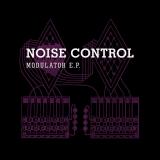
In the early 1990s, Frankfurt stood at the forefront of a rapidly evolving electronic music landscape, where the raw energy of EBM and New Beat was mutating into the earliest forms of techno. Emerging from this fertile environment, Noise Control delivered “Modulator E.P.” in 1992—an overlooked yet striking document of that transitional moment.
Following their earlier releases, “Operation S.B.” (1989, New Zone) and “My Flight” (1989, Zoth Ommog), “Modulator E.P.” marked the project's return and a clear progression towards a more stripped-down, club-oriented sound. Originally issued as the first release on the short-lived Neo Ego label, the EP captures a style in flux, moving between industrial body rhythms, early techno structures and acid-inflected sequences, reflecting the hybrid character of the German electronic underground at the time.
Limited to 300 copies on black vinyl and 200 copies on violet transparent vinyl, this reissue presents all four original tracks in full, alongside the highly sought-after Razormaid remix of “Tehniska Musika”.
Order now and we will order the item for you at our supplier.
In the early 1990s, Frankfurt stood at the forefront of a rapidly evolving electronic music landscape, where the raw energy of EBM and New Beat was mutating into the earliest forms of techno. Emerging from this fertile environment, Noise Control delivered “Modulator E.P.” in 1992—an overlooked yet striking document of that transitional moment.
Following their earlier releases, “Operation S.B.” (1989, New Zone) and “My Flight” (1989, Zoth Ommog), “Modulator E.P.” marked the project's return and a clear progression towards a more stripped-down, club-oriented sound. Originally issued as the first release on the short-lived Neo Ego label, the EP captures a style in flux, moving between industrial body rhythms, early techno structures and acid-inflected sequences, reflecting the hybrid character of the German electronic underground at the time.
Limited to 300 copies on black vinyl and 200 copies on violet transparent vinyl, this reissue presents all four original tracks in full, alongside the highly sought-after Razormaid remix of “Tehniska Musika”.
Order now and we will order the item for you at our supplier.
LP + insert. A cosmically poetic duo playing Afro-Roots-Electro with a clear nod to spiritual jazz. Esinam Dogbatse (flute, synths, vocals, fx, percussion) | Sibusile Xaba (guitar, vocals, percussion).
ESINAM & Sibusile Xaba is a meeting of nomadic, wandering and kindred spirits in music. Both artists draw upon their ancestry: Belgian-Ghanaian(ESINAM) and Kwazulu Natal-South Africa (Sibusile Xaba) through a unique connection, a deep artistic and spiritual level, they use rhythms and grooves to translate stories to the audience. Their vocal chanting enhances trance to rhythmic patterns that grace us by melodies of the future and past.
On April 25th 2025, ESINAM & Sibsile Xaba will release their first joint album entitled 'Healing Voices'.
This album is a reflection of the kaleidoscopic multitude of musical inspirations running through the veins of two very talented solo artists. Both multi-instrumentalists, they provide many different layers to their music. Each track is a reflection of their cross-pollination. Musically inspired by Ghanaian Highlife and traditional songs from Zulu and Ewe culture, but with a distinct contemporary interpretation where their acoustic sound is enhanced by electronic gadgets.
As multi-instrumentalists, the two artists translate messages from their ancestors through rhythms and grooves. Their vocal chanting enhances trance to rhythmic patterns that grace us by melodies of the future and past.
Thanks to their Belgian-Ghanaian and South-African roots, they are unique in their being, strong in their union and connected on deep artistic and spiritual levels. The collaboration between ESINAM and Sibusile Xaba is bringing healing to body and soul.
In 2018 Esinam discovered Sibusile Xaba during his European (solo)tour. She was enchanted by his musical energy and craftsmanship and invited him as a vocal guest feature on the track 'Flowing River', from her debut album 'Shapes in Twilights of infinity'. When she was asked at the first edition of WOMAD Festival in South Africa if she wanted to collaborate with a 'local artist', she didn't have to think twice.
So in October 2022, Esinam and Sibusile seized this opportunity to dive into the rehearsal and recording studio, and discover and combine each other's musical universes to shape up new music together.
In May 2023 this collaboration continued with rehearsals, recordings and a first European tour with performances in Belgium, The Netherlands, France, Germany and Slovenia.
In March 2024 they released the first single 'Africa Wola' out of the fothcoming album. In November 2024, they released a remix of their first single by South-African DJ and producer DaCapo and played at Visa for Music in Morocco.
Order now and we will order the item for you at our supplier.
Cinna Peyghamy unveils new album fusing Persian tombak and modular synthesis Five years in the making, "Music For Tombak & Synth" bridges heritage, technology, and personal identity. The project, initiated in 2019 during Peyghamy's master's thesis research on contact microphones, was conceived as a means to reconnect with his Persian roots while exploringexperimental sound design. In the album, Peyghamy seamlessly blends the traditional Persian tombak with modular synthesis and digital signal processing, creating a distinctive musical landscape that bridges live improvisation and studio production. The album’s genesis traces back to Peyghamy’s exploration of improvised electronic music and his desire to craft a performance-ready setup. Over
several years, the project evolved from capturing the energy of his live shows into a fully composed studio work.
"Music For Tombak & Synth" stands as the first record where Peyghamy unites his dual identities as a live performer and producer, resulting in a body of work that reflects his deep connection to family, memory, and cultural heritage. The album features personal elements such as his father’s voice reciting the poetry of Ahmad Shamlo on the track Dar Shab ,?? ??collaborations with long-time friend Quelque Bourdon on clarinet, and the evocative sounds of the Persian setar, all anchored by the physicality and rhythms of the tombak. A sentiment further reflected in the album cover; a photograph taken by his father, Khosrow ‘Payram’ Peyghamy, picturing both his parents and grandparents.
With this release, Peyghamy moves beyond conventional boundaries of "traditional versus contemporary" or "acoustic versus electronic," instead offering a nuanced exploration of identity through sound. Each track serves as a keepsake, referencing cherished memories, emotions, and musical influences that define his experience as a French-born artist of Iranian descent, unable to visit his home country. "Music For Tombak & Synth" invites listeners to engage with a deeply personal narrative, rooted in both cultural history and sonic innovation.
Order now and we will order the item for you at our supplier.
Acclaimed producer, DJ, and dancefloor healer Octo Octa (Maya Bouldry-Morrison) announces her fourth full-length album, Sigils For Survival. Following 2013's Between Two Selves, 2017's Where Are We Going?, and 2019's Resonant Body, the new record marks a decade since Maya publicly came out as transgender in November 2015. ''As an autobiographical artist, I set out to write an album that would be a milestone for this past decade of joy and sorrow,'' Maya explains. ''Sigils For Survival is my attempt to encapsulate the intentions and techniques that I used to move through life into a spell.'' For each of the record's eight tracks, Maya drew a sigil. Each is a personal symbol intended to ''bind magic to the song and seal its intention.'' These drawings appear throughout the physical edition's design. Maya's sister, New York artist Hope Morrison, incorporated each sigil into her original paintings, which comprise the album's vivid artwork. Hope Morrison, whose imagery translates the sigils' energy into vivid form; the layout was designed by Jo?o Ervedosa. Created entirely on hardware instruments and later mixed in Logic, Sigils For Survival captures the tactile immediacy of live performance. Maya preserved the feel of MIDI-clock drift and off-grid recording, letting her machines interact in the rhythmic pocket, rather than confirming them to a click. Alongside her signature deep, ecstatic electronics, the album features hand-played dulcimer, hand-pan, and recorder. Her voice also returns, carrying spells of love, protection, and transformation. Across Sigils For Survival, Octo Octa channels the ecstatic house lineage into an intimate ritual space. The music speaks of immediacy, play, and communion -- of magic as method, love as survival, and sound as spellcraft. Sigils For Survival is both a document of ten years lived fully and an invocation for the next chapter -- a glowing testament to music's power to protect, transform, and set the spirit free.
''Incorregible" is an album where sound becomes a symbolic form of expression and a tool for introspection.
With a sonic language that crosses borders and draws from diverse cultural influences, the album seeks to reframe electronic music as a bridge between the ancestral and the contemporary.
After years of exploring and experimenting with different musical genres such as punk, noise, witch house, reggaeton, Mexican tribal etc., I have arrived at a moment in my life where I seek a deeper, more intimate form of expression, one connected to my personal world.
Although I do not believe in God, I believe in the power of invisible worlds, in the strength of being, and in music as a bridge toward expanded states of consciousness.
This work is born from that conviction: the possibility of turning dance and sound into tools for connecting with the spiritual.
A sonic journey that seeks to connect with the universal rhythms of life through powerful percussions, chants that are poems, Andean instruments, and the hypnotic force of electronic music. Each piece is designed to induce a collective trance, where the body finds its natural place: movement.
Among its most significant moments are the poems in Nahuatl written and recited by Maribel Galicia, a native of Teotihuacán and a member of the Nahua people. Her words resonate like ancestral memories that dialogue with electronic instrumentals, reminding us that tradition and innovation are not opposites, but can dance together.
Tribal Sound System – Incorregible is a sonic ritual that seeks to: Create altered states of consciousness through repetitive musical patterns. Celebrate sonic diversity by fusing sounds from indigenous folklore, Andean instruments, elements of regional Mexican music, and contemporary electronic music. Honor cultural roots by re-signifying electronic music as a bridge between the ancestral and the contemporary.
This project is my way of affirming that music, dance, and shared energy can transform into a healing and transcendent experience. - Rosa Pistola
Order now and we will order the item for you at our supplier.
In the world of Smote, going further out means going inward. Less a metaphysical journey into inner space, more a physical journey into the ground itself, converging with its roots and vibrations. What's more, a journey right to the heart of its principal architect's daily experience. Smote's fifth release for Rocket Recordings, and their deepest, most fully realised to date. Forged from repetition and mantric intensity and possessed of formidable psychic fortitude, this album prove that the only retro-chic Smote indulge in is liable to go back several centuries. The megalithic monomania of last year's A Grand Stream set a formidable precedent, and Smote's live shows in its wake have gradually built a reputation as visionary seers building audial monuments by cranked amplification and atmospheric intensity alike. Yet these five gnostic serenades offer portals and paradigms anew. Continuing Smote's exploratory mission into heaviness in all its forms. Songs From The Free House sees Foggin exploring a variety of new avenues. Therefore, whilst listeners might align the pantheistic forays into drone-based abandon with previous travellers like Earth and Om, the influence of folk songs and legends, as well as electronic music make their presence felt. "I've been listening to heavy electronic stuff like Puce Mary and The Body" adds Daniel, "Stereotypically guitars are often seen as the instrument for "heavy" music, but the sheer force that's available from electronics is something that will crumble most guitar centred music." Elsewhere a more melodic vocal based structure is writ large amidst these rites and revelations, particularly on The Linton Wyrm, which proceeds from devotional chant to a potent conclusion, also inspired by Foggin's everyday surroundings. Wrought from the earth, transposed to the ether, and now shared with the world at large, this album marks a transcendental journey where Smote render ancient and modern indivisible. Just as traditional music is passed down through generations, Songs from the Free House is where the primal collides with the eternal.
expected to be published on 29.05.2026
Persistence of Sound releases a new work by Brunhild Ferrari called »L’oreille Voleuse« (The Thieving Ear). The LP features an extraordinary live reinterpretation by Eiko Ishibashi and Jim O’Rourke, recorded in October 2025 in Paris.
»No, without listening at doors, the ear captures noises here and there and unexpected sounds without choice, but remains attentive to the messages of each one picked up over the years. It gathers surprises and impressions, bringing them together in a simple mix. In waking up these ear memories again, which were mostly recorded on magnetic tapes, I am very happy about the collaboration of Eiko Ishibashi and Jim O'Rourke in playing on this mix tape.« Brunhild Ferrari
Eiko Ishibashi is a Japanese composer, singer, and multi-instrumentalist who has developed a unique body of work blending experimental pop, improvisation, and film music. Her work, praised for its expressive intensity and sensitivity to sonic textures, has led her to collaborate with numerous musicians on the international scene, including Jim O'Rourke, with whom she forms a long-standing duo. She is also the composer of several film scores, notably for the films of Ryusuke Hamaguchi (Drive My Car, Evil Does Not Exist), which have helped to bring her work to a wider audience beyond experimental music circles.
Jim O'Rourke is an American composer, producer, and multi-instrumentalist, and has been a major figure in experimental and independent music since the 1990s. His work spans rock, improvised music, electronic music, and contemporary music. A former member of Sonic Youth and a collaborator with Wilco, Gastr del Sol, and Merce Cunningham, he has released numerous solo albums and film scores. Based in Japan since the early 2000s, he continues to pursue a rich and multifaceted musical practice, where formal rigor and freedom of invention coexist.
Persistence of Sound was founded in 2019 by Iain Chambers (Langham Research Centre, Rubbish Music). The label explores the world of electroacoustic music, contemporary global field recordings, and the unclassifiable music spanning these genres.
expected to be published on 22.05.2026
- A1: you say i'm crazy (feat alice carreri )
- A2: sign me out (feat fanney osk)
- A3: bodycodes (feat asbjorn)
- B1: the song is in the drum
- B2: romano song (feat annisette koppel)
- B3: welcome to my dream (feat tuco)
- C1: smoke through fire (feat asbjorn)
- C2: grey heron man
- C3: landscape of love (feat fanney osk)
- D1: ghost mosquitoes
- D2: crazy epilogue (feat alice carreri)
Limited, 500 copies black gatefold 2LP...
Originally released in 2013, the long-awaited second album from Lulu Rouge finally returns to vinyl in its first-ever limited repress — revived after years of growing demand.
The Song Is In The Drum captures the duo at their most fearless and immersive. Known for their deep melancholia and anti-traditional pop structures, Lulu Rouge blur the lines between dark dub, cinematic electronica, and left-field songwriting. Intense, soul-cutting vocal pieces unfold alongside towering instrumentals — brooding, beautiful, and unapologetically atmospheric.
The album features standout appearances from Danish indie pop visionary Asbjørn and Icelandic-born vocalist Fanney Osk, adding further depth to an already richly textured sonic landscape.
Across 11 meticulously crafted tracks, producers Torsten “Buda” Jacobsen and Thomas “T.O.M” Bertelsen shape a world that feels both intimate and vast. Every beat is deliberate, every space intentional. This is music that doesn’t simply play — it envelops.
Fifty-three minutes that grip you by the heart and refuse to let go.
Welcome to the brightest dark place you’ve ever been.
Look out for a much anticipated new album coming later this year from Lulu Rouge - making this re-issue a timely reminder of the power of their work.
Order now and we will order the item for you at our supplier.
XKatedral Anthology I is the first in a series of archival releases dedicated to presenting music by XKatedral affiliated composers working within the realm of slowly evolving harmonic and timbral music. This double-vinyl set contains an array of pieces dating from 2010 - 2020. Four of the works included here were originally released on cassette tape early on in the label's history, while the two remaining pieces are presented by the label for the first time.
"The works Ir Himinn, Grooenn by Kristoffer Svensson, Disquiet (Heart) by Marta Forsberg and Lamé by Isak Edberg were first released on the compilation XKatedral Volume II in 2016. Svenssons piece from 2014 combines justly tuned gamelan percussion and prepared piano intricately interwoven in a way that obscures the boundaries between the two instrument groups. Forsberg and Edbergs pieces both use a monolithic form to explore the timbral and harmonic spaces provided by the Düben Baroque organ situated in Tyska Kyrkan in the oldest part of Stockholm. While similar in terms of instrumentation the two works differ formally - Edbergs Lamé composed in 2010 uses the registers of the organ to articulate a seamless spectral transformation while Forsbergs Disquiet (Heart) from 2014 deals in blocks of sound with a varying degree of opacity, saturation and intensity.
Glory for two electric guitars by Caterina Barbieri and Kali Malone was composed and recorded in Tempo Reale in Florence, Italy, and was originally released on the cassette compilation XKatedral Volume III in 2016. This music takes the form of an ever-evolving hypnotic pattern shared by the two instruments articulated through an additive and subtractive canon. Dissolving Ceremony, composed in 2012 by Edberg/Erlandsson/Lisinski, was first presented publicly on the self-released record Stratum. The music contained in that release was formed from a collection of gamelan percussion instruments augmented by two sets of live-electronic instruments tuned to the harmonic framework formed by the partials of the metal percussion. Originally positioned in the center of the record running order between two long monolithic process-based pieces, Dissolving Ceremony now stands on its own as a memory of a time and methodology from the not so distant past.
The newest piece in this set is Shipwrecks by Daniel M Karlsson. While this work is a recent one Karlsson should be considered one of the forerunners of the musical expression contained within this record set. Active within new music for two decades his strongly articulated musical ideas and constantly evolving craftsmanship has resulted in an enormous body of work, and has served as an inspiration for many of his fellow composers. This piece is a celebration of transposition and its immense capacity for timbral transformation using a vast array of instruments performed, recorded and electronically treated by the composer to form a liquid uncanny topography where a deeply personal harmonic language constantly shifts, slides and shivers."
Order now and we will order the item for you at our supplier.
A groundbreaking collision of Atlantic psychedelia and cosmic dub!
A collaboration set to leave a lasting mark: Sensible Soccers join forces with dub master Mad Professor for an EP that redefines the boundaries of this year's electronic music.
Available in both physical and digital formats, this release captures a rare and powerful meeting of two distinct yet deeply connected sonic worlds. The result is a fully immersive experience—a new form of post-dub psychedelia, blending hypnotic grooves, expansive textures, and deep sound system vibrations.
The opening tracks, “Dub de Saia Travada” and “Berlaitada Dub”, are pure dancefloor catalysts: magnetic rhythms, heavy basslines, and a lysergic energy primed to ignite clubs and festivals throughout the summer. Music designed for movement, for the body and the mind—an invitation to lose yourself in collective, hallucinatory dance rituals.
Closing the EP is “Dub Discreto”, a cosmic and visionary journey that pushes the project even further. Here, dub meets the synthetic waves and abstract explorations of cosmic sound pioneers like Cluster and Klaus Schulze—reimagined through the warmth and depth of Jamaica. A timeless experience, suspended between deep space and earthly vibrations.
This EP is more than a collaboration—it’s a bridge between cultures, eras, and states of consciousness. An essential release for record stores, distributors, and listeners seeking something truly forward-thinking.
Order now and we will order the item for you at our supplier.
Remixes V2[8,61 €]
Remixes V3[11,72 €]
Remixes V4[11,72 €]
Remixes V5[12,56 €]
Remixes V6[13,40 €]
Repress
The Godfather of Hardcore, Marc Acardipane, needs no introduction. His outstanding releases over the past 30 years speak for themselves. He has been instrumental in helping to create electronic music history, with countless well-known productions which have been unsurpassed by any other artist of this calibre. His timeless masterpieces have been and always will be heard at hardcore raves spanning the circumference of the Planet. With "9 Is A Classic", "Slaves To The Rave", "Pitch-Hiker", "Stereo Murder" and "We Have Arrived", just to name a few, he clearly proves who's the boss. "The Most Famous Unknown" is a well compiled collection of Marc's music, which showcases a mere portion of what he has composed and produced since the early nineties! The vinyl and digital selection of "The Most Famous Unknown" features remixes by Body Sushi a.k.a. VTSS & Randomer, Dasha Rush, Gabber Eleganza feat. Delirio, Jasss, Kilbourne, Minimum Syndicat, Nina Kraviz, Perc, Solid Blake, Stranger, Umwelt and VTSS, which all deliver excellent interpretations of tracks they have chosen to revamp. All original tracks have been re-mastered to the highest possible standard of quality.
Order now and we will order the item for you at our supplier.
Some grooves don’t rush to the dancefloor — they crawl there, slow and heavy, like smoke wrapping around a bassline. With Fragments of Reality, The Balek Band sculpt an electronic funk that lives between shadow and light — an end-of-the-world fever dream, a Barjavel-style Ravage where chaos turns nihilistic.
No sequencer grid here — just four musicians sharing the same room, shaping air and tension together: drums locked tight with a slap bass, a guitar dripping with echo and heat, and a one-man orchestra behind his machines, weaving acid lines and synth arpeggios while mixing the band live — drenching it in delay, reverb, and saturation, like a dub producer in a Kingston studio, Lee Scratch Perry or King Tubby conjuring ghosts through smoke.
This isn’t fusion — it’s friction. A living ritual where the TB-303 hums, and machines don’t dominate but converse with the human pulse. Each track feels like a night that refuses to end — that humid in-between where trance slips into languor, and the body starts to think for itself.
The record recalls the cosmic jazz of Alain Mion or Eddy Louiss meeting the fiery energy of West African afrobeat musicians freshly arrived in a smoky Belleville basement in the mid-’80s. When The Balek Band summon ghosts, it’s only to reshape them — bending the past into something futuristic, alive, and strangely refreshing. Both disciplined and delirious, Fragments of Reality feels like a promise at dawn: dark funk for the late hours, slow acid for warm blood.
This EP isn’t nostalgic, though it remembers. It’s a transmission from a parallel past — a moment when jazz players met drum machines and decided never to stop playing. Each note sweats, each rhythm breathes. You can almost see the light cutting through the haze, faces half-awake, half-possessed.
The Balek Band aren’t recreating a moment — they’re keeping it alive.
Flesh and cables. Impulse and patience.
A band, not a loop.
A trip, not a format.
Order now and we will order the item for you at our supplier.
Remixes V1[12,56 €]
Remixes V2[8,61 €]
Remixes V3[11,72 €]
Remixes V4[11,72 €]
Remixes V6[13,40 €]
Repress
The Godfather of Hardcore, Marc Acardipane, needs no introduction. His outstanding releases over the past 30 years speak for themselves. He has been instrumental in helping to create electronic music history, with countless well-known productions which have been unsurpassed by any other artist of this calibre. His timeless masterpieces have been and always will be heard at hardcore raves spanning the circumference of the Planet. With "9 Is A Classic", "Slaves To The Rave", "Pitch-Hiker", "Stereo Murder" and "We Have Arrived", just to name a few, he clearly proves who's the boss. "The Most Famous Unknown" is a well compiled collection of Marc's music, which showcases a mere portion of what he has composed and produced since the early nineties! The vinyl and digital selection of "The Most Famous Unknown" features remixes by Body Sushi a.k.a. VTSS & Randomer, Dasha Rush, Gabber Eleganza feat. Delirio, Jasss, Kilbourne, Minimum Syndicat, Nina Kraviz, Perc, Solid Blake, Stranger, Umwelt and VTSS, which all deliver excellent interpretations of tracks they have chosen to revamp. All original tracks have been re-mastered to the highest possible standard of quality.
Order now and we will order the item for you at our supplier.
Mannequin Records presents a special release that bridges two generations of electronic body music: DAF’s iconic track “El Que” reimagined by French techno and EBM pioneer Terence Fixmer.
A lifelong admirer of DAF, Fixmer has been playing El Que in his DJ sets for years, considering it one of the band’s most enduring and powerful pieces. His connection to the track and to DAF’s groundbreaking legacy is the core inspiration behind these two new remixes, created with both reverence and bold creative vision.
On the “El Que (Terence Fixmer Leather Remix)”, Fixmer remains close to the original’s raw, muscular pulse while injecting a sharp, modern club sensibility. The remix builds on DAF’s unmistakable rhythmics but adds a contemporary momentum that feels like a natural extension of the band’s DNA. “It was like imagining what I would do if I were a member of DAF today,” Fixmer says.
The second version, “El Que (Terence Fixmer Drive Remix)”, ventures deeper into Fixmer’s own territory: darker, hypnotic, and peak-time focused. Tension and release are crafted with surgical precision, taking the original’s spirit into a harder-edged, suspense-driven sound world. It’s a version built for late-night floors without ever losing the soul of El Que.
Fixmer explains:
“I’ve been playing DAF’s El Que in many of my DJ sets for years. It’s a track I deeply loved from the first listen. I’m super proud to have remixed DAF — one of my cult bands and a major influence on my sound and electronic universe. For the "Leather Remix", I wanted to stay close to the original while bringing modernity and club momentum. For the "Drive Remix", I pushed the track toward darker, peak-time and hypnotic techno, keeping the soul of the original intact. I wanted to make versions that make you think: ‘I know this track… but wait — what is this version? I want it!’ When I tested them, that’s exactly what happened.”
DAF remains one of the most influential bands in electronic music history. These new remixes by Terence Fixmer reinforce the timeless power of El Que while offering two striking, club-ready perspectives for a new generation of listeners.
Order now and we will order the item for you at our supplier.
Reframed is Vitess’ third album, released on his own label Retro Futura, and marks a new turning point in his artistic journey. Unlike his previous albums — the first fully exploring the Retro aesthetic, the second embodying the Futura — Reframed brings these two worlds together within a single, coherent yet eclectic body of work. The album opens with sounds inspired by 90s progressive music and gradually moves toward more futuristic textures. This album format gives Vitess complete freedom: the freedom to build a full, living musical experience, introducing for the first time a strong instrumental dimension — most notably through the use of live drums — and allowing each track to interact with others, transform, or mirror one another, while maintaining a clear narrative thread that guides the listener throughout.
The title Reframed directly reflects this approach. The album is built around tracks conceived as Recto / Verso, offering a form of double listening experience. On the one hand, electronic, club-oriented and progressive versions, designed for energy and dancefloor movement; on the other hand, more introspective, pop and instrumental counterparts, created for listening and storytelling. Starting from the same musical foundation — a vocal sample, a percussion element, or a melody — Vitess develops two distinct interpretations of the same track, generating contrasting yet deeply connected sonic worlds. This method, central to his creative process, highlights his ability to explore a single detail in depth and let a micro-element lead him toward radically different sonic dimensions, while ensuring coherence and a strong identity across the album.
For Reframed, Vitess also collaborates for the first time with other artists: Stupid Flash, ATOEM, and Lucile, selected for their ability to enrich his universe and push it toward new aesthetics. These collaborations recreate a sense of collective energy reminiscent of his early days playing in bands, while remaining true to the essence of the Vitess project: a primarily solitary approach rooted in exploration, experimentation, and embracing the unexpected paths each idea can take.
Order now and we will order the item for you at our supplier.
- A1: Harris & Orr - Spread Love
- A2: Terry And Deep South - Trying To Get By
- A3: Toshiyuki Honda - Burnin' Waves
- A4: Igna Igwebuike - Disco Bomp
- B1: Janette Renee - What's On Your Mind (Super Club Remix)
- B2: Grupo Serenata - Sodade, Tem Pena D’mim
- B3: Vital Disorders - Zombie
- B4: Alphonsus Idigo - Flight 505
- C1: DJ Food - Peace (Harvey's 30 Something Mix)
- C2: Man Jumping - In The Jungle
- C3: Stars - Dancin’ People
- D1: Gaucho - Dance Forever (Club Version)
- D2: 49th Floor - Night Passage (Bongo Mix)
- D3: Orion Agassi - Desacato
- D4: Fatdog - Remember Feat Cj Raine
With two deeply cherished compilations already in the bag, Luke Una steps up for the third volume in his É Soul Cultura series on Mr Bongo. A love letter to the dancefloor and its power to unite people from all corners of society amid growing division and extremist politics. Genre-spanning in nature, the 15 tracks travel between cosmic soul, boogie, proto-house, slo-mo technoid grooves, drum machine afro, astral bass-bugging futurism, jazz funk, dance, and disco. Each having the ability to move the body as much as the heart.
From his formative years in Sheffield to co-founding Manchester’s much-fabled Electric Chair with Justin Crawford, through to helming the iconic LGBTQ institutions of Homoelectric / Homobloc, Luke has spent 40 years immersed in dance music. His latest outlet, É Soul Cultura, has grown from a label to a globe-spanning events series with Luke holding residencies and embarking on tours across the world from Japan and Australia to America and Europe.
“For me, the dancefloor was never about a one-dimensional, thudding, 130 BPM beat only. It's a much more dynamic, broader vision than that. I cut my teeth in an era where a 100 BPM record had as much impact, excitement, and energy as a 134 BPM dancefloor jazz funk or techno record”, Luke mentions. É Soul Cultura Volume 3 is the perfect embodiment of that notion: “It’s about four decades in the trenches playing dance music, the late-night afters, the shebeens, the basements, warehouse parties, the eight-hour journeys in East London, through to festival sets at Houghton and We Out Here. It’s music unconstrained by genre or tempo and more about making your body move”.
But this isn’t simply a collection of disparate dance tracks; they carry meaning and soul. “It’s less about escapism, more about reconnection. My experience of post-covid has been the coming together of all the clans in various clubs and gatherings. A reaction to a very toxic world out there, where the aggro rhythms of division have sought to divide us, and people don't meet as often. The coming back together face-to-face in clubs has encouraged a real love in the air, there's a real togetherness and collective spirit”.
Opening up the compilation is a track that channels that very message, the transcendental, soul-rousing Harris & Orr ‘Spread Love’. Joining the dots from there, to the low-slung deep house closer of Fatdog ‘Remember’, you’ll find electronic drum machine Nigerian funk, sitting side by side with dancefloor Cape Verdean brilliance, a post-punk cover of Fela Kuti, rubbing shoulders with cosmic electro, and an Una-championed, 8-minute, kickless DJ Harvey remix. There’s jazz funk in various guises moving from boogie synth to astral travelling, slo-mo acidic raw techno, and a ‘79 soul stepper, alongside swirling percussive Italo disco and tribal-charged house. All infused with an innate ability to bring people together.
As society becomes increasingly fractured, É Soul Cultura Volume 3’s message is more than movement. It’s about dance music’s power to unify people from all walks of life and break down the barriers that divide us.
Order now and we will order the item for you at our supplier.
- 1: REDIRECT REVENGE
- 2: ALL CONTRAST
- 3: PRESERVE/MANIFEST
- 4: DEAD CALLS
WHITE Vinyl[24,79 €]
INTERWOVEN' is a four-track split EP that binds together two of Denmark's most forwardthinking heavy acts: HIRAKI and Meejah. Built on a shared appetite for boundary-pushing intensity, the collaboration channels the urgency of electronic hardcore, the spaciousness of experimental rock, and the emotional depth of cinematic metal into an immersive work that is at once confrontational and deeply connective. As a part of Denmark's flourishing underground scene for dark and heavy music, the HIRAKI trio deploys an aggressive style of progressive synthpunk from the edge of the abyss. The band presents this sonic assault to accompany the inevitable fact that our world is sick, and we all take part in maintaining the fucked up systemic structures. MEEJAH is a Post/Experimental Danish-Korean band from Copenhagen weaving together Nordic Melancholia & Korean Ancestry. The results sound like Heaven, Thunder, Mountain, Earth, Wind, Fire, Water, Lake. Across these four tracks, both bands challenge each other to step past familiar contours, unraveling and recombining their musical identities until a new hybrid shape emerges_volatile, textured, and unmistakably alive. FOR FANS OF The Body * The Armed * Sightless Pit * Massive Attack * Julie Christmas * Death Engine
expected to be published on 20.03.2026
Black Vinyl[22,65 €]
INTERWOVEN' is a four-track split EP that binds together two of Denmark's most forwardthinking heavy acts: HIRAKI and Meejah. Built on a shared appetite for boundary-pushing intensity, the collaboration channels the urgency of electronic hardcore, the spaciousness of experimental rock, and the emotional depth of cinematic metal into an immersive work that is at once confrontational and deeply connective. As a part of Denmark's flourishing underground scene for dark and heavy music, the HIRAKI trio deploys an aggressive style of progressive synthpunk from the edge of the abyss. The band presents this sonic assault to accompany the inevitable fact that our world is sick, and we all take part in maintaining the fucked up systemic structures. MEEJAH is a Post/Experimental Danish-Korean band from Copenhagen weaving together Nordic Melancholia & Korean Ancestry. The results sound like Heaven, Thunder, Mountain, Earth, Wind, Fire, Water, Lake. Across these four tracks, both bands challenge each other to step past familiar contours, unraveling and recombining their musical identities until a new hybrid shape emerges_volatile, textured, and unmistakably alive. FOR FANS OF The Body * The Armed * Sightless Pit * Massive Attack * Julie Christmas * Death Engine The single colour edition comes as white vinyl!
expected to be published on 20.03.2026
Yamila presents her second album on Umor Rex, Noor. Following Visions, Yamila returns with a work that merges nature-experience listening with expansive musicality. Noor was born from her time in an ecologist community, where she sought refuge in stillness, learned from animals, and tried to forget the human. In this communion with nature, she discovered a new compositional approach: reducing acoustic noise to allow unheard voices to emerge, transforming music into a possibility for interspecies dialogue.
Since ancient times, sound has been used to care for herds, to call across distances, to communicate with the non-human. Noor reimagines that ancestral role in a contemporary language, where epic harmonies collide with delicate micro-tonalities, and where rhythm unfolds not only as pulse but as movement for the body, a natural extension of Yamila’s work with dance companies and choreographers.
Her voice is interwoven with electronics and the resonant strings of Echo Collective, creating sonic landscapes that radiate intensity and fragility. At times monumental, at others almost whispered, Noor oscillates between composition and spontaneity, structure and suspension.
The album unfurls as a dialogue between the organic and the artificial, where sound grows like a sprout breaking through hard soil. Yamila’s music here is not only to be heard, but to be inhabited: a choreography of air, vibration, and resonance. Noor is both shelter and revelation, a reminder that music can still be epic, luminous, and deeply human, while listening beyond the human.
All music and voices by Yamila Ríos. Recorded at Destelheide by Christophe Albertijn. Strings by Trio Echo Collective (Violin: Margaret Hermant, Viola: Neil Leiter), (Cello: Stijn Kuppens), (Arrangements: Pierre Slinckx). Mastered by Rafael Anton Irisarri at Black Knoll Studio, NY. Photos by Assiah Alcázar. Design & layout by Daniel Castrejón.
Order now and we will order the item for you at our supplier.
- 01: All Parts of Practically All
- 02: In Our Movements Thoroughly
- 03: The Clawed Ends of Their Feet
- 04: Those with Legs
- 05: To Smell What We Would See
- 06: Concealed Under Your Heavy Body
- 07: Maturity in the Entire Absence
- 08: Embrittlement
Wizardmaster is the experimental electronic music project of Oakland-based musician Mark Stramaglia with long-time collaborator Oliver Kollar. Both were members of Operation Re-Information (ORI), which released albums on Vinyl Communications.
This release features improvised electronic recordings focused on mood, texture, and tonality, incorporating noisy synthesis, found and appropriated sound, irregular rhythms, and narrative structures inspired by soap operas. The album uses only homemade musical instruments, including the WMCP generative software synthesizer, the BackToBasics sampler, and a custom modular synthesizer and pedal array. All tracks were performed, recorded, and mastered by Wizardmaster in Oakland, California.
expected to be published on 06.03.2026
Yamila presents her second album on Umor Rex, Noor. Following Visions, Yamila returns with a work that merges nature-experience listening with expansive musicality. Noor was born from her time in an ecologist community, where she sought refuge in stillness, learned from animals, and tried to forget the human. In this communion with nature, she discovered a new compositional approach: reducing acoustic noise to allow unheard voices to emerge, transforming music into a possibility for interspecies dialogue.
Since ancient times, sound has been used to care for herds, to call across distances, to communicate with the non-human. Noor reimagines that ancestral role in a contemporary language, where epic harmonies collide with delicate micro-tonalities, and where rhythm unfolds not only as pulse but as movement for the body, a natural extension of Yamila’s work with dance companies and choreographers.
Her voice is interwoven with electronics and the resonant strings of Echo Collective, creating sonic landscapes that radiate intensity and fragility. At times monumental, at others almost whispered, Noor oscillates between composition and spontaneity, structure and suspension.
The album unfurls as a dialogue between the organic and the artificial, where sound grows like a sprout breaking through hard soil. Yamila’s music here is not only to be heard, but to be inhabited: a choreography of air, vibration, and resonance. Noor is both shelter and revelation, a reminder that music can still be epic, luminous, and deeply human, while listening beyond the human.
All music and voices by Yamila Ríos. Recorded at Destelheide by Christophe Albertijn. Strings by Trio Echo Collective (Violin: Margaret Hermant, Viola: Neil Leiter), (Cello: Stijn Kuppens), (Arrangements: Pierre Slinckx). Mastered by Rafael Anton Irisarri at Black Knoll Studio, NY. Photos by Assiah Alcázar. Design & layout by Daniel Castrejón.
Order now and we will order the item for you at our supplier.
- 01: Seven Keys
- 02: Lake
- 03: A Pile of Broken Dreams
- 04: Woods
- 05: Contrail
- 06: Laws of Life
- 07: World Loop
- 08: Suburban Portraits
- 09: Model Two
Drummer/producer Teppo Mäkynen's 3TM returns with a new album, "Lake", on 29 November on Helsinki's We Jazz Records. The album is the much awaited follow up to 2017's successful 3TM debut "Form", which was awarded as the "Jazz Album of the Year" in Mäkynen's native Finland. "Lake" was preceded by the ambient electronic album "Abyss" in August, which set the mood for what's to come next: A compact yet far-reaching body of work bringing together the trio's acoustic jazz sound and ideas rooted in abstract electronic music in a remarkably boundless way.
"Lake" is a collection of 9 Mäkynen-penned originals ranging from the looping, hypnotic compositions such as first single "Laws Of Life" to the delicacy of tracks such as "Woods". There is a sense of long form narrative here, evident in glorious, slowly evolving tracks such as "Lake" and "A Pile Of Broken Dreams". The overall sound is swinging, melodic, deep and futuristic. It's acoustic jazz and abstract electronic music understood deeply and used as the base of a new sound, which goes beyond the usual distinctions of "acoustic jazz" or "electronic music". This is music for the present day, moving forward.
3TM's "Lake" will be available as white and black vinyl versions, complete with printed inner sleeve featuring Mäkynen's essay about the theme of the album. On vinyl, "Lake" will also be available as a 2LP bundle with "Abyss", and the CD version includes both discs, "Lake" and "Abyss".
In the 3TM trio formation Mäkynen is joined by sax man Jussi Kannaste and bassist Antti Lötjönen, both Finnish scene mainstays. The band will celebrate their new release at Helsinki's We Jazz Festival on 7 December.
expected to be published on 06.02.2026
- Somewhere, Nowhere
- Angles Mortz
- False Prophet
- Fluoride Stare
- The Void
- Ascension
- Just a Kid
- Host
- Landslide
- Renaissance
- 7: am
- Blue In Grey
2026 Repress
Flickering in ultraviolet, there is an elusive place where blue pill meets red, ups become downs, and day merges with night. Those liminal spaces where anything is possible is where you’ll find Nightbus and their hypnotic debut album Passenger. Doom, uncertainty, and opportunity lurk in the shadowy corners of their murky existence with stops at disassociation, co-dependency, and addiction before reaching its final destination - a glimmer of hope.
The in-between of Nightbus’ own Gotham lies where Manchester’s city pulse meets Stockport’s outer realm. An audio-visual entity formed among a musical family of friends, freaks, and foes in messy mills and after hours on dancefloors alike, their sound bleeds from tension where collective creative forces are bound together and collide with the fallout of being torn apart. Before even playing a show, their So Young released single ‘Mirrors’ – a knowing nod of respect to some well-known gloomy Northerners - may have made old school indie heads shimmy at shows in Salford’s The White Hotel but also signalled the duo’s knack for offering listeners a Bandersnatch approach to hitchhiking their own personal Nightbus in whatever direction they choose to take. “Everyone can have their moment with our songs; the music is our response to who we are as young people, living in the city full of this energy right now,” they say.
Whilst reverb hefty melodies and dread-filled loops embody isolation from writing at each of their home studio set-ups, magic happens in the ether across 90s trip-hop, indie sleaze and electronica; Jake’s production layers Olive’s pop sentimentality with drums and samples whilst tales of a cast of faceless characters place Olive as puppet master; her severed self’s perspective manipulating their stringed limbs at arm’s length to see how their stories play out when scenes reflecting her own lie close to the bone. “It’s a bit fucked; like having this out of body experience with a made-up movie running through my head,” she says. “As I write I can see they’re all from a similar world, but they allow me to explore different feelings without giving away part of myself.”
Recorded at The Nave in Leeds with producer-engineer Alex Greaves (Heavy Lungs, Working Men’s Club), surprise and danger lies in every crevice. Brooding whispers turn to chants on 6-minute opus ‘Host.’ Improvised when performed live, its immersive shift in tempo leads to hefty dub courtesy of Jake’s pedals. Even then, you won’t know shit’s hit the fan until its mid-point reveal when ominous bass blasts a thunderous soundtrack as its protagonist defiantly walks away after committing the perfect crime. “It makes you wait, and more songs should have sirens,” Olive grins.
Leaning deeper into alter-egos via the video game-psychological horror of a Silent Hill dystopia, the band’s Fight Club moment ‘Angles Mortz’ turns its literal translation of death angles on its head as it reflects upon kink and internalised shame reincarnated as pride. Elsewhere the ice cool ‘Landslide’ is a Requiem for a Dream about the addiction of being in a band; ‘The Void’ explores co-dependency and estranged relationships; and carefully selected samples revive house track ‘Just A Kid’ from the band’s early incarnation. Passenger’s every direction is to face challenges head on. “That is what’s so great about horror; you can see through predictable patterns so when the unexpected occurs it's more realistic and uncomfortable… I want to own the dark stuff!”
As for Passenger’s first single, the pulsating ‘Ascension’ is a spiralling deep dive into death, suicide, and legacy around who or what we leave behind. A noughties club banger by way of NYC beats - ergonomically designed for those who like to stay out a little too often and too late - it throbs like a house party’s partition wall as the literal levelling up undergoes a neon transformation; blue glitching to pink, diffusing the white construct of the Nightbus Matrix. “It really does feel like the end of something and was purposely written that way,” they say, “the ascension is like a firework going off!”
With wheels in motion, Nightbus has become a movement surpassing sonic realms. Between shows from Porto to Brighton taking in The Great Escape, Rotterdam’s Left Of The Dial and Paris’ Supersonic; DJing; remixing; guesting (BDRMM’s Microtonic album); and even enlisting talented like-minds to craft a 3-part queer coming-of-age music video series which ties in with a new ‘hyperpop’ phase in the evolution of their popular Nightbus Soundsystem club night, heads are now being turned from sports brands to high-end fashion designers. “There are things we can’t reveal just yet,” tells Olive, “but we’re excited about the direction this beast we’ve created is heading.” As the album philosophises and asks one ultimate question; what does it truly mean to be ‘Passenger’? Nightbus may not claim to offer a definitive answer, but it might make you feel a bit better about those demons.
expected to be published on 16.01.2026
- A1: Verflossen ist das Gold der Tage
- A2: Staub und Sterne
- A3: Hinter uns die Wirklichkeit
- B1: Bedingungslos
- B2: Die Nächte sind erfüllt von Maskenfesten
- B3: Umschlungen von Milliarden
- C1: Sanft verblassen die Geschichten
- C2: Es ist alles schon gesagt
- C3: Schwarzer Regen fällt
- D1: Jeder Gedanke umsonst gedacht
- D2: Welche Welt
- D3: Ist es das, was Du willst
II[29,37 €]
Reissue of the 3rd full length by Thomas Bücker aka Bersarin Quartett.
Melancholia. Longing. It is difficult to speak about these moods or states of the mind without invoking stereotypes. In ancient medicine, melancholia was considered to be one of the four temperaments, matching the four humours. In fact, melancholia, meaning "black bile" in Ancient Greek, was thought to be caused by an excess of this very body substance. By contrast, in more modern interpretations, literates and Freudians relate many variations of longing to the one primordial longing, the desire to return to one's mother's womb. In this context, the womb is considered to be the place of absolute comfort and cosiness, of total bliss. Thus it should not be surprising that to many of us melancholia is a mood which we like to invoke and to maintain, we like to envelop ourselves in it like in a warm blanket. Our brain and our sensory systems appear to be made for perceiving and emotionally responding to music in a very immediate fashion. Consequently music is the obvious drug for all of us melancholia-addicts. However, there is a thin line between melancholia and sadness, and music which is meant to be melancholic too often crosses this line by far. Only very few artists succeed in avoiding this crossing, and in creating music which is melancholia in its most pure form. It is safe to say that BERSARIN QUARTETT - the electronic music project of Thomas Bücker - is one of them.
After his debut in 2008 and the sophomore "II" in 2012 - album of the month in many magazines and in numerous "Best of the year" lists - Bücker in 2015 returned with his third BERSARIN QUARTETT album "III". Much like his two predecessors, III is a pure paradox. It is the creation of a perfectionist, an adamant control freak. Every element, be it a note, an ambience layer, a string arrangement, a field recording, a baseline, a vocal (Clara Hill on Track 11) or a beat, is meticulously modified and then assigned its place in Bücker's vast but still minimalistic arrangements. Thus, superficially Bücker's pieces seem to radiate a certain mechanical bleakness. However, there is a unique reduced warmth and liveliness emerging from these stainless compositions and transcending them. This transcendence is precisely the point where Bücker ironically looses control over his creations. In contrast to the first two BERSARIN QUARTETT albums, III offers a few darker shades and succeeds even further in narrowing down the arrangements to the absolute essentials without loosing the characteristic grandeur of Bücker's sound. Whereas BERSARIN QUARTETT's debut was merely a description of melancholia in its most pure form, III maybe even goes as far a defining what melancholia really is. It is the only emotion in the vast spectrum of human states of mind which one can bear forever.
Order now and we will order the item for you at our supplier.
Brussels-based accordionist Suzan Peeters releases her debut album Cassotto on the Belgian label blickwinkel. With Cassotto, she opens a door into a hidden chamber of sound. The title refers to the “cassotto” — a small resonating chamber inside the accordion that warms, softens, and deepens its tone. Listening to this record feels as if you’ve stepped into that room yourself, enveloped in a world where intimacy and grandeur collide.
Although this is her first release, Peeters is already recognised as one of the most promising names in Belgium’s experimental music scene. Her distinctive live shows — from leading venues across Belgium to a packed Café Oto in London — have earned her a reputation for combining accordion, electronics and unconventional objects such as a massage board into a compelling whole where contrasts come together in an unexpected way. Cassotto captures this approach in recorded form, giving listeners the same sense of immediacy as her concerts, but framed within the intimate space suggested by the album’s title.
While the cassotto chamber naturally gives the accordion a soft and velvety voice, Peeters harnesses that warmth to explore extremes — from hushed detail to bold, expansive gestures that fill the room. As such, the album moves between the acoustic and the electronic, the tender and the abrasive, the static and the dynamic, the traditional and the experimental.
With Cassotto, Suzan Peeters presents a debut that places the accordion at the centre of an adventurous and contemporary sound world — one that invites to discover how far an accordion can reach when tradition and imagination intertwine.
Suzan Peeters (*1999) is a Belgian accordionist, composer, and experimentalist. She is constantly looking for new timbres and sound textures within the accordion, pushing its acoustic spectrum to its limits by manipulating the interplay between her body and the body of her instrument.
Suzan studied classical accordion at KASK & Conservatorium in Ghent and at the Royal Danish Academy of Music in Copenhagen. She is currently studying Live Electronics at the Royal Conservatory of Brussels.
Order now and we will order the item for you at our supplier.
Editions Mego presents The Psychologist, the sophomore album by the Istanbul born and raised, Berlin based electronic music composer and sound artist Hüma Utku.
As the title suggests, The Psychologist, is a series of sonic essays based around themes of psychological phenomena and can be read as a musical enquiry into the human condition. With Utku’s background as a graduate of Psychology and her current practice as a conceptual music composer we see the two main threads in her professional career intertwine on this unique and ambitious release.
Including recordings of Buchla 200 from Utku’s Elektronmusikstudion residency in October 2020,The Psychologist is a genre aversive work that embodies elements of synthesiser music, electroacoustic, experimental techno, industrial, modern composition and spoken word. Piano, string compositions and vocals hold weight throughout a number of pieces providing a dramatic acoustic edge to the psychological explorations contained within.
The foreboding mood of much of this release is the product of investigation that lends the unsettling theme of anticipatory grief to the mood of the tracks Light of All Lights and Continuing Bonds. Islands of Consciousness refers to Jungian metaphor for consciousness whilst the unnerving Rüya twists around dream analysis in Gestalt psychology. Fuel For The Flames proceeds as a buzzing and swirling representation of alchemy and psychological symbolism. Dissolution of I is haunted by a strange sensation of dissociation whilst defense mechanisms support the sublime Sublimation. The bright shapes of Chironian Wound represent archetypes and analytical psychology whilst the fried soundscapes and rhythms of Ataxia encapture neurological states.
The results unravel with both the clockwork rhythms of the human body and the unpredictable nature of the psyche, the pieces follow arrhythmic patterns in a harmonious way. It tells the raw and intimate story of the human experience with a new work whereby the predictable operates in parallel with the unexpected and like human experience itself, is dark and complex.
Composed, Written & Produced by Hüma Utku
Piano by Hüma Utku
Vocals by Hüma Utku
Double Bass performed by Adam Pultz Melbye
Cello performed by Florina Speth (aka Schloss Mirabell)
Violin performed by Marta Forsberg
Cover photography & art by Gözde Güngör
Design by Eloise Leigh
Order now and we will order the item for you at our supplier.
Alvorada is Montanha’s first long play: an ambient-leaning work, nocturnal in mood yet touched by electricity, tracing a journey from waking activity into dream logic. Recorded mostly in the late hours of the evening with windows open to the city, letting its air and sounds influence the music, it sometimes reached the early moments of sunrise. The title, meaning “dawn,” reflects both the liminal hours of its making and the band’s own renewal. These tracks are closer to drawings than songs: narratives written between instruments, moments of tension and release, fragments of memory and dream. The tracklist follows this nocturnal voyage with the patience of Eno, the disquiet of Uematsu, and the madness of Miles Davis’ Decoy, oscillating between streets and sleep, routine and reverie.
Montanha was formed in 2010 by André Azevedo, Nuno Oliveira, João Sarnadas, and Tito Silva, bonding over architecture school all-nighters on videogame soundtracks (Age of Empires, Super Mario). They began as a psychedelic rock combo and in 2013 released their self-titled EP which introduced a raw, improvised energy. But the album that was meant to follow was abandoned as the band entered hiatus. The four members turned their creative drive towards co-founding Favela Discos, where experimentation with media and form reshaped their ideas of music, and developed their taste, their way of playing, and a more personal sound that was more open and disconnected from a defined genre.
By 2017, Montanha had returned to the studio with new experience, no longer a rock band in the traditional sense but a project devoted to improvisation and electronic soundscapes. An ever gentrifying city forced them to abandon acoustic drums, and they embraced electronic beats instead, and became mobile; one guitar dissolved into full synths, leaving the other to converse with bass. Improvisation remained their compass. In improvisation there are no mistakes, only missed opportunities. Montanha found their opportunity in the routine of the studio to break routines of pop and experimental. The result is a body of nearly fifty hours of recordings, sculpted into an album.
Alvorada is not only Montanha’s first LP but also the dawn of their new phase. Improvised yet carefully sculpted, the record expands the territory of the song into nonlinear narratives, letting the language of night, dream, and city seep into its form.
expected to be published on 19.12.2025
Final LP of a productive year for Feral Child is an absolute cracker. The latest of a long line of superb full lengths from Stephen James Buckley's incendiary Polypores project. This one is arguably his most adventurous outing to date, the undeniably psychedelic “Hungry Vortex”. Four extended pieces exploring polyrhythmic fixations and cosmic jazz-prog freak-outs. Percussion-heavy opener ‘The Body Is The Spaceship’ is a fine example of the sort of seamless organic growth we tend to see in Polypores’ music, with slewed synth blips and rolling polyrhythms gradually twisting into unrecognisable strands of melody and unconventional groove before your very ears.
The prog-heavy ‘Wizards!’ sees Buckley’s trademarked playful use of time-signature changes, providing such a wealth of emotional and stylistic variance and immeasurable enjoyment without changing key once (honestly, who needs keys). It’s brilliantly evocative too and could indeed perfectly soundtrack a mushroom-trip wizard march. As we flip the record over, the flutey flourishes and minimalist clicks of the title track draw the listener into a trancelike state, repeated movements spiralling like myriad creatures crawling over a candy-coloured horizon, echoing forth into an inviting sonic oblivion. It’s ostensibly electronic, yet somehow more natural organism than machine, with little concern for the grid, or indeed, the rules. Finally, we end on something a little more subdued - the reassuring classicism of the beautiful ‘Void High’, with washes of warm noise and wobbly delay lines whirring and twinkling away, closing the record with an experience that is undeniably emotional, spiritual and as always, uniquely Polypores. This is a wonderful record with which to close the year out, it comes in a magnificent, spot varnished Jake Blanchard sleeve. A superb record released as a one time only vinyl pressing.
expected to be published on 12.12.2025
- A1: Night Whisper (Trance - 1992)
- A2: Eliana (Totem - 1985)
- A3: Nomad (Trance - 1992)
- B1: Stefania’s Song (Still Chillin’ - 2005)
- B2: Seducing Hades (Luna - 1994)
- C1: Zone Unknown (Zone Unknown - 1997)
- C2: Silver Desert Cafe (Tongues - 1995)
- C3: Totem (Totem - 1985)
- D1: Dancing Path Chaos (Initiation - 1988)
- D2: Labyrinth (Luna - 1994)
- D3: Shavasana (Still Chillin’ - 2005)
Ground-breaking percussive ambient recordings from Gabrielle Roth & The Mirrors, inducing altered states of consciousness through ecstatic dance. "Selected Works from 1985 to 2005" finally available on Time Capsule
Despite featuring an extraordinary cast of musicians (with credits including Pharoah Sanders, Miles Davis, Sun Ra, Santana and Milton
Nascimento) and selling hundreds of thousands of albums, the music of Gabrielle Roth & The Mirrors remains largely unheard beyond their sphere. Conceived as live, improvised soundtracks to Roth’s transcendental dance workshops, musical acclaim was never on the agenda.Instead, for a passionate dancer and spiritual polyglot like Gabrielle Roth, movement was a means through which to channel a wide spectrum of teaching, from experimental psychology to psychedelic counter-culture. It was from this heady mix that she devised a movement meditation known as 5Rhtyhms, which came to define her life’s work.
As “guide and catalyst”, Roth would dance to inspire the percussion-led instrumentals that would in turn fuel her 5Rhythms workshops, stimulating a secular form of ecstatic dance with roots in Native American shamanic traditions, Afro-Brazilian Candomblé and Yoruba drumming. Using anything from a Sioux pony drum to East African kihembe and Japanese Kabuki drums, Gabrielle’s lawyer-turned-drummer husband Robert Ansell set the foundational rhythms for The Mirrors’ recordings, each of which would then feature a rotating cast of friends and professional musicians.
“The secret of everything we’ve done is that we never told anybody what to play,” Robert shares. “Instead of our albums being a musical vision of one person like me or Gabrielle, they were the musical vision of a whole bunch of people.”At times the recordings have a Middle Eastern flair, at others, West African and spiritual jazz modes come to the fore. Hints of kosmische musik, proto-house and electronic ambience are laced like LSD through the organic rhythmic structures. This was kaleidoscopic ambient music to stir the body and free the mind.
In practice, the task of synthesising these different elements fell to Scott Ansell, Robert’s son and a recording engineer whose credits now include Nile Rogers, Duran Duran, Grace Jones. With meticulous attention to detail he captured and translated the dynamic energy of each drum onto record. Their sessions became legendary, and with access to the best studios in the NYC, The Mirrors sparkled.
Despite being initially overlooked by the burgeoning ‘80s New Age market, which preferred pipes and gongs to The Mirrors’ heavy-grooving drums, Robert Ansell set up Raven Recording to self-release the music, creating a vast sonic archive of sixteen albums over almost forty years. The breadth of Raven’s catalogue is such that curator Pol Valls had to cut an initial selection of sixty-six tracks down to the eleven featured here. What crystallises is a stunning, mind-altering collection which spans, in Pol’s words, “a variety of genres, styles, and vibes within their catalogue, whether it is emotional, esoteric, spiritual, melancholic, hypnotic, dark, or at times a combination of these elements together.”Music for immersive and intimate environments, Gabrielle Roth & The Mirrors were born from the dance. In the hands of the right DJ, at the right time, in the right place, they might just return there.
Order now and we will order the item for you at our supplier.