** warehouse find price ... nice!
The iconic digger's journal Wax Poetics returns in a beautiful, heavyweight format. Each issue features 148-pages of deep music insight, unique stories, lush photo spreads, and inspiration for your record collecting. The first issue in the relaunch features Motown stars Marvin Gaye on the front cover, and Tammi Terrell on the back cover. You'll also find articles on hip-hop ground zero Harlem World, Sergio Mendes, Herb Alpert, Cymande, Toots Hibbert, and much more within.
Also included with each purchase is three months of digital access to Wax Poetics. Expect weekly stories, music, insight, members-only offers, and more!
FULL CONTENTS
Re:Discovery: Timothy Leary & Ash Ra Tempel
Re:Discovery: Light of the World
Re:Discovery: Leon Huff
Re:Discovery: Superb DJ K-Nyce ft. Supreme Nyborn
Feature: High Art - Lee Quiñones
Feature: The Hip-Hop Shangri-La - Harlem World
Feature: Patta Cover Story - Steven Julien
Feature: See Me - Tammi Terrell
Feature: The Fire From Within - Marvin Gaye
Feature: The Maestro - Sergio Mendes
Feature: Beyond Boundaries - Herb Alpert
Feature: Native Sons - Redbone
Feature: Mighty Heavy Load - Cymande
Feature: Perpetual Glory - Toots Hibbert
Suche:three men
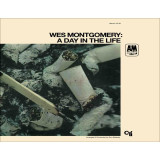
Gordon is a great advertisement for live jazz. When he really starts “stretchin’ out” on a number, and his long, firmly anchored legs begin vibrating rapidly from side to side, the intense swing of his music has a natural visual counterpart. It’s true that you cannot see him in this album but you can feel the impact of his personality as it is poured into his music. This session was not recorded in a nightclub performance but in its informal symmetry, it matches the relaxed atmosphere that the best of those made in that manner engender. Everyone was really together, in all the most positive meanings of that word. It was so good that Blue Note put these four men in the studio again, two days later. We’ll be hearing that one in the near future. Meanwhile, proceed directly to Go! You won’t collect $200.00, but you will get a monopoly of Melody Avenue, Swing Street and Inspiration Place.
A journey, in 16 tracks, through the career of this pioneer band of the Latin American Punk 'n' Roll scene, active since 1987 and founded in the city of Quilmes (Argentina). Punk 77, Street Punk and Punk 'n' Roll on glorious vinyl and for the first time in Europe. DESCRIPTION Doble Fuerza is a pioneering band of the Latin American punk 'n' roll scene that has been active since 1987 (hence the title of the LP). Founded in the city of Quilmes (Argentina), south of the Buenos Aires metropolitan area, they have built their own recognizable sound, influenced by punk 77, street punk and punk 'n' roll. For the first time in Europe, on a long-playing record, on glorious vinyl, 16 tracks that represent a detailed tour through Doble Fuerza's 35-year career, remastered for the occasion. The result is most entertaining and activating. Primitive sonorities of angry young men doing street-punk without concessions in "Disturbios" Riots and "La Vida Se Va" Life Goes, give way to heartfelt street love in a hard-power-pop vein ("¿Por Qué No Me Llamas?" [Why Don't You Call Me?], "Encontrarte" [Find You], "Sola" [Alone]) and Ramonesian essences in "Desocupado" [Unemployed]. And all of this leads to their personal punk 'n' roll sound with a Buenos Aires accent, i.e. punk-rock clearly influenced by punk 77 and the rock 'n' roll of the 50s and 60s. In "Leave Me Alone", "Anestesiado" [Anaesthetised], "Grito de Revolución" [Revolution Yell], "Almas Gemelas" [Twin Souls] and "Canción de Libertad" [Song of Revolution] you can sense some of the many bands of the three decades that are part of their wide musical background and that have served as teachers to forge their style. Nor do they forget the cheerful tavern hymns to sing loudly and to overcome the struggle and heartbreaks with good humor, "Otra Vuelta de Cerveza" [Another Round of Beer] and "El Rey del Fernet" [The King of Fernet]. The three covers of this collection deserve special mention. Three adaptations sung in Spanish that the quintet led by Hugo Irisarri makes totally their own: "Pibes de Barrio" (Cockney Rejects), "Laburando" (Cock Sparrer) and "Spanish Bombs" (The Clash). The accent may be different, but the situations, the sound references, the messages... become immediately familiar and recognizable. "1987" is a careful presentation letter on this side of the pond of the Argentinean band's wide repertoire that unites commitment, fun and enthusiasm in equal parts
"Everyone you love will end up dead," Isaiah Neal sings on "Ivy Tech," the second track from Leisure Hour's upcoming The Sunny Side. It's a matter-of-fact lyrics delivered in a matter-of-fact way - but a second later, Grace Dudas and Raegan Gordon join in to harmonize on a booming "whoa-oh-oh-oh" chorus. In the span of about three seconds, Leisure Hour's whole ethos becomes clear. The Sunny Side is the result of years of writing and recording, the culmination of a half-decade of lineup changes; by now, Leisure Hour's reached their final form: bassist/vocalist Dudas, guitarist/vocalist Neal, and drummer/vocalist Gordon. The Sunny Side, according to the band, is about "love, loss, and struggle with mental health as a middle class individual," and maybe it was a case of life mimicking art. The three of them struggled to come up with enough money to record and produce these songs the way they envisioned; they picked up extra shifts at their jobs and, in true DIY fashion, decided to throw as many music festivals as they could to drum up enough cash to bring these songs to life, and "the community around us rallied together to make this album happen, and for that we are eternally grateful." That gratitude is the driving force behind The Sunny Side. The eleven songs that comprise the record are built on shaky hopes and the anticipation of disappointment, but along with that comes a teeth-gritting resilience and a hard-won appreciation for those small victories. "I can't forgive you," Dudas sings at the end of "Forgiveness," but she follows it quickly with "But I'm trying to," and then she repeats it over and over. Maybe she's just trying to convince herself, but it's the effort that matters. Leisure Hour won't stop looking on the sunny side anytime soon, and they're trying their damnedest to convince you to do the same.
Repress!
Vocal powerhouse Izo FitzRoy exploded on to the scene in 2017 with her debut LP 'Skyline', the album incorporating a stunning fusion of styles spanning gospel, funk and soul as Izo's raw bluesy tone and direct lyricism took centre stage.
Her new album 'How The Mighty Fall' builds further on the soul foundations of her debut. Recorded between Paris, London and Sheffield, it sees her collaborating with three stellar producers and a host of talented musicians.
Disco royalty – Dimitri From Paris (Glitterbox, BBE) directs fellow Parisians Cotonete on her smash single 'I Want Magic'. Studio wizard Shawn Lee (BBE, Ubiquity) brings the funky AOR vibes on 'Slim Pickings' and the Mercury Prize nominated - Colin Elliott (Richard Hawley, Jarvis Cocker, Paul Weller) who produced the bulk of the album, completes the trio. Guesting on the record are the UK's most in demand brass section – The Haggis Horns and Izo's long-time collaborators - Soul Sanctuary Gospel Choir.
Conceived during the aftermath of the breakdown of her long-term relationship, Izo looked to this personal experience for inspiration for the album as well as casting further afield at the wider themes of mental, societal and communication breakdowns.
Despite the strong material, at one point it seemed the record might never materialise. Just as the world was getting on board with her debut LP and international touring was taking off, Izo lost the use of her voice and required surgery on her vocal chords in the second part of 2018. A long schedule of vocal rehabilitation was necessary to get back to a position where she could first talk, then sing regularly enough to get back to work.
Thankfully after this difficult personal period for her, the silver lining from the experience was that post-recovery she gained a whole new octave at the top of her vocal range! This in turn has influenced her song writing on the album & allowed her to enhance her compositions with more vocal light and shade from this unexpected gift.
Habibi Funk is thrilled to share a second collection of deep grooves and unreleased songs from Algeria's Ahmed Malek, often compared to Italian heavyweight Ennio Morricone. Malek’s music effortlessly switches between thematic jazz, funk, reggae and Algerian folk – creating indelible soundscapes that intersect the musical innovations made in African jazz by Mulatu Astatke, Bembeya Jazz National along with some of Europe’s finest experimental composers like Piero Piccioni and Janko Nilovic. “Musique Originale de Films, Volume Deux” is out June 28th, 2024 via Habibi Funk.
Whenever an interview asks about a “memorable moment” in Habibi Funk label history, one we always reference is how we got in touch Ahmed Malek’s (22K Spotify Followers, 285K Spotify Monthly Listeners) music and subsequently his family. It all started with us coming across Ahmed Malek’s music on YouTube in 2012. We were mesmerized by how effortlessly the music would switch between jazz, funk and Algerian folk while counterweighting it with an undertone of melancholia. Musical perception is different for every person, but there is a chance that his music will touch you in one way or another. At the time, we had just started the Habibi Funk label and we felt Ahmed’s music might be a good fit for the sound we were trying to highlight. Fast forward three years: we had become captivated with the idea of reissuing some of Ahmed Malek’s music. We knew some people had tried to locate his family but, but with no success. In the end it was an incredible amount of luck that made it possible for you to read these words and listen to Ahmed’s music. We were on a DJ gig in Beirut playing old Arabic records and we mentioned our passion for Ahmed Malek’s music to a friend. She said she knew one person in Algier, and as much as it would be a shot in the dark, she could ask her if she had an idea of how to find Malek’s family. Two weeks went by before we heard back, and what we got was incredibly good news - her Algerian friend was the neighbor of Ahmed Malek’s daughter! We’re not spiritual people, but it felt like the universe wanted to see the release happen. We started to speak with Henya, Ahmed Malek’s daughter and she was more than happy with our idea. She assured us that her father would have loved the plan as well. She provided us with tons of awesome material, from great photos, to unseen video footage and unreleased tracks. Eventually we visited Henya in Algeria and we licensed some of her father’s music, first for one (Habibi 003), then for another (Habibi 005), then we eventually organized an exhibition in June/July 2019 – Planète Malek – Une Rétrospective – at the Musée Public National D’Art Moderne & Contemporain in Algiers, focusing on Ahmed Malek’s artistic life. We also produced a small movie about him that our friend Paloma Colombe shot and directed. “Musique Originale de Films, Volume Deux” is a deep collection of unreleased songs and stemmed grooves from the Algerian master, from jazz, funk, psych to reggae rhythms and Latin flavors, all under the sonic umbrella of “Planète Malek;” and to quote the maestro, “I didn’t choose music, music chose me.” Lead single is the subtlety funky “Thème Rythme Léger,” out May 3rd along with LP Pre-Order (coincided with Bandcamp Friday for a larger impact) a delicate sonic dance between flute, piano and Spanish guitar with a Bossainfluenced groove. The steady, swingin’ drum groove is cloudlike - definitely toe-tapping friendly so just grab a partner to feel the Rhythme Léger. Second single out May 17th is the reggae-infused “L’Empire Des Rêves” – a sultry sax melody weaves through a prismatic rocksteady thematic groove. 3rd and final single “Thème Djalti feat. Aïda Guéchoud” – is a true Western-inspired ode to his Italian counterpart Ennio Morricone. “Thème Djalti” features the haunting vocals of Aïda Guéchoud, and combines elements of baroque and Bossa-jazz in a timelessly thematic way that seems grandiose yet remains uniquely personal to your ears. Swelling strings, trumpet, fem vox, flute, and plucked guitar expertly arranged, feels like you’re riding a horse into the sunset. Focus track “La La La” is fiery afro-arab-funk of the highest order! Put on your dancing shoes as Ahmed cuts the rug and gets us grooving along. Sonically the cut sounds like if Ahmed ran into The JB’s and Fela Kuti at a Cymande concert. Driving guitar and organ solos vie over pulsating bass riffs and afro-funk drumming that’ll have you out on the dance floor in no time. As always, both vinyl and CD come with an extensive booklet featuring background and interviews with Ahmed compiled through found newspaper clippings and newsreels, also including unseen photos, scans and more. “Ahmed Malek: Musique Originale de Films, Volume Deux” will be out everywhere June 28th.
" Since the release of his previous album 'Paradise for all' , the profile of Guts has grown a lot to become one of the main french producer and a recognized name on the European scene.
His hit 'Brand new revolution' was played by many radios worldwide and even synchronized in Grand Theft auto V. His compilation series ' Beach Digginï' is now a reference for summer and quality music.
After 3 instrumental albums, Guts decided to come back to his Hip Hop roots (he created the french rap Band Alliance Ethnik in the 90s) and invited quality MCs and singers to join him in the studio. You can find on this album, some Hip Hop legend as Grand Puba, Masta Ace, Bob Power, Rah digga some singers as Cody Chestnutt, Patrice and a batch of new talents as Leron Thomas, Lorine Chia, Quelle Chris & Denmark Vessey, Dillon Cooper.
This albums contains hit singles like'Man Funk' Want it back (feat. Patrice)' Open wide'
Vinyl deluxe edition : double LP gatefold Replica sleeve with insert & download card.
About this release:
Without hip-hop, Guts wouldn't be half the producer he is today. Hip-hop as inspiration, a gateway to so many different musical styles, the trigger for a continually expanding musical bulimia, the springboard from which he dived into a bottomless musical well.
Hip-hop � which has been Gutsïtrue love for the last 25 years, despite its taking futile, gangsta and materialistic paths.
Hip-hop � which in quarter of a century has driven him to spend whole nights with samplers, drum machines, expanders and vinyl, tapping on pads, adjusting the drums and honing his samples.
Hip-hop � which is often done remotely nowadays by sending digital files back and forth. Guts has opted to make it shine like when it was all brand new, decided after three entirely instrumental albums to re-establish contact with rappers, vocalists, jazz players and soul men by packing up his productions and heading across the Atlantic to record them in their home surroundings in New York and California.
Backed up on production by the inexhaustible DJ Fab (Hip Hop Resistance) and supported from Paris by his label Heavenly Sweetness (�A French label spreading colourful music for the soul, Guts explores a host of styles, flows and atmospheres to build up a mosaic of 16 tracks, each nestling inside the other to form a single concept: Hip Hop After All."
[b] Open Wide [Feat Lorine Chia]
[c] The Forgotten (Don't Look Away) [Feat Quelle Chris &Amp; Denmark Vessey]
[d] Go For Mine [Feat Tanya Morgan]%U2028
[e] As The World Turns [Feat Rah Digga &Amp; Akua Naru]
[f] Man Funk [Feat Leron Thomas]
[h] Forever My Love [Feat Grand Puba]
[i] It's Like That [Feat Dillon Cooper]
[j] Want It Back [Feat Patrice &Amp; The Studio School Voices NYC]
[k] Enlighten [Feat Cody Chesnutt &Amp; Murs]
[m] Innovation [Feat Masta Ace]
[n] Come Alive [Feat Lorine Chia]
[p] Roses [Feat Leron Thomas]
Lauded with critical acclaim in the Audiophile market, Retrospective is the magnum opus of Rebecca Pidgeon's songs. The album attests to Chesky's commitment to detailed, clear, high-quality sound and perfectly introduces the label's unique approach to record production, which lets her vocals take center stage.
Thirty-five years after the label's debut release, Chesky Records has maintained its original ethos of creating "the illusion of live musicians in a real three-dimensional space." It achieves that by focusing on presenting an immersive listening experience for its customers that is unique in the music industry. The SACD- Hybrid Multi-Channel and 180g Black Vinyl will be released on the 5th July 2024.
Sid Spada unveils his first project, STELLAGONY, a unique musical adventure. After several collaborative projects, the Geneva rapper withdrew to craft nine tracks. Nine unique pieces in the sonic puzzle that contemporary rap has become.
STELLAGONY is a chronicle of adolescence, its wanderings, its parties, its excesses, and a certain form of self-destruction. Entering a new phase of his life, Sid Spada scrutinizes his last ten years to narrate his mental and artistic evolution. This project is like a window to the past that allows its author to step back and embrace the future possibilities serenely.
This artistic maturity forged during long months in the studio opens a new era. Each track, shaped by RougeHotel's production (Stranacorpus), who co-signs all the instrumentals of the project, serves as a sonic exploration rather than following fleeting trends.
The album's atmosphere dances between melancholy and the fantasy permitted by hyperpop, drawing from Latin and club sounds. A skillful balance between dark emotions and avant-garde energy is established.
STELLAGONY, produced by Sid Spada's label iuven, is set for release in the spring on Les Disques Magnétiques, a Geneva-based label affiliated with Bongo Joe Records.
In 2002, the American heavy metal band Mudvayne released their sophomore album The End Of All Things To Come, which expanded their sound with a more versatile range of sounds, dynamic, moods and vocalization. The band wrote the album's songs in less than a month, drawing inspiration from their self-imposed isolation during the songwriting process, and crafted a more mature sound which drew from jazz and progressive rock influences, as well as elements of death metal and thrash metal. For the production, Mudvayne worked with three-time Grammy Award winner David Bottrill. The album spawned two singles: “Not Falling” and “World So Cold”, which were both a commercial success and charted well. The End Of All Things To Come is available as a limited edition of 1500 individually numbered copies on purple marbled vinyl. The 2LP is housed in a gatefold sleeve and includes a 4-page booklet.
The three howler monkeys of NAG strike back with their new album “Boys Of Europe”. They debuted in 2016 as an exciting breath of basement-smelling air. Their moderately original alternative cement mix of the filthiest of punk, the truest of hardcore, and the evilest of metal was very well received. Then came gigs and tours around Europe before the second album was released in 2018, to raving reviews too, ofcourse. But then there was dead silence. For a long time. Now they’ve finally returned from obscurity with ten perfected and mighty NAG-tunes. Indeed, their hair has become greyer, and their backs hurt more, but there’s no way you can tell. They still sound like raging Norwegian teenagers. NAG has stayed true to their original ‘crust punk black metal’ formula, and the new album is as hard, fast and straightforward as anything they’ve done before.
Unavailable for over three decades, we are happy to reissue this garage rock's essential gem, originally released in the early days of Greg Shaw's Bomp! label. Bomp! Records of Burbank, California was likely the most significant American independent record label of the 1970s. It was the first in this country to recognize and actively support the punk rock and new wave revolution with its releases, at a time when both America's vast regional disparity and an extremely conservative record business had deemed this new, strange idiom anathema. In its first five years Bomp! the label wore its heart on its sleeve with a series of fascinating, unpredictable, and memorable 45 RPM releases. And the whole was brainstormed by Greg Shaw, likely the only maverick alive at that time who could have created and populated such a scenario. The winter 1976 issue of Who Put The Bomp (Greg Shaw's fanzine) had featured a detailed report on the Boston scene, with favorable mentions of two future Bomp! acts. Willie 'Loco' Alexander was a local legend, the storied former lead singer of the Lost, and his 1975 single 'Kerouac' (reissued on Bomp!) was a suitably eccentric, Dylan-ish ode to the beat maven. DMZ was a more predictable proposition, sporting obvious glam roots and an eccentric but dedicated rock & roll fan in lead singer, Jeff 'Mono Mann' Conolly. Wearing his heart on his sleeve, Conolly and crew went for a chaotic and intense hybrid of Dolls, Stooges and most of the Nuggets bands, so Bomp! the label was a natural choice. With killer cuts like 'Busy Man' and 'When I Get Off,' their Craig Leon-produced 1977 EP captured the DMZ zeitgeist considerably better than the album they would later record for Sire.
Released only eight months after his exhilarating debut, Bruce Springsteen's The Wild, the Innocent & the E Street Shuffle contains rousing dispatches from the boardwalk, the street, the beach, and the bedroom. It explodes with energy, dares to dream, teases with humour, crackles with tragedy, clings to hope, and overflows with discovery, youthfulness, and personality. It features an unforgettable cast of characters — corner boys, teenage hustlers, doomed lovers, jazz men, junk men, factory girls, fortune tellers, alley cats, pimps, escorts, and more — illuminated by vivid colour, breathtaking detail, and poetic action.
Musically, the heartfelt 1973 record is inhabited by sympathetic vignettes and cinematic arrangements steeped in rock 'n' roll, soul, jazz, and R&B. It finds the New Jersey native looking beyond the parameters of his preceding record and seeking to move on from environments he knows well (and chronicles here) by rushing headlong toward unknown territories, adventures, and people. Underpinned by the singer-guitarist's ambitious poetic enterprise and will to succeed, The Wild, the Innocent & the E Street Shuffle is the album on which Springsteen becomes the Boss.
Mastered on Mobile Fidelity's renowned mastering system, pressed at RTI on MoFi SuperVinyl, and strictly limited to 7,500 numbered copies, Mobile Fidelity's UltraDisc One-Step 180g 33RPM LP set is the definitive-sounding version of Springsteen's sophomore record. Benefitting from SuperVinyl’s nearly non-existent noise floor, superb groove definition, and dead-quiet surfaces, The Wild, the Innocent & the E Street Shuffle plays with a clarity, energy, presence, and openness that complement the expressiveness, dynamics, and scope of the seven restless songs that comprise a work Rolling Stone ranked the 345th Greatest Album of All Time.
Beyond the audiophile sonics that practically place you behind the console at 914 Sound Studios — listen to the separation between the instruments, natural decay of the notes, interplay within the widescreen soundstaging, and nothing-to-lose youthfulness of Springsteen’s voice — this reissue takes seriously this record’s influential merit by presenting it in packaging that underlines its status. Tucked in a beautiful slipcase, the LP is housed in a special foil-stamped jacket with faithful-to-the-original graphics. This reissue is made for listeners who prize sound quality and who want to engage themselves in everything involved with the invigorating set that busted Springsteen loose from the club circuit and landed him on the radio
Determined to liberate anyone within earshot and unafraid to come on strong, The Wild, the Innocent & the E Street Shuffle serves as the debut of the E Street Band — not only heard but seen for the first time by most of the public courtesy of the back-cover photograph. This is where saxophonist Clarence Clemons, organist-accordionist Danny Federici, and pianist David Sancious step out of the shadows — and drummer Vini Lopez and bassist Garry Tallent again stoke a fiery rhythmic engine that helps drive the untamed, reimagined big-band swing of “Kitty’s Back,” breathless R&B thrust of “Rosalita (Come Out Tonight),” and carefree dance steps of the funky “The E Street Shuffle.”
Of course, the main attraction remains a then-24-year-old visionary on the precipice of becoming a sensation and turning a then-bloated rock scene on its head. Recorded over three months while Springsteen and company were busy touring his debut LP, The Wild, the Innocent & the E Street Shuffle reflects the high-octane approach the vocalist embraced onstage and drifts away from the label-dictated acoustic-based frameworks of his debut. The set also witnesses Springsteen deepening his observational skills, with narratives such as the romantically tinged “4th of July, Asbury Park (Sandy)” and redemptive epic “Incident on 57th Street” mirroring changes taking place in the singer’s own life, small towns, and America at large.
A thrilling collision of memories, reflections, and composites — Sandy, Rosalita, and the latter’s parents are all based on actual people Springsteen knew, as is the community depicted in the opening track — the aptly titled The Wild, the Innocent & the E Street Shuffle resonates decades on due to its truths, authenticity, and spirit. Those characteristics — as well as the fact that many of its lengthy songs come on as the equivalent of sweaty, feverish soul revue that won’t stop until you’ve been exhausted — also explain how this now-iconic album triumphed over the reservations of industry “experts” that both demanded Springsteen re-record it and instructed deejays not to play it.
Yet there’d be no stopping a record that saw the past, present, and future, a band whose will would not be denied, and a phenomenon who was born to run. A never-ending invitation to act real cool and stay up all night, The Wild, the Innocent & the E Street Shuffle always feels alright.
Andrea has his roots in the independent musical scene in the first decade of the 2000s. In addition to his compositional and live experience as the first Nadàr Solo drummer, he is one half of the Turin duo Anthony Laszlo with Anthony Sasso, ex guitarist and singer of Milena Lovesick. Andrea Laszlo De Simone made his debut in 2012 when he released his first homemade album, Ecce Homo. Recorded at home by makeshift means and accompanied by the following videos: Solo un uomo, 11:43, I nostri piccoli occhi, Perdutamente.
At the beginning of 2014, he met some experienced musicians from Turin’s underground scene that later, after a few months in a rehearsal room, became his band: Damir Nefat (guitar/backing vocals), Dani C (bass guitar/backing vocals), Filippo Cornaglia (drums/backing vocals), Zevi Bordovach (keyboards/backing vocals) and Anthony Sasso (keyboards/backing vocals/percussions).
Anticipated by the individual tracks Uomo Donna, Vieni a salvarmi and La guerra dei baci on June 9, 2017 - for 42Records - Uomo Donna came out. It’s Andrea Laszlo De Simone’s first real album, a well received work by both audience and critics. It also was pointed as one of the best albums of 2017 by several national music magazines.
Uomo Donna is a complex, articulate and vital album that lives in its own time - where past, present and future coexist. It’s a time in which a sonic world takes shape blending classic and modern, Italian songs with psychedelia, Battisti and Radiohead, Modugno and Verdena, the Beatles and Tame Impala, the magical flight of Claudio Rocchi and the earthly flight of IOSONOUNCANE.
The album was self-produced and then post-produced by Andrea in collaboration with Giuseppe Lo Bue, a sound engineer from Bologna. The recordings were made between October 2014 and the end of 2016 with experimental techniques straddling digital and analogic.
After playing in some important Italian festivals as Siren Festival and TOdays -- that earned him a special mention in the live scores by Rolling Stones -- on October 28, 2017 the first Uomo Donna album tour started in the clubs of the major Italian cities.
On November 30th 2017, Andrea Laszlo De Simone presented his video, Sogno l'amore, during the Torino Film Festival as a short film, shot in Sicily and directed by Francesca Noto and Andrea Laszlo De Simone.
On March 15th 2018 the music video of Gli uomini hanno fame was released, the most political song of the album, an overlook through ferocious human emotions, an eleven and fifty minutes trip within human nature portrayed even in its most ferocious instincts. The music video was directed by Andrea Laszlo De Simone and the mysterious duo Sans. The official cycle of Uomo Donna ends on 31 December 2018 with the music video of Sparite Tutti created by the creative collective Irene&Irene.
2019 was a year of new goals for Andrea, in fact, the album Uomo Donna leaves national borders and got a special mention on social media by the famous American band The Lumineers which included Andrea Laszlo De Simone and Uomo Donna among the most interesting discoveries of the international musical underground and inserts Solo un Uomo in the Spotify playlist “Inspirations”. A few days later, Solo un Uomo was broadcasted by KEXP Radio. On November 4th Andrea and his band were chosen to open for The Lumineers’ only Italian show at Alcatraz, in Milan.
On November 8th Andrea released a brand new work, digitally and on vinyl for 42Records, Immensità, a ‘suite’ of four singles: Immensità, Conchiglie, Mistero and La Nostra Fine. Turned into a medium-length film using Immensità as the soundtrack.
Immensità was presented with four special sold out concerts in Rome, Turin, Padua and Milan. For these shows Andrea Laszlo De Simone was accompanied on stage by a mixed orchestra composed of synths, electronics, choirs, strings and woodwinds. Classic and modern instruments that are intertwined in a nine elements formation: an immersive concert, a contemporary version of chamber music.
In March 2020 Immensità was released also in France, UK, Canada, Belgium and the United States with Ekleroshock/ Hamburger Records (Roster: Benjamin Clementine, Polo & Pan, Limousine and many others). The response of the transalpine press and media, sector and not, was unexpected: major French newspapers and magazines - from Le Monde to Liberation, Vanity Fair and Les Inrockuptibles - dedicated entire pages and rave reviews to Immensità and Andrea Laszlo De Simone. The track Immensità entered, after a few days, at the fourteenth rank of Spotify’s Top viral 50 playlist and broadcasted on France Inter and Radio Nova.
“Immensità” is a complex cross media work of music and images. A project divided into four chapters (the songs) for nine tracks (each chapter has a prologue or a conclusion). A true suite, using the classic term that best describes an instrumental composition in several stages, that can be enjoyed in its entirety only by listening to vinyl or digitally in the innovative single track format, without pauses: a single symphony of 25 minutes and 6 seconds.
In September 2020, Dal giorno in cui sei nato tu was released on all italian platforms, a song dedicated to Andrea’s children, a real love letter in the form of a small speech, where he tries to give them the three keys to approaching life: fantasy, music and irony. Martino, 8 years old, replies to his father’s love letter by making the video accompanying the song, created in Super 8. It's the story of the world through the eyes of the child. It is also an homage to the new little girl in family, Lucia.
witching seaside ambience for a sound shaped by inner-city living, Atelier’s second full-length studio album, Lights Towards The Exit, channels the mood of a sleepless cityscape.
Lights Towards The Exit is Atelier’s second full-length studio album. After the release of Varsam Court at the end of 2019 on Lossless, run by mentors and friends Mathias Schober and Thomas Herb, the duo experimented with different ideas in the studio, and at the start of 2020 a common thread began to appear between a few of the tracks which laid the foundation for the sound of their second album.
Both Alexander and Jas moved to Berlin in the period before the release of Varsam Court from their hometown of Cape Town, South Africa, where their first album was written and recorded. Moving provided some challenges, particularly with what was the most essential equipment to bring from their previous studio set-up, but those limitations proved to be useful in incorporating new instruments and techniques to the recording process.
Lights Towards The Exit was written and recorded in different spaces in Berlin – from bedrooms in apartment blocks to three different studios across the city. The different locations all had a specific ambience – such as 4th- and 5th-floor bedrooms with busy street views; a studio with no windows in a typical old Berlin backyard complex forever under threat of being sold and gentrified; and a bigger studio with windows on the opposite side of the corridor overlooking the backyard of a mechanic workshop. The final details and edits were completed in Atelier’s current studio, in a contrasting area surrounded by office blocks, plazas, 9-5ers and, most importantly, their friends and colleagues.
Swapping the mountains, sea and seclusion for tall buildings, backyards and a new community, Lights Towards The Exit channels the sensation of being surrounded by people, but still feeling like you're on your own. The album was written through three years of cold winters, sweaty summers and a period where the world stood still during the pandemic. Frustrated with the cease of momentum, but still optimistic, Atelier disappeared from public view, abandoning social media to focus on recording, songwriting and experimentation.
It was a difficult time: the duo longed to perform and continue producing music, and the imposed limitations sometimes felt like an impossible obstacle. Ultimately, though, this would provide inexpected inspiration and influence the sound and direction of the new album.
The sound of Lights Towards The Exit is not a departure from their first album, but a progression: influenced by the new surroundings in the duo’s adoptive city, Atelier’s second album is an ode to first-time experiences, new languages, challenges, club culture and the shift from youth to maturity, as well as a balm to those stuck somewhere in between.
The overall sound is a lift not in tempo, but in energy, matching the openness needed to make a new start in a new place.
The Prodigy Carlos Nilmmns Is Back on Skylax With Once Again a Splendid 12 Inch! His Style Is a Mixture of Refinement and the Most Beautiful Things That House Music Has Ever Produced, Moodymann, Theo Parrish in the Lead but Not Only That, We Must Also Add the Masters Lalo Schifrin, Donald Byrd and Even Henry Mancini. This Ep Starts With a Bang With the Sublime "Nes", Three Letters Which Alone Sum Up the Small Miracle of Bringing Together Both the Ghosts of Detroit and the Most Beautiful Cinematic Music Directly Inherited From the Glorious 70s. "Believe" Plows the Same Furrow With a More Mental Universe and to Conclude "Parisian Nights" (Jazz Version) Which We Swear Would Not Have Been Missing on an Impulse Album. Side B Opens With "Celebration" Which Sounds More Club Tool for Once With Obviously This Je Ne Sais Quoi That Is Far Superior to All Current House Productions. and This Ends With the Club Version of "Parisian Nights", a Real Volute of Sound. His Style Reminds Us Very Strangely and Quite Paradoxically of the Illustrious Terre Thaemlitz Aka Dj Sprinkles. Music for the Soul and the Body....
THE 1968 ALBUM ON WHICH JOHNNY CASH BECAME A LEGEND: AT FOLSOM PRISON AMONG THE MOST IMPORTANT AND POTENT STATEMENTS OF THE 20TH CENTURY
Johnny Cash already knew his way around Folsom Prison when he and his band stepped inside the institution’s forbidding walls on the morning of January 13, 1968 to record At Folsom Prison. He’d played there two years prior. But this time was different.
Cash took the stage that day for two shows amid a darkening sociopolitical atmosphere and a raging war in Vietnam, as well as the knowledge his career and health hung on by a thread. The Arkansas native shared many of the long odds and abject failures of the inmates for which he performed. The songs he chose, and the conviction with which he delivered them, say as much. The point at which Cash transformed from a country star into a legendary artist, and a bold statement about the American prison state and its commitment to rehabilitation, the triple-platinum At Folsom Prison remains one the most important, potent, and fabled records of the 20th century.
You can hear it echo off the walls of the room; pulse through the itchiness of the Tennessee Three’s acoustic-based boom-chick rhythms; crackle in the announcements conveyed over the intercom; ring in the comedy of the off-cuff remarks and pair of novelty tunes; sense it in palpable energy that wells up within Cash and his audience. And you can experience it like never before via Cash’s knockout singing. The bedrock foundation of all his music, the singer’s baritone resonates with profound degrees of depth, pliability, and passion that underscore how much this appearance meant to him — and the extent he was living the narratives.
Indeed, every song on At Folsom Prison serves a purpose and speaks to the conditions — mental, emotional, physical, geographical, legal, social — the inmates confronted on a daily basis. Beginning with the explicit messages of the opening “Folsom Prison Blues,” Cash makes it clear he understands and shares many of their plights. Not for nothing did the myth of Cash having done hard time persist for decades once this record hit the streets. That’s how real it is, and how dedicated Cash remains to conveying every note with the same truth he invests in the impromptu comments he makes between and amid songs.
Listen to the sorrow, regret, pity, and loneliness of Merle Travis’ “Dark as the Dungeon,” Cash pulling syllables til they threaten to break and inhabiting the mood of bleak phrases such as “pleasures are few” and “the sun never shines.” Witness the isolation, dejection, and sadness punctuating the walking-blues “I Still Miss Someone,” matched in gravity by a solemn reading of “The Long Black Veil” — a traditional dirge that involves murder, cheating, and deception. Cash cuts even deeper on a heartbreaking solo rendition of “Send a Picture of Mother” and plainspoken version of Harlan Howard’s “The Wall,” detailing a suicide disguised as jailbreak through cliched-jaw deliveries that softly curse the impossible situation.
In chronicling temptations, mistakes, mortality, punishment, and life “inside” — for better or worse, the stories of the disenfranchised, forgotten, written-off, and unrepentant — At Folsom Prison also has a blast playing the outlaw role. Cash captures wild-eyed craziness and out-of-control mayhem on a revved-up take of “Cocaine Blues,” taking extra satisfaction in its dastardly tales by way of voice that shifts into character for the sheriff and judge. The gallows humor and racing drama of “25 Minutes to Go”; quicksilver accents and resigned acceptance of “I Got Stripes”; train-whistle blare and twangy locomotion of “Folsom Prison Blues” — all fight the law only to see the law win.
Cash remains deeply committed at every moment, and inseparably connected with the tortured souls removed from the goings-on of the outside world. No wonder all but two songs here stem from the day’s first performance that saw Cash, Luther Perkins, Marshall Grant, and company give everything. As does the Man in Black’s soon-to-be-wife, June Carter. The couple’s fiery duet on “Jackson” scorches; their combination of surrender and fortitude “Give My Love to Rose” puts us in the dying protagonist’s shoes.
And with the closing “Greystone Chapel,” famously penned by convict Glen Sherley, who watched it all happen under the watchful eye of guards, Cash separates the corporeal from the spiritual, relaying lessons about salvation and survival. Heady themes to which he’d return for the remainder of his illustrious career.
Haust started in the city of Notodden in 2001 and redefined the borders between punk and black metal with their 2008 debut album “Ride The Relapse”. The album was the first album to be released on the Fysisk Format-label and went on to inspire a generation of bands. Members from Haust have also been prominent in bands like Okkultokrati and Outer Limit Lotus, and guitarist Ruben Willem’s production skills has made its mark on bands like Kvelertak, Bokassa, Djevel, Ondt Blod, NAG and Sibiir.
With their debut album Haust showed the world how negative forces could manifest into an album. Some songs were inspired by the destructive car-culture in Notodden with its intense local mentality and anti-sophistication, as well as old horror movies and trash films by John Waters. Three more albums appeared, with some other members here and there, but the band went on hiatus from 2015 for several years. Now the band is back, in their original line-up, to return to their dark horror-inspired landscape from the early days; dirty punkrock with a strong negative energy.
The album summarizes everything Haust has done and stood for in the last 23 years: negativity, death and corruption are recurring themes, and the music is more aggressive, noisy and catchy than ever before.
Released on the band’s own Golden Chariot Records label comes this lovingly rendered reissue of ‘The Decline of British Sea Power’, the band’s debut album, originally released in June 2003 to huge critical acclaim and available now on coloured vinyl for the first time.
Over the course of their 5 studio LPs and three award winning film soundtracks, British Sea Power have become a true British institution: Top 10, Mercury nominated LP, 3 UK silver discs and renowned for their astonishing live shows in unique and unlikely locations – National History Museum, Great Wall of China, Cutty Sark, Cern Hadron Collider, Chelsea Flower show, down a Cornish mine, up in the hills in the highest pub in England, Jodrell Bank and at the John Betjeman centenary with Nick Cave, Barry Humphries, Ronnie Corbet and Prince Charles – as well as hundreds of more traditional sell out tours and festivals around the world.
Barro Music Label reaches its tenth reference with a tremendous EP in which the protagonist (even of the cover) is Nöle, the label's boss. In Electro Bloody Music, the popular DJ and producer from Pamplona delivers four original tracks accompanied by a fantastic remix by Delectro. The renowned Colombian producer, active since 2006, has released on some of the best international labels and with his 80s EBM, electro and techno influences, he is the ideal person to accompany the label boss on such an important release. As for Nöle, after the success of Mendekua, his previous work released in 2022, he does what he is the best at: dark and frenetic techno with EBM flavor, like the one he played during his long residency at Stardust and does now at Lasociación.
On the A-side of Electro Blood Music we find three originals, the first two could be included in the category of Techno Body Music while the third is more purely techno. The EP starts with BuruHilketa, a dark track with a certain experimental atmosphere endowed with an incisive synth line and disturbing vocal samples that accompany us during most of the composition. Shaktale, shares some of the atmosphere of the first track, as it also includes vocal samples and a eerie synthesizer melody quite catchy. It has quite a complex rhythm and an extremely careful production that we recommend listening with headphones to appreciate in detail. Cementerio caliente is powerufl techno track, with hypnotic synths and an acid touch and tremendously forceful. With this kick drum, you could definitely demolish a house!
On the B-side we find another original track titled Noisebuilder and the remix by Delectro. Noisebuilder, with its fat and aquatic basses starts off more techno but, little by little, it also includes EBM details. The track lives up to its name and the noise builds, little by little, layer by layer while the intensity keeps growing. With a hard-hitting beat, spiced in the background by synthesizers that help to create an atmosphere, it is one of the clearest bangers of the EP. Delectro delivers a remix a little more forceful and darker, a bombshell of pure Techno Body Music that closes this magnificent EP.
Release note: El Garaje de Frank
The latest release on Jai Alai follows the format of forgotten vinyl tracks never before released on 7” format, or previously CD only album tracks, and will raise some eyebrows in artist selection and pairing.
Donaldson Toussaint L’Ouverture Byrd II was one of the most significant jazz artists of all time having joined Art Blakey’s Jazz Messengers in the mid-50s and establishing himself as one of the best hard bop trumpeter/flugelhorn players. His progression was continuous through the 50s/60s working with John Coltrane, Gigi Gryce, Pepper Adams, Thelonius Monk, Sonny Rollins as sideman, and became one of Blue Note Records leading artists.
By the end of the 60s Byrd decided to move away from that idiom, experimenting with jazz fusion, African music and Rhythm & Blues. He worked hard to make jazz and its history part of the curriculum in US music colleges and he taught at many including Rutgers, Hampton, Howard, and Columbia, the latter from who he received his PhD in music.
Byrd took a great interest in how Miles Davis’ experimentation was resonating with a younger audience, and despite being castigated by his musical peers, his development of jazz fusion changed the jazz scene forever. His work with the Blackbyrds was a cornerstone for the progression of jazz funk in the UK.
The effect of his hook-up with brothers Larry & Fonce Mizell was immediate and his Blue Notes albums “Black Byrd” (1973), “Street Lady”, “Stepping Into Tomorrow” (1974), “Places & Spaces” (1975) and “Caricatures” (1976) became legendary on the newly evolving jazz funk scene with certain tracks such as “Change (Makes You Wanna Hustle)” normalising dance jazz on the disco floors, not to mention being a rich source for many hip-hop samples.
A slightly leaner period followed when he moved to Elektra Records and of the three albums with his new incarnation 125th Street NYC, a group of musicians he taught at North Carolina Central University, two were produced by Isaac Hayes including “Words”, “Sounds, Colors & Shapes” (1982) from which “Everyday”, a fabulous forgotten piece of mellow jazz funk derives.
By the end of the 80s he had returned to his harder straight-ahead jazz roots, but his place in history and the evolving of jazz as a dance culture in our clubs should never be forgotten.
With love from Northern Europe...
Erotic Mondo's hidden treasure!
The long-awaited analog reissue of two Monica Lassen album titles!
A Wamon erotic work produced in Japan with the setting of “A work created for the enjoyment of men and women by a Swedish female musician named Monika Lassen, who is also active as a sexual psychologist.''
Mondo's hidden treasure.
This is a rare and unusual record, with sounds that overlap with the dazzling sounds of jazz, rock, lounge, psych, etc.
A rich album that includes the ecstatic erotic psychedelic groove "Cottage" and the erotic Japanese groove "Incitation", which has an explosive drum break not only in the intro but also at the end.
*Comes with color pinup poster
Runar Magnusson is an Icelandic/Danish sound artist and musician, currently based in Austria. With a masters degree in Electronic Music Composition from The Royal Academy of Music, Aarhus, Denmark, he is inspired by the sounds of nature, noise, and meditation. Magnusson specialises in atmospheric disturbances through minimalist compositions. A sly humour cuts through the dark hues of his works.
Magnusson writes: "The two works which make up "Inside Out of Chaos" are somewhat related. They were made at the same time and share the same source materials somewhat – a pool of sounds I had been experimenting with for a couple of years. Two separate projects created the opportunities for me to realise them in these finished forms.
At the beginning of 2020 I was invited to participate in an acousmatic concert series at the Traktorfabrikken in Vienna. Curated by Austrian composer Christian Tschinkel and performed on his Akusmonautikum sound system this particular event, titled Kill & Kaoss, was the last in the series. I named my piece after the event and dedicated it to Tschinkel´s Akusmonautikum system. Without my knowing, I had witnessed this system in action half a year earlier at a concert at the Hermann Nitsch Museum in Mistelbach, with Hermann Nitch playing the organ and Tschinkel operating the sound system – a profoundly enjoyable performance. I was very happy when I connected the dots soon after the invitation to participate. I intended my work for Kill & Kaoss to be a way to greet the new lunar year of the rat – a year which held many surprises… The event took place on 22nd of February 2020 at Traktorfabrikken, Vienna.
"Inside Out (for Trattner)" was composed for Austrian artist Josef Trattner. It was the soundtrack for a film that was a part of his exhibition "Inside Out" at the Kiesler Foundation in Vienna, 2020. I assisted with the installation of the exhibition, itself a filmed action that evolved into the movie of which this is the score. The installation was a very hard physical process that left me bloody and blistered. It was also a fascinating, trance-inducing experience. Mining with ones bare hands, digging out this huge structure and creating a womblike cave, a tunnel system, a playground, a hideaway while experiencing ever-increasing pain in the fingers and hands. The exhibition ran from 27 February 2020 until 23 December 2020.
I consider this release as the final part of a trilogy I refer to as "the three sisters of sorrow". These three releases are an insight into my state of mind at the time – a mental collapse, somewhat triggered by a move to a new country, the death of my friend Jóhann Jóhannsson and the loss of my father a year later. Between 2018 and 2021 I had the trilogy almost ready but had not been able to finish them. I sought professional help to lift me up from the deep and was diagnosed with ADHD, which explained many things in my life. Only after the darkness had lifted could I see that these three releases were connected. They depicted both the mental state I had been in – an incapacitating downward spiral, a crushing chaos – and also my search for the light, a way out of the maze and my path up to the surface."
Runar Magnusson, Vienna, 13 November 2023
2024 Repress
Clear Vinyl
This is the second installment of the Warm Up Bandcamp Vinyl series and comes again signed by label boss Oscar Mulero. Limited edition vinyl EP with three cuts of merciless techno designed to shake minds and feet.
"Gradual Blending" starts with the core elements up, distorted kicks, shuffled hats, resonant percussive components, super reverberated claps, density and obscurity aligned in an hypnotic structure.
"Evolutionary Decay" is elastic and physical, a solid subbass / kick / hat groove, phased synthetic layers, atmospheres and liquidness: Intelligent tool.
"Natural Resources" relies again on distorted drums, asymmetrical sinoidal sequences and Fm synths all designed in a wise arrangement.
Timeless, hard and mental for the real players out there.
Repress of the 2020 album on aqua blue vinyl. The power of a Winter song is hard to describe, like how the delicate world building of a good book can be more compelling than real life. There's a make-believe, fairy tale surrealism that sets Winter's blend of shoegaze and psychedelia apart while existing in the same universe as the ethereal dream pop of Cocteau Twins and Melody's Echo Chamber. Samira Winter grew up in Curitiba, Brazil, where her Brazilian mother filled their home with the gentle melodies of MPB (música popular brasileira), and her father introduced her to the distorted sounds of American punk. At 18, she moved to Boston where she first released music as Winter, eventually moving to LA's Echo Park. Winter has built a cult following with a stream of bilingual releases and national tours supporting Boogarins, Broncho and Cherry Glazerr, not to mention dates in Mexico, South America and Europe. Three videos to promote album. First digital single premiering on Fader 4/17. Features guest vocalist Dinho Almeida from South American psych legends Boogarins. “Winter’s breathy voice is pretty magical.” Brooklyn Vegan // “Winter makes cosmic dream-pop fit for stargazing. The languid motion of their soaring tunes are filtered through fuzzy sounds of slowly writhing guitar work
- A1: Magic Momentum
- A2: Rockets To Mars
- A3: The News These Days
- A4: Life (Skit)
- A5: Love Vibration
- B1: Original Flow
- B2: Hold On
- B3: Surviver (Skit)
- B4: Tatamaka Pt.1
- B5: Tatamaka Pt.2
- C1: Time (Skit)
- C2: Time
- C3: Jinja (Skit)
- C4: Kochirakoso
- C5: Our Tactus
- C6: Nah Personal
- D1: No Chains
- D2: Push Comes To Shove
- D3: We No Let Y'all In
- D4: Mexico (Skit)
- D5: Future For Our Children
We Release JAZZ is very happy to announce an exciting new body of work by Joseph Deenmamode aka Mo Kolours. The singular musical spirit’s new 21-track album Original Flow is available as a double LP housed in a heavy 350gsm sleeve with original artwork by Mo Kolours himself and the classic WRJ obi strip, as well as in digipack CD and digital formats.
A catalog of critically acclaimed records, including his self-titled debut (2014), ‘Texture Like Like Sun’ (2015), 2018 album ‘Inner Symbols’ and three companion EPs, established Deenmamode as a prodigious musician and vocalist. Pitchfork extolled his “hypnotic, tribal-infused dance grooves”, DJ Mag appreciated the “colourful celebration of soundsystem culture”, and Resident Advisor advocated that “no one sounds quite like Mo Kolours”. Musical analogies were drawn by The Guardian as “The best album Curtis Mayfield never made with A Tribe Called Quest and Lee Perry” and Mojo as “like Marvin Gaye produced by J Dilla”.
Five years ago, Deenmamode moved to the Japanese countryside. Far away from familiarity, he contemplated his place and further questioned his identity. “I had none of my ‘own’ people around. I had time to really find what makes me tick musically. Japan has helped me go back to those subconscious leanings, really go deep, and reflect the aspects that make up my story”.
The tracks on ‘Original Flow’ have been constructed from sessions, improvisations and soundbites captured around the world during this time; collecting contributions from musicians including Deenamode’s brothers Reginald Omas Mamode and Jeen Bassa plus Andrew Ashong, Charles Bullen, Dwaye Kilvington, Eddie Hick, Stefan Asanovic, Myele Manzanza, Ross Hughes, and Tom Dreissler. Deenamode says “I’m proud of this album’s creative process. Coming from a tradition of scouring through hours of records, I wanted to create my own samples, to find that perfect loop that no other producer could put their hands on. I decided to invite a group of friends and acquaintances, who also happen to be incredible musicians, to a studio in Crystal Palace to improvise based on some loose ideas I had. We spent all day, and recorded everything”.
‘Original Flow’ is an album of UK street-soul nouveau, future indigenous jazz fusion, Rasta Segga, Nyahbinghi jazz, Malagasy Hebrew hip hop. While retaining a spirit of exploration and improvisation, it sees Deenmamode grow and flex beyond beat tape brevity, expanding composition and stretching his musical muscle to play live with other musicians. Themes of empowerment, overcoming adversity, and mental liberation coexist with notes from ancient history, futurism, and science, as well as musings on family and togetherness.
‘Magik Momentum’ springs from a discussion that features at the start of the song, an inspiring mentor answering a question from Deenmamode about improvisation and what role it plays in life when planning and manifesting the future. ‘Rockets to Mars’ questions the lack of care for the billions of people with nothing, while governments plan to explore space. “This sparked a comparison in my mind to a Sonny Okuson song that I would reference when performing. Okuson’s song talked of the lack of resources in many communities in the world, while governments go to the moon”.
He says the music behind ‘The News These Days’ is “possibly my favourite on the album”. Looped like he would a late sixty jazz-fusion sample, there was nothing added and the track was complete within a matter of minutes. “It was the first and best moment from the entire Crystal Palace session”, he adds. The album’s contrasting title track with minimal instrumentation played solo by Deenamode. While frustratingly searching for gems in past recordings, he thought in a burst of ego, “I don’t need no-one else to make a dope beat!” picked up his ravanne, (the traditional frame drum of his fathers home-land of Mauritius), pressed record, and started to play. He says, “In my thoughts were the rhythms of the Nubians in Upper-Egypt and Sudan, the swing of the huge drums played by Mauritanian women, of-course the Sega beat of Mauritius, and the ever inspiring beat of James Yancey”.
Driven by UK broken beat, Cuban congas, Nigerian and Mauritian inflections, ‘Love Vibration’ follows the concept that all emotions carry a vibratory frequency and pays homage to the frequency of creation and the power of love. The two part ‘Tatamaka’ tells of the history of Deenmamode’s ancestors, the maroons of Mauritius. “We are people who managed to run from our oppressors and find refuge in a corner of the island called ‘Le Morne’ where they could not reach us. One bloody day they came in numbers to re-capture, to revenge. Many of us chose to jump to our deaths, rather than be taken back into subjugation. The poem by Creole Richard Sedley Assonne says; “there were hundreds of them, but my people, the maroons chose the kiss of death over the chains of slavery”. Tatamaka was the name of a famed maroon leader who was murdered for claiming his, and our people’s freedom. The song is the imagined journey of escape and freedom by an ancestor of the maroons of Le Morne”.
Born in the west midlands and raised on the traditional sega music of his father’s Indian Ocean homeland of Mauritius alongside records by the likes of Jimi Hendrix, Santana and Michael Jackson; his influences expanded with late 90s jungle and drum and bass nights in Bristol, experiments at art college in Camberwell, and the rich culture of Peckham, “at the time we called it the Afro Quarters of London” says Deenmamode, adding hip hop, dub, soul and soundsystem styles to his individual sound.
He explains, “I love drum music, from hand-drums to 808s. I love music from the ancient past, heritage music, indigenous music, traditional music passed down from the beginning of time. Music from the body, hand claps, grunts and foot stomps. Music with audible depth, busy, bustling, highly charged. Music from the soul, the music from beyond. I love music from the islands and the mountains. The music of the streets, hustle music, alleyway beats. Club music”.
He describes the creative process as thinking in images. “The visual world and the world of sound seem to intermingle in my thought process. When I play the drum with my eyes closed, a world of imagery dances and moves with beat. Improvised drumming feels like I am listening to what I want to hear, rather than trying to play what I want to hear. Following the rhythm and finding new pathways to walk within the patterns is what I experience. In this way I often feel I am just a listener, instead of the player”.
Original Flow is pressed on biovinyl, a sustainable alternative to traditional vinyl. Biovinyl replaces petroleum in S-PVC by recycling used cooking oil or industrial waste gases, resulting in 100% CO2 savings in bio-based S-PVC production. Furthermore, it is 100% recyclable and reusable, embracing the circular economy ideology.
gold LP[32,98 €]
Returning after three years with their second studio album, Double Dog Dare, WHITE DOG have been revelling in a state of creative flux and are poised to share their revelations with the world. Formed in 2015 in Austin, Texas, White Dog began with a shared vision of blazing, fuzzed-out rock that drew gleefully from their home city's rich cultural melting pot. Emboldened by an us-against-the-world gang mentality and inspired by everything from dusty roots rock to explosive old school prog, the band's self-titled album emerged in 2021, courtesy of natural home Rise Above Records, and immediately stood out as a sophisticated, earthy and characterful new strain of retro rambunctiousness.
Recorded over a period of eight days at Stuart Sikes Audio (with engineer Andrew McCalla) in Austin, Double Dog Dare takes all of the debut album's deftly assembled ingredients and allows them to fly free, liberated from expectation. At times mellower than its predecessor, at others strident and ferocious, these new songs showcase White Dog's organic development, with elements of everything from wistful southern rock to crusty-eyed jazz rock finding a place. Somehow even more fluid and fiery than before, this band are growing and expanding before our ears.
Now free to peddle their incendiary wares, they return to the stage with their strongest material to date, and a newfound enthusiasm for giving The Riff the respect and imagination it deserves.
black LP[31,72 €]
Returning after three years with their second studio album, Double Dog Dare, WHITE DOG have been revelling in a state of creative flux and are poised to share their revelations with the world. Formed in 2015 in Austin, Texas, White Dog began with a shared vision of blazing, fuzzed-out rock that drew gleefully from their home city's rich cultural melting pot. Emboldened by an us-against-the-world gang mentality and inspired by everything from dusty roots rock to explosive old school prog, the band's self-titled album emerged in 2021, courtesy of natural home Rise Above Records, and immediately stood out as a sophisticated, earthy and characterful new strain of retro rambunctiousness.
Recorded over a period of eight days at Stuart Sikes Audio (with engineer Andrew McCalla) in Austin, Double Dog Dare takes all of the debut album's deftly assembled ingredients and allows them to fly free, liberated from expectation. At times mellower than its predecessor, at others strident and ferocious, these new songs showcase White Dog's organic development, with elements of everything from wistful southern rock to crusty-eyed jazz rock finding a place. Somehow even more fluid and fiery than before, this band are growing and expanding before our ears.
Now free to peddle their incendiary wares, they return to the stage with their strongest material to date, and a newfound enthusiasm for giving The Riff the respect and imagination it deserves.
Dettinger’s Intershop and Oasis have long been held, by many fans of ambient and electronic music, to be some of the finest albums in their field. Produced by the mysterious Olaf Dettinger, about whom not much is publicly known, they were some of the earliest full-lengths released by the then-nascent Kompakt, and in many ways, they both articulated and defined the sound that would come to be known as Pop Ambient, while also existing, somehow, to the leftfield of any clearly recognisable genre.
Beautiful, sui generis works, it is a rare pleasure to see them being reissued on vinyl for a new generation of listeners to embrace. Originally released on CD only in 1999, Intershop was Kompakt’s first artist full-length. The music here simmers and broods, with opulent banks of tone marking out territory for rhythms that seem to be built from the clacking detritus of technology – hisses, thunks, knocks. Bass is deployed carefully, each drop a dubbed-out depth charge; drones spin and spiral, warping and weaving between the beats.
Oasis, released in 2000, refined the palette that Dettinger had explored on its predecessor. A blurred crusade of ambient texturology, its unassuming patterns, and subtle, incremental dynamics, admit to real beauty, and a kind of abstract sensuality that you don’t often experience with music that is, perhaps, similarly tooled, but not as poetic. Through seemingly simple gestures – whether lushly expansive repetitions, hyper-acute tremolo tones, or ear-tickling rhythms – it builds complex emotional resonance. It’s no surprise to discover Oasis is held in high esteem by artists like Panda Bear of Animal Collective, who once said of Dettinger, “For us, he was the dude.”
There is, of course, other music to know Dettinger by, too – his three excellent EPs for Kompakt, Blond (1998), Puma and Totentanz (1999), the latter of which, Michael Mayer once argued, “invented dubstep.” There is also a small, yet graceful run of compilation contributions, many of which can be found on Kompakt’s Total and Pop Ambient series. All this music has plenty to recommend it, sharing a clarity of purpose, and a rare, human warmth and depth. But Intershop and Oasis are the releases that distil Dettinger’s singular vision, and allow him, should he wish, to claim his place as a modern master of ambient and electronic music.
Dettingers Intershop und Oasis werden von vielen Fans von Ambient und elektronischer Musik seit langem als einige der besten Alben in diesem Bereich angesehen. Produziert von dem mysteriösen Olaf Dettinger, über den nicht viel bekannt ist, gehörten sie zu den ersten Alben, die von der damals aufstrebenden Plattenfirma Kompakt veröffentlicht wurden. In vielerlei Hinsicht formulierten und definierten sie den Sound, der später als Pop-Ambient bekannt werden sollte, während sie gleichzeitig irgendwie links von jedem klar erkennbaren Genre existierten.

Es ist eine seltene Freude zu sehen, dass diese wunderschönen Werke auf Vinyl wiederveröffentlicht werden, um sie einer neuen Generation von Hörern zugänglich zu machen. Ursprünglich wurde Intershop 1999 nur auf CD veröffentlicht und war Kompakts erstes komplettes Künstleralbum. Die Musik hier brodelt und brütet, mit opulenten Klangbänken, die das Territorium für Rhythmen abstecken, die aus dem klappernden Gerümpel der Technik gebaut zu sein scheinen – Zischen, Klopfen, Schaben. Der Bass wird sorgfältig eingesetzt, jeder Drop ist eine synchronisierte Tiefenladung; Drones drehen und winden sich spiralförmig und verflechten sich zwischen den Beats.
Oasis, das im Jahr 2000 erschien, verfeinerte die Palette, die Dettinger auf seinem Vorgänger erkundet hatte. Ein verschwommener Kreuzzug der Ambient-Texturologie, dessen unaufdringliche Muster und subtile, schrittweise Dynamik echte Schönheit und eine Art abstrakter Sinnlichkeit zulassen, die man nicht oft bei Musik erlebt, die vielleicht ähnlich ausgestattet, aber nicht so poetisch ist. Durch scheinbar einfache Gesten – seien es üppig ausladende Wiederholungen, hyperakute Tremolotöne oder ohrenbetäubende Rhythmen – baut sie eine komplexe emotionale Resonanz auf. Es ist keine Überraschung, dass Oasis von Künstlern wie Panda Bear von Animal Collective hoch geschätzt wird, der einmal über Dettinger sagte: “Für uns war er DER Typ”.
Es gibt natürlich auch noch andere Musik, die Dettinger bekannt macht – seine drei ausgezeichneten EPs für Kompakt, Blond (1998), Puma und Totentanz (1999), von denen letztere, wie Michael Mayer einmal kühn behauptete, “den Dubstep erfand”. Es gibt auch eine kleine, aber feine Reihe von Compilation-Beiträgen, von denen viele auf Kompakts Total- und Pop-Ambient-Serien zu finden sind. All diese Musik ist sehr empfehlenswert und zeichnet sich durch eine klare Zielsetzung und eine seltene, menschliche Wärme und Tiefe aus. Aber Intershop und Oasis sind die Veröffentlichungen, die Dettingers einzigartige Vision destillieren und es ihm ermöglichen, seinen Platz als moderner Meister der Ambient- und elektronischen Musik zu behaupten, sollte er dies wünschen.
Dettinger’s Intershop and Oasis have long been held, by many fans of ambient and electronic music, to be some of the finest albums in their field. Produced by the mysterious Olaf Dettinger, about whom not much is publicly known, they were some of the earliest full-lengths released by the then-nascent Kompakt, and in many ways, they both articulated and defined the sound that would come to be known as Pop Ambient, while also existing, somehow, to the leftfield of any clearly recognisable genre.
Beautiful, sui generis works, it is a rare pleasure to see them being reissued on vinyl for a new generation of listeners to embrace. Originally released on CD only in 1999, Intershop was Kompakt’s first artist full-length. The music here simmers and broods, with opulent banks of tone marking out territory for rhythms that seem to be built from the clacking detritus of technology – hisses, thunks, knocks. Bass is deployed carefully, each drop a dubbed-out depth charge; drones spin and spiral, warping and weaving between the beats.
Oasis, released in 2000, refined the palette that Dettinger had explored on its predecessor. A blurred crusade of ambient texturology, its unassuming patterns, and subtle, incremental dynamics, admit to real beauty, and a kind of abstract sensuality that you don’t often experience with music that is, perhaps, similarly tooled, but not as poetic. Through seemingly simple gestures – whether lushly expansive repetitions, hyper-acute tremolo tones, or ear-tickling rhythms – it builds complex emotional resonance. It’s no surprise to discover Oasis is held in high esteem by artists like Panda Bear of Animal Collective, who once said of Dettinger, “For us, he was the dude.”
There is, of course, other music to know Dettinger by, too – his three excellent EPs for Kompakt, Blond (1998), Puma and Totentanz (1999), the latter of which, Michael Mayer once argued, “invented dubstep.” There is also a small, yet graceful run of compilation contributions, many of which can be found on Kompakt’s Total and Pop Ambient series. All this music has plenty to recommend it, sharing a clarity of purpose, and a rare, human warmth and depth. But Intershop and Oasis are the releases that distil Dettinger’s singular vision, and allow him, should he wish, to claim his place as a modern master of ambient and electronic music.
Dettingers Intershop und Oasis werden von vielen Fans von Ambient und elektronischer Musik seit langem als einige der besten Alben in diesem Bereich angesehen. Produziert von dem mysteriösen Olaf Dettinger, über den nicht viel bekannt ist, gehörten sie zu den ersten Alben, die von der damals aufstrebenden Plattenfirma Kompakt veröffentlicht wurden. In vielerlei Hinsicht formulierten und definierten sie den Sound, der später als Pop-Ambient bekannt werden sollte, während sie gleichzeitig irgendwie links von jedem klar erkennbaren Genre existierten.
Es ist eine seltene Freude zu sehen, dass diese wunderschönen Werke auf Vinyl wiederveröffentlicht werden, um sie einer neuen Generation von Hörern zugänglich zu machen. Ursprünglich wurde Intershop 1999 nur auf CD veröffentlicht und war Kompakts erstes komplettes Künstleralbum. Die Musik hier brodelt und brütet, mit opulenten Klangbänken, die das Territorium für Rhythmen abstecken, die aus dem klappernden Gerümpel der Technik gebaut zu sein scheinen – Zischen, Klopfen, Schaben. Der Bass wird sorgfältig eingesetzt, jeder Drop ist eine synchronisierte Tiefenladung; Drones drehen und winden sich spiralförmig und verflechten sich zwischen den Beats.
Oasis, das im Jahr 2000 erschien, verfeinerte die Palette, die Dettinger auf seinem Vorgänger erkundet hatte. Ein verschwommener Kreuzzug der Ambient-Texturologie, dessen unaufdringliche Muster und subtile, schrittweise Dynamik echte Schönheit und eine Art abstrakter Sinnlichkeit zulassen, die man nicht oft bei Musik erlebt, die vielleicht ähnlich ausgestattet, aber nicht so poetisch ist. Durch scheinbar einfache Gesten – seien es üppig ausladende Wiederholungen, hyperakute Tremolotöne oder ohrenbetäubende Rhythmen – baut sie eine komplexe emotionale Resonanz auf. Es ist keine Überraschung, dass Oasis von Künstlern wie Panda Bear von Animal Collective hoch geschätzt wird, der einmal über Dettinger sagte: “Für uns war er DER Typ”.
Es gibt natürlich auch noch andere Musik, die Dettinger bekannt macht – seine drei ausgezeichneten EPs für Kompakt, Blond (1998), Puma und Totentanz (1999), von denen letztere, wie Michael Mayer einmal kühn behauptete, “den Dubstep erfand”. Es gibt auch eine kleine, aber feine Reihe von Compilation-Beiträgen, von denen viele auf Kompakts Total- und Pop-Ambient-Serien zu finden sind. All diese Musik ist sehr empfehlenswert und zeichnet sich durch eine klare Zielsetzung und eine seltene, menschliche Wärme und Tiefe aus. Aber Intershop und Oasis sind die Veröffentlichungen, die Dettingers einzigartige Vision destillieren und es ihm ermöglichen, seinen Platz als moderner Meister der Ambient- und elektronischen Musik zu behaupten, sollte er dies wünschen.
Legendary alto saxophonist Charles McPherson makes his Smoke Sessions debut with an inspired new album, Reverence, dedicated to his lifelong mentor and friend Barry Harris. These thrilling performances were captured in front of a live audience at Smoke Jazz Club and feature his quintet of Terell Stafford, Jeb Patton, David Wong, and Billy Drummond and represent the first of a series of live recordings scheduled for release to celebrate the 10th Anniversary of Smoke Sessions Records and the 25th anniversary of Smoke Jazz Club. McPherson certainly reveals why he’s been held in such reverence for the last 60 years. The set is a showcase for McPherson’s gifts as both composer and soloist and bridges his deep and far-reaching exploration of the full jazz spectrum.
Following the most prolific year of his production career, Adam Beyer starts 2024 right with another standout EP, Let’s Begin’, which takes influence from the ‘90s Drumcode sound with a modern touch. Looking backwards to go forwards, the three-track work kicks off with ‘Let’s Begin’ and sees Beyer lean on faster tempos and rugged rhythms to craft a high octane, atmosphere heavy cut that hits you right between the eyes. An absolutely cracking peak-time tune that highlighted recent gigs at Blitz Club in Munich and Amnesia in Milan. ‘Computerized’ is a masterclass in dancefloor mentalism, bringing forth shades of hardcore influenced vocals and menacing synth lines reminiscent of early 2000s Frankfurt. No surprise this brought maximum vibes at Beyer’s NYE gigs in the States at Teksupport and Insomniac’s Countdown NYE event. Fresh out of the studio, ‘Red Room’ is a dreamy belter that takes in subtle hints of classic four-to-the-floor grooves reminiscent of UK hard dance, before an industrial synth section ramps up the intensity. Exhilarating stuff. “This new three-tracker is on the rawer techno tip and is an ode to Drumcode’s earlier material. It’s a take on the ‘90s sound blended with new modern elements. For this release I wanted to take the Adam Beyer techno sound from that period and bring it up-to-date. It’s dirty with a new twist, direct and to the point. This project is not a statement, rather it’s a release that was inspired by the big techno shows
Don't judge a book by its cover. Judge a record by its cover.
And, perhaps, its title.
Cedar Walton's Mobius is as outrageously, disorientatingly brilliant as the stunning jacket design, featuring the legendary jazz pianist morphing into a mobius strip, set against a beautiful sky filled with cumulus clouds. A proper jazz-funk fusion slapfest, Mobius is a stellar electric set from - essentially - one *hell* of a SUPERBAND.
Yes, in addition to Walton's Fender Rhodes wizardry, Mobius is elevated by Ryo Kawasaki's stinging electric guitar, pristinely clear vocals by Adrienne Albert and Lani Groves, rootsy percussion by Ray Mantilla and Omar Clay, alto and baritone from Charles Davis, trumpet from Roy Burrowes, Gordon Edwards on bass and Frank Foster's tenor sax. Oh and did we mention STEVE GADD ON DRUMS?!?!
Gem after gem of looping, bliss-inducing gold, it's an incredibly revelatory album. It presents a thrilling synthesis of R&B, funk, blues and hard bop (with a hint of rock), all driven by an idiosyncratic electronic keyboard. Walton, a giant in the jazz world, got quite the workout every time he played, from piano to arp synthesizer to clarinet to electric piano to mini-moog and back again.
Mobius was Cedar Walton's debut for RCA in 1975. The versatile artist confirmed his abilities as a player, composer, interpreter and arranger with this stunning record, and his own bright compositions offered a springboard for the improvisations of the different soloists. Coltrane's "Blue Trane" is the first classic to be given the funkafied Mobius treatment, Ryo Kawasaki let loose all over neck-snapping Gadd-drum gold before the horns take a fiery turn and subsequently give way to Cedar's virtuosity. A sparkling b-boy break version of Thelonious Monk's "Off Minor" (featuring an absolutely *fire* solo from Walton) really sets proceedings alight. Of the three original pieces, the shuffling, percussive power of "Soho" is just absolutely mind bending Latin-influenced jazzy soul whilst the mellow vibes of "The Maestro" bring elegant, sumptuous soul. And then there's the effortlessly funky "Road Island Red". Just too, too good.
Cedar Walton was born in Dallas, Texas, on January 17, 1934 and began his professional career in 1959 when he began touring for several years with the J.J. Johnson Quintet. He later joined the Art Farmer-Benny Golson Jazztet and then Art Blakey's Jazz Messengers. Pretty solid credentials, right? While based in New York City, Cedar played with such luminaries as Donald Byrd, Eddie Harris, Blue Mitchell, Kenny Dorham, Lee Morgan, Freddie Hubbard, Jimmy Heath and Milt Jackson. Without question, he was one of the most complete and gifted musicians of his time and Mobius provides proof of that. The fresh, danceable tracks, all firmly rooted in the living tradition of blues and gospel, are skilfully presented by a master who enjoyed keeping abreast of contemporary tastes and was always keen to renew his language.
As the album notes state: “Mobius, which is the theoretical shape of the infinite universe, makes use of the most modern recording techniques and synthesizers. We mastered and mixed so that it’s hotter than the competition, which should help radio play and in-store demonstration.” Indeed. Mobius is really gorgeous mid-70s fusion, ranging from the funky to the ecstatic. It's an absolute MONSTER that will completely blow you away; and, yes, it's as wild and hypnotic as the cover. The audio for Mobius has been carefully remastered by Be With regular Simon Francis, ensuring it sounds better than ever. Cicely Balston's expert skills have made sure nothing is lost in the cut whilst the records have been pressed to the highest possible standard at Record Industry in Holland. The original, iconic sleeve has been restored here at Be With HQ as the finishing touch to this long overdue re-issue.
Coloured[29,83 €]
EIGHTEEN AND I LIKE IT… (MISC. COLOURED VINYL))if you survived trips 1-17 with one tiny speck of psychedelic sunshine intact, Brown Acid The 18th Trip will be your coming of age nightmare. Vintage underground '70s hard rock, coming at you from bizarre angles, local scene wasteland America when everybody was out for themselves and the drugs went bleak. The guitars kill, the attitude is twisted, even the sex is headed down the wrong road. Real people, no compromise, pure and potent. Get stoked, take the 18th Trip and know that the artists will get paid for pulverizing your soul! "People… are you ready?, 'cause the music now is getting so heavy"… Back Jack out of St. Louis, Missouri in 1974 launch our trip with "Bridge Waters Dynamite". It's an invocation to rock flashing on Mark Farner whooping up a Grand Funk crowd, then getting to the point quickly with berserk guitar assaults. Heavy riff with power chord stalks beneath as you take their advice… get loose and blow up the past. Smokin' Buku Band dropped my jaw with the audacious track "Hot Love" coming on like some fractured fever dream burlesque of Led Zep moves out of Hollywood in 1980. Swooping elongated vocals above, a total Zep chord move at the end of each verse. Writer/producer Steve Shauger aka Shag Stevens gets a brilliantly messed up sound quality here, the ideal polar opposite of slick. The extended guitar break is an epitome of serendipitously crude virtuosity, simply outrageous! Coming at you from way outta left field is "Moby Shark" by Atlantis, a hilarious and strange Baltimore pre-punk vibed dose of D.I.Y. meets hard rock. Lon Talbot is the mastermind, the flip side of this impossibly rare Mekon Records label single was featured in an obscure 1978 B-movie titled "The Alien Factor". Follow the lyrics closely, when the ominous jaws jaws jaws start coming after you you you… the song's big hook is so preposterously catchy the shark attack feels like good news. Inquiring minds should know that the band formerly known as Atlantis can now be found by searching for the Lon Talbot Group! Tommy Stuart and the Rubberband's "Peeking Through Your Window" from 1970 opens with a spooky organ riff, slips into a gushy fuzz/organ groove akin to "Mustache In Your Face” by Pretty. The singer creates downright creepy vibes, a stalker peeking through the girl's mind like a peeping Tom at the window up to no good. The lyrics evoke a disturbing scenario. Tommy Stuart also made a strange LP titled Hound Dog Man in 1977 and some terrific rare garage singles under the names Magnificent Seven and The Omen & Their Love in the mid '60s. Nothing better than an angry two chord guitar attack with cowbell to set the stage for this rant about getting "Ripped Off" by love. Taken from their rare 1977 LP on Dynamite Records, Chicago Triangle was Marvey Esparza, Dave Guereca, Jose 'Tarr' Perez and Robert Aguilera. They unleash such strong brain-scrubbing wah wah frenzy in the guitar break here that it seems to perversely mock it's own intensity! Like I said, Brown Acid the 18th Trip comes at you from all kinds of uncanny angles. Damnation of Adam Blessing out of Cleveland, Ohio unleashed a stone killer psychedelic hard rock classic "Cookbook" in the late '60s, this track "Nightmare" from 1973 has them cooking again at full power. A different singer, name change to Damnation and then Glory, unleashing a deadly dose of dark progressive heavy rock drama peaking when spooky 'oooo-wa-oooo' background vocals emerge during a bizarre spoken bit. It unfolds like a mini-epic and includes some remarkably brutal guitar and turbulent organ, too. "Swing your sword, all aboard… bid farewell to the dreamer" Dalquist exclaims. Cynical view of human nature, idealism is over, war is coming, it always does. Opens with a cold menacing riff and atmosphere reminiscent of "Synthezoid Heartbreak" by Maya. Mournful despondent vocals ride an insistent churning groove, gnarly guitar break moves into free noise territory. This rare track is from a local various artists benefit album titled Kangaroo Jam issued for the Waco Family Abuse Center in Texas circa 1980. The Pawnbrokers "Realize" is prime proto heavy rock emerging out of psychedelic garage roots in 1968 Fargo, North Dakota. Unusual arrangement, terrific sustain guitar tones like on the first Blue Cheer LP, even a rip on Hendrix "Manic Depression" with unison voice and guitar ascent near the end. They made three 45s and were active from '65 to '69. Hats off to Blake English, Kent Richey, Paul Rogne and Steve Harrison, you nailed it in just a hair over two minutes! As pure and creative as the original psychedelic garage hard rock gets. Parchment Farm from Union, Missouri gigged with the likes of ZZ Top and Foghat back in the day and unleashed the amazing "Songs Of The Dead" in 1971. Primitive riff/chord pattern dosed with some funky prog moves, sky turning black, 'is this heaven or hell' type disoriented confusion… may as well grab your guitar and sing songs to the dead. Robert 'Ace' Williams on bass, Paul Cockrum on guitar, Gary Reed on keys and Micky Waterman on drums, replacing Mike Dulany (R.I.P.) Cool that they use the Blue Cheer misspelling from Vincebus Eruptum for the band name! Ominous organ, thick minimalist fuzz riff, funky psychedelic wah wah flashes and freaky sex combine in one twisted dance titled "Rockin' Chair" by Brothers Of The Ghetto. Out of Chicago in 1975 with some Santana atmospherics and a delicious fuzz wah screamin' guitar break, the groove is highlighted by an off the wall vocal which sounds eerily detached in a subtly sleazy way. Rene Maxwell is the writer of this hard-rock boogie-down hybrid straight out of the twilight zone. It was issued on Ghetto, a subsidiary of the peculiar Kiderian label that released the Creme Soda LP. Now that your head is totally skewered, go Back Jack and play side one again! (Words by Paul Major)
Black[28,15 €]
EIGHTEEN AND I LIKE IT… (MISC. COLOURED VINYL))if you survived trips 1-17 with one tiny speck of psychedelic sunshine intact, Brown Acid The 18th Trip will be your coming of age nightmare. Vintage underground '70s hard rock, coming at you from bizarre angles, local scene wasteland America when everybody was out for themselves and the drugs went bleak. The guitars kill, the attitude is twisted, even the sex is headed down the wrong road. Real people, no compromise, pure and potent. Get stoked, take the 18th Trip and know that the artists will get paid for pulverizing your soul! "People… are you ready?, 'cause the music now is getting so heavy"… Back Jack out of St. Louis, Missouri in 1974 launch our trip with "Bridge Waters Dynamite". It's an invocation to rock flashing on Mark Farner whooping up a Grand Funk crowd, then getting to the point quickly with berserk guitar assaults. Heavy riff with power chord stalks beneath as you take their advice… get loose and blow up the past. Smokin' Buku Band dropped my jaw with the audacious track "Hot Love" coming on like some fractured fever dream burlesque of Led Zep moves out of Hollywood in 1980. Swooping elongated vocals above, a total Zep chord move at the end of each verse. Writer/producer Steve Shauger aka Shag Stevens gets a brilliantly messed up sound quality here, the ideal polar opposite of slick. The extended guitar break is an epitome of serendipitously crude virtuosity, simply outrageous! Coming at you from way outta left field is "Moby Shark" by Atlantis, a hilarious and strange Baltimore pre-punk vibed dose of D.I.Y. meets hard rock. Lon Talbot is the mastermind, the flip side of this impossibly rare Mekon Records label single was featured in an obscure 1978 B-movie titled "The Alien Factor". Follow the lyrics closely, when the ominous jaws jaws jaws start coming after you you you… the song's big hook is so preposterously catchy the shark attack feels like good news. Inquiring minds should know that the band formerly known as Atlantis can now be found by searching for the Lon Talbot Group! Tommy Stuart and the Rubberband's "Peeking Through Your Window" from 1970 opens with a spooky organ riff, slips into a gushy fuzz/organ groove akin to "Mustache In Your Face” by Pretty. The singer creates downright creepy vibes, a stalker peeking through the girl's mind like a peeping Tom at the window up to no good. The lyrics evoke a disturbing scenario. Tommy Stuart also made a strange LP titled Hound Dog Man in 1977 and some terrific rare garage singles under the names Magnificent Seven and The Omen & Their Love in the mid '60s. Nothing better than an angry two chord guitar attack with cowbell to set the stage for this rant about getting "Ripped Off" by love. Taken from their rare 1977 LP on Dynamite Records, Chicago Triangle was Marvey Esparza, Dave Guereca, Jose 'Tarr' Perez and Robert Aguilera. They unleash such strong brain-scrubbing wah wah frenzy in the guitar break here that it seems to perversely mock it's own intensity! Like I said, Brown Acid the 18th Trip comes at you from all kinds of uncanny angles. Damnation of Adam Blessing out of Cleveland, Ohio unleashed a stone killer psychedelic hard rock classic "Cookbook" in the late '60s, this track "Nightmare" from 1973 has them cooking again at full power. A different singer, name change to Damnation and then Glory, unleashing a deadly dose of dark progressive heavy rock drama peaking when spooky 'oooo-wa-oooo' background vocals emerge during a bizarre spoken bit. It unfolds like a mini-epic and includes some remarkably brutal guitar and turbulent organ, too. "Swing your sword, all aboard… bid farewell to the dreamer" Dalquist exclaims. Cynical view of human nature, idealism is over, war is coming, it always does. Opens with a cold menacing riff and atmosphere reminiscent of "Synthezoid Heartbreak" by Maya. Mournful despondent vocals ride an insistent churning groove, gnarly guitar break moves into free noise territory. This rare track is from a local various artists benefit album titled Kangaroo Jam issued for the Waco Family Abuse Center in Texas circa 1980. The Pawnbrokers "Realize" is prime proto heavy rock emerging out of psychedelic garage roots in 1968 Fargo, North Dakota. Unusual arrangement, terrific sustain guitar tones like on the first Blue Cheer LP, even a rip on Hendrix "Manic Depression" with unison voice and guitar ascent near the end. They made three 45s and were active from '65 to '69. Hats off to Blake English, Kent Richey, Paul Rogne and Steve Harrison, you nailed it in just a hair over two minutes! As pure and creative as the original psychedelic garage hard rock gets. Parchment Farm from Union, Missouri gigged with the likes of ZZ Top and Foghat back in the day and unleashed the amazing "Songs Of The Dead" in 1971. Primitive riff/chord pattern dosed with some funky prog moves, sky turning black, 'is this heaven or hell' type disoriented confusion… may as well grab your guitar and sing songs to the dead. Robert 'Ace' Williams on bass, Paul Cockrum on guitar, Gary Reed on keys and Micky Waterman on drums, replacing Mike Dulany (R.I.P.) Cool that they use the Blue Cheer misspelling from Vincebus Eruptum for the band name! Ominous organ, thick minimalist fuzz riff, funky psychedelic wah wah flashes and freaky sex combine in one twisted dance titled "Rockin' Chair" by Brothers Of The Ghetto. Out of Chicago in 1975 with some Santana atmospherics and a delicious fuzz wah screamin' guitar break, the groove is highlighted by an off the wall vocal which sounds eerily detached in a subtly sleazy way. Rene Maxwell is the writer of this hard-rock boogie-down hybrid straight out of the twilight zone. It was issued on Ghetto, a subsidiary of the peculiar Kiderian label that released the Creme Soda LP. Now that your head is totally skewered, go Back Jack and play side one again! (Words by Paul Major)
With time, we come to understand the way the joy of connection is mirrored by the void of loss, how the constancy of love is matched only by the impermanence of life, the simple idea that we could not create light if we did not risk the dark - we'd never need to. So it is with METZ, a band once known for blowing out eardrums with songs of joyous rage who have, over their past few records, begun exploring ways to turn abrasiveness into atmospherics, the evolution of their sound not only a reflection of the maturing of the band themselves but also of a changed world that demands nuance and compassion to comprehend and to survive. It was a journey already underway on 2020's Atlas Vending, but one that reaches new heights on Up On Gravity Hill, where the Canadian trio creates a kaleidoscopic sonic world as tender as it is dark, aided once again by engineer Seth Manchester (Mdou Moctar, Lingua Ignota, Battles, The Body). Deep, detailed, and unyieldingly personal, it is not only METZ's most powerful record to date but also their most beautiful. Still three punks from Ontario at heart, guitarist and vocalist Alex Edkins, drummer Hayden Menzies, and bassist Chris Slorach waste no time as opener "No Reservation/Love Comes Crashing" sweeps in like a wave, sonically and thematically setting the scene for the record to come. A dynamic song about feeling suspended in stasis, layers of dissonance melt into a restlessly heady outro marked by escalating crescendos of shimmering noise that reach for the stars - and is that a violin quivering brightly beneath those elegant swells of guitar, those charging drum fills, those intricate bass lines? It is indeed, courtesy of composer Owen Pallett; his presence an immediate indicator that METZ are thinking more cinematically than ever before. The change is partially inspired by Edkins' work as a scorer for film and television and his pop-leaning solo project, Weird Nightmare, where, he says, he learned to write more intuitively, letting his emotions lead the way. But make no mistake: Up On Gravity Hill is a total band effort, the work of three musicians who have been playing together for over a decade, with all the trust that entails. For those who believe in the power of the rock band to exemplify the highest resonance of human connection, there is much on Up On Gravity Hill to lift the spirit, a puzzle worth repeated listening to unlock or just to get lost in again and again. Rather than the music being flattened into a single plane, the band explores "the space above the cymbals," resulting in some of the most spacious, sympathetic, and accessible songs - could we call them pop? - of their career. If this seems contradictory, well, METZ has always been something of a contradiction. "We've never been heavy enough for metal or hardcore purists, but we're way too heavy for indie rock. We just don't have a lane - and that's okay. We exist outside the lines of delineation. I think this record is even more like that," says Edkins.
Yuval Havkin, also known as Rejoicer, is one of the foremost exponents of downtempo music, inspired by the fusion of jazz and hip-hop. His new album thus draws on his early influences while exploring the world of calm, melodic electronic music that borders on ambient.
This Is Reasonable has a chill-out feel to it, a record filled with melodies and atmospheres that, throughout its eleven tracks, conveys a sense of calm and floating, akin to ambient music. Stripped of the clichés of the genre, the album is built around subtle melodies and rich harmonies from keyboards and synths, which borrow as much from the spirit of jazz as from the inventions of electronica, whilst being supported by a gentle groove. This equilibrium is perfectly captured by Rejoicer's moniker, a term that evokes both the idleness of artificial paradises and a soft, caring form of spirituality.
Musical path
Yuval Havkin was born in Israel in 1985, and grew up in England before returning to his homeland. He began studying classical piano as a child, but was put off by such conservative teaching and turned to hip-hop and beatmaking in his teens. Throughout the 2000s, he learned his skills "on the job", working with musicians he met in Tel Aviv, a local scene that nurtured a sense of community and emulation. Back then, he was particularly impressed by the grooves and electronic inventions of Detroit producer Dabrye, who had a revelatory effect on him, before he discovered legendary musicians Madlib and Jay Dee aka J Dilla, who led him down the path of beatmaking.
Yuval Havkin's music career got off to a more serious start in the late 2000s with the creation of his own label, Raw Tapes, both based in Tel Aviv. Blending jazz, funk and hip hop, whilst still embracing pop influences, the label's productions showcased the richness of the new Israeli scene combining cool, elegance, playfulness, and a degree of research and inventiveness, thanks to the talent of artists and bands such as Duo Brothers, Maya Dunietz, iogi, Nitai Hershkovits, the Buttering Trio and Rejoicer, the artist's most personal project.
In 2018, Rejoicer's warm and engaging sounds caught the attention of the prestigious Los Angeles label Stones Throw, renowned for having signed his idols Madlib and J Dilla, not to mention Aloe Blacc and Peanut Butter Wolf (its founder). Two albums followed, Energy Dreams (2018) and Spiritual Sleaze (2020), both of which demonstrate his instrumental mastery, jazz culture and lush orchestrations. Both albums are on a par with more renown sampling prodigies of the beat scene, and gave him his first international recognition.
Now based between Los Angeles and Savyon, near Tel Aviv, this hyperactive and instinctive artist simultaneously pursues a career as a composer, musician and label owner, member of numerous bands and collective projects (Apifera, PlayDead, collaborations with Jimi Prasad and Avishai Cohen) while also offering his studios and production skills to other artists.
“Fela Kuti meets Aphex Twin”
This new Rejoicer album, which follows three earlier jazz-tinged records, marks a new and more personal musical direction for an artist who previously favored group work and collaborations. Following his meeting with Mathias Duchemin, founder of the Circus Company record label and a keen enthusiast of the new Israeli jazz scene, Yuval chose to delve into a more electronic and sequenced style of music, playing Prophet 6 and 8 synths, a Juno 60, a Minimoog and his Fender Rhodes keyboard, in contrast with the more organic sounds of his previous albums.
While a few tracks on this new album may sound like a laid-back version of some of the Warp label's early electronic classics by Aphex Twin or Boards of Canada, Yuval Havkin claims to have also been inspired by the great Fela Kuti, particularly in his search for harmonies between bass, keyboards and percussion, and by his elder trumpet-playing friend Avishai Cohen, a musician he particularly admires.
Beyond these various influences, This Is Reasonable is an album of compelling and bewitching melodies. The moods, peacefulness and sheer beauty of This Is Reasonable are, indeed, quite paradoxical, in stark contrast to the country's tragedies (the title explicitly refers to recent political disputes in Israel) and the war currently raging less than a hundred miles from his studio. A paradox fully embraced by the artist, who views his music as a response to the violence of our times.
The ashtrays in the music cellar are getting cold. Nobody coughs, that Beer tastes stale, and the disco ball spins in slow motion the sequins are missing. Only a small illuminated sign shines on the counter. Tonight: LO FAT ORCHESTRA – New Wave HIT-MACHINE from Schaffhausen, Switzerland. The band – three men with a sense of well-being Melodies – sets off on a ghost ride. “I’m not your dancer,” sings Chrisi Schmid, the singer behind it powerful synthesizer that writes the lyrics without them to write down. "I'm not your fucker." I'm not your puppet, you clown. This is the essence of the new Lo-Fat album “LFO_09”, which contains eight songs. That the name of the album just as well could come from a UFO is consistent. You don't have to Wanting to fit in or be cool for the sake of being cool. If in doubt, for the doubt. “I was afraid to talk to you,” sings Chrisi in the song “Sound,” and his Synth hops a wild dance. “I was afraid I wouldn’t like you. And I didn’t want to be like you.” The band still doesn't need a guitar. The bass works for two (the new bassist is Dominic Rubli). Drummer Daniel Zimmermann switches seemingly effortlessly between high-speed, Ballade scene and assembly line. “Love is for free,” sings Chrisi in the wonderful ballad “Good Times”. “This place is killing me.”
Jamwax presents the resurrection of a hard-hitting space synth masterpiece that's set to ignite your senses and shake the very foundations of sound systems worldwide. 'In Ting Sound' is a sonic juggernaut, a hard-as-nails sound bwoy killer that refuses to be confined to the constraints of time. With its pulsating beats and infectious rhythms, this track commands attention from the moment the first note hits. But it's the heavy drums that truly set it apart, pounding with relentless force and driving the groove forward with unstoppable momentum.
Get ready to embark on a sonic journey like no other as this reissue comes with three exclusive unreleased tracks :
'Mandela': Feel the pulse of liberation with this uptempo digital killer, featuring Winston's impassioned plea to "Free Nelson Mandela...he never done no wrong, he is just a conscious man..."
Let the rhythm of justice resonate as you groove to this powerful anthem of freedom. 'Life All Over': Flip over to the B-side for a digital roots tune that- hits hard with its strong bassline and conscious lyrics. "Life AllOver" dives deep into the essence of existence, delivering a message of hope and resilience that reverberates with every beat. 'Finnegan' aka 'Life All Over Dubwise': Prepare to enter the realm of dub mastery. The second part of "Life All Over" takes you on a journey through the echoes of space and time, where the music transcends boundaries and the spirit of dub reigns supreme.
About Winston Fergus : Winston Fergus, a stalwart of the UK reggae scene whose career spans over four decades. Winston kickstarted his journey in 1976 as the vibrant lead singer of The Equators, renowned for their iconic track 'Father Oh Father' released under Joe Sinclair's esteemed Klik label. Not only did The Equators make waves in their own right, but they also provided the musical backdrop for rising star Pablo Gad, solidifying Winston's reputation as a mentor in the industry.
In 1977, Winston ventured into solo territory with the soulful release 'Give Me Love' on Jah Jah Bus, marking the beginning of a prolific solo career. Lightning Records recognized his talent and signed him, resulting in the release of 'African Woman'. Throughout the '80s, Winston remained a prominent figure, collaborating with luminaries like Clement Bushay, Clive Stanhope, and John Dread, producing hits such as 'Jezebel Woman', 'Keep On Dancing', and 'Hope For The World'.
In the late 80's, Winston's entrepreneurial spirit led him to establish his own imprint, Fergie Music label, marking a new chapter in his illustrious career.
Repress!
4 To The Floor continues to champion heritage tracks with Volume 6 of the Classics 12” series, ‘The MK Mixes’. As one of the most in demand producers of the halcyon period of house in the early 90s, this special delivery features three gems from MK’s impressive catalogue of remixes.
Kicking off the A-Side MK remixes 4th Measure Men’s ‘4 You’, as his signature 90s-era bumping bassline, sax accents and vocal chop come into play, features typical of all his very best work. Up next the trademark MK sounds continue, as his deep and grooving mix of ‘Free Your Mind’ by Geoffrey Williams powers through the speakers.
On the flip MK’s Club Mix of ‘I Never Knew Love’ by house legend Chez Damier rounds off the release, as this 12” package offers a masterclass in remixing from one of dance music’s most loved artists.