Following a run of successful digital releases, eloelo records presents its debut vinyl release, a multifaceted 4-track EP, featuring three original tracks by label head ELODIE and a remix from coveted producer Michael James.
The A side is headed by the title track, ‘Bohemian’. Consistently well-received, especially by those lucky enough to have heard it on a heavy-duty sound system, the track creates an immersive, euphoric atmosphere that oozes warmth and vibrant energy. Coupled with one-off hits and delightful ear candy meticulously sprinkled throughout, ‘Bohemian’ offers a feast for the senses making it impossible not to move to. Your ears and your feet won’t be able to get enough. Michael James' remix of ‘Bohemian’ transforms it into a peak-time anthem that ignites the dancefloor. His rendition adds a layer of intensity and excitement, characterised by his trademark percs and a thrilling breakdown that leads to an explosive drop, leaving revelers ecstatic every time it is unleashed. A proper ‘bomb’.
The B side takes a more emotive turn with two more original tracks from ELODIE. ‘Like To Dream’, envelops listeners in a dreamy, sense of deep introspection via complex soundscapes which have been expertly woven to create a mesmerising depth of sound. Its seamless blend of pads and synths create a profound journey, inviting listeners to lose themselves in this moving, mature track inspired by the Rominimal sound.
‘Pineapple Ice’ rounds off the EP with a mood that is both tranquil and experimental. The track’s minimalistic yet intricate composition offers a soothing yet intriguing auditory experience, balancing calmness with a touch of playful unpredictability. A dubby techno number which perfectly balances out the EP. ELODIE has stayed true to the production style that she is carving out for herself with an EP that stands to advance the label’s dedication to delivering unconventional releases that cultivate a distinctive and timeless minimal sound.
Suche:three n one
Two years after the stunning AFRICA OSCURA, Four Flies Records is back with another gem from Giuliano Sorgini's secret archives, this time one which unearths some of his darkest, eeriest music – that is, pieces he composed in the mid-70s for some of the most infamous, low-budget horror movies ever made in Italy.
This collection brings together a selection of original recordings from those movies, which were directed by "Italian Kings of the B's" Angelo Pannacciò, Salvatore Bugnatelli, Luigi Batzella, and Guido Zurli, with whom the Roman composer worked intensively throughout the 70s. Due to the very low-budget nature of the films, Sorgini recorded the soundtracks entirely on his own, in his Cat & Fox Studio in Rome. He played drums and percussions and added overlapping layers of analogue synths to create a superbly sinister soundscape, thus turning a constraint into an opportunity.
The result is a journey into the mysterious atmospheres of the Italian occult-sounding music of the time, something very close to the dark electronic masterpieces that made Sorgini famous, such as ZOO FOLLE or THE LIVING DEAD AT MANCHESTER MORGUE.
OCCULTO features ten previously unreleased tracks characterized by enigmatic moods, obscure beats and esoteric themes. All tracks are taken from original master tapes that remained buried in the composer's archives for decades.
The LP comes in a deluxe jacket and inner sleeve designed by Luca Barcellona. Also available in digital format with three previously unreleased bonus tracks.
"Even God Has A Sense Of Humor" is the long-awaited follow up album to Maxo's critically acclaimed 2019 release Lil Big Man. Across the 14-tracks, Even God Has A Sense Of Humor pays tribute to the mercurial nature of life and includes features from Liv.e, keiyaA, LastNameDavid, and Melanie Charles along with the previously released singles "Free!," produced by Dev Morrison and "48," produced by Madlib and featuring Pink Siifu. The FADER recently sat down with Maxo to discuss the album, which they described as having "a defiant glow, like a bronze statue still standing after an intense tornado."
Born Maxamillian Allen, Even God Has A Sense Of Humor finds Maxo earnest, full-hearted, and lyrically agile. His delivery punches as he poetically unpacks the trials and blessings that have marked the last three years since Lil Big Man, his stirring and meditative debut album. “Life is always gonna be life-ing,” Maxo says, speaking to the spiritual lessons that inspired this new project and an album process that has revealed to him the many ways in which he’s divinely protected.
The album’s striking cover features three casted sculptures of Maxo by legendary NYC-based artist artist John Ahearn, photographed by the rapper’s friend Steven Traylor. The image both preceded the music and set the tone for the record’s overall aura. Experiencing the casting process—which required long periods of stillness for form, and breathwork to avoid claustrophobia—became a metaphor about ego death for Maxo. “I had to go to a space where I was just not there,” he says. As the molding was poured over his body and the voices of those in the room became distant, Maxo’s inner world came into focus. “By the time it hardened, it seemed like the sculpture had risen to be 20 feet above where it was first— almost like it grew tall,” he explains. EGHASOH, in its aural ebbs and flows, honest questioning, profound revelations, and elegant verse, is Maxo standing spiritually tall following a period of challenges with family and friends.
Maxo’s writing process has always been rooted in imagery, observation, and capturing moments. Growing up in Southern California, Maxo spent a lot of time combing through old family photo albums, some of whose contents have become the artwork for prior releases. But his fascination with visual memento is less about nostalgia or remembering, and more about exploring concepts of growth, healing, and cycles. His artistry is intentional and deeply sensitive: “If I’m not feeling it, I’m not gonna record.” While his past records openly grappled with emotional turbulence, anger and depression, EGHASOH is Maxo’s acceptance stage: “I can't really judge nothing. I can't sit up and be mad at shit because everything is, everything is kind of coexisting,” he says.
Musically, EGHASOH is an impressive evolution from Maxo’s earlier, unornamented lo-fi projects. With an emphasis on jazzy instrumentalism and soothing, intricate vocals from both the artist and featured chanteueses Liv.e, Melanie Charles, and keiyaA, EGHASOH is a welcome and beautifully complex sonic effort. Its contributors include a range of musicians: Pink Siifu, LastNameDavid, Madlib, GrayMatter, Karriem Riggins, Beat Butcha, Lance Skiiiwalker, and more. The album was executive produced by Mount Kimbie’s Dom Maker.
“Nobody talks about the fact that we’re changing as we get older... Everybody just acts like you supposed to know,” Maxo says on album standout, “Face of Stone”. It's moody bassline meets a cinematic accordion melody that paradoxically both broods and uplifts—a fitting production choice that mirrors the song’s story. “I’m seeing how this world is chipping you and withering your bones,” Maxo says. “I’m talking about myself, talking about my bro. But it’s never nothing you gonna do that’s a one stop shop in this life. You gotta keep staying diligent and consistent.” For Maxo, Even God Has a Sense of Humor is nothing more than another moment on the timeline of his offerings of self-expression as an artist—one whose sole intention is to, in his words, develop as a human being and heal.
The collection spans the decade-plus career of this remarkable band, whose goth-tinged, theatrical punk-pop sound earned them legions of devoted fans. It features their most beloved songs, including the hits 'I'm Not Okay (I Promise)', 'Helena' and 'The Ghost Of You' from 2004's 'Three Cheers For Sweet Revenge'; 'Welcome To The Black Parade', 'Famous Last Words' and 'Teenagers' from 2006's 'The Black Parade'; and 'Na Na Na (Na Na Na Na Na Na Na Na Na)' and 'Sing' from 2010's 'Danger Days: The True Lives of the Fabulous Killjoys', plus many others.
It also includes a previously unreleased song, 'Fake Your Death', one of the last songs the band worked on in the studio together, three songs from the infamous 'Attic Demos', as well as a long-form DVD with two hours of never-before-seen outtakes from MCR's official music videos.
'The title is fitting, because as sad as it was to say goodbye to the band, we look at this collection as a celebration of our best songs, and hope the memory of them continues to bring joy to you all as they have for us,' said band members Gerard Way, Mikey Way, Frank Iero and Ray Toro in a statement. 'We hope you take the journey with us into MCR's past, and enjoy the small taste of what might have been.'
Vinyl:
1. Fake Your Death
2. Honey, This Mirror Isn't Big Enough For The Two Of Us
3. Vampires Will Never Hurt You
4. Helena
5. You Know What They Do To Guys Like Us In Prison
6. I'm Not Okay (I Promise)
7. The Ghost Of You
8. Welcome To The Black Parade
9. Cancer
10. Mama
11. Teenagers
12. Famous Last Words
13. Na Na Na (Na Na Na Na Na Na Na Na Na)
14. SING
15. Planetary (GO!)
16. The Kids From Yesterday
17. Skylines And Turnstiles (Demo)
18. Knives/Sorrow (Demo)
19. Cubicles (Demo)
DVD:
20. I'm Not OK (I Promise) Version 1
21. I'm Not OK (I Promise) Version 2
22. Helena
23. The Ghost Of You
24. Welcome To The Black Parade
25. Famous Last Words
26. I Don't Love You
27. Teenagers
28, Blood (previously unreleased)
29. Na Na Na (Na Na Na Na Na Na Na Na Na) and Art
repress !
“Tubby did three original dub albums, ‘Dub From The Roots’. ‘The Roots of Dub’ and the third is ‘Brass Rockers’ with Tommy McCook ‘pon the flying cymbals. Where he mixed it with the horn going in and out in a dub way and one named ‘Shalom Dub’ you can call Tubby’s too because he mixed the versions as they were off forty fives’’
Bunny ‘Striker‘ Lee
King Tubby and Producer Bunny ‘Striker’ Lee are intertwined in the birth of Dub Music. After discovering a mistake that made a ‘serious joke’ ( more of which later...) they went on to release the first pressings of this new musical genre namely ‘Dub Music’. Tubby’s vast knowledge of electronics and Bunny’s vast catalogue of rhythms would lay the foundations of what today is taken as a standard... the Remix / Version cuts to an existing vocal tune.
Osbourne ‘King Tubby’ Ruddock was born in Kingston, Jamaica on 28th January 1941 and grew up in the High Holborn Street area of downtown Kingston. He studied electronics at Kingston’s National Technical College and also on two correspondence courses from the U.S.A... When he had qualified Tubby began repairing radios and other electrical appliances in a shack in the back yard of his mother’s home. His work in the early days included winding transformers and building amplifiers for Kingston’s Sound Systems. Tubby built his first Sound System in 1957 playing jazz and Rhythm & Blues at local weddings and birthday parties. His reputation as a man who knew and understood both electronics and music grew steadily and as the sixties drew to a close. Tubby purchased his own basic two track equipment. He installed this alongside his dub cutting machine, a home made mixing console and his impressive collection of Jazz albums in the back bedroom of his home at 18 Dromilly Avenue which he christened his music room.
Tubby and Striker were at Treasure Isle Studio’s one day while Ruddy from Spanish Town was working with the engineer Byron Smith....
“Tubby and myself was talking when Ruddy was cutting some dub but Smithy (engineer) made a mistake through we were talking and forgot to put in the voice. It was two track recording in those days. Ruddy said ‘No Man! Make it stay! and so they cut the rhythm. When I went over to Ruddy’s that Saturday night a dance was in progress and when they played the vocal to the tune... then he said we’re going to play ‘Part Two’. They never called it ‘Version’..and then he played the rhythm track. The song was a catchy song and everybody started to sing along and the deejay started to toast so everything went down well. On Monday morning I went up and I said ‘Tubbs the mistake we made was a serious joke.It mash up Spanish Town! The people went wild. So you have to start to do that now ‘cause when the man put on the ‘Part Two’ everyone start singing this song. It played about twenty times. I said you try Tubbs!’...Well the next Saturday night now when Tubby strung up down the farm U Roy said he’s going to play ‘Part Two’ but Tubby did it different now. He started with the voice then dropped it out and let the rhythm run and then he brought in the voice in the middle and from there Tubby started to get really popular.’’
Bunny ‘Striker’ Lee
Dynamic Sounds upgraded to sixteen track recording in 1972 and Tubby purchased, again with the help of a deal brokered by Bunny Lee. The old four track equipment and the MCI console from their Studio B. The four tracks now gave him far wider scope to work with and he began to create a new musical form where the bass and drum parts were brought up while the faders allowed Tubby to ease the vocal and rhythm in and out of the mix. It was only a matter of time before Tubby’s dub plate experiments began to make it on to vinyl and the first ever long playing King Tubby releases would feature a collection of his mixes to a selection of Strikers rhythms. So please sit back and enjoy this historic set of sounds. Lovingly restored and with a few extra gems added to the CD Editions. These releases were the first to carry the name of King Tubby and the first to credit the great musicians that contributed so much to the rhythms that made these albums possible.
The world of ENDON is one of constant evolution and revolution. The Tokyo-based ensemble of Taichi Nagura, Koki Miyabe, and Taro Aiko have made a name for themselves with their relentless exploration of sonic extremes in the vein of artists such as the Boredoms and Merzbow. The resulting music is a powerful emotional release for both artist and listener. Their commitment to evolution and dystopian noise as a playground for exploration and pure expression carried them through the recent departure of their drummer Shin Yokota and the tragic death of brother and band member Etsuo Nagura in 2020. Where some might have tried to replace members, ENDON"s core pressed forward with an autobiographical work exploring these changes and the shifts in their lives. Honest and raw emotions delivered with uncompromising sonic intensity, Fall of Spring is a thrilling tidal wave of sound and raw emotions born of the psyche of three individuals musically congregating into one tumultuous voice. Fall of Spring captures the electricity and unpredictability of ENDON"s live performances in vivid detail. The album harnesses the power of their storied performances through unpredictable movements, deft arrangements and an exhilarating textural palette. By imbuing their sound with raw feeling at every edge of obliteration, the trio are able to create what they call "organic music with inorganic material." For ENDON, those moments of suspense and surprise are the core of their music. As with their shows, Fall of Spring is a vessel for band and audience to share moments, to suspend time and move through grief and pain, and to bask in catharsis and resilience. ENDON continues to be a mercurial force in the world of extreme music.
Evening Air is the result Loren Connors and David Grubbs’s first trip to the recording studio in the two decades since their first duo album, Arborvitae (Häpna). Arborvitae stood out for its spellbinding, utterly unhurried meshing of electric guitar (Connors) and piano (Grubbs).
With this long-awaited return, Connors and Grubbs take turns trading off on piano and guitar, with Grubbs at the keyboard for the two gently expansive pieces on the first side and Connors taking over the instrument for three gorgeous miniatures on the flip, including an album-closing and perfectly heart-stopping version of Connors’s and Suzanne Langille’s “Child.” The album’s wildcard is “It’s Snowing Onstage,” which finds the two locking horns with two electric guitars before Loren blew the minds of all present in the studio by unexpectedly switching to drums.
Loren Connors is one-of-a-kind, one of a handful of deservedly storied musical greats gracing us with their presence, and with Evening Air David Grubbs again demonstrates that he’s a stellar musician who also ranks among the most simpatico of collaborators.
A cover painting by Connors — another wordless signalling — sets the tone for this most beguiling of seances.
2024 REPRESS
Fourth corner. Physically, it's where four states in the U.S. come together at one singular point. Symbolically, it's where the four great rivers in China come together as one. Or, it could be the cycle of life during the four seasons of the year. For Trixie Whitley, it's a metaphor for trying to find balance and belonging from the songs that make up her scintillating debut album, Fourth Corner.
Whitley burst into public consciousness in 2011 as the lead singer of Black Dub, super-producer Daniel Lanois' (U2, Bob Dylan) project, blowing people away with a voice and presence beyond her now-25 years.
And it's that voice: an emotional, blues-drenched instrument that ranges from a lilting slap to a knock-you-backwards uppercut. On Fourth Corner, Whitley explores the range of human emotion in another set of four: utter love, total rage, unadulterated happiness, and crippling loneliness. "It's those elements of life I keep coming back to," she says. "Both as a person and musically as well."
Recorded in New York with producer/keyboardist Thomas Bartlett (aka Doveman, who's also worked with Glen Hansard, Antony and the Johnsons, Grizzly Bear and the National) engineer Pat Dillett (David Byrne, St. Vincent, Mary J. Blige), and string arrangements by Rob Moose (Antony, Bon Iver), aching songs like "Need Your Love" have Whitley working from a spare beginning that explodes into a blossom dripping with pleading vocals and delicate piano. On tracks like the sassy "Irene" and the sinister "Hotel No Name," Whitley lays down a snarling guitar line on top of scuzzy beats while her voice veers from defiant to remorseful.
It's a tantalizing mix of sounds that can come only from someone who says: "I'm from everywhere but have never felt like I belong." Whitley lived a nomadic life: born in Belgium, she split her time growing up there and in New York but also frequently visiting family in France, Texas, and Mexico. Her mother came from an artistic European gypsy family, filled with musicians, painters, writers, and sculptures, while her father, renowned singer-songwriter Chris Whitley, thrust her into the world of music as a toddler when she joined him onstage in Germany at age three.
After a few years of touring and recording experience with some of the most inspiring artists around, Trixie is ready to presenther anticipated first solo full length.
"I'm psyched and petrified," says Whitley in her archetypal wide-eyed wonderment mixed with a fierce determination. "As a songwriter, I want to go to places people don't expect and with that is complete freedom of expression." Perhaps that place is another version of a fourth corner: something spiritual perhaps, certainly emotional, but most definitely real.
- A1: Thats How It All Is (Feat Kevin Mark Trail)
- A2: Dumplings For Dinner (Feat Omar)
- A3: Long Road
- B1: No Crime To Try
- B2: Work It Out (Feat Ange Williams)
- C1: Clearer Skies (Feat Kevin Mark Trail)
- C2: Sherwood Ave (Kitchen Party)
- C3: Everything I Have To Give
- D1: That Love (Feat Louis Baker)
- D2: Some Kind Of Blockage
Black Vinyl[30,88 €]
The records is released in two options. Both hvae 180g vinyl records. The first version has two black vinyls and the second limited edition (numbered 100 pieces) has one turquoise vinyl and the other red.
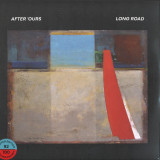
Over the last three decades, Auckland, New Zealand, has given birth to several generations of musicians, DJs, and producers who operated within the interzone between jazz, blues, soul, funk, Latin music, hip-hop, house, boogie, and broken beat. Across two slow-cooked albums that sit at the intersection of machine funk and vivid live instrumentation, Odyssey (2016) and their forthcoming sophomore release Long Road (2024), After 'Ours - the group project of pianist and composer Michal Martyniuk and drummer, guitarist and producer Nick Williams - have comfortably located themselves within this antipodean tradition.
Born and raised in Auckland, Nick Williams grew up surrounded by music from a young age. At home, his mother, Mary Anne, a record collector and DJ with deep, diverse vinyl crates, kept his ear sharp. By the time he was eight years old, he was regularly joining his musician father on stages across Australia in his blues rock band Slippery Sam. In his early twenties, Nick began leading the eleven-piece Auckland Latin-dub-funk fusion big band Tangent, who performed regularly until the late 2000s.
Michal Martyniuk, on the other hand, grew up on the opposite side of the world in Szczecin, Poland. After playing classical music for twelve years and attending jazz school, he relocated to New Zealand with his family in his teens. While studying at Auckland University Jazz school, Michal came into the orbit of the legendary New Zealand saxophonist, composer, producer, and band leader Nathan Haines, who brought him into the same world as future collaborators like Tama Waipara, Batacada Sound Machine, Sola Rosa and Nick.
Inspired by the rich stories of jazz, neo-soul, electronica, and dance music from both sides of the Atlantic Ocean and the open-eared Auckland scene they emerged from, After 'Ours formed in 2011. Born out of a friendship cultivated through playing together at bars and nightclubs around town and home studio sessions. "Nick had family and work, so I had to wait all day," Michal says. "We'd come to the studio at 10 PM and go till 3 AM. That's how we came up with the name.
Session by session, After 'Ours revealed itself to be a creatively fertile meeting of minds. "We both have our angles, but it works well in the end," Nick reflects. "It takes the music to a place we can't get to by ourselves."
Between 2011 and 2016, they wrote and recorded Odyssey with a cast of musical collaborators that included KP, Sharlene Hector & Kevin Mark Trail (UK), Matt Nanai, Nathan Haines, Jakub Skowronski, Nick's partner Ange Williams (nee Saunders) and British producer Mike Patto from the lauded UK future jazz group Reel People. Influenced by the smooth yacht rock of Steely Dan and Donald Fagan, the warm midtempo bounce of A Tribe Called Quest and J Dilla, and the complex jazz/RnB bop of Robert Glasper, Odyssey was a labour of love that emphasised community, warm-hearted hospitality, and care.
Seven years on, they're finally ready to return with Long Road, an album that contains some of their best work yet. As well as reconnecting with past collaborators Kevin Mark Trail and Ange Williams, Long Road sees After 'Ours calling on assistance from Louis Baker, Jakarta-based saxophone player Kuba Skowroński, bassist Dan Antunovich, Los Angeles-based drummer Chris Bailey and the journeyman British soul artist Omar Lyefook.
Across ten songs that plot a stargazed course through their antipodean spin on UK broken beat, jazz, modern soul, and blues rock, Nick and Michal build on everything they learned while writing and recording Odyssey. In the process, they take their joyful musical visions to sublime new heights.
Issued for the very first time the original tapes of material that would go on to be re-recorded for the critically acclaimed 'Heaven & Hull' posthumously released album.o Limited vinyl pressing of 500 copies, includes four page libretto o Features guest vocals by David Bowie, Chrissie Hynde and Ian Hunter o CD features three extra studio tracks plus six live recordings. Presented in card gatefold sleeve with 8 page booklet. Mick Ronson was one of the rock 'n' roll world's lost legends. Although quiet and unassuming, he left a legacy of his brilliant work with the likes of Michael Chapman, David Bowie, Lou Reed, Bob Dylan and the Ian Hunter Band along with scores of other artists, where Mick would give his talents as producer or arranger. Side A Vinyl Tracklisting 1/ Life's a River 2/ When The World Falls Down 3/ Colour Me 4/ Like A Rolling Stone (David Bowie vocals) Side B 1/ Don't Look Down 2/ Take a Long Line 3/ Trouble With Me (Chrissie Hynde vocals) 4/ When The World Falls Down II (Ian Hunter vocals) CD Tracklisting 1. Life's a River 2. When The World Falls Down 3. Colour Me 4. Like A Rolling Stone 5. Don't Look Down 6. Take a Long Line 7. Trouble With Me 8. Life's a River II 9. Don't Look Down II 10. Maria (You & Me Demo) 11. FBI 12. Marseilles 13. Don't Look Down 14. Sweet Dreamer 15. Trouble With Me 16. Take A Long Line Tracks 11 to 16 Live in Sweden 20th October 1991. Coloured vinyl LP or bonustrack CD available.
The EP lands hot on the heels of her relocating to London after selling out three
Australian headline shows in Melbourne, Sydney & Brisbane and a packed out
summer of touring across the UK/ EU festival circuit. The multi- hyphenate has
been releasing left- leaning house & techno over the last few years which has
been causing a stir on dancefloors worldwide alongside playing dozens of
festivals across the UK, Europe & Australia (Glastonbury, Lost Village, AVA,
Parklife, Gottwood & more) With DJ support from Bonobo, Fred Again.., Barry
Can't Swim, George Fitzgerald, Romy (from The xx), Confidence Man alongside
international media support from Resident Advisor, Mixmag, BBC Radio 1, DJ
Mag, Triple J, Dazed & more.
Enveloping the space between all-out bangers and bittersweet love songs, Pretty
Girl's new EP is a six- track missive that demonstrates her ability to balance
romantic mood pieces with euphoric club moments. Glittering vocals, high-energy
drums and masterful production provide the musical backdrop for the new EP,
which is laced with symbols of transformation and personal development.
Introducing ‘Total Blue’, the Los Angeles-based trio of Nicky Benedek, Alex Talan, and Anthony Calonico. Despite collaborating for over a decade, ‘Total Blue’ represents a new chapter in their artistic journey together as a trio.
Embracing chance, inviting the unknown, and guided by a spirit of sheer play and exploration, ‘Total Blue’ was driven by a desire to ‘touch the beyond’ in pursuit of an elusive vibe the three had been chasing for years.
Alex, Nick, and Anthony envision ‘Total Blue’ as the all-encompassing full picture, a place where the real and the imaginary begin to blur; a destination reached not through escapism but by expanding one's perspective; a widened scope of vision where personality both shines and disintegrates.
Across the album, their mission statement is expertly achieved with subtlety and delicate human touch; painting with a lush palette of digital synths, Akai EVI wind synthesizer, fretless bass, and guitar, the trio masterfully balance texture and color, evoking wide expansive vistas that stretch from Los Angeles right out to the furthest reaches of sky and sea. This is ‘Total Blue’ - a place of time and timelessness where echoes of history and tradition merge with rootless inhuman sonics.
Art and design by Michael Willis.
Pink Rhythm was one of John Rocca"s mid-80"s solo side projects and a somewhat evolution of his pioneering early-80s band, Freeez. After Freeez ended, John still had some ideas left over which he explored with Andy Stennett of Freeez. John also re-worked one of the final jazz funk songs written (but unused) by Freeez called "India". He named the project Pink Rhythm after his self-funded, entrepreneurial record label that he used to launch Freeez. Pink Rhythm lasted a brief year or two, between 1984 and 1985. In 1985, three singles were released, including "Melodies Of Love, which has become a cult favorite. It has been described as "timeless drum-machine soul music" and a "cult funk slow jam". Over the years, John Rocca"s music has been sampled by many, including Jamie xx, Empress Of, Brandy, Burial, Todd Terry, Coolio, Cut Chemist and more. Often credited as one of the pioneers of brit-funk, John"s music is iconic and has been used in TV/Movies like; Better Call Saul, Midsommar, Irma Vep plus the fashion world for brands including Calvin Klein, Louis Vuitton and more. "Melodies of Love" - though never a pop hit - was recently been used the Joaquin Phoenix film Beau is Afraid as well as in the acclaimed British Film Blue Jean. It was also recently featured in a high-end ad campaign for Piaget. It is pure, smooth 80s drum machines, it is synth sounds, saxophones and keyboards.... it"s retro, but it could also be current. Either way, it"s as refreshing now as it was then.
- A1: Thats How It All Is (Feat Kevin Mark Trail)
- A2: Dumplings For Dinner (Feat Omar)
- A3: Long Road
- B1: No Crime To Try
- B2: Work It Out (Feat Ange Williams)
- C1: Clearer Skies (Feat Kevin Mark Trail)
- C2: Sherwood Ave (Kitchen Party)
- C3: Everything I Have To Give
- D1: That Love (Feat Louis Baker)
- D2: Some Kind Of Blockage
Color Vinyl[35,71 €]
The records is released in two options. Both hvae 180g vinyl records. The first version has two black vinyls and the second limited edition (numbered 100 pieces) has one turquoise vinyl and the other red.
Over the last three decades, Auckland, New Zealand, has given birth to several generations of musicians, DJs, and producers who operated within the interzone between jazz, blues, soul, funk, Latin music, hip-hop, house, boogie, and broken beat. Across two slow-cooked albums that sit at the intersection of machine funk and vivid live instrumentation, Odyssey (2016) and their forthcoming sophomore release Long Road (2024), After 'Ours - the group project of pianist and composer Michal Martyniuk and drummer, guitarist and producer Nick Williams - have comfortably located themselves within this antipodean tradition.
Born and raised in Auckland, Nick Williams grew up surrounded by music from a young age. At home, his mother, Mary Anne, a record collector and DJ with deep, diverse vinyl crates, kept his ear sharp. By the time he was eight years old, he was regularly joining his musician father on stages across Australia in his blues rock band Slippery Sam. In his early twenties, Nick began leading the eleven-piece Auckland Latin-dub-funk fusion big band Tangent, who performed regularly until the late 2000s.
Michal Martyniuk, on the other hand, grew up on the opposite side of the world in Szczecin, Poland. After playing classical music for twelve years and attending jazz school, he relocated to New Zealand with his family in his teens. While studying at Auckland University Jazz school, Michal came into the orbit of the legendary New Zealand saxophonist, composer, producer, and band leader Nathan Haines, who brought him into the same world as future collaborators like Tama Waipara, Batacada Sound Machine, Sola Rosa and Nick.
Inspired by the rich stories of jazz, neo-soul, electronica, and dance music from both sides of the Atlantic Ocean and the open-eared Auckland scene they emerged from, After 'Ours formed in 2011. Born out of a friendship cultivated through playing together at bars and nightclubs around town and home studio sessions. "Nick had family and work, so I had to wait all day," Michal says. "We'd come to the studio at 10 PM and go till 3 AM. That's how we came up with the name.
Session by session, After 'Ours revealed itself to be a creatively fertile meeting of minds. "We both have our angles, but it works well in the end," Nick reflects. "It takes the music to a place we can't get to by ourselves."
Between 2011 and 2016, they wrote and recorded Odyssey with a cast of musical collaborators that included KP, Sharlene Hector & Kevin Mark Trail (UK), Matt Nanai, Nathan Haines, Jakub Skowronski, Nick's partner Ange Williams (nee Saunders) and British producer Mike Patto from the lauded UK future jazz group Reel People. Influenced by the smooth yacht rock of Steely Dan and Donald Fagan, the warm midtempo bounce of A Tribe Called Quest and J Dilla, and the complex jazz/RnB bop of Robert Glasper, Odyssey was a labour of love that emphasised community, warm-hearted hospitality, and care.
Seven years on, they're finally ready to return with Long Road, an album that contains some of their best work yet. As well as reconnecting with past collaborators Kevin Mark Trail and Ange Williams, Long Road sees After 'Ours calling on assistance from Louis Baker, Jakarta-based saxophone player Kuba Skowroński, bassist Dan Antunovich, Los Angeles-based drummer Chris Bailey and the journeyman British soul artist Omar Lyefook.
Across ten songs that plot a stargazed course through their antipodean spin on UK broken beat, jazz, modern soul, and blues rock, Nick and Michal build on everything they learned while writing and recording Odyssey. In the process, they take their joyful musical visions to sublime new heights.
Adam Beyer and Green Velvet’s behemoth co-production ’Simulator’ gets a trio of fresh remixes.
Something special happens with Beyer collaborates with Curtis Jones aka Green Velvet, with last year’s ‘Simulator’ a timely reminder of their musical synergy, following the 2019 classic ‘Space Date’ with Layton Giordani.
A year on from its release, Drumcode treats us to three contrasting interpretations that epitomise the sonic breadth of the label in 2024.
Mha Iri is first up having established herself as one of Drumcode’s most vital go-to producers in recent times. The Scottish artist turns in a blazing masterclass, taking the nasty bass stabs of the original and utilising them as thunderous motifs throughout her remix, as she brings intensity in spades with plenty of thrilling builds and drops along the way.
Emerging Australian artist Odd Mobb is next, whose music has been championed by the likes of Fred Everything and Skrillex. He brings the energy throughout the four-minute rework, amplifying all the low-end elements, while adding fresh bursts of colour. It’s a dynamic reinterpretation that will keep listeners on their feet.
Chris Avantgarde, whose contributions to Drumcode have so far comprised an outstanding collab with Kevin de Vries ‘Mind Control’ and an A-Sides contribution ‘The Last Time’, returns with the goods and lives up to his boundary-pushing pseudonym. This has more sides than a rubix cube and shows the German’s sound design class, encompassing elements of breaks, bass, electronica and techno, yet still manages not to sound like anything else out there.
Pressed on Limited Edition Neon Green Ripple Effect vinyl in the DC House bag.
One of the greatest UK White Labels of all time. Terrestrial Funk brings you an absolute summer sensation over three decades delayed. Relegated to obscurity until now, this four track EP boasts the downtempo hit ‘Summertime’ alongside three electronic bangers… and mash. The dubbed out stabs of ‘Jennifer’ on the A2 and two never before heard versions of ‘Let’s Climb’. Feel the festival ready power of the ‘Come To Me Mix’ and lose yourself to the hypnotic squelch of the ‘Glad You Made It Dub’, ready for sweaty summer nights.
In the late eighties, Simon Akers and Jason Brown began producing in a quaint home studio. Later collaborating with likeminded talents through the early nineties. Terrestrial Funk has worked with the group to transfer all their old digital audio tapes and bring you a series of fresh music yet to see the light of day. Jacqueline Foster aka Jacquoda brought her stunning voice to the project on this massive single showcasing vocals that shine brighter than the summer sun. Grab your copy today!
Previously Unreleased Recording. Limited to 1200 copies on transparent cherry vinyl. Tip-on jacket, Download code. Insert featuring LP sized original art by Grungie O'Muck. Includes the original recording of Richard Tucker's "Are You Leaving For The Country", later covered by Karen Dalton, and the only song co-written by Karen & Richard, "Sleeping In The Garden". "Richard, Cam & Bert seem to have grasped The Great Harmony. That is, ensemble singing that is at once sweet, precise, funky and a bit sardonic..." -Mike Jahn / New York Times (1970) "For a few years in the late sixties and early seventies Richard Cam & Bert ruled MacDougal St. walking a fine line between the increasingly commercialized demands created by groups like Crosby Stills and Nash and the fierce integrity of earlier folk performers, the generation to which Richard belonged. They managed this with great aplomb, producing original tunes of great integrity and obvious folkloric origins, as well as those which expressed the anarchic omnipresent psychedelia of the moment. They also never abandoned the idea of including some traditional material in their performances. But for the usual random application of luck they could have been very big." - Grungie O'Muck / Artist, Bluesman, Cover artist for their first album and contributor to this one. Richard Tucker, Campbell Bruce, and Bert Lee coalesced as a trio in the spring of 1968, and by the end of that year had become regular performers at fabled Greenwich Village nightspots - The Gaslight, The Bag I'm In, Cafe Feenjon, among others. But mostly they were street singers, busking regularly in Central Park. Their only LP, Limited Edition, was released in 1970, and sold mainly at gigs and on the street. Somewhere in The Stars compiles earlier, previously unreleased recordings, when all three members were signed with Peer-Southern Music publishers as writers and began using their studio to make demos and experiment musically. Beautifully recorded by house engineer Charlie Mack (supervised by Jimmy Ienner), the demos capture a back room casualness and rustic, homespun quality. For me, listening to their songs and harmonies is like entering a world you always hoped existed but had never experienced. Some of the songs were re-recorded the following year for Limited Edition, but many are heard here for the first time. Among them is the original demo for Richard Tucker's song, "Are You Leaving For The Country", which Karen Dalton covered on her seminal 1971 release, In My Own Time. Richard and Karen were husband and wife for much of the 1960s, performing as a duo (initially as a trio with Tim Hardin), and navigating their time on the Village scene while alternating living in a small mining town outside Boulder, Co. before splitting up in 1967. Also making its debut, is the only song Richard and Karen ever wrote together, the haunting "Sleeping In The Garden". Also contains two epic songs by Cam "One Of These First Nights", and "Stockholm") not on their LP, but staples of their live performances, and noted in a gig review by The New York Times, and in a column by future A&R hero, Karin Berg, who was an early champion. Another rarity is the only cover of "Sweet Mama" by Fred Neil we've ever heard. Campell Bruce came to New York in 1967 as lead singer with a band from Washington, DC, The Natty Bumpo. They'd recently signed a record deal with Phillips, but were falling apart. Cam landed in the Village with an acoustic guitar and first started playing and singing in the basket houses, and shortly thereafter at The Gaslight, as the "Cam Bruce Trio" (which included Collin Walcott). After opening for Mose Allison, Cam's hero, the trio went their separate ways, and Cam returned to regular solo gigs at The Flamenco, and the basket houses on Bleecker. Richard and Cam met up on that scene and quickly found a musical kinship as well as becoming best pals. Bert Lee arrived in New York as a runaway the following winter, and began playing and sleeping wherever he could. His sometime accompanist, Ron Price, introduced Bert to Richard and Cam just as Bert's own songs were garnering attention from publishers. According to Bert, "I arrived on the New York scene during a time of great change, and it was the notion of change that influenced me. All around me I saw there were two sorts of songwriters, on the one hand dedicated to the traditions that had inspired them, folk, jazz, the American songbook. On the other hand were songwriters influenced by the wave of experimentation that The Beatles were the perfect example of. Mixing genres, writing lyrics that weren't just about ordinary love and loss. Richard Tucker was a country blues player, with a relaxed and melodic approach to the craft. Cam wrote something more akin to soul songs, with a hint of jazz in the changes. I was writing tunes that sometimes drew on classical structures with a tendency toward what I suppose would be known as prog-rock. But I was rather adamant about not being pinned down stylistically, and so I would write, for example, a song based on some complex classical chord structure, and then go right ahead and write a simple folk song, like Evelyn. Our band was popular locally, and it was this variety that made it distinct." Delmore is excited to present this unearthed treasure, fifteen years in the making. In the words of Richard Tucker, "Tap on your knee, roll on the floor; if you aint free, what's it all for?" "The trio's singing, playing, and writing have all withstood the test of time. Believe me, because I was there. In 1969 R,C&B, myself, Charles John Quarto, David Bromberg, Ron Price, and Keith Sykes were just a few of that year's crop of song-slingers. We were young turks back then, out on the prowl in New York's Greenwich Village for record deals, gigs, and beautiful young women to sleep with and maybe even write a song about. I've lost the names and numbers of those lovelies and I'm not sure what happened to Ron Price, but Richard, Cam, and Bert are back! - Loudon Wainwright lll
Gregory T.S. Walker’s Minstrels & Minimoogs was self-published by a young, nomadic composer and virtuoso in 1988 to accompany an immersive multimedia performance at the University of Colorado Boulder’s Fiske Planetarium. Created with this outer, and other, world setting in mind, the four tracks find Walker stretching toward an ancient-to-future vision where Egyptian myths and Hieronymus Bosch-ian tableaus are rendered in a screaming three dimensional circuitry of electronic drums, synth guitars, and, of course, Minimoog. Given the musical terrains and outmoded topics traversed, and that this entirely DIY effort was originally released as a micro one-sided 12” edition, Minstrels & Minimoogs is as perplexing and euphoric a document lost-to-time as it is now found.
Born in 1961 into an intensely musical family spanning four generations, Gregory’s mother Helen Walker-Hill was a noted musicologist specializing in the rediscovery and work of historical Black female composers, while his father, George Walker, was the first African American composer to win the Pulitzer Prize for music. Both parents studied with the famed (and famously strict) Nadia Boulanger in Paris in the 1950s, and held to lofty aesthetic standards in their home life. Walker began studying the violin as a child, but when a burgeoning interest in the electric guitar and rock music as a teen manifested, it was largely verboten in the household. The rule was that the music played in the home was to be acoustic and classical. Although the elder Walkers eventually relented and allowed Gregory’s guitar to be plugged in for a brief interval on the weekends, the remaining days he settled for strumming it sans amplification.
Gregory, conditioned and eager for a life in music but looking to get out from under the influence and yoke of his famous composer father, ultimately chose to study computer music at the University of California at San Diego, where he earned a Master of Arts. This was followed by another MA in electronic music composition at that hotbed of West Coast experimental music, Mills College. Intermedia and multimedia in the arts was the rage in the 1980s, and Mills was one of the centers for it; audacious spectacle meeting visionary performance, such as one of the realizations for Anthony Braxton’s music for multiple orchestras a young Gregory performed in with his violin.
After a series of solo synthesizer concerts around California, Gregory followed a girlfriend on a mid-country move to Boulder, Colorado. After picking up yet another composition degree at University of Colorado Boulder, his life as a composer really started, writing a piece for extended technique for guitar, a passacaglia for vocoder and orchestra, as well as Minstrels & Minimoogs.
Envisioned as a multimedia performance such as the kind he’d experienced at Mills (which was all but unknown in Boulder at the time), Gregory roped in a number of college going or aged friends of varying skill levels and musical sympathies to accompany him with distorted sax or oblique spoken interludes. Confronted with a lack of finances, but driven to get his ideas captured in a complete musical package, the album was recorded in his brother’s apartment. If not every player assembled was on Gregory’s virtuosic level, so be it; it was more about capturing the spirit of his intentions and embracing the serendipity of mistakes.
An inspired attempt at world building, Minstrels & Minimoogs draws on the deep well of musical knowledge Gregory gathered from his parents and teachers, but all the while subverting that historical basis by incorporating mutant strains of prog and pop music. The work accumulated is not unlike the playful 1980s work of Gregorio Paniagua, where medieval estampies and rondeaus are wrenched into an anachronistic present where Hildegard Von Bingen and Kate Bush are contemporaries. Ars nova, new art, a 20th century minimalist jester and troubadour.
A one sided LP was the cheapest option Gregory found to have Minstrels & Minimoogs memorialized on vinyl, so somewhere between 50 to 100 copies were pressed. There was no distribution, outside of copies that were handed out to friends or sold at the performances at the planetarium. Gregory T.S. Walker’s cosmic-futuristic forays into oblique pop and baroque subversion could forever reside perfectly in both the domed simulacrum of our universe for which it was composed, in the formats it is being reintoduced now, and our own biblical firmament. For in the words of Gregory, straight from the original liner notes: “God Is A Minimoog”
Gregory T.S. Walker’s Minstrels & Minimoogs arrives again August 23, 2024 on vinyl and digitally as part of uncommon¢ (“uncommon sense”), an open-ended, serialized endeavor from Freedom to Spend that provides new meaning for rarefied recordings from music's outermost fringe.
"Music On Vinyl proudly presents the first installment of the acclaimed Miles Davis Bootleg series on pristine 180 gram vinyl!
The explosive transformation of Miles Davis' 'second great Quintet' with Wayne Shorter (tenor sax), Herbie Hancock (piano), Ron Carter (bass), and Tony Williams (drums) is laid bare on Live In Europe 1967: The Bootleg Series Vol. 1.
Culled from original state-owned television and radio sources in Belgium, Denmark, and France, this 5 LP box set spans three northern European festival performances over the course of nine days in October-November 1967. The audio shows consist entirely of previously unreleased or previously only bootlegged material. Miles' Quintet lineup of 1965 to '68 is acknowledged as one of the high reference points in 20th century jazz, and its influence continues to reverberate in small group jazz today, and it was the quintet's live performances, as they evolved into Miles' ideal of a ""leaderless"" jamming ensemble, that truly immortalized them.
Live In Europe 1967: The Bootleg Series Vol. 1 is the best historical album of 2012, according to the Downbeat Critics Poll 2012. "