We’re hugely excited to announce the brand new album from Dee C. Lee - ‘Just Something’, out 22 March on Acid Jazz. It follows the incredible response to the new single ‘Walk Away’ and last year’s double-sider ‘Don’t Forget About Love’ / ‘Be There In The Morning’, marking the return of one of the UK’s most revered soul singers. Dee is known for her work with The Style Council, Wham!, Slam Slam and Animal Nightlife, and an illustrious solo career (including the Top 3 hit ‘See The Day’). ‘Just Something’ is her first new record since 1998, and her debut for Acid Jazz. Available on LP and CD, all pre-orders from the Acid Jazz Store will be signed by Dee.
‘Just Something’ features 11 songs: nine originals co-written by Dee, a song penned by her daughter Leah Weller, a successful singer/songwriter in her own right, and two inspired covers. Produced by Sir Tristan Longworth, the album is a soulful collection that frames her instantly recognisable vocals in luxurious horns, percussion and keys, and heritage soul with a disco backdrop. While making the record has been a collaborative process, ‘Just Something’ is nevertheless the sound of a singer in charge of her own style and direction. Her vocal delivery and phrasing steal the show throughout, bright and lilting one moment, passionate and ringing the next. She cites Chaka Khan and Jean Carn as major influences, but Lee’s voice is resolutely her own, the product of a life lived.
Inspired by classic Motown, current single ‘Walk Away’ was written by Dee with one of her ‘brothers from another mother’, former fellow Style Council member Mick Talbot, and features Talbot’s distinctive piano and Wulitzer playing on the track. Talbot also plays on another of the album’s many standouts, the Leah Weller-penned ‘Everyday Summer’.
Three of the album’s songs, opener ‘Back In Time’, first single ‘Don’t Forget About Love’ and ‘How To Love’ were co-written with Michael McEvoy and Ernest McKone, whom Dee wrote with back in the 1980s. All three songs channel her musical past, from the thrill and excitement of those early Wham! days, going out and partying, to The Style Council’s trademark jazzy soul, and expressive balladry and killer choruses, which places Lee in the lineage of classic soul singers.
Elsewhere, on ‘Anything’, co-written with Paul Barry, Dee sings her heart out on a song full of optimism and hope for the future, while ‘For Once In My Life’, the oldest song here dates back to 1998, is effortlessly commercial and has hit written all over it, with Lee empowered and regal sounding over a warm blanket of bassy funk.
The album’s two covers, meanwhile, were both suggested to Lee by Acid Jazz’s Eddie Piller. In Lee’s hands, Renee Geyer’s ‘Be There In The Morning’ is pure celebration, taking its cue from the Norman Connors version from 1979. ‘I Love You’, written by Don Blackman and recorded by Weldon Irvine in 1976, could have been written with Lee in mind. A big club tune, Dee recalls hearing it everywhere she went and I wanted to keep as close to the original vibe as she could.
Dee’s relationship with Acid Jazz the goes back to The Style Council days, and it was the 2019 documentary ‘Long Hot Summers’ that renewed Dee’s friendship with label founder Ed Piller and director Dean Rudland. We’re honoured to release this record and be a part of Dee’s return to the forefront of UK soul music.
Поиск:three n one
Все
The Nomads remastered reissue of their album Solna, recorded by the Swedes in 2012, limited edition of ww 500 copies. The tracklist here is following the 2013 US release of the album, comprised of nine original album album tracks, but cutting three tunes to have those replaced with three songs culled from the Loaded Deluxe EP. After many years of career, The Nomads produced their strongest album to date. The group perfected their sound, live and in the studio. Solna is the distilled essence of what Nomads are known for. The Nomads deliver hair-raising authenticity of rock and roll with unsurpassed purity. Nobody coughs on them or will cough on them. They are still as good as ever. The formula is simple: a strong frontman, Nick Vahlberg, a guitar hero, Hans Ostlund, a powerful drummer, Joakim Werning, and a multi-talented bassist and composer, Bjorne Froberg. The Nomads are an institution in Europe after more than 40 years of career. Their last album, "Solna" was named after the Stockholm neighborhood from which they emerged in 1981, paving the way for the garage rock scene of the time. "Aside from the Pebbles compilations, not much was known about the garage bands of the 60s and many people first heard those great songs in The Nomads version," according to Chips K (famous Swedish producer - Hellacopters, la Secta_- and member of Sator). "But one thing that distinguishes the band from many other revival bands is that they never just copied the sound of the originals. They added extra influences such as punk, power pop and hard rock. That special recipe is what still makes their sound unique." Bands like The Hellacopters, Maharajas and Sator are direct descendants of what The Nomads created. They were closer to Australian punk rock and took varied influences to create something completely their own.
"Joe Pernice has been writing for a long time—most of his life, in fact—and has crafted a remarkable catalog that boldly reinterprets and recasts classic American pop. Who Will You Believe may be his most moving and nuanced album yet; it’s certainly his timeliest. “These songs were all written during the same time period,” he says, “and they all seemed to tap into a mood I was in at the time. I go through spells where I’m a certain way for three or four months. I might be more reticent than usual, or more outgoing. With all of my records—and especially with this one—the songs all feel like they belong together, probably because they all arrived during the same stretch of time.”
In a single six-month stretch he was left reeling from the deaths of three close friends, including David Berman, poet and songwriter for Silver Jews and Purple Mountains, and Gary Stewart, the Rhino Records co-founder and tireless Pernice Brothers supporter since their first album in 1998. “That was such a bad patch when David and Gary both took their own lives. And my cousin Joe Harvard, who started Fort Apache Studios in Boston and was like a brother to me—he died, too. It was such a tough year. I was thinking about them a lot and watching how divided America had become. I was doing my best to try and take nothing for granted.
”
Pernice has been releasing albums for over 25 years. And with age comes a greater patience and an immense appreciation for the act of creation. Who Will You Believe showcases a beautiful balance between such sadness and moments of solemnity with warm humor and camaraderie."
The five song blessing gives a further insight into the frankly deranged production of bassist/producer Gianmarco Guerra, who served as the sole producer and one of three engineers for the record. Songs like "(Quietly) Do The Right Thing" and "29" continue to show Soul Glo's affinity for speed as a vehicle for their aggression and messages, while songs like "I'm On Probation" and the previously released "Mathed Up" shows the bands love of chaotic-yet-atmospheric noise and the most popular rhythmic vocal styles of today's current rap on top of the pummelling heaviness of the drums of TJ Stevenson. EP featuring a silkscreened b-side.
Available on super ltd edition pink vinyl with obi strip & download code. Only 300 copies pressed.
London based shoegaze three-piece Holy Springs are Neil Atkinson Jr, Maria Bellucci and Suzanne Sims. The band blend psychedelic influences with their love of lo-fi guitars and keyboards. In 2020 they self-released the cassette mini album 'Indoor Tapes'. Shortly after the incredible EP 'Camera' and, we are delighted to be releasing their debut full length E.A.T on ltd edition vinyl.
Debut albums can sometimes feel a bit disparate as bands fling all the songs they’ve been working on together with no real thought as to how they all hang together as an album. Not so with E.A.T. The effort and thought that has gone into writing a cohesive and well-structured album is evident on every note played. I particularly enjoyed the instrumental interludes which play a pivotal role in neatly segueing between tracks. If this is the band just starting out imagine what their next album will sound like, and the one after that. I hope Holy Springs are ready, because this album is about to blow up.’ Static Sounds Club
Mr. G and Duncan now return to 49North with a brand new 4 track EP.
The first cut, Cosmic One is a peak time futuristic roller that lures you in gently and leads you through its infectious sonic journey.
Cosmic Two comes straight in with its solid electro-funk 808 rhythm, a nod to early Detroit electro but with its feet firmly set in the 21st Century, it builds and builds and builds.
Cosmic Three revisits the synth work of Cosmic One and switches things up a few gears. From the get-go it’s heads down, a driving funk fuelled groove.
Cosmic Four rewinds us to a beat-less reprise of Cosmic One but very much its own unique space. Like sliding into a warm bath of dubbed out beat-less analogue bliss
Enjoy the ride ......
Limited To 140 Copies Worldwide*
One of the most imaginative, creative EP’s we have ever put out on Vinyl Fanatiks. Originally released on Three Scar Records in 1993, Silver Fox’s own label, hailing from Wolverhampton. Back in 2019 it was repressed on Vinyl Fanatiks on orange vinyl but sold out before it got to distribution, so grab a copy while you can.
This EP has incredible sample usage and amazing depth and texture for a hardcore release, I do not think there is another release like it from that era. Silver Fox use to rent a flat with Goldie when they lived in the city as they were both on a printing course. Silver Fox stayed in the Wolverhampton and put his printing course to good use, making rave t-shirts which he would sell at Club Kinetic and Quest in Wolverhampton – two rave clubs that were renowned across the UK at that time. He now runs Ricochet Print and does all the merch for Vinyl Fanatiks.
This is an EP you can listen from start to finish and be taken on a trip to a time when Akai samplers were being brutalised and Cubase was the king of the rollers.
Only 140 have been pressed on 180g pink marbled vinyl.
- A1: Hopeton Lewis - This Music Got Soul
- A2: Hopeton Lewis - Let Me Come On Home
- A3: The Zodiacs - Walk On By
- A4: Termites- We Gonna Make It
- A5: The Dynamites - Fountain Bliss
- B1: Hopeton Lewis - Rock A Shacka
- B2: Hopeton Lewis - Don't Cry
- B3: The Royals - House Upon The Hill
- B4: The Tartans - Real Gone Sweet
- B5: The Tartans - Rolling Rolling
- C1: Hopeton Lewis - I Don't Want Trouble
- C2: Lester Sterling - Lester Sterling Special
- C3: The Dynamites - If You Did Love Me (Take 1)
- C4: The Tartans - Don't Take That Train
- C5: Lynn Taitt & The Jets - Batman (Early Take Version)
- D1: Hopeton Lewis - Oh Tell Me Darling (Take 1)
- D2: The Tartans - I'm Ready
- D3: Henry Buckley - Take Me Back
- D4: Roland Alphonso - Sounds Of Silence
- D5: Lynn Taitt & The Jets - Batman (Rehearsal Version)
- D6: The Federal All Stars - Merritone False Starts (Pt. 2)
Part 1[31,72 €]
repress !
The birth of rock steady portrayed in a consummate collection from the vaults of Federal Records
Most of them drawn directly from Ken Khouri's master tapes this miscellany of cool rock steady includes marvellous music from the originator of the genre, the one and only Lynn Taitt, alongside an array of Jamaica's greatest singers and vocal harmony group
American rhythm & blues fervour, boosted by a multitude of sound systems playing 78rpm records on increasingly larger sets, gripped Jamaica from the late forties onwards but, towards the end of the decade, the American audience began to move towards a somewhat softer sound. The driving rhythm & blues discs became increasingly hard to find and the more progressive Jamaican sound system operators, realising that they now needed to make their own music, turned to Kingston's jazz and big band musicians to record one off custom cut discs. These were not initially intended for commercial release but designed solely for sound system play on acetate or 'dub plates' as they would later be termed. These 'specials' soon began to eclipse the popularity of American rhythm & blues and the demand for their locally produced music proved so great that the sound system operators began to release their music commercially on vinyl and became record producers. Clement Coxsone' Dodd, Duke Reid 'The Trojan' and Prince Buster, who operated his Voice Of The People Sound System, were among the first to establish themselves in this new role and the nascent Jamaican recording industry now went into overdrive.
In 1954 Ken Khouri had numbered among the first far sighted entrepreneurs to produce mento records with local musicians (mento is Jamaica's original indigenous music) before progressing to opening Jamaica's first record manufacturing plant. Three years later he moved his operation to Foreshore Road (later renamed Marcus Garvey Drive) where, with the assistance of the inestimable Graeme Goodall, he updated and upgraded his recording studio. The importance of this enterprising move was critical to the development of Jamaican music and its influence both profound and far reaching.
"It was Ken Khouri's Federal Recording Studio, the womb that gave birth to the talented writers, artists and musicians that gave Jamaica its musical identity." Prince Buster
Federal Records was not only the place for the sound system men to record their music but it was also where they had their records manufactured and, consequently, the company enjoyed a near total monopoly on recording and record pressing in Kingston. In 1963 Ken Khouri sold his one track board to Clement 'Coxsone' Dodd, who established Studio One, and Ken imported the first stereo equipment to Jamaica and Federal began making stereo records. The following year WIRL (West Indies Records Limited) opened but the competition served to drive the company on to higher heights. Ken Khouri continued to work on his own productions and, in 1966, the seven inch release of Hopeton Lewis' 'Take It Easy', recorded under the guidance of Trinidadian guitarist Lynn Taitt, ushered in the rock steady era.
These two essential albums showcase a stunning selection of well known hits, and not so well known rarities, from the vast Federal catalogue. All tracks have been transferred direct from the master tapes and assembled with the invaluable assistance of Ken Khouri's son, Paul Khouri, who generously gave Dub Store unlimited access to the Federal tape vaults. The extensive liner notes feature extracts from extensive interviews with Paul Khouri whose knowledgeable recollections of working on Marcus Garvey Drive, not only as a producer but as an engineer and musician, are illuminating and educational. Both sets present an insight into the birth and growth of Federal Records and the Jamaican recording industry and are essential to an understanding of the real roots of reggae music.
Anjunabeats is pleased to announce the self-titled debut album from JODA, aka Jono Grant and Darren Tate. JODA are a fresh musical pairing with shared DNA. Both together and apart, Jono Grant and Darren Tate have been there, done that and bought the vintage synth gear to celebrate.
Grant is one-third of Above & Beyond who, over the course of a two-decade career, have established themselves as one of the biggest electronic groups in the world. Eight studio albums (including one as vocal trance group OceanLab and two acoustic reworks), 17 compilation albums, a film score and nearing 100 singles speak to an output as varied as it is prodigious.
Their label Anjunabeats is home to a bustling community of artists with over twenty years of catalogue. As a classically trained musician, songwriter, producer and hitmaker, Tate is an OG Top of the Pops-botherer. In the early Noughties, at the outset of his career, he appeared on the show three times, once with Angelic, his collaboration with Judge Jules and the latter’s wife, performing classic trance banger It’s My Turn, then twice under the name Jurgen Vries.
The following years saw more musical adventures, more Top 40 UK hits (12 in total) and more pseudonyms, including the trance-facing DT8 Project. In 2003, the pair managed to sync their schedules to work on a couple of tracks, ‘Let The Light Shine In’ and ‘Nocturnal Creatures’. Clearly, there was chemistry here. But as the pair’s respective careers subsequently took them off round the world in opposite directions, reconnecting other than fleetingly was never easy. Then in 2019 Tate returned to his trance roots and signed to Anjunabeats for his DT8 Project releases.
- A1: Time Continuum (Intro) 0 58
- A2: Knowledge Of Self 2 57
- A3: Keep Your Kids In School 1 49
- A4: Wire Fraud 5 04
- A5: Take Me Back 3 47
- A6: Player's Groove 2 13
- A7: Sunday Morning Dj 1 51
- B1: Ezekial's Vistion (Interlude) 0 32
- B2: Battle Chariot 3 00
- B3: No Natural Explanation 1 16
- B4: Cocktail Break 4 26
- B5: My Century 2 37
- B6: Environmental Condition 3 08
- B7: Cosmic Eyes (Interlude) 0 32
- B8: Between The Lines 2 17
- B9: Pass The Threshold (Outro)
For Fans Of... El Michels Affair, Adnan Younge, Roy Ayers, Karnem Riggins, The Roots, Khruangbin. Producer "Grimez"” has been making music for 20 years deep, Grimez has ghost produced tracks for 50 cent, Hi-Tek, Kool Keith, Stick man (DEAD PREZ), Killah Priest, Sadat X, MOOD & Talib Kweli, and Mighty Diamonds to name a few. Gritty & raw analogue instrumentals. Very limited black vinyl LP. Genre: Hip Hop. Doctor Bionic is back on the airwaves. The newest album from Cincnnati based executive producer Jason Grimez is an instrumental collection of classic soul, jazz, and hip-hop sounds. The first instalment of a three-part series, Terrestrial Radio offers 37 minutes of carefully curated jams. Tune in to catch the vibe on 1/26/2024. Jason Grimez is an engineer, executive producer, and the owner of Chiefdom Records. Growing up in the 90s, he fell in love with hip hop at an early age. He started scratching on a pair of 1200s and sampling records with an MPC 3000 in high school Years of sampling, mixing, producing, and sharing his own music led him to where he is today. His independent label Chiefdom Records has released close to 30 albums in the last seven years. His studio persona Doctor Bionic was one of the first to see a release on the new implant. The project features a rotating cast of incredibly talented session musicians. Jason is responsible for writing, recording, producing, mixing, and releasing the records. Grimez sets the scene on track one of Terrestrial Radio, aptly titled “Time Continuum.” The listener is greeted with the scrubbing sound of a radio dial We pause for a few seconds when the signal is strong enough to catch an ad-read from an old cereal commercial, or to gather an update from a sports announcer. Grimez takes the listener to a new era each time he spins the dial. Our search comes to an end on the channel where we’ll cruise through the next six songs, hand-picked by the Doctor himself. Terrestrial Radio features some of Cincnnati's best session musicians. “Keep Your Kids in School” highlights a killer rhythm section. Brian Batchelar-Glader recorded the organ over an effortlessly funky foundation formulated by Manan Havéans (drums) and Aaron Jacobs (bass). With an equally punchy bass line, funky guitar jabs , and thoughtful trumpet arrangements (Michael Mawnidoglou), “Wire Fraud” s the perfect soundtrack for your next bank heist. The remainder of the record offers everything from shuffling gospel grooves to head-nodding drum breaks. As Doctor Bionic, Jason Grimez has carved out a niche for a community of musicians to thrive in and build upon. Grab a copy of Terrestrial Radio on 1/26/2024 and stay tuned for the second instalment in the series.
Several Years Ago, the Disco Records Dj Crew Members Got Their Hands on a Couple of Original 70s Obscurities, While These Standout Records Shone Brightly in Their Own Right, the Team Finally Decided to Put Them Out as Those Obscure Old Records Fetch Eye-Wateringly High Prices on the Second-Hand Market. Due to Popular Request & Lovingly Mastered to the Highest Possible Standards, They Are Now Available to Play and Share in Very Special Moments at Parties Around the World. This Will Surely Be One of the Most Keenly Anticipated Disco Release of the Year. for Our First Release, We Are Extremely Proud to Bring You at Last, Three Very Hard to Find Disco Anthems on Sides a & B in Their Glorious Full Extended Versions...
Originally released on Milestone in 1969, the hard-bop cult classic Power to the People finds legendary saxophone virtuoso Joe Henderson soaring in the intersection of thematic development and ecstatically pure sound, joined by a titanic rhythm section featuring Mike Lawrence, Herbie Hancock, Ron Carter and Jack DeJohnette. This Jazz Dispensary reissue was mastered from the original analogue tapes by Kevin Gray, pressed on 180-gram vinyl at RTI, and comes packaged in a gatefold tip-on jacket. US import.
Returning from a period of intense and concentrated seclusion in its purest form, WRISTMEETRAZOR make their return in 2024 with their upcoming third album, Degeneration. The US metalcore outfit’s latest full length will be released via Prosthetic Records on March 29. Following the release of their 2021 sophomore effort, Replica of a Strange Love, the WRISTMEETRAZOR’s line-up went through of metamorphosis with Justin Fornhof abdicating his role on bass in favour of lead vocals - bringing Elaine Dalton (bass) and Nate Billmyer (guitar) to the fold in the process. Extensive North American touring soon followed with stints on the road among the likes of Seeyouspacecowboy, Traitors, Eighteen Visions and festival appearances at Furnace Fest and Code Orange’s Code World, respectively. Having solidified and fine-tuned the strengths of their latest incarnation onstage, the newly upgraded quintet found themselves with a renewed focus leading into Degeneration’s gestation period. During this moment of rare quiet for the group, WRISTMEETRAZOR sought the production skills of Randy Lebeouf (The Acacia Strain, Dying Wish, Kublai Khan). Ushering themselves into near total isolation in the woods of New Jersey, the writing and recording process for Degeneration was one of acute solitude, only leaving the studio’s cabin three times during the 30 day lock-in between almost non-stop 12 hour recording sessions. Degeneration’s backdrop of self-imposed seclusion bore fruit as the album’s lyrical focus began to develop. Whilst there are still traces of WRISTMEETRAZOR’s established world of Nietzchian philosophy and twisted romanticism, Fornhof found himself gravitating towards themes of misanthropy, apoplexy, and moral, political and religious hypocrisy within society. With WRISTMEETRAZOR’s ire pointed outwards rather than inwards, societal degeneration is explored through allegorical tales of mechanical decline and system failure that pull together to reveal a larger picture of the band’s disdain for humankind’s more repulsive traits. Songs such as Turn On, Tune In, Drop Dead, DogdayGod and The Greatest Love Offering in the History of the World reference intentional exits from society and sordid real life stories of assassination, against deftly woven industrial and EBM influences with groove based nu-metal flourishes at the fore. Degeneration’s post-apocalyptic production values lend a cold and methodically calculated quality to WRISTMEETRAZOR’s new skin, without losing the visceral core of their identity. Seeking to ensure a fully realised aesthetic to represent the absurdity of seeking justice in an unjust world, the cover was put together by Philadelphia, PA visual artist Alex Eckman-Lawn (END, Dim Mak, Woe).
To abandon animals for music – and avant-garde jazz at that –, could seeming shocking to some people. However, it is exactly what Manuel Villarroel did, as he was a vet for three years before leaving his native Chili for Europe and a career in music. And though the animals may have suffered, the world of music can be grateful.
Born in 1944, Manuel Villarroel lent an ear to the best pianists from North America: Oscar Peterson and Erroll Garner then Herbie Hancock, McCoy Tyner and Cecil Taylor. Manuel left Santiago in September 1970 to participate in the Contemporary Music Workshop in Berlin. To pursue his musical career, he rapidly decided to remain in Europe.
The following year in Paris, Manuel began a quartet with saxophonist Jef Sicard (who would also play with his brother Patricio, in the Dharma Quintet). But the group would rapidly expand: Villarroel and Sicard added Gérard Coppéré (saxophone), William Treve (trombone), François Méchali (bass) and Jean-Louis Méchali (drums). And with the arrival of Sonny Grey, a Jamaican trumpeter heard ten years earlier with Daniel Humair, the Matchi-Oul Septet was complete.
Complete and ready: on May 8th, 1971, Matchi-Oul was in the studio for Gérard Terronès’ Futura label. The septet recorded seven of the pianist’s compositions. A succession of tracks which flow magically from one to the next: from the first drum strokes to the last deep notes of the bass, the successive waves roll over the piano and whistle through the wind instruments. And when they all come together it gives even greater force to Villarroel’s beautiful songs. Terremoto is a masterpiece of collective expression: but what else could we expect from a “supergroup’’ of this stature?
- A1: I Am Missing You
- A2: Kahān Gayelavā Shyām Saloné
- A3: Supané Mé Āyé Preetam Sainyā
- A4: I Am Missing You (Reprise)
- A5: Jaya Jagadish Haré
- B1: Overture
- B2: Festivity & Joy
- B3: Love - Dance Ecstasy
- B4: Lust (Rāga Chandrakauns)
- B5: Dispute & Violence
- B6: Disillusionment & Frustration
- B7: Despair & Sorrow (Rāga Marwā)
- B8: Awakening
- B9: Peace & Hope (Rāga Bhatiyār)
Purple Vinyl[27,52 €]
Out of print as a stand-alone release for decades since its original 1974 issue. Produced by George Harrison, Shankar Family & Friends is an almost-forgotten masterwork – an emotional and sonic pact between two like-minded souls to both advance their spiritually minded bond and unite musical styles, cultures, and sounds in wondrous fashion Contributions from Ringo Starr, David Bromberg, Billy Preston, Nicky Hopkins, Jim Keltner, Klaus Voorman, and a host of virtuosic Indian musicians add to a diverse album that melds Eastern and Western traditions; encompasses jazz, funk, bhajan, Indian, and pop; and represents the spirit and breadth of Harrison's Dark Horse Records imprint.
Memorable contributions from an A-list of American and English musicians — Ringo Starr (drums), David Bromberg (electric guitar), Billy Preston (organ), Nicky Hopkins (piano), Jim Keltner (drums), Klaus Voorman (bass), Robert Margouleff (Moog), Malcolm Cecil (Moog), Tom Scott (saxophone) included — add to the richness of a set that melds Eastern and Western traditions. These “names” mesh with a host of Indian virtuosos — Alla Rakha, Ashish Khan, Kamala Chakravarty, Hariprasad Chaurasia included — who turn Shankar Family & Friends into a journey laced with percussive, string, and vocal components that aren’t soon forgotten.
Throughout, Shankar Family & Friends remains true to its title — a mesmerizing record named to reflect the group participation approach of its creators. The idea started when Shankar told Harrison about a ballet he wrote. The Beatle, who first met Shankar in June 1966 — roughly a year after Harrison became interested in Indian music after overhearing it in a restaurant while filming Help! — immediately was convinced they needed to record it. Harrison’s staunch admiration of Shankar and serious approach to Eastern styles are reflected throughout the album.
Indeed, for Harrison, Shankar Family & Friends marks the culmination of a years-long effort to master the sitar, study Hinduism, and incorporate elements such as drones, unusual chords, and expressive picking into his own songs. The seeds of this unique collaboration can be heard in Beatles works such as “Norwegian Wood,” “Love to You,” and “Within You Without You.” Both musicians were also fresh from performing at the 1971 Concert for Bangladesh shows. Yet Shankar Family & Friends remains entirely unique in each visionary artist’s history — and ultimately, led to a collaborative tour Harrison and Shankar staged across North America.
Encompassing jazz, funk, bhajan, Indian, and pop, Shankar Family & Friends is thematically split into halves. Side One reveals Shankar’s uncanny ear for melody — even when applied to Western forms. The lead-off “I Am Missing You,” the first single ever released by Dark Horse Records and reportedly the first pop composition Shankar completed, underscores his skills as a composer and global ambassador. Beautifully sung across three octaves by his sister-in-law, Lakshmi Shankar, the devotional song features multiple drummers and production that mirrors Phil Spector’s Wall of Sound approach. Harrison plays autoharp and guitar; Starr sits in on drums; Scott handles flute and soprano saxophone. It’s the inviting start of a musical adventure teeming with color, majesty, and mysticism.
A second version of the track — designated with a “(Reprise)” tag — appears minutes later. Unfolding in different ways, it follows a folk ballad structure stitched together with Indian instrumentation. Here, according to Shankar, the musicians “attempted to convey the sounds and atmosphere of Vrindavan, the ancient holy place where Krishna grew up.” Both renditions speak to the cross-continental fusion that came so naturally to Harrison and Shankar, whose oversight on the side’s other vocal tracks ensures listeners familiar with Western methods gain easy access to the hypnotic allure of his native country’s music.
Nowhere is this more evident than on Dream, Nightmare & Dawn (Music for a Ballet), the side-long piece that served as the genesis for Shankar Family & Friends. Launched with an airy overture and unfolding across three movements, the mostly wordless suite features everything from call-and-response interplay and classical lyricism to uptempo dance figures, stacked rhythms, and intoxicating grooves. Blurring the lines between contemporary and traditional, and Western and Eastern, the inspirational work is the exclamation point on a record that defined “world music” well before the term became co-opted as a catch-all genre.
Miles Davis' boundlessly influential On the Corner was so far ahead of its time upon release in 1972, the jazz cognoscenti rejected its groundbreaking concoction as middling in nature. Yet time has a way of righting wrongs and shifting views by adding needed context and perspective to visionary ideas, music, and approaches — the likes of which fill Davis' boldest and most controversial — undertaking. Designed to bring the focus back on the groove and bottom-end frequencies, the funk-loaded On the Corner revolutionized jazz. It also set new standards for record production, presaging remixing and electronica by more than a decade. And the work has never sounded more thrilling thanks to this very special pressing.
Sourced from the original master tapes and pressed on MoFi SuperVinyl, Mobile Fidelity's numbered-edition 180g 33RPM SuperVinyl LP of On the Corner exposes the internal mechanisms, free-associated playing, and then-unmatched studio techniques in vivid fashion. The low end, crucial to every composition here, is both heard and felt, with locked-in bass lines and low-range percussion conveyed as taut, solid, and visceral passages. You can discern the multiple layers of rhythm Davis employed on complex tracks such as "Black Satin," as On the Corner stands as his first effort to use overdubbing and multiple tape machines. As a pioneer, Davis likely would’ve loved MoFi’s groundbreaking SuperVinyl profile that features the lowest-possible analogue noise floor as well as pristine transparency, dead-quiet surfaces, and superb groove definition.
New degrees of spaciousness and airiness — equally important to the musique concrete arrangements — give the impression Davis and Co.'s creations float in space. Instruments are portrayed in three-dimensional manners, rhythmic loops retain tonal purity, and horn solos skitter across an extra-wide soundstage that takes listeners into Columbia's Studio E. Mobile Fidelity's SuperVinyl LP captures Teo Macero's innovative production — and the trumpeter's cutting-edge aural collages — in definitive fashion.
Heavily inspired by Sly and the Family Stone, On the Corner portrays street vibes and remains Davis' Blackest-sounding record. The conscious attempt to connect with youthful audiences tapped into rock and funk is evident not only on the colorful cartoon cover art depicting hot-pants and zoot-suit revelers, but in the music's emphasis of recurring drum and bass grooves. Distinct from Davis' earlier fusion experiments, the record's long-misunderstood set dials back improvisation in favor of beats, loops, and atmospherics that generate trance-like effects. While Davis utilizes his band for core duties — Chick Corea and Herbie Hancock prominently figure — he also relies on an all-star cast of side-men for concentrated soloing and additional support.
With rhythm providing the basic foundation, other notes fall into place, with their positioning steered by Macero and Davis' editing-room techniques. Looking to the manipulation-based work of Karlheinze Stockhausen and teaming with Stockhausen disciple Paul Buckmaster, Davis re-imagines what grooves constituted and could accomplish throughout On the Corner. The shapes of the songs become completely transformed as they progress. Faint melodies, spacey chords, chunky riffs, wah-wah fills, and repeated motifs bounce in and out of a sonic funhouse that wouldn't be out of place at a Harlem block party.
Exotic, intrepid, and filled with Davis' "jungle sound," On the Corner remains daringly hip more than four decades later.
Recorded by award-winning mastering engineer Kevin Gray's record label, Anthony Wilson's Hackensack West is Cohearent Records' follow-up to Kirsten Edkins' Shapes & Sound album. Produced by Joe Harley and recorded all-analogue/all-tube at Gray's studio, Cohearent Recording, the AAA vinyl release is pressed on 180-gram vinyl at RTI and housed in a deluxe tip-on gatefold jacket.
From the liner notes:
The week before these sessions in the summer of 2023, I sat down each morning with the goal of composing one new song by day's end. I knew I'd soon be in the room with my dear friends Gerald Clayton, John Clayton, and Jeff Hamilton, three musicians whom I trust the most, and with whom I've played the most over the last couple of decades. I tried to imagine themes that would feel natural to us, the kinds of songs we could simply dive into without much thinking. When we headed to Kevin Gray's studio to record, I brought seven new songs along with me. Five are included on this album.
"Daido" is dedicated to Japanese photographer Daido Moriyama, who became known in the late 1960s for his grainy, sometimes blurry, high-contrast black and white images made throughout Japan. I love his pictures taken on the streets of various Tokyo neighbourhoods such as Shinjuku. His portrait of a menacing stray dong, from his series "A Hunter," is the kind of picture that, seen just once, is unforgettable. These days Daido is still out on the street making pictures, at the ripe young age of 85.
"Verdesse" has a sinuous, chorinho-like melody and rhythmic feel. The tune seems to weave and bob playfully in a space of brightness the way a grapevine seems to curl towards the sunlight. So I named it after a wine grape native to the pre-Alpine region of Isère, near Grenoble in eastern France, that makes a particularly delicious and drinkable white wine.
I wrote "Sunday," well...on Sunday. It unfolds slowly, like a good Sunday does when there's nothing to do, you can sleep in, you've got your person beside you, and you just relax into the day.
"The Lands" is dedicated to a family very dear to my heart: that of tenor saxophonist Harold Land. My mother met Harold when they were both teenagers growing up in San Diego, California. The two of them became lifelong friends, and a little later, Harold enjoyed a fruitful musical association and close friendship with my father, Gerald Wilson. Harold, his lovely wife Lydia, and their son Harold Jr. were extended family for us; they looked after me with love and care. Some of my first gigs ever as a young guitarist were with Harold's incredible band that included Oscar Brashear, Billy Higgins, Richard Reid, and Harold Land Jr.
I've loved Todd Rundgren's "Marlene" since I first heard it on his epic double-album Something/Anything. With its tender, well-contoured melody buoyed by a few special harmonic surprises, it almost seems like something from the pen of Burt Bacharach. It tells such a complete musical story. Rundgren's recorded version has a beautiful endlessly repeating tag. So we played the melody simply, and used the tag as a small staging area for a bit of improvising.
Hackensack West is our alias for engineer Kevin Gray's studio Cohearent Recording, a place inspired by Rudy Van Gelder's first studio in Hackensack, New Jersey. Located inside Van Gelder's parents' home, the musicians played in the living room! It was there, in 1954, that Thelonious Monk recorded his classic tune "Hackensack," a "contrafact" melody over the chord changes to the Gershwins' "Oh, Lady Be Good!" In contrafact-like fashion, my own bebop-spirited melody "Hackensack West" seems to nod toward the changes of a few recognizable standards, without corresponding to any particular one.
Maquis Son Sistem is a project from Stefan Dubs that lands only on its own eponymous label, but is also showcased on a radio show on Lyl Radio. The music is often made live and then recorded to tape where the multitrack is used "as a narrative instrument" while sound effects and dub sirens are also added. This one in particular is "dedicated to these temporary zones, fugitive interstices, where we are committed to forming and re-forming moments of collective trance." It features three sublime sounds from the broken rhythms of 'Cortegi Astral' to the wet and tribal dub of 'Spirituau' via the ethereal sound of 'Drone Chasseur' (version I, II & III).
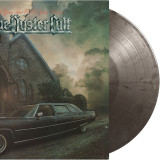
"After releasing three studio albums and lots of touring, Blue Öyster Cult released their first live album On Your Feet or on Your Knees in 197The album is a collection of 12 live recordings from performances that took place in the United States in 197It includes three songs from each of their first three albums, an original instrumental track, and two covers: “I Ain’t Got You” (Billy Boy Arnold, The Yardbirds) and “Born to Be Wild” (Steppenwolf). It was their first gold record in the US and became the band's highest-charting album, which put the band forever on the map as one of the essential rock live bands. On Your Feet or on Your Knees is available as a limited edition of 1500 individually numbered copies on silver & black marbled vinyl, housed in a gatefold sleeve and includes a 4-page booklet. "
On Your Feet Or On Your Knees by Blue Oyster Cult, released 29 March 2024, includes the following tracks: "Hot Rails to Hell", "Seven Screaming Dizbusters" and more.
This version of On Your Feet Or On Your Knees comes as a 2xLP in a(n) Gatefold Sleeve packaging. This release comes with (a) Booklet.
The vinyl is pressed as a marble, silver & black disc. Another vinyl is pressed as a marble, silver & black disc.