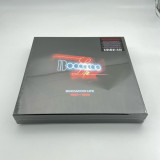
- 01: Et Si Tu N`existais Pas (Joe Dassin)
- 02: La Javanaise (Serge Gainsbourg)
- 03: Everybody`s Talkin&Apos; (Harry Nilsson)
- 04: I`m Going Away Smiling (Yoko Ono)
- 05: La Vie En Rose (Edith Piaf)
- 06: Les Passantes (Georges Brassens)
- 07: Syracuse (Henri Salvador)
- 08: What Is This Thing Called Love? (Cole Porter)
- 09: Michelle (The Beatles)
- 10: Only The Lonely (Frank Sinatra)
- 11: La Belle Vie (Sacha Distel)
quête:ti pi cal
- A1: Blake Baxter - Sexuality
- A2: Suburban Knight - The Worlds
- B1: E-Dancer - Feel The Mood (N.y. Groove Mix)
- B2: Yvette - Pump Me (Mayday Mix)
- A1: Qx-1 - I Won't Hurt You (I Swear)
- A2: Fred Brown - Roman Days
- B1: Mr. Fingers - I'm Strong (Instrumental)
- B2: Laurent X - Machines (Apocalypse Mix)
- A1: Revelation - First Power (Original Mix)
- A2: Egotrip - Dreamworld (World Of Dreams Mix)
- B1: 33 1/3 Queen - Searchin
- B2: Bobby Konders - Let There Be House
- A1: Steve Poindexter - Computer Madness
- A2: Age Of Chance - Time's Up (Timeless)
- B1: Lfo - Lfo (Leeds Warehouse Mix)
- B2: Alice D In Wonderland - Time Problem (Techno Speed Work)
- A1: Joeski - My English Lover (Acid Mix)
- A2: Pleasure Zone - Fantasy
- B1: Mellow Man Ace - Rhyme Fighter (House Dub)
- B2: The Gherkin Jerks - Strange Creatures
- A1: The D.o.c. - Portrait Of A Masterpiece (Cj's Ed-Did-It-Mix)
- A2: Robert Armani - Circus Bells (Full Length Original Mix)
- B1: Todd Terry Presents Cls - Can You Feel It (In House Dub)
- B2: Virgo - Free Yourself
- B1: A Homeboy, A Hippie & A Funki Dredd - Total Confusion (Heavenly Mix)
- B2: 2 Men From Jersey - Track Werk (After Dark Mix)
- A1: Human Resource - Dominator (Frank De Wulf Remix)
- A2: Frankie Knuckles - Your Love
- B1: Simon Sed - Criminal
- B2: Tyree - Hardcore Hip House (Joe Smooths Too Deep Mix)
- A1: Frankie Bones - Call It Techno (House Mix)
- A2: Frank De Wulf - The Tape (Remix)
- B1: A Guy Called Gerald - Automanikk (Derrick May The Force Be With You Mix)
- B2: Sheer Taft - Cascades (Hypnotone Mix)
- A1: Tronikhouse - The Savage & Beyond (Savage Reese Mix)
- A2: The Orb - A Huge Evergrowing Pulsating Brain That Rules From The Centre Of The Ultraworld (Orbital Dance Mix)
- B1: Mental Mayhem - Where Are They Hiding
- B2: Edwards & Armani - Acid Drill
- A1: Njoi - Jupiter Re-Dawn
- A2: Basex - U-R-Self-Go (All Night Mix)
(10x12" box set, limited to 1000 copies, with premium finishing, uniquely numbered, incl. 10 records in individually printed sleeves, a booklet detailing the club's history & exclusive stickers) Boccaccio has secured its place among legendary venueslike Paradise Garage in New York and The Hacçinda in Manchester. Its bold fusion of emerging electronic genres such as New Beat, Acid, House, and Techno was way ahead of its time, drawing music lovers and clubbers from across Belgium and beyond.
Belgian label Music Man Records presents Boccaccio Life 1987-1993, a new compilation offering a fresh perspective on the legacy of the iconic Belgian club Boccaccio - often associated with the short-lived New Beat movement. The 40-track compilation highlights the raw and futuristic early house and techno sounds that were heard in the pioneering club.
Located in rural Destelbergen (Belgium), just a stone's throw from Ghent, Boccaccio has secured its place among legendary venues like Paradise Garage in New York and The Hacçinda in Manchester. Its bold fusion of emerging electronic genres such as New Beat, Acid, House, and Techno was way ahead of its time, drawing music lovers and clubbers from across Belgium and beyond. Sundays at Boccaccio were unlike anywhere else-offering sounds you couldn't hear anywhere else.
Boccaccio Life 1987-1993 is carefully curated by resident DJ Olivier Pieters and club regular Stefaan Vandenberghe, standing as the ultimate testament to a club that was more than just a venue. For those who experienced it, it was a community - a way of life. Hence the club's full name: Boccaccio Life.
This compilation stands as a testament to an innovative time in electronic music, capturing the raw, futuristic sounds of early house and techno. It sheds light on another side of Boccaccio, one that goes far beyond the short-lived New Beat scene. A carefully curated selection of 40 tracks, resonating with those who were there by offering familiar classics, while also reaching a new generation-those who never experienced it firsthand.
With tracks from Blake Baxter, Virgo, Frankie Knuckles, Tyree, and A Guy Called Gerald, the unmistakable influence of black American pioneers is clear-the originators of the firstanalog house and techno sounds. On the other hand, UK sound innovators such as The Orb and LFO bring both sharp textures and rough breakbeats to the table.
Club staple tracks include dreamy excursions from Roger Sanchez under his Egotrip moniker, the relentless basement house of Circus Bells by Robert Armani on Dance Mania, an uplifting take on a hip-house cut from The D.O.C. (Portrait of A Masterpiece in the CJ Ed-Did-It Mix), a timeless remix of UK Formation's Age of Chance from 1994, and an alternate take on The Tape by Boccaccio club regular and Belgian producer Frank De Wulf, taken from his B-Sides project.
While not always the obvious hits, these tracks have gracefully withstood the test of time, and were exclusive to Sundays at Boccaccio. Now, they are finally available to experience together in one collection, offering a timeless snapshot of a unique era.
Rickets EP is the second 12” and tenth release from the label signed by the Valladolid artist Alf.
“The theme of this EP revolves around the hyperactivity that both the capitalist system and ourselves demand of us, thinking that this ultra-productivity will make us feel happy and fulfilled at some point, how we isolate ourselves in our small fortresses and see foreigners as viruses that must be eliminated or expelled.”
The 5 original tracks on this EP have been designed with few tracks but processed thoroughly to create a powerful atmosphere ready for the dance floor.
The technical side of this work is once again the work of Dan Böhler, who has mixed and mastered this album and has also given us a “house brand” remix of the title track of the EP. The visual work is by Marcos Abella.
The Ibex Band, with Giovanni Rico and Selam Woldemariam at the creative helm, provided the musical backbone for legends like Aster Aweke, Girma Beyene, Tilahun Gessesse, Mulatu Astatke, and Mahmoud Ahmed, including the iconic album Ere Mela Mela, shaping modern Ethiopian music as we know it today. This 1976 album (Ge’ez Year 1968) played a pivotal role in that legacy and has now resurfaced to set the record straight.
There’s a tendency to talk about the seventies as a golden age of Ethiopian music. There are good reasons for that, and just as good reasons against it. However, the notion of a golden past privileges the role of Western explorers and suggests that the pinnacle of Ethiopia’s musical culture is something only a foreigner can appreciate and unearth. It downplays the complexities of Ethiopia’s culture and history, creating an artificial divide between then and now. And it underestimates the constantly evolving sound that has followed.
The legendary musical outfit The Ibex Band, later metamorphosed into The Roha Band, has played a central role in defining the sound of many of the greatest stars on the music scene of Ethiopia from the mid-seventies onwards–but their golden output has never really waned. The story of the origins of the band that provided the musical backbone for greats such as Aster Aweke, Girma Beyene, Tilahun Gessesse, backing the solo career of group member Mahmoud Ahmed as well as backing Mulatu Astatke and many others has yet to be properly told.
Two misconceptions plague the image of Ethiopian music, one is that the music is pure because it is, by some notion, unexploited, the other is that it is all traditional. To begin with, a combination of political changes between the late sixties and the mid-nineties created an environment where only the most dedicated and skilled musicians struggled on and pursued a musical career against fierce odds. The whole Ibex Band, with Giovanni Rico and Selam “Selamino” Seyoum Woldermarian at the creative helm, are arguably the origo of the vibrant scene in the mid-seventies, and the said pair are foremost responsible for not only navigating the band through troubled times, but also modernizing the 6/8 chickchicka rhythm to a contemporary form. Giovanni laid the rhythmic foundation with heavy looped basslines that reinvented traditional melodies as dance music, and with Selamino’s innovative guitar work they influenced scores of musicians from Abegaz Kibrework Shiota to Henock Temesgen. Even Giovanni’s Fender bass and Selamino’s Gibson guitar inspired younger musicians in their choice of instruments. Not only in choice of instruments but also in sound–even as the digital revolution hit Ethiopian music, a lot of popular music still took its cue from the masters from Ibex and Roha.
Ibex emerged out of the ashes of the sixties group the Soul Echos band, adding Giovanni and Selamino to their ranks and taking their cues from a slew of influences, such as Motown and The Beatles, fused with traditional music. A tighter-knit unit than most bands at the time – Ibex has remained six to seven members throughout their whole career, compared to many bands that were as large as fifteen or sixteen men strong when Ibex set out. Their playing has been viciously focused, economical yet heavy. Just a year before the recording sessions of the album in your hands, Giovanni and Selamino made a contribution to the popular musical lexicon of Ethiopia that was simply defining the popular sound: their arrangement and recording of bandmate Mahmoud Ahmed’s solo effort and real commercial breakthrough tune and eponymous album, Ere Mela Mela, from 1975.
Selamino has never limited himself to being an adroit lead guitarist, but has always been a scholar of history, and as such he has probably contributed as much to modern Ethiopian music with his guitar playing and compositions as with a deepened understanding of modern or contemporary – Zemenawi – Ethiopian music. Selamino’s contributions serve as a metaphor for those of the whole band, at one and the same time creating and defining a new, danceable and updated sound anchored in Giovanni’s bass, whilst also elevating the broader scene through their support for others on the scene and on top of that, increasing the understanding of the music.
There is an understandable desire to romanticize the musical heyday Ibex and Roha were at the forefront of, because so much of the output is sorrowfully hard to come by. Ibex creativity was nothing short of ridiculously fierce compared to many of their Western contemporaries. Based on their sheer recorded output alone they could have usurped the title “hardest working in show business” from James Brown, recording more than 250 albums or 2500 songs in the seventies and eighties. Some only surface as cassettes today, others were never given full LP release, and some are simply impossible to find today. In the light of that, it’s nothing short of a miracle that the recording Stereo Instrumental Music from 1976 (Ge’ez Year 1968) has resurfaced. Unearthed in perfect condition on a chrome cassette, this is musical history comes alive–to set the future straight. Stereo Instrumental Music was recorded in collaboration with Karl-Gustav Lundgren, a Swedish national working for the Radio Voice of the Gospel. It took two sessions at the Ras Hotel ballroom in Addis Ababa. The Ibex Band was the first band in Ethiopia to employ a four-track recorder for their recording (the first available in the country, lent by Karl-Gustav). Later the same week, Giovanni and Selamino realized that, lengthwise, the recorded material fell short of what they wished for, so they recorded four more tracks in one more session on a single-track recorder. The Ras Hotel and Ghion Hotel, where the Ibex Band held musical residencies were to Ethiopia in general and Addis Ababa in particular what Motown was to the USA and Detroit a few years earlier – a hotbed of musical creativity and showmanship.
The most astonishing thing about Ethiopian music of the last half century is how tradition and modernity are intertwined. Because of this feature, it’s kind of hard to tell when there ever was or when we are in a “golden age”. So much of music from the past has been criminally neglected, but because of the hardships in the past, it would be an oversimplification to say that said past was a golden age. Probably, the golden age is what we are approaching, because for the first time both the past and future are accessible, and the monumental contributions from before can lay a firm foundation for a thriving music scene today. The Ibex Band stands firmly in the past, present and the future. That, if anything, is golden.
The detailed history of Stereo Instrumental Music is in many ways unique. To begin with, it couldn’t have been recorded earlier (there were no four-track recorders available) and it really couldn’t have been recorded afterwards either, at least not in the years directly following, because of the toll the musical scene took from the unfavorable political climate that followed when the nascent Derg regime and rival groups tried to assert themselves, the musical equipment lent from The Voice of Gospel Radio simply disappeared from Ethiopia when the radio station folded in 1977. Karl-Gustav Lundgren,
the Swedish foreign national who assisted during the recording, worked with the Ethiopian Evangelical Church Mekane Yesus at the time, recalls how they only had about fifteen minutes to get the microphones in place for the recording as to not alert neither the management at Ras Hotel nor the authorities and most importantly, to complete the recording before the curfew came into effect at midnight. In leaping to the opportunity to use previously unavailable equipment to push their sound forward and improvising to meet the logistical challenges, the Ibex Band displayed the very avant-gardism and adaptability that explains their longevity as a band through the years. The recording of Stereo Instrumental Music is from a given time in history, but it sounds as beyond time.
Much of the energy that burst out of the scene that Stereo Instrumental Music came out of dissipated or got sidetracked during the societal changes Ethiopia went through in the 1970s and 80s. Whilst leaders might have professed to be revolutionary, the work ethic of the Ibex Band can truly be described as that. They never called it quits, but adapted, toured extensively abroad in Africa, Europe, and the Middle East, and found ways to work even in the face of the curfew that curtailed a lot of musical life. They even played major arenas in the nineteen eighties, despite said curfew and restrictions. The whole extent of their legacy has never been told, but their music speaks louder than words, so therefore… tune in to the Ibex Band’s Stereo Instrumental Music.
Repress
Traveling time to the year 1979 we find ourselves on the Gulf Coast of Florida in a city called Sarasota. Sal Garcia leads Omni, the resident band at the Columbia, a Spanish restaurant operating in the city since the turn of the century. Sal and his band look to record a single ironically called Disco Sucks but the restaurant isn't willing to fund a record with the word 'sucks' in it, so the band changes the track title to 'Disco Socks'. The song is a disco odyssey with driving drums, ethereal flutes, playful lyrics, and a synth solo for the gods. On the b side there's a little latin number called 'Sarasota (Que Bueno Esta)'. An ode to their city, the song praises Sarasota for its beautiful women and precious beaches. Sal is still living his dream playing at piano bars in the city. Terrestrial Funk provides you with the first officially licensed reissue of this rare disco 12". Floridian Love.
- A1: Hanadi 02 18
- A2: Dreams Of An Insomniac
- A3: Al Dollarji
- A4: Les Vents Dominants
- A5: Al Bahriye
- A6: Miramar
- A7: The Invisible Cut
- A8: Helia Featuring Sven Wunder
- B1: East Of What
- B2: La Calypso 02 41
- B3: Hawalat
- B4: Sfiha
- B5: La Virgule Suspendue
- B6: Preamble To The Conclusion
- B7: Chou Ostak
- B8: What Happened Next
- B9: Jana
If Hawalat sounds like a world tour that’s because it essentially is. “As much as Marzipan is a picture of Lebanon from the inside, Hawalat kind of picks up from where Marzipan finished but more looking to the outside, the diaspora, to the notion of exile.” Megarbane says he is interested in the connections between the global and the domestic, the mundane and the cosmic, and wanted to create space for non-linear progression.
Hawalat is based on the idea of hawala, informal money transfers that you can make to certain countries impacted by a lack of currency or unstable political and economic contexts. His use of the term on this album is not a financial one, Megarbane explains, but a nod to notions of creative exchange between “places, persons, generations.” It is the first time Megarbane called on other musicians in this way to inform his sound, including a collaboration with Sven Wunder on the song Helia featuring strings by the Stockholm Studio Orchestra.
The album opens with first single Hanadi, a punchy Somali-inspired track with warm non-lexical vocals and saxophone. It immediately pivots to the Dreams of an Insomniac, which balances soft, effortless vocals and keys with urgent violin intrusions. Al Dollarji feels like Megarbane’s bread and butter, that is Mediterranean sounds with intricate strings, while Al Bahriye takes this staple and introduces hip hop inflections. The result is a rich 17 track album that effortlessly blends genres and styles.
Including 8 page, 12" sized booklet with unseen photos and liner notes by Armani Syed.
Japanese pianist Yumiko Morioka initially released Resonance, her first and only solo recording, on Akira Ito's ‘Green & Water’ imprint in 1987. Whilst by no means a commercial failure, the album was mostly found in the background of Japanese TV documentaries, maternity clinics and healing shops before drifting into relative obscurity.
By 1994, Morioka had relocated to America and her solo music career had given way to the joys of starting a family and her new life in California. It was, and still is, a shock for her to learn that Resonance had gained the attention of a new audience outside of Japan through blog posts and YouTube album uploads.
After hearing Resonance for the first time ourselves back in early 2017, we tried for months to track Morioka down about a reissue. This news reached her at a particularly trying time in her life following the devastating loss of her home in the 2017 California wildfires.
Her home had recently been razed, destroying all of her possessions, musical equipment, scores and recordings. Morioka was lucky to escape with her life; her quick thinking neighbour raised the alarm in the middle of the night giving her just enough time to escape safely before then tragically watching her home burn to the ground.
In the aftermath, Morioka returned to Japan in an attempt to rebuild her life. She found work writing music for commercial projects and pop acts before recently opening her own chocolate shop in the Jiyugaoka neighbourhood of Tokyo - back where it all began.
‘’Space and time moved at a different speed than now’’ – Yumiko Morioka
A lifelong student of the piano, Morioka was born in Tokyo in 1956. A child prodigy, she took up the instrument under her mother’s tutelage at just three years old and by her teens she had won multiple piano scholarships. Her talent was so obvious that she was invited to train in America, eventually graduating from the San Francisco Conservatory of Music with a piano major during John Adams’ reign as head of composition.
After graduation, Morioka returned to Japan but struggled to find her place musically, working mostly on commercial songwriting assignments. Frustrated, and at times embarrassed by her musical output, she turned to the works of Brian Eno and the surroundings of her coastal home in the Izu Peninsula south of Tokyo for inspiration. It was here that she began to work on the compositions that would eventually become Resonance.
Recorded on a Bösendorfer grand piano, much of Resonance was made in an attempt to soothe her creative soul. Constructed from unwritten improvisations with additional instrumentation added later, Resonance explores the space between notes. As such, it's a record that feels open and inviting, permeated throughout with a sense of confident serenity.
The sparse, delicately played notes are allowed to reverberate and echo through the spaces between themselves, giving each track a feeling of both grandeur and intimacy. Like the great pioneers of classical and ambient music, there's a timelessness to Resonance - a comforting, familiar feeling, as if these melodies have always existed.
Resonance drew influence from the popular environmental music culture prevalent in Japan during the late 80s, but it was also heavily inspired by Western musicians such as the avant-garde Parisian composer Erik Satie. Listening today, it still feels fresh and pertinent; a warm, contemplative reflection of a travelled woman.
Resonance has been lovingly remastered by Séance Centre's Brandon Hocura and given new artwork by Métron Records’ label head Jack Hardwicke.
- A1: オリーブの笛 = Olive's Horn
- A2: 国際スパイ = International Spy
- A3: 新成人 = Neu Adult
- B1: 紙袋 = Paperbag / Orange Laptop
- B2: くっついたガム = Stuck On Gum
- B3: 揚げキノコ = Fried Mushroom
- C1: 何が好き? (キム) = What Do You Want? (Kim)
- C2: レモネード = Lemonade
- C3: 我らは王女 = We Are The Princesses
- D1: 元に戻して = Take Me Back
- D2: ヒットを狙って = Take It To The Hit
"Donald Duck, kill Minnie!" These words, ordered with urgency against a circular series of drum strikes and manipulated guitar/electronic textures, come over three fourths of the way through the album known as SYR 5 (aka "Olive's Horn"). While the words and sounds taken on their own may shock, their appearance within this collaborative effort between Kim Gordon (Sonic Youth, Body/Head, solo efforts), Ikue Mori (DNA, solo) and DJ Olive (We, solo) by this point in the album are not surprising. Taken on whole, SYR 5 sees its creators' respective histories forged in the 80s downtown noise scene, No Wave zone and Marclay-inspired club collide head on to create the audio equivalent of a slow-playing J.G. Ballard novel. Starting from the album's initial impressions where shimmering tones are interrupted by the sounds of winding clocks and bird calls before giving way to a cinematic sweeps of percussion, alien samples and blown out wasteland subs, the listener is constantly taken on a guided journey through a waking dream state where anything is possible. It is a world where dub samples, gurling beats and plaintive vocals (as only Gordon can deliver) fit together like the final locking puzzle pieces, the only elements needed to fully grasp a new reality. Re-appearing on vinyl for the first time in 25 years, these sounds have proven to be jaw-droppingly timeless. - Cory Rayborn, 2025
Edinburgh-based three-piece funk band High Fade are set to release their debut album 'Life’s Too Fast'.
Capturing the raw, on-stage energy that has been the driving force behind High Fade’s meteoric rise was never going to be easy, but that’s exactly what Harry, Oli and Calvin set out to do with a clear creative vision to record their album live at the iconic RAK Studios in London.
'We recorded in RAK Studios, with the desk built for the Rolling Stones in ‘76, with the same cigarette burns still on the faders. It instantly had a vibe of raw energy and liveliness to it that matched the way we wanted to record - live.' – Calvin
The result? 'Life’s Too Fast' – a blistering 10-track debut from one of the UK’s most exciting bands that manages to deliver the same tight, groove-laden funk rock that has put the group on the radars of Jack Black, Cypress Hill and Rage Against the Machine’s Brad Wilk, has seen them tour with The Cat Empire, and tick off iconic venues including Glastonbury, Jazz Cafe, and Boomtown Festival.
'We decided to record the album live rather than through the normal single track overdubbed method – we felt this would help to fully convey the band’s power, sound and energy across to the listener! More like we’re playing a gig and having it recorded – it was a tough process, but we went about it in the best way for both us and the audience, to ensure they’re getting the most authentic High Fade sound and experience possible.' – Oli
Having spent much of the last three years on the road seeing to a punishing tour schedule, 'Life’s Too Fast' is a chance for the band to stop and take stock, to reflect on their whirlwind success, and create an artistic milestone that demonstrates who High Fade are today. 'It’s the most accurate representation of what High Fade is, what we sound like, and who we are' explains Harry. Telling a clear story that matches their own experiences over the last few years, the album is a snapshot taken by a band who are accelerating towards real success and recognition.
'I’m glad we finally have a body of work that we’re proud of and feels like a collection of songs that nicely represents where we are right now. It’s organised chaos and shows that we like to play, but can also write a catchy tune.' – Calvin
Launching into proceedings with the effortlessly uplifting 'Take Me To The Floor', every track is a demonstration of the band’s technical prowess and broad sonic palette. A forward-facing selection of completely original material, the album also gave the band the opportunity to re-imagine fan-favourite 'Sharpen Up' as a stripped-back cut that reflects the band’s current lineup.
'Honestly, I kinda feel like I could explode with excitement about getting it out for everyone in the world to hear because it has been a long time in the making! A culmination of what all the singles have been working towards! I guess the album represents us and the direction we’re taking the music, it represents us as a trio and the gel that is High Fade.' – Oli
Rosettes are finally here with their debut album on Timmion Records, Lifestyles, a compelling journey into psychedelic soul, jazzy funk, and introspective grooves. For the listener, it creates an experience that manages to be both sophisticated and raw to the bone. Expanding on the sound they refined with their previous singles, this 10-track album captures the group in top form while crafting intoxicating sonic potions that pull you in. Featuring standout tracks like the soulful opener "The Call," the Isaac Hayes-inspired title track "Lifestyles," and the introspective groover "Spirals," the album weaves together cinematic instrumentals, intricate horn arrangements, and deeply personal storytelling, courtesy of lead singer Tytti Roto. Drawing inspiration from a range of vintage and contemporary masters_Cymande, SAULT, and Sade, to name a few_the rest of the eight-piece group doesn't linger in the shadows. Instead, they make it their mission to position the groove front and center. The album closes with "The Queen," the sole instrumental track, which evokes the spirit of 1970s blaxploitation soundtracks with its wah-wah and fuzz guitars and jazzy changes. Every track on Lifestyles is a testament to the Rosettes' ability to craft genre-blending masterpieces that are as emotionally gripping as they are musically intricate. For fans of adventurous soul and funk, this album offers a rich and rewarding journey.
- Simple Love
- (Don't Send Me) Roses
- Miss Wonderful
- On The Waterfront
- Call It Mine
Reissued for the first time on classic black vinyl, since its original release in 1980/81, this pivotal minialbum from The Saints was a turning point for Chris Bailey's latter incarnation of the band, after the departure of Ed Kuepper. An exceptional piece of rock 'n' roll ephemera with spikey horns, like Iggy on an upbeat take from 'Kill City', or Mink Deville fronting The Heartbreakers. This 1981 timeless slice of swaggering bravado is Chris Bailey's Saints at their finest, it is released by the late singer's estate. "I can only simply repeat, for the record, that, in my opinion, the Saints were Australia's greatest band, and that Chris Bailey was my favourite singer." Nick Cave
- A.i.m
- Po$T American
- My Spirit Animal Ate Your Spirit Animal
- Pit Song
- The Caucasity
- Mythical Cowboys
- Dead Pioneers
- White Wine
- Juicy Fruit (Ode To Chief Bromden)
- Stfu
- Bloodletting Carnival
- Love Language
- Fire And Ash
- Working Class Warfar
- Untitled Spoken Word No. 2
TRANSPARENT YELLOW VINYL[23,11 €]
Crystal clear vinyl. 'PO$T AMERICAN' is the second full-length album by Dead Pioneers. Written in February and recorded in July, it preempts the 2024 American election but wraps up the fears and frustrations as eloquently and, crucially, humorously as the band's 2023 self-titled debut. "Currently, we are amidst the gross existence of capitalism, colonialism, white supremacy and the many oppressive forces that have come to inform everything around us" says vocalist and songwriter Gregg Deal. "The title PO$T AMERICAN informs a collective disenfranchisement and disillusionment to the so-called American dream, while moving forward with hope of a desired designation of unity outside those that would use us for their own capitalistic power grab." The aural palate is broadly the same, but it feels expanded, stronger somehow: drawing on the confrontational writing of Rage Against The Machine, the unapologetic voice of Chuck D and Public Enemy, the storytelling of Johnny Cash, the evolution of IDLES, and punk stalwarts including Black Flag, Rollins Band and Dead Kennedys. Overall the resulting feeling across the new album is one of cautious optimism: "Although we didn't expect the political relevance to become more relevant, we have no illusions to the American dream, or to where we seem to be going. But we have hope that we can get to a better place for people to have what they need." It is an album that speaks to and for this precise time and place; that perhaps could not exist at any other time. It is an album for now.
- A.i.m
- Po$T American
- My Spirit Animal Ate Your Spirit
- Animal
- Pit Song
- The Caucasity
- Mythical Cowboys
- Dead Pioneers
- White Wine
- Juicy Fruit (Ode To Chief Bromden)
- Stfu
- Bloodletting Carnival
- Love Language
- Fire And Ash
- Working Class Warfare
- Untitled Spoken Word No. 2
Crystal clear vinyl. 'PO$T AMERICAN' is the second full-length album by Dead Pioneers. Written in February and recorded in July, it preempts the 2024 American election but wraps up the fears and frustrations as eloquently and, crucially, humorously as the band's 2023 self-titled debut. "Currently, we are amidst the gross existence of capitalism, colonialism, white supremacy and the many oppressive forces that have come to inform everything around us" says vocalist and songwriter Gregg Deal. "The title PO$T AMERICAN informs a collective disenfranchisement and disillusionment to the so-called American dream, while moving forward with hope of a desired designation of unity outside those that would use us for their own capitalistic power grab." The aural palate is broadly the same, but it feels expanded, stronger somehow: drawing on the confrontational writing of Rage Against The Machine, the unapologetic voice of Chuck D and Public Enemy, the storytelling of Johnny Cash, the evolution of IDLES, and punk stalwarts including Black Flag, Rollins Band and Dead Kennedys. Overall the resulting feeling across the new album is one of cautious optimism: "Although we didn't expect the political relevance to become more relevant, we have no illusions to the American dream, or to where we seem to be going. But we have hope that we can get to a better place for people to have what they need." It is an album that speaks to and for this precise time and place; that perhaps could not exist at any other time. It is an album for now.
- 01: That Work
- 02: Restaurant Not
- 03: Went Off (Featuring Open Mike Eagle)
- 04: Ta Da
- 05: Dial Up (Featuring M.sayyid)
- 06: Scales Sway
- 07: Inner Animal
- 08: Recycling Night (Featuring Fatboi Sharif)*
- 09: Untouchable
- 10: No Cops
- 11: Wasteland Embrace (Featuring Billly Woods)
- 12: Epinephrine Pen
- 13: Breakneck (Featuring Myka 9)
- 14: Not For Airports
- 15: Best Metric (Extended)
All Portrait, No Chorus is the new album from indie rap pioneer doseone and NYC producer Steel Tipped Dove. Together, these two artists have crafted an uncompromising masterpiece. Knowing the caliber of MC he is paired with, dove skillfully paints with every color on the palette, and doseone skates effortlessly on every track, whether skating languid figure 8s or landing lyrical triple axels. Somehow the veteran sounds sharper than ever and the songs are lean and hungry, cut to the quick. It is no accident that this project is released under the Backwoodz Studioz imprint; the road that leads to this collaboration starts with, of all things, a ShrapKnel demo. Here is how dose explains it: "I have been inspired by Backwoodz for a while, in many ways, but the most potent being all these distinct pens. September 2023, I had heard a nearly done version of ShrapKnel's latest record, and something snapped in me. Hearing that perfectly hungry, inspired rapping turned my power back on. For me, being inspired warrants telling those who are inspiring you, so once I heard Decay I reached out and sent Fatboi Sharif and Dove some kind words about that record. The rest is history." At the end of December 2023 Dove sent dose the first beat pack. Somewhere around the second week of January 2024 dose already had five songs written and recorded. By the middle of March, a rough album framework was essentially done, and they brought on Minneapolis producer Andrew Broder to freak the turntables across the whole project. Then, as a final piece, dose and dove added select collaborations from some of their favorite rappers. By the end of April it was done. "I'm not really a features guy, but to align with and connect with those who inspire me, I called in some beautiful humans I had never worked with but always meant to: Open Mike Eagle, M.Sayyid, billy woods, Fatboi Sharif, and Myka 9 connect eras, artists, and styles of unconventional rap I hold incredibly dear," doseone explains. Listening to All Portrait, No Chorus you can hear the battery in doseone's back as he pythons his way through each instrumental. For his part, Steel Tipped Dove_a prolific producer over the last two years_delivers some of the most diverse work of his career. The result is a dynamic, propulsive listen that casts its crackling energy in every direction except backwards.
ver the years, Andreas O. Hirsch has shaped a distinctive sound, exploring the possibilities of the electro-acoustic instruments he const- ructs. The Carbophone as well as the Electrified Palm Leaf are plucked instruments akin to the African Kalimba or Mbira. In combination with effects and loops, Hirsch creates an experimen- tal space, influenced by early electronics, Asian and African music as well as the possibilities of editing and collage. The majority of the pieces on The Salamander Treaty were made using the Carbophone Jr., a small traveling version of his original Carbophone which was the basis of the previously released Early Carbophonics. Shaped by the joy of discovery, the eight tracks traverse peculiar worlds of sound, carried by a warm downbeat and analogue vibe. Alongside the Car- bophone Jr., other instruments come into play: a vibrato-soaked guitar leads through the slowly evolving ‘Rise’, marked by a recurring Shepard tone and sounds made by striking the bars of an antique wall clock. In the straightforward yet sub-aquatic ‘Te- atime Unlimited’, a pitch-shifted Morse key wanders erratically in the background. Tape-delayed har- monicas serve as a flying carpet for ‘Drifting Newts’, and rubber bands make their melodic-rhythmical appearance through ‘Back Door Minimal’.
The Salamander Treaty refers to War with the Newts, a prophetic and black-humoured science fiction novel by Karel Čapek from 1936, which tells the story of the rise of the salamanders, who become in- creasingly intelligent and eventually begin to compete with mankind. The album is a pacifist response to this dark scenario: Hirsch’s salamanders prefer to hang out under the stars (‘Drifting Newts’), drink tea (‘Tea Time Unlimited’) and — as illustrated on the back cover — write conspiratorial-pacifist demands instead of calling for war (e.g., ‘Teaoism International’, ‘White Lilies’, ‘For Congress’). In image and word, the album invites looking at the term ‘treaty’, which phonetically contains the words ‘tree’ and ‘tea’, as a friendly reminder that the drafting of every treaty and agreement on this planet should be accompanied by a peaceful spirit.
Music, mix and artwork by Andreas Oskar Hirsch. Mastered by Volker Hennes. Pressed on BioVinyl by Optimal, who state that their manufacturing process reduces CO2 emissions by approximately 90% for the PVC component. 12“ LP, coloured sleeve, download code included,
LIMITED TO 100 COPIES!.
Spandau20, an imprint named after the Western Berlin district and focused on artists from the area, delivers techno in all diverse forms - from warehouse and electronic peak time beats to breaks and IDM, balancing the old and new school sounds flawlessly. With a focus on vinyl releases, for the collectors, Spandau20 has lately also focused on its label nights, with showcases at Fabric, Bassiani and many others. The label's 10th release features 10 tracks that epitomise the musical diversity of Spandau20 and the progressive musical mindset of its roster, calling on the label favourites and Spandau natives to deliver brand new and exciting music. This special release even features one track that all artists have worked on together: 'Come Closer', a swarming, slithering beginning featured as the VA's opener. Its barely coherent female vocal echoing amidst a cacophony of demon-like effects. The chilling ambience captured at the offset transcends into the first full length track by Elli Acula, 'Floating Eyes', a cur characterised by an authoritative, pounding bass featuring calculated percussive rolls and metallic overtones to make for a face-scrunching opener to this devilish collection of works. FJAAK follow for the first of twin cameo appearances, partnering up with fellow live supremo and hardware aficionado KiNK. On 'Overbridge' the trio deliver a cavernous, rolling number driven by a deep thrumming bass in addition to a razor-edged lead synth, and pulsating technopattern. Dajusch is known for incorporating his years of classical study in with his immersive musical style - and with his VA effort the Berlin native neatly showcases this. Easing the energy slightly, 'Move' escalates from its warm, melodic intro into rumbling goliath of a beat comprising a looping, slew of gassy harmonics. The momentum of the release shifts considerably with the introduction of acutely versatile producer, DJ and sound artist Claus. The artist from Spandau leans his track 'Bloomscroll' towards sparse, dubby sonics in which he intricately ties together to form churning, burgeoning soundscape. FJAAK jolt proceedings back into the techno groove with their signature blend of arresting sub-bass and reverberating rhythms, which come thick, fast and heavy on 'Jackfruit'. The abstract wonder of Anna Z's broken-beat like stylings is fully explored on 'Icy Liq'. It's outlandish and amorphous in its execution, causing a clattering percussive chaos that's choicely pieced together by the modular-extraordinaire. Nikk stealthy moves into breaks territory with his track 'Down In The Shadows', packing a trap-like snare with an acid-flecked melody and dawn-breaking, dream-like textures. The penultimate track on the VA is 'Tufted'. J.Manuel expertly employs a chorus of robot-like sonics that course through a short-circuiting low-end to produce a pacy, inescapable journey via a whirling, merciless beat. He is joined by the legendary producer Tobi Neumann for their menacingly ambient number titled 'Fennec.' In parts a nod to UK dubstep, the duo concocts a fierce admixture of styles bolstering tribal-like components with industrialised overtones and methodically crafted drum-fills.
- My Funny Valentine
- Darn That Dream
- You Go To My Head
- Inner Voice
- I'm Getting Sentimental Over You
- Chance Meeting
- Turn Out The Stars
- Adagio
180g audiophile vinyl reissue of guitarist John Abercrombie and pianist Andy LaVerne's 2003 duo album 'Timelines', which is appearing on vinyl for the frst time 40 years ago Bill Evans and Jim Hall recorded two brilliant duo albums called 'Intermodulations' and 'Undercurrent'. Andy Laverne and John Abercrombie whose collaboration dates back to the late 1960s have been inspired by the Evans- Hall recordings and have been experimenting with the format.
Andy LaVerne remarks, "Over the years we have collaborated as a duo many times in concerts, club dates, workshop sessions. I guess Bill and Jim set a wonderful example to us of what could be achieved by the piano/guitar instrumentation".
This album - with 8 of the 11 original tracks making the LP cut - though is neither recreation nor copying of the original material, is an evolution of the predecessors.
John Abercrombie: guitar
Andy Laverne: piano
Recorded September 2002
- A1: A I.m
- A2: Po$T American
- A3: My Spirit Animal Ate Your Spirit Animal
- A4: Pit Song
- A5: The Caucasity
- A6: Mythical Cowboys
- A7: Dead Pioneers
- A8: White Wine
- B1: Juicy Fruit (Ode To Chief Bromden)
- B2: Stfu
- B3: Bloodletting Carnival
- B4: Love Language
- B5: Fire And Ash
- B6: Working Class Warfar
- B7: Untitled Spoken Word No 2
CRYSTAL CLEAR VINYL[26,01 €]
Transparent yellow vinyl, limited to 300 copies. GSA exclusive Indie variant. 'PO$T AMERICAN' is the second full-length album by Dead Pioneers. Written in February and recorded in July, it preempts the 2024 American election but wraps up the fears and frustrations as eloquently and, crucially, humorously as the band's 2023 self-titled debut. "Currently, we are amidst the gross existence of capitalism, colonialism, white supremacy and the many oppressive forces that have come to inform everything around us" says vocalist and songwriter Gregg Deal. "The title PO$T AMERICAN informs a collective disenfranchisement and disillusionment to the so-called American dream, while moving forward with hope of a desired designation of unity outside those that would use us for their own capitalistic power grab." The aural palate is broadly the same, but it feels expanded, stronger somehow: drawing on the confrontational writing of Rage Against The Machine, the unapologetic voice of Chuck D and Public Enemy, the storytelling of Johnny Cash, the evolution of IDLES, and punk stalwarts including Black Flag, Rollins Band and Dead Kennedys. Overall the resulting feeling across the new album is one of cautious optimism: "Although we didn't expect the political relevance to become more relevant, we have no illusions to the American dream, or to where we seem to be going. But we have hope that we can get to a better place for people to have what they need." It is an album that speaks to and for this precise time and place; that perhaps could not exist at any other time. It is an album for now.
PART 1/2[17,86 €]
"Petrol", one of Manu Kenton's most iconic tracks, makes its highly anticipated return in a limited edition that will appeal to both collectors and techno enthusiasts. This special version features not only the original track, but also exclusive remixes that reinterpret the piece from different angles, offering a diverse and exciting sonic palette.
Manu Kenton, staying true to his creative genius, revisits his own track by adding an energetic and catchy vocal, bringing a fresh new dynamic to the already electrifying atmosphere of the original.
The Gregor Size remix is a true powerhouse: dynamic, industrial, and powerful, it transforms "Petrol" into a heavy, punchy piece, with dark textures and irresistible rhythms that leave a lasting impression.
Greg Denbosa, on the other hand, delivers a progressive techno remix, with a dynamic and repetitive beat that builds tension, creating a hypnotic experience perfectly suited for the dancefloor.
Finally, Bestien offers a nervous, straight, and punchy version, ideal for the peak moments of a night. His explosive remix ramps up the intensity on the dancefloors, with raw energy and power that demands attention.
Visually, this vinyl stands out with its "Yolk" effect, a unique blend of white and white with luminous accents, creating a striking and modern design that will enhance any collection.
Français
"Petrol", l'un des morceaux les plus emblématiques de Manu Kenton, fait son grand retour dans une édition limitée qui séduira aussi bien les collectionneurs que les passionnés de techno. Cette version spéciale inclut non seulement la version originale du titre, mais aussi des remixes inédits qui réinterprètent le morceau sous des angles différents, offrant ainsi une palette sonore variée et excitante.
Manu Kenton, fidèle à son génie créatif, revisite son propre morceau en y ajoutant un vocal énergique et entraînant, donnant une nouvelle dynamique à l'atmosphère déjà électrisante de l'original.
Le remix de Gregor Size est un véritable tour de force : très dynamique, industriel et puissant, il transforme "Petrol" en une œuvre lourde et percutante, avec des textures sombres et des rythmes irrésistibles qui marquent les esprits.
Greg Denbosa, quant à lui, propose un remix techno progressif, avec un beat dynamique et répétitif qui crée une tension croissante, offrant une expérience hypnotique et parfaitement calibrée pour les sets dansants.
Enfin, Bestien livre une version nerveuse, droite et percutante, idéale pour les moments intenses d'une soirée. Son remix explosif fait monter l’intensité sur les dancefloors, avec une énergie brute et une puissance qui ne laisse personne indifférent.
Visuellement, ce vinyle se distingue par un effet "Yolk", un mélange unique de blanc et de rouge lumineux, créant un visuel frappant et moderne qui enrichira toute collection.
Remixes[16,77 €]
Enigmatic producer ANiML returns to the freeform Los Angeles-based label StrataSonic to release a six-track mini album, Star Walk. The new body of work, which comes alongside a new music video for “Bruv” (directed by Spanish visual artist YZA Voku), is out now.
Picking up where ANiML left off with “Breather” and “Bruv,” Star Walk elaborates further on that woozy-yet-sophisticated psychedelia, materializing as cinematic trip-hop, cavernous dub, and other unique genre concoctions across its six tracks. “Cherry,” with its free-spirited, delay-soaked guitar riffs, depicts a colorful, post-rock-inspired soundscape. “BabyD,” in step with “Bruv,” features a mischievous marimba melody among ghostly vocal samples, a punchy drumkit, and a slackened bassline.
These scenes are brought to life thanks to YZA Voku, a groundbreaking visual artist who is at the forefront of AI-assisted filmmaking in the animation space (see his work for The Weeknd, Swedish House Mafia, Hï Ibiza, and XG). The new music video for “Bruv,” out today, unfolds in stark black, white, and red, evoking a noir-inspired aesthetic steeped in mystery and intrigue. Shadowy figures move rhythmically through dimly lit alleys and smoke-filled ballrooms, blending calculated steps with hypnotic dance sequences.
The production blended real-life recordings with digital effects like blur, negatives, masks, analog textures, and AI-driven transformations using Runway’s video-to-video tools. AI-generated sequences created with Midjourney and Runway were merged to contrast real footage with synthetic imagery. This type of work is a rejection that AI is simply used as a shortcut in art and comes at a time when musicians are beginning to embrace such tools for the visual components of their products.