Repress of 2018’s classic compilation from Brownswood.
A primer on London’s bright-burning young jazz scene, this new compilation brings together a collection of some of its sharpest talents. A set of nine newly-recorded tracks, We Out Here captures a moment where genre markers matter less than raw, focused energy. Looking at the album’s running order, it could easily serve as a name-checking exercise for some of London’s most-tipped and hardworking bands of the past couple of years. Recorded across three long, fruitful days in a North West London studio, the crossover between each of the groups speaks to the close-knit circles which make up the scene.
Surveying the way that London’s jazz-influenced music had spread outside of its usual spaces in recent years, this album bottles up some of the vital ideas emanating from that burgeoning movement. Giving a platform to a scene where mutual cooperation and a DIY spirit are second-nature, it’s a window into the wide-eyed future of London’s musical underground.
Ubiquitous, much-lauded saxophonist Shabaka Hutchings is the project’s musical director. His own recent projects span from South Africa-connected, spiritually-minded jazz players Shabaka and the Ancestors to Sons of Kemet, who match diasporically-connected compositions with viscerally-direct live shows. His entry on the album, ‘Black Skin, Black Masks’, is typically difficult-to-define: with an off-kilter, shifting rhythmic backbone, repeated phrases – mirrored between clarinet and bass clarinet – shape the track with an alluring hue. His input ties together a deft, genre-agnostic sensibility that’s shared through all the players on the record.
Theon Cross – who’s also part of Sons of Kemet with Hutchings – starts his track, ‘Brockley’, with the solo, distinctive low rumble of his tuba. Winding and mesmeric, it sees tuba and sax lines winding together in rhythmic and melodic parallels. Ezra Collective – whose drummer and bandleader Femi Koleoso has toured with Pharaohe Monch – run a tight, Afrobeat-tipped rhythm on ‘Pure Shade’, with the final third changing gear into a melodic, momentous closing stretch.
Joe Armon-Jones, whose ludicrous chops on the piano have seen him touring with the likes of Ata Kak, showcases earworm-like, insistent motifs on ‘Go See’, balanced with a playful, improvisatory approach with room for ad-libbing and solos a-plenty. Taking a softer tact than many of the other entries, Kokoroko – whose guitarist Oscar Jerome has been making waves with his solo material – spin a lyrical, steady-paced meditation on ‘Abusey Junction’, matching chanted vocals with gently-played guitar.
Nodding to spiritual jazz influences, Maisha’s ‘Inside The Acorn’ is a wandering, explorative rumination, balancing delicate washes of piano and percussion with sharp interplay between flute and bass clarinet. In contrast, Nubya Garcia’s ‘Once’ is taut and carefully-poised, her tenor sax guiding a carefully-built energy to an explosive conclusion. And finally, Triforce’s ‘Walls’ is a performance in two parts: starting with Mansur Brown’s languorous, lyrical guitar, the second half switches up to a low-slung, g-funk-tipped groove.
Cerca:tig ten
2025 Repress
Words by Costanza Acernese
MOVING PRESSURE 04 / Obscur
With its fourth release, Moving Pressure welcomes its first external artist: young Slovenian producer Obscur. With a signature sound that is driving and subtly psychedelic, his debut on the label doesn't stray from the core tenets of its sonic ethos. Obscur delivers minimalism with purpose-dynamic, intentional, and wholly physical.
'F135' opens the A-side with a sinister tilt-rubbery squeaks stretch and coil around a flickering, synthetic voice. It's tactile and strange, without losing movement. 'Soul Eater' follows with a slow-burn crescendo, nestling psychedelic inflections into a warm low-end. On the flip, 'Stockholm Syndrome' pares things back. Dry, stripped rhythms carry an atmospheric tension-it's austere yet playful, leaving space for darker hues to linger without fully settling. A precise, heads-down statement. 'Blasphemy' follows with a tighter percussive grip and Feral-esque, panning modulations. Highs slice through a foundation of finely textured grooves-functional at its core, but laced with enough detail to give the track a sharper, more intricate edge. The digital bonus, 'Diamond City', stretches the sonic palette even further. Not through layers, but through tone: steel blues and deep violets bounce off metallic bleeps with cinematic restraint, closing the EP on a reflective note.
The Ottawa composer/performer and head of Black Bough Records plays every instrument on his CST debut: an accessibly avant-garde work of dark/ambient modern chamber music. Mark Molnar has been a linchpin of the Ottawa experimental music scene for over two decades, spanning contemporary classical, electroacoustic, industrial/noise, and improv. As a string player in a wide range of projects, an organizer and curator of innumerable shows, and via his own avantgarde label Black Bough Records, Molnar's unflagging contributions to independent music culture in Canada's capital city have been significant. EXO is his Constellation debut: a remarkable and bracing suite of post-classical composition on which Molnar plays every instrument. Meticulously self-recorded, primarily with strings, harp, and piano, EXO balances thematic melodicism, polytonality, and dissonance across three elegiac pieces of exquisitely expressive dynamism. This is exacting modern chamber music that blends formal and harmonic complexity with a solemn emotive sensibility accessible to a broad audience. Listeners that yearn for some edge and disquietude in a landscape of often all-too-approachable post-classical music should find EXO eminently worth their time and attention. While Molnar is a highly trained string player, and studied music under Aubrey Wolfe, microtonality with James Tenney, and composition with R. Murray Schafer, his trajectory has been entirely and intentionally outside the academy, signalling a socio-artistic commitment to DIY culture, forged from an early passion for the sonic worlds of post-hardcore, post-punk, no-wave, free improv, power electronics, and other independent/underground musics. His classically-informed works have been described as "tense currents of musical modernism invigorated with punk's raw vitality." EXO carries an undercurrent influenced by dark industrial and ambient metal in particular, with microphones purposely placed to pick up the low-end frequencies of the piano body, and of a bass drum positioned as a resonant skin in the acoustic space; an electroacoustic strategy organically meshed to the crisply defined and pristinely recorded pointillisms and polychords of strings, harp, and piano, which feed into this noisefloor of crepuscular sub-bass disquietude and decay. It's a production aesthetic that lends EXO a distinct undertow of tension and feeling, a sort of roiling maximalism where the chamber instrumentation traces arcs and waves of form and flow as if drawn from a dark, impervious ocean below. It also reinforces the profound hermeticism of Molnar's process, as a forbiddingly solitary creative act of immersion and navigation. The album artwork, featuring semiabstract stills of the sea by British photographer Ed Allen, further reifies this metaphor. The album's opening piece 'Sub Luna' (and its shortest at 8 minutes) showcases Molnar's adeptness at naturalistic and flowing complexity: tight cascades of climbing and descending chordal clusters hold their polytonal densities for various durations, yielding to more clarified harmonic suspensions and motifs, as melodic themes led primarily by violins in the higher registers provide a fractured lyricism. Molnar says: "the opening and closing figures of this piece act as opposing shorelines; the shorelines provide a reliable expression of range and key signature, and the tides come in and swallow them up, the motion of a body that addresses the relationship between states of lucidity and melodic figures." On 'Terre Sacer' everything happens in soupier waters, as a slow and doleful theme, anchored by grinding bass notes, circles in a gyre of dark resonances, until glistening strings gradually ascend to enrobe a plaintive and gently harrowing single-voiced ostinato over the composition's final third. Molnar's drone, ambient, minimalist, and goth-industrial influences are on display here. Side Two of EXO features the 18-minute multi-movement 'pallida Mors' (pale death): a waterfall of heterophony introduces dense chordal movements where strings are recorded and mixed to evoke pipe organ, in the album's most overtly dissonant and (anti)liturgical sequence. This gives way to ever more open and fragile spaces, before a resurgence of dark clusters and noise treatments introduces a final repeating piano coda, shrouded in devastated bass resonance, settling into what Molnar calls "a meditative hollow." Constellation is honoured to release this work by Mark Molnar, a longtime fellow-traveler whose selfless and boundlessly generous activities as an independent arts enabler sometimes obscure his own accomplished and uncompromising artistry. We trust EXO can help shed some much deserved light on this fine composer. Thanks for listening.
Elektrotechnik - Impulse EP is functional, dark, built for the dance floor. Machine-tight sequencing stands in contrast to an emotional atmosphere across four original tracks. A tense, precisely constructed record that explores control, repetition and feelings. Dutch legend Rude 66 delivers a slowed-down mutation of "Impulse" with his signature vocoder work, while Teslasonic recharges "Das Fundament" with a tight acid bassline.
WOW. Daniel O'Sullivan's transcendent new album, Eros, is one of the greatest things we've ever heard. A simply stunning song cycle of hypnotic, experimental contemporary chamber music composed for a 14-piece ensemble. Combining minimalism, complex syncopation, detailed acoustic textures, weird intervals and samurai precision, this record will elegantly blow your mind. When Daniel first sent us this, he pitched it as “Liquid Swords meets Michael Nyman”. Trust us, he wasn't wrong. A "unique hybrid orchestral music", it presents a confluence of Daniel's longstanding fixations; indeed, there's elements of Nyman, Antonio Carlos Jobim, Magma, Aaron Copland and RZA. But this is wholly O'Sullivan's. Originally commissioned for the Sonoton Music Library in Munich, Eros now receives a deluxe vinyl release courtesy of Be With Records, bringing this meticulously crafted work to a wider audience. Limited to just 500 copies for the world, these are gonna fly.
An English composer and multi-instrumentalist, Daniel O'Sullivan’s career has been marked by versatility and innovation. In addition to his work with Sonoton, he has composed extensively for the legendary KPM music library, contributing to its storied legacy of production music. As a deep virtuoso and collaborator, O'Sullivan has also played in a number of influential projects, including Ulver, Sunn O))), This Is Not This Heat, Grumbling Fur and Miracle (with Steve Moore), leaving an indelible mark on the contemporary experimental music landscape.
O’Sullivan’s first foray into classically informed chamber music, Eros is a culmination of his long-standing fixations and expansive musical influences. The album features arrangements that are as detailed as they are emotionally resonant, showcasing his unparalleled ear for intervals and mastery of counterpoint. The music brims with complex rhythmic syncopation and a sensitivity to texture and space, resulting in a soundscape that is both intoxicating and dauntingly precise.
Recorded June 2023 and February 2024, in Brussels, London and Carmarthenshire, Wales, Eros features members of Echo Collective (Neil Leiter and Margaret Hermant), Thighpaulsandra (from seminal post-industrial band Coil), and jazz pioneer Oren Marshall. Daniel's sonic weapons of choice, in his own inimitable words, were "Big Bad Drum, Pee Anne Oh, Low End Brass, Willowy Winds & Samurai Strings." You get the picture. As a cyclical suite, this is a record that really needs to be heard in its entitreity, from start to finish, to truly appreciate the genius at work here.
A jaw-dropping statement of intent, the minimalist "Golden Verses" sets the tone with its complex cue which has your neck snapping right when it feels like it needs to. Listen and you'll understand. A syncopated tangle of sharp strings, crunchy bass, drums percussion and bright piano and mallets vie for position with French horn and woodwind melody in the most compelling and unexpected ways. Quite simply, it's one of the finest album openers I've ever heard. It's followed by the atmospheric rippling minimalism of "Lyre Lyre", a gorgeous gem with shimmering chimes, bright melody, human percussion and syncopated pizzicato strings. It kinda comes on like a less-abstract Boards Of Canada, bursting with typical wonderment. The piano and string-drenched "Dolorous Stroke" effortlessly builds its warm, pastoral orchestration with flowing piano arpeggio, steadfast drums, expressive string quartet, rich low brass, woodwind and lyrical flute. Just sublime.
The insistent frenetic propulsion of "Plain Paper" is utterly beguiling, featuring a determined string motif, urgent drums and percussion, driving low brass and breathless, energetic flute. The haunting, interweaving string arpeggios that propel "Grapes Draped" presents a claustrophobic minimalism for chaos and darkness, with growling low woodwind and brass, spiky harpsichord, skittering flutes and tight drums. Up next, "Xanix Annum" is a stately minimalist waltz with expressive lyrical string quartet and delicate woodwind, anchored by drums and percussion. "Painting Rose" is a bouncy stop-start track with angular syncopated strings and a piano pulse underneath bright harpsichord and flutes. "Rotunda Garden" presents ethereal textural minimalism for landscapes and reflection with flowing string arpeggios, warm, low woodwind drones, floating choir and cymbal swells. Closing out this extraordinary side of music, the glowing, flowing minimalism of "Flowry Orb" features urgent organ, piano and woodwind arpeggios, half-time drums with shimmering cymbals, a soaring, beautiful violin solo and hypnotic vocal chant.
Side 2 opens with "Theia Mania" a determinedly off-kilter, angular track featuring low wind, brass and drum stomp in dialogue with lively string trio, woodwind and solo horn. The light, airy minimalism of "Painting Percy" is built around an interplay of rhythmic motifs for piano, low brass, bassoon, fluttering flutes, urgent strings, drums and percussion whilst "For Archetypes" is a delicate, gently syncopated chamber cue for nostalgia, nature, reflection and moments of calm, with steady piano motif, intimate woodwind and French horn, and warm, graceful strings. The urgent Ars Memoriae is a propulsive march for progress, processes and industry, underpinned by driving tuba, with determined strings, resolute drums, and vivid, expressive flute, clarinet and French horn.
The syncopated energetic minimalism of "Mirrored Seven" presents layers of melodic and cyclical piano, drums, low brass, harp, flute and strings. "Pure Ornament" follows, a slowly evolving chamber cue with flowing clarinet, string and harp arpeggio, plodding tuba and percussion, fluttering flute and graceful, lyrical solos. Stunning! Up next, "Brave Boy" moves from its tender, warm, lullaby-like intro with lyrical flute, clarinet and strings before opening into a playful backend driven by a bouncy tuba riff and syncopated piano, woodwind, string trio, and drums and percussion. Rounding out this astonishing piece, "Waxen Waned" is a warm, pastoral chamber cue with light lyrical woodwind, tender French horn and subtly pulsing string trio.
The album's title is a reference to Plato’s conception of Eros, which is more than romantic or physical desire. It is a dynamic and creative force that drives individuals to seek perfection whether in art, relationships, philosophy or the pursuit of truth. Wholly appropriate, here, we think. When asked what his influences were in making this astounding record, he answered thusly: "Non-musical: Householding, Pythagoras, Goethe, Grail romances, Hermeticism, Doctrine of Signatures (Parcelsus, Bohme, Pliny), Eric Rohmer, John Stezaker, Yasujiro Ozu. Musical: Duke Ellington (late suites), Smile-era Brian, early RZA, Wagner (Parsifal Overture), Magma, Mancini, Axelrod, YMO, Hildegard, Nyman, Penguin Cafe Orchestra, Jobim (Stone Flower), Alessandro Alessandroni, Tavener, Moondog, Orthodox Music, Secular Music." That's some pretty deep shit. Makes you want to dive in, no?
Mastering for this vinyl edition was overseen by Be With regular Simon Francis, and it was cut by the esteemed Cicely Balston at Abbey Road Studios to be pressed in the Netherlands by Record Industry. Truly, Eros is a work of extraordinary depth and sophistication. It invites listeners to immerse themselves in its intricate layers, to lose themselves in its hypnotic rhythms, and to marvel at the precision of its execution. With this release, O’Sullivan reaffirms his position as one of the most inventive and uncompromising voices in contemporary music. Do. Not. Sleep.
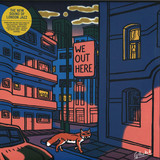
Side-A features Alex Désert and Deston Berry of Hepcat, in addition to Malik Moore of The Lions. Side-B features Asdru Sierra, vocalist of Ozomatli. Produced, Mixed, and Recorded by Dan Ubick (The Lions, Connie Price and the Keystones). Previous steady radio play on BBC Radio 6, KCRW, SoHo Radio, etc... Very popular among DJ’s and collectors worldwide. To round out their second wave of 7" singles, Night Owls bring the heat once again with their signature sound and vision.
Re-imagining two Aaron Neville classics, “Hercules” feat. Alex Désert and The Lions b/w “Tell It Like It Is” feat. Asdru Sierra from Ozomatli, Night Owls up the ante by bringing in some heavy hitters for both sides of this 45. Side A's "Hercules" features long-time collaborators and bandmates from The Lions (Stones Throw, Ubiquity, NYCT) - the soulful tenor of Alex Désert (also Hepcat) on lead blending seamlessly with the familiar voices of Deston Berry (Hepcat) and Malik Moore (Ocean 11) on backing harmonies. The Lions front line locks in tight from the many years performing together on top of a darker and grittier interpretation of Allen Toussaint’s masterpiece complete with fuzzed-out guitar, Space Echoes and rhythm drops. On the flip, "Tell It Like It Is" keeps the momentum going and hips swaying with added Colombian percussion elements and California lowrider vibes. Featuring L.A. family and multi-talented vocalist of Ozomatli, Asdru Sierra, on lead and Night Owl Dan Ubick on backing vocals Side B creates a unique blend of reggae and Cumbia into a very fresh take on this multi-generational hit
- Rock Candy
- Slab City
- Monster Collecting
- Soft Copy
- Love Zoo
- Bodymod
- Monty Donahue
- Sad Help
- Cruel Entertainment
Neon Pink Vinyl. For their tenth LP in a career spanning more than two decades, Tulsa's Unwed Sailor deliver their heaviest riffs, loudest squalls, and most deeply textured arrangements yet. Cruel Entertainment is a catalogue of contrasts - dissonance and harmony, hardcore crunch and post-rock grandeur, complexity and catchiness - that adds a vibrant new dimension to the second phase of their discography, spanning thus far from 2019's landmark Heavy Age up to the "vivid, starry-eyed psychedelia" (AllMusic) of 2024's Underwater Over There. Opener and lead single, "Rock Candy", roars in with a gale of feedback, pounding drums, and nimble bass, until a latticework of howling guitars ushers us into a more goth-tinged space. It's a characteristically intricate, energetic composition that flows with remarkable ease between its parts, and wastes not a moment of its three minutes. "Monster Collecting" brings a rare combination of melancholic and driving energy, reminiscent of avowed heroes New Order, but ups the ante with a tight, fastpaced rhythm section and litany of guitar lines, until opening up into a cascade of reverberating textures and tenuous sweetness. According to Ford, the title Cruel Entertainment refers to "the hardships of being an artist and musician in the crowded, imbalanced world of social media and streaming," where the completion of a new work demands that the creator also be a promoter, content strategist, and agent, among many other intensifying challenges. Pointedly drawing inspiration from noisier, rowdier bands - including Fugazi, Quicksand, and Cherubs - here they seek a much-needed catharsis in the ongoing fight to keep the creative soul intact. Second side standout, "Monty Donahue", typifies this form of release, as massive, mid-tempo percussion leads a fluid low end theme - inspired by the dual bass assault of Dianogah - and Swatzell's chords burst into shimmering nebulas across a labyrinthine arrangement that's equally loud and beautiful. Title track, "Cruel Entertainment", is a mosaic of sound for which Ford's bass provides the mortar: taut drums list between the channels, washes of guitar stretch to the horizon, and metallic heaviness punctuates the drift. There is a confident immensity here, proving that, although Unwed Sailor have witnessed a wild amount of changes in the music industry, their knack for creating complex, vital, and masterfully produced work remains untouched.
Berlin-based French-Irish multimedia artist Zoe Mc Pherson levels up on their third full-length "Pitch Blender", mangling years of experience DJing and performing live into a tight set of cybernetic soundsystem experiments that flicker between the rave and the art space.
Cast your mind back to February 2020 for a moment, when Mc Pherson released their last album "States of Fugue". The world seemed less tangled somehow, and yet Mc Pherson's precision-engineered fusion of exploratory sound design and visceral club pressure seemed to hint at a cataclysmic event none of us were really expecting. Only a few weeks after its release the world changed forever, and the majority of us were grounded - forced to consider our lives and the movement (or lack thereof) surrounding us. The philosophy of this extended time period is welded into the bones of "Pitch Blender", Mc Pherson's supple third album. They have learned plenty in the last two years, and infuse all of that anxiety and spiky emotionality into a spread of tracks that sound as powerful in headphones as they do over a well-tweaked soundsystem, soldering vocals, environmental recordings and instrumental flourishes to unpredictably pneumatic, cybernetic beats.
Anyone that's caught one of Mc Pherson's energetic live performances over the last few months will have an idea of what "Pitch Blender" is made of. They're an artist who's somehow able to match the raw energy of post-punk and no-wave music with the brain-altering potential of the best experimental club tracks, vocalizing an incongruous post-lockdown reality over beats that sound as if they're in a permanent state of flux. 'On Fire' splutters to life in a frenetic patter of drums that blur into oddly soothing hoover sounds, snaking lysergically towards a drop that's teased constantly, and never comes. We're forced to wait until 'The Spark' for that, fighting through choppy, pitch-mangled guitar and rolling beats until a gruesome kick drum forces its way through the psilocybin mists and heaving Bristol-inspired bass clonks. Backed up with just the inverted traces of recognizable breaks, this vigorous pulse lies at the heart of "Pitch Blender", the driving force that powers Mc Pherson's sound even when it's only hinted at.
'Blender' is the moment where Mc Pherson show their full hand, using crackling sound effects, ghost vocals and uneven rhythms to build a textural landscape that's so evocative you can almost taste it. Squealing modular synth effects sound like gameshow buzzers being triggered in another dimension and propel the track forward - it's club music, just about, but Mc Pherson's motivation is world-building, and their world is colorful, abstract, and dizzyingly surreal. "Obsolete user," their voice echoes over driving airlock kicks. But they take a swift left turn with 'Lamella', reducing the kinetic club rhythms to a longing simmer and letting loose with powerful vocals, intoning with robotic, gender-fluxed intensity. On 'Wait', New York City's clacking crosswalk signal - already an effective club track on its own - is transformed into a reminder to slow down, juxtaposed with booming sub-heavy kicks, acidic synths and effervescent percussion that rattles in time with the vibrations. It's foley rave, built for pure psychedelic intensity to blur the line between real life and sonic fiction.
One of the album's most galvanic tracks, 'Power Dynamics' curves a double-time rhythm around breathless HQ sound design squiggles until it hits a polyrhythmic crescendo, striking a queasy balance between rave hedonism and ritualistic hand drum energy. It all builds towards eerie closing track 'Outside' that acts as an important wind down, spotlighting Mc Pherson's ability to operate outside of the rhythmic spectrum, using cinematic scrapes and flickering neon synths to create music that's tense but never terrifying. The track feels like the end credits of a particularly bewildering movie - something between the cyberpunk dystopia of "Ghost in the Shell" and the vivid, sky-scraping beauty of "Koyaanisqatsi". Mc Pherson has managed something special with "Pitch Blender": mashing together genres with rare focus, and sharpening their engineering skills to a fine point, they've concocted an antidote to contemporary malaise - a wakeup call that's begging us to loosen our limbs and move.
The Ibex Band, with Giovanni Rico and Selam Woldemariam at the creative helm, provided the musical backbone for legends like Aster Aweke, Girma Beyene, Tilahun Gessesse, Mulatu Astatke, and Mahmoud Ahmed, including the iconic album Ere Mela Mela, shaping modern Ethiopian music as we know it today. This 1976 album (Ge’ez Year 1968) played a pivotal role in that legacy and has now resurfaced to set the record straight.
There’s a tendency to talk about the seventies as a golden age of Ethiopian music. There are good reasons for that, and just as good reasons against it. However, the notion of a golden past privileges the role of Western explorers and suggests that the pinnacle of Ethiopia’s musical culture is something only a foreigner can appreciate and unearth. It downplays the complexities of Ethiopia’s culture and history, creating an artificial divide between then and now. And it underestimates the constantly evolving sound that has followed.
The legendary musical outfit The Ibex Band, later metamorphosed into The Roha Band, has played a central role in defining the sound of many of the greatest stars on the music scene of Ethiopia from the mid-seventies onwards–but their golden output has never really waned. The story of the origins of the band that provided the musical backbone for greats such as Aster Aweke, Girma Beyene, Tilahun Gessesse, backing the solo career of group member Mahmoud Ahmed as well as backing Mulatu Astatke and many others has yet to be properly told.
Two misconceptions plague the image of Ethiopian music, one is that the music is pure because it is, by some notion, unexploited, the other is that it is all traditional. To begin with, a combination of political changes between the late sixties and the mid-nineties created an environment where only the most dedicated and skilled musicians struggled on and pursued a musical career against fierce odds. The whole Ibex Band, with Giovanni Rico and Selam “Selamino” Seyoum Woldermarian at the creative helm, are arguably the origo of the vibrant scene in the mid-seventies, and the said pair are foremost responsible for not only navigating the band through troubled times, but also modernizing the 6/8 chickchicka rhythm to a contemporary form. Giovanni laid the rhythmic foundation with heavy looped basslines that reinvented traditional melodies as dance music, and with Selamino’s innovative guitar work they influenced scores of musicians from Abegaz Kibrework Shiota to Henock Temesgen. Even Giovanni’s Fender bass and Selamino’s Gibson guitar inspired younger musicians in their choice of instruments. Not only in choice of instruments but also in sound–even as the digital revolution hit Ethiopian music, a lot of popular music still took its cue from the masters from Ibex and Roha.
Ibex emerged out of the ashes of the sixties group the Soul Echos band, adding Giovanni and Selamino to their ranks and taking their cues from a slew of influences, such as Motown and The Beatles, fused with traditional music. A tighter-knit unit than most bands at the time – Ibex has remained six to seven members throughout their whole career, compared to many bands that were as large as fifteen or sixteen men strong when Ibex set out. Their playing has been viciously focused, economical yet heavy. Just a year before the recording sessions of the album in your hands, Giovanni and Selamino made a contribution to the popular musical lexicon of Ethiopia that was simply defining the popular sound: their arrangement and recording of bandmate Mahmoud Ahmed’s solo effort and real commercial breakthrough tune and eponymous album, Ere Mela Mela, from 1975.
Selamino has never limited himself to being an adroit lead guitarist, but has always been a scholar of history, and as such he has probably contributed as much to modern Ethiopian music with his guitar playing and compositions as with a deepened understanding of modern or contemporary – Zemenawi – Ethiopian music. Selamino’s contributions serve as a metaphor for those of the whole band, at one and the same time creating and defining a new, danceable and updated sound anchored in Giovanni’s bass, whilst also elevating the broader scene through their support for others on the scene and on top of that, increasing the understanding of the music.
There is an understandable desire to romanticize the musical heyday Ibex and Roha were at the forefront of, because so much of the output is sorrowfully hard to come by. Ibex creativity was nothing short of ridiculously fierce compared to many of their Western contemporaries. Based on their sheer recorded output alone they could have usurped the title “hardest working in show business” from James Brown, recording more than 250 albums or 2500 songs in the seventies and eighties. Some only surface as cassettes today, others were never given full LP release, and some are simply impossible to find today. In the light of that, it’s nothing short of a miracle that the recording Stereo Instrumental Music from 1976 (Ge’ez Year 1968) has resurfaced. Unearthed in perfect condition on a chrome cassette, this is musical history comes alive–to set the future straight. Stereo Instrumental Music was recorded in collaboration with Karl-Gustav Lundgren, a Swedish national working for the Radio Voice of the Gospel. It took two sessions at the Ras Hotel ballroom in Addis Ababa. The Ibex Band was the first band in Ethiopia to employ a four-track recorder for their recording (the first available in the country, lent by Karl-Gustav). Later the same week, Giovanni and Selamino realized that, lengthwise, the recorded material fell short of what they wished for, so they recorded four more tracks in one more session on a single-track recorder. The Ras Hotel and Ghion Hotel, where the Ibex Band held musical residencies were to Ethiopia in general and Addis Ababa in particular what Motown was to the USA and Detroit a few years earlier – a hotbed of musical creativity and showmanship.
The most astonishing thing about Ethiopian music of the last half century is how tradition and modernity are intertwined. Because of this feature, it’s kind of hard to tell when there ever was or when we are in a “golden age”. So much of music from the past has been criminally neglected, but because of the hardships in the past, it would be an oversimplification to say that said past was a golden age. Probably, the golden age is what we are approaching, because for the first time both the past and future are accessible, and the monumental contributions from before can lay a firm foundation for a thriving music scene today. The Ibex Band stands firmly in the past, present and the future. That, if anything, is golden.
The detailed history of Stereo Instrumental Music is in many ways unique. To begin with, it couldn’t have been recorded earlier (there were no four-track recorders available) and it really couldn’t have been recorded afterwards either, at least not in the years directly following, because of the toll the musical scene took from the unfavorable political climate that followed when the nascent Derg regime and rival groups tried to assert themselves, the musical equipment lent from The Voice of Gospel Radio simply disappeared from Ethiopia when the radio station folded in 1977. Karl-Gustav Lundgren,
the Swedish foreign national who assisted during the recording, worked with the Ethiopian Evangelical Church Mekane Yesus at the time, recalls how they only had about fifteen minutes to get the microphones in place for the recording as to not alert neither the management at Ras Hotel nor the authorities and most importantly, to complete the recording before the curfew came into effect at midnight. In leaping to the opportunity to use previously unavailable equipment to push their sound forward and improvising to meet the logistical challenges, the Ibex Band displayed the very avant-gardism and adaptability that explains their longevity as a band through the years. The recording of Stereo Instrumental Music is from a given time in history, but it sounds as beyond time.
Much of the energy that burst out of the scene that Stereo Instrumental Music came out of dissipated or got sidetracked during the societal changes Ethiopia went through in the 1970s and 80s. Whilst leaders might have professed to be revolutionary, the work ethic of the Ibex Band can truly be described as that. They never called it quits, but adapted, toured extensively abroad in Africa, Europe, and the Middle East, and found ways to work even in the face of the curfew that curtailed a lot of musical life. They even played major arenas in the nineteen eighties, despite said curfew and restrictions. The whole extent of their legacy has never been told, but their music speaks louder than words, so therefore… tune in to the Ibex Band’s Stereo Instrumental Music.
- Rabat
- Federation Tunisienne De Football
- Fan For A Twenty Years Old Human Beingb
- A World Of Wonder
- C'mon Tigre
- December C
- Commute
- Queen In A
- Life As A Preened Tuxedo Jacketd
- Building Society - The Great Collapse
- Building Society - Renovation
- Welcome Back Monkeys
- Malta (The Bird And The Bear)
Drawing inspiration from a wide range of cultures and musical traditions, C"mon Tigre is a dynamic duo that developsits identity into a collective of musicians and artists from all over the world. Along the years, they have collaborated with musicians such as Colin Stetson, Seun Kuti, Arto Lindsay, Xênia França and artists Gianluigi Toccafondo, Harri Peccinotti, Danijel Zezelj and Paolo Pellegrin to name a few. TEN, which stands for Tenth Edition Newness, is an expanded edition of their iconic Self Titled debutalbum, which was initially publishedin 2015 through Africantape on a limitedvinyl pressing. It sold out quickly, was later repressedby the band and sold out again. Today, it finds its chance to be reissued with the Computer Students_äó treatment. Fans will love this remastered version, which sounds substantially better than the original. The album"s expansion features a slightly altered record cover in addition to a 12-page booklet with a number of writings and images. TEN will be offered on double blackvinyl, audiophile quality pressing 180-gram, inside a gatefold cover. The entire package is housed in a unique heat-sealed aluminum Type-2 foil bag, courtesy of Computer Students_äó.
Moving Pressure 03 lands as Rene Wise's third release on his imprint. With a refined approach to rhythm and restraint, the artist once again distills techno to its purest form: hypnotic, percussive, and propulsive. Across four tracks and in line with the label's essence, MP03 thrives on movement-low-end mastery meets tightly coiled grooves, while textural elements shift and evolve with subtle precision.
A1 'Relax' sets the foundation with a mighty sub-base, rolling forward with effortless force. Chopped-up claps ricochet through the mix, while a funky, disembodied vocal repeats a single command: "relax". Then comes 'Chomp Chomp', a denser offering in Wise's sensorial arsenal. Layered with gritty textures, his signature percussion builds a soundscape that is both tactile and weightless, evoking a kinetic dream state where groove and space are in constant conversation. On the flip, 'Cave' plunges into murkier terrain. Swathed in fog and sinister atmospherics, it unfolds through an eerie blend of sci-fi surrealism and grounded physicality. Bleeps hover like distant signals, their sharpness softened by a cavernous, smothering embrace. It's a study in tension-hypnotic and unsettling in equal measure. Closing the release is 'Deep Under', a track that embodies its name with subterranean mystique. The soundscape is rich with detail, an ecosystem of sonic fragments shifting beneath the surface. It's immersive yet elusive, like catching glimpses of something just out of reach-a mirage that flickers between the tangible and the ethereal.
This is minimalism with intent, built for deep immersion. Less, here, is infinitely more.
- Love In Store
- Can’t Go Back
- That’s Alright
- Book Of Love
- Gypsy
- Only Over You
- Empire State
- Straight Back
- Hold Me
- Oh Diane
- Eyes Of The World
- Wish You Were Here
If every significant artist has an underrated gem in its catalog, then Mirage is that album for Fleetwood Mac. An obvious return to relative simplicity after the dramatic tension of Rumours and experimental ambitions of Tusk, the 1982 album finds the band re-grouping after a brief hiatus and again climbing to the top of the charts. Extremely well-crafted, well-produced, and well-performed, the double-platinum effort distills the group’s hallmark strengths into a filler-free set that never runs short of addictive pop hooks or daft accents.
Sourced from the original analog master tapes, pressed at Fidelity Record Pressing in California, and housed in a Stoughton jacket, Mobile Fidelity’s numbered-edition 180g 45RPM 2LP set presents Mirage in reference sound for the first time. The efforts co-producers/engineers Ken Caillat and Richard Dashut went to capture the splintered albeit formidable band can be heard with stunning accuracy, range, depth, and detail.
Though Rumours understandably gets a permanent spot in the audiophile hall of fame, the smooth, clear, and dynamic sonics on Mirage confirm that the record that stood as Fleetwood Mac’s last effort for five years deserves a place in the same vaunted arena. The presence and imaging of Mick Fleetwood’s percussion alone on this reissue might have you wondering how this slice of soft-rock bliss has gone under-noticed for decades. Other prized aural aspects — separation, definition, impact, tonal balance — are also here in spades.
Like much surrounding Fleetwood Mac in the 1980s, arriving at Mirage was not easy. Caillat searched for studios located outside of Los Angeles on a mission to change up the vibe of the band’s prior recording sessions. Everyone settled on Le Chateau in France, where relations between some members remained icy — and cooperation with the producers strained. Battles with exhaustion, bitterness, and addiction further informed the proceedings at the 18th century complex in the French countryside, where even communal meals were allegedly eaten in silence.
Inevitably, the feelings that co-producer Lindsey Buckingham, Stevie Nicks, Christine McVie, and company harbored — as well as the situations in which they found themselves — drifted into the songwriting. In its rapid ascent to rock-star royalty status, Fleetwood Mac drifted apart, embarked on solo pursuits, and found it was lonely at the top. Emptiness, the illusion of dreams, the longing for love, the want to escape to bygone times of innocence and happiness: Such themes inform a majority of the narratives. Even if the lyrics regularly take a back seat to easygoing arrangements that allow Mirage to come on like a refreshing breeze on a sunny summer afternoon.
Home to three Top 25 singles in the U.S. and having occupied the pole position of the Top 200 album charts for five weeks, Mirage rightfully resonated with the mainstream and attracted listeners on both sides of the pond. And how, via a smart blend of sugary melodies, warm harmonies, interlaced notes, nimble rhythms, taut structures, and passionate vocals. Not to mention the presence of what arguably remains Nicks’ signature song, the biographical “Gypsy,” a meditation on the loss of her close friend Robin Anderson that teems with majesty, mystery, and mysticism — and which gets an assist from Buckingham’s shaded tack piano and richly strummed guitar chords.
Its ranking as an all-time classic aside, that No. 12 hit has plenty of company when it comes to brilliant pop turns on Mirage. On the subject of Nicks, the raspy singer gets a little bit country on “That’s Alright.” Its clip-clopping pace and two-stepping progression complement subtle vocal swells that emerge during the final verse of a tune that is ostensibly about leaving but still conveys forgiveness and grace. And what would a Fleetwood Mac record be without Nicks drawing on the tools of the supernatural — cards, dreams, wolves, and the like — on the twirling “Straight Back.”
Despite the potency of Nicks’ primary contributions, Mirage seemingly unfolds as a tight competition between Buckingham and McVie — and one that ultimately ends in a draw. Buckingham’s salvos include the contagious “Can’t Go Back,” a yearning to time-travel back to the past that’s complete with hall-of-mirrors backing vocals; “Oh Diane,” out-of- left-field ear candy sweetened with hiccupped vocals and salt-and-pepper-shaken grooves; the chiming “Eyes of the World”; and “Empire State,” a delightfully fluttering track whose high-range vocals, lap harp notes, and ringing xylophones hint at the galaxies of sound that would erupt on Tango in the Night.
Then there’s McVie. As elegant, understated, and coolheaded as she’s ever been on record, she pours her heart out on cuts that revolve around her inevitable split with Beach Boy Dennis Wilson. In the process, she punctuates Mirage with a characteristic not always associated with catchy pop music: emotional weight, and the sense of dreaded acceptance in the face of dreams deferred.
“I wish you were here/Holding me tight,” McVie sings over a delicate melody on the album-closing piano ballad “Wish You Were Here.” Though they hoped otherwise, for the members Fleetwood Mac, distance and separation were always close at hand. Believing otherwise, inviting nostalgia, and pretending everything was fine only amounts to a mirage.
We're delighted to welcome these two Australia based producers to the Samurai family with Onyx - a 4 track EP that delivers a blend of tight edits, chest heavy bass, and intricate sound design. Pugilist & Tamen combine nostalgia with forward-thinking production and Onyx traverses a rich landscape of jungle-rooted moods.
Onyx introduces a step forward in the duo's production, utilising sculpted distortion as an instrument. Seen on 3 of the 4 tunes, this approach adds a temperative tension as the tunes give the impression they have gone too far into the distortion no go zone but ultimately finding a balance that compliments and enhances the tunes overall sound pallette perfectly.
Raw and direct with rich layers and honed grooves that ultimately mark the tunes as memorable, Onyx is on a new level for Pugilist & Tamen.
- 1: 3 Am
- 2: Timber
- 3: People Listen (To The Radio)
- 4: Everything's Green
- 5: Generator 6. Gossip
- 7: Shadow Boxing
- 8: Glossary
- 9: An Echo
- 10: Common
'Through Today' is the sophomore album for rising Australian band Chimers. A husband / wife duo comprising life partners Padraic Skehan (vocals / guitar) and Binx (drums / vocals). Recorded by Jono Boulet (Party Dozen) over two days at Stranded Studios, Wollongong and mixed at Boulet’s Sydney home studio, produced by the band and veteran manager / promoter / producer Tim Pittman (Feel Presents), 'Through Today' features ten tracks of tightly-coiled intensity that barely lets up for all of its 34 mins. In enlisting Boulet, the band were confident that due to his own experience of being one half of Party Dozen, they had someone who understood the confines of working within the structure of a two-piece but also the possibilities that creates. Boulet, in turn, rewarding that trust by capturing a powerful bedrock of sound that allowed the band's taught rhythms to circle and permeate and yet give full breathing space for the melody within. For Pittman’s part, having a third ear on hand to devote serious listening time and critical commentary was an added bonus. It’s a major step forward from the band’s 2021 self-titled debut. A twelve track effort that snuck out during covid and only hinted at the power within. "Our debut felt more like just trying to capture the songs we had at the time, we weren’t sure if we’d even release it or if it would be our only album" "This time around we were intent on capturing the energy and intensity of our live show on the recording but with a more produced sound than self-titled. We worked more on song structure previous to the sessions. We rehearsed a lot playing quietly so we could actually talk to each other whilst playing the song and iron out any kinks.” “Jono turned the whole live room into a drum room, mics everywhere. The guitar amps were situated outside to prevent too much spill but still recorded live along with about half of the vocals. Second guitar and the rest of the vocals were recorded the next day. Jono was super quick and had the same work ethic and mindset, get in, get it done. If the first take was good enough, move on.” - Padraic Lyrically Chimers maintain the intensity as they tackle the themes of love, life, death and relationships, distance from home (Padraic is Irish, moving to Australia in 2001) and the current political climate providing enough drama to fuel a forest fire. Guest musicians on the album include saxophonist Kirsty Tickle - also of Party Dozen - and violinist Jordan Ireland of The Middle East. Both of whom were invited in on short notice adding their respective parts in just 1-2 takes each without any prior knowledge of the material. Binx too showing added versatility contributing lead vocals to An Echo and sharing lead across 3AM, Generator and others. “Singing is not something that comes naturally to me, and it was at the last minute before we went into the studio that Padraic suggested I sing the lead in An Echo. Having very minimal musical instruments within the band I think having the two different vocals adds a nice dynamic to the record.” - Binx 'Through Today' is a great album. Solid and confident from the get go. No waste. No unnecessary fat. Should it be Chimers last it would remain a defining statement of originality and intent. But it’s not the last, it’s just the beginning. And there’s plenty more where that came from. BIO Like many good bands Chimers are a band born of isolation, not geographically though, via the pandemic. Irish born Padraic Skehan and his life partner Binx, formed the band in their Wollongong backyard during the initial lockdown of 2020. Veterans and drummers both of the ‘Gong’s vibrant garage-scene – The Pink Fits, The Drop Offs, Evol and more – Chimers is an altogether different beast, Padraic taking a giant leap forward by removing himself from the back-seat and assuming the role of driver; singing, playing guitar and writing the songs that would eventually become their 2021 self-titled debut album. It’s a sound and album that draws heavily on Skehan’s time as a youth in Ireland and the post-hardcore sounds of Dischord Records, Husker Du, The Wipers and which has seen the band find friends and favour in like-minds The Mark Of Cain, Henry Rollins, Guy Picciotto and Mudhoney. This is no mere nostalgia though, the band instead landing at the vanguard of a new generation of Sydney and surrounds bands – Body Type, Second Idol, Dust, Private Wives, R.M.F.C – borrowing from the past in order to create a future.
Members went on to Sinkane, and Pompeii, This Morning. Originally recorded in the
summer of 2005 out west, while on tour, by Vince Tennant. The recording had been
shelved and unreleased. In 2023, Expert Work Records reached out to Sweetheart and
got the recording re-mastered. It will be released on limited vinyl and digital.
This is also a companion piece/ record with EW018 (Sweetheart- The Process of
Making Us Well). We highly suggest getting both records.
Sweetheart's "The Unbearable Tightness Of Being" is one of those records you should
put on your radar as soon as possible. A rediscovered artifact from 2005, the album is
a sonic panorama that intricately incorporates post- hardcore, noise rock, punk,
screamo, and indie elements into an innovative and complex sonic landscape. The
guitars, wielded with finesse, serve as the driving force behind Sweetheart's sonic
assault. From the opening chords to the closing refrains, they deliver a relentless
barrage of riffs that defy predictability. The interplay between the two guitarists
manifests as a dynamic dialogue - a musical conversation that seamlessly transitions
from chaotic dissonance to moments of clarity. Catchy, intricate, and hypnotic chord
progressions unfold, evoking the spirit of At The Drive-In and Fugazi while carving a
distinct sonic identity.
However, it's not merely about sonic assault; Sweetheart infuses the album with a
nuanced approach to melody. Amidst the aggressive riffage, this material treats
listeners with moments of harmonic beauty and unexpected melodic twists. Themes,
leads, melodies, and harmonies intermingle, creating a rich auditory experience that
transcends the boundaries of conventional post-hardcore.
The production quality of this long- lost gem further accentuates its brilliance.
Recorded in 2005 but kept in the shadows due to financial constraints and a desire for
perfection, the album has now found its moment in the sun. Expert Work's decision to
release the LP in 2024 has allowed audiences to appreciate the intelligent
craftsmanship that went into its creation.
"The Unbearable Tightness Of Being" is more than a musical journey; it's a sonic
exploration transcending all the possible sonic boundaries. Sweetheart's commitment
to experimentation and honesty, as emphasized by band members reflecting on their
creative process, is palpable. The act of listening, treated as a discipline, is evident in
the careful construction of each track - a result of repetitive practice, internalization,
and an unwavering dedication to their craft. In the grander narrative of the album's
release, the band's reflections on the passage of time and the meaning of their work
imbue the music with a poignant depth.
"The Unbearable Tightness Of Being" is a mandatory addition to any record collection.
It's not just a revival of the early 2000s scene; it's a sheer example of Sweetheart's
enduring brilliance and a celebration of a significant part of their musical legacy.
- A1: Into Dust Becoming
- A2: One Is Two
- A3: In Starless Reign
- A4: Our Serpent In Circle
- B1: Teeth To Sky
- B2: Lone Blue Vale
- B3: Landscape Of Thorns
- B4: Illumine
“We all grew up playing heavy music. For me personally, listening to artists like Swans, Godflesh, Neurosis and Kiss It Goodbye in my 20s was cathartic in a lot of ways. Identifying with people that have a similar world perspective, who are channeling their angst and frustration into the creative outlet of art and music — that was important.”
Josh Graham isn’t just talking about his decades-long career in heavy music, which has included A Storm of Light, Battle of Mice, and many years as the one-man visual department for Neurosis. He’s also talking about the formation of Guiltless, his new band with bassist Sacha Dunable (Intronaut), drummer Billy Graves (Generation of Vipers) and guitarist Dan Hawkins (A Storm of Light).
Guiltless released their debut EP, Thorns, via Neurot Recordings in early 2024. Crushing and cheerless, it seemed to welcome the apocalypse looming on our collective horizon. “The EP had a pretty narrow focus starting from my ideas,” Graham explains. “With this record, my main goal was to really collaborate with Sacha and Dan and Billy because those guys are great songwriters. The new album is meant to open up the sonic palette and explore more territory.”
That new album is Teeth to Sky, the band’s first full-length. Even more pulverizing and focused than its predecessor, the album’s collaborative songwriting approach was paired with an adjustment to the lyrical content.
You can hear it on “One Is Two,” which channels a tightly controlled Meshuggah churn through the more visceral lo-fi approach of Kiss It Goodbye or Swedish noise rock legends Breach. On “In Starless Reign,” Guiltless blend dissonant black metal and thundering doom while Graham invokes humanity’s inability to see the forest through the trees. Then there’s the bruising title track, which combines the gnarled sensibilities of The Jesus Lizard, Cherubs and Barn Owl into a rumination on Mother Nature’s revenge.
Teeth To Sky was recorded remotely by the members of Guiltless—except for the drums, which were recorded by Travis Kammeyer (Generation of Vipers) at Fahrenheit Studios in Johnson City, Tennessee. The album was mixed by Kurt Ballou at God City in Salem, Massachusetts, and mastered by Brad Boatright at Audiosiege in Portland, Oregon.
Crafted from solo recordings of 42 top-notch improviser musicians mostly drawn from Berlin’s multi-layered experimental scene, the monumental Phantom Orchestra project by Raed Yassin is finally getting released on Morphine Records. More than 1000 minutes of source material, recorded at the Morphine Raum during the fall of 2021, is distilled into a cogent work marked by a dazzling display of editing and blending, and packed into a double LP containing 7 “movements” of the Phantom Orchestra composition.
The Lebanese composer, musician and visual artist Raed Yassin has built a career straddling artistic mediums and communities, his devotion to improvisation, his connection to experimental electronic music, and his interest in the archive distinguishing a progressive impulse rooted in historic exploration. In 2020 Morphine Records released his wildly ambitious Live in Sharjah, made by a kaleidoscopic expansion of Praed, his duo with clarinetist Paed Conca. He resumes his interest in large-scale projects with Phantom Orchestra, conceived during the pandemic when most European improvisers were forced to redirect their energies into solo work,
Each set of the Phantom Orchestra’s solos was cut on a Dubplate, ready to be performed on 12 turntables routed to a six-channel setup, to create a unified and breathtaking composition from the spontaneous material. The resulting material was then edited and prepared to be cut on a Double LP format, marshalling a staggering variety of improvised footage into an air-tight collage that locates abstract consonance, stunning sonic rhymes, and unusual harmonies without shutting out the sort of exhilarating collisions and fraught tensions inherent in collaborative improvisations. With this final stage of the composition, Yassin offers a vibrant testimony to the diversity of Berlin’s community of improvisers, to say nothing of his own refined artistic sensibility in achieving such a remarkable feat of blending so many contrasting voices into a truly unified piece of music. “For me it's about how to learn to be a community again,” he says. “And how to live in a world together again, which is a very difficult question for me.”
“This Album was published with the support of the Arab Fund for Arts and Culture – AFAC”
"The title track here ebbs and flows in and out of Amen break cascades, as the drones hovering beneath give a sense of flying through an electrical storm. Dooky' is better still, its sparser rhythm recalling Reinforced stalwart Paradox in its ability to be simultaneously woody and ultra-digital, human and alien." THE WIRE
Those who are aware of dgoHn will by now be familiar with his sound and those who aren't should be. Back with his third single on Love Love, the drum maestro makes skin prickle once again with two shining original tracks laced with impeccable moments. Only dgoHn can create the kind of drum and bass that sounds like the tightest of ensembles playing meticulously rehearsed arrangements, painting intricate shapes with the percussion.
The title track takes a fresh look at the amen break, finding ways to breathe new life into it. Soaring above the clouds on thick warm pads, the drums thunder with a blissful rage propelled forwards by a rumbling bassline.
On the B-side 'Dooky' serves up a dgoHn masterclass in spatial control that could well be a future-classic of his. A formidable groove with serious punch, hi-hats skip along as the delicate balance of frequencies gives the listener just enough headspace not to get lost in the deep, dark world it creates. A subtle demonstration of tension and release, this single floats like a butterfly and stings like a bee whilst dripping with funk.
Lastly, Rognvald switches up the title track with a jam that triples the edits and doubles the bass, tipping the scales from the side of restraint to that of chaos without losing the feel of the original. Artwork once again provided by Colin 'Snublic' McCallister.
Hardly Cricket sees the band truly lean into their rock tendencies. Those who have enjoyed their past forays into 70s style dual guitar leads will find much to latch onto here. Explosive, high energy tunes like “New Music” and “Sacred Heart” are instantly infectious and truly set the tone with high flying guitar action from all the players. However, as always, Shirese keeps it varied. With songwriting duties being more evenly spread throughout the group this time around, listeners will find 60s garage, country, and even doo-wop inflected songs as well. Matt Paolilo’s ever present vocals and tongue-and-cheek lyrics keep listeners on their toes. While the occasional descent into tape spliced experimental madness still finds its place in the grooves. Shirese continues to evolve as their lineup continues to cement. Gone are the days of a revolving cast of characters, and in its place we find a group of friends who mesh tightly, pushing beyond their perceived limits to true rock’n’roll glory! A Grapefruit Records and C/Site Recordings co-release. Limited to 300 copies.
The first-ever vinyl reissue of the classic 1986 debut album from perennial pop icon and pin-up Samantha Fox. The only British female solo artist to score three Top Ten hits on both sides of the Atlantic in the 1980s, Samantha made her name as the nation’s favourite Page Three girl before launching an enviable music career.
Touch Me features four hit singles: the international smash ‘Touch Me (I Want Your Body)’ (#3 UK and #4 US), ‘Do Ya Do Ya (Wanna Please Me)’ (#10 UK), ‘Hold On Tight’ and ‘I’m All You Need’. Immediately establishing Samantha’s signature pop-rock sound, on its original release the album hit #17 in the UK, going silver, before reaching #24 in the US with a gold certification. Pressed on striking black vinyl with white and pink splatters to complement the original aesthetic, this edition boasts painstakingly rebuilt artwork and a newly designed inner bag featuring full lyrics. A strictly limited-edition picture disc is also available. Touch Me is reissued alongside Samantha’s self-titled second album and 1989’s I Wanna Have Some Fun.