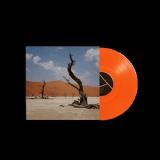
TIGHE is a new name on us with nothing out there to tell us more, but whoever they are they know how to make walls rattle with their deepest dubstep. This offering comes on Beatrice M's Bait label and opens with the eerie 'Empty Units', which is a masterclass in building suspense and tension through empty spaces. The low end wobbles with glistening hi hats in the mids and distant sonic echoes adding late night intrigue. 'Untitled 9' is a busier cut that rides a lumpy broken beat with glitchy textures, and 'Cut Off' then has tribal percussion shimmering over more cavernous low ends. A pair of flipside remixes from Pianeti Sintetici & Yogg add more drive to close out a fine EP.
Cerca:tig ten
Amsterdam label Spectral Bounce recruits French club stalwart Chris Carrier for SPEC06 — Perfect Encounter. Active since 1994, the Parisian artist has released a wellspring of records on Robsoul, Slapfunk and his own Sound Carrier recordings, parallel to his longtime career as a DJ. Characterised by swirling delays and progressive arrangements, Perfect Encounter shows the producer exploring the mesmeric corners of tech house, ideally fitted to the Spectral Bounce aesthetic.
Opener “XLR8” starts with rolling toms that make way for fluid, modulated tones; each bar ebbs and flows to the sweeping synths set in motion by Carrier. Processed with a multitude of delays, rhythmic FX boldly swish above the drums, making for an immersive soundstage. Second track “Light Side” retains the billowing echoes but moves more nimbly, cutting things back to make for a spacious and breezy number. Its croaking synths hop around the stereo field, accompanied by tight percussion and a walking bassline.
The hallucinogenic “Third Moon” sees Carrier step further into trance-inducing territory. The track’s pulsing, syncopated bass note thrums underneath an arpeggio that evolves into a heady prismatic drone. While the chugging beat is ever-present, melodic refrains rise up and evaporate like wisps of vapour, alongside a vocal that fades away as quickly as it appears. The EP’s eponymous “Perfect Encounter” dials up the tension and closes the record with a mysterious touch. Speedy 16th note patterns propel the beat, creating shifty rhythms that rattle and hiss. A rasping, gelatinous synth and squeaky detuned tones resemble extraterrestrial signals — alien morse code for an enraptured dancefloor.
Credits:
We're proud to announce the upcoming second vinyl release from Black Teeth Records, and it's a serious one - courtesy of none other than ARtroniks, a Ghent-based producer who's been crafting heavyweight dub-infused pressure since the late nillies. No small name in the game - his work has long resonated in the deeper corners of the bass music world. This new four-tracker is a bold evolution of his sound: a stripped-down, technoid dubstep blend steeped in cyberpunk atmospheres, engineered for proper sound system deployment.
Transit - hauntingly dystopian and beautifully cinematic. A perfect intro, interlude, or ender. Backlash - pure weaponry: sharp, relentless, and built for dancefloor impact. L121 - deconstructed minimalism that cuts deep; skeletal but heavy. Vitamin - hypnotic low-end movement with tight percussive tension.
- Robespierre?
- Berio
- Kaldur Vindur
- Cipher
- Well, Actually
- Oslo
- Fount
- Ry
- Sneaking Around
Leading Danish contemporary jazz label April Records is proud to present Well, actually..., the third album from Polish acoustic jazz quartet O.N.E. Grounded in the spirit of democracy andcollective improvisation, the album offers a tightly woven set of original compositions that blur the lines between modal jazz lyricism and the raw energy of free improvisation.The band name O.N.E. is a clever double entendre: in Polish, "one" (pronounced oh-neh) means "they" in the feminine plural - an apt nod to the all-female lineup. In English, of course, it signifies unity. Both meanings reflect the band"s egalitarian, leaderless approach and cohesive group sound.Almost three years after the recording of their previous release Entoloma(Audio Cave), the group reunited in December 2024 at Studio S4 in Warsaw to record a fresh set of ten compositions. Spread over two sides, the album captures the continued evolution of a band that thrives on interaction, trust, and shared purpose - even in a society fractured by post-pandemic socio-economic uncertainty and political ambiguity. Featuring contributions from all four members - pianist Kateryna Ziabliuk, saxophonist Monia Muc, bassist Kamila Drabek, and drummer Patrycja Wybranczyk - the recordreflects their commitment to artistic democracy. Each voice is given space, yet the music always feels greater than the sum of its parts. Even on the miniature solo track solo form, the other three players remain present, supportive, and responsive. From Ziabliuk"s percussive piano textures and dreamlike voicings on tracks like Osloand Berio, to Muc"s expressive, woody tone on alto and baritone sax, each piece explores dynamic interplay and shifting emotional landscapes. Drabek"s resonant, grounded bass - by turns lyrical and propulsive - provides a central thread, while Wybranczyk"s drumming fizzes with precision and imagination, as heard on Cipherand the angular closer Sneaking Around.Together, these four distinctive creative forces have developed a shared language built on mutual respect, long-term collaboration, and deep listening. Their concerts across Europe (including Jazzahead, B-Jazz, Umea, and the Edinburgh Jazz & Blues Festival) haveaffirmed their standing as a boundary-pushing group with something new to say.
[f] [SOLO FORM]
- Tokyo 1
- Osaka
- Nagoya
- Matsumoto (Beginning)
- Matsumoto (Ending)
- Hokkaido
- Tokyo 2
- Each Story
Black Vinyl[22,27 €]
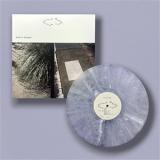
Emily A. Sprague's Cloud Time traces an audio-spiritual journey through time and place, recorded across a long-awaited debut tour of Japan in the fall of 2024. Compiled from environmental improvisations captured in and for the moment, material at once welcoming, responsive, and inimitable, the album distills a voyage guided by psychic wayfaring, unbound presence, and activating performance for a reciprocal exchange with space, listener, and each fully engaged instant. The Japanese tour documented on Cloud Time held an almost mythic significance for Sprague, taking on properties of her own sonic white whale. After many near-departures and dropped plans to play in the country, "the empty spaces of cancelled trips and forgotten music turned into strange little misty spirits that I felt followed by," she says. "When I began preparing for the tour, I couldn't shake a sense that the invitation to Japan was more about opening myself up to this new place instead of bringing something into it tightly under my control. Improvisation has always been such a pillar in my music practice, and I really wanted to meet the country, spaces and people through that process." To amplify these intuitive whispers on-stage, Sprague reimagined her time-tested live rig, designed to be as free from error as possible, as a looser, more flexible set up that would allow her to interface with what was essentially a blank sonic canvas every night. Each performance became a collaboration between environment and instinct, Sprague processing the events, energies, and emotions informing the evening through her new sound ecosystem, and projecting an entirely present and unique version of herself to each open-eared and hearted crowd. "It was very much more than just an act of playing for me, but a total experience of time and place," she says. The seven long-form pieces that plot the course of Cloud Time, excerpted from over eight hours of recordings archived on the artist's on-stage recorder and generously shared on the album with no additional mixing and only minimal editing, invite listeners to become still in these deep-rooted moments of presence as the album moves from city to city, venue to venue. Cloud Time chronicles material recorded at each tour stop, Sprague selecting and sequencing the album around mood-based storytelling more so than linear chronology. "I tried to make the whole album flow in the way that any one of the complete live performances did," she explains, "while also keeping the spirit of the whole thing as a journey." The result is equal parts travelog, love letter, and impressionistic collage channeled from the potent ferment of a now encased in the glowing amber of memory. Intrinsically inspired by kankyo ongaku, an environmental music philosophy, known both in and widely outside of Japan that tunes into the similarly expansive ethos as Pauline Oliveros' deep listening practice and posits the listener as composer, Cloud Time is ambient music that seems to be listening right back, grounded in heartfelt synthesized frequencies that abundantly hold and heal. Pieces like "Nagoya," "Tokyo 1," and the ten minute "Matsumoto" in particular hum with the atomic resonance of gently tended landscapes, offering space for tuning way in and dropping far out from perspectives that stifle and bind. Cloud Time is an invitation to embrace each moment as both fleeting and eternal, floating by with nothing to grasp onto and absolutely everything to gain. The exercise in acceptance and letting go that Sprague practiced throughout the tour deeply impacted her understanding of self as both a guest and venerable performer. "The process of loving wherever I am, being present and focusing on a clear channel of communication for mind and emotion, rooted so deeply in respect for the space, those within it, and myself, ended up being profoundly healing," she says. "My vision and hope is that this album can be released as a gift back to anyone who either was or wasn't there. A cloud time of life passing by."
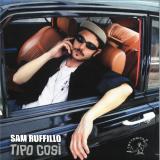
Italian producer, musician, DJ, and groove architect Sam Ruffillo drops his long-awaited debut album Tipo Così on Toy Tonics – a sun-drenched, genre-blurring statement that blends classic house with Mediterranean flair, romantic funk, and tongue-in-cheek Italo vibes. Over 11 expertly crafted tracks, Ruffillo delivers a dancefloor-ready, emotionally rich LP that connects deep musicality with irresistible rhythm and light-hearted elegance.
After three acclaimed EPs and collaborations with revered artists such as Barbara Boeing, Kapote, and Fimiani, Ruffillo has firmly cemented himself as a core artist on the Berlin-based label. Known for his unmistakable signature sound — a warm mix of vintage disco, 90s house, and Italian vocals — Sam’s music has garnered widespread DJ support from tastemakers like Gerd Janson, Palms Trax, Seth Troxler, and DJ Tennis, while becoming a staple on Italian airwaves. His infectious summer anthems like Danza Organica and Perfetta Così have soundtracked countless club nights and festivals, creating a loyal following that eagerly awaited this full-length debut.
Tipo Così is the natural culmination of a musical journey that’s both playful and profound — a travel diary written in grooves, synth stabs, and melodies that feel like postcards from a parallel Mediterranean universe. The album expands and deepens Ruffillo’s world into a fully immersive experience: lush emotional chords meet tight syncopated grooves, vintage synth textures collide with irresistibly catchy pop refrains, and the boundary between sincerity and playful irony is exquisitely blurred.
Entirely written, produced, and recorded in Italy, in his beloved hometown of Bologna, the album finds Ruffillo at the helm on keys, drum machines, and production, supported by a talented cast of musicians contributing live bass, guitar, and other organic elements — further enriching his trademark fusion of electronic grooves and natural instrumentation. There’s a tactile warmth in these tracks, a hands-on feel that adds soul and depth to every beat.
This album also marks Ruffillo’s heartfelt return to singing in Italian, with standout tracks like House Tipo Così, Mi Fa Volare, Ancora, and Dentro Di Me, where romantic naïveté meets pulsing club energy in a way that feels both timeless and refreshingly new. The vocal performances add an intimate, human touch to the music, reinforcing the personal stories woven into each song. There’s poetry in the casual, a bittersweet elegance in the way the lyrics float over groove-heavy production.
Having toured extensively across Europe, Australia, Indonesia, New Zealand, and Mexico — with sets at iconic venues like Panorama Bar and festivals such as Sónar Barcelona — Ruffillo has fine-tuned much of this album in front of live audiences. The real-world testing ground infused the record with a dynamic energy and immediacy that only comes from genuine crowd interaction. These songs weren’t just made in the studio — they were lived on dancefloors around the world.
Tipo Così is not just a collection of tracks. It’s a philosophy — playful, stylish and unmistakably personal. A modern club album bursting with heartfelt emotion and sophistication. Music for dancers with taste; for lovers of beauty, rhythm, and the little imperfections that make things feel real.
But what exactly is Tipo Così? More than just a phrase, it’s a way of being. It’s about embracing elegance without effort, mixing irony with sincerity, and letting nostalgia slip into the room without taking over the party. It’s Sam Ruffillo’s signature language: relaxed, confident, meticulous yet never rigid — where a chord progression can say as much as a lyric, and every beat carries intention.
The album’s visual identity complements this vision perfectly. The artwork and promotional materials lovingly reference Italian design from the ’80s and ’90s, combining bold graphic elements with playful pop culture nods. This aesthetic mirrors Ruffillo’s music — a fusion of vintage warmth and contemporary freshness, delivered with authenticity and charm.
Sam Ruffillo belongs to a new generation of European artists who are reshaping electronic music by blending past and present, analog and digital, groove and emotion — without nostalgia or pose. His artistic universe is coherent, vibrant, and alive; a rich tapestry of sound, images, and stories that coexist with lightness, precision, and a distinctive voice.
Reflecting on his artistic journey, Sam describes music as a vital, deeply human impulse — a tribal connection to rhythm and body that has driven him since he was a teenager. His creative process balances meticulous planning with room for spontaneity, usually sparked by clear melodic ideas that evolve naturally. Collaborations with close friends, especially vocalists like Ninfa, add warmth and authenticity, exemplified in tracks like “House Tipo Così.” For Sam, music is honest self-expression — crafted for listeners who crave memorable melodies and rhythms imbued with genuine feeling.
While technical perfection is tempting, Sam prioritizes emotion, knowing that what truly resonates is the soul behind the sounds. His long-standing partnership with Toy Tonics has been key in nurturing his vision, offering a blend of creative freedom and professional support. Looking ahead, Sam Ruffillo is excited to broaden his live performances, and release new projects that continue to blend electronic grooves with organic, heartfelt sounds — maintaining the delicate balance between playful irony and sincere emotion that defines Tipo Così.
Kurzversion:
Italian DJ, producer and musician Sam Ruffillo drops his debut album Tipo Così on Toy Tonics - a sunny blend of house, funk, Italo and pop, full of groove and emotion. Written and recorded in Bologna with live instruments and Italian vocals, it’s a playful, elegant journey shaped on dancefloors worldwide. A stylish, sincere club album where nostalgia, irony and rhythm meet in perfect harmony.
- Mi Fa Volare
Road-tested across continents and now finally released, “Mi Fa Volare” channels 90s uplifting euphoria with big breakbeats, lush chords, and Italian vocals built to stick. Somewhere between balearic bliss and piano house nostalgia, it’s a feel-good club weapon made for peak-time moments - already sung back by crowds after just one listen.
- Ancora
“Ancora” is a vibrant hi-NRG track inspired by 80s Italo disco, sung entirely in Italian. It blends driving rhythms with dreamy melodies, capturing the radiant spirit of the decade. This fresh yet nostalgic song delivers euphoric vibes and timeless energy, making it a perfect fit for both dancefloors and reflective listening moments worldwide.
- Dentro Di Me
“Dentro Di Me” channels ‘90s sensuality through a fast-paced, UK house-inspired lens. Entirely in Italian, it’s a bold and contemporary dance track where hypnotic vocals meet high-energy grooves. Blending nostalgic textures with forward-thinking production, the result is a seductive and euphoric trip - equal parts emotional and club-ready.
- Amigo
“Amigo” blends Latin groove, acoustic guitar-driven rhythm, and Mediterranean flair into a warm, magnetic, cross-cultural dance anthem. Sung in Spanish and Italian, it celebrates connection, inclusivity, and the joy of moving together - whether stranger or friend. With its unstoppable rhythm and vibrant energy, it’s a feel-good track with a unifying spirit.
- Ma Sei Fuori
“Ma Sei Fuori” is a tongue-in-cheek dancefloor bomb blending raw house energy with catchy vocal phrases and a nod to classic French touch. Driven by hypnotic vocal lines and a playful attitude, it doesn’t take itself too seriously - while still proving serious club impact. Built for late-night moments, it’s bold, bouncy, and impossible to ignore.
- Tokyo 1
- Osaka
- Nagoya
- Matsumoto (Beginning)
- Matsumoto (Ending)
- Hokkaido
- Tokyo 2
- Each Story
Cloudy White Vinyl[31,89 €]
Emily A. Sprague's Cloud Time traces an audio-spiritual journey through time and place, recorded across a long-awaited debut tour of Japan in the fall of 2024. Compiled from environmental improvisations captured in and for the moment, material at once welcoming, responsive, and inimitable, the album distills a voyage guided by psychic wayfaring, unbound presence, and activating performance for a reciprocal exchange with space, listener, and each fully engaged instant. The Japanese tour documented on Cloud Time held an almost mythic significance for Sprague, taking on properties of her own sonic white whale. After many near-departures and dropped plans to play in the country, "the empty spaces of cancelled trips and forgotten music turned into strange little misty spirits that I felt followed by," she says. "When I began preparing for the tour, I couldn't shake a sense that the invitation to Japan was more about opening myself up to this new place instead of bringing something into it tightly under my control. Improvisation has always been such a pillar in my music practice, and I really wanted to meet the country, spaces and people through that process." To amplify these intuitive whispers on-stage, Sprague reimagined her time-tested live rig, designed to be as free from error as possible, as a looser, more flexible set up that would allow her to interface with what was essentially a blank sonic canvas every night. Each performance became a collaboration between environment and instinct, Sprague processing the events, energies, and emotions informing the evening through her new sound ecosystem, and projecting an entirely present and unique version of herself to each open-eared and hearted crowd. "It was very much more than just an act of playing for me, but a total experience of time and place," she says. The seven long-form pieces that plot the course of Cloud Time, excerpted from over eight hours of recordings archived on the artist's on-stage recorder and generously shared on the album with no additional mixing and only minimal editing, invite listeners to become still in these deep-rooted moments of presence as the album moves from city to city, venue to venue. Cloud Time chronicles material recorded at each tour stop, Sprague selecting and sequencing the album around mood-based storytelling more so than linear chronology. "I tried to make the whole album flow in the way that any one of the complete live performances did," she explains, "while also keeping the spirit of the whole thing as a journey." The result is equal parts travelog, love letter, and impressionistic collage channeled from the potent ferment of a now encased in the glowing amber of memory. Intrinsically inspired by kankyo ongaku, an environmental music philosophy, known both in and widely outside of Japan that tunes into the similarly expansive ethos as Pauline Oliveros' deep listening practice and posits the listener as composer, Cloud Time is ambient music that seems to be listening right back, grounded in heartfelt synthesized frequencies that abundantly hold and heal. Pieces like "Nagoya," "Tokyo 1," and the ten minute "Matsumoto" in particular hum with the atomic resonance of gently tended landscapes, offering space for tuning way in and dropping far out from perspectives that stifle and bind. Cloud Time is an invitation to embrace each moment as both fleeting and eternal, floating by with nothing to grasp onto and absolutely everything to gain. The exercise in acceptance and letting go that Sprague practiced throughout the tour deeply impacted her understanding of self as both a guest and venerable performer. "The process of loving wherever I am, being present and focusing on a clear channel of communication for mind and emotion, rooted so deeply in respect for the space, those within it, and myself, ended up being profoundly healing," she says. "My vision and hope is that this album can be released as a gift back to anyone who either was or wasn't there. A cloud time of life passing by." Emily A. Sprague's Cloud Time will be released Friday, October 10th in vinyl, Japanese import CD (via Plancha), and digital editions.
- Get Ready
- Superstar
- Lézard Rouge
- Harder Than Rain
- Pepe-Pepe
- LO4:
- Walking In Moonlight
- Be Free
- Alright, Goodnight
LTD SINGLE COLOUR ED[24,79 €]
NYOS are a Finland-based instrumental band comprised of guitarist Tom Brooke and drummer Tuomas Kainulainen. Known for their immersive and often physically demanding live shows, NYOS create massive sonic worlds using Brooke's labyrinthine loops and atmospheric layering alongside Kainulainen's kinetic drumming, in music that is rhythmic, raw, and eclectic. Since their formation in 2014, NYOS have carved out a distinctive place within Europe's experimental and post-rock scenes, characterized by their relentless energy, polyrhythmic complexity, and hypnotic layering. While still rooted in their signature loop-based approach, new album `Growl' is "more ambitious with song soundscapes and compositions", says guitarist Tom Brooke, naturally embracing a denser, more textured sound with greater attention to atmosphere and tension. "`Growl' feels like the best we've managed to harness the dynamics, and maybe the one thing we did focus a bit on is finding new ways to create those dynamics and making sure they aren't too predictable - it's our longest record to date, and when producing it, we were very conscious to make sure it is an album that holds the listener" (Brooke) As eclectic and exciting as ever, NYOS are a band in continuous motion, unafraid to challenge themselves and their listeners with ever-expanding sonic vocabularies. `Growl' is an album that is both coherent and seamless in its movement, walking a tightrope between meticulous structure and explosive energy. FOR FANS OF Battles, And So I Watch You From Afar, Don Caballero, The Mars Volta, Lightning Bolt, Tortoise, Hella, Tiny Fingers, Death Grips, Zach Hill, Russian Circles, Explosions in the Sky, Tera Melos
For their second release, Club Blanco welcomes Odopt. Wired delivers three tracks of raw, flickering club energy, each wired tight with tactile tension. Roman Flügel steps in on the remix, reshaping shine into a hypnotic, precision–built ride. Together they form four shocks of dancefloor electricity.
Odopt is wired. wired into the circuit, wired into the night.
This is techno stripped to its core - uncompromising, visceral, and engineered for shadowed, late night dancefloors. SOU002 stamps a serious script in the South Signatures arc. Deep reverberations, modular overdrive, chorus tight grooves. Two masters unite for the Coordinated Beatdown EP - a relentless barrage of analog grit and machine smarts. Together: expect seismic kicks, electro acid tension, and flawless modulation.
The Keith Tippett Group's Dedicated to You, But You Weren't Listening is a landmark in cutting edge fusion/avant-jazz. A vital and profoundly adventurous Jazz-Rock record that still swings very hard, it was first released on Vertigo in 1971.
Original copies are now very tricky to score and, as most of you really should know, it’s aged ridiculously well.
A legendary work, this Be With re-issue has been newly remastered from the original Vertigo master tapes, demonstrating just why this deserves to be back in press. The stunning gatefold jacket fully restores Roger and Martyn Dean's original, arresting album artwork to complete this must-have reissue.
Alive and bursting with a joyful energy that has to be heard to be believed, Dedicated to You, But You Weren't Listening flirts with perfection. It's truly magical and forever essential.
A brilliant jazz pianist, composer, arranger and bandleader "who could make the outlands of modern music feel like the most hospitable of places" (The Guardian), Keith Tippett's second album is oft-regarded as his Canterbury album.
Indeed, not only does he draw heavily on Soft Machine members past, present and future but the album title itself archly references a Soft Machine composition. Ray Babbington handles bass alongside Neville Whitehead and the drums are shared between Brian Spring (Nucleus), Robert Wyatt(!) and Phil Howard (who would go on to replace Wyatt in Soft Machine). Gary Boyle (Isotope) is on guitar whilst the great percussionist Tony Uter is enlisted for his conga and cow bell expertise. Elton Dean on Alto Saxello, cornetist Marc Charig and Nick Evans on trombone round out this quite stunning ensemble.
Dedicated to You, But You Weren't Listening presents a collective of superhuman musicians really, *really* enjoying themselves in the studio. The sheer exuberance of the performance is totally infectious. It's wild, energetic, atmospheric and, bluntly, bordering on chaotic at points. In a word, it's beautiful.
Robert Wyatt's drumming opens the record with a bang on the majestic Be With favourite "This Is What Happens". Some have described his work here as "easily the most inspired of his career on record." It's an ultra-funky conga-driven groove that truly sparks via the duelling interplay between the three horn players. In the background, Keith's insistent piano, in conversation with those unignorable drums, is the anchor that keeps this piece rollicking away. Breathtaking.
The epic, energetic "Thoughts to Geoff" is a 10-minute jammer that tends towards the dissonant and improvisational but becomes more fluid, laconic and melodic as it unravels. The interplay between soloists and ensembles is particularly dazzling here - blazing solos by Evans, Charig and Tippett himself in a flourish of angular arpeggios interspersed with chordal elocution. Phew.
Up next, the no less-urgent Mingus-referencing "Green and Orange Night Park" is a soaring example of ambitious jazz mixed with rock aggression, with Dean strutting his stuff by launching into a scorching solo. An absolutely jaw-dropping piece. Arguably the highlight of this album of huge highlights!
Though much of the album tends to fall on the raucous side ("Gridal Suite" approaches free-jazz at its most chaotic and, dare we say it, "difficult"), there are a few more sedate, at times spacey numbers, such as the deeply impressionistic "Five After Dawn". The rhythmically complex "Black Horse" is the most accessible track here, a sort of swinging Big Band number with tight grooves, soaring horn & reed melodies, a sizzling Boyle guitar solo and tasty electric piano riffs from Tippett. An hypnotic climax to a staggering record.
This Be With edition of Dedicated to You, But You Weren't Listening has been re-mastered from the original Vertigo master tapes, Simon Francis’ mastering working together with Cicely Balston's cut at Abbey Road Studios to weave their usual magic with these wonderful recordings. The stunning gatefold sleeve has been restored in all its brainchild glory so you know you're dealing with the definitive reissue, here. Now, are you listening?
AniaraWL07 links up label mainstays Dorisburg, Efraim Kent, and Arkajo. Side A kicks off with Dorisburg & Efraim Kent's Wired to the Mainframe: a tightly wound, pulse-driven Tech House trip. Followed by X-Files Groove, which strips back the layers and tunnels into a darker, dub-laced transmission. Flip to Side B for Arkajo's two-part Consequence series. Consequence #1 locks you into rolling, UK-inspired rhythms, pushing forward with a warm yet propulsive energy. Consequence #2 turns the screws tighter, upping the BPM and unfolding into a tense, minimal workout where every hit and echo feel essential.
Don your bandanas, leather jackets and distressed jeans, because heavy metal is about to shine brighter than ever as Swedish newcomers BOMBER bring back the hottest era in hard rock history. Asserting their own trademark blend of 70s and 80s inspired classic and hard rock with catchy hooks, top-notch guitar solos and a vibrant aesthetic, BOMBER brings you their debut album, Nocturnal Creatures, via Napalm Records! After explosive live shows in Sweden and a subsequent tour of Germany, the hard rockers prove that the glorious era of rock isn’t over and that they’re already setting the highest standards on Nocturnal Creatures. On ten powerful tracks, BOMBER turns the night into an intoxicating adventure that convinces both old and new fans of the prominent classic and hard rock genre. Album opener and title track “Nocturnal Creatures” opens the gates with epic storytelling and interludes the following passionate ride through “Zarathustra”. With fiery vocals, melodic guitars and untamable drum-play, the track gets the listener’s pulse pumping, while “Fever Eyes” ensnares with wistful weeping choirs and guarantees a quickly increasing temperature. “Black Pants Magic” emerges into an unforgettable high-class rock experience through its industrious and catchy hook, while songs like “A Walk Of Titans (Hearts Will Break)” and “You’ve Got Demons” surprise with dynamic melodies and Anton Sköld’s powerful voice. On “The Tiger”, BOMBER send their listeners right into the eye of a raging thunderstorm of riffs driven by brilliant grooves, while “Kassiopeia” sets the strings on fire with its marvelous solos. Bursting album closer “Aurora” presents Nocturnal Creatures’ crowning achievement, bringing the 40-minute escapade to the edge of the world. With their new studio album, Nocturnal Creatures, the rising stars of Sweden establish a milestone in the legacy of hard rock that leads the once so majestic genre to new glory – marked by their very own special vision!
Identified Patient returns to Dekmantel for a third time with his Reset EP. The future-facing four tracker is another mutant fusion of bass and techno with low-end power with cerebral sound designs.
Job Veerman debuted on the Dekmantel UFO Series in 2019, returned in 2020 and has lit up the festival several times with transportative sets that balance power with precision. Like his productions on the Nerve Collect label, he co-runs with Gamma Intel, they are leftfield explorations of genre and tempo that find strange sensuality in often abstract ideas. Once again here, the Dutchman draws on eclectic influences to craft music that sounds like no one else but remains anchored by magnetic rhythms.
Opener 'Light' kicks off with a fuzzy synth line that slithers between syncopated drums. Whispered vocals drift through the mix as lurching basslines swell and collapse beneath them. The groove disassembles and reassembles in waves, propelled forward by bursts of glitchy, off-kilter percussion that's unsteady yet seductive. 'Scales' is a slow, menacing descent into rhythmic darkness. It sounds both ancient and futuristic with ghoulish vocalisations and filtered synths flickering like a badly wired circuit. There's a rave tension lurking throughout, but always in the shadows.
'Internal Pace' drives on but rides fluid, wobbly bass while tightly looped hits build the pressure. Layers of static and subtle distortion add grit to this unrelenting heads-down roller. Finally, 'Return' is a kinetic, razor-edged ride where jungle breaks collide serpentine melodies. Ethereal female coos drift in and out, brushing against spat-out vocal fragments so that tension crackles throughout this hallucinogenic trip.
With Reset, Identified Patient reaffirms his status as a singular voice who twists sound into evocative new worlds.
- Some Wear A Dark Heart
- She Is Afraid
- Particle Physics (Feat. Patrick Stump)
- You Know Who The Fuck We Are
- Melancholia
- Your Days Are Numbered (Feat. Mat Kerekes)
- Downer
- Mi Corazon
- Bloodline
- Things Like This (Feat. Sincere Engineer)
- The Same Old Wasted Wonderful World
BLUE MARBLE Vinyl[23,49 €]
After a ten-year absence that left a palpable void in the hearts of millennial emo kids, MOTION CITY SOUNDTRACK are finally back-and yes, it"s everything we hoped for. The Same Old Wasted Wonderful World feels like coming home: a dizzying, emotionally articulate blast of guitar-laced pop-punk that reminds us why this band meant so much in the first place. It"s a sonic time machine, sure, but it never gets stuck in the past. Instead, it builds on it-older, a little bruised, but somehow more alive. Justin Pierre"s voice still wobbles gloriously between a scream and a sigh, only now it carries the weight of experience, not just anxiety. Rather than reinventing themselves, MOTION CITY SOUNDTRACK double down on what they"ve always done best: big hooks, bigger feelings, and that perfect tightrope walk between chaos and control. Tracks like "Particle Physics" (with Patrick Stump of Fallout Boy) and "Your Days Are Numbered" (featuring Mat Kerekes of Citizen) channel the kind of clarity that only comes after surviving your own worst years. In a world drowning in lazy nostalgia, The Same Old Wasted Wonderful World is a rare and welcome return that feels less like a reunion and more like a long-overdue continuation.
Spanish producer Larsson delivers a deep and hypnotic 4-tracker for Fuxbau Records, marking his vinyl debut on the label. Written in the rural village where Larsson grew up, the EP carries a sense of groundedness and clarity. Created in his parents' home, surrounded by nature and far from urban distraction, the tracks reflect a setting where ideas unfold organically. The result is a tightly cut selection of groovy, rolling techno - stripped back, hypnotic, and full of tension. That contrast between calm surroundings and high-impact club energy runs through all four tracks: stripped-back yet detailed, functional yet full of soul.
François and Sylvain Rabbath have turned six years of touring into a joint album that patiently and intensely distills a variety of musical flavors gathered from around the world.
Since the early 1960s, François Rabbath's double bass has resonated through enough landmark recordings to fill several shelves in a record collection. As an arranger, composer, and musician, his imprint on music goes far beyond his collaborations with Barbara, Paco Ibáñez, Charles Aznavour, or Édith Piaf. Aspiring double bassists owe him a groundbreaking method for learning the instrument. Born into a lush musical universe that quickly became his own, his son Sylvain first accompanied him on his travels before settling at the piano and sharing stages around the world at his side.
Those years of accumulating visas in their passports were put to good use by father and son. The continents, countries, and cities they passed through became a rich source of inspiration for composing Amall, the album by the Rabbath Electric Orchestra.
Long hours spent in the air or on the road, watching passing landscapes that never stayed the same, were transformed into compositions imbued with the atmospheres of the places they crossed or visited. Inspiration sometimes struck with force, like a green oasis appearing in a desert of stone—unexpectedly, as glowing red rocks suddenly dominated an otherwise open landscape with an endless horizon, while the mind wandered into a state between meditation and introspection.
Born from these travels, the pieces took on their final colors once brought into the studio, refined, and finally arranged to welcome the guitars of Keziah Jones and Matthieu Chedid, the piano of Laurent de Wilde, the bass of Victor Wooten, the saxophone of Raphaël Imbert, and the percussion of Minino Garay. Enhanced by the scale of the jazz-soul orchestrations, by the richness of arrangements bursting from strings, brass, rhythms, or keyboards, the epic breath of vast plains became ingrained. The urban tension of funk, echoing their movements, found its place—alongside more electric expressions or the ambience of a darkened room.
Melancholic and melodious, expressive and edgy, the bowed double bass—played in the high register where few dare to go—emerged as the musical guide. One that draws a path between Seville and Minneapolis, connects François Rabbath's native Syria to France, and bridges South America to Europe. It sets the tone to follow—the emotion that will carry the piece, and if not filled with light, will carry it there nonetheless.
Musical visions packed in luggage, transported in cargo holds, or imprinted in their minds just long enough to cover the distances to the next stop—father and son deepened their bond, beyond family and art. And their hands have never held each other more tightly.
François et Sylvain Rabbath ont fait fructifier six ans de tournées pour un album commun distillant patiemment et intensément la variété de parfums musicaux récoltés autour du monde.
Depuis le début des 60’s, la contrebasse de François Rabbath résonne dans assez de références pour combler plusieurs étagères d’une collection de disques. Arrangeur, compositeur, musicien, l'empreinte laissée dans la musique va bien au-delà de ses collaborations avec Barbara, Paco Ibanez, Charles Aznavour, ou Edith Piaf. C’est à lui que les
apprentis contrebassistes doivent une méthode novatrice pour apprendre l’instrument.
Né dans un univers musical luxuriant qui est vite devenu aussi le sien, c’est d’abord dans ses voyages que son fils Sylvain l’a accompagné, avant de s’installer au piano, et parcourir les scènes du monde à ses côtés. Ces années où les visas se sont entassés sur leurs passeports, père et fils les ont mises à profit. Continents, pays, et villes qui se sont succédés sont devenues un gisement pour composer Amall, l’album du Rabbath Electric Orchestra.
Les longs moments passés dans les airs ou sur la route à contempler un paysage qui défile sans pour autant rester le même, se sont convertis en compositions habitées par les ambiances de ces endroits traversés ou visités. Là où l’inspiration s’est imposée parfois brutalement, sous
la forme d’un oasis de verdure surgissant au milieu d’un désert de pierres. Au hasard d’imposantes roches rougeoyantes s’invitant dans un paysage jusqu’alors dégagé sur un horizon sans fin, quand l’esprit se laisse aller à un mélange de méditation et d'introspection.
Nés de ces pérégrinations, les titres ont pris leurs couleurs définitives une fois ramenés en studio, peaufinés puis, enfin, pensés pour y inviter les guitares de Keziah Jones et de Matthieu Chedid, le piano de Laurent de Wilde, la basse de Victor Wooten, le saxophone de Raphaël Imbert, les percussions de Minino Garay. Sublimé par la dimension des orchestrations jazz-soul, par la richesse des arrangements jaillissant des cordes, des cuivres, des rythmiques ou des claviers, le souffle épique des plaines immenses s’est imprimé.
La nervosité citadine du funk rythmant les déplacements a trouvé sa place, non loin d’une expression plus électrique ou d’une atmosphère de salle obscure.
Mélancolique et mélodieuse, expressive et nerveuse, la contrebasse jouée à l’archet, dans les notes hautes du manche où peu s’aventurent, s’est érigée en guide musical. Celui qui trace le chemin entre Séville et Minneapolis, relie la Syrie natale de François Rabbath à la France,
réduit la distance entre l’Amérique du Sud et l’Europe. Donne la note à suivre, l’émotion qui traversera le morceau qui, s’il n’est pas habité par la lumière, le portera néanmoins jusque là.
Visions musicales mises dans le coffre, transportées en soute ou imprimées dans l’esprit le temps de couvrir les distances qui les mèneront aux prochaines, c’est côte à côte que père et fils ont prolongé leur lien par delà des seules limites familiales et artistiques. Et leurs mains ne se sont jamais serrées aussi fort.
credits
Released by Hegoa Records and Night School Records.
Greatest Heads is the fourth album by the radical Basque- Berlinesque group Al Karpenter. A deconstruction of structured “rock” music, here Al Karpenter re-imagine “the band” to explore the intersection between Free music, afro-beat, the avant garde and gonzo rock.
If Theodore Adorno wrote “To Write Poetry after Auschwitz is Barbaric” in 1949, Al Karpenter attempts to answer the difficult question today; what kind of music can be done in the face of a genocide? Álvaro Matilla, Marta Sainz, Enrique Zaccagnini & Mattin’s response to the planet’s slipping into a vortex of hate is to create a music ecstatic, a music of protest bursting with multiple musical languages and glossaries, full of overlapping histories and thrilling tensions.
Greatest Heads posits a plurality of musics both in opposition and intertwined: Al Karpenter play rock instruments pulled apart in the studio in post-production. Distorted rhythm chunks bit-crushed and dissipated, segments of freedom oppressed by waves of sound invading from every direction. The interplay between the chief instrumentalists and renowned, storied sound artist Mattin creates something akin to ESP freedom-seekers Cro Magnon playing in Miles Davis’ early 70s groups, The Los Angeles Free Music Society tightening up into a clenched fist of plunderphonics and runaway percussion.
We Are All Karpenters opens Greatest Heads with the most straight-forward song refrain of the record accompanied by a band that soon crash into eruption, imagining Sun City Girls in full free rock mode.
The modulating synth sound soon sucks the band into its wake to create a spine-chilling climax of distorted sound, made fully orgasmic with mastering engineer Rashad Becker’s attention to detail. On Izugarrizko Buruak (Greatest Heads), Matilla intones in Basque over a mangled distorto-beat. A Brand New Astraphobia creates a black space for a heavily processed guitar to blow up before falling to earth at night, a gentle figure serenading the coming end.
On Side B, the band begins by being masticated by a brutal phaser, squelching and stretching the music into new territories. The overt message of Stop The Genocide! is besieged by violence before Worm City aggressively samples the ghosts of soul music, mixing in noise bursts, prepared piano and swiping, abstracted sound. Epic closer Perfect Love feels like a beat poetry performance on a burnt world, still grasping for community, for home, for some sort of human love. A Mad love, then; an angry love fuelled by solidarity and collaboration.
The band’s cascading layers of references and polyglottal musics attempt to create the perfect lover, alive with rage and disorientating ecstasy: Al Karpenter.