COEO back on Toy Tonics! The German duo has been part of Toy Tonics since day one. Now they celebrate their return to Toy Tonics with an outstanding EP full of timeless, contemporary house music that also marks their 10th contribution to the label after their first release on the imprint 10 years ago. Their house vibes have been defining the sound of the Toy Tonics label for many years and still now they regularly play the Toy Tonics events around the world. (The Toy Tonics Jams).
On this new EP one more time the boys dive deep into the Italo & Piano House world- getting more electronic than ever. This EP is 100% in the vibe of now. With great piano chord drops that make everybody scream on the dance floor, with horn and synth melodies that you can sing along after you heard them one time only and with classic house beats that are THE sound of today.
The main title “Nostalgia” is inspired by and a tribute to all the intimate and ecstatic moments they were able to share over the years with music lovers on festivals and in clubs around the world. While the piano house theme on the A1 brings you in that festive mood of your last summer festival you have been to with your closest friends, the second track of the EP „Breeze“ takes it on a higher energetic level and combines a funky bass guitar with progressive house elements. Remember that special moment when you were attending your first full moon party in that far away country after you have finished school? That gentle wind blowing through the trees? „Breeze“ could be the soundtrack of that adventure.
On the B side Italo house influenced „Meet me at the cascades“ captivates through an hypnotic approach and unfolds dreamy synth pads and arpeggios to take you on a imaginary journey to your favourite retreat, a place you feel safe.
The EP features 3 original tracks and also a remix by COEO friends Stump Valley. The former Dekmantel artists who now joined Toy Tonics. Stump Valley btw are Francesco and Aleksei. Aleksei also works under the name of Brian de Palma and will release a solo album soon on Peggy Gou’s label Gudu. Stump Valley‘s remix of „Nostalgia“ rounds up the EP with its stand out piano solo and marks the perfect end to an EP that is meant to stay in your head just like all those intense memories which life in general evokes.
Cerca:tim coe
"Even God Has A Sense Of Humor" is the long-awaited follow up album to Maxo's critically acclaimed 2019 release Lil Big Man. Across the 14-tracks, Even God Has A Sense Of Humor pays tribute to the mercurial nature of life and includes features from Liv.e, keiyaA, LastNameDavid, and Melanie Charles along with the previously released singles "Free!," produced by Dev Morrison and "48," produced by Madlib and featuring Pink Siifu. The FADER recently sat down with Maxo to discuss the album, which they described as having "a defiant glow, like a bronze statue still standing after an intense tornado."
Born Maxamillian Allen, Even God Has A Sense Of Humor finds Maxo earnest, full-hearted, and lyrically agile. His delivery punches as he poetically unpacks the trials and blessings that have marked the last three years since Lil Big Man, his stirring and meditative debut album. “Life is always gonna be life-ing,” Maxo says, speaking to the spiritual lessons that inspired this new project and an album process that has revealed to him the many ways in which he’s divinely protected.
The album’s striking cover features three casted sculptures of Maxo by legendary NYC-based artist artist John Ahearn, photographed by the rapper’s friend Steven Traylor. The image both preceded the music and set the tone for the record’s overall aura. Experiencing the casting process—which required long periods of stillness for form, and breathwork to avoid claustrophobia—became a metaphor about ego death for Maxo. “I had to go to a space where I was just not there,” he says. As the molding was poured over his body and the voices of those in the room became distant, Maxo’s inner world came into focus. “By the time it hardened, it seemed like the sculpture had risen to be 20 feet above where it was first— almost like it grew tall,” he explains. EGHASOH, in its aural ebbs and flows, honest questioning, profound revelations, and elegant verse, is Maxo standing spiritually tall following a period of challenges with family and friends.
Maxo’s writing process has always been rooted in imagery, observation, and capturing moments. Growing up in Southern California, Maxo spent a lot of time combing through old family photo albums, some of whose contents have become the artwork for prior releases. But his fascination with visual memento is less about nostalgia or remembering, and more about exploring concepts of growth, healing, and cycles. His artistry is intentional and deeply sensitive: “If I’m not feeling it, I’m not gonna record.” While his past records openly grappled with emotional turbulence, anger and depression, EGHASOH is Maxo’s acceptance stage: “I can't really judge nothing. I can't sit up and be mad at shit because everything is, everything is kind of coexisting,” he says.
Musically, EGHASOH is an impressive evolution from Maxo’s earlier, unornamented lo-fi projects. With an emphasis on jazzy instrumentalism and soothing, intricate vocals from both the artist and featured chanteueses Liv.e, Melanie Charles, and keiyaA, EGHASOH is a welcome and beautifully complex sonic effort. Its contributors include a range of musicians: Pink Siifu, LastNameDavid, Madlib, GrayMatter, Karriem Riggins, Beat Butcha, Lance Skiiiwalker, and more. The album was executive produced by Mount Kimbie’s Dom Maker.
“Nobody talks about the fact that we’re changing as we get older... Everybody just acts like you supposed to know,” Maxo says on album standout, “Face of Stone”. It's moody bassline meets a cinematic accordion melody that paradoxically both broods and uplifts—a fitting production choice that mirrors the song’s story. “I’m seeing how this world is chipping you and withering your bones,” Maxo says. “I’m talking about myself, talking about my bro. But it’s never nothing you gonna do that’s a one stop shop in this life. You gotta keep staying diligent and consistent.” For Maxo, Even God Has a Sense of Humor is nothing more than another moment on the timeline of his offerings of self-expression as an artist—one whose sole intention is to, in his words, develop as a human being and heal.
- A1: Brice Coefield Ain't That Right
- A2: Gerri Hall Who Can I Run To
- A3: Larry Hale Once
- A4: John Leach Put That Woman Down
- A5: Don Varner Tear Stained Face
- A6: De-Lites Lover
- A7: The C.o.d.'s She's Fire
- A8: The Combinations What' Cha Gonna Do
- B1: Ohio Players Love Slips Thru My Fingers
- B2: Gwen Owens Just Say You're Wanted (And Needed)
- B3: Charlie Gracie He'll Never Love You Like I Do
- B4: Mikki Farrow Set My Heart At Ease
- B5: The Appreciations I Can't Hide It
- B6: The Del-Tours Sweet And Lovely
- B7: Ronnie & Robyn Sidras Theme Instr
- B8: Billy Hambric I Found True Love
- C1: P.p. Arnold Everything's Gonna Be Alright
- C2: The Fuller Brothers Time's A Wasting
- C3: The Prophets I Got The Fever
- C4: The Furys I'm Satisfied With You
- C5: The Capreez How To Make A Sad Man Glad
- C6: The Showmen Our Love Will Grow
- C7: The Admirations Don't Leave Me
- C8: Sharpees Tired Of Being Lonely
- D1: The Precisions If This Is Love (I'd Rather Be Lonely)
- D2: Nolan Chance Just Like The Weather
- D3: Sandy Wynns The Touch Of Venus
- D4: The Olympics The Same Old Thing
- D5: Mickey Lee Lane Hey Sah-Lo-Ney
- D6: Robert Parker Let's Go Baby (Where The Action Is)
- D7: Little Hank Mister Bang Bang Man
- D8: The Du-Ettes Every Beat Of My Heart
Beeinflusst von der Musik ihrer Jugend in den Neunzigern (Funk, Soul, Latin), aber auch den Harmonien der klassischen Musik, bereitet die Brasilianerin Flavia Coelho die Bühne für ihr fünftes Album 'Ginga' (Portugiesisch für tanzen, schwingen) und lässt sich dabei von organischen Klängen und Old-School-Elementen inspirieren. Electro Pads, Orgeln, Keyboards, Gitarren und Percussion vermischen sich mit Kompositionen, die in Zusammenarbeit mit Produzent und Arrangeur Victor Vagh entstanden sind. Ihre einzigartige Stimme prägt die zehn intensiven Tracks, mit einem Timbre voller Aufrichtigkeit und Charakter.
Andrea has his roots in the independent musical scene in the first decade of the 2000s. In addition to his compositional and live experience as the first Nadàr Solo drummer, he is one half of the Turin duo Anthony Laszlo with Anthony Sasso, ex guitarist and singer of Milena Lovesick. Andrea Laszlo De Simone made his debut in 2012 when he released his first homemade album, Ecce Homo. Recorded at home by makeshift means and accompanied by the following videos: Solo un uomo, 11:43, I nostri piccoli occhi, Perdutamente.
At the beginning of 2014, he met some experienced musicians from Turin’s underground scene that later, after a few months in a rehearsal room, became his band: Damir Nefat (guitar/backing vocals), Dani C (bass guitar/backing vocals), Filippo Cornaglia (drums/backing vocals), Zevi Bordovach (keyboards/backing vocals) and Anthony Sasso (keyboards/backing vocals/percussions).
Anticipated by the individual tracks Uomo Donna, Vieni a salvarmi and La guerra dei baci on June 9, 2017 - for 42Records - Uomo Donna came out. It’s Andrea Laszlo De Simone’s first real album, a well received work by both audience and critics. It also was pointed as one of the best albums of 2017 by several national music magazines.
Uomo Donna is a complex, articulate and vital album that lives in its own time - where past, present and future coexist. It’s a time in which a sonic world takes shape blending classic and modern, Italian songs with psychedelia, Battisti and Radiohead, Modugno and Verdena, the Beatles and Tame Impala, the magical flight of Claudio Rocchi and the earthly flight of IOSONOUNCANE.
The album was self-produced and then post-produced by Andrea in collaboration with Giuseppe Lo Bue, a sound engineer from Bologna. The recordings were made between October 2014 and the end of 2016 with experimental techniques straddling digital and analogic.
After playing in some important Italian festivals as Siren Festival and TOdays -- that earned him a special mention in the live scores by Rolling Stones -- on October 28, 2017 the first Uomo Donna album tour started in the clubs of the major Italian cities.
On November 30th 2017, Andrea Laszlo De Simone presented his video, Sogno l'amore, during the Torino Film Festival as a short film, shot in Sicily and directed by Francesca Noto and Andrea Laszlo De Simone.
On March 15th 2018 the music video of Gli uomini hanno fame was released, the most political song of the album, an overlook through ferocious human emotions, an eleven and fifty minutes trip within human nature portrayed even in its most ferocious instincts. The music video was directed by Andrea Laszlo De Simone and the mysterious duo Sans. The official cycle of Uomo Donna ends on 31 December 2018 with the music video of Sparite Tutti created by the creative collective Irene&Irene.
2019 was a year of new goals for Andrea, in fact, the album Uomo Donna leaves national borders and got a special mention on social media by the famous American band The Lumineers which included Andrea Laszlo De Simone and Uomo Donna among the most interesting discoveries of the international musical underground and inserts Solo un Uomo in the Spotify playlist “Inspirations”. A few days later, Solo un Uomo was broadcasted by KEXP Radio. On November 4th Andrea and his band were chosen to open for The Lumineers’ only Italian show at Alcatraz, in Milan.
On November 8th Andrea released a brand new work, digitally and on vinyl for 42Records, Immensità, a ‘suite’ of four singles: Immensità, Conchiglie, Mistero and La Nostra Fine. Turned into a medium-length film using Immensità as the soundtrack.
Immensità was presented with four special sold out concerts in Rome, Turin, Padua and Milan. For these shows Andrea Laszlo De Simone was accompanied on stage by a mixed orchestra composed of synths, electronics, choirs, strings and woodwinds. Classic and modern instruments that are intertwined in a nine elements formation: an immersive concert, a contemporary version of chamber music.
In March 2020 Immensità was released also in France, UK, Canada, Belgium and the United States with Ekleroshock/ Hamburger Records (Roster: Benjamin Clementine, Polo & Pan, Limousine and many others). The response of the transalpine press and media, sector and not, was unexpected: major French newspapers and magazines - from Le Monde to Liberation, Vanity Fair and Les Inrockuptibles - dedicated entire pages and rave reviews to Immensità and Andrea Laszlo De Simone. The track Immensità entered, after a few days, at the fourteenth rank of Spotify’s Top viral 50 playlist and broadcasted on France Inter and Radio Nova.
“Immensità” is a complex cross media work of music and images. A project divided into four chapters (the songs) for nine tracks (each chapter has a prologue or a conclusion). A true suite, using the classic term that best describes an instrumental composition in several stages, that can be enjoyed in its entirety only by listening to vinyl or digitally in the innovative single track format, without pauses: a single symphony of 25 minutes and 6 seconds.
In September 2020, Dal giorno in cui sei nato tu was released on all italian platforms, a song dedicated to Andrea’s children, a real love letter in the form of a small speech, where he tries to give them the three keys to approaching life: fantasy, music and irony. Martino, 8 years old, replies to his father’s love letter by making the video accompanying the song, created in Super 8. It's the story of the world through the eyes of the child. It is also an homage to the new little girl in family, Lucia.
Longtime enthusiasts of ambient music have much to celebrate as Rafael Anton Irisarri's cherished out-of-print cassette, "Midnight Colours," returns in a meticulously remastered edition and makes its inaugural debut on vinyl. The significance of this album's announcement is accentuated by its historical resonance, coinciding with the same day in 1952 when the world bore witness to the first-ever test of the hydrogen bomb.
"Midnight Colours" is far more than a mere album; it's an exploration of the enigmatic relationship between humanity and time. Conceived as a sonic interpretation of the Doomsday Clock, which symbolizes the world's existential vulnerabilities, Irisarri's work beckons listeners to contemplate the gravity of our existence and the delicate balance that envelops it.
"I wanted to capture the essence of humanity's relationship with time, both the anxiety and the serene beauty that coexists within the shadows of the night," explains Irisarri. "The vinyl format adds a tactile dimension to the experience, inviting listeners to physically engage with the music."
Known for his contributions to the ambient and electronic music genres, Irisarri often explores themes of introspection, nostalgia, and the interplay between sound and emotion.
Recorded in 2017, when the Clock was at 2½ minutes-to-midnight (and at the time, the second-closest to midnight since the Clock's inception in 1947), "Midnight Colours" permeates with the melancholy of memories resurfacing as one approaches the end of life: the regrets, the closure, the uncertainties, the anxieties.
Originally released as a limited tape on the beloved Atlanta-based label Geographic North, "Midnight Colours" swiftly garnered praise and acclaim within the ambient music sphere. Now, with this newly remastered edition on his own Black Knoll imprint, fans, both longstanding and newfound, can rediscover the album's captivating beauty in unprecedented clarity and depth.
"I've wanted to release 'Midnight Colours' on vinyl since it first came out, and I'm thrilled to finally be able to. The remastering process, brilliantly done by Stephan Mathieu, has breathed new life into the work, and I'm eager for listeners to experience it in this format."
The reissue of "Midnight Colours" features band-new artwork and design by the renowned Mexican visual artist Daniel Castrejón. A frequent collaborator and friend of Irisarri, Castrejón's imagery impeccably complements the album's mood and themes, extending a compelling invitation for listeners to explore its aural world visually.
This landmark release serves as a testament not only to Irisarri's enduring impact on the ambient music genre but also as a long-awaited gift to those who have patiently anticipated the album's vinyl debut.
- 1: Sorry
- 2: Miss You
- 3: Won't Be There
- 4: Good Enough
- 5: Never
- 6: Change
- 7: A Place In Your Heart
- 8: Rainbow
- 9: Taken Over
- 10: Lifeline
- 11: Feel
- 12: Conqu
From the early ‘90s to the turn of the millennium, Gabrielle was one of the UK’s most successful and beloved artists. With two unforgettable #1 smashes (‘Dreams’ and ‘Rise’), a back catalogue full of Top 10 hits, two albums which reached 4 x Platinum status, two BRIT Awards, two MOBOs and an Ivor Novello, everything she touched seemed to turn to gold. In recent times, Gabrielle has enjoyed a remarkable resurgence, one that proves that timeless, empowering songwriting and a distinctive voice that is the very definition of soul will never go out of fashion.
The first single from the album, "A Place in Your Heart" will be released on the 18th January (9:30am timed release), and will be premiered on BBC Radio 2 - Zoe Ball that morning. The new single retains Gabrielle's signature sound, opening with her instantly recognisable vocal and provides an anthemic hook fans will no doubt sing along to.
A big part of that resurgence comes from the love shown to her by the current wave of iconic artists. Adele recalls being inspired by the lyric “Dreams can come true” as a child and has been a life-long fan of Gabrielle since, saying, “I remember being mesmerised by her, so pure and so delicate and gentle with her voice and in the way she moved.” And when Adele’s own dreams came true, she returned to her first inspiration and invited Gabrielle to join the bill for her two rapidly sold-out Hyde Park shows in the summer of 2022. The result was a sea of faces - some older fans, but many more who would’ve been too young to remember her the first time around - singing Gabrielle’s songs back to her.
Another high-profile supporter emerged that same year. Stormzy invited Gabrielle to cameo in his ambitious video for ‘Mel Made Me Do It’, where she joined a host of artists including Dave, Little Simz, Headie One and Jazzie B. She was also referenced in its midpoint monologue, when ‘Black Panther: Wakanda Forever’ star Michaela Coel narrated Wretch 32’s words: “Gabrielle once told us dreams can come true, and that sentence emancipated the minds of our pioneers.”
2018’s ‘Under My Skin’ in 2018 was heralded as “a heartfelt comeback” by The Guardian on its way to the Top
10. It wasn’t long before she was discovered by a brand new audience too, winning fans with a memorable stint as Harlequin in ‘The Masked Singer’ in 2021.and followed by ‘Do It Again’, an album of which mixed original songs, new takes on all-time classics, and her interpretations of more modern pop favourites from the likes of Billie Eilish, Harry Styles and Rihanna. It shot to #4 on the Official Album Chart - Gabrielle’s highest chart position in twenty years.
With Gabrielle’s star again in ascendance and her high profile live presence, 2024 seems the perfect time to release a new album. She’s consolidated her original audience and found a whole new one.
Autumn / Winter 2023 saw Gabrielle embark upon the ‘30 Years of Dreaming’ headline tour which was extended to a phenomenal 33 dates following overwhelming public demand. Many shows sold-out more than six months in advance, including London’s prestigious Royal Albert Hall.
London-based four-piece Adult Jazz announce their first full-length album in a decade, So Sorry So Slow, out 26 April 2024 via Spare Thought. Alongside the announcement comes lovesick new single ‘Suffer One’ featuring Owen Pallett, a cautious excavation of self and sexuality, clambering across a gorgeously shapeshifting, filmic five-minutes.
Containing some of the band’s most abrasive but gentle, beautiful and melismatic work to date, So Sorry So Slow has many defining characteristics: romance, panic, devotion and remorse, threaded together by an intentionally laser-focused love. It’s deeply personal, bruised and candid in its expressions of tenderness, and deeply pained in its concurrent reflections of ecological regret. Across its hour-long runtime, a delicate, frenetic energy and glacial heaviness coexist, the band pitting those paces against one another. In their richly experimental timbre, dancing strings and fluttering falsettos prang against a bed of brass drones like a wounded bird.
“We started writing in 2017 and began recording in 2018,” says vocalist Harry Burgess. “We genuinely thought it might be finished in 2018! But things kept developing and, having resolutely not struck while the iron was hot, there was no real external push to rush things after that, so we just kept letting things shift and unfold until it felt right. Listening back to my voice notes it’s nice to notice that there are fragments of ideas from the whole period 2017-2023 which have shaped the record.”
Recorded in bursts at studios across London and in the band members’ flats, at Konk, on the Isle of Wight and in Sussex, So Sorry is unambiguous in its evolution. Sonically, there are sparks of the arrhythmic brightness that afforded the band’s critically acclaimed debut album Gist Is its cult adoration, for fans of Arthur Russell and Meredith Monk, but with a blossoming, melancholic darkness often overhead. Piano sprees and luscious string sections appear like low-hanging stars on a night-time drive, whilst plunging vocal distortions and humming brass loops resurrect heavy limbs in a bad dream.
“I usually have objects as kind of totems for ideas,” explains Burgess. “The album initially started out to do with performance… the totem was a head mic, one of the subtle skin-tone ones, discreet on the forehead of a West End star. A number of the first songs in their original forms were almost musical theatre piano ballads. I think that was really a device to write about my life as the ‘main character’ (pre internet-speak reframing): regrets about romance, relationships - unsustainable relationships with the self and others.”
“However, once we started writing, the ideas about unsustainable personal relationships, loving unevenly and heartbreak conflated with a more expressly ecological regret. Like contending with big feelings of loss, endings, beauty, desolation, and with how much joy the earth contains in it. Feeling so much gratitude bound up in waves of sadness. Maybe witnessing a slow-motion goodbye to all that, or its last gasps. I love the earth and the life it supports so much. I love how ecosystems fit together - even the brutal stuff. It may be basic to say, but now is the time to be laser focused on that love. I was thinking about human centrality on earth, us as the ‘main character’, the way that is served by faith and romanticism, and the subsequent disingenuous understandings of our position in the ecosystem, as only stewards somehow, rather than subjects. The totems at this point: a herald’s horn, lorry inner tubes, archaeological tools. I guess from doom, industry, history respectively.”
“Now I would say the record is about gripping. Totems being: crampons, rope, drips, desalination equipment, accruing various survival tech. I think gripping sums up both of the threads. There’s the emotionally correct clinging to the earth that is the substrate of everything we value, or the delusional clinging to our imagined dominant position. But also the practical, technological aspects of creating a sustainable relationship, of remaining here. Then I think of romance again.”
So Sorry So Slow comes out 26th April 2024 on Spare Thought, mixed by Fabian Prynn at 4AD Studios and mastered by Alex Wharton at Abbey Road.
Adult Jazz is Harry Burgess, Tim Slater, Steven Wells and Tom Howe.
Much-anticipated debut album from Leeds post-punk power-trio and 6Music favourites Objections. Optimistic Sizing is comprised of ten kitchen-sink dramas, ten miniature worlds to lose yourself in. The key topics are covered: performative royal mourning, ill-suited sexual relationships, coastal gentrification, motormouth bigots and - of course - snogging. Objections formed in the post-lockdown period after drummer Neil and guitarist Joe's former band (and cult favourites) Bilge Pump slowed to an amicable halt. They wanted to continue the musical dialogue they had built up over decades and turned to Claire Adams (Nape Neck, Beards) to start something new and Objections was born. The 3 members have also played in/with: Polaris, Yann Tiersen, HiM, Enablers, Felix and Damo Suzuki (among others). Objections released their debut 7" - BSA Day/Better Luck Next Time on Wrong Speed in 2023 and have recorded two Marc Riley / Gideon Coe BBC 6Music sessions. At Wrong Speed we are not fond of genres, we are here to release music we love not tell you how to file it. But Optimistic Sizing is genuinely post-punk in the literal sense of the term. Objections take the freedom and anyone-can-do-it promise of punk and run somewhere new and adventurous with it, creating a vibrant and living musical language with which to communicate their own unique world view. As a result, Optimistic Sizing is not only a classic debut album but a timeless one. "We like to think we know what we're talking about....believe us when we say, Objections are a band to watch" - Louder Than War
- A1: Magic Momentum
- A2: Rockets To Mars
- A3: The News These Days
- A4: Life (Skit)
- A5: Love Vibration
- B1: Original Flow
- B2: Hold On
- B3: Surviver (Skit)
- B4: Tatamaka Pt.1
- B5: Tatamaka Pt.2
- C1: Time (Skit)
- C2: Time
- C3: Jinja (Skit)
- C4: Kochirakoso
- C5: Our Tactus
- C6: Nah Personal
- D1: No Chains
- D2: Push Comes To Shove
- D3: We No Let Y'all In
- D4: Mexico (Skit)
- D5: Future For Our Children
We Release JAZZ is very happy to announce an exciting new body of work by Joseph Deenmamode aka Mo Kolours. The singular musical spirit’s new 21-track album Original Flow is available as a double LP housed in a heavy 350gsm sleeve with original artwork by Mo Kolours himself and the classic WRJ obi strip, as well as in digipack CD and digital formats.
A catalog of critically acclaimed records, including his self-titled debut (2014), ‘Texture Like Like Sun’ (2015), 2018 album ‘Inner Symbols’ and three companion EPs, established Deenmamode as a prodigious musician and vocalist. Pitchfork extolled his “hypnotic, tribal-infused dance grooves”, DJ Mag appreciated the “colourful celebration of soundsystem culture”, and Resident Advisor advocated that “no one sounds quite like Mo Kolours”. Musical analogies were drawn by The Guardian as “The best album Curtis Mayfield never made with A Tribe Called Quest and Lee Perry” and Mojo as “like Marvin Gaye produced by J Dilla”.
Five years ago, Deenmamode moved to the Japanese countryside. Far away from familiarity, he contemplated his place and further questioned his identity. “I had none of my ‘own’ people around. I had time to really find what makes me tick musically. Japan has helped me go back to those subconscious leanings, really go deep, and reflect the aspects that make up my story”.
The tracks on ‘Original Flow’ have been constructed from sessions, improvisations and soundbites captured around the world during this time; collecting contributions from musicians including Deenamode’s brothers Reginald Omas Mamode and Jeen Bassa plus Andrew Ashong, Charles Bullen, Dwaye Kilvington, Eddie Hick, Stefan Asanovic, Myele Manzanza, Ross Hughes, and Tom Dreissler. Deenamode says “I’m proud of this album’s creative process. Coming from a tradition of scouring through hours of records, I wanted to create my own samples, to find that perfect loop that no other producer could put their hands on. I decided to invite a group of friends and acquaintances, who also happen to be incredible musicians, to a studio in Crystal Palace to improvise based on some loose ideas I had. We spent all day, and recorded everything”.
‘Original Flow’ is an album of UK street-soul nouveau, future indigenous jazz fusion, Rasta Segga, Nyahbinghi jazz, Malagasy Hebrew hip hop. While retaining a spirit of exploration and improvisation, it sees Deenmamode grow and flex beyond beat tape brevity, expanding composition and stretching his musical muscle to play live with other musicians. Themes of empowerment, overcoming adversity, and mental liberation coexist with notes from ancient history, futurism, and science, as well as musings on family and togetherness.
‘Magik Momentum’ springs from a discussion that features at the start of the song, an inspiring mentor answering a question from Deenmamode about improvisation and what role it plays in life when planning and manifesting the future. ‘Rockets to Mars’ questions the lack of care for the billions of people with nothing, while governments plan to explore space. “This sparked a comparison in my mind to a Sonny Okuson song that I would reference when performing. Okuson’s song talked of the lack of resources in many communities in the world, while governments go to the moon”.
He says the music behind ‘The News These Days’ is “possibly my favourite on the album”. Looped like he would a late sixty jazz-fusion sample, there was nothing added and the track was complete within a matter of minutes. “It was the first and best moment from the entire Crystal Palace session”, he adds. The album’s contrasting title track with minimal instrumentation played solo by Deenamode. While frustratingly searching for gems in past recordings, he thought in a burst of ego, “I don’t need no-one else to make a dope beat!” picked up his ravanne, (the traditional frame drum of his fathers home-land of Mauritius), pressed record, and started to play. He says, “In my thoughts were the rhythms of the Nubians in Upper-Egypt and Sudan, the swing of the huge drums played by Mauritanian women, of-course the Sega beat of Mauritius, and the ever inspiring beat of James Yancey”.
Driven by UK broken beat, Cuban congas, Nigerian and Mauritian inflections, ‘Love Vibration’ follows the concept that all emotions carry a vibratory frequency and pays homage to the frequency of creation and the power of love. The two part ‘Tatamaka’ tells of the history of Deenmamode’s ancestors, the maroons of Mauritius. “We are people who managed to run from our oppressors and find refuge in a corner of the island called ‘Le Morne’ where they could not reach us. One bloody day they came in numbers to re-capture, to revenge. Many of us chose to jump to our deaths, rather than be taken back into subjugation. The poem by Creole Richard Sedley Assonne says; “there were hundreds of them, but my people, the maroons chose the kiss of death over the chains of slavery”. Tatamaka was the name of a famed maroon leader who was murdered for claiming his, and our people’s freedom. The song is the imagined journey of escape and freedom by an ancestor of the maroons of Le Morne”.
Born in the west midlands and raised on the traditional sega music of his father’s Indian Ocean homeland of Mauritius alongside records by the likes of Jimi Hendrix, Santana and Michael Jackson; his influences expanded with late 90s jungle and drum and bass nights in Bristol, experiments at art college in Camberwell, and the rich culture of Peckham, “at the time we called it the Afro Quarters of London” says Deenmamode, adding hip hop, dub, soul and soundsystem styles to his individual sound.
He explains, “I love drum music, from hand-drums to 808s. I love music from the ancient past, heritage music, indigenous music, traditional music passed down from the beginning of time. Music from the body, hand claps, grunts and foot stomps. Music with audible depth, busy, bustling, highly charged. Music from the soul, the music from beyond. I love music from the islands and the mountains. The music of the streets, hustle music, alleyway beats. Club music”.
He describes the creative process as thinking in images. “The visual world and the world of sound seem to intermingle in my thought process. When I play the drum with my eyes closed, a world of imagery dances and moves with beat. Improvised drumming feels like I am listening to what I want to hear, rather than trying to play what I want to hear. Following the rhythm and finding new pathways to walk within the patterns is what I experience. In this way I often feel I am just a listener, instead of the player”.
Original Flow is pressed on biovinyl, a sustainable alternative to traditional vinyl. Biovinyl replaces petroleum in S-PVC by recycling used cooking oil or industrial waste gases, resulting in 100% CO2 savings in bio-based S-PVC production. Furthermore, it is 100% recyclable and reusable, embracing the circular economy ideology.
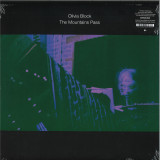
Black Truffle is pleased to announce The Mountains Pass, a major new work from Olivia Block. A key player in Chicago’s vibrant experimental music scene since the late 1990s, Block has developed an extensive body of work grounded in a personalised, at times emotive approach to the studio-based practices of the musique concrète tradition, while also encompassing improvisation, orchestral pieces, sound installations, and a sustained engagement with the piano. On The Mountains Pass, recorded by Greg Norman at Steve Albini’s Electrical Audio and meticulously edited and constructed over the course of three years, Block pushes into new terrain, introducing her singing voice and drums played by Jon Mueller into flowing assemblages that move seamlessly from ruminative organ tones and fragmented piano airs to explosions of sizzling synths and thundering percussion. Like many of Block’s past works, which include, for example, a sculptural installation using the sound of oyster beds, The Mountains Pass draws inspiration from nature and the animal world. Time spent in a particular mountain range in Northern New Mexico informs this suite of pieces, whose lyrics and titles refer particularly to animal life in the area. Beginning with bursts of white noise and delicate synthetic pops and squeaks, opener ‘Northward’ very soon reveals the special direction the album will take, as lyrical piano lines are joined by Block’s fragile voice, singing words written from the perspective of f2754, an endangered Mexican gray wolf who wandered more than five hundred miles from Arizona to New Mexico in 2022. The fragment of song quickly breaks off, leaving us with a ghostly electronic hum. ‘The Hermit’s Peak’ follows, one of two epic pieces at the album’s core. Beginning with chiming, almost harpsichord-like tones, it moves through episodes of spacious, ruminative piano, Jon Mueller’s sparkling cymbals, stuttering cut-up piano sounds, and a climax of keening organ and trumpet tones (performed by Thomas Madeja). Continuing the exploration of vintage keyboard and synth tones heard on Block’s Innocent Passage in the Territorial Sea (Room 40, 2021), the music sometimes suggests the great outer-limits works of 70s Italian prog figures like Franco Battiato or Arturo Stalteri in the languorous drift of synthesizer, organ, and piano tones and the meticulous yet organic flow of its construction. ‘Violet-Green’ opens the second side with another epic journey, its lyrical content concerning ‘a mysterious bird die-off and a forest fire’. Block’s crystalline voice and rich piano chords at times call up the restrained chamber songs of Janet Sherbourne, but fragmented and threaded through passages of woozy pitch-bent keyboards, hypnotic distant thuds, tinkling bells, and searing distorted synth tones. On ‘f2754’, the freedom of the roaming wolf surges through dense layers of rapid keyboard attacks and long organ tones over a propulsive drum performance straight out of Animal Magnetism-era Arnold Dreyblatt. This distinctive sound world is then reencountered in a darkened mirror image in the uneasy, metallic shimmer of the closing ‘Ungulates’, named in reference to a heard of elk roaming through the mountains. Like Battiato’s Clic or Gastr del Sol’s Upgrade & Afterlife, The Mountains Pass inhabits the underexplored terrain where the beauty of song coexists with a radical formal openness, illuminating the deep musicality and warmth that have been present in Block’s work all along.
- A1: Peanut Butter – The Liverbirds Eau D'bedroom Dancing
- A2: Le Tigre Alley Attack – Carter Burwell
- A3: Beating Curlie – Carter Burwell
- A4: Chief Chewed Out – Carter Burwell
- B1: Long Long Time – Linda Ronstadt
- B2: Patti's Dream – Kennelmus
- B3: Never Nowhere – Longstocking
- B4: Best Men Marion Walks – Carter Burwell
- B5: Billboard – Carter Burwell
- B6: The Trunk – Carter Burwell
- C1: Blue Bayou – Linda Ronstadt
- C2: I Love You – Asie Payton
- C3: Fire – Lizzy Mercier Descloux
- C4: Night Watch – Carter Burwell
- C5: Little Marion Spies – Carter Burwell
- C6: Forced Entry – Carter Burwell
- C7: From Hand To Hand – Carter Burwell
- D1: The Shower – Carter Burwell
- D2: A Full Day – Carter Burwell
- D3: Hers And Hers – Carter Burwell
- D4: Cryin' My Eyes Out (Lyin' Beside You) – Shannon Shaw
- D5: I Got My Mojo Working – Joyce Harris & The Daylighters
Mutant präsentiert den OST zur Roadmovie-Komödie DRIVE-AWAY DOLLS (2024), Ethan Coens erstem "Solo"-Film (ohne seinen Bruder). Mit einem exzellenten Score des EMMY-preisgekrönten Komponisten Carter Burwell und Songs von Le Tigre über Linda Ronstadt bis Lizzie Mercier Descloux passt er sehr gut in das beeindruckende Erbe der jahrzehntelangen Zusammenarbeit Burwells mit den Coen-Brüdern. Es ist das perfekte Mixtape für diesen Roadtrip, ein bisschen Country, ein bisschen Rock'n'Roll, ein bisschen Disco und ein bisschen Queer. Carter Burwell ergänzt: "Wenn Sie die übliche lesbische Roadtrip-Krimi-Sex-Comedy-Musik erwarten, werden Sie nicht enttäuscht sein."
Pink Vinyl[11,72 €]
Dedicated global following with fans of vintage downtempo soul music. Pratt & Moody are cherished in California’s lowrider ballad circles based on their underground soul hits “Lost Lost Lost” and “Wheels Turning”. Enter the captivating realm of Pratt & Moody as they unveil their new deep-as-the-oceans single, ‘Creepin’ Around’. This dynamic duo – consisting of Pratt and Moody – have honed their craft channeling their collective prowess into a singular fusion of dark soul and haunting melodies. Their previous sleeper hits “Lost Lost Lost” and “Wheels Turning” still resonate in spaces where contemporary soul ballads are treated as a valuable commodity. With ‘Creepin’ Around’, Pratt & Moody dive deep into the shadows, crafting a sonic narrative about infidelity that transcends boundaries. The velvety vocals of Pratt wrap themselves around Moody’s evocative guitar, creating a timeless soundscape that resonates with raw emotion. As the instrumental version gracefully embraces the absence of words, the music is left to speak volumes. Accompanied by the rock-solid artistry of Cold Diamond & Mink, ‘Creepin’ Around’ transports you to the hazy realm of late-night introspection, where each note carries the weight of longing and desire. The track immerses you in a David Lynch like world where melancholy, darkness and passion coexist.
Black Vinyl[10,88 €]
Dedicated global following with fans of vintage downtempo soul music. Pratt & Moody are cherished in California’s lowrider ballad circles based on their underground soul hits “Lost Lost Lost” and “Wheels Turning”. Enter the captivating realm of Pratt & Moody as they unveil their new deep-as-the-oceans single, ‘Creepin’ Around’. This dynamic duo – consisting of Pratt and Moody – have honed their craft channeling their collective prowess into a singular fusion of dark soul and haunting melodies. Their previous sleeper hits “Lost Lost Lost” and “Wheels Turning” still resonate in spaces where contemporary soul ballads are treated as a valuable commodity. With ‘Creepin’ Around’, Pratt & Moody dive deep into the shadows, crafting a sonic narrative about infidelity that transcends boundaries. The velvety vocals of Pratt wrap themselves around Moody’s evocative guitar, creating a timeless soundscape that resonates with raw emotion. As the instrumental version gracefully embraces the absence of words, the music is left to speak volumes. Accompanied by the rock-solid artistry of Cold Diamond & Mink, ‘Creepin’ Around’ transports you to the hazy realm of late-night introspection, where each note carries the weight of longing and desire. The track immerses you in a David Lynch like world where melancholy, darkness and passion coexist.
Having built a loyal local Antwerp following off of the success of their 2019 debut self released album, ‘Forgotten Kingdom’, and growing reputation for electrifying stage performances, Kolonel Djafaar achieved worldwide recognition in 2021 for the ‘Cold Heat’ EP on Batov Records, attracting praise from Music Is My Sanctuary (“triumphant), and support from Gideon Coe on BBC 6 Radio Music, and DJs across Worldwide FM, Soho Radio, Le Mellotron, and KEXP.
The group overcame busy schedules and frequent quarantine periods to hit the studio in February 2022 to lay down four tracks. However, the creative itch persisted, leading to an intense writing session in August, deep in the heart of a tranquil forest. From noon until midnight, the band immersed themselves in the creative process, embracing the freedom to make noise without restraint.
Fueled by hearty breakfasts, unwavering focus, and the ambient clucking of chickens roaming the studio, Kolonel Djafaar crafted the majority of ‘Getaway’. This period marked a pivotal shift as a number of new band members joined just in time for the August sessions.
Membership changes, including Emiel Lauryssen joining on trumpet, alongside guitarist Philip Matthhijnssens, the band's palette has broadened and new sounds are able to break through. From psychedelic rock and soul influence of the Daptone Records’ affiliated Budos Band, surf rock (“Urban Dweller”), Morricone Spaghetti Western guitar, and Afro Cuban (“Kelmendi”), alongside the brassy Afrobeat and Ethio jazz vibes the group have been known for.
The broader dynamics of ‘Getaway’, and the band’s more cinematic and experimental approach, is particularly apparent on "Siren’s Glitch" and "Phil’s First Tear". The latter, first conceived by drummer Anton Van Hove, features the lead guitar doubling up with the bass guitar for added impact. Whilst the origins of "Convoi Exceptionnel", a brass & synths stomper of a march, trace back to a jam session during the band's Hungarian tour, another vital period of prolonged time together, capturing the organic essence of their experiences on the road.
Each track on ‘Getaway’ holds a unique connection to at least one band member, and all benefit from a collaborative approach to songwriting. "Sparking Clover'', an Ethio-inspired psych & soul groover penned by tenor saxophonist Doyin Smith, carries a poignant undertone inspired by personal loss, while psych rock leaning tracks like "Apologies in Advance" showcase the band's evolution and increasing professionalism in crafting a distinct sonic experience.
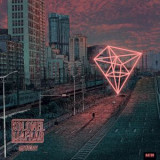
The curious cover art depicts a lone individual heading down an empty city street towards a large mysterious glowing object, evoking the common emptiness and struggle of urban life, and the search for meaning or just something better. The band envision the object to represent this album, offering a beacon to like-minded listeners. Kolonel Djafaar invite music enthusiasts on an immersive journey, to ‘Getaway’ from the daily grind of life, on an album reflecting diverse influences and marking a new chapter in their musical exploration.
The latest in a prolific string of solo and collaborative releases by James Rushford, Turzets collects a pair of new works primarily created and recorded last year while the Australian composer-performer was in residence at La Becque, an art center on Lake Geneva in Switzerland. The side-length piece "Fallaway Whisk" explores hesitation in its many forms_reticence of speech, sonic restraint_using live, abstracted translations of text from English to German against a lush and swelling soundscape. On the flip side, "Quire" is a work in ten movements influenced by the composer's study of late medieval repertoire on portative organ, weaving the instrument's woodsy interlocking melodies with angelic Yamaha CS-80 synth sweeps and stuttering glitches. The combined effort is somewhat a departure for Rushford, working in traces of Klaus Schulze, concrete poetry, and ars subtilior into a precise and ever-unfolding tapestry. Rushford's work draws from a wide range of collagist and improvisatory musical languages, staking out an idiosyncratic stylistic space that has been variously described as "electro-acoustic experimentation with a beating heart" (Boomkat) and "haunted Jacobean ASMR" (The Wire). Investigating the creases, cracks, and folds in traditions ranging from early music to New Age, Rushford's work subtly exaggerates seemingly liminal aspects such as atmosphere and the bodily presence of the performer until these take on a weight equal to musical elements such as pitch, rhythm, and timbre. In recent years, Rushford's solo work has been guided by his theorization of sonic images, particularly the shadow, which has inspired pieces as diverse as an hour-long companion to Federico Mompou's 1959-67 piano cycle Música Callada (2016) and a sumptuous translation of the play of light across flat surfaces into synthetic sound (The Lake from the Louvers, Shelter Press, 2021). His long-standing performance practice for piano, portative organ, synthesizers, and electroacoustic devices, is constantly infused with a delicacy of touch and a harmonic sensibility in which unorthodox tunings coexist with influences from fin de siècle Impressionism, the twentieth century avant-garde, and popular musical structures. He has worked with a vast range artists including Klaus Lang, Annea Lockwood, David Behrman, Tashi Wada, Haroon Mirza, Dennis Cooper, Ora Clementi, crys cole, Oren Ambarchi, Kassel Jaeger, Will Guthrie, and Graham Lambkin. He has performed as Golden Fur (with Sam Dunscombe and Judith Hamann) and Food Court (with Joe Talia and Francis Plagne).
HJirok is a mythical figure, conceived as a fictional character by Iranian-born Kurdish singer and artist Hani Mojahedy. Together with versatile music producer And Toma of Mouse On Mars, she combined a variety of sounds collected during their joint travels to Iraqi Kurdistan and elsewhere with heavily processed recordings of Sufi drum rhythms and setar melodies. The result is a driving, dubbed-out, and deeply intricate soundscape that perfectly sets the stage for Mojahedy's extended, unconventional vocal techniques and polyglot lyrics. Both informed by tradition and rigorously forward-looking, »Hjirok« (with a lowercase J) is at once a profoundly personal album and a universal utopian promise. As a ghost from the past, HJirok draws on Mojtahedy's memories to mould a new future out of them.
The foundation for »Hjirok« was laid in the city of Erbil in the Kurdish part of Iraq. During one of their stays in the region, Mojahedy and Toma recorded the three percussionists Hadi Alizadeh, Jawad Salkhordeh and Serdar Saydan as well as setar player Ali Choolaei from Motahedy's backing band while they were playingthe rhythms and notes that she had grown up with in the house of her grandfather in the Iranian city of Sanandaj. Her memories of that place revolve around hypnotic Sufi music, dervishes in deep trance, and ecstatic singing. Much like this music seemed to open a portal to other dimensions, the inhabitants of the house lived in a sort of alternative reality: It provided them with a hideaway from political circumstances. Following the Iranian revolution in 1979, a Kurdish rebellion ensued but was met with the utmost brutality by the new regime, which resulted in the death of thousands.
It is no coincidence that the music on »Hirok« would draw on rhythmic patterns that were passed on from one generation to the next for hundreds of years. »The project is rooted in the figures of the Sufi dervishes and thus a culture that precedes today's political, social, cultural, and religious systems,« explains Mohtahedy. »The Sufi sound travelled around the entire world. I like to think of it as a dialogue between peoples-one based on the rhythms of the drums and the sound of their voices.« Toma adds that by electronically transforming the recordings and enriching them with field recordings from both rural and urban spaces, they were able to use the stories told by the drums and the setar to create an entirely new narrative.
The story told by these eight pieces is hence a deeply personal, but also inherently political one. Moitahedy herself left Iran in 2004 and relocated to Berlin in 2010. Having continued to use her art as a platform to tirelessly advocate for the rights of the Kurdish people and women under oppressive regimes, she has not been allowed to return to her country of origin ever since. »Hani is singing for equality and there are people who are afraid of that-her femininity, her strength.« Toma says. Much like earlier Hirok sound installations addressed human-made climate change and other systemic ills, also »Hjirok« can hardly be disconnected from far-reaching struggles for liberation and equality.
This is also true on a thematic and even linguistic level. »The lyrics are about a promise,« Mojahedy says, citing Kurdish writer Ebdulla Pesêw as an inspiration. »At their core, these are about that day on which violence and fear become a thing of the past; what they tell you is ot not give up, to keep hoping,« she adds. The promise embedded in them is an emancipatory one. These contents are mirrored on a linguistic level: The lyrics were written in both Kurdish and Farsi, blurring the lines between the two languages and thus, Kurdish and Persian cultures.
Mojahedy, or rather HJirok, conveys these philosophical themes with elegance. Herversatile vocal performance is only loosely basedo n established styles. »Of course everything started with traditional rhythms, but we kept pushing things further and further, so Idid the same with my voice,« Mojahedy explains. »There were no boundaries.« The same can be said of the field recordings that she and Toma used. Whether it's conversations between members of the Pesmerge, the Kurdish armed forces, having a chat in meadow full of bunnies or the humming and buzzing of metropolises like Tehran: »Hirok« paints a sonic picture that is quite literally autopian one; that of a non-place in which different soundscapes, cultures and ways of life coexist peacefully.
What the album conjures up from Mojahedy's memory is not only a very specific place during a unique time in history as experienced by a single person. It is also ametaphorical home open to anyone who wishes to enter - promise of a better, more egalitarian future for everyone. Hence, HJirok will bring it on tour, presenting the material as an audio-visual live show that makes use of the photo and video material that Mojahedy and Toma have collected during their travels through Kurdistan.ja
After capturing the attention of audiences, DJs worldwide and the media with the brilliant "Flight Of Sagittarius", Brazilian Diogo Strausz, signed to Parisian label Goutte d'Or Records, presents : Samba From Outer Space This second opus takes us on a journey through time and style, from jazz-funk to dance music and Afrobeat, invoking masters such as Caetano Veloso, Giorgio Moroder or Tony Allen.
"This idea of "Samba From Outer Space" comes from dance music being a universal language beyond electronic but mainly a form of gathering people together in the same frequency." says Diogo. We could summarize everything in "Electronic dance music is nothing but samba from outer space."
Although 30 years after its birth this fundamental electronic gem called 'Reflections' has achieved cult status, it is worth remembering that it all started in 1993 in a small apartment in Waterloo, London, with the help of a mixer and a bunch of hardware synth and drum machines of hardware, with the mastodontic Oberheim OB-8 synthesizer as the main partner.
While in the UK the vast majority of kids showed a certain rejection of what came from North America in the form of electro, Kirk Degiorgio, under his alias As One, embraced it openly and incorporated it into his productions along with influences from other genres that he had already adored since he was young, such as jazz, soul or funk, thus becoming one of the true early adopters of Detroit techno in the UK.
If we look back, 'Reflections' is a challenge in itself, and even more so considering what the consumption pattern of electronic music was in the early 90s. This timeless album fits into the delicate border between being enough club to work on the dance floor, and still being musical and cerebral enough to be listened to at home. A milestone that, whether premeditated or not, Degiorgio more than achieved.
Three decades later Lapsus Records has been able to access the pre-masters extracted from the original DATs to build a special 30th anniversary edition within its Perennial series. For the occasion, this reissue not only offers the tracks included in the first edition, it also adds the songs 'The Priestess' –never released on vinyl before– and Forgotten Memory –until now unreleased and rediscovered in one of the DATs dating back to 1992 from the 'Reflexions' recording sessions. We are therefore facing the definitive edition of an album that, despite coexisting with the explosion of the rave movement, would pave the path for the UK-Detroit connection.
Whatdufaque?! Dutch artist Renée Van Trier is back on Swiss label CAF? for another record! Following her first album released in early 2020, she comes back with “HUMBLE,” the soundtrack of her new eponymous show performed at De Pont Museum (NL) and Arsenic (CH).
“At birth you are a promise, but at the same time also the greatest possible risk.” Inspired by children’s dances on TikTok where happy facades coexist with exploitative backgrounds, Renée Van Trier creates a fantasy world that’s anything but Disneyland. You’re invited to experience its soundtrack, taking you through dark atmospheres, eerie voices, glitched techno, and uplifting climaxes. Over the course of the 11 tracks, Renée Van Trier morphs into a dolphin, a puppet, and many other different characters, maintaining a blurry border between amazement and creepiness. Everyone wants the best for their children, but sometimes it doesn’t end well.