Cerca:tim green we thought ep

Generi
Tutto
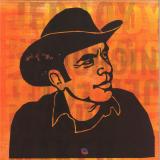
Jeb Loy Nichols - The Music Maker (LP 2x12")

“The high priest of country cool” - Rolling Stone

“I like him very much. He’s very special. He’s singing with a voice I never heard before” - Townes Van Zandt

“A conscious, soulful brother” - Horace Andy

“He’s a brother to me - one of the best singer/songwriters I’ve ever met” - Adrian Sherwood

“Unearthed mine of gems from inner Wales - a songbook of ideas - that's Jeb!” - Gilles Peterson

Jeb Loy Nichols is a bonafide Country (Got) Soul legend. The Music Maker presents 21 incredibly deep, grooving and soulful songs from the cream of Jeb's catalogue; from its earliest days to his latest unreleased gems via countless rare and unbelievably good lost-classics. This 2LP set is presented in a gatefold sleeve complete with freshly commissioned artwork courtesy of Jeb himself.

In collecting these uncut, under-heard gems, we hope to do justice to Jeb's jaw-dropping artistic brilliance. A man who, in working with Adrian Sherwood, Dennis Bovell, Dan Penn, Larry Jon Wilson and countless other legendary characters, has crafted some of the most deeply affecting folk, country, soul, funk, blues, dub, reggae, gospel, rap and electronic music, ever heard.

The first music Jeb really felt a connection with was southern soul: "I used to listen to the radio at night and fell in love with Bobby Womack and Al Green, The Staple Singers and Joe Simon – that whole Nashville/Memphis/Muscle Shoals thing.” But Jeb was so much more than a soul boy, Indeed, he "went to bluegrass festivals with my dad and come home and listened to jazz records with my mother.” And, when he was fifteen, he heard his first punk record: "God Save The Queen" by The Sex Pistols. “That and The Ramones completely changed me.” In 1979 he got a scholarship to go to art school in New York: “A great time. Punk was over but hip-hop was starting and I got into that in an obsessive way.”

His first recording, in 1980, was an unreleased rap song called "I’m A Country Boy". If that isn't an insight enough into Jeb's kaleidoscopic path through music, in 1981 he visited friends in London and found himself living in a squat with Adrian Sherwood, Ari Up (from the Slits), and Neneh Cherry. “Adrian put me to work immediately, moving boxes of records all across London. It was Adrian that was and is my biggest influence – in his complete disregard for genre purity.” So, presumably you're getting the picture? A veritable musical magpie with a voracious appetite and unimpeachable taste.

"Mine has always been a meandering career. I've done what I've done, and made the music I've made, due to chance meetings. I'm not particularly ambitious; it's more important to me that I work with friends and like-minded people. I've been a big fan of Be With for years. Everything they release is essential. When they asked about rereleasing "Countrymusicdisco45" I was both pleased and flattered. We began talking about how we'd do it; two years and twenty-one tracks later, here we are. I've always thought of the music I make as Country Music. Music conceived in the country, written in the country, recorded in the country. I left London and moved back to the country so I could live among the trees, the grasses, the animals, those things that don't go to war and get greedy. This compilation is the story of that life. Hand made, lo-fi, ramshackle, stripped down, real deal music. Heartworn and funky. Music made in the kitchen, not in the studio. As the great Skip Mcdonald said, Perfect ain't perfect. It's great to see all these tracks gathered together. It feels like a family reunion. Some older members of the tribe, some newer arrivals."

Opener "countrymusicdisco45" is a song Jeb wrote about how his crew lives, tucked up blissfully in the hills: "House parties full of country folk dancing to disco, reggae, soul, country, hip-hop. All night. I recorded it at home under the influence of Stevie Wonder." It's one of the funkiest records you'll ever hear. "Sometimes Shooting Stars" was recorded in Nashville and mixed by the legendary Dennis Bovell. It's deep, dubby, majestic. A thing of fragile, melodic beauty. The party ramps back up again with the undeniable groove of "Short Cut Home" before the profoundly moving "Disappointment" arrives. One of many songs he's recorded with good buddy Benedic Lamdin (aka Nostalgia 77): "We were going for a Leon Thomas meets Richard Brautigan meets Alice Coltrane kind of thing". We think they nailed it. "Days Are Mighty", like a lot of the tracks on this collection, "started life as a demo, an attempt to get something down while it was fresh. No frills, nothing fancy, just feel." And what feels!

The irrepressibly funky "Don't Dance With Me Tonight" is a deeply moving, slow-mo organ-drenched head-nod-funky country-ballad. Next up, the breezy "You Got It Wrong" was recorded in Wales with some of Jeb's good friends and neighbours, The Westwood All Stars, featuring Clovis Phillips and Will Barnes. Skanking fiddle-flecked gem "Ring The Bells" was the first thing Jeb recorded when he moved to Wales. A combination of all his loves; country, reggae, soul. It's followed by "Let's Make It Up", a truly sumptuous string-drenched emotional groover. "When Did You Stop Loving Me" is another Nashville track, written and recorded during a time Jeb was spending a lot of time with the Muscle Shoals crew, Donnie Fritts, Spooner Oldham, George Soule and Dan Penn: "It shows, I'm sure, their influence." Oh, you bet it does!

The swaggering country-funk of "Just Beginning" should grace many groove-focused DJs' sets whilst "Wintering Of The Year", again made with Clovis, is pastoral, campfire soul. The glacial, gorgeous "Let It Rain" is from an unreleased record Jeb made with the great British jazz bass player Andy Hamill and "We Tell Each Other Who We Are" is freaky country-soul made by a man with a love for strutting, wonky hip-hop stylings. Rounding out the side, "Trip To You" is pure, uncut amphetamine-propelled drum-machine soul.

The spare, beautiful "Dirt" is from an EP Jeb made with Julian Moore in his house in South London: "All first takes, straight to tape." Swoon! "Heaven Right Here" was a very minor league hit in America: "It was produced by the brilliant and much missed Wayne Nunes. It was started in the countryside of Missouri, finished in the countryside of Wales, and recorded in the countryside of Sussex." Double swoon! "If Later Ever Comes" is electronica meets J.J. Cale business whilst "Remember The Season" is truly wonderful and breezy guitar soul. "A Little Love" was made with Wayne Nunes as well, after a night of listening to Studio One and Northern Soul. Bouncy dub closer "Weary Traveller" was written by Bill Monroe, the hero of Jeb's youth: "Monroe's music was heavily influenced by black southern churches; I've tried to keep some of that feral feel." This was the final recording by Jeb's 1990s Country-Dub band, Fellow Travellers.

The name of this compilation comes from a time when Jeb lived in Peckham, south London and he used to DJ and sometimes perform at a local bar: "The owner of the bar, a Jamaican named Count Percy, once asked me what I called my music. I told him I wasn't sure, I guess just pop music. He thought about it for a minute and then said, 'no, more like mom and pop music'. Rather than call me a country singer or a folk singer he always referred to me as The Music Maker."

With the long overdue deluxe overview of his beloved music, we hope to finally shine a light on the unheralded genius of Jeb Loy Nichols. RIYL Larry Jon Wilson, Townes Van Zandt, Bobby Charles, country got soul artists, dub, deep soul, disco, dancing, heartbreak. This deluxe collection, spellbinding from beginning to end, should hopefully go some way to ensuring Jeb reaches an ever bigger, ever more appreciative crowd of followers. Mastering for this special double vinyl edition was overseen by Be With regular Simon Francis and it was cut by the esteemed Cicely Balston at Abbey Road Studios to be pressed in the Netherlands by Record Industry. The artwork has been lovingly put together by The Music Maker, himself, Jeb Loy Nichols. "Be With is the perfect home for this mongrel music. I am forever in their debt." The pleasure is all ours, Jeb.

In Stock

Disponibile in Stock e pronto per la spedizione

28,99
Maria Rita - Brasileira LP

Maria Rita

Brasileira LP

12inchMRBLP288
Mr Bongo
22.07.2024

Maria Rita is a musical pioneer that was ahead of her time. On first hearing her song, 'Cântico Brasileiro No.3 (Kamaiurá)’, we thought it sounded like a contemporary remix that an artist such as Carl Craig could have produced. In fact, it came out in 1988 and was taken from Maria's 'Brasileira' album, released on the Brazilian, independent Acorde imprint. The song would go on to gain cult status with its inclusion on John Gomez's superb 'Outro Tempo' compilation, released on the Music From Memory label in 2017.

The album fuses new-age electronics with indigenous vocals and Amazonian rhythms. It is beautiful and unique and takes you on a journey through different moods, textures and ethereal planes. Through the sounds Maria created, you join her on a timeless voyage gazing into the future whilst embracing her powerful roots.

Maria Rita Stumpf was born in the southern inland of Brazil, in the mountains of Aparados da Serra. She started writing music at the age of 14, and through participation in festivals and song contests, she developed her material and sound. A move to Rio de Janeiro in 1985 furthered her career and led to the release of the 'Brasileira' album. The record features the legendary pianist Luiz Eça, alongside the group Uaktí and Ricardo Bordini.

1993 saw the release of 'Mapa das Nuvens (Map of the Clouds)' on CD via the Leblon label, but soon after, Maria would have a hiatus from the music industry, dedicating herself to her cultural and arts agency, Acorde. She left the stage and recordings behind, but quality always shines through and years after its original release, international diggers, producers and DJs rediscovered the greatness of Maria's music. This would lead to a re-issue of the ‘Brasileira’ LP, and later Optimo Music/Selva Discos released a 12” EP of ‘Brasileira’ remixes by Selvagem, Carrot Green and Joakim. Maria also spoke at the Red Bull Music Academy Festival in São Paulo, performed at both the Kino Beat Festival and the Brazilian leg of the Dutch festival, Dekmantel. Her two latest albums received critical acclaim, ’Inkiri Om’ in 2020 and ‘Ver Tente’ in 2022. At last, Maria has got the credit and kudos she deserves, inspiring new and future generations of producers and music lovers.

Though previously re-issued, it was after a conversation with Maria that we learned that she wanted to keep this sublime record in press, and this was something that we couldn’t wait to put into action. So here it is, the Mr Bongo pressing of ‘Brasileira’, housed in a gatefold cover.

In Stock

Disponibile in Stock e pronto per la spedizione

25,42
Kito Jempere - Green Monster Remixes

The first bunch of remixes for Kito Jempere's Green Monster. The album itself was a versatile journey thought all music styles and patterns you can imagine, remixes are keeping the same direction.

EP opens with a remix from multi-talented and prolific studio genius Ewan Pearson, the man behind hundreds of remixes, production and studio engineering duties for artists like Tracey Thorn, Pet Shop Boys, Depeche Mode, The Chemical Brothers and many many more. And Mr Pearson is taking Kabwato on a journey! Originally recorded as two and half minutes as some say mid-album filler, this boat (kabwato in chewa language) is going deep down the tropical river and through breezy morning rainforest valleys. A perfect trip for your midday staying home alone errands or for your early morning ray of light at the bar with a beautiful panorama.

Same track is getting treatment from the mighty Cable Toy! Unmistakable peak time euphoria manifest - going back to my roots-esque piano meets 90s cable tv dance show house party!

On the flip is the remix by The Dawless. The Dawless are Ramil' Goddeem from LAUD and Sergey Gol'd, producer and owner of GoldxFish Music studio. They recently released their debut album "Broken Aux" on System 108, got remixed by DMX Crew and became residents of LOUD BOYZ label. The project has simple ethics: computers not allowed, only real gear and vibes. The duo has created a true rage rave anthem for Kito Jempere now. Having already been played in a lot of DJ-sets blasting through packed warehouses, now it became available to everyone.

EP closing opus is by Kito's frequent collaborator - UK born and Japan based producer Max Essa. Every Kito's album was accompanied by Max's remixes and this time he's delivering pure beauty again. Creating some Golden-era "8 1/2 weeks" vibes, Max transforms the track into a post-summer voyage anthem.

In Stock

Disponibile in Stock e pronto per la spedizione

11,72
Guilty Razors - Complete Recordings 1977 - 1978

UILTY RAZORS, BONA FIDE PUNKS.


Writings on the topic that go off in all directions, mind-numbing lectures given by academics, and testimonies, most of them heavily doctored, from those who “lived through that era”: so many people today fantasize about the early days of punk in our country… This blessed moment when no one had yet thought of flaunting a ridiculous green mohawk, taking Sid Vicious as a hero, or – even worse – making the so-called alternative scene both festive and boorish. There was no such thing in 1976 or 1977, when it wasn’t easy to get hold of the first 45s by the Pistols or the Clash. Few people were aware of what was happening on the fringes of the fringes at the time. Malcolm McLaren was virtually unknown, and having short hair made you seem strange. Who knew then that rock music, which had taken a very bad turn since the early 1970s, would once again become an essential element of liberation? That, thanks to short and fast songs, it would once again rediscover that primitive, social side that was so hated by older generations? Who knew that, besides a few loners who read the music press (it was even better if they read it in English) and frequented the right record stores? Many of these formed bands, because it was impossible to do otherwise. We quickly went from listening to the Velvet Underground to trying to play the Stooges’ intros. It’s a somewhat collective story, even though there weren’t many people to start it.
The Guilty Razors were among those who took part in this initial upheaval in Paris. They were far from being the worst. They had something special and even released a single that was well above the national average. They also had enough songs to fill an album, the one you’re holding. In everyone’s opinion, they were definitely not among the punk impostors that followed in their wake. They were, at least, genuine and credible.

Guilty Razors, Parisian punk band (1975-1978). To understand something about their somewhat linear but very energetic sound, we might need to talk about the context in which it was born and, more broadly, recall the boredom (a theme that would become capital in punk songs) coupled with the desire to blow everything off, which were the basis for the formation of bands playing a rejuvenated rock music ; about the passion for a few records by the Kinks or the early Who, by the Stooges, by the Velvet mostly, which set you apart from the crowd.
And of course, we should remember this new wave, which was promoted by a few articles in the specialized press and some cutting-edge record stores, coming from New York or London, whose small but powerful influence could be felt in Paris and in a handful of isolated places in the provinces, lulled to sleep by so many appalling things, from Tangerine Dream to President Giscard d’Estaing...
In 1975-76, French music was, as almost always, in a sorry state ; it was still dominated by Johnny Hallyday and Sylvie Vartan. Local rock music was also rather bleak, apart from Bijou and Little Bob who tried to revive this small scene with poorly sound-engineered gigs played to almost no one.
In the working class suburbs at the time, it was mainly hard rock music played to 11 that helped people forget about their gruelling shifts at the factory. Here and there, on the outskirts of major cities, you still could find a few rockers with sideburns wearing black armbands since the death of Gene Vincent, but it wasn’t a proper mass movement, just a source of real danger to anyone they came across who wasn't like them. In August 1976, a festival unlike any other took place in Mont-de-Marsan – the First European Punk Festival as the poster said – with almost as many people on stage as in the audience. Yet, on that day, a quasi historical event happened, when, under the blazing afternoon sun, a band of unknowns called The Damned made an unprecedented noise in the arena, reminiscent of the chaotic Stooges in their early adolescence. They were the first genuine punk band to perform in our country: from then on, anything was possible, almost anything seemed permissible.

It makes sense that the four+1 members of Guilty Razors, who initially amplified acoustic guitars with crappy tape recorder microphones, would adopt punk music (pronounced paink in French) naturally and instinctively, since it combines liberating noise with speed of execution and – crucially – a very healthy sense of rebellion (the protesters of May 1968 proclaimed, and it was even a slogan, that they weren’t against old people, but against what had made them grow old. In the mid-1970s, it seemed normal and obvious that old people should now ALSO be targeted!!!).
At the time, the desire to fight back, and break down authority and apathy, was either red or black, often taking the form of leafleting, tumultuous general assemblies in the schoolyard, and massive or shabby demonstrations, most of the time overflowing with an exciting vitality that sometimes turned into fights with the riot police. Indeed, soon after the end of the Vietnam War and following Pinochet’s coup in Chile, all over France, Trotskyist and anarcho-libertarian fervour was firmly entrenched among parts of the educated youth population, who were equally rebellious and troublemakers whenever they had the chance. It should also be noted that when the single "Anarchy in the UK" was first heard, even though not many of us had access to it, both the title and its explosive sound immediately resonated with some of those troublemakers crying out for ANARCHY!!! Meanwhile, the left-wing majority still equated punks with reckless young neo-Nazis. Of course, the widely circulated photos in the mainstream press of Siouxsie Sioux with her swastikas didn’t necessarily help to win over the theorists of the Great Revolution. It took Joe Strummer to introduce The Clash as an anti-racist, anti-fascist and anti-ignorance band for the rejection of old-school revolutionaries to fade a little.

The Lycée Jean-Baptiste Say at Porte d’Auteuil, despite being located in the very posh and very exclusive 16th arrondissement of Paris, didn’t escape these "committed" upheavals, which doubled as the perfect outlet for the less timid members of this generation.
“Back then, politics were fun,” says Tristam Nada, who studied there and went on to become Guilty Razors’ frontman. “Jean-Baptiste was the leftist high-school in the neighbourhood. When the far right guys from the GUD came down there, the Communist League guys from elsewhere helped us fight them off.”
Anything that could challenge authority was fair game and of course, strikes for just about any reason would lead to increasingly frequent truancy (with a definitive farewell to education that would soon follow). Tristam Nada spent his 10th and 11th unfinished grades with José Perez, who had come from Spain, where his father, a janitor, had been sentenced to death by Franco. “José steered my tastes towards solid acts such as The Who. Like most teenagers, I had previously absorbed just about everything that came my way, from Yes to Led Zeppelin to Genesis. I was exploring… And then one day, he told me that he and his brother Carlos wanted to start a rock band.” The Perez brothers already played guitar. “Of course, they were Spanish!”, jokes their singer. “Then, somewhat reluctantly, José took up the bass and we were soon joined by Jano – who called himself Jano Homicid – who took up the rhythm guitar.” Several drummers would later join this core of not easily intimidated young guys who didn’t let adversity get the better of them.

The first rehearsals of the newly named Guilty Razors took place in the bedroom of a Perez aunt. There, the three rookies tried to cover a few standards, songs that often were an integral part of their lives. During a first, short gig, in front of a bewildered audience of tough old-school rockers, they launched into a clunky version of the Velvet Underground's “Heroin”. Challenge or recklessness? A bit of both, probably… And then, step by step, their limited repertoire expanded as they decided to write their own songs, sung in a not always very accurate or academic English, but who cared about proper grammar or the right vocabulary, since what truly mattered was to make the words sound as good as possible while playing very, very fast music? And spitting out those words in a language that left no doubt as to what it conveyed mattered as well.
Trying their hand a the kind of rock music disliked by most of the neighbourhood, making noise, being fiercely provocative: they still belonged to a tiny clique who, at this very moment, had chosen to impose this difference. And there were very few places in France or elsewhere, where one could witness the first stirrings of something that wasn’t a trend yet, let alone a movement.

In the provinces, in late 1976 or early 1977, there couldn’t be more than thirty record stores that were a bit more discerning than average, where you could hear this new kind of short-haired rock music called “punk”. The old clientele, who previously had no problem coming in to buy the latest McCartney or Aerosmith LP, now felt a little less comfortable there…
In Paris, these enlightened places were quite rare and often located nex to what would become the Forum des Halles, a big shopping mall. Between three aging sex workers, a couple of second-hand clothes shops, sellers of hippie paraphernalia and small fashion designers, the good word was loudly spread in two pioneering places – propagators of what was still only a new underground movement. Historically, the first one was the Open Market, a kind of poorly, but tastefully stocked cave. Speakers blasted out the sound of sixties garage bands from the Nuggets compilation (a crucial reference for José Perez) or the badly dressed English kids of Eddie and the Hot Rods. This black-painted den was opened a few years earlier by Marc Zermati, a character who wasn’t always in a sunny disposition, but always quite radical in his (good) choices and his opinions. He founded the independent label Skydog and was one of the promoters of the Mont-de-Marsan punk festivals. Not far from there was Harry Cover, another store more in tune with the new New York scene, which was amply covered in the house fanzine, Rock News (even though it was in it that the photos of the Sex Pistols were first published in France).
It was a favorite hang-out of the Perez brothers and Tristam Nada, as the latter explained. “It’s at Harry Cover’s that we first heard the Pistols and Clash’s 45s, and after that, we decided to start writing our first songs. If they could do it, so could we!”
The sonic shocks that were “Anarchy in the UK”, “White Riot” or the Buzzcocks’s EP, “Spiral Scratch” – which Guilty Razors' sound is reminiscent of – were soon to be amplified by an unparalleled visual shock. In April 1977, right after the release of their first LP, The Clash performed at the Palais des Glaces in Paris, during a punk night organised by Marc Zermati. For many who were there, it was the gig of a lifetime…
Of course, Guilty Razors and Tristam were in the audience: “That concert was fabulous… We Parisian punks were almost all dressed in black and white, with white shirts, skinny leather ties, bikers jackets or light jackets, etc. The Clash, on the other hand, wore colourful clothes. Well, the next day, at the Gibus, you’d spot everyone who had been at this concert, but they weren’t wearing anything black, they were all wearing colours.”

It makes sense to mention the Gibus club, as Guilty Razors often played there (sometimes in front of a hostile audience). It was also the only place in Paris that regularly scheduled new Parisian or Anglo-Saxon acts, such as Generation X, Siouxsie and the Banshees, the Slits, and Johnny Thunders who would become a kind of messed-up mascot for the venue. A little later, in 1978, the Rose Bonbon – formerly the Nashville – also attracted nightly owls in search of electric thrills… In 1977, the iconic but not necessarily excellent Asphalt Jungle often played at the Gibus, sometimes sharing the bill with Metal Urbain, the only band whose aura would later transcend the French borders (“I saw them as the French Sex Pistols,” said Geoff Travis, head of their British label Rough Trade). Already established in this small scene, Metal Urbain helped the young and restless Guilty Razors who had just arrived. Guitarist for Metal Urbain Hermann Schwartz remembers it: “They were younger than us, we were a bit like their mentors even if it’s too strong a word… At least they were credible. We thought they were good, and they had good songs which reminded of the Buzzcocks that I liked a lot. But at some point, they started hanging out with the Hells Angels. That’s when we stopped following them.”

The break-up was mutual, since, Guilty Razors, for their part, were shocked when they saw a fringe element of the audience at Metal Urbain concerts who repeatedly shouted “Sieg Heil” and gave Nazi salutes. These provocations, even still minor (the bulk of the skinhead crowd would later make their presence felt during concerts), weren’t really to the liking of the Perez brothers, whose anti-fascist convictions were firmly rooted. Some things are non-negotiable.
A few months earlier (in July 1978), Guilty Razors had nevertheless opened very successfully for Metal Urbain at the Bus Palladium, a more traditonally old-school rock night-club. But, as was sometimes the case back then, the night turned into a mass brawl when suburban rockers came to “beat up punks”.

Back then, Parisian nights weren’t always sweet and serene.

So, after opening as best as they could for The Jam (their sound having been ruined by the PA system), our local heroes were – once again – met outside by a horde of greasers out to get them. “Thankfully,” says Tristam, “we were with our roadies, motorless bikers who acted as a protective barrier. We were chased in the neighbouring streets and the whole thing ended in front of a bar, with the owner coming out with a rifle…”
Although Tristam and the Perez brothers narrowly escaped various, potentially bloody, incidents, they weren’t completely innocent of wrongdoing either. They still find amusing their mugging of two strangers in the street for example (“We were broke and we simply wanted to buy tickets for the Heartbreakers concert that night,” says Tristam). It so happened that their victims were two key figures in the rock business at the time: radio presenter Alain Manneval and music publisher Philippe Constantin. They filed a complaint and sought monetary compensation, but somehow the band’s manager, the skilful but very controversial Alexis, managed to get the complaint withdrawn and Guilty Razors ended up signing with Constantin with a substantial advance.

They also signed with Polydor and the label released in 1978 their only three-track 45, featuring “I Don't Wanna be A Rich”, “Hurts and Noises” and “Provocate” (songs that exuded perpetual rebellion and an unquenchable desire for “class” confrontation). It was a very good record, but due to a lack of promotion (radio stations didn’t play French artists singing in English), it didn’t sell very well. Only 800 copies were allegedly sold and the rest of the stock was pulped… Initially, the three tracks were to be included on a LP that never came to be, since they were dropped by Polydor (“Let’s say we sometimes caused a ruckus in their offices!” laughs Tristam.) In order to perfect the long-awaited LP, the band recorded demos of other tracks. There was a cover of Pink Floyd's “Lucifer Sam” from the Syd Barrett era – proof of an enduring love for the sixties’ greats –, “Wake Up” a hangover tale and “Bad Heart” about the Baader-Meinhof gang, whose actions had a profound impact on the era and on a generation seeking extreme dissent... On the album you’re now discovering, you can also hear five previously unreleased tracks recorded a bit later during an extended and freezing stay in Madrid, in a makeshift studio with the invaluable help of a drummer also acting as sound engineer. He was both an enthusiastic old hippie and a proper whizz at sound engineering. Here too, certain influences from the fifties and sixties (Link Wray, the Troggs) are more than obvious in the band’s music.

Shortly after a final stormy and rather barbaric (on the audience’s side) “Punk night” at the Olympia in June 1978, Tristam left the band ; his bandmates continued without him for a short while.

But like most pioneering punk bands of the era, Guilty Razors eventually split up for good after three years (besides once in Spain, they’d only played in Paris). The reason for ceasing business activities were more or less the same for everyone: there were no venues outside one’s small circuit to play this kind of rock music, which was still frightening, unknown, or of little interest to most people. The chances of recording an LP were virtually null, since major labels were only signing unoriginal but reassuring sub-Téléphone clones, and the smaller ones were only interested in progressive rock or French chanson for youth clubs. And what about self-production? No one in our small safety-pinned world had thought about it yet. There wasn’t enough money to embark on that sort of venture anyway.

So yes, the early days of punk in France were truly No Future!

non in magazzino

Ordina ora e ordineremo l'articolo per te presso il nostro fornitore.

21,43

Last In: 63 days ago
The Keith Tippett Group - The Keith Tippett Group LP

The Keith Tippett Group's Dedicated to You, But You Weren't Listening is a landmark in cutting edge fusion/avant-jazz. A vital and profoundly adventurous Jazz-Rock record that still swings very hard, it was first released on Vertigo in 1971.

Original copies are now very tricky to score and, as most of you really should know, it’s aged ridiculously well.

A legendary work, this Be With re-issue has been newly remastered from the original Vertigo master tapes, demonstrating just why this deserves to be back in press. The stunning gatefold jacket fully restores Roger and Martyn Dean's original, arresting album artwork to complete this must-have reissue.

Alive and bursting with a joyful energy that has to be heard to be believed, Dedicated to You, But You Weren't Listening flirts with perfection. It's truly magical and forever essential.

A brilliant jazz pianist, composer, arranger and bandleader "who could make the outlands of modern music feel like the most hospitable of places" (The Guardian), Keith Tippett's second album is oft-regarded as his Canterbury album.

Indeed, not only does he draw heavily on Soft Machine members past, present and future but the album title itself archly references a Soft Machine composition. Ray Babbington handles bass alongside Neville Whitehead and the drums are shared between Brian Spring (Nucleus), Robert Wyatt(!) and Phil Howard (who would go on to replace Wyatt in Soft Machine). Gary Boyle (Isotope) is on guitar whilst the great percussionist Tony Uter is enlisted for his conga and cow bell expertise. Elton Dean on Alto Saxello, cornetist Marc Charig and Nick Evans on trombone round out this quite stunning ensemble.

Dedicated to You, But You Weren't Listening presents a collective of superhuman musicians really, *really* enjoying themselves in the studio. The sheer exuberance of the performance is totally infectious. It's wild, energetic, atmospheric and, bluntly, bordering on chaotic at points. In a word, it's beautiful.

Robert Wyatt's drumming opens the record with a bang on the majestic Be With favourite "This Is What Happens". Some have described his work here as "easily the most inspired of his career on record." It's an ultra-funky conga-driven groove that truly sparks via the duelling interplay between the three horn players. In the background, Keith's insistent piano, in conversation with those unignorable drums, is the anchor that keeps this piece rollicking away. Breathtaking.

The epic, energetic "Thoughts to Geoff" is a 10-minute jammer that tends towards the dissonant and improvisational but becomes more fluid, laconic and melodic as it unravels. The interplay between soloists and ensembles is particularly dazzling here - blazing solos by Evans, Charig and Tippett himself in a flourish of angular arpeggios interspersed with chordal elocution. Phew.

Up next, the no less-urgent Mingus-referencing "Green and Orange Night Park" is a soaring example of ambitious jazz mixed with rock aggression, with Dean strutting his stuff by launching into a scorching solo. An absolutely jaw-dropping piece. Arguably the highlight of this album of huge highlights!

Though much of the album tends to fall on the raucous side ("Gridal Suite" approaches free-jazz at its most chaotic and, dare we say it, "difficult"), there are a few more sedate, at times spacey numbers, such as the deeply impressionistic "Five After Dawn". The rhythmically complex "Black Horse" is the most accessible track here, a sort of swinging Big Band number with tight grooves, soaring horn & reed melodies, a sizzling Boyle guitar solo and tasty electric piano riffs from Tippett. An hypnotic climax to a staggering record.

This Be With edition of Dedicated to You, But You Weren't Listening has been re-mastered from the original Vertigo master tapes, Simon Francis’ mastering working together with Cicely Balston's cut at Abbey Road Studios to weave their usual magic with these wonderful recordings. The stunning gatefold sleeve has been restored in all its brainchild glory so you know you're dealing with the definitive reissue, here. Now, are you listening?

pre-ordina ora03.10.2025

dovrebbe essere pubblicato su 03.10.2025

30,04
Boston Manor - Sundiver

Boston Manor

Sundiver

12inch4065629724085
Nuclear Blast
06.09.2024

Coming out on September 6th on Sharptone Records, Sundiver is Boston Manor’s fifth album and one that represents a glimmering dawn for the Blackpool five-piece. Grown from a seedbed of optimism and sobriety, the LP celebrates new beginnings, second chances and rebirth. With two members recently stepping into fatherhood, hope is baked into every note. “Datura came out of these really dark few years over the hangover of the pandemic,” Henry reflects. “I'd been struggling a lot with drinking and not taking care of myself and bad mental health and stuff. We wanted Sundiver to be the next morning of the following day.” He explains that it feels good this time round to write through the lens of positivity. “The themes began to emerge, of rebirth, spring, dawn, sunshine and then other elements just started to fit into that.” It was during the making of Sundiver that Henry found out he was going to be a dad. This album is a significant one for the band. Originally coming out of the emo and pop punk scene, they’ve explored sonics and genres throughout their career, taken risks and achieved more than they could ever had dreamed of. They’ve grown up as Boston Manor – their lives and the world changing around them. They’re now taking stock, at a crossroads of the band they were and the band they could be.
While writing the album, they revisited the bands that shaped them in the late 90s and early 00s. “I was listening to the music I loved when I was a teenager and I just thought, why don't we make music like our favourite bands?”, guitarist Mike Cuniff remembers with a smile. “So we brought our interests to the table that way. Y2K kind of vibe. There are elements of Deftones, there are elements of Portishead in there, some Garbage, The Cardigans.” He laughs and adds NSYNC to the list of inspirations. From this cocktail of classics comes a dynamic and ambitious record, rich with depth, groove and more hooks than Peter Pan’s nightmares. Lyrics that foxtrot from parallel universes to personal growth, vivid dreamscapes to raw grief. Individually they’re single strokes full of meaning and magic. Together they’re a landscape.
Container (out Feb 15th) is the first single and it’s them at their best – impassioned and infectious. “This song is about the stagnancy of life creeping up on you & how that can bring about change.,” Henry explains, citing Ocean Song by US band Daughters as an inspiration.

The concept of the butterfly effect is present on Sundiver – how small actions can lead to big changes. This is no clearer than on their second single, Sliding Doors (out April 5th). It has the golden sound of late 90s Lollapalooza rock – think Smashing Pumpkins - rebooted with crisp 2024 production and a potent heaviness. In the lyrics Henry wonders, what if?, pondering on what could be. The idea that there are infinite versions of you whose lives splinter off in different directions at every decision you make. That there’s another you out there somewhere right now reading this sentence, and another me writing it. “So much is down to chance and circumstance,” Henry says. “You might catch that train and your life totally changes. Or you might miss it and things stay the way they are.”
Heat Me Up (out May 30th) is defiant and victorious, the audio equivalent of quitting your shit job and driving into the hot summer sun with a head full of dreams. “The lyrics are about love and gratitude,” Henry shares. “Another theme on the record is just appreciating what you have. It’s about not taking for granted the things that you've been afforded.”
There was some natural magic in the creation of Sundiver. They worked with their usual producer, Larry Hibbitt, and engineer, Alex O’Donovan, but instead of recording in London again they ended up in the green pastures of Welwyn Garden City. “Because Larry lives out in the countryside now, it was a way different environment and way different experience recording this time,” Mike remembers. “That contributed a lot to the brighter sound of the record.” The daily barbecues they had during their recording sessions imbued the process with harmony – five old friends spending quality time together and making quality music.
However, the album is by no means one-note. Birthing this new world they’ve created wasn’t without it’s pain, and that can be heard in the heavier moments on Sundiver. What Is Taken Will Never Be Lost is the most-stripped back on the album, a slow rock number seasoned with the downtempo Portishead influence. The heartfelt lyrics are Henry’s way of processing the loss of his grandfather, who died in a hospice last year(?). “It was just fucking horrible. It was always cold when I went there and they were always trying to get rid of me. The song title, What Was Taken Can Ever Be Lost, is the idea of his memory fading at the time because of dementia.” Henry goes onto explain that shoeboxes of photographs, diaries and a legacy is what he’s left behind. “He lived a really rich life and it has really impacted me and my father. His legacy is etched into the fabric of history in a very small way.” This song continues the connection between his grandfather and the band, as his painted face is emblazoned on the cover of the very first Boston Manor EP, Driftwood. As well as emotionally heavy themes, there’s heaviness in the music of Sundiver too. The closing song, Oil In My Blood, descends into an intense shoegaze outro with Debbie Gough from Heriot screaming hellfire. It’s in moments like this that the band show us aggression and fury can be as much a part of positive change as quiet introspection. The last lyrics of the song, “It resets and starts again,” leaves us in contemplation as the final chord rings out.
Touring the US, Europe and Japan over the years makes for an impressive CV, but if you know anything about Boston Manor you’ll know that they’re all about their hometown. Their choice to work with Blackpool-based photographer Nick Barkworth is testament to that. They’ve been working with him since the pandemic. “He captures Blackpool in a light that really reflects the weirdness and quirkiness of the town,” Henry says.” He's got a really good way of presenting that.” For the Sundiver cover, Nick photographed a 30ft tall abstract glass sculpture made by the local artist John Ditchfield. A striking and bewitching monolith that’s familiar to them but unusual to most people. “It has such kind of a gravity and power to it,” Henry describes the sculpture which stands in a field just outside of the seaside town. “It reminds me of either an explosion or a star or a supernova. To me it represents new life, power and radiance.” Boston Manor have got a knack for that - connecting the otherworldly and the everyday, the stars and the streets.
They’re a band known for using their music to make bigger statements about society. This time round they’re harnessing the uplifting power of music, and the communion it creates, as an antidote to the daily doom and isolation. “It seems like absolute chaos out there at the moment,” Henry says. “You’ve got Gaza and Israel, you've got Russia, you've got the fact that 40% of the world is going to have an election this year and increasingly most governments are leaning very far to the Right. The internet is dividing everybody, people are getting poorer and more desperate. It's really, really scary.” They considered trying to tackle the weight of it all in their music. “We could’ve written Welcome to the Neighbourhood on steroids, where it's just absolute darkness and misery”. He’s referring to their 2018 concept album that deals with class, inequality and the bleaker side of Blackpool. “But I think it's really important to write something that people can be immersed in and find some sort of solace in. Somewhere they can escape to from the modern day pressures and everything that’s going on. We’re all in this together.”

pre-ordina ora06.09.2024

dovrebbe essere pubblicato su 06.09.2024

32,14
Broadway Calls - Coming After You!

For fans of: The Menzingers, Green Day, The Lawrence Ams, Joyce Manor, Teenage Bottlerocket, The Flatliners, Pop-Punk. Broadway Calls begins their 2024 campaign with another big support tour and more new music to go along with it. This time we've packaged it with their other recent singles to make a nifty 4-song 7" EP. These Oregonian lumber-punks live in the woods and probably eat squirrels, so they thought it would be funny to put a mom with a machine gun on the cover. Uhhh, try that in a small town?

pre-ordina ora05.04.2024

dovrebbe essere pubblicato su 05.04.2024

15,08
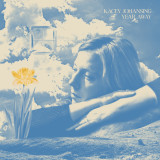
Kacey Johansing - Year Away LP

In March of 2020, after learning that a dear friend’s life was coming to an end, Johansing sat down and in one sitting wrote the song “Daffodils”. An elegiac tribute to someone facing death with grace and curiosity, the lyrics confront Johansing’s own mortality by observing the brief lifespan of a Hlower. Only a week later when the world came to an abrupt standstill, she soon found herself processing this recent loss while trying to make sense of a new global reality. Across the ensuing months, Johansing found herself increasingly untethered by a world of isolation and political upheaval.

Having been a frequent touring member of bands like Hand Habits and Fruit Bats, and often being called into the studio to lend her harmonies and multi-instrumental talents to records, Johansing’s phone no longer rang. Living in Los Angeles she feared her musical community was vanishing, as friends and collaborators continually announced they were leaving the city. It was in returning to her piano nightly that she found the greatest solace, feverishly writing the songs that would be collected on her next album. Resulting from this new sense of time and focus was a deepening of her songwriting. As Johansing recalls, “I felt like a metamorphosis happened during that time. There was a lot of personal growth and healing.”

Throughout Year Away Johansing traverses uncharted emotional landscapes brought upon by the changes occurring all around her. The forced self-reflection of the moment is aptly captured by “Old Friend”, featuring an aching melody and swooning production that recalls the best of Harry Nilsson. The epic piano and saxophone-driven “Smile with My Eyes” addresses the loss of community as friends became distant and political divides between family grew. On “Smile” Johansing pushes her vocals further than ever, expanding her range and using her peerless voice as the singular instrument it is. Facing the loss of a family home due to environmental destruction, “Shifting Sands” is marked by soaring Hlutes, Hield recordings and glassy synthesizers that nod to Japanese New Age.

“Daffodils”, the stunning album centerpiece, is built from a pastiche of looping samples, swirling Mellotron and dazzling vibraphone. “Keep your heart open wide, you never know your time / Keep your heart wild, true Hlower child”, Johansing sings as she says goodbye to an elder, while the band reaches a grief-stricken crescendo of woodwinds and chiming bells. On the title track, Johansing takes listeners on an eerily meditative journey of collective experiences. “I wanted to keep the progression simple and repetitive so that musically we could add new elements little by little, while the emotional tone of the lyrics becomes increasingly more strained and expressive”. The song grows to a fever pitch as Johansing sings higher than she thought possible; the tension of the repeating chords Hinally resolving into a hopeful coda as multiple soloists weave around each other.

Amidst heavier themes, Johansing still leaves room for her love of irresistible pop melodies and lush production. The driving “Last Drop” and mid-tempo “Valley Green” are two of her catchiest songs to date. On the former Johansing sings the anthemic chorus, “As if it were the last drop, and nothing ever lasts forever / As if it were the last stop, too far out to come back ever”, longing for a love that she’ll never take for granted, while also admitting that she doesn’t always know how good she has it. “Valley Green” features shimmering layers of 12- string guitars, stacked horns and an impeccable solo by co-producer and multi- instrumentalist Tim Ramsey (Vetiver, Fruit Bats), hinting at a love for bands like NRBQ.

Having been eager to capture the initial spark of songwriting, Johansing booked time at Highland Park’s 64 Sound Studio the week that it reopened. Over the course of three days, she and her band gathered basic tracks for 10 songs, before returning home to Hinish the record with Ramsey. Setting forth to make an album that paid homage to the music that kept them company during the months spent alone together, the duo pulled inspiration from a wide net including Burt Bacharach, John Carroll Kirby & Haruomi Hosono. Ramsey’s newfound love of early digital synthesizers dovetailed effortlessly with Johansing’s fondness for classic 70’s horn and string arrangements, creating a sound that is distinctly modern yet warm and familiar.

Once again Johansing called upon some of the Hinest players of Northeast Los Angeles’ vibrant music community to lend a hand with the record. The 70s R&B-folk of “Watch It Like a Show” features an electric guitar solo from Hand Habits’ Meg Duffy, while album closer “Endless Sound” boasts backing vocals from electronic musician Kaitlyn Aurelia Smith and swooping Indian-inspired violins from Amir Yaghmai (HAIM, The Voidz). The record shines brightly thanks to an ace mix from veteran producer Rob Schnapf (Beck, Elliott Smith, Cat Power), woodwinds from Logan Hone (John Carroll Kirby, Eddie Chacon), and a featured rhythm section of drummer Josh Adams (Jenny Lewis, Bedouine) and bassist Todd Dahlhoff (Feist, Devendra Banhart). Recorded across multiple studios including LA’s famed Sunset Sound, the album remains steadfastly buoyed by the adept engineering of Tyler Karmen (MGMT, Alvvays).

Though born of turbulent times, Year Away is ultimately interested in moving forward. The album ends with “Endless Sound,” where Johansing laments seismic global changes, (“The water is hotter, the mighty thaw / The current’s reversing, the last are lost”) but vows to keep going (“No storm can take me down / Endless light, endless sound”). It’s Year Away’s resilience that shines through despite the darkness. It’s a sound all her own and Johansing’s most cohesive set of songs yet.

pre-ordina ora27.10.2023

dovrebbe essere pubblicato su 27.10.2023

26,47
ORKA - All At Once LP

Orka

All At Once LP

12inchKER007
Kervið
15.09.2023

ORKA is a duo comprising Francine Perry from London and Jens L. Thomsen from the Faroe Islands. They crossed paths in the vibrant club scene of London, an immersive world that had a profound impact on their creative journey. ORKA's music draws inspiration from the Hardcore Continuum and UK sound system culture, blending it with elements of minimal techno, progressive electro, and ambient music, resulting in a diverse range of stylistic influences. Now ORKA emerges with their long-awaited new album. Once again, they greet us with their distinct blend of earthy tones and a bold, adventurous spirit, taking us to a realm bursting with neon-lit hues, pulsating club beats, and an abundance of sensory stimulation. Aptly named "All At Once," the album title provides a clue to the auditory and sensory experience that awaits the listener in this immersive record. ORKA has continuously evolved as a project over many years and iterations, embracing fluidity and a relentless quest for fresh sonic amalgamations. Their journey has been marked by a gradual refinement, stripping away layers to reach the core essentials. This transformative process has unfolded over the years, reaching from their site-specific, cowshed sampling and band-based expedition in "Livandi oyða" (2007) to the bold, innovative exploration of minimalist techno in "Vað" (2016). However, their latest release, "All At Once," signifies yet another remarkable leap forward in their artistic evolution. The seeds of this artistic progression were already planted in previous releases like the <13 EP (2017) and the hard-hitting techno single "Juno" (2018). However, it is with the arrival of the album "All At Once" that ORKA's vision fully blossoms, unveiling a vivid and expansive sonic landscape. This latest offering presents a glorious and vibrant tapestry, showcasing a maximalist approach to techno that pulsates with energy coupled with their signature meticulous attention to sound design, reflecting a deep awareness and intentionality in their creative process. If this album was to be thought of as a place, it would be a shimmering, futuristic, buzzing kind of city with vibrating night-time drizzle from above and endless glowing lights in the distance. Several of the tracks are built around cut-up vocal samples that are divided from their semiotic meanings and reconfigured as loops, and thus mined for their timbral and percussive qualities. Recurring collaborators South London duo LV (Hyperdub, Keysound, Brownswood) are featured on a handful of these tracks, mixing in their complex cocktail of grime and bliss. The result is a sort of queer erotic dance-floor mysticism, and the closest to a full-blown dance record that ORKA have ever made. There must be a club in that shimmering futurist city of the night.. and it is a collective, inclusive and alluring place. There is no need to fear any dancefloor exhaustion by listening to this album though, as there are also moments of floating cyber beauty and pure enveloping warmth to be found among its tracks. As always, following the artistic journey of ORKA is a joyous experience, filled with unexpected twists and turns that keep us captivated.

pre-ordina ora15.09.2023

dovrebbe essere pubblicato su 15.09.2023

27,10
A Giant Dog - Bite LP

A Giant Dog

Bite LP

12inchMRG829LP
Merge Records
03.09.2023

Indies Only LP is opaque green vinyl. Both LPs come with a download. The moment the needle drops on Bite, the new A Giant Dog record, one’s conception of what an A Giant Dog record sounds like bends like space and time around a starship running at lightspeed. The biggest point of departure is that Bite is a concept album, concerning characters who find themselves moving in and out of a virtual reality called Avalonia. A Giant Dog’s first album of original songs since 2017’s Toy, Bite finds the band Sabrina Ellis, Andrew Cashen, Danny Blanchard, Graham Low, and Andy Bauer at their peak as musicians, challenging themselves with more complex arrangements and subject matter that forced them out of their heads and into those of the characters who occupy this supposed paradise. “We had to find ourselves within, or project ourselves into, the principal characters. We developed them, got to know their minds, emotions, and motivations, and then expressed those in nine songs,” Ellis explains. Themes of addiction, gender fluidity, living ethically in a capitalist society, physical autonomy, avarice, grief, and consent bubble beneath the promised happiness of Avalonia. This is evident in songs like “Different Than,” where Ellis sings, “My body can’t explain the things my mind don’t comprehend” as if societal gender pressure is squeezing its protagonist out of their skin. The songs on Bite are full of bombast, at turns calling to mind the spacefaring operatic rock of Electric Light Orchestra and the high drama of an Ennio Morricone film score. The album’s narrative sweep is epic in scope, its characters facing impossible odds and certain doom, existing as comfortably with the sci-fi grandiosity of Thin Lizzy’s Jailbreak as it does with the high fantasy of Dio and Iron Maiden. Appropriately, A Giant Dog came to this narrative armed to the teeth with new ideas, unleashing synthesizers and string sections to create what Ellis describes as orchestral, symphonic, futuristic punk. To achieve this, they left their home turf of Austin, Texas, for La Cuve Studio, just outside of Angers, France. Living in the French countryside, A Giant Dog laid down their vision of the future against a decidedly pastoral backdrop. On walks from Angers to La Cuve, Ellis says that they “would see many things, and also nothing at all. Swans on the river. Romani people living in little trailers, with a side hut built for their dog. A juggler on a unicycle—not fucking with you.” “We thought we wouldn’t be allowed back in France after this trip, to be honest,” they continued. “Five loud, stomping, clapping, rowdy Americans who ran through the streets of Angers for three weeks in November 2022.” The experience capped two years of planning and writing, fleshing out the universe of Avalonia beyond the bounds of most concept albums. The resulting nine songs do not merely occupy this space: They’ve lived in it, and they want out.

pre-ordina ora03.09.2023

dovrebbe essere pubblicato su 03.09.2023

26,85
Stuck - Freak Frequency LP

Freak Frequency was a fitting title for the new material Greg Obis was planning for Stuck, the frenetic and twisted post-punk outfit he formed in 2018. Inspired by the doomy social economics of Mark Fisher’s Capitalist Realism, the bleak worldbuilding of horror games Demon’s Souls and Bloodborne, and the bombastic yet arty satire of Devo, Obis channelled his audio analogy into Freak Frequency, an album ringing out with explosive sounds and ideas.

Stuck formed after Obis’ previous projects, Yeesh and Clearance, called it quits in short proximity. Obis is on guitar and vocals, which span from booming theatrics to ecstatic yelps. The project’s rhythm section is completed by shoegaze guitarist-turned-chugging bassist David Algrim and tightly wound drummer Tim Green—also a graphic designer, and the artist responsible for Stuck’s distinctively unified visual aesthetic. Original co-guitarist Donny Walsh contributed freely inventive lines for the first few years of the project, including on Freak Frequency; Ezra Saulnier of Red Tunic, the newest member of the band, now brings calculated contrapuntal riffs to match Obis’ parts.

The building blocks of Stuck include the egg punk eccentricities of Uranium Club and The Coneheads filtered through noise rock power, à la Jesus Lizard or Slint; that melange is glittered with the precision microtones of Unwound and Women. “I want the feeling of immersion and chaos and tension, with a big guitar amp playing a big chord,” says Obis of his inspirations, citing friends and peers Cloud Nothings and Preoccupations. “But I want it delivered by having a lot of smaller points of light poking through.”

In fact, writing for Freak Frequency began while Content’s recording was still underway—beginning with “Scared,” which features acoustic layers under feedback squalls. “Time Out,” with motoric guitars in the sputtering lineage of Wire, was also composed in late 2019. Obis wrote it about the cycles of compulsion and shame woven into social media use, and the way negativity drives algorithmic engagement. It became an exciting exercise for the group in ramping up speed; “I thought I knew how far I could push Tim’s tempos,” Obis recalls. “But Tim kept insisting we do it 20 bpm faster than what I had. He is an absolute monster for playing that.”

Album opener “The Punisher,” a spiral staircase of disembodied guitars and rhythmic slams over a 2/4 beat, came in the aftermath of the January 6 insurrection. It felt immediately emblematic to Freak Frequency, and Obis describes it as his favorite Stuck track: one he wishes he could write again and again. “It hits all the boxes that Stuck can do: it’s goofy, but there’s a lot of intricate guitar interplay, and at the end, there’s a big payoff,” he explains. The last song written was “Do Not Reply,” a pre-album single that came to Obis after engineering for Melkbelly and channelling their earworm melodies. Algrim wouldn’t let it on the record unless Melkbelly’s front person Miranda Winters dueted on vocals; she was happy to oblige, and the gritty epic closes Freak Frequency.

With slippery snark, percussive heft, and funhouse mirrors of sludge, Freak Frequency delivers its needed screeds with gratifying nuance. If Stuck’s interpretation of this messed-up world goes down like a bitter pill, it’s only because its sugar coating is too delicious to keep from eating.

non in magazzino

Ordina ora e ordineremo l'articolo per te presso il nostro fornitore.

21,64

Last In: 2 years ago
ORBITAL - OPTICAL DELUSION 2x12"

2 x Solid White LP, 5mm spine Sleeve UV Gloss Finish, 2x Heavy Weight Printed Inner Sleeve UV Gloss finish, marketing sticker.

Legendary electronic music duo Orbital return Early 2023 with new album “Optical Delusion”, the Hartnoll brothers first studio album since 2018’s Monster’s Exist. Recorded in Orbital’s Brighton studio, “Optical Delusion” includes contributions from Sleaford Mods, Penelope Isles, Anna B Savage, The Little Pest, Dina Ipavic, Coppe, and perhaps most surprisingly, The Medieval Baebes.
Earlier this year, Orbital celebrated their storied history with “30 Something” which, unlike other Best Of’s, contains reworks, remakes, remixes and re-imaginings of landmark Orbital tracks including “Chime”, “Belfast”, “Halcyon”, “Satan”, and “The Box”

SHORT BIOG:

“A human being experiences himself, his thoughts and feelings as something separate from the rest of humanity – a kind of optical delusion of his consciousness. This delusion is a kind of prison for us, restricting us to our personal desires and to affection for a few persons nearest to us. Our task must be to free ourselves from this prison…”

You many have seen this quote attributed to Albert Einstein on social media, the archetypal Smartest Guy Ever apparently having an out-of-character religious epiphany. It certainly leapt out at Paul Hartnoll of Orbital who spotted it in Michael Pollan’s 2018 book How to Change Your Mind: What the New Science of Psychedelics Teaches Us About Consciousness, Dying, Addiction, Depression and Transcendence.

“As soon as I saw ‘optical delusion’ I thought Oh hey, that’s the album title,” says Paul. “It just seemed to say so much about how people construct their own realities, how we see patterns that aren’t there, how we see what we want to see.

“But it’s actually a misquote. He never quite said that. In the German original what he’s really saying is that human experience is as relative as physics. Wouldn’t it be good if we could accept that, and find a kind of universal theory of everything for the human race? Then you look at everything from history to art to your Twitter feed and you think yeah, that’s what we’re all trying to do all of the time…”

Hence ‘Optical Delusion’, the tenth original Orbital album and the latest in a burst of renewed post-pandemic creativity for two brothers who’ve stayed at the top of their game longer than anyone from the post-1988 Class of Acid House.

Now with ‘Optical Delusion’ the Hartnolls dig deeper into the unquiet psyche of our increasingly surreal and disordered world. Sketched out partly during lockdown but fully recorded in the uncertain After Times, the album summons up conflicting emotions and sometimes beguiling images from years when the science fiction doomsdays that the Hartnolls watched on TV as kids finally came true. There are mesmeric tracks with names like ‘The New Abnormal’ and ‘Requiem For The Pre-Apocalypse’ and ‘Day One’. But there are also straight-up bangers and ethereal cosmic dreams, abstract sound wars and deeply human songs of separation and loss.

And it all starts with a bang. Lead single ‘Dirty Rat’, an outright Fall-meets-Front-242 class rant with vocals by Sleaford Mods mob orator Jason Williamson, harks right back to the Hartnolls’ days of politicised anarcho-squatpunk. It began as a remix swap (Orbital did the Sleafords’ ‘I Don’t Rate You’) and morphed into a comic, brutal, bass-driven harangue not so much against our rulers but at the petty, mean-spirited, frightened, Mail-reading voters who put them there: the people who are “blaming everyone in hospital/blaming everyone at the bottom of the English Channel/blaming everyone who doesn’t look like a fried animal.”

Also key to the album is opening track ‘Ringa Ringa (The Old Pandemic Folk Song)’ which returns to an Orbital truism, that time always becomes a loop. This chugging, cyclical Orbital groove gives way to an unnerving past-meets-present timeslip fit for ‘Sapphire And Steel’ as goth maenads The Mediaeval Baebes materialise to sing ‘Ring O’Roses’ – the innocent nursery rhyme whose roots are in the Black Death.

“I’ve always liked folk music and mediaeval sounds,” says Paul, himself an occasional Morris dancer. “I had the basis of that track and I wanted to spin it off somehow.” Trawling his archives he stumbled on The Mediaeval Baebes’ version of ‘Ring O’Roses’ “and my hackles just went up. I was like, my God, this is the original pandemic folk song.”

?his being Orbital, there are collaborations galore on the album, the roles once played by Alison Goldfrapp, Lady Leshurr or David Gray now filled by new talents. London singer-songwriter Anna B Savage contributes a compellingly fragile, Anohni-like vocal to ‘Home’, in which nature reclaims the scorched and vacant mega-cities. ‘Day One’ is a pulsing techno track featuring the singer Dina Ipavic. Paul got in touch with her after working on a score for a sculpture show of giant robotic installations by his friend Giles Walker during the pandemic. First Paul cut up his own score and Ipavic’s vocals on the track The Crane, which appears on the deluxe version of the album. Then he thought, Why not work with her for real? The result is school of ‘Belfast’, a bassy dreamscape with vocalised clouds billowing above.

The pensive ‘Are You ?live?’ adds to the Orbital product range of existential questions (‘Are We Here?’, ‘Where Is It Going?’) in collaboration Bella Union signings Penelope Isles, AKA brother and sister act Lily and Jack Wolter. “They’re our studio mates, they work upstairs!” says Paul happily. “And they’ve both got amazing voices.”


But Orbital are Orbital and never far from the dancefloor. “Eventually the more abrasive bits came back into the fold…” ‘You Are The Frequency’, first of two tracks to feature mysterious vocalist The Little Pest, surrounds the listener with warped voices ordering you to the dancefloor (Phil: “we wanted the idea that the music is kind of absorbing you”). And the second, the sinister ‘What A Surprise’, traps you in a paranoid electronic hall of mirrors.

In another nod to Orbital’s resurgent past the cover artwork once again comes from fine art painter John Greenwood, creator of fantastical grotesques for the covers of ‘Snivilisation’, ‘In Sides’ and Orbital’s most recent album, 2018’s ‘Monsters Exist’. Orbital had just had a slick Mark Farrow cover for ‘30 Something’ – this is a return to the overripe and bulbous techno-organic constructions that somehow express Orbital’s own uncontrollably fertile sound.

There are gaps in the future that Orbital are desperate to fill too; there will be tours and festivals and rooms and fields full of people. Those long paralysed months when we had little to look forward to but a Zoom DJ set made Paul and Phil appreciate the things that make life worth living.

non in magazzino

Ordina ora e ordineremo l'articolo per te presso il nostro fornitore.

33,24

Last In: 3 years ago
ORBITAL - OPTICAL DELUSION LP 2x12"

DOUBLE BLACK LP : 2 x 140 G Black Vinyl , Sleeve & 2 x Heavy Weight Printed Inner with UV Gloss Finish

Legendary electronic music duo Orbital return Early 2023 with new album “Optical Delusion”, the Hartnoll brothers first studio album since 2018’s Monster’s Exist. Recorded in Orbital’s Brighton studio, “Optical Delusion” includes contributions from Sleaford Mods, Penelope Isles, Anna B Savage, The Little Pest, Dina Ipavic, Coppe, and perhaps most surprisingly, The Medieval Baebes.
Earlier this year, Orbital celebrated their storied history with “30 Something” which, unlike other Best Of’s, contains reworks, remakes, remixes and re-imaginings of landmark Orbital tracks including “Chime”, “Belfast”, “Halcyon”, “Satan”, and “The Box”

SHORT BIOG:

“A human being experiences himself, his thoughts and feelings as something separate from the rest of humanity – a kind of optical delusion of his consciousness. This delusion is a kind of prison for us, restricting us to our personal desires and to affection for a few persons nearest to us. Our task must be to free ourselves from this prison…”

You many have seen this quote attributed to Albert Einstein on social media, the archetypal Smartest Guy Ever apparently having an out-of-character religious epiphany. It certainly leapt out at Paul Hartnoll of Orbital who spotted it in Michael Pollan’s 2018 book How to Change Your Mind: What the New Science of Psychedelics Teaches Us About Consciousness, Dying, Addiction, Depression and Transcendence.

“As soon as I saw ‘optical delusion’ I thought Oh hey, that’s the album title,” says Paul. “It just seemed to say so much about how people construct their own realities, how we see patterns that aren’t there, how we see what we want to see.

“But it’s actually a misquote. He never quite said that. In the German original what he’s really saying is that human experience is as relative as physics. Wouldn’t it be good if we could accept that, and find a kind of universal theory of everything for the human race? Then you look at everything from history to art to your Twitter feed and you think yeah, that’s what we’re all trying to do all of the time…”

Hence ‘Optical Delusion’, the tenth original Orbital album and the latest in a burst of renewed post-pandemic creativity for two brothers who’ve stayed at the top of their game longer than anyone from the post-1988 Class of Acid House.

Now with ‘Optical Delusion’ the Hartnolls dig deeper into the unquiet psyche of our increasingly surreal and disordered world. Sketched out partly during lockdown but fully recorded in the uncertain After Times, the album summons up conflicting emotions and sometimes beguiling images from years when the science fiction doomsdays that the Hartnolls watched on TV as kids finally came true. There are mesmeric tracks with names like ‘The New Abnormal’ and ‘Requiem For The Pre-Apocalypse’ and ‘Day One’. But there are also straight-up bangers and ethereal cosmic dreams, abstract sound wars and deeply human songs of separation and loss.

And it all starts with a bang. Lead single ‘Dirty Rat’, an outright Fall-meets-Front-242 class rant with vocals by Sleaford Mods mob orator Jason Williamson, harks right back to the Hartnolls’ days of politicised anarcho-squatpunk. It began as a remix swap (Orbital did the Sleafords’ ‘I Don’t Rate You’) and morphed into a comic, brutal, bass-driven harangue not so much against our rulers but at the petty, mean-spirited, frightened, Mail-reading voters who put them there: the people who are “blaming everyone in hospital/blaming everyone at the bottom of the English Channel/blaming everyone who doesn’t look like a fried animal.”

Also key to the album is opening track ‘Ringa Ringa (The Old Pandemic Folk Song)’ which returns to an Orbital truism, that time always becomes a loop. This chugging, cyclical Orbital groove gives way to an unnerving past-meets-present timeslip fit for ‘Sapphire And Steel’ as goth maenads The Mediaeval Baebes materialise to sing ‘Ring O’Roses’ – the innocent nursery rhyme whose roots are in the Black Death.

“I’ve always liked folk music and mediaeval sounds,” says Paul, himself an occasional Morris dancer. “I had the basis of that track and I wanted to spin it off somehow.” Trawling his archives he stumbled on The Mediaeval Baebes’ version of ‘Ring O’Roses’ “and my hackles just went up. I was like, my God, this is the original pandemic folk song.”

?his being Orbital, there are collaborations galore on the album, the roles once played by Alison Goldfrapp, Lady Leshurr or David Gray now filled by new talents. London singer-songwriter Anna B Savage contributes a compellingly fragile, Anohni-like vocal to ‘Home’, in which nature reclaims the scorched and vacant mega-cities. ‘Day One’ is a pulsing techno track featuring the singer Dina Ipavic. Paul got in touch with her after working on a score for a sculpture show of giant robotic installations by his friend Giles Walker during the pandemic. First Paul cut up his own score and Ipavic’s vocals on the track The Crane, which appears on the deluxe version of the album. Then he thought, Why not work with her for real? The result is school of ‘Belfast’, a bassy dreamscape with vocalised clouds billowing above.

The pensive ‘Are You ?live?’ adds to the Orbital product range of existential questions (‘Are We Here?’, ‘Where Is It Going?’) in collaboration Bella Union signings Penelope Isles, AKA brother and sister act Lily and Jack Wolter. “They’re our studio mates, they work upstairs!” says Paul happily. “And they’ve both got amazing voices.”


But Orbital are Orbital and never far from the dancefloor. “Eventually the more abrasive bits came back into the fold…” ‘You Are The Frequency’, first of two tracks to feature mysterious vocalist The Little Pest, surrounds the listener with warped voices ordering you to the dancefloor (Phil: “we wanted the idea that the music is kind of absorbing you”). And the second, the sinister ‘What A Surprise’, traps you in a paranoid electronic hall of mirrors.

In another nod to Orbital’s resurgent past the cover artwork once again comes from fine art painter John Greenwood, creator of fantastical grotesques for the covers of ‘Snivilisation’, ‘In Sides’ and Orbital’s most recent album, 2018’s ‘Monsters Exist’. Orbital had just had a slick Mark Farrow cover for ‘30 Something’ – this is a return to the overripe and bulbous techno-organic constructions that somehow express Orbital’s own uncontrollably fertile sound.

There are gaps in the future that Orbital are desperate to fill too; there will be tours and festivals and rooms and fields full of people. Those long paralysed months when we had little to look forward to but a Zoom DJ set made Paul and Phil appreciate the things that make life worth living.

non in magazzino

Ordina ora e ordineremo l'articolo per te presso il nostro fornitore.

31,05

Last In: 3 years ago
Holding Absence - The Greatest Mistake Of My Life

We all make mistakes. We all have regrets. We all look back on the loves and losses life brings and lament on how things might have been different. In these deeply personal moments of reflection our emotions can run wild as we contemplate our choices and come to terms with what’s next. Hindsight is a powerful and complex thing, and a phenomenon whose intricacies are explored in captivating fashion on The Greatest Mistake Of My Life, the second album from Cardiff’s Holding Absence.

Building on the excellent foundations laid down by the band’s eponymous debut record, released in 2019, and following standalone singles ‘Gravity’ and ‘Birdcage’, the four-piece have returned with a group of songs that, in the view of vocalist Lucas Woodland, are the truest representation of Holding Absence to date.

Inspired by a song of the same name that was recorded in the 1930s by actor and singer Dame Gracie Fields, The Greatest Mistake Of My Life is rooted in a time long before Holding Absence even existed. Lucas’ great uncle covered the song during the 1950s – something the frontman repeats on this album – and after finding this out from his grandmother, the singer decided the poignancy of its words were worthy of titling Holding Absence’s next record.

Holding Absence – the band completed by bassist James Joseph and drummer Ashley Green – carry the The Greatest Mistake Of My Life’s contemplative and thoughtful spirit throughout their second album. Whereas their debut was a concept record about the subject of love, The Greatest Mistake Of My Life’s inspirations are more complex, as Holding Absence stare down love in the face of death, all the while musing on the vast array of emotions we as humans experience throughout our lives.

Lead single ‘Beyond Belief’ is a soaring epic about the risk of loving someone forever, when their definition of ‘Forever’ might be different to yours, and a song that, Lucas says, argues how “love is something worth taking a risk on.” Holding Absence’s unique approach to romance is also present on atmospheric tracks like ‘Curse Me With Your Kiss’ and ‘Afterlife’, but for every display of affection, The Greatest Mistake Of My Life counters with despondency. ‘Die Alone (In Your Lover’s Arms)’ tells of the loneliness two people feel within a relationship long-turned sour, while ‘In Circles’ speaks to the monotony of everyday life and the crushing of dreams.

The Greatest Mistake Of My Life soundtracks the journey of our lives via all of its despair, elation, joy and pain, but never once tells the listener how they should be feeling.


Shedding their skins and emerging into a bright new phase for their band, with The Greatest Mistake Of My Life, Holding Absence are embracing change whilst holding onto the things that make them special. Aesthetic, for instance, remains important to Lucas and his bandmates, but as seen in the video for ‘Beyond Belief’, no longer do they exist in a world of purely black and white colour. Ushering in a colourful new era for Holding Absence, Lucas speaks of a desire “to bring warmth to people’s lives.”

Armed with a stellar new album and an unflinching belief in their craft, this new incarnation of Holding Absence promises to excite and impress like never before. An enthralling collection of songs and stories that tell of love, life, death and everything in between, The Greatest Mistake Of My Life is a thrilling record, and one its creators were born to make.

As Holding Absence have proved, the greatest mistakes can sometimes open the door to even greater triumphs.

pre-ordina ora29.07.2022

dovrebbe essere pubblicato su 29.07.2022

55,42
Weird Nightmare - Weird Nightmare

If you’re looking for a raw, sugary blast of distorted pop, look no further than
‘Weird Nightmare’. The debut album from METZ guitarist and vocalist Alex
Edkins contains all of his main band’s bite with an unexpected, yet totally
satisfying, sweetness. Imagine The Amps covering Big Star, or the gloriously
hissy miniature epics of classic-era Guided by Voices combined with the
bombast of ‘Copper Blue’- era Sugar - just tons of red-line distortion cut with the
type of tunecraft that thrills the moment it hits your ears.
 These ten songs showcase a new side of Edkins’ already-established
songwriting, but even though the bulk of ‘Weird Nightmare’ was recorded during
the COVID-19 pandemic, some of its tunes date back to 2013 in demo form.
“Hooks and melody have always been a big part of my writing, but they really
became the main focus this time” he explains. “It was about doing what felt
natural.”
 To be clear: Weird Nightmare is not a ‘pandemic album’, but an album - some of
which had been gestating for quite a while - that just so happened to be recorded
during the pandemic. “I had always planned on finishing these songs, but being
unable to tour with METZ, and forced to lock down, really gave me a push.” After
days spent homeschooling his son, Edkins would drive to the METZ rehearsal
room and tinker deep into the night on these songs’ deceptively simple structures
and rich, static-laden textures. “It was a godsend for me,” he states about the
creative process. “The hours would disappear and I would get lost in the music
and record. It was a beautiful escape.”
 ‘Weird Nightmare’ is, in its own way, a study in extremes: Edkins’ melodic
instincts and penchant for dissonance are both turned up to the max throughout,
the latter reflecting not only the barn-burning tendencies of METZ, but Alex’s own
sonic predilections. “It doesn’t sound right to my ears until it’s pushed over the
edge.” He also cites other artists who are masterful at mixing the sublime and the
punishing - Kim Deal and Scout Niblett among them - as influences on his own
songwriting. “My favorite songs are the simple ones,” he explains. “I’ve never
been attracted to virtuosity or technicality. Certain songs have the power to lift
your spirits like nothing else can. I wanted to create that type of song.”
 A few guests pitch in on Weird Nightmare: Canadian alt-pop genius Chad
VanGaalen adds his unmistakable touch to the ever-escalating ‘Oh No’, while
Alicia Bognanno of Bully lends her distinctive pipes to the thrashing ‘Wrecked’, a
collaboration that effectively saved the song. “I almost didn’t put it on the album
because I thought it was missing something,” Edkins explains. “I sent it to Alicia
and she lifted it way up.”
 And taking risks and reaching out of Edkins’ comfort zone was the name of the
game when it came to making ‘Weird Nightmare’. “I found myself doing new
things I didn’t have the guts to do before, recording everything by myself and
trusting all of my musical instincts,” he states. “I think when music manifests
quickly, a certain amount of honesty automatically comes along with it. When it is
a purely instinctual creation, there is no opportunity to obscure the truth.”
 Loser Edition LP pressed on Coke Bottle Green transparent vinyl.

pre-ordina ora20.05.2022

dovrebbe essere pubblicato su 20.05.2022

25,42
Weird Nightmare - Weird Nightmare

Weird Nightmare

Weird Nightmare

CassetteSP1475
Sub Pop
20.05.2022

If you’re looking for a raw, sugary blast of distorted pop, look no further than
‘Weird Nightmare’. The debut album from METZ guitarist and vocalist Alex
Edkins contains all of his main band’s bite with an unexpected, yet totally
satisfying, sweetness. Imagine The Amps covering Big Star, or the gloriously
hissy miniature epics of classic-era Guided by Voices combined with the
bombast of ‘Copper Blue’- era Sugar - just tons of red-line distortion cut with the
type of tunecraft that thrills the moment it hits your ears.
 These ten songs showcase a new side of Edkins’ already-established
songwriting, but even though the bulk of ‘Weird Nightmare’ was recorded during
the COVID-19 pandemic, some of its tunes date back to 2013 in demo form.
“Hooks and melody have always been a big part of my writing, but they really
became the main focus this time” he explains. “It was about doing what felt
natural.”
 To be clear: Weird Nightmare is not a ‘pandemic album’, but an album - some of
which had been gestating for quite a while - that just so happened to be recorded
during the pandemic. “I had always planned on finishing these songs, but being
unable to tour with METZ, and forced to lock down, really gave me a push.” After
days spent homeschooling his son, Edkins would drive to the METZ rehearsal
room and tinker deep into the night on these songs’ deceptively simple structures
and rich, static-laden textures. “It was a godsend for me,” he states about the
creative process. “The hours would disappear and I would get lost in the music
and record. It was a beautiful escape.”
 ‘Weird Nightmare’ is, in its own way, a study in extremes: Edkins’ melodic
instincts and penchant for dissonance are both turned up to the max throughout,
the latter reflecting not only the barn-burning tendencies of METZ, but Alex’s own
sonic predilections. “It doesn’t sound right to my ears until it’s pushed over the
edge.” He also cites other artists who are masterful at mixing the sublime and the
punishing - Kim Deal and Scout Niblett among them - as influences on his own
songwriting. “My favorite songs are the simple ones,” he explains. “I’ve never
been attracted to virtuosity or technicality. Certain songs have the power to lift
your spirits like nothing else can. I wanted to create that type of song.”
 A few guests pitch in on Weird Nightmare: Canadian alt-pop genius Chad
VanGaalen adds his unmistakable touch to the ever-escalating ‘Oh No’, while
Alicia Bognanno of Bully lends her distinctive pipes to the thrashing ‘Wrecked’, a
collaboration that effectively saved the song. “I almost didn’t put it on the album
because I thought it was missing something,” Edkins explains. “I sent it to Alicia
and she lifted it way up.”
 And taking risks and reaching out of Edkins’ comfort zone was the name of the
game when it came to making ‘Weird Nightmare’. “I found myself doing new
things I didn’t have the guts to do before, recording everything by myself and
trusting all of my musical instincts,” he states. “I think when music manifests
quickly, a certain amount of honesty automatically comes along with it. When it is
a purely instinctual creation, there is no opportunity to obscure the truth.”
 Loser Edition LP pressed on Coke Bottle Green transparent vinyl.

pre-ordina ora20.05.2022

dovrebbe essere pubblicato su 20.05.2022

10,04
Ducks Ltd - Get Bleak

Ducks Ltd

Get Bleak

12inchCAK152X
Carpark Records
28.05.2021

Forest Green Vinyl

Toronto’s Ducks Ltd. will release their debut EP, Get Bleak on May 21, 2021 via Carpark Records. Composed of friends Evan Lewis, on lead guitar, and Tom Mcgreevy, on vocals and rhythm guitar, the band built a reputation in their hometown for their bright, sinewy, guitar sound while sharing bills with artists like Rolling Blackouts Coastal Fever, Weyes Blood, The Goon Sax and Juan Wauters. They have earned accolades from Pitchfork who praised the band’s “lilting, throwback jangle pop,” and acclaim from outlets like NPR, Paste, NME, Apple Music 1, and more.

The opening track, “Get Bleak” sets a thematic tone for the EP, one of cultural self-awareness and satiric critiques of society’s pressures and the often ridiculous demands – and prices we pay – to exist. Chiming with breezy indie guitar sounds akin to those of Flying Nun and Sarah Records acts, the track, that features a contribution from Laura Hermiston of Twist, pokes fun at the idea that moving from city to city will fix the problems in your life. Following suit is “Gleaming Spires”, a track that zeroes in on the cities we live in and the push-pull relationships that we so often share with them. “Anhedonia”, via it’s tightly-wound rhythm and nostalgia-inked guitars, shifts focus to the times when one is unable to wring any joy out of the things that they find important in life.

Bringing the band’s characteristic restless bounce, thoughtful lyricism and penchant for orchestration, the tracks explore topics like troubled friendships (“It’s Easy”), self-destructive desires (“Oblivion”), and living with decline (“As Big As All Outside”) while maintaining the balance of earnest self-reflection and humor that endeared audiences to the original release.

Full of the unbridled radiance of jangle-pop, the debut EP from Ducks Ltd.’s Get Bleak celebrates their strengths while expanding their thematic and compositional horizons, and providing an intriguing glimpse of what’s to come.

pre-ordina ora28.05.2021

dovrebbe essere pubblicato su 28.05.2021

15,92
Disco Zombies - South London Stinks 2x12"

It was 1977, there may well have been “knives in West 11”, but at a student’s hall of residence in Leicester, a packed room of cross legged intellectuals were about to witness the debut of The Disco Zombies; Andy Ross on vocals and guitar, Geoff Dodimead on bass, Johnny ‘Guitar’ Hawkins on guitar and Andy Fullerton on drums. They were loud, fast and they had some witty one-liners.
The four-piece became five with the addition of Dave Henderson from The Blazers, a chirpy power pop punk quintet, who were part of a burgeoning scene in the city that included The Foamettes, Dead Fly Syndrome, Wendy Tunes, The RTRs, Robin Banks And The Payrolls and many more. Wine bars, canteens and bowling alleys in pubs were the home of this phenomenon until Subway Sect and The Lou’s arrived for The Great Unknown Tour. They needed a local band for support and the Disco Zombies obliged.
Record Shop owner - and now Mayor Of Mablethorpe - Carl Tebbutt was keen to ride the punk rollercoaster and decided to launch Uptwon Records with a Disco Zombies EP. Recorded in Chester in one four hour session, it included The Blazers’ ‘Top Of The Pops’ and Andy’s ‘Time Will Tell’, ‘Punk A Go Go’ and ‘Disco Zombies’.
Carl had done a deal with a one-stop music production company who went bust almost immediately and the record was shelved. Unperturbed the band pressed on and recorded a session at the local radio station, ‘TV Screen Existence’ being the only track that survived. A tour of Leicester – five pubs in five days – was the end of that era and the band without Johnny ‘Guitar’ who had another year to do at Uni, relocated to London taking with them The Foamettes’ guitarist Steve Gerrard who wisely returned to Leicester and become part of The Bomb Party. Steve was replaced by Mark Sutherland in what was to become the recognised line up of The Disco Zombies for several years, playing lots of London gigs from The Hope And Anchor to The Moonlight Club, North London Poly to the Scala.
By 1978, there was an eruption of small DIY indie labels and Andy Ross launched South Circular Records to release the band’s debut single, ‘Drums Over London’ - an ironic stab at people’s hostility to the arrival of other cultures, a piss-take of Spear And Jackson-wielding Tory attitudes. John Peel played it regularly until Rock Against Racism complained even though Peel explained that it was actually supporting their views. Ho hum. South Circular wasn’t to last but Dave Henderson launched Dining Out. Dave and Andy journeyed to Ipswich to record the debut EP from the Peel-approved Adicts, the plan being to follow it with a Disco Zombies’ single and regain momentum. ‘Here Comes The Buts’ was the second Dining Out release, featuring the breakthrough Dr Boss drum machine; it was greeted with great enthusiasm in some quarters, although strangely it was likened to The Cramps meets Neil Young in NME.
Dining Out was always just one step ahead of going out of business and even though the follow up had been recorded - ‘The Year Of The Sex Olympics’, backed with ‘Target Practice’ and ‘New Scars’ – it never saw the light of day as the money finally ran out.
Somehow, Dining Out had a second lease of life and Andy wanted to record a new track for a new release amid 45s from The Sinatras, New Age and Spit Like Paint. By now, the Zombies had been through their dark post punk phase and ‘Where Have You Been Lately Tony Hateley’ was a clever upbeat anthem which told the tale of the nomadic footballer. The test pressing gained many Peel minutes but by the time it was ready to release, the band had finally split up. It eventually saw the light of day on the Cordelia label’s ‘Obscure Independent Classics’ album. Very fitting.
So, it was 1980: Mark Sutherland opened a studio in Bow, Dod got a day job, Andy Fullerton already had one. Andy and Dave went a bit experimental in Club Tango; Andy eventually discovering Blur for Food which he started with The Teardrop Explodes’ David Balfe, while Dave flirted with Worldbackwards.
In 2011, the drum machine line up descended on Mark’s studio, rehearsing for a show at the Bull And Gate. They recorded two of their lengthier tracks – ‘Night Of The Big Heat’ and ‘LHO’ powered by a waning Dr Rhythm – these were pressed as an extremely limited edition ten-inch. A few years later Andy Fullerton returned to the fold recording three more originals ‘Hit’, ‘Lenin’s Tomb’ and ‘Paint It Red’ for an even more limited edition ten-inch in 2018 and a show in October that year at The Dublin Castle.
Since then, meandering lunchtime discussions in restaurants that were popular in the ‘70s (Joe Allen, Café De Pacifico, etc) have led to arguments about the lost tracks – ‘Man From UNCLE’, ‘I Need You Like I Need VD’, ‘Throwaway Line’, ‘I Thought You Were Only Joking’, ‘London Nights’, ‘Cosmetics For China’, ‘When Doo Wop Hit Hampstead’. It’s only a matter of time. Until then.....

pre-ordina ora29.01.2021

dovrebbe essere pubblicato su 29.01.2021

21,30
MR KEY & GREENWOOD SHARPS - GREEN & GOLD

‘Green & Gold’ is the second collaborative release from Mr Key & Greenwood Sharps, the long awaited follow up to their
critically acclaimed 2015 album ‘Yesterday’s Futures’. The record was written and recorded between Greenwood Sharps’
cottage in the verdant English countryside and the off grid Finca in the foothills of the Andalusian Sierra Nevada, Spain where
Key is based.
The title has multiple meanings none of which are anything to do with weed or money. First and foremost, green and gold are
the colours which synesthete (a person who sees sound) Greenwood Sharps, composed the record in. It also alludes to the
dialogue between the green of the UK and the dusty gold of Andalucia which created the project. Finally green and gold speaks
of the dynamic between the sun and photosynthesising organisms, the driving force of life on earth.
‘Yesterday’s Futures’ took the listener on a meandering journey through a vast landscape of moods, sounds and ideas,
leading ultimately to redemption and the possibility of resolution. Thematically, ‘Green & Gold’ picks up where ‘Yesterday’s
Futures’ left off, but structurally it takes the opposite tack; an extended exploration of a single ubiquitous idea: universal love for
all things and all people and the challenge of maintaining these shiny ideals in day to day life, as our cynical side reasserts itself.
Key’s first output after an extended hiatus from releasing music makes it obvious that during this time he continued honing his
craft. The unique perspectives and disarming honesty which set him apart from his peers remain, but his technical prowess and
capacity to convey sentiment are notably enhanced. The same applies to Greenwood Sharps, who’s masterful production has
risen to new heights yet still maintains the rich and subtle sonic palette he has become known for.
Dropping alongside the EP is a short film featuring the works of long time collaborator Jamie Johnson, the man behind the
artwork for both ‘Green & Gold’ & ‘Yesterday’s Futures’. The short film is the visual counterpart to the EP and serves as the
perfect introduction to the world of ‘Green & Gold’ as it visually explores all the themes present in the music & provides a snap
shot of the incredible tracks on offer.
In a troubled and busy world, marred with anxieties and uncertainties, ‘Green & Gold’ comes as a breath of fresh air and offers some valuable food for thought for those searching for real heart felt substance rather than the sanitised, individualised &
commodified norm we have all become accustomed to.

pre-ordina ora15.11.2019

dovrebbe essere pubblicato su 15.11.2019

24,24
Dhaze, Medu - Subatomic Pussy

Dhaze featured on Metroline Limited 76 (with Sabe) as well as on Amam, Little Helpers, Body Parts & more - Remix from Spanish producer Medu (Dissonant, Wavetech Ltd) Short info: For release number 80 we welcome back Italian producer Dhaze. Hailing from Rome, Dhaze started his self-thought experimentation with electronic music in 1996 when he bought his first sampler. His productions have seen the light of day on several undergound labels such as Amam, Little Helpers, Bla Bla, Body Parts, Inmotion and plenty more! Of course Dhaze has also already released on Metroline Limited, with fellow Italian producer Sabe, on the stunning Metroline Limited 76, Full Force EP. The EP opening is the 'explicit' Subatomic Pussy. The groove shuffles away with a clever use of drum patters and crispy hats. The mood is dark and disorienting, almost sinister with some crazy cavernous Green Velvet-esque vocal snippets that make their presence felt every now and then. And if the dark grooves of the openeing track weren't heavy enough, the following track, Waterdrip take the tension up a notch or two! The track is a relentless groovy monster, one for the darkest moments of a tech-house set but also suitable for the most obscure hours of Berghain! Not for the faint hearted! :) This time on remix duty we welcome Spanish producer Medu. Having loved his latest productions both on Dissonant and Wavetech Ltd we though about asking him to rework Subatomic Pussy and the result is excellent. Medu stripped Subatomic Pussy down to it bare elements but menaged at the same time to re-create a similarly hypnotic and driving peak time techno number! As we like our EP's to be 'all killers' and 'no fillers', to close this release in style we decided to include the incredible track 'Hardware In Love'

non in magazzino

Ordina ora e ordineremo l'articolo per te presso il nostro fornitore.

8,87

Last In: 13 months ago
Articoli per pagina:
N/ABPM
Vinyl