Drei Jahre nach ihrem morbiden Manifest "Limbo", einer bitteren Abrechnung mit der Pandemie und ihren bestialischen Folgen, kehrt Wave-Alchemist Ronny Moorings zurück. Im Gepäck hat er einen schwarzen Blumenstrauß aus Trauergesängen für eine kranke neue Welt, Elegien für einen neuen Status quo, mit dem wir alle leben müssen.
Auch 40 Jahre nach ihrer Gründung sind CLAN OF XYMOX ein Leuchtfeuer tragischer Eleganz und düsterer Tristesse. Sie sind die unbestrittene, unangefochtene Speerspitze einer Szene, die zuletzt überraschend die Aufmerksamkeit einer viel jüngeren Generation auf sich gezogen hat, die ihre Angst und ihren Schmerz durch Musik wie diese ausdrücken will. Gerne doch! "Exodus" zeugt von diesem Ausnahmestatus und führt das Feld der prosaischen Trauer mit zehn neuen Hymnen von erlesener Nachtschwere an. Das Besteck, welches Ronny Moorings benutzt, mag noch dasselbe sein; das Ergebnis ist ein weiteres Meisterwerk voller sehnsüchtiger Melodien, weltabgewandten Vocals aus den Tiefen der Erde, hallenden Gitarren und hypnotischen Drums, die die Phantome in uns allen zum Mitternachtsschmaus einladen.
Wir tanzen direkt in den Abgrund, will uns dieses Album sagen. Aber wenigstens tanzen wir noch. Denn wenn es nichts mehr gibt, an das man sich wenden kann, wenn alle Hoffnung verloren scheint und die Welt uns unter Fluten biblischen Ausmaßes begräbt, bleibt manchmal nur noch, sich der Musik hinzugeben. Diesem fesselnden Exodus in Richtung Katharsis. Vielleicht ist das der Grund, warum "Exodus" einige der düstersten und niedergeschlagensten Stücke enthält, die Ronny Moorings seit vielen Jahren geschrieben hat. Vielleicht ist das der Grund, warum diese Platte mit den besten Veröffentlichungen von THE CURE mithalten kann. Weil die Zeiten, in denen wir leben, ihn dazu gezwungen haben. Weil es einfach keinen anderen Weg gibt, als all seinen Kummer, seine Wut und seinen Weltschmerz in seine klagende Musik einfließen zu lassen. Nicht, weil die Welt danach eine bessere sein wird. Sondern weil es für ihn die einzige Möglichkeit ist, mit dem brutalen Wahnsinn, den wir Alltag nennen, fertig zu werden.
"Exodus" ist kein Album für Träumer. Es ist aber auch kein Albtraum - trotz der Schatten, die unter der Oberfläche brüten. Es ist ein Tor für all jene, die die Dunkelheit unserer Tage anerkennen und sich dennoch weigern, aufzugeben. Lasst uns also diese nächtlichen Wiegenlieder gemeinsam singen und tanzen, solange wir noch einen Boden dafür haben. Denn das ist alles, was wir im Moment tun können.
Search:tim le el
Black Truffle is pleased to announce Resonant Trees, the first vinyl release from French composer-performer Léo Dupleix. An active member of the international community of younger musicians working with just intonation, Dupleix has composed works for solo instrumentalists and ensembles in Europe and Japan, as well as performing extensively on harpsichord, piano and electronics. His music is distinguished by a formal clarity and elegance of surface, gently shaping pure intervals into delicate melodic patterns and shimmering harmonic planes.
Resonant Trees presents two side-long pieces for harpsichord and ensemble, both setting slowly repeating patterns played on harpsichord and guitar within an environment of sustained tones. Dupleix performs on a French double manual harpsichord (tuned to a just intonation scheme of his own devising) and Prophet synthesizer, joined by Juliette Adam (bass clarinet), Johanna Bartz (traverso flute), Cyprien Busolini (viola), Fredrik Rasten (6- and 12-string guitars), and Mara Winter (traverso flute). The harpsichord begins Resonant Tree I alone, slowly sounding out a series of arpeggiated chords that emphasise the unique (and for unaccustomed listeners, sometimes unsettling) harmonic and timbral qualities of justly tuned intervals. Long tones from synthesiser, bass clarinet, viola and Baroque traverso flutes slowly creep into the spaces between the arpeggiated chords, joined after several minutes by delicate patterns of harmonics played by Rasten on acoustic guitars.
On Resonant Tree II, a similar structure and ensemble (without the flutes) are used with quite different results. We again hear only the harpsichord at first, but this time playing a series of flowing melodic lines, each of which is repeated several times. Joined again by long tones from the ensemble, here the viola is particularly prominent and its interplay with the harpsichord creates fascinating acoustic effects. In both pieces, repetition gives the music a static, stable quality while, at the same time, the exact shape of the repeating patterns remains difficult to grasp. As Dupleix writes, these pieces dream of music as ‘space and a sound that one could grasp in one’s hand.’ As the near-static quality of the repetitions and long tones with little incident make these two stretches of musical time feel like spaces for the listener to inhabit, the small variations on a narrow range of related material act like a three-dimensional object whose each facet is examined in turn. At once austere and seductive, Resonant Trees takes its place beside the work of contemporaries like Catherine Lamb, while also calling up the languorous melodic world of Mamoru Fujieda, the dignified melancholy of Satoshi Ashikawa’s classic Still Way and the espaliered chamber atmospherics of the Obscure catalogue.
In 2002, the American heavy metal band Mudvayne released their sophomore album The End Of All Things To Come, which expanded their sound with a more versatile range of sounds, dynamic, moods and vocalization. The band wrote the album's songs in less than a month, drawing inspiration from their self-imposed isolation during the songwriting process, and crafted a more mature sound which drew from jazz and progressive rock influences, as well as elements of death metal and thrash metal. For the production, Mudvayne worked with three-time Grammy Award winner David Bottrill. The album spawned two singles: “Not Falling” and “World So Cold”, which were both a commercial success and charted well. The End Of All Things To Come is available as a limited edition of 1500 individually numbered copies on purple marbled vinyl. The 2LP is housed in a gatefold sleeve and includes a 4-page booklet.
Good Looks write kindhearted and cathartic rock songs about the persistence required to make it through hard times. In April 2022, the Austin, Texas quartet released their critically acclaimed debut `Bummer Year'. Immediately after their triumphant hometown record release show, lead guitarist Jake Ames was hit by a car crossing the street, fracturing his skull and tailbone. Thankfully, Ames made a full recovery. The traumatic accident strengthened the bond that built their electric new album `Lived Here For A While'. Out May 3 via Keeled Scales, it's fearlessly direct music that captures the fullthroated intensity of their galvanizing live show. Reinvigorated, Good Looks tracked `Lived Here for a While' at Texas' Dandy Sounds with producer/engineer Dan Duszynski (of Loma and Cross Record) the following summer. Though Ames had to relearn some of his parts, his palpably energetic performances elevated the entire record. On the LP, the band trades the Americana sound that colored in the lines of `Bummer Year' for clanging post-punk guitars and expansive indie rock. Lyrically, the songs on this album are healing meditations on family dysfunction, new relationships, and how a home can become unrecognizable. Lyricist Tyler Jordan's songs explore how relationships can crumble irrevocably but also how those partnerships can be centering, hopeful, and exciting. In another horrific accident in July 2023, their tour van was rearended by a speeding car, causing their van, instruments, merch, and records, to go up in flames. Thankfully, none of the band members suffered serious injuries. This resilience is essential to Good Looks and why the songs on `Lived Here For A While' resonate so profoundly.
When Man Man released its last album, "Dream Hunting in the Valley of the In Between," frontman Honus Honus (née Ryan Kattner) was in a state of unrest, oscillating between hope and cynicism. Perhaps fittingly, the album dropped during the pandemic, a time at which we could all relate. But, much like that bizarre turn of events, the ennui now seems so distant to Man Man. A revived sense of purpose washes through Man Man's new album, Carrot on Strings, radiating a mix of calm and confidence. Kattner always embodied a wild-man pied-piper vibe: his melodic, unhinged art-rock was at once intriguing and angsty. He was so alluringly creative that you went along with it, even if you were never sure where Man Man would take you. Carrot on Strings is no less inventive, but its ethos is radical in context of the band's two-decade career. "When I was younger, I would feed off of chaos. I would, you know, be upset and get drunk and smash chairs," Kattner explains. "Now those chairs are in my head: It's less of an outward projection, more of an interior monologue." The name "Carrot on Strings" came to Kattner while experimenting with the sound of someone munching on the vegetable, which you can hear in the cacophonous, similarly named song. It alludes to how success always seemed to dangle uncertainly before him, often just out of reach. But listen intently and you'll hear a more content Kattner finding an uneasy peace: "Life, as far as I've known it, has always been side hustles. Would it be great if I could go into a studio and record for a year without figuring out how to finance it? Yeah, it would be," he says. "But ultimately, I need to keep making music because art is an extension of my psyche. It's how I have learned to translate the palpitations of my heart. Simply put, I'd go insane without it." Growing up as a multiracial Hapa kid (half Filipino, half white) with a father in the U.S. Air Force, Kattner lived an itinerant childhood that included a few pivotal years in Germany, where he honed in on an appreciation for out there German cinema and art. His film obsessions and screenwriting background were crucial to Carrot on Strings. The album nods to the films of Werner Herzog and Rainer Werner Fassbinder as much as Italo-disco, Randy Newman, goth rock, and avant pop. (Kattner continues to work in the film industry with an acting role in the upcoming horror-comedy movie Destroy All Neighbors, for which he also served as composer; music supervising season 1 & 2 of the Interview With The Vampire AMC TV series; and shopping around, with director Matthew Goodhue, a script he wrote that he describes as a Wim Wenders road movie on acid.) In a bid to not overthink anything - his last album took seven years to make - he recorded the bulk of Carrot On Strings in five days in Mant Sounds studio in Glassell Park, Los Angeles with "very chill" producer Matt Schuessler, who had worked on Man Man's cover of Neu!'s "Super" for the seminal Krautrock band's box set. The resulting album represents a newfound sense of self for Kattner, who finds himself inspired and at peace both personally and artistically in ways that eluded him for most of his first 15 years playing music. When, on Carrot On Strings, you hear Kattner croon humbly, or sing of the tension between his outsize stage persona and the thoughtful, soulful guy he actually is, you're hearing Kattner liberate himself. "I first got into music to escape from myself," he says. "And now, it sounds so corny, but I have zero doubt that music ended up saving my life."
"No Friends" ist so etwas wie eine Album gewordene Brieffreundschaft zwischen dem in Hamburg arbeitenden Home-Produzenten Mensing, mit sehr gutem Standing in der Londoner Underground-Szene, und dem roughen Talent des in Miami lebenden ex-New Yorker Rappers siii3eyes. Dabei geht die Rolle des Keno Mensing über die eines Produzenten hinaus. Er fischt aus siii3eyes' Raps und Lyrics die Elemente heraus, die ein Chorus oder Vers sein können und bildet daraus Strukturen, komplexe Puzzles und schliesslich den finalen Track. Alles eingebettet in eine perfekte Balance aus soulig-jazzigem Storytelling-Rap und einer lyrischen Eindringlichkeit und Authentizität, die man sonst eher im Straßenrap verortet. Zwischen den Skits, in denen siii3eyes mit seinem ehemaligen Freund und Mitbewohner spricht (mit dem er sich später überworfen hat, was auch den Titel erklärt), liefern Mensing und er roughe, unmittelbare Einblicke in das Gefühlsleben eines Mannes, der geradezu um sein Leben und seine Selbstverwirklichung rappt.
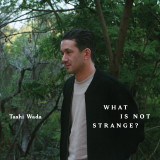
What Is Not Strange? is the first full-length album by Los Angeles-based composer Tashi Wada in over five years, comprising his most far-reaching and impassioned music to date. Written and recorded over a period that encompassed the death of his father and the birth of his daughter, the album sees Wada reflecting inward to explore broad narratives - being alive, mortality, finding one's place in the world - through new modes of ecstatic, song-based expression. While the denser forms, stark contrasts, and overt surreality may carry a different weight than Wada's earlier work, which elicited perceptual effects with minimal means, the heart of What Is Not Strange? is still in experimentation and unforeseen outcomes.
Legendary band SOFT, the driving force behind Kyoto's party scene and underground music culture, releases their new album "Passing Tone" from their home base "softribe" to commemorate their 30th anniversary!
This release marks the first time since the 2018 album "Tokinami" that Soft has released new music. It also comes on the heels of the 2021 vinyl reissue of their 2010 album "Tam (Message To The Sun)" on the labels 17853 Records (headed by CHEE CHIMIZU), TUFF VINYL, and Crosspoint (headed by J.A.K.A.M.).
Guest appearance by former member PRITTI. The album was created by the three founding members: guitarist SIMIZ, drummer PON2, double bassist UCON plus engineer and electronic musician KND, a mainstay of the Kyoto music scene.
Evoking the energy of a live performance, the music pulses with psychedelic soundscapes and dub influences. The 30th anniversary live shows in Osaka and Kyoto were met with resounding success, and the Asian tour followed suit.
Experience the enchanting sounds of music born from Japan.
text by Saito (Newtone Records)
“Home” is not always a literal place. Sometimes, “home” represents inner peace and simply learning to hold space for yourself. This is where Vacations lead singer and guitarist Campbell Burns has arrived as he and bandmates Jake Johnson, Nate Delizzotti, and Joseph Van Lier release their third LP, No Place Like Home. “I had this loose concept of No Place Like Home being an Americana-influenced album,” Campbell says of the album’s sonic inspirations. “I wanted to incorporate more pianos, acoustic guitars, Nashville tuning, and country-inspired lap steel, but then also bringing in drum machines and synths and finding a mix between the two.” Produced by Campbell and John Velasquez (Zella Day, Broods), No Place Like Home comprises 10 shimmering tracks brimming with indie-pop hooks and just a touch of bittersweet sensitivity. The new project follows an intense period of transformation for Campbell, who was forced to cancel all touring commitments due to COVID restrictions and subsequently came down with a severe bout of writer’s block. After seeking therapy, he was eventually diagnosed with Pure OCD, a subtype of Obsessive Compulsive Disorder. “Pure OCD is more mental compulsions rather than physical compulsions,” Campbell explains. “If I have an intrusive thought, I'm giving that thought belief and power over myself.” As the world began to open up, so did Campbell’s vibrant creative spirit. Vacations hit the road for the first time in two years, selling out The Fonda in LA and playing Austin City Limits Festival in Austin, experiences that partially inform No Place Like Home. First single and album opener “Next Exit” sparkles with danceable synth riffs and Campbell’s aching falsetto, all while setting the overall tone for what’s to come. “‘Next Exit’ is about living in this monotonous cycle,” Campbell reveals. “You realize that you need an out. You need to — metaphorically and literally — take the next exit out in order to break out of that cycle.” The singer mines his Pure OCD diagnosis on the pondering “Over You,” which thematically picks up where “Next Exit” drops off. Campbell remarks on how “it almost has this ownership over my thoughts and actions to the point where I'm stuck in these loops and rituals that are a direct result of having OCD.” On the Americana-inspired “Midwest,” which seamlessly blends pop electronics, drum machine, and ‘80s synth with poignant lap steel tones, the song remarks on the comedic nature of repeatedly entering into romantic relationships prior to going on tour — only to have them fizzle out upon returning. As the band releases No Place Like Home, Campbell is ironically just fine with not putting down physical roots just yet having recently made the move to LA for exploration, expanding “I needed to get overseas if I wanted to keep progressing — from a career standpoint, but also on a personal level.” The greater priority lies within building that sense of comfort within himself. In the meantime, millions of fans around the world are making a permanent home with Vacations.
The Kaiju Project is a Japanese inspired jazz group formed by the half Japanese-Austrian pianist Aseo Friesacher. Their initial idea was to bring old folk songs into a new modern context, but in addition to their compositions, this group has found their very own musical direction: a perfect blend of traditional Japanese music and meditative-creative jazz.
Aseo’s composition style is clearly rooted in Jazz, but with the use of traditional Japanese melodic elements and sounds, the music becomes very storytelling and gets a beautiful and mystic character. Also some famous soundtracks from the Ghibli movies and songs by the Japanese singer Hibari Misora, that Aseo has arranged for the band, are included in their repertoire.
The bandleader has had the vision for a long time to create this unique fusion of traditional Japanese music and Jazz in order to bring together the eastern and the western world. In fact, the meaning lies his name A-se-o, “亜為欧“: living for Asia and Europe.
The band went through a couple of changes in their formation but finally resulted in a dream team, featuring two Japanese musicians who bring the authentic sound to the band: Waka Otsu as the vocalist and Fuefuki Kana on Japanese flutes and silver flute. Furthermore there is the highly accomplished and respected ECM artist, drummer and percussionist Joost Lijbaart and the virtuosic and talented bassist Johannes Fend, who make the group complete. So far the Kaiju Project has toured in the Netherlands where most of the band members are based, they have performed in Germany and recorded their first album.
- A1: Happy (Feat Mark Foster)
- A2: Check The Technique (Feat Tony D, Jazzy Jeff, Agent 86)
- A3: 1975 (Feat Diagrams)
- B1: Still Here (Feat Gita Langley)
- B2: Travis
- B3: Dancer (Feat Mel Uye Parker)
- C1: The Ballad Of Roza Shanina (Feat Ed Harcourt)
- C2: Still Life Freefall ( Feat Kate Rogers)
- C3: A2B (Feat Mystro, Masta Ace And Pete Simpson)
- D1: Favourite Game (Feat Jake Emlyn)
- D2: Sweethome
- D3: Mercury Rising
repressed !
'Mercury Rising' is the third studio album to be released by Rae & Christian. The duo weave together exceptional musicianship paired with a British song writing sensibility and the finest elements of studio production. 'Mercury Rising' was created at producer/musician Steve Christian's studio in Yorkshire with additional recording at songwriter/vocalist/DJ Mark Rae's London base. In London a song writing bond was formed with Ed Harcourt and Gita Langley who make excellent contributions with vocals, songs, strings and keys. Sam Genders of Diagrams threads a story of redemption lost on the Ubahn on '1975', Kate Rogers is on imperious form and rising star Jake Emlyn unravels a whole new level of microphone skills on 'Favourite Game'.
The international guests include the one-and-only Jazzy Jeff and Australia's Agent 86 dealing out world class scratch treatments on 'Check The Technique' (Tony D's vocals taken from a session recorded at the birth of Grand Central Records), Brooklyn rapper Masta Ace and Mark Foster of Foster The People, a collaboration born from Mark's L.A. excursion.
'Mercury Rising' is the first new material in many years from R&C. Their 1998 Mercury Music Prize nominated debut 'Northern Sulphuric Soul' ("Vitally fresh and timelessly classic...deserving a place alongside Massive Attack's Blue Lines' Uncut) and 2002's 'Sleepwalking' ("Another triumph, brimming with soulful, languid grooves, deft samples and well-chosen guest singers' Q Magazine) were both released on their Grand Central Records label (Aim, Riton, Boca 45, Only Child), a defining imprint of the late 90s soul/funk/hip-hop/beats scene. Guest vocalists over the two albums included Bobby Womack, Texas, The Congos, The Pharcyde, The Jungle Brothes and Jeru The Damaja.
Veteran electrohead and former artist on the Rephlex Records roseter DMX Krew's Ed DMX takes the well-known story by Jorge Luis Borges of The Library of Babel, said to contain all the different languages of the earth. Some deep philosophical thought has gone into the album's concept, but we'll leave that to Ed to explain. Instead, we'll tell you that from beginning to end there's plenty of the kind of trademark 80s synth playfulness in evidence, with a generally more mellow and soundtrack-related rather than frenetic and dancefloor-filling vibe in evidence, even on faster tracks like 'The Combed Thunderclap'. Still, Ed knows what he's doing when it comes to this kind of leftfield electro gear, and it's a rewarding, never boring listen.
The Talented Italian Producer, Known for His Enigmatic Project Hill and Recognized for His Previous Ep Collaboration With the Detroit Legend Javonntte on Skylax Records, Is Making a Much-Anticipated Return Under His Real Name, Alessio Collina. an Ardent Aficionado of Authentic House Music, Collina, Hailing From Italy, Gifts Us a Remarkable Lesson in His Latest Offering, the "Pieces of Life Ep." Collina's Dedication to the Origins of House Music Is Evident Throughout This Ep, and It's a Refreshing Reminder of the Genre's Timeless Roots. Italy, a Country With a Deep Appreciation for House Music, Once Again Serves as the Source of Inspiration for This Artist. the "Pieces of Life Ep" Pays a Heartfelt Tribute to the High-Energy and Groove-Laden House Tunes of the 90s, Echoing the Sounds of Iconic Figures Like Dj Duke, Marshall Jefferson, and Labels Like Strictly Rhythm. With Each Track, Collina Effortlessly Transports Us Back to That Golden Era, Capturing the Very Essence and Spirit of That Unforgettable Time. the Ep Kicks Off With the Electrifying "All of That," an Absolute Masterstroke That Sets the Tone for What Follows. Its Pulsating Beats and Infectious Melodies Are Reminiscent of the Fervent Dance Floors of Yesteryears, Evoking a Sense of Nostalgia While Remaining Incredibly Fresh and Contemporary. the Ep's Three Other Titles, "Humble Groove," "Lost World," and "Mid Season," Continue to Captivate and Immerse Listeners in Collina's World of Evocative, Groove-Filled House Music. Each Track Showcases His Meticulous Attention to Detail and His Ability to Create an Authentic Atmosphere That's True to the Genre's Roots. Collina's "Pieces of Life Ep" Is More Than Just a Musical Collection; It's a Genuine Homage to the Spirited House Music of the 90s. His Dedication to Preserving the Essence of the Genre While Infusing It With His Unique Creativity Shines Through in Every Beat and melody.
This Ep Not Only Reinforces Italy's Profound Connection to the House Music Legacy but Also Solidifies Alessio Collina's Place Among Contemporary Artists Who Honor the Past While Paving the Way for the Future. as Skylax Records Prepares to Release This Exceptional 12-Inch, It's Clear That "Pieces of Life" Is a Treasure Trove for Any House Music Enthusiast, Inviting Them to Rediscover the Magic of the 90s With a Fresh Perspective....
'When Can' is a journey through the realms of musical serendipity, an ode to the unexpected twists of collaborative intuition. Conceived in the spring of 2012, this masterpiece is the culmination of a decade-long friendship between Reimer Eising aka Kettel, and Lennard van der Last aka Secede, two of the most talented electronic music producers from The Netherlands.
'When Can' is not just a collection of songs; it's a seamless continuum where each track breathes life into the next. As the listener delves into the sonic story, the music leads to uncharted territories, incorporating ambient and cinematic sounds and blending them with reminiscences from Renaissance to Baroque music. Far from a preconceived plan, the album organically unfolded, capturing the essence of the musical exploration from these two brilliant minds.
More than a decade after its birth, Lapsus is proud to release 'When Can' for the first time on vinyl. For this meticulously curated deluxe edition all the tracks have been remastered, and the artwork has been updated by Basora studio. And there's much more inside: two lithographic prints featuring original paintings by Jeroen Advocaat plus an extra 10" including the unreleased tracks 'Zipvanes' –a 10 minutes alternative cut of 'Ringvanes'– and 'Spoonful'.
- A1: Strange Timez (Feat Robert Smith)
- A2: The Valley Of The Pagans (Feat Beck)
- A3: The Lost Chord (Feat Leee John)
- A4: Pac-Man (Feat Schoolboy Q)
- A5: Chalk Tablet Towers (Feat St Vincent)
- A6: The Pink Phantom (Feat Elton John & 6Lack)
- B1: Aries (Feat Peter Hook & Georgia)
- B2: Friday 13Th (Feat Octavian)
- B3: Dead Butterflies (Feat Kano & Roxani Arias)
- B4: Desole (Feat Fatoumata Diawara)
- B5: Momentary Bliss (Feat Slowthai & Slaves)
repressed !
Gorillaz started the year with Episode 1 - ‘Momentary Bliss ft. slowthai and Slaves’ - of Song Machine, a whole new concept from one of the most innovative bands around. Now, six episodes in, Noodle, 2D, Murdoc and Russel have visited Morocco and Paris, London and Lake Como, as well as travelling all the way to the moon, and Gorillaz is ready to bring you the full collection titled Song Machine: Season One - Strange Timez, out on 23rd October 2020.
Song Machine is the ongoing and ever-evolving process which has seen Gorillaz joined by an expanding roster of collaborators captured live in Kong Studios and beyond. The result is an expansive collection of tracks embracing a myriad of sounds, styles, genres and attitudes from a breath-taking line-up of guest artists including Beck, Elton John, Fatoumata Diawara, Georgia, Kano, Leee John, Octavian, Peter Hook, Robert Smith, Roxani Arias, ScHoolboy Q, Slaves, Slowthai, St Vincent and 6LACK.
To date the project has seen over 100million streams on all tracks already and the band’s biggest period of sustained growth across both listenership and fanbase growth. All this before the album has even been announced!
Virtual band Gorillaz is singer 2D, bassist Murdoc Niccals, guitarist Noodle and drummer Russel Hobbs. Created by Damon Albarn and Jamie Hewlett, their acclaimed eponymous debut album was released in 2001. The BRIT and Grammy Award winning band’s subsequent albums are Demon Days (2005), Plastic Beach (2010), The Fall (2011), Humanz (2017) and The Now Now (2018). A truly global phenomenon, Gorillaz have achieved success in entirely ground-breaking ways, touring the world from San Diego to Syria, winning numerous awards including the coveted Jim Henson Creativity Honor.
The band are recognised by The Guinness Book Of World Records as the planet’s Most Successful Virtual Act.
j 10. Désolé (feat. Fatoumata Diawara) Extended Version
Celebrated producer and musician Danger Mouse and prodigiously talented New York rapper Jemini are gearing up to release their long delayed collaborative album, Born Again Remarkably this soul and funk infused hip-hop tour de force arrives two decades after its creation and the duo's debut LP, Ghetto Pop Life which celebrates its 20th anniversary this year. Enthused by the response to Ghetto Pop Life, soon after Danger Mouse and Jemini began to tour and to write and record Born Again. Finally, having been recorded two decades ago and indefinitely shelved until now, Born Again will finally be released to coincide with the twentieth anniversary of Ghetto Pop Life. The previously unheard record retains many of the elements of Danger Mouse and Jemini's debut; the fun- loving, shit- talking innocence, but also adopts a noticeably more introspective and confessional tone. This time, in addition to lighthearted topics such as being an incredible artist (Knuckle Sandwich II, Brooklyn Basquiat), living large and being a magnet for attention (Me), Jemini also delivers highly- personal and occasionally devastating lyrics about missed opportunities and redemption (All I, Born Again), his time in prison (Locked Up) and complicated relationship with his father (Dear Poppa). His effortless free flowing cadence and indelible sing-song delivery elevate each track with a melodic infectiousness whilst Danger Mouse exhibits an affinity for resonant instrumentals built from sampled organ, vibraphone, or guitar loops and infused with his trademark minor key magic. The result is a classic, timeless hiphop record.
Repress!
Having initially forecast his production energy into his own Tartan imprint, Wallace’s music quickly developed a cultish following among record collectors and influential DJs including Gilles Peterson, Optimo, Hunee and Ryan Elliott. Another supporter has been CWPT’s founder Palms Trax, who, following releases on Studio Barnhus and Rhythm Section, snatches four highly sought-after tracks for the seventh release on the label, each showcasing Wallace’s inimitable and enviable skills as an engineer and a willingness to stoke the sort of organic euphoria that DJs dream of igniting.
Amongst the curios, rarities and other finds that have peppered Palms Trax’s sets this past summer, it’s title track ‘Willow’ that has levitated entire club and festival dance floors like few others. Escalating from a disco percussion loop, ‘Willow’ soon brings on high-energy melodies and a captivating sense of something more ethereal, seemingly reinvigorating old tricks with exciting new flavours: if you only raise your hands to one climactic snare roll this year, we ask you to make it this one.
This refreshing intersection between flourish and function is felt even more heavily on ‘Breathe’, a contemporary electronic battle weapon whose breaks-and-bassline arrangement fluctuates between weightless wonder and heavy business. Frontloaded with the detail and atmosphere of a vintage Chems or Leftfield cut, 'Breathe' exhales then explodes all the skill and reverie of the most memorable 90s techno.
Wallace appears to dip into the chillout room for the swampy rhythm of ‘Masada’, before proving his slow-motion mettle, a Sergeant Peppering of psychedelia creating true hedonistic density and groove. In conclusion and on the contrary, ‘River Dancers’ maintains subtle hypnosis at a similar pace with much less, employing simple timbres and a stuttering, innocent vocal inflection to conjure wide-eyed whimsy far downstream from the EP’s earlier, maximal wonders.
If you can judge an artist's quality by the company they keep, then FaltyDL is up there with the best of them. The label history of the producer known to his friends as Drew Lustman reads like a "who's who" of 21st century electronic music imprints - Ninja Tune, Unknown to the Unknown, Planet Mu, Studio Barnhus, the list goes on.
WithIn the Wake of Wolves, we can now add Central Processing Unit to this illustrious roster. The Sheffield label joins the party at a notable juncture - while FaltyDL has kept up an impressive clip of releases throughout his career,In the Wake of Wolvesis both the NYC-based producer's first LP for two years and his first full-length release away from his own Blueberry Records for almost a decade.
In the Wake of Wolvesproves to be both a great match for CPU and also further evidence of the label's burgeoning sonic palette. While CPU has built its reputation on top quality electro joints, recent releases have delivered adventurous electronica experiments (Proswell'sPeople Are Giving And Receiving Thanks At Incredible Speeds), hard-wired breakbeat techno (Baby T'sI Against I) and golden-age synth explorations (twenty-fifth anniversary reissues of Bochum Welt'sDesktop RoboticsandFeelings on a Screen, both of which first emerged via the legendary Rephlex Records).In the Wake of Wolvestakes things further still - this is a brilliantly genre-voracious record, one which marries the rhythmic cut-and-thrust that we have long known FaltyDL for with all manner of adventurous stylistic choices.
Those familiar with the FaltyDL experience will recognise the trademark blend of synthetic grit and harmonious softness in album opener 'I Need You'. This could pass for Four Tet or even Hannah Diamond at points, the steady build of pulsing synths and looped vocals recalling a more mysterious version of the PC Music sound. 'I Need You' stands shoulder-to-shoulder with any of FaltyDL's other great atmospheric album openers - no small feat given the competition. 'Further', the following number, is yin to 'I Need You's yang. This is a pulsating track which gleefully skitters between machine-funk, tubing darkside bass and breakcore-adjacent drum programming, all of which is peppered with some genuinely beautiful work in the higher synths.
'Further' sets the scene for several of the more club-facing cuts here. 'Minds Protection' similarly features all manner of strange percussive sounds to surprise the ear, and it also boasts a thrilling mid-section in which the bottom falls out the track to incorporate a short snippet of blown-out junglism. With its tunnelling low-end and clattering drums, 'Full Spectrum' kicks off a delightful run of grime-influenced joints which take cues from Mr. Mitch, Logos and many of those other producers who took the Eski sound to exciting new places in the 2010s. 'Forget Me Not', the album's longest track which is placed three spots from the end, feels like the record's climactic point - a pitter-patter post-house joint that has a hint of Caribou in its DNA, it'll take the clubs by storm.
But as much as FaltyDL may consistently bring the heat in terms of the beat programming, the thing which has long marked Lustman out as a special talent is the musicality of his compositions. No matter how much drums clatter or bass bangs, FaltyDL always hooks the ear back in with a sonorous synth or pleasing nugget of melody. Nowhere is this more apparent than onIn the Wake of Wolves' more weightless numbers, each startling in their prettiness. 'Half Spectrum' is a new-era beat track packed full of ear candy; the keening keys of 'GasGas' are potent with feeling; and on the album's closer, the evocatively-titled 'Mila Stans In A Meadow For The First Time Eating Strawberries', we get a gorgeous synth vignette that joins the dots between the modern mastery of Yung Sherman and the most emotionally affecting moments of Aphex's Twin's catalogue.
At once wistful and hopeful, archival and futuristic, FaltyDL's brilliantly unpredictableIn the Wake of Wolvesis a feather in the cap for both this seasoned producer and the Central Processing Unit label.
RIYL: AFX, Bochum Welt, Mark Fell, Mrs Jynx, Boards of Canada
"Espontaneamente se Tenta: Aventuras Sonoras de Djalma Corrêa is an album of deeply exploratory pieces by legendary percussionist and composer Djalma Corrêa. This double-LP set features previously unreleased recordings that cover a wide range of sonic experiments, revealing an unknown side of the prolific and groundbreaking Brazilian artist. Most of the tracks on this album were digitized for the first time – directly from the original tapes – and were compiled in collaboration with Corrêa just before he passed.
The result is a wild and unsettling collage that shows us just how original and intense Corrêa could be: from the unorthodox electroacoustic piece Evolução (Para Fita e Filme), which channels ancestral African inspirations to create a sonic cosmogonical narrative, to the proto-mixtape Exemplo de Sintetizadores, in which he transitions from transcendental drones to astral cha-cha-chas.
While the compilation might seem disjointed at first listen, it is in fact the most accurate translation or representation of his central concept: spontaneous music. Djalma's relationship with sound was always guided by his fearless approach to listening, and by his audacious and dynamic interaction with both musicians and equipment, which enabled him to work across a wide array of genres: from jazz to completely abstract music, always through a personal DIY ethic.
Corrêa developed a strong bond with experimentalist and inventor Walter Smetak, with whom he shared a studio during his formative years at Universidade Federal da Bahia. Suite Contagotas, featured in this collection, is no less than a sonic materialization of that bond: an experiment revolving around dripping water and its randomness – a tentative exploration of the ideas and possibilities envisioned by Smetak for his audacious, albeit unrealized, Estúdio OVO.
Djalma, however, is best known for his studio work in historical albums, including many by Caetano Veloso, Gilberto Gil and Jorge Ben, and for his own polyrhythmic opus Baiafro. The last track is an early recording called Bossa 2000 dC, first performed by Djalma at the 1964 Nós, Por Exemplo concert, an event which is often cited as marking the beginning of the Tropicalia movement. At the time, he was the only artist in the lineup using electronic devices to create sounds, e.g. medical oscillators and contact mics to augment his percussive palette.
The artwork is an amalgamation of material found in the Djalma Corrêa Archive (currently managed by his son Caetano Corrêa) and other material created during the period in which the record was being put together. The intention is to guide the listeners through this possibly tempestuous soundscape, giving them additional resources so that they may draw their own meanings and make their own sense of this extremely immersive and original experience – which is like nothing we've ever heard before."
A bit more than half a decade on from his widely acclaimed debut Vanishing Points from 2018, Swiss guitarist, composer, and improv musician Manuel Troller releases his new record Halcyon Future. A rhythmically dense and ambiguous, yet joyful ride for unstable times, a plea for warmth and hopeful resistance.
Troller’s mode of incorporating, zooming in, and expanding on small elements from improvised sessions creates a multilayered work of driving rhythms and abstract, vibrating textures. Opening with Halcyon Future I’s distinctive open pulse, this first piece guides us through subtle harmonic shifts that are almost unrecognizable as they take place over extended time, overlapping and creating a sense of ambiguity until the piece reaches an almost optimistic level with Mario Hänni’s unexpected introduction of driving acoustic drums. Relentlessly and with increasing excitement, heavy electronic 80s bass drums and an armada of layered hi-hats push them on, leading to the all-incorporating melodic finale.
The two long pieces Halcyon Future I and Halcyon Future II focus on forward momentum. In between them stands DNA, a purposely directionless contemplation on emotion as such. It is raw, naked, and confrontational, with a tender and subtly changing chord progression creating intimacy and proximity, abstraction and warmth, like a beautifully vibrant hologram for the listener to walk around in.
The B-side with its 20-minute Halcyon Future II features playful futuristic guitars, enhancing and challenging the stereo image that Troller is already well-known for. As it’s given time to develop and take root, the ever-varying guitar interactions densify and the staccato patterns jump out of the speakers with joy, creating excitement and building momentum. Compared to Side A, things turn to a slightly more complex rhythmical, melodic, and harmonic feel here. There are easy references, such as Manuel Göttsching’s E2-E4 or Pat Metheny performing Steve Reich’s Electric Counterpoint, but Troller goes a different and very much more concrete way. Although the piece has been recorded in various places and through a long process of overdubbing, there is an astonishingly strong live feel to it, from beginning to the end, from the slow rise to the full spectrum and the almost krautrock-like finale. Improvisers Hans Koch on soprano saxophone and Michael Flury on heavily fuzzed trombone join in, while Troller and Mario Hänni on many guitars, bass, drum machines, and acoustic drums provide a joyous driving entity, not giving up until it all breaks down again. There is overkill and brute force, though never without depth and a vision of future.
In the musical scope of Halcyon Future, there is no need for an absolute definition of things. A continuously changing interpretation of repetitive and variable elements fading in and out of focus tells a story of an excited sense of acceptance. Feelings of transcendence stem from Troller’s layering of constantly shifting rhythmic structures with unforeseen improvised harmonic changes. Drum machine parts overlayed with acoustic drums shift between musical modes, anchoring the album on the verge of a jazz-influenced, motorik, post-ECM balearic plateau. Abstract textural elements gently swirl around and behind all that is rhythm, providing a submissive counterpoint. As with much of Troller’s work, Halcyon Future is an album that unfolds slowly, revealing more of its richness, detail, and subtle beauty at each listen.
Halcyon Future is a joint release by three:four records and meakusma.