“In the afternoon we performed in a rather austere theatre in East Berlin. Then I remember we crossed Checkpoint Charlie that evening to play in a club in West Berlin. The atmosphere was completely different. I felt as though we were living in a black and white spy movie.” Nicolas Fiszman recalls that chaotic day of 13 June 1982. Two outstanding guitarists, Philip Catherine and Nicolas Fiszman, who at the time was only seventeen years old, were taken from one side of Berlin to the other in pouring rain to perform to unlikely audiences. At both concerts, they played the same programme of seven pieces written by Philip, with the exception of “Crystal Bells”, composed by Charlie Mariano. The pair were not master and student. Rather, Philip remembers Nicolas like a young brother he might have taken to the beach. After the 1960s, Philip became a major figure on the jazz scene, working with the greatest: Charles Mingus, Chet Baker, Stéphane Grapelli, Dexter Gordon, to name only a few. Nicolas has played with Charles Aznavour, Vanessa Paradis, Francis Cabrel and Eric Serra, and travels the world with Sting.
On that gloomy afternoon, the two guitarists, alone on stage, decided to brighten up the morosity that reigned. The pieces they played bore titles such as “Janet”, “Babel” and “Petit Nicolas”. It is hard to believe that this varied, well-constructed, polyphonic music was not entirely written down on paper. Philip says, “Nothing is written from beginning to end. I compose the themes and some harmonic bridges. Then we have a chord chart … and that’s it.” The foundations are written; inspiration, taste, fantasy and friendship do the rest. We feel as though we are taking a nonchalant walk through Rio or Miami. The concert is punctuated by thunderous applause.
For these brief minutes in that year 1982, the East Berliners were able to fly over their tightly closed borders.
We are privileged to have unearthed this unique concert where two outstanding artists bring together two cultures to create an intense blaze of happiness.
Philip Catherine, Guitar
Nicolas Fiszman, Guitar & Bass
With the kind authorization of the Artists
Repress! Little Barrie And Malcolm Catto Team Up For Seven Tracks Of Breaks And Sci-Fi Fuzz For Maverick Producer Madlib's Label
Quatermass Seven, the meeting of minds between guitarist Barrie Cadogan, bassist Lewis Wharton and drummer Malcolm Catto represents a re-birth of sorts for Little Barrie, with these their first recordings since 2017’s Death Express and the untimely passing of their gifted drummer and friend Virgil Howe. As Lewis explains, the sessions played a part in the healing process, a way to re-connect through music without any intentions to necessarily come away with a finished record. “It was good to get in the studio again after such a long break especially as we didn’t go in with any agenda or expectations,” he explains. There was no preconceptions that we would make a new Little Barrie record, it was just an opportunity to work on some things Barrie had written for fun with zero pressure.” With most tracks recorded live with minimal overdubs, and produced by Malcolm at his Quatermass studios, The Heliocentrics’ main man brings new flavour to the band’s rhythm section by blending his power behind the drum kit and his expansive skills behind the mixing desk to take Little Barrie’s music forward into new territories. Recorded on Catto’s treasure trove of analogue gear, and mastered onto ¼” tape, the overall effect is guitar, bass and drums finding a sweet spot where genres collide, delivering a record that takes the influences of the past and pushes them towards somewhere more contemporary. “I definitely hear in Barrie’s songs a lot of common musical ground’” explains Malcolm. “It felt like a great thing to do, work with Malcolm while we’re figuring out what we wanna do,” Barrie concludes, “let’s just go in and do some playing and see what happens, and we came out with more than we ever intended.” Quatermass Seven delivers a dark, deep and expansive set of grooves, layered with frazzled and flawless guitar and flowing melodies, as well as pointing toward a future of exciting new musical opportunities. “Still here, so fine, just a little darker state of mind” sings Cadogan on ‘Steel Drum’, words which sum up hope in times of uncertainty, whilst unintentionally offering a perfect description of Quartermass Seven.
Label co-owner A Virgo On The Moon joins forces again, after their Y7 with Paolo Mosca for the opening track which is a dreamy but powerful club cut. The second track marks the debut of the Ukrainian artist Kebab Traume and it is a fast tech house tool with clear Akufen - ish sounds.
The B-side opener is another strong club tool, this time more with that South American vibe provided by Peruvian Mario Liberti. The closing track is from matteo. who's back on THREADS after his solo EP, this time with Brazilian artist Lourene, and shows his dance floor side which we definitely like!
The release is dedicated to the loving memory of Andrea.
out of Stock
Last delivered 2 years ago available to reorder, subject to availability
Especially in this time of isolation we need to remind ourselves of the importance of art, just how magical a medium sound is to express, to raise and answer question marks, to open and mend the soul... it's the most universally speaking of all languages as it knows no borders." At a time of global separation, Erased Tapes founder and sonic explorer Robert Raths stitched together a project putting what is most important at the forefront - connection. This collection of works by undisclosed artists from the roster gives space and time to appreciate art at its most honest. By shedding the information noise usually attached to release cycles and by bringing music back to the magic of sound, we're presented with an opportunity for exploration when we need it most. Robert spoke to Mary Anne Hobbs of BBC 6Music about how releasing music without revealing its origin through the 20・・ï¼ìï¼ì0 morse code series enabled him to share what him and the artists have been working on in real-time as opposed to the usual delays that come with releasing music. "All the information, all that noise... As much as it can help give context, it also takes something away. It tends to cloud your senses and take away from the magic of when you first hear something that's completely unknown to your ears. How wonderful a sensation it is to just listen and let the music speak for itself without prejudice or the
out of Stock
Last delivered 3 years ago available to reorder, subject to availability
Think big, girl, like a king; think kingsize. Jenny Hval's new record opens with a quote from the Danish poet Mette Moestrup, and continues towards the abyss. Apocalypse, girl is a hallucinatory narrative that exists somewhere between fiction and reality, a post-op fever dream, a colourful timelapse of death and rebirth, close-ups of impossible bodies - all told through the language of transgressive pop music.
out of Stock
Last delivered 3 years ago available to reorder, subject to availability
Warp have announced a vinyl reissue of The Other People Place's Lifestyles Of The Laptop Café.
The much sought-after LP from Drexciya's James Stinson has been hard to come by for many years, and is rightly considered to be one of the very best electronic albums of all time.
VINYL COLOUR IS SNOW WHITE! As a founding member of Bauhaus, David J helped spearhead the post-punk scene of the early ‘80’s with a string of innovative work, including Bauhaus’ defining moment, a bona fide classic and feasibly the pinnacle of the entire goth scene: the nine minute plus epic slab of industrial dub “Bela Lugosi’s Dead,” featuring David’s lyrics and bass guitar work. Bauhaus propelled to the upper echelons of the UK charts before reaching their zenith in the summer of ’83 and imploding – shattering into fragments of individual talent. This implosion gave rise to David's wide-ranging solo career. The first of Bauhaus’ members to actively release music outside of the band, David went on to put out solo work and collaborations with various authors, poets and infamous indies such as 4AD. In 1985, David regrouped with two former Bauhaus members to form the hugely successful Love and Rockets. Since then, David has continued to produce his trademark brand of deeply heartfelt and darkly sophisticated music. Highlights of What The Patrons Heard include a timely rendition of Neil Young’s “Vampire Blues” delivered with penetrating intensity; “Gimme Some Truth,” which brings new urgency and potency to the John Lennon classic; and “Lay Over And Lay,” which delivers folk-punk that only musicians from the British Isles can get right.
Producer and multi-instrumentalist Ben Marc, who's emerged as a key figure of London's cutting edge jazz scene, has just announced his debut full length, a follow up to last September's widely acclaimed Breathe Suite EP (heralded by NPR, Pitchfork, The Wire, The Guardian, and more)
Glass Effect is an assured and accomplished 13-track realization of a singular vision that unifies a multitudinous profusion of influences (free-jazz, broken beat, hip-hop, electronica and beyond) into a sublime whole, underscoring the evolution of his quest for a distinctive sound: lambent, low-key, and yet dizzyingly intricate.
It's a rare talent that can link Radiohead's Jonny Greenwood, Ethio-jazz pioneer Mulatu Astatke, Afrofuturists Sun Ra Arkestra, and grime legend Dizzee Rascal, but Marc has long blurred musical worlds and criss-crossed boundaries. One of the reasons that he started writing Glass Effect, says Marc, was going to nightclubs in Ibiza and experiencing the heady sun- dappled euphoria of a summery dancefloor, as well as the beat-driven production of artists like Four Tet, Bonobo, Machinedrum, DJ Shadow, and Madlib.
Most audiophiles know Alan Parsons Project's I Robot by heart. Engineered by Parsons after he performed the same duties on Pink Floyd's Dark Side of the Moon, the 1977 record reigns as a disc whose taut bass, crisp highs, clean production, and seemingly limitless dynamic range are matched only by the sensational prog-rock fare helmed by the keyboardist and his creative partner, Eric Woolfson. Not surprisingly, it's been issued myriad times. Can it be improved? Relish Mobile Fidelity's stupendous UltraDisc One-Step 180g 33RPM box set and the question becomes moot.
Mastered from the original master tapes and pressed at RTI on MoFi SuperVinyl, I Robot comes to life with reference-setting realism on this numbered, limited-edition reissue. Boasting immaculate highs and lows, generous spaciousness, and see-through transparency that takes you into the studio with Parsons and Woolfson at Abbey Road, this definitive edition is designed to demonstrate the full-range capabilities of the world's best stereo systems while offering listeners the convenience of having all the music on one LP.
Featuring a nearly inaudible noise floor, this transcendent UD1S edition functions as a repeat invitation to savor reference-grade soundstages, immersive smoothness, sought-after instrumental separation, three-dimensional imaging, and consummate tonal balances. Able to be played back at high volumes without compromise or fatigue, it is a demonstration record for the ages – the likes of which are no longer being made. This is the very reason you own and invest in high-end audio gear.
The special characteristics of this UD1S version extend to the premium packaging. Housed in an elegant slipcase, the reissue features special foil-stamped jackets and faithful-to-the-original graphics. Aurally and visually, it is made for discerning listeners who prize sound quality and production, and who desire to fully immerse themselves in everything about this conceptual landmark. The Alan Parsons Project's most famous record deserves nothing less.
Inspired by and loosely based around the Isaac Asimov stories of the same name, I Robot delves into themes of artificial intelligence and technological dominance that make the record extremely relevant in the 21st century. Indeed, Parsons and Woolfson's pinnacle creation dovetailed with the ascendency of Star Wars, which itself is experiencing a rebirth in an age of self-driving cars, smart devices, and mindless automation. Lyrically, songs such as "The Voice" call into question human behavior – and their relationship to increasing robotic supremacy – in everyday life. Parsons and Woolfson reflect the associated paranoia, dichotomy, and transformation via shifting sci-fi arrangements steeped in drama and moodiness.
The absorbing tunes on I Robot also continue to fascinate due to their perfectionism and innovation. Borrowing from Pink Floyd's strategies, Parsons and Woolfson utilize a looped sequence on the title track to create new downbeats. "Some Other Time" employs two different lead vocalists and yet gives the illusion that only one is involved. Captivating strings, a piccolo trumpet, and bona fide pipe organ grace "Don't Let It Show." The origins of "Nucleus" stem from a unique analog keyboard concoction dubbed "the Projectron," devised by Parsons and electronic engineer Keith Johnson. Andrew Powell's orchestral and choral arrangements top it all off, with "Total Eclipse" arriving as a frightening track that presages the climactic "Genesis Ch. 1 V. 32."
Does man or machine win in the end? Decide as you get lost in Mobile Fidelity's UltraDisc 180g 33RPM LP pressing. Secure your numbered copy today!
More About Mobile Fidelity UltraDisc One-Step and Why It Is Superior
Mobile Fidelity Sound Lab's UltraDisc One-Step (UD1S) technique bypasses generational losses inherent to the traditional three-step plating process by removing two steps: the production of father and mother plates, which are created to yield numerous stampers from each lacquer that is cut. For UD1S plating, stampers (also called "converts") are made directly from the lacquers. Since each lacquer yields only one stamper, multiple lacquers need to be cut. Mobile Fidelity's UD1S process produces a final LP with the lowest-possible noise floor. The removal of two steps of the plating process also reveals musical details and dynamics that would otherwise be lost due to the standard multi-step process. With UD1S, every aspect of vinyl production is optimized to produce the best-sounding vinyl album available today.
MoFi SuperVinyl
Developed by NEOTECH and RTI, MoFi SuperVinyl is the most exacting-to-specification vinyl compound ever devised. Analogue lovers have never seen (or heard) anything like it. Extraordinarily expensive and extremely painstaking to produce, the special proprietary compound addresses two specific areas of improvement: noise floor reduction and enhanced groove definition. The vinyl composition features a new carbonless dye (hold the disc up to the light and see) and produces the world's quietest surfaces. This high-definition formula also allows for the creation of cleaner grooves that are indistinguishable from the original lacquer. MoFi SuperVinyl provides the closest approximation of what the label's engineers hear in the mastering lab.
Imagine the Buzzcocks with Syd Barrett as the singer!" THE BACHELOR PAD : five lysergically-enhanced heads from Strathbungo, Glasgow. Psychedelic punks born into, but delightfully out of step with the UK indie fanzine culture of the time. Flashes of red and purple... Perfect pop buried amidst a nuclear maelstrom of noise and excitement. During their brief existence they burned bright, squeezing out an album, 5 singles and a flexi-disc, with the cream of the crop being served up on this career spanning compilation. Gatefold sleeve, color vinyl. "...amid the sonic bedlam, they write the sweetest melodies, they've got the most agreeable harmonies.
It's all about extremes: "Do It For Fun" is the noise your brain makes when everything you've taken comes on top at once; "Tumble And Fall" is as cute as a squirrel's nut, "The Coroner's Wife" is.... well, answers on a postcard, please." Alexis Petridis
..."An alternate universe where Brian Eno produced "Rumours" and Alex Chilton wrote songs with Blondie..." San Francisco 5 piece LATITUDE sophomore album "Mystic Hotline" builds on the foundations of their acclaimed 2017 Debut with a triumphant foray into 21st century power pop. Centered around the dazzling vocal performance of Amy Fowler, tight band arrangements and accomplished delivery, the 10 tracks crackle with proficiency and elan. ..."Effervescent power pop bliss with infectious melodies, jangly guitars, sparkling synths, and more hooks than your local bait & tackle...." Although often drawing comparisons to such pop heavyweights as Blondie, The Nerves, Nick Lowe, and The Pretenders LATITUDE are far from revivalists, as this album testifies. "Mystic Hotline" reflects the present darker mood of the country, veering from carefree 60s/70s pop into more angsty 80s territory. That sentiment is evident in "Damage Control", a sonic bristling at a grotesque new Trump reality. "Rising" testifies to the senselessness of the Ghost Ship fire in Oakland, and the media blame game that followed. Vertical Highway is a deceptively happy ditty about death. Those are counterbalanced by songs like Thursday Is The New Sunday's praise for lazy love and I Love The Radio, a tribute to the many talented female musicians in the Bay Area.
LIMITED-EDITION METALLIC FALCON COLOR VINYL VERSION - INDIES ONLY
There is a moment near the top of jaimie branch's FLY or DIE LIVE, the new album recorded by the trumpeter's quartet at in Zurich, Switzerland on January 23rd, 2020, which feels like it bears the weight of both that specific pocket of time, and a prophecy for all that was soon to come. branch and her Fly or Die crew - cellist Lester St. Louis, bassist Jason Ajemian, and drummer Chad Taylor - had just kicked off the concert at Moods, with the opening tracks off their then-new studio album FLY or DIE II: Bird Dogs of Paradise, the second of which, "Prayer for Amerikkka" is among the best political songs written during the Tr*mp Era, and when the moment in question pops off.
The soundtrack to Stanley Kubrick’s FULL METAL JACKET is an even split of memorable needle drops from artists such as The Dixie Cups, Nancy Sinatra, and The Trashmen, and an intense, moody score by Abigail Mead (actually Kubrick’s daughter Vivian under her preferred composer credit). Mead’s work delivers huge, haunting swathes of metallic drones and atmosphere, giving way to punishing rhythmic drums that sound like explosions, helicopters, and warfare. It’s a remarkable piece of music that sounds years ahead of its time.
Over the last decade-and-a-half, C Joynes has ploughed a singular furrow through solo guitar, with a body of work incorporating English folk-tunes alongside North & West African music, and lifting proto-minimalist and improvised techniques from the European classical and avant-garde traditions.
His new release, ‘Poor Boy On The Wire’, is his first full album dedicated wholly to the electric guitar. Through a typically wide-ranging set, Joynes exploits the instrument’s potential by placing intricate parlour music alongside overdriven garage blues throw-downs, wiry electric folk and the brittle ringing tones of free improvisation. However, these explorations of the tones and timbres of close-mic’d guitars and amplification retain an overall coherence and unity through the deliberate use of a limited palette of budget instruments and vintage equipment.
With ‘Poor Boy On The Wire’, Joynes has released 9 albums to date, including ‘The Borametz Tree’ (2019), recorded with long-term fellow travellers Dead Rat Orchestra, and ‘The Wild Wild Berry’, a collaboration with singer Stephanie Hladowski (MOJO Top 5 Folk Albums 2012, fROOTS Editors Choice Album Of The Year 2012). He has played extensively across the UK, Europe and the USA, sharing bills with performers including: Shirley Collins, Martin Carthy, A Hawk And A Hacksaw, Marc Ribot, Alasdair Roberts, Richard Dawson, Jack Rose, Josephine Foster, Sir Richard Bishop, Six Organs Of Admittance and 75 Dollar Bill.
“As much Conlon Nancarrow and Ali Farka Toure as Blind Lemon Jefferson, the compositional mind at work here can take apparently disparate threads of modernism and ethnic tradition and treat them as though they were all archaic blues styles learnt from dusty 78s.”
BRUCE RUSSELL, THE WIRE
“An inheritor to Davy Graham; a lone operator prone to unexpected collaborations, with a repertoire that crosses continents and timezones with consummate ease, and dashed off with a phenomenal, yet lightly applied technique.”
ROB YOUNG, THE WIRE
“His epigrammatic re-castings and re-readings of widely-travelled folk melodies and rhythms from a variety of traditions suggest shared memories that might be intensely universal while seeming strangely out of reach.”
KEVIN MACNEIL BROWN, DUSTED MAGAZINE
Forte is proud to present these fantastic reissues on the Aarght label from one of Australia's greatest rock & roll bands, the Cosmic Psychos.
The band debuted on wax almost 30 years ago and since then have become an Aussie punk/pub rock institution, touring the globe and influencing a generation of Seattle musicians (Mudhoney, the Melvins and Pearl Jam among them) in the process. On top of that there's the recently released full-length documentary on the band, Blokes You Can Trust, which is doing the rounds in cinemas around Australia and the US, a US tour in September and now these! 2013 is the Year Of The Cosmic Psycho.
Let's start with 1985's Down On The Farm mini-LP. This is the record which made the original splash back in the day and hasn't been in print on vinyl anywhere since that time. Featuring original guitarist Peter 'Dirty' Jones on wah-wah guitar, it's an absolute classic of heavy-duty punk/grunge. The vinyl edition comes with a download card.
The self-titled LP from 1987 is another classic with the original line-up. The download card for the vinyl edition comes with two bonus tracks - outtakes from the same recording session - and the CD also contains the two bonus tracks PLUS the entire Down On The Farm mini-LP. 19 songs in total.
1989's Go The Hack was Dirty's last foray with the band and featured the killer single, 'Lost Cause'. The LP edition comes with a download card.
All of these classic '80s recordings by the Psychos have been out of print since the 20th century. With the band's fortunes and notoriety in the upswing this year, expect some big interest in these long-unavailable quality reissues. Blokes you can trust, indeed.
Forte is proud to present these fantastic reissues on the Aarght label from one of Australia's greatest rock & roll bands, the Cosmic Psychos.
The band debuted on wax almost 30 years ago and since then have become an Aussie punk/pub rock institution, touring the globe and influencing a generation of Seattle musicians (Mudhoney, the Melvins and Pearl Jam among them) in the process. On top of that there's the recently released full-length documentary on the band, Blokes You Can Trust, which is doing the rounds in cinemas around Australia and the US, a US tour in September and now these! 2013 is the Year Of The Cosmic Psycho.
Let's start with 1985's Down On The Farm mini-LP. This is the record which made the original splash back in the day and hasn't been in print on vinyl anywhere since that time. Featuring original guitarist Peter 'Dirty' Jones on wah-wah guitar, it's an absolute classic of heavy-duty punk/grunge. The vinyl edition comes with a download card.
The self-titled LP from 1987 is another classic with the original line-up. The download card for the vinyl edition comes with two bonus tracks - outtakes from the same recording session - and the CD also contains the two bonus tracks PLUS the entire Down On The Farm mini-LP. 19 songs in total.
1989's Go The Hack was Dirty's last foray with the band and featured the killer single, 'Lost Cause'. The LP edition comes with a download card.
All of these classic '80s recordings by the Psychos have been out of print since the 20th century. With the band's fortunes and notoriety in the upswing this year, expect some big interest in these long-unavailable quality reissues. Blokes you can trust, indeed.
Forte is proud to present these fantastic reissues on the Aarght label from one of Australia's greatest rock & roll bands, the Cosmic Psychos.
The band debuted on wax almost 30 years ago and since then have become an Aussie punk/pub rock institution, touring the globe and influencing a generation of Seattle musicians (Mudhoney, the Melvins and Pearl Jam among them) in the process. On top of that there's the recently released full-length documentary on the band, Blokes You Can Trust, which is doing the rounds in cinemas around Australia and the US, a US tour in September and now these! 2013 is the Year Of The Cosmic Psycho.
Let's start with 1985's Down On The Farm mini-LP. This is the record which made the original splash back in the day and hasn't been in print on vinyl anywhere since that time. Featuring original guitarist Peter 'Dirty' Jones on wah-wah guitar, it's an absolute classic of heavy-duty punk/grunge. The vinyl edition comes with a download card.
The self-titled LP from 1987 is another classic with the original line-up. The download card for the vinyl edition comes with two bonus tracks - outtakes from the same recording session - and the CD also contains the two bonus tracks PLUS the entire Down On The Farm mini-LP. 19 songs in total.
1989's Go The Hack was Dirty's last foray with the band and featured the killer single, 'Lost Cause'. The LP edition comes with a download card.
All of these classic '80s recordings by the Psychos have been out of print since the 20th century. With the band's fortunes and notoriety in the upswing this year, expect some big interest in these long-unavailable quality reissues. Blokes you can trust, indeed.
Cardinal Fuzz and Centripetal Force (North America) announce First Welcome, the eighth full length album from the ever evolving, veteran psychonauts White Manna. The album is being presented in a 500 copy vinyl pressing and will be made available for preorder on November 12th. The official release date is December 10th. White Manna's longevity as one of the leaders of the modern psychedelic movement is attributed to their willingness to introduce new elements to their sonic repertoire. Initially, these moves were subtle, but as the band has moved on through the years, these moves have become much more pronounced, always leaving listeners wondering what is in store for them as new releases are announced. So, here we are with First Welcome, an album that features warbled country leanings, airy blooms of ambience, and occasional hints of a German yesteryear, all implemented into the band's signature hazy and spacey mosaic of sound. None of these developments are unexpected, as they do build off of their previous album ARC, but here we see the band expand these elements and really make them their own. It should be noted that First Welcome is a product of the COVID era, with much of the recording happening in quarantine or while socially distanced. The band's process relied on communicating via email and sending music files back and forth. For White Manna this made the world of COVID both more fun and challenging, and they used the opportunity to get friends in different places to overdub tracks. Backing vocals and slide guitar were recorded while camping in the Mojave Desert. The saxophone was recorded in Liverpool. England. The trumpet sounds and some of the passages on the Rhodes were laid down in Northern California, and much of the vocals, piano, and synthesizer tracks were recorded in Costa Rica. As a result, the sound of First Welcome is reflective of the circumstances of these contemplative times. White Manna is recommended for listeners of everything from Hawkwind to Harmonia - and everything in between.
'It sounds like Roedelius remixing a Spacemen 3 track'
High Focus Records is proud to present 'Powerizm', a brand new single from Fliptrix, fresh off the heels of the success with his group The Four Owls and their ground breaking album 'Nocturnal Instinct'
Produced by Yabu, ‘Powerizm’ is a deeply personal track which pays homage to fallen friend and graffiti artist POW. Dedicating the song to him, Fliptrix reminisces of brighter times as well as touching upon recent sobriety and future fatherhood.
This limited edition double A side single is pressed onto lumniescent red & yellow splatter vinyl. The second track is entitled 'Holy Kush' and produced by Zygote.
Limited to 300 copies, never to be repressed, get yours while stocks last.
Mel Carters Debütalbum „When A Boy Falls In Love“, das ursprünglich 1963 auf Sam Cookes Label SAR Records/Derby erschien, ist ab 28. Mai wieder als LP erhältlich! Das von Sam Cooke und J.W. Alexander produzierte Album enthält von Cooke und Alexander geschrieben Songs sowie ”Why I Call Her Mine”, eine Eigenkomposition von Mel Carter, die 1963 als Single veröffentlicht
wurde. Mel Carter wurde von Cash Box als einer der 10 besten männlichen Newcomer-Sänger des Jahres 1963 bezeichnet und trat mit ”When A Boy Falls In Love” in zahlreichen Fernsehsendungen auf, darunter Dick Clark’s American Bandstand. Der Titelsong ”When a Boy Falls in Love” hielt sich 10 Wochen in den Pop-Charts. Der R&B-Kenner Bill Dahl hat nach einem Gespräch mit Carter die Liner Notes beigesteuert, die das ansonsten originalgetreu restaurierte Paket aufwerten. „When A Boy Falls In Love“ erscheint als 1LP.
In 2021, nyMusikk's annual festival of sound, "Only Connect", commissioned an interpretation from I LIKE TO SLEEP of the first movement of Olivier Messiaen’s Turangalila symphony. A project which initially led to a 15-minute piece performed at the festival, with the trio re-writing the music of Messiaen, but also rewriting the music of their own. Messiaen as a reference and compositional tool may be heard in the album for those really listening for references. With “Sleeping Beauty” the trio also explore even heavier riffs than before, seasick grooves and tempi, and deeper ambient soundscapes. Through extensive improvisation, the effects and processing of the sounds are way more extreme than before, almost awakening the sleeping beauty. During the pandemic, the band also had to find new ways to write music without the presence of every member, introducing the vibe-samples from the old Mellotron sound gallery to the band. Quarantillity, one of the themes which appears several times throughout the album - almost used in a similar way as the flower theme in the Turangalila symphony - is a direct result of sitting alone in quarantine, playing the Mellotron while listening to vibraphone extraordinaire Bobby Hutcherson. This theme could also be seen as a continuation of the previous album tracks named Pause I & Pause II from “Bedmonster” (2017) and “Daymare” (2020). Like “Daymare”, “Sleeping Beauty” was recorded in Duper Studio in Bergen, co-produced with the band’s all-time favourite sound wizard Jørgen Træen. It is also mixed and mastered by Træen, making the music sound as brutal, intense and intimate as experiencing I LIKE TO SLEEP in a live setting. “Infernal, scrotum-shrivelling energy sorely missing in today's music” said Jazzwise about their previous album, mentioning King Crimson, Magma, Tony Williams Lifetime, electric Miles and 60s free energy jazz as possible references. But that’s only one side of the story, there are plenty of quieter moments at work here, and the dynamic range is wide. Nicolas and Øyvind first met in high school in Trondheim before they joined up with Amund in a youth big band. It soon became apparent that they shared the same musical background centered around 70s progressive rock, classical music, jazz and improvisation. Taking their name from a Thelonious Monk quote, I LIKE TO SLEEP was formed, first for fun, but soon with higher ambitions, winning the prestigious "Young Jazz Musicians of the Year" award in 2018. Still only in their early 20s and still studying jazz at NTNU in Trondheim, they are also active as composers, freelancers and in other projects and are among the most promising on Norwegian scene. Amund Storløkken Åse – vibraphone and Mellotron Nicolas Leirtrø - baritone guitar, bass-VI and Mellotron Øyvind Leite – drums Tracks
Mastered from the original master tapes and pressed at RTI on dead-quiet 180g vinyl, Mobile Fidelity's numbered-edition 180g LP of Local Hero gives the beloved effort audiophile-grade sound on a par with the reference-quality sonics afforded Dire Straits' Mobile Fidelity reissues. In each arrangement, Knopfler's methodical guitar lines emerge with supreme transparency and multi-hued textural detail. The intricate notes, finger-picked passages, and cosmopolitan lines come across as if they're transmitted just feet away from you in real time.
Ditto the diverse accompaniment, including the Celtic-themed effects, supplemental jazz accents, and folk inflections. The keys to the nearly 44-minute effort's success and continuity relate not only to Knoplfer's laidback style and low-key approach, but his ear for uncanny melody and blues traces. Woven acoustically and electrically, his tapestries benefit from the newfound airiness, openness, and balance that live on this reissue. No matter the instrument or treatment, the music arrives with pinpoint imaging and vibrant liveliness. Close your eyes, and the Mobile Fidelity version of Local Hero projects movies in your head.
For instance, take the closing "Going Home," a cherished instrumental whose proud spirit resonates with English football fans and features saxophone playing by the late, great Michael Brecker. Heard before every Newcastle United F.C. home game, it has become an anthem on both sides of the Atlantic. Or, look to "The Ceilidh: Louis' Favorite Billy's Tune" on which Scottish-flavored vibes and dance tempos conjure a festive jig until a transition gives the number a more subdued, romantic feel. Then, the pattern repeats. Seeking to expand beyond the parameters of Dire Straits, Knoplfer taps into a global economy of structures and sounds, and takes anyone with a sense of adventure along for the ride.
Not that his hallmark six-string is absent from the proceedings. It frames the lovely tin-pan whistle motif of the aptly titled "Whistle Theme," acts as a beacon for the elegant, vibraphone-kissed "Smooching," and pushes forward the jovial, top-down momentum of "Freeway Flyer," among other highlights. Knopfler also receives assistance from session pros Mike Mainieri, Steve Jordan, and Terry Williams, as well as vocalist Gerry Rafferty on the set's sole vocal tune, "That's the Way It Always Starts."
Patti Smith, “the first published poet to move her poetry completely into rock 'n' roll and to entice experimental rock fans into the forbidden cinema of her hallucinatory fantasy” (New York Times), began her musical career unconventionally. It took off at a poetry reading where she was backed by Lenny Kaye on guitar; later star photographer Robert Mapplethorpe financed her punk-rock cult single "Hey Joe". In 1975, encouraged by her success, Patti Smith released "Horses", an album in which she fused rock riffs and spoken rhythms to create a punk-trash sound. The rock scene was electrified, raging about ”the best garage sound of the 70s” (Creem Magazine) and conjectured that Smith had “drawn up material from Rimbaud, Burroughs, Dylan and Velvet Underground into a hot needle and injected it under the skin” (Sounds Magazine). Later productions were dismissed as sentimental and self-loving outpourings, since the rock-poet didn’t continue in the same vein as "Horses", with its metallic harshness and raw language. That’s why this recording remains an impressive unique production by a visionary rock ’n’ roll singer.
After living a number of years in the United States, GRAMMY® and ICMA Nominated Finnish violinist Petteri Iivonen returned to Europe where he became concertmaster of the Finnish Opera orchestra in Helsinki before moving to Paris to serve as concertmaster for the Paris Opera. Petteri's ability to play in many styles with sincerity and his natural lyrical facility with his instrument made him the ideal candidate to work with luminary conductors such as Esa-Pekka Salonen in Helsinki and now Gustavo Dudamel at Paris Opera.
Petteri commands his instrument with ease. While much of his playing is exceptionally beautiful, it is not beautiful for the sake of being pretty. I have heard few violinists with Petteri's ability to control color and timbre, and even fewer who use this ability for such musical and appropriate ends. Petteri plays a Ferdinandus Gagliano violin in this recording, built in 1767. We recorded this performance during a live concert in Alfred Newman Hall at the University of Southern California. We chose a legendary Austrian AKG C-24 stereo microphone with the original brass surround CK12 tube, Midwood vacuum tube preamplifiers and no mixer recording to Agfa-formula 468 tape. The signal path was as short as we could make it, with as few electronics between performer and final product as we could manage. We hope you enjoy the results.
The chaconne most likely originated as a dance in the New World which returned to Spain (along with much gold melted into blocks from irreplaceable Pre-Columbian art and jewelry) after the conquest of the Americas. This original chaconne offered a fast, sexy, syncopated rhythm. Composers treated this dance with increasing invention and gravity during the Baroque era. Henry Purcell wrote complex and chromatic chaconnes for violin. Bach's Chaconne, from his Partita No. 2, may represent the culmination of this genre. Petteri plays with authority and freshness in any environment, and this recording reminds me handsomely why Johann Sebastian Bach remains among my favorite composers of all time.
The old adage about Elvis Presley is that his soundtrack work never held a candle next to his studio albums. Though true for a majority of his film-related outings, the traditional notion is forever disproved by his Blue Hawaii set. Originally released in 1961 in support of the film in which he starred, the triple-platinum LP spent nearly five months at the top of the Billboard album charts; outsold his two prior studio efforts; and ultimately, remains the second-best-selling soundtrack of the musical-dominant 1960s. And now, it has received sonic treatment befitting rock royalty.
Recorded before the King started to burn out on soundtracks and go into a creative tailspin, Blue Hawaii presents him in tremendous voice. The newly uncovered layers of detail, body, emotionalism, and tonality on this SACD bring that treasured element – as well as the brilliance of the arrangements and accompaniment – to light like never before. Presley's warm crooning alone warrants unmitigated attention. It's not for nothing that this record – replete with panache, whimsy, romance, and seriousness – forever altered the course of his career.
Much like the film itself, the music on Blue Hawaii subscribes to a feel-good aesthetic. Presley plunges into a stylistic deep end with equal parts fearlessness and fun. He delves into early rock ‘n' roll ("Rock-A-Hula Baby"); touching balladry ("Hawaiian Wedding Song"); playful rumba ("Beach Boy Blues"); relaxing luaus ("Hawaiian Sunset"); and naturally, island-inspired fare ("Ku-U-I-Po"). It becomes immediately evident that the King is enjoying himself and committed to the mission. Is Blue Hawaii all serious art? No, but it was never intended to be. Rather, it serves as a showcase of Presley's outgoing personality and chameleon-like ability – like that of Frank Sinatra – to inhabit different roles and entertain.
Of course, Blue Hawaii remains timeless for another reason: The inclusion of the timeless, gorgeous, and still-untouchable staple "Can't Help Falling in Love." Penned by Hugo Peretti, Luigi Creatore, and George David Weiss, the love song quickly transformed into an international standard – with Presley's definitive version hitting No. 2 on the charts and ultimately becoming the closing song to his concerts. Ranked among the 500 Greatest Songs of All Time by Rolling Stone, its conviction, sentiment, and depth testify on behalf of why Presley still reigns as the King.
However subtly, the staple also underscores another reason Blue Hawaii should never be overlooked in Presley's canon: the ace musicians involved in its creation. Guitarists Scotty Moore and Hank Garland; drummer D.J. Fontana; percussionist Hal Blaine; pianist Floyd Cramer; bassist Bob Moore; and iconic gospel backing vocalists the Jordanaires all contribute masterful performances. Hearing them with such expressiveness, openness, and realism on this 2LP 45RPM & SACD should forever alter how Presley's 1961 soundtrack – the finest of his career – is viewed. As he sings in the title track, dreams come true, indeed.
Glasgow's First Lady of Jazz Carol Kidd, whose string of successful Linn recordings in the 1980's have made her a staple of international audiophile artists, returns with an all-new collection of delectable jazz and pop standards delivered in her inimitably smooth and heartfelt style.
Kidd has always been an artist celebrated for her cool, controlled phrasing and easy-going balladry, and her lovely new recording, BOTH SIDES NOW, is replete with her trademark inflection and warmth spread over classic songs by everyone from Rodgers & Hammerstein, Billy Joel, Joni Mitchell, and Richard Thompson. A songwriter of note, Kidd herself contributes two new tracks co-authored with Chris Anthony.
Impex's exclusive 180-gram 33 rpm LP, mastered by the superlative Kevin Gray at Cohearent Audio, features brilliantly detailed mid-tones, effortlessly stable bottom end, and crisp overtones. RTI's peerless pressing brings it all together for your listening pleasure.
Carol Kidd is an international award winning singer. She has been named 'Best Vocalist' at the British Jazz Awards on four occasions and was appointed MBE for Services to Jazz. In 2006, Carol was a winner of the prestigious Nordoff-Robbins Tartan Clef Music Award and in 2017 she received a Lifetime Achievement Award at the Scottish Jazz Awards. Renowned for her impeccable phrasing and delivery along with an unforgettable ability to breathe fresh life into any jazz standard, Carol has cut a distinctive path through the Great American Songbook throughout her career with orchestral and trio backing, as well as performing as a unique and intimate duo with guitarist Nigel Clark.
A long line of admirers has included Tony Bennett, Vic Damone and Frank Sinatra, who invited her to open for him at a stadium concert where he remarked that, "Carol Kidd is the best kept secret of British jazz." After a sensational performance at the Tribute to Johnny Mercer show at the Royal Concert Hall in Glasgow, Sir Michael Parkinson observed from the stage that "If there is a better jazz singer out there I have yet to hear them!" Luminaries who have performed alongside Carol as her guests include George Shearing, Georgie Fame, Annie Ross, Benny Carter, Joe Temperley, Bobby Watson and Martin Taylor.
Following a battle with cancer, Carol returned to the stage triumphant in the summer of 2013 to give a powerful, emotional performance at the Glasgow Jazz Festival. In the wake of this homecoming, it is impossible to deny that Kidd is one of the most remarkable artists and performers of our time.
Los York's became the epitome of Peruvian garage sound and the kings of the multi-group concerts which teenagers flocked to on Saturday and Sunday mornings in Lima's main movie theaters. It took them a year to turn their ideas into songs for their first LP that was successfully released at Christmas in 1967. It features a beat-influenced go-go twang guitar garage psych tone throughout, including a bunch of covers like Alan y sus Bates' 'Pronto Un Doctor' or The Box Tops' 'The Letter', and amazing originals like 'No Puedo Amar' with an intense garage beat. First time official reissue. - DESCRIPTION: The group was in tune with the youth from popular districts who were gradually turning morning concerts into dynamic gigs as the fashion for solo rock-ballads waned and garage sounds by bands like Los Shain's, Los Derbys, Los Juniors, Los Flyers and, of course, Los York's took over. Their supportive fans would follow them to every gig. After releasing their three first singles on MAG, featuring covers of popular hits, it took them a year to turn their ideas into songs for their first LP that was successfully released at Christmas in 1967. The band was backed by Melcohita on vibraphone and Mario Allison on percussion.
Not a great deal is known about this talented artist having released only 4 albums in a recording career that started in 1993. Raised in a musical family by piano playing parents he began learning the instrument at an early age, later concentrating on the saxophone, but became a multi-instrumentalist by the time was signed to Verve Records, playing most forms of keyboards, synths, vibes, as well as sax and flute. He moved to Florida, from his native New York, shortly after graduating from studying music at university in New Jersey, and played in local rock bands whilst developing his love for jazz, and was working on a demo to try and get a record deal.
Disaster struck when he was involved in a serious boating accident in which both hands were badly crushed and he was unable to play an instrument for many months, during which time he developed a skill for singing and composing. Turning adversity into opportunity is the best way to describe the outcome.
So why is a soul label interested in releasing some of his material? Both tracks selected, "One" and "Sweeter", are released on vinyl for the first time and come from his third album, "Lights On", released on his own label Eaak Records following a break of 7 years which was devoted to raising his children. The sounds are undeniably late night make-out music, lush, sophisticated and sensuous.
The majority of plaudits for his work previously came from the world of contemporary jazz and, dare I say it, smooth jazz, and was largely ignored by the soul magazines and radio stations. His captivating falsetto vocal style, reflects his influences by Curtis Mayfield, Smokey Robinson and Marvin Gaye. All his material is self-penned and the albums were co-produced with drummer Guy Eckstine. There is an underlying 70’s feel to the contemporary arrangements and his work is clearly deserving of greater recognition.
Steve Hobbs (Solar Radio, Totally Wired Radio)soul
More than one of Jack's many nicknames, Zagg is also a shout out to her
uncanny ability to select an unanticipated word or musical flourish, her
disarming poetic acumen, her ability to zoom in and out at lightning
speed and spin a phrase into a mantra, or the opposite of a mantra
Each song on this record is its own unique little world, keeping a listener
delightfully off-kilter throughout the entire affair.
Opening track 'FMK' operates likes a sonic thesis statement. For a quiet moment,
Jackie's confessing her recurring mother-in-law dreams and initiating a suddendeath round of Fuck Marry Kill. Then on a dime she somersaults into rocket-pop
posture, ready to cut loose and head to the movies with her best boogie- boy:
'Let's go to the movies and dance a little…you can share my Twizzler…Let's go to
the movies, you can dance at the movies!!!' The charging, industrial pop of 'Get
Out' is augmented with punching strings that are both lovely and foreboding. In
the lithe, Rickie Lee Jones-nodding 'Yesterday's Baby,' a giant foot-shaped cloud
looms in the mouth- shaped sky and Jackie gets microscopic — 'Why don't you
just let it burn out/Toss that glass of wine out/Stamp that Camel Light out/Shut
your mouth up shut up your mouth.' After a few more dances, deep diaphragmatic
breaths, and Blood on the Tracks winking ballads, knock-out marathon track 'Keep
Runner' gives it straight to some Wile E. Coyote tomfool who's out getting his butt
blown up again." The energy of the record, I think, comes from finding out Patti
Smith didn't make Horses until she was 29. Extremely influential Wiki experience.
Oh, and Adam Green, my all- time favorite songwriter and artist, painted me
looking like a doctrinal seer peering into a cartoon mirror for the cover.
Pressed on Transparent Yellow color vinyl.
Personnel: "Ascenseur pour l'échafaud" - Miles Davis (tp); Barney Wilen (ts); René Urtreger (p); Pierre Michelot (b); Kenny Clarke (dr
In 1957, Miles Davis is in Paris for an engagement at the Club Saint-Germain and a wonderful concert at the Olympia Theatre. Once in Paris, Miles came into contact with many members of the modern existentialist cultural environment in the neighborhood of Saint-Germain-des-Près. These include the director Louis Malle who had just finished his first movie : "Ascenseur Pour L'échafaud".
Jean-Paul Rappeneau, a Jazz fan and Louis Malle's assistant at the time, suggested asking Miles Davis to create the film's soundtrack. A private sceening has been organized.
On December 4 1957, Miles Davis brought three French Jazzmen - Barney Wilen on tenor saxophone, René Urtreger on piano, Pierre Michelot on bass and his american compatriot Kenny Clarke on drums - to the recording studio Le Poste Parisien without having them prepare anything. Miles Davis only gave the musicians a few rudimentary harmonic sequences he had assembled in his hotel room.
This recording was made at night in a most informal atmosphere.
The soundtrack was not released on it's own in the USA but ten songs from this soundtrack were released as one side of the album "Jazz Track" which received a 1960 Grammy nomination for Best Jazz Performance, Solo or Small Group.
"Ascenseur Pour L'échafaud" has become a great achievement of artistic excellence.
The trashed hotel room and communal living depicted on the cover of the J. Geils Band's sophomore album tell you all you need know about the music, spirit, and energy spilling from within The Morning After. Shot through with raw, lean rock n' roll sparked by juke-joint blues and loose rhythms, the 1971 set comes on like the most fun, party-still-raging hangover any group in the 70s enjoyed. And now it rolls with an abandon that takes you inside the sweaty, smoky roadhouses and wall-to-wall-packed clubs the group dominated in its heyday.
Mastered from the original master tapes, pressed at RTI, and limited to 3,000 numbered copies, Mobile Fidelity's 180g vinyl LP achieves a sonic acumen that brings you face-to-face with the sextet's white-hot instrumental prowess and magnetic personalities. It's always been difficult to single out just one member of the band given the cohesive bluster the ensemble achieves as a whole, but this collectible audiophile edition allows you to do just that if you so choose, by way of superb imaging and separation. As for the band's trademark dynamics? Here, they feel like they're on the verge of exploding.
So go ahead. Twist the volume knob to the right as much as you want. You'll lose none of the focus, detail, placement, or presence no matter how high the decibels climb. The Morning After spills forth with previously unheard tonalities, ranging from the distinctive swells of Seth Justman's slow-burn organ to the live-wire spark of Geils' own downed-power-line-jumpy guitar work to the mooring hi-hat/cymbal/snare combinations of arrangement-steadying drummer Steven Bladd. Friends, this is raw rhythm n' blues, this is how it should feel, and, man, this is how it should sound.
Not for nothing did the Massachusetts-based collective name the album The Morning After. The music within doesn't abide by rules, ignores speed limits, flips the bird at curfews, and digs deep down into America's blues roots to yield organic material at once fresh, exciting, traditional, and original. The back-porch punch provided by the combination of "Magic Dick" Salwitz's searing, melodic, snake-like harmonica and vocalist Peter Wolf's animated, barely controlled deliveries is alone enough to make anyone with a faint pulse to stomp their feet, climb atop a kitchen table, and kick their boot heels until the neighbors call the cops.
Just witness the deceptive smoothness of the snake-like "So Sharp" or Maxwell Street zest of the aptly titled Magic Dick showcase "Whammer Jammer," which will leave you gasping for breath before it even ends. J. Geils Band also knew its way around deep-cut soul. The ensemble's Top 40, howling, adrenaline-to-the-heart rendition of the Valentinos' "Looking for a Love" and swirling, romantic take on Don Covay's "The Usual Place" seamlessly balance drive and emotion. Coupled with rafter-shaking originals such as "Floyd's Hotel" and the riff-propelled "I Don't Need You No More," sent up with typical Wolf vocal flair, and the record parks the band's all-night festivities and go-for-broke attitudes right on your front lawn.
One last word of warning to the uninitiated: The Morning After is not the slick-pop J. Geils Band of "Centerfold." And that is a very good thing.
In an age where most contemporary bluesmen strive to mimic the past and pattern their music after the greats, Keb' Mo' is content to be himself. Original, charismatic, and immensely gifted, the guitarist/vocalist (born Kevin Moore) brings country blues in the late 20th century on his stunning self-titled Epic debut, which quickly climbed the charts and turned the former backing instrumentalist into a household name. Replete with gritty textures, close-up vocals, and resplendent acoustics, Mobile Fidelity's scintillating version of this 1994 set finally possesses the fidelity that brings Mo's Delta strains out of the backwoods and onto a lively back porch.
Half-speed mastered from the original tapes, this numbered edition 180g LP represents the very first time that Mo's watershed album has been given a much-needed sonic facelift. Gone are the hazes that obscured his singing, artificial ceilings that blunted the highs, and digital fog that interfered with the multitude of illuminating tones, details, and notes. What's revealed is startling intimacy and soothing emotion, Mo's gorgeous vocal timbres and inflections given equal space with his guitar, harmonica, and pace. Finally, a great-sounding contemporary blues record that doesn't resort to derivative recycling and bland revivalism.
The son of Southern parents, Mo' channels his heritage via a batch of superb folksy songs that relax, refresh, and regale. While he's since traveled in a more commercialized pop-oriented direction, Mo's initial salvo is nothing but raw, pure blues played with unbridled passion, tremendous conviction, and what is best deemed the essence of heart and soul. Keb' Mo' engages with a compelling mix of tradition and modernity, the headliner refraining from any attempt at assuming an artificial personality and instead basing his reputation on quality songs. As such, Mo's material resonates with deep, mellow vibes and extraordinary National steel guitar work, which complements his fluid, acoustic finger-picking and soulful strumming.
Mo' occasionally teams with an ensemble. But this record is mostly all about the basics: guitar, voice, and harmonica. Tunes such as "Victims of Comfort" and "Angelina" testify on behalf of his phenomenal country-blues songwriting; his covers of Robert Johnson's "Come On In My Kitchen" and "Kindhearted Woman Blues" speak to his reverence for the past. Shuffles, ballads, dance songs – Mo nails them all.
Keb' Mo' remains one of the finest blues albums made in the post-Stevie Ray Vaughan era. Don't miss this American gem that so many have since tried to copy.
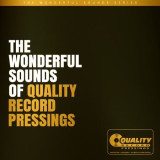
Celebrate the technical expertise of the world's finest LP pressing plant — Quality Record Pressings — with the finest LP sampler ever assembled!
The Wonderful Sounds Of Quality Record Pressings includes music hand-picked by Acoustic Sounds CEO Chad Kassem and classical music tracks chosen by the team at Reference Recordings.
Every song meets the criteria of excellent performance, perfect recording and flawless mastering. What better way to celebrate such a monumental anniversary for one of the absolute leading brands in analog high fidelity than with this to-die-for LP sampler? Contains most genres of music — blues, jazz, classical, R&B and female vocal. From now on, you'll only need to carry one demo record around with you.
Vinyl expert Michael Fremer, of Analogue Planet and Stereophile, gives you a track-by-track tour of the history and production of the songs on this special album.
What separates our world-renowned Quality Record Pressings LPs from other manufacturers? Since Acoustic Sounds CEO Chad Kassem launched QRP in 2011, the focus has been on producing consistently virtually silent vinyl playing surfaces, as well as reproducing details that were hallmarks of vintage labels — the "deep groove" label of Blue Note LPs, for example.
The craft of pressing fine vinyl is perfected in such details. Such as plating lacquers within 24 hours of their arrival at the plant. Cut grooves are prone to change with temperature fluxuations, high humidity and time. The sooner that lacquers are plated, the better the fidelity of the final pressing. Other keys include using a proprietary silver spray formulation, made fresh daily. And incorporating computer microprocessors on our presses to precisely control press functions with absolute precision. And an imbedded temperature sensor in the dye cycles the press with just as much control. The result — more consistency in each LP, high fidelity and reduced distortion. The ultimate sonic advantage.
‘The Clocks' was originally issued in 2007 as a CD-only limited edition of 110 for members of 'The Bevis Frond Online Community'. It comprised 19 previously unissued tracks. Most of these were home demos featuring just Frond frontman Nick Saloman on all instruments and vocals. Since then, it has never been re-issued in any format. It is therefore with great pleasure that Blue Matter are re-issuing it for the first time, and now as a vinyl double album and limited CD. Due to certain circumstances, three of the original tracks could not be used, so these have been replaced these with another three previously unheard tracks from Nick Saloman's extensive archives. These songs include the seven minute 'She's Taken It All', originally intended for 2004's 'Hit Squad' album but dropped at the last minute due to timing constraints. The beautiful 'You Better Make Do' and the edgy 'Devil Doll' have also been added. We are delighted to be able to make this 'long lost' album available once again and think it will be a welcome addition to the Bevis Frond canon.
What a privilege to start a new record label with an album of such quality. As we're sure most of you will know, Tom was the front man of the legendary US psychedelic/folk band PEARLS BEFORE SWINE. Recording for the ESP label in the 60s, then moving to Reprise, PBS left us a legacy of strange, beautiful music. In the early 70s Tom went solo, recording more albums for Reprise and Blue Thumb. As a schoolkid he came third in a talent show in which fellow schoolboy, Bobby Zimmerman (yes, that Bobby Zimmerman), came fifth! He played gigs with Pink Floyd, Crazy Horse, Patti Smith and many more before calling time in 1976, and becoming a Civil Rights lawyer. Renewed interest in Tom and PBS in the late 90s led to him making some staggeringly good live appearances. Then in 1999 he released his first album for over 25 years. The prophetically titled 'A Journal Of The Plague Year'. Featuring appearances from Damon Krukowski and Naomi Yang (of Galaxie 500 fame) and Masakai Batoh of Japanese band Ghost, came out on the British label Woronzow to great acclaim. This is the first ever reissue of 'Plague Year' and it comes with the original artwork and lyric insert, as a limited vinyl edition of 400 and a CD version of just 200. Tragically, Tom died in 2018 aged 70. It was a joy to count him as a friend. Blue Matter would like to thank Lynn Madison-Rapp & Ade Shaw for their help with making this reissue a reality.
With its name indicative of the music's boundary-testing diversity and Southwestern inspiration, On the Border finds the Eagles leaving everything on the table and embracing a harder edge that takes the band out of more relaxed territory and establishes it as a group that knows how – and wants – to rock. Glenn Frey, Don Henley, new member Don Felder, and company immediately announce their intent on the defiant album-opening hit "Already Gone" and never look back, crafting a gem of a record that from start to finish is arguably their most consistent and balanced effort.
Limited to 10,000 numbered copies, pressed on dead-quiet MoFi SuperVinyl at RTI, and mastered from the original analogue master tapes, Mobile Fidelity's ultra-hi-fi UltraDisc One-Step 180g 45RPM 2LP collector's edition pays tribute to the record's significance and enhances the experience for generations to come. Playing with reference sonics that elevate an effort revered by audiophiles, it provides a lively, dynamic, transparent, and intimate view of a release whose contemporary importance continues to grow. The opportunity to zero in on the particulars of the Eagles' golden harmonies, distinct vocal timbres, and cohesive interplay has never been better.
Visually, the premium packaging and gorgeous presentation of the UD1S On the Border pressing befit its select status. Housed in a deluxe box, it features special foil-stamped jackets and faithful-to-the-original graphics that illuminate the splendor of the recording. No expense has been spared. From every angle, this UD1S reissue exists as a curatorial artefact meant to be preserved, touched, and examined. It is made for discerning listeners that prize sound quality and production, and who desire to fully immerse themselves in the art – and everything involved with the album, from the iconic Navajo cover painting to the meticulous finishes.
And with On the Border, there's plenty to take in and soak up. Declared by famed critic Robert Christgau as "the Eagles' best album," the 1974 set claims a rich backstory. Initially recorded amid tumultuous sessions with producer Glyn Johns in London shortly after the release of the group's sophomore Desperado set, On the Border took a new turn after the band elected to scrap most of the prior work, return to its native California, and team with producer Bill Szymczyk to give the material less of a smooth, polished sheen and more toughness. Szymczyk also afforded the Eagles more input and freedom in the arrangements, and suggested adding another guitarist to play on "Good Day in Hell." Felder got the call, and so won over the Eagles with his skills, he quickly became the fifth member of the band.
While the late-arriving Felder only plays on one other album cut, "Already Gone," his mates more than prove their muster on the remainder of a double-platinum affair that established the Eagles as a force whose range transcended the calmer country-leaning style it perfected on their first two LPs. Primarily written by Jackson Browne and shelved during the Desperado sessions due to its higher-energy nature, the throttle-twisting "James Dean" ricochets with barbed riffs and rebellious swagger. Listen without limits to how Szymczyk's raw production stamps the song with a leather-and-jeans cool befitting its protagonist. Similarly rugged, the slide-guitar-fueled "Good Day in Hell" boasts its own mean streak. And the funk-laced, boot-stomping title track cautions "don't you tell me 'bout your law and order." Throughout On the Border, the Eagles are in no mood to mess around.
Not that the band skirts sentimental territory. On one of the era's finest covers, the Eagles nail the bittersweet feelings and bring high-definition detail to the vivid scenery of Tom Waits' "Ol' '55," a song the group makes its own. The rustic ballad "My Man" serves as a tribute to the recently deceased Gram Parsons, with singer-guitarist Bernie Leadon taking the lead on the microphone as he pours his heart out to his former Flying Burrito Brothers mate. And when it comes to romance, is it possible to top "Best of My Love"? Graced with Henley's honey-dipped vocals, refined wordless group harmonies, brushed drums, and the gentle strum of acoustic guitars, the Johns-produced cut soared to Number One and set the stage for what would soon be the Eagles' reality: global dominance.
More About Mobile Fidelity UltraDisc One-Step and Why It Is Superior
Instead of utilizing the industry-standard three-step lacquer process, Mobile Fidelity Sound Lab's new UltraDisc One-Step (UD1S) uses only one step, bypassing two processes of generational loss. While three-step processing is designed for optimum yield and efficiency, UD1S is created for the ultimate in sound quality. Just as Mobile Fidelity pioneered the UHQR (Ultra High-Quality Record) with JVC in the 1980s, UD1S again represents another state-of-the-art advance in the record-manufacturing process. MFSL engineers begin with the original master recordings, painstakingly transfer them to DSD 256, and meticulously cut a set of lacquers. These lacquers are used to create a very fragile, pristine UD1S stamper called a "convert." Delicate "converts" are then formed into the actual record stampers, producing a final product that literally and figuratively brings you closer to the music. By skipping the additional steps of pulling another positive and an additional negative, as done in the three-step process used in standard pressings, UD1S produces a final LP with the lowest noise floor possible today. The removal of the additional two steps of generational loss in the plating process reveals tremendous amounts of extra musical detail and dynamics, which are otherwise lost due to the standard copying process. The exclusive nature of these very limited pressings guarantees that every UD1S pressing serves as an immaculate replica of the lacquer sourced directly from the original master recording. Every conceivable aspect of vinyl production is optimized to produce the most perfect record album available today.
A double treat for those who love timeless Southern Soul flavoured with some of those good ol’ down home blues. Memphis born, and Minneapolis based, Willie Walker can comfortably be included in the pantheon of grittiest soul singers along with Wilson Pickett, Syl Johnson, Lou Rawls, James Carr, Eddie Floyd, Tyrone Davis and L.V. Johnson, to name but a few, but there has always been speculation about other Willie Walkers. The recordings on Eutor and Hi in the 70’s are not by the same Willie as those on Goldwax and Checker in the 60’s. He did, however, also record as Wee Willie Walker.
He was a member of The Rhythm Harmonizers, The Val-Dons, The Exciters, The Bound Band, Willie & The Bumblebees (although that Willie is actually Willie Murphy of The Val-Dons), and Canoise, spanning a long and varied career before hooking up with the Minneapolis based band The Butanes in 2004, with whom he made the next three albums. The first of these was mainly cover versions, but "Right Where I Belong" (2004) and "Memphisapolis" (2006) are notable for each providing the tracks that make up this latest Jai Alai release, a label that differs from sister label Soul4Real by featuring 21st century tracks previously CD only but now released on 7” vinyl for the first time. It also has to be noted that all the tracks on both these albums were written and produced by Curtis Obeda, who managed to track down Willie after so many years.
“I Feel It” will have been missed by most as it was on the CD "Right Where I Belong" which was released in 2004 on the most unlikely of UK imprints, the Wirral based One On One Records run by Colin Dilnot. The album is a lavish display of real instruments from a band that once backed John Lee Hooker and Little Johnny Taylor and the perfect setting for Willie’s powerful vocals.
Just tipping five glorious minutes, "Cry, Cry, Cry" is a perfect example of why soul music is inextricably linked to the blues, and when the gospel styled chorus joins in towards the end, you realise that this could, maybe should, have carried on for just a little bit longer. Perhaps a fuller length version exists? Sadly, Willie died peacefully in his sleep in November 2019, but to complete his story check out the two albums on Blue Dot as Wee Willie Walker & The Anthony Paule Soul Orchestra. To quote the great Quinton Claunch…”Willie was one of the best to come out of Memphis in the 60’s”.
Earlier this year, Subwax Bcn made an important contribution to the electronic music community by having the timeless dub techno compilation Vibrant Forms II by Fluxion remastered and reissued. First released in the year 2000 on Chain Reaction, Earlier this year, Subwax Bcn made an important contribution to the electronic music community by having the timeless dub techno compilation Vibrant Forms II by Fluxion remastered and reissued. First released in the year 2000 on Chain Reaction, Vibrant Forms II is widely considered to be one of the greatest achievements in the genre. As it turned out, Vibrant Forms II became one of the last records to be released on Mark Ernestus and Moritz von Oswald's classic label - a suitable swan song if there ever was one. And that's it, right
Well not quite.
If one would search for Fluxion - Vibrant Forms III, Discogs would come up empty and Google would treat it as a misspelling. Until now.
Konstantinos Soublis, aka Fluxion, and Subwax Bcn have decided to pick up the banner and release Vibrant Forms III as a CD as well as four individual 12" records under 2016. It contains everything you could hope for and more: The massive, booming basses, the clicks and hisses, the atmospheric thunderstorms, the opium smoke-scented streaks of reverb and dub echoes. The warmth. Yes, above all else the warmth: Sometimes moist and dripping as in Safe Harbour, sometimes blisteringly dry as in Variant. It's no easy task, giving cold, dead machines warm breaths. And no-one quite does it like Fluxion.
The Reissue of Vibrant Forms II was an act of cultural preservation. It reminded us about the legacy of the Basic Channel label family, in which Chain Reaction played an important part. Without this legacy, the contemporary body of electronic music would look different and make very different sounds. With the Release of Vibrant Forms III, Subwax Bcn takes it one step further. Fluxion's Vibrant Forms III album remind us of the timelessness of truly great music, never mind the genre.