'Tema di Susie' is one of the main themes from the soundtrack composed by Alessandro Alessandroni for the 1976 Italian noir Sangue di sbirro, known in English as Blood and Bullets, as well as Knell, Bloody Avenger (the Susie in the original title refers to the female love interest of the film's hero, who is on a mission to seek revenge for the gangland murder of his policeman father).
At once sweet and sentimental, haunting and melancholic, 'Tema di Susie' stands out from the other tracks in the film, which are more action oriented. Like the rest of the score, however, it exemplifies the way in which, during the '70s, Italian film composers created their own version of the sound of American blaxploitation cinema, with its groovy blend of funk, jazz, and soul. It is no coincidence that the film's director, B-movie specialist Alfonso Brescia, specifically requested music in the style of Shaft, the iconic film that defined that sound in 1971.
Though seemingly simple, 'Tema di Susie' is a perfect example of Alessandroni's style – in particular his unique ability to effortlessly blend groove and melody, funk and feeling, into one musical piece. So, we invited different artists with different backgrounds, influences and approaches to bring their individual take on this elegant and now timeless tune.
Neapolitan duo Fratelli Malibu have taken Alessandroni's melodic theme and woven it into a mesmerizing tapestry of rhythmic beats, world percussion and ethereal atmospheres. Drawing inspiration from funk/Afrobeat, synth-pop and Italo-disco, they've conjured a psychedelic-tinged, afro-cosmic groove that's bound to transport you to another dimension.
As the music unfolds, you'll feel like you've stepped into a vibrant, fantasy world. The breaks, outro, and intro are woven with a psychedelic thread that leaves you yearning to return once the final note fades away. And that's not all – they've injected an irresistible pop sensibility into the track with the use of drum machines and synths. The result? A rework that not only amplifies the dreaminess of the original but also seamlessly marries the past with the future.
We love the track so much that we decided to double the fun with a vocal retouch version, courtesy of the Italian funk/soul collective Banda Maje. Their vocalists, Chiara Della Monica and Cristina Cafiero, elegantly infuse cinematic and Balearic vibes into the mix, paying a wonderful homage to Fratelli Malibu's exquisite arrangement.
Suche:time is away
Having been re-discovered as a groundbreaking slice of proto-grime from 1994, Dylan Beale’s legendary soundtrack for the SNES game Wolverine: Adamantium Rage finally gets the reissue treatment it deserves via Sneaker Social Club.
When the game came out in 1994, Beale’s soundtrack for the SNES edition stood out from the pack for its gritty beats, deceptively weighty low end and edgy orchestra stabs, but few would have guessed how certain tracks would predict the shape of music to come. Around 2016, the ‘Tri-fusion’ track in particular was picked up on by London-based producer Sir Pixalot as a mind-blowing slice of Eski beat coldness. To prove his point, Pixalot ran an acapella from J-Wing over the track and the results spoke for themselves.
While ‘Tri-Fusion’ is a straight-up accidental grime sheller, there’s scores more heat packed away in Beale’s soundtrack for Adamantium Rage. The limitations of the space on the game cart meant Beale had to get creative with the most limited samples. Fortunately his background producing UK hardcore and jungle in Rude & Deadly and Stuck To Your Lips meant he knew his way around the restrictions of an Akai s950. Fuelled by the inspiration of jungle and West Coast rap, he worked on the game soundtrack with a similar spartan attitude, limited to 200kb with which to load up the music engine for the game, samples and all.
Given the importance of minimalism in the effectiveness of soundsystem music, it’s not surprising tracks like ‘Cyber’ and ‘Dark Queen’ pack a punch which could absolutely set a dance off. Watch out for ‘Weapon X Lab’ too - another stand out bomb creating a deadly machine funk out of the tightly clipped bass samples and weird animal groan loops. Alongside the full, original soundtrack, this first issue of Wolverine: Adamantium Rage OST comes with additional tracks never used in the original game which widen out the styles Beale was exploring within the shockingly limited means at his disposal.
“I vividly remember when we first played the soundtrack on a bigger set of speakers to the boss,” Beale recalls, “his initial reaction was one of amazement that we had created something so ‘real’and different in comparison to everything else out there in terms of video game music, which I remember with great pride and fondness. Comparing to everything out there, it was totally unique- a moment in time.”
I Talk To Water, the fifth album for Kompakt by Danish producer Kölsch, is the artist’s most personal statement yet. While all the trademarks that make his music so popular and powerful are still present – lush, melodic techno; swooping, trance-like figures; sensuous, shivery texturology – I Talk To Water is also a deep and intimate rapprochement with family and history, a beautiful, finely detailed document of loss and memory, and a tracing of the long, unbroken thread of grief that runs through our lives once we’ve lost those we loved.
The emotional core of I Talk To Water, then, is a cache of recordings by Kölsch’s father, Patrick Reilly, who passed away in 2003 from brain cancer. With time rendered elastic by the pandemic and its associated lockdowns, its sudden, alienating shifts in everyday living, Kölsch found himself reflecting on his father’s passing and ongoing spiritual presence, thinking about how best to memorialise such a significant figure in his own life. Those recordings opened a gateway, of sorts, for Kölsch to move through – a way to bring past and present together and entwine them in a sensitive, poetic manner.
Kölsch’s father was a musician – “touring in the sixties and seventies, in the Middle East especially, he was doing the whole hippy trail, playing guitar, and wrote some songs over the years,” he recalls. “But all in all, he decided to focus on family rather than pursue a musical career.” Reilly kept playing and writing music over the years, though Kölsch hadn’t listened to the material for some time: “I’d never had the guts to listen to it, because I just felt too fragile listening to his voice. It’s such a tough thing to go through.”
During the pandemic, though, Kölsch listened through the fragmented body of work that his father had produced over the years. “I decided I’m gonna finally release my dad’s music twenty years after his passing,” he reflects. “This whole album is about the process of loss, and for me it’s been one of my main driving forces in my musical life, the whole emotional aspect of whatever I’ve done has been based in that feeling that he’s not there anymore.”
Recordings of Reilly appear on three songs across I Talk To Water. His guitars drift pensively across “Grape”, offering a lush thread of melody that Kölsch wraps with clicking, driftwood rhythms and droning, melancholy bass. “Tell Me” is a lovely three-minute art song, a sadly beautiful reflection, minimally adorned with gentle keys and a muted pulse. And on the closing “It Ends Where It Began”, Kölsch lets his father’s acoustic guitar take centre stage for a lament that’s unexpectedly folksy, a guitar soli dream, which Reilly originally recorded in 1996. “He actually recorded it for my first album that never came out,” Kölsch reveals, “and I had it sitting around forever. That is purely him.”
These three imagined collaborations between father and son are poised and delicate. But their relationship also marks the gorgeous music Kölsch has made across the rest of I Talk To Water, from the itchy yet lush “Pet Sound” (titled in tribute to one of Reilly’s favourite albums), the flickering synths and yearning vocal samples that slide through “Khenpo”, the ecstatic shuddering that marks “Only Get Better”, or “Implant”’s slow-motion pans and subtle reveals.
There’s also the title song, where Kölsch is joined by guest Perry Farrell (Jane’s Addiction, Porno For Pyros), singing a mantra for internal reflection: “I talk to water / Searching for myself / Looking for answers / Oceans of you.” Farrell’s appearance brings another timbre, another spirit to the album, aligning neatly with his recent interest in electronic music. “He was completely taken by this idea of talking to water,” Kölsch says, thinking about the ways we collectively lean towards the natural world as a comfort and a listener, a guide through mourning, a way to map out the terrain of the heart. This mapping is something that Kölsch has proven remarkably adept at through the years; dance music for both body and mind, but also both for the here-and-now, and for the hereafter.
“I Talk To Water”, das fünfte Album des dänischen Produzenten Kölsch für Kompakt, ist zweifellos das persönlichste Statement des Künstlers bislang. Während alle Markenzeichen, die seine Musik so beliebt und kraftvoll machen, immer noch präsent sind – üppige, melodische Techno-Tracks; schwebende, tranceartige Elemente; sinnliche, fiebrige Texturen – ist “I Talk To Water” auch eine tiefe und intime Annäherung an Familie und Geschichte. Es ist ein wunderschönes, fein ausgearbeitetes Dokument des Verlusts und der Erinnerung, und es verfolgt den langen, ungebrochenen Faden der Trauer, der durch unser Leben läuft, sobald wir diejenigen verloren haben, die wir liebten.
Der emotionale Kern von “I Talk To Water” besteht aus Aufnahmen von Kölschs Vater, Patrick Reilly, der 2003 an Hirnkrebs verstarb. Durch die Pandemie und ihre damit verbundenen Lockdowns, die plötzlichen, entfremdenden Veränderungen im Alltag, fand Kölsch sich in Gedanken an den Tod seines Vaters und seine fortwährende spirituelle Präsenz wieder. Er überlegte, wie er eine so bedeutende Figur in seinem eigenen Leben am besten verewigen könnte. Diese Aufnahmen öffneten ihm sozusagen ein Portal, um Vergangenheit und Gegenwart miteinander zu verbinden und sie auf sensible und poetische Weise zu verweben.
Kölschs Vater war Musiker – “er tourte in den sechziger und siebziger Jahren, vor allem im Nahen Osten, auf dem Hippie Trail, spielte Gitarre und schrieb im Laufe der Jahre einige Songs”, erinnert sich Kölsch. “Aber alles in allem entschied er sich, sich auf die Familie zu konzentrieren, anstatt eine musikalische Karriere zu verfolgen.” Reilly spielte und schrieb jedoch im Laufe der Jahre weiterhin Musik, obwohl Kölsch das Material lange Zeit nicht angehört hatte: “Ich hatte nie den Mut, es anzuhören, weil ich mich einfach zu zerbrechlich fühlte, seine Stimme anzuhören. Es ist so schwer, das durchzustehen.”
Während der Pandemie hörte sich Kölsch jedoch durch das fragmentierte Werk, das sein Vater im Laufe der Jahre produziert hatte. “Ich beschloss, die Musik meines Vaters zwanzig Jahre nach seinem Tod endlich zu veröffentlichen”, reflektiert er. “Dieses ganze Album handelt von dem Verlustprozess, welcher für mich generell eine der Hauptantriebskräfte in meinem musikalischen Leben ist. Der ganze emotionale Aspekt von dem, was ich getan habe, basierte auf dem Gefühl, dass er nicht mehr da ist.”
Auf “I Talk To Water” sind Aufnahmen von Reilly in drei Songs zu hören. Seine Gitarren ziehen nachdenklich durch “Grape”, bieten einen üppigen Melodiefaden, den Kölsch mit klickenden, treibenden Rhythmen und dröhnendem, melancholischem Bass umwickelt. “Tell Me” ist ein schönes dreiminütiges Kunstlied, eine traurig-schöne Reflexion, minimal geschmückt mit sanften Tasten und einem gedämpften Puls. Und auf dem Abschlusstrack “It Ends Where It Began” lässt Kölsch die akustische Gitarre seines Vaters im Mittelpunkt stehen, ein überraschend folkiger Klagegesang, den Reilly ursprünglich 1996 aufgenommen hatte. “Er hat es tatsächlich für mein erstes Album aufgenommen, das nie veröffentlicht wurde”, enthüllt Kölsch, “und ich hatte es ewig liegen.”
Diese drei erdachten Kollaborationen zwischen Vater und Sohn sind ausgewogen und zart. Aber ihre Beziehung prägt auch die wunderschöne Musik, die Kölsch im Rest von “I Talk To Water” geschaffen hat, angefangen bei dem nervösen, aber üppigen “Pet Sound” (benannt als Hommage an eines von Reillys Lieblingsalben), den flimmernden Synthesizern und sehnsüchtigen Vocal-Samples in “Khenpo”, den ekstatischen Erschütterungen in “Only Get Better” oder den langsamen Schwenks und subtilen Enthüllungen in “Implant”.
Es gibt auch den Titelsong, in dem Kölsch von Gast Perry Farrell (Jane’s Addiction, Porno For Pyros) begleitet wird, der ein Mantra für die innere Reflexion singt: “I talk to water / Searching for myself / Looking for answers / Oceans of you.” Farrells Auftritt bringt eine weitere Klangfarbe, einen weiteren Geist in das Album, der gut zu seinem jüngsten Interesse an elektronischer Musik passt. “Er war völlig fasziniert von der Idee, mit Wasser zu sprechen”, sagt Kölsch und denkt darüber nach, wie wir kollektiv zur Natur als Trost, Zuhörer, Führer durch die Trauer neigen, um die Gelände des Herzens zu kartieren. Diese Kartierung ist etwas, in dem Kölsch im Laufe der Jahre erstaunlich geschickt war; Tanzmusik für Körper und Geist, sowohl für das Hier und Jetzt, als auch für das Leben danach.
Sept duos pour guitar acoustique et piano préparé is the second duo recording from Stephen O'Malley and Anthony Pateras. Their first together, Rêve Noir (2018), took an electro-acoustic scalpel to a 2011 duo concert for electric guitar and piano, using Revox and digital treatments to twist and smear gig documentation into ghostly echoes and fractured drones. Here, in contrast, the music is entirely acoustic and presented as it was performed, without overdubs. Both players’ choices of instruments are notable: this is O'Malley’s most extensive recording on steel string acoustic guitar (playing an instrument whose previous owners include Marissa Nadler and Glenn Jones) and Pateras return to the prepared piano, which he has rarely employed in recent years, after spending much of the first decade of the 21st century exploring its possibilities.
Recorded during O'Malley’s residency at La Becque on Lake Geneva in the summer of 2021, from the first moments of the opening ‘déjà revé’ the music immediately establishes the distinctive landscape of chiming tones and hovering clouds of resonance explored throughout its one-hour running time. Pateras’ preparations create tolling bell-like tones alive with complex overtones, alongside which O'Malley’s open strings and natural harmonics add a sparkling clarity. While Pateras’ music often uses a densely chromatic harmonic language, these duos are remarkable for their modal simplicity. However, the interaction between the pure intervals of O'Malley’s just-intoned strings and the unstable harmonies created by the piano preparations suspends the music in an oneiric state of hazy ambiguity. Without obvious reference to tempo or meter, the music floats in what the composer Ernstalbrecht Stiebler has called a ‘bottomless sound space’, the temporal placement of events determined by bodily rhythms and the performers’ own listening to (and enjoyment of) the sounds being made.
Heard one way, this music can seem striking in its consistency, almost environmental. Attending more carefully, the listener hears the pitch sets and tunings changing throughout the album’s length. Each piece has its own character, subtly distinguished from the others through mood, pacing, and timbre. On ‘déjà voulu’, for instance, O'Malley makes prominent use of slide, the woozy, bending pitches weaving through a series of lush arpeggiated chords from the piano. ‘Déjà senti’, on the other hand, is particularly spare, the gestures spaced out to the extent that they often float in isolation against the background of fading resonance. Much of ‘déjà su’ is built around a slowly pulsing single prepared piano tone, creating an almost ominous tension, whereas the sparkling guitar harmonics and arpeggios of the closing ‘déjà raconté’ have a gently triumphal air. While the music’s calm, rippling surface is immediately entrancing, these seven duos – in the tradition of the best improvised music – also reward close listening, which reveals sonic details and focuses the listener’s attention on how the music unfolds spontaneously from decision to decision, from gesture to gesture.
Recorded during a period when O'Malley and Pateras were grieving the loss of recently departed friends and collaborators, these seven duos possess a reflective, at times almost mournful quality. More importantly, though, they are imbued with other qualities that can arise from personal loss: a clarity that allows one to clear away the inessential, to begin again, to renew one’s faith in friendship and music.
As we get ready to say goodbye to the Telomere Plastic series, we are excited to present Telomere 020.1, aka the first part out of 5.
Each release will have four different artists, making it a compilation of twenty different artists who will deliver unique, juicy and eclectic frequencies that will keep your telomeres bopping for the rest of time!
This first VA, features producers, ESB, Synaptic Voyager, Vinaya and Vonsuck.
A1, Fancy Organ from Vinaya, is a sexy deep and house cut that is guaranteed to bring smiles all around the dance floor. Arpeggios and groovy bass lines galore. Prepare your piano hands because you will find yourself playing that sweet air organ on this one!
A2, Self Destruct Sequence from Synaptic Voyager (aka Telomere 014’s Illuminators), is a very emotional cut. Originally released digitally on Frame Of Mind, we were overjoyed to be given the green light to put this beauty on wax. Deep pads, tommy drums, hints of IDM and techno, and soul striking arpeggios pave the way for a special sonic journey. Close your eyes and melt away with this one!
B1, Keio Acid from ESB. We are always delighted to share more ESB with you. Elan’s love for analog and tape give off a raw and authentic energy that is hard to come by. This deep, jazzy and loopy cut will keep you on your toes from start to finish. We can only dream of being on the dance floor as this one plays out!
B2, Unemati from Vonsuck, is a deep and dubby cut that beautifully blends the three genres dub techno, house and techno. Dark rooms and dark skies are recommend for this one here, even though we could see these frequencies accompanied by a pink and red sunrise bringing waves of energy and nostalgia to your soul. Its a real treat to have Vonsuck aka Galaktlan on the Telomere series!
Very limited black copies as always with a few colored copies available via the Wex bandcamp, be quick!
'After a first album as a duo released on Okraina Records: "Le Corps Défendant", Delphine Dora and Mocke invite us to join them again in listening to a new album. We slip into it as if in a dream, the music carries us away with its floating images.
Heard before on a handful of disturbingly beautiful solo albums and in collaborations such as Midget!, Arlt, Chevalrex, Mohamed Lamouri, Mocke (Dominique Dépret's nom de plume) is a subtle and inventive guitarist, who draws melancholic arpeggios, with a beautiful languor, that walk the line between tensions and tears. Delphine Dora has been heard with Roxane Métayer, Sophie Cooper, Andrew Chalk, Jackie McDowell, Helena Espvall, Valentina Magaletti ... meeting in a moment of improvisation, a solitary sincopated voice blooming between the black and white keys of her piano, tuning betwist these keys, or at other times in the gap of the right note. Here improvisation feeds on melody, or is it the other way round?
Recorded in an old church in the village of Mauzun in the Puy-de-Dôme, by Cyril Harrison, "L'invisible est multiforme" is an invitation to join them, to let these abstract songs erase our obsessive thoughts of the day, to open ourselves to the vibrant poetry of the air and the evening, to finally forget ourselves. Each note played by these four intertwined hands is like a slight break in the fabric of time, sliding one over the other, reminding us of mortality and its beauty. Ritornellas flow out of mechanical clocks, fragile, taking care not to hurt the silence. Both seek to dig and open up new paths to enrich their duet, to open up imaginary landscapes. Sometimes the guitar cuts through the fabric of an organ, fractures the song, just as the rain erases a landscape, redrawing it. But very quickly, both of them continue to follow this new path, improvising what will serve as a framework, a perspective, a language. There is a kind of praise for slowness in this "invisible", a desire to hold back the song, not to let it slip away, to let the listener's ear enter its course, to share the last note, its illumination. Each of these thirteen short sound pieces merge into a common colour, a vibration close to the different tonalities, which inter-penetrate, like a cubist painting. Words cannot take away the mystery of this record, words can only fail to describe the music, you must hear it.'
- Michel Henritzi
Mal- One’s new single tells us about the punk fanzines that initially appeared in late 1976, but really exploded in 1977.They provided vital information on the scene and later became a great artefact of the time. A quick, fast, format, put together by fans of the music. It provided a great way to communicate with likeminded people. A couple of interviews with band members, that were keen to encourage the support. Culled together with some reviews of gigs attended and reviews of new releases, then quickly photocopied, stapled together and away you go. It’s amazing how many fanzines there were. Some examples are listed in the lyrics of this track. If you got your fanzine copies to Rough Trade, who seemed to take them all !!!, man you got it made. The hard copy these days seems a thing of the past and is sadly missed. Today’s messages arrive mainly in digital format. To take another example from the lyric ..Punk Rock Fanzines way to go…. and only 25p a go…
- A1: Baseline Cavi
- A2: The Inland
- A3: Keep It A Buck
- A4: 90210 (Feat. Bino Rideaux)
- A5: Shit Don`t Stop
- A6: Summer Break
- A7: Tha Front Yard (John Givez)
- B1: Hollywood, Oh Hollywood
- B2: Stimulus Package
- B3: Red Headed Stepchild
- B4: Bless The Dead (Feat. T.f, Icecoldbishop &Amp; Bale)
- B5: Crashed
- B6: Had To Do It Myself
- B7: On And On (Feat. Xv)
"BASELINE CAVI" is a collaboration album between Inland Empire/Los Angeles rapper Trizz and producer MIKE SUMMERS (aka Seven) from Kansas City. The album has that classic Westcoast Hip-Hop sound and the intro track gives that feeling right away. Guest features on the album are from Bino Rideaux, XV, T.F, ICECOLDBISHOP, John Givez and Bale.
Though fans may not know it, this collaboration between Inland Empire California emcee Trizz and Kansas City production ace MIKE SUMMERS has been brewing for close to a decade. Back in 2013 SUMMERS (then known as Seven) was already a prolific producer signed to Tech N9ne's Strange Music label and Trizz was part of horrorcore legend Brotha Lynch Hung's Madesicc Muzic roster. The two connected while working on Lynch Hung's "Mannibalector" album and a spark for future work was laid.
Linking up in spring of last year, the two creatively fed off each-other with the resulting album evoking classic West Coast melodicism and car-rattling thump. As Trizz states "this sh*t is so f*ckin authentic. It got bounce, it's swangin' and bangin! When you hear this album, you can feel it and damn near smell the palm trees and bomb ass weed."
As SUMMERS relayed "It's probably different for a lot of my fans to hear a more classic West Coast style of production from me, but that style of production has always been embedded in my sound. I grew up on 90's West Coast Hip-Hops studying producers like DJ Quik and Dr. Dre. The only reason I started using lots of live musicians on my tracks was because I watched Quik do it. BASELINE CAVI really let me dig into that classic L.A. sound that I've always wanted to build with.
Lyrically Trizz's immediately distinctive flow and storytelling abilities are at a new plateau with the emcee admitting "The lyrics on this album are probably more refined and defined because I just turned 30 and I have no more time to waste."
Known principally as a smooth titan of blue-eyed soul, Bobby Caldwell transcended genre tags with consummate ease; he was a musical icon of real class and versatility, cherished the world over. Tragically passing away in March 2023 at the too young age of 71, it still feels as if Bobby's true artistry is profoundly under-appreciated. His double platinum self-titled album from 1978 is a timeless masterpiece of sophisticated jazzy soul brilliance and is strictly canonical. Yes, it's perfect, yet it's been out of press on vinyl for years. We're deeply honoured to present the long-awaited reissue this summer.
Whilst Ned Doheny is known in Japan as "Mr California", native New Yorker Bobby Caldwell has always been "Mr AOR" to his Far-Eastern friends. His distinct charm is an irresistible blend of soul, jazz, and pop influences. He possessed phenomenal songwriting prowess, smooth vocal performances, was both a great soul guitarist and dextrous keyboard player and known for genius chord progressions. It all added up to a multi-layered brilliance entering the studio, and the singular sound he landed on was laced with soulful, sweeping strings and funky horns, touching lightly on disco, while allowing his supple voice to carry the stunning tracks he'd crafted.
String-swept opener "Special To Me" immediately sets the tone with its lush instrumentation, rich harmonies, and Caldwell's velvety-smooth vocals. Next up, a huge one. The infectious, mid-tempo bounce of "My Flame" showcases Caldwell's ability to effortlessly blend catchy pop hooks with soulful arrangements. It's an exquisite, emotive ballad that, at the same time, absolutely SLAPS. Game recognise game, and all that, so, accordingly, Notorious B.I.G. memorably ran with “My Flame” for his 1997 single “Sky’s The Limit”. The rolling, disco-very "Love Won't Wait" is a slick, uptempo track containing heartfelt lyrics intertwined with elegant strings and a horn section to die for. Aching - and achingly cool - single "Can't Say Goodbye" is a real fan favourite, and it's no surprise. It's a laconic, slow-mo jazz-funk stepper, with fantastic, very deliberate playing that closes out the A Side quite exceptionally. "Come To Me" slows proceedings down elegantly to open Side B before the universally agreed-upon masterpiece enters proceedings.
"What You Won't Do for Love," the standout hit that became a classic in its own right, perfectly captured Bobby's ability to infuse a contagious groove with introspective and relatable lyrics. With its instantly recognisable horn riff and Caldwell's soulful delivery, this timeless, chiller anthem continues to captivate audiences and define his musical legacy. He scored huge with the track, taking over the pop and R&B airways with this mellow soul stepper. It has remained a perennial favourite and has been heavily sampled, such is its unique allure; Aaliyah sang over snatches of it on "Age Ain’t Nothing But A Number" and you can hear Caldwell’s vocal sample used for the hook on Tupac’s posthumously released “Do For Love”.
Upon submitting the finished album to his label, they requested more material in hope of a big single. As Bobby remembered to Wax Poetics a few years ago: “Now at this point, I’m mentally exhausted...and bear in mind that I got so close to all the songs I’d written. I gave each song a profound amount of thought, and maybe too much. So, in haste, I went in and cut this song, "What You Won’t Do For Love". Wrote it in a day, cut the rhythm track, overdubbed the horns, I sang the song, and literally turned it in three days after. And lo and behold, the one song I gave the least thought to,” Bobby laughed, “ended up being a national anthem.”
The mysterious, magical "Kalimba Song" is a cosmic, kalimba-driven melodic-funk instrumental - short but oh, so sweet. It's followed by the supreme tear-jerker "Take Me Back To Then", Bobby's otherworldly voice deeply longing for a simpler time, "when life was mellow". I think we can all get behind this sentiment. The final cut is arguably its deepest, its low-key finest moment. For us, it is, anyway. The glorious, driving, effortlessly funky guitar-soul jam "Down For The Third Time" is a huge melancholic Be With favourite and has been played by discerning genre-hopping DJs with significant glee for years. Hypnotic, melodic, beautiful. Like the album it elegantly rounds out.
Bobby sadly passed away on 23rd March 2023, after a long struggle with mitochondrial damage and oxidative stress, due to an adverse effect from a fluoroquinolone antibiotic. The reissue of his wonderful eponymous album will be available on vinyl across the globe, ensuring that fans of his incomparable talent - and soul music enthusiasts worldwide - can radiate in the deep beauty of this seminal album. Meticulously remastered and cut by both Simon Francis and Cicely Balston respectively, it has been pressed to the highest possibly quality at Record Industry in Holland.
Unleash the soulful sounds of the past with "Who Are You," the second studio album from Soul Liberation. Born from the ministry of Tom Skinner, a former gang leader turned preacher, Soul Liberation rose to fame as the dedicated backing band for Skinner's revival-style Crusades. Touring full-time for 20 years, they played over 260 gigs a year and left a lasting impact on the gospel and Christian music scene. The album was recorded in 1982 at Rainbow Sound, Inc. in Dallas, Texas, and features skilled modern soul instrumentals with gospel-inspired lyrics that reflect the band's dedication to their message. Standout tracks like "Who Are You" and the Chaka Khan-inspired "Touch Me Again" showcase the band's virtuoso performances and unique blend of soul and gospel music. This rare album is highly sought after by soul fans and DJs alike, and has been reissued on BBE Music for the first time in vinyl form. The original mix was done by David Boothe, and the remastering was done with love by Grammy-nominated The Carvery Studio. Don't miss out on this chance to own a piece of music history. Get your copy of "Who Are You" today.
Pellegrino & Zodyaco, with their new single 'Malìa', continue the aesthetic and sonic journey of the project led by the Neapolitan producer, with a mixture of Neapolitan disco-funk and fusion steeped in Latin flavour that already explored the innermost corners of the soul with 'Quimere'. This new work captures the frenzy and vibrant character of Naples, with its rarefied atmospheres and infectious groove that evoke the beating heart of the city and take us on a journey through the wonder of life in search of the Mediterranean essence.
The 'Malìa' is enchanting, it’s that mysterious force that hides deep inside, transforming itself into a vortex of emotions through the fusion of involving rhythms and reflections on inner battles, on the importance of finding the 'light' to overcome conflicts and difficulties that hinder the ability to choose, a dreamlike mirage that opens a window on human vulnerability, a hymn to authenticity, to self-acceptance.
The celebration of dance in the Caribbean Escapade version is also an exhortation to escape from everyday life; it takes us into a sonic imagery that plays with the Neapolitan musical tradition and the freshness of Caribbean and Latin sounds. This summer single becomes an ode to the vital energy of dance music: there is no more time for hesitation, one must let oneself be carried away by the enthralling embrace of 'Malìa', like a call to awareness and the search for authenticity in life. Malìa becomes the guiding thread, the mystery that urges us to go beyond the confines of everyday life, to explore and celebrate the complexity of existence.
Composed, produced and arranged by Evangelia VS, the artist behind Abyss X, Freedom Doll is the culmination of a year of emotional unloading through songwriting, offering an introspective journey into the ocean of her mind. Produced and recorded between an artist residency near the Mayan jungle in Mexico and her Berlin home, the album chronicles transformations the performer tackled mentally during the writing process, tracing the rollercoaster of falling in love during the pandemic, as well as the pleasures and tribulations of womanhood.
Freedom Doll encapsulates the romantic escapade between her voice and the guitar. The amalgamation of seduction, sexual tension, vulnerability and assertiveness pulses throughout the entirety of the album, spiralling out of the cracks spawned from her vocal chords. From the twirling dance between her lush harmonies and the progressions of the acoustic guitar in tracks such as Ascend and From Hot to Cold, to the explosive confrontation between the metallic and operatic qualities of her voice, the searing sound of the electric guitar in industrial rock / psychedelic anthems such as Torture Grove and Banyana and the cathartic momentum found in the gospel inclined chants in A CHEW - Freedom Doll untethers the dramatics and theatricality that defines Abyss X’s vocal performance and music production, while maintaining the sensual vibrations of her creative essence.
Freedom Doll is the encapsulation of the Minoan woman, the elusive harlequin tiptoeing her way through the “circus of terror” that is living and loving her way through womanhood. With this visual reference, Abyss X pays tribute to her ancestors and their groundbreaking ancient artistry. The back cover of the vinyl features a reiteration of depictions of bulls leaping found in Minoan frescoes; an inherently male cultural act that in the ancient Minoan times presumably gave expression to a tension that underlies man's somewhat tenuous mastery of nature. Freedom Doll’s artwork challenges this preconceived notion through an eco-feminist approach, bringing the Minoan woman slash Gaia in the seat of the bull leaper, taming the unhinged and predominantly male earth - threatening human force.
- A1: The Wasteland
- A2: Know Your Honor
- A3: Introduction "Let's Experiment
- A4: Spiral Jetty
- A5: Rule By Being Just
- B1: Pure Radio Cosplay
- B2: Weight Of The Sun (Or The Post-Modern Prometheus)
- B3: The Ship Impossible
- B4: Summer Of All Dead Souls
- B5: Strange Epiphany
- B6: Pure Radio Cosplay (Reprise)
- C1: Cover The Days Like A Tidal Wave
- C2: Racing And Hunting
- C3: Fall Of The Empire
- C4: Ebb Away
- C5: The Fairlight Pendant
Black Vinyl[25,63 €]
Reissue of the 2011 album Tao of the Dead by American alternative rock band ...And You Will Know Us By The Trail Of The Dead. First time available on vinyl since its release year. Features a replica of the original comic book insert. Tao of the Dead is their seventh album. The band stripped down to its core four-piece lineup for the record, deviating from the past two records that featured a filled-out six-piece band. This resulted in a stripped-down record with heavy emphasis on guitar. It’s a two-part record, each side with a specific musical tuning; Part One in D and Part Two in F. The album can be listened to as 16 different movements or two lengthy tracks. Part One: Tao Of The Dead is split into eleven tracks, whereas Part Two: Strange News From Another Planet is five songs combined into one. Lead singer Conrad Keely described the album's composition; "It's the way I listened to albums when I was a kid, seeing as some of my favorite records were Pink Floyd's Dark Side of the Moon, Yes' Relayer and Close to the Edge... I always liked listening to records that were just a continuous piece, like an orchestra or a symphony."
Long Beach legend Scotty Coats links the West Coast eclecticism of Stones Throw to the NYC cool of DFA and Rong to the Balearic gods of DJ Harvey et al. He personally introduced Be With to Ned Doheny 10 years ago and he was immortalised on Smith & Mudd's last LP. And he's the main man behind the mysteriously titled duo Todd Russell & The Dangerous Coats, alongside Erick "Todd" Coomes (Lettuce founder/bassist).
In very real danger of being lost forever, we unearthed two of their private recordings and present them as a double A-Side 12", adorned with S-T-U-N-N-I-N-G artwork, courtesy of Arizona artist Frank Gonzales.
"Playa Larga" is a melodic, mellow masterpiece and is quintessentially Balearic. It's stretched out, low slung, guitar-soaked drum-machine soul music. It's multi-layered and contains multitudes: it builds and builds and builds and mesmerises as it does so. On the flip, "1900 Ocean Avenue" is a super slo-mo, sunbaked drug-chug which is already blowing minds thanks to early leaks of this cosmic, psychedelic detonation.
On first listen back, Erick said to Scotty: “So wait, nothing really happens, I mean nothing bad happens but nothing really happens”. Apparently these tracks were a bit foreign for Erick, musically, because of the lack of structure in the songs.
One morning, years later, Erick called Scotty and excitedly declared: “dude, I get it now!”. He was listening to random music with a lady friend while watching the sunrise in his 1900 Ocean Ave apartment and "Playa Larga" came on randomly. He'd forgotten all about it and said he had to get up and see what song it was because "it was the perfect soundtrack for a psychedelic sunrise over the ocean."
And that's exactly how we came across it, circa 2018, randomly popping up on a playlist while we were busy doing other things. It stopped us in our tracks but, when trying to find any info on iTunes, we were out of luck. It was only years later that we worked out Scotty had sent it to us. Ever since, we've been working on getting this out to you all. It's finally time.
We've only 500 pressed for the world, with many of them spoken for by those lucky enough to be already ITK, so these are gonna fly: be warned!
Scotty is a world class raconteur so we'll hand over to him to explain how these songs came about and why they mean so much to him in the context of his wider raison d'être:
"These were made 13 years ago when I was a new dad and left my job at Ubiquity Records to provide security for my newborn son, Nolan Liam Chai Coats. I became miserable working a job outside of music for the first time in my life and I was laid off 4 months into it. I was left wondering how the fuck am I going to provide for my family?
I lived in Long Beach and Erick lived a few blocks away. I would walk to his house when Jen finally got Nolan to sleep so I could escape my panic, drink some beers (is it beerlearic?) and make some music. He lived overlooking the ocean with the Queen Mary on the horizon, so I guess mellow Long Beach nights unintentionally inspired the music. These songs were the first two songs we ever made and they embody the desperation and hope I really needed at that time. 12 years later, when Rob at Be With expressed an interest in releasing it, we had Erick's brother Tyler Tycoon Coomes play drums on it at Jazzcats Studio in LBC, with Jonny Bell.
Shortly after I was laid off, I discovered The Stepkids. I was blown away by "Shadows On Behalf" and sent it on to Gilles Peterson. He played it on Worldwide the next day. The Stepkids pulled me back into music and made me realize I wasn't prepared to do anything but be involved with music. After I heard their unreleased album, I knew there was something there so I sent it to my good friend Jamie Strong who was at Stones Throw at the time. Jamie passed it along to Peanut Butter Wolf and the band asked me to be their manager. I didn't think I was the right guy for the job but wanted to see them do well so I told them I would help shop their album. Jamie suggested I take his place at Stones Throw, just as he did when he left Ubiquity Records. I always joke that Jamie can call me Scotty Coat Tails because I had been riding his for years.
Wolf told him that "Scotty is a nice guy but has horrible taste in music", which was ironic because he was literally trying to sign the band that I brought him. The Stepkids signed with Stones Throw and found a real manager. 6 or so months later Jamie sent me a note saying "Stones Throw is hiring and you should apply lol". I told him I was going to send my resume and the subject of the email was to read I HAVE GREAT FUCKING TASTE IN MUSIC. I did just that and got a call the next day from their new GM asking me to come in for an interview. When I walked in I was in Wolf's office where I had been 6 months before, signing The Stepkids
deal. Wolf and Jason McGuire were asking me some questions and wanted to introduce me to Jeff Jank. Jank walked in and said "Isn't this the guy that Jamie wanted to bring on 6 months ago?" They confirmed and he threw his hands up and walked out saying "I've seen enough". I got the job. I worked there for 2 or 3 years until I left to join forces with Jamie Strong at his label and stayed there for almost 7 years."
Scotty wanted to use a painting by his good friend, Frank Gonzales, for the front cover image. Frank was incredibly generous in letting us use this one, and Scotty was completely honoured. We think you'll agree, it's pretty striking. Simon Francis carefully mastered the original audio for both tracks and Cicely Balston's precise cut for Alchemy at AIR Studios ensures this double A-side 12" sounds appropriately outstanding. The immaculate Record Industry pressing will ensure these previously unheard, recently discovered recordings finally get a chance to shine.
- A1: Et Si Tu N'existais Pas (Joe Dassin)
- A2: La Javanaise (Serge Gainsbourg)
- A3: Everybody's Talkin' (Harry Nilsson)
- A4: I'm Going Away Smiling (Yoko Ono)
- A5: La Vie En Rose (Edith Piaf)
- B1: Les Passantes (Georges Brassens)
- B2: Syracuse (Henri Salvador)
- B3: What Is This Thing Called Love? (Cole Porter)
- B4: Michelle (The Beatles)
- B5: Only The Lonely (Frank Sinatra)
- B6: La Belle Vie (Sacha Distel)
10th year anniversary reissue of Iggy Pop's Après cover album with a bonus track, Sacha Distel's La Belle Vie and new artwork, and an exclusive poster. Originally released only in France in 2012, Après is being reissued for the first time and is now finally available outside of France.
- A1: Fk Pres Director’s Cut Feat. Jamie Principle – Baby Wants To Ride (Re-Directed)
- A2: Fk Pres Director's Cut Feat. Sybil - Let Yourself Go (A Director's Cut Master)
- B1: Fk Pres Director’s Cut Starring Inaya Day - Let's Stay Home (A Director's Cut Classic Club Mix)
- B2: Fk Pres Director’s Cut Feat. B. Slade – You Make Me Feel (Mighty Real) (Dj Meme's Mix Of Epic Proportions)
- C1: Lou Rawls - You’ll Never Find Another Love Like Mine (Kenny Summit, Frankie Knuckles & Eric Kupper Unreleased Anthem)
- C2: Soulful Session Starring Lynn Lockamy - Hostile Takeover (Director's Cut Remix)
- D1: Hardsoul Feat Ron Carroll - Back Together (Director's Cut Classic Club Mix)
- D2: Spencer Parker & Dan Beaumont - The Look (Director's Cut Signature Mix)
There are few people across the globe, who will have not been touched by the work of Frankie Knuckles. Forever regarded as ‘The Godfather of House’. A Grammy Award winner, Frankie had a street in Chicago named after him where the old Warehouse once stood to commemorate the first ever Frankie Knuckles Day on 25th August 2004. Five years ago, Frankie passed away in Chicago on 31st March 2014 leaving behind one of the greatest house music legacies spanning almost four decades.
Now he is commemorated once again by long time writing and production partner Eric Kupper who will release part II of the special commemorative album on vinyl around this date. Eric, himself a seasoned DJ producer and writer, working side by side with Frankie on many his seminal classics, as well as personally working on over 116 Billboard #1 Dance Records. Having both worked together for many years they established themselves at ‘Director’s Cut’ from 2011 and set about producing original releases and remixes based on the classic ‘Def Mix’ sound while sharing equal credits for their creations.
The album features some of Directors Cut’s best works with the Re-Directed version of the seminal classic ‘Baby Wants To Ride’ plus their re rubs of Inaya Day, Sybil, Hardsoul and Lou Rawls - You’ll Never Find Another Love Like Mine (Kenny Summit, Frankie Knuckles & Eric Kupper Unreleased Anthem).
This album is to be released in collaboration with The Frankie Knuckles Foundation who work to continue Frankie’s legacy whilst focusing on music in schools, LGBTQ youth homelessness, AIDS research / prevention & diabetes research / education.
Carved out from between the cracks of life over a 2 year period, Low Flung presents his eighth full length album ‘The Wheel’. Together, the 11 tracks provide a space to process and sit with difficult change. This takes the form of microscopic minimalist landscapes. Presented in both audio and physical form as micro grooves on a 12” vinyl.
At times the sound wanders and walks, other times it remains still, clear and precise. The omni-present artifacts found in ‘The Wheel’ are left to breathe a different life during each listen. Drones act like familiar trails losing their path as space transforms like a breeze over a table of sand. Hyper focused spores evolve around blurred waves of time. Electronic tones are captured flowing to the rhythm of a decaying natural world.
‘The Wheel’ is a patchwork of sonic experiments made using modular synthesis, fixed architecture synthesis, Buchla Music Easel (replica), outboard effects, cassette manipulation techniques, samplers and field recordings taken along the texturally rich and historically questionable eastern coastline of Australia.
The tracks have been composed with a materiality that embraces the acoustics of different listening environments. Much like mood, this means each listening experience is unique due to the natural acoustics of your listening space. The sounds on this album embrace this phenomena, creating a rich, visceral listening experience that slowly scratches away at discrete moments of time
Rather than attempting to traverse new sonic fields of experimentation in ‘The Wheel’, the album touches on the various spaces Danny has explored over the past ten years as an Audio Visual artist. Although technically eighth, it would be more fitting to say this album draws a clear line from ‘Blow Waves (2018)’ to ‘Outside The Circle (2020)’ to become the third and final chapter in the expanded non linear, unintentional landscape series. Serendipitous that each was conceived over 2 year periods of time.
While the key focus is sitting with difficult change, this album is also a celebration of any moment you might find yourself in. Good, bad, easy or hard, this album is an attempt to help with feeling content wherever you are along your path. With each cycle a new context.
The EP FACE II is a continuation of the Faces EP series, of which the first EP was released in october 2022. The basis here is also a literary fixpoint with KAFKAS VER- WANDLUNG.
the examination of the urban modern man has its origin in the album JAHRE and is now explored in more detail here. What happens to us in a time of digital transparency as a glass human of the city and night.
It starts with THE VOID, which was originally intended as a poem about being lost. We go out into the night, some to search, some to forget and some to never come back as the same again. On our journey we often take substances that we expect to make this journey easier and faster. the escape from ourselves and from our relationships to the environment and humans can‘t just be skipped. a fast way is always a dangerous way and often leads to an even bigger EMPTINESS.
In THE GHOST something appears to us late at night, it is like a shadow of the previous hours, something that has followed us on the streets and accompanied us un- discovered until we reached our home. We wake up and at first it is unclear whether we are dreaming.
In half-sleep the dimensions blur together and the whole polyva- lence of the different existences gapes open. We blink into the DARKNESS and try to recognize something, the light remains far away and yet we hear this piercing sound, which in the end leaves us only with ourselves. we are the spirit of the night, trapped on an old tape in the chest of nothing.
The next section THE MOON shows us the light in the darkness. The shadows and ghosts give way for a moment and the light flows through our veins and molecules. The poem describes our unspoken longing to follow the light, in the light our fears disappear and everything blurs into an unknown familiarity. We stagger back and forget the encounters with our inner DAWN.
In the light the ghosts disappear like childhood memories left behind.
The last chapter is written by THE DAWN, a stanza from the poem of the same name as a spoken reconciliation with the world. In spite of everything, we seek harmony and connectedness. No one wants to become an exile, even if we can‘t always bring it about ourselves. We love LIFE and we hear and feel everything around us, if we let ourselves ...
ALL LOVE
AMAS_DHE / AMAS_PHI
- A1: Giving Up
- A2: Either Way I Lose
- A3: (There Will Never Be) Another Love
- A4: Lovers Always Forgive
- A5: Daybreak
- A6: If I Ever Should Fall In Love
- B1: Tell Her You're Mine
- B2: Why Don't You Love Me
- B3: Maybe Maybe Baby
- B4: Who Knows (I Just Can't Trust You No More)
- B5: Go Away, Stay Away
- B6: Stop And Get A Hold Of Myself
Released in 1965, this is Gladys Knight and The Pips’ first and only studio album for Maxx Records. Gladys and this family foursome signed with Larry Maxwell’s label in 1964, and after several successful singles, Maxwell was responsible for taking the group to Motown. Pressed here for the first time in almost six decades, 12 soul sides full of grace and grit, remastered and reissued on heavyweight virgin vinyl.
The recordings that springboarded Gladys Knight and the Pips to Motown Records. First ever reissue since the original Maxx LP in 1965 (six decades later!) Pressed on black virgin vinyl, with original artwork. Beautiful soul recordings - remastered for superior quality.
microCastle’s third offering of 2023 welcomes Ditian back to the label for his first artist EP. Splitting time between Buenos Aires, Berlin and Barcelona, the Argentinean artist has carved out a unique place in the electronic underground over the last half decade. With an immediately recognizable sonic signature, Ditian channels languages of varied musical landscapes, churning them into his own complex rollercoaster of intricate electronica. A sound that is equally at home on rebellious dance floors around the world or in the sweet spot of a late-night leftfield listening session. A short but meticulous discography reflects Ditian's choosy nature; with Exit Strategy, Innervisions and TAU serving as the primary landing spots for his musical output. Having remixed Ivory’s ‘Arpstairs’ for his microCastle debut last summer, a project which was followed by a contribution to Dixon and Ame’s Secret Weapons 15 collection to begin the year, Ditian now returns to the label with a four-track showcase entitled ‘Serpenta’.
The crushing title track crashes in and sets any preconceived ideas of Ditian’s music alight, forecasting jet force propulsions and wild signal bending synths. As somewhat of a departure from his previous experiments, Ditian’s clustered pungi mutations provide an enduring main theme, while a wonderfully warped break is sure to cast a paranoid spell over the dancefloor.
‘Venena’ follows in fine style and further hammers down Ditian’s elusive vision. Dizzying, rapid-fire sequences of rhythm, granular textures and heavily manipulated synths travel to the very edges, while maelstroms of drums and contorted basslines highlight a high-octane second act.
‘Inertia’ lands at the collection’s midway point and does so in remarkably twisted fashion, stepping decisively on the gas and steering into shadowy transgressions. Never one to shy away from darkness or pushing boundaries, Ditian’s metallic storyboarding rises and falls across act one, consciously withholding energy, as grooves pulse and effects orbit, creating tension that eventually gets resolved as clusters burst open and oscillate in kaleidoscopic fashion.
Ditian’s creative attitude reveals itself further on collection closer ‘Influenza’. Presenting some of his most club-adjacent rhythms yet, it’s a clever coax of billowing tones and scrappy melodica which get wrapped up in a concordant fog, eventually getting washed away; because after all, the oceanic drones are all the better when they’re magnified to full size.
Cover art: Mauricio Seidel
Italian DJ and producer Sourires (aka Andrea Antognoli) joins the Samosa stable for his debut with an explosive release that will take your breath away.
The EP kicks off with the title track, Pampasosa - a furiously groovy number which gets up right in your face from the get-go. Like an unstoppable train, Pampasosa hurtles along at 127bpm with its horns blaring and furnace blazing. De Gama is on the Re-Groove here, expertly applying the bells and whistles to this all powerful locomotive stomper.
A2 brings us ‘Liam’, which sounds like a track very close to Sourires heart. Think of glorious evening sunshine after the rain for this emotionally charged piece of music. The bass has you hypnotised, the strings make you soar and the vocal haunts your dreams. It bares its soul to you and you can’t help but love it for that.
On the B-side, ‘Keep Rolling’ (De Gama Re-Groove) gives no illusions as to what its intentions are. A rolling, bass-driven start builds to filtered vocals and punchy brass - we’re in house territory but it’s so much more than that. A prime-time fist pumper of a tune, this will have dance floors offering their souls to Sourires in exchange for good times.
Finishing off this four tracker is ‘Flavor’ (De Gama Re-Built). At 124bpm, it sneaks past you and taps you on the shoulder. Continuing the house vibe, Sourires brings us a swinging beat accompanied by dreamy vocals and subtle filtered keys. Strings and delicate guitar licks build to a glorious breakdown which reveals itself in full technicolour. Summery, sassy and sexy stuff.
Sourires has deliverdd a modern classic with the Pampasosa EP. This has to be in your record box for the summer - just watch the dance floor go!
DJ Koze unveils a spiritual and surprising journey into rapturous spheres with Wespennest EP. The visionary artist and master of electronic sound, presents his first own release after 2018's global club hit "Pick Up".
"Candidasa" and "Wespennest" are the result of DJ Kozes inspiring stay in a secluded Benedictine monastery on the enchanting island of Sulawesi. Amidst this idyllic setting, he found the perfect environment to unleash his musical vision. He composed all of the music of "Candidasa" while lying on his stomach, in an act of deepest devotion and self-reflection. In doing so, he fed exclusively on so-called heroin kebabs to immerse himself in a trance-like state of creative flow. The result is a soundscape of unimagined depth and beauty that enchants the senses and transports listeners to another dimension by massively increasing the frequency of flicker fusion.
On "Wespennest” the wonderful Sophia Kennedy takes the stage and breathes a new dimension into the music with her impactful lyrics and vocals. With generous dedication, Sophia has provided exclusive excerpts of her yet unreleased songs, giving this track a radiant psychedelic power. The combination of DJ Kozes musical genius and Sophia Kennedy's glorious vocals creates a club track full of wonderment, opening up a mystical rapturous world for listeners. Already an instant classic of German dance music.
With "Candidasa" and "Wespennest" DJ Koze has once again pushed the boundaries of electronic sounds and created a spiritual journey that touches the soul and frees the mind. This EP is the first harbinger of his highly anticipated new album, which will be released in 2024. The time until the release can be wonderfully bridged with the magical album "Hit Parade", which DJ Koze has produced for the British legend Róisín Murphy and on which we can be carried away into the world of musical brilliance.
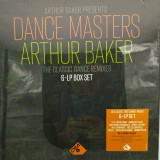
- A1: Daryl Hall & John Oates - Out Of Touch (Club Version)
- A2: Robbie Nevil - C'est La Vie (Extended Version)
- A3: Living In A Box - Living In A Box (Dance Mix)
- B1: Fleetwood Mac - Big Love (Extended Remix)
- B2: Artists United Against Apartheid - Sun City (Last Remix)
- B3: The Cars - Hello Again (Hello Again)
- C1: Fine Young Cannibals - Ever Fallen In Love? (Club Senseless)
- C2: The Colourfield - Running Away (Long Version)
- C3: Deborah Harry - Sweet & Low (Swing Low Mix)
- D1: Daryl Hall - Dreamtime (Extended Remix Version)
- D2: Carly Simon - My New Boyfriend (Remix)
- D3: Bob Dylan - When The Night Comes Falling From The Sky (Full Length Version)
- E1: Neneh Cherry - Buffalo Stance
- E2: Wally Jump Jr & The Criminal Element - Turn Me Loose
- E3: Arthur Baker & The Backbeat Disciples - The Message Is Love (Feat Al Green - Cupid Mix)
- F1: Roberta Flack - Uh-Uh Ooh-Ooh Look Out (Here It Comes) (Here It Comes)
- F2: Will Downing - A Love Supreme (Jazz In The House Remix)
- F3: Al Jarreau - I Must Have Been A Fool (Remix)
- G1: Jeffrey Osborne - Soweto (Remixed Version)
- G2: Jermaine Stewart - Jody (Dance Version)
- G3: Atlantic Starr - One Lover At A Time (Extended Version)
- H1: Junie Morrison - Tease Me (Long Version)
- H2: Jennifer Holliday - No Frills Love (Extended Dance Remix)
- H3: Cindy Mizelle - This Could Be The Night
- J2: Glory - Can You Guess What Groove This Is (Short Version)
- J3: Ritz - I Wanna Get With You
- K1: Afrika Bambaataa & The Soul Sonic Force - Planet Rock
- K2: Tina B - Honey To A Bee (Vocal/Extended Version)
- K3: Arthur Baker - Breaker's Revenge (Extended Vocal Version)
- L1: Rockers Revenge - Walking On Sunshine (Feat Donnie Calvin - 12" Version)
- L2: Freeez - Iou (Mega-Mix)
- I1: Touchdown - Ease Your Mind
- I2: Second Image - Star (Us Remix)
- I3: Central Line - Surprise, Surprise
- J1: Afrika Bambaataa & The Jazzy 5 With The Kryptic Krew - Jazzy Sensation
This latest instalment of ARTHUR BAKER Presents DANCE MASTERS finds the production/ song-writing/ remixing maestro taking the spotlight for a long overdue snapshot of his own classic 12” mixes during a crucial evolution of dance music, club
and pop culture.
“I’ve always felt like I was on a mission to make music from the time I heard Motown, Philly and Sly and the Family Stone. My mission started as a hobby and still feels like one now. You’ve got to keep on pushing and hustling. It can be a drag sometimes but
if you really love what you’re doing, it’s worth the work. I still really love what I do.”
Arthur Baker helped codify the remixer as artist. His genre-fluid approach to projects
has resulted in a joyous myriad of classics that spans many decades. This ’80’s focused DANCE MASTERS collection offers a welcome glimpse at Baker’s illustrious career and many long out-of-print 12” versions and previously unavailable mixes.
This 35-track, six LP expanded edition includes a wide array of selections from the likes of Robbie Nevil’s “C’est La Vie,” Fleetwood Mac’s “Big Love,” Neneh Cherry’s “Buffalo Stance”, Jeffrey Osborne “Soweto”, Freeez “I.O.U”, Rockers Revenge “Walking On Sunshine” and of course the juggernaut “Planet Rock” with Afrika Bambaataa & Soulsonic Force.
Complete with in-depth liner notes by Bill Coleman, track by track notes written by Arthur Baker himself, previously unseen session photos from Arthur’s personal archives and a signed insert.
All tracks remastered by Nick Robbins at Sound Mastering
On June 16th momentum continues apace for Alex Paterson’s Orbscure records, with the new album by Chocolate Hills – his duo project with Paul Conboy. Purveying world class melodic ambience and plenty beyond, colours in this high-fidelity-headphone-wonderland range from languid chill, kitsch exotica, library music, space age pop, ye olde folk and even drum and bass – all seasoned with (in)appropriately random plunderphonics from Paterson’s infinite goodie bag. Loosely based around a nautical journey to the Bermuda triangle and back, this is a fantastic voyage, but seas remain calm – more ‘Life Aquatic’ than ‘Moby Dick’. Tracks gently bob and float on bass which is roomy and buoyant like the hull of a ship, whilst luxuriously fluffy clouds meander overhead, before their vessel dives deep below to marvel at aquatic delights, guided by sonar. Paul Conboy’s approach as a member of cult analogue tinkerers Metamono – who use no computers, only old pre-digital gear – has carried over into his new joint venture. Both groups write, record and perform at same time, then later edit for release. For ‘Yarns from the Chocolate Triangle’ Paul set himself and Alex up with assorted gear, including a record deck, synths and drum machines, then the pair recorded the raw version of the album on the fly. These long live jams where then then discreetly augmented, embellished and edited, with a nip and tuck in Logic. As well as releases as A.P.E. on Dorado and Far Out recordings, TV and film scores plus his ongoing membership in Metamono, Conboy recorded three albums as part of Bomb The Bass, with whom he also toured Australia jointly with The Orb. On a boat trip over to Bali, Paul made Paterson pancakes, and their friendship was sealed. Having stayed in contact, many years later the duo began an exploration of ideas with their 2019 debut ‘A Pail Of Air’ on Painted World records (who’ve also released records by Nik Turner from Hawkwind, Youth, Roger Eno and Jaz Coleman). So far the duo have performed a low key gig at Paterson’s unofficial lair The Book And Record Bar, plus a bigger stage at the Roundhouse, alongside Leftfield, GAS, Ulrich Schnauss and System 7. Clearly making a lasting impression on Alex, the duo’s name was first referenced on The Orb’s own ‘Chocolate Hills Of Bohol’ remix of their single ‘Assassin’ in 1992, which was the same year Alex got blown away when visiting the prehistoric geological formations and enchanting jungles of the Bohol province in the Philippines.
Back in 2011 when I was tentatively looking for a second release for my fledging record label Clay Pipe Music, I stumbled upon a mysterious MySpace page by a group called ‘Tyneham House’, the page was decorated with artwork by Rena Gardiner (who was unknown to me at that time) and the music was an otherworldly mix of field recordings, Mellotron and acoustic guitar. It turned out that Tyneham was promised to Glen Johnson’s Second Language label, so I offered to do the artwork, and in January 2012 the two labels co-released it on tape and CD in a cardboard box with a handmade booklet of my illustrations.
In 2016 Clay Pipe reissued it on 10” vinyl, in an edition of just 300, which has since become sort after. The new 2023 pressing is on blue and transparent marbled vinyl, with a reverse board cover and inner sleeve, and the booklet of illustrations has been given a complete redesign. Frances Castle 2023
The pastoral, wistful yet ineffably disquieting music of Tyneham House is made by artists who wish to remain anonymous here, save for their eponymous title. The musicians are happy, however, to let it be known that these recordings have been around for some years (many of them complied from old cassettes) and that they take inspiration from the 1960s/’70s/’80s work of the Children’s Film Foundation – a body who really ought to have made a film about this mysterious West Country curio. At least now we have its endlessly poignant soundtrack.
The small village of Tyneham, on the beautiful Isle of Purbeck, in Dorset, was once a thriving little community – that is until the British Government requisitioned it for training manoeuvres and other ‘strategic purposes’ in the run up to WWII. This was supposed to be a temporary measure, but the area remained in military possession long after hostilities had ceased, causing distress among former inhabitants, many of whom were farmed out to prefabs in nearby Wareham and Swanage.
Tyneham was characterised by its red telephone box, a tiny parade of shops – Post Office Row – and a grand country pile which stood about half a mile away from the village: Tyneham House. The army removed the building’s oak panelling and ornate decorative details and promptly set about using it for target practice. So great was the shame expressed locally about the damage inflicted upon one of Dorset’s grandest houses that the powers that be decided to grow a copse around the remains of the structure to give the impression that it was no longer there. Despite this, a substantial part of the structure remains intact, including its Saxon hall.
Land access around Tyneham was opened up in the 1970s, but admission to the house remains strictly verboten. Those who’ve been found around the premises, especially anyone wielding a camera, have felt the full weight of military trespass law. Tyneham today is regarded as a nature reserve by some – as a national embarrassment by others. It’s still a political hot potato, in Dorset at least.
The Belgian vibraphonist Guy Cabay has played with Toots Thielemans, Philip Caherine or Raoul Faisant. Composer, arranger, musicologist and singer, he also wrote and recorded two extraordinary albums in Liege Walloon. Tricatel is happy to make them available at last, 46 years after their publication.
"Gravity kills us. Perhaps that is the meaning of Adam's Fall. We are condemned to be Newton's apple, not the balloon carried away by the wind. But it happens nevertheless that, by the grace of music in particular, we escape gravity, that time escapes time, that another breath inflates our lungs, so much lighter than the one that usually suffocates us.
We don't take light music seriously, and that's good. Only serious music deserves to be treated so badly. Guy Cabay's music flows from a purer source and speaks to us in a more tender voice. One can obviously describe it as one labels export product. Origin: Belgium. Ingredients: jazz, bossa nova, tropicalism, song - proportions may vary. Calorific value: none.
Non-perishable product. But this would say as much about what this music really is as if, in. order to evoke what the foggy blue of a Norman sky inspires, one were to take note of the variations in the percentage of humidity in the atmosphere at Etretat and make a learned presentation on the laws of refraction.
Guy Cabay did pass through Brazil and still lives there a little, a Brazil that is not the one ofcartographers or travel agencies, a Brazil that is as real as the Far West in which Fenimore Cooper's child readers lived, as blurred and limpid as a dream. It is not the Amazon thatflows through this Brazil, but the Ourthe, a tributary of the Meuse, which makes it morefamiliar, stranger and even more poetic.
To let oneself be bathed in this melancholichappiness, to let oneself be carried by this river is sweet, as sweet as the fluid consonants of the Walloon language, this 'd' which becomes 'dj' in his mouth, as in Portuguese, by the way. To know how to create melodies that hold on a note like Jobim's samba, like a fildeferist above a waterfall of chords, is not given to everyone. It is a gift. Knowing how to lace others on dozens of points, as on Tot a-fet rote cou d'zeur cou d'zos, a poignant encounter between Randy Newman and Robert Wyatt, is another. These are not the only ones that the fairies offered to Guy Cabay and that, by an almost miracle, he offers us again today. Hearts up."
Bertrand Burgalat
Fruit Express is here! This is their debut EP and "they" are Roma and Madis. A mellow electronica producer meets multi-instrumentalist and old time guitar hero. The outcome? Funky shit with its roots in dub and what seems like some smoky country music.
The title track is prominently catchy & poppy, while "Harlan County Line" crosses the border jamming away with a heavy spaghetty western feel. "Samurai" jam holds the mystique levels high, all spacey and mushy in its dub sauce.
The 12" is spotlessly sewn together by Tapes who throws the original "No Secret" into a 8-bit blender and out comes... well a sensational 8 bit version "The Secret"."
rand, the exciting new collaboration between pianist Jan Gerdes and electronic music producer Frank Bogdanowitz, is proud to present their debut album "Peripherie".
With Gerdes' background working alongside renowned composers such as Karl-Heinz Stockhausen, Wolfgang Rihm, and Helmut Lachenmann, and Bogdanowitz's extensive touring experience as Dr.Nojoke in the experimental minimal techno scene, rand brings together the worlds of acoustic and electronic music in a unique and captivating way.
Recorded live in 2019 at Berlin's Chez-Cherie Studios with no overdubs, the pieces were created through both improvisation and composition with Gerdes having access to three pianos during the recording process.
The resulting music is characterized by atmospheres that exist away from the conventional limelight, with musical elements blending together in a fluid indeterminacy.
The album showcases rand's ability to blur musical edges and create a wide ocean of sound, with piano and electronics taking listeners on a journey between detachment and connection.
rand's "Peripherie" represents the next step in their musical journey, following the release of EPs "I" and "II" on Bandcamp, a one-hour music improvisation for The POOL Berlin collective,
and a track on the Nonclassical label's "I hope this finds you well in these strange times Vol. 4" sampler.
The cover painting for "Peripherie" was created by Jan Gerdes, adding another layer of artistic expression to the project.
With their debut album, rand is set to make a name for themselves on the international stage and push the boundaries of what is possible in the world of contemporary music.
Nothing tells you that the summer is approaching than a tip-top scorching hot remix package, with 3 fresh perspectives causing UV rays to pierce out the soundsystem with the hit of every bongo.
Take it as a soundtrack for the balearic block party of fantasy; a communal affair of trance-dance conjuring and conjugation, genetic cellular beings fusing via common sound and familiar yet distant rhythms. Time to stretch, whether your face or legs, with the odd glance and side-eye around to your fellow dancers to confirm ‘mmmm yes’.
Each mix seemingly holds a place with the movement of the sun; Telephone’s mix bringing the street together through the day, Audrey Danza’s descending into dusk, Jogada’s ascending for the dawn, and the essential bonus track for when the daydream finally melts away...
*MILKY CLEAR VINYL - 300 COPIES ONLY FOR WORLD!!* Technology + Teamwork’s fizzling synths, interweaving textures and punchy rhythms are beguiling on their long-awaited debut album We Used To Be Friends. However, at the heart of it all it’s the connection between the group’s two members, Anthony Silvester and Sarah Jones, the friendship the much-travelled duo have managed to maintain for nearly 15 years and a showcase of the slow-burning construction of the electronic world that they’ve surrounded themselves with. We Used To Be Friends is ultimately the tale of two storied artists in their own right, holding onto each other through personal and career twists and turns, relocations and broader movements through respective phases of their lives. Silvester and Jones first met and then collaborated as part of biting post-punk five-piece XX Teens in 2008, eventually breaking off to forge their own path together even as the latter’s demand as a drummer grew. Performing with everyone from Hot Chip, Harry Styles and Bloc Party among many others, Jones has been a constant percussive presence across the sphere of alternative UK pop music – she’s also found time for her own solo project Pillow Person and played on records by the likes of Puscifer and Kurt Vile. Silvester meanwhile has performed in art galleries across Europe including: Fridericianum in Kassel, Kölnischer Kunstverein in Cologne, and Vleeshal in Middelburg, as well as providing sound design and composing work for several art films. Technology + Teamwork is the constant throughout all of that though. “Technology + Teamwork's name perfectly describes how we work” Silvester explains. “Sometimes the teamwork is between each other and sometimes it’s between us and the technology.” Although going by the name Technology + Teamwork as far back as 2014, two events conspired that pulled the project into focus for the pair of them: firstly, Silvester spent a year constructing a soundproof studio shed on the border of London and Essex where he lives. Secondly, inevitably, the pandemic brought the globe-trotting Jones back home to just seven miles away from her long-time collaborator and friend. “We probably hung out more than we had for a few years” says Silvester. “Also, after all her Pillow Person releases Sarah had gotten really good with recording vocals and knowing what did and didn’t work and had a really good home studio set up. We still worked separately though, exchanging ideas via email and WhatsApp.” As with many artists through 2020 and early 2021, working separately was a new necessity that they were forced to adapt to. However, it became clear that there were creative benefits to it. “It really changed our sound and our sounds became a lot more focused as a result” Jones says. “I wanted to use the same ideas of improvisation that I might use while playing the drums for myself and apply that to melodies and lyrics.” The album bristles with hyperpop modernity. You can hear it in the manipulated vocals most prominently on Big Blue’s disco strut and on Moving Too’s heady mix of pitched up voice and burrowing sub bass. However, the pair also looked to San Francisco and the West Coast synthesis movement of the 60s, Silvester inspired by the likes of Suzanne Ciani and Don Buchla. The plaintive lo-fi and melancholy of Amsterdam incorporates Mutable Instrument’s Marbles by Émilie Gillet which – inspired by Buchla’s own synthesis work – outputs random voltages to give the track an air of unpredictability. It’s something that occurs throughout the album, the duo revelling in the happy accidents that disrupt the flow of their hook-laden pop. “The ‘Buchlian’ ideas of music having randomness and uncertainty, completely freed us up” Silvester explains. “It felt a bit like having more members in the band, machines that didn't do what you expected or intended.” Perhaps more subtly, is the influence of 17th and 18th century Baroque music, with Silvester drawing a line between it and the 90’s R’n’B he and Jones both love – exemplified perhaps best on K+B’s percussive claps and sultry grooves. The portentous juddering synthpop of the title track, meanwhile, alludes specifically to Handel’s Sarabande. It’s typical of an album that only needs a scratch of its seemingly glossy surface to unearth a myriad of contorted touchstones and reference points that’ve fermented beneath it. Thematically there’s an anxious sense to the record, with tracks often balancing above a quiet sense of unerring tension even at their most bombastic. Moving Too is the result of an existential doubt that hit Silvester while out cycling, with the outro refrain "it's not enough to die you also have to be forgotten" a take on something Samuel Beckett once said. These worries are echoed on the album’s closing track What A Year, which borrows a lot of lines from the late drag performer and fashion designer Dorian Corey including the grimly defiant "you're gonna leave your mark somewhere in this world just by getting through it”. Those clouds offer a counter point to We Used To Be Friends, but then isn’t that what great pop albums do? Technology + Teamwork undoubtedly love the craft of the hook and the song, but they always position themselves left of centre, prepared to scuff things up, pull something out of shape or manipulate something to leave it sounding warped. Much like their friendship, nothing here is particularly linear – and it’s all the better for it. Bio: Anthony Silvester & Sarah Jones first collaborated as part of biting post-punk five piece XX Teens in 2008, eventually breaking off to forge their own path together even as the latter's demand as a drummer grew. Performing with everyone from Hot Chip, Bat for Lashes, Harry Styles and Bloc Party (among many others), Jones has been a constant percussive presence across the sphere of alternative UK pop music - she's also found time for her own solo project Pillow Person and played on records by the likes of Puscifer and Kurt Vile. Silvester meanwhile has performed in art galleries across Europe including Fridericianum in Kassel, Kölnischer Kunstverein in Cologne, and Wleeshal in Middelburg, as well as providing sound design and composing work for several art films. Technology & Teamwork is the constant throughout all of that though. "We Used To Be Friends" proves that Technology & Teamwork undoubtedly love the craft of the hook and the song, but they always position themselves left of centre, prepared to scuff things up, pull something out of shape or manipulate something to leave it sounding warped. Much like their friendship, nothing hear is particularly linear - and it's all the better for it.
- A1: Everything I Own
- A2: Silver Words
- A3: I Wish It Could Be Peaceful Again
- A4: Artibella
- A5: Lady With The Starlight
- A6: Walk Away From Love
- A7: Why Baby Why
- B1: Is It Because I'm Black?
- B2: Freedom Street
- B3: Live Good
- B4: Let Go
- B5: Can't Fight Me Down
- B6: Your Feeling & Mine
- B7: You're No Good
- C1: Crying Over You
- C2: It's Gonna Take A Miracle
- C3: Who Gets Your Love
- C4: Say You
- C5: (That's The Way) Nature Planned It (That's The Way)
- C6: Now I Know
- C7: I'm Not For Sale
- D1: Freedom Day Aka Freedom Time
- D2: Love & Unity
- D3: Somewhere
- D6: Got To Get Away
- D7: Love Don't Love Nobody
- D4: Rasta Never Fails (Feat Lloyd Charmers)
- D5: Satta Massagana
Ken Boothe, der wohl begabteste jamaikanische Musiker seiner Generation, gilt heute als lebende Legende, dieüber einen Zeitraum von rund 60 Jahren unzählige Ska-, Rock-Steady- und Reggae-Klassiker aufgenommen hat.
Nach seinem Aufnahmedebüt im Jahr 1962 erlebte Ken Boothe eine äußerst erfolgreiche Karriere in Jamaika, bevor er 1974 mit seiner Interpretation von "Everything I Own" und dem Top-10-Nachfolger "Crying Over You" internationalen Ruhm erlangte.
Diese beiden äußerst beliebten Titel sind auf dieser Sammlung enthalten, die Teil der neuen "Essential Artist"-Serie von Trojan Record ist und die beliebtesten Aufnahmen einiger der größten
Musiktalente Jamaikas präsentiert.
Erhältlich als 28-Track-Doppel-Vinyl-LP und als umfassende 2CD-Compilation, zeigen beide Veröffentlichungen das außergewöhnliche Gesangstalent eines der besten und gefühlvollsten Interpreten, die der modernen Popmusikszene seit den Sechzigern ihren Stempel aufgedrückt haben.
the EP FACE I is an evolution from the previously released album JAHRE. it fits into the narrative of urban life and our own personal development. both chronology and emotions are explored here and adapted with lyricism and atmospheric digital and analog sound.
it starts with 1984, beginning of our emotional journey and also literary (GEORGE ORWELL) fixpoint of the electronic adaptation. we feel a kind of lightness in our society, upswing and freedom determine everyday life for a large part of germany. we are free, everything seems possible! almost we move through an utopia. new prosperity and contentment let us blossom, no digital friends and in-between worlds alienate our seemingly naive and peaceful being.
in TMV a first individual emotional world comes to the fore, the mood is mixed and seems fragile. euphoria and melancholy mix to an undefined state of emotional and musical confusion. LYRIK gets a first big space here and carries from the part of confusion into a part of detachment. despite the ambivalence of the first moment, the scene ends in a transcendental, positively driving state of letting go and rest ...
the next part takes us away from the familiar and seemingly peaceful MOMENTS. we jump into the year 2184! 200 years later we are sitting here now, society has turned into an emotional desert like in ORWELLS fiction. a lonely CYBORG sits in the ruins of our once joyful cathedrals and sings about his tearing apart. he can't be without, but also can't be with his own anymore. like a cursed of two worlds he sits stranded in space and time.
the conclusion is made by TMVA, here we get into a very intimate emotional farewell to a lost and unfulfilled love. the calm tempo lets everything flow out that has confused and driven us for years. who or what do we want to become emotionally? are we even capable of letting ourselves fall after decades of searching and disruption? are we already dying? in the end only art and the love of it remains to save us.
ALL LOVE
AMAS_DHE / AMAS_PHI
Since the release of the highly acclaimed album Mamari (2021), the Muito Kaballa project has continued to develop.
The new album Little Child (2022) starts with a cracker called Inside Outside. The song addresses the hypocrisy and double standards of the European Union when it comes to refugee policy. The group works together with the renowned German/Nigerian musician Ade Bantu and the Angolan guitarist Juresse Amie Tieti Ndombasi and picks up their listeners where they were parked with Mamari. Fat grooves with clearly recognizable Afrobeat influences.
However, the musical journey leads step by step away from the usual sounds of the band. Already the second track Dansez! Dansez! shows that. The sound leads to Angola, Congo and a bit of Mali. The band stacks so many rhythms on top of each other that the word poly appears in a whole new light. It becomes clear that the nine deal intensively with the music that is the source of their inspiration. The gifted guitarist Juresse Amie Tieti Ndombasi puts the icing on the cake with his sound.
Let's continue with No = No. Here at last it becomes clear: Muito Kaballa has escaped from his drawer and is now in free flight, somewhere between jazz, fusion, afrobeat and whatever. But who cares? The sound is convincing, the feet shake to the beat and cannot be calmed down even with great effort and the message "Don't protect your daughter, educate your son" can't be said often enough.
The next song, Memories, reveals completely different sides of the band. While the sound is suddenly much more relaxed and, let's call it jazzy, the lyrics also become much more intimate and poetic. "Keep in mind, it makes you blind, starring in the sun". We don't find out what memories Niklas Mündemann, composer of the song, has in mind here but that shouldn't bother us. We just put on our sunglasses and let ourselves be carried away by the almost epic track, which with its ten minutes of playing time leaves nothing to be desired in terms of diversity. Sophisticated listeners will wonder if Niklas Mündemann listened to a bit of Kamasi Washington while composing. Maybe even a lot? Be that as it may - a special treat in the piece: the trombonist Saskia-Marleen Dahms, who makes a guest appearance on this song, rounds off the sound of the brass section again.
Last but not least, we come to the namesake of the album: the song Little Child builds on the mood of the previous track and rounds off the musical odyssey with a good portion of goosebumps. But the song doesn't just leave its mark on the surface, no, it also gets under your skin. While the melody has considerable catchy tune potential, it is above all the lyrics and the message that grab you here. Niklas Mündemann wrote the song during a phase of mental depression. Above all, psychotherapy helped him to think more positively again and to comfort his own inner child. We've all heard about that child in us. But when was the last time we hugged it? The song Little Child is the perfect accompaniment for this, because when you hear it, you immediately feel hugged, pressed and safe. Another highlight are the incredibly beautiful solos, played by Benjamin Schneider on guitar and Saskia-Marleen Dahms on trombone.
That's the end of the album and, to be perfectly honest, you don't feel left out in the rain, but you do feel left out in a (warm) shower. Time flies when you hear Muito Kaballa's new album and in the end you want more. 4 remixes for the dancefloor are delivered by French producer Kuna Maze, Polish/Angolan duo Lua Preta, French producer La Dame and Brazilian producer Badsista, tipping the remix balance into more female input.
Angelo is an LP, named after a car, featuring nine songs Brijean have crafted and carried with them through a period of profound change, loss, and relocation. It finds percussionist/singer Brijean Murphy and multi-instrumentalist/producer Doug Stuart processing the impossible the only way they know how: through rhythm and movement. The months surrounding the acclaimed release of Feelings, their full-length Ghostly International debut in 2021 which celebrated tender self-reflection and new possibilities, rang bittersweet with the absence of touring and the sudden passing of Murphy’s father and both of Stuart’s parents. In a haze of heartache, the duo left the
Bay Area to be near family, resetting in four cities in under two years. Their to-go rig became their traveling studio and these tracks, along with Angelo, became their few constants. Whereas Feelings formed over collaborative jams with friends, Angelo’s sessions presented Murphy and Stuart a chance to record at their most intimate, “to get us out of our grief and into our bodies,” says Murphy. They explored new moods and styles, reaching for effervescent dance tempos and technicolor backdrops, vibrant hues in contrast to their more somber human experiences. Angelo beams with positivity and creative renewal — a resourceful, collective answer to “what happens now?”
Angelo the car is a 1981 Toyota Celica they got off Craigslist during their first stint in Los Angeles, where Murphy and Stuart have since settled. “Such a bro-y, ‘80s dude car, it’s been super fun to drive around in a new town,” Murphy says. “He’s older than us, he’s a classic, he’s got a story.” It is a spiritual vehicle with a cinematic appeal, first dropping them off in an alleyway for the scene-setting intro, “Which Way To The Club.” The question is quickly resolved by “Take A Trip” as a cruising bassline mingles with crowd sounds, hand-claps, cuíca hiccups, whip-cracks, even a horse neigh. Brijean have found some club on this cross-dimensional trip — the kind of
imagined space or chamber within one’s self capable of “shifting a fraction of who you are,” says Murphy. They wrote the track with the simple intention to be “as free as we could be,” adds Stuart, likening the flip on the B section to a realm unlocked: ”What if the world changed completely? You open the door to a new room.”
Next is “Shy Guy,” a motivational anthem for the wallflowers among us. Murphy sets up the daydream: “We are in junior high, we’re on the dance floor, what’s going down, who is dancing, who is not, how are we gonna make them dance?” The narrator, the MC, hypes up the room as conga-driven rhythms bounce between languid synth and guitar lines. “Show me how to move...I feel something...I know you feel it too,” Murphy sings sweetly, calling back to the opening lines of Feelings, and this time the audience chants it back. It is easy to picture Brijean performing this one — something they only got to do a handful of times until more recently, opening shows for Khruangbin and Washed Out, an experience they found informative. Murphy explains, “It was inspiring to be out there and let loose more. To see how people can expand their expression on stage gave me more liberty with how I viewed my musicianship. My role for so long was to be a backup percussionist, so why would I ever leave the drums, you know? But then after playing all these runs, you see these artists and realize you can, you have permission.”
“Angelo” and “Ooo La La” deliver the danciest stretch in Brijean’s catalog to date. The title track adopts a deep house pulse replete with strings, hi-hats, and kicks. The latter opts for a funkier groove that foregoes verses in favor of warbled hums and extended breakdowns. What follows is perhaps the duo’s dreamiest run, a comedown initiated with the honey-hued interlude “Colors” drifting into “Where Do We Go?”, a tropicália reverie where Murphy contemplates the passage of time and space.
It all culminates in “Caldwell’s Way,” a fond farewell to their Bay Area community — “a part of my life that I knew couldn’t come back,” says Murphy. Above shimmering organ sounds, lush strings, and the birdcall of their former neighborhood, she wistfully articulates the uncertainty of moving on by remembering the characters dear to them. There’s the wisdom of their neighbor, Santos, who refused payment when helping them move out: “I’d rather have 100 friends than 100 dollars.” And the song’s namesake, Benjamin Caldwell Brown, a friend and club night cohort for many years. “I’m only miles away, maybe I’m just feeling lonely,” the line resigns to warm nostalgia, and “Nostalgia” runs the closing credits to this healing and transportive collection.
As the artwork on the EP depicts, "Darkest hour before dawn" is a dusky scenario representing the Dutch environment known as "the polder" in the lower lands. It questions all kinds of actions taken or not taken to protect, restore, conserve, innovate, or modestly leave the landscape to its own more murky outcome. The darkest hour, full of gloom, will be available around the spring equinox?
Portrait of tracks separately:
"Darkest Hour before dawn"
Is this piece supposed to be an ode to the ancient Dutch hardcore movement, that once and probably only then would be experienced to such intensity or is this still maybe just a little near reminder of it? Anyway starts this unlit track slowly and remains that way but maintains a fat-pumping pulse, possibly reminding of a soldier walking a death march. Settling up those launch pads further down the piece, near the bridge for shooting off some drum-fire 909 snares as if it rocketed. Then, suddenly, the extended delay of that snare turns into a psychedelic drone beside, attending to, or paranoidly chasing comrades soul in his journey throughout and above like a trustful partner?
Arp's LFO that is out of sync with the beat and is being outpaced by it seems to slow everything down even more; meantime creating a pulling, buggy-like effect to the due of all this.
The ascending and descending ghost-pad drawing into the grid of the (tone) key, thereafter parking in them for a while and cycling out again, creating a spatial flow of disturbance and anxiety.
Finishes it with a mountain-big reverberation of organized destruction and chaos. What at first sight seems like simply an innocent route appears to actually be a bit more complex one.
"Lovely memories"
The quite monotonous structure of Lovely memories catchy and groovy song is scanning through your brain files; revisiting, memorizing, and purposely lacking these few "dots above the I" that in some cases you'd gladly be feeling like to square fit it in yourself, of course, when necessary. Connecting the puzzling, dazzling flashbacks together to finally wrap up and perpetuate the pictured events for good, leaving traces of melancholy, loveliness, and perhaps even faith to it.
"24 hours"
Dinginess of 24 hours supposes to be felt in the guts.
The beat, steady with that snare on the 4 & 12, might not be one of the greatest inventions. However, the TR-08's drum line here lays a solid and fertile foundation for a reasonable house track.
Slightly detuned synths weave a scarf pattern around your upper body, and the lower layers carry a warm blanket for the underbelly, providing you with that cozy sense of consolation. Acidy pokes wring itself sneaky and penetrable around, slicing through the song's already solid flesh. Therefore, balancing its bitter sweetness throughout with these soft-hard saw-tooth drops of sourness.
"24 hours" conveys a dispatch or intercommunication that there is little time left to take actions/charge to fix and restore. Something big is about to come if it hasn't arrived already...
"At night"
This remarkable story is a bit out of ordinary.
At night appeared in the artist's dream just the night before his sick father was raised from death in the hospital and got just another year to live before actually passing away completely and anyway. ; ))
And thus also dedicated to the man.
SlothBoogie Records return for 2023 with a five tracker from Moonee.
Groovence Discs boss Francois Lefevre is well versed in deep grooves and has been releasing some of his finest discoveries on the label since 2015. More recently he's been making his own deep and atmospheric productions under the Moonee moniker which took off in 2020 thanks to debut track Faith & Sorrow. Collaborations with some of the French scene’s finest producers Mangabey and Tour Maubourg soon followed as well as a remix for Sweely’s banger 'I Gotta Keep On'.
The Wabi Sabi EP on the label landed in 2022 and was highlighted by Juno's editorial team as 'a sumptuous, slowly building chunk of intergalactic deep house beat loveliness'. That same EP caught the SlothBoogie crew's eye and they immediately began working on presenting a selection of Moonee's tracks that would celebrate their shared love of deep yet pumping Disco and House sounds.
The Primal Groove EP was born and it starts off with 'Apples', a Motor city soul drenched track with filtered bass, dusty horn samples and spaced out guitar licks. Shuffled along by MPC beats before an otherworldly vocal washes over and brings it all to a close. 'Shishingo' is up next with it’s clever vocal manipulation, bouncy drums, subtle organ flourishes and a skipping bassline that builds up to some good ol’ time piano workout. Completing the A side is 'Dinner At Michelle's'... the most disco cut of the 12''. More shuffling shakers and filtered guitar loops backed by a thumping kick and ever circling strings leading the way for a full on 4/4 workout.
Flipping over to the B sides introduces us to the title track 'Primal Groove' that takes us deep into a nostalgic trip with its string swells and filtered bass. Moonee is flexing his deep house muscles on this one as snappy percussion punctuates more MPC sampling, building tension towards the reveal of the main heads down groove section… classy business. Finally for dessert is 'Boka' a sumptuous glistening track that’s primed for beachside sunsets. Saturated with hypnotic vibes that’ll help you drift away into a calmer, more peaceful sanctuary
- A1: Report From The Frontlines
- A2: Ask Believe Feel Receive
- A3: Lost In Solitude
- A4: Art Is The Only Real Translation Of Living For Me
- B1: We Belong To Never
- B2: Pain
- B3: Superrare
- B4: We Want To Feel Love
- C1: Musik Ist Meine Sprache
- C2: Equalista
- C3: Mirrors
- C4: Skin
- D1: Free
- D2: Still Feat Pascal Schumacher
- D3: Afterhour
ENARCHY is the debut album by Leipzig-based producer and singer Maria die Ruhe. It is the result of a deep and thorough look the
artist took into both her own inner workings and the world around her. In 14 tracks, she explores different types of energy,
oscillating between head and heart. Final destination of this sometimes painful process of self- exploration is the embodiment of
her own power and creativity; the realization, that she manifests her role as catalyst, healer, and fighter for freedom and equality
by reporting on her experiences. These songs are about nothing less than that. And you can also dance to them.
In a musical sense, Maria surpasses herself compared to previous releases. She is bolder, more explorative and dissolves genre
boundaries. Acoustic instruments like the cello and the piano unite playfully with electronic beats. Her expressive voice speaks and
sings from the lowest lows to the loftiest heights. Her self-disclosing lyrics communicate the deepest messages of the soul. One can
tell right away: something is at stake here, this is about a real human living through something real, and now reporting from the
front lines of the human experience.
With lines like „Things are changing all the fucking time“ (ENARCHY) she posts a reminder for the current zeitgeist and the resulting
global uncertainty. „Some things need to be destroyed before they can heal“ is a demand for openness towards change, even if it is
challenging, requires energy, and leaves behind some scars.
In ART IS THE ONLY REAL TRANSLATION OF LIVING FOR ME, Maria uses sentences like „I’ve been trying to please you, I got headaches
and I still don’t fit“ to express her desperation with existing structures of injustice and the lack of livability of the artist lifestyle.
„Ah, you’re an artist - and what do you do professionally?“ Everyone loves music and art! When, o when, will the understanding
follow that there need to be people who make this art as a central part of their lives?
Frustration takes turns with hope and a growing acceptance of the self. In EQUALISTA, Maria discusses antiquated conditions like the
inequality between the sexes in a kind of manifesto, with a simple proposal for solution: „Let’s both be selfish and raise our
energies, to create a whole world with all the things we need.“
In WE BELONG TO NEVER, Maria sings about the everyday horror of toxic relationships. Lines like „Disengagement and rage, I’ve become such a slave.“ express the despair of the emptiness that results from a lack of affection. She also describes treacherous
narcissistic manipulation: „You cut me small just to feel tall.“
In SKIN, she confesses: „I’m not as enough as everyone else.“ and describes the long and painful way from rejecting her own body
to loving herself unconditionally. „I hate what I feel, while I pretend to be free“ means she doesn’t want to be reduced down to
her body, doesn’t want to be seen as an instagrammable, thoroughly designed product; she wants to be acknowledged as an
individual.
In LOST, she poses a question that many are currently forced to ask themselves: „What do we do with all this solitude?“ Maybe
making use of the reclusion by exploring the shadow self. „Can you cope with the truth?“
The conclusion: energy is being freed up through the means of self-experience and living through the personal darkness -
ENARCHY. The realization: every human being is self-determined and should simply do what they feel. It is everyone’s right to
choose their own life’s path. Here, intuition serves as a signpost. This is both feminine and strong.
ENARCHY celebrates an embodied anarchy by working through the personal shadow and the genuine, healthy integration of the
struggle survived - not as a destructive rebellion, but as a testament of shameless, joyful self-empowerment.
„In the end, I want to be alive, because in reality, I’m free.“
- A1: Strut Your Funky Stuff
- A2: Saddle Up
- A3: Saddle Up (Interprete Par Bon Entendeur Vs David Christie)
- B1: All Night Man
- B2: Love Is The Most Important Thing
- B3: Our Time Has Come
- B4: Don't Stop Me I Like It
- C1: Cindy Lou
- C2: Rally Down To Sally
- C3: Stress
- C4: Falling In Love In Summertime
- C5: Jaywalk
- D1: Saddle Up/The Right Trip
- D2: Medley David Christie
In order to celebrate the disco legend, Editions Miliani presents a
magnificent double album of remastered tracks by performer and
songwriter David Christie.
David Christie, a.k.a Jacques Pepino, passed away 25 years ago and for the anniversary of his death, Editions Miliani has compiled these tracks to bring to life timeless music that continues to make people dance! Carefully selected, the tracks include the "Saddle Up" version by Bon Entendeur.
David Christie has composed for artists such as Sylvie Vartan, Joe Dassin, Demis Roussos, Morris Albert, Gloria Gaynor, Jimmy James, Grace Jones and Tina Charles, for whom Christie wrote the 1976 hit "I Love to Love" that topped the UK charts. The album pays tribute to the career of this musical genius.