Formed in the bygone barren period for British rock music that were the nascent
2010s, The St Pierre Snake Invasion have consistently shown themselves to be
an unapologetically creative force.
The long gap between debut album, A Hundred Years A Day (October 31st 2015)
and the release of underground sophomore smash Caprice Enchanté (June 21st
2019) was something the five- piece were reticent to repeat, but circumstance
beyond the Bristolians' control dictates that third LP, Galore, comes to us in a
markedly different world than the one in which St Pierre were building their
reputation and acclaim.
Sayell himself has been adamant that this latest offering would not be a COVID
album. He did not want it to address the ubiquitous isolation of global lockdown.
It immediately would date the record to a fixed point in time and not allow its
ideas to flourish and find a receptive audience for a continued period. Instead, the
changes represented in Galore are so fundamentally powerful and relatable to the
human condition. It is an album centered around universally resonant themes of
growth.
The summer of 2021 saw the birth of Sayell's first child. The concurrent writing of
the band's third LP has, naturally, been greatly informed by the experience of
impending fatherhood. Wondering about one's own impact on a life that you have
been a part in creating, the anxieties of what will be passed down to another
generation, and reflections on garnered wisdom with age; these are the key
themes that bring us to the band's magnum opus to date.
Alongside these introspective lyrics, the band's sound has taken on new life.
Where Carprice Enchanté was primarily informed by the musicality of Every Time
I Die, The Chariot, Refused and Mclusky, Galore builds on this framework by
incorporating influences as disparate as LCD Soundsystem, Soulwax and
Meshuggah into a coherent and daring whole. A song like That There's Fighting
Talk sees seething aggression taken to a mathcore nightclub, while the title track
and Apex Prey see the band exploring looser, quieter melodicism alongside Sang
Froid's Aisling Whiting, who brings a stake dynamic counterpart to Sayell in a
beautiful and captivating performance.
There are still tracks reminiscent of the band's previous work, such as
Submechano and Sleep Well - the latter featuring a sterling guest appearance
from Sugar Horse's Ashley Tubb - in which we hear the brash punk attitude St
Pierre's ever-growing fanbase adore. But ultimately, from the opening syncopated
notes of Pete Reisner's percussion and Sayell's distinctive vocals on Kracked
Velvet, it's impossible not to hear the palpable shift to another echelon of artis
Buscar:title fight
New Jersey punk legends The Bouncing Souls have announced their upcoming new full-length, Ten Stories High, due out March 24th via Pure Noise Records. For over three decades The Bouncing Souls have been one of the most reliably joyful bands in punk rock, fostering an incredibly close kinship with their loyal listeners. Now on Ten Stories High, the band have taken this connection even further, creating an album of songs directly inspired by the stories of their fans. To mark the announcement, The Bouncing Souls have shared two new songs, "Ten Stories High" and "Higher Ground." Both tracks highlight the band in their anthemic element, with sharp production courtesy of Will Yip (The Menzingers, Title Fight, Tigers Jaw). The new songs bookend the record with massive choruses that are sure to inspire singalongs at upcoming shows.
Dear Friends, it's 2023 and the future of Leftfield Bass, Trap, and Hybrid Grime is here... RATIONAL SOUL's debut EP, "SELF TITLED", is going to define a new era on the dance floor, reimagining 140 beats that typically are stereotyped into narrow catagories. "SELF TITLED" will become the worldwide definition of a style never heard before, sought after and inevitably copycatted by those inspired.
With no surprise, 2023 is set off to a paramount start for the German SATURATE! label, with an EP that “is the future of Leftfield Bass, Trap, and Hybrid Grime” and “it’s going to define a new era on the dance floor, reimagining 140 beats that typically are stereotyped into narrow categories.” The mastermind behind such a project, called SELF TITLED, is RATIONAL SOUL a Virginia-based, veteran electronic music producer. The EP is coming out in full on January 13, digitally and on vinyl, and it features six originals and four remixes. What sounds like a disorienting emptiness at the beginning, makes perfect sense when read as part of the overall narrative of the composition. “One moment you’re living happy-go-lucky, almost like it’s the script of a Disney movie, the next moment you’re questioning why you exist- how is it you’ve become a slave to the 9 to 5? Phone by your side as digital anti-anxiety medication, entertaining yourself with something nostalgic to remind yourself of better times…war against yourself, to reset your identity.” The fight against this subconscious condition was RATIONAL SOUL’s starting point while writing SELF TITLED. The artist’s attempt to light a lighter to ignite a spark in our consciousness and thus reveal the void in which we are immersed. “Wake up” he seems to want to tell us. Don’t be a pawn, be a player of your life. Let’s riot against this status quo and, quoting RATIONAL SOUL himself, “Let’s be gangsta and fuck shit up because we are mad at why our world is falling apart: twerk on a cop car with a fine cigar in your mouth type beat.” He then concludes by spilling one, big truth, “what better genre of music could describe these feelings than bass music?” How could we not agree?
THE SUBWAYS remain one of the most exciting live bands on the current touring circuit, thrilling crowds with their explosive rock sound and wild stage performances.
Back in 2005, with an average age of just 18, Billy, Charlotte and Josh crashed onto the international music scene with their debut album ‘YOUNG FOR ETERNITY’, and their rock-club floor-filling single ‘ROCK & ROLL QUEEN’. The NME proclaimed them “The sexiest thing to sweep rock n roll off its feet in years!”. An appearance on American smash teen drama THE OC and in Guy Ritchie’s London Gangster flick ‘RocknRolla’ has helped make the track a Spotify Rock Playlist mainstay.
The band have released four albums to date. Their sophomore, ‘ALL OR NOTHING’ (2008), was recorded in LA with heavyweight producer Butch Vig and, is “Buoyed with emotional heft and supernova guitar riffs, wired around a maturing song craft” (MOJO). The tracks were written at a time when Billy was battling to save his voice following surgery to remove nodules from his vocal cords. ‘MONEY AND CELEBRITY’ followed in 2011, filled with “brilliantly anarchic punk-pop vignettes; each being a big musical finger that sticks it to financial greed, the mediocre mainstream and the fame fetishists” (ROCKSOUND) and included the Radio 1 A-listed single ‘WE DON’T NEED MONEY TO HAVE A GOOD TIME’. Their self-titled 4th album saw the emergence of singer and songwriter Billy Lunn as a producer, as he took control of engineering and mixing duties and is "On Par with the best things they have ever written... and finds the band energized, focused and battle-ready" Q Magazine.
The global pandemic, though cutting short their 40+ date international ‘Young For Eternity Anniversary Tour’, has kept Billy busy in his newly-established Hertfordshire studio, with Charlotte and Josh in their respective homes focused on remotely recording Album 5. Makeshift under-stair vocal booths were constructed, and the album is now ready for a summer, 2022 release alongside a full European Tour
In April 2021 the band signed to ‘Alcopop’ and released the politically-charged, Black-Lives-Matter-inspired single “Fight”, which they describe as “a letter in two parts: a gesture of solidarity with the Black community and communities of colour as they face their daily oppression at the hands of systemic racism, and a wake-up-call to the white community that such oppressions do in fact exist, and that we must acknowledge these oppressions and fight alongside marginalised communities as allies.”
- A1: Logic System - Unit
- A2: Kraftwerk - Computerwelt (2009 Remastered
- B1: Whodini - Magic's Wand
- B2: Rocker's Revenger - Walking On Sunshine (Feat Donnie Calvin
- C1: Klein & Mbo - Dirty Talk (European Connection
- D1: Liaisons Dangereuses - Los Niños Del Parque
- D2: Yello - Bostich
- E1: The The - Giant
- F1: The Residents - Kaw-Liga
- G1: Clan Of Xymox - Stranger
- G2: A Split - Second - Flesh
- H1: Severed Heads - Dead Eyes Opened
- H2: The Weathermen - Poison!
- I1: New Order - Blue Monday
- J1: Anne Clark - Our Darkness
- J2: 16 Bit - Where Are You?
- K1: Phuture - We Are Phuture
- K2: Model 500 - No Ufo's (Vocal
- L1: Frankie Knuckles Feat Jamie Principle - Your Love
- L2: Quest - Mind Games (Street Mix
- M1: Jasper Van't Hof - Pili Pili
- N1: Guem Et Zaka Percussion - Le Serpent
- N2: Hugh Masekela - Don't Go Lose It Baby
- O1: Sly & Robbie - Make 'Em Move
- Q1: The Ecstasy Club - Jesus Loves The Acid
- R1: Foremost Poets - Reason To Be Dismal?
- S1: Lhasa - The Attic
- S2: A Guy Called Gerald - Voodoo Ray
- T1: M/A/R/R/S - Pump Up The Volume - Usa 12" Mix
- T2: Bobby Konders - Nervous Acid
- U1: Meat Beat Manifesto - Helter Skelter
- V1: Raze - Break 4 Love
- W1: Sueño Latino With Manuel Goettsching Performing E2-E4 - Sueño Latino (Paradise Version
- X1: Off - Electrica Salsa
- O2: Brian Eno - David Byrne - Help Me Somebody
- P1: Primal Scream - Loaded (Andy Weatherall Mix
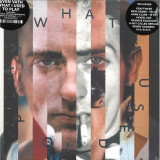
For this uniquely personal retrospective spread over twelve vinyl discs, Sven Väth takes us back to the early days of his DJ career. On What I Used To Play we meet great pioneers of electronic music, gifted percussionists, obscure wave bands, and innovative producers of a bygone 'new electronic' era. Rough beats and irresistible grooves from the identification stage of house, techno, and acid remind us not just how far electronic music has evolved over the past four decades, but how great it was to dance to EBM, techno, and house for the very first time.
If there is one protagonist of the electronic music scene who has remained curious, innovative and at the very cutting edge of music for over four decades, it's Sven Väth. His multi-layered artist albums and Sound of the Season mix compilations have been defining the genre for over two decades, and even today, he is constantly on the lookout for the next top tune to add to the highlights of his next set. At least, that's the case when he's not producing them himself as an artist or remixer. "Actually, it's always been part of my DNA to think ahead," and nothing had been further from his mind than looking back at his past, but when in spring of 2020 the international DJ circuit had to be scaled down to virtually zero, the 'restless traveler' suddenly had time. Time to stop and reflect on "how it actually was back then, at the very beginning of my career..."
"It was a great trip and with every track, beautiful memories came flooding back".
In the London apartment, he had just moved into, Sven has set up a "little music room", where he cocooned himself for several days, "to look way back for the first time and review my musical journey through the eighties, so to speak."
The interim result was six thematically oriented playlists with a grand total of 120 tracks from 'early 80s' to 'Balearic late 80s', together with excursions into afrobeat, European new wave, and EBM sounds and a few epochal techno/house tracks from the USA in between. From these 'Best of Sven Väth's favorites', the project What I Used To Play crystallized. Sven remembers how the Cocoon team reacted to his proposal: "They found the idea of making a compilation out of it MEGA from the beginning and everyone said 'Sven, go for it', but then, of course, the work really started, namely, to clear the rights and to get clean sounding masters of the up to 40-year-old tracks. There was also disappointment, of course. We couldn't clear certain titles because the rights holders in the USA had fallen out with each other or simply disappeared from the scene. In short, it wasn't easy, but now I can safely say we got the most important tracks."
Finally, after two years of research, curation, design, and administrative fine-tuning, the "little retrospective" from 1981 to 1990 is available. The exquisitely packaged, and three-kilo heavy box set is not only physically impressive, WIUTP is also the definitive record of Sven Väth's musical development. On each of the twenty-four sides of vinyl, you can trace track by track, what influenced him during which phase, and how he took off as a DJ from his parents' Queen's Pub straight into the spotlight at Dorian Gray. There and at Vogue (later OMEN), Sven became the style-defining player in the DJ booth that he still is today.
1981 - 1990: Future Sounds of Now
In the early eighties, the crowd in clubs like Vogue and Dorian Gray danced to what nowadays we call 'dance classics' - mainly disco, funk, soul, and chart pop. It was up to a new generation of DJs, including Sven Väth, the youngest protagonist in the Rhine-Main area at the time, to create their own club-ready music mix. Good new tracks and potential floor-fillers were rarities that had to be sought out and found, in order to prove oneself worthy.
Without MP3s, internet streaming, or other digital download possibilities, music didn't just gravitate to the DJ, instead, it had to be tracked down. In well-stocked record stores in Frankfurt and Wiesbaden or even in Amsterdam, London, or New York, Sven and friends sourced the material for countless magical nights. On WIUTP we can follow Sven's very personal journey through this wild, innovative era in which synth-pop, funk, hip-hop, and disco were successively replaced as 'club music' by house, techno, acid, and breakbeat. By the end of the decade, it was clear to see that these once exotic 'fringe' phenomena would soon become 'mass' phenomena.
Early 80s
Dirty Talk by the Italian-American duo Klein & M.B.O. represents the most innovative phase of the Italo-disco genre in the early eighties like no other track. Mario Boncaldo (I) and Tony Carrasco relied entirely on the original synthetic drum and percussion sounds of the Roland TR-808, coupled with the raunchy vocals of Rossana Casale and guitar accents of Davide Piatto. Of course, other tracks from this period were also influential in style, most notably Unit by Logic System, which worked as the perfect soundtrack to the laser lighting system at the legendary Dorian Gray club. With stomping beats and robotic rap interludes, Bostich by Yello also belongs on Sven's eternal playlist - after all, it caught the attention of Afrikaa Bambaataa, who invited the Swiss duo to perform at the Roxy in New York in 1983.
EBM Wave - Mid 80s
From today's point of view, the almost ten-minute-long, downtempo track Giant by Matt Johnson's band project The The, would probably not be considered an obvious club classic. However, a closer (re)listen reveals the rhythmic intricacies of the percussion overdubs by JG Thirlwell (aka Foetus) on Johnson's composition, and it becomes clear why this exceptional piece of music is one of Sven's absolute favorites. Other classics from this phase include Kaw-Liga by the mysterious The Residents, the hypnotic-synthetic Our Darkness by Anne Clark (and David Harrow), and last but not least, the somber, monotonous anthem Where Are You? by 16Bit, one of Sven Väth's projects together with Michael Münzing, Luca Anzilotti from 1986.
US House - Late 80s
You certainly can't talk about Chicago house without mentioning Frankie Knuckles. The resident DJ at the Warehouse not only gave the name to an entire genre, but also produced epochal floor fillers on the Trax label like the timeless Your Love, sung (and moaned) by Jamie Principle. Acid house protagonists Phuture also hail from Chicago, and on We Are Phuture (also released on Trax) we hear the chirping acid sounds of the legendary Roland TB-303 in full effect. Another featured classic is No UFO's by Detroit's Model 500 aka Juan Atkins, who is rightly considered the 'Godfather of Techno' even if the genre-defining track from 1985 still breathes with the spirit of hip-hop and electro from the first breakdance era.
Afrobeat
Le Serpent, by Algerian-born Abdelmadjid Guemguem, is a track that sounds completely different from everything else on WIUTP. Made in 1978, it's a monumental, rousing groove created without bass or synths, just with five congas! Even though Guem sadly passed away in 2021, his immortal, acoustic beats are understood all over the world and will continue to enrich many thousands of DJ sets for years to come. Another classic that not only Sven appreciates beyond measure is Hugh Masekela's Don't Go Lose it, Baby. In addition to being one of the most important jazz pioneers, the trumpeter and freedom fighter from Johannesburg was very experimental, integrating electronic sounds into his music in later years, in a similar vein to Miles Davis and Herbie Hancock. Dutch jazz pianist Jasper van't Hof's afrobeat project Pili Pili has also aged well. The trance-like, almost sixteen-minute-long track of the same name, manages to fill a whole side on the seventh of twelve vinyl discs in the WIUTP box.
UK-US-Euro - Late 80s
Time for a change of scene, in the truest sense of the word, and from a musical perspective, this section is like landing on another planet. First up is Andrew Weatherall's classic remix of Primal Scream's Loaded, featuring the iconic Peter Fonda sample (lifted from the 1966 biker film Wild Angels) that came to personify the mood triggered by the British Second Summer of Love in the late eighties: "We wanna be free to do what we wanna do, and we wanna get loaded...". This period also saw the emergence of M/A/R/R/S whose only single, 1987's Pump Up The Volume, became a club classic with support from DJ legend CJ Mackintosh. In this most eclectic of sections, we also encounter New York house and reggae producer Bobby Konders and his seminal Nervous Acid.
Balearic - Late 80s
Those who know him, know that Sven had already lost his heart to the 'magic island' of Ibiza as a teenager, so with that in mind, the WIUTP project couldn't end without a Balearic chapter. Inspired by Manuel Göttsching's E2-E4, the immortal, eponymously titled Sueño Latino belongs in there without question. Equally popular on the island was, and still is Break 4 Love by Raze, which thinking about it, would also fit perfectly into the house chapter. Last, but not least, there's an overdue reunion with Sven Väth himself, in his role as frontman of the successful Frankfurt trio OFF. Together with Michael Münzing and Luca Anzilotti (later of Snap!) this 'Organization For Fun' created the off-the-wall club hit Electric Salsa in 1986 which incidentally turned into an international chart smash, putting Sven in the enviable position of having to decide between pop stardom and a DJ career. Well, we all know how that decision turned out and the rest, as they say, is history. A not insignificant part of his story is What I Used To Play. Enjoy!
- 1: Where Is Jeremy?
- 2: Halloween Ends (Main Title)
- 3: Laurie's Theme Ends
- 4: The Cave
- 5: Cool Kid
- 6: Drags To The Cave
- 7: Evil Eyes
- 8: Transformation
- 9: Because Of You
- 10: Requiem For Jeremy
- 11: Kill The Cop
- 12: Corey And Michael
- 13: Corey's Requiem
- 14: The Junk Yard
- 15: Where Are You?
- 16: Bye Bye Corey
- 17: The Fight
- 18: Before Her Eyes
- 19: The Procession
- 20: Cherry Blossoms
- 21: Halloween Ends
BLUE MOON PHASE VINYL
After 45 years, the most acclaimed, revered horror franchise in film history reaches its epic, terrifying conclusion as Laurie Strode faces off for the last time against the embodiment of evil, Michael Myers, in a final confrontation unlike any captured on-screen before, one where only one of them will survive. As Halloween Ends marks the last chapter of the David Gordon Green trilogy, so it ushers the essential return of original director and composer John Carpenter to score the iconically hair-raising soundtrack alongside Cody Carpenter and Daniel Davies. Recorded in its entirety at Carpenter's home studio and Davies' studio, the unmistakable mix of software synths, vintage analogue equipment, and live instrumentation once again provides the signature sound of Halloween, one of the most distinctive aspects of the movie franchise to date. The soundtrack was tracked scene by scene but the album itself plays like a standalone piece of music. The general atmosphere is one of dread yet the record includes some groove laden moments reminiscent of Escape From New York or some of Carpenter's other more dance-able scores. Exquisite and delicate ambient pieces weave their way between some of the score's more arresting moments and yet maintain a subtle pop sensibility. The overall achievement showcases three master musicians, one of whom invented the entire horror-synth genre, crafting an evocative, playful and deeply listenable score that honors a legacy and expands on the decades of work that have been leading to this triumphant climax. Halloween Ends is the soundtrack of the final battle against evil. Watch your back this Halloween, Michael may be near you.
- 1: Where Is Jeremy?
- 2: Halloween Ends (Main Title)
- 3: Laurie's Theme Ends
- 4: The Cave
- 5: Cool Kid
- 6: Drags To The Cave
- 7: Evil Eyes
- 8: Transformation
- 9: Because Of You
- 10: Requiem For Jeremy
- 11: Kill The Cop
- 12: Corey And Michael
- 13: Corey's Requiem
- 14: The Junk Yard
- 15: Where Are You?
- 16: Bye Bye Corey
- 17: The Fight
- 18: Before Her Eyes
- 19: The Procession
- 20: Cherry Blossoms
- 21: Halloween Ends
After 45 years, the most acclaimed, revered horror franchise in film history reaches its epic, terrifying conclusion as Laurie Strode faces off for the last time against the embodiment of evil, Michael Myers, in a final confrontation unlike any captured on-screen before, one where only one of them will survive. As Halloween Ends marks the last chapter of the David Gordon Green trilogy, so it ushers the essential return of original director and composer John Carpenter to score the iconically hair-raising soundtrack alongside Cody Carpenter and Daniel Davies. Recorded in its entirety at Carpenter's home studio and Davies' studio, the unmistakable mix of software synths, vintage analogue equipment, and live instrumentation once again provides the signature sound of Halloween, one of the most distinctive aspects of the movie franchise to date. The soundtrack was tracked scene by scene but the album itself plays like a standalone piece of music. The general atmosphere is one of dread yet the record includes some groove laden moments reminiscent of Escape From New York or some of Carpenter's other more dance-able scores. Exquisite and delicate ambient pieces weave their way between some of the score's more arresting moments and yet maintain a subtle pop sensibility. The overall achievement showcases three master musicians, one of whom invented the entire horror-synth genre, crafting an evocative, playful and deeply listenable score that honors a legacy and expands on the decades of work that have been leading to this triumphant climax. Halloween Ends is the soundtrack of the final battle against evil. Watch your back this Halloween, Michael may be near you.
- 1: Where Is Jeremy?
- 2: Halloween Ends (Main Title)
- 3: Laurie's Theme Ends
- 4: The Cave
- 5: Cool Kid
- 6: Drags To The Cave
- 7: Evil Eyes
- 8: Transformation
- 9: Because Of You
- 10: Requiem For Jeremy
- 11: Kill The Cop
- 12: Corey And Michael
- 13: Corey's Requiem
- 14: The Junk Yard
- 15: Where Are You?
- 16: Bye Bye Corey
- 17: The Fight
- 18: Before Her Eyes
- 19: The Procession
- 20: Cherry Blossoms
- 21: Halloween Ends
Orange Vinyl
After 45 years, the most acclaimed, revered horror franchise in film history reaches its epic, terrifying conclusion as Laurie Strode faces off for the last time against the embodiment of evil, Michael Myers, in a final confrontation unlike any captured on-screen before, one where only one of them will survive. As Halloween Ends marks the last chapter of the David Gordon Green trilogy, so it ushers the essential return of original director and composer John Carpenter to score the iconically hair-raising soundtrack alongside Cody Carpenter and Daniel Davies. Recorded in its entirety at Carpenter's home studio and Davies' studio, the unmistakable mix of software synths, vintage analogue equipment, and live instrumentation once again provides the signature sound of Halloween, one of the most distinctive aspects of the movie franchise to date. The soundtrack was tracked scene by scene but the album itself plays like a standalone piece of music. The general atmosphere is one of dread yet the record includes some groove laden moments reminiscent of Escape From New York or some of Carpenter's other more dance-able scores. Exquisite and delicate ambient pieces weave their way between some of the score's more arresting moments and yet maintain a subtle pop sensibility. The overall achievement showcases three master musicians, one of whom invented the entire horror-synth genre, crafting an evocative, playful and deeply listenable score that honors a legacy and expands on the decades of work that have been leading to this triumphant climax. Halloween Ends is the soundtrack of the final battle against evil. Watch your back this Halloween, Michael may be near you.
The Belgian minimal synth band's three releases – a cassette and two vinyl EPs – were all titled »Against The Dark Trees Beyond«. This compilation collects the songs from these records.
"They were interesting times, the early eighties. Against a backdrop of cold war and economic crises, the DIY attitude of the earlier punk movement had spawned near countless new genres where artists and bands broke the three-chord guitar mould and experimented with new content matter, singular song structures and – in many cases – new instruments. Synthesizers became affordable and were no longer the sole privilege of rock millionaires. All around the globe, musical creativity boomed as never before, and Belgium was no exception: Digital Dance, Snowy Red, The Names, Pseudocode, Marine, 1000 Ohm, De Kommeniste, M.Bryo & D.M.T., De Brassers, Struggler, Siglo XX are but a few legendary names of bands and artists who started making a name for themselves.
In Leuven, things were happening as well. Until then, the music scene in this rather provincial town had been dominated by straightforward rock and blues acts. Not for much longer, though: in places like Arno'z and (later) The Gladhouse, where young budding artists met with kindred spirits, bands were often formed on the spot and, more importantly, started to make ripples.
Ludo Camberlin and Karel 'Bam' Saelemaekers already had a certain track record in Leuven's burgeoning music microcosm. But what they shared would become the cornerstone of A Blaze Colour (Against The Dark Trees Beyond): a fascination for new forms and instruments, a penchant for sonic adventure and a profound love for gripping songs. The full band name, by the way, was inspired by a phrase from the Irish-American novelist J.P. Donleavy, a writer who belongs in the definitely-worth-checking-out section.
After appearing on the first No Big Business LP (1981) with the instrumental 'Fisk', A Blaze Colour's first proper release, as was so often the case in those days, was a self-produced cassette. The music – which would later be dubbed 'minimal' – was characterized by the use of basic rhythm machines (Boss Dr. 55, mainly) and analog synthesizers (for the synth geeks: Korg Delta and MS20, Roland SH-2 and Jupiter IV, and the infamous Casio VL-1). Camberlin’s vocals, meanwhile, displayed an aloofness totally in sync with the zeitgeist. Equally important, though: all five tracks on this cassette were bona fide songs with a clear sense of structure, aided by a sonic mastery that demonstrated a high level of experience: 'Means To An End' started out as a proto-industrial track before bursting out into a moroderesque finale. The remix of 'Fisk' was as sprightly as the next river salmon, while 'Or Lie Again' proved the perfect soundtrack to a nightly walk through wet deserted streets. On the other hand, 'Through With Life', rife with disturbing sound effects countered by a slow portamento, could have been a prize track on a post punk 'Lamb Lies Down On Broadway'. And in true dramatic fashion, 'Follow The Signs' was the perfect ending of this five-song cycle: a driving sequencer and gripping chord progression coupled with a simple but powerful vocal line. Considering the limited technical means the duo was working with, this was no less than a triumph.
A few months later, the band released a seven-inch single on its own ABLACO label. 'Dark Trees Beyond', a quirky pop song, was coupled with 'Addict Of Time', a dark and brooding spoken word piece. Not the kind of single to storm hit parades, but it didn't go unnoticed. The Minny Pops' Wally van Middendorp, who had founded the Plurex label in 1978, invited A Blaze Colour to his studio in the Netherlands, to record an EP. It would prove to be a massive step forward: recording in a semi-professional studio offered great possibilities, the recently acquired TR-808 drum machine allowed for a broader rhythm palette, and the three new tracks (next to the re-recording of 'Through With Life') showed a band on the top of their game: 'The New Ones' was a wry and haunting song built around a live drum loop and an ominous bass pattern, while 'Nowhere Else' was a near-pop track with very un-minimal vocal harmonies. And it's a mystery why 'Altitude' – another instrumental – was never used in a stylized, high-profile detective soundtrack.
Another song from these sessions, the revved-up 'Cold As Ever' turned up on the high-profile Plurex "Hours" compilation, where it shone brightly, next to songs of a.o. X-Mal Deutschland, Nasmak, Minny Pops and Section XXV.
Meanwhile, Camberlin had already carved out a bit of a reputation for himself as a producer, while Saelemaekers was a respected graphic designer. It remains uncertain if this played a big part in the end of A Blaze Colour, but the fact remains: as studio recordings go, 'The Ultimate Fight' on the "No Big Business 2" compilation, was to be their swan song. What a way to go, though: maybe their best song ever, this was a synthetic bastard funk groove, complete with shout-out chorus and punch-drunk middle-eight. It shut a door, for sure, but it did so with a resounding bang.
So there it is and there it was. Short, sweet, visionary, pioneering and highly influential. And as anybody listening to this first ever compilation will be able to assess probably one of the most colourful electronic acts of its time.
On a more a personal note, A Blaze Colour proved to be instrumental in my own coming of age as a lyric writer, when Ludo and Bam graciously adopted some of my earlier writings, warts and all. To hear them translated into songs was no less than magic, and it certainly gave me the confidence to start our own band a bit later. And the magic continued when Ludo became our producer and Bam designed our record sleeves. But that’s another story, obviously. Because this is the place and the time to dive back into the wondrous world of A Blaze Colour!"
Bart Azijn (Aimless Device)
LIMITED PRESSING OF 2000
A SIDE
(Sabaody/Fishman Island/Punk Hazard) :
- To the New World!!
- Rebirth! The Straw Hat Pirates
- Jinbei Strait
- Surgeon of Death
- Master's Scornful Laughter
- Enemies Appear
- Spirit Of Guru
-The Weak Power Strengthens!
- A Man's Battle
B SIDE
(Dressrosa)
- I Think Of The Past
- Go Go! The Straw Hat Pirates!!
- Country of Love, Passion & Toys, Dressrosa
- Frenzy! Colosseum
- Donquixote Doflamingo
- Trafalgar Law
- Admiral "Fujitora"
- Violet's Dance of Passion
- Love Cannot Be Stopped
- Fight in the Colosseum
- Fierce Battle in the Colosseum
C SIDE
(Dressrosa/Zou)
- Revolutionary Army's Chief of Staff, Sabo
- Gear Fourth
- Ballad of Sadness
- Approaching! Birdcage Encirclement
- Doflamingo ~Overwhelming Force~
- The Thousand Year Island, Zou
- Garuchu~!!
- The Mink Tribe's Battle
- The Samurai and Mink Tribe's Bond
- Dressrosa's Hidden Secrets
- Brook ~Healing Violin~
- Eyecatch ~New World Version~
D SIDE
(3D2Y/Heart of Gold)
- To the Origin of Ace!
- Main Title ~ Teachings of Rayleigh
- Things We Desired
- World VS Luffy: Final Battle
- Destroyer of the World! World
- Loneliness, Solitude
- Gathering of the Straw Hat Pirates! Towards Battle
- Releasing the Trap
- Straw Hat Pirates VS Mad Treasure
- Luffy, to Victory
- Escape from Bonbori-sama
- Next Time Preview ~We Go! Version
"A new force, LEAGUE OF DISTORTION, unite to defeat the shadows cast upon the music scene with their fresh sound and style! Back in 2017, Anna Brunner celebrated remarkable international success with her symphonic metal band Exit Eden, and now, teams up with notorious guitarist Jim Müller - known from his famous heavy metal band Kissin’ Dynamite. Together, they’ve formed one of the hottest modern metal upstart bands of the year, combining their signature sounds to create a powerful soundscape. Now, having recently signed with Napalm Records, they are ready to fight the darkness yet again with their 2022 full-length, self-titled debut album, League of Distortion. Lifting the dark veil of stagnation caused by the pandemic, LEAGUE OF DISTORTION introduce a new sound that resonates with the uncertainty of this period. “Wolf or Lamb” - the addictive first stand-alone single that introduced the band as a force to be reckoned with - ushered in a completely new era by serving modern, melodic rhythms and technical prowess, igniting the fire of the full album, League Of Distortion. “Rebel By Choice” and “The Bitter End” show the band’s burning passion and dedication to the genre, while “My Revenge” convinces with a catchy hook and bashing guitar riffs. The elemental force of Anna “Ace” Brunner’s distorted, powerful voice merged with chunky riffs played by Jim “Arro” Müller, steady and strong beats delivered by Tino “Aeon” Calmbach and edgy bass by Felix “Ax” Rehmann unifies them, forming a strong blast of an album that cannot be missed! LEAGUE OF DISTORTION showcase the individual musical expertise of its members without ever becoming stagnant or pretentious - unabashedly distorting the order and launching a new age of metal. Songs like “I’m A Bitch” and “It Hurts So Good” abandon all rules, while catchy hooks like in “L.O.D.” mark anthems to claim their new reign. With songs like “Solitary Confinement” and “Sin”, the band shows their lyrical depth by turning their sadness into a powerful war cry, providing expressive pieces and hymns for the lost. LEAGUE OF DISTORTION convince with classic pieces featuring strong instrumentals, on-the-nose lyrics and energetic vocals, proving their penchant to stand out from the pack. They’ve transformed their frustration into a musical statement beyond compare. With “Do You Really Think I Fucking Care”, the band lands the final punch of the album to make the message clear: LEAGUE OF DISTORTION are here to set the scene ablaze! "
LIMITED WHITE COLOUR
Zwei Jahre nach ihrem mehrfach zum Album des Jahres gekürten Debüt für das Label Epitaph ("On The Impossible Past", 2012) veröffentlicht die Punkrockband The Menzingers ihren vierten Longplayer. "Rented World" entstand in Philadelphia, Pennsylvania. Erstmals an den Reglern: der Produzent Jonathan Low, dessen unverwechselbarer Americana-Sound schon die Werke von The War On Drugs, Sharon Van Etten, Kurt Vile und The National bereicherte. In der Vergangenheit haben The Menzingers bereits mit Bands wie Against Me! und Anti-Flag gespielt. Label-Boss und Bad-Religion-Gitarrist Brett Gurewitz über die 2006 gegründete Band: "Die Jungs spielen genau den reinen Punkrock, mit dem ich aufwuchs." Für Fans von Title Fight, Tigers Jaw, The Lawrence Arms, Frank Turner und Against Me!
LP is black vinyl + LP3 insert for full album Download. Check out the first 18 or so seconds of “Can I Ride”, the title track on the first release by Polvo, the two-guitar juggernaut that represented the other side of Chapel Hill indie rock (more on that in a moment). That two-note riff, and the guitar twang that follows, recalls the opening notes on another monster song: “The Sprawl”, a key track on Sonic Youth's epochal Daydream Nation, an album released in October 1988, less than two years before Polvo formed. This compilation's nine tunes—the first seven from the Can I Ride double 7” EP (1990), the last two from the “Vibracobra” b/w “The Drill” 7” (1991) are not quite the sound of a torch being passed, but they were a sign that Sonic Youth's weird tunings, the hardcore punk and proto-indie rock on SST Records, and R.E.M.'s hazy rock (three big influences on this era of Polvo) were changing lives. Even back then, the impossibly catchy roar from Merge’s flagship act Superchunk was known to outsiders as the sound of Chapel Hill. But Polvo was something different from the same region. While the band never cottoned to the “math rock” tag (and it’s hard to disagree with them), there is no question that there was a distinct “how can we make guitar rock sound different from all the other guitar rock” vibe going on in the mid-Atlantic, from Richmond (math rock’s true home, don’t @ me) to the North Carolina Triangle over to Louisville and down almost to Atlanta. (If the Mastodon dudes aren’t down with Polvo, I’ll eat your shoe.) No, Polvo were their own brand of squall, not afraid of big hooks (“Leaf ”), odd tempos and textures (“Lull”) and rolling thunder (“Totemic”), and answers to the musical question, “What if the Feelies grew up on Dinosaur Jr.?” (“Tread on Me”). Indie rock? Not the 2022 kind. Math rock? Eh, not really. This was the sound of a new Southern rock, of a pre-internet guitar storm that looked at what came before and said, “What's next?” Track listing: Side A 1. Can I Ride 2. Leaf 3. Lull 4. Totemic 5. Tread on Me. Side B. 6. Teen Dream 7. Snake Fist Fighter 8. Vibracobra 9. The Drill
Wah Wah 45s are proud to present a new set of remixes, as well as originals released on vinyl for the very first time, from Afrobeat supergroupEparapo. Having come togetherduring the unprecedented events of the pandemic and the Black Lives Matter movement, and despite being a project born from the privations of lockdown, their music is ultimately an expression of hope, resilience & resurgence.
The word "eparapo" means "join forces" in Yoruba, the language of Afrobeat. It's also the title of a track by the late, greatTony Allen- drummer for Afrobeat legendFela Kutiand lifelong friend and mentor of our very own "Afrobeat Ambassador",Dele Sosimi. Not only did Tony help to invent Afrobeat, he always looked for ways to push the boundaries, never content with recreating what had gone before but constantly expanding and developing the genre. This project hopes to pay homage to his legacy, and that of Fela Kuti himself. Its aim is to innovate, fuse and diversify while still retaining the essence of the music.
The force behind Eparapo is bassist, composer & producerSuman Joshi.He has been a member of Dele Sosimi's Afrobeat Orchestra for nearly a decade and has performed on stage with the likes of Tony Allen, Seun Kuti, Ginger Baker & Laura Mvula. He is also bassist with UK jazz ensemble Collocutor and fusion project Cubafrobeat.
Featured vocalist on both original tracks, and remixes, is the aforementioned Dele Sosimi - keyboard player and musical director for Fela's Egypt 80 as well as Wah Wah 45s recording artist on both his solo material and the recent collaboration with house music producer, Medlar.
The rest of the group comprises of bandleader ofAfrik Bawantuand percussionist for Ibibio Sound Machine and Keleketla,Afla Sackey; highly rated UK jazz vocalistSahra Gure; saxophonist, composer, producer and bandleader of the renowned forward thinking jazz outfit Collocutor,Tamar Obsorn; keyboard player, producer and front man for Lokkhi Terra and Cubafrobeat,Kishon Khan; one of the UK's finest and most in demand trumpeters,Graeme Flowers, who has played with Quincy Jones, Gregory Porter and many more; trombonist for Bellowhead and mainstay of Dele's Afrobeat Orchestra,Justin Thurgur; and finally drummer for Steamdown and Sons of Kemet, as well as the man behind the Nache project,Eddie Wakili Hick.
From London To Lagoswas inspired by a talk given by writerRoberto Savianoat the Hay Book Festival in 2016, just before the Brexit referendum. In it he described the UK as the "most corrupt country in the world". This was a reminder of how the leaders of so-called developed countries, conveniently suffering from colonial amnesia, still point disparagingly at the rest of the world and talk of "endemic corruption" and "Banana Republics". All the while the ill-gotten gains of organised crime syndicates, corrupt multinationals and military juntas across the globe are funnelled through financial centres such as London. Same trouble, different methods, greater scale. Of course the best way to divert the population from all this is to find distractions such as populist leaders who declare their countries "world beating" and scapegoats such as refugees, immigrants and other members of the underclasses. It has always been thus but it doesn't always have to be so.
This track was once more recorded remotely during lockdown and features an all star lineup of world class musicians from the UK Afrobeat and jazz scenes. Members of the Dele Sosimi Afrobeat Orchestra, Keleketla, Sons of Kemet and beyond have come together to create this powerhouse of a band. They encapsulate the meaning of "eparapo" and "join forces'' to fight a common enemy in the shape of corrupt and divisive ideologies.
Its remix comes fromWheelUP- the moniker of West London broken beat revivalist Danny Wheeler, who here delivers something of a smoother straight up Afro flavoured house workout that's sure to be heard across dance floors and festivals this summer. The Tru Thoughts signed artist adds gliding synths and tight drums that ride the original's hypnotic melody perfectly and make for a future club classic.
Black Lives Matterwas obviously inspired by the movement of the same name and was the first track to be released by Eparapo in late 2020. Dele's voice tell the story slave ships leaving West Africa in the fifteenth century, the brutal conditions that were experienced on board, and the continued suffering of the African diaspora today. As always, half of the artist's income for this song will be donated to the NAACP - a civil rights organisation in the United States, created for the advancement of black people by means of following judicial policies.
The remix here comes from Birmingham based producer signed to Jalapeno Records,Sam Redmore. Sam's love for breaks and beats comes into play well here, subtly chopping up the original to create a bass worrying version that still sends that very important message of justice and equality - Black Lives Matter!
a 01: From London to Lagos (WheelUP Remix) feat. Dele Sosimi
[c] 03: Black Lives Matter (Sam Redmore Remix) [feat. Dele Sosimi]
- 1: River Of Birds
- 2: Who Let The Sheepdogs Out?
- 3: Authorities > Authority
- 4: The End Is Nye
- 5: Imperialist Pigs In Space
- 6: Cattle Tyrant
- 7: Q And Children A Real Children
- 8: Love And Science 1
- 9: Judas Goat
- 10: Defy Extinction
- 11: Outlive The Bastards
- 12: Ch@D
- 13: Blizzard Brigade
- 14: Love And Science 2
- 15: New World Vultures
- 16: Biomass
- 17: Youtube Disasters
To say that R.A.M.B.O. occupies a singular space in punk history is an understatement. During their initial run from 1999 to 2007 the Philadelphia band took influences from thrash, anarcho-punk, d-beat, crust, and hardcore and combined that with intelligent but very fun – and at times downright ridiculous – lyrics to create what was very much a DIY powerhouse. In those eight years they released two albums, 7" splits with Crucial Unit and Caustic Christ, and played thousands of gigs across the country and across the world. They might have gone out at the top of their game but now, 15 years later, R.A.M.B.O. is back with their aptly titled new album, Defy Extinction. This is not a nostalgia trip, or an attempt at recapturing past glory; R.A.M.B.O. have their sights trained on the present. On these 16 tracks of pounding epic crust-infused hardcore punk and beatdowns, R.A.M.B.O. is imploring you to believe in science, fight authoritarianism, and most of all DEFY EXTINCTION!
ASA 808's new album Boy, crush is a very personal inner journey as well as a call to fight and free ourselves from toxic masculinity. In eight tracks that subtly merge electronica, ambient, breakbeat and house, the Berlin-based artist process their own quest for gender identity. Out on vinyl and digital via the TOYS Berlin imprint, the album proposes new, softer and more diverse forms of gender fluidity.
ASA 808 invites listeners to expand their views of the gender spectrum. The title Boy, crush plays with the term "boy crush" and is meant as an encouragement for all men to "collectively crush manhood" with all its toxic traits and consequences:
"Toxic masculinity has kept our grandmothers and mothers small and brought deviant boys into line. It took me a long time to unlearn so much sexism and queerphobia and find my inner queer child again to let it grow, bloom and shine. I dream of a world in which men emasculate themselves. In which masculinity (if we feel it's still needed) will embrace softness, weakness, vulnerability, solidarity, consideration, mindfulness, self-reflectiveness and nonviolence", explains the non-binary producer and DJ who discovered their gender-nonconforming side already at an early age.
- A1: Plays Albert Ayler 1 10 01
- A2: Plays Albert Ayler 2 09 45
- B1: Plays John Cassavetes 1 09 58
- B2: Plays John Cassavetes 2 09 57
- C1: Plays Hubert Fichte 1 10 01
- C2: Plays Hubert Fichte 2 09 59
- C3: Plays Cornelius Cardew 1 04 01
- D1: Plays Cornelius Cardew 2 04 03
- D2: Plays Robert Johnson 1 04 04
- D3: Plays Robert Johnson 2 04 00
Ekkehard Ehlers' seminal plays series was originally released on three 12inches (Staubgold) and two 7inches (Bottrop-Boy) in very limited runs. The entire series was previously only available as a CD compilation or digitally. Keplar finally presents it on double vinyl for the first time, featuring a new cover artwork.
Domestic ethnology: Ekkehard Ehlers plays.
‘Play’ is a word in English with many meanings attached. Each one sends you down a different cognitive pathway. When I think of ‘playing’, in the sense of a game, I think of an activity involving more than one person. When Ekkehard Ehlers plays, he is very much on his own. Or, at least, alone but at the same time keeping intimate company with the artistic innovators named in his titles. Robert Johnson. John Cassavetes. Albert Ayler. Cornelius Cardew. Hubert Fichte. Is he playing with them, against them, about them, for them, to them? This can never be known.
It is certainly a mistake to try to hear the ‘work’ of these originals in the sounds played by Ekkehard. They’re not cover versions. They’re hardly tributes in the conventional sense. Cassavetes and Fichte are not even musicians, although music played an important part in both their careers. Sure, there are little nods and flashes of recognition – tiny guitar licks among the minimal beats of ‘Robert Johnson 2’; rich bowed instruments in ‘Albert Ayler’, recalling the violin, cello and double bass arrangements on Ayler’s 1967 Live in Greenwich Village LP; the elongated organ lines of ‘Cornelius Cardew 1’ gesturing towards passages in Paragraph 1 of the British composer’s 1971 Marxist monolith, The Great Learning. Ekkehard is not so much playing these figures as allowing himself to be played by them.
Playing as an activity also suggests freedom. Maybe the only thing all five named persons have in common is that they were all quiet radicals. In music, literature and cinema, they all stepped, without self-promotion or fanfare, into unmapped territories. Once there they found it necessary to invent new languages in order to survive. Necessity was the mother of their inventiveness. They were also uncomfortable avant gardists. Lonely types, fighting their corners out on the margins, with little reward, often misunderstood, ridiculed or ignored.
All died unfairly young. Fichte a victim of HIV/AIDS, Cassavetes of cirrhosis of the liver. (‘Cassavetes 2’ sounds like a tender farewell played across the 59 year old alcoholic director’s death bed.) The deaths of Johnson, Ayler and Cardew have never been satisfactorily explained, and remain shrouded in myths and conspiracy theories. The pioneering expeditions of all five began in that spirit of playful freedom, but inexorably drew them towards the heart of darkness.
So these ‘plays’ are micro-dramas, sonic soliloquies, monolog-ins to the private accounts of various geniuses in Ekkehard’s ‘follow’ list. Hacked sensibilities. Artistic manifestos boiled down and distilled, skinned and dried in the digital smokehouse. (Ekkehard Ehlers Flays.) Each of these plays was originally floated out into the world alone on its own disc. The collected works play well as a team – a tranquil, introspective experience where each artist has his own identifiably unique sound character. As an album, Plays is a ‘Plattenragout’ – a ‘record stew’ – which was the title of Hubert Fichte’s LP review column in the leftist culture magazine konkret in the 1960s. The novelist’s work investigating the cultures of South America and the Caribbean islands has been called ‘domestic ethnology’. The writer himself referred to his ‘ethnopoesie’. Ekkehard Ehlers’s intuitive electronic portraits are a form of domestic ethnology in themselves. Invoking another of Ekkehard’s musical aliases, they are portraits of cultural ‘autopoiesies’ – creators whose works were strong enough to have their own self-regenerating life force. (by Rob Young)
All tracks written and produced by Ekkehard Ehlers.
Featuring Stephan Mathieu, Joseph Suchy, Anka Hirsch.
Tracks A1 to C2 originally released on three 12inches via Staubgold.
Tracks D1 to D4 originally released on two 7inches via Bottrop-Boy.
Plays originally released as CD compilation in 2002 by Staubgold.
Mastered by Rashad Becker.
Cut to vinyl by Lupo, Berlin, 2022.
Redesigned by Sandra Kastl, 2022.
Photos by Ludger Blanke
Transparent Orange[27,69 €]
When times are tough, or you’re feeling worn down, you start longing for a life of total peace. A life where there are no fights, arguments or lies; where there is no such thing as disappointment and your actions have no consequences. Some might call it a “fantasy world”. Genre-jumping Belgian trio Brutus call it the “Unison Life” – a phrase that titles their third studio album. Unison Life is about all the stuff that wears you down in the first place. It’s the ugliness, the pain, and the acts of bravery that get you through it all. Beginning with a portrait of contentment and unravelling from there, the album goes into battle and asks what really counts. In their own words: “Is this Unison Life a hoax? Or a quest?”
Since their formation in 2014, Brutus have made a name for themselves with their restless, emotionally raw rock that traverses the landscape of metal, punk, post-hardcore and beyond – often in the same song. The three members first met in their hometown
Turquoise Vinyl[26,01 €]
When times are tough, or you’re feeling worn down, you start longing for a life of total peace. A life where there are no fights, arguments or lies; where there is no such thing as disappointment and your actions have no consequences. Some might call it a “fantasy world”. Genre-jumping Belgian trio Brutus call it the “Unison Life” – a phrase that titles their third studio album. Unison Life is about all the stuff that wears you down in the first place. It’s the ugliness, the pain, and the acts of bravery that get you through it all. Beginning with a portrait of contentment and unravelling from there, the album goes into battle and asks what really counts. In their own words: “Is this Unison Life a hoax? Or a quest?”
Since their formation in 2014, Brutus have made a name for themselves with their restless, emotionally raw rock that traverses the landscape of metal, punk, post-hardcore and beyond – often in the same song. The three members first met in their hometown
OVERVIEW: When an ancient monster that laid waste to planets when the dinosaurs roamed Earth is accidentally released from its underground prison, there's only one kaiju you can count on to defend us all: Mothra! Directed by Okihiro Yoneda with a story by the great GODZILLA creator Tomoyuki Tanaka, REBIRTH OF MOTHRA sees the legendary lepidopteran protect the human race from Belvera, the evil sister of Mothra's twin priestesses. She wants to destroy the world with the superspace demon beast Desghidorah, a three-headed extraterrestrial dragon. But Belvera and her monster aren't counting on the larva of Mothra joining the fight. Enter Mothra Leo! Brought into score REBIRTH OF MOTHRA was Toshiyuki Watanabe, son of the great tokusatsu and anime composer Michiaki Watanabe (YOKAI MONSTERS: 100 MONSTERS, MAZINGER Z), who lived up to his legacy by supplying a bold and thrilling orchestral score. Watanabe's music is full of ethereal beauty, with a fantastic opening title cue replete with a glorious female choir to celebrate Earth's greatest defender and full-blooded brass magnificence as Mothra and son fight against the evil Belvera and Desghidora. And of course, it wouldn't be complete without Yuji Koseki's classic Mothra's Song: Over time, oversea, like a wave - our guardian angel! (Charlie Brigden)


![Eparapo - From London To Lagos (Remixes) [feat. Dele Sosimi]](https://www.deejay.de/images/l/1/5/1008215.jpg)