Âsan’s self-released Beychen EP is a raw odyssey through the chaos and catharsis of creation. Across four relentless tracks, the producer mirrors the turmoil of nearly losing their passion for music—only to rediscover it by dismantling old habits and surrendering to the unknown. What emerges is a vortex of psychedelic techno, where layered rhythms spiral into the deep-down and morphing soundscapes warp time itself.
The title track Beychen channels the claustrophobic unease of a creative block with its brainmelting progression, only to erupt in a complete loss of control and, therefore, relief. The other three tracks deliver visceral techno in similar fashion, each piece evolving like an own entity with hypnotic force. This is music for darkened rooms and muddy forest stages, where the dancefloor becomes a mirror for Âsan’s internal reckoning. Here, the anxiety of creation is not conquered, but alchemized.
Âsan, a New York-based producer and co-founder of the label Cellar Door, always chases a certain feeling in his work—an elusive sensation that guides his creative journey. For him, dancing begins in the head, as rhythms and soundscapes take shape in a space between thought and intuition. His music invites listeners to step into that headspace, where the body follows the mind’s spiraling patterns.
Buscar:title tracks
The Ibex Band, with Giovanni Rico and Selam Woldemariam at the creative helm, provided the musical backbone for legends like Aster Aweke, Girma Beyene, Tilahun Gessesse, Mulatu Astatke, and Mahmoud Ahmed, including the iconic album Ere Mela Mela, shaping modern Ethiopian music as we know it today. This 1976 album (Ge’ez Year 1968) played a pivotal role in that legacy and has now resurfaced to set the record straight.
There’s a tendency to talk about the seventies as a golden age of Ethiopian music. There are good reasons for that, and just as good reasons against it. However, the notion of a golden past privileges the role of Western explorers and suggests that the pinnacle of Ethiopia’s musical culture is something only a foreigner can appreciate and unearth. It downplays the complexities of Ethiopia’s culture and history, creating an artificial divide between then and now. And it underestimates the constantly evolving sound that has followed.
The legendary musical outfit The Ibex Band, later metamorphosed into The Roha Band, has played a central role in defining the sound of many of the greatest stars on the music scene of Ethiopia from the mid-seventies onwards–but their golden output has never really waned. The story of the origins of the band that provided the musical backbone for greats such as Aster Aweke, Girma Beyene, Tilahun Gessesse, backing the solo career of group member Mahmoud Ahmed as well as backing Mulatu Astatke and many others has yet to be properly told.
Two misconceptions plague the image of Ethiopian music, one is that the music is pure because it is, by some notion, unexploited, the other is that it is all traditional. To begin with, a combination of political changes between the late sixties and the mid-nineties created an environment where only the most dedicated and skilled musicians struggled on and pursued a musical career against fierce odds. The whole Ibex Band, with Giovanni Rico and Selam “Selamino” Seyoum Woldermarian at the creative helm, are arguably the origo of the vibrant scene in the mid-seventies, and the said pair are foremost responsible for not only navigating the band through troubled times, but also modernizing the 6/8 chickchicka rhythm to a contemporary form. Giovanni laid the rhythmic foundation with heavy looped basslines that reinvented traditional melodies as dance music, and with Selamino’s innovative guitar work they influenced scores of musicians from Abegaz Kibrework Shiota to Henock Temesgen. Even Giovanni’s Fender bass and Selamino’s Gibson guitar inspired younger musicians in their choice of instruments. Not only in choice of instruments but also in sound–even as the digital revolution hit Ethiopian music, a lot of popular music still took its cue from the masters from Ibex and Roha.
Ibex emerged out of the ashes of the sixties group the Soul Echos band, adding Giovanni and Selamino to their ranks and taking their cues from a slew of influences, such as Motown and The Beatles, fused with traditional music. A tighter-knit unit than most bands at the time – Ibex has remained six to seven members throughout their whole career, compared to many bands that were as large as fifteen or sixteen men strong when Ibex set out. Their playing has been viciously focused, economical yet heavy. Just a year before the recording sessions of the album in your hands, Giovanni and Selamino made a contribution to the popular musical lexicon of Ethiopia that was simply defining the popular sound: their arrangement and recording of bandmate Mahmoud Ahmed’s solo effort and real commercial breakthrough tune and eponymous album, Ere Mela Mela, from 1975.
Selamino has never limited himself to being an adroit lead guitarist, but has always been a scholar of history, and as such he has probably contributed as much to modern Ethiopian music with his guitar playing and compositions as with a deepened understanding of modern or contemporary – Zemenawi – Ethiopian music. Selamino’s contributions serve as a metaphor for those of the whole band, at one and the same time creating and defining a new, danceable and updated sound anchored in Giovanni’s bass, whilst also elevating the broader scene through their support for others on the scene and on top of that, increasing the understanding of the music.
There is an understandable desire to romanticize the musical heyday Ibex and Roha were at the forefront of, because so much of the output is sorrowfully hard to come by. Ibex creativity was nothing short of ridiculously fierce compared to many of their Western contemporaries. Based on their sheer recorded output alone they could have usurped the title “hardest working in show business” from James Brown, recording more than 250 albums or 2500 songs in the seventies and eighties. Some only surface as cassettes today, others were never given full LP release, and some are simply impossible to find today. In the light of that, it’s nothing short of a miracle that the recording Stereo Instrumental Music from 1976 (Ge’ez Year 1968) has resurfaced. Unearthed in perfect condition on a chrome cassette, this is musical history comes alive–to set the future straight. Stereo Instrumental Music was recorded in collaboration with Karl-Gustav Lundgren, a Swedish national working for the Radio Voice of the Gospel. It took two sessions at the Ras Hotel ballroom in Addis Ababa. The Ibex Band was the first band in Ethiopia to employ a four-track recorder for their recording (the first available in the country, lent by Karl-Gustav). Later the same week, Giovanni and Selamino realized that, lengthwise, the recorded material fell short of what they wished for, so they recorded four more tracks in one more session on a single-track recorder. The Ras Hotel and Ghion Hotel, where the Ibex Band held musical residencies were to Ethiopia in general and Addis Ababa in particular what Motown was to the USA and Detroit a few years earlier – a hotbed of musical creativity and showmanship.
The most astonishing thing about Ethiopian music of the last half century is how tradition and modernity are intertwined. Because of this feature, it’s kind of hard to tell when there ever was or when we are in a “golden age”. So much of music from the past has been criminally neglected, but because of the hardships in the past, it would be an oversimplification to say that said past was a golden age. Probably, the golden age is what we are approaching, because for the first time both the past and future are accessible, and the monumental contributions from before can lay a firm foundation for a thriving music scene today. The Ibex Band stands firmly in the past, present and the future. That, if anything, is golden.
The detailed history of Stereo Instrumental Music is in many ways unique. To begin with, it couldn’t have been recorded earlier (there were no four-track recorders available) and it really couldn’t have been recorded afterwards either, at least not in the years directly following, because of the toll the musical scene took from the unfavorable political climate that followed when the nascent Derg regime and rival groups tried to assert themselves, the musical equipment lent from The Voice of Gospel Radio simply disappeared from Ethiopia when the radio station folded in 1977. Karl-Gustav Lundgren,
the Swedish foreign national who assisted during the recording, worked with the Ethiopian Evangelical Church Mekane Yesus at the time, recalls how they only had about fifteen minutes to get the microphones in place for the recording as to not alert neither the management at Ras Hotel nor the authorities and most importantly, to complete the recording before the curfew came into effect at midnight. In leaping to the opportunity to use previously unavailable equipment to push their sound forward and improvising to meet the logistical challenges, the Ibex Band displayed the very avant-gardism and adaptability that explains their longevity as a band through the years. The recording of Stereo Instrumental Music is from a given time in history, but it sounds as beyond time.
Much of the energy that burst out of the scene that Stereo Instrumental Music came out of dissipated or got sidetracked during the societal changes Ethiopia went through in the 1970s and 80s. Whilst leaders might have professed to be revolutionary, the work ethic of the Ibex Band can truly be described as that. They never called it quits, but adapted, toured extensively abroad in Africa, Europe, and the Middle East, and found ways to work even in the face of the curfew that curtailed a lot of musical life. They even played major arenas in the nineteen eighties, despite said curfew and restrictions. The whole extent of their legacy has never been told, but their music speaks louder than words, so therefore… tune in to the Ibex Band’s Stereo Instrumental Music.
- A1: Basis Rahouma - بسيس رحومة,- Yana Alla Nafsa Masouda يانا اللي نفسي مسدوده (Blocked From What I Want)
- A2: Sheikh Amin Abde -L Qader الشيخ أمين عبد القادر, Mould Fi Madina Tanta مولد في مدينة طنطا (Born In The City Of Tanta)
- A3: Samah سماح, - Shawish Aldawriat شاويش الدورية, (Patrol Sargeant)
- A4: Mahmoud Al-Sandidi محمود الصنديدي, - Ana Mish Hafwatak (Part 2) انا مش حفوتك, (I Don’t Miss Your Love)
- B1: Abu Bakr Abdel Aziz (Aka Abu Abab) أبو بكر عبد العزيز,- Al Bint Al Libya أل بينت أل ليبيا (The Girl From Libya)
- B2: Sheikh Amin Abdel Qader الشيخ أمين عبد القادر, - Mawal Al Layl Kolo Makasib موال الليل كله مكاسب (Mawaal: The Spoils Of An All-Nighter)
- B3: Abu Saber أبو صابر, - Ya Allah Ank Zinat يا الله انك زينة (Oh, God, You Are Beautiful)
- B4: Reem Kamal ريم كمال, - Baed Al Yas Yjini بعد اليأس يجيني (After Hopelessness, He Comes To Me)
“Egypt’s “official” popular music throughout much of the 20th Century was a complex form of art song steeped in tradition, well-loved by the middle and upper classes, and even accommodating to certain non-Arabic influences. It was highly structured by professional musicians working an established industry centered in the capitol, Cairo. However, far from the bustling cosmopolitan center of Cairo, north and northwest, in towns like Tanta and Alexandria and extending across the Saharan Desert to the Libyan border, dozens of fully marginalized artists were developing a raw, hybrid shaabi/al-musiqa al-shabiya style of music, supported by smaller upstart, independent labels, including the short-lived but deeply resonant Bourini Records. Launched in the late 1960s in Benghazi, Libya, Astuanat al-Bourini اسطوانات البوريني (Bourini Records) published some 40 to 50 titles from 1968 to 1975. Bourini released 7-inch 45 RPM singles by 15 artists, all but one of them Egyptian, igniting brief careers for Alexandrian singer Sheikh Amin Abdel Qader and the blind Bedouin legend Abu Bakr Abdel Aziz (aka Abu Abab). The tracks compiled here comprise a full range of styles covered by the label, while highlighting some of its most gobsmacking moments, from Basis Rahouma’s beastly transformation into a growling and barking man-lion by the end of “Yana Alla Nafsa Masouda,” to Reem Kamal’s hopeful-if-bitter handclapping party pivot “Baed Al Yas Yjini,” which descends into an almost Velvet Underground outro-groove of nihilistic dissonance. All the tracks on this compilation were laid down in stark divergence from the mainstream Egyptian popular music topography of heightened emotions buoyed by lush arrangements. The contrast is most evident in Mahmoud al-Sandidi’s “Ana Mish Hafwatak,” wherein his voice weaves heavily but deftly through a constant accordion drone, and Abu Abab’s “Al Bint al Libya,” a sparse, slow-burning lament with minimal percussion, violin, and Abab’s nephew Hamed Abdel Muna'im Mursi on lyre. Whereas the Egyptian mainstream was aspirational, attempting to reflect Egyptian culture at its most refined, the performances captured by Bourini were manifestations of everyday life lived by the mostly otherwise ignored masses. More than half century old, this music has lost none of its urgency, presence, or relevance. We hear these artists as if they’d just joined us in our living room, and not on a stage decades ago surrounded by tens of thousands of long-forgotten acolytes.
- Creases Of Desire
- Incense Puma At The Foot Of The Staircase
- The Pauper
- Snake Eyes
- Velvete
- Mosquito Boat
- Setanakam Acid
- Elephant
- Cold Sweat
- You Didn’t Hear It From Me
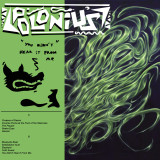
Full page feature in Wire Magazine (March 2025, Issue 493) 'the freak audio series continues with the lysergic You Didn't Hear It From Me which combines dubbed out sampledelia and metallic beats with ghostly saxophone soaked in an acid bath'
Polonius AKA Egyptian-French artist Seif Gaber, whose works spans a decade of “science fiction archeomiragical time travel" explorations and is an important piece of the healthy electronic/far out mosaic in Milan.
With a considerable number of releases under his name, both self released and through such likeminded labels as Ikuisuus, Goaty Tapes or Sun Araw's Sun Ark, Polonius grand vision encompasses a myriad of languages culled from kosmische travelings, exotica's dreamlands, soundtrack psychedelia, spiritual jazz escape routes and transmuted beat science to convey them into a sonic fiction where all these trails intertwine in a cosmological soundscape filled with wonder and speculation.
Building on last year's more beat-centric excursions of his self-titled vinyl debut on Stoned to Death, Polonius' first entry into the Discrepant extended family via Souk finds him dwelling deeper into rhythmic mystic extrapolations through a series of hallucinatory tracks. Conveying jungle's kinetic energy, dubwise meditations on bass weight, collapsing beats, globetrotting percussion accents and synth-driven night drives, 'You Didn't Hear It From Me' finds Polonius with a strong sense of purpose and direction, reconvening bits and pieces from the netherworld into a more urban scenario, not quite any we can stand or dance on. Just dream of.
- 1: Baby Dynamite
- 2: Family Tree
- 3: Blue Radio
- 4: Piece Of Me
- 5: Dreaming In Stereo
- 6: Goodbye Arkansas
- 7: Partners In Crime
- 8: This Dirty Town
- 9: Living Between The Lines
- 10: Who Stone The Soul
- 11: Dead Winter
For Fans Of The Indie/Americana, Punk ‘N’ Roll, Streetwalkin’ Cheetahs, Fear, Supersuckers, Tom Petty, MC5. Living Between the Lines is the debut solo LP from Frank Meyer. A long time coming, Meyer’s been hinting at it for a while now with Bandcamp exclusive tracks, covers on tribute albums, acoustic solo shows, and his acclaimed collaboration album with Eddie Spaghetti of the Supersuckers. Like the Eddie collab, LBTL is out on Kitten Robot Records. The 11-song album adds touches of blues and soul to Meyer’s expected high-energy rock ‘n’ roll, revealing a more mature voice. He is joined for duets by longtime friend and collaborator Lisa Kekaula of the Bellrays on the title track, Runaways icon Cherie Currie on “Piece of Me” and Spaghetti himself on “Partners In Crime.” An award-winning musician, filmmaker and author, Meyer has a track record that covers rock ‘n’ roll, punk, heavy metal, blues, and country. Known for his work with everyone from Rock ‘n’ Roll Hall of Famers James Williamson (Iggy & the Stooges) and Wayne Kramer (MC5) to legendary punk act FEAR, Meyer has carved out a career full of unlikely collaborations, hard work, searing guitar playing, and ace songwriting skills. “I have rarely seen the public leave so enthusiastic by the pure rock ‘n’ roll download that they had just witnessed. Frank Meyer is an incomparable frontman who lives rock ‘n’ roll 24/7 and always gives his all!” Popular 1 Magazine.
Rosettes are finally here with their debut album on Timmion Records, Lifestyles, a compelling journey into psychedelic soul, jazzy funk, and introspective grooves. For the listener, it creates an experience that manages to be both sophisticated and raw to the bone. Expanding on the sound they refined with their previous singles, this 10-track album captures the group in top form while crafting intoxicating sonic potions that pull you in. Featuring standout tracks like the soulful opener "The Call," the Isaac Hayes-inspired title track "Lifestyles," and the introspective groover "Spirals," the album weaves together cinematic instrumentals, intricate horn arrangements, and deeply personal storytelling, courtesy of lead singer Tytti Roto. Drawing inspiration from a range of vintage and contemporary masters_Cymande, SAULT, and Sade, to name a few_the rest of the eight-piece group doesn't linger in the shadows. Instead, they make it their mission to position the groove front and center. The album closes with "The Queen," the sole instrumental track, which evokes the spirit of 1970s blaxploitation soundtracks with its wah-wah and fuzz guitars and jazzy changes. Every track on Lifestyles is a testament to the Rosettes' ability to craft genre-blending masterpieces that are as emotionally gripping as they are musically intricate. For fans of adventurous soul and funk, this album offers a rich and rewarding journey.
- A1: Leuchtturm (Remastered 2025) 04 28
- A2: Neuland (Remastered 2025) 05 30
- A3: Ag Penthouse ( 2 Epoche ) (Remastered 2025) 05 17
- A4: Unland (Remastered 2025) 05 39
- A5: Ral 7035 (Remastered 2025) 04 09
- B1: Wanderlust (Remastered 2025) 06 50
- B2: Distel (Remastered 2025) 07 16
- B3: Traumschön (Remastered 2025) 05 29
- B4: Junge Männer Von Gestern (Remastered 2025) 01 43
- B5: Der Endlos Blaue Himmel (Remastered 2025) 01 55
Originally released on CD only – those were the days – “Triola im Fünftonraum“ counts as one of the most iconic albums of the early Kompakt era. Experience this timeless masterpiece of lush electronica lovingly restored and remastered for the first time on vinyl – 21 years after its inception.
We found this review from back in the days that perfectly sums up what “Triola im Fünftonraum” is all about:
The press material for “Triola im Fünftonraum” made allusions to home listening, when the album is mostly about movement… in a car …preferably a fast one … on a muggy spring day.
This might catch followers of producer Jörg Burger off guard. Up until this point, the producer’s Triola tracks – limited to three consecutive appearances on Kompakt’s yearly Pop Ambient series and a spot on “Leichtes Hören Teil 1” – were free-floating ambient washouts (albeit wondrous free-floating ambient washouts) with no pulse. The album, on the other hand, is beat-driven. Though still resolutely ambient – more an update of Burger’s lushest Bionaut tracks, only fully engaging instead of mildly diverting.
The soft, synthetic hand drums and tranquil vapors of “Leuchtturm” from Pop Ambient 2003, remain untouched and begin the album. Two other tracks that might sound familiar receive dynamic overhauls, now supported with quick dance rhythms and additional layers of synth gauze; the whispy flute trills and lightly flickering keys of “AG Penthouse”, for instance, are melted into a churning rhythm and some singing keyboard vamps that resemble a relaxed take on Tangerine Dream’s suspenseful soundtrack work for “Thief” (minus the crazy guitars).
What really makes the whole thing glow is the manner in which the tracks are attached, flowing in and out of another, rising and cresting and receding, with supreme poise – even if its title provides no indication, the album is as much a travelogue as Carl Craig’s “Landcruising”, Morgan Geist’s “Driving Memoirs” and Model 500’s “Deep Space”.
These are some of Burger’s most inventive productions, a remarkable feat since he’s been doing this so long. Catch yourself in the right frame of mind and you’ll wonder if everything he has released has been one extended ramp-up to this. In this age, it’s also refreshing to have a purely ambient techno album with absolutely no connection to “Boards of Canada”.
In other words, it’s a landmark for both its label and its genre.
Andy Kellman
Copyright 2025 TiVo Corporation
Ursprünglich nur auf CD veröffentlicht – das waren noch Zeiten – zählt „Triola im Fünftonraum“ zu den ikonischsten Alben der frühen Kompakt-Ära. Dieses zeitlose Meisterwerk schwelgerischer Electronica erscheint nun 21 Jahre nach seiner Entstehung erstmals liebevoll restauriert und remastered auf Vinyl.
Wir haben diese zeitgenössische Rezension gefunden, die perfekt zusammenfasst, worum es bei „Triola im Fünftonraum“ geht:
Das Pressematerial für „Triola im Fünftonraum“ spielt auf das Zuhören zu Hause an, obwohl es in dem Album hauptsächlich um Bewegung geht … in einem Auto … vorzugsweise einem schnellen … an einem schwülen Frühlingstag.
Das könnte die Fans des Produzenten Jörg Burger überraschen. Bis zu diesem Zeitpunkt waren die Triola-Tracks des Produzenten – beschränkt auf drei aufeinanderfolgende Auftritte in der jährlichen Pop-Ambient-Reihe von Kompakt und einen Platz auf „Leichtes Hören Teil 1“ – frei schwebende Ambient-Auswaschungen (wenn auch wundersame frei schwebende Ambient-Auswaschungen) ohne Puls. Das Album hingegen ist beatgetrieben, obwohl es immer noch entschieden Ambient ist – eher eine Aktualisierung von Burgers üppigsten Bionaut-Tracks, nur dass es voll und ganz fesselt, statt nur leicht abzulenken.
Die sanften, synthetischen Handtrommeln und die ruhigen Dämpfe von „Leuchtturm“ aus Pop Ambient 2003 bleiben unangetastet und bilden den Auftakt des Albums. Zwei weitere Stücke, die einem bekannt vorkommen könnten, erhalten eine dynamische Überarbeitung, die nun von schnellen Tanzrhythmen und zusätzlichen Schichten von Synthesizer-Gaze unterstützt wird; die flüsternden Flötentöne und leicht flackernden Tasten von „AG Penthouse“ zum Beispiel verschmelzen zu einem aufgewühlten Rhythmus und einigen singenden Keyboard-Vamps, die an eine entspannte Version des spannenden Soundtracks von Tangerine Dream erinnern, der für „Thief“ (ohne die verrückten Gitarren) verwendet wird.
Was das Ganze wirklich zum Leuchten bringt, ist die Art und Weise, wie die Tracks miteinander verbunden sind, wie sie ineinander fließen, ansteigen und ihren Höhepunkt erreichen und wieder abklingen, und das mit höchster Gelassenheit – auch wenn der Titel nichts darauf hindeutet, ist das Album ebenso ein Reisebericht wie Carl Craigs „Landcruising“, Morgan Geists „Driving Memoirs“ und Model 500s „Deep Space“.
Dies sind einige von Burgers einfallsreichsten Produktionen, eine bemerkenswerte Leistung, wenn man bedenkt, wie lange er schon dabei ist. Wenn man sich in die richtige Stimmung versetzt, fragt man sich, ob alles, was er bisher veröffentlicht hat, eine einzige Vorbereitung auf dieses Album war. In der heutigen Zeit ist es auch erfrischend, ein reines Ambient-Techno-Album zu hören, das absolut nichts mit „Boards of Canada“ zu tun hat.
Mit anderen Worten: Es ist ein Meilenstein für das Label und das Genre.
Andy Kellman
Copyright 2025 TiVo Corporation
- Lapis Lazuli
- It's All Devo! Ft. Gerald Casale (Devo)
- Res Q Me Ft. Bill Laswell
- Guerrera
- Gloomy Afternoon
- Disturbia Ft. Mark Stewart
- Where Do Comets Come From Ft. Bill Laswell
- Starless Sea
- La Canzone Un Po' Storta
- Ganja Provide The Answer Ft. Flowdan
- Tabula Rasa
- Aural Plasticine
Bourgogne Vinyl[25,17 €]
PHONOLAB is the new collaborative project from Anglo-Italian musician, solo artist and producer Gaudi and experimental electronica composer Eraldo Bernocchi Both fearless creators known for pushing the boundaries of sound for almost four decades, the duo's new album 'Disturbia' is set for release on the 11th April via Subsound Records and features contributions from heavyweights including Gerald Casale (Devo), Flowdan, Bill Laswell and the late Mark Stewart (The Pop Group).
With its eclectic blend of electronic innovation, deep basslines, and cutting- edge sound design, 'Disturbia' challenges and captivates listeners with its bold, genredefying vision, resulting in a deeply immersive and forward-thinking sonic experience. The title of the album was created by late post-punk pioneer and lead singer of The Pop Group, Mark Stewart, who was recording with PHONOLAB, shortly before he died. Some of the disruption and creative defance Stewart embodied can be heard throughout the album including tracks such as the glitchy 'Lapis Lazuli' and album title track, 'Disturbia.' The album acts as a homage to one of the most infuential post
Spandau20, an imprint named after the Western Berlin district and focused on artists from the area, delivers techno in all diverse forms - from warehouse and electronic peak time beats to breaks and IDM, balancing the old and new school sounds flawlessly. With a focus on vinyl releases, for the collectors, Spandau20 has lately also focused on its label nights, with showcases at Fabric, Bassiani and many others. The label's 10th release features 10 tracks that epitomise the musical diversity of Spandau20 and the progressive musical mindset of its roster, calling on the label favourites and Spandau natives to deliver brand new and exciting music. This special release even features one track that all artists have worked on together: 'Come Closer', a swarming, slithering beginning featured as the VA's opener. Its barely coherent female vocal echoing amidst a cacophony of demon-like effects. The chilling ambience captured at the offset transcends into the first full length track by Elli Acula, 'Floating Eyes', a cur characterised by an authoritative, pounding bass featuring calculated percussive rolls and metallic overtones to make for a face-scrunching opener to this devilish collection of works. FJAAK follow for the first of twin cameo appearances, partnering up with fellow live supremo and hardware aficionado KiNK. On 'Overbridge' the trio deliver a cavernous, rolling number driven by a deep thrumming bass in addition to a razor-edged lead synth, and pulsating technopattern. Dajusch is known for incorporating his years of classical study in with his immersive musical style - and with his VA effort the Berlin native neatly showcases this. Easing the energy slightly, 'Move' escalates from its warm, melodic intro into rumbling goliath of a beat comprising a looping, slew of gassy harmonics. The momentum of the release shifts considerably with the introduction of acutely versatile producer, DJ and sound artist Claus. The artist from Spandau leans his track 'Bloomscroll' towards sparse, dubby sonics in which he intricately ties together to form churning, burgeoning soundscape. FJAAK jolt proceedings back into the techno groove with their signature blend of arresting sub-bass and reverberating rhythms, which come thick, fast and heavy on 'Jackfruit'. The abstract wonder of Anna Z's broken-beat like stylings is fully explored on 'Icy Liq'. It's outlandish and amorphous in its execution, causing a clattering percussive chaos that's choicely pieced together by the modular-extraordinaire. Nikk stealthy moves into breaks territory with his track 'Down In The Shadows', packing a trap-like snare with an acid-flecked melody and dawn-breaking, dream-like textures. The penultimate track on the VA is 'Tufted'. J.Manuel expertly employs a chorus of robot-like sonics that course through a short-circuiting low-end to produce a pacy, inescapable journey via a whirling, merciless beat. He is joined by the legendary producer Tobi Neumann for their menacingly ambient number titled 'Fennec.' In parts a nod to UK dubstep, the duo concocts a fierce admixture of styles bolstering tribal-like components with industrialised overtones and methodically crafted drum-fills.
Repress!
On Demuja's Freerange debut, the Move EP offers up four original tracks, each with their own distinct flavour. Opening the release we have title track Move spring into action with simple Rhodes chords floating across a crisp, driving up-tempo groove showing off the deeper side to Demuja.
Next up B.O.O.M offers us a simple yet captivating, dancefloor-focused affair with a lone, repeating piano stab hooking us into the action.
Flipping over we have Into My Brain which brings some acid-tinged Italo vibes and a jacking beat to proceedings whilst the closing track Turn Me On cuts up a much loved Paradise Garage classic for a warm, soul-infused slice of classic, bumpy house music.
Songs about the unity of Sudan, peace between Muslims and Christians and the fate of war orphans, backed by grooves equally taking influence from Arabic sounds, American funk as well as neighboring Ethiopia.
Kamal Keila was among the first artist we met in Sudan during our two trips to Khartoum and Omdurman last year. He is one of the key figures of the Sudanese jazz scene that was a vital part of the musical culture in Sudan from the mid 1960s until the islamist revolution in the late 1980s. When we meet Kamal he luckily presented us with two mold covered studio reels.
Each tape included five tracks. One with English lyrics and another with Arabic ones. Musically you can hear the influence of neighboring Ethiopia much more than on other Sudanese recordings of the time, as well as references to Fela and American funk and soul. His lyrics, at least when he sings in English which gave him more freedom from censorship, are very political. A brave statement in the political climate of Sudan of the last decades, preaching for the unity of Sudan, peace between Muslims and Christians and singing the blues about the fate of war orphans called "Shmasha".
A note inside one of the boxes specified the track titles, durations and the fact that the sessions were recorded on the 12th of august 1992. Both sessions stand as a hearable testament how Kamal Keila stuck to a sound aesthetic from decades ago, while incorporating current events into his lyrics.
Kamal Keila's album is the first in a series of releases covering the Sudanese jazz scene on Habibi Funk. Be on the lookout for albums by The Scorpions and Sharhabeel coming soon.
2LP + Download Code + 8 Page Booklet
Enigmatic producer ANiML returns to the freeform Los Angeles-based label StrataSonic to release a six-track mini album, Star Walk. The new body of work, which comes alongside a new music video for “Bruv” (directed by Spanish visual artist YZA Voku), is out now.
Picking up where ANiML left off with “Breather” and “Bruv,” Star Walk elaborates further on that woozy-yet-sophisticated psychedelia, materializing as cinematic trip-hop, cavernous dub, and other unique genre concoctions across its six tracks. “Cherry,” with its free-spirited, delay-soaked guitar riffs, depicts a colorful, post-rock-inspired soundscape. “BabyD,” in step with “Bruv,” features a mischievous marimba melody among ghostly vocal samples, a punchy drumkit, and a slackened bassline.
These scenes are brought to life thanks to YZA Voku, a groundbreaking visual artist who is at the forefront of AI-assisted filmmaking in the animation space (see his work for The Weeknd, Swedish House Mafia, Hï Ibiza, and XG). The new music video for “Bruv,” out today, unfolds in stark black, white, and red, evoking a noir-inspired aesthetic steeped in mystery and intrigue. Shadowy figures move rhythmically through dimly lit alleys and smoke-filled ballrooms, blending calculated steps with hypnotic dance sequences.
The production blended real-life recordings with digital effects like blur, negatives, masks, analog textures, and AI-driven transformations using Runway’s video-to-video tools. AI-generated sequences created with Midjourney and Runway were merged to contrast real footage with synthetic imagery. This type of work is a rejection that AI is simply used as a shortcut in art and comes at a time when musicians are beginning to embrace such tools for the visual components of their products.
Star Trek – „30th Anniversary Vol. 1“: Der Original Soundtrack auf Vinyl für alle Trekkies! Für alle Star Trek-Fans und Vinyl-Liebhaber gibt es jetzt ein ganz besonderes Highlight: Der „30th Anniversary Vol. 1“ Soundtrack entführt die Fans erneut in die unendlichen Weiten des Weltalls. Das besondere Vinyl-Release feiert die große musikalische Erbschaft, die Star Trek über Jahrzehnte hinweg mit seiner kraftvollen und atmosphärischen Musik begleitet hat. Auf „30th Anniversary Vol. 1“ finden sich einige der berühmtesten Tracks aus der ersten Serie, die das Gefühl von Abenteuer und Entdeckung im All perfekt transportieren. Das knisternde, warme Klangbild der Vinyl sorgt zudem für ein authentisches Retro-Erlebnis, das Fans der ersten Stunde genauso begeistern wird wie die neue Generation von Trekkies.
Donato Basile AKA DJ Plant Texture always wants his music to tell a story, and with his debut EP on Tresor Records, entitled Life, he’s now trying to tell the biggest story there is. According to the artist, “Life is about the fear of growing up”; both the anxiety itself and acknowledging and moving past it.
This narrative seems to have struck a chord with those who have heard the track, “People want to reflect themselves in the music; something personal. Lots of people have been in touch after hearing it; I guess they feel something melancholic in it. Personally, I imagine the track is like the life of a person; going from being born through childhood and youth and onwards, so perhaps they hear this?”
Having used an MPC since the early 2000s, Basile feels an intuitive connection to the hardware he uses, and so the creative process is very spontaneous: “I know where everything is so the music is made immediately. I make everything in the first ten minutes; after that if it’s not right then I just abandon it and start something else.” This immediacy, and familiarity with his equipment is apparent on the A-side, where Basile’s previous life as a drummer comes to the fore and tracks like Cycles and Ripetivo display his native understanding of groove but also how to stir things up - the three A-side tracks find classic techno rhythms seemingly falling apart only to snap back into place even stronger. The B-side finds Donato exploring more of his melodic side with WTT and the aforementioned title track showing Plant Texture’s love of breakbeat and classic techno.
The three digital bonus tracks continue this exploration of melody and syncopated beats - The EXP Days echos the wistful feeling of Life, as Basile meditates on the times spent at EXP, his record shop in Bari, which functioned as a meeting place for electronic producers in the area.
- A1: A Carrion Harvest
- A2: Beyond The Veil (Of The Grey Mare)
- A3: Genesis Chamber
- A4: Deviant Spine
- A5: Engines Of War
- A6: The Finality Of Perpetuation
- B1: Crawling Over Corpses
- B2: In The Dread Of The Night
- B3: Drought Of Mercy
- B4: Psychosister
- B5: Ravage Of Empires
Petrol Green Vinyl[28,28 €]
Black Vinyl
“Sometimes They Come Back” is not just the title of a horror movie based on a macabre tale by Stephen King, it is also a summary of what happened to UK death etal veterans BENEDICTION, yet you might ke to add a “better than ever before”. While never officially disbanded, 2020’s Scriptures, the group’s eighth studio album achieved what is usually not an easy feat. It connected well with classics like Transcend the Rubicon (1993) and its immediate and memorable songwriting, the heavy-as-a-brick Grind Bastard (1998), and also saw legendary vocalist Dave Ingram return with his merciless roar and knack for morbid, twisted lyrics. After two albums with Dave Hunt on vocals, Scriptures was BENEDICTION’s first record in over a decade impressing with aggressive up-tempo attacks like ‘Iterations of I’ and ‘Rabid Carnality’ or the neck-breaking mid-tempo barrage of ‘Stormcrow’, songs that became live staples alongside ‘evergreens’ such as ‘I Bow to None’, ‘Magnificat’, ‘Subconscious Terror’ or ‘Vision in the Shroud’ in no time. With Scriptures, BENEDICTION even almost cracked Germany’s top ten by entering at a phenomenal #11 of the Official German Charts showing that the death metal veterans founded 1989 in Birmingham, England, offered an extremely well received sonic catharsis when due to the pandemic, people were locked down and pissed off.
When the shroud of Covid-19 lifted, the quintet finally could start to promote the album onstage with numerous festival gigs including Summer Breeze (DE), Copenhell (DK), Mystic Festival (PL), UK Deathfest, Alcatraz (BE), Party.San (DE), Obscene Extreme (CZ), Eindhoven Metal Meeting (NL) and Rock Hard (DE) to name but a few, played triumphant shows in South and Middle America as well as in their home country and all over Europe.
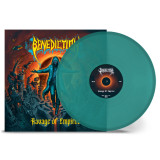
Kicking in the door without further warning, fast paced opener ‘A Carrion Harvest’ that mounts in a vicious Slayer-style break, starts with Ingram growling ‘Brace for impact, go!’ giving an unmistakable hint at what to expect during the following 47 minutes and 11 songs. With tremolo riffs and hammering grooves in spades, tracks like ‘Engines of War’, ‘Genesis Chamber’, ‘Crawling over Corpses’, ‘In the Dread of the Night’, and ‘Psychosister’ show a remarkable consistency and Scott Atkins, who produced the record at Grindstone Studio once again, ensures with a crisp and massive sound that the aforementioned impact leaves no bone unshattered. Garnered with artwork by Wolven Claws Artist, Ravage Of Empires continues BENEDICTION’s flawless discography on Premier League level and promises to become one of 2025’s undisputable old school death metal highlights!
With their brilliant new record in tow, founding members and guitarists Darren Brookes and Peter Rew, longtime vocalist Dave Ingram, drummer Giovanni Durst, and Nik Sampson (bass) will travel far and wide once more. Already confirmed are the Tales of the Triple Death Tour with Jungle Rot and Master kicking off on album release date as well as confirmed appearances at Wacken Open Air and Maryland Deathfest. More to be announced soon!
- A1: A Carrion Harvest
- A2: Beyond The Veil (Of The Grey Mare)
- A3: Genesis Chamber
- A4: Deviant Spine
- A5: Engines Of War
- A6: The Finality Of Perpetuation
- B1: Crawling Over Corpses
- B2: In The Dread Of The Night
- B3: Drought Of Mercy
- B4: Psychosister
- B5: Ravage Of Empires
Black Vinyl[22,48 €]
Petrol Green Vinyl
“Sometimes They Come Back” is not just the title of a horror movie based on a macabre tale by Stephen King, it is also a summary of what happened to UK death etal veterans BENEDICTION, yet you might ke to add a “better than ever before”. While never officially disbanded, 2020’s Scriptures, the group’s eighth studio album achieved what is usually not an easy feat. It connected well with classics like Transcend the Rubicon (1993) and its immediate and memorable songwriting, the heavy-as-a-brick Grind Bastard (1998), and also saw legendary vocalist Dave Ingram return with his merciless roar and knack for morbid, twisted lyrics. After two albums with Dave Hunt on vocals, Scriptures was BENEDICTION’s first record in over a decade impressing with aggressive up-tempo attacks like ‘Iterations of I’ and ‘Rabid Carnality’ or the neck-breaking mid-tempo barrage of ‘Stormcrow’, songs that became live staples alongside ‘evergreens’ such as ‘I Bow to None’, ‘Magnificat’, ‘Subconscious Terror’ or ‘Vision in the Shroud’ in no time. With Scriptures, BENEDICTION even almost cracked Germany’s top ten by entering at a phenomenal #11 of the Official German Charts showing that the death metal veterans founded 1989 in Birmingham, England, offered an extremely well received sonic catharsis when due to the pandemic, people were locked down and pissed off.
When the shroud of Covid-19 lifted, the quintet finally could start to promote the album onstage with numerous festival gigs including Summer Breeze (DE), Copenhell (DK), Mystic Festival (PL), UK Deathfest, Alcatraz (BE), Party.San (DE), Obscene Extreme (CZ), Eindhoven Metal Meeting (NL) and Rock Hard (DE) to name but a few, played triumphant shows in South and Middle America as well as in their home country and all over Europe.
Kicking in the door without further warning, fast paced opener ‘A Carrion Harvest’ that mounts in a vicious Slayer-style break, starts with Ingram growling ‘Brace for impact, go!’ giving an unmistakable hint at what to expect during the following 47 minutes and 11 songs. With tremolo riffs and hammering grooves in spades, tracks like ‘Engines of War’, ‘Genesis Chamber’, ‘Crawling over Corpses’, ‘In the Dread of the Night’, and ‘Psychosister’ show a remarkable consistency and Scott Atkins, who produced the record at Grindstone Studio once again, ensures with a crisp and massive sound that the aforementioned impact leaves no bone unshattered. Garnered with artwork by Wolven Claws Artist, Ravage Of Empires continues BENEDICTION’s flawless discography on Premier League level and promises to become one of 2025’s undisputable old school death metal highlights!
With their brilliant new record in tow, founding members and guitarists Darren Brookes and Peter Rew, longtime vocalist Dave Ingram, drummer Giovanni Durst, and Nik Sampson (bass) will travel far and wide once more. Already confirmed are the Tales of the Triple Death Tour with Jungle Rot and Master kicking off on album release date as well as confirmed appearances at Wacken Open Air and Maryland Deathfest. More to be announced soon!
Rosettes are finally here with their debut album on Timmion Records, Lifestyles, a compelling journey into psychedelic soul, jazzy funk, and introspective grooves. For the listener, it creates an experience that manages to be both sophisticated and raw to the bone. Expanding on the sound they refined with their previous singles, this 10-track album captures the group in top form while crafting intoxicating sonic potions that pull you in. Featuring standout tracks like the soulful opener "The Call," the Isaac Hayes-inspired title track "Lifestyles," and the introspective groover "Spirals," the album weaves together cinematic instrumentals, intricate horn arrangements, and deeply personal storytelling, courtesy of lead singer Tytti Roto. Drawing inspiration from a range of vintage and contemporary masters_Cymande, SAULT, and Sade, to name a few_the rest of the eight-piece group doesn't linger in the shadows. Instead, they make it their mission to position the groove front and center. The album closes with "The Queen," the sole instrumental track, which evokes the spirit of 1970s blaxploitation soundtracks with its wah-wah and fuzz guitars and jazzy changes. Every track on Lifestyles is a testament to the Rosettes' ability to craft genre-blending masterpieces that are as emotionally gripping as they are musically intricate. For fans of adventurous soul and funk, this album offers a rich and rewarding journey.
- Family Blues
- Here, There And Everywhere
- Daffodil
- Blue Organ
- Dynamite
- Misty
- Whiskey
- Round About 12
- I Wanna Be Your Man
"Fred van Zegveld's album ""Dynamite,"" released in 1969, is a remarkable showcase of his prowess on the Hammond organ. The album features a blend of original compositions and covers, all highlighting Van Zegveld's soulful and jazzy style. The album comprises nine instrumental tracks, with the majority being Van Zegveld's original works. Notable originals include ""Family Blues,"" ""Blue Organ,"" and the title track ""Dynamite,"" which are celebrated for their dynamic Hammond organ performances. The album also features covers such as ""Here, There and Everywhere"" and ""I Wanna Be Your Man"" by Lennon-McCartney, as well as ""Misty"" by Erroll Garner. The supporting musicians on the album include Ruud Jacobs on bass, Louis de Bey on drums, and Rick Beekman on guitar, all contributing to the album's rich and engaging sound. Finally available again on vinyl in a limited edition of 500 copies on translucent red coloured vinyl."
Another foggy day in Yorkshire. A steel grey sky. Raindrops tracing one another down the windowpane. Kirk Barley sits in his studio and assembles compositions from scraps of found sound and live instrumentation. Melodies swell, withdraw and repeat like waves. Time slows. Accelerates. Slows again. The light bends, tweaked at the edges. Twisted by rhythms that never quite resolve.
Written, recorded and produced by Barley in Yorkshire in early 2024, Lux picks up where 2023 LP Marionette leaves off, conjuring a mystical, reflective space between formal minimalism and sonic imaginaries of northern landscapes.
And yet, where Marionette relied at times on more recognisable field recordings, Lux leans into Barley’s skill as an instrumentalist and sound designer, working from a palette of short samples and utilising a variety of alternate tuning systems to build, layer and coax his compositions into being. Most evident on tracks ‘Vita’, ‘Sprite’ and ‘Descendent’, these tunings create an otherworldly harmonic language that is easier to perceive than describe.
Alongside more familiar instruments of guitar, bass, drums, organ and clarinet, here Barley draws on plastic saxophones and bells, and recordings of glass, wood and metal sound objects to provide the organic matter. Rather than directly representative of the natural world, Lux enters into a dialogue with it which, like the grasses and flowers of the album’s cover, exists somewhere between reality and artifice.
On album opener ‘Cache’, Barley constructs his own sense of time from a recording of an umbrella crank, a sparse and spectral piece which hints at memories embedded in the track’s title. Introspection blossoms into new life on ‘Vita’, crumpling again into the percussive ambience of ‘Verre’. A track that takes its harmonic lead from the clinks of glass, it features Barley’s long-time collaborator Matt Davies on drums, whose nuanced, tonally sensitive playing gives ‘Verre’ a fizzing, ice-like quality.
There are several moments where Lux picks up on themes Barley explored under electronic moniker Church Andrews on recent works with Davies, stretching and distorting temporalities most explicitly on ‘Descendent’, whose ritualistic air unfurls around a pattern in exponential decline.
Embracing the surrealism Barley absorbed over years watching classic film noir and the works of David Lynch and Federico Fellini, Lux wends its way through the enchanted sound worlds of ‘Sprite’ and ‘Balanced’ before arriving at the album’s title track.
An expression of his recent experiments in live, prepared guitar, ‘Lux’ brings the album back to earth, returning us to the room where the rain has stopped, the clouds have parted, and the soft warmth of the spring sun is pouring in through the open window.
Hüma Utku returns to Editions Mego with her new album. The title Dracones makes reference to the mediaeval latin term "Hic sunt dracones" (Here be dragons), marking the unexplored, dangerous places on world maps, expressing the fear of chaos, the unexpected and the unknown.
This new work by the Istanbul sound artist is a sonic journal of an expedition into uncharted territory, one which occupies self and domesticity. Inspired by Utku’s experience of matrescence, Dracones explores the themes of familial demonology, metamorphosis and homecoming as well as human relationship to the experience of love woven layers of euphoria, alienation and consumption.
Musically, Dracones traverses a wide array of sonic tools whereby industrial sounds are imbedded with certain psychological angles, this is an album where, all matter meshes into a sly snapshot of the human experience with a tension and release exposure occurring frequently with dark corners opening up to bright layers of electronic experimentation.
The haunting opening track ‘A World Between Worlds’ tackles pregnancy, of which Utku was experiencing when making this record. The emotional, physical, spiritual and mental experience of this journey is all documented here.. This track features the ‘Lyraei’, an electromagnetic string instrument and modern interpretation of the ancient lyre, that was built and played by Mihalis Shammas. ‘Comfort of The Shadows’ moves from within to without, what was once hidden is now exposed. Utku’s ability to conjure the visual in the sonic is at the forefront as howling electronics give a distinct impression of movement. ‘A Familial Curse’ presents a desire to break the cycle of generational trauma with a creeping sense of dread that rolls into an industrial rhythm prior to landing in a beautiful place represented with shimmering guitar tones. ‘Here be Dragons’ is a rich and dark evocation, a spooked surrender to the themes of the record whereby Utku’s wildly distorted voice beckons all manner of phantasmagoria over cello and recordings of her ultrasound. ‘Care in Consume’ engages in further sonic exploration as a means of conjuring ‘matriphagy’, with its unique psychic energy coursing through electronic veins. ‘A House within a House’ could also be read as a body within a body as the pulse of ultrasound audio rattle amongst a cage of thudding rhythms and swirling electronics, one also ending in optimism as an exquisite melody is born from the prior fire. The striking journey ends with the more soothing ‘Ayaz’a’, a track embracing love and all the hardships that a period of fundamental metamorphosis brings, this is a heartfelt dedication to her son and concludes an album draped in life, experience, joy and pain.
Dracones is a deeply visual journey through inner and outer worlds, a space where symbolic evocation is supreme and passive listening is not an option.
All tracks composed,performed and recorded by Hüma Utku
Buchla 100, vocals, cello, electric guitar performed by Hüma Utku
‘’A World Between Worlds’’ features the ‘Lyraei’ built, played and recorded by Mihalis Shammas
Buchla 100 recorded in EMS Stockholm 2022-2023
Mixed by Enyang Urbiks
Mastered by Heba Kadry, NYC
Cover Artwork by Marco Ciceri
Design by Tina Frank