2026 Repress
Akusmi is the project moniker of French-born, London based composer, multi-instrumentalist and producer Pascal Bideau, who signs to the new Tonal Union imprint for the release of his album 'Fleeting Future.' With its hallucinatory, genre-defying blend of minimalism, cosmic jazz and Fourth World influences, and in its quest for optimism in the face of unknown and limitless possibility. 'Fleeting Future' stands apart as an inventive and inspirational debut.
The creation of the album's richly colourful and multi-layered sound world was originally inspired by Bideau's journey to Indonesia, where he immersed himself in traditional Gamelan and gong music. Many of the themes, motifs and melodies on 'Fleeting Future' seed from the 'Slendro' scale, one of the essential tuning systems used in Gamelan. However it is not musical scales, but scales as in the size or extent of things that most fascinates Bideau, specifically he explains; "the compelling way things dramatically change when you shift from any given scale to another."
The album connects directly to nature and the wider world in its evocation of perceptive shifts and transitions from microscopic to macro scale, as evidenced by the opening title track 'Fleeting Future', on which a simple dotted saxophone line morphs and billows into synths, brass and strings, indicating the musical voyage that lies ahead. Like the start of a journey or adventure it is full of anticipation, its arborescent growth conveying the optimism of the unknown and of limitless possibility. The album centrepiece 'Neo Tokyo' is a vibrating, ebullient mass of colliding elements which feels like zooming in to the electron level, as it teeters on the edge of chaos. The title is a reference to Katsuhiro Otomo's Akira, a dizzying work of art set in a sprawling futuristic metropolis.
'Yurikamome', meanwhile, is an imaginary soundtrack inspired by Bideau's yearning to visit Japan which he fuels by watching Youtube videos of drives and rides through Japanese landscapes and cities. "It's amazing" he adds, "that we have the ability to access almost anywhere in the world and see what it's like, that people document it and upload it. It's never going to be any replacement for the real thing, but with places that really touch you, it works." The track is named after a Japanese monorail train line which rides from Shinbashi to Toyosu, a last journey that feels like a new beginning.
'Fleeting Future' was composed and recorded by Bideau between 2017 and 2019 in his North London studio and features additional contributions recorded in Berlin by Florian Juncker (trombone), Ruth Velten (saxophone) and regular collaborator Daniel Brandt of Brandt Brauer Frick (drums / electronic percussion). Having been living through uncertain times, one thing that keeps spiralling into the unknown is the future, about which Bideau leaves us with a final thought:
"The future is fascinating: It is constantly readjusting to new events. I feel we left a linear approach to the future to enter an arborescent one where all the data and information we have about what could happen is exponentially ever-growing. Following a branch might allow you to glimpse into what it may become, but the evolution of the whole picture might very well render the prediction totally obsolete, and even meaningless. In that sense, there is not one future but innumerable ones all cancelling each other. That's what makes it fleeting."
quête:tokyo 3
2026 Repress
Gaudi’s Jazz Gone Dub is a masterclass in genre fusion, seamlessly blending the improvisational essence of jazz with the heavy atmospheric grooves of dub. Known for his eclectic approach to music production, Gaudi pushes the boundaries yet again, creating a sonic landscape that feels both nostalgic and refreshingly innovative.
Four years in the making, from the opening track it’s clear that Jazz Gone Dub is more than just a mashup of styles—it's a thoughtful exploration of the intersections between two rich musical traditions.
Gaudi’s multi-instrumental talents are on full display, and the presence of reggae royalty is palpable, courtesy of rootsy melodies from David Hinds (Steel Pulse), Jah Wobble’s iconic bass grooves, Ernest Ranglin’s intricate guitar lines and Sly & Robbie’s rhythmic genius. Add Sardinia’s Train to Roots band, Manu Chao collaborator Roy Paci, veteran guitarist Marcus Upbeat, Mr Woodnote and Tim Hutton’s brass work, Gavin Tate-Lovery’s sultry sax and flute, Horseman’s percussive flair plus Colin Edwin and Vlastur’s serious basslines, and the
result is a rhythmic foundation that’s both solid and fluid, allowing the jazz elements to float freely above the dub undercurrents.
Despite this star-studded line-up, Gaudi remains the glue that holds this gem together: his production is meticulous yet organic, allowing each track to breathe and evolve naturally. The use of space, delays and reverb—a hallmark of dub music—is expertly handled, giving the album a dreamy, immersive quality. Tracks like Susceptible and Alabaster Moon showcase Gaudi’s ability to create mood and atmosphere without sacrificing melodic and rhythmic complexity.
In Jazz Gone Dub Gaudi has crafted an album that feels both timeless and forward-thinking, a celebration of musical synergy where the free-spirit of jazz meets the deep resonance of dub. Whether you’re a fan of either genre or simply appreciate masterful musicianship and innovative production, this album is a must-listen.
妖精の通る道 (The Path Where Fairies Pass) is the debut vinyl release by Reimaki, the duo of Rei Yokoyama (Triggers Flowers, Stakaidan, Lapiz Trio, 新井薬師自警団, and Fujio, Chiko Hige and Rei), and Maki Miura (Tsubamegami, Les Rallizes Dénudés, Shizuka, Fushitsusha, Ohkami No Jikan and Katsurei). The duo has been an understated presence in Tokyo, playing occasional under-the-radar shows and self- releasing a few CD-Rs, but they’ve recently started to break cover, with a recent cassette on UFO Creations, released in support of a late 2024 tour of China. It’s also a welcome reappearance on the scene for both musicians; Miura’s musical history, in particular, is being reevaluated thanks to a recent string of welcome Shizuka reissues.
But the music Reimaki make together is a different thing entirely, much as it shares some psychological and aesthetic interests with both Miura’s and Nokoyama’s other projects. Their sound is split between two main interests – an extension of glacial, deoxygenating psychedelic improvisations, and a deep interest in medieval European music. They’ve also been known to cover compositions by English prog/improv musician Fred Frith. These various elements of the Reimaki aesthetic are all present through 妖精の通る道, from the fragility of the opening “Novel Amor” through to the smeared, hazy textures of the three extended pieces that comprise the album’s flipside.
There’s a beautiful sympathy in these performances, and a generous simplicity, too; you can sense that this music is informed by decades of finding just the right way to say the right thing in the clearest manner possible. Yokoyama and Miura never overstate things; make the statement, play the song, let it hang in the air for a while, and then move on to the next essential expression. The music is unburdened by self- consciousness. Their take on medieval music cuts to the core of melody and melancholy; their psych- improv side is blurred and drifting without ever lapsing into rote generic gestures.
There’s some shared space with other artists who suspend the timeless within the kaleidoscopic possibilities of the psychedelic – Kendra Smith & The Guild of Temporal Adventurers; Emmanuelle Parrenin; Rosina de Peira – and a tangled folksiness that might put listeners in mind of Jan Dukes De Grey, Comus, Current 93, and Tower Recordings. Accompanied by beautiful photography from street photographer Takehiko Nakafuji, who was also personally chosen by Mizutani to document Les Rallizes Dénudés, 妖精の通る道 is a most unique and necessary trip.
- A1: 月光慰問客
- A2: Gekko Imonkyaku (Moonlight Comforter)
- A3 1: W9 Bc (Sakyū Nite: At The Sand Dunes) 3:53
- A4 2: 迷子(Maigo: Lost Child) 2:33
- A5: From 月がでたので (Tsuki Ga Detanode: Because The Moon Has Come (1986)
- A6: Popsong's Factory
- A7 3: D'ameja 452
- A8: From My Pops / D'améja (1981)
- A9: Funeral Party
- A10 4: Double Platonic Suicide 5:47
- A11 5: Dream Of Embeyo (サンド・ノイズにまける子等)
- A12: (Sando Noizu Ni Makeru Kora: Kids Defeated By The Sand Noise) 7:06
- A13: From Dream Of Embryo (1986)
- B1: Anima
- B2 1: Logical Nation 2:38
- B3 2: Not Only One 4:16
- B4: From Cities (1983)
- B5: D.r.y. Project
- B6 3: Bizarre Tastes 3:44
- B7 4: Value Another 3:11
- B8 5: A Pompful Of Horses 3:23
- B9: From Bizarre Tastes (1986)
- B10: 東京ギョギョーム
- B11: Tōkyō Gyogyōmu (Tōkyō Fish-Oom)
- B12 6: ナンタラッタ・カンタッタ(Nantaratta Kantatta) 1:36
- B13 7: サイコ・レボリューション(Psycho Revolution) 2:16
- B14 8: 人面疽 (Jinmenso: The Human-Faced Sore) 2:48
- B15: From エレキのテロリスト(Electric Terrorist) (1988)
Vol.2[22,06 €]
From the depths of the most independent and revolutionary underground, a handful of tracks from the repertoires (often limited even to a single flexi disc) of some of the heroes who rode the wave, extracting from it—more for themselves and expressive necessity than for us—its most mystical and expressionist essence. New and No Wave, minimal and minimalist electronics, Avant Wave from the land where the sun still rises for now.
- A1: Bluebell
- A2: Japan Greatly (Feat. Reek0 And S.i)
- A3: Turn Me On
- A4: Dinero (Feat. P Wavey)
- A5: Down 4 (Feat. Osquello)
- A6: Strike A Pose (Feat. Camille Munn)
- B1: Longest Road (Feat. Pk)
- B2: Komodo
- B3: Somebody Jump (Feat. Reek0)
- B4: Wonderluv
- B5: Tek Control (Feat. Liam Bailey)
- B6: Guiding Star (Feat. Reek0)
East London producer and DJ IZCO announces his debut solo studio album ‘POWERSCROFT’, set for release on 1st May via Brownswood Recordings. The album’s first single, ‘Strike a Pose’ featuring the vocals of Camille Munn offers an early glimpse into the project. To celebrate the release, he will go on a run of UK dates from March to May, culminating at London’s Jazz Cafe.
Named after the road where he grew up, ‘POWERSCROFT’ marks a defining new chapter for an artist who has spent the past decade shaping the sound of UK dance music. Drawing from jungle, broken beat, grime, garage, soul and dub, the album channels the energy of the dancefloor while remaining deeply rooted in memory, instinct and identity. It captures what it feels like to be inside IZCO’s world, where thoughts, memories and influences collide.
Hailing from East London, IZCO is a producer and DJ spearheading a new generation that is bringing soul back to the dancefloor. Shaped by the rich musical heritage of his hometown, he has developed a sound that feels familiar yet forward-looking, diverse yet distinctly his own. That sound has taken him across the globe, from New York to Tokyo, alongside standout sets at We Out Here, Outlook and Glastonbury.
IZCO began his journey making grime beats for local rappers including Capo Lee, Novelist and Reek0, before becoming a key figure in the UK’s evolving garage and dance music landscape. In 2018, he launched his long-running Rinse FM show and released his debut EP Tek 5, earning early underground acclaim. His production credits include PinkPantheress’ breakout track ‘Passion’, created alongside Jkarri, as well as collaborations and remixes for artists such as Katy B and Greentea Peng.
Beyond his solo work, IZCO is a label head, promoter and co-founder of the Brighter Days Family, a collective built on community, craft and cooperation. With ‘POWERSCROFT’, he steps fully into the spotlight, presenting his most personal and fully realised body of work to date. “This album is about channeling my true musical personality and character,” he says. “I’m marking a new chapter by paying tribute to my foundations.”
Katz Mulk's ''All the mess'' is a collection of songs about playing and play-work, recorded between 2023-25 in Glasgow and Tokyo. Developed from performances across the UK and during a residency at Xevarion Institute in Hong Kong, with dancers, costume design by Mary Hurrell, and mobile speaker design by Chris Ball. Slithering breath, crackling synths, dented gongs, and dub loops pull songs into unexpected, unsettling patterns, like being a kid again but with more electronics.
2026 Repress
- Linen Paper, Foil Printed Box Set
- Includes 6 Double LPs + 1 Single LP, 13 Discs In Total
- All LPs Pressed on Coloured Vinyl
-Each Disc is Housed in a Printed Inner with PMS Print, Finished with Spot Gloss Printing. Each Sleeve Features an Abstract of the Original Album’s Artwork
- Also included are a 4 page Insert + Poster
Skintone Edition commemorates the singular talent of this music pioneer with the re-release of all of his albums released via his own Skintone label.
Over a 20 year period Yokota released 30 albums and countless 12s under a variety of aliases, across more than a dozen pre-eminent labels. Yokota received domestic and international acclaim as a house and techno DJ and producer throughout the nineties. Part of the vanguard of the Tokyo scene, his influential release Acid Mt. Fuji inspires techno artists to this day.
In 1998 though, at the height of his success, he established his Skintone imprint, which came to eclipse all of his previous achievements. Skintone shone a light on the diverse new directions in which his creativity had blown, from delicate, cyclical tape-loop meditations to neo-classical compositions. It also gave him the autonomy to combine his visual and music-making practices and, importantly, to create at his own pace. The label was a great success and his experiments proved foundational in the global 00s ambient canon.
Skintone Edition will be available as 2 box sets - the first volume coincides with the 10th anniversary of Yokota’s untimely death and the 30th year of Lo Recordings. All music has been fully re-mastered. This edition is presented with the generous assistance of the Yokota family.
Albums Included:
Magic Thread 1998
Image 1983-1998 [1998]
Sakura [1999]
Grinning Cat [2001]
Will [2001]
The Boy and the Tree [2002]
Laputa [2003]
MOVE TRAX is thrilled to unveil "Grab My Love," the eagerly awaited second release from the Tokyo-based label, curated by its founder Al Jones. This enchanting EP synthesizes the sun-soaked essence of early 90s balearic vibes with the alluring melodies of classic Italo house piano, all interwoven with the evocative sounds of traditional Japanese instruments, notably the koto. At the forefront are the irresistible vocals of Aiko Inoue, whose whimsical lyrics recount a lasagna recipe in a manner that feels like a sumptuous love letter—a blend of playful humor and sensual mystery.
Complementing the original vocal mix is the "Scarpetta Dub Mix," where delightful silence speaks volumes, symbolizing the final, indulgent moments of a culinary feast. Further enriching this sonic tapestry are two distinguished remixes from renowned Italian artists: Massimiliano Pagliara lends his ethereal touch with the "Hanami Mix," a delicately layered composition that transports listeners, while Mr. Ties delivers the vibrant "House of Matsuri Mix," infused with a raw, Chicago-inspired acid baseline that guarantees peak-time excitement.
"Grab My Love" transcends conventional dance music, showcasing the innovative spirit of its creators and promising to captivate audiences on dance floors everywhere.
Tokyo deep house master Soshi Takeda returns with a long-awaited six-song sequel to 2021’s landmark Floating Mountains, surfing deeper into mystery, motion, and liquid dreams: Secret Communication. Recorded across 2022 and 2023 at his home studio with a unique assemblage of 80’s and 90’s hardware, the tracks cruise through a latticework of skyways on lush pads, bubbling bass, and blissed BPMs, dusted in sunrise acid and cosmic piano. His is a dance music of idyllic emotions and inner worlds, yearning for new horizons.
Dramatic events overlapped with the album’s creation: “Wars broke out. On the other hand, my child was born. There were sad and beautiful moments in my life.” Secret Communication contains vistas, valleys, glimpses of lives unled, swirling above the grey noise of the city. From the jazzy daydream of “Can Imagination Transcend Distance?” to the sleek starlight house of “Rainstorm” to the farewell ecstasy of the title track, Takeda’s music touches and transports, a portal to places beyond. Fantasy and feeling, intention and inspiration, all become one: “When I listen to beautiful deep house, I feel a mysterious atmosphere. Dreamy scenes come to mind. I aim to create that sound.”
- A1: Kármán Cantata
- A2: Alto Vento
- A3: Low Orbit
- A4: All Is
- B1: Celestial Matari
- B2: Earthly Elements
- B3: Molecules
Fresh off the back of the successes of Work Money Death, The Flying Hats and The Library Archives: Volume 4, ATA Records is proud to present The Karman Line by Outer Worlds Jazz Ensemble.
When musicians are on tour conversations naturally turn to music. Two years ago, whilst exploring the jazz kissas and record stores of Tokyo, woodwind maestro Chip Whickham and ATA mastermind and bassist Neil Innes discussed their shared influences of Yusef Lateef, David Axelrod and Alice Coltrane. The seeds for a new project were sown and soon seven tracks of deep, spiritual, groove driven jazz were laid down and on tape.
The moods of the album are varied yet share a sense of reverence and exploration. On Karmen Cantala and All Is Chip’s flute floats and soars, propelled by dreamlike harp and waves of impressionistic piano. Low Orbit takes things in a funkier direction, arrangements with Steve Parry’s horn (including the unusual instrumentation of bassoon, French horn and tuba) channelling 1970s Quincy Jones and the loping swagger of Archie Shepp’s Mama Too Tight. The Celestial Matari and Molecules recall the flowing, cosmic sounds of Joe Henderson and Alice Coltrane’s masterpiece The Elements, and Earthly Elements gets earthy indeed. Driven by a heavy, dance-floor bass line and an array of percussion, Chips flute gets huskier, dirtier and more insistent, drawing deep from Yusef Lateef’s Psychicemotus and Roland Kirk’s Blacknuss.
Japan's Takuya Matsumoto returns to Inhale Exhale with a new six-track EP entitled 'Song Of The Ocean'.
Japanese DJ and producer Takuya Matsumoto has quietly established himself as one of the most distinctive voices to emerge from Japan's contemporary house scene. Known for his warm, deeply musical approach to production, Matsumoto blends classic house
sensibilities with jazz, funk and soulful influences, crafting records that balance dancefloor functionality with rich musicality. Through releases on respected international labels like Clone's Jack For Daze and Royal Oak, Vibes and Pepper, and Fina he's built a
reputation for refined grooves, elegant arrangements and a timeless approach to house music.
Across the six tracks Matsumoto once again radiantly showcases the depth of his production skills as the project sonically traverses Balearic-tinged House, bouncy acid- laced electro, cosmic nu-disco, breaks driven jungle and dub infused deep house.
DEMO DISC 1 unlocks Pizza Hotline’s all new Demo Disc Series. A new series of EPs inspired by the PS1-era demo discs.
Side A features two original tracks from Pizza Hotline—VR Missions and TOKYO MEGAPLEX.
On Side B jungle heavyweight Tim Reaper brings the pressure, while Arcologies delivers a streamlined, intelligent minimal rework. Boot up your system, insert disc, and select your demo.
Peach’s Soak Vol. 1 is a cross-Canadian link-up with Mood Hut that moves through slower, deeper waters.
The mini-LP was written after a tour through Asia that opened up something new in how Peach approaches making music. The turning point, as she tells it, came during a visit to a neighbourhood sento in Tokyo, while surrounded by steam rising in suspended time, something clicked about the relationship between the body and the sounds she wanted to make.
She’d been learning about cycle synching and working out with the phases of her hormonal cycle, respecting energy fluctuations throughout the course of a month, and decided to apply the approach to writing music. She allowed shifts in energy to guide tempo, density, and emotional tone rather than strictly answering to the floor.
Soak came out of this exploration, sketched and layered with field recordings from her trips to Vietnam and the Philippines during a challenging time in her life. Fragments of heat, air, and shoreline are absorbed into the music itself. Vapourous pads, low-end weight, fractured percussion, and melodies hover at the edge of dissolution. Water runs structurally through the record in surges, in tidal pacing, in the slow accumulation of texture.
Wherever this music finds you, please enjoy the Soak.
Dreamweavers II sees Mark de Clive-Lowe reunited with Italian rhythm masters Andrea Lombardini and Tommaso Cappellato for the next chapter in their electro-acoustic trio journey.
Recorded at Sotto il Mare Recording Studios in Verona, Italy in summer 2024, the album builds on the cosmic, hypnotic language established on Dreamweavers (2020) while pushing deeper into groove-driven terrain, dancefloor jazz and textural improvisation. Across eight tracks, the trio explore the elastic space between jazz tradition, beat culture, and club-influenced momentum – without samples or looping – relying purely on live interaction, feel and shared intuition.Opening with the Azymuth-inspired “Terra de Luz,” the album immediately signals its global outlook. “Kaze no Michi” follows with late-night Tokyo energy – dancefloor jazz that feels equally at home in jazz clubs or after-hours rooms. Two intentional reinterpretations bridge jazz and beat culture: J Dilla’s “Raise It Up” (from Slum Village – Fantastic Vol. 2) is reimagined with its original groove and bass line as the launch pad, while “The Bass That Don’t Stop” becomes a lush house-jazz tribute to the late Phil Asher, originally co-created by Asher and de Clive-Lowe in 2002 under the moniker musiclovelife.Bassist Andrea Lombardini’s “Pam” brings the album inward – introspective, spacious, and deeply melodic; while “Lucid Dreams” draws on the trio’s shared love of jungle, drum’n’bass and the exploratory spirit of greats like Chick Corea, amplifying the journey with forward motion and harmonic curiosity.Dreamweavers II is a concisely intentional sound narrative: a trio record rooted in jazz lineage, shaped by beat culture and guided by a collective curiosity for texture, rhythm, and movement.
- 1: Akashia No Ame Ga Yamu Toki
- 2: Meiko No Yume Wa Yoru Hiraku
- 3: Onna Kokoro No Uta
- 4: Ginza No Cho
- 5: Shinjuku Blues
- 6: Kasbah No Onna
- 7: Tokyo Nagare Mono
- 8: Uramachi Jinsei
- 9: Sake Wa Namida Ka Tameiki Ka
- 10: Otoko No Junjo
- 11: Ame No Yatai
- 12: Shiretoko Ryojo
Wewantsounds is delighted to continue its extensive reissue program of Meiko Kaji"s early discography, originally released by Teichiku Records in Japan between 1972 and 1974. The Quentin Tarantino muse-famous for her starring roles in Lady Snowblood and Stray Cat Rock-was also a gifted singer. Otoko Onna Kokoro No Aika is another collection of superb cinematic songs featuring Kaji"s signature mix of Japanese Pop and Groove, backed by lush, atmospheric orchestrations. This includes her rendition of "Tokyo Nagare Mono," the theme song for Seijun Suzuki"s cult 1966 film Tokyo Drifter. This reissue features the original artwork, an OBI strip, and a four-page insert with new liner notes by Hashim Kotaro Bharoocha, who interviewed Meiko Kaji for the occasion.
- A1: Missing Project - Poisson D'avril (Da' Future Given A Deep Soul Mix) 08:19
- B1: Virgo - First Epilogue (Tek Of 606 Remix) 05:47
- B2: Tensor - Balloon (I.d. Remix) 05:36
- C1: Penance - Cure Of Soul (Fossil Mix) 08:00
- C2: Virgo - Proxima Scope (Zanzibar Mix) 06:12
- D1: Led-M - 713Aw (Dendrobium Remix) 06:19
- D2: Missing Project - Poisson D'avril (Galaxy Dub) 07:41
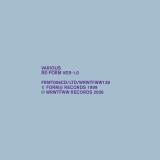
WRWTFWW Records is thrilled to announce their 5th archival release taken from cult Tokyo label FORM@ RECORDS' catalogue, this time with the first-ever vinyl edition of Re-Form Ver-1.0. The remarkable, yet not widely known, 1999 remix compilation is now available as a limited edition 45rpm cut double LP housed in a heavyweight sleeve, as well as in digital format.
Originally only available on CD in extremely limited quantities, Re-Form Ver-1.0 resurfaces as a fascinating document of FORM@ RECORDS' late-1990s creative peak. Re-imagining key pieces from the label's catalogue, the remix collection offers a rare glimpse into Tokyo's electronic underground, where techno, house, ambient, and IDM breathe freely through FORM@'s soulful and exploratory vision.
Highlights include two remixes of Missing Project's adored gem "Poisson D'Avril" (including its well known ethereal ambient Galaxy Dub which appeared on Music From Memory's Virtual Dreams II) as well as the otherworldly Fossil (aka the legend Virgo) Mix of Penance's "Cure & Soul". Throughout, the compilation balances dancefloor sensibility with introspective listening, embodying the warm human approach to machine music FORM@ RECORDS excels in.
Another essential time capsule from a crucial era of underground music, Re-Form Ver-1.0 echoes the spirit of Warp's Artificial Intelligence era, alongside the forward-thinking energy of Ken Ishii, Carl Craig, The Black Dog, and Ian O'Brien, while keeping its feet and individuality firmly rooted in local context - the magic recipe for creating a universal, timeless language of electronic expression.
Re-Form Ver-1.0 follows the vinyl edition of Virgo's Landform Code (1998) and Remnants (1999), as well as the FORM@ compilations Art Form I (1997) and Art Form 2 (1998), further expanding WRWTFWW's archival series dedicated to uncovering hidden gems of late '90s Japanese electronic music.
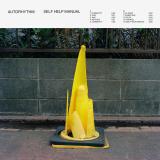
/// First track, Symmetry, debuted on BBC Radio 6 New Music Fix, 10th February: "A beautiful, beautiful album" /// I got my life back. On 17 February 2025, 1024 rays of ultra sound converged at an operation table in Bern, Switzerland, and disconnected a noisy circuit on my brain. 90% of the manifestation ceased – of a disease that I no longer wish to mention by its name. During the same period, I completed my new album: Self Help Manual. I’ve read more current research about the nameless disease than my neurologist, who despite that I didn’t follow his advice on suitable treatment, called me after the successful operation: a brave, brave man. I have composed the music in the same way as in my previous album – Songs for the Nervous System – through layers upon layers of improvisations in dialogue with my synthesizers, most of which are the same age as me. I made the majority of the songs in my studio in the remains of Old Hagalund in Solna. I edited the recordings in my bed during the waking hours of clarity at night. Some songs – NAC, Ketosis, Overkill – were recorded in the basement of my childhood home in Skutskär, in Norduppland, where I’d returned to be nurtured by my retired parents – who during a night when I couldn’t turn over in bed, or pull the blanket over me – made a list of what would happen to my belongings. To my friends who have stood out with me despite my disease, I want to state: you will not inherit me yet. On the new album, the electric bass takes on a leading role. ESG and Liquid Liquid have been important when I reinvented my baselines, limited and liberated by my poor fine motor skills. Plasma is my homage to Summertime Rolls by Jane’s Addiction, that I listened to frequently in my youth. I guess that no one will hear the resemblance. In several songs, the Fender Rhodes plays an important role, a magical instrument that I bought shortly after my diagnosis over a decade ago, and for a long time didn’t dare to touch out of respect for Herbie Hancock and Fela Kuti. A couple of songs draw inspiration from the Horn of Africa – Inner Nile and Delta. At first, subconsciously in the reverb-drenched Inner Nile, then more consciously in Delta. I’m sorry it doesn’t swing the right way, but it was my attempt to return to the cradle of humanity. Longevity is possibly my favourite. The melody is played by an arpeggiator that I controlled by pressing down different keys in an exhilarating sense of freedom. One song in particular, the second track – One – has caused friends to associate freely: one thought it sounded like Patrick Cowley, another like Sly & Robbie meets Kraftwerk, a third like Air – Moonlight Safari. I made one song just before the surgery: opening track Symmetry. It’s the mightiest and most minimal song. I made one song after the surgery: finishing track Self Help Manual. My previous medication pump is heard through the microphone of my Ovation Magnum. It’s the most hopeful song on the album. I took the cover photos with my Hasselblad during walks in Tokyo suburbs of Ōmori and Kamata more than ten years ago. It was something about the faith of the traffic cones that fascinated me – born in the same streamlined form, they had over the years become increasingly individual and lovable. The mixing was finalized by Christoffer Roth in the newly built Studio Dubious in Nacka. Rashad Becker, who in an interview said that he listens as much with his mouth as with his ears, mastered the album at Clunk in Berlin. Right now it feels like anything is possible. My recovery is perhaps a small step for mankind, but a giant leap for me. I hereby leave the music to you. Joakim Forsgren
Melbourne / Naarm strongholdButter Sessionsclock 15 years in the game with a trilogy of 12"s, sustaining their uncompromising streak of peak-form electronics. The family-style V/A binds friends, collaborators, former studio neighbours and DJ booth allies, capturing a label that exists as community as much as catalogue.
Disc Three entrantRBIserves up a tweaked-out psy-not-psy cut with a built-in spin-back upending the room, beforeUnsolicited Joints- siblingsCousinandBen Fester- slide in with a deep dub techno shuffler. Tokyo mainstayHarukaseals the side withEventide, a serotonin-tipped house curveball made in collaboration with Rotterdam'sCharlton Bakeliet, one of the last internationals to grace the Mercat X booth.
The B-side blooms withOK EG's zoned, psychoactive techno, handing over toHybrid Manto diffuse the tension with their morphing dubwise excursion.Yuzo Iwatacontinues his uncategorisable strain, self-described as EPM (Electronic Psychedelic Music), marked by Japanese ingenuity and free of genre boundaries. Finally,Sleep Dround out the set with a rogue link-up withPosseshot, a raw and adrenalised raver laced with a vocal that snarls closer to The Prodigy than hip-hop.
Whether taken alone or folded into the three-disc triptych, each instalment stands as a bag-ready constant, charged with Butter Sessions' curatorial finesse.
The union of Antwerp synthesist David Edren and Tokyo minimalist Hiroki Takahashi is a fit so natural as to feel preordained. Both traffic in subtle shades of contemplative electronics, marked by patience, space, and poetic restraint. And both have rich histories of curation and collaboration – Edren in the duo Spirit & Form alongside Bent Von Bent, and Takahashi as proprietor of the Kankyō record shop, as well as one fourth of cosmic ambient quartet UNKNOWN ME. Mutual fans of one another’s work, they began sharing stems in the latter half of 2020, which slowly blossomed into a collection of multi-hued compositions inspired by notions of connectivity and impermanence, translated for east and west: Flow | 流れ.
Opener “Dusk Decorum | 黄昏 礼節” maps the mood of what’s to come, elegantly pirouetting and percolating through an expanding vista of looming stars and half-light horizons. Takahashi describes Edren’s arrangements as evoking “a strange feel, something we haven't heard much of before.” The sensation is one of “in-betweenness,” a restless current whispering beneath the beauty, like seasons seen in time-lapse footage: flickering but infinite, transience turned permanent. Takahashi’s signature sculpture garden tones plot spiral patterns over which Edren cascades dazzling pointillist synthesizer coloration. The pieces veer between delicate and dilated, micro and macro, their aperture forever softly in flux.
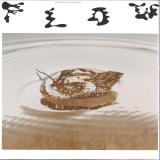
From the oscillating orchestral lullaby of “Stalactime | 鍾乳石時計” to the sweeping, sparkling dream sequence closer, “Shift Register | シフトレジスタ,” the album achieves the elusive goal of being more than the sum of its parts. This is music of rare air, elevated and amorphous, shimmering just out of reach. Though Edren and Takahashi have yet to cohabitate the same room in person (a fact that should be rectified soon by an astute festival booker), their palettes and poise are perfectly paired, twin fragilities woven into seven radiant and regenerative vibrational states. The cover design of a beatific, beaded leaf rippling on the surface of a hidden pond aptly captures the record’s muted majesty. Takahashi’s quiet pride is justified: “We are very happy with this time-consuming and carefully crafted work.”