
Buscar:tone control

8
A leading figure and respected elder in the Teklife family, Traxman has waited patientlywhile releases from young upstarts like Taso and Dj Earl have been enjoyed by footwork lovers all over the world. Now the time has come for Traxman to take centre stage, presenting a collection of new material that demonstrates his mastery of the footwork sound. Tekvision arrives hot on the heels of Teklife 005: Greenlight by DJ Manny, bringing an interesting contrast of production methods and styles. A prodigious crate digger, Traxman has provided the sample sources for many of Footwork's classic tracks over the years. So while DJ Manny recorded the majority of the vocals on Greenlight himself, Traxman uses his expert sample flipping techniques to add the human element to his productions. Traxman is a mainstay of the Chicago underground, with a discography stretching back to the golden era of Dance Mania Records in the 1990s. Ghetto House was an important precursor to Footwork, and Traxman was a key figure during this transition.
Echoes of the Ghetto House sound resonate through Tekvision, with tracks like Drop It Down and Twist The Party Out paying homage to the origins of Juke and Footwork music. Be Gagen feat DJ Earl is a beautiful opening track, with a soulful, melancholic synth unfolding patiently over a half-speed beat. When the bass kicks in after 1 minute 10 seconds it has a profoundly uplifting effect, and the late arriving vocal rounds off the composition perfectly.
Many of the tracks demonstrate brilliant and playful manipulation of vocal snippets, with Let Me Get Up and Control Ya Bitchezzz among the finest examples of this art. Finally,Tone Deaf and Whop Line show yet another side to Traxman's sound with an intoxicating and angular mix of bass and bleeps.

For her new and most radical album »Electroacoustic Works for Halldorophone«, Martina Bertoni used the electronic instrument at EMS Stockholm to create four pieces that are massive in scale and incredibly intimate, sonically restrained and emotionally overwhelming—almost ambient and always demanding your full attention.
Martina Bertoni returns to Karlrecords with »Electroacoustic Works for Halldorophone,« her most radical album yet. The foundation for the four electroacoustic pieces was laid during a residency at Stockholm’s legendary Elektronmusikstudion (EMS) that the Berlin-based cellist and composer used to explore the curious instrument, originally designed by Halldór Úlfarsson in 2008, as an algorithmic system in order to examine tunings and the mathematical relationships between Aiming to analyse and understand their interaction beyond the composer’s control, Bertoni sought to engage more deeply with the concepts of time, tuning, and, most importantly, control. Accordingly, her four »Electroacoustic Works for Halldorophone« seem both massive in scale and incredibly intimate, sonically restrained and emotionally overwhelming— almost ambient and always demanding your full attention.
While the halldorophone—famously used by Hildur Guðnadóttir for her »Joker« score—roughly resembles a cello and can be played like one, it is an electronic instrument. The vibration of its strings is being picked up, amplified, and then routed through a speaker. This creates a feedback loop that becomes increasingly complex depending on how much gain is added to individual strings. Úlfarsson gave Bertoni a carte blanche for how to handle the instrument, but she stresses that she relied on »minimal interventions—some string strumming and plucking« that set the interactions of different sounds and frequencies into motion. »I decided to not approach it like a cellist would,« she explains. »Instead I used it as a kind of generative organ by turning it into a feedback machine, with tuned feedback triggering more feedback depending on the tuning, which was based on tetraphonic scales that I could apply on the four main strings as well as the sympathetic group of strings.«
Bertoni recorded the material in the EMS studio, later composing and arranging the four complex pieces in her home in Berlin, after which they were mixed and mastered by Ciaran O’Shea. While this can be considered a compositional abstraction process, traces of her concrete work as a performer are firmly ingrained in the music. »The halldorophone doesn’t have a line output, just a double set of speakers, which is why I recorded all sounds with two microphones in the EMS studio,« she explains. »That’s why there’s plenty of breathing sounds here and there—label owner Thomas Herbst and I jokingly refer to the album as my ›chamber music record‹.« And indeed, there is a striking sense of intimacy to these four pieces throughout which individual sounds, harmonic frequencies, and even subtle rhythmic figures seem to move both on their own accord but also according to a underlying vision that steers their interplay.
Indeed, »Electroacoustic Works for Halldorophone« is an album built on and marked by contrasts. The soothing polylogue of single sounds in the higher register on opener »Omen in G« is counterpointed by massive bass drones, while the second piece, »Nominal in D,« plays a cunning game of repetition and difference by combining thick textures with all kinds of rhythmic elements. »Fades in C«—the longest of the four pieces, clocking in at 17 minutes—unlocks the emotional potentials of the sonic qualities of the halldorophone, sounding at once serene and anthemic, and »Organon in D« closes the album by underscoring how Bertoni’s unconventional approach allows her to seamlessly transform simple, quiet tones into complex, towering walls of sound.
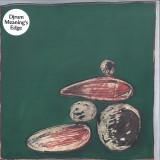
Djrum's first release since 2019, the Meaning’s Edge EP is an introduction to a whole new world. For the artist also known as Felix Manuel, it was created in the final stretches of six rather traumatic years work. Having carefully honed his techniques and aesthetics, and learned some hard-won emotional lessons over this time, finally he began to work in a quicker, lighter fashion – and to cleanse his palate a little by bringing in a fresh ingredient: his own flute playing. For listeners, though, it will serve as an appetiser, a way into the delights and complexities of this new phase of his creativity.
It’s a serious work in its own right, mind. The use of flutes – including Bansuri, Shakuhatchi, Western Classical, and synthesised all blending and blurring into one another – gives it a coherence and a sense of airiness that unites the five tracks over half an hour, however divergent their beats get. And as in all his music, Felix’s whole life is in here. Ethnomusicology studies, untold hours of DJing everywhere from the gnarliest squat raves to the most rarefied deep house clubs, explorations of his own neurological and emotional makeup, and the technical finesse of someone who is never not creating music or art, all roll into an experience that’s dazzling, delightful and keeps on giving.
Just the opening track ‘Codex’ alone touches on OG dubstep, Aphex Twin-like braindance, post-classical exploration, movie themes and more. The gentle tones and melodies that rise up out of it perfectly conjure Felix’s running theme of a protective bubble that provides a sense of safety and tranquillity even as the beats and acid gurgles and spurts all around it conjure up the slings and arrows of life’s difficulties.
The tone set, the EP moves through ultra-rarefied glass-like percussion in an almost ambient setting, hints of grime’s counterintuitive patterns, and even more hectic patterns influenced by Tanzania’s hyperspeed singeli style of dance music – but always with that perfect balance of chaos and control, unpredictability and protection. It rewards playing and replaying endlessly, it’s a profound and often joyous experience… and it’s only just the beginning. This is the return of a master craftsperson more focused than ever on his vision and vocation and ready to blow your mind all over again.
Mastered and cut on 140g black vinyl by legendary mastering engineer Matt Colton at Metropolis Studios, London. Pressed at optimal media, Germany.
4
También disponible
Splatter Vinyl[23,74 €]
Baby T is a space away from her work as B.Traits in which Brianna Price can lean more into the junglist, drum ‘n’ bass and hardcore sounds which she loves so dearly. With BSHEE02, the second drop on Price’s own Banshee label, Baby T delivers a darkside masterclass of an EP. This record is a quartet of system blowers which doesn’t let up for a single second from start to finish.
Opener ‘Times Up’ is urgent from the off - the initial strains of this joint find sirens wailing in the monitors over a twitchy kick/drum/hats combo. From here on it’s distilled raver perfection, the drums taking us on a wild Wipeout-style ride as the subbiest of bass skulks at the bottom of the mix. Imagine a more technoid take on the classic breakbeat freerides of Skanna and you’re not far off the ‘Times Up’ sound.
A remix of ‘Times Up’ from man like Aloka leans with devilish glee into the murky underworld that lurks beneath Baby T’s original. Aloka’s version is extremely eerie in a manner which makes you think of the darkest corners of a DMZ party. When things really kick into gear, driven by an irresistible kick dembow, the effect is hypnotic - think the dubwise junglism of the UVB-76 cohort.
BSHEE02’s B-side kicks off with ‘Coercive Control’. This is a cut which delivers on its title in spades, putting the listener in a trance with an interplay of low-slung bass, whirligig synth tones and more of those perfectly executed broken beats. The acid starts to kick in around the minute mark, and it turns out to herald a total earworm of a lead melody.
There’s plenty of dimly-lit malevolence to BHSEE02 closer ‘Dense Dickwood’s grinding atmospherics and gurgling bass throbs. However, Baby T opting for a half-time drum break here gives the cut a vibe not dissimilar to the weightiest jams of classic Massive Attack - that is, until an absolutely remorseless switch-up occurs halfway through, delivering volley after volley of intense drum hits.

4
También disponible
Neon Green Vinyl[16,39 €]
Baby T is a space away from her work as B.Traits in which Brianna Price can lean more into the junglist, drum ‘n’ bass and hardcore sounds which she loves so dearly. With BSHEE02, the second drop on Price’s own Banshee label, Baby T delivers a darkside masterclass of an EP. This record is a quartet of system blowers which doesn’t let up for a single second from start to finish.
Opener ‘Times Up’ is urgent from the off - the initial strains of this joint find sirens wailing in the monitors over a twitchy kick/drum/hats combo. From here on it’s distilled raver perfection, the drums taking us on a wild Wipeout-style ride as the subbiest of bass skulks at the bottom of the mix. Imagine a more technoid take on the classic breakbeat freerides of Skanna and you’re not far off the ‘Times Up’ sound.
A remix of ‘Times Up’ from man like Aloka leans with devilish glee into the murky underworld that lurks beneath Baby T’s original. Aloka’s version is extremely eerie in a manner which makes you think of the darkest corners of a DMZ party. When things really kick into gear, driven by an irresistible kick dembow, the effect is hypnotic - think the dubwise junglism of the UVB-76 cohort.
BSHEE02’s B-side kicks off with ‘Coercive Control’. This is a cut which delivers on its title in spades, putting the listener in a trance with an interplay of low-slung bass, whirligig synth tones and more of those perfectly executed broken beats. The acid starts to kick in around the minute mark, and it turns out to herald a total earworm of a lead melody.
There’s plenty of dimly-lit malevolence to BHSEE02 closer ‘Dense Dickwood’s grinding atmospherics and gurgling bass throbs. However, Baby T opting for a half-time drum break here gives the cut a vibe not dissimilar to the weightiest jams of classic Massive Attack - that is, until an absolutely remorseless switch-up occurs halfway through, delivering volley after volley of intense drum hits.

“It’s been on my wishlist for a while that the incredibly talented Julienne Dessagne does a techno EP for us,” Michael Mayer says. You can hear why, straight up, on Speicher 139, as Dessagne’s project Fantastic Twins is finally let loose on Kompakt’s storied series. The key words: psychedelic acid trax. “False Index” is peeled back to core: a fearsome rhythm, with an endlessly helixing synth pattern twisting around your skull, crinkling like cellophane and warping like burnt plastic, while Dessagne’s Sprechstimme floats above everything – detached but effortlessly perceptive. “New Systems” is a new kind of Europe Endless – hypnotic and lush, its deep drones pinpricked by sonar bleep. “Uninhibited” is catchy in a way that only Dessagne can make possible, its vocal tattoo burnt into your mind as it echoes through massive architectures, tones dropping from scaffold and splashing at your feet as glitch-work burrows its way up through the floor, directly into your earholes. Uninhibited? Everything here’s simultaneously under control, all under the watchful, guiding eye of Dessagne, and playfully, wildly out of control, little arrangements of phenomena let loose to build new worlds. Organised chaos, and chaotic organisation.
„Es stand schon seit einiger Zeit auf meiner Wunschliste, dass die unglaublich talentierte Julienne Dessagne eine Techno-EP für uns produziert“, sagt Michael Mayer. Auf Speicher 139 kann man sofort hören, warum, denn Dessagnes Projekt Fantastic Twins erscheint endlich in der legendären Serie von Kompakt. Die Schlüsselwörter: psychedelische Acid-Trax. „False Index“ ist auf das Wesentliche reduziert: ein furchteinflößender Rhythmus mit einem sich endlos windenden Synth-Pattern, das sich um den Schädel dreht, wie Zellophan knistert und sich wie verbranntes Plastik verzieht, während Dessagnes Sprechstimme über allem schwebt – distanziert, aber mühelos wahrnehmbar. „New Systems“ ist eine neue Art von Europa Endlos – hypnotisch und üppig, seine tiefen Drones von Sonar-Pieptönen durchbrochen. „Uninhibited“ ist eingängig auf eine Weise, wie es nur Dessagne möglich macht, ihre Stimme brennt sich in dein Gedächtnis ein, während sie durch massive Architekturen hallt, Töne fallen vom Gerüst und spritzen an deinen Füßen, während sich Glitch-Work seinen Weg durch den Boden bahnt, direkt in deine Ohren. Hemmungslos? Hier ist alles gleichzeitig unter Kontrolle, alles unter dem wachsamen, leitenden Blick von Dessagne, und spielerisch, wild außer Kontrolle, lassen sich kleine Arrangements von Phänomenen los, um neue Welten zu erschaffen. Organisiertes Chaos und chaotische Organisation.

Future Tones is back... this time with Fdez, label co founder. Four dancefloor killer tracks, and starts with Dr Blowfin, Dark and driving techno house tool. Rolling sub-heavy bassline, tight percussive groove and raw analog synth stabs.
The A2 is for Techcontrol, Stripped and hypnotic. Minimal drum programming layered with evolving analog textures and shadowy vocal fragments.
The other side starts with Sarcofago, Heavy low-end pressure with a punchy groove. Italo-tinged atmospheres and dusty analog sequences create a moody peak-time cut with steady progression.
And B2 is for Zigurat, Killer closer. Deep pulsating bass, restrained percussion and haunting vocal elements floating over warm analog pads. Perfect for late-night transitions and controlled energy shifts.
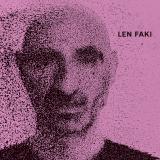
With Zera, Len Faki returns to Figure with a tightly focused EP that moves between raw, driving functionality and more open, atmospheric moments. Across five tracks, he explores variations in groove, tone and energy, balancing direct, floor-ready structures with a more fluid and spacious approach.
Opening cut Maschine Girl locks into a restless, forward-driving groove. Crisp percussion and a tightly coiled low end create immediate momentum, while sharp synth fragments and metallic accents add a nervous edge. The track stays stripped and efficient, letting its steady build and controlled tension carry the energy.
Kobold follows with a darker and more twisted tone. Warped synth figures weave through a heavy rhythmic backbone, giving the track a slightly mischievous character while maintaining a firm, heads-down drive. The interplay between tonal movement and grounded percussion keeps the groove dynamic without breaking its focus.
Closing the A-side, Maschine Girl (Version) revisits the opener from a different angle. Elements are tightened and subtly rebalanced, shifting the emphasis further toward rhythm and direct impact. More reduced and tool-like in nature, it pushes the groove forward with a sharper, club-ready feel.
On the flip, Zera unfolds with a broader sense of space. Hypnotic synth movement and layered atmospheres sit atop a firm low-end framework, gradually building intensity while maintaining a deep, immersive flow. The track thrives on its slow development, drawing the listener further into its evolving structure.
Rounding out the release, Zera (Hardspace Mix) reimagines the original with a heavier, more physical approach. The groove becomes more pronounced and the rhythmic pressure more direct, tightening the structure into a denser, floor-driven tool that emphasises impact and propulsion.
With Zera, Len Faki delivers a cohesive and wide-ranging release that connects raw, driving tools with more expansive, early morning-leaning grooves — further reflecting the breadth and versatility that has defined his output in recent years.
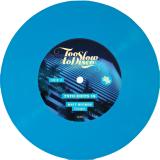
We here at TSTD are longtime fans of UK producer/musician/Label maker MATT HUGHES. For a few years he is delivering tasteful, deep, dubbed reworks for Too Slow To Disco, some in Edit form, but also his 2 official remixes for Goodvibes Sound on The Sunset Manifesto 2.
Both new TSTD Edits on this 7 inch are slow disco masterworks, he is giving the originals his trademark deep, warm versions. Who is the guy….?
Matt Hughes is a music producer from the north of England. A purveyor of all things funk, soul, disco, jazz and house! Most recent releases have been with Outcross Records, Bubblegum Pop, Editorial and Too Slow To Disco. A large number of Matt's works have been released under the MAM project with Miguel Campbell remixing the likesof the Climbers, Deadmau5 and Flight Facilities, as well as putting out releases via Wolf+Lamb, Future Classic, Hot Creations, Outcross Records, BPitch Control and Editorial Records to name a few.
Among his most notable collaborations are works with Derrick McKenzie, drummer of Jamiroquai; Drop Out Orchestra, Art Of Tones, amongst others. Each of these collaborations has allowed him to explore new musical dimensions, enriching his characteristic sound with diverse and fresh influences.
With a musical style deeply rooted in disco, funk and jazz, Monsieur Van Pratt combines classical elements with contemporary touches, creating a sound experience that is both nostalgic and innovative. His work not only stands out for its technical quality, but also for its ability to connect emotionally with the listener, making him a central figure in the evolution of modern dance sound.

11
Saxophonist, producer and composer Brian Allen Simon explores darker hues, transposing waking and altered states under his studio veil Anenon. On the deeply evocative new album 'Dream Temperature', he shifts electronic processing to the foreground, introducing digitized wind instruments and unworldly atmospherics, not heard since his innovating mid-late 2010s output.
A longtime Los Angeles resident, born and raised, Brian Allen Simon has expressively operated under the moniker Anenon, releasing the highly revered 'Petrol' (2016), 'Tongue' (2018) and the viscerally beautiful 'Moons Melt Milk Light' (2023), in a line of unwavering musical dialogues. While the penultimate album was a deliberate, reductive, entirely acoustic detour that was born out of a want to unplug, 'Dream Temperature' sees Brian primed with a newly discovered wind synthesizer as his central compositional tool, alongside acoustic piano and tenor saxophone. The entirety of the album's electronics are triggered by Brian's lungs, generating otherworldly synths modulated by expressive breath control, channelled through the laptop as the core processing chamber for added textural components and field recordings.
A free floating and heavy emotional resonance marks 'Dream Temperature' from beginning to end, invoking the feeling of waking up, still heavy from a night of half-remembered dreams, and continuing one's day in this state. Simon maps out the album's spatial voice early on the statement title track, a deep, yet compact cut, generated from digital saxophone rasps that whistle by in close proximity, along with haze filled textures and sub bass. There is a sonic oscillation of urban grit and pastoral drift throughout as tracks pass by like introspective thoughts, fueling both a tense and ethereal quality that underpins the album. Interluding solo and part-solo piano improvisations 'Last Sun 1' and '2' are positioned adjacent to the buffering digital soundscapes. Their softer, still processed timbres pierce the melancholic exterior, offering a contrasting tenderness that could echo the grace of Ry?ichi Sakamoto, the spiritualist rigor of ECM's Keith Jarrett and a touch akin to Aphex Twin's piano miniatures. 'Nulle Part 1+2' signals the first appearance of an acoustic wind instrument, as tenor saxophone flourishes are juxtaposed against noisy drones, all shouting at the void, with notes resurfacing like lost digital data.
The album was recorded at home during either sunset or nocturnal hours between September of 2024 and October of 2025, a period in which Brian found himself craving more lengthy and intimate studio time as he searched for more pronounced textural qualities amidst his new sonic ambitions. 'When The Light Appears, Boy' shows further evidence of this deeper universe, revealing a grittier edge as the album's essential blueprint is sonically inked. A sprawling expanse of wind synths rhythmically encircle the listener before a dreamy, ghostly ambience blankets 'Toyama'. The sound is evocative of the productions of post dubstep era luminaries such as Burial or the productions of HTRK's Nigel Yang. More isolating and enveloping than the previous all acoustic record, this is music both disorienting and yet warmly inviting all at once. A sonic diarist at heart, personal field recordings were also taken from Sardinia, Japan, Big Sur and LA which intersect at unexpected moments throughout the album's 31-minute play time.
'Dream Temperature' is a vital coalescence of both Simon's electronic and acoustic practices with repositioned electronics akin to earlier works, both haunting and elegant, yet still profoundly personal. Simon continuously resonates as an experimental outlier treading an enthralling, non-linear musical path. This music resolutely glows with an unknowing aura, like an untapped energy source waiting to be discharged.
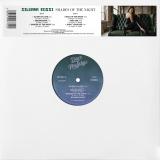
6
Silvana Rossi emerges from the new wave of Italo revivalists with a sound that feels both timeless and sharply contemporary, where vintage drum machines, analog synth lines and nocturnal romance collide with a modern club sensibility. Rooted in classic Italo disco but filtered through today’s underground circuitry, her music speaks directly to selectors navigating the space between wave, electro and slow-burning techno. The tracks carry a distinctly personal edge—melancholy, desire, and late-night introspection wrapped in icy melodies and hypnotic grooves. This is music made for dimly lit booths, smoke-filled basements, and DJs who still believe in storytelling through vinyl.
A seductive opener “Elixir Of Love” built on cascading arps and a steady pulse, romantic but restrained, like a whispered confession over a rolling bassline. Perfect for setting the tone early set. Tension-driven and emotionally charged, italo anthem “Breakdown” balances crisp electro rhythms with a sense of inner collapse. A cold wave-leaning cut that hits hardest when the lights stay low and the energy turns inward. Shades Of The Night – a cinematic slow-burner drenched in shadow and atmosphere. This one is all about texture and space. Walk In The Night, another italo classic on the EP, stripped-back and hypnotic, with a confident groove that nods to classic Italo while staying firmly rooted in modern club aesthetics. “Bad Girl” brings a sharper, more playful edge, driving, stylish, and slightly dangerous. A weapon with crossover appeal for electro and wave crowds alike. A versatile tool for both warm-ups and deeper moments. Emotionally direct yet sonically controlled lush pads and restrained vocals create a sense of distance that pulls you in “Don’t Leave Me”. A melancholic highlight for DJs who know how to play with tension.

Berlin-based producer ZentaSkai returns with ‘Analog Assets Vol. 04’, a four-track vinyl-only EP focused on analog texture, dub-inflected atmospherics, and disciplined techno structure. Active since 1997 and operating Mask Records and its parent label, Zaijenroots, from his Berlin studio, he continues to refine a sound shaped by spatial control and steady, architectural pacing. Tracks unfold patiently, elements are introduced with intent, and nothing feels excessive.
Setting the tone with Cuddling Monsters’ partner, Laura Merino Allue, A1 features phased melodic textures and crisp percussion that gradually lock in the rhythm. A2 develops a filtered synth motif over a steady four-to-the-floor rhythm, revealing its full weight before pulling back. B1 is the most direct cut, driven by a firm, punchy beat and sharp rhythmic detailing built for peak-time focus, while B2 closes with rising string layers over a dub framework, balancing warmth and precision in a clean, measured finish.
With releases on Jerome Sydenham’s Ibadan Records and upcoming collaborations including Cuddling Monsters with Laura Merino Allue and a joint project with Thomas Grun for Rhythm Trax Austria, ZentaSkai’s work sits comfortably between minimal experimentation and functional dancefloor design.
Supported by artists such as Richie Hawtin, Joseph Capriati, Marcel Dettmann, Luke Slater, Laurent Garnier, and DVS1, he maintains a consistent presence within the underground without chasing trends.

Sexyrecs 'Third Base' marks a new chapter for the label.
Dutch producer Khas delivers a grounded and more restrained take on techno, built on organic structures, subtle tension and contrasting bleeps that slowly pull you in. It's a toned down approach compared to earlier releases of Sexyrecs, but the groove and sensuality are still very much there.
Berlin duo LYRIC take the remix deep into the details, stretching and reshaping the sounds until they become hypnotic and immersive, adding a darker and more introspective layer to the EP.
Less rush, more control. Still sexy.
Decibel Place arrives on Dorbachov's Scrap & Delete with the 'Swarm' EP landing on 8th May 2026, coming with a remix from Belgium's Steve Redhead. Known for navigating the darker, more experimental edges of the genre while maintaining driving, floor-focused energy, the Liverpool-based Decibel Place has previously delivered on labels including Materialised, Transition, MASS, and Khazad Records. As a DJ, he continues to earn attention with his tightly constructed sets across the hardgroove circuit, a sensibilitycarried through this latest body of work. The EP opens with the title track 'Swarm', setting the tone through immersive, tension-building arrangements. Undulating sound design and tightly interlocked rhythms draw the listener into a dense, atmospheric space, rich in detail and forward motion. Steve Redhead steps in on remix duties, reworking 'Swarm' into a stripped-back, percussive cut defined by clarity and control, where subtle shifts in rhythm and texture drive a deeper, hypnotic propulsion. 'Infection' follows with a shift into more industrial territory, introducing broken rhythms and raw, mechanical textures that sharply punctuate the groove. Closing track 'Smoking Kills' leans fully into hardgroove territory, with driving drums and visceral energy bringing the EP to a powerful, club-ready finish.
Decibel Place's 'Swarm EP' comes via digital and vinyl on Scrap & Delete on 8th May 2026.
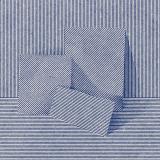
8
Church Andrews and Matt Davies return with Tilt, a pinpoint collection of skewed microtonal and discordant compositions for percussion and digital synth.
Tones ascend but don’t resolve, rhythms loop, collapse and reassemble, patterns wriggle with geometric precision, sounds tilt, the edges fray.
Kinetic, elastic, wonky without being obtuse, Church Andrews (aka Kirk Barley) and Matt Davies new LP Tilt is the culmination of six years of creative collaboration, refining and redrawing the relationship between Davies’ virtuoso percussive practice and Barley’s off-kilter synthesis.
Where their 2024 release Yucca, took rhythmic cues from the Fibonacci sequence, Tilt explores a more intuitive approach, returning the duo to a minimal sound interrogating the interplay of chance and control, system and body, freedom and mechanisation. Featuring prepared guitar, finely resonant muted percussion and a crisp palette of digital synths, it draws on the pair's long-standing interest in alternate time signatures.
Here, a tripped-up 11/8 beat gives ‘Yokai’ a disorientating quality, threading unusual paths through the playful, mysterious 5-note Hirajoshi scale - a pentatonic scale from Japan hinted at in the track’s playful reference to a supernatural spirit in the country’s folklore.
Using a simple on-off system between drum and synth to trigger a Shepard tone - an auditory illusion of a sound that ascends or descends in pitch without actually changing - ‘Shepherd’ revels in the stripped-back simplicity of its sonic palette, where the nuance lies in what Barley calls “subtleties in the timbre of the sounds” as they dialogue with Davies’ warped loops.
It’s these finely tuned melodic drum tones and an eerily abstracted prepared guitar that give ‘Debris’ its uncanny feel, yet never feeling overly controlled. Like the album’s meticulous, graphic artwork, Tilt seeks the shifting ground between the physical and the digital, as acoustic tones are tweaked and disambiguated into new and unexpected forms.
Tilt represents Church Andrews and Matt Davies’ ongoing collaboration in its purest form - a hyper-defined evocation of gravitational potential in their live sound.

5
With Morocco Palace, Cybercafé aka Adam Dirk’heim delivers his very first full EP on Sequence Records - a record that balances raw energy and melancholy, blending emotional depth with a strong, forward-thinking dancefloor edge.
The EP opens with Electroskit, driven by an electric, almost extraterrestrial voice, before diving into raw electronic textures that set the tone. Dance & Control marks a first shift with its slow tempo, massive modulated synths and stretched tension. Then comes Nightshade, where the energy rises further through a rhythmic and emotional build-up carried by deep, melancholic, yet dancefloor-oriented synth lines.
On the B-side, Don Dolor flirts with instrumental EBM influence, while What Am I Talking About? closes the record with a hypnotic groove that stays with you long after the last note.
Morocco Palace lays the foundations of Cybercafé’s universe: a subtle balance between introspection, intensity, and dancefloor energy.

4
NYC's Afro-Latin house player Doug Gomez, who was also half of the defunct Drrtyhaz, leans into club weight and musical detail on Signals 3, a confident new drop built on persuasive rhythms. 'The Space Between Us' introduces his vocal production with Fe Malefiz, who has a sultry, stylised tone that drifts between deep house and Afro-soul with great control. 'The Red Room' shifts gears into peak-time territory with a groove shaped by late-night exchanges with DJ Loka. Closing cut 'To Do Good Na Em Dem Pay' widens the palette further, pulling from Afrobeat's restless rhythmic energy and layering in some bold and brassy horns.

8
Grace & Raffaella is the first collaborative release by ML and Vittoria Totale. Over nine tracks, the album strikes a deceptively minimalist tone, taking in a ton of musical as well as literary references. An elegy on a journey back to the present, with all the hushed intensity of an informed fever dream, Grace & Raffaella has a magic-realist feel. Its vocal parts serve as loopy self-fulfilling prophecies. Cut off from the sun, the gorge grows darker. Using an electroacoustic sense of spacing, as well as abstracted current-day club influences, with scraps of background noise fading in and out, this album's use and treatment of a snippet-like narrative is its core aesthetic. A digital gleam drenches the spoken bits into instances of subtle surrealism. Like a kitchen sink drama stripped of all deadweight. We are on the edge of relinquishing all control here. Rip up your diary and let go of the language of the old ones. Grace & Raffaella is a seductive slice of modern hyper-pop that defines its own intentions over and over again.

Roland Corporation's MKS-50 form 1986 is a rack-mount version of the Alpha Juno. It has the same synth engine and architecture, but with added features like 16 programmable chord memories, the ability to store velocity, volume, panning, de-tune, portamento and other similar parameters within each patch you create. The optional PG-300 gives traditional slider type control of all editable tone parameters which include DCO (digitally controlled oscillators) LFO, bend, ENV, pulse, waveforms, noise, PW/PWM, high pass filter, VCF (filter) with freq/env/res/LFO/kybd, VCA envelope, chorus, and more. Adapta delivers a project based on this legendary MKS-50 synth. Tracks created with technology from the past, aimed for the future. Techno!!

4
Gyros Heroes is the latest release from Adlibitum Tum Tunes, showcasing the unmistakable synergy between label curator Kirill Matveev and trusted maestro Nicolas Barnes, a resident artist renowned for his consistently refined and emotive sound.
The EP unfolds as a sophisticated blend of deep- and tech-house aesthetics, designed to uplift, move, and connect. It balances percussive bounce with emotional subtlety, offering a graceful flow that is both club-ready and sonically rich.
A1. Kirill Matveev – Am I Happy With That and A2. Kirill Matveev – Once At Dawn deliver the opening momentum, channeling sleek grooves and playful introspection with polished restraint. These tracks glide effortlessly between warmth and drive—embracing the listener without overwhelming.
On the flip side, B1. Nicolas Barnes & Kirill Matveev – Naar Shada blends the duo’s sonic sensibilities into a mood-driven piece with elegant progression and percussive intricacy. Closing with B2. Nicolas Barnes – Qeezy, the record reaches its emotional high point: a dancefloor-oriented yet soul-touched cut that radiates both sensuality and controlled energy.
Gyros Heroes is a finely tuned experience—bright yet deep, emotive yet precise—crafted for selectors who value atmosphere as much as movement. This is an EP that invites you into its positive orbit, reminding us how expressive and graceful club music can be when shaped by masters of tone and detail.
Adlibitum Tum Tunes is a division of MixCult Records

6
Making his debut on Depth.Request, Duellist delivers Intensive Living - a fierce three-track statement inspired by the restless energy and chaos of modern city life. Reinforced by remixes from industrial heavyweights Orphx, Statiqbloom, and label co-founder G.xist, the EP captures the tension between control and collapse - where rhythm becomes ritual and distortion takes on a human pulse.
'Burn Your Way Out' opens with offbeat crunch and abrasive energy, setting a volatile tone. The title track 'Intensive Living' moves with rhythmic swagger and pounding drums, its momentum unwavering. 'Ritual Component' closes the originals with throbbing low-end pressure and hypnotic drive - the sound of machinery breathing.
On remix duty, Statiqbloom transforms 'Intensive Living' into a desolate, melodic descent, Orphx expand its framework into a widescreen rework charged with cinematic tension, and G.xist pushes 'Burn Your Way Out' into industrial hypnosis, fusing intensity and groove in equal measure.
Intensive Living stands as a hard-edged introduction to Duellist's world - precise, forceful, and fully alive in its urban grit.

Kucera & Delayed Sentence Present the Analog Rhythms EP
Scrap & Delete continues its trajectory as a home for uncompromising techno with the Analog Rhythms EP. A collaborative release from Kucera and Delayed Sentence that merges their respective strengths into a tightly honed four-tracker of futuristic machine music.
Opening cut "Analog Rhythms" sets the tone with raw propulsion and hypnotic focus. Anchored by a driving low end and jagged synth pulses, it balances grit with surgical control. A track built for long blends and warehouse immersion.
"Between Networks" dials into a more kinetic space. Its interlaced groove patterns, off-axis drum programming and haunting vocal grooves create a feeling of constant shift, evoking unstable connections and digital interference while maintaining absolute floor impact.
On "Synthax," the duo lean into sci-fi atmospheres. Bleeding-edge textures swirl through a thickly percussive dancefloor orientated framework, creating a dark yet spacious momentum that's equal parts cerebral and physical.
Closing cut "Twisted Ankl3" is the EP's most unhinged moment. A wonky workout full of broken signal bursts and twitchy rhythmic grooves. It's a subtly evolving sequenced post-industrial DJ tool, leaving dancers disoriented and locked in.
With Analog Rhythms EP, Kucera and Delayed Sentence showcase a shared vision rooted in sonic discipline, hardware fluency, and unrelenting energy. This is high-functioning techno at its most distilled. A perfect fit for Scrap & Delete's refined catalogue.

Four years on from their landmark Grassroots, visionary half-time heavyweights The Untouchables return with their third album, Lost Knowledge. The duo of Kate McGill and Ajit 'Nitrox' Steyns have carved out a space in modern D&B all their own, building on a legacy that reaches back to the late 00s to keep pushing into unexplored terrain with an assured and deadly line in rhythmic intrigue and atmospheric immersion.
Lost Knowledge launches into action instantly with the high-pressure drum science and dubby splashes of 'Drunken Bells', capturing the loopy techno propulsion and rolling intensity that drives so much of the output on Samurai Music. Where The Untouchables excel is in finding variety and nuance in their relatively forbidding, pared down sound. The heads-down groove of 'Mafia Town' owes as much to dembow and dancehall as D&B, while 'Lost Knowledge' spirals out into psychoactive flurries of synth strafes and organic percussion slathered in tight-locked delay trails. There's no light relief from strident hooks or riffs, just a pure, unshakeable commitment to the power of the beat and deeply designed layers of sound shaping out the space around.
'Busy Bones' makes space for carefully deployed hints of pad tone while the snares snap out of the mix with a sharp set of teeth. 'Four Eared Demon' baits the gabber crowd with its rapid-fire 4/4 hats atop seasick creaks across the midrange, keeping subtlety and patience in the lower frequencies to maintain the signature elegance readily associated with The Untouchables. 'Phase Correlation' teases an artfully unhinged ripple of synth that stands out amongst the murky murmurs filling out the middle distance, but it's still exercised with brutal precision.
Nothing happens by accident or feels out of place - McGill and Steyns are in total control, and they demonstrate incredible range and inventive approaches within their focused style. The accent of the grooves shifts, and individual sounds carry all kinds of artefacts, yet everything gets folded into the exacting Untouchables sound with a liberal dubwise sensibility. Brimming with inspiration and immaculately produced, on Lost Knowledge their one-of-a-kind sound is stronger than ever.
After a lengthy time of careful planning, the first Bünker Bliss release finally comes to life, and it couldn’t be in better hands. TBILISI-based producer DJ Astrobee steps forward with a record that reaffirms his status as one of Georgia’s underground pillars.
The music itself moves fluidly from razor-edged, body-jolting rhythms to shadowy synth-driven journeys - always carried by a tension that feels both immediate and entrancing. DJ ASTROBEE channels that energy into Bünker Bliss, setting a defining tone for everything that follows

Hungarian producer Dave Wincent & German-Filipino producer Wigbert collaborate on a new four tracker ‘Collab’ on DCLTD. The EP marks their debut body of work together.
Collab02: minimal, no-frills techno, an unrelenting wall of percussion with subtle changes of note patterns embedded within. Hissy hoover swooshing sounds like waves of static or desert winds add intrigue to an austere soundscape.
Echo Chamber: fast, resonant drums, with a tapping hi-hat crescendo bringing in machine-like rhythmic industrial sounds… disquieting yet high energy.
Fly Back And Forth: Muffled beats a Moroder-like throbbing synth effect from the start, hypnotic and yet energetic. Sustained, pulsing high synth chords add emotional heft.
Resonant Control: a complex wave of percussion which keeps on coming, with a high chiming strand which broadens tone and becomes dominant, spiked with bleeps like mysterious radio signals from space.

Bristol-based producer Zobol lands on Brooklyn imprint Melodize with Killing Culture – a bold, four-track statement that fuses electro, breaks, and electronica into something raw, physical, and emotionally charged. Known as one half of the label Distorted Sensory Perception – a platform showcasing honest, forward-thinking electronic music – and as curator of the UK underground event series d3pth_p3rc3pti0n, Zobol brings a fiercely independent, hands-on ethos to his productions.
Built entirely on hardware – including the Korg MS20, Roland JX-3P, Prophet Rev2, Acidlab Drumatix, Behringer TD-3, Elektron Octatrack, Soundcraft Signature MTK12 console, and finished in Ableton Live – the EP captures a live-wire energy that feels both urgent and immersive.
The EP opens with “Uprising”, a track that sets a hopeful tone with flickers of brightness woven through its punchy rhythms – like the first sparks of something much bigger. Extrawelt reshapes the track with warm bass and swirling atmospheres, lending a more introspective, drifting character. Known for their decade-spanning contribution to electronic music – from their iconic debut on Border Community to defining live performances worldwide – the German duo once again deliver with a remix steeped in depth and analog soul.
The B-side turns heavier. “Weapon of Mass Distraction” unfolds from a looping synth fragment, slowly ramping into a tense, bass-driven groove that hits like controlled bursts of energy – Relentless, exacting & distractingly armoured with acidity. Closing track “Oppression” dives deeper into emotional terrain: the weight of distorted low-end channels the presence of authoritarian force, while fragile melodic elements flicker like voices struggling to be heard – eventually weakening, fading, and falling into silence.
“As shattered cultures bleed beneath a technocratic sky, the silenced cries of Palestine, Sudan, Yemen and other forgotten lands echo a world where humanity’s dawn is cruelly denied; a stark testament to faltering global systems, demanding urgent change before the irreversible erosion of our shared future.”

6
In the previous episode, the Vibracid technique was discovered as a way to deactivate memories imposed by technocratic elites.
Now, with VIBRACID 2, its real deployment begins: a series of sonic attacks targeting control systems through rave vibrations.
Each track is a weapon. Each producer, a node of resistance. “Vibracid Advent,” the single that launched the assault, opens the mini album with acidic force — delivering the first sonic strike that breaks through imposed control. From the acidic and powerful aggression of Calagad 13 (Spain), through the modular precision and acid techno of C.C.O (Contra Communem Opinionem, Switzerland), to the dark, industrial electro of Mokotron (New Zealand). Atix brings the French 90s rave energy; Wicked Wes, from Florida (USA), builds grooves with bifasic rhythms and glitch textures; and Romphea (Greece) closes with distorted breaks exploring chaos and sonic escape.
Careful sound and mastering, and exceptional design for a limited edition of 150 copies on solid red vinyl.

4
Selekt Wax returns with its second vinyl offering, shifting the lens from introspection toward motion. Where its predecessor explored stillness and space, Varginha 96 leans into rhythm with a more fluid, tactile energy.
Loopedeville works within a minimal framework but pushes it toward something more animated. Groove takes the lead, while detail reveals itself gradually. The result is playful but controlled, built for movement while still carrying depth beneath the surface.
Inspired by the 1996 Varginha incident in Brazil, the record carries a subtle sense of the otherworldly. Not in a literal sense, but in texture. Unfamiliar tones, slightly off center moments, and elements that feel just outside of reach.
Etched on the sleeve, a poem sets the tone:
the analog moment is now
but, how? release
free form feelings finding
new places in yourself
a sort of synthesis
of interpretations
crash & collide
into the infinite groove of reality
but, is anything really real?
A1 – Varginha 96
A breakbeat driven opener centered on a looping vocal from the Varginha ‘96 incident. Off kilter synth textures circle the groove, giving it a subtle, otherworldly feel. Simple on the surface, with depth that reveals itself over time.
A2 – Varginha 96 (Ohm Hourani Remix)
Ohm takes it into a more stripped back, hypnotic space. Centered around the same vocal, the track locks into repetition and feel. Hazy, controlled, and built for late hours.
B1 – Thunders in Paradise
A driving groove built on dusty drums and a tightly controlled rhythm. It holds a steady pulse, with understated details and shifting textures giving it quiet depth.
B2 – Never Enough
A fluid, late night groove shaped by Loopedeville’s signature swing. Less driving than the previous cut, but still locked in, with warm tones and an easy bounce that carries through.

Placid aka Paul Wise is the chief in command at ‘We’re Going Deep’ – an online community and record label, born out of a lifelong affair with the many shades of electronic rhythm and obsession for collecting records since 1988.
Known to many in underground House and Techno circles, he’s spent the last 3 decades moving heads and feet at select venues, parties and fields across the UK and beyond. On a mission to share and release new music via his imprint: you’ll find only the best in Acid, Electro, IDM, Techno and Deep House for the dance floor, front room or even just your headphones.
For the latest solo series edition, Paul reaches out to the talents of UK based songwriter and producer James Shinra, for a heavyweight 4 track EP of 303 fuelled excursions. Hitting the floor head on with the muscular tones of “Jaunt” on A1 – punchy 808 percussion builds with jarring rave-etched synthesis, before rushing into the roar of a 303 grabs you by the scruff of the neck and unleashes a rolling groove that jacks hard until the twisted end. Do not be fooled by the calmer overtures of A2 “Venture”, Shinra unleashes another rolling 4 to the 4 floor workout. Balancing airy leads and shifting pads to precision programmed beats, the TB saws its way through to maximum frequency exposure over the course to brazen effect.
On the B-Side, B1 “WASP” takes control via deeper bass tones, squelching tweaks and A-A-Acid vocal chants, all paced at a solid mid-tempo groove that really brings things to the boil: just when you need it. Signing off with the stunning IDM inflected melodies of “Flexion” on B2 – Shinra shows his mastery of space and warmth with this beautifully balanced slice of Electronica that really is the icing on the cake.

BLIS701 by Chain Selector is a carefully honed two-track release from BLACKINSTOCK Records, a division of MixCult Records, showcasing Chain Selector’s mastery in blending emotional depth with atmospheric finesse. Designed for those who appreciate subtlety and sonic craft, this release moves between introspective melodies and immersive dub textures with remarkable control.
On Side A, School Days is a tender and timeless composition—melodic, cinematic, and evocative. It gently stirs memory and emotion, creating a world where every sound breathes with intent. On the flip, Autumn Guide opens a more shadowed dimension. Built on layered tension and low-end pulses, it introduces a restrained, dub-heavy soundscape ideal for setting the tone of a deeper set.
With BLIS701, Chain Selector delivers a refined double-sided vinyl, one to reflect, one to explore. Both tracks stand as elegant tools for shaping atmosphere with poise and intention.
Limited 7" Edition

4
Pour Me, My Friend, The Nectar of Dionysus PCM004 is a vibrant four-track exploration of deep tech house, crafted with elegance, groove, and an undeniable sense of joy. Rooted in musicality and designed for the dancefloor, this release blends warm, jazz-tinged elements with modern production finesse, offering a rich and uplifting listening experience from start to finish.
On Side A, A1. Andrey Djackonda – Never Disappear and A2. Deep District – Back Room introduce a welcoming atmosphere built on smooth progressions, refined hi-hat work, and dreamy pad textures. The grooves are fluid and inviting, supported by strong basslines and a playful spirit that sets a positive tone from the very first moments — perfect for drawing people onto the dancefloor with ease and charm.
The B-side raises the intensity. B1. Anirr – Still Trying to Be Perfect and B2. Andrey Djackonda – Refresh shift into a more driving, peak-time energy, where tighter rhythms and increased momentum take control. These tracks carry a confident push, designed for those moments when the room is fully alive and the energy calls for a stronger, more direct connection.
Balancing warmth, groove, and power, PCM004 is a well-rounded and versatile EP — an essential addition for those who appreciate house music in its most expressive, dancefloor-ready form.
Panna Cotta Music is a division of MixCult Records

Glasgow’s Cloth announce their return with new music by way of a four-track EP and their first release for their new label Rock Action Records. ‘Lucid’ is resplendent yet brooding, offering airy dream-like, haunting vocals over dark guitar riffs and resonating percussion - a perfect moment of minimal alternative rock.
Guitarist Paul Swinton says, “It was the first song we wrote for the EP and it felt like it set a tone for where we should go with the other songs - somewhere darker and bigger. The song is about being wrapped up in a situation you feel you have no control over then realising you do have the ability and agency to change things for the better.” Ice blue coloured 12” vinyl with digital download code. For fans of The xx, Cocteau Twins, Beach House and War Paint.

4
Chalo & Vell return with Made From Moss Volume 2, marking the next step in their collaborative EP series. This four-track of club rollers explores a range of styles and tempos, each track anchored by distinctive rhythms and textures aimed squarely at the dancefloor.
Bangkok, despite being a bustling metropolis, boasts a music scene that feels as intimate and vibrant as those found in smaller European cities. It’s a place where local creatives from various disciplines come together, leaving their artistic imprint across the city. This collaborative energy resonates through Boiled Wonderland’s catalog, which features artists like DOTT, Sarayu, and Chalo—pioneers of Thailand’s burgeoning underground music movement. Both DOTT and Sarayu are co-founders of the record store and label More Rice Records, while Chalo plays a pivotal role as the mastering engineer at Thailand’s pressing plant, Resurrecc. It’s here that the Made From Moss project took root.
While Boiled Wonderland continues to champion eclectic and boundary-pushing music, its sonic direction has evolved to embrace a more dancefloor-oriented approach. This shift reflects the label’s immersion in Bangkok’s electrifying club culture and the inspiration drawn from the city’s warm, sunlit atmosphere.
The Made From Moss series emerged from a creative dialogue between Chalo and label founder Vell. Moss, with its simplicity yet dynamic nature, became the symbolic foundation for a series focused on rhythmically driven, danceable tracks. This vision also sparked the creation of Mosspit events and welcomed MetalMetal as a core contributor.
Chalo’s opener, Feeling, weaves house-inflected vocals with acid synth lines, building a steady groove that carries effortlessly to the finish. Tolerance Break follows, layering dynamic snares, tight breaks, and basslines that pulse with energy. On the B-side, Vell leads with The Ship Rolls Through, a euphoric roller balanced by flickering sound effects that keep the track grounded. Back To Normality closes the EP, leaning into progressive tones with bouncing bass lines that sizzle toward a breaking point, bringing the EP to a close.
The record is already receiving support from the likes of: Ploy, Mixtress, Raresh, Space Dimension Controller, Jennifer Cardini, Answer Code Request and many more.

Dimi Angelis presents ANGLS 14 - four raw, spaced out, 909-driven tools in his characteristically direct and minimalistic style. Sparse, delicate sequences reverberate to provide a sense of space against classic drum patterns that build into a full workout.
The A1 opens with Third Eye - a slow, tense build with heavy low end and terse percussion, setting the tone. Endorama on the A2 is driven by a living bleep - distorted, repeating, but never quite the same.
Decka opens the B side with a remix of Intergalactic to provide a groove heavy, sequence-driven and lethal interpretation of Dimi's sound. Chrysalis rounds off the package on the B2 with a rolling 101 bassline and descending bleep that hypnotizes
and controls the listener.
Intergalactic originally appeared on ANGLS 13.

11
180G BLACK VINYL
Since Outlaws in 2020, Ludivine Issambourg's flute has not cooled down. How could it have, when with that album of Hubert Laws covers, it had reached incandescence? Still panting, burning despite the lid of its case left wide open, it awaited the opportunity to continue the adventures that Master Laws himself had praised.
A continuation? Above The Laws isn't quite that.
Although his name still appears, Hubert L. is no longer the sole guide in exploring the vast galaxies of jazz-funk. Through covers but especially as an enhancer of her own compositions, Ludivine has invoked the spirit and intangible presence of Jeremy Steig, Ronald Sneijder, and Bobby Humphrey—the legends of the flute.
Guided by an unescapable groove, with a musical dial set to the late 70s and early 80s, Ludivine has enlisted the help of a brass section this time, a true propulsion engine for funk that can also shift to a soulful breath if the moment calls for it. Supporting the keyboards, there's a Moog laying down its rich layers or twisting tones.
The flutes are used like levers to stabilize the flight or, conversely, to make it soar even faster through the measures. The alto version, which Ludivine had previously used sparingly, adds the necessary velvety note when it’s time to embark on smoother destinations. Speeding up the tempo to make passengers rise from their seats as if danger were imminent; calming the atmosphere to put them in a reassuring cocoon where they can let their thoughts and spirits wander, the improvisations find their place in the compositions observed from the porthole. Detached from gravity, yet still very much in tune with the vibe of cities marked as hot spots on the current jazz scene radar, it's the scent of these streets that permeates some tracks of Above The Laws.
Directed from the control tower by Eric Legnini, Chassol, Alex Finkin, and Michaël Lecoq, Above The Laws benefits from a few stops along the way where precious connections are established. Nils Landgren and his trombone in the colors of the Swedish flag, Laurent De Wilde for a chase between flute and Fender Rhodes, Céline Bonacina’s saxophone for an Afrobeat detour.
But it's at the edge of a journey where organic intensity has continued to assert itself without losing power that Ludivine connected with Brian Jackson for a cover of "Angel Dust," a track from the era when he and his partner Gil Scott-Heron were creating soul masterpieces. One of them featured a flutist by the name of Hubert Laws.
The starting point of Ludivine's latest jazz-funk explorations also becomes the endpoint. Elevated by the ten tracks of Above The Laws, Ludivine Issambourg closes a loop where she has placed her flute and its flourishes in an undeniably leading role. Opening the doors to ambitious orchestrations, unexplored horizons, she weaves into her compositions the experiences, places, and encounters that have shaped her.

This concept album, recorded between 2020 and 2023, compiles electronic experiments based on analog synthesizers and hardware sequencers. The focus was made on generative patterns and oscillators wave shaping, resulting in long and repetitive pieces, each being the result of a constrain intrinsic to vintage hardware.

Belt drive DJ turntable with USB interface and recording software, silver
Built-in USB port and phono preamplifier, for a high-quality and convenient digitization of analog vinyl records
Plug & play: no driver installation required, unit is identified automatically
Sampling rates of 44.1 kHz and 48 kHz in stereo, resolution: 16 bits
Incl. software for recording and editing
2 speeds, pitch control ±10 %
Large start/stop button
Strobe lamp for exact speed adjustment
Adjustable anti-skating
Shock-absorbing feet
Switchable phono/line output
Delivery includes removable acryl dust cover, pick-up system, RCA and USB cable
USB 1.1 support
Suitable for Windows XP, Vista, 7, 8, 10 and Mac OS X
the device can be connected via USB to the PC
Power supply: 115/230 V AC, 50/60 Hz
Power consumption: 8.00 W
Protection class: Protection class II
Power connection: Fixed Power supply cord with Euro plug
Frequency range: 20 - 20000 Hz
Drive type: Belt Drive
Brushless DC motor
Drive: Start time: 1 sec.
Stop time: 1 sec.
Speed change time: <1s 1khz 5cm/sec
Wow and flutter: <0.25 % WRMS
Rumble: 50 dB DIN B
Speed: 33 RPM, 45 RPM
Tonearm: S-shape with Cardan''s suspension
Length: 220
Overhang: 10 mm
stylus pressure: 3-4 g
output level: phono 1.5-3.6 mV/ 1 kHz 5 cm/sec
line 90-216 mV/ 1 kHz 5 cm/sec
Color: Silver
Connections: Output: line/phono via Stereo RCA
Output: via USB B (W) mounting version
Pitchrange: ±10%
USB port: 1 x USB 1.1, Typ B
Material: Plastic
PC connect: via USB
Width: 45 cm
Height: 14.5 cm
Depth: 36 cm
Weight: 3.90 kg
Turntable platter
Material: Plastic
Diameter: 33 cm

Deep dive into Tom Roland's latest vinyl release ‘Exposure’. Crafted with precision, this collection of tracks is the fusion of driving beats, infectious rhythms, and fresh production.
A Side:
Exposure - Let the grooves take you on a journey through rolling bassline, crisp hi-hats, and hypnotic synth loops. This opener sets the tone with its lush synths and crafted drops.
Free Ride - This track delivers a raw, unfiltered groove straight from the heart of the 90’s scene. With its chunky beats and hypnotic loops, it’s designed to keep the dancefloor moving.
B Side:
K2000 - Dive deeper with this moody track that brings an edgy vibe to the release. With driving beats, subtle melodies and a touch of acid influence.
Zero Control - Closing out the vinyl with this groove-laden cut, featuring rolling bass, melodic elements and dynamic percussion. It's the kind of track that builds and builds, creating an irresistible urge to dance.
Each track is offering a rich palette that reflects the depth and diversity of the genre. This vinyl is a tribute to the timeless sound that continues to inspire.
Only 200 copies.

Since its founding back in 2014, Blume has carved a unique place in cultural landscape, issuing free-standing works, spanning the historical and contemporary, that represent singular gestures of creativity within the field of experimental sound. Joining their broad efforts in building networks of context and understanding that already includes the works by Werner Durand, Sarah Hennies, Bruce Nauman, John Butcher, Jocy de Oliveira, Mary Jane Leach, Valentina Magaletti, Alvin Curran, Julius Eastman, Alvin Lucier, and shortly after returning with the first ever vinyl release to attend to James Tenney’s legendary “Postal Pieces”, the label is now offering a brand new, ambitious work by the American composer Ben Vida, entitled “Vocal Trio”, conceived, performed, and recorded in Bremen, Germany, during the Spring of 2022. A truly stunning work of compositional conceptualism, combining the ideas of systems based synthesis with real-time vocal collaboration - issued in a highly limited vinyl edition of 200 copies mastered by Stephan Mathieu, featuring specially commissioned liner notes by Bradford Bailey and a leporello insert offering the piece visual score - it’s a landmark in contemporary experimental practice and arguably the most forward-thinking and exciting piece by one of the most exciting American artists working today.
Ben Vida first emerged during the mid 1990s within a loose constellation of experimental musicians, centred around a performance series of improvised workshops at the Myopic Bookstore in Chicago, alongside Jim O'Rourke, Kevin Drumm, Chad Taylor, and the other future members of Town and Country - Jim Dorling, Joshua Abrams, and Liz Payne - the band within which he would gain widespread recognition over the following years. Like many other members of that scene, Vida remains a restless product of a fleeting context - Chicago during the 1990s and early 2000s - continuously undermining concrete notions of idiom and signifier within a practice that witnessed him rendering bristling abstractions within Pillow, glacial melodies with Town and Country, the art-rock mayhem of Bird Show Band, and the angular, driving indie rock of Joan of Arc, before becoming immersed in a practice of systems based synthesis, beginning in the 2010s, that guided much of his first decade of output as a solo performer and composer.
As early as 2013, he began to incorporate acoustic sound sources - specifically the human voice - into his work. It was this shift, evolving and refining itself over the last decade, that underscores radically the leap in his practice represented by “Vocal Trio”, a work that encounters Vida composing for the human voice with the ideas that allow for synthesis - transferring the underlying concepts and structures of both subtractive and additive synthesis to the acoustic realm - without using a synthesiser.
During the Spring of 2022 Vida was in Bremen, Germany, collaborating on a dance piece with the choreographer Fay Driscoll, when the production fell into delays. Finding himself with time on his hands, a space at his disposal, and the company of two dancers - Amy Gernux and Lotte Rudhart - who were also singers, the idea for the piece - to utilising the larynx as audio paths (multi-harmonic or harmonically pure) while conceptualising each person’s mouth as a filter to sculpt the timbre and resonance of a given tone - began to take shape in his mind. Considering how typographical scores might be developed into a non-linguistic social framework, Vida drafted a single page of text - what became the score for “Vocal Trio” - accompanied by a set of harmonic suggestion and loose parameters, seeking a core meaning from each word's phonic make-up by each of the three singers (Vida, Gernux and Rudhart) singing as slowly as possible.
At the core of the pulsing vocal drones - intoxicating, harmonically rich long-tones - that make up the duration abstraction of “Vocal Trio”, is Vida’s regard for music as a social space. It is an experiment that seeks liberation through the act of collective music making, by challenging the terms through which the act of composing is perceived and then relinquishing control. The piece’s rehearsals were simply the three performers hanging out, allowing their knowing each other and natural dynamics to contribute to its form as the score, before recording during a single afternoon at the end of a number of days sharing company and space.
Creatively visionary and groundbreaking on numerous terms, as well as being intoxicatingly beautiful and remarkably listenable, Ben Vida’s “Vocal Trio” represents a striking step forward for one of the most ambitious and outstanding sonic artists working in the United States today. Issued by Blume in a highly limited vinyl edition of 200 copies mastered by Stephan Mathieu, featuring specially commissioned liner notes by Bradford Bailey and a leporello insert offering the piece visual score, this is hands down one of the most important contemporary records we’re likely to encounter in 2024.

Belt drive DJ turntable, black
Delivery includes pick-up system and stylus
Adjustable ±10 % speed control
Large start/stop button
Strobe lamp for exact speed adjustment
Delivery includes removable dustcover
Adjustable anti-skating
Shock-absorbing feet
Power supply: 115/230 V AC, 50/60 Hz
Power consumption: 8.00 W
Protection class: Protection class II
Power connection: Fixed Power supply cord with Euro plug
Drive type: Belt Drive
Brushless DC motor
Drive: Start time: 1 sec.
Stop time: 1 sec.
Speed change time: <1s 1khz 5cm/sec
Wow and flutter: <0.25 % WRMS
Rumble: 50 dB DIN B
Speed: 33 RPM, 45 RPM
Tonearm: S-shape with Cardan''s suspension
Length: 220
Overhang: 10 mm
stylus pressure: 0-4 g, adjustable
output level: phono 1.7-3.5 mV/ 1 kHz 5 cm/sec
Color: Black
Connections: Output: phono via Stereo RCA
Pitchrange: ±10%
Material: Plastic
Width: 45 cm
Height: 14.5 cm
Depth: 35 cm
Weight: 3.77 kg
Turntable platter
Material: Plastic
Diameter: 33 cm

Belt drive DJ turntable with USB interface and recording software, black
Built-in USB port and phono preamplifier, for a high-quality and convenient digitization of analog vinyl records Plug & play: no driver installation required, unit is identified automatically
Sampling rates of 44.1 kHz and 48 kHz in stereo, resolution: 16 bits
Incl. software for recording and editing
2 speeds, pitch control ±10 %
Large start/stop button
Strobe lamp for exact speed adjustment
Adjustable anti-skating
Shock-absorbing feet
Switchable phono/line output
Delivery includes removable acryl dust cover, pick-up system, RCA and USB cable
USB 1.1 support
Suitable for Windows XP, Vista,7, 8, 10 and Mac OS X
the device can be connected via USB to the PC
Power supply: 115/230 V AC, 50/60 Hz
Power consumption: 8.00 W
Protection class: Protection class II
Power connection: Fixed Power supply cord with Euro plug
Frequency range: 20 - 20000 Hz
Drive type: Belt Drive
Brushless DC motor
Drive: Start time: 1 sec.
Stop time: 1 sec.
Speed change time: <1s 1khz 5cm/sec
Wow and flutter: <0.25 % WRMS
Rumble: 50 dB DIN B
Speed: 33 RPM, 45 RPM
Tonearm: S-shape with Cardan''s suspension
Length: 220
Overhang: 10 mm
stylus pressure: 3-4 g
output level: phono 1.5-3.6 mV/ 1 kHz 5 cm/sec
line 90-216 mV/ 1 kHz 5 cm/sec
Color: Black
Connections: Output: line/phono via Stereo RCA
Output: via USB B (W) mounting version
Pitchrange: ±10%
USB port: USB 1.1, Typ B
Material: Plastic
PC connect: via USB
Width: 45 cm
Height: 14.5 cm
Depth: 36 cm
Weight: 3.95 kg
Turntable platter
Material: Plastic
Diameter: 33 cm
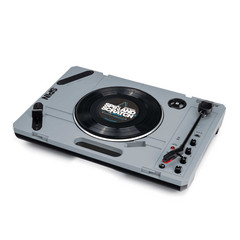
Features
Portable turntable for vinyl lovers & scratch artists
Mobile fun with your turntable, anywhere you go
Outstanding for mobile scratching and cutting
Out of the box: comes with 7'' scratch vinyl, pre-installed 45-mm-crossfader & cartridge, integrated speaker, Bluetooth audio receiver, USB recording function, slipmat, and dust cover
High-grade 7''-scratch-record: professionally recorded samples for scratching and beats for juggling
Bluetooth audio streaming: wireless streaming of music or beats to the device
Smart USB recording: direct recording of scratches & cuts to USB in MP3 format
Can also be used for digitizing vinyl
Integrated speaker on the turntable's left
3 selectable speeds (33 1/3, 45 & 78 rpm)
Extremely stable tone arm with transport lock
Cartridge with excellent tracking features
Precise 45-mm-crossfader with two-rail glide technology
Crossfader can be installed on preferred side (both-way)
Two headphones connections for listening and monitoring
AUX input facilitates connection of several turntables (daisy chain)
Easy battery charging via USB PSU or USB power bank (sold separately)
Installed start/stop button
Precise speed adjustment via pitch control with +/-20 %
Tone control to adjust low frequencies by +/- 10 dB
Volume control for AUX input and master/headphones
Power LED indicates the turntable's operational status
7'' record puck adaptor with holder
Anti-skip rubber feet for secure stand
Especially sturdy and portable shape factor with optional battery operation
Additional protection thanks to dust cover; can be transported via carrying handle when closed
Locking of dust cover for safe transport
Can be operated with regular USB PSU (5 V, 2 A), USB power bank or batteries (sold separately)
Batteries can be inserted into battery compartment on the device's bottom 2x Li-Ion 18650 (sold separately)
Incl. 7'' scratch vinyl, pre-installed cartridge, slipmat, dust cover, puck adapter, USB cable, instruction manual and Super Spin Duck Looper app
Technical Data
Belt drive
Inputs: AUX 3.5 mm stereo, Bluetooth audio
Outputs: master RCA, USB (USB-A), headphones 3.5/6.3 mm stereo
Recording format: MP3 with 192 kbit/s
Recording quality: 16 bit / 44.1 kHz
Battery type: 2x Li-Ion 18650 (batteries sold separately)
Power supply: 5 V, 2 A micro USB (PSU sold separately)
Dimensions: 370 x 95 x 260 mm
Weight: 2 kg

The AT-LP140XP fully manual professional DJ turntable features a high-torque direct-drive motor and anti-resonant, mass-damped, die-cast aluminium platter to ensure stable, on-axis rotation at 33-1/3, 45, and 78 RPM. It is equipped with an S-shaped tonearm with height adjustment, adjustable tracking force (counterweight) and adjustable dynamic anti-skate control.
Audio-Technica has been a leader in phono cartridge design for more than 50 years, and that expertise shows in the durable, high-output AT-XP3 DJ cartridge with 0.6 mil conical bonded stylus included with the turntable. It comes pre-mounted to an AT-HS6 universal ½"-mount headshell.
Designed to connect to components with a dedicated phono input, the turntable comes with a detachable dual RCA output cable which supplies a strong 5.5 mV phono output.
Additional professional features include a start/stop button; forward and reverse play; selectable high-accuracy quartz-controlled pitch lock and pitch change slider control with +/-8%, +/-16%, and +/-24% adjustment ranges; a stroboscopic platter with speed indicator; a retractable plug-type stylus target light; and a removable hinged dust cover.
Experience high-fidelity audio and professional DJ performance
Direct-drive, high-torque servo motor with speed stabilization
Fully manual operation
Adjustable dynamic anti-skate control
Selectable 33/45/78 RPM speeds
Professional anti-resonance, mass-damped, die-cast aluminium platter with felt mat
AT-HS6 universal ½"-mount headshell and AT-XP3 DJ cartridge with 0.6 mil conical bonded stylus
Balanced S-shaped tonearm with hydraulically damped lift control, height adjustment, and lockable rest
Dedicated phono-level output (5.5 mV)
Stroboscopic platter with speed indicator
Forward/reverse operation and variable pitch control with quartz speed lock
Retractable plug-type target light for easier cueing in low light
Damped base construction for reduced low-frequency feedback coloration
Includes: detachable RCA output cable (dual RCA male to dual RCA male), power cable, 45 RPM adapter, counterweight, felt mat, and removable hinged dust cover
Turntable
Bauart 3-speed, fully manual operation
Motor High-torque DC motor
Antriebsart Direct drive
Geschwindigkeiten 33-1/3 RPM, 45 RPM, 78 RPM
Plattenteller Die-cast aluminium
Shipwrec have delved into the underbelly of electronics for their latest discovery. Fake Youth Cult is the brand new project of Richard van Kruysdijk, an artist who has been integral to the Dutch music scene. Following releases on Delsin, as well as founding his own Music for Speakers label, this latest undertaking explores the darker hues of Kruysdijk's audio creations. Across six tracks, a realm of shadows and steel is constructed. From the murky tones of "Visitor" to the industrial and blackened "Scorched", a towering sound of punishing percussion looms over the listener. Techno is central message. Despite this, the piercing coldness of electro rises in the incising and stark "Messing." The influence of punk comes to the fore in racing rhythms and lean strings that make up "Smear." BPMs drop in the slow burning EBM stained "Management." The machines take control for the finale. A relentless kick is the motor that drives this seven minute juggernaut to the close. Broad and brutish brilliance from a prodigious talent.
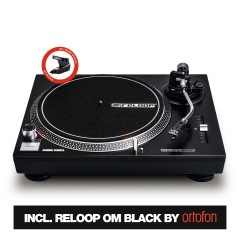
Features
NEW in the MK2 version:
Newly developed top panel and reinforced housing construction
Reworked metallic buttons with improved feel & tactile response
Precision Pitch with selectable ranges of +/-8 %
Superior finish in deep black metallic
Quartz-driven DJ turntable with direct drive
Perfect for beginners
USB audio output for digitizing your records easily
Precise motor control with 2 speeds selectable (33 1/3 & 45 rpm)
Precision-engineered, die-cast aluminium platter with stable rotation
Statically balanced s-shaped tone arm with hydraulic lift and anti-skating - mechanism
Universal connection for pick-up systems (SME)
Extendible needle illumination
Built-in phono pre-amplifier (no grounding necessary)
Switchable phono and line level output
Shock-absorbing feet for vibration isolation
Sturdy, heavy construction with optimized damping features
Prepared for dust cover (available as optional accessory)
Incl. platter, OM Black pick-up system (by Ortofon), headshell, slipmat, counterweight, power cord, operating instruction manual
Technical Data
Turntable:
Type: direct drive turntable
Drive: quartz-driven direct drive
Motor: 8-pol., 2-phase, brushless DC motor
Turntable speeds: 2 speeds, manual (33 1/3, 45 RPM)
Starting torque: > 1kg/cm
Brake time: 50 dB (DIN-B)
Brake system: electronic brake
Platter:
Material: aluminium die-cast
Diameter: 332 mm
Tone arm:
Type: universal, statically balanced, s-shaped
Effective length: 230.5 mm
Overhang: 16 mm
Tracking angle error: < 3°
Applicable pick-up weight: 3.5 – 8.5 g (incl. headshell 13 – 18 g)
Anti-skating range: 0 - 7 g
Connections:
1x PHONO/LINE out (gold-plated)
General:
Power supply: AC 115/230 V, 60/50 Hz (US/EU)
Power consumption: 13 W
Dimensions: 450 (w) x 352 (d) x 144 (h) mm
Weight: appr. 6.76 kg

- A1: I Swear, I Really Wanted To Make A "Rap" Album But This Is Literally The Way The Wind Blew Me This Time 12 20
- B1: The Slang Word P(*)Ssy Rolls Off The Tongue With Far Better Ease Than The Proper Word Vagina Do You Agree? 13 50
- C1: That Night In Hawaii When I Turned Into A Panther And Started Making These Low Register Purring Tones That I Couldn't Control .. Sh¥T Was Wild 10 29
- D1: Buypolodisorder's Daughter Wears A 3000® Shirt Embroidered 13 06
- D2: Ninety Three 'Til Infinity And Beyoncé 3 49
- E1: Ghandi, Dalai Lama, Your Lord & Savior J C. / Bundy, Jeffrey Dahmer, And John Wayne Gacy 10 15
- E2: Ants To You, Gods To Who ? 6 42
- F1: Dreams Once Buried Beneath The Dungeon Floor Slowly Sprout Into Undying Gardens 17 11
8
Mit "New Blue Sun" veröffentlicht André 3000 ein unerwartetes, rein instrumentales Album, auf dem Andre Flöte spielt und von anderen talentierten Musikern begleitet wird. Auf dem von Andre 3000 und dem Multiinstrumentalisten Carlos Niño koproduzierten Album "New Blue Sun" spielen Nate Mercereau, Surya Botofasina, Deantoni Parks, Diego Gaeta, Matthewdavid, V.C.R., Diego Gaeta, Jesse Peterson und Mia Doi Todd.
Diese limitierte 3-LP-Vinylauflage ist auf 180 g schweres schwarzes Vinyl gepresst und verfügt über ein ausklappbares Poster, bedruckte Innenhüllen und eine Notiz des Künstlers.

Making a remarkable step onto the CEP booth, Blame The Mono introduces their debut with a magnetic collection of two game changing original tracks. This release not only displays the duo's creative capabilities but also features melting remixes from Hermeth and the label head riko.
The release kicks off with the 'Kneebreaker Mix', showcasing a top-tier interplay of reese bass. The pushing bassline and dynamic vocals provide the track with its living strength. In addition to the effects, the midsection break-beat mirrors the timeless sound of Blame The Mono, showering the listener with unmistakable recognition value. Coming up next is likely the standout piece from the release. The 'Industrial Mix' manifests as a 117 BPM break, highlighting an remarkable synergy of hitting kicks, spicy drums, and leading vocals. This track radiates a rock and metal-inspired vibe, making it truly one-of-a-kind. Opening the B-Side is riko’s trance-infused remix, featuring consistent vocal shots from the original and a galloping bassline. In addition to the dub chords, the monotonous melody assumes control during the significant break in the middle, contributing a hypnotic quality to the track. Wrapping up the release, Hermeth introduces a techno-infused remix, characterized by powerful classic chords and a driving bass that sets the tone on the dancefloor. The original vocal and lead elements illuminate the track, firing it up with a distinctive flavor.
'London Accent' by Blame The Mono drops via CEP Records on 15th January 2024.

Rudimentary Music garners worldwide high praise with their first release. A strong, fluid and very well-rounded EP with something for every electronic dance fan. The Barcelona based butItalian born artist Deiv, sets the foundation and tone with the stunning 'Paranoik Android' EP forthe fledgling label whose everyday life revolves around and embodies the synergy and spirit of dance music culture. 'Take control of your shit' is the first cut and is the ideal smooth late night electro jam. A sexy, melodic deep machine groove that is nothing short of pure class. Thishighly addictive track is sure to get many repeat plays. To complete the A-side is the technostormer 'Technology'. A body grabbing bassline that will surely get everyone's attention. Thiswicked,robotic workhorse is guaranteed to move the main room by any DJ who selects it.Inspired by the label's search for music that fits every part of life, this track encapsulates thepower of techno in the late night. The reverse side showcases the title track 'Paranoik Android'.It rides a strong balance of house and funk sentiments for the primetime slot on the dancefloor.The killer acid line, island percussion and blips and bleeps, makes this a great ying and yang of futuristic and retro sounds. The title track, it stands out from the crowd but here in this EP, it blends perfectly into the wide array of vibes blossoming here. 'Dolphins' closes out the EP inelegance. With the soothing almost aquatic melody notes it exudes the perfect vibe to drift away your cares to. Overall, this is a very versatile EP with a track for every emotion and time during a night out with dance music

6
"We find ourselves venturing into the depths of a rugged terrain. In our hands, we hold stones and minerals, each possessing its own distinct texture, weight, and sonic potential. It is through the artistic touch and through the musical instruments that these earthly treasures, once dormant, are awaken to life." — Sara Oswald + Feldermelder
The 3rd collaboration of prolific cellist Sara Oswald and electronic musician Feldermelder evokes captivating sensations that oscillate between impending doom and hope. The albums' sonic journey is highly immersive, transporting the listener from one cerebral landscape to another. The transformative nature of metallic elements being integrated in sustained orchestral tones weaves the sonic tapestry, resulting in a captivating experience for the listeners. The organic sounding — reminiscent of minerals' timbres — brings a touch of brightness and a distinctive edge, while the orchestral harmonic structures lend a sense of grandeur and continuity. The origins of this music remain enigmatic, while the tracks of the album gradually unveil concealed aspects and the hidden truth.
One can step into a realm where melodies are reborn, as Sara Oswald's cello spins tales and emotions burst forth. Nature's eternal splendor intertwines with the essence of music, as she infuses harmonies with the soul of mountains. Vibrant hues come alive with delicate strokes, and cascading notes resonate with a select few. Feldermelder conjures profound echoes that swirl like ancient whispers of the earth's primordial past. He sculpts textures, from fragmented glitches to expansive atmospheres, that warp the fabric of reality. The two musicians merge together harmoniously, blending the acoustic and electronic worlds into a transcendent unity. This fusion of contrasting elements adds a unique and intriguing quality to the music. The cello's warmth merges with pulsating electronic beats, creating a symphony of contrasts and sonic upheaval. Each composition is woven in intricate layers, combining electroacoustic architecture with delicate precision. A subtle balance of chaos and control permeates the music as it meanders through the labyrinth of the mind. The soundscape unfolds like a grand tapestry, distant echoes murmuring like grains of sand.
Trained in baroque cello and advocating improvised music, Sara Oswald is the perfect match for sound artist and electronic musician Feldermelder. She plays solo, composes for film and theatre and collaborates with musicians like The Young Gods, Pascal Auberson, Sophie Hunger and Julian Sartorius. Feldermelder is a polymathic creative whose artistry spans composition, sound design, installation and code. He is co-founders of -OUS and part of Encor.studio, a collective of artists who specialise in creating immersive audio-visual installations. Through his work, he explores the idea of secrecy and its impact on our lives, using music and sound to create a thought-provoking and immersive experience for his audience.

5
SHDW & Obscure Shape return to their mothership label From Another Mind with their six-track 'Vergessene Welt' EP, signalling the first material on the imprint for 18 months.
Founded in 2015, the launch of SHDW and Obscure Shape's label From Another Mind saw the Stuttgart-based DJ/producers establish themselves via a wealth of self-released material while welcoming a long list of high-profile remixers, including Rodhad, James Ruskin and Dax J. However, the pair's evolution saw new ventures explored and attention focused wider afield with the launch of their second label Mutual Rytm in 2022. Utilising their A&R skills, the label has seen the duo curate and invite a selection of up-and-coming and established names while also delivering their first EP on the label in Summer, 'Poetic Justice'. Exploring the techno sounds of tomorrow while drawing on influences of the past, the label quickly turned heads and has become a go-to for many. Following a brief hiatus, the attention is now turned back towards From Another Mind as the pair explore their origins and the signature FAM sound once again, opening the New Year with six fresh productions across their 'Vergessene Welt' EP.
Opener 'Planet Der Sturme' is an exhilarating ride through driving basslines, menacing synth lines and hard-hitting percussion to march towards the peak hours and set the tone for what's to come. 'Der Urknall' is a trippy and murky dive through off-kilter textures and regimented percussion, while 'Das Gefallene Konigreich' ups the energy levels further with sharp metallic tones, skittering hats and subtle haunting melodies launching deep into the late night hours.
On the flip, 'Geburt Der Erde' brings a slice of paired-back, groove-led techno as a slick acid line takes control and ebbs and flows throughout the track's six-minute duration, before closing the physical record via the delicate yet compelling sonics of title cut 'Vergessene Welt' - showcasing a deep dive into far-reaching corners of the genre.

Another seemingly obvious addition to the chosen Planet Euphorique family is underground icon Angel D'lite, presenting “303 Dalmations” as the label’s 18th release. The 5 tracker screams ruff ‘n’ ready rave with a delicate touch, embodying playfully rude dancefloor attitude politely requesting you to check your ego at the door. The South Londoner Mz D’lite carries the torch for the ambitious wave of Nu skool sounds, inspired throwbacks and masterfully crafted break work that has you stomping the house down.. Boots. Bold, brave & in your face; not for the faint hearted, a true sonic reminder to not take yourself too seriously.
Setting the tone is the title track, a tongue in cheek laugh in your face. With no messing around a brazen breakbeat assault leads the way for bleeped out bliss and building sub bass; cheekily tricking you into a 4/4 moment. The climactic chaos continues through Just Trippin, offensively tense stabs; building — ferociously, borderline losing control with the UKG hybrid ventures elevated by filtered chops and screws and a late blooming 303 workout. Tempos? High as hell.
Ell Murphy lends her passionate vocal essence to 7am on the A side closer. Feel the rush; transporting you to a moment in the dance which feels nostalgic and yet still to come.
Emo-jungle, cyber centred and spine chilling; Liquid Skies feels like a cold london morning after the rave, introspective yet unable to stay still, “in and out of control”. The record ends on a comparatively weightless low-key progressive builder Relaxcersizer. Holding the same sentimental harmonic bone engrossing sensation that trickles through the EP; with a little more patience, a moment to absorb the kaleidoscope of frantically exciting musical ideas laced throughout. This record is an ode to the dancers..Need I say more? You’ve read enough, now listen.

Repress
Rising Dutch talent Deniro (aka Reynier Hooft van Huijsduijnen) returns to with a
double EP of original works. The Tape Records member previously appeared on the label as part of the concept albums.
'Mendoza' is an 8-track quest into the spheres of polarity and tension. Anxious distortions jitter in controlled spaces, angular melodies disfigure warm tones and frenetic cross rhythms flutter through minimalist forms. Contrasting messages are weaved together with precision to facilitate a dialogue where dancefloor function and cerebral stimulation interact.
Deniro navigates his way round vintage gear with a meticulous accuracy, held together by an intuitive ear for timbre, an ingrained passion for Detroit soul, and a firm understanding of sonic balance.
"Deniro is able to transmit emotion in his music like no other. His soft spoken live cuts are sparse and trippy and you can always feel that it's Reynier behind them' - Nina Kraviz

- A1: Ryuichi Sakamoto - The End Of Asia
- A2: Mariah - Shinzo No Tobira
- A3: Chika Asamoto - Self Control
- A4: Jun Fukamachi - Treasure Hunter
- B1: Yumi Murata - Watashi No Bus
- B2: Hitomi 'Penny' Tohyama - Rainy Driver
- B3: Yumi Seino - La Maison Est En Ruine
- B4: Kyoko Furuya - Tokyo
- C1: Kazue Itoh - Chinatown Rose
- C2: Kazumi Watanabe - Tokyo Joe
- C3: Juicy Fruits - Jenie Gets Amgry
- C4: Haruo Chikada & Vibra-Tones - Soul Life
- D1: Colored Music - Heartbeat
- D2: Akira Sakata - Room
- D3: Yasuaki Shimizu - Semi Tori No Hi
- D4: Shigeo Sekito - The Word Ii
16
Repress!
A MAJOR EXPLORATION OF TOKYO'S CUTTING EDGE 80S SOUND THROUGH THE MUSIC OF CULT JAPANESE LABEL NIPPON COLUMBIA AND ITS BETTER DAYS IMPRINT, SELECTED BY BRITISH RADIO PRESENTER AND DJ NICK LUSCOMBE.
‘Tokyo Dreaming’ is a superb selection picked from the highly collectible Nippon Columbia label and its Better Days sub-label. For the occasion, we’ve teamed up with journalist and Japanese music expert Nick Luscombe who was granted rare access to the much-guarded Nippon Columbia's vaults for a masterful selection encapsulating the fascinating sound of Tokyo in the late 70s and 80s. The selection mixes electro, synth-pop, funk and ambient and features such artists as Ryuichi Sakamoto, Mariah, Shigeo Sekito, Juicy Fruits, Hitomi "Penny" Tohyama and Yumi Murata. The tracklist includes many sought-after rarities and hidden gems which have never been released outside of Japan and the set has been newly remastered by Nippon Columbia. The album has been designed by famed London-based designer Optigram and is annotated by Nick.
Nippon Columbia, one of Japan's oldest music labels is also one of its most collectible thanks to its sub-label Better Days which, in the late 70s, became a hotbed for Tokyo's new generation of pop artists eager to experiment with ambient, electro and funk. Armed with a string of new Japanese-made synthesizers and drum machines that would soon take the world by storm, they made cutting-edge music, which has since become highly sought-after by a new generation of Japanese music lovers. Nick Luscombe, who has long been a leading advocate of Japanese music from this era, has handpicked a selection of some of the sharpest music released on these labels at the time.
According to Nick, “Tokyo Dreaming is a look back to an incredible era of Japanese music, that still sounds and feels like the future. It was a moment when brand-new music tech from Japan helped forge new ideas and experiments that permeated pop, soul and jazz and helped create new forms of music including electro and techno. The perfect meeting point that would help create a new soundtrack for modern living.“
?The selection starts with "The End of Asia" by Ryuichi Sakamoto from his 1978 ground-breaking debut "Thousand Knives Of" (reissued last year by Wewantsounds). The track became a staple of Sakamoto's and YMO's live shows and was even re-recorded by the group for their 1980 album 'X Multiplies'. The track is followed by Mariah's cult Armenian folk flavoured synth pop classic "Shinzo No Tobira" (1983), which first spread outside of Japan when the Scottish DJ duo Optimo started playing the track regularly at their shows.
?Chika Asamoto's "Self Control" (1988) and Jun Fukamachi's "Treasure Hunter" (1985) are perfect songs in the synth-pop canon, while Yumi Murata's rendition of Akiko Yano's "Watashi No Bus" and Hitomi "Penny" Tohyama's "Rainy Driver" both from 1981, move closer towards the slicker, funkier sound of City Pop.
?'Tokyo Dreaming' superbly showcases the breadth of 80s Japanese music and the way electro pop was a playing ground for musicians to experiment with many styles, as showcased by Akira Sakata's dub-enfused "Room" from 1980, Kazumi Watanabe's discoid "Tokyo Joe" (1980) and Juicy Fruits' "kawai" robotic Techno pop song "Jenie Gets Angry".
?The selection flows effortlessly between many shades of synth and ends with two cult classics in the form of Yasuaki Shimizu's "Semi Tori No Hi" and Shigeo Sekito's ambient-jazz masterpiece "The Word II" from his highly sought-after album "Kareinaru Electone (The Word) Vol.2" which, although recorded in 1975, perfectly announces the synth revolution to come. Tokyo Dreaming showcases the groundbreaking sounds of a city turned giant sonic lab which was restlessly inventing the music of the future.
Nick Luscombe is a highly respected and in-demand music influencer who discovers great music from all over the world and shares it internationally through his many radio shows and DJ sets. He has been in charge of music selection for various radio programs since 1999, and from 2010 - 2019, was the DJ for the popular BBC Radio music program "Late Junction”. He has also curated and presented music shows for Monocle and British Airways radio stations. He has worked as both Chief Music Editor at iTunes and Director of Music at London’s Institute of Contemporary Art, and is the founder of MSCTY.

Longtime friend of the label Eraserhead returns after over a decade away from producing music due to his surreal MS Paint work as 'Jim'll Paint It' becoming an unexpected cultural phenomenon. With his debut full-length, 'Violence', Eraserhead presents a truly eclectic electronic LP featuring collaborations with established producers such as Om Unit, Enduser, and Brain Rays, as well as the vocal talents of Nadia Rose, Beans (of Antipop Consortium), and Cadence Weapon. An album held together by theme and tone rather than style or tempo, 'Violence' is the culmination of a bitter wave of inspiration, initially conceived in the wake of a personal tragedy that quickly grew into a broader polemic about the state of the world.
Originally linking up with Love Love in its breakcore netlabel infancy with his refined, breaks-heavy breakcore/gabba, Eraserhead's flair for tight, intricate productions was evident in his finely tuned tracks of controlled chaos. This time around, his work is a darker, more expansive evolution of his sound, with the scale upsized and the stylistic scope massively broadened, remaining unfaithful to any single genre, but with firm nods to Breakcore, Grime, Drum & Bass, Techno, Rave, Dubstep, and Footwork, all chewed up with a hard industrial edge and cinematically framed by a backdrop of apocalyptic synths.
Opening with the cold tech-noir of 'Shining Brainless Beacon' to set the tone, the album quickly locks in with the blistering spoken-word headrush of 'Hurricane With Teeth' alongside rapper Beans, before Om Unit lends his expertise on the sharp groove and clinical bass blasts of 'Operation Hardtack'. The album shifts and morphs constantly throughout the runtime, moving from the raw and urgent acid techno of 'Crowd Control' to the crunching military march of the Gore Tech collaboration 'No More Worlds' and the tribal sci-fi footwork of the Brain Rays collaboration 'Night Visions'. 'Monolith' provides a final burst of catharsis, channelling Underworld by way of Nine Inch Nails, complete with writhing screams from Amée Chanter of sludge-punk-noise-rock duo Human Leather, before the heart of the album is laid bare with the painfully bleak closing dirge of 'Animal'. In its final moments, 'Violence' leaves the listener suspended between devastation and awe - an unflinching portrait of an uncaring world.
10
BLK ODYSSY is an Austin-based artist and producer whose boundary-pushing sound blends soul, hip-hop, rock, funk, and pop. Born in Plainfield, New Jersey, and raised in a household steeped in neo-soul, BLK began channeling his voice through music after the unjust killing of his older brother by police at age 12. That life-altering loss and the experience of growing up Black and male in 21st-century America fuels his raw, layered storytelling. His debut album, BLK VINTAGE (2021), written and produced with close collaborators, served as both a celebration and a critique of Black identity in America. It was met with critical acclaim and re-released in 2022 via Empire as BLK VINTAGE: The Reprise, featuring Mereba, Benny the Butcher, George Clinton, and Baby Rose. The project has since amassed over 100 million streams and positioned BLK ODYSSY as a standout voice in modern soul. His 2023 sophomore album, DIAMONDS & FREAKS, continued his ascent, merging surrealism and social commentary with contributions from Rapsody, KIRBY, Bootsy Collins, Cory Henry, and production from The Alchemist. NPR called BLK “a surrealist R&B auteur,” while Pitchfork praised his ability to bend genre into a cinematic sonic experience. In 2024, following a surreal Tiny Desk performance and festival appearances across Europe—including a headline set at North Sea Jazz Festival and Lollapalooza in Chicago—BLK ODYSSY launched a bold new chapter, with his third studio album, 1-800 FANTASY. The first single from the album, “WANT YOU” (co-produced by Tyler Johnson, known for his work with Harry Styles), marked a shift in tone. That was followed by “XXX” featuring Wiz Khalifa, and “STANK ROSE” featuring Joey Bada$$. Now averaging over 1M+ weekly streams, BLK ODYSSY is unleashing his fourth project, MOOD CONTROL, a ten-track album pushing alt-R&B, soul, and funk to new heights. 1xLP, pressed on Green, Brown & White 3 Color A Side B Side Vinyl.

Longtime friend of the label Eraserhead returns after over a decade away from producing music due to his surreal MS Paint work as 'Jim'll Paint It' becoming an unexpected cultural phenomenon. With his debut full-length, 'Violence', Eraserhead presents a truly eclectic electronic LP featuring collaborations with established producers such as Om Unit, Enduser, and Brain Rays, as well as the vocal talents of Nadia Rose, Beans (of Antipop Consortium), and Cadence Weapon. An album held together by theme and tone rather than style or tempo, 'Violence' is the culmination of a bitter wave of inspiration, initially conceived in the wake of a personal tragedy that quickly grew into a broader polemic about the state of the world.
Originally linking up with Love Love in its breakcore netlabel infancy with his refined, breaks-heavy breakcore/gabba, Eraserhead's flair for tight, intricate productions was evident in his finely tuned tracks of controlled chaos. This time around, his work is a darker, more expansive evolution of his sound, with the scale upsized and the stylistic scope massively broadened, remaining unfaithful to any single genre, but with firm nods to Breakcore, Grime, Drum & Bass, Techno, Rave, Dubstep, and Footwork, all chewed up with a hard industrial edge and cinematically framed by a backdrop of apocalyptic synths.
Opening with the cold tech-noir of 'Shining Brainless Beacon' to set the tone, the album quickly locks in with the blistering spoken-word headrush of 'Hurricane With Teeth' alongside rapper Beans, before Om Unit lends his expertise on the sharp groove and clinical bass blasts of 'Operation Hardtack'. The album shifts and morphs constantly throughout the runtime, moving from the raw and urgent acid techno of 'Crowd Control' to the crunching military march of the Gore Tech collaboration 'No More Worlds' and the tribal sci-fi footwork of the Brain Rays collaboration 'Night Visions'. 'Monolith' provides a final burst of catharsis, channelling Underworld by way of Nine Inch Nails, complete with writhing screams from Amée Chanter of sludge-punk-noise-rock duo Human Leather, before the heart of the album is laid bare with the painfully bleak closing dirge of 'Animal'. In its final moments, 'Violence' leaves the listener suspended between devastation and awe - an unflinching portrait of an uncaring world.

- Intro
- Can't You See
- Prom King
- I Can't Be Your Superman
- Ridiculous!
- Fall Harder
- Bounce Is Back
- Affairs
- All I Want
- Cash Wednesday
- Fiona Coyne
- Carousel
- Cry Wolf
- Why Do You Wanna Dance
- Practice
- Song For Rio
- Fall Harder (Single Mix)
- Fall Harder (Demo)
- Affairs (Demo)
11
When Ryan DeRobertis announced the name change of his project from Saint Pepsi to Skylar Spence, there was no indication of any stylistic departure, though the change arrived with a musical shift toward faster tempos and more pristine production. Whereas Saint Pepsi had often used decades-old boogie, disco, and new wave as grist for the sampling mill, Skylar Spence is intent on trafficking more overtly in those genre aesthetics through his own production techniques and vocal contributions. With Prom King, DeRobertis reorients his music for his new full-band live act and winds up with an album full of tight and enveloping dance tunes.
Working with Carpark Records 'gave me the confidence to 'go big' with the new material: to write pop songs with universal messages in the sonic wrapping paper that I've grown accustomed to,' DeRobertis says. 'A few songs on Prom King are about specific events in my life—a party where I got too messed up, watching a friend's life spiral out of control and trying to help—but I tried hard not to be too autobiographical because I want my music to unite, above all else. I'm much more interested in connecting with the listener than mystifying my personality.'
While DeRobertis' previous long-players have been more amorphous collections in the style of beat tapes, Prom King is compact and cohesive, with the album's varied stylistic references (new wave, UK garage, boogie) united through strong guitar melodies and Todd Edwards-ian cobblings-together of tiny vocal samples. 'I slowed some music down and called myself an artist,' DeRobertis sings on lead single 'Can't You See,' acknowledging in his lyrics what is already apparent in the music's tone—he can maintain fidelity to his vision while working in more uptempo, disco-based song structures.
'Ridiculous!' and 'Bounce Is Back' are big groovers that capitalize on jacking hi-hats and hand drumming, respectively, and both have an air of Balearic warmth and smoothness. On the title track, DeRobertis entwines a chorus of unintelligible but expressive samples with his own vocals—what feels like a synthesis of two approaches—and the result is an affecting pattern of build and release. More contemplative sophisti-pop numbers like 'Fall Harder' and 'Affairs' add a realist's breadth of scope: thoughts of past foibles bleed into present-dwelling and dancing.
Prom King is DeRobertis making sense of missed opportunities. His high school did not have a prom king; he has filled the position with an imaginative album of personal and musical revisionism.

9
Mathias Kaden announces the ‘Three Decades’ LP on Rekids, releasing 3rd April 2026, with single ‘Fyutr’ featuring Zoë Xenia and a remix from the legendary Dennis Ferrer available now. His third full-length, following 2009’s ‘Studio 10’ on Vakant and 2015’s ‘Energetic’ on Freunden Am Tanzen, ‘Three Decades’ spans nine tracks and celebrates Kaden’s 30-year career as one of Germany’s most enduring House and Techno figures.
The ‘Three Decades' album opens with a title intro, in which Mathias Kaden expresses gratitude to those closest to him before moving into his signature deep, emotive House sound. Tracks like ‘Keep Balance’ set the tone with sub-heavy bass and crisp, driving drums, occasionally punctuated by vocal snippets, while ‘I Got You’ features Cassy for a high-energy, soulful dancefloor moment. Reminiscent of Kaden’s work as Mathimidori, the dubbiness of ‘Getting Closer’ sets the stage for ‘Inner Signal’, which leans into wiggy electro territory, before the second record shifts gears with ‘Next Wave’ and ‘Shelter’, returning to pacey, piano-fuelled rave energy.
‘Viral’ follows with tough drums and excellent stab work, before the album closes on ‘Fyutr’, Kaden’s collaboration with Zoë Xenia, already supported by Honey Dijon, DJ Deep, Laurent Garnier, and more. Active since the mid-90s, Mathias Kaden quickly became one of the artists at the forefront of Germany’s flourishing rave scene. He began releasing music in the early 2000s, first collaborating with Marek Hemmann on a series of EPs for Freude Am Tanzen, before establishing himself as a solo artist with more than two dozen EPs on labels including Desolat, Watergate Records, Pets Recordings, Diynamic, Ovum, and Cocoon. Since first appearing on Rekids in 2019 with the ‘Control Your Mind’ EP, Kaden has released multiple projects on the label and remains a regular contributor to its catalogue.
Alongside his own productions, he has remixed artists such as DJ Koze, KiNK, Monika Kruse, Trentemøller, and Sven Väth, while under his Mathimidori alias, he has explored more spacious territory with releases on Mule Musiq, Ornaments, and Freund der Familie, including an additional album, ‘Akebono’, on Echocord.

A label long synonymous with raw, off-centre electronics and uncompromising club tools, Bjarki’s bbbbbb recors welcomes a producer whose approach feels cut from the same cloth, London’s Henry Greenleaf. In an era where functionality often outweighs feeling, ‘Brawn’ is a record that doesn’t court approval; it insists on impact. Built for high-pressure systems and low ceilings, it channels force not as spectacle, but as design.
Greenleaf’s catalogue to date, spanning labels such as Par Avion, YUKU, and ARTS, sketches a restless trajectory between precision and collapse. His productions operate where rhythm becomes architecture: kicks land like poured concrete, subs buckle and flex beneath shifting percussive grids, and textures are stretched until they fray at the edges. Sound is treated as a physical material, layered and stress-tested, reshaped until the familiar mutates into something tactile and strange.
Across the EP, that philosophy takes full form. A1 ‘Brawn’ sets the tone with dense, piston-like drums and tightly coiled low-end pressure, balancing brute force with meticulous spatial control. ‘Jump Up To Be’ follows with a more fractured swing, percussive shards ricocheting across a framework that feels perpetually on the verge of rupture. On the flip, ‘Gawk’ strips things back to skeletal components, carving negative space between distorted pulses and menacing, warped rhythmic figures, before ‘UNTUNTUNT’ closes the record in driving fashion, delivering a raw, functional workout that reduces the groove to its bluntest, most hypnotic form.
True to the label’s ethos, ‘Brawn’ doesn’t chase trends or smooth its edges. It folds air and pressure into motion, pares club music down to its working parts, and leaves room for spontaneous chaos to erupt within the grid; moments where structure splinters, energy misbehaves, and control gives way just enough to keep things volatile. Engineered yet unpredictable, utilitarian yet unruly, the EP embodies the tension, unpredictability, and uniqueness that have long defined bbbbbb recors.
12
"Ed DMX has been part of Shipwrec since the label's inception. Under his DMX Krew moniker, this analogue wizard has released four Eps and one LP on the Nijmegen imprint. DMX Krew returns to Shipwrec for a brand new album, a collection that displays yet another side of this sculptor's sound. Brutal and cold, shadows are long and shades dark from the outset. Drum patterns twist in tempo and intent, from hard and punishing to gentle and fragile. Elements of breaks and industrial are also present in the percussion, this fragmenting allowing deep and soulful melodies to counter the battery. In fact, echoes of electronica permeate the harmonies across the LP such as deep and divergent "Interrupt." No single style is adhered to. Instead, the full palette of machine music is employed. From the squelchy Tudor electrofunk of "I Wonder Why" to the melancholic braindance of "Rephlections in Time", genre boundaries are given little credence. Instead, Ed DMX draws on his decades of experience to create sounds that are both familiar and completely one of a kind. The deep-sea dive of "Final Comedown" is juxtaposed with the ambling calypso of "Dinosaur Reaction", styles reimagined and reshaped to the creator's evolving purpose. Echoes of the halcyon days of Rephlex permeate the 2LP. The harshness and softness of the Cornwall imprint being present throughout, those more subtle tones coming to the fore in the delicate beauty of the "Phaser Level 2." A transcendent album and a certified future classic. To accompany this very special release, there will be a limited edition run with full cover art by Ruwedata. An artist very close to Shipwrec's heart, Ruwedata was responsible for the sleeve work on DMX Krew's Cosmic Awakening."

- 1 2: Phones
- 2 60: K
- 3: Baby Song
- 4: Don’t Laugh
- 5: Sychophant Ft. Nixer
- 6: Gr33B0 (Interlude) Ft. Gr33Bo
- 7: Frisson - Additional Production By Technodaddy 666 (Pva)
- 8: Try Hard Ft. Tatyana
- 9: Like Her
- 10: Psycho
- 11: Tone Def
También disponible
Green Vinyl[22,90 €]
Shelf Lives are an Electro-Bass Punk (a genre that probably doesn’t exist—but somehow makes perfect sense when you hear them). After years of creating, releasing, and caring-ish what people think, the band now operate with zero hesitation and total authenticity. The result of this controlled chaos is their debut album ‘hypernormaL’.
The 11-track album, produced by imdead, reveals that Shelf Lives are once again redefining the boundaries of modern punk and electronic music. It captures the duo at their most uncompromising — blistering, self-aware, and disturbingly danceable. Just when you think you’ve figured them out, Shelf Lives grin, twist the dial, and push the needle into the red.
The album sees the band collaborating with an enviable list of who’s who, from Danio (Fred Again, Joy Anonymous, Jelani Blackman) on 60K, to writing with Pat Alvarez (Blessed Madonna, Joy Crookes, Good Neighbours) and Lola Sam from Hot Wax playing bass on ‘like heR’.
- 1 2: Phones
- 2 60: K
- 3: Baby Song
- 4: Don’t Laugh
- 5: Sychophant Ft. Nixer
- 6: Gr33B0 (Interlude) Ft. Gr33Bo
- 7: Frisson - Additional Production By Technodaddy 666 (Pva)
- 8: Try Hard Ft. Tatyana
- 9: Like Her
- 10: Psycho
- 11: Tone Def
También disponible
Violet Vinyl[22,90 €]
Shelf Lives are an Electro-Bass Punk (a genre that probably doesn’t exist—but somehow makes perfect sense when you hear them). After years of creating, releasing, and caring-ish what people think, the band now operate with zero hesitation and total authenticity. The result of this controlled chaos is their debut album ‘hypernormaL’.
The 11-track album, produced by imdead, reveals that Shelf Lives are once again redefining the boundaries of modern punk and electronic music. It captures the duo at their most uncompromising — blistering, self-aware, and disturbingly danceable. Just when you think you’ve figured them out, Shelf Lives grin, twist the dial, and push the needle into the red.
The album sees the band collaborating with an enviable list of who’s who, from Danio (Fred Again, Joy Anonymous, Jelani Blackman) on 60K, to writing with Pat Alvarez (Blessed Madonna, Joy Crookes, Good Neighbours) and Lola Sam from Hot Wax playing bass on ‘like heR’.

- Whole
- Covet
- Spoiled
- Pine
- Bad Apple
- Breathe
- Control
- Black
- Comfort
- Wish
- Covet (Alt Version)
- Pine (Alt Version)
- Bad Apple (Alt Version)
- Breathe (Alt Version)
Deluxe-Doppel-LP-Pressung zur Feier des 10-jährigen Jubiläums von Basements bahnbrechender LP Colourmeinkindness. Diese Sammleredition enthält das komplette Album auf der ersten Disc und vier alternative Versionen von Songs des Albums auf Disc 2 sowie ein Etching auf der D-Seite. Colourmeinkindness war ursprünglich das Abschieds-Album, das der ersten Pause von Basement vorausging, und ein Meilenstein für die Band, der sie als einige der besten Songwriter in der Rockszene der 2010er Jahre zementierte. Nach dem Debütalbum I Wish I Could Stay Here aus dem Jahr 2011 fühlt sich Colourmeinkindness von den ersten disharmonischen Tönen des Openers "Whole" reif an - ein Song, der die Basement Live-Sets seitdem in Aufruhr versetzt. Das Album wurde zum Fan-Favorit, weil es eine Reihe verschiedener Sounds bietet - melodische Singalongs wie "Covet" und "Bad Apple", Emo-inspirierte Refrains wie "Breathe" und "Comfort" und gewaltige Riffs wie in "Spoiled" und dem Schlussstück "Wish" - sie alle stechen auf einem klassischen Album hervor, das es wert ist, 10 Jahre lang und darüber hinaus gehört zu werden.

10
Sluta Leta first emerged in the mid-1990s with a series of EPs on legendary labels such as Mego (Fan Club, 1995), Uptight (Space Is The Place, 1996), Cheap Records (Lisa 94, 1998) and Chocolate Industries (…If You Like Champagne On Ice?, 1999). After the release of Sluta Leta's debut album “Semi Peterson” on Mego in 2003, the group somehow got lost in Second Life. Having missed a good decade and a half but not a beat, Sluta Leta unexpectedly reappeared in 2020 with a new album – “Entrée Contrôle” produced by Andi Pieper and Ramon Bauer with a little help from Gerhard Potuznik – released on famersmanual’s generate and test label.
Almost 30 years after their first release on Cheap Records (Lisa 94 in 1998), Sluta Leta returns to the Viennese cult label with their new album “Drift Dekoder”. Andi Pieper and Ramon Bauer have once again teamed up with Gerhard Potuznik to produce some crispy new songs that are bound to set the tone for the second half of the 2020s and beyond. On “Drift Dekoder”, the inherently artificial and somewhat otherworldly atmosphere of Sluta Leta’s songs is enhanced by the participation of several brilliant collaborators: vocals by Gerhard Potuznik on “Moment Eternal” and a duet with Luise Nehl on “Past In Reverse”, drums by ddKern (Past in Reverse, Björn i Fårkläder and Rymdpatrul), keys by Philipp Quehenberger (Björn i Fårkläder) as well as vocal contributions from various previous band members – Jonas Bergkvist (Tidsflayer), Bengt Liljstad (First Order) and Yngwie Moskowich (Driftstopp). A particularly noteworthy highlight of the album is the mix of “Tidsflayer” by Finlay Shakespeare.
Stop looking, start grooving! Written and produced by Andi Pieper and Ramon Bauer.
Lyrics and vocals on “Past In Reverse” and “Moment Eternal” by Gerhard Potuznik. “Tidsflayer (Finlay Shakespeare Mix)” mixed and produced by Finlay Shakespeare.

12
Prolific beat pharmacist par excellence Brendon Moeller continues his hot streak with a return to Samurai to serve up the exquisite craftsmanship of Shadow Language. Across 15 fresh productions the seasoned house and techno producer demonstrates yet more variations on his rejuvenated sound since pivoting towards 160 tempo zones. Heavyweight dub techno pulses collide with D&B pressure and dubstep snarl, delivered with devastating restraint and mediative warmth.
Moeller's dub-informed, high-grade production hit a hot streak as he started to experiment with faster tempos and more broken rhythms, reaching into thrilling new sound fields where fast-slow rhythmic intrigue meets with spatial subtlety and constantly evolving synth voices. The past year has seen him release a swathe of albums, from Further on Samurai to outings on Constellation Tatsu, ESP Institute and Quiet Details that all burst with inspiration, each distinct from the last and offering an original perspective on this rich seam of crossover electronics.
Shadow Language shows Moeller burrowing even deeper into this new era of his work, continuing the hypnotic approach set out on Further while edging more forthright ingredients into the mix. From the outset 'Division By Zero' hits with immediacy even as it dips into a dubwise breakdown, with snatches of vocal and even the iconic loom bird making the slightest of appearances. 'Feral Hymn' finds a curious kind of uplift in the synth chord that twists in and out of the mental techno murmurations of the rhythm section. 'Impermanence' has some snarling bass that belongs in the gnarliest tech-step, while the nagging hats ticking through 'Junkyard Syntax' hint at a shockout without resorting to brute force. The majestic dub techno chords of 'Driftform' create a through-line across Moeller's extensive catalogue, but here they dominate the mix above a spongy bed of sub bass throb and framed by the tiniest slithers of percussion.
Throughout the album, it's the implications Moeller suggests with the tools at his disposal that create a powerful energy. Restraint governs the delivery, guiding the listener in deeper until they find a maximal experience from each elegantly understated roller. The weight and presence is abundant across every track, fuelled by the invigorating power of each tone and frequency while avoiding the clutter of overloaded arrangements.
Finding the notes in between and half-hidden rhythms, Moeller himself perfectly summed up his latest opus as he continues to develop his own compelling Shadow Language.

8
Damian Lazarus reveals the eighth chapter of Crosstown Rebels acclaimed annual ‘SPIRITS’ VA compilation series.
The latest instalment sees the label founder once again curating a carefully balanced lineup of emerging voices and established names, with the eight-track collection set for release on 30th January 2026.
Since its inception in 2017, Damian Lazarus’ SPIRITS series has become a trusted barometer for the year ahead, spotlighting forward-thinking artists and cutting-edge club music from across the global electronic landscape. With ‘SPIRITS VIII’, Crosstown Rebels continues this tradition, delivering a refi ned yet adventurous selection that moves seamlessly between hypnotic house, melodic depth, and late-night energy - building on the momentum of previous volumes and capturing the label’s unmistakable essence.
Opening the release, Raz Alon sets the tone with ‘Hey It’s Me’, a warm and immersive opener that draws listeners in with emotive touches and fluid groove work. Lost Desert follows with ‘Ultima’, leaning into trippy, melodic-tinged sensibilities as tumbling rhythms meet expansive atmospheres and subtly evolving motifs. On the flip, TIMANTI ventures into a captivating voyage with ‘Warrior Spirit’, pairing swirling synths with hazy melodies, before STEB delivers ‘House Of STEB’, a groove-led cut packed with personality, swing, and club-ready flair.
The journey continues with Yuvèe’s ‘Set The Fire’, featuring FADO, a hypnotic and vocal-led track that balances emotional weight with understated rhythmic pressure. Ekoboy then ups the intensity on ‘Lose Control’, combining crisp percussion with infectious momentum designed for peak-time moments. On the final stretch, MADI brings a reflective buy playful touch with ‘Around Me’, weaving lush textures and subtle dynamics into a deeply absorbing listen, before JUAAN closes the compilation with ‘Bass Cliente’, a punchy and bass-forward finale that rounds things out with raw club energy.
With its continued ability to champion new talent while welcoming respected artists into its orbit, Crosstown Rebels remains a vital force within electronic music. SPIRITS VIII stands as another clear statement of the label’s vision, reaffirming its role in shaping the sound of contemporary house and techno.

- A1: E-Control - The Mind Of Robots
- A2: Konerytmi - Vaniljamunkki
- A3: Soft Pioneer - Dystopia
- B1: Basement Space - Massive
- B2: Alphone & Sween - Downfall (Dub Version)
- C1: Skywave Transmission Vs. Xotr - Existence
- C2: Kostas G - Calamity
- D1: Dawl - Time Phase
- D2: Zots - 314
- D3: Electrodefender - Electric Sunset
10
Childhood Drop Out’z - compiled by Childhood Intelligence (Tokyo/Berlin) & Tone Drop Out (London, UK). Timeless 2x12 featuring traxx by E-Control, Konerytmi, Soft Pioneer, Basement Space, Alphonse & Sween, Skywave Transmission vs. XOTR, Kostas G, DAWL, ZOTS and Electrodefender. A solid time travel into the early ages of Uk Bleep, Acid, Breakbeat, Techno and House - born in 2022.

8
Previously released on Jeff Mills' Axis Records as part of The Escape Velocity series, The Hidden Notes projects finds Rod20 (aka ROD) exploring the deeper more intimate space-trip side of Techno. "With techno verging towards the peak of mainstream exposure, alongside algorithmic distractions altering our sub-consciousness, The Hidden Notes Project shows my deepest intimate quest into inner psychoacoustics frequencies, without the urgency to shout, convince or adapt in a rat race driven outside world. Sequences of bleeps & tones that the modern ear has grown accustom to in the wider context of noise. But what if we become the noise controlling our existence? What if undiscovered planets and abstract concepts we humans don't understand were hidden in our consciousness all along? Which stars are we actually chasing? Most above all The Hidden Notes Project finds me leaving the theory of context and embracing the purpose of internal control."
Four years on from their landmark Grassroots, visionary half-time heavyweights The Untouchables return with their third album, Lost Knowledge. The duo of Kate McGill and Ajit 'Nitrox' Steyns have carved out a space in modern D&B all their own, building on a legacy that reaches back to the late 00s to keep pushing into unexplored terrain with an assured and deadly line in rhythmic intrigue and atmospheric immersion.
Lost Knowledge launches into action instantly with the high-pressure drum science and dubby splashes of 'Drunken Bells', capturing the loopy techno propulsion and rolling intensity that drives so much of the output on Samurai Music. Where The Untouchables excel is in finding variety and nuance in their relatively forbidding, pared down sound. The heads-down groove of 'Mafia Town' owes as much to dembow and dancehall as D&B, while 'Lost Knowledge' spirals out into psychoactive flurries of synth strafes and organic percussion slathered in tight-locked delay trails. There's no light relief from strident hooks or riffs, just a pure, unshakeable commitment to the power of the beat and deeply designed layers of sound shaping out the space around.
'Busy Bones' makes space for carefully deployed hints of pad tone while the snares snap out of the mix with a sharp set of teeth. 'Four Eared Demon' baits the gabber crowd with its rapid-fire 4/4 hats atop seasick creaks across the midrange, keeping subtlety and patience in the lower frequencies to maintain the signature elegance readily associated with The Untouchables. 'Phase Correlation' teases an artfully unhinged ripple of synth that stands out amongst the murky murmurs filling out the middle distance, but it's still exercised with brutal precision.
Nothing happens by accident or feels out of place - McGill and Steyns are in total control, and they demonstrate incredible range and inventive approaches within their focused style. The accent of the grooves shifts, and individual sounds carry all kinds of artefacts, yet everything gets folded into the exacting Untouchables sound with a liberal dubwise sensibility. Brimming with inspiration and immaculately produced, on Lost Knowledge their one-of-a-kind sound is stronger than ever.

- Mor, Mor
- The Human Noise
- I Thought It Was The Moon
- Benitez
- Her Absence
- Vi Legede I Marken
- Le Soleil Le Pain Et L'ame
- It's So Nice
- As Dots
- To Marilyn
Denmarks leading outlet for fresh, forward forward-thinking jazz, April Records, proudly presents the debut release from award award-winning Danish vibraphonist Viktoria Sondergaard. With wide ranging influences from jazz, chamber music, cabaret, pop, rap and SukumaSukuma-inspired grooves, as well as the hymns and melodies of the Danish Hojskolesangbog traditional/folk songbook, the music is grounded in collective expression and responsibility. The album s bold, boundary boundary-pushing sound was built on a strong sense of musical community, as well as Sondergaard s desire to integrate spoken word and lyrics into her practice to convey her thoughts and feelings on the world around her on a deeper, more personal level. Composing with her four collaborators in mind, Viktoria imagined her quintet playing each note as she composed, making the music inseparable from their presence. The album integrates spoken word, rap, singing, screaming, and whispering - a shared sonic tapestry that expresses joy, wonder, questioning and celebration. It s a band built on inspiration, joy, dreams and love, Viktoria says. For me, one of the most beautiful things in art is that we have a platform to say something about the society and world around us. This album is an attempt to do just this. this." Balancing warmth and intimacy with tension and exploration, the music weaves rich instrumental textures and spacious soundscapes with intricate vocal arrangements - intertwining voices that move between comforting folk folk-like harmonies and angular, avant avant-garde expression. The quartet s deep listening and intuitive interplay are evident throughout, shifting fluidly from open, exploratory passages to tightly locked grooves. The result is a sound that feels both grounded and searching: a sonic conversation inviting the listener into a space of vulnerability, curiosity, and connection. With a sparkling tone, emotive improvisation and refined control over her instrument Viktoria is recognised as a fearless explorer and bold musical voice. A recipient of the Aarhus Jazz Talent Prize, Tivoli Jazz Prize and the 2025 Carl Prize Honorary Award presented by Marilyn Mazur, she balances adventurous writing and collective invention with melodic immediacy and emotional power.

- Niagara Falls
- One Track Mind
- Boogaloo Swamp
- Troubles #2
- Hellvin
- Back On The Hillside
- Telepathic Overdrive
- Threads
- Custer
Deep black, with ghostly glimmers of an old car melting into the tarmac: the cover of Never En-ding Rodeo sets the tone. This isn't just a late-night drive, but a controlled skid across the borders of Post-Rock, Noise and Psych. The engine roars, the ground shakes, the white lines blur. Six years after the release of Ain't That Mayhem, the Lyon-based band returns with a dense, smoke-veiled record. Never Ending Rodeo: a deceptively playful, almost cartoonish title for such an intense album. As if, after circling endlessly around dust, bucking, and stampedes, Zëro had carved out its own orbit. Unstable, inevitably. But magnetic. Éric Aldéa (guitar, vocals), Franck Laurino (drums), Ivan Chiossone (Persephone, synths), and now Varou Jan (guitar, bass) - (Le Peuple de l'Herbe, Condense) - have lost none of their bite. Better still: this new album marks a turning point in production quality, thanks in particular to the mixing work of Niko Matagrin. The sound is broader, more inhabited. Every snare crack, every synth layer sits precisely in a meticulously sculpted space. "As if Tom Waits had collided with Nine Inch Nails. Before a frightening modernity hurled this so-nic convoy into a headlong rush." ~ Indiepoprock "You don't simply pass through Never Ending Rodeo: you step inside, you lock yourself in, drawn irresistibly by its magnetism." ~ Solénopole

9
Los Angeles-based duo LUCKYANDLOVE are back with their third album, evoking a new sense of art school originality, following their critically acclaimed “Transitions” album. The duo defines 'Humaura' as the atmosphere that emanates from the feelings of the human spirit void of technological control.
Blending raw analog synth sounds with driving punctuated percussion and punchy analogue bass, LUCKYANDLOVE’s music is shaped by the embers of Siouxsie and The Banshees and Bauhaus, resonant spectres carry over from synth-laden galaxies, where the needle hits the vinyl groove and Doc Martens marched to basement dance floors.
LUCKYANDLOVE is the raw sonic experiment of Loren Luck and April Love, whose music transcends genres. Their live analogue synth beats, Moog instrumentation and beautiful, harmonic vocals trigger an immediate download of fuzzy sunset synthgaze, blue-black neon darkwave, and tigerprint electro punk.
“‘Humaura’ is an action-packed, cinematic, entertaining and soulful electro-dance record full of fresh air and wide-open roads where there is more freedom to party, to be in nature, and to be our wild selves,” says April Love.
Fusing together pulsating molten kicks, abrasive fuzz-laden analog synths and sensual vocals, the anti-tech angst anthem ‘I Am Human’ is a call to take back our lives, underlining the need to reconnect with being Human before it’s too late. ‘Lonely at Night’ is a "last call" bar track about the desperate, frantic desire for human connection, building from a haunting sense of isolation to a fast-paced, climactic reunion with a crush. Elsewhere, this album features enchanting lyrics rooted in emotions from melancholy and sorrowful glom to a state of blissful trance.
This album was recorded, mixed and mastered for digital release by Grammy award-winning engineer Be Hussey (Modern English, Twin Tribes, Boy Harsher) at Balboa Studio and Catwater for the digital music, and mastered for vinyl and lathe-cut by Grammy-nominated engineer Nicholas Townsend (Weezer, Grimes) at Townsend Mastering.
Their 'Lucky + Love' and 'Transitions' albums having earning them a global fan following, US and UK tours, multiple tracks featured in the indie hit film 'Tiger Within' (Ed Asner's final performance), and wide acclaim, noting their “soulful, synthesized sound" (LA Weekly), “spectral synths and dazed-dreamy feeling” (Big Takeover Magazine), not to mention their "uncompromising and inventive sonic experiment” (The Spill Magazine) and sound that “oscillates between the asphalt synth streets & interstellar outer realms” (Impose Magazine).
LUCKYANDLOVE’s visceral, dark electro-pop appeal continues to stretch through time and space. Praise for the album’s lead track ‘I am Human’ have poured in from over a dozen countries. ‘Humaura’ promises to cement the duo’s reputation as one of America’s most vivacious electronic / synthwave acts, positioning them firmly within the lineage of artists like Phantogram, Ladytron, The Soft Moon, Twin Tribes and ACTORS.
‘Humaura’ Press:
“...In contrast to its synth-laden darkwave and electropunk sound, the song presents lyrical themes of championing the human spirit and emotions over the technological void" ~ Regen Magazine
“Moog textures and distorted synth tones weaving together like electric currents. An industrial edge that carries a dreamy undercurrent, nodding to darkwave, punk rock and post-punk influences without sounding dated" ~ Myth of Rock
"Every second and note is a meld of lava-esque incitement and beguiling melodic fixation and a breath to unpredictability and stirring fuzz hued uniqueness… a thrilling encounter" ~ The Ringmaster Review
"Layers fall into place and give rise to soaring vocals. The beautiful timbre of her voice sits over the landscapes of sound and reveal poignant lines that hit home." ~ Sound Read Six

4
Laster Records launches with a powerful VA featuring Alarico, Yanamaste, Chontane and
Roll Dann
Spanish's techno movement force Laster expands its vision with the launch of Laster Records, inaugurating the label with a fierce various artists EP forged for peak-time madness and emotional depth. The debut release, Laster Records VA001, brings together four essential voices in modern techno: Alarico, Yanamaste, Chontane and Roll Dann, each contributing a distinctive cut to a shared narrative of intensity and evolution.
The A-side opens with Alarico's "Of Which Sugars", a gritty, percussive storm of fast-paced
techno, where tension builds through syncopated rhythms and distorted grooves. Following is
Yanamaste's "Disconnection", a cerebral track infused with cold atmospheres, broken patterns and a sense of controlled chaos - reflecting the Georgian artist's unmistakable mental approach.
On the flip, Chontane delivers "Palindrome", a futuristic and dynamic tool with flickering synth stabs and machine funk energy. The EP closes with Roll Dann's "The Red House", a cinematic and melancholic trip through layered textures and deep basslines, paying homage to the label's own mythology.
Laster Records VA001 sets the tone for a label that, like its club roots, is raw, inclusive, and
uncompromising.
See you under the red light.

- Woozy
- Pistachios
- Big Tings (Feat Tune-Yards)
- J.o.y
- Assumptions
- Gratitude
- Ask 4 Help
- Palma Wise
- Dsntrlymttr
- Untitled (Swirl)
- Sun Baby
JayWood - the nom de plume of Jeremy Haywood-Smith - is embracing new pastures having moved his music-making from Winnipeg, Manitoba to Montreal, and his new album Leo Negro chimes with a different tone as it looks to reconnect the self and grapple with one's identity. Marking a moment of meaningful change where controlled chaos takes the lead, it philosophises on what it truly means to be an experimentalist building a multi-faceted world where genre is infinite through sounds braver, more playful, and truthful than he's dared deliver before. Despite its astute sampling with layers of twists and turns, Leo Negro doesn't showboat but roars in the presence of vulnerability as it considers one's absolutes as a way of navigating the identity crisis. "Always looking for attention, I admit it, I can't help it, I'm a Leo," he reasons between vintage hip-hop scrubs on `Pistachios,' recalling a childhood need to be the centre of attention then stepping out of the spotlight as a grown-up. "Leos are confident and sure about themselves, but this record isn't that; so really, when translated, the title inspires `black confidence.' It's an uncomfortable, weird, and surreal term which bends the truth and embodies everything within." Experimenting in both life and music, Leo Negro and its first cut, `Big Tings' (feat. California, art-pop duo Tune-Yards) couldn't be further from 2023's Grow On EP and the previous year's slick LP Slingshot. Moving with flow akin to D'Angelo with Toro Y Moi textures, its twinkling intro of whirling synth and playful approach circles back to Jeremy's adolescence when he'd reverse, slow down, and speed up his favourite songs through the media player on his computer. Encouraged by his musical squad Will Grierson, Arthur Antony, Brett Ticzon, and enlisting his stylist and thrifter friends to capture the Leo Negro aesthetic, JayWood's big `in' for 2025 is collaboration, with the tight-knit crew of likeminded musical colleagues captured in session photo grins beaming from his Instagram grid. Nominated for Canada's coveted Polaris Music Prize, it'd be easy to be the cowardly lion; to rinse and repeat what's worked up to this point. But for JayWood, leaning into his natural `what if?' curiosity to make up his own rules as he goes along ("I never really knew what they were to begin with") and venture into honesty's unsafe space to seek comfort, confidence and make even greater connections, really is the only option. After all, he can't help it; he's a Leo.

11
'The story of IDM in the USA begins in Miami’ - Fact Mag
Control Freak Recordings are thrilled to be launching its new reissue sub-label with Soul Oddity’s Tone Capsule - a seminal electro/IDM classic from mid-90s Miami.
Originally released as a series of 3 EPs, the reissue compiles these into an album, newly remastered by Keith Tenniswood (Radioactive Man) - available digitally and, for the first time, on 2x12" LP album.
Soul Oddity marked the first outing for a pair of musicians who were instrumental in bringing the UK's post-rave IDM scene to the US. Having bonded over a love for the Warp output at the time, the pair fused this influence with the sound of their native Miami, where hip-hop, breaks and bass soundtracked a lively party scene.
A masterpiece of machine-driven, emotionally abstract storytelling, Tone Capsule rivals some of the best of 90s leftfield electronica. Twitchy beats and gloopy synth-funk are melded into jams that make for a seriously otherworldly listen - as forward-thinking now as it was in 1996.
This record kickstarts our new reissue sub label Capsule Freak - marking the beginning of our dive into the rich past of dance music history which has brought the scene we love to where it is today. We can’t think of a more fitting time capsule to begin this journey with - over two years in the making, we hope you find this release as wild and intriguing as we do.

7
A“This album is about what it means to be human, and its creation is my offering. I attempt to tell a tale of the human experience in the reflection of my own.”
‘In the Andean mythology, condors are believed to be immortal. It is said that once they feel old, without energy, and useless, they climb to the highest peak and let themselves fall to death.’
The Allegorist is a visionary, enigmatic, transmedia, and boundary-pushing artist known for crafting deep, immersive dark sonic tales. Embracing a wide array of influences, weaving together the mysteries, art and spirituality, the art project defies categorisation, resonating with those who seek the unconventional.
From Birth Until Death is an introspective and immersive concept album that reflects on the essence of the human experience. Crafted over six years by The Allegorist (aka Anna Jordan), the album traces the arc of life—from its fragile beginnings to its inevitable end—using sound art to explore existential and philosophical terrain. Inspired by the Andean mythology of the condor – a symbol of immortality – the album blends electronic soundscapes with raw field recordings, evoking a deep sense of connection between the natural world and human existence.
The album’s progression mirrors the stages of life, starting with the birth of new beginnings and culminating in death, with each track offering a unique reflection on the moments in between. From the dynamic energy of Momentum, to the ethereal, illusionary world of Fata Morgana, the tracks guide the listener through emotions, perceptions, and experiences that shape the human condition.
A distinctive feature of From Birth Until Death is its intricate production. The album incorporates field recordings from Grunewald Forest, a distant roar of a jet, barking dogs, blending the sounds of nature – footsteps in the snow, birdsong, ocean waves – with layered synthesisers and electronic beats. The bass and ambient textures are crafted using an array of analog hardware, while all vocals, both lead and backing, are performed and recorded by Jordan. Some of the vocal takes were intentionally left raw, capturing the spontaneous energy of early recordings, while others were re-recorded to balance the album’s organic yet polished feel. Each element is meticulously crafted, revealing its deeper meaning as the album unfolds like a multidimensional, living sculpture.
At its core, From Birth Until Death is a meditation on the full spectrum of life. The album’s title track, From Birth Until Death, encapsulates this journey, reflecting on the passage of time and the unique experience of being human. The final track, Death, offers a melancholic yet beautiful exploration of endings, not as finalities, but as moments in the grand cycle of life. With its combination of evocative sound design and deeply personal themes, From Birth Until Death invites listeners to contemplate their own lives, offering a moving experience of reflection, growth, and transformation.
About From Birth Until Death
Words By Robin Rimbaud (Scanner)
From Birth Until Death is a deeply personal and reflective album and beautifully crafted. A detailed listen reveals that Jordan was in search of a profoundly human and authentic expression. In an era when so much around us seems defined by speed, Anna Jordan, aka The Allegorist, stands apart – aware that skimming the surface of life is neither sufficient nor rewarding. She reminds us of the value of deep, authentic listening.
The track Andean Condor seductively draws us into a smoky, blurred rhythmic soundscape, capturing the essence of the darkest Berlin nightclub, while Birth pulses with an almost shamanic transformation of sound, moving from the organic to the musical. It features a recording of Jordan’s footsteps in the snow in Grunewald Forest, Germany.
At times, the music feels almost sculptural in shape and tone – lifting, pushing, lilting, opening, and closing – where each piece is given room to fully develop. Many of the works blend synthetic sound with the natural, incorporating the human voice alongside environmental recordings: the wild waves of the ocean, a jet flying overhead, and barking dogs.
With From Birth Until Death, Jordan, like an alchemical architect revealing in the process of getting lost and relinquishing control, leaves us with a taut, immersive soundtrack in which to lose ourselves.
About the album ‘From Birth Until Death’
words by The Allegorist
“The album From Birth Until Death did not come easily to me. I started working on it in 2019, and it underwent many alterations over the years. I produced multiple versions of the tracks each year, but the album name, the track titles, and the album cover art stayed the same for 6 years. Not everything I did fit into the album’s final form, but I hope the heavy selection just made it better. I played this piece live in my techno live set between 2019 and 2020, and in the years after, I performed different art, ambient, and vocal versions of it, most notably the one at the church St. Marienkirche in Berlin in 2022. It just wanted to live and didn’t want to be finished. As I aged, this album aged with me. And now I’m ready to let it go.”

- The Watson Brothers Band - Just Whistle
- Jim Huxley - Tessa On A Magazine
- Rick Penta - My Story Changes
- Mak - That's Life
- Palm Pizazz! - Silent Letter
- Twice As Nice - Thoughts Of You
- Barracuda - Baby I Love You
- Elderberry Jak - Forrest On The Mountain
- Dennis - Walk With Me
- Jim Ware - Green Eyed Gypsy
- John Lyle - Oh My Wind
- Peter Kraemer - Let The Light Slip
- Brian Freel - Nightrider
- Michael Moore - Holland
- Clete Stallbaumer - John's Song
- Ronnie White - The Jump
- David Owens - Take Off Your Armour
- The Squad - D.l.m.h.i.m.a
- Christoph Spendel Group - Forever
- Awakening - Gotta Do Somethin / Might As Well Cultivate
'Maybe I'm Dreaming' ist die neueste Sammlung von Mikey Young (Total Control, Eddy Current Suppression Ring) und Keith Abrahamsson (Gründer und Leiter A&R bei Anthology Recordings) - den Köpfen hinter den beliebten Kompilationen 'Follow the Sun', 'Sad About the Times' und '...Still Sad'. Die zwanzig Tracks von 'Maybe I'm Dreaming' weichen von ihren Vorgängern ab. Sie stammen vollständig aus privaten Pressungen und umspannen neue Jahrzehnte und Produktionsmodi innerhalb der Genres Homepunk-Folk, Softrock und sonstiger FM-Radio-Musik der 70er und 80er Jahre. Die Magie von 'Maybe I'm Dreaming' liegt in den unerzählten Geschichten der Künstler:innen, die hinter diesen Liedern stehen - diejenigen, die den großen Durchbruch verpasst haben, deren Songhandwerk und unerwiderte Sorgfalt aber die richtigen Töne treffen.
'Maybe I'm Dreaming' taucht tief in die isolierte Wildnis ein - eine private Welt, in der Produktionsmacken, nächtliches Bandrauschen und Ein-Mann-Studio-Träume keine Wahl waren, sondern das ausgeteilte Blatt.
Die Songs wurden in persönlichen Sammlungen, in den Tiefen von YouTube, in verfallenen Webarchiven und in den düsteren Ecken von Discogs ausgegraben. Die Auswahl vieler Stücke basiert dabei nicht nur auf Intuition, sondern auch auf persönlichen Verbindungen. Einige Tracks wurden über Freunde entdeckt und fügen der Zusammenstellung einen unsichtbaren, aber tief empfundenen Faden der Kameradschaft hinzu.
Zwar entfernt sich 'Maybe I'm Dreaming' vom Archetyp des „traurigen Mannes mit Gitarre“, der über den Vorgängern schwebte, aber die vertraute emotionale Schwere bleibt erhalten - eine Balance aus Sehnsucht und Leichtigkeit, die diese Ecke des musikalischen Universums definiert. Jeder Track schwankt sanft zwischen Resignation und Hoffnung, Traurigkeit und Gelassenheit, als würden die Künstler selbst einem unerreichbaren Traum hinterherjagen und die Aufnahmen nicht wegen des Ruhmes, sondern aus dem einfachen Bedürfnis heraus machen, diesen ursprünglichen, kreativen Drang in die Welt hinauszutragen.
'Maybe I'm Dreaming' ist eine Einladung, noch ein wenig länger mit halb geschlossenen Augen im Grenzbereich zwischen Erinnerung und Vorstellung zu schweben. Vielleicht träumst du. Vielleicht bist du wach. Vielleicht spielt es keine Rolle.
- 2LP: (Das Doppel-LP-Set mit dem Artwork von Dang Wayne Olsen wird in einer breiten Kartontasche mit bedruckten Innenhüllen geliefert. Zudem enthält es einen Traumtagebucheintrag von Josh Lewellen, dem Experten für Artefakte aus dem pazifischen Nordwesten.)

KEY FEATURES
• 2+1 Mixing channels
• 1 MICRO input
• 2 PHONO inputs
• 3 LINE inputs
• Master Output (HOUSE) on XLR and RCA connectors
• Booth Output on RCA connectors
• 6.3mm Jack and 3.5mm mini-jack Headphone Monitor Outputs
• 3 band full cut EQ for main channels and 2 band full cut EQ for MICRO/LINE channel
• 3 bands isolator (300Hz and 4KHz, -∞/+12dB, 4th order 24dB/oct )
• Maximum Output without distortions: 21dBV (23dBu)
• Mechanized from a solid block of aluminum knob, without visible screw. Ecler Unique design
• Alps Blue Velvet Potentiometers
• FX Send control and Pre/Post fader selector
• Screen-printed faceplate by selective anodizing
• Wooden side panels included
Audio Performances
Inputs Sensitivity nom/Impedance:
—
LINE : 0dBV/50kΩ
PHONO : -40dBV/50kΩ
MICRO : -50dBV/>1kΩ
FX RETURN : 0dBV/>6kΩ
Outputs Level/Minimum Load:
—
HOUSE (BAL) : 0dBV/600Ω 1V *(+12dB 4V)
HOUSE (UNBAL) : 0dBV/2.2kΩ 1V *(+12dB 4V)
BOOTH (UNBAL) : 0dBV/2.2kΩ 1V *(+12dB 4V)
REC : 0dBV/10kΩ
HEADPHONES : 200mΩ/200Ω THD 1%
FX SEND : 0dBV/2.2kΩ
Frequency Response:
—
LINE : 10Hz÷30kHz -1dB
MICRO : 10Hz÷25kHz -1dB
PHONO : RIAA ±0.5dB
FX RETURN : 10Hz÷50kHz -1dB
THD-N:
—
LINE : 70dB @ 1kHz
Signal Noise Ratio:
—
LINE : >99dB
MICRO : >85dB
PHONO : >98dB
FX RETURN : >100dB
Max Undistorted Output Level:
—
HOUSE (Electr.BAL) : 21dBV (23dBu)
HOUSE (UNBAL) : 21dBV (23dBu)
BOOTH (UNBAL) : 21dBV (23dBu)
Trim control:
—
INPUTS 1-2 : ± 15dB
INPUT 3 : ± 20dB
Tone control Inputs 1-2:
—
BASS : +10/-30dB
MID : +10/-25dB
TREBLE : +10/-30dB
Tone control Input 3:
—
BASS : ± 15dB
TREBLE : ± 15dB
Tone control Isolator:
—
BASS : +12/-70dB
MID : +12/-40dB
TREBLE : +12/-70dB
Tone Filter cut frequency at -6dB (slope 12dB/oct):
—
BASS : 200Hz
MID : 200Hz÷6.8kHz
TREBLE : 6.8kHz
Isolator cut frequency at -6dB (slope 24dB/oct):
—
BASS : 300Hz
MID : 300Hz÷4kHz
TREBLE : 4kHz
Returning to the Bordello, and the seven-inch, is Real Velour. This secretive figure reappears with two tracks of indie dance that bend and re-shape elements of italo disco, minimal pop and synth wave to create an utterly unique experience. Sleazy basslines and tropical percussion give way to heavily vocodered words in “Lover”, machine amor breaking to spoken human voice as melodies twirl. The romance described is one of passion, of friendship and of fidelity; but, with a hint of control. Clever and addictive, the composition cherry-picks bittersweet sounds to depict this relationship. The flip, “Look What You’ve Done”, maintains the candystore keys of the A-Side; the tone shifting as lyrics adopt a brazen and fortified vigour. It appears maybe that the promises of “Lover” have been shattered. While the love story turns to hurt feelings and regret, Real Velour keep the energy high to revel in the final break-up.

- A1: Dear Psilocybin
- A2: World Blew
- A3: In The Wind (Feat. The Alchemist)
- A4: Sweet Celine
- A5: Explains It Scientifically
- A6: Lost All Control
- B1: Accidental Killer
- B2: Hansel & Gretel" (Feat. Boldy James)
- B3: Trenchblade
- B4: Past Life (Feat. Mavi)
- B5: Buggin
- B6: Kingdom Come (Hyping Me Up)
- B7: Arîba! Arîba!
LA-based producer Real Bad Man and Detroit artist ZelooperZ release their joint album Dear Psilocybin via the pro-ducer’s own Real Bad Man Records. The album marks the duo’s first collaboration, culminating in a full-length project that also features guest appearances from Boldy James, MAVI and a verse from The Alchemist. On Dear Psilocybin, ZelooperZ invokes unconventional production out of Real Bad Man to match his own unpredictable and outlandish delivery, working outside of traditional song structures and existing in a lane of his own. The Detroit multihyphenate, who is an integral part of Danny Brown’s Bruiser Brigadecollective and also an accomplished visual artist, painted the album’s corresponding cover artwork as well.
“I definitely haven’t made anything like this before, it’s a very subtle version of my music as far as tone, ” ZelooperZ explained in a conversation with Real Bad Man for his RBM Radio show. He elaborates on the off-kilter approach to the way he recorded to say, “the album feels like a movie soundtrack for a film about a man losing his mind and getting spurts of memories along the way. ”
Speaking about how the project differs from the rest of his collaborative catalog, RBM says, “It’s trippy and it’s a little different – but the main goal was for it to be authentic to Z and his process. ” That dedication to authenticity rings true across his catalog, drawing back to the foundations of his beginnings as a producer, learning the fundamentals of sampling, experimenting with chords and learning to piece songs together by ear. RBM builds a cohesive production arc around each artist he works with, catered to their strengths as artists, working with a variety of lyrical stylists includ-ing Memphis rapper Lukah, Pink Siifu, Blu, Kool Keith, Elcamino & more.
Real Bad Man is the production moniker of visual artist and designer Adam Jay Weissman. A designer and visual artist first, he made his foray into music through his On High Alert series of imaginative, multi-generational compilations, which have featured the likes of Roc Marciano, ROME STREETZ, Pink Siifu, Maxo and more. In the years since, he’s partnered with some of hip-hop’s most talented and adventurous artists on full-length projects, refining and shaping the trajectory of some of rap’s most exciting independent artists.

4
The debut release on Caricia Records sees longtime collaborators VIL and CRAVO refine the language they've developed through years of joint work, both individually and as members of the Hayes collective. Between them, their output on labels like Monnom Black, Klockworks, Self Reflektion and the aforementioned Hayes Collective has consistently balanced precision with character, and this first chapter under their new imprint is no exception.
Opening with So Right, the record sets a distinct tone, with rolling percussion and a hypnotic vocal line threading through the mix with restraint and control. 420% FODA leans into classic swing and texture, tightly looped and built for movement without ever overreaching. On the B-side, CRAVO offers Future Detroit, a stripped-back piece with room to breathe, subtle in its shifts but firm in its intent. VIL rounds off the EP with Hard to Find, a playful closer that keeps things buoyant and dynamic, pushing forward without losing its shape.
Caricia 001 is about clarity of purpose. No filler, no theatrics, just four tracks that speak for themselves.

Returning to an aphotic minefield of sound – Seismic Records is back with its third release, Drum Ring, crafted by Norwegian producer and Ute Records co-founder Ekkel. Emerging from the forests of Nordic electronic heritage, Teo Bachs – aka Ekkel – channels the raw energy of ’90s progressive sounds into his mind-bending productions. From the studio, his signature blend of breaks and intricate percussion create soundscapes that are as cerebral as they are propulsive. Titled Drum Ring, the EP captures the feeling of a complete mental trip through a narrative of tension, ancient textures, and enchanting melodies.
Poised with a sense of urgency, the A-side unfolds with a neatly rolling rhythm. Hradec Fog Fever builds a controlled frenzy of percussive elements, with layers stripping in and out, consistently driving the track forward. Slipping into A2, Owl Foot casts a sonic mist, a haze that tentatively creeps forward, flickering between atmospheric dips and shadowy contours. Vocal-cut whispers transcend through the soundscape, shy yet impactful, drawing you closer. It’s a tender introduction to a minimalist, dark progressive journey – a delicate balance of intrigue and mystery, where each sound lingers like a secret waiting to be discovered.
The B-Side strikes with poignant, powerful drum kicks that reverberate through layers of distortion. Drum Ring displays echoes of tension and unease, building a restless energy that urges deeper introspection. Ancient, enchanting tones weave through the chaos, grounding the frenetic soundwaves in something timeless and mystical. Sealing the EP, Endphase begins with faint, distant string notes that offer a fleeting, hopeful moment of rest. Growling chords and textures swirl, edging you to a meditation, only to be punctuated by sharp, deliberate drum patterns, adding a sense of momentum and purpose – a glimmer of light breaking through the mist. Experience the full cycle of a delicate trip as Ekkel guides you through Drum Ring – a precious and dark progressive journey.
Spectral Bounce’s fifth instalment comes courtesy of L.A.’s rave archivist and dancefloor operative Dreams, A.K.A. Jesse Pimenta. Throughout his decade-long career the California native has inspected, dissected and concocted all manner of dance musics, leaving his mark with drops on Apron Records, Pinkman, BANK NYC and his own imprint Dance Data. On SPEC05 — Dangerous When Wet — he hijacks the synapses with 4 accomplished productions, plotting a high BPM course through manifold styles using the raw aesthetic that characterises his output.
“Losing Control” is a frenetic dancefloor invitation, immediately locking into a pacing groove. Beneath wild hand drums, Dreams plays with an insistent 303 bassline alternating between rasping buzz and oily squelch, while stern vocals are layered on top of breaks that have been processed to a viscerally satisfying end.
Taking things from delirious dance circle to underwater biosphere, the EP’s eponymous track explores a submerged 1980s Miami. Weighty & enveloping, “Dangerous When Wet” is pure aquatic pop-n-lock — hydraulic electro for a drowned world. Ocean floor caustics are transmuted into auditory form: arpeggios bubble up; drones shimmer mystically; hi-hats hiss like air from an open valve. Amongst the sonar bleeps, a barrage of pummeling low-end is sure to give subwoofers a workout.
“XTC Messenger” delivers an infectious paranoid dispatch, astutely balancing the sensual with the deranged. A slow-mo dial tone unfolds languidly, running counter to nervously twitching high frequencies. Its punchy percussion is tuned for maximum dopamine release; the track’s abrupt vocal chops and mechanical kick-snare pulsation evoke the leather jackets and jagged edges of 1980s industrial discotheque.
“Pressure Points” closes the EP on a heady and mesmerising polymetric trip. The parting track is a lithe yet spacious number, propelled by a rattling break. Here Dreams follows from track 2, creating an immersive environment in which sounds tightly twist and twirl. Shifting oscillators call out like tiny creatures as the bass throbs and wriggles further into your brain, long after the needle hits the runout groove.

Punching our ticket for the tenth trip on the Drum Chums line, we rattle past the control centre, where Approach Release delivers another masterclass in genre-blurring brilliance.
Darting through emotional New Beat, psychedelic soul, stomping Afro-disco and coastal cosmic, AR keeps things right on track and perfectly off the rails.
'So Wrong' starts the party with a growl and a gurn, all gnarly sequences and robotic drums until that mournful vocal moves us into a land of Lynchian longing. Teardrops on the dance floor, clouds in your coffee, it's, it's, Goth Italo folks.
Shifting tone like McCrae shifted gears, Approach Release moves on from Main-Room Gloom into the smooth and sensual soul of 'LuvLuvLuv'. Low-slung, lilting, loose and lysergic, this versatile version-excursion works wonders as warm up and rub down, its brilliant bedroom vocals floating atop the synthetic and psychedelic groove.
Over on the B-side, 'E-Killa' bursts out the speakers with about 100,00 volts of Afro-disco energy, each one perfectly harnessed to whip a crowd into a grinning frenzy. Armed with an unstoppable arrangement, vital vocals and a stomping rhythm section, this delicious drink of tropical pop just keeps on fizzing.
For an encore, Approach Release drops the deeply dramatic 'Lou Cee', a full-hearted bit of Balearique-brilliance stacked with enough synth strings, faux-accordion and earnest outpourings to give Chris Rea a run in the anthem stakes.
100% Drum Fun Guaranteed. .

4
Hospiz Recordings is the next step in the journey of Hospiz-the independent art collective run by young locals, activists, and artists. Since 2019, Hospiz has been shaping South Tyrol's cultural landscape, creating a space for collaboration, creativity, and forward-thinking nightlife. At its core is Hospiz Festival, one of the region's most cutting edge art events.
With Hospiz Recordings, the sound carefully curated by the collective finds a new platform, pushing its vision. The label is meant to deepen the connection between the festival, its artists, and its audience, while laying the groundwork for a distinct Hospiz sound. The first release sets the tone with two tracks by Germany's underground mainstay Off/Grid, a track from Vienna-based music producer and designer, Oat M, and a collaborative track from local artists, Toni Telefoni and Bossifunk.
Off / Grid stays true to his style delivering the record's A1 and B1 tracks, while Oat M presents a contemporary groovy track on A2. To finish it off, Toni Telefoni and Bossifunk deliver the B2 housey hardware workout.

- 1: Straumen Forbi (The Current Passing By )
- 2: I Natt (Tonight)
- 3: Song Over Støv (Song Over Dust )
- 4: Spring (Run)
- 5: Trø (Step)
- 6: Samdrøm (Shared Dream )
DESCRIPTION
The boundaries between contemporary art music and folk music are pushed as Apneseth and his all-star ensemble invite listeners into their very own musical universe. Hardanger fiddle player Erlend Apneseth, with his distinctive playing style, a long list of critically acclaimed Hubro releases, and explorative musical collaborations, has achieved the rare feat of becoming a favorite among audiences and critics in the worlds of folk music, jazz, and contemporary music. His latest album, Song over Støv, will be released on Hubro on April 4th, and the band he has assembled for the occasion can only be described as a supergroup made up of some of the most influential musicians on today’s Norwegian music scene. The project originated as a commissioned work for Oslo World and Riksscenen in 2023. As a composer, Apneseth has spent recent years working with orchestras and larger ensembles, and after being a member of Frode Haltli’s Avant Folkfor several years, he was inspired to write for a large band himself. For this project, he brought together 11 fantastic musicians, creating an immense musical playground. The commissioned work matured over time before Apneseth took the ensemble into Amper Tone studio in August 2024, with Bård Ingebrigtsen at the controls. Ingebrigtsen also mixed the album, which was produced by Anja Lauvdal and Apneseth himself

Patrick Conway crossed the threshold to find a new hope. This is his third offering for the ESP Institute. On side A, 'Loss' sets an overall melancholic tone for the record. A single repeating high note on the piano establishes a guiding element, which is eventually supported by a tear-jerking yet resolving chord progression, a trailing choir of angelic voices, and a filter-modulating synth that pads the widest zones of the mix with the occasional counter-melody. Robust in and of itself, Patrick’s melodic arrangement floats gracefully over an otherwise antagonistic rhythm section built from his signature corroded dancehall arsenal. This hornets nest of boxed live kick drums, piccolo snares, and high-pitched toms is held together by a dry veneer of saturation, sitting at safe distance from but in natural harmony with the bulbous low-frequency atmospherics. On the flip, 'Silencio' employs a similar statement at the top of each measure, this time an anthemic polyphonic synth stab as opposed to the singular piano note, however, unlike the layered melodies throughout 'Lost', here Patrick explores the narrative possibility of negative space—call and response, rhythmic dialogue, and the implied notes that leave the listener’s or dancer’s intuition to complete a phrase. In the game “musical chairs,” children run around manically until signaled to find a chair, at which point their diverse personalties must urgently synchronize, until set free to run again and repeat the process. Patrick's approach for 'Silencio' conjures said metaphor—his melody and rhythm are unleashed to meander and spasm within the confines of each respective bar, until that anticipated synth stab unifies everything “on the one”—controlling the chaos, calling on muscle memory and affirming logic. These two songs will be with you always as they always have been.

8
SC returns with a full length LP showcasing his vast armoury of musical ability in a controlled, contemplative reflection of his inner self, laid bare in breaks-driven form for the enjoyment of Spatial fans new and old - continuing the ongoing celebration and evolution of classic atmospheric drum & bass.
A1 - Fear of the Deep
Curious, high twinkling bells cautiously introduce Fear of the Deep, reminiscent of classic sci-fi movies building atmosphere and intrigue, before the hi-hat heavy, snappy break previously used in Spatial classic Essence (also by ASC) makes a welcome return. The 2-step - occasionally broken - beat pattern drives the track along with a darkly, investigative energy, while a typically deep bassline rumbles beneath, setting the scene perfectly.
A2 - Concentric Circles
A change of pace for ASC here with Concentric Circles, exploring a jazzier spectrum of influences not often broached in his production adventures, with broken scattershot beats toying and playing around a wealth of reverberating brass samples to create a minimal yet quietly imposing undertone. Double bass props up the composition wonderfully, completing an exquisitely quirky entry to the LP.
B1 - Say It
Opening with rousing strings and quietly ominous effects, ASC utilises a unique fusion of melancholic atmospherics, jazzy basslines and a classic old-school breakbeat to form Say It. Dense, purposeful kicks stomp across the mix as the strings and synthwork wash in the foreground, developing a sombre, contemplative tone to the track throughout, before a wonderful outro ending with those delightful strings.
B2 - Virtual World
Filtered Hot Pants breaks gently ease their way to the forefront of a beautifully constructed intro to Virtual World, trademark crispness and intricacy etched onto the beats effortlessly, as we've come to expect from ASC. Delicately nuanced vocal samples combine with an intense concoction of synths and micro-melodies, dancing over the sharp breaks and a suitably earthy undertone bassline.
C1 - Eons
The classic, intense atmospherics continue with Eons, a spacey piece introduced by a memorable melody, tinged with purpose and allure. This melody continues through sci-fi computer FX reminiscent of early 720, and persistent backdrop synths as we are treated to a gentle flurry of perfectly edited amens leaping and falling over subtle, juddering basslines creating that elusive blend of both headphone and dancefloor appeal.
C2 - Timeslides
ASC flexes the timeless Hot Pants break again - crisply edited with a sharpness in the mix which is simply to die for - in Timeslides, a track which continues the brooding, introspective tone of the LP. Utilising a varied array of samples and effects which will transport you straight back to that unmistakable era of 90's atmospheric heaven with several nods to forefathers of this wonderful sound - just how we like it at Spatial.
D1 - Lightspeed
Take a moment to appreciate the bells tolling, glimmering and colliding during an enchanting intro, freely crafting layered melodies without a care as ASC presents us with an immensely memorable piece in Lightspeed. Long, elongated vocals drift and swirl through the airy soundscape, all punctuated by finely tuned and arranged Circles breaks, energetically deployed for the discerning breakbeat aficionado.
D2 - Nightvision
Intensity is dialled up to 11 in Nightvision, a deeply atmospheric track which showcases a perfect, symbiotic combination of melancholy, drama and raw energy. The lively breaks take center stage over a heavy, consistent 808 bassline with enveloping masses of atmospherics circling, gripping your attention, joined by dreamy vocal samples deployed subtly in an ever-changing tone to close the LP in style.
Words by Chris Hayes (Spatial / Red Mist)

- No Cruise Control
- Densite
- Jungle The Jungle
- Helix
- Aurillac Accident
- Double Z
- Dodorian
- Funk Kraut
- Snare Attack
- Magnavox Odyssey
Some record crates deserve a sub-category called 'play it again, Sam'. tracks that spin on the turntables without a push. Funk Kraut, Zombie Zombie's second LP on Born Bad, is of this kind. This well-proportioned classic is a fine example of the style the trio has been embodying: instrumental for synths and drums music played live. This time it was a quick affair, recorded by Laurent Deboisgisson in the studio of Cheveu's singer. A pretty straightforward job, and a far cry from their previous concept album. Let us praise Krikor Kouchian's mix: drums have been resampled with some restraint, and that Linn Drum kick lightens up the overall mix. It marks a notable evolution in the band's sound, and adds some dynamic. The album kicks off with 'No cruise control', a big bad sedan that effortlessly eats up the distance at 120 BPM. Kraut as can be, with a twist. And as far as funk goes, it's not Bootsy Collins, but there's a whiff. Space is structured by synth patterns, for optimized drumming : forward, straight and fluid, top-notch suspension (Cosmic Neman / Dr Scho?nberg take care of business on drums). They treat themselves to a diversion via Darmstadt to take some musique concrete on board : mechanical birds chirp, the odd atonal piano here and there. Nerds will appreciate liner notes detailing the equipment used : about twenty synths and they still describe it as minimal. With 'Densite?', we've just passed a polyphonic milestone: outright chords ! Long, suspended pads, pierced only by fat claps. Clapping hands are not far off. The band shows it has mastered concise pop formats. That same vibe can be found in 'Jungle the Jungle', paradoxical tune, catchy and moody at once. You'll get some brass riffs in 'Helix', which takes off on a synth moving from one speaker to another to herald the crash of syncopated drums to come.Zombie Zombie sounds ready to write themes for niche TV series.'Aurillac Accident' documents a haphazard soundcheck which, once in the studio, became a bitter ballad, breaking apart into dubby gravy. Live with two drummers performing, this aspect showcases in 'Snare Attack' and 'Double Z', with its jogging hi-hats and creepy little toy piano motifs. Cardio levels are high on 'Dodorian', perfect track for depraved spinning classes, with its moving filter, disco arpeggios and flashes of synthetic brass. 'Magnavox Odyssey', a nostalgic but bouncy synth lasagna, brings this album to a majestic close. The cover by Dddixie sets the tone with its 'Motorik Vibes & Stereo Grooves' sticker. Motorik, absolutely, it's autobahn time for 45 minutes. And when it comes to stereo grooving, the acoustic image is as wide as the canyons of Mars. DO NOT MISS THIS ALBUM (or the previous Vae Vobis)!

12
*press Release From David Katz*
The Hardest Working Reggae Band In Southern England, Dubheart Is On A Mission To Spread Messages Of Peace, Love, Unity And Resistance Through A Heady Stew Of Contemporary Roots Reggae, Delivered On Live Instruments With A Hefty Dose Of Dub In The Mix. Cool Under Pressure, Their Latest Offering, Is The Band's Most Compelling Set To Date, A 'showcase'-style Album Where Every Vocal Track Is Followed By Its Dub Counterpart, And The Vital Contribution Of The Brassica Horns—from Rising London Ska Band Chainska Brassica—is Another Intriguing Element That Makes This Album Tougher Than The Rest.
Drawing On The Foundations Laid By Jamaican Stalwarts Such As Burning Spear, Dennis Brown And Culture, Dub Pioneers Like Scientist And Jah Shaka, Plus Newer Vanguards Such As Tarrus Riley, Grounation And Conscious Sounds, Dubheart Has Crafted A Distinctly Appealing Style That Is Very Much Their Own, Based On The Organic Presentation Of Their Musical Vision. Indeed, This Fully Self-contained Five-piece Is Firmly Engrained In The Neo-roots Movement Of The Present, With A Sound That Faces Ever Forwards.
The South Coast-based Band Was First Formed Back In 1999, And Slowly Built A Following Through Their Intense Live Performances, Which Always Harnessed A Live Dub Element. Their First Ep, the Solid Foundation Rhythm,' Issued On Their Own Karnatone Label In 2011 And Featuring Dub Mixes By Russ D Of The Disciples, Became A Regular Part Of Jah Shaka's Live Playlists. It Was Followed By The 7' 45, we Chant,' Featuring The Band's Charismatic Bristol-based Lead Singer, Tenja (who Originally Hails From France), The Track Becoming An Underground Anthem In Japan (via Rob Smith, Aka Rsd). Dubheart's First Album, Mental Slavery, Was Released In 2013, A Momentous Year That Also Saw The Band Win The European Reggae Contest Staged By Rototom Sunsplash, Leading To A European Tour With Festival Appearances At Summerjam (germany), Reggae Sun Ska (france), Overjam (slovenia), Sudoweste (portugal), United Islands (czech Republic) And The Sardinia Reggae Festival, As Well As Rototom In Spain. Then, In 2015, Karnatone Issued The Dub Companion To Mental Slavery, Mixed Down In A Heavy Dubwise Fashion By Drummer Gavin Sant, Otherwise Known As Fullness, The Band Was Then Invited To Participate In The Bbc Television Show, The Uk's Best Part-time Band, Leading To Their Ep Of Cover Tunes, 2016's full Time Pressure,' Again With Dub Versions From Fullness. part Of The Band's Appeal Lies In Its Tightness As A Recording And Performing Unit, When You See Them Live, You Understand That This Band Of Brothers Is On A Higher Mission, United In Their Wish To Use Music As A Means Of Upliftment. And That Sentiment Is Entirely Evident On Cool Under Pressure. The Melodic Bass Grooves Of Mark Shepherd Act As The Perfect Buffer To The Furious Rolls And Expressive Drum Patterns Of Fullness, David 'daddy U' Mountjoy Adds Scintillating Melodies On Keyboards, Including Some Delightful Wurlitzer Lines, And Richard Ramsey's Guitar Licks Tend Towards The Understated, Aside From The Occasional Solo Pyrotechnics, As Heard Here On rocky Road.' And On Songs Like can't Wait,' watcha Gonna Do' And The Title Track, The Brassica Horns Add Further Melodic Depth Through Fanfares Of Treble Brass Texture. with The Rhythms Laid Entirely Through Live Recording Sessions Cut At Fullness' Home Studio In Bournemouth (with Horn And Wurlitzer Overdubs Done Elsewhere), Cool Under Pressure Reveals Dubheart As A Band On The Rise, Heading For Unstoppable Heights.
The Dub Deconstructions On The Disc Allow The Listener To Hear The Exceptional Quality Of Their Playing, Emphasizing Each Member's Individual Talent, While The Lyrics Tackle Subjects We Can All Relate To, With watcha Gonna Do' Addressing Social Inequalities, can't Wait' Alluding To The Refugee Crisis, rocky Road' Imploring Everyone To Hold Strong In Trying Times, And rise Up' Calling For Direct Action Against The Unjust System That Rules Our Lands. Overall, The Outstanding Title Track cool Under Pressure' Really Sums Up The Band's Ethos: The System May Burden Us With The Stresses Of Censure And Control, But Our Obligation Is To Stay True To Ourselves And Resist. And The Music Can Help Us To Achieve This.

8
También disponible
Coloured[25,17 €]
Ben Lukas Boysen’s new album, Alta Ripa, signifies a seismic shift in his artistic journey. It revisits the foundational impulses of his youth, shaped amidst the serene beauty of rural Germany—a bucolic backdrop where his creative palette flourished. However, it was his move to Berlin in the early 2000s that electrified his sound, infusing it with the city’s pulsating energy and diverse cultural influences. Alta Ripa captures this transformative experience, blending the introspective melodies of his rural beginnings with the bold, experimental tones born from Berlin’s vibrant electronic music scene. This album is a testament to Boysen’s evolution, showcasing how geographical shifts can profoundly shape artistic expression.
Boysen’s fourth studio album under his own name, Alta Ripa is a nod to his beginnings as much as a hint to his future, and as a work, it’s almost contradictory in its boldness and humility. He invites the listener on a journey of self-discovery; both for himself and for them, describing the music as “something the 15-year-old in me would have liked to hear but only the grown-up version of myself can write.”
His last two albums involved working closely with other musicians, including cellist Anne Müller, flugelhorn player Steffen Zimmer, and drummer Achim Färber. However, inspired in part by a recent return to live performance, Alta Ripa sees Boysen circling back to his passion for pure computer music.
For Boysen, the return to his youthful musical language marks a major turning point in his career. It represents a departure from his roots in classical music – his mother was an opera singer and his father an actor with an appreciation for Wagner, Arvo Pärt, Keith Jarrett, and Stockhausen. Although these are still important influences, Alta Ripa encapsulates a new, exploratory interplay between Boysen’s careful craft and his ability to let go of some of the process.
The album’s title comes from the original Roman name of the town that Boysen grew up in, Altrip, where he lived until his early twenties. This formative period is central to the ideas behind this album, from Boysen’s parental ‘schooling’ in classical music through to his sonic journeys through drum and bass, Aphex Twin, and Autechre — all of which changed his idea of what music could be. The extreme energy of tracks like ‘Acperience 1’ by Hardfloor, ‘Tracks & Fragment’ by Cari Lekebusch, ‘Focus2 Implan’ by Jiri.Ceiver, and ‘Low On Ice’ by Alec Empire are also pivotal influences.
For Boysen, this time of his musical development also involved knocking down the pillars that he previously thought had carried his world. A key moment for Boysen was being given a precious (pre-internet) club cassette at school that featured artists like Source Direct, Photek and Goldie. Excited by this new discovery, he introduced his father to the song ‘Dred Bass’ by Dead Dred. After the song finished, Boysen Sr. turned off the tape and proclaimed it was “the end of all music”. This heated exchange sparked a new, and more mature dialogue between the two that involved them sharing and discussing music on a regular basis.
Boysen’s classical and jazz music upbringing might not be easily noticeable from the electronic palette that he uses. But it can be found in its bones; the structure of the tracks and their dynamic shifts. On Alta Ripa, he intentionally embraces a spirit of controlled chaos, churning out sonic ideas to see what sticks.
One of Brian Eno’s Oblique Strategy cards contains the phrase “gardening, not architecture”, and the trajectory of Boysen’s creative path reflects this metaphor. In much of his previous work he followed a sort of Brutalist architect’s approach; here, he was fully responsible for the tracks’ austere structures and planned them with deliberate care. But by sacrificing some of that control on Alta Ripa, he sets the right conditions for a dark and unpredictable, organic growth. It’s a push forward into a new world.

8
También disponible
Black[23,49 €]
Ben Lukas Boysen’s new album, Alta Ripa, signifies a seismic shift in his artistic journey. It revisits the foundational impulses of his youth, shaped amidst the serene beauty of rural Germany—a bucolic backdrop where his creative palette flourished. However, it was his move to Berlin in the early 2000s that electrified his sound, infusing it with the city’s pulsating energy and diverse cultural influences. Alta Ripa captures this transformative experience, blending the introspective melodies of his rural beginnings with the bold, experimental tones born from Berlin’s vibrant electronic music scene. This album is a testament to Boysen’s evolution, showcasing how geographical shifts can profoundly shape artistic expression.
Boysen’s fourth studio album under his own name, Alta Ripa is a nod to his beginnings as much as a hint to his future, and as a work, it’s almost contradictory in its boldness and humility. He invites the listener on a journey of self-discovery; both for himself and for them, describing the music as “something the 15-year-old in me would have liked to hear but only the grown-up version of myself can write.”
His last two albums involved working closely with other musicians, including cellist Anne Müller, flugelhorn player Steffen Zimmer, and drummer Achim Färber. However, inspired in part by a recent return to live performance, Alta Ripa sees Boysen circling back to his passion for pure computer music.
For Boysen, the return to his youthful musical language marks a major turning point in his career. It represents a departure from his roots in classical music – his mother was an opera singer and his father an actor with an appreciation for Wagner, Arvo Pärt, Keith Jarrett, and Stockhausen. Although these are still important influences, Alta Ripa encapsulates a new, exploratory interplay between Boysen’s careful craft and his ability to let go of some of the process.
The album’s title comes from the original Roman name of the town that Boysen grew up in, Altrip, where he lived until his early twenties. This formative period is central to the ideas behind this album, from Boysen’s parental ‘schooling’ in classical music through to his sonic journeys through drum and bass, Aphex Twin, and Autechre — all of which changed his idea of what music could be. The extreme energy of tracks like ‘Acperience 1’ by Hardfloor, ‘Tracks & Fragment’ by Cari Lekebusch, ‘Focus2 Implan’ by Jiri.Ceiver, and ‘Low On Ice’ by Alec Empire are also pivotal influences.
For Boysen, this time of his musical development also involved knocking down the pillars that he previously thought had carried his world. A key moment for Boysen was being given a precious (pre-internet) club cassette at school that featured artists like Source Direct, Photek and Goldie. Excited by this new discovery, he introduced his father to the song ‘Dred Bass’ by Dead Dred. After the song finished, Boysen Sr. turned off the tape and proclaimed it was “the end of all music”. This heated exchange sparked a new, and more mature dialogue between the two that involved them sharing and discussing music on a regular basis.
Boysen’s classical and jazz music upbringing might not be easily noticeable from the electronic palette that he uses. But it can be found in its bones; the structure of the tracks and their dynamic shifts. On Alta Ripa, he intentionally embraces a spirit of controlled chaos, churning out sonic ideas to see what sticks.
One of Brian Eno’s Oblique Strategy cards contains the phrase “gardening, not architecture”, and the trajectory of Boysen’s creative path reflects this metaphor. In much of his previous work he followed a sort of Brutalist architect’s approach; here, he was fully responsible for the tracks’ austere structures and planned them with deliberate care. But by sacrificing some of that control on Alta Ripa, he sets the right conditions for a dark and unpredictable, organic growth. It’s a push forward into a new world.

In this next installment of Token, Brussels' own Border One steps in to showcase 'Echoes from the Abyss', another swinging, modular-driven project destined for controlled sound systems. In these four tracks, the seasoned producer does what he knows best: engaging the dancefloor through his signature sound design and use of space.
'Echoes from the Abyss' the track, like the EP, is a collection of sound associations that are synonymous with Border One's sound. Resonant and cerebral yet bouncy and full of groove, the A1 presents a shimmering veil of synthwork that gives off a truly hypnotic effect. The follow up is much more sequence-based, focusing on the elements' interactions. The producer plays along freely with his drum machine, responding to a classically loopy and dissonant main synth that insists its way from beginning to end. Tension is everything, especially when met with a sustained chord in the second half, turning the record into a weapon of suspense. 'Celestial Observer' comes back straight and center with a focused tone and a progressive arrangement. With a thick low end and shrill highs, Border One flicks through percussion patterns and filter sweeps to make an intense, at times close eyed dancefloor experience. Ducking back into obscurity for the last track, 'Escaping the Void' takes on a more minimally produced style that breathes a bit after its previous, denser productions. Concluding with a question mark is always very appropriate, and here we're faced with a record caught between ethereal soundscapes and tense implications. With 'Escaping the Void', Border One closes with his latest contribution to Token with class as always, appealing to genre veterans and newcomers alike.

This third volume of Universal Synthesizer Interface delves further into early MIDI sequencing software for personal computers, focusing on Intelligent Music Software founded by Joel Chadabe in 1984. In a short period of time (1986-1990) Intelligent Music published a series of MIDI sequencing software titles that would have rippling effects throughout the music world: M, Jam Factory, UpBeat, MidiDraw, Ovaltune, Realtime, as well as an unreleased first version of Miller Puckette’s Max. These programs were a reflection of Chadabe’s desire to create interactive and intelligent algorithmic tools for home computers. Intelligent compositional tools had been floating around for decades in mainframe computer labs, but they had largely only been accessible to people working in academic or corporate laboratories. With the birth of Intelligent Music, these tools became available to anyone with a home studio. As the personal computers of this era had become less expensive and more accessible, they had also grown exponentially in processing power and seeming intelligence. In the music press from this time, we find the same two words used again and again to describe algorithmic computer systems: smart and intelligent. The tone of such articles may seem quaint by today’s standards, when AI and algorithmic control underpin so much of our technology, but the question of machine intelligence remains. Universal Synthesizer Interface VOL III Focuses exclusively on one of the more obscure of Intelligent Music’s software creations - UpBeat: The Intelligent Rhythm Sequencer, released in 1987, and hailed by reviewers of the time as “the world’s best drum machine.”

18
"In Game of Thrones Season 5, nine noble families fight for control of the mythical land of Westeros. Political and sexual intrigue is pervasive. Robert Baratheon, King of Westeros, asks his old friend Eddard, Lord Stark, to serve as Hand of the King, or highest official. Secretly warned that the previous Hand was assassinated, Eddard accepts in order to investigate further. Meanwhile the Queen's family, the Lannisters, may be hatching a plot to take power. Across the sea, the last members of the previous and deposed ruling family, the Targaryens, are also scheming to regain the throne. The friction between the houses Stark, Lannister, Baratheon and Targaryen and with the remaining great houses Greyjoy, Tully, Arryn,Tyrell and Martell leads to a full-scale war. All while a very ancient evil awakens in the farthest north. Amidst the war and political confusion, a neglected military order of misfits, the Night's Watch, is all that stands between the realms of men and icy horrors beyond. Game of Thrones has always featured excellent music. The opening theme is practically iconic at this point, having been played and covered so many times. Composer Ramin Djawadi’s heavy, atmospheric tunes have always helped set the mood, no matter what tone the show is going for at any given time. Game of Thrones Season 5 (Music From The HBO® Series) is available as a limited edition of 750 numbered copies on translucent red coloured vinyl and includes an insert."

In Game of Thrones Season 5, nine noble families fight for control of the mythical land of Westeros. Political and sexual intrigue is pervasive. Robert Baratheon, King of Westeros, asks his old friend Eddard, Lord Stark, to serve as Hand of the King, or highest official. Secretly warned that the previous Hand was assassinated, Eddard accepts in order to investigate further.
Meanwhile the Queen’s family, the Lannisters, may be hatching a plot to take power. Across the sea, the last members of the previous and deposed ruling family, the Targaryens, are also scheming to regain the throne. The friction between the houses Stark, Lannister, Baratheon and Targaryen and with the remaining great houses Greyjoy, Tully, Arryn,Tyrell and Martell leads to a full-scale war.
All while a very ancient evil awakens in the farthest north. Amidst the war and political confusion, a neglected military order of misfits, the Night’s Watch, is all that stands between the realms of men and icy horrors beyond.
Game of Thrones has always featured excellent music. The opening theme is practically iconic at this point, having been played and covered so many times. Composer Ramin Djawadi’s heavy,
atmospheric tunes have always helped set the mood, no matter what tone the show is going for at any given time.
Game of Thrones Season 5 (Music From The HBO® Series) is available as a limited edition of 750 numbered copies on translucent red coloured vinyl and includes an insert.

On this new LP Harry Bertoia shows why he may have been the first industrial musician. Bertoia often referred to his sound sculptures as a "collaboration with industry" and on this LP Bertoia is intentionally creating heavy, rhythmic music he described as "mechanized," "mechanical" and "factory like."
Recorded in 1971, percussion and repetition emulate the pounding rhythms of machinery on this unique pair of conceptual Bertoia compositions. Bertoia utilizes innovative performance techniques to create new sounds unheard in his ouevre. Even in the busy factory of Bertoia's mind, distant stillness rises up as Bertoia exhibits the massive amount of control he possesses over his many looming sculptures.
"Mechanization" is just one of the many sonic directions Bertoia took while composing and recording between the late 1950's and his death in 1978. He documented all of his ideas and directions in notes accompanying the hundreds of tapes discovered in his barn.
Bertoia's recordings are as much a celebration of sustained tones, intervallic relationships, healing vibrations, deep listening and shimmering harmonics as Indian Classical music, singing bowls, The Well Tuned Piano or Benjamin Franklin's glass armonica. Through these rich harmonics and pulsing pure tone, Bertoia was able to more clearly articulate his inner spirit than he could with sculpture alone – a point he made himself many times in interviews.
Harry Bertoia first came into artistic prominence in the late 1930s and his sculptural, ergonomic chairs, produced by Knoll Furniture beginning in 1952, were soon modernist furniture classics. Inspired by the resonant sounds emanating from metals as he worked them and encouraged by his brother Oreste, whose passion was music, Harry restored a fieldstone "Pennsylvania Dutch" barn as the home for this experiment in sounding sculptures which he had begun in the 1950s. Bertoia was an obsessive composer and relentless experimenter, often working late into the night and accumulating hundreds of tapes of his best performances; Oreste, too, would explore and record the sculptures' sounds during his annual visits to his brother's home in rural Pennsylvania.
Learning by experimentation was common for Bertoia and he mastered the art of tape recording, turning the Sonambient barn into a sound studio with four overhead microphones hanging from the rafters in a square formation. He would experiment with overdubbing by performing along to previous recordings, sometimes backwards, constantly improving his methods while also honing his performance skills. Bertoia was a careful editor of his own work and only chosen recordings remained, each with a date and carefully considered observations written on a note included with each tape. Through these pieces of paper a greater logic can be uncovered, a careful approach to composition, ideas, feelings and forms. The story of Sonambient barn collection will slowly be told through the release of recordings from the archive as well as installations and performances built from Bertoia's own recordings, lectures and a book.

Los Angeles-based ska-punk band The Interrupters" second album. Say It Out Loud is undeniably fun and urgent in message. And backing their modernized 2-Tone-tinged, guitar-fueled, melody-heavy sound are lyrics that confront everything from social control and self-empowerment to domestic violence and the media circus surrounding the next presidential election. Produced by Armstrong and recorded partly at his studio (as well as at Travis Barker"s Opra Studios), Say It Out Loud are a batch of feel-good songs proving The Interrupters" unstoppably upbeat spirit.

17
Pedals is the second studio album from post-hardcore band Rival Schools, released 10 years after their debut record United by Fate was first released. Pedals was recorded by the entire original cast, whom were seen as a tremendous influence within the post-hardcore movement. Where United by Fate was an album often ready to burst at the seams with energy, Pedals shows a more matured and controlled feel, even somewhat experimental at moments with bass tones and frequent use of acoustic guitars and distortion effects. Much like the 2022 reissue of Rival School's first LP, this reissue features packaging updates curated specifically by the band to create the definitive version of this record. The album's artwork has been updated with new gatefold packaging and a slip-case cover along with an updated set of lyrics and liner notes. In addition to all ten original tracks, the second disc of this edition includes three b-sides and four live tracks.

RADIAL
Acoustic Rhythm & Texture Sequencer
Available as C60 Limited Edition of 50 mirror dubs- (same on both sides) + Inserts
written and produced by
S.Gordon 2024.
additional percussion by Islay Spalding - TRK 7, recorded at SFS studios 2024
Synths & Radial - SDGordon.
The Radial instrument was designed to explore various material's acoustic characteristics in ways that could only be achieved through mechanical and electronic control.
It creates sporadic dense percussive sequences & sharp reciprocating sweeps or can focus in on tiny acute angles to produce deep shaking drones among a host of other planned and unplanned acoustic sounds.
Radial uses 5 voltage controlled motors and interchangeable textured cylinders captured via contact microphones positioned within the chassis. The cylinders can be synchronised or independent & the blades are interchangeable allowing the flex of certain materials to skew and augment the movements and sounds and sequences.
Playing the Radial instrument is a direct visceral experience. Its sequences sound unlike anything else i have used and the simple design by no means limits the scope of its rhythmical output. After feeling out the controls you arrive somewhere in-between the rubbery juddering fuzz or clockwork blasts of percussion and can step back allowing the physicality of the instrument itself to dictate how things proceed. Minor adjustments can have a butterfly effect on the entire tone inmate rewardingly unpredictable but controllable way.
On certain tracks there’s some synth work in a move away from the potential “instrument study” vibe of the release and Islay Spaldings blistering scrap metal percussion on Track 7 was incredible to watch.. Additional thanks to Stephan P Richter “SPR” for the advice and encouragement through the whole build.

Quinnisa Kinsella-Mulkerin recorded her first song at five years old with her parents, who comprise the adventurous Maine band, Big Blood. Ever since the age of five, she was writing songs, banging on chimes, strumming guitars, and clanging together whatever else she could find. Improvisation was natural, and she stuck to the approach. Quinn brings this innate sense of songwriting to The Wickies, a duo she formed with Aiden Arel a year ago at age 16, whose chill approach and fluid delivery belie true inventiveness in the underneath mechanics. Inspired by seventies folk icons like Stevie Nicks, Krautrock bands like Can, and modern indie-rockers like Alex G, The Wickies feel like an amalgamation of these decade-spanning sounds, but uniquely their own. Quinn’s voice croons like a seventies folk star, but it possesses a great and controlled tone. Her vocals feel like another instrument within the mix, building and growing each song to its fullest sound, leaving no detail within the mix unheard. Their use of echoing guitar lines recalls sixties psych, a springboard for their unique take. Quinn’s lush, free-flowing lyrics, created on the spot, complement Aiden's fleshed out backing instrumentation and over-dubbing. Quickly, the pair created more material than they ever needed, allowing them to mold their recordings into a self-titled debut album. Like a painter crafting the perfect exhibition of their finest work, Aiden and Quinn condensed their improvisations to all the best parts. Tracks like “Campfire Song” and “Skipping Pond,” exemplify the ethereal and lackadaisical atmosphere of their sound. “I keep finding these weird, obscure bands from the seventies that have one album and nothing else, which is awesome,” Quinn said, “I want my music to sound like somebody found it in a record store that no one has ever heard of and uploaded it to YouTube. I want it to sound a little strange.”

It’s 2024 and Egyptian-born artist of South Sudanese origin Sam Alfred has had a monstrous 12 months. A new year means stepping in a new zone with new tunes. This is Forward Step.
First is the title track “Forward Step (Journey Mix)”, an epic cow-bell-laden house hammer that blooms into a euphoric flower. Running with a 90’s club flavour, Sam lays airy synths over punchy piano and rave stabs while an all-powerful speech plays out, celebrating the idea that we’re all in control of writing our futures. There’s a bubbling over of excitement on this one as it builds and builds and builds!
Up next is “Care 4 U” – a crunchy drum club roller paired with fuzzy bass tones and a super hooky vocal loop. A section that’s been lodged in our brains from the moment we heard it. Toss in airy pads and a key melody that’s also impossible to forget and this track’s got you hook, line and sinker. In true Sam Alfred style, “Care 4 U” is yet more proof that this lad is a wizard at writing jacked-up club cuts, each full of fizz.
Third in line comes “Keep It” a relentless hypnotic piece of techno. Outer space synths drone while shuddering percussion rumbles beneath. It’s here where the EP takes a darker turn. The curtain closer and focus track for the EP drop is “Distance” – an acidic house track to seriously lock and load to. Characterised by sharp hi-hats and lively keys, as its name suggests this one goes and goes and goes.

We’re excited to present you Yurk’s First Vinyl album on Chomp! Chomp! This six-track all original music by Yurk, is diverse and rhythm heavy across the electronic genres. Kicking off the album with “Delay Tech,” this 90s-inspired acidic house track is festival-ready with big energy. Then we dive into “Bustin’” - a bouncy Tech House with punchy and multiform tones. Follow by “Sin Control,” warm Jazzy House grooves accompanied by delayed filled Trumpet theme. On the B side, “Cosita” - a hard-hitting Detroit-inspired dub techno composition that treks into 90s territory. Follow by “El Nuevo Jazz”, a playful and dynamic track which combines punchy percussive electro breaks with a high-spirited bassline. To conclude the album - “Satori,” takes us on a spaced-out acid house journey, inspired by the Japanese Buddhist term for awakening, offering a psychedelic and uplifting finale.
Yurk is a dynamic producer and DJ from Puerto Rico, now making waves in Brooklyn's music scene. Blending Latin rhythms with global electronic beats, he has released music with local labels like Mechanical in Queens, NY. As the head of Organized Disorder, Yurk hosts a biweekly radio show, along with an all vinyl monthly Saoco! Party focused on Caribbean and outernational music.
All Tracks written and produced by Yurk. Mixed and mastered by Justin Van Der Volgen. A3 trumpet by Robert PM. B1 vocals by Timo Lee. Album Art by Bráulio Amado. "Dedicated to Erik and my beloved mother Laura, whose spirits guide every note with love and grace.” -Yurk

Black Truffle is thrilled to present a Song for two Mothers / Occam IX the first ever solo release from Laetitia Sonami. Born in France in 1957, Sonami studied with Éliane Radigue in Paris before moving to California in 1978 to study electronic music at Mills College, going on to make important innovations in the field of live electronics interfaces and multi-media performance. Sonami is perhaps most closely associated with one of her inventions, the Lady’s Glove, an arm-length tailored glove fitted with movement sensors allowing the performer fluidly to control digital sound parameters and processing, as well as motors, lights and video playback. Having performed with the Lady’s Glove for 25 years, Sonami retired it in 2016, turning her attention to the interface/instrument heard and pictured here, the Spring Sprye.
In Sonami’s own description, “The Spring Spyre is composed of three thin springs that are attached to reverb tank pickups, mounted on a metal ring. The audio generated when the springs are touched, rubbed or struck is analyzed in Max/MSP. The extracted features are then used to train machine learning models in Wekinator and Rapidmax and control the audio synthesis in real time. We never actually hear the springs.” After decades of aversion to documenting her work on recordings, a Song for two Mothers / Occam IX treats listeners to two side-long performances with the Spring Spyre: the very first piece developed for the instrument and the most recent, the two contrasting remarkably in sound palette, energy and form. A Song for two Mothers (2023) spins an intricate web of rippling synthetic burbles, rapid sweeps and fizzing textures. Performed in real time with the sensitive and partly uncontrollable Spring Sprye ("a bit tyrannical," Sonami calls it), the music is delicate yet chaotic. Abrupt gestures hover against a backdrop of silence, "devoid of spatial or temporal direction". After several minutes, the sound-world becomes metallic and percussive, tapping and ticking in pointillistic flurries before a wavering harmonic cloud emerges, sprinkled with resonant drips and pops.
Occam IX is a radically different proposition. At the outset of Sonami’s exploration of the Spring Sprye, she asked her former teacher Éliane Radigue to compose a piece for it—and her: like all of Radigue’s work since she ceased working with analogue electronics at the beginning of the 21st century, Occam IX is written not only for an instrument but also for a particular performer. These scores are developed verbally, through meetings and conversations between performer and composer; each is grounded in an image (usually kept from listeners, to avoid influencing their experience); all magnify the subtlest acoustic phenomena and require great commitment and patience from the performer. Sonami’s is one of the few Occam pieces to make use of electronics, bringing it closer to Radigue’s famous longform pieces for ARP 2500. Beginning from a rumbling low tone, the listener is gradually immersed in slowly lapping waves of synthetic tones, eventually thinning out into delicate bell-like pings against a background of white noise, reminiscent of one of the most beautiful sections of Kyema from the Trilogie de la Morte.
Accompanied by notes from Sonami, her longtime collaborator Paul DeMarinis, and Radigue, and illustrated with scores, photographs and images of the Spring Spyre, a Song for two Mothers / Occam IX is an essential document celebrating an under-recognised pioneer of electronic music and performance.

4-channel rotary mixer with 3-band frequency isolator and filter section for DJs
OMNITRONIC TRM-422: THE ROTARY MIXER ON A NEW LEVEL
The desired child
Omnitronic's popular TRM series has been expanded: the TRM-422 combines all the proven features of the previous models, but additionally offers functions that numerous fans had wished for. During the development of the mixer, the focus was on the demands and suggestions of the community.
FULL CONTROL
Each of the 4 input channels has 2 line inputs, one of which can become a phono input at the touch of a button. The channels are each equipped with a volume as well as a gain control. In addition to the master isolator (bass, mid & high), the DJ has the option to activate a filter with HPF, BPF, LPF, resonance and sweep controls in each of the 4 input channels.
The master output is available to the DJ in both XLR and RCA versions.
EFFECT WAYS
The use of external effect devices is possible through an FX-In and FX-Out via 6.3 mm jack. The mixer's master insert is also equipped with a send & return (unbalanced) path. This allows additional external effects to be looped into the mixer.
DVS INTEGRATION
The mixer's timecode outputs allow easy integration of a DVS system (Digital Vinyl System) such as Traktor or Serato.
MONITOR SECTION
The booth output of the TRM-422 is provided with one XLR and one RCA connector. The signal of the booth output can be easily adjusted to the conditions in the DJ booth with the help of an EQ (High & Low).
MICROPHONE INPUTS
The TRM-422 offers 2 microphone inputs. The first mic input gives the DJ the ability to modify the mic signal with EQ (high & low).
BACKUP SOURCE
With the help of the AUX input on the front panel, players such as smartphones, tablets or MP3 players can easily be connected via mini-jack (3.5 mm) and thus serve as a backup solution.
ACTIVATABLE CROSSFADER
If you don't want to do without a crossfader during your DJ set, you have the option to assign each of the 4 channels to the integrated crossfader. If the crossfader is not used, it can easily be switched off.
SET RECORDING
The RCA record-out makes it easy to record your own DJ set.
FEATURES
4-channel rotary mixer with 3-band frequency isolator and filter section for DJs
3-band master frequency isolator with vintage ALPS potentiometers (Blue Velvet RK27)
Kill cut feature allows DJs to completely remove low, mid and high frequencies for amazing mixing
Filter section with HPF, BPF, LPF, resonance and sweep control for creative sound shaping
4 stereo input channels with gain control, clip LED, 3-way equalizer and phono/line switching
2 microphone input channels with gain control, 2-way equalizer on air switch
High-grade components ensure long life and excellent sound quality
16-digit stereo LED level meter, switchable between master and booth outputs
Booth output with separate 2-way equalizer and level control
PFL section with 16-digit stereo LED level meter, level control, PFL/master mix control and cue mix/split option
Fully assignable VCA crossfader with adjustable curve
2 effects send/return paths
4 direct outputs for Timecode applications
Inputs: 8 x line and 4 x phono (RCA L/R), 1 x front aux (mini jack)
Outputs: master and booth (XLR/RCA L/R), record (RCA L/R), master insert send/return (RCA L/R), FX in/out (stereo jack)
483 mm rack installation possible with supplied mounting brackets
Desktop console housing
TECHNICAL SPECIFICATIONS
Power supply: 100-240 V AC, 50/60 Hz
Power consumption: 24 W
Protection class: Class I
Power connection: Mains input IEC connector (M) mounting version Power supply cord with safety plug (provided)
Frequency range: Microphone 20 - 20000 Hz
Line 20 - 20000 Hz
Phono 40 - 18000 Hz
S/N ratio: >97,2 dB line
>91,7 dB Microphone
THD: Line -68 dB
Control elements: Power switch, source selector, Crossfader, Crossfader selector switch, Crossfade curve switch; Cue mix split function, EQ controls
Status LED: Power, master level meter, clip, CUE
Connections: Input: 4 x line via stereo RCA
Input: 4 x line/phono via stereo RCA
Input: 2 x Microphone via 3-pin XLR
Output: 1 x headphones via 6.3 mm jack socket (stereo) mounting version
Output: 1 x headphones via 3.5 mm jack (stereo) mounting version
Output: 1 x rec. via stereo RCA
Output: 2 x booth via 3-pin XLR
Output: 1 x booth via stereo RCA
Output: 2 x master via 3-pin XLR
Output: 1 x master via stereo RCA
Output: 1 x AUX sends via 6.3 mm jack socket (stereo) mounting version
Output: 1 x AUX returns via 6.3 mm jack socket (stereo) mounting version
Chanals: Input chanel: 4 x stereo with Line-Line/Phono switch via RCA, channel control via Rotary, 3-band tone control EQ, source selector, gain control, CUE switch, FX routing switch, Crossfader selector switch,
Microphon chanal: 2 x mono via XLR, channel control via Rotary dial, ON AIR switch,
Master output: 2 x stereo via XLR, channel control via Rotary
Booth output: 2 x stereo via XLR, channel control via Rotary
Rec. output: 1 x stereo via RCA
Headphones output: 1 x stereo via Plug 6,3mm/3,5mm (Jack), channel control via Rotary dial, Cue mix split function,
Max. level: Output: +18 dBu
Material: Metal
Housing design: Desktop console housing
Dimensions: Width: 41 cm
Depth: 28,5 cm
Height: 10,5 cm
Weight: 5,74 kg
2024 Repress
Finders Keepers invite you to witness the incredible first ever Buchla synthesiser concerts/demonstrations providing a distinctive feminine alternative to The Silver Apples Of The Moon if they had ever been presented in phonographic form. This is history in the remaking.
This spring Finders Keepers Records are proud to release an archival project that not only redefines musical history but boasts genuine claim to the overused buzzwords such as pioneering, maverick, experimental, groundbreaking and esoteric, while questioning social politics and the evolution of music technology as we've come to understand it. To describe this records as a game-changer is an understatement. This record represents a musical revolution, a scientific benchmark and a trophy in the cabinet of counter culture creativity. This record is a triumphant yardstick in the synthesiser space race and the untold story of the first woman on the proverbial moon. While pondering the early accolades of this record it's daunting to learn that this record was in fact not a record at all... It was a manifesto and a gateway to a new world, that somehow never quite opened. If the unfamiliar, modernistic, melodic, pulses, tones and harmonics found on this 1975 live presentation/grant application/educational demonstration had been placed in a phonographic context alongside the promoted work of Morton Subotnick, Walter Carlos or Tomita then the name Suzanne Ciani and her influence would have already radically changed the shape, sound and gender of our record collections. Hopefully there is still chance.
In short, Suzanne was a self-imposed twenty-year-old employee of the Buchla modular synthesiser company, San Francisco's neck and neck contender to New York's Moog. Buchla was run by a community of festival freaks and academic acid eaters whose roots in new age lifestyles and the reinvention of art and music replaced the business acumen enjoyed by its likeminded East Coasters. In the eyes of the consumer the creative refusal to adopt rudimentary facets like a piano keyboard controller rendered the Buchla synthesiser the more obscure stubborn sister of the synth marathon, steering these incredible units away from the mainstream into the homes and studios of free music aficionados, art house composers and die-hard revolutionaries. Championed and semi-showcased by composer Morton Subotnick on his albums The Bull and Silver Apples Of The Moon, Buchla's versatility began to open the minds of a new generation, but the high-end design features and no-compromise modus operandi was often confused with incompatibility and, in the pulsating shadow of Moog's marketing, the revolution would not be televised nor patronised. Suzanne Ciani, as one of the very few female composers on the frontline (and also providing the back line) did not lose faith.
These concerts' are the epitome of rare music technology historic documents, performed by a real musician whose skills and academic education in classical composition already outweighed her male synthesiser contemporaries of twice her age. At the very start of her fragile career these recordings are nothing short of sacrificial ode to her mentor and machine, sonic pickets of the revolution and love letters to an absolutely genuine vision of and 'alternative' musical future. In denouncing her own precocious polymathmatic past in a bid to persuade the world to sing from a new hymn sheet, Suzanne Ciani created a bi-product of never before heard music that would render the pigeon holes ambient' and futuristic' utterly inadequate. Providing nothing short of an entirely different feminine take on the experimental records' of Morton Subotnick and proving to a small, judgmental audience and jury the true versatility of one of the most radical and idiosyncratic musical instruments of the 20th century. These recordings have not been heard since then.
The importance of these genuinely lost pieces of electronic musics puzzle almost eclipses the glaring detail of Suzanne's gender as a distinct minority in an almost exclusively male dominated, faceless, coldly scientific landscape. Those familiar with Suzanne's work, a vast vault of previously unpublished non-records', will already know how the creative politics in her art of being' simultaneously reshaped the worlds of synth design, advertising and film composition before anyone had even dropped a stylus in her groove. Needless to say this record, finally commanding the archival format of choice, courtesy of the Ciani and Finders Keepers longstanding unison, was not the last first' with which this hugely important composer would gift society, and the future of a wide range of exciting evolving creative disciplines.
You have found a holy grail of electronic music and a female musical pioneer who was too proactive to take the trophies. With the light of Buchla and Ciani's initial flame Finders Keepers continues to take a torch through the vaults of this lesser-celebrated music legacy shining a beam on these non-records' that evaded the limelight for almost half a century. You can't write history when you are too busy making it. With fresh ink in the bottomless well, let's start at the beginning. Again. You, are invited!

10
Comes with insert and download coupon.
Imagine a Latin remake of Back to the Future. The mad scientist is Arsenio Rodriguez (the godfather of salsa) and the young student who travels through time with him is Eblis Alvarez (Meridian Brothers). This album can only be described as the perfect soundtrack for that movie that never was.
After the massive buzz generated by his first solo album, Mentallogenic, Alex Figueira got back in the studio to work in a more collective fashion this time, carefully assembling the second album of his largest project to date, Conjunto Papa Upa; a team of 6 musicians, spanning 3 generations of some of the best talent in the Latin and avant-garde scenes.
In an era where tropical music is dominated by purely electronic and rhythmically uniform sounds, the ten songs encompassed in “Fruta Madura” (“Ripe Fruit”) wander through the most diverse tempos, rhythms, and motifs effortlessly. A real breath of fresh air that gracefully incorporates soul, funk, jazz, psychedelia, and electronics into a solid tropical, irresistibly polyrhythmic foundation, without ever succumbing to the many genre clichés.
The distinctive production and catchy songwriting of Figueira shine in a very distinctive light on this second full-length. Living up to his reputation (Miles Cleret, founder of Soundway Records, called him “one of the scene's truly authentic and eccentric producers”), he takes the opportunity to show he’s not afraid to keep walking his own path.
Taking the band for a wild ride through the traditions of Africa, America, and the Caribbean; contrasting them with a ridiculously wide plethora of vintage, contemporary, and futuristic sounds, and pivoting on the exuberant musicality displayed by his musicians; the result leaves no doubt: this album is destined to be considered a future classic of the exciting tropical psychedelic music of the 21st century.
Addressing the most diverse themes in this new collection of songs, things take on a much more mature tone, as the title clearly suggests.
The opening track “El segundo es más sabroso” (“The second one is tastier”) sets the tone in the most assertive way imaginable, with the band boldly declaring, through multiple metaphorical references (laid upon a crazy mix of Dominican merengue, Detroit techno, classic and free jazz, dub, and electro), that the bar will be set higher with this second album.
The remaining compositions touch upon the most diverse subjects, with a fair dose of humor, sarcasm, and postmodern “magic realism”. “El Algoritmo” (The Algorithm) is a parranda-cumbia hybrid (for lack of a specific term) about the omnipresence of technology in our lives. The sophisticated Latin soul of the titling track “Fruta Madura” makes a case for the beauty of the maturity process. Some key philosophical teachings of Marcus Aurelius (the role of causality, the impositions of “the logos” and the importance of self-control) get a twisted cumbia treatment on “Reos del Deseo” (Prisoners of Desire). “No le pongas Coca-Cola” (“Don’t put Coca Cola in it”) shows us the most satirical side of the band, accusing those who mix Coca Cola with Rum of committing "sacrilege", on a powerful base of Dem Bow (the grandfather of Reggaeton), intertwined with touches of soul, salsa, and Cuban comparsa.
"Háblame Claro" (“Talk to me clearly”) is a story of heartbreak that evokes in its first part the spirit of the erotic salsa of the 80s (a subgenre deeply despised by purists), and after an unexpected samba interlude, leads to the hardest salsa of the 70s (a subgenre adored by purists), to end up in the surprising form of pure Afro-Cuban ceremonial music.
“Tu mamá tenía razón” ("Your Mom Was Right") is an attempt to exalt the spirit of the Latin American soap opera in the key of “acid bachata”, to recount a real-life case, witnessed by the band on countless occasions: the partying woman who arrives at the show accompanied by her bitter husband, who obviously does not like to dance. A very cheeky song to talk about the very serious and pertinent topic of female empowerment.
“La misma vaina” (“The same thing”) with its indescribable blend of bantú, candomblé, and Mozambique rhythms with abstract synthesizers, is an ode to adventure in favor of the aversion to taking risks and seeking predictability.
“Amigas picadas” (“Salty friends”) is another humorous song recounting another real-life case witnessed by the band on countless occasions: a love encounter sabotaged by the girlfriend's friends, who all happen to fancy the same guy. A jazzy take on the ancient Dominican rhythm of pambiche (grandfather of merengue), with generous psychedelic touches, resembling the classy late 60s releases of Guadeloupe's legendary producer / label owner Henri Debs.
“Vinimos a hablar” (“We came to talk”) takes sarcasm to the highest level, to ridicule the absurdity (also experienced by the band firsthand) seen in live music venues where people pay a ticket to go and have conversations that could be carried out much better on any bar, where no band is playing. The music alternates between a delicate melody with loose, sparse percussion and a full-on, pumping Angolan semba, with a techno kick drum included; bringing things to an apotheotic grooving finale, where the peculiar swing of Venezuelan calypso from the Callao region is thrown on top of all the precedent elements; closing the album in the most uplifting, “end of the carnival parade” feel.
The artwork is a delicate and impactful oil painting by Colombian artist Kevin Simón Mancera, who has collaborated many times with the label before (“Maracas, tambourines and other hellish things” tape and the Lola’s Dice LP).
What the experts are saying:
“Alex (Figueira) dove into this work with a brutal cohesion between lyrics and synths. Timbre poetry, sound poetry (you name it). And that, superimposed on his always impeccable percussive base, confirms the title of “avant-garde visionary of our beautiful Latin music”".
EBLIS ALVAREZ (MERIDIAN BROTHERS)
“Papa Upa's infectious quirkiness is a balm against boredom. A mature album, but without an expiration date”.
GLADYS PALMERA
“Here there is a lot of strength, drum, cadence and psychedelia, lost dance rhythms, united in an intercontinental Latin/African/and Caribbean journey, a unique winning combination that we could consider the new “Ritmo Figueira”.
DISCODELIC
Conjunto Papa Upa are:
Alex Figueira - Timbales, percussion, vocals.
Gerardo Rosales - Congas, percussion, vocals.
Ramón Mendeville - Bongos, percussion, vocals.
Randy Winterdal - Bass.
Andrew Moreno - Guitar.
Nico Chientarolli - Organ, piano, synths.
All songs written by Alex Figueira.
Arranged and performed by Conjunto Papa Upa.
Recorded, produced, mixed and mastered by Alex Figueira at Heat Too Hot, Amsterdam.

Rotary mixer with 3-band frequency isolator, VCR filter and FX loop
Filter section with resonance and sweep control for creative sound shaping 3-band master frequency isolator with vintage ALPS potentiometers (Blue Velvet RK27) Kill cut feature allows DJs to completely remove low, mid and high frequencies for amazing mixing
2 stereo input channels with gain control, clip LED, 3-way equalizer, FX Send and phono/line switching
2 microphone input channels with gain control, 2-way equalizer on air switch
2 effects send/return paths
Dual analog VU meter
Direct outputs for Timecode applications
High-grade components ensure long life and excellent sound quality
Booth output with separate 2-way equalizer and level control
Record output, independent of the master
Fully assignable VCA crossfader with adjustable curve
Outputs: master and booth (XLR/RCA L/R), record (RCA L/R), master insert send/return (RCA L/R), FX in/out (stereo jack)
Desktop console housing
TECHNICAL SPECIFICATIONS
Power supply: 100-240 V AC, 50/60 Hz
Power consumption: 15 W
Protection class: Protection class I
Power connection: Mains input via IEC connector (M) mounting version power supply cord with safety plug (provided)
Frequency range: 20 - 20000 Hz
S/N ratio: >100 dB
THD: 100 dB
Klirrfaktor: <0,05 % bei 1 kHz
Gain: Line -12 dB bis +12 dB
Phono -40 dB bis +5 dB
FX 20 dB
Mikrofon 55 dB
DJ Filter: Zuweisbar: LPF, HPF,
Isolator: Master Gain:- ∞ bis +9
Low/Mid 300 Hz, 18db/Okt , Butterworth
Mid/High 4000 Hz, 18db/Okt , Butterworth
Steuerelemente: Netzschalter, Quellen-Umschalter, Crossfader, Crossfader-Wahlschalter, Crossfade-Curve Schalter; Cue-Mix-Split-Funktion, Klangregelung
Status LED: Power, Masterpegelanzeige, Clip, CUE
Anschlüsse: Eingang: Line über 2 x Stereo-Cinch
Eingang: Line/Phono über 2 x Stereo-Cinch
Eingang: Mikrofon über 1 x 3-pol XLR/6,35mm Klinke (W) Kombibuchse Einbauversion
Eingang: AUX Returns über 2 x 6,3-mm-Klinke (sym.)
Ausgang: Timecode über 2 x Stereo-Cinch
Ausgang: Kopfhörer über 2 x 6,3 mm Klinkenbuchse (stereo) Einbauversion
Ausgang: Kopfhörer über 1 x 3,5 mm Klinkenbuchse (stereo) Einbauversion
Ausgang: Rec. über 1 x Stereo-Cinch
Ausgang: Booth über 2 x 3-pol XLR
Ausgang: Booth über 1 x Stereo-Cinch
Ausgang: Master über 2 x 3-pol XLR
Ausgang: Master über 1 x Stereo-Cinch
Ausgang: AUX sends über 2 x 6,3-mm-Klinke (sym.)
Kanäle: Eingangskanal: 2 x Stereo mit Line-Line/Phono Schalter über Cinch, Kanalregelung über Rotary-Drehregler, Regler 3-Band EQ, Quellen-Umschalter, Gainregler, CUE-Schalter, FX Routing Schalter
Mikrofonkanal: 1 x Mono über Kombibuchse (XLR/KLINKE), Kanalregelung über Rotary-Drehregler, Regler 2-Band EQ, ON AIR Schalter
Master-Ausgang: 1 x Stereo über XLR oder Cinch, Kanalregelung über Rotary-Drehregler
Booth-Ausgang: 1 x Stereo über XLR oder Cinch, Kanalregelung über Rotary-Drehregler, Regler 2-Band EQ
Rec. Ausgang: 1 x Stereo über Cinch, Kanalregelung über Rotary-Drehregler
Kopfhörer-Ausgang: Stereo über Klinke, Kanalregelung über Rotary-Drehregler
Max. Pegel: Ausgang: +21 dBu
Material: Metall; Aluminium
Gehäusebauform: Tischpultgehäuse
Maße: Breite: 45 cm
Tiefe: 26 cm
Höhe: 16 cm
Gewicht: 5,50 kg
Temperature On Arrival. The immediate sensory impact as you enter the venue. The vibe, energy and intensity. The movement of the crowd, the atmosphere of the space, the initial impression when stepping onto the dancefloor. The surge as the music hits you.
Temperature On Arrival is here to deliver the feels and control the climate, with the coldest beats and toastiest grooves. The UK-based duo are set to soundtrack the seasons, kicking off with two scintillating house cuts that resonate within the intimate confines of smaller venues, to the vast openness of clubs and summer terraces. Featuring the soulful vocal talents of London's Deli OneFourz on 36 Degrees and the inspirational Minister and singer, Anthony Hainsley on The Tunnel, with Adrian McLeod on keys across both tracks.
The sunshine vibes are high on '36 Degrees’ as Temperature on Arrival move the mercury, whilst setting the vibrations of the dancefloor. Throbbing drums and a thick bottom-heavy bassline are adorned with chimes, rhodes chords and the velvety vocals of Deli OneFourz. All fused together with a serious serving of bump.
Spirits rise further on the Gospel-infused, ’The Tunnel’, as Anthony Hainsley inspires with his message of perseverance.The track's relentless four-four stomp symbolises the resilience and collective spirit to keep moving, “somehow”, and serves as a joyous reminder of the celebration of dancing together.
TOA, the new tone setters, tastemakers, and temperature takers – and the heat is undeniably rising.

12
Released in 1999 on Taylor Deupree’s 12k label, »optimal.lp« was the debut album by Dan Abrams under his Shuttle358 moniker. For its 25th anniversary, Keplar presents it on vinyl for the first time with three previously unreleased tracks—the digital version also includes a alternative version of »Tank«—as well as a new artwork recreated by Daniel Castrejón and a remaster by Andreas LUPO Lubich based on the original pre-masters that were been restored and cleaned up for the reissue project by Abrams. »optimal.lp« was inspired by the rich tradition of ambient music and the rhythmic complexity of 1990s electronica while also sharing many traits with the then-emerging clicks’n’cuts movement, making it a true sui generis piece of work—both informed by tradition and visionary, idiosyncratic and seminal for many artists after him.
Abrams developed an interest in ambient music when he was still a child, scouring through cassette tapes of environmental sounds, new age music, and world percussion. Discovering Brian Eno’s »Thursday Afternoon« as a young teenager marked a turning point for him. »It gave me the idea that ambient music could be an intentional creative act, that tone itself is a legitimate form of expression,« he says today. During the 1990s, he increasingly immersed himself in the electronica scene and the output of labels such as Instinct, where Deupree worked as an Art Director and released his first records as Human Mesh Dance. Abrams found a home on 12k after sending Deupree a demo tape that would later evolve into »optimal.lp,« released as the label’s fifth catalogue number.
Abrams was still in college when he started experimenting with a sound module, his laptop and a mixer as well as a MIDI card and a small controller. »Each note was composed in MIDI and played back when I was ready to record,« he explains his working process at the time. »The tracks could be replayed, but the sound interactions with glitches and noise would be a little different each time. I decided to base the concept of the album on these interactions.« Each piece started with a single sound or tone that, as Abrams puts it, already contained the entire composition: »I let these interactions guide me, and tried to complement them as I added sounds. It’s a conversation of sorts with the medium.«
While refining this technique that he would go on to use on every album until 2004’s »Chessa,« reissued by Keplar in 2021, he also used the first-ever Native Instrument product, the Generator soft synth, to write the record’s title track—possibly making it the first album on which it was being used. »optimal.lp« is marked by this curious interplay of cutting-edge technology, the limitations with which every college student with a small budget is faced, and boundless creativity. »I’ve talked with other artists about how we feel about our early work,« Abrams says today. »We all agreed that there were elements that remain a part of us in a timeless way, despite our techniques—or lack thereof—at the time. ›optimal.lp‹ has a lot of things that will always be with me, that are me. I think I left some clues in there for my future self.«
This sense of timelessness remains tangible after a quarter of a century after the album’s original CD release and is even being expanded upon by the vinyl reissue, which is complemented by three pieces that were made while Abrams was working on the album. The digital release even features an entirely new take on the original album’s final piece, »Tank.« While Abrams let one of the masters go through his customised reverb unit when preparing the reissue, he started recording the results of this accidental dialogue between past and present. It’s a fitting tribute to an album whose delicate circular rhythms, rich textures, and ethereal melodies are precisely so exhilarating because their interplay seems to suspend the passing of time altogether.
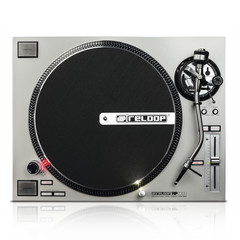
Features
NEW features of the MK2 version
Built for the club: Rigid chassis construction with an even heavier design with additional reinforcements made of metal, rubber and molding compound for high vibration damping and isolation
More powerful starting torque (adjustable from 2.8 - 4.5 kg/cm)
Fine-tuned motor control for further optimization of wow and flutter and rotation
Newly developed, height-adjustable tone arm base (VTA) and Anti-Skating control
Particularly light weight and rigid, satin aluminium material used for tone arm pipe
Pitch scale for precise adjustments
Optional ground terminal offers additional protection in complex club & studio environments
Easily replaceable, freely rotatable LED needle light in new aluminium design
High-quality and hard-wearing silver metallic finish
Quartz driven DJ turntable with upper-torque direct drive
Adjustable stop speed (0.2 - 6 sec.)
Precise control of motor with 3 speeds (33 1/3, 45 & 78 RPM)
Precision manufactured, die cast aluminium turntable
Rubber inlays for reduction of vibrations and background noise
Statically-balanced universal S-shaped tonearm with hydraulic lift and anti-skating mechanism
Universal connection for pickup systems (SME)
Pitch range +/-8 %, +/-16 %, +/-50 % (Ultra Pitch)
Quartz lock
Additional start/stop button for vertical positioning
Reverse function: switch for forwards and reverse operation
Recessed connection cavity for easy installation in cases & seamless adjustment
Phono and line out (no grounding required)
Removable mains and RCA cable
Safety mains switch
Shock-absorbing feet against vibrations
Technical Data
Turntable:
Type: direct-drive turntable
Drive: quartz driven upper-torque direct drive
Motor: 16-pole, 3-phase, brushless motor
Turntable speeds: 3 speeds, manual (33 1/3, 45, 78 RPM)
Starting torque: 2.8 - 4.5 kg/cm (adjustable)
Adjustable stop time (0.2 - 6 sec.)
Start-up time / change to RPM: 55dB (DIN-B)
Brake system: electronic brake
Platter:
Material: die cast aluminium
Diameter: 332 mm
Weight: approx. 1.5 kg
Tone arm:
Type: universal, statically balanced, S-shaped
Effective length: 230 mm
Overhang: 15 mm
Tracking error range: < 3°
VTA setting range: 0-6 mm
Useable weight of pickups: 3.5~8.5 g (incl. headshell 13~18 g)
Anti-skating range: 0 - 3 g
Effective tone arm mass: 30 g
Connections: 1x Phono/Line Out (gold-plated), 1x GND earth connection
General:
Power supply: AC 115/230 V, 60/50 Hz (EU/US), AC 100 V, 50/60 Hz (JP)
Power consumption: 13 W
Dimensions: 458 x 354 x 144,6 mm
Weight: approx. 11.7 kg
Accessories included: turntable, slipmat, LED needle light, counterweight, PHONO Cinch cable with earth, AC mains adapter, operating instructions

Belt drive DJ turntable, silver
Delivery includes pick-up system
Adjustable ±10 % speed control
Large start/stop button
Strobe lamp for exact speed adjustment
Delivery includes removable dustcover
Adjustable anti-skating
Shock-absorbing feet
Power supply: 115/230 V AC, 50/60 Hz
Power consumption: 8.00 W
Protection class: Protection class II
Power connection: Fixed Power supply cord with Euro plug
Drive type: Belt Drive
Brushless DC motor
Drive: Start time: 1 sec.
Stop time: 1 sec.
Speed change time: <1s 1khz 5cm/sec
Wow and flutter: <0.25 % WRMS
Rumble: 50 dB DIN B
Speed: 33 RPM, 45 RPM
Tonearm: S-shape with Cardan''s suspension
Length: 220
Overhang: 10 mm
stylus pressure: 0-4 g, adjustable
output level: phono 1.7-3.5 mV/ 1 kHz 5 cm/sec
Color: Silver
Connections: Output: phono via Stereo RCA
Pitchrange: ±10%
Material: Plastic
Width: 45 cm
Height: 14.5 cm
Depth: 35 cm
Weight: 3.2 kg
Turntable platter
Material: Plastic
Diameter: 33 cm
Weight: 0.3 kg

Marking one year following Phase Fatale’s (aka Hayden Payne’s) last EP on his label BITE, ‘Love Is Destructive’ is a clear shift into true techno territories, integrated with his distinct curation of narrative and sonic framework, imprinted with a musical diet of sleek, synthesised storytelling.The 4-Track EP reflects the turbulent ebb-and-flow found with emotional conclusion - a genesis soundtracked by raw energy and driving undercurrents. The Berlin-based DJ, Producer and Label-owner’s propensity for creating a symbiotic harmony by blending seemingly divisive elements from his genre defying repertoire, demonstrates his masterful understanding and control of the listener’s borderless, auditory journey. Exemplified by his marathon closing sets at Berghain, as well as techno arenas such as Khidi in Tbilisi (both of which he is a resident), Phase Fatale’s recent DJ performances and production endeavours reflect his fresh approach to pure techno sensibilities. The title track sets the tone with imperative grooves, energetic vigour and intrepid attitude. Following a progression of techno propulsion in ‘Magma Driver’, infused metallic textures and trippy, headier elements add depth, whilst the body of work’s cutting edge sound design echoes spacey vivacity and purification in equal measures. Dichotomy comes forward with tracks ‘Ambivalence’ and ‘Introjection’, processed vocal samples with dub techno leanings and hints towards broken rhythms are sculpted by Payne’s focused approach, resonating a feeling of hopeful resolution akin to resurgence. These romantic sensibilities offset by cold mechanical nuances are reflected in the EP’s artwork, depicting roses against the backdrop of engine-like machinery. ‘Love Is Destructive’ is dedicated to Juan, Simone and Luis. Featuring artwork by Silent Editions.
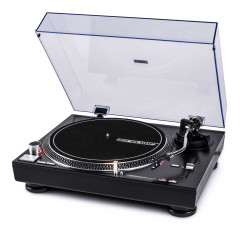
The RP-4000 MK2 is a solid DJ turntable for advanced users. The new MK2 version comes with several improvements, including a newly developed top panel and reworked metallic buttons with enhanced feel as well as a variety of functions. Precise motor control with 3 speeds: The precision-engineered die-cast platter is accelerated by a powerful motor with a high-torque direct drive of more than 1.8 kg/cm. The precise motor control with 3 speeds (33 1/3, 45 & 78 rpm) allows for the RP-4000 MK2 to play back any record. The pitch section with a selectable range of +/-8% and +/-16%, respectively, is suitable for the finest pitch adjustments. Statically balanced s-shaped tone arm: The RP-4000 MK2 features a statically balanced s-shaped tone arm with hydraulic lift and anti-skating mechanism. Via the universal connection for pick-up systems (SME) a large number of pick-up systems can be connected. Reverse function, pitch reset and extendible needle illumination: Additional features, such as reverse play and pitch reset, offer all DJs direct control of their turntable. With the push of a button the aluminium target light can be extended, so that the needle position can be seen in dark surroundings. Newly developed top panel and sturdy housing design: The new deep black metallic top panel construction is equipped with metallic buttons for start/stop, platter speed, pitch control, reverse function and tempo reset. The improved touch upon hit offers a clear haptic feedback. The sturdy construction with optimized damping features and shock-absorbing feet improve isolation from unwanted vibrations. With pick-up and headshell (made by Ortofon in Denmark): The RP-4000 MK2 comes with the high-quality OM Black pick-up, handmade by Ortofon in Denmark, pre-fitted to a headshell ready for immediate playback.
Technical data Turntable:
Type: direct drive turntable
Drive: quartz-driven high-torque direct drive
Motor: 8-pol., 3-phase, brushless DC motor
Turntable speeds: 3 speeds, manual (33 1/3, 45, 78 rpm)
Starting torque: > 1.8 kg/cm
Brake time: 50 dB (DIN-B)
Brake system: electronic brake
Platter:
Material: aluminium die-cast
Diameter: 332 mm
Tone arm:
Type: universal, statically balanced, s-shaped
Effective length: 230.5 mm
Overhang: 16 mm
Tracking angle error: < 3°
Applicable pick-up weight: 3.5 - 8.5 g (incl. headshell 13 - 18 g)
Anti-skating range: 0 - 7 g
Connections:
1x PHONO out (gold-plated), 1x GND
General:
Power supply: AC 115/230 V, 60/50 Hz (EU/US), AC 100 V, 50/60 Hz (JP)
Power consumption: 12 W
Dimensions: 450 (w) x 352 (d) x 144 (h) mm
Weight: appr. 9.8 kg
Included accessories:
Platter, OM Black pick-up system (by Ortofon), headshell, slipmat, counterweight, AC psu, instruction manual
Features
NEW in the MK2 version:
Newly developed top panel and reinforced housing construction
Reworked metallic buttons with improved feel & tactile response
Precision Pitch with selectable ranges of +/-8 % & +/-16 %
Tempo reset (Quartz Lock) feature
Superior finish in deep black metallic
Quartz-driven DJ turntable with high-torque direct drive
Designed for professional use
Powerful brushless DC motor with more than 1.8 kg/cm torque
Precise motor control with 3 speeds selectable (33 1/3, 45 & 78 rpm)
Reverse function: switch for forward/reverse playback
Precision-engineered die-cast aluminium platter with stable rotation
Statically balanced s-shaped tone arm with hydraulic lift and anti-skating mechanism
Universal connection for pick-up systems (SME)
Extendible needle illumination
Shock-absorbing feet for vibration isolation
Sturdy, heavy construction with optimized damping features
Prepared for dust cover (available as optional accessory)
Incl. slipmat, removable headshell and ready-mounted OM Black pick-up made by Ortofon

FEATURES
NEW in the MK2 version:
Metal top panel and reinforced housing construction
Reworked metallic buttons with improved feel & tactile response
Precision pitch with range of +/-10 %
Superior finish in deep black metallic
Turntable with belt-drive for DJ and hifi use
Perfect for aspiring DJs and hifi enthusiasts
Powerful belt-drive motor system absorbs unwanted vibration and noise
Precise motor control with 2 selectable speeds (33 1/3 & 45 rpm)
Precision-engineered, die-cast aluminium platter with stable rotation
Statically balanced S-shaped tone arm with hydraulic lift and anti-skating mechanism
Universal connection for pick-up systems (SME)
Extendible needle illumination
Shock-absorbing feet for vibration isolation
Sturdy, heavy construction with optimized damping features
Dust cover available as optional accessory
Incl. platter, Reloop OM Black cartridge (by Ortofon), headshell, slipmat, counterweight, power cord, instruction manual
TECHNICAL DATA
Turntable:
Type: belt drive turntable
Drive: belt drive
Motor: DC motor
Turntable speeds: 2 speeds, manual (33 1/3, 45 RPM)
Brake time: 50 dB (DIN-B)
Brake system: electronic brake
Platter:
Material: aluminium die-cast
Diameter: 332 mm
Tone arm:
Type: universal, statically balanced, s-shaped
Effective length: 230.5 mm
Overhang: 16 mm
Tracking angle error: < 3°
Applicable pick-up weight: 3.5 – 8.5 g (incl. headshell 13 – 18 g)
Anti-skating range: 0 - 7 g
Connections:
1x PHONO out (gold-plated)
General:
Power supply: AC 115/230 V, 60/50 Hz (US/EU)
Power consumption: 10 W
Dimensions: 450 (w) x 352 (d) x 144 (h) mm
Weight: appr. 5.7 kg

8
Aural Imbalance has enjoyed a colourful and celebrated journey through music over the years, taking in ambient soundscapes, deep house and of course, a pioneering role in atmospheric drum & bass. With Spatial, he has unearthed a pure, varied musical prowess seldom seen, with the ability to control both the lighter aspects of the mix as well as expert breakbeat craft. Infinity Spectrum showcases the breadth of talent Aural Imbalance possesses in one incredible package, not to be missed.
A1 - Aurealis
Opening the album with a wonderfully serene track, Aural Imbalance delicately rolls out his trademark smooth ambience with building cymbals and an energetic break merging perfectly in the mix - along with a great, pounding undertone of bass. Riddled with old-school sensibilities, Aurealis layers the building blocks until the track opens up further through a superbly lush breakdown, blooming like a flower in the summer sun before the breaks return.
A2 - Glistening Stars
Washing strings and the chitter-chatter of playful effects introduce Glistening Stars, before familiar, crisp old school breaks steal the limelight. A happy earworm melody soon reveals itself, and the breaks are gradually filtered back in following an other amazing breakdown before the melody takes on new life. Packed with detail and soul, this track will repeat on you long after you've moved on.
B1 - Alpha
Curious, apprehensive tones punctuate a fascinating intro, with a deep old school bassline creeping out first to greet us, before the hi-hat laden break loses its inhibitions and roams free.
Crafting a deliciously textured atmosphere, Aural Imbalance continues to showcase the breadth of his production techniques in his Spatial form, flecking the track with sumptuous melodies to create yet another gem.
B2 - Stargazers
This piece opens with a special blend of quiet, epic serenity, evoking hope and wonder as amen cymbal work and a stabbing snare-heavy break pattern rise and fall in the surrounding symphony. The quietly musical bassline plays a key role in the aural world-building here, complementing the breaks it harmonises with superbly. Aural Imbalance allows the composition to breathe and flourish for a superbly executed final act. Delightful.
C1 - Slow Motion
Introduced with quietly filtered breaks, Slow Motion dials back the pace with a break pattern which relaxes the snare while still maintaining a playful energy as the kicks and bass bumble along below. A uniquely atmospheric yet eccentric melody takes shape with dreamy pads filling the backdrop, and calming scatterings of echoing effects colliding and combining to generate a blissful collage of sound.
C2 - Apparition
Switching up the vibe we have Apparition, which boldly utilises long, tranquil yet purposeful pad work before an immense break pattern riddled with stark snares and a jumpy bassline which rides the smothered kickdrums so well, they appear to be fused as one. The breaks on this are truly special and will move the discerning dancefloor for sure, Aural Imbalance continuing to reveal a never-ending depth to his sound.
D1 - Artificial Satellite
Introduced with smooth synths and DJ-friendly hi hats, Artificial Satellite sees Aural Imbalance laying down a fresh showcase of old-school breakbeats, laced with that inimitable Spatial flavour. A swirling low-key sci-fi vibe punctuates the breakdown before the beats re-emerge. A deep, brooding bassline pulses beneath throughout, while the perfectly executed breaks enjoy their final flourish.
D2 - Unknown Forces
Finally, up steps Unknown Forces for a blistering finale to the LP. Aural Imbalance is at his amen-editing best here with a truly superb showcase of analogue break patterns to nourish the ears and set pulses racing on the dancefloor. Deep bass elevates the gentle intro before thumping kicks begin an epic workout, chopped to perfection with synths and strings flying gracefully above. We couldn't have a Spatial LP without an amen banger could we? What a way to end
Words by Chris Hayes (Spatial/Red Mist)

The AT-LP140XP fully manual professional DJ turntable features a high-torque direct-drive motor and anti-resonant, mass-damped, die-cast aluminum platter to ensure stable, on-axis rotation at 33-1/3, 45, and 78 RPM. It is equipped with an S-shaped tonearm with height adjustment, adjustable tracking force (counterweight) and adjustable dynamic anti-skate control.
Features:
Experience high-fidelity audio and professional DJ performance
Direct-drive, high-torque servo motor with speed stabilization
Fully manual operation
Adjustable dynamic anti-skate control
Selectable 33/45/78 RPM speeds
Professional anti-resonance, mass-damped, die-cast aluminum platter with felt mat
AT-HS6 universal ½"-mount headshell and AT-XP3 DJ cartridge with 0.6 mil conical bonded stylus
Balanced S-shaped tonearm with hydraulically damped lift control, height adjustment, and lockable rest
Dedicated phono-level output (5.5 mV)
Stroboscopic platter with speed indicator
Forward/reverse operation and variable pitch control with quartz speed lock
Popup stylus target light for easier cueing in low light
Damped base construction for reduced low-frequency feedback coloration
Includes: detachable RCA output cable (dual RCA male to dual RCA male), power cable, 45 RPM adapter, counterweight, felt mat, and removable hinged dust cover
Turntable
Type 3-speed, fully manual operation
Motor High-torque DC motor
Drive Method Direct drive
Speeds 33-1/3 RPM, 45 RPM, 78 RPM
Turntable Platter Die-cast aluminium
Starting Torque 2.2 kgf-cm
Wow and Flutter 50 dB
Output Level 5.5 mV nominal at 1 kHz, 5 cm/sec
Power Supply Requirements 115/230V AC, 60/50 Hz
Weight 10.0 kg
Pitch Variation +/-8% or +/-16% or +/-24%

The PLX-500 inherits the layout of the PLX-1000 professional turntable and produces a warm, clear analogue sound. The perfect deck if you want to start playing with vinyl or if you just want to listen to your record collection at home.
Solidly built with excellent vibration damping and precise audio playback, this high-torque deck has a USB out so you can make digital recordings of your vinyl collection in our free rekordbox software. You can also combine the PLX-500 with the rekordbox dvs Plus Pack, a compatible mixer and the RB-VS1-K Control Vinyl to play and scratch with digital files.
Main Features
What's in the box
PLX-500
Power cord
USB cable
Slip mat
Dust cover
Adapter for EP records
Head shell (with cartridge)
Balance and shell weights
Audio adaptor cable:
1 Stereo pin plug (female)
1 Stereo mini plug (male)
Operating instructions
Specifications
Width
450 mm
Height
159 mm
Depth
368 mm
Weight
10.7 kg
Turntables
Drive Method
Servo-type direct drive
Platter
Aluminium, die-casting diameter: 332 mm
Motor
3-phase, brushless DC motor
Braking System
Electronic brake
Rotation Speed
33⅓, 45, 78 rpm
Rotation Adjustment Range
±8 %
Wow and Flutter
1.6 kgf・cm
Start Time
Within 1 sec (at 33⅓ rpm)
Tone Arm
Arm Type
Universal type S-shape tone arm
Gimbal-supported type bearing structure
Static balance type
Overhang
16 mm
Effective Length
230.5 mm
Tracking Error
Within 3°
Height Adjustment Range
6 mm
Stylus Pressure Variable Range
0-4 g (1 scale 0.1 g)
Single Cartridge Weight
1,6 kgf・cm
Anlaufzeit
Innerhalb 1 s (bei 33⅓ Upm)
Tone Arm
Tonarm
Universeller S-Tonarm
Kardanisch aufgehängte Lagerung
Statisch balanciert
Overhang
16 mm
Effective Length
230,5 mm
Trackingfehler
Innerhalb von 3°
Height Adjustment Range
6 mm
Variables Auflagegewicht
0-4 g (1 Teilstrich = 0,1 g)
Cartridgegewicht einzeln
< 9,5 g
Sytem-Typ
VM
Anschlüsse
USB
1 USB Typ B
Ausgänge
1 PHONO/LINE (Cinch)

12
Big Crown Records is proud to present Brainstory’s sophomore full-length album Sounds Good.
Based in L.A. but hailing from the Inland Empire's own Rialto, California, two-thirds of Brainstory, Kevin and Tony Martin are brothers by blood, while Eric Hagstrom is a brother through their music and long term friendship. Since they started the band they have constantly faced situations that forced them to rise to the occasion. They got signed to Big Crown Records, they stepped up their game. COVID happened, they learned to record themselves. They started touring a ton sharing the stage with the likes of Lady Wray and they got their live show super tight. All of this time spent grinding and growing has certainly paid off. The path to take their art to the next level is clearer than ever, and once again, they are here for it. If there is one thing that is abundantly clear on Sounds Good, it’s that Brainstory has leveled up.
Part of this evolution is undoubtedly attributed to having access to and working constantly in their own studio in Long Beach. Another major factor is that their brotherhood has expanded. "I've been playing music with my brother all my life and now with Eric for a long time," Tony tells us. "Leon, though, is like another brother I've just met."
Leon Michels, Big Crown's co-owner, produced this record and applied his unmistakable golden touch in crucial ways. The other member of the extended Brainstory brotherhood whose contributions were essential to the album, is studio engineer legend Jens Jungkurth who controls the tones and textures of the music. "That's what you're hearing, our connection, the fun moments, the little details," Kevin describes. "This record isn't half what it is without them—and it made us want to match that effort," and match that effort they did. Album opener "Nobody But You" is an uplifting, dance oor burner, that shows off a new side of Brainstory's range. Drummer Eric Hagstrom’s crushing back beat lays the foundation for an inspirational feel good banger that manages to take the uncomfortable truth that “nobody will save you but you” and turn it into pure blissful motivation. "Peach Optimo" is a laid back half time tune that blends the bounce of Down South Hip-Hop with California G funk and Jazz. They once again show off their B said ballad talents with "Gift Of Life" but this time taking the genre to a new place with lyrics about existentialism and a track that is drop dead gorgeous, haunting, and profound all at once. "NyNy" is an homage to Kev and Tony's recently deceased grandfather while "Too Yung" is a show stopping, deeply personal, stripped down number about being introduced to
alcohol at a young age. They put another hit on the boards with "Hanging On," a Latin / Psychedelic Soul inspired banger featuring Claire Cottrill on background vocals while "XFaded” addresses the all too common vicious cycle of smoking and drinking too much over a trippy shufe.
"It's been four years since our last full length record, and with everything that's happened since, it's like we've been catching up to ourselves." That's one way to describe change: catching up to oneself. Each member of Brainstory has gone through shifts, both personally and musically, and all of that threads through Sounds Good. It's easy to say that the music industry can be short on lasting, genuine relationships. However, for Brainstory, from day one it's been about standing by each other, for each other. Their friendship started the group. Track listing:

The Lunar Effect lift up cosmic spirits with "Sounds of Green & Blue" album, out in April via Svart Records The Lunar Effect, sonic architects known for their gravitational pull of fuzzy, snarling riffs and psychedelic visions, proudly announce the release of their latest album, "Sounds of Green & Blue," available to pre-order now through Svart Records. “Sounds of Green & Blue” is a galactic journey through sound that showcases The Lunar Effect’s evolution and marks a pivotal chapter in their musical odyssey. Formed in 2016, The Lunar Effect burst onto the scene with a distinct blend of grunge and retro hard rock. With a flair for hair and a penchant for barbed and growling riff work, the London-based quartet quickly garnered attention for their dynamic sound and Blues rock reverence. In 2019, they crash-landed onto the Stoner Rock scene with their debut album, "Calm Before the Calm,” firmly establishing themselves as a force to be reckoned with. "Sounds of Green & Blue" sees The Lunar Effect expanding their sonic scope and bending all the elements and eras of Classic Rock into their own unique mold. The album is a testament to their musical growth and willingness to explore new territories while maintaining the brooding vintage sound that defines them. Each track is propelled into orbit by the low-end buzz of distorted chords, powerful enough to blow the moon-dust off your amp. The first single from the album, "Pulling Daisies," is a bristling sojourn that encapsulates the band's celestial rock influences. The track combines classic Blues tones, fuzzy guitars, swirling ethereal vocals, and a dusty, hypnotic rhythm that transports listeners from the past into a screaming, paisley, future wonderland. "Pulling Daisies" sets the controls for the heart of the moon, showcasing The Lunar Effect's ability to craft immersive and soul side musical experiences. From the heyday of The Beatles, Floyd, Zeppelin and Sabbath to newer artists like Graveyard, Radio Moscow and Red Fang, The Lunar Effect have created a masterclass in Psychedelic Rock that takes you firmly by the collar. With a palette that also includes shades of the 90s Grunge scene like Nirvana and Soundgarden into their heady mix, The Lunar Effect paint their own trippy world, where genres blur into their unique brew of heart-felt space rock. "Sounds of Green & Blue" by The Lunar Effect is proudly released by Svart Records, a label known for its commitment to uncovering high-quality, diverse, and boundary-pushing music. Svart Records continues to be a platform for artists who defy conventions, push the boundaries of their respective genres, and break out of the underground.

También disponible
Black Vinyl[24,79 €]
The Lunar Effect lift up cosmic spirits with "Sounds of Green & Blue" album, out in April via Svart Records The Lunar Effect, sonic architects known for their gravitational pull of fuzzy, snarling riffs and psychedelic visions, proudly announce the release of their latest album, "Sounds of Green & Blue," available to pre-order now through Svart Records. “Sounds of Green & Blue” is a galactic journey through sound that showcases The Lunar Effect’s evolution and marks a pivotal chapter in their musical odyssey. Formed in 2016, The Lunar Effect burst onto the scene with a distinct blend of grunge and retro hard rock. With a flair for hair and a penchant for barbed and growling riff work, the London-based quartet quickly garnered attention for their dynamic sound and Blues rock reverence. In 2019, they crash-landed onto the Stoner Rock scene with their debut album, "Calm Before the Calm,” firmly establishing themselves as a force to be reckoned with. "Sounds of Green & Blue" sees The Lunar Effect expanding their sonic scope and bending all the elements and eras of Classic Rock into their own unique mold. The album is a testament to their musical growth and willingness to explore new territories while maintaining the brooding vintage sound that defines them. Each track is propelled into orbit by the low-end buzz of distorted chords, powerful enough to blow the moon-dust off your amp. The first single from the album, "Pulling Daisies," is a bristling sojourn that encapsulates the band's celestial rock influences. The track combines classic Blues tones, fuzzy guitars, swirling ethereal vocals, and a dusty, hypnotic rhythm that transports listeners from the past into a screaming, paisley, future wonderland. "Pulling Daisies" sets the controls for the heart of the moon, showcasing The Lunar Effect's ability to craft immersive and soul side musical experiences. From the heyday of The Beatles, Floyd, Zeppelin and Sabbath to newer artists like Graveyard, Radio Moscow and Red Fang, The Lunar Effect have created a masterclass in Psychedelic Rock that takes you firmly by the collar. With a palette that also includes shades of the 90s Grunge scene like Nirvana and Soundgarden into their heady mix, The Lunar Effect paint their own trippy world, where genres blur into their unique brew of heart-felt space rock. "Sounds of Green & Blue" by The Lunar Effect is proudly released by Svart Records, a label known for its commitment to uncovering high-quality, diverse, and boundary-pushing music. Svart Records continues to be a platform for artists who defy conventions, push the boundaries of their respective genres, and break out of the underground.

User-friendly control layout
Building on expertise accumulated over many years as the top international manufacturer of DJ equipment, Pioneer has carried out an in-depth investigation into turntable users' needs in order to produce a user-friendly control layout. This makes it possible to enjoy intuitive DJ play without ever losing your way.
High-torque*1 direct drive system*2
Thanks to its high-torque direct drive system, the 'PLX-1000' provides stable rotation that can withstand use in venues such as clubs, achieving starting torque of at least 4.5kg·cm and reaching the fixed rotation speed within just 0.3 seconds (at 33 1/3 rpm).
*1 Torque: The strength of rotational force acting around a fixed axis of revolution.
*2 A system that directly connects the motor and turntable. Directly conveying the motor's rotational force to the driver ensures that loss is minimized and enables highly efficient energy transfer.
Tempo control with variable width selectable from three levels
The variable width of tempo can be selected from ±8%, ±16% and ±50%, and these wide-ranging tempo controls expand the possibilities of DJ play. Also, simply pressing the 'RESET' button instantly reverts to the fixed rotation speed at ±0%.
MAIN SPECIFICATIONS
Turntable
Drive method Quartz lock servo type direct drive
Motor 3-phase brushless DC motor
Braking system Electronic brake
Rotation speed 33 rpm, 45 rpm
Rotation speed adjustment range ±8%, ±16%, ±50%
Wow and flutter 0.1% or less WRMS (JIS WTD)
S/N ratio 70 dB (DIN-B)
Turntable Aluminium die-casting diameter: 332 mm
Starting torque 4.5kg·cm or more
Start time 0.3 seconds (at 33 rpm)
Tone arm
Arm type Universal type S-shape tone arm,
gimbal-supported type bearing structure, static balance type
Effective length 230 mm
Overhang 15 mm
Tracking error Within 3 degrees
Arm height adjustment range. 6 mm
Stylus pressure variable range 0 g to 4.0 g (1 scale 0.1 g)
Proper cartridge weight 3.5 g to 13 g (single cartridge)
- When shell weight is used: 3.5 g to 6.5 g
- When only balance weight is used: 6.0 g to 10 g
- When sub weight is used: 9.5 g to 13 g
Main unit
Main unit weight 13.1 kg
Maximum dimensions
(W x D x H) 453 x 353 x 159 mm
Output RCA × 1
Included accessories Turntable, turntable sheet, slip mat, slip sheet, dust cover, balance weight, head shell, sub weight, head shell, shell weight, adapter for EP record, power cord, Audio cable, ground wire, operating instructions
Haupteigenschaften
Was ist in der Packung?
PLX-1000
Netzkabel
Audiokabel
Erdungsleitung
EP/Single-Puck-Adapter
Turntable-Sheet
Slip-Mat und Sheet
Staub-Cover
Headshell
Balance-, Sub- und Kopfgewichte
Bedienungsanleitung
Technische Daten
Breite
453 mm
Höhe
159 mm
Tiefe
353 mm
Gewicht
14,6 kg
Turntables
Antriebsart
Direktantrieb mit Quartz-Lock und Servo
Platte
Aluminiumguss: 332 mm Durchmesser
Motor
Bürstenloser Dreiphasen-Gleichstrommotor
Bremssystem
Elektronische Bremse
Drehgeschwindigkeit
33⅓-45 rpm
Dreh-Einstellungsbereich
±8, ±16, ±50 %
Gleichlaufschwankungen
4,5 kgf・cm
Anlaufzeit
Innerhalb 0,3 s (bei 33⅓ Upm)
Tone Arm
Tonarm
Universeller S-Tonarm
Kardanisch aufgehängte Lagerung
Statisch balanciert
Overhang
15 mm
Effective Length
230 mm
Trackingfehler
Innerhalb von 3°
Height Adjustment Range
6 mm
Variables Auflagegewicht
0-4 g (1 Teilstrich = 0,1 g)
Cartridgegewicht einzeln
2,5-12 g (montagematerial im Lieferumfang)
Anschlüsse
Ausgänge
1 ANALOG (Cinch)

12
A quietly influential figure among electronic and experimental circles since the late 90s, Berlin based sound artist Hanno Leichtmann has been developing a sprawling and idiosyncratic vision both as a creator and curator.
With a keen sense for charting new territories, Leichtmann's work spawns a multitude of languages that go from deli-cate ambient excursions to techno explorations or abstract sceneries on numerous sound installations, releases on such esteemed labels like Entr'acte or The Tapeworm and collaborations with artists like Valerio Tricoli or Jan Jelinek. A reflection of his keen sense of discovery.
Centered around the Villa Aurora Organ, an intriguing and mostly unknown instrument built in 1928/29 by the Artcraft Organ Company in Santa Monica, California, 'Outerlands' presents a deeply personal approach to the instrument's particular properties, very much in line with Discrepant's ethos. Consisting of a pipe organ, a wall mounted marimba and a two octave tubular bells/chimes ensemble, remotely controllable by MIDI, the Villa Aurora Organ's rich palette of sounds is translated into 12 short tracks capable of conveying the mesmerising spirits of minimalism, exotica and de-votional music.
Starting with the ecstatic sound of the pipe organ, 'Lucero' sets up the hypnotic mood for 'Outerland's excursions through moments of spiralling repetition - 'Tramonto' -, blissful contemplation - 'Sunset' or 'Notteargenta' - or underly-ing tension - ‘Coperto’. 'Espera' amps up the unease, with queasy organ tones lurking beneath marimba harmonic motifs that wouldn't sound out of of place on some survival horror movie, while 'Miramar' or 'Revello' bring an uncanny sense of familiarity through its repetitive melodies.
Drifting seamlessly through a variety of moods that somehow feel connected - the outerlands are within you, if you allow yourself to let go.

4
Black Truffle is thrilled to announce a major archival release from legendary American composer and live electronics innovator Richard Teitelbaum, centred around his soundtrack for Suzan Pitt’s cult 1978 animation Asparagus. Best known to some listeners for introducing Europe to the Moog synthesizer as a founding member of Musica Elettronica Viva in Rome, Teitelbaum’s extensive and radically experimental body of work includes collaborative recordings with master improvisers like Anthony Braxton, Andrew Cyrille and George Lewis, intercultural experiments combining electronics with non-Western instruments such as the shakuhachi, works for computer controlled piano, and large-scale multi-media operas. Recorded at York University, Toronto in 1975–1976, ‘Asparagus (European Version)’ sprawls across both sides of the first LP. Discovered by composer Matt Sargent in Teitelbaum’s tape archive, this is a previously unheard major work for Moog modular and Polymoog synthesizers, unique in Teitelbaum’s oeuvre for its lushness and gently melodic quality. The music unfolds slowly, submerging lyrical melodies and burbling arpeggios into uneasy, glacially shifting harmonic swells, the luscious texture thickened with subtle changes of modulation and phase, calling up the shifting layers of Costin Miereanu’s classic Derives or the kosmische Musik tradition more than any academic synthesizer exercise. Teitelbaum incorporated much of this material into his soundtrack for Suzan Pitt’s Asparagus, which receives its first official release here. Asparagus, famously paired with David Lynch’s Eraserhead for a two-year run of midnight screenings at New York’s Waverly Theatre, uses hand-drawn and stop animation to unfurl an oneiric succession of images, beginning with a sequence in which the female protagonist defecates two stalks of asparagus, which multiply and float out of the toilet bowl to form the letters of the title. Teitelbaum’s soundtrack interweaves delicate drifting tones from the ‘European Version’ with contributions from Steve Lacy and Steve Potts on saxophones, George Lewis on trombone and Takehisa Kosugi on violin. Edited closely to the film, even without images the soundtrack proposes a surreal journey through floating synth tones, squealing horns, propulsive arpeggios, distant chatter, and an old-timey waltz. The final side of the set presents a new realisation of Teitelbaum’s text score ‘Threshold Music’, performed at a memorial concert at Roulette, New York in 2022 by Leila Bourreuil (cello), Alvin Curran (sampler and objects), Daniel Fishkin (daxophone), Miguel Frasconi (glass objects) and Matt Sargent (lap steel). The piece asks musicians to match their instrumental volume to that of the sounds of the environment in which they play, sometimes with the addition of recorded environmental sounds, reinforcing frequencies they encounter in listening deeply to their surroundings. Here the players use a field recording taken at Teitelbaum’s home in Bearsville, New York, their long tones and shimmering, glassy textures delicately emerging from the white noise of the location recording. Released with the full approval of both Richard Teitelbaum and Suzan Pitt’s estates, Asparagus is illustrated with striking images from Pitt’s film and accompanied by detailed liner notes by Francis Plagne. These previously unheard pieces shed new light on the work of a key composer in the American experimental tradition, offering up some of Teitelbaum’s most beautiful and engaging music.

10
Whitney Houston’s self-titled debut album has few parallels. Viewed solely through the lens of sales numbers, Whitney Houston is a watershed statement on par with the most commercially successful and culturally dominant LPs ever released. Having sold more than 14 million copies in the U.S. and upwards of 25 million units worldwide, the 1985 LP became the equivalent of the television show or blockbuster film that everyone collectively experiences and discusses. Nearly four decades later, it’s lost none of its appeal or magnetism — and its artistic significance and historical import have only grown.
Sourced from the original master tapes, pressed at RTI on MoFi SuperVinyl, and strictly limited to 4,000 numbered copies, Mobile Fidelity's 180g SuperVinyl LP of Whitney Houston presents the breakthrough in audiophile sound for the first time. The signature traits Houston exhibits on every song — her three-octave range, radiant warmth, personal conviction, impossibly controlled register — come across with exceptional clarity, focus, and presence. Free of artificial ceilings and constricted dynamics, this reissue plays with an openness, airiness, and balance that put the singer’s once-in-a-lifetime instrument and immortal artistry into proper perspective.
It does the same for the songs’ cascading melodies and captivating arrangements. Individually produced by one of four renowned industry veterans — Kashif, Micheal Masser, Jermaine Jackson, and Narada Michael Walden — each composition feels grander, closer, more genuine. A vocal spectacular, Whitney Houston benefits from the high-end characteristics of SuperVinyl, which include a nearly inaudible noise floor, superb groove definition, and dead-quiet surfaces. This is how an album that changed the direction of popular music — opening previously inaccessible doors for Black artists; bringing smooth-singing vocalists back into the mainstream; kickstarting a movement that soon included several “divas” who would command the charts through the early 21st century — should look and sound.
Though Houston’s seemingly effortless performances suggest otherwise, creating the record Rolling Stone ranks as the 257th Greatest Album of All Time wasn’t easy. Nearly 18 months were required to identify songs suitable for a still-unknown singer who did not fit into the conventional frameworks of the mid ‘80s. Confident, powerful, and prodigiously talented, Houston would forge her own parameters with Whitney Houston. In the process, she obliterated the stubborn lines between R&B and pop, Black and white radio. She dared to reimagine who could be a superstar and then went out and defined the role. Recorded for nearly $400,000 and released on Valentine’s Day, the LP exceeded the wildest expectations of those most closely associated with it — save for Houston and her family.
Having made her first public appearance at the age of 11 singing at a Baptist church, Houston understood pressure and knew her way around, inside, and through a song. The invaluable guidance and support she received from her mother, Cissy, an accomplished gospel vocalist who backed Aretha Franklin and Elvis Presley, are on display throughout Whitney Houston. They arrive in the types of authoritativeness, discipline, and diction rare for even most seasoned veterans — and unheard-of for a 21-year-old newcomer. Houston brings a soulful elegance, understated glamour, and in-the-moment rapture to every note. Moving up, down, or staying in the middle of the vocal ladder; channelling softness or sweetness; showing restraint or increasing the volume, she is a marvel of emotionalism, a dynamo who can seamlessly transition from one mood to another within a verse.
Though the 10-track LP largely concerns itself with the ballad tradition, Houston covers the bases, getting into an R&B groove on the fleet “Thinking About You,” turning up the heat on the duet “Take Good Care of My Heart,” and investing the contagious dance-pop confection “How Will I Know” with all the anxiety, hope, energy, and enthusiasm its lyrics demand. Featuring her mom on background vocals and Houston’s pitch-perfect tone, uncanny precision, and skyscraper highs (no AutoTune here, friends), the synth-based anthem propelled Whitney Houston into the stratosphere, the vocalist into regular MTV rotation, and the term “crossover” into popular parlance. The double-platinum single reached No. 1 on the Hot 100, Hot R&B, and Adult Contemporary charts — a trifecta that foreshadowed accomplishments that would ultimately crown Houston as the most-awarded female artist of all time.
Whitney Houston became the first album by a Black female performer to top the Billboard charts. It remained there for 14 non-consecutive weeks en route to claiming the title of the best-selling LP of 1986. It stands as the first debut and first album by a solo female artist to spawn three No. Hits, as well as the first album by a Black female artist to top the year-end charts in Australia and Canada. These are just a handful of the accolades — along with four Grammy nominations — that surround a set that also contains the unforgettable ballad “Saving All My Love,” string-accompanied “Greatest Love of All,” and sensual “You Give Good Love.”
As TIME observed in an article written two years after the album took the world by storm: “This is infectious, can't-sit-down music, and her performance dares the listener not to smile right back.” We’re still smiling.

14
Rock & Roll, indeed. Ruth Brown’s sizzling full-length debut — also known by its eponymous title — symbolizes what was exciting, fresh, invigorating, and raw about the burgeoning style in its halcyon days. Originally released in 1957, and reissued here in audiophile quality for the first time in partnership with Atlantic Records’ 75th anniversary, the set remains a testament to one of the most pioneering and talented vocalists to ever command a stage.
Mastered on Mobile Fidelity Sound Lab's renowned mastering system in California, pressed at RTI, housed in a Stoughton jacket, and strictly limited to 2,000 numbered copies, Mobile Fidelity’s 180g mono LP of Rock & Roll plays with an immediacy, vibrancy, and fullness that showcase the reach, power, and emotionalism of Brown’s voice. The sound of her support musicians — brassy horns, swinging rhythm combos, echoing backing vocalists, rollicking pianists, jaunty guitarists — is made clear and vivid, helping the upbeat fare to jump, juke, and jive with newfound energy and exuberance. In a related manner, Brown’s slower, more understated material crackles with an intimacy and passion that let you know you're in the presence of a woman who has lived what she sings. The longtime Rock and Roll Hall of Fame member deserves nothing less.
In an era dominated by big-throated vocalists, few — if any — came grander than Brown. The singer, whose repeat million-selling ‘50s success with Atlantic Records led many to call the then-indie label “The House That Ruth Built,” charted two dozen R&B hits in the span of a decade for the fledgling imprint. Rightly coined “Miss Rhythm,” the extroverted Brown put Atlantic on the national map, became the best-selling female musician of the ‘50s, and established a precedent that would ultimately lead to Grammy and Tony Awards. Her early works have lost none of their fire or flair.
Akin to many full-length LPs of its era, Rock & Roll doubles as a collection. Its 14 tracks comprise some of the more famous sides Brown recorded for Atlantic, beginning in 1949 with the all-time-great rendition of the ballad “So Long,” and continuing through 1956. After the song caught the public’s ear, the Virginia native briefly became known for her smoldering style with lovelorn material and torch songs, approaching them (see “Oh What a Dream,” “Old Man River”) with a combination of pained sadness and hardened resilience that had no contemporary equal. Encouraged to pursue the style by Atlantic Records co-founder Ahmt Ertegun, her R&B-driven material soon made her a constant chart presence.
Demonstrating what fellow legend Bonnie Raitt deemed “sex with class and dignity,” Brown merges blues and jazz, swing and gospel in electrifying fashion. She dares you not to move, dance, and get on your feet. A majority of Rock & Roll explodes with uptempo runs and jaunty readings of hot-blooded R&B numbers. Sweaty and sultry, bawdy and bold, Brown eclipses the anthemic blare of the saxophones and joyful clatter of the 88s, singing with a slight catch in her voice and hurricane-gale force that threatens to blow the roof off whatever room her voice occupies.
Evidence abounds. Listen to her prod the band and encourage the band members to blow a fuse on a sizzling “Hello Little Boy,” complete with cries and wails; stretch her phrasing to the heavens on the swaying “Wild Wild Young Men,” laden with romp-and-stomp beats; plead and persuade on the snaking “5-10-15 Hours,” which flips the script on the age’s notions of dominance; use her raspy tones, high notes, and breath control to mesmerizing effect on the smash “Mama He Treats Your Daughter Mean,” recorded with a group led by Ray Charles; survey the scene and take charge on the steaming “As Long as I’m Moving”; and tap a classy albeit flirtatious vein on “Lucky Lips,” which dented the pop charts as her first crossover hit.
Throughout Rock & Roll, Brown knows the lyrical connotations and spirited architecture of the songs inside-out. Her assertive voice — never harsh, strident, or false — is the epitome of the passionate desires and sonic strains that turned into nascent rock ’n’ roll. Brown played a pivotal role in helping the style develop, the record a timeless reminder of a lasting legacy that will never be forgotten.

12
Dire Straits never made a big to-do about its final run. In classic understated British fashion, the band simply let its music speak for itself. And how. Originally released in September 1991, On Every Street became the group's swan song – a lasting testament to the influence, musicianship, and integrity of an ensemble whose merit has never been tainted by cash-grab reunions or farewell treks. It remains an essential part of the Dire Straits catalog and a blueprint of the distinctive U.K. roots rock the collective played for its 15-year career.
Sourced from the original master tapes, housed in gatefold packaging, and pressed at RTI, Mobile Fidelity's 180g 45RPM 2LP set of On Every Street presents the album like it has always been meant to be experienced: in reference-grade audiophile sound. Recorded at AIR Studios in London and produced by Dire Straits leader Mark Knopfler, it features all of the band's sonic hallmarks – wide instrumental separation, visceral textures, seemingly limitless air, broad soundstages, atmospherics that you can almost reach out and feel. Each element is made more vibrant, physical, and lifelike on this collectible reissue, which marks the first time this 60-minute work has been available at 45RPM speed.
Afforded generous groove space and black backgrounds, the songs from On Every Street burst with nuanced details and vibrant colors. Dire Straits' playing appears to float, their intricate performances organized amid hypnotic, fluid, three-dimensional arrangements. Mobile Fidelity's definitive-sounding set also brings into transparent view Knopfler's finely sculpted guitar lines, expressive tones, and laid-back vocals – as well as the balanced accompaniment from his band mates. Here's a record on which you can hear the full blossom and decay of individual notes, and imagine the size and shape of the studio. It is in every regard a demonstration disc. And it happens to be filled with timeless fare.
Remarkably, On Every Street almost never came to light. Dire Straits initially dissolved in September 1988 after touring behind its blockbuster Brothers in Arms and suffering the departure of two members. At the time, Knopfler professed his desire to work on solo material; bassist John Illsley also explored side projects. But Knopfler's decision in 1989 to form the country-leaning Notting Hillbillies reignited a spark to reconvene his primary band and craft a fresh batch of songs. Six years removed from Brothers in Arms, Knopfler, Illsley, keyboardist Alan Clark, and keyboardist Guy Fletcher teamed with A-list session pros – steel guitarist Paul Franklin, percussionist Danny Cummings, saxophonist Chris White, guitarist Phil Palmer included – to create what still stands as an unforgettable farewell.
The platinum record brings the band full circle in that it returns Dire Straits to a quartet formation; finds the group refreshingly out of step with the era's prevailing trends; and sees Knopfler and Co. knocking out song after song with the deceptive ease of a punter tossing back a pint at a pub. That subtle cool, clever poise, and innate control – signature traits that no other band ever matched – dominate On Every Street. Knopfler's clean, virtuosic six-string escapades unfurl with dizzying melodicism and economical efficiency. Led by his winding fills and focused solos, Dire Straits traverse a hybrid landscape of rock, jazz, country, boogie, blues, and pop strains with near-faultless prowess.
More than any other entry in the group's oeuvre, On Every Street welcomes quick detours down back alleys and into the depths of human souls. What makes it more brilliant is its staunch refusal to cater to commercial expectations or take advantage of prior successes; every passage feels true, every measure echoed in the service of song. It's evident in the humorous satire of "Heavy Fuel," closeted desperation of the witty "Calling Elvis," and shake-and-bake bounce of "The Bug." It pours from the album's darker corners, as on the high-and-lonesome melancholy of the title track and bruised emotionalism of "When It Comes to You."
Hinting at the open-minded approaches and boundless curiosity he'd embrace as a solo artist, Knopfler doesn't limit himself when it comes to style or subject matter. Look no further than "You and Your Friend," a shuffle whose all-inclusive lyrics encourage an array of interpretative meanings. Another of the album's deep cuts, "Iron Hand," comes on as one of the band's most memorable moments – the narrative addressing the abuses of power at the 1984 Battle of Orgreave during the U.K. miners' strike. Given cinematic heft by the expert production, the true-fiction account puts into perspective the richness, poetry, and depth of On Every Street.
"Every victory has a taste that's bittersweet," sings Knopfler on the title track. At least that bittersweetness seldom sounded so damn good on record.

8
También disponible
Red Vinyl[20,97 €]
REKORDER is "a kind of retrospective of myself", says M.RUX about his second, long-awaited solo album. For over 10 years, Marten Rux aka M.RUX appears as a DJ, producer, editor, remixer and multi-instrumentalist all over the world and has developed an idiosyncratic sound that opens up subtle fields of tension: M.RUX mixes a sound between experimental sound design and hooklines that stay in your ears forever. Between wild percussion and contemplative harmonies, between ecstasy and meditative calm. In his DJ and live sets, M.RUX usually steps up to the controls with a smile, discreetly bobbing his head, while the audience goes wild. He circumnavigates clichés with trustworthy certainty and develops his very own guiding threads in his selection beyond BPM or genre straitjackets. One constant is his warm, often stoically slow kick drum, which holds all that playfulness together. REKORDER is a manifestation of this typical M.RUX sound. Similar to his concept album "Vermonische Melodien" from 2020 (on the Pingipung label), the artist's curiosity is directed towards the musical visions of the past. When new music technology projected great visions of the future and when new sounds had not yet solidi ed into clichés. REKORDER refers to the recording device, spelled in a German way, because most of the recordings were made in Germany (and in England as well). Phonography is a miracle that has only been around for 150 years: Technology gifts upon us prosthetics for remembering sound. Every recording is a process, and every playback a new performative act. Recordari (Latin) is a beautiful word. It literally means to take something to heart (cor) once again (re-). This doesn't just refer to remembering, but also to a ponderous, loving, sometimes doubtful contemplation. It is a perfect headline for M.RUX’ approach to processing sound. REKORDER draws deeply from its own archive, which has ourished quite splendidly during the pandemic. Multi-instrumentalist M.RUX mixes his own recordings of banjo, guitar, auto-harp, synths, percussion and jews harp with fragments from sessions with friends that have accumulated since 2020. They unfold in the process of re-listening in the mix and transform into a solid musical tapestry. A typical gesture for this album? M.RUX bows deeply to the history of pop music - especially the blues and its melancholy, coolness and shuf ing groove. The harmonic framework of the album is based on blues scales throughout. Instead of conveying blue emotions via lyrics or the tone of the voice, as the original genre does, the synthesizer takes on this role on REKORDER. With his sound design, M.RUX achieves an ecstatic sorrow in his melodies, this gurgling portamento that is reminiscent of R&B (or even the ingenious title melody of the series "Bojack Horseman”). If voices are heard on REKORDER, then as hypnotic fragments that guide us through the groove as conjunctions: "Because...", says the voice in the track of the same name. That's enough. There are no lyrics, no literal weariness, no love-songs or storytelling, REKORDER processes all of this into timbres and groove as vessels for the album’s individual, contemplative melancholy. Never forgetting, with a gentle smile, to swing a leg.

8
También disponible
Black Vinyl[17,61 €]
LIMITED RED COLOURED VINYL!
REKORDER is "a kind of retrospective of myself", says M.RUX about his second, long-awaited solo album. For over 10 years, Marten Rux aka M.RUX appears as a DJ, producer, editor, remixer and multi-instrumentalist all over the world and has developed an idiosyncratic sound that opens up subtle fields of tension: M.RUX mixes a sound between experimental sound design and hooklines that stay in your ears forever. Between wild percussion and contemplative harmonies, between ecstasy and meditative calm. In his DJ and live sets, M.RUX usually steps up to the controls with a smile, discreetly bobbing his head, while the audience goes wild. He circumnavigates clichés with trustworthy certainty and develops his very own guiding threads in his selection beyond BPM or genre straitjackets. One constant is his warm, often stoically slow kick drum, which holds all that playfulness together. REKORDER is a manifestation of this typical M.RUX sound. Similar to his concept album "Vermonische Melodien" from 2020 (on the Pingipung label), the artist's curiosity is directed towards the musical visions of the past. When new music technology projected great visions of the future and when new sounds had not yet solidi ed into clichés. REKORDER refers to the recording device, spelled in a German way, because most of the recordings were made in Germany (and in England as well). Phonography is a miracle that has only been around for 150 years: Technology gifts upon us prosthetics for remembering sound. Every recording is a process, and every playback a new performative act. Recordari (Latin) is a beautiful word. It literally means to take something to heart (cor) once again (re-). This doesn't just refer to remembering, but also to a ponderous, loving, sometimes doubtful contemplation. It is a perfect headline for M.RUX’ approach to processing sound. REKORDER draws deeply from its own archive, which has ourished quite splendidly during the pandemic. Multi-instrumentalist M.RUX mixes his own recordings of banjo, guitar, auto-harp, synths, percussion and jews harp with fragments from sessions with friends that have accumulated since 2020. They unfold in the process of re-listening in the mix and transform into a solid musical tapestry. A typical gesture for this album? M.RUX bows deeply to the history of pop music - especially the blues and its melancholy, coolness and shuf ing groove. The harmonic framework of the album is based on blues scales throughout. Instead of conveying blue emotions via lyrics or the tone of the voice, as the original genre does, the synthesizer takes on this role on REKORDER. With his sound design, M.RUX achieves an ecstatic sorrow in his melodies, this gurgling portamento that is reminiscent of R&B (or even the ingenious title melody of the series "Bojack Horseman”). If voices are heard on REKORDER, then as hypnotic fragments that guide us through the groove as conjunctions: "Because...", says the voice in the track of the same name. That's enough. There are no lyrics, no literal weariness, no love-songs or storytelling, REKORDER processes all of this into timbres and groove as vessels for the album’s individual, contemplative melancholy. Never forgetting, with a gentle smile, to swing a leg.
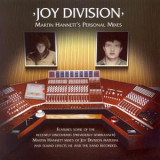
- From Safety To Where
- Auto Suggestion
- Heart And Soul
- N4: Europop (Aka Decades)
- 24: Hours
- Passover
- N4: Europop (Aka Decades)
- N4: Europop (Aka Decades)
- Synth Tone
- Hannett's Lift Recording 1
- Joy Division Keyboard Doodles
- Hannett's Lift Recording 2
- Organ Doodles
- The Eternal
- The Eternal
- Curtis Hannett Gretton Chit Chat & Cup Smashing
- Hannett Speaks
17
A repress of this long out of print album. 300 only LPs some on Yellow vinyl and some on Green vinyl randomly picked. Gatefold sleeves with 180gm vinyl. Discovered by friends of Martin Hannett and with input from one of his relatives,these recordings give a rare insight into his production ideas for Joy Division and his relationship with the band.,the strange things/ sound effects they recorded in the studio together etc etc. The studio chit chat and interplay between Hannett, Gretton and Joy Division members is all here as Martin left his own tape machine running throughout studio sessions. On this album we have rare alternative mixes of Joy Division that were Martin's personal favourites and he had the forethought to get the band members to give him control of these recordings. A must for all Joy Division fans.

Warehouse find!
With '100% Dope' we find Central Processing Unit bringing up their hundredth catalogue number, and you'd struggle to find a more fitting artist to ring in a century of releases for the label than Cygnus. The one born Phillip Washington has been with CPU since the very beginning, his 2012 LP 'Newmark Phase' representing the first record ever released on the imprint. That album's combination of textured techno and grizzly Drexciyan electro set the tone for CPU perfectly, and it's no surprise that Cygnus has returned to the Sheffield imprint several times down the years.
While '100% Dope' is an expert demonstration of what Cygnus and CPU do, this EP also shows just how much both artist and label have grown over the past nine years. At its heart '100% Dope' is a set of prime machine-funk from a master of the form, but these are also some of the most daring and innovative tracks that Cygnus has ever produced.
Take opening cut 'Bad RGB Controller'. In the undulating synth lines we have a ghost of grime as well as Drexciyan drive, and as such the track reminds one as much of Mr. Mitch or Last Japan as it does, say, Dopplereffekt. Furthermore, 'Bad RGB Controller' shifts gear around the halfway mark into a highwire electronica mode which has the wit and spark of prime Bogdan Raczynski. Entries like 'Float Back To The Surface' are similarly unpredictable. There's some lovely industrial techno bite to this one - the snare drum will echo in your head long after the party's died down - but Cygnus periodically pulls out the rug from underneath us with passages of impressionistic texture that almost border on sound art.
'Float Back To The Surface' is one of a trio of vocoder-led jams here. On 'Throwing Shade' we hear I-F and Egyptian Lover, with Cygnus' vocals clattering around like pronouncements from some funked-out robot overlord atop hissing-piston drums. Then there's the enticingly-titled 'CPU Records'. 'CPU Records' delivers all the crisp electro snap we've come to expect from a record emblazoned with that signature black-and-white artwork, yet this thing is also widescreen and cinematic in ways that demonstrate the maturation of the Cygnus sound. With a wicked vocoder vocal that celebrates the label's many achievements, 'CPU Records' is a victory lap tune if ever we've heard one.
Central Processing Unit keep it 100 on for this new EP. '100% Dope' by Cygnus is CPU's 100th catalogue number, and the Texan producer delivers on the promise of the record's title with a collection of brilliantly unique electro joints.

9
Harm’s Way is Duck Ltd.’s most intuitive and organic album yet, the result of keen observation, self-possessed songwriting, and a collaborative spirit. Building on the successes of their previous releases, the deeply relatable album displays a band operating at a nuanced, lyrical and musical best.
Ducks Ltd. make inviting and frenetic guitar pop for when life feels overwhelming. While the band’s songs are ostensibly breezy, a palpable anxiety boils underneath that communicates something deeper about everyday existence. On their latest album Harm’s Way, the Toronto duo of Tom McGreevy and Evan Lewis hones in on interpersonal and societal collapses, urban decay, and the near-impossibility of keeping a level head when everything around you seems to be falling apart.
“They’re songs about struggling,” says singer and lyricist McGreevy (who also plays bass and rhythm guitar). “About watching people I care for suffer, and trying to figure out how to be there for them. And about the strain of living in the world when it feels like it's ready to collapse.”
Even with its often dark subject matter, Harm’s Way is Ducks Ltd.’s most vividly rendered and collaborative collection yet. It’s an undeniable evolution for the band, not just in how these songs soar, but in their entire writing and recording processes. Composed on tour while supporting acts like Nation of Language, Illuminati Hotties, and Archers of Loaf, the album displays the band’s finely tuned songcraft and well-earned, road-tested confidence. “When we got signed, we had played maybe five or six shows ever. After last year, it’s in the hundreds. That experience can change your perception of your own music and songwriting,” says McGreevy. “In the past when we got stuck on a song we had a tendency to look at our favourite records to see how they tackled it. But now, instead of asking ‘what would Orange Juice do?’, we’d ask, ‘what would we do?’.” Lewis adds, “We have this really great thing where every decision with the band is filtered through both of us. Here especially, we really figured out how to make something that truly sounds like us.”
The band, fortified by this strong sense of sonic identity and a self-assurance in their new material—and in contrast to their critically acclaimed 2021 debut Modern Fiction and 2019 EP Get Bleak, both self-recorded and self-produced in a Toronto basement—wanted to bring Harm’s Way to life in a new city, with an outside producer, and with some of their favourite musicians. “We realised that so many of our favourite bands who are making guitar music right now are from Chicago,” says McGreevy. Working with producer Dave Vettraino (Dehd, Deeper, Lala Lala), they enlisted a marquee cast of Windy City collaborators to round out the tracks on Harm’s Way, including: Finom’s Macie Stewart (violin, string arrangements); Ratboys’ Marcus Nuccio (drums on most tracks); Dehd’s Jason Balla (who helped arrange the backing vocals, to which he also contributed); and backing vocals from Julia Steiner (Ratboys), Nathan O’Dell (Dummy), Margaret McCarthy (Moontype), Rui De Magalhaes (Lawn), and Lindsey-Paige McCloy (Patio). The band’s touring drummer, Jonathan Pappo, and bassist Julia Wittman also appear on the LP.
Ducks Ltd. are a band that already thrives on skirting the edges of buoyant jangle pop and driving power pop, and the duo credits these collaborators with helping to push their sound even further. “Historically our process has been really tightly controlled and insular. On this record, we worked with people who we trusted with a pretty wide range of musical backgrounds and they had approaches and ideas that helped open up the record's sonic palette,” explains McGreevy. “Jason thinks about backing vocals in a totally different way than I do and is super intuitive with melodic ideas. Julia and Margaret have a really deeo understanding of harmony. Macie and Dave were comfortable with the idea of improvising string parts which took some of those layers in some surprising directions. Dave also has an amazing ability to create atmosphere on a recording, and encouraged us to use a bunch of different techniques, tones, and processes to achieve that.”
Harm’s Way’s lush, melodic swagger is clear from the first notes of opener “Hollowed Out.” A song about living with decline (inspired by a Toronto sinkhole), its bright, indelible catchiness serves in contrast to its lyrical unease. Anchored by Lewis’ shimmering electric guitar, “The Main Thing” laments growing apart from a person whose views you once shared while managing to toss in references to both the unglamorous lives of middle relief baseball pitchers and the occult. Other songs split the difference between country and krautrock, like the rollicking “Train Full of Gasoline,” which uses the 2013 Lac-Mégantic rail disaster in Quebec as a metaphor for self-destructive patterns. Meanwhile, “Deleted Scenes” mourns the absence of someone no longer in your life (even if for very good reasons) and recalls The Cure at their most direct, and closer “Heavy Bag” employs enveloping, mournful strings to evoke a sense of how misery frequently loves company.

14
PROJECT REGENERATION VOLUME 2 Project Regeneration Vol 2 is a collection of 13 brand-new Static-X songs which contain the final vocal performances & musical compositions of founding vocalist Wayne Static, along with the original Wisconsin Death Trip lineup featuring Tony Campos (bass), Koichi Fukuda (guitars) and Ken Jay (drums). The new album was produced by the band’s current vocalist/guitarist Xer0 and mixed/mastered by long-time collaborator Ulrich Wild and is the 2nd installment of the 2-part release.

10
"Cross My Heart" is a tribute to the harmonica player and singer James Cotton, one of Boney Fields" heroes and companions on the road, is certainly the most representative track of this thrilling groove mood that authentic blues musicians know how to infuse. Boney Fields possesses that almost funk tone matured enough to tickle our ears and make us tap our feet. By revitalizing, for example, "The Thrill Is Gone" in the spirit of its original author (Roy Hawkins), Boney Fields perpetuates the tradition of spirited orchestras of yesteryears without compromising the modernity of its irresistible tempo. Much more personal than all his previous albums, "Just Give Me Some Mo" is also the expression of introspection, that of a man who remembers without drowning in dark nostalgia. He thinks of the courage of his mother bravely facing obstacles in an unequal America. "Back in the Day" is not a sad song. It makes one stronger and nurtures faith in the future. This melody is certainly the most touching of the six compositions written by Boney Fields. From "Control of you" to "Something" holding me" or "I know yes I Know" he invites us into his intimate biography, the story of a large family shaken by inevitable upheavals that must be faced, the destiny of a combative musician who resists adversity. Boney Fields chose to let his soul speak. This effort of truth had to be supported by the artistic direction of a master. By enlisting Sebastian Danchin for the production of this album, Boney Fields turns to a historian of African-American culture whose keen ear has already won over Little Milton, Mighty Mo Rodgers, Toni Green, and Jean-Jacques Milteau, among others... Their exchanges uncovered a perfect understanding of "Chicago Blues" the brassy vigor of which they experienced firsthand 40 years ago. Surrounding oneself with the right people is quite a challenge. Fortunately, Boney Fields knows how to spot true talents. He was convinced that the Senegalese guitarist Hervé Samb would also be a good musical director. Hadn"t he been the first to highlight the expressive power of this luminous composer and arranger? The enduring vitality of the blues, when narrated with precision and insight, always manages to find its legitimacy. The months of reflection, of questioning, will not have been in vain. They have given substance and depth to this thrilling record which, we wager, will be a milestone. Boney Fields has waited long enough. Does he want more? We will give him more! "Just Give Me Some Mo" will now be a shared leitmotif, that of an insatiable conductor and that of enlightened admirers.

- A1: Roscoe Robinson - You Don't Move Me No More
- A2: Lamp Sisters - No Cure For The Blues
- A3: Lh & The Memphis Sounds - Out Of Control
- A4: Marvin Preyer - Climbing Up To Love
- A5: Oscar Toney Jr - A Love That Never Grows Cold
- A6: Lee Rogers - The Same Things That Make You Laugh (Make You Cry) (Make You Cry)
- A7: Shortkuts - Your Eyes May Shine (Feat Eddie Harrison)
- A8: Bobby Womack - Take Me
- B1: James Fry - Tumblin' Down
- B2: Joe Simon - Looking Back
- B3: Lc Cooke - Half A Man
- B4: Masqueraders - Sweet Lovin' Woman
- B5: Bart Jackson - Dancing Man
- B6: Homer Banks - Foolish Hearts Break Fast
- B7: Double Soul - I Can't Use You
- B8: Terry Felton - I Don't Want To Have To Wait
- B9: Ted Ford - You're Gonna Need Me
17
Most southern soul fans will tell you that that the music produced in Memphis in 1967 and 1968 was the pinnacle of quality. So following on from our look at the River City’s soul output in 1967, we now turn our attention to an album covering the next year. As before, the singers here are a heady mixture of local Tennessee talent and welcome soulful guests who journeyed down south hoping that a little of the famous Memphis magic would rub off on their songs. There are soul genres to suit all tastes here – from the deepest ballads to upbeat tracks that will rock your socks off. Soul doesn’t get much better than the artists and their tunes on this LP!

SOURCED FROM THE ORIGINAL MASTER TAPES: 2LP SET PRESENTS 1991 ALBUM IN 45RPM SPEED FOR FIRST TIME.
PCM Digital Master to Analog Console to Lathe.
Dire Straits never made a big to-do about its final run. In classic understated British fashion, the band simply let its music speak for itself. And how. Originally released in September 1991, On Every Street became the group’s swan song – a lasting testament to the influence, musicianship, and integrity of an ensemble whose merit has never been tainted by cash-grab reunions or farewell treks. It remains an essential part of the Dire Straits catalog and a blueprint of the distinctive U.K. roots rock the collective played for its 15-year career.
Sourced from the original master tapes, housed in gatefold packaging, and pressed at RTI, Mobile Fidelity’s 180g 45RPM 2LP set of On Every Street presents the album like it has always been meant to be experienced: in reference-grade audiophile sound. Recorded at AIR Studios in London and produced by Dire Straits leader Mark Knopfler, it features all of the band’s sonic hallmarks – wide instrumental separation, visceral textures, seemingly limitless air, broad soundstages, atmospherics that you can almost reach out and feel. Each element is made more vibrant, physical, and lifelike on this collectible reissue, which marks the first time this 60-minute work has been available at 45RPM speed.
Afforded generous groove space and black backgrounds, the songs from On Every Street burst with nuanced details and vibrant colors. Dire Straits’ playing appears to float, their intricate performances organized amid hypnotic, fluid, three-dimensional arrangements. Mobile Fidelity’s definitive-sounding set also brings into transparent view Knopfler’s finely sculpted guitar lines, expressive tones, and laid-back vocals – as well as the balanced accompaniment from his band mates. Here’s a record on which you can hear the full blossom and decay of individual notes, and imagine the size and shape of the studio. It is in every regard a demonstration disc. And it happens to be filled with timeless fare.
Remarkably, On Every Street almost never came to light. Dire Straits initially dissolved in September 1988 after touring behind its blockbuster Brothers in Arms and suffering the departure of two members. At the time, Knopfler professed his desire to work on solo material; bassist John Illsley also explored side projects. But Knopfler’s decision in 1989 to form the country-leaning Notting Hillbillies reignited a spark to reconvene his primary band and craft a fresh batch of songs. Six years removed from Brothers in Arms, Knopfler, Illsley, keyboardist Alan Clark, and keyboardist Guy Fletcher teamed with A-list session pros – steel guitarist Paul Franklin, percussionist Danny Cummings, saxophonist Chris White, guitarist Phil Palmer included – to create what still stands as an unforgettable farewell.
The platinum record brings the band full circle in that it returns Dire Straits to a quartet formation; finds the group refreshingly out of step with the era’s prevailing trends; and sees Knopfler and Co. knocking out song after song with the deceptive ease of a punter tossing back a pint at a pub. That subtle cool, clever poise, and innate control – signature traits that no other band ever matched – dominate On Every Street. Knopfler’s clean, virtuosic six-string escapades unfurl with dizzying melodicism and economical efficiency. Led by his winding fills and focused solos, Dire Straits traverse a hybrid landscape of rock, jazz, country, boogie, blues, and pop strains with near-faultless prowess.
More than any other entry in the group’s oeuvre, On Every Street welcomes quick detours down back alleys and into the depths of human souls. What makes it more brilliant is its staunch refusal to cater to commercial expectations or take advantage of prior successes; every passage feels true, every measure echoed in the service of song. It’s evident in the humorous satire of “Heavy Fuel,” closeted desperation of the witty “Calling Elvis,” and shake-and-bake bounce of “The Bug.” It pours from the album’s darker corners, as on the high-and-lonesome melancholy of the title track and bruised emotionalism of “When It Comes to You.”
Hinting at the open-minded approaches and boundless curiosity he’d embrace as a solo artist, Knopfler doesn’t limit himself when it comes to style or subject matter. Look no further than “You and Your Friend,” a shuffle whose all-inclusive lyrics encourage an array of interpretative meanings. Another of the album’s deep cuts, “Iron Hand,” comes on as one of the band’s most memorable moments – the narrative addressing the abuses of power at the 1984 Battle of Orgreave during the U.K. miners’ strike. Given cinematic heft by the expert production, the true-fiction account puts into perspective the richness, poetry, and depth of On Every Street.
“Every victory has a taste that’s bittersweet,” sings Knopfler on the title track. At least that bittersweetness seldom sounded so damn good on record.

10
1STEP Process 180g 45rpm Double LP Pressed on VR900-Supreme Vinyl!
Mastered From The Original Analogue Master Tapes by Bernie Grundman!
Super-Luxe "Monster Pak" Jacket with a Rich 36-Page Booklet & Striking Outer Slipcase!
New lacquers cut for every 500 pressings!
Strictly Limited To 7,500 Numbered Pressings!
There have been more than 40 U.S. releases (and hundreds more worldwide) of Stan Getz's cultural touchstone album and for good reason: few recordings better capture the breezy warmth and easy-going sophistication of Brazilian bossa nova for an American jazz audience. Fewer recordings can replicate the you-are-there presence and flawlessly tight studio acoustics. Only Getz/Gilberto has Billboard Top-10-charting singles like "The Girl from Ipanema." When Impex Records jumps into this densely-populated fray with our own production, we need to bring maximum value and prestige to it. Challenge accepted. We worked directly with Stan's wife Monica Getz and their son Nicolaus to create the most authentic, best-presented Getz/Gilberto ever.
Exclusive to Impex's 1STEP Getz/Gilberto includes an insightful new interview/essay by Charles Granata featuring Monica reminiscences of the making of this record, the subsequent cultural phenomenon, and Stan's battles with some pretty heavy demons. Also unique to this release are two bonus tracks: an alternate mono 7" mix of "The Girl from Ipanema" (without the added echo, thank you very much) and a live recording of "Corcovado" from Carnegie Hall. Finally, the large-format, 36-page booklet features dozens of rare photos, the original album notes, and a fascinating personal remembrance from Monica Getz herself, celebrating her late husband's work and an inside look at Stan's family life while making the record!
Using the original analog master tapes and no computers at all, Bernie Grundman at Bernie Grundman Mastering sought to keep the sense of space and tone on the master tape intact without unnecessary embellishment. Impex 1STEPs get you closer to the source, not the ideal.
We know you have many choices when it comes to enjoying this singular album. The Impex 1STEP of Getz/Gilberto cuts above all other releases with added-value content that takes you deeper into Stan Getz's life and process in a way never previously possible.
The 1STEP Process:
The Impex 1STEP process relies on short, tightly-controlled runs that require a new lacquer after each 500 pressings. This unforgiving format has the lacquer skipping the regular father-mother process, going right to a single convert and then pressing. Though this dramatically increases mastering and production costs, it also assures each run is more consistent from disc to disc, with less noise, clearer details and deeper bass.
Reducing production complexity to just a single "convert" disc between the lacquer and the press greatly improves groove integrity, diminishes non-fill anomalies and increases signal integrity from the master tape to your system.
Features:
The only release of this fundamental jazz classic crafted with the full participation of the Getz family, including never-before-seen photos and notes from Monica and Nick Getz
Exclusive new interview essay about Getz's life and the recording of the album by noted producer and historian Charles L. Granata
Exclusive ultra-luxe Impex 1STEP packaging featuring a deluxe 36-page booklet within a heavy-stock two-sleeve Monster Pack jacket and striking colour-matched slip case
Two all-analogue bonus tracks: an alternate mono 7" mix of "The Girl from Ipanema" and a live recording of "Corcovado" from Carnegie Hall
Limited to 7,500 copies

Luigi Madonna is back on his record label Contempo and continues to showcase the darker and more underground side of his sound with the analogue grooves on this hypnotic release.
This four-track EP blends raw sound design with industrial percussion and modulating synth lines, to create dance floor focused cuts in the style that Luigi Madonna has previously championed via Contempo.
Previous releases on Contempo have also featured tracks and remixes from the likes of JSPR, Alarico, Lobster and Marc Faenger.
"Yakamoz" opens the release with its rumbling bassline tense synths and thrashing hi-hats, before the ominous synth stabs, trippy vocals and brutal percussion of "Hydratonic" take control. "Slow Sigh" has a stripped-back style with murky atmospheric, high-speed rhythms and sinister vocal tones. "Ikigai (Jam Edit)" is an experimental track that closes out the release with its breakbeat rhythms, heavy sub-bass and glitching synth lines.

8
Mostly known for his work as founder, vocalist and main songwriter for The Legendary Pink Dots, Edward Ka- Spel has long forged an equally prolific career as a solo artist given to sometimes exploring similar sonic realms as his group but clearly working at such a pace the need to channel ideas and songs in this capacity must be enforced. And just as well too, because Edward Ka-Spel is one of those rare and exceptional artists whose high workrate doesn’t betray a keen sense of quality control. Long known as somebody unafraid to venture wherever he pleases, his work has for a few decades now long traversed the more outward-bound or so-called ‘fringe’ areas of electronic music, psychedelia, hypnotic rock, kosmische sounds and the avant-garde. Heartily sewn into all of this is Edward’s fantastic grasp of spinning a twilight tale or spiralling deep into the mind’s recesses to craft a song from comparatively nimble melodies and words of Kafka-esque proportions. It’s a strikingly rich blend that’s always deserved far more attention than the cult audience it thankfully at least has.'Tales from the Trenches' is the second release by Edward for Lumberton Trading Company. Following on from the abstract-flavoured ‘Permission to Leave the Temple’ 10” released at the start of 2023, this LP collects eight tracks of a personal nature mostly pinned into place by some refined electro rhythms, molten cosmic textures, plaintive strings, introspective keys and a late night hue that sways effortlessly between the beautiful, haunted and even, a couple of times, a steam-pumped and sweat-ravaged dancefloor. Limited to 500 only, 'Tales from the Trenches' delivers exactly as the title indicates. Everything may at first feel ominous or sombre in tone, but there’s also a glimmer of hope laid bare in all its sun-drenched glory poking between the cracks.

"You, Me, & The Violence" explodes out of the gates with "Pilori", a statement of personal independence among society's faults and fractures. Birds In Row continue down this road, expressing disdain in songs like "Cages", "Guillotine", and "Walter Freeman". All of them musically harboring a tangle of emotional vocals and rabid distortion. Just when it feels like the album is almost too overpowering, Birds In Row unfurl a moment of clarity in "Last Last Chance", a haunting guitar and vocal break. The control of their dynamics is masterful work. "You, Me, & The Violence" and "Grey Hair" are near perfect examples of this, shifting between searing and serene in tone. And if you weren't in awe of Birds In Row in the first eleven songs, the twelve minute closer "Lovers Have Their Say" will leave you floored.

"You, Me, & The Violence" explodes out of the gates with "Pilori", a statement of personal independence among society's faults and fractures. Birds In Row continue down this road, expressing disdain in songs like "Cages", "Guillotine", and "Walter Freeman". All of them musically harboring a tangle of emotional vocals and rabid distortion. Just when it feels like the album is almost too overpowering, Birds In Row unfurl a moment of clarity in "Last Last Chance", a haunting guitar and vocal break. The control of their dynamics is masterful work. "You, Me, & The Violence" and "Grey Hair" are near perfect examples of this, shifting between searing and serene in tone. And if you weren't in awe of Birds In Row in the first eleven songs, the twelve minute closer "Lovers Have Their Say" will leave you floored.

Cleveland-based producer Tim Thornton makes music under the moniker Tiger Village. Thornton has carved out a niche in the American experimental underground through the wide-spanning releases of his own label Suite 309, as well as through his day job as a quality control supervisor at the Gotta Groove Records manufacturing plant — meaning that his ears serve as the finish line for a vast slate
of vinyl projects that hit the market every year. The Celebration, the fourth Tiger Village release on Hausu Mountain since 2014, joins a catalog that includes releases on Orange Milk, Patient Sounds,
and HausMo sublabel Blorpus Editions, along with a battery of music self-released through Suite 309.
Within the jittering IDM-adjacent networks of The Celebration, Thornton expands his craft on multiple concurrent trajectories, digging deeper into complex drum programming and labyrinthine synth arrangement while further exploring passages of vocal synthesis and non-recursive song structures that thrive on unpredictability and constant fluctuation. Thornton can’t help but bring a wide-eyed curiosity to anything he produces, as he rejects the dead-serious gun-metal intensity of many strains of contemporary electronic production in favor of bright tones and wonky rhythms.
Like fellow Hausu Mountain artists Wobbly and Moth Cock, Tiger Village revels in cheeky compositional about-faces and
carnivalesque synth lines. In all their staccato voices and peals of abstract texture, Thornton’s tracks blur the lines between harmonic electronic elements and drum patterns. The album morphs before our
ears every few seconds or so, allowing arrhythmic loops and alternating rhythmic grids to contrast against whatever might seem to be the bedrock of any given piece. By paying attention to the
trajectory of every dollop of sound, Tiger Village pulls off magic tricks in his pointillist arrangements in which nothing remains static — everything pushes towards a state of progressive complication.

12
FINAL GASP unleash their debut album Mourning Moon! A harrowing journey through all things Hardcore, Metal, and Goth, Mourning Moon drags the listener through the dark in 12 thrilling tracks, and drives a stake right into the heart of 2023's most compelling releases. Opener "Climax Infinity" sets the tone for what's to come: the undeniable hardcore swagger of the Boston-based band is immediate as drums and guitars stomp and riff against one another, while FINAL GASP vocalist Jake Murphy howls - "watch as the way it falls, your loss of control, from whispered incantations, burnt down for your invocation!" Mourning Moon showcases expert songwriting and lyrical crafting, snarling and barking through the harsher, heavier punked out moments in "Blood and Sulfur" and "Frozen Glare" while flexing arena chops on the tremendous "Temptation" and utterly despairing "The Vanishing". Elsewhere, the hook-laden title track explodes out of the underground and aims straight for the moon. Lead single "Mourning Moon'' is downright catchy and showcases FINAL GASP's knack for excellent songwriting. A song professing eternal love through a lens clad in black and morbid as ever, "Mourning Moon" proves to be one of the most inventive journeys this side of the genre in recent times, recalling a prime period for luminaries Killing Joke and Danzig. With Mourning Moon, FINAL GASP emerge from the shadows, and step into the forefront of extreme music's new guard.

- A1: I Wanna Dance With Somebody (Who Loves Me) (Who Loves Me)
- A2: Just The Lonely Talking Again
- A3: Love Will Save The Day
- A4: Didn't We Almost Have It All
- A5: So Emotional
- B1: Where You Are
- B2: Love Is A Contact Sport
- B3: You're Still My Man
- B4: For The Love Of You
- B5: Where Do Broken Hearts Go
- B6: I Know Him So Well
11
Whitney did more than turn Whitney Houston into a pioneering sensation known around the world by her first name. Originally released in June 1987, the singer's blockbuster sophomore record became the first album by a female artist to debut at No. 1 on the Billboard 200 chart — a position it claimed for a total of 11 weeks en route to selling more than 10 million copies in the U.S. The Diamond platinum effort also contains four No. 1 Hot 100 hits that, when combined with the three chart toppers from her 1985 debut, gave her seven consecutive No. 1 singles — an accomplishment that no other artist has accomplished. Commercially and creatively, Whitney stands on hallowed ground — especially now that the record plays with a sound that puts into perspective just how extraordinary, engaging, and vital Houston's music remains.
Mastered from the original master tapes and pressed on MoFi SuperVinyl at RTI, Mobile Fidelity's 180g 33RPM SuperVinyl LP of Whitney invites listeners to experience the Rock & Roll Hall of Fame inductee's pivotal album in audiophile quality for the very first time. Free of the dynamic limitations and tonal flatness prevalent on prior vinyl and CD pressings, it lets the music breathe and reveals the copious detail, nuance, and texture within the immaculately produced songs. MoFi's SuperVinyl profile offers further advantages in the forms of a nearly inaudible noise floor, dead-quiet surfaces, and superb groove definition.
In addition to featuring extreme clarity and immediacy, this numbered-edition reissue does wonders for the attribute that inspired more than 20 million people around the globe to add Whitney to their record collections: that inimitable voice. Houston's trademark mezzo-soprano — an acrobatic instrument equally capable of taking off on fantastic flights and unwinding for hushed meditations — benefits from the fantastic airiness and transparency afforded by this meticulously restored edition. Whitney has never sounded or looked better. The crossover landmark deserves nothing less.
Issued just two years after Houston's breakthrough debut, Whitney immediately signalled the genre-defying singer's intent to continue to push ahead and expand her palette. Shot by photographer Richard Avedon, the album cover depicts an iconic image of Houston — captured with a gleaming smile, bright eyes, teased-out afro, toned arms, and a right hand that appears to wave a friendly hello — whose active, athletic profile stands in contrast to the extremely formal sit-down shot of her that graces her '85 record. The change is telling: Whitney overflows with unfettered joy, rhythmic vibes, and deep-seated emotions that forever endeared her to the hearts and minds of countless listeners — and which set the standard for the wave after wave of divas that followed in her footsteps.
It's no coincidence that the first track on Whitney is the declarative "I Wanna Dance with Somebody (Who Loves Me)." Like Michael Jackson's "Billie Jean" and Madonna's "Material Girl," the feel-good smash is one of the quintessential '80s gems — a lithe, melodic, celebratory release of pent-up energy and loneliness that glides across club floors, shouts to the rooftops, and shrugs off any concerns about vulnerability or embarrassment. Houston's swooping voice moves in sync with the sleek beats and dipping-and-diving synths. She practically takes her fellow musicians by their hand and leads them in a blissful dance that nobody would dare sidestep. Focusing on Houston's singing — a task made challenging only because of the impossible-to-ignore hooks and grooves — showcases the virtuosic facets of not only her register but her control, discipline, smoothness, and warmth.
That she replicates those feats for the entirety of the nearly 53-minute-long album makes Whitney that much more special. Houston reaches back and channels her childhood gospel training on the R&B-flared "So Emotional"; effortlessly slips into Quiet Storm mode on the duet with her mother, gospel great Cissy Houston, on "I Know Him So Well"; flirts with smooth jazz and collaborates with tenor saxophonist Kenny G on the lush "Just the Lonely Talking Again"; conjures dreamscapes and shadow-boxes with supple funk on a romantic cover of the Isley Brothers' "For the Love of You"; and, for the majestic power ballad "Didn't We Almost Have It All," displays the sky-scraping reach of her vocals amid a grand arrangement made even bigger by Houston's sweeping performance and triumphant finish.
Houston's once-in-a-generation talents weren't lost on the adoring public, radio deejays, or industry experts. In addition to harbouring four No. 1 hits and receiving nominations for four Grammy Awards, Whitney generated another Top 10 success in the guise of the Afro-Cuban-leaning "Love Will Save the Day." The album also netted Houston four American Music Awards; two Billboard Music Awards; back-to-back People's Choice Awards; a Soul Train Award; and various other accolades. It all makes the crux of the Washington Post's July '87 review of the album appear prophetic: "Her voice sounds stronger still and the songs are varied but so consistent she could garner 10 Top 10s out of a field of 11."
That claim still holds true. A brilliant fusion of pop, R&B, smooth jazz, and soul, Whitney is a showstopper – and one of the key reasons Houston is the most-awarded female artist of all time.

9
Wildfire was a household name in Tropical Island music circles due to their excellent albums and performances throughout Trinidad, Tobago, the Caribbean & US Virgin Islands and French Guadeloupe. In 1962 they started off as ‘The Sparks’ (a well-respected Calypso outfit who released a bunch of successful singles) but with the release of their hit single ‘Come On Down’ from 1975, they exploded into Wildfire.
Wildfire had a very fruitful career and released four top full-length albums and a vast amount of singles before calling it quits. Led by bandleader Oliver Chapman (bass & guitar player, vocalist, arranger, producer and co-writer for the majority of the bands’ songs) and comprised out of high talented musicians, Wildfire was out there with the big boys in the niche they carved out for themselves.
On the album we are presenting you today (Time Is The Answer from 1980) you’ll find the perfect mix of funk, soul and disco, basically the popular sounds of the day, and all tracks are originals. The album is FUNKY and the production quality can rival with any of their peers and records produced/recorded in the US. The performance of Wildfire on this album is beyond excellent. This release was also the first time the group took control over production and getting their album out in the world. Also included is the hit single ‘Say A Little Prayer For The Children’ which is just one of those songs that will be stuck in your head forever.
Besides virtuoso Oliver Chapman: the talent that was featured on ‘Time Is The Answer’ is exceptional. Anstey Hamilton carries around a rich noticeable tenor voice. Arthur Byron who also did vocals on the album, has a beautiful rasping tone that can knock you out anytime he gets into his act. Fitzroy Isaac on keyboards and Donald Leid on drums are the guys that were responsible for keeping the groove tight. Clifford Wilson like Oliver had been with band since the start. He is calm in his approach, he played the bass guitar and sung background vocals, he also chipped in with Oliver whenever they wrote songs together. Finally we have Cyllan Charles, who was known as the Wildfire voice. Cyllan had been doing most of the lead vocals since he joined the group in 1972, he was the most experienced of all the members, and can really take you to higher heights anytime he gets into doing his thing both on stage and on wax.
“Time is the Answer" by Wildfire is a scarce and increasingly sought-after LP. Filled with hit-bound songs it comes as no surprise that the album has now become a much-wanted item due to its addictive and original-sounding nature. This is a must-have for any self-respecting record digger!

10
The only track with vocals on Steel City electro-funk wizard Buscrates' second full-length album is "On My Way," where Soraya Watti's smooth and soulful tones prove to be the perfect addition to the Buscrates machine. This is exactly the kind of cut that used to cause rewind buttons on boomboxes to get their wear back in the day. It's a great indicator of the mostly-instrumental delights which await you on Crates' much-anticipated album release.

- 1: Past And Present Ft. Pupajim
- 2: Good Lovin Ft. Lady Ann
- 3: Sugarwater Ft. Hollie Cook
- 4: Riddim General Ft. Kiko Bun
- 5: We Pulsating Ft. Solo Banton
- 6: Only Love Ft. Prince Alla
- 7: Rain Keeps Falling Ft. Johnny Clarke
- 8: Total Disaster Ft. Shanti D & Ranking Levy
- 9: Control The Border Ft. Charlie P & Daddy Freddy
- 10: Birds Of Vice
10
Mungo’s Hi Fi return with their exciting new vocal project Past And Present. Released on their Dumbarton Rock label, it’s the eagerly awaited vocal companion piece to 2021 dub album Antidote. Past And Present is unique for Mungo’s in being devoted to the Rub A Dub reggae style that arose in late 70s and early 80s Jamaica. The record has its roots in both past and present. Back in 2021, Mungo’s responded to the pandemic with the dub project Antidote, an album of reflection among wide spaces and nature. As the world has reopened, Past And Present celebrates the return of verbal communication and dancing to hypnotic basslines, with the original vocal cuts by veteran and rising microphone talent. The haunting voice of French pure singjay Pupajim encourages us to face living in the now, on title track Past and Present. Pioneering Jamaican female deejay Lady Ann toasts the importance of Good Lovin’ over a sensual, waist-winding rhythm. Ethereal UK neo lovers rock singer Hollie Cook revisits her classic Sugar Water, floating above a sparse and eerie future Rub A Dub soundscape. Honey-toned Londoner Kiko Bun exudes confidence and humility as a Riddim General while veteran talker Solo Banton shakes up the dance on his seismic, much requested, We Pulsating. The biblical voice of Jamaican legend Prince Alla sounds fresh on a revisit to his immortal Only Love Can Conquer. Fellow elder statesman of reggae Johnny Clarke contributes the sole non Rub A Dub offering with the “Flying Cymbals” driven, deep roots track Rain Keeps On Falling. French singjay Shanti D and Israeli chanter Ranking Levy pair up on the mighty Jaqueline rhythm for a warning against Total Disaster. The prodigious Charlie P joins Godfather of UK emcee-ing, Daddy Freddy, to request freer movement on Control The Border. The final statement is without words or vocals: as Mungo’s production team take centre stage for the soaring Birds Of Vice – the A side to Antidote’s closing dub, Birds Of Pleasure. In reggae, the vocal traditionally precedes the dub. By completing their pairing of Antidote with Past and Present, Mungo’s have flipped the script and reversed the process – crafting a loving tribute to Rub A Dub’s rolling basslines and upward vibes in a modern style
12
While the hook line for this new local trio would have to be that bassist/leader Brenda Sauter used to be a member of the later-'80s incarnation of the famous Feelies (and it's notable offshoot, The Trypes), even if you didn't worship at the altar of that group (and especially if you did!), Wild Carnation is a revelation. While
the persistent, pumping beat and hard-played jangle guitars of most of the tracks here emanate from her previous band and from their forerunners, the Velvets (especially), Television,and the Byrds - Sauter's beguiling voice is perfect for the ultra-appealing pop hooks the group writes as well as the thoughtful lyrics she composes.
Way back in the 1990s, a young Delmore stumbled into now defunct NYC nightclub Wetlands (during the sadly also now defunct, NYU Independent Music Festival), just as WILD CARNATION were about to begin their set.
Having lived in NYC / Brooklyn / Hoboken the previous decade, where countless mesmerizing gigs by THE FEELIES, YUNG WU, TRYPES, and SPEED THE PLOUGH had been experienced, it was the chance to see Brenda Sauter fronting her new group that drew Delmore in. A few songs into their set, it was apparent, however, that this trio was more than a Feelies offshoot project, despite melodic similarities, and Brenda's cool vocals / presence.
WILD CARNATION played raw, loud and fast (and occasionally out of control), with Richard Barnes distorted, jangly guitar lines perfectly colliding with Brenda's propelling bass notes, while Chris O'Donovan
kept it together, while pounding the living hell out of his drums. It was a garagey, indie rock mess, more reminiscent of Hib-Tone / Chronic Town era REM, and emergent New Zealand bands like The Bats and The Clean, than The Feelies.
Delmore was smitten, and determined to sign them, despite the fact that the Delmore label did not yet exist.
In 1993, Wild Carnation's debut 7", "Dodger Blue" b/w "The Lights Are On (But No One's Home)", taken from raw home demos recorded the previous year, became the second Delmore release. A full length album was then commissioned, and an evolving Wild Carnation holed up at Mix-O-Lydian recording studios with engineer Don Sternecker (The Feelies, Speed The Plough, Wake Ooloo) to record their debut full length, Tricycle, released in 1994.
On Tricycle, the pastoral quality of their most beautiful ballads was captured perfectly, while retaining enough of the rawness of the live experience. Waves of critical acclaim followed, from now defunct publications (CMJ Jackpot! Raygun, Trouser Press) followed, including this one by Jack Rabid of The Big Takeover, written for All Music Guide:
"While the hook line for this new local trio would have to be that bassist/leader Brenda Sauter used to be a member of the later-'80s incarnation of the famous Feelies (and it's notable offshoot, The Trypes), even if you didn't worship at the altar of that group (and especially if you did!), Wild Carnation is a revelation. While the persistent, pumping beat and hard-played jangle guitars of most of the tracks here emanate from her previous band and from their forerunners, the Velvets (especially), Television,and the Byrds - Sauter's beguiling voice is perfect for the ultra-appealing pop hooks the group writes as well as the thoughtful lyrics she composes.
Trading the occasional Feelies drone for sugar-sweet melodies (yes!) and utilizing the pretty ring of the guitars to maximum effect, songs such as Wings are the perfect pop confectionery, too honeyed and
delightful to miss capturing your bending heart and too consistently insistent and edgy to be wimpy, kind of like Reckoning-era R.E.M. It's all so well captured with pristine production, with balls to match the heart, too!
And though the 12 tracks are largely cut from a similar mode, all seem special just the same on their own.
A truly shining, first-rate effort, along with Lotion's and Nyack's early EPs and the last Flower LP, the best release to come out of a New York group this decade, and exceptionally crafted at that! Do not miss."

9
Short Bio: It only takes a few seconds exposure to the rolling riffs of opening track “Tom Cruise Control” to be reminded that this is Gozu’s world, we’re just living in it. Given that it has been five years since the Boston quartet dropped the monstrous Equilibrium, returning with Remedy is one hell of a way to make sure that everyone - whether previously familiar with them or otherwise - realizes that they are perhaps the most badass of American rock bands, for they have taken everything to the next level. “There is a certain maturity mixed with a childlike enthusiasm to play music, and we all are better players now than on Equilibrium,” says vocalist/guitarist Marc Gaffney. “We have all really tried to look at what we enjoy but more what we do not enjoy. Playing music is a gift and when it becomes A Nightmare On Elm St Part 37.3, you are done.” The result is nine tracks of their signature combination of fuzzy 70s inspired riffs, rich, catchy, grunge-esque vocal melodies and a touch of old school trippy psychedelia written and played with the utmost passion and enthusiasm, eclipsing everything else in their catalog. “The band wanted a very heavy groove-oriented album with singalong choruses. We also wanted sonically to hit you in the chest, like a three-combination, left-right-left, like Micky Ward. Harmonies and melodies were something we really looked at and wanted to shine, and thick guitar tones, driving bass and drums were under the microscope.”

- A1: The Water Seems Changed To Mist And Vapor
- A2: Ropes Sing In The Air
- A3: Waiting And Watching (Version
- A4: Warm Murmur In The Room
- A5: It Moves Swiftly Forward, Throwing Up Great Waves
- B1: On The Quay Now, Waiting And Watching
- B2: Someone Squeezes A Concertina, Sailors Begin To Sing
- B3: Drawn Toward The Whirlpool's Center
- B4: It Moves Swiftly Forward (Version)
- B5: On The Quay (Version)
10
One of the most notorious hatemongers in movie history is Captain Ahab from John Huston’s 1956 classic Moby Dick. His manic monologues cast a spell on generations of viewers. Berlin based musician and sound artist Jan Jelinek has now turned the voice of Ahab into a musical instrument.
Faitiche presents Jan Jelinek's soundtrack for SEASCAPE – polyptych, an audio-visual software developed in collaboration with Canadian new media artist Clive Holden in 2022.
SEASCAPE – polyptych is based on image and acoustic source material from Moby Dick. While Holden works on manipulating film sequences, the voice of Ahab plays a central role in Jan Jelinek’s soundtrack. The dynamic volume and tone of the captain's speech control a synthesizer system that turns Ahabs voice into ten abstract soundscapes.
In this production the voice gives the impulse and controls things but is not the sound of spoken word itself that we hear. Only occasionally can snippets of speech be heard so that syllables or sounds are recognisable. Instead we hear compositions made of hissing, soundscapes and eruptive sounds. The atmosphere is dark and sinister. Still every piece has a clear sonic structure and follows an understandable dramatic composition. This music is abstract but not overwhelming. Quite the opposite, SEASCAPE – polyptych is an invitation to listeners to let themselves be carried by the stream of sonic events. Although part of a media art work, the soundtrack can be enjoyed without any of this connecting superstructure. It works with no previous knowledge. But what happens when one does know that it’s the sonic waves of a human voice that is controlling a network of synthesizers?
If you want to hear Ahab, you will hear a choir of Ahabs in every piece of sound. The subliminal threatening as well as the conjuring Ahab. Finally the Ahab who whips up his crew and tears them with him into their downfall. The majestic „on the quay now, waiting and watching“, the oppressive “drawn towards the whirlpools center” - they are all music as well as sonic discourse.

- A1: & Mental Trance - Intro Track
- A2: & Crystalline Reality - The Growl (Crystalline Mix)
- A3: & Eye Soul8R - Autumn Subs
- A4: & Dj 1999 - The Abyss
- B1: & Brain Liquor - Jaque?
- B2: & Crystalline Reality - The Growl (Night Mix)
- B3: & Mental Trance - Mental Trance
- B4: & The Foundation - Steppers Worldwide, Unite!
- B5: & Dj 1999 - Almost Pleasant
9
Taking his cue from seminal mix albums of days gone by, Glenn Astro is back with a compilation of original productions from a cast of fictional artists on Nothing Is Real. Across 13 tracks, the Tartelet mainstay celebrates the thrill of discovery which came as standard listening to new entries in series’ like X-Mix and DJ Kicks, moving between head-nodding downtempo, ambient techno, broken beat and all manner of chill-out room delights. You might be left wishing artists such as DJ 1999, Mental Trance and Eye Soul8r had actual discographies to go and explore, but as Astro himself is keen to point out, “nothing is real.”
Astro has never been shy to embrace classic tropes and tones in his past albums for Tartelet, Apollo and Ninja Tune, but he’s drawing on a different set of influences for this album and embracing the flexibility afforded by using imagined aliases for varied production styles.
“I had the idea to do a mixtape, preferably with unknown dance tracks that also reflect that whole 90s/early 00s vibe,” Astro explains. “Instead of digging for some records that haven’t been sourced yet or trying to find those ‘forgotten’ treasures, I made the tracks myself. That way I had full control over BPMs, feel and the whole arrangement of tracks. I thought of a few alter egos and started producing the tracks in the order that I intended to play them in a mix. In the end a whole compilation of tracks emerged.”
While the concept might suggest you’re going to hear a lot of over- familiar sounds, don’t be fooled. Astro is inspired and inquisitive, channeling the experimental spirit of the 90s and early 00s when electronic music was still continually being redefined in all kinds of micro-scenes. In many cases, Astro’s productions slip into the cracks between genres rather than specifically mimicking a style.
Even if the reference points are detectable, the end result is a curious blend as indebted to ambiguity as the overall concept of the compilation. Like the spine-tingling sensation of hitting play and awaiting the waves of unknown sonics on one of those seminal mixes, you never know exactly what you’re going to get as you take the trip through Nothing Is Real.

9
ULTRADISC ONE-STEP BOX SET OF BRUCE SPRINGSTEEN'S 1973 DEBUT PLAYS WITH AUDIOPHILE SOUND: LIMITED TO 7,500 NUMBERED COPIES.
1/4" / 15 IPS analogue master to DSD 256 to analogue console to lathe
Teeming with identifiable characters, youthful romanticism, vivid narratives, and sophisticated arrangements, Greetings from Asbury Park, N.J. is a personal postcard from the heart, soul, and mind of a rock ’n’ roll lifer bent on discovering his world and what lays beyond it. The 1973 album establishes many of the signature themes and sounds Bruce Springsteen would embrace throughout his unparalleled career. No wonder a majority of the songs — “Blinded by the Light,” “Lost in the Flood,” “Spirit in the Night” included — remain staples of the New Jersey native’s fabled concerts.
Sourced from the original analog master tapes, pressed at RTI on MoFi SuperVinyl, and strictly limited to 7,500 numbered copies, Mobile Fidelity's UltraDisc One-Step 180g 33RPM LP set is the definitive-sounding version of Springsteen’s daring debut. Afforded the benefits of SuperVinyl’s nearly non-existent noise floor, Greetings from Asbury Park, N.J. plays with a clarity, directness, and emotionalism that practically whisks you into the New York office in which Springsteen — accompanied by then-manager Mike Appel — played a few originals for legendary Columbia Records executive John Hammond and earned a record deal.
That solo-centric aspect of Greetings from Asbury Park, N.J. — credited only to Springsteen and featuring only a handful of accompanying musicians — helps make it unique in his catalogue. So do the acoustic-based frameworks, revealed on this pressing with newly exposed detail, nuance, and immediacy. The music emerges with an openness that gives flight to the Boss’ storytelling. His words flow with unbridled, stream-of-conscious pacing and vibrant imagery; they pay homage to and update a tradition established by Bob Dylan, Woody Guthrie, and Jack Kerouac. Equally important, Springsteen’s still-underrated vocal performances can now be appreciated in full-range fidelity. Earnest, transparent, and sincere, his singing comes across with an urgency that distinguishes him from the era’s singer-songwriter mold and a raw energy that underlines his unflinching belief in rock ’n’ roll.
Recorded in just three weeks, Greetings from Asbury Park, N.J. also stands out by way of its insightful artwork. Designed by Grammy winner John Berg, the inviting cover is appointed with images of the local landmarks, beachfronts, and geography that provide the backdrops for some of the songs. Those graphics are complemented by the beautiful packaging of Mobile Fidelity’s UD1S edition. Tucked in a sleek slipcase, the LP is housed in a special foil-stamped jacket with faithful-to-the-original graphics. In every way, this reissue is made for listeners who prize sound quality and who want to engage themselves in everything involved with this invigorating album.
An aspirational declaration by a then-23-year-old musician who was already a seasoned veteran of the Jersey Shore bar-band scene, Greetings from Asbury Park, N.J. can in many ways be seen as a semi-fictional autobiography released more than four decades before Springsteen penned his official tome. Elaborate, descriptive, and absorbing, Springsteen’s lyrics spark with the enthusiasm and exuberance of a wide-eyed adventurer ready for possibility, excitement, and fun — but who is also mindful of loss, pain, and disappointment. Words often tumble and collide like dice spilling from a jar; shaken and fully intact, they pour forth with purpose and without self-conscious concern.
One of two songs composed after label president Clive Davis cited the need for a radio-friendly single, the opening “Blinded by the Light” provides an unforgettable introduction. It flares with a blend of confidence, fun, and poetry that helps define Greetings from Asbury Park, N.J. Crackling with wiry guitars, funky chords, Clarence Clemons’ cool-toned saxophone, and action-packed lyrics, the shuffle simultaneously expands and contracts — and establishes Springsteen as a master of rhyme, alliteration, and breathless expression. The thread continues on “Growin’ Up.” Steered by ascending piano lines, soulful grooves, and frisky rhythms, the coming-of-age confessional is at once rebellious and controlled, fearless and vulnerable, honest and boastful. It is a tale to which multiple generations still relate.
Such universality has always been a Springsteen trademark. It surfaces throughout Greetings from Asbury Park, N.J., as does another Boss hallmark: the importance of friendship and tight bonds. These concepts relate to the fact many of the songs — see the feverish “Does This Bus Stop at 82nd Street?,” strutting “It’s So Hard to Be a Saint in the City,” and tender “For You,” the latter complete with brilliant Hammond organ shading — are directly tied to the friends, acquaintances, places, and happenings he knew. “Lost in the Flood,” whose cinematic drama and epic scope hint at the directions Springsteen would pursue on his next LP, extends that familiarity while addressing the kind of socially conscious issues with which he’s forever been associated.
Balancing the label’s vision of him as a folk-based singer-songwriter and his own desire to play rock ‘n’ roll with a full band, Springsteen never again made a record like Greetings from Asbury Park, N.J. One of the most captivating debuts in history, it heralds the start of a legacy whose import Springsteen seemingly foretells on “Blinded by the Light”: “He’s gonna make it tonight.” And how.

4
New year, new energy, new music...
We’re all waiting for that tune to land in our lap, reach up and slap us simultaneously in the ears, feels, souls and feet. That big sonic blast of emotion and inspiration that sets the tone and gets us excited about a new season of shows.
Hard Times Records present ‘All I Need’, a powerful, slab of house music positivity that smacks of ‘first anthem of the year’ vibes and comes courtesy of one of house music’s biggest pioneers AND a certified UK House music institution that permanently changed the face of global club culture over 30 years ago... Steve ‘Silk’ Hurley and Hard Times.
Neither Hurley or Hard Times need any introductions, but both have histories that deserve so much more than this hype-fuelled promo blurb. Steve ‘Silk’ Hurley is a certified legend. As one of the pioneering House music artists to emerge from Chicago’s primordial 80s phenomenon and the first ever to score a UK number one Hit with ‘Jack Your Body’, the multiple Grammy nominated artist has been a powerful source of energy and inspiration ever since as one of the most consistent forefathers of this scene.
Hard Times have played an equally influential role and are arguably responsible for some of the most defining moments in uk House Music. One of the first club nights to import the US titans to UK dancefloors, the Yorkshire brand were instrumental in creating a blueprint in international DJ culture as they invited the biggest pioneers and legends to their events that began in the sleepy town of Mirfield, but eventually sprawled across the UK with line-ups that ranged from Todd Terry to Masters at Work to Deep Dish and every titan in between. A dominant force throughout the 90s, Hard Times wound down in the 2000s as its founder Steve Raine took a break from the industry to become a sheep farmer, which he still does to this day... Safe in the knowledge that he helped to create an ethos for uncompromising underground House Music that remains steadfast to this Day.
The Hard Times label originated back in 1994 And ran alongside the club night, boasting a small but elite catalogue. It’s about to thrive on a whole new level as Hard Times returns as a label with its first new material for over 20 years with ‘All I Need’.
Timeless yet forward-thinking, loaded to the brim with precision groovemanship, glazed with a strong Latin twist and sprinkled with the gorgeous vocals of Sara Garvey, who many will instantly recognise from her Nightmares On Wax collaborations, ‘All I Need’ is a pedigree house anthem-in-waiting. Universal in vibe and spirit, fully transcending trend or flavour-of-the-month fickleness, this taps into the source and has full potential to be the first big boundary-breaking house hit of 2023... 36 years after Steve ‘Silk’ Hurley topped the charts with ‘Jack Your Body’!
It comes complete with a rainbow of remixes from some equally eye-opening heavyweights: Alex Arnout, Eddie Leader, Terry Farley & Kevin Swain and DJ Skip (who runs S&S Records with ‘Hurley) all provide different perspectives on ‘All I Need’, giving it even more scope and depth to slap us simultaneously.

Sometimes, a change of view can transform a person’s world. On ‘Don’t Come Down’, the artist formerly known as Matt Pond PA can be found with his “shoulder on the concrete” of a pavement, scoping out the world anew. This granular realignment of perspective serves as an open door to the debut album from The Natural Lines. At once clearly Pond’s work yet a huge leap forward in its measured songcraft, melodic immediacy, collaborative detail and wryly questioning lyrics, the result is a gorgeous album of intimate reflections from a relocated, renamed, revivified talent.
Recorded with close collaborators and friends over a period that saw Pond make vital adjustments to his life, its stealth emergence reflects his desire to set a fresh pace for himself and come from somewhere new, somewhere more open.
Now based in Kingston, New York, with his partner and wild dog Willa, Matt explains the album’s gestation thus. “It was something different from the start. I wanted to write as purely as I could. Instead of getting stuck in the ‘tour, write an album, release an album, tour’ cycle, which is not a natural way of writing or living, I wanted to write an album and when it was done I wanted to make sure it was done. I didn’t want this feeling of, ‘Oh, we didn’t have time’, or, ‘I don’t know whether I believe in the songs but it’s coming out anyway.’ I used to be always racing to the finish line, but I’m not anymore.”
For Matt, the call to ring the changes came with the recognition of “a certain nihilism or narcissism” involved in making music. “In some ways, you have to get in your own head and I think I went too far with that, with drinking and shutting people out. In something that I believe is collaborative, it’s not helpful.”
“I quit lying,” he adds. “I checked my harsher tones. I cut my drinking down. I went to therapy and figured out how to stop shouting at cars.”
Car troubles inspire ‘No More Tragedies’, the album’s standout second track, where he wryly details his desire to dampen his twinned impulses to take pictures of license plates blocking his parking space or take bricks to said car windshields. Warming melodies and harmonies soothe his rage, a balance maintained elsewhere on the album.
A need for connection underpins the lilting ‘Alex Bell’, where Matt’s lyrics playfully reference the inventor of the telephone over a plaintive cello and bubbling keyboards – evidence of the album’s carefully nurtured arrangements. With nimble sequencing, ‘My Answer’ follows with a question: do artists really need to get messed-up to create? Matt may not have the answer, he admits, but he articulates the question beautifully, channelling the influence of Blue Öyster Cult’s ‘Don’t Fear The Reaper’ into a song of fleet, melodic electric-folk drive.
Featuring 17-year-old MJ Murphy on misty backing vocals, the softly insistent ‘Don’t Come Down’ is an album centrepiece, detailing a need to see things anew. Like The Flaming Lips writing a classicist piano ballad, the twinkling ‘Artificial Moonlight’ finds Matt writing late at night, illuminated by the lights from streetlamps. Finally, ‘Mahwah’ closes the album on a note of arrival. While Matt Pond PA’s albums emerged from the disconnection of touring and living in vans, Pond is now happily – cruel winters aside – ensconced in Kingston. “I have found a place I love. Mercury Rev lives near here. It is a cool place to be, an artistic, mountainous, wild place to live. So – maybe this is it.”
In the case of The Natural Lines, a sense of arrival suggests itself. For Matt, the album follows two decades’ worth of Matt Pond PA records and soundtrack works. In a career he once described as “a series of benign mistakes,” Matt travelled far, moving from his band’s starting point in Philadelphia to Florida, Oakland and beyond while releasing 14 well-received albums. In 2017, he declared his intent to retire the Matt Pond PA name, though it lived on briefly in the reissue of The State Of Gold and EPs such as Free Fall, a tribute to Philadelphia.
Now, the name change honours his collaborators. Among a revolving cast, one constant presence in his work has been Chris Hansen, who plays guitar, bass, keys, saxophone and vocals on The Natural Lines’ debut. Matt’s partner, Anya Marina, contributes vocals. Other band members number Hilary James (cello/vocals), Kyle Kelly-Yahner (drums), Louie Lino (keys), Sarah Hansen (horns), Sean Hansen (drums/bass), Kat Murphy (vocals) and, also on vocals, MJ Murphy, for whom Matt brims with praise: “She can do anything she wants to musically.”
A heartening rebirth for Pond and his friends, the result also pays warming, witty, reflective and infectious testimony to the value of reconfiguring one’s outlook. “Once I took control of my mind, I could see what I wanted to say more clearly,” says Matt. “Instead of random floods of mania and panic, I felt like I was composed and composing. It has become as simple as reading the words of a sentence in the right order. As small as the pause before I hit ‘send’.” A development, you might say, conducted along the most natural of lines.

17
This 40 year anniversary collection traces Brother Culture's career and includes some of his biggest hits, with remastered versions of these classics. The album includes his hits Jump Up Pon It (25 million streams), Supanova (15 million streams), My Selecta (2 million streams), and some of his most listened-to tracks ever released on vinyl.
A composition simply means things being put together. In music, we usually think of composition as a classical idea. But in recent years, the possibilities of what ‘composing’ can be, have dramatically increased. Based in Oslo, Norway, Deathprod (aka Helge Sten) has been making his own forms of music with no compromise since the early 90s. His specialty is a deeply atmospheric, grainy minimalism that slows time down and explores the very particles of sound itself. This music can sound forbidding and alien at first, but compared to his more brutal output, it’s an extraordinarily close and intimate experience. The first new Deathprod studio project since 2019’s OCCULTING DISK, Compositions is the result of an intense period at his legendary Audio Virus Lab studio in central Oslo. All tracks are released in chronological order – in other words, the order in which they were recorded. Helge used a personal, unique combination of obsolete digital audio processors and sound generators, combined with his own secret-sauce tuning system. Like gazing at the wonders revealed by an electron microscope with Helge compositional control directs your attention to a succession of ever more spellbinding details and textures. Helge adopted the Deathprod alias in 1991. A complex array of homemade electronics, samplers, sound processing and analogue effects – cumulatively known as the ‘Audio Virus’ – combined with obsolete samplers and playback devices, to distort and transform sounds into unrecognizable relatives of their former selves. On the new album Compositions, the virus has evolved into even more fascinating and kaleidoscopic new strains. Electronically generated sounds vibrate and tremble like undiscovered metals ringing and resonating together. Sonic forms attract or repel each other as if under the influence of a strange magnetism. None of the tracks are over four minutes, but no way are these ‘miniatures’. Each one contains its own fully-formed galaxy of tones and clusters, while all tracks audibly belong in the same universe. These are 17 compositions in search of a sonic ideal. His off-grid audio control centre created a parallel acoustic universe which he filled with mutated samples and electronic textures. Even the gaps between the tracks are part of that universe. Helge left the almost silent, twitching crackles of his snoozing analogue gear intact, ensuring a smoother transition between them. Helge is continually striving to find new parameters and possibilities for what music can be – what you can affect with the medium of sound. From the intricate homemade miniatures of Treetop Drive to the bonecrushing electronic barrage of Morals and Dogma and OCCULTING DISK, the different sides of Deathprod are all products of the same obsessive focus and self-discipline in pursuit of sonic exploration. His Compositions are private rather than public music: like introspective chamber or solo compositions instead of the more strident, outward-looking tones of a symphony. Helge is a founder of Norwegian improvising group Supersilent and has produced records by Motorpsycho, Susanna, Jenny Hval, Arve Henriksen and others. He recently composed music for Harry Partch’s legendary instruments, which can be heard on Sow Your Gold in the White Foliated Earth, released in 2022 on Smalltown Supersound.

- A1: Branislave Zivkovic - Morning Light (2:30)
- A2: B Zivkovic - Sundown (2:44)
- A3: B Zivkovic - Pastoral Walk 1 (0:45)
- A4: B Zivkovic - Pastoral Walk 2 (1:31)
- A5: B Zivkovic - Pastoral Walk 3 (2:11)
- A6: B Zivkovic - In The Garden 1 (1:25)
- A7: B Zivkovic - In The Garden 2 (1:35)
- A8: B Zivkovic - Soft Thoughts 1 (0:47)
- A9: B Zivkovic - Soft Thoughts 2 (0:36)
- A10: B Zivkovic - Soft Thoughts 3 (0:43)
- A11: B Zivkovic - Soft Thoughts 4 (0:38)
- A12: Andre Tschaskowski - Grief (1:20)
- A13: A Tschaskowski - Personal Mood 1 (1:45)
- A14: A Tschaskowski - Personal Mood 2 (1:10)
- B1: A Tschaskowski - Woodland Mood (1:40)
- B2: A Tschaskowski - Reminiscence (3:20)
- B3: A Tschaskowski - Sentimental View 1 (1:30)
- B4: A Tschaskowski - Sentimental View 2 (1:47)
- B5: A Tschaskowski - Sentimental View 3 (1:10)
- B6: A Tschaskowski - Sentimental View 4 (0:40)
- B7: A Tschaskowski - Moonset 1 (4:46)
- B8: A Tschaskowski - Moonset 2 (1:43)
- B9: A Tschaskowski - Emotional Tension 1 (0:33)
- B10: A Tschaskowski - Emotional Tension 2 (0:56)
24
Emotionally, crafted by Brainislave Zivkovic and Andre Tschaskowski in 1986 for Coloursound, is arguably the most beautiful library album ever produced. A start-to-finish masterpiece of powerfully melodic music for reflection and introspection. It is, indeed, deeply emotional.
Branislave Zivkovic handles the majority of Side A. Opener "Morning Light" evokes exactly that feeling, with a gorgeous and plaintive acoustic guitar solo combining with alto flute to stunning effect. Its immediate counterpoint, "Sundown", in no less arresting but brings with it an after-dark drama of almost Lynchian proportions, again drawing upon guitar and flute but with a slightly more melancholic, even sinister edge, also calling to mind Ry Cooder's score for Paris, Texas. It truly captivates when the strings arrive. Remarkable.
The reflective cello solo with swelling strings at the heart of "Pastoral Walk 1" ensure this track is aptly titled, with parts 2 and 3 adding more agitation - via keys and percussive elements - to great effect. "In The Garden 1" presents an elegiac cello solo whilst its second part elevates the romance. The four-part "Soft Thoughts" suite invites further introspection via reflective alto flute and guitar. Fans of The Durutti Column will need to seek this.
Andre Tschaskowski enters proceedings with three tracks at the end of the Side A. All of them aces in the pack. "Grief", whilst sorrowful, uplifts in its second half through beautiful keys. Equally hopeful are the two-part "Personal Mood" sketches, both dreamy exercises in optimistic ambience.
Tschaskowski controls the entirety of Side B. "Woodland Mood", with its pastoral flute and cor anglais and "Reminiscence", with its classical, emotional strings, both beguile. The piano and strings-heavy "Sentimental View" suite is one of the most beautiful, atmospheric things you will ever hear, particularly its second part. "Moonset 1" with it's wonderful Joe Pass-esque guitar is tense yet easy, the beauty elevated further with the introduction of strings and horns. The more restrained "Moonset 2" is pared back to its divine, sweeping essence and should surely have been sampled by now. To close out an album of almost impossible refinement, the brief 2-part "Emotional Tension" salvo brings both increased stress before resolving itself and the LP with a piano motif and atmosphere of serenity. Blessed relief.
As David Hollander, in Unusual Sounds: The Hidden History of Library Music, states, Coloursound was "founded in 1979 by composer, music lawyer, and vibraphonist Gunter Greffenius. A Munich-based library with a reputation for releasing innovative and ambitious music, it catered largely to the market for experimental sounds, its first release was 1980’s Biomechanoid, an abstract synthesizer excursion by Joel Vandroogenbroeck, of the pioneering kosmische band Brainticket. The record — complete with imposing, anonymous title and unearthly H.R. Giger cover art — set the tone for the label’s progressive leanings. The label’s catalogue stands as a tribute to the unfettered creative license that libraries were able to provide to forward-thinking musicians who, frustrated by the whims and constraints of the commercial scene, found complete freedom in the world of production music."
As with all our library music re-issues, the audio for Emotionally comes from the original analogue tapes and has been remastered for vinyl by Be With regular Simon Francis. Richard Robinson has brought the original Coloursound sleeve back to life in all its metallic silver glory.

Today, UK duo Audiojack release their edgy two-track ‘Stay Strong’ EP, out now via Dirtybird, marking their debut release on the label.
Embracing their unique deep house sound, ‘Stay Strong’ lives comfortably on festival main stages and underground dancefloors. Its titular track is an intricate soundscape complimented by layered synths and textured percussive elements. The companion track, ‘In Your Eyes,’ strikes a different tone with its rhythmic breakbeat nature. Ready to leave their mark on the Dirtybird flock, ‘Stay Strong’ arrives ahead of Audiojack’s upcoming debut at Dirtybird Campout this October.
Regarding the EP, Audiojack said, “We made these tracks as the pandemic restrictions were lifting and there was light at the end of the tunnel. We imagined how good it would feel to play loud music again to people who were full of joy and relief at being free again, and we tried to encapsulate that feeling in the music.”
Following the release of their second album, 'Surface Tension', Audiojack are entering what might be called the major phase of their career. This, of course, is not to diminish the solid reputation they have built over the last fifteen years as DJs, producers, remixers and label curators with original releases on labels like Crosstown Rebels, 2020Vision and Hot Creations, remixes on labels including Moon Harbour, B-Pitch Control and Diynamic, and artists like Underworld, Groove Armada and Hot Since 82 who have enlisted their talents for remixes.
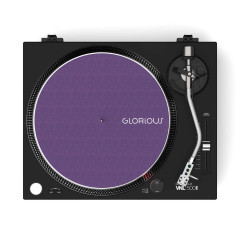
Features:
•Quartz-driven turntable with direct drive
•Perfect playback device for your home and for DJ or Studio use
•USB audio output making it easy to digitize your vinyl
•Precise motor control with 2 speed options (33 1/3 & 45 RPM)
•Powerful motor drive with 5.5 kg/cm torque
•Anti-resonant, die-cast aluminium platter with stable rotation
•Stroboscopic platter with speed indicator
•Statically balanced S-shaped tone arm with hydraulic lift and anti-skate control
•Universal connection for pick-up systems (SME)
•Built-in phono pre-amplifier (no grounding necessary)
•Switchable phono and line level output
•Shock-absorbing feet for vibration isolation
•Scratch-resistant finish in matt black
•Incl. removable hinged dust cover, platter, OM Black cartridge system (by Ortofon), headshell, slipmat, counterweight, detachable RCA output cable, power cord, operating instruction manual

10
Glasgow's First Lady of Jazz Carol Kidd, whose string of successful Linn recordings in the 1980's have made her a staple of international audiophile artists, returns with an all-new collection of delectable jazz and pop standards delivered in her inimitably smooth and heartfelt style.
Kidd has always been an artist celebrated for her cool, controlled phrasing and easy-going balladry, and her lovely new recording, BOTH SIDES NOW, is replete with her trademark inflection and warmth spread over classic songs by everyone from Rodgers & Hammerstein, Billy Joel, Joni Mitchell, and Richard Thompson. A songwriter of note, Kidd herself contributes two new tracks co-authored with Chris Anthony.
Impex's exclusive 180-gram 33 rpm LP, mastered by the superlative Kevin Gray at Cohearent Audio, features brilliantly detailed mid-tones, effortlessly stable bottom end, and crisp overtones. RTI's peerless pressing brings it all together for your listening pleasure.
Carol Kidd is an international award winning singer. She has been named 'Best Vocalist' at the British Jazz Awards on four occasions and was appointed MBE for Services to Jazz. In 2006, Carol was a winner of the prestigious Nordoff-Robbins Tartan Clef Music Award and in 2017 she received a Lifetime Achievement Award at the Scottish Jazz Awards. Renowned for her impeccable phrasing and delivery along with an unforgettable ability to breathe fresh life into any jazz standard, Carol has cut a distinctive path through the Great American Songbook throughout her career with orchestral and trio backing, as well as performing as a unique and intimate duo with guitarist Nigel Clark.
A long line of admirers has included Tony Bennett, Vic Damone and Frank Sinatra, who invited her to open for him at a stadium concert where he remarked that, "Carol Kidd is the best kept secret of British jazz." After a sensational performance at the Tribute to Johnny Mercer show at the Royal Concert Hall in Glasgow, Sir Michael Parkinson observed from the stage that "If there is a better jazz singer out there I have yet to hear them!" Luminaries who have performed alongside Carol as her guests include George Shearing, Georgie Fame, Annie Ross, Benny Carter, Joe Temperley, Bobby Watson and Martin Taylor.
Following a battle with cancer, Carol returned to the stage triumphant in the summer of 2013 to give a powerful, emotional performance at the Glasgow Jazz Festival. In the wake of this homecoming, it is impossible to deny that Kidd is one of the most remarkable artists and performers of our time.
