Lumberjacks In Hell is the Amsterdam based label run by Marcel Vogel that was established in 2010 and has long been a great source of leftfield club tunes. Having worked with a variety of international artists like Jamie 3:26, Philou Louzolo, Rayko, Karizma and Giovanni Damico, LJIH proudly presents its first release in two and half years from Lu/Lu & LYMA with ‘Hotmoltenlava’.
Production duo Lucas van Ee and Tjerk Lammers are collaborators extraordinaire, brothers speaking in code and working in unison, a hive mind of ideas and creativity that was always bound to erupt like a Vulcano. Lu/Lu & LYMA is a side project of the Amsterdam based LIKEMINDS, and together they share a studio together on the outskirts of the city. Both Artists are heavily involved in the local
Across the seven tracks of ‘Hotmoltenlava’, the music serves as a captivating odyssey of electrifying new house anthems that seamlessly combine the pulsating production rhythms of Lu/Lu with the sultry tones of LYMA. Prepare to be transported to euphoric heights as ‘Hotmoltenlava’ marks a triumphant return for Lumberjacks In Hell spearheaded by the visionary Marcel Vogel, propelling it into a stratosphere all of its own.
Поиск:tone loc
Все
- 1: Betty Baker
- 2: Blackberry Blossoms
- 3: Pompey Ran Away
- 4: Cluck Old Hen
- 5: Chimes
- 6: Lost Girl
- 7: Can't Jump Josie
- 8: Red Bird
- 1: Rockingham
- 2: Prettiest Little Girl In The County
- 3: Drunken Hiccups
- 4: Hog Went Through The Fence, Yoke And All
- 5: Polly Put The Kettle On
- 6: Shortening Bread
- 7: Billy In The Lowground
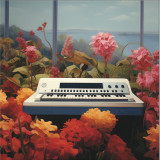
Past collaborators of Decosimo include indie/folk artists Jake Xerxes Fussell, Wye Oak, and Hiss Golden Messenger. Past collaborators of Schrey include experimental/sound artists Alvin Lucier, Gordon Mumma and Yasunao Tone. In April 2021, Joseph Decosimo, Luke Richardson, and Cleek Schrey three of the most compelling interpreters in the American traditional music scene gathered at a cabin in Tennessee to explore their collective repertoire of Old-time fiddle and banjo tunes, gleaned from visits with older players, field recordings, and vintage 78s. Working with fiddle, hardanger d’amore (a fiddle with sympathetic strings), banjos, and a 19th-century pump organ, the trio captured both the sonic details of their instruments and a generous musical interplay rooted in a dozen years of collaboration. Their debut album, Beehive Cathedral, presents resonant, thoughtful, and expansive explorations of Appalachian and American music. The results showcase deep Details study and enveloping, exhilarating performances. A rich vein of stories and relationships to people and places underpin Beehive Cathedral. Much of the album draws on Decosimo’s experiences learning the music of Tennessee’s Cumberland Plateau, where he grew up and worked as a folklorist. A key source of inspiration was fiddler Clyde Davenport (1921-2020), “Clyde was a social and musical trickster who knew hundreds of old tunes and had an uncanny ability to recall each piece in exquisite detail,” says Decosimo. “During my visits, he’d play breathtaking local pieces from his father Will, who was born in 1868. His father had learned some of them from a neighbor who was born in 1829.” "This record expresses some of what we hear in Southern traditional music: the ring of the strings, the buzz of the tunings, the hum of the organ,” explains Schrey. Spending time listening to old recordings and imagining how those sounds were made has made the trio keenly interested in the relationship between physical motion and sound in their source material. The result is a dense layering of sounds and interaction. Of this sonic interplay, Irish fiddle luminary Martin Hayes observes, “The sound of a beehive conveys the idea of a unified harmonious soundscape which is how this recording sounds. Beehive Cathedral is a sonic delight, a beautiful blend of Old-time soundscapes and more. This is a hypnotic recording that is grounded, subtle and refined
Efficient Space welcomes Th Blisks to the fold with their mutant strain of melodica dub, torched hip hop breaks, post-punk and procession song.
Th Blisks' members have many notches on their collective belt. Amelia Besseny and Altered States Tapes’ founder Cooper Bowman are prolific in their ritualistic ambient-pop duo Troth, while Yuta Matsumura holds a formidable Sydney punk band pedigree on top of his Low Company-backed solo work. A reward for those who took the time to dig it out, Th Blisks’ 2022 debut How So? was a DIY creation that fully embraced its outsider roots, revelling in opportunities for connection through pop flourishes. Feeling like it might have been a one-off, we proclaim their return with Elixa.
With an unseen clarity of vision, Elixa conjures its meticulously fleshed out world. Those familiar pieces are all there - the mystery, the patience, a cheeky pop hook - however this time there's an intentionality to it all. A blurred dialogue stretching across Australia, it was largely recorded remotely with tracks bouncing between Bowman and Besseny in Muloobinba (Newcastle) and Nipaluna (Hobart), and Matsumura stationed in Warumpi (Papunya). Every element is carefully considered, stemming from their individual time spent as lifers in the local DIY scenes. Through these tracks you can feel that history; echoes of Castings and Vincent Over The Sink in ‘Do You Bless It?’, Bowman's distinctive submerged tape loops gurgling away under boom bap and *that* Sydney guitar tone in ‘Esk’.
Elixa attempts to bottle some pinged-eye wonder at the magic surrounding, whether in the city or the bush. Informed by the old but drug into The New, it is a begrudgingly current Australien record that respectively nods at the UK’s sound history.
2025 Repress
Operation Sole like the summer, hopefully, imminent; “Operazione Sole” like the 1967 song by Peppino Di Capri, considered, perhaps wrongly, the first ska in Italy, but certainly the first to talk about Jamaica and upbeat rhythms.
The record you have in your hand is intended to be a testimony to how much the sounds born in Kingston between the '60s and '70s had a significant influence on local pop.
With the first explosion of reggae in England between 1968 and 1970, as well as with the rise of Bob Marley to a worldwide cult phenomenon, parallel to the all-English phenomenon of Two Tone and the ska revival, Italy, always attracted by the new trends not only English, he certainly couldn't stay on the sidelines.
Therefore these innovative and unknown upbeat sounds, derived from the blues of the 1950s and mixed with a Caribbean sauce, have also taken hold in the Bel Paese.
It began as early as 1959 with the song “Nessuno” by Mina, considered to all intents and purposes a Jamaican shuffle, to arrive in a few years at blue-beat (I4 di Lucca, Claudio Casavecchi) and ska (Margherita, Peppino Di Capri , Silvano Silvi, Renzo and Virginia) and be exposed to the first reggae (for example Jo Fedeli and his Italian version of “Israelites” by Desmond Dekker). Thus, we quickly reach the end of the decade of the economic boom and the culture, styles, references change: everything becomes more busy (on a cultural, artistic and political level).
After a stalemate phase that lasted more than five years, Bob Marley's reggae (considered a sort of new Messiah) conquers the planet, including Italy: the producers and artists, even at a high level, for a few years do not remain at all indifferent to this novelty and decide to introduce the "upbeat", primarily reggae, into the various pop repertoires: well-known names such as
Loredana Bertè, Mario Lavezzi, Rino Gaetano, Ivano Fossati, Ilona Staller, Adriano Celentano, Edoardo Bennato throw themselves headlong into new sonic adventures, in a pioneering way, but often with excellent results.
The "Operazione Sole" collection wants to take the credit, instead, of proposing and discovering lesser-known artists (with the exception of Gino Santercole, former associate and relative of Il Molleggiato), often real meteors in the Italian musical panorama, who have tried to achieve (or achieve again) success by adapting the pop that was so popular in those years to the new black sounds prevailing in the West.
We are in the early 80s and we range from the most classic reggae, to Italo-disco contaminated by dub up to the true Neapolitan style which, on more than one occasion, in its being endemically "black" and full of groove, has wrung out the watch out for agreements made in Kingston and London.
“Operation Sun”: a pleasant philological work, but surrounded by an equally pleasant aura of disengagement.
The long running vessel for Cameron Stallones' psychedelic excursions, Sun Araw, returns to Discrepant after last year's split with Tarzana via Keroxen sister label (KRXN033).
Without much precedent in his own - already wide-ranging - back-catalog, 'Cetacean Sensation' discards the dubby vibes, psych-rock sunburnt jams, tropical visions, or stalking sensibilities of such classic efforts as 'On Patrol' or 'Ancient Romans' towards a deeply focused and vivid solitary approach, while still retaining this Sun Araw blissed out escapist feeling.
Composed of hydrophone recordings of whales and dolphins sourced during a summer in Galicia, 'Cetacean Sensation' paints an impressionistic and sensory floating canvas that expertly escapes both academic-like documentarian purposes and any new-age spa vibrations one could associate with such subject matter. Processing those raw recordings into alluring collages that flow gracefully between moments of clear eco-location and submerged impressions of wildlife social dynamics. By the third track - Dance of the Minke - we're introduced to this ringing MIDI tone that evokes a CD-ROM era of mystic educational programs and click-and-deploy strategies that still feel very much like an unfulfilled future, conjured again by 'Spider Crab Elegy's sparse keyboard pads and sound effects that give way to this properly elegiac tentative melody. 'The Spider Crab Point' ends the album on a more uneasy vibe, with synth tones pointing towards no particular direction, confounding and strangely inviting at the same time. As sensations often do.
Music written and produced by Cameron Stallones using hydrophones and digital synthesisRecorded in 2019 in Galicia, ES
Mastering by Rashad Becker
Continually in a state of evolution with a future-focused vision, yet ensuring the signature sound that has defined the label and event series for over a decade remains at its core, Enzo Siragusa’s FUSE imprint is once again keeping things moving with new ventures, projects and concepts.
Having previously introduced the label’s collaborative X Series in addition to the launch of sister imprint LOCUS, summer brings a new project for 2024 as the label now presents its new vinyl-focused VA, welcoming four label debuts for the first instalment of the project. First up is Amstedam-based Nachtbraker, whose classy house sound has welcomed releases via Aus Music and Peach Discs, amongst many. His contribution, ‘Banda’, is deep and trippy, balancing light and dark moments via a warping bassline, sweeping pads and slinking drums.
Next, Phone Traxxx member and live wizard Rob Amboule makes his debut on the label following his appearance for the collective’s 15th birthday at fabric. Playful and vibrant, with wicked acid-dipped and funk-fuelled bass licks, ‘Capnhat’ perfectly showcases his sound as he delivers another gem.
On the flip, Melbourne-born, Berlin-based Reflex Blue lands fresh from his second EP on Gene On Earth’s The Sound Of Limousine imprint with the glitchy yet smooth ‘Life’s A Bleep’ - combining spacey tones, skippy drums and sporadic bleeps and lasers. To close, Un_Mute resident Mario Liberti harnesses influences from a classic to deliver a heady dancefloor anthem, fusing hooky vocal samples, murky low-ends and those iconic synth stabs.
Black vinyl back in for the first time in a while, note new price. Produced by Leon Michels. Toured with Chicano Batman. Planned touring with Lee Fields & The Expressions. What is Buck? Buck is a state of mind, a way of life, a demeanor that gets you through the good times and the bad. If you ask Brainstory, It is also the energy that permeates their debut album. Kevin, Tony, and Eric are a trio of brothers bounded by blood, fate, and a small town with nothing to do. Their story begins in the long lost lands of the San Bernardino Valley, in the twilight zone known as Rialto, California: An arid wasteland of boredom and empty lots. Through punk rock and skateboarding they found temporary liberation from the local monotony. However, it wouldn’t be long before a hunger for more led them to explore musical realms beyond that of the hardcore punk they admired. After stints at music school and steady disappointment trying to navigate their local jazz scene they moved to Los Angeles and Brainstory was born. Through a introduction from Chicano Batman’s bassist, Brainstory caught the ears of Big Crown head honchos Danny Akalepse and Leon Michels. Shortly thereafter they were on their way to Queens, to record at The Legendary Diamond Mine with Michels at the helm. An instant chemistry yielded 10 songs in 10 days and now Brainstory has gifted the world with one hell of an introduction to all things Buck. Highlights include the sublime slow burner, “Dead End” which was the A-side to their first 45 on Big Crown that sold out in a matter of days. With Kevin’s sublime falsetto floating atop Tony and Eric’s unflappable and unmistakable backbeat, this tune has become a favorite with the ballad heads, the low-riders, and the slowie collectors. “Breathe” showcases another side of their sound taking a page out of the Shuggie Otis playbook and flipping the script with some stoned out west coast swag. Kev and Tony’s father, Big Tone, an accomplished performer himself, steps in on “Peter Pan” to sing lead vocals over a chorus of friends and family. Bassist extraordinaire, Tony, takes over lead vocal duties on “Sorry”, a smoked out, G Funk groove that is just waiting to be sampled. These guys have come a long way from their self released EPs and opening tours with Chicano Batman. Their musical growth is undeniable, and taking their California sunshine vibes and mixing them with Michels’ NYC aesthetic has proven to be an amazing combination. It’s a debut record that pulls influences from so many genres seamlessly it’s hard to nail down. Call it Funk, call it Rock, call it Soul, but over here at Big Crown HQ, we’ve decided to call it BUCK.
Features
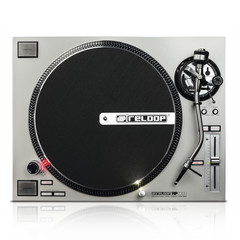
NEW features of the MK2 version
Built for the club: Rigid chassis construction with an even heavier design with additional reinforcements made of metal, rubber and molding compound for high vibration damping and isolation
More powerful starting torque (adjustable from 2.8 - 4.5 kg/cm)
Fine-tuned motor control for further optimization of wow and flutter and rotation
Newly developed, height-adjustable tone arm base (VTA) and Anti-Skating control
Particularly light weight and rigid, satin aluminium material used for tone arm pipe
Pitch scale for precise adjustments
Optional ground terminal offers additional protection in complex club & studio environments
Easily replaceable, freely rotatable LED needle light in new aluminium design
High-quality and hard-wearing silver metallic finish
Quartz driven DJ turntable with upper-torque direct drive
Adjustable stop speed (0.2 - 6 sec.)
Precise control of motor with 3 speeds (33 1/3, 45 & 78 RPM)
Precision manufactured, die cast aluminium turntable
Rubber inlays for reduction of vibrations and background noise
Statically-balanced universal S-shaped tonearm with hydraulic lift and anti-skating mechanism
Universal connection for pickup systems (SME)
Pitch range +/-8 %, +/-16 %, +/-50 % (Ultra Pitch)
Quartz lock
Additional start/stop button for vertical positioning
Reverse function: switch for forwards and reverse operation
Recessed connection cavity for easy installation in cases & seamless adjustment
Phono and line out (no grounding required)
Removable mains and RCA cable
Safety mains switch
Shock-absorbing feet against vibrations
Technical Data
Turntable:
Type: direct-drive turntable
Drive: quartz driven upper-torque direct drive
Motor: 16-pole, 3-phase, brushless motor
Turntable speeds: 3 speeds, manual (33 1/3, 45, 78 RPM)
Starting torque: 2.8 - 4.5 kg/cm (adjustable)
Adjustable stop time (0.2 - 6 sec.)
Start-up time / change to RPM: 55dB (DIN-B)
Brake system: electronic brake
Platter:
Material: die cast aluminium
Diameter: 332 mm
Weight: approx. 1.5 kg
Tone arm:
Type: universal, statically balanced, S-shaped
Effective length: 230 mm
Overhang: 15 mm
Tracking error range: < 3°
VTA setting range: 0-6 mm
Useable weight of pickups: 3.5~8.5 g (incl. headshell 13~18 g)
Anti-skating range: 0 - 3 g
Effective tone arm mass: 30 g
Connections: 1x Phono/Line Out (gold-plated), 1x GND earth connection
General:
Power supply: AC 115/230 V, 60/50 Hz (EU/US), AC 100 V, 50/60 Hz (JP)
Power consumption: 13 W
Dimensions: 458 x 354 x 144,6 mm
Weight: approx. 11.7 kg
Accessories included: turntable, slipmat, LED needle light, counterweight, PHONO Cinch cable with earth, AC mains adapter, operating instructions
ColorJaxx' latest offering, the 'Tales Of Never' EP, seamlessly melts into Flipsight's signature style. Born out of the atmosphere of local parties organized by the label, it narrates the essence of your ideal weekend.
Kickstarting your unwind session with the melancholic 'Tales Of Never', a track that sets the tone for relaxation after a hectic week. However, don't linger too long: 'Night After Night' counters this mood with a joyful bliss of a sunny Saturday! The A-side of the vinyl paves the way for the club-ready B-side. 'Here For You', a classic house tune, brings the four-by-four energy to the dancefloor, while 'There is Something' wraps up the EP with an after-hours ambiance, leaving a sense of euphoria for those still awake. It's a must-have addition to any electronic music enthusiast's collection.
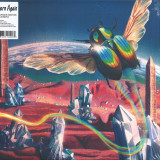
Celebrated producer and musician Danger Mouse and prodigiously talented New York rapper Jemini are gearing up to release their long delayed collaborative album, Born Again Remarkably this soul and funk infused hip-hop tour de force arrives two decades after its creation and the duo's debut LP, Ghetto Pop Life which celebrates its 20th anniversary this year. Enthused by the response to Ghetto Pop Life, soon after Danger Mouse and Jemini began to tour and to write and record Born Again. Finally, having been recorded two decades ago and indefinitely shelved until now, Born Again will finally be released to coincide with the twentieth anniversary of Ghetto Pop Life. The previously unheard record retains many of the elements of Danger Mouse and Jemini's debut; the fun- loving, shit- talking innocence, but also adopts a noticeably more introspective and confessional tone. This time, in addition to lighthearted topics such as being an incredible artist (Knuckle Sandwich II, Brooklyn Basquiat), living large and being a magnet for attention (Me), Jemini also delivers highly- personal and occasionally devastating lyrics about missed opportunities and redemption (All I, Born Again), his time in prison (Locked Up) and complicated relationship with his father (Dear Poppa). His effortless free flowing cadence and indelible sing-song delivery elevate each track with a melodic infectiousness whilst Danger Mouse exhibits an affinity for resonant instrumentals built from sampled organ, vibraphone, or guitar loops and infused with his trademark minor key magic. The result is a classic, timeless hiphop record.
The RP-4000 MK2 is a solid DJ turntable for advanced users. The new MK2 version comes with several improvements, including a newly developed top panel and reworked metallic buttons with enhanced feel as well as a variety of functions. Precise motor control with 3 speeds: The precision-engineered die-cast platter is accelerated by a powerful motor with a high-torque direct drive of more than 1.8 kg/cm. The precise motor control with 3 speeds (33 1/3, 45 & 78 rpm) allows for the RP-4000 MK2 to play back any record. The pitch section with a selectable range of +/-8% and +/-16%, respectively, is suitable for the finest pitch adjustments. Statically balanced s-shaped tone arm: The RP-4000 MK2 features a statically balanced s-shaped tone arm with hydraulic lift and anti-skating mechanism. Via the universal connection for pick-up systems (SME) a large number of pick-up systems can be connected. Reverse function, pitch reset and extendible needle illumination: Additional features, such as reverse play and pitch reset, offer all DJs direct control of their turntable. With the push of a button the aluminium target light can be extended, so that the needle position can be seen in dark surroundings. Newly developed top panel and sturdy housing design: The new deep black metallic top panel construction is equipped with metallic buttons for start/stop, platter speed, pitch control, reverse function and tempo reset. The improved touch upon hit offers a clear haptic feedback. The sturdy construction with optimized damping features and shock-absorbing feet improve isolation from unwanted vibrations. With pick-up and headshell (made by Ortofon in Denmark): The RP-4000 MK2 comes with the high-quality OM Black pick-up, handmade by Ortofon in Denmark, pre-fitted to a headshell ready for immediate playback.
Technical data Turntable:
Type: direct drive turntable
Drive: quartz-driven high-torque direct drive
Motor: 8-pol., 3-phase, brushless DC motor
Turntable speeds: 3 speeds, manual (33 1/3, 45, 78 rpm)
Starting torque: > 1.8 kg/cm
Brake time: 50 dB (DIN-B)
Brake system: electronic brake
Platter:
Material: aluminium die-cast
Diameter: 332 mm
Tone arm:
Type: universal, statically balanced, s-shaped
Effective length: 230.5 mm
Overhang: 16 mm
Tracking angle error: < 3°
Applicable pick-up weight: 3.5 - 8.5 g (incl. headshell 13 - 18 g)
Anti-skating range: 0 - 7 g
Connections:
1x PHONO out (gold-plated), 1x GND
General:
Power supply: AC 115/230 V, 60/50 Hz (EU/US), AC 100 V, 50/60 Hz (JP)
Power consumption: 12 W
Dimensions: 450 (w) x 352 (d) x 144 (h) mm
Weight: appr. 9.8 kg
Included accessories:
Platter, OM Black pick-up system (by Ortofon), headshell, slipmat, counterweight, AC psu, instruction manual
Features
NEW in the MK2 version:
Newly developed top panel and reinforced housing construction
Reworked metallic buttons with improved feel & tactile response
Precision Pitch with selectable ranges of +/-8 % & +/-16 %
Tempo reset (Quartz Lock) feature
Superior finish in deep black metallic
Quartz-driven DJ turntable with high-torque direct drive
Designed for professional use
Powerful brushless DC motor with more than 1.8 kg/cm torque
Precise motor control with 3 speeds selectable (33 1/3, 45 & 78 rpm)
Reverse function: switch for forward/reverse playback
Precision-engineered die-cast aluminium platter with stable rotation
Statically balanced s-shaped tone arm with hydraulic lift and anti-skating mechanism
Universal connection for pick-up systems (SME)
Extendible needle illumination
Shock-absorbing feet for vibration isolation
Sturdy, heavy construction with optimized damping features
Prepared for dust cover (available as optional accessory)
Incl. slipmat, removable headshell and ready-mounted OM Black pick-up made by Ortofon
Bill MacKay and Drag City are delirious with pride to announce the discovery of a new territory: Locust Land, a record which seeks to reflect the nerve-shredding consciousness run amok in our world today - and somehow allay it with sound. Bill"s music is a visceral crackling where it meets the air, and Locust Land can"t help but reflect its era more than any other in his discography. It"s been five years since the release of Fountain Fire - but in the interim, Bill has barely stopped moving, collaborating with artists across the spectrum, including cellist Katinka Kleijn, banjo player Nathan Bowles and keyboardist Cooper Crain. He"s also contributed to recordings by Steve Gunn, Ryley Walker, Bill Callahan & Bonnie Prince Billy (Blind Date Party), and Black Duck (on their self-titled record featuring Douglas McCombs and Charles Rumback). Forget five years - how"d he even get Locust Land squeezed out of his temporal lobes? Bill"s sense of music as art is constantly modulating - lifting off from where it is found and naturally migrating to some other place. Sometimes, that"s elsewhere - others, it"s simply to be found deeper inside the starting point. And so, the action of moving on informs the landscape of Locust Land. This manifests in several different ways. A restless energy and urgency is repeatedly felt - in the driving momentum of "Keeping in Time," "Glow Drift," and "When I Was Here" - while a dogged persistence radiates from the tone colors and percussion of "Oh, Pearl." Mating a dirge-like desolation with sparkling guitars, "Radiator" adds darkness and depth. The sense of searching, displacement and longing in vocal tracks "Keeping in Time," "Half of You," and "When I Was Here" speak literally to the tumult of current vibrations. Within the arrangements, there"s also departure from previous norms - in addition to the brilliant guitar work for which he is known, Bill plays a variety of keyboards, from piano to organ to synth, extending his music with the available voicings, while enriching the sound field without abandoning his signature brevity. For fans of his singing, and following in the recent tradition of Fountain Fire as well as his collaboration with Nathan Bowles, Keys, Locust Land expresses with an increased vocal presence - and heightened engagement, with Bill"s words and melodies drawing us closer. Also different: on his previous solo recordings, Bill played every sound. Here, he has invited other illustrious Chicagoans to join him: Sam Wagster (The Father Costume, Mute Duo) plays bass on three songs, two of which feature the percussion playing of Mikel Patrick Avery (Natural Information Society, Jeff Parker, etc.). Additionally, Janet Beveridge Bean (Eleventh Dream Day, Freakwater) adds otherworldly vocal textures to the elegiac "Neil"s Field." Whether played alone or with companions, this music projects the strength of a universal collective. Even with a piece that might earlier have passed for blissful pastorale, Bill displays some declamatory motives. The reverie which opens the album, "Phantasmic Fairy," embodies both transcendent and desperate moods, with Bill"s ineffable slide guitar playing afloat, with organs and synths, in a dream state suffused with a sense of foreboding - a requiem, perhaps for the days of unencumbered bandwidth? On the other side of the album, the strength to continue to hope appears in the lifting melodicism/exoticism of the album-closing title track, leaving the listener with the sense of having achieved a hard-won space - a place of personal contemplation and dissent, one that everyone on the planet deserves to visit every single day on earth. With cover art also by Bill MacKay (the third of his albums on Drag City to feature his work), Locust Land stands as a thoroughly personal statement from Bill to everyone everywhere.
- A1: Samba 00 04:58
- A2: Panorama 00 04:39
- A3: Golfo Mistico 00 04:34
- A4: Open Sky With Tears Of Blue 00 04:56
- A5: Contemporary Lullaby 00 03:05
- A6: Requiem 00 02:55
- B1: Whispers 00 04:19
- B2: Modular Clouds In Rome 00 03:21
- B3: Piano Bells 00 03:30
- B4: Space Call From Mars 00 03:01
- B5: Tuning The Orchestra With Tears Of Blue 00 03:22
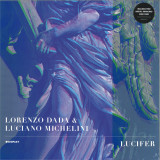
With Lucifer, Kompakt presents an album of rare beauty from two masters of modern music. A family affair, it’s a collaboration between the Italian father-and-son duo of Luciano Michelini and Lorenzo Dada, whose combined histories bring to Lucifer a depth of experience alongside clarity of vision and a finely tuned, neatly developed combined compositional voice. A lovely, beguiling suite of music that combines the electronic and the acoustic, the urban and the pastoral, its gorgeous night-eye vision and tender melancholy sits neatly within the Kompakt universe, while offering the curious listener some rich new perspectives.
There is already plenty to know both artists by. Lorenzo Dada creates across multiple fields – a techno producer and DJ who has already worked with the likes of Jay Haze, Fete, Leo Benassi, and Der, he’s released a small clutch of stylish, smartly designed EPs, and a solo album, Second Life (2018). His complementary background in classical music and composition informs his ensemble project, Tears Of Blue (who appear on Lucifer), where Dada paints with neo-classical tones for a quartet of violin, viola, cello and grand piano, supplemented by electronics for live performance.
Luciano Michelini’s history is yet richer. He may be best known, to many, for his piece “Frolic”, the theme to Larry David’s Curb Your Enthusiasm series; it was also sampled by Snoop Dogg for 2022’s “Crip Ya Enthusiasm”. But there’s much more to Michelini’s story. A successful soundtrack composer, Michelini both studied and taught at the Conservatoro di Santa Cecilia, and worked for RCA from the sixties to the eighties; his soundtracks from this period are gorgeous examples of the form, particularly his work for Il Decamerone Nero (1972), L’Isola Degli Uomini Pesce (1979), and the devastatingly gorgeous Dimensione Donna (1977).
In the eighties, Michelini and his wife Anna Gutling founded the Electronic Music Division studio and academy in Rome, which is where the majority of Lucifer was recorded. Dada reflects on the experience: “We never worked together before, so it was all new for both of us,” with Michelini adding, “I truly love this experience with my son. He’s a talented pianist and composer. I am not very familiar with electronic music nowadays, but we did it fluently.” There’s certainly a familial energy at play through Lucifer, and you can hear how Dada and Michelini, through exploration and experiment, find a shared language, balancing Dada’s tendency toward minimalism, and Michelini’s composerly voice.
Lucifer flows as a suite that interweaves electronic music with acoustic instruments: the lonely sigh of saxophone; Michelini’s lush, verdant piano; the weeping strings of Tears Of Blue (recorded at the studio of Michelini’s friend, the late Maestro, Ennio Morricone). These multiple voices are located within the electronic sighs and swarms from Dada’s kit; there are moments of propulsion, and passages of lambent drift, where the album revels in its tonal sweetness. If it flows so effortlessly, that’s because Lucifer was designed that way, as a suite or a sonata of sorts.
And the title? Dada reflects, “Lucifer was an angel who decided not to be one anymore. The miracle of life is that we can decide what we want to be, even if we are born as angels or vice versa.” This feels somehow apposite: there’s certainly something of the transformative, and the transportive, in Lucifer, a unique family collaboration of rare poetry and sensitivity, where two generations meet in the modern crucible that is the electronic music studio.
Pieces of debris washed up on a coastline shrouded in mist. Gratification comes from an eternal search for solace. Locked away at the top of a lighthouse somewhere on an unnamed isle, Grady Steele broadcasts to those within the beacon’s reach. A soundsystem built of driftwood and salvaged car stereos is pieced together with precision and laboriously dragged to the top of the obelisk. A timeless fugue state spent playing arpeggios on a Spanish guitar, the PA system ebbing out phasing loops across benevolent waters. Layering, occasionally faulting, stopping, recording, starting again. The phosphorescent glow atop the obelisk is ever-present.
Perhaps the first release on Archaic Vaults to feature (at least prominent) use of the guitar, these six compositions feel sketch-like and yet burned into the retina, like that of a passing car’s headlights leaving an impressionistic imprint of the source material. To mention this is Grady Steele’s debut release is not to imply he is new to working with sound, having been the proprietor of one of London’s most important soundsystems for the last decade. An obsession with fidelity can be heard and and at times deliberately perverted amongst the body of work. The warm and melancholic tones of the Spanish guitar evident in almost all songs are juxtaposed with various collaged material, including what sounds like hastily captured iPhone recordings and drum machines neglected at the back of the studio, dragged out for one or two stubborn, lurching takes and then once more committed to storage. The 90s voice-imitator pads glowing with undulance are reminiscent of John T. Gast’s early studio takes, and the synergy and precision in guitar layering could lend a clue as to what Fuck Buttons would have sounded like had they sold off their studio equipment for a couple of wooden 12-stringers. Stare long enough at those Windows 95 screensaver-esque rolling hills, and one might witness some miniscule movement in the growth.
Music composed and arranged by Grady Steele Painting by Antoine Larrera Mastered by Owen Pratt Design by Severin Black
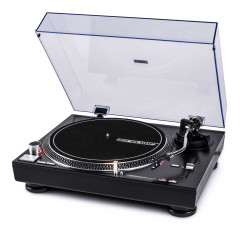
The AT-LP140XP fully manual professional DJ turntable features a high-torque direct-drive motor and anti-resonant, mass-damped, die-cast aluminum platter to ensure stable, on-axis rotation at 33-1/3, 45, and 78 RPM. It is equipped with an S-shaped tonearm with height adjustment, adjustable tracking force (counterweight) and adjustable dynamic anti-skate control.
Features:
Experience high-fidelity audio and professional DJ performance
Direct-drive, high-torque servo motor with speed stabilization
Fully manual operation
Adjustable dynamic anti-skate control
Selectable 33/45/78 RPM speeds
Professional anti-resonance, mass-damped, die-cast aluminum platter with felt mat
AT-HS6 universal ½"-mount headshell and AT-XP3 DJ cartridge with 0.6 mil conical bonded stylus
Balanced S-shaped tonearm with hydraulically damped lift control, height adjustment, and lockable rest
Dedicated phono-level output (5.5 mV)
Stroboscopic platter with speed indicator
Forward/reverse operation and variable pitch control with quartz speed lock
Popup stylus target light for easier cueing in low light
Damped base construction for reduced low-frequency feedback coloration
Includes: detachable RCA output cable (dual RCA male to dual RCA male), power cable, 45 RPM adapter, counterweight, felt mat, and removable hinged dust cover
Turntable
Type 3-speed, fully manual operation
Motor High-torque DC motor
Drive Method Direct drive
Speeds 33-1/3 RPM, 45 RPM, 78 RPM
Turntable Platter Die-cast aluminium
Starting Torque 2.2 kgf-cm
Wow and Flutter 50 dB
Output Level 5.5 mV nominal at 1 kHz, 5 cm/sec
Power Supply Requirements 115/230V AC, 60/50 Hz
Weight 10.0 kg
Pitch Variation +/-8% or +/-16% or +/-24%
Heavyweight vinyl LP version comes with full colour inner sleeve and free download card
Designed by Julian House
"The Carrier is a succinct distillation of folk-rock magnificence." SHINDIG
"The Carrier an impressive package all round, and one that could easily end up on a few Album of the Year lists." - WE ARE CULT
Large Plants started as a solo project for Jack Sharp, the singer and guitarist for Wolf People. It was spurred on by a writing frenzy during the lockdown of 2020 when Sharp played and recorded all the parts for what would become the debut single, La Isla Bonita and the first album The Carrier. In summer of 2021 the tracks were mixed by songwriter Chris Cohen (formerly of Deerhoof & Ariel Pink’s Haunted Graffiti).
Large Plants’ songs are immediate, heavy psychedelic rock belters filtered through a haze of analogue tape flutter. Sharp’s voice has an eerily distant and delicate tone that lends a strong folk sensibility to the album; like the scent of winter mornings and fresh soil mixed with the whiff of petrol. Though the songs are generally three-minute gems, they are lyrically more like ancient ballads; peopled with tragic youths, witches, lovelorn troubadours and femmes fatales.
Sharp is now touring Large Plants as a four piece along with Ed Taylor on drums, Ollie Taylor on bass and Joe Wooley on guitar with dates booked so far at OSLO, Hackney -17th April and The Betsy Trotwood, Clerkenwell 5th May
Repress.
La Rama is back with a repress of the incredible Bunzinelli release! After only receiving half of our pressing the first time around, we finally tracked down our master plates and pressed up another batch.
Slightly flipped artwork and a full label sleeve for the occasion :-)
La Rama Records is proud to present four fresh feelers from our friend Bunzinelli. These tracks have weathered the storm of no-fun to provide joy and elation for the living to come... psychedelic feelings to help it all fall back in to place.
Bunzinelli has been personally involved in serving sonic treats to the world via his label and mix series Chambre Noire. He was also part of the team behind Cosmic Tones which in 2019 released 'Montreal Pleiades' featuring his first musical outing alongside local major players Priori, Dust-e-1, URA, Temple's M. Salaciak & R. Weng (the wizard behind our first release as Dj Medallion).
Jimpster dons his Franc Spangler cap and joins forces with up and coming London-based producer and DJ Hudson’s Choice for a four track EP entitled Myatts Field. Touching on trippy slo-mo electronic grooves, tropical moods and percussive house jams it brings a more experimental and left field sound to Delusions Of Grandeur which we’re sure you’re going to love!
Opening track AcidMan sets the tone of the EP with a bubbling 303 line taking centre stage while pitched down vocals add a hint of menace, heightening the psychedelic mood. Dubby FX and analogue synth lines drift in and out of focus and give a live jam feel to the arrangement reminding us of something that might grace the decks of A Love From Outer Space. Heavily Percussed continues offering up a crazy percussion tool loaded with wonky cross rhythms, glitchy found sounds and a hypnotic synth sequence for good measure.
Flip over for Myatts Field, another slower tempo mutant discoid house groove which takes us on a deep trip into the jungle. Echoing sax and hazy vocals transport us to another world where Weather Report experimented with rolling four on the floor grooves and spacious dub.
Closing out the EP Roots picks up the pace with another percussion-heavy slice of tropical sounds which doffs a cap to masters such as Gregory and Osunlade. Steel pan melodic lines intersperse with chiming synth sequences making for an unusual yet hooky club track which will lock the dancers into its incessant groove.
Keep It Simple!
That's what Tony Allen told me, whether on stage, in the recording studio or when we were working together on the album "The Source"(Blue Note 2017) in my studio. Obviously, if he repeated it at will, it's because it's so difficult, to express the essential, not to scatter, over-play, over-arrange. So natural for him, so constraining for others! For years he pushed us, the members of his group to develop our projects. I had something in mind, necessarily with him, unfortunately his unexpected demise decided otherwise.
It took a moment to accept his departure, to accept being a voice, to find a new path. The desire to continue the work started together, that of mixing styles, sounds to appropriate them and create new, authentic. The desire also to meet new people, another energy.
After composing music for this project, I asked my friend Ben Rubin, musician and producer to help me record it. I found in NYC what I was looking for, a sense of urgency, that of doing, generous and committed musicians. I knew Jason Lindner, a musician that I have been following for a long time and he was the first person I thought of for pianos and synthesizers. He has this ability to find new and powerful sounds, with a direct and unadorned playing. For the drums, I didn't especially thought about a musician whose playing could come close or far to Tony's. Ben suggested Josh Dion to me, I've been following him since his "Paris Monster" project, I love his ability to make his drums sound like a new instrument by playing the bass synth with his right hand, that forces him to keep it simple! He also plays 2 tracks in drum/synth mode on the album.
I'm also happy that he agreed to sing a song on this album.
So we recorded at the Figure8 recording studio in Brooklyn, Eli Crews providing the sound recording, we decided with Ben to create a powerful and assumed sound from the take. Many biases on the tones, whether on the drums and the keyboards. Back in my studio in Paris, I continued to search, to dig while recording additional saxophones, percussions and keyboards.
I met Tchad Blake during a week-long mixing seminar. His work on the album on is radical.
Keep it simple?
Difficult but I try to remain so on all the phases of evolution of this project, from writing to production, in the improvisation parts. Where I feel it the most is in the immediate joy of playing with Jason and Josh, of tweaking a few sounds in my studio to create the unexpected, surprise in the structures, authenticity. Simple as the desire to go towards something essential, to seek oneself, to find oneself, to doubt but also to invent oneself.