Legendary Utrecht DJ and producer P.A. Presents (Peter Aarsman) returns with his first new release since 2000 with this vintage techno stunner, Swirling Gas. This EP also marks the first new music on U-TRAX in more than 21 years, kicking the label s comeback into a higher gear.
Peter ironically is the only artist on U-TRAX that actually is born and bred in the city of Utrecht. Even more irony lies in the fact that he hasn t lived in the city (or stadsie in Utregs, the local dialect) for the past 25 years.
Peter knew he wanted to be a DJ since he was ten years old, in a time when this was still a very unusual career to dream about. Long before house music had landed in Europe, Peter was fiddling around with disco and italo 12 -es and all those years of training is what made him the superior DJ that he still is today. In terms of skills, flair, energy and feel for the dance floor, there are probably not a lot of DJs that can rival with Peter.
While the era of house of techno of the late 80s and the 90s brought him countless DJ gigs, his reputation didn t cross the city borders much, until he bought his first gear and started producing techno music himself. Again, his DJ background proved helpful with producing his tracks, as most of his tracks are dancefloor orientated and usually have an impeccable timing.
Peter debuted with the mini-album Salicylic Acid on U-TRAX in 1993, followed by the Flight Stimulator EP a year later. Both are classics today, but neither brought him as much fame as his 12 Entangled did on Deviate, a record label that was started by a couple of our friends from Utrecht a year prior to U-TRAX. Entangled made it to many charts and compilation albums, including Carl Craig s mix CD as part of !K7 s DJ-Kicks series.
Besides two releases on U-TRAX and three 12 -es on Deviate, Peter recorded a full length album for the latter label. Unfortunately, before the album ever saw the light of day, Deviate closed their doors and the tracks remained on the shelves for the next 17 or so years. These tracks still sound surprisingly fresh and original today and we are super excited to be able to release some of them on this Swirling Gas EP!
The title track Swirling Gas obviously gets its name from the documentary sample that the track kicks off with. The almost heartbeat-like electro rhythms, layered choruses and dreamy synths will give you goose bumps all the way to the soles of your feet.
Raw is quite another thing, but way more complicated and sophisticated than the title suggests. An in-your-face electro bass drum pattern supports layer after layer of additional rhythms, some even touching on salsa, and then big fat layers of pulsating synths take you away into deep space. A unique track that will instantly reward the DJ that has the guts to play it for her/his audience.
Drum Magic on the flipside is exactly that: a magic techno trip built around complicated syncopated drum rhythms, which should serve the adventurous DJ well as a foundation for mixing all sorts of weird stuff on top of. We can t wait to see videos appear with creative mixing ideas.
Final track Freaky is opening with some heavy pounding, yet jumpy beats before it opens up into a bit of a space trip around the 3 minute mark. Though the track has a touch of the Basic Channel sound, its echoing synth tones are very distinct and will light up any venue, no matter how big.
All tracks have been revamped and edited into more current lengths by DJ Zero One, blessed by DJ White Delight and mastered by Thee J Johanz. Label art by Bonk Artwork.
Поиск:tones
Все
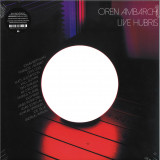
Black Truffle is pleased to announce Live Hubris, documenting the hypnotic and electrifying live performance of Oren Ambarchi’s 2016 LP Hubris by a fifteen-strong band at London’s Café Oto. Over three days in May 2019, Oto toasted Oren Ambarchi at 50/Black Truffle at 10 with Ambarchi and a large group of close friends and collaborators in a series of performances that interspersed existing projects with new collective endeavours, culminating with this: fourteen members of the extended Black Truffle family together on stage, joined by one special virtual guest, to translate the intricately studio-constructed layers of Hubris into a muscular live band workout.
Operating with only the bare minimum of pre-gig preparation after the planned afternoon rehearsal had to be wrapped up prematurely due to noise complaints, the gargantuan group lurches into motion with a 21-minute rendition of ‘Hubris Part 1’, powered by the pulsating electronics of Konrad Sprenger (the ‘ringmaster’ at the ensemble’s core) and no less than seven electric guitars spinning a web of intricately interlocking palm-muted polyrhythms. The layers of closely related but metrically distinct lines create ripples of shifting accents, flickering changes in emphasis that ricochet along the endless central pulse. Gradually building in density, this motorik continuum becomes the backdrop for the haunting tones of Eiko Ishibashi’s processed flute and an extended feature from long-distance guest Jim O’Rourke on guitar synth.
After the brief interlude of the second part, where Albert Marcoeur-esque guitar arpeggios accompany a halting attempt at phone conversation, the full ensemble gears up for the epic side-long rendition of ‘Hubris Part 3’. Now joined by the astonishing triple drum line-up of Joe Talia, Will Guthrie and Andreas Werliin, the layered pulse of the opening piece becomes a burning funk-fusion groove. Beginning on a medium simmer, the ensemble initially stick to its pulsating one-note mantra, over which Ambarchi unfurls a beautiful example of his signature shimmering Leslie-toned guitar harmonics, eventually joined by Ishibashi’s flute and some brooding, distorted dissonance from Julia Reidy’s guitar. Building steadily for the first nine minutes, the heat then rises dramatically with a first, gloriously loose chord change: with the all drummers now rolling and tumbling like a twice-cloned Jack DeJohnette circa 1970, Mats Gustafsson enters on baritone, his tortured roars and shrieks driving the band to peaks of insane intensity. Finally, the exhausted ensemble drops out, leaving only the jagged, skittering fuzz of Ambarchi’s guitar, brought to an abrupt conclusion at the command of crys cole. Arriving on hot pink vinyl with artwork by Lasse Marhaug and an extensive selection of live photos by Ivan Weiss and Fabio Lugaro, Live Hubris brings this ambitious and outrageous evening of music to the safety of the home stereo.
- A1: Kumi Nakamura - Kimagure
- A2: Miyuki Maki - Indo No Michibata
- A3: Haruyoshi Yamashina - Osake To Joke
- A4: Sumiko Yamagata - Natsu No Hikari Ni
- A5: Hatsumi Shibata - Party Is Over
- B1: Makoto Iwabuchi - Moonlight Flight
- B2: Hiroshi Sato - Saigo No Tejina
- B3: Arakawa Band - Paradise's Dream
- B4: New Generation Company - I Wander All Alone (Part Iii)
- C1: Kiyohiko Ozaki - Ojosan Oteyawarakani
- C2: Kengo Kurozumi - Juggler
- C3: Ken Nishizaki - Koi No Paradigm
- C4: Jadoes - Simply Another Love
- D1: Midori Hara - Aamar Jabar
- D2: Hitomi 'Penny' Tohyama - Tuxedo Connection
- D3: Mizuki Koyama - Oh! Daddy
- D4: Haruo Chikada & Vibra-Tones - Sofa Bed Blues
- D5: Mitsuko Horie - Chigasaki Memory
A stylish selection of city pop, funk and modern soul from Japanese label Nippon Columbia, selected by DJ Notoya and featuring cult classics and rarities by Hiroshi Sato, Hatsumi Shibata, Hitomi 'Penny' Tohyama & many more.
Annotated by Notoya with journalist Nick Luscombe and artwork by Optigram.
Newly remastered audio.
The selection on ‘Tokyo Glow’ starts with 'Kimugare' a relaxed mid-tempo track by Kumi Nakamura, actually a famous actress who only recorded one album in 1980 for Columbia.
The set continues and flows effortlessly with the sunshine grooves of Miyuki Maki, Hatsumi Shibata and cult keyboard player Hiroshi Sato before the pace starts going faster and funkier with New Generation Company, Kengo Kurozumi - with his superb boogie, 'Juggler'
- and one of the queens of the genre, Hitomi 'Penny' Tohyama with 'Tuxedo Connection'.
Another fine example on the set is the mid-tempo groove of "I Wander All Alone Part III" by New Generation Company, an aggregate group of some of the best Japanese session musicians led by arranger Katz Hoshi and including Hiroyuki Namba (key), Kazuo Shiina (gtr) and Yutaka Uehara (ds) who all played with Tatsuro Yamashita among many others.
There are many other excellent examples in 'Tokyo Glow', showcasing the diversity and specificity of Japanese City Pop during the late 70s and 80s.
Nippon Columbia opened their much-guarded vaults to curator DJ Natoya. Tracks were remastered in Tokyo and the result, ‘Tokyo Glow’, is a unique insight into a most creative period in Japanese music.
Baltimore, Maryland’s Angel Du$t have announced details of their new album ‘YAK: A Collection of Truck Songs’, which will be released on CD on 10th December on Roadrunner Records and the band have also shared the new song ‘Big Bite’, which is joined by a music video directed by Ian Shelton.
Vocalist / guitarist Justice Tripp commented, “People get really married to the idea of making a record that sounds like the same band. If one song to the next doesn’t sound like it’s coming from the same band, I’m ok with that.”
Put simply, Angel Du$t are the guys who do whatever you don't expect.
Produced by Rob Schnapf (Kurt Vile, Elliott Smith), ‘YAK: A Collection of Truck Songs’ follows Angel Du$t’s 2019’s album ‘Pretty Buff’, and sees the group channelling an anything-goes philosophy into their tightest, most forward-thinking material yet. Recorded over a two-month period in Los Angeles last year, the album is a rotating smorgasbord of percussion, guitar tones, effects, genres, and influences, fashioned in the spirit of a playlist as opposed to a capital-R ‘Record.’ The album’s 12 tracks span jangle-rock gems (‘Big Bite’), piano-spiked power pop (‘No Fun’), and a breezy duet with Rancid’s Tim Armstrong (‘Dancing On The Radio’).
‘YAK: A Collection of Truck Songs’ also features ‘Love Is The Greatest’, ‘All The Way Dumb’, ‘Turn Off The Guitar’ and ‘Never Ending Game’, all of which appeared on Angel Du$t’s 2021 EP ‘Bigger House’,
Breezy but determined as they imbue their laid-back acoustics with sharpness, Angel Du$t continue to prove they are band averse to boundaries. The band’s Roadrunner Records debut ‘Pretty Buff’ was produced by Will Yip and earned the band critical acclaim. Widespread international attention included UK praise from Kerrang! (“13 super-accessible, honest and artfully crafted songs… there’s lots to love about them”), NME (“the fun-first hardcore group bringing ‘90s pop-rock to the pit”) and The Line of Best Fit (“a cacophony of good times and soul”).
‘Expressions of Interest’ is the debut album from Melbourne/Naarm post-punk group screensaver.
Sonically, the 10 track album is rich and detailed, and pays homage to its era of inspiration (late 70s-mid 80s post-punk and new wave) with gripping vocals, dissonant guitar, melodic basslines, washes of synths and motorik drumming. Engineered by Julian Cue alongside band member Chris Stephenson and recorded over multiple studio sessions between 2020-2021
The album opens with the ominously titled ‘Body Parts’, an immediately arresting song that showcases the bands penchant for blending classic post-punk elements, leaning into a sound somewhere between the Banshees and Protomartyr.
Maynard doubles down on these themes in the frenetic second track, ‘No Movement’. Guttural organ tones swim under overdriven guitar, jagged and intense. Additional textures and sound effects are used percussively to embellish the dynamics, creating a feverish atmosphere with some Martin Hannett like flourishes.
The album takes a surprising turn into electronic driven krautrock on track three with 'Buy, Sell, Trade' - a rollicking piece of danceable ephemera, dominated by swirling synth sounds and punctuated with electronics reminiscent of Sparks/Moroder collaborations. Chris Stephenson's masterful guitar work begins with Greg Sage-esque determination before a crescendo into a lush Frippertronics outro.
'MEDS' transports us back to the foundation established on 'Body Parts', a gothy piece, full of tribal toms and dirge-y synths. Industrial punk rock nearly swallowed whole by the keys in the middle and slowly building back to complimentary guitar and vocal hooks.
It's from this point in the album that the band let's their other influences rise to the surface, as they explore touches of EDM on 'Static State' - a brutal, death-disco style track, Krystal Maynard's lead synth and gloomy vocal complimenting the pounding drums and dub-esque bass line culminating in a track worthy of the dancefloor.
Opening side two we have 'Skin', beginning with a solid and simple backbeat, James Beck’s post-punk percussion provides a steady and minimal framework for the rest of the band to colour in with great depth and detail. Giles Fielke’s bass guitar wobbles brilliantly leading the verse melody, whilst Chris Stephenson’s guitar drives the chorus that folds neatly in on itself.
In ‘Attention Economy’, Krystal Maynard is flexible with her lyrical style, and knows how and when to lend her voice to the greater backdrop of the composition. ‘Attention Economy’ has an almost Kraftwerkian structure - repetitious, but engaging with its constant tom driven beat, lush synth lines and minimal bass tones.
Just when you thought things had slowed down, screensaver ramp things right back up again with ‘Overnight Low’ - a no holds barred thumper. Giles Fielke underpins the hard-edged sound with his bassline, keeping things smooth and tight. It brings to mind a hybrid of PiL’s ‘Annalisa’ and Wire’s ‘Two People In a Room.’
Before you can catch your breath, we have ‘Regular Hours’ - another industrial track, and perhaps the sister song to ‘Static State’ heard earlier on side one. Seething electronic drum samples cut through an abyss of growling synths, Giles Fielke hanging up the bass temporarily to accompany Krystal Maynard on synth duties.
The album closes with the fittingly titled ‘Soft Landing’, literally bringing the listener back down...softly. The song is heavy on atmos, and resembles the aesthetics previously encountered on ‘Attention Economy’ a few tracks earlier.
‘Expressions of Interest” was recorded at various locations across Melbourne, with a handful of songs being captured before the start of the Covid pandemic in January 2020. With the recording timeline being drastically altered, the band shifted focus to work on what would become their first single ‘Strange Anxiety’, throughout the first months of the Melbourne 2020 lockdown.
Bill Thompson is a sound artist and composer. His work is concerned with various aspects of perception and embodied presence. Using found objects, field recordings, repurposed electronics and digital media, his installations encourage active attention to each moment. He applies this same strategy within his compositions which often include sustained tones, densely layered textures and indeterminate or improvised structures.
Although trained as a guitarist, Thompson has worked primarily with live electronics for 20 years. In 2016, he returned to guitar (by Moog) combined with miscellaneous tabletop devices, found objects, flashing lights and the occasional vibrator.
His work has been released on Ash International, Burning Harpsichord Records, Mikroton Records, State Sanctioned Records, and/Oar, Autumn Leaves, Phonography and several compilations. Notable recent performances and installations include the Venice Biennal (2020/21), Pauline Oliveros Tribute (Café Oto 2018), Intraspect Concert 2018, Edinburgh Fringe (2016-2018), NAWR 2017, Sonic Atlas 2017, Organ Reframed 2016 (Installation), What Remains Festival 2016, Sound Festival 2016.
"Black Earth Tongue" is based on material composed when working on the project Mushroom! with the contemporary dance group In the Making for the Edinburgh Fringe Festival 2016. Track titles are taken from (mis)translations of Japanese or Latin names for various fungi.
Maenad Veyl returns to his namesake label along with The Sarcasm Ensemble for the new album, 'Comfort in Misery'. Made up of ten compositions exploring sparse beats, cinematic textures and mind altering experimentations, this is an offering of thought provoking pieces which perhaps make the perfect accompaniment to the modern world. As the name implies, 'Comfort in Misery' seeks to find ways of dealing with perpetual shifts and agonizing circumstances.
The opener, 'Weak & Weary', acts an almost rude awakening, while simultaneously cleansing the palette for the forthcoming journey. 'Harsh Whispers' quickly takes hold and feels like a fragmented dream you may or may not remember while then moving to the more minous, 'Life Expectancy'. From the sparkling tones of 'Deep Ruby' to the uncomfortable bliss of 'Always Worse', the project touches on the most known yet unknown of moods, emotions and states of being.
Winding down with 'Irreconcilable Differences' before concluding with the satisfying chaos of 'Shred', 'Comfort in Misery' cannot be pinpointed or married to any one sound or status. While tackling a seeming insurmountable subject, Veyl & The Sarcasm Ensemble provide a perfect solution for the everlasting pain.
Or do they?
Turquoise Vinyl
The "Tetragonal EP" marks the fourth and final release of the Stone Techno series for this year. Together with the Ruhr Museum foundation we were able to create a very unique concept which refers to the notable history of the Ruhr Area. The collaboration with each artist was a great pleasure and experience for us and as you might already know if you're following this project since the first release: all of the results that reached us were impressively various and ingenious.
On the "Tetragonal" EP you will find a nicely curated mixture of artists and tracks, which takes you on a mesmerizing journey. In the beginning our dear friend Dax J delivers a straightforward 6-minute banger that he's known for. Followed by an anthemic and yet percussive piece of Hadone which reminds us of the long raving nights we all have missed so much.
On the B-side Colin Benders ennobles mineralogy with a carefully composed arrangement which drives you deep into modular synthesis, while Felix Fleer takes you on a late night trip with oscillating tones and harmonies.
We hope you enjoy our last Stone Techno release for this year and don't worry: there's a lot more to come in 2022 with a new sample library as well. Stay tuned!
Each release is limited to 300 copies (180gr marbled 12" Vinyl, Full Cover Print).
LP+Buch
Limited Edition Deluxe Version comes with 50 page children's book inspired by the album. Written by Francine Prose and illustrated by Omar "El Oms" Juarez. The colored vinyl is red. Fresh off of their 2020 offering Adult Themes, El Michels Affair is back with a new full-length release. Titled Yeti Season, this newest album has everything we've come to expect from EMA's patented cinematic style of instrumental soul music. Where Adult Themes inspired a soundtrack to an imaginary film, Yeti Season brings us to a different place in time_with new inspirations. Taken with Turkish-styled funk and an almost Mumbai-esque take on soul, El Michels Affair offers us a different kind of drama and imagination with Yeti Season. If you've been following along, this shouldn't be viewed as too far a departure for El Michels Affair. The first single off of Yeti Season showed their hand back in 2018. A double-sided banger, that release brought the musical textures to the fore that dominate this record. The first song, titled "Unathi," is fully realized with the beautifully haunting-yet-hopeful vocals of Piya Malik, formally of 79.5_another Big Crown artist. Singing in Hindi, Piya's ethereal voice is telling us to work and strive together toward progress. Even if you don't understand her language, you can still hear the urgency of purpose, creating a lasting vibe that sits on top of it all. Leon Michels explains that Piya had a vital influence on this record: "When Piya started singing in Hindi, she had a different voice, a different tone. I knew we had to do something together." And so Piya appears on three other songs on Yeti Season: "Zaharila," "Murkit Gem," and "Dhuaan." Each providing particular signatures to the album. "Zaharila" is a building and changing love song punctuated by blaring trumpets, driving drums, and Piya's pleading lyrics. While the more upbeat "Murkit Gem" opens with a fuzzed out, Wu-Tang-esque baseline that buoys Piya's stylings. The psychedelic guitar and Piya's changing tones and textures singing about an all-consuming love are what pushed "Dhuaan" on to the second single from Yeti Season. There is also a vocal appearance from Shannon Wise of The Shacks, yet another Big Crown artist. Her song called "Sha Na Na," lies more in the familiar EMA vein: melodic, hypnotic, soulfully visual. But between Shannon's airy singing, the jumpy baseline, moody vibes, the active drum lines, it sounds like a pensive walk home after a strangely dramatic night. So what is Yeti Season? It could be more of a feeling than an actual place or time of year. It's a heavy album_as evidenced by the signature musicianship and dramatic vocal expressions. But it's also a hopeful record, with phrasings, textures, and chord changes that hint at something better_or fuller_coming our way. You hear it in songs like "Ala Vida," with its stabby, pulsing chords laying a bedrock for EMA's bright, atmospheric horn lines. Or even in "Fazed Out," which leaves you with a feeling of determination, a striving for resolution even though the driving, march-like song structure should accompany some conquering army. This persistence has to come from the fact that Leon Michels and company finished this record during the lockdown. It was a tough and troublesome time. But look at what has come of it: Yeti Season_a record of high and heavy drama, but also one of hope and promise. It may take a year like 2020 behind us to find hope in a winter big footed creature like a Yeti, but that's where we are.
The original Soundtrack to Greek-German director Nikias Chrssos’ new feature, ‘A Pure Place’, scored by John Gürtler (Eigenlicht, COUNTER019), with his studio partner Jan Miserre, and featuring a track by chameleonic British artist Shackleton.
The script for A Pure Place had a dizzying effect on John Gürtler & Jan Miserre; their minds reeling with the possibilities.
From Persian sheep bells, Chinese sheng, prepared trombone, quarter-tone piano, a beaten-up cembalo, hand percussion, and a room full of synthesizers, embryonic compositions and experiments came to life early on in the project.
An electro-acoustic extravaganza, the soundtrack for A Pure Place takes a deep bow towards the many magnificent composers and scores from the late 60s and 70s where orchestral arrangements met with tape loops, psychedelia, and instruments from across the globe. Listening to that era of film music, anything seems possible.
The minimalist tones of ‘Ritual Bells’ set the dial to weird in the opening sequence of the movie, whilst ‘The Island’ makes use of ambient vocals recorded through an oil drum, gently introducing one of the score’s main themes with a distant quarter-tone cembalo.
Acclaimed British artist Shackleton’s eerie original version of ‘Fust’s Song’ (also included) was a tonal keystone for the entire soundtrack. Gürtler and Miserre translated his psychedelic electronic blueprint, layering acoustic instruments and bottom-heavy percussion in their ‘Paradox Paradise’ production style. The vocals, written by Chryssos, and sung by the cast on set, capture the sonics of the actual crypt-like space where cult leader Fust addresses with his following.
‘A Glimpse of the Other Side’ speaks of love and death in a 70s-indebted composition reflecting John and Jan’s shared love for melancholic and suspenseful chord progressions. Meanwhile, the sparkling synths of ‘Athens’ - the children discovering neon-lit civilisation after years confined on the island - transplant us to an entirely different era.
Greek artist Maroulita del Kol features heavily throughout - her choir of vocals on ‘Erotica’ were recorded late at night in the studio foyer, capturing its unique tiled reflections and concrete reverb.
On ‘Purification’ Maroulita’s voice guides us alongside a Moog bass drone, building to an ecstatic climax, whilst she also features in the film’s disco-centric ending credits on ‘Gatoula Mou Mikri’.
strumentalist Teddy Lasry's story is noteworthy not just in regards to the music he released, but in the ways approached the craft of composing and experimenting with sounds and sonics.
Always intrigued with the capabilities of instruments, their groove and their feel, it was very much his family’s influence that helped to fuel these life long affections. As a performer in a parisien cabaret, Teddy’s father Jacques would mingle with giants like Serge
Gainsbourg and Charlie Chaplin (impressed by his ability to improvise, Chaplin wanted him to become his accompanist, but the pianist politely refused). Jacques and his wife (Teddy’s mother Yvonne), would later become members of the innovative experimental group Les Structures Sonores, and surround their children’s lives with sounds. Electronic music was still in its infancy and Les Structures Sonores, with their resonators that produced long, mysterious tones, were deemed ‘cosmic’. It was the era of the launching of the first Russian Sputnik and every time a radio or television station wanted music for their science fiction programs, they turned to one of their compositions. Showing a natural ability with multi instrumentalism, Teddy was rewarded with a spot in the band, allowing him to really explore unconventional methods of composition.
Following a brief stint with Ariane Mnouchkine's avant-garde Théâtre du Soleil after graduating school, Teddy joined the pioneering prog band Magma, with whom he would record three groundbreaking records during the early 1970s (According to former member
Laurent Thibault, their album Mëkanïk Dëstruktïẁ Kömmandöh and its sound were strong influences on David Bowie during the recording
of Low and Iggy Pop’s The Idiot at Hérouville). Despite the successes with these projects, Teddy was constantly searching for new ways
of expressing himself through music, leading him into the beginnings of a solo career that would last the better part of three decades.
Teddy’s transition into his solo career came with contrasting fortunes, in that he was now becoming a music to image composer but with the unfortunate realisation that his eyesight was gradually worsening (due to being diagnosed with retinitis pigmentosa at an early age). Nonetheless, his solo career would begin in 1975, and for the rest of the decade his sound would become increasingly mired in electrified Funk-Fusion and its endless sonic possibilities. The resulting music would serve to highlight Teddy’s love affair with the possibilities found within tireless instrumentation, with the flute and particularly synthesisers becoming a mini-obession of his (he once spent a 7,000 Francs loan, which was meant to be spent on fixing his roof, on synths).
To this day Teddy continues to record and experiment with music, a passion which in many ways has never left his sid, even at the age of 75. His career was one that was fuelled by innate curiosity and an intrinsic desire to discover new methods of expressionism, be it through the realms of Jazz-Funk, ambient electronics, Swing music or indeed through the medium of instrumentation itself. On this compilation, we look to encapsulate the essence of his innovative sound, and from start to finish a sense of his ingenious approach to composing structure and mood is made abundantly clear. The funk-jazz fusion style that embodied the majority of his 70s work is on full display here, with the vibrant flute driven "Los Angeles", the Miles Davis inspired "Blue Theme", the progressive and driving
"Chamonix", and the deeply intricate "Krazy Kat", along with one of his finest 80s slow jams, "Funky Ghost". Two cuts off the ‘Back To
Amazonia’ album are also featured (Teddy’s last album including his Prophet T8, Yamaha DX7 and Oberheim drum machines). "Raising
Sun in Bali" and the title piece both emphasise an ever present passion for synthesisers. "Birds of Space", a standout track off the e=mc2 album, closes the comp, and is a fitting way to end this journey.
Pulled together in close collaboration with Teddy and his family, this collection of songs looks to introduce new listeners to his work and we are proud to present this limited and carefully remastered compilation on vinyl, including extensive liner notes.
Newly arranged and composed by Joe Hisaishi for children and adults who are exposed to an orchestra for the first time.
It consists of two parts: an introductory version with an easy-to-understand explanation of the names and tones of the instruments, narrated by Shigesato Itoi as the father, and a suite without narration. Performed by the New Japan Philharmonic.
Gábor Lázár's colourful discography extends from sound art to his more recent dancefloor detonations. From his first release on Lorenzo Senni's Presto! label to his collaborations with Russell Haswell and his popular 'seizure inducing' team-up with Mark Fell entitled 'The Neurobiology of Moral Decision Making' to his last album 'Unfold' on The Death of Rave, where he balanced relentless, snappy rhythms and wonky melodic tones against more measured chords to create a deliciously fruity futurism.Gábor has now signed to Planet Mu for his new album 'Source' which moves forward with the dance music direction he started to formulate with 'Unfold'. Gábor first fell in love with electronic music simultaneously through dance music and it's IDM offspring, and also with harsher, noisier computer music on labels such as Editions Mego. This collection, which develops slowly over 8 tracks, works its way through his own take on these influences, moving across themes and loops as if each track is a different stage in a process. All these tracks sound incredible on a club sound system. The listener can hear nods to hoover bass and 2-step in 'Phase', or trance techno in ‘Excite', the dive-bombing bass of dubstep in 'Effort ' or the frantic techno influence of 'Route', emulated in the minimal forms Gábor has created with a sound artist's precision and a strict adherence to his vacuum-like grids. Gábor bends his sounds, abstracts them and re-contextualises them; basslines fire out of the grid at strange angles and squirm as if they've come alive, shards of melody shoot off at wild angles, attacking with drama and a thrilling sense of energy
GENRE: Modern Classical, Experimental, Ambient Metal. RIYL: György Ligeti, Sarah Davachi, Stars Of The Lid. 180g LP pressed at Optimal, 350gsm jacket, inner & DL card. Jessica Moss Also Known For Her Tenure In Thee Silver Mt. Zion (2002-2015), Black Ox Orkestar (2002-2007), Recordings By Vic Chesnutt, Carla Bozulich, Arcade Fire, Basia Bulat, Roy Montgomery, Sarah Davachi, Big Brave & More. A phosphene is “the phenomenon of seeing light without light entering the eye.” The title of the heart-rending and resolute new album by composer/violinist Jessica Moss could not be better chosen. Moss is by now a seasoned practitioner of immersive isolation music; across three previously acclaimed solo records of minimal and maximal post-classicism, her acoustic, amplified, and electronically-shifted violin is the raw material for deeply expressive, palpably haunted, wholly committed compositions. But Phosphenes inscribes fleeting halos of refracted ghostly light out of a prevailing darkness with especially plangent determination and intensity. This is the most overtly searching, mournful and inexorable music Moss has made to date. The pieces on Phosphenes exquisitely navigate consonance and dissonance, building patiently from single notes to multiple voicings, harmonic stacks and clusters. These compositions channel themselves like slow-moving water in a dark cave, finding small eddies and catching glints of luminescence from within. Signal processing is kept to a minimum in the three-movement “Contemplation” suite on Side One, where Moss deploys amplification chiefly in the service of activating overtones and pitch-shifts, thickening and widening the sonics, carving out her unique timbral space. Based on a four-note sequence that sets whole tones against one another, “Contemplation” is a bona fide requiem that finds Moss at her most instrumentally naturalistic, measured, and modern. Side Two unfolds in a more foreboding vein: “Let Down” is marked by cavernous octave-dropped arco and pizzicato, providing a gothically-inflected substratum upon which hauntingly wordless vocal invocations and cumulative gyres of violin melody unfurl. “Distortion Harbour” grinds with noisier grit and a more harrowing complexion, highlighting Moss’s ambient-metal sensibility and her distinctive palette of industrial-inflected power electronics a reminder of why she’s also been a go-to player on albums by the likes of Big Brave, Oiseaux-Tempête and Zu in recent years. These two songs also feature upright bass from old friend and former bandmate Thierry Amar (Godspeed You! Black Emperor, Thee Silver Mt. Zion, Black Ox Orkestar). Album closer “Memorizing & Forgetting” is inarguably the most tender and beautiful song in Jessica’s oeuvre: a keening lullabye of sorts, on which she plays piano, violin and guitar, joined by her partner Julius Levy in a lustrous ambient vocal duet. Everyone has been trying to find a way through and out of pandemic, lockdown, social isolation and often darkened hope and for many musicians, the absence of touring, of live performance, live sound, live audiences, and a living. For Moss, it’s also been “like when you press your fists hard against your eyes and eventually there is fireworks.” The light gets in where it can, even or maybe especially as imaginative sensory simulacra (if/when we shut down our screens and are left to our own devices). Phosphenes is a stoic, acutely sensitive, superlative musical statement from Moss
- A1: Isabelle Mayereau - Jeux De Regards
- A2: Nemo - Jungle Jim
- A3: Erik Tagg - Got To Be Lovin' You
- B1: Achim Kück & Friends - Wind
- B2: The Mike Nock Underground - Wax Planet
- B3: Horace Silver & The L.a. Modern String Orchestra - Scott Joplin
- C1: Carmen Lundy - Have A Little Faith
- C2: Embryo - Knast-Funk
- C3: Siegfried Kessler & Serge Bringolf - Sigi Dance
- D1: Gustav Brom Orchestra - Calling Up The Rain
- D2: Frederic Rabold Crew - Ride On
- D3: Stan Kenton & His Orchestra - Samba Dehaps
- D4: Larry Rose Band - The Sand
DJ Cam & sommelier Frédéric Beneix present Wine4Melomanes, an eclectic and unique
compilation album concept, matching fine wines with rare pieces of music produced in the
same year.
Connecting the complexity, sensuality, liveliness of a drink with the harmony, arrangements,
voice, orchestration, rhythm and melody of a song, Wine4Melomanes tours France,
Germany, Holland, the USA and even Slovakia in search of only the finest musical flavours.
Ranging from jazz, to pop-rock, to blue-eyed soul from the early 70s right through to 2016,
Wine4Melomanes is defined by its sense of musical opulence, with warm rich tones and
understated quality evident throughout. DJ Cam is known for his pioneering abstract hip-hop musical
compositions, his virtuoso use of technology and his fascination for acoustic jazz gaining him
international acclaim.
‘Eighteen Movements’ is a collection of recordings captured at live performances between 2017 – 2019. The record’s rich textures combine ambient, tribal rhythms, field recordings, ritualistic vibes, and a meditative feeling that runs through the entire LP. Đ.K. is in full flight mode, illustrating the project’s aptitude for deep transcendence.
Đ.K. is a DJ, composer & producer based in Paris, France. A versatile and prolific artist, D.K. has cultivated an eclectic body of work in recent years, with acclaimed output on renowned labels including Antinote, Melody As Truth, 12th Isle, Good Morning Tapes, Music From Memory’s Second Circle imprint, and L.I.E.S. (as 45 ACP).
Luminous and mesmeric, D.K.’s work combines finetuned traces of house, synth pop, ambient, balearic, minimalism, and fourth world music, creating energies and soundscapes which aim to invoke elevated forms of consciousness.
Prismatic tones exchange space with devotional drums on ‘Clarity’ and ‘Echo Chamber’, as Đ.K. hits a hypnotic stride somewhere between Jon Hassell, HTRK & a Folkways percussion ensemble. With ‘Full Consciousness’ meditation bells ring out across a progression of gleaming new age emanations, conjuring an entrancing spell. Movements of pulse and ether.
On ‘Mirror’, sonorous, elaborate percussive phrases are interwoven with drifting ambient vapours, while ‘The Other Side’ veers into broad, rolling blasts of dub and Antipodean drone, a cavernous trance evoking the early roots of Ras Michael and Yabby You, pared back to resolute drum sequences and infused with esoteric chimes and sultry synthesis.
The finale of ‘Eighteen Movements’ represents one of Đ.K..’s most ambitious recordings. ‘Awakening’ is an epic tone poem of aqueous, outer planetary resonance that completes this mercurial cycle with a poignant, euphoric fadeout. Chronicled in the moment, alternating between rhythm and repose, momentum and aviation, 'Eighteen Movements' sees Đ.K. voyaging further, into vast, uncharted outskirts of sound. A collection of movements for heightened states and new diversions.
Mastered by Jose Guerrero at Plataforma Continental. Graphic Design by Javi Tortosa.
Long-standing FUSE mainstay Rich NxT makes a long-awaited return to Hot Creations this October with the Vibewise EP. The three-tracker marks his debut solo release on the label, having featured as remixer on the imprint previously.
The A-side sets off with Roll On and the title signifies the exact nature of the track. A chuggy, groove-paced creeper, borrowing a unique vocal hook from UK hip hop protagonist Einstein. Rich’s hallmark style leaves few prisoners in its wake, as swinging bass tones open into the techy sounds of Papermill. Gritty basslines meld into whirring synth pulses before the title track brings things to a close, with stripped-back percussion residing next to loopy kick-hat combos throughout.
As one of FUSE’s original residents, Rich NxT played a major part in the brand’s evolution, helping take it from a free afterparty to one of the most respected event brands and labels on the planet. Elsewhere, the DJ / producer draws on his strongly identifiable sound to run two vinyl imprints, NxT Records and What NxT.
Sistrum ventures ever deeper into the cold, dark nights of winter, conjuring the hidden warmth that lies within each waveform. Genesis Tracks showcases a collection of deep techno talents who aren't afraid to stand their ground for purity of sound.
Track 1 - Modular One - Quasar
Chris Mitchell teams up with label boss, Patrice Scott for a lush, hypnotic groove of classic proportions. Warm square wave tones pulsate and crisp chord stabs shimmer as they punctuate the atmosphere. Sistrum sound, through and through.
Track 2 - Johannes Volk - Steam
Johannes Volk ups the tempo a bit to create a dirty, driving dancefloor number with Steam. Maintaining the Sistrum tradition of raw, no-nonsense techno music with depth, texture and soul, Johannes Volk makes his case eloquently through the use of rolling bass and slowly modulated chords.
Track 3 - Marco Zenker - Second Sight
Deeper yet we go, as Marco Zenker proceeds into the darkness with the booming, reverbed kicks of Second Sight. Slowly evolving synth textures rise and undulate, meshing with the rugged rhythm section to form a powerful groove that can only be defined as 'techno soul.'
Track 4 - Sharif Anderson - Future Acid Test
Closing the EP, Sharif Anderson offers his forward thinking take on the traditional acid motif. As the title implies, the sound is futuristic, but still retains the simple subtleties of yore. Give this track a proper sound system and watch it come alive before your ears.
The second selection from Toko's 2021 collection again sees label mainstay Si Brad man the controls on the sublime and soulful 'Avenue 6 (Is This Real Life?)'.
Incorporating the crisp rhythms, heavyweight subs & swelling pads which are such a Toko trademark, Brad brings the bliss to this sensual house heater, enlisting Azeem's emotive vocal tones for an extra helping of soul.
The label enlist hometown hero Crooked Man for the B side business here, and the Techno hero obliges with a pair of ferocious speaker tweaking reshapes.
Dark and cavernous, the 'Real Crooked' mix combines wall shaking bass, jacking drums and bloodless riffs into a smoke and strobe stomper, repurposing Azeem's vocal as a haunting refrain.
The dance floor paranoia continues on the 'Crooked Girl, Crooked Boy' mix, a sparse and dissociative take on the original equipped with demented dub FX and some serious bass weight.
An anthem in its original form, and a main room monster on the remix tip. Toko are back.
A trio of tunes from Diahgonal’s brilliant debut LP “Spiral” gets remixed by label mates for this Special 12”. We’ve packed a sonic spectrum into this release: a tech-house shaker from Adriano Mirabile,
autonomic goodness from Driftsystem, ambient soundscape from Louis Haiman, abstract IDM chillage from Maps Of Hyperspace, and tribal techno tones from Robert Roos.


