Indulge in a delicious audiophile epilogue to Princess P's Infinite Sonore compilation with this 2x12" musical offering.
Swiss DJ Princess P, known for her wide-ranging selections, that resonates equally on the dancefloor and in immersive listening spaces, has been a dynamic presence in the Swiss electronic scene since the mid ’90s and has cultivated a genre-defying style. Her sets have become staples at clubs like Zukunft and festivals such as Watching Trees and Convenanza, where she showcases her iconoclastic musical knowledge and maverick flair.
Buscar:tong
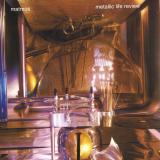
Metallic Life Review is the sound of two people who have collected field recordings of metal objects from around the world for years of their lives together, collaging their magpie hoard into rhythmic patterns, sometimes writing melodies and basslines, but sometimes just letting sound be sound. Patient gathering yields to ADHD editing. Painstakingly made but blink and you"ll miss it. Is it music or is it noise? It is without a doubt exceptionally beautiful music wrought from metal detritus. Metallic Life Review features Susan Alcorn"s pedal steel, Owen Gardner"s glockenspiel, Thor Harris" drumming, Jason Willett"s (Half Japanese) guitar, and Jeff Carey"s aluminum cans, which were melted, molded into custom aluminum rods, and then bowed and struck. The most dramatic difference from any previous Matmos album is that side two was recorded "live in the studio", ala Throbbing Gristle"s Heathen Earth. For the first time on recording, Matmos capture the evolving, shifting, slithering dynamic that happens when they play live and let patterns emerge out of chaos and then collapse and then re-form. Their playful blend of compositional brilliance and improvisational playfulness meld perfectly, truly capturing ecstatic moments in a way that can only happen live.
The always hard working Emotional Rescue now unveils the electronic disco project Exo Fender, helmed by esteemed New York producer Eric Calvi and featuring the legendary Steve D'Acquisto. The remastered songs 'Big Mood' and 'Music In My Mind' span two new EPs, with updated edited versions by NYC producer Justin Van Der Volgen. Calvi's journey from Paris to New York's music scene in the 1980s when he engineered hits for artists like Cameo and Africa Bambaataa, and laid the groundwork for Exo Fenders. Inspired by clubbing friendships, the project's infectious grooves and tongue-in-cheek nature gained club play and collector's acclaim, with Van Der Volgen's remix enhancing their timeless appeal for today's dancefloors.
In a fusion of science and sound, Kalocain's debut vinyl release, "Genetic Memory," unfolds an eerie tale. "W.N.G." opens a portal to an ancient world, where forgotten tongues unveil cryptic secrets. "Genetic Memory" weaves ethereal connections between ancestral recollections and the present, warping the fabric of time. "Ivermectin" delves into the surreal realms of molecular melodies, as if sonic DNA deciphers sound's enigmas. Remixes from Normal 4, Patricia Kokett, and Jacques Satre reshape the auditory cosmos with a dash of the bizarre.
To amplify the weirdness, Evaldas Bubinas aka Hermandrowning, concocts mind-bending artwork, beckoning listeners into a realm where sound and art meld in uncanny harmony.
But that's not all! The digital copy unveils an additional original track, "Groove Drift," along with a wild array of remixes by Henry Greenleaf, Frankfurt Bass, and Dogpatrol.
"Genetic Memory" isn't just music; it's a transcendent odyssey blending the past, present, and the surreal future, with a digital twist that will leave you questioning the boundaries of sonic exploration.
Sticking a dirty thumb in the eye of fate, our third collaboration sees this marrow deep family malarky turn official as Pace Yourself teams up with YS’s own imprint ERF REC for a split release. As if our status as minor celebrities and footnotes of the underground could level off no further: the unification no one asked for is here. Sticking it to the man, handing your arse to ya on plate; cauterising infected suburban minds world over.
Burn is the second YS album and written as a direct follow-up album to Brutal Flowers. If their first album was an exercise in the incremental, a construction of poise and patience, Burn, should be taken way the fuck at it’s word: it quite literally finds catharsis in twisted reverse. Birthed out the malignant kick found in deconstruction and chaos. Evil twin, psychotic younger sibling, call it what the hell you like. It might take you a moment to get the lay of the land in this darkly mutated world. Like a bug eye’d native first confronted with a zippo, the hit is radical and instant: a new way for the world to go up in smoke.
Splice the Seattle slacker scene with the spliffhead soundsystem culture of the 90s Bristol trip-hop scene, then cross-breed that with the DIY optimism and glee in creation found in the cut-and-paste worlds of skate, graffiti and hiphop, now run that through the skitzo basement mind of John.T. Gast and you’re close to the kind of scorched earth and spiked suburbia that birthed Burn.
Dunno quite what YS have been ingesting of late but this massively twisted LP touches on a host of gloriously fucked totemic underground sources while not sounding much like any of them. It has the ballsy swagger and hard flipping of the script as Massive Attack’s seminal Blue Lines. Indeed, the eponymous album tracks sound similar - the opener ‘Burn’ is like a hard nosed jammed out redux of ‘Blue Lines’. Getting into a kind of slow-spinning overdubbed maximal euphoria ending with mumbled downer vocals, struggling to conceal their tongues in their cheeks there’s an air of paranoia and proto-conspiracy theory. It’ll leave you scratching your head, feeling like you’ve stepped into a New World Order governed by a cacophony of drop outs, dope fiends and apocalyptic stoners. A cracked out world somewhere between Richard Linklater’s movie Slacker (1990) and Marc Singer’s Dark Days (2001).
The rest of the album parts like a tongue on a wine glass: Smith and Mighty, Bandulu, ambient Luke Slater records, Wah Wah Wino, Nurse with Wound, Land of the Loops, Placid Angels, Adrian Sherwood, Urban Tribe and DJ Shadow can all be heard in momentary splatters - but Burn like other works by YS, is its own ritual beast. ‘Moth’, a track which has been knocking about the underground deejai circuit for many moons, is a real raw chopped and screwed slice of stoner erotica that reeks of obsession and unrequited desire. Elsewhere, on tracks like ‘Switch’, ‘Trying’ and ‘Drift’ the throughline from Brutal Flowers can be heard. Underneath the driving heavy gravity the trademark emotional intimacies of YS linger: eternal recurrence, ghosts of static and shortwave, worn memories of the playful and painful sort. The brief moments where flashes of orchestral ambience get out from underneath the swagger are so pure, personal and unguarded that for a moment they leave you completely lonesome. In the album’s closer ‘End’, you can hear the fleeting promise and DIY possibilities of an analogue world and embers of ash that flutter in its wake: where it seemed, for a brief moment, that collective of DJs, engineers, rappers, graffiti artists and skate crews were emerging from the streets, giving the middle fingers to the system, before just as quickly disappearing back to the doldrums of obscurity. ‘End’ is a bittersweet ode to early soundsystem culture, MCs and pirate radio - an out of step time where for a moment the underdogs and weirdos seemed to be kicking on the door of something bigger.
A veritable teenage doof suite dosed with desire, claustrophobia and deviance. Burn is a good old howl at the moon: lonely, raw, and out for blood; basement style exegesis at its best. A thump to the gut, a stud through your blood. A dubbed-to-death classic straight out of the annals of nowhere. A perfect post card from oblivion. A bleak, bold and personally ferocious vision of tomorrow and tomorrow and tomorrow.
This is everything that record collectors skip dates for. Fuck the scene and keep that shit underground. That’s what it is all about. Know what I mean, if you do? You’re in…
The writer Max Sebald often pondered over the nature of human memory, specifically, how our thoughts and desires - and their results - overlap and mutate over time. In A Place in the Country, he writes of the significance of what see as “similarities, overlaps and coincidences”. Are they the “delusions” of the self and senses, or manifestations of “an order underlying the chaos of human relationships, ... which lies beyond our comprehension”?
Song of the Night Mists, the new album by post-classical composer Stefan Wesołowski, often feels it draws on Sebald’s premise.
On a simpler plane, the one where the market dictates the neatly ordered information we consume, Song of the Night Mists can be described thus: recorded in the main by Stefan Wesołowski in Gdańsk, both in his studio and in Saint Nicholas' Basilica, the album incorporates acoustic instruments - piano, violin, double bass - and classic synthesizers such as the Roland Jupiter-8, the Soviet Polivoks. A Roland Space Echo RE-150 tape delay was also pressed into service as an instrument. We also hear the basillica’s organ and field recordings from the Tatra Mountains. Other musicians were Maja Miro, who played the flute parts on ‘Glacial Troughs’ and brother Piotr Wesołowski, who played the organ on ‘Wilhelm Tombeau’. Sound engineer was Marcin Nenko, who was also on hand to record the basilica organ parts. The album was mixed in New York by Al Carlson (Oneohtrix Point Never, Jessica Pratt, Zola Jesus, Lady Gaga, and Liturgy) and Rafael Anton Irisarri handled the mastering.
Ostensibly, Song of the Night Mists is the last in a trilogy, following on from albums Liebestod (2013) and Rite of the End (2017). All three deal with existential matters such as love, death, decay and “an ultimate end”; apocalyptic and Promethean in spirit, and betraying very human conceits. The Sebaldian nature of the new record starts to make itself felt when Wesołowski talks of how he used sampling. One element is unexpected, that of sampling himself: “I go back to dozens of my own unused sketches and recordings, treating them as raw material to cut, slow down, reverse, and transform in every possible way.” Memory as sound, to be reemployed by the listener through their own imaginings.
Another set of samples made by Wesołowski plays another role. These are field recordings, originally created for an audio illustration of the formation of the Tatra Mountains, and used in a film by sound designer Michał Fojcik. Wesołowski: “You can hear cracking ice, streams, footsteps in the snow and the wind, and a real avalanche, recorded from the inside.” The “Tatra connection” on the album is also found in samples referencing composer Karol Szymanowski. The album’s title alludes to a poem about the mountains by Polish poet, Kazimierz Przerwa-Tetmajer.
Wesołowski’s Tatra recordings are “about a world without humans - about the fact that the world existed, was beautiful, and had meaning long before people arrived, and for the vast majority of its history, it was a place without us.” Wesołowski, using one iteration of the natural world, plays out in sound Sebald’s idea of another order, underlying the chaos of human relationships lying beyond human comprehension.
These feelings play themselves out on the five album tracks. Sonorous and rich, they illustrate tectonic shifts we have no control over. Wesołowski hints that the overall sound is a “meditation on the metaphysics of the non-human set against the spirituality that human presence has brought into it.” In that light, the opening number, ‘Core’, with its slow build, and crackling and straining sound effects, create an effect of the earth groaning into life in a creation myth. Once the piano part raps out a simple melody and modulated tonguing trumpet samples add to the overall atmosphere, the listener can certainly find a cue in the “spiritual”, or “human” side of the story. Human versus nature: from the strains and harmonic muscle stretches of the second number, ‘Glacial Troughs’, through to the powerful and filmic ‘Stalagmite’ and heart-on-sleeve romance expressed in closer, ‘Wilhelm Tombeau’, we listeners are cast as Friedrich’s wanderer, looking out over a landscape that will appear only if we engage with it.
Formations of melody appear incrementally, almost appearing by chance - like hidden footings in the rock shelves to give us something to grasp onto. Rhythms are used sparsely: the prolonged percussive taps on ‘Glacial Troughs’ are an anomaly and maybe there to give pace to the album to come; essentially to keep the listener strapped in. Elsewhere, percussion is used as an aid to mood, the two thudding, timpani-style passages on ‘Peak’ there to offset the short, beautiful, kosmische passage that splits them.
Elements of the borderline religious spirit that drove German electronic music in the late 1960s and 1970s also find a place on Song of the Night Mists. The swells and recessions of the organ find their emotional climax on ‘Wilhelm Tombeau’, a track which summons up echoes of the “mountain magic” vistas created by Popol Vuh or Tangerine Dream, especially with the slightly atonal wobble of the Mellotron that counters it.
This is a dramatic album, but it does feel a strangely short, or curtailed listen on ending, evoking the feeling one gets when waking from a dream, and, for all its incipient grandeur, a track like ‘Stalagmite’, for instance, ends on a minor note. Wesołowski admits that Song of the Night Mists is born of the all too human process of temptation, doubt and recalibration - Sebaldian overlaps and coincidences forming something that must live another life, away from its creator. In Wesołowski’s words, the album is “a newborn foal must stand up and walk right after birth.” Now it is yours to ponder.
Ode To Native Tongues” attempts to capture the feeling of coming of age between the years of 1989 -1993 (and beyond) while listening and witnessing the legendary Native Tongues crew releasing timeless classic albums and singles. Told through the experience of seeing the early episodes of “Yo! MTV Raps”, a friend sharing De La Soul’s first album, sharing that album with my cousin who in exchange shared Queen Latifah’s music or finding out about “Bonita Applebum” by Tribe at my high school’s homecoming dance. Evoking nostalgia as well as tell a story of how this music served as the soundtrack woven into the fabric of my youth, my coming of age, was the aim.
Everything’s For Sale” was inspired partly by a story of an elderly couple who went brokhaving to pay for their medicine.“Everything’s For Sale” speaks to how the value of money permeates all facets of this modern life, and as such it seemed only natural for it to reach into my creative world. This time however I wanted to make a song that cross examined how this super ficiality has affected music culture, let alone how it has rendered some in our society invisible -- a clear sign of a society void of compassion. The Platurn beat with a moving guitar riff pushed this song further, providing me the cover of a funky beat to dive into a topic that might not normally move an audience. Part cheat code for slipping in a conscious message to the audience without raising the alarm of the listener who may not be expecting anything more than entertainment.
- A1: Fsol - There Is Nothing
- A2: Turbulent Space - Feeling Something Or Lapsing
- A3: Lies Not War - Horse And Me
- A4: The Amorphous Androgynous - We Persuade Ourselves We Are Immortal (Nightshift)
- B1: Snake Oil - Token
- B2: New York Mules - Loose Tongue
- B3: Yage - Chop Strat 4
- B4: The Still - Going In
- B5: 333 - Smoke Filled
Trip Maps 3 is a compilation of psychedelic / electronic oddities written by The Future Sound of London under various guises.
The Trip maps series (now at Vol.3 ) is created in conjunction with charity label Touched Music.
Live drums and bass mash with bizarre electronics , feels like the past but definitely the Future …….
- 1: Djangaloma Dara
- 2: Duk Kawe
- 3: É Nah
- 4: Déglul Kadu Rab Yi
- 5: Kër Gi
- 6: Kang
'A Senegalese Griot singer, an Amsterdam improviser and a Puerto Rican jazz drummer find each other on an open playground, a stage built for improvisation, an old cinema now used for minute made story telling.
'Equipped with an m'bira, a xalam, a drum kit, a voice, percussion, house hold tools and an electric clavichord on 220 volt, they sit down and take off: Wrrrrrraaang!
'Singer and percussionist Mola Sylla is in many ways a musical explorer. Born and raised in Dakar, Senegal, he grew up in the tradition of the griots. Griots play conveying stories – sometimes decorated with music, theater and dance – which all play an important role in West African culture. His rhythm and melodic compositions differ from the western agreed schedules and provide surprising twists.
'Puerto Rican drummer Frank Rosaly has been involved in the improvised and experimental music scenes since 2001 when he became an integral part of Chicago's musical fabric, navigating a fine line between the vibrant improvised music, experimental, rock and jazz communities.
'Oscar Jan Hoogland is the sound of Amsterdam in person. He is an instant composer and inventor of his own instrument by joining a clavichord, a keyboard instrument from the 17th century, to 220 Volt electricity. As the last student of the late pianist, composer and improvisor Misha Mengelberg he tears like a tornado through the Amsterdam jazz and impro scene.
'Together they are Mother Tongue.'
- A1: The Twine And The Twist
- A2: To The Great Work Only
- A3: Twilight Leaves
- A4: The Lighthouse And The Catacombs
- A5: This Slaughter Behold
- B1: Remember To Dare
- B2: Mine Were Of Marble
- B3: The Baron (Ordeal By Fire)
- B4: Ire And Troth
- B5: This Hour Her Vigil
At the end of the project’s 20th anniversary celebrations, ROME tolls in the next era of the band with a fresh and visionary album: ‘The Tower’. ROME’s new and ever more mature sound is informed by a radically minimalist folk approach, with nonetheless charmingly lush arrangements. ‘The Tower’ is an introspective and enigmatic work at whose centre stands nothing less than ROME’s raison d’etre: The Great Work and the sacrifices both necessary and essential on the demanding path to light. As an unreachable bulwark against the general decline of every value in life, the tower would have been erected long ago to defend the coast.
It would have been raised on a rocky platform resting on the sea floor. It would have been joined to the continent by a thin tongue of sand. It would have offered a heroic, magical point of view. A place for our claim to know and point out vaster horizons. It would have stood firm on the ramparts. This isolated tower would not have been just a refuge for more or less mystic escape, but also a post of resistance and combat.
2025 Repress
Dom Dolla makes a triumphant return, with 'Take It', a deep, dark, heaving club mix that combines an evocatively catchy vocal, with a deep groove beat to create one hooky production. Off the back of his 2017 ARIA nomination for Best Dance Release for the huge collaboration with Torren Foot on 'Be Randy', Dom has been busy touring the globe, stewing away in the dark corners of clubs, tweaking 'Take It', until it reached tech-house perfection.
"I put the bones of this tune together in a hotel room while road tripping between gigs in Arizona earlier this year, feeling heavily inspired by the west coast club audiences I was playing to. The vocals were written and recorded while sick in bed, using my tour manager's iPhone earbud microphone and a duvet as my vocal booth. At the time I had planned on replacing my recording with a cleaner take when I got home to Australia, but was never able to recreate something I liked as much, so it stayed! It's been slaying it for me ever since.", Dom Dolla had to say on explaining the origins of 'Take It'.
Having received over 20 million streams and consecutive ARIA Club Chart #1s for the former and Define, his 2016 collaboration with Go Freek, it becomes obvious that perfection is a common occurrence for Dom Dolla. Also, giving reason to why Dom has been cherry picked for official remixes by the likes of RUFUS DU SOL, Flight Facilities, Peking Duk, Madison Avenue, Motez and Sneaky Sound System and ongoing festival slots at Beyond The Valley (closing out the festival 4 years running), Splendour In The Grass, EDC Las Vegas and Splash House Palm Springs.
With Chris Lake, Kyle Watson and Billy Kenny already jumping on board, 'Take It' will be sure to garner a solid amount of support from the big-dogs. This goes without saying when Pete Tong is your biggest supporter, playing a spate of Dom Dolla releases across BBC Radio 1, a guest mix on All Gone Pete Tong and chosen as support for Pete Tong's huge orchestrated Ibiza Classics show at Melbourne's Sidney Myer Music Bowl.
After being tried and tested, this track is 100% guaranteed to rip your heart out and 'take it' straight onto the darkest dance floor out there. Australia, hold tight for a tour announce very soon, otherwise you can catch Dom on dance-floors throughout the US from July.
11 million streams across Spotify, SoundCloud + YouTube
#1 ARIA Club Chart
#1 Beatport Overall
Named as Pete Tong's artist to watch for 2019
A pioneering force in African music, Jo Tongo has always been on top of the game. Since the late 60s he has been recording music under his early Jojo L'Explosif moniker. His debut album "Jo Tongo" was released 1976 on Fiesta/Decca and features classic tracks like Jangolo and Piani. Now, after decades of underground influence and global recognition, his second album Sa Discossa (1980) is re-released for the first time. Being an electrifying fusion of African rhythms, disco, makossa, reggae and funk it is reflecting his lifelong journey of musical exploration and cultural storytelling and claims its place as an essential recording in the Afro-disco movement.
Jo Tongo's music is inseparable from his life's story-a journey that spans continents, struggles, and victories. From his early years as a leading African musician before the global rise of Afrobeat, to his deep roots in classical training, and his time performing in France and Germany, his sound is shaped by a rich blend of influences. Having played in bands across Europe, from American military bases in Germany to the jazz and soul circuits of Paris, he absorbed the pulse of multiple musical worlds, creating a sound uniquely his own.
"My music is my life. I never saw it as a way to become a star-I am a simple man," Tongo explains. "I came into music to say something, to tell about life, to share my experiences with the world." His perspective on fame and artistry is deeply rooted in his Cameroonian background. "I wasn't interested in business. I wanted to build something with music, to create a sound that was mine."
But Jo Tongo's music has always carried a deeper message. His work reflects his strong political stance against colonialism, social injustice, and oppression. "I cannot stay silent while my people suffer," he says. "Music is a way to resist, to stand strong, and to remind people of their dignity and their power." Throughout his career, Tongo has used his platform to advocate for African identity and independence. His songs, layered with messages of social consciousness, have continued to resonate with younger generations who recognize the relevance of his words even today.
Sa Discossa is more than just a disco record. It embodies Jo Tongo's philosophy of resistance, identity, and celebration. The title itself is a blend of "disco" and "makossa," reflecting the seamless fusion of African groove and the dancefloor energy that defined the era. Tracks like Bunya, sung in his native language, carry messages of love, gratitude, and resilience-sentiments that remain as relevant today as they were nearly 50 years ago. As Tongo describes it, "Every day, give thanks and praise to your Lord. Every day, show me your love. Every day, let me show you my tender love."
Tongo's musical journey also took him through the world of reggae, inspired by his exposure to American and Caribbean artists. "At first, I didn't like reggae-it was too slow for me," he admits. "But then I heard Bob Marley, and I realized the power in its simplicity. The rhythm, the
message-it was all connected to something bigger." He later found himself embracing reggae as an essential part of his musical DNA. "I realized that my music and reggae shared the same roots. We are all connected, all telling the same story in different ways."
Having spent much of his career performing across Europe, Jo Tongo reflects on his connection with international audiences. "I've played everywhere-from Africa to Germany, from Paris to other cities in France and what I've learned is that music speaks a universal language. You don't need to know the words to feel the message."
Despite taking a step back from the stage in recent years, he remains open to new possibilities. "Music is like a fire-it never truly dies. I have a lot to say, and music is the best way to say it."
For Jo Tongo, music is more than entertainment-it's a language of truth, a testament to history, and a bridge between cultures. The rhythm of Sa Discossa lives on, stronger than ever. With Sa Discossa returning under the African Edge series on The Outer Edge label, Jo Tongo's legacy continues to resonate, proving that real music never fades.
Releasing four of the biggest dance tracks of 2018 and crowned as the #2 Beatport Artist Of All Time, Dresden born disco-house producer Purple Disco Machine has quickly become one of the most prolific and sought after producers in the industry.
Following on from hit singles ‘Dished (Male Stripper)’ and 'Body Funk', Purple Disco Machine returns with his double A-side Emotion EP.
DJ Support:
Black Madonna, Jamie Jones, Fatboy Slim, Annie Mac, Pete Tong, Danny Howard
Previous single 'Body Funk’ already clocking 12 million combined streams and #1 Beatport and #1 DDC & DCC Chart
‘Dished (Male Stripper)’ spent 10 Weeks on BBCR1 Daytime playlist, including 4 weeks on A-ist making it the #5 Dance Record of The Year on BBCR1
Official releases with Fatboy Slim, Calvin Harris & Rag’n’Bone Man, Jax Jones, RÜFÜS DU SOL
Franky Wah makes Crosstown Rebels debut with ‘Disconnect’ EP, featuring Kuuda. Out on 20th June 2025, the four-tracker sees the acclaimed UK producer make his first appearance on the revered imprint.
A producer known for balancing dancefloor energy with introspective songwriting, Franky Wah’s rise has been fuelled by a string of chart-topping singles, non-stop global club and festival appearances, and the launch of his own imprint and event brand, SHÈN. With musical influences stretching from trance and breakbeat to afro-house and techno, he now brings that rich sound palette to the Crosstown fold for the first time with a release that’s equal parts euphoric and deep as it is driving. Delivering a powerful and emotionally charged four-track release, 'Disconnect' showcases the Yorkshire-born artist’s blend of underground grit and melodic sophistication, featuring two standout collaborations with rising vocal trio Kuuda.
Opening the EP, the title track pairs swirling textures, brooding basslines and crisp percussion with commanding vocals, setting the tone for the journey ahead. The synergy continues on ‘Off The Wall’, a hazy, late-night jam elevated by Kuuda’s signature warped vox interjections. On the flip, ‘Desert Dance’ continues further into hypnotic territory with wicked bass licks and layered synth work, before closing track ‘Freak In The Sheets’ delivers another impactful, heads-down groove laced with attitude. Featured on two of the EP’s four cuts, Brighton-based trio Kuuda continue to emerge as a rapidly ascending vocal project within electronic music. Known for their genre-fluid songwriting and dynamic live presence, their collaborations with Hot Since 82, Yousef and Artche have earned them widespread support from the likes of Pete Tong, Danny Howard and RÜFÜS DU SOL. Blending emotional depth with club-ready impact, ‘Disconnect’ marks an inspired meeting point between Franky Wah’s expansive production style and the Crosstown Rebels spirit—one that looks set to soundtrack dancefloors throughout the summer and beyond.
Following a string of huge sold out shows together, Sonny Fodera and Dom Dolla now team up for new single ‘Moving Blind’ via Sweat It Out / Solotoko.
Moving Blind weaves husky vocal hooks with elastic synth leads and bumping basslines, making for a hypnotic house groover destined to be heard in its natural club setting and intimate home dancefloors alike.
DJ Support :
Pete Tong, Mistajam, John Summit, Just Kiddin, Riva Starr, Sam Divine, Claptone, Biscits, Ferreck Dawn, Dombresky, Simon Dunmore, TCTS, Robosonic, Marco Carola, Andi Durrant, Joachim Garraud, Slipmatt, Paco Osuna, Fatboy Slim, MK, Riva Starr, Rudimental, and Richie Hawtin
Kareem Ali, a rising star from a time marked by the pandemic, unveils Mawimbi, his debut EP with Noire & Blanche Records. With praise from Boiler Room, Rolling Stone, and Resident Advisor, the American artist has come a long way to master his craft. Part of the afrofuturist movement, and drawing on his love of jazz, he redefines the deep house scene with a unique and thoughtful approach. His work, supported by icons like Four Tet, Caribou, and Pete Tong, stands out for its striking fusion of the captivating rhythms of jazz, house, and afrobeat. Mawimbi is a sensory exploration through four purely sensual tracks, where afro, jazz, and hip-hop sounds blend to create a cosmic atmosphere. At the intersection of his Islamic faith and the struggle of African Americans, Kareem Ali has crafted a strong sonic identity, carried by synths that are both liberating and profound. An EP that transcends boundaries and positions the producer for posterity.
»White Noise« is a cooperation project between raster-media and the Max Planck Institute for Empirical Aesthetics. Artistic sound projects generated in the context of the scientific research institute will appear at irregular intervals. The themes and questions of empirical aesthetics research are taken up, questioned or challenged in very different ways. »White Noise« is conceived as an audio archive of the MPIEA artists in residence which records the artistic works on vinyl and documents the respective concepts and working methods in text form.
Victioria Keddie’s »Pshal P’shaw« (white noise #002) is a multimedia exploration delving into phonetic expression’s auditory and rhythmic nuances of phonetic expressions through an amalgamation of text, sound, video, data, and customized learning software. Drawing inspiration from the painter and architectural theorist Hermann Finsterlin who made speculative architectural renderings, the project originated during a residency at the Max Planck Institute of Empirical Aesthetics in Frankfurt in 2023.
The project’s engagement with the sonic landscape of the eight diphthongs in US English, documented through recorded sessions at EEG labs with participants of diverse international backgrounds, is not just a technical analyses. The applied script for the recording session, infused with a contemporary Western US dialect, ventures beyond, exploring the primal essence of phonetic expression and its impact on the oral landscape of mouth, throat, and tongue.
This work focuses on the spoken aspect of language: the art of oration, conversation, and mimicry. It reflects the beauty of our perpetual change, speaking directly to our humanity and the raw, tender moments of existence. It embraces the awkward, beautiful and vulnerable essence of our shared human experience.
Victoria Keddie is a multidisciplinary artist delving into sound, video, installation, and performance. Her work uncovers hidden narratives within ordinary artifacts and spaces, emphasizing their role in shaping our collective story. The examination of acoustic phenomena and language is a recurring theme in her artistic work. Keddie’s current projects navigate the acoustic complexity of language and dialects.
For over a decade, Keddie was co-director of E.S.P. TV, exploring the televisual medium for performance and sound. Keddie has performed and exhibited internationally. Recent fellowships include the NYSCA/NYFA for Music/Sound (2022), the Max Planck Institute for Empirical Aesthetics (2023), and the Bemis Center for Contemporary Art, Sound Art and Experimental Music Fellowship (2024).
»White Noise«, 40 p. magazine English/German, vinyl LP, cardboard box
Something that was in the pipeline for a while is finally happening: the first collaborative release between Mother Tongue and Neroli. And right in time to celebrate Neroli’s 25th anniversary. To make it even more exciting the two Verona based labels worked together to curate a full 4 track EP from Chicago’s very own Glenn Underground!
A very special selection of obscure and diverse gems from the deep vaults of the legendary producer touching the boogie, the jazzy and even the acid sounds, that will please the most demanding music lovers!
After the success of our first release, UR2wo’s Move Me (including Blame’s legendary Shadow Mix on vinyl) and continued support from big names in clubs and socials, Break-The-Future returns with a new signing: Nathan Cable. A veteran of progressive house, Nathan gained recognition as part of Tenth Chapter, with tracks like Wired on William Orbit’s Guerilla Records in the 90s, supported by DJs like Sasha, Pete Tong, and Dave Seaman. Now back under his own name, Nathan offers a modern blend of intelligent breaks, with a rich, emotional sound that fits alongside Ninja Tune's style. His new tracks are already getting support from John Digweed on Transitions Radio Show.
The release kicks off with Nathan's Innocence featuring the All Tribes Mix, which blends lush pads, whispering arps, and gated vocals. Nathan’s Gyroscope Mix follows with a deeper take, built on rubber bass and rich keys.
For the remixes, we bring Northern Ireland's Richie Blacker, who ramps up the BPMs for the club with a spacey, synth-driven journey.
Last but not least, we have legendary rave innovator Nookie, who offers two remixes: the nostalgic Speed Remix, channeling 90s rave, and the darker Not So Innocent Remix, reminiscent of London’s Rage. Essential!
Forgotten in the mists of Dutch electronics, when Anacalypto Records began their quest for Fairytails, they uncovered more than they bargained for. Dusting off a 1994 DAT, lettering began to reveal itself—four tracks from the original release and two unheard, unreleased works! A decision was made: two tracks from the original 12” for Side A, and the two new discoveries for Side B.
The spellbinding Fairytail Track 3 opens the record. Rich basslines and ruffled beats dance as strings soar and swoop in this fantastical floor-filler. That touch of fantasy twinkles throughout the entire EP, with dreamy mellowness weaving through key shifts and stepping grooves. This dreamy atmosphere carries into Fairytail Track 4, where snares rasp and snap above delicate notes and mischievous pads.
The flip is dedicated to the DAT discoveries. Fairytail Track 5 is a joyous romp through twilight woodlands and sweaty basements, with cascading chords and lively piano lines reveling over earthy patterns of percussion. The journey concludes with Fairytail Track 6, a bright and magical finale. Overtones of rave energy glow in this ageless, tongue-in-cheek melody, infusing the EP with a timeless vibrancy.
Four trance-dipped house treasures returned to the faithful on this remastered gem that will sprinkle happiness on any floor.