Search:too many artists

Styles
All
Zan - Zan LP

Zan

Zan LP

12inchBDQ011
Bunn Debrett Quintet
17.06.2024

Incredible new album from our new signing to BDQ records ZAN on the Boogie - Jazz Funk tip, due May. We’re so happy to be releasing this fabulous album.


Zan’s beautiful voice is an abiding part of the Australian music landscape. In the 80’s, she came to prominence out front of Melbourne’s iconic pop funk band
I’m Talking with Kate Ceberano, Zan’s lead vocals shine on one of the bands biggest hits ‘Holy Word’, which is still considered a trail-blazing Australian classic today. She loaned her vocal
talents to some of the most memorable Australian songs including The Models “Out Of Mind Out Of Sight” and “Barbados”. She appears in numerous videos singing backing vocals for a number
of Australian artists.

Zan appeared with I’m Talking in the classic music film Australian Made directed by Richard Lowenstein of Dogs in Space and Mystify fame. The film captured the incredible concert tour, which featured a plethora of major Australian performers such as INXS, Jimmy Barnes, The Divinyls & The Models. In her time with the I’m Taking band and as a solo performer she has made countless appearances on Australian TV including the legendary music programme Countdown.


In the 80’s she even performed for Princess Diana and Prince (now King) Charles at the
Rockin’ the Royals concert, at the Arts Centre in Melbourne, meeting the Royal couple after the show. Zan was bitten by the soul/R&B bug at an early age. Born in London of Sri Lankan heritage,
arriving to the shores of Australia as a young girl. Her love of music took her from Australia to New York and London, where she lived in the 90’s and early 2000’s regularly performing and recording with top international session musicians/artists. She’s also
had the extraordinary honour of performing live with both U2 &
B. B. King, Zan’s self-titled solo album was released through Amber Records in Germany in the mid 90’s and she also toured with UK Acid Jazz band
Mother Earth throughout Europe & Japan, eventually returning to the city she calls home, Melbourne.

Since being back in Melbourne, Zan has performed at various popular music venues such as The Night Cat, Memo and The Espy and in 2019, to the delight of 80’s music fans, Zan sang once again with the re-formed I’m Talking, playing a number of shows supporting Bryan Ferry on his acclaimed Australian tour. The re-formed band received several rave reviews for their shows. Zan’s new material is influenced by her considerable experiences, her rich musical history and the songs and artists she grew up on - soul and R’N B singers such as Chaka Khan, Renee Geyer and many others of that genre. Her new songs are steeped in 80’s dance/boogie funk/soul & pop flavours, re-capturing that feel-good factor from the era whilst bringing to it a new unique and contemporary edge.

In Stock

On Stock and ready to ship

Last In: 21 months ago
26,85 €
Maceo Plex - '93 LP 3x12"

Maceo Plex

'93 LP 3x12"

3x12inchLR030
LONE ROMANTIC
04.06.2024

Renowned US producer Maceo Plex releases his highly anticipated third album, ‘’93', a homage to his three-decade journey through the realms of electronic music. Marking both a passion and a prolific career, the maestro presents a tantalising body of work that masterfully blends House, Hip Hop, Global Bass, Techno, Breaks, and Electronica. This audacious fusion delves into historic and modern influences, crafting an audio journey that transcends time, rich in history yet boldly future-facing.

‘’93' is a cross-genre exploration, seamlessly balancing emotion with hard-hitting beats. Maceo Plex collaborates with a stellar lineup of artists, including Diplo for his contribution on ‘You Don’t Have To Wait’ with Cubicolor, Oscar and the Wolf, Perry Farrell (Jane’s Addiction), Johnny Jewel and Desire, Kirsty Hawkshaw, Mystic Bill, AVNU, Giovanni, Ishi, and Tyler Hill, resulting in a diverse and dynamic musical affair.
This album narrates the story of a highly esteemed artist at a pivotal juncture in his career, consistently evolving towards new directions. Departing from the early deeper house sound that initially defined him, Maceo Plex intentionally ventures into new territory, steering away from his famed melodic and techno direction in recent years. Nevertheless, '93' retains the essence of Maceo Plex's signature style, transcending various sounds and genres in a manner reminiscent of his electrifying DJ sets, meticulously curated for the dancefloor and the crowds.

‘93’ vinyl LP by Maceo Plex is available on Lone Romantic from 17th May 2024.

Key Feedback Quotes:

Pete Tong - Maceo is such a talented producer. A sonic juganaut. An inspiration to so many aspiring music makers. He's a master of analogue and digital in the studio. He's a total 'one of'.
Kolsch - Incredible album!!!!
Artbat - “Very cooooool album!
Gregor Tresher - Wow, now this is what I call an album! Extraordinary stuff, I love it! Big up, Eric!
Hot Since 82 - Nothing short of sensational. My fav producer and DJ who consistantly sets the bar far too high and we all play catch up. Love it.
Rodriguez Jr - Awesome album. LOVE IT. Such a wide spectrum of influences here. Respect!
Laurent Garnier - Very cool. Will play these
Hernan Cattaneo - This is a really good album!
Wehbba - happy to finally see the album coming out, lots of gems, Nasty, Just You and I, Get out Of Here and You're My Desire are my main picks.
Eelke Kleijn - Already listened to the whole album on Spotify. Fantastic. Miles ahead of everyone else. Thanks for sending this, will play many of these for sure.
AFFKT - all tracks are amazing
Ida Engberg - Loooove this release! Stop that and Serpent jazz for me, can't wait to play them. Lone Romantic killing it!
Victor Ruiz - Honestly, you’re a genius! 10/10 productions always.
Pig&Dan - Great to hear new tunes from one of my favorite producers out there
Oliver Huntemann - some real gems on here
Fideles - wow, love it all
Peter Kruder - Love 'em all! Thanks for sending my way!
Yotto - Sick Sick Sick work!
Jody Wisternoff - Insane tracks from Maceo!!!
Terr - Amazing music as always, thx!
Nicolas Masseyeff - Solid release! Full Support!
Paige - Nasty is an absolutely mind-blowing track!!
Braxton - Incredible Album. .
Dense & Pika - Wicked stuff from Maceo.
Eli Brown - Always great music from Maceo Plex.
Anden - Congrats on the album! Love it!
Sergio Muñoz / Fur Coat - Great work from Eric! Congratulations.
La Fleur - So many gems in there, looking forward to having a proper listen from start to end! Thx
Captain Mustache - Big work here from Maceo, congratz!
Alex Kennon - This is a masterpiece!
Timo Maas - Clickbait is a cool track, I like the deep funk.
Martin Eyerer - This is a great album!! I love nasty most, but all great.
Nick Warren - This is such a great album.
Laurent Garnier - Very cool EP. Will play these.
Jonas Rathsman - Stop That sounds interesting

In Stock

On Stock and ready to ship

Last In: 11 days ago
29,37 €
22 Beaches - Dust: Recordings 1980-1984 LP

Glasgow based Seated Records return with more 1980s Scottish Post-Punk / New Wave material. In this 8-track mini compilation the label introduces the work of Stirling band 22 Beaches, offering a deep dive into music recorded between 1980-1984 - the majority of which has never seen the light of day!

22 Beaches formed in Stirling in the late 1970s as an evolution of the short lived group ‘Alone at Last’ - drummer Fred Parson’s and guitarist Stephen Hunter being the two who spanned the divide. Out of the six members of 22 Beaches, many were school friends, and the rest naturally fell together. The band toured extensively and played at a truly diverse set of venues across the UK: from a local swimming pool boiler room, to small nightclubs and university parties, to several fundraisers for the miners strike. Maybe most notably of all, drummer Fred Parsons described playing at what he calls “the Grangemouth International”, organised by local promoter Brian Guthrie and which featured an all-star lineup of 22 Beaches, The Exploited and the first incarnation of The Cocteau Twins. A coach was hired to ship the audience to Grangemouth from Stirling, the cost of which was included in the ticket. The gig then paused halfway through for a 'help yourself' buffet. Young promoters take heed. This is how it's done!

Over the course of the 80s the band released music on three different, and now sought after, various artists compilation cassettes. “What Day Is It?” and “Sadie When She Died” were released on a compilation of local Stirling artists 'The A.N.K.L.E File'. The track from which the current record takes its namesake - “Dust” - was initially released on a compilation-tape for the fanzine 'Another Spark'. And ‘‘Zoo” (also featured on this record) was first released on Glasgow label Pleasantly Surprised via compilation, 'An Hour Of Eloquent Sounds', where 22 Beaches rubbed shoulders with early music from Scottish names Primal Scream, Cocteau Twins, The Wake and Sunset Gun. Unfortunately, 22 Beaches never met the same level of commercial success as these others and decided to retire the project in 1984 - leaving their recordings and demos to gather dust (hehe)…until now!

This compilation, “Dust: recordings 1980-1984” follows the band's journey and the changes in their sound over the years. It moves from the raw, punk energy of early DIY recordings through to the A Certain Ratio style Balearica of their later pieces. The record's opener and title track “Dust” is perhaps the most shining example of the latter. Characterised by the plenitude of sonic space in the mix, “Dust” has an almost dub sensibility that is communicated through centrality of Parsons’ drums, McChord’s percussion, and Fildes’ Bass while the harmonising vocals of Sharkey and McGregor chant over the top to give the track its distinctive psychedelic edge. This is an atmosphere only exacerbated by the lofi quality of the recording which sits the vocals in the same aural realm as much 1960s psych-folk. On “Cartoon Boy”, the band strips things down further. A droning bass line persists through the tape fuzz and is accompanied by the sounds of a sole looping guitar chord sequence and McGregor and Sharkey’s vocals - respectively and carefully dancing around one another before harmonising in the most beautiful way. The result is a haunting and abstract Marine Girls style heartbreaker. ‘That Girl’ again delivers a dub adjacent rhythm section similar to that of “Dust”. However, on this instance crisp guitar chords, a distant, phased organ and blue-eyed soul vocal delivery, produce a track that could easily have been a lost Orange Juice recording from their sessions with Dennis Bovel. On “Somebody Got It Wrong” and “One Of Us” the band employ a more macro approach where a jangling guitar with an almost highlife-influenced tone, vocal ad-libs and syncopated percussion give the music a Talking Heads-esque swagger.

Taken together these tracks illustrate a clear trajectory in the band's sound, moving from from the high energy no-wave quality of early recordings towards a more dub influenced, and stripped-back sound - a sonic trajectory followed by so many bands of the time, not least those emerging from the diaspora of Manchester’s Factory Records.

On “Breathing’’ we hear the beginning of this transition, with the strong influence of the oddball NYC disco styles of Was (Not Was) and ZE records. All of this is meshed together with the residual punk rock energy of 1980s UK. This combination is employed to excellent effect with the addition of the distinctly Scottish (and what the band confirmed to me to be spontaneous) vocal delivery of: “Do you love me? Do you want me?” “Aye!” “Do you love me? Do you need me?” “Naw!”.

On the record’s closing tracks, “Zoo” and “Talent Show”, we hear early examples of the band’s work, playing with their rawest all-in-one-take live energy where Hunter’s spiralling guitar riffs and McGregor's distorted vocal exclamations lead the charge. The band recalls that these initial-forays did not always translate so well into multitrack recording and overdubbing: “the deconstruction took away some of the band's natural feel”. On “Talent Show” the record ends with Sharkey delivering an almost unintelligible spoken word section over the top of the track, making for one final, disorientating, almost manic slice of post-punk.

These tracks from 1980-1984 chart the progress of a unique contribution to the world of Scottish Post-Punk and New Wave, encapsulating not only the musical trajectory of 22 Beaches but also echoing the broader sonic landscape of 1980s UK, a testament to the adaptability and creativity of the UK’s underground music of the time.

In Stock

On Stock and ready to ship

Last In: 2 years ago
18,91 €
RUFFY & TUFFY - IF THE 3RD WORLD WAR IS A MUST

Earl Lindo production from 1984... TIP!

Teenage twins Ruffy & Tuffy deliver an apocalyptic slab of synth drenched Rub a Dub with what could be the first use of Vocoder in Reggae for 1982’s If The 3rd World War Is A Must. This release draws from both the original 12” and the master tapes combining the best vocal cut and dub versions.

Though not prolific musicians, many may recognize the twins sparring in matching red Pony track suits in Ted Bafaloukos’ iconic 1978 film Rockers. Ahead of its time in almost every way, the lyrics dealing with global war and the nefarious use of technology, sadly seem as relevant now as they did in 1982 though some of the actors may have changed. Surrounded by elite reggae musicians from childhood it was nothing unusual for the brothers to be in the presence of elders like Gregory Isaacs, Burning Spear, Augustus Pablo, Jacob Miller and especially Bob Marley at recording sessions and in daily life.

If The 3rd World War was their first venture into the studio as solo artists in 1982 first at Channel One and then Tuff Gong where Wailers alumni Earl Wire Lindo and Tyrone Downie (keys and Vocoder) laid down their space age additions to the track creating a genre bending Reggae /Electro/ Dub concoction that still sounds fresh 41 years later. Wire Lindo & the twins took the mastertapes to Texas based mechanical engineer and producer Stephen “Iya” James who ran Marcus Garvey Records and the label African Unity Productions in the unlikely Reggae hub of Austin Texas. The track was not released until two years later in 1984 as a 12” which had a run of only 500 copies and is no easy find these days.

In Stock

On Stock and ready to ship

Last In: 3 years ago
13,24 €
Various - Tenamon

Various

Tenamon

12inchTENAMON001
JEAHMON! Records
13.11.2023

Ten years JEAHMON! - this is why we celebrate this decade for our imprint with our roots: A jubilee pressing on 12” vinyl. Remember how it all started back in 2013: With a hand painted full cover vinyl series. The crazy fishes from back in the days are still here! Ten years later Marc DePulse's imprint developed to the Top 5 leading Indie Dance labels on the planet – with over 80 releases and a lot of chartbreakers during the years. This vinyl represents a little family showcase with homie artists that built the brand over the past few years and who are an important face for JEAHMON! these days. Just to name a few of course – there are still so many other representive artists that made our imprint becoming so big and successful.

In Stock

On Stock and ready to ship

Last In: 2 years ago
11,72 €
TECHNOLOGY & TEAMWORK - WE USED TO BE FRIENDS LP

*MILKY CLEAR VINYL - 300 COPIES ONLY FOR WORLD!!* Technology + Teamwork’s fizzling synths, interweaving textures and punchy rhythms are beguiling on their long-awaited debut album We Used To Be Friends. However, at the heart of it all it’s the connection between the group’s two members, Anthony Silvester and Sarah Jones, the friendship the much-travelled duo have managed to maintain for nearly 15 years and a showcase of the slow-burning construction of the electronic world that they’ve surrounded themselves with. We Used To Be Friends is ultimately the tale of two storied artists in their own right, holding onto each other through personal and career twists and turns, relocations and broader movements through respective phases of their lives. Silvester and Jones first met and then collaborated as part of biting post-punk five-piece XX Teens in 2008, eventually breaking off to forge their own path together even as the latter’s demand as a drummer grew. Performing with everyone from Hot Chip, Harry Styles and Bloc Party among many others, Jones has been a constant percussive presence across the sphere of alternative UK pop music – she’s also found time for her own solo project Pillow Person and played on records by the likes of Puscifer and Kurt Vile. Silvester meanwhile has performed in art galleries across Europe including: Fridericianum in Kassel, Kölnischer Kunstverein in Cologne, and Vleeshal in Middelburg, as well as providing sound design and composing work for several art films. Technology + Teamwork is the constant throughout all of that though. “Technology + Teamwork's name perfectly describes how we work” Silvester explains. “Sometimes the teamwork is between each other and sometimes it’s between us and the technology.” Although going by the name Technology + Teamwork as far back as 2014, two events conspired that pulled the project into focus for the pair of them: firstly, Silvester spent a year constructing a soundproof studio shed on the border of London and Essex where he lives. Secondly, inevitably, the pandemic brought the globe-trotting Jones back home to just seven miles away from her long-time collaborator and friend. “We probably hung out more than we had for a few years” says Silvester. “Also, after all her Pillow Person releases Sarah had gotten really good with recording vocals and knowing what did and didn’t work and had a really good home studio set up. We still worked separately though, exchanging ideas via email and WhatsApp.” As with many artists through 2020 and early 2021, working separately was a new necessity that they were forced to adapt to. However, it became clear that there were creative benefits to it. “It really changed our sound and our sounds became a lot more focused as a result” Jones says. “I wanted to use the same ideas of improvisation that I might use while playing the drums for myself and apply that to melodies and lyrics.” The album bristles with hyperpop modernity. You can hear it in the manipulated vocals most prominently on Big Blue’s disco strut and on Moving Too’s heady mix of pitched up voice and burrowing sub bass. However, the pair also looked to San Francisco and the West Coast synthesis movement of the 60s, Silvester inspired by the likes of Suzanne Ciani and Don Buchla. The plaintive lo-fi and melancholy of Amsterdam incorporates Mutable Instrument’s Marbles by Émilie Gillet which – inspired by Buchla’s own synthesis work – outputs random voltages to give the track an air of unpredictability. It’s something that occurs throughout the album, the duo revelling in the happy accidents that disrupt the flow of their hook-laden pop. “The ‘Buchlian’ ideas of music having randomness and uncertainty, completely freed us up” Silvester explains. “It felt a bit like having more members in the band, machines that didn't do what you expected or intended.” Perhaps more subtly, is the influence of 17th and 18th century Baroque music, with Silvester drawing a line between it and the 90’s R’n’B he and Jones both love – exemplified perhaps best on K+B’s percussive claps and sultry grooves. The portentous juddering synthpop of the title track, meanwhile, alludes specifically to Handel’s Sarabande. It’s typical of an album that only needs a scratch of its seemingly glossy surface to unearth a myriad of contorted touchstones and reference points that’ve fermented beneath it. Thematically there’s an anxious sense to the record, with tracks often balancing above a quiet sense of unerring tension even at their most bombastic. Moving Too is the result of an existential doubt that hit Silvester while out cycling, with the outro refrain "it's not enough to die you also have to be forgotten" a take on something Samuel Beckett once said. These worries are echoed on the album’s closing track What A Year, which borrows a lot of lines from the late drag performer and fashion designer Dorian Corey including the grimly defiant "you're gonna leave your mark somewhere in this world just by getting through it”. Those clouds offer a counter point to We Used To Be Friends, but then isn’t that what great pop albums do? Technology + Teamwork undoubtedly love the craft of the hook and the song, but they always position themselves left of centre, prepared to scuff things up, pull something out of shape or manipulate something to leave it sounding warped. Much like their friendship, nothing here is particularly linear – and it’s all the better for it. Bio: Anthony Silvester & Sarah Jones first collaborated as part of biting post-punk five piece XX Teens in 2008, eventually breaking off to forge their own path together even as the latter's demand as a drummer grew. Performing with everyone from Hot Chip, Bat for Lashes, Harry Styles and Bloc Party (among many others), Jones has been a constant percussive presence across the sphere of alternative UK pop music - she's also found time for her own solo project Pillow Person and played on records by the likes of Puscifer and Kurt Vile. Silvester meanwhile has performed in art galleries across Europe including Fridericianum in Kassel, Kölnischer Kunstverein in Cologne, and Wleeshal in Middelburg, as well as providing sound design and composing work for several art films. Technology & Teamwork is the constant throughout all of that though. "We Used To Be Friends" proves that Technology & Teamwork undoubtedly love the craft of the hook and the song, but they always position themselves left of centre, prepared to scuff things up, pull something out of shape or manipulate something to leave it sounding warped. Much like their friendship, nothing hear is particularly linear - and it's all the better for it.

In Stock

On Stock and ready to ship

Last In: 3 years ago
20,97 €
Various - HEADSET VA 01

Various

HEADSET VA 01

12inchHEADSETVA01
Headset
17.04.2023

The first VA release from Scottish rave Headset, showcasing unsung Scottish artists making sound system music in any tempo.

LWS opens with a broken UK techno tool. Kamus follows with a halftime 90bpm techy stomper.

On the B-side, Aggregate Culture go hardcore jungle rave. With Delahunt closing the EP with a unique, dubbed out 160bpm number.

Pressed by Mobineko (Taiwan)

DJ approved by Hodge, Yushh, Feena, Om Unit, Peverelist, Chris Farrell (Idle Hands) & many more

In Stock

On Stock and ready to ship

Last In: 3 years ago
15,55 €
Brijean - Angelo LP

Brijean

Angelo LP

12inchGI412LPC1
Ghostly International
06.04.2023

Angelo is an LP, named after a car, featuring nine songs Brijean have crafted and carried with them through a period of profound change, loss, and relocation. It finds percussionist/singer Brijean Murphy and multi-instrumentalist/producer Doug Stuart processing the impossible the only way they know how: through rhythm and movement. The months surrounding the acclaimed release of Feelings, their full-length Ghostly International debut in 2021 which celebrated tender self-reflection and new possibilities, rang bittersweet with the absence of touring and the sudden passing of Murphy’s father and both of Stuart’s parents. In a haze of heartache, the duo left the

Bay Area to be near family, resetting in four cities in under two years. Their to-go rig became their traveling studio and these tracks, along with Angelo, became their few constants. Whereas Feelings formed over collaborative jams with friends, Angelo’s sessions presented Murphy and Stuart a chance to record at their most intimate, “to get us out of our grief and into our bodies,” says Murphy. They explored new moods and styles, reaching for effervescent dance tempos and technicolor backdrops, vibrant hues in contrast to their more somber human experiences. Angelo beams with positivity and creative renewal — a resourceful, collective answer to “what happens now?”

Angelo the car is a 1981 Toyota Celica they got off Craigslist during their first stint in Los Angeles, where Murphy and Stuart have since settled. “Such a bro-y, ‘80s dude car, it’s been super fun to drive around in a new town,” Murphy says. “He’s older than us, he’s a classic, he’s got a story.” It is a spiritual vehicle with a cinematic appeal, first dropping them off in an alleyway for the scene-setting intro, “Which Way To The Club.” The question is quickly resolved by “Take A Trip” as a cruising bassline mingles with crowd sounds, hand-claps, cuíca hiccups, whip-cracks, even a horse neigh. Brijean have found some club on this cross-dimensional trip — the kind of

imagined space or chamber within one’s self capable of “shifting a fraction of who you are,” says Murphy. They wrote the track with the simple intention to be “as free as we could be,” adds Stuart, likening the flip on the B section to a realm unlocked: ”What if the world changed completely? You open the door to a new room.”

Next is “Shy Guy,” a motivational anthem for the wallflowers among us. Murphy sets up the daydream: “We are in junior high, we’re on the dance floor, what’s going down, who is dancing, who is not, how are we gonna make them dance?” The narrator, the MC, hypes up the room as conga-driven rhythms bounce between languid synth and guitar lines. “Show me how to move...I feel something...I know you feel it too,” Murphy sings sweetly, calling back to the opening lines of Feelings, and this time the audience chants it back. It is easy to picture Brijean performing this one — something they only got to do a handful of times until more recently, opening shows for Khruangbin and Washed Out, an experience they found informative. Murphy explains, “It was inspiring to be out there and let loose more. To see how people can expand their expression on stage gave me more liberty with how I viewed my musicianship. My role for so long was to be a backup percussionist, so why would I ever leave the drums, you know? But then after playing all these runs, you see these artists and realize you can, you have permission.”

“Angelo” and “Ooo La La” deliver the danciest stretch in Brijean’s catalog to date. The title track adopts a deep house pulse replete with strings, hi-hats, and kicks. The latter opts for a funkier groove that foregoes verses in favor of warbled hums and extended breakdowns. What follows is perhaps the duo’s dreamiest run, a comedown initiated with the honey-hued interlude “Colors” drifting into “Where Do We Go?”, a tropicália reverie where Murphy contemplates the passage of time and space.

It all culminates in “Caldwell’s Way,” a fond farewell to their Bay Area community — “a part of my life that I knew couldn’t come back,” says Murphy. Above shimmering organ sounds, lush strings, and the birdcall of their former neighborhood, she wistfully articulates the uncertainty of moving on by remembering the characters dear to them. There’s the wisdom of their neighbor, Santos, who refused payment when helping them move out: “I’d rather have 100 friends than 100 dollars.” And the song’s namesake, Benjamin Caldwell Brown, a friend and club night cohort for many years. “I’m only miles away, maybe I’m just feeling lonely,” the line resigns to warm nostalgia, and “Nostalgia” runs the closing credits to this healing and transportive collection.

In Stock

On Stock and ready to ship

Last In: 3 years ago
18,91 €
SHAKEENA - Dance Music

SHAKEENA

Dance Music

12inchMISSYOU020
MISS YOU
09.12.2022

Another one from the fruitful collaboration with LA's highly regarded Patrick Houchen aka Shakaman. After Shakeena's “I bet you” 12" re-issue flying off the shelves, we deepen the exploration within Shakaman's treasure chest of Reggae/Dub gems with Shakeena's first and last album on Majicaa Records. Originally released in 1987, this album is a proper act of musical generosity, not so easy to point out the “hit” track here – clearly a case of all killer no filler. Unlike too many albums where the format length sadly gets the best of the artists' work, rest assured with this one you can play from the beginning to end and you'll only have to come back to flip it. The professional execution of what is hands down an ensemble of highly seasoned musicians sets the tone for the dreamy lyrics and arrangements to unravel. Besides expected reggae rhythms, Shakaman brings in other influences with subtle electro/freestyle hints that might have been hard to ignore in LA at the time. New remastered version sounding especially big and cozy on the low end. Can't go wrong!

In Stock

On Stock and ready to ship

Last In: 2 years ago
15,92 €
Butane & Riko Forinson - Too Hot For Humans

The next release in CUE Music's catalogue sees Butane teaming up once more with Riko Forinson for "Brainstorm" EP alongside Nima Gorji on remix duties. The record definitely adds extra magic to the label's discography, lining up to the previous releases from Elchinsoul, Sascha Dive, Sascha Sonido, Danilo Schneider, Dubphone, Heerd and label head Sven Jaeger, among many many others.

A firm believer that the long hours of studio work keep a musician grounded, Butane boasts an impressive discography, released by some of the most highly regarded labels in the business, such as Crosstown Rebels, Sci+Tec, Hottrax, Fuse Records, Lauter and Get Physical. As a label owner, he's the founder of three influential underground dance music imprints of his own, Alphahouse, Little Helpers and Extrasketch.

Riko Forinson is an Italian artist passionate about the sound of drums and piano which he studied intensively from an early age. After a while of exploring the acoustic dimensions of music, he immersed himself in the world of digital electronica, performing as a DJ at various events and releasing with labels like Orpheus Recordings, Lucidflow, Dushe Label and Bar 25 Music. Nowadays he's an author, composer and producer who loves to play with various techniques while integrating jazz, reggae or classical aspects into his compositions or sets.

In charge of the reinterpretation of the title track, Ibiza-based Nima Gorji is well-known on the international scene, with a career that spans more than three decades. In 1999 he founded Welt Recordings followed by NG Trax and Need For Sound, relentlessly following his passion for electronic music by releasing numerous personal works as well as promoting other artists. His rich discography includes materials published through labels like Sci+Tec, Deeperfect, Fuse London, Bondage Music, Out Of Orbit, Love Letters From Oslo, Indigo Raw, Out Of Orbit, Cocoon, Murmur, Natural Rhythm, Bla Bla Records, ÉTÉ,

In Stock

On Stock and ready to ship

Last In: 17 months ago
4,16 €
Kenny Summit - Burnin' EP

30 years as a full-time touring nightclub DJ sounds like one hell of a career, and for Kenny Summit it's as much of a milestone as it is a turning point. Having shared the stage with greats such as David Byrne, Stevie Wonder, Chaka Khan, George Michael, Kylie Minogue and Prince over the years, Kenny took that influence and inspiration and decided it was time for him to get behind the mic too.

‘Burnin’ is a song written, produced and performed by Kenny Summit that speaks on a desire that's been burning inside of him for three decades. Across those 30 years he’s made many an influential friend too, three of which come on board to remix ‘Burnin’ - the late great Paul Johnson, D&B icon DJ Aphrodite and Brooklyn legend DJ Spinna.

"I caught the fever for house in 1990 and by 1992 I was booked for my first DJ gig at New Jersey's famed Zanzibar nightclub where house legend Tony Humphries held court on a weekly basis. Something changed that night, a fire started and its been building, growing inside of me and now it's time to put paper to pen and write my own songs."

Clearly influenced by the artists Kenny's worked with over the years, ‘Burnin’ is a culmination of one man's journey through dance music; from the Nile Rogers-ish 70s guitar riff to the whining Steely Dan-like keys, to the lush strings and synth pop stabs that would make Moroder blush, the track itself is masterfully produced and punctuated with Kenny's unique uplifting vocals, sang in a manner as if David Byrne and Boz Scaggs were put together and yet still very uniquely Kenny Summit.

Up on remix duties the late great Paul Johnson, Chicago's shining star, serves up a dark, very much after house vibe, that still keeps that trademark Paul Johnson sound. Drum & Bass icon DJ Aphrodite applies his unique sound to ‘Burnin’ with a stellar remix the D&B community has been patiently waiting over three years for. And finally, long-time friend, Brooklyn's DJ Spinna steps up, who after hearing the track commented 'this needs a dope DUB! Leave it to me, imma hook you up bruh!'. The Discoelectric Dub does not disappoint.

In Stock

On Stock and ready to ship

Last In: 4 months ago
11,13 €
Various - Zodiac generic sleeve repress

Repress

Arnaud le Texier (Cocoon Records): "Top quality! Really nice.." 10/10
Cio D'Or (Telrae): "An amazing double Vinyl of different interpretations from some music friends in techno for Hypnus! Thank you!" 9/10
David Att (ATT Series): "SUPER VARIOS ARTIST. THANKS: D" 10/10
Deepbass (Informa Records): "Great remix package here! Will be using most of them, a true showcase of the love for Hypnus" 10/10
Etapp Kyle (Klockworks): "Edit Select and Mike Parker are winners!" 8/10
Exium (PoleGroup): "Great stuff, thanks!" 8/10
Francois X (Dement3d): "Perfect Package of Remix!" 10/10
I/Y: "wow.. really good.. too many of them to choose one favourite" 10/10
Kwartz (Shapeless Records): "Congratulations for this great work, I love every song of the release" 10/10
Mattias Fridell (Gynoid): "This is a very solid compilation congrats." 8/10
MTD (Sonntag Morgen): "AMAZING release! hard to choose a favorite..." 10/10
Mod21 (Prologue): "No words for this release.. Hypnus is flying high!!" 10/10
Nima Khak (H-Productions): "Great bits! The Ness mix is outstanding, but a lot of great stuff in this package! Will play for sure!" 9/10
Nobody Home (Home Records): "Very nice release with many of my favorite musicians! Thank you very much :-)" 8/10
Reggy van Oers (Affin): "Some crazy stuff in here! love it!" 9/10
Samuli Kemppi (M_REC Ltd.): "Fan boy likes. Brilliant release. Full support." 10/10
Svreca (Semantica Records): "Excellent release. Full support." 8/10
Takaaki Itoh (Phobiq): "what a great trks. im sure to play all of them. full support!" 10/10
Terence Fixmer (CLR): "Top release, difficult to choose a favourite here...all are nice." 10/10
The Noisemaker (Par Recordings): "Hypnus is going to be one of the best label on earth! full support! all tracks have his own personality and are well designed.. top for opening a djset" 10/10
Tommy Four Seven (Stroboscopic Artefacts): "Big!" 8/10

Also supported by:
Dimi Angelis, Unam Zetineb, Antonio de Angelis, Artefakt, DARS, Gianluca Meloni, Jonas Kopp, Hector Oaks, Juho Kahilainen, Vilix, Eric Cloutier, Brendon Moeller (Echologist), Iori, Jose Pouj, VSK, AnD, Rasmus Hedlund, Victor Martinez, Antonio Vazquez, BLNDR, Luigi Tozzi and many more.

In Stock

On Stock and ready to ship

21,42 €
Adam Winchester - Muutto

Adam Winchester

Muutto

12inchAQR007
a quiet RIOT
03.05.2019

(Limited edition of 300 copies on clear & black marbled vinyl with full printed sleeve and textured coloured printed insert)

This is the 1st vinyl release on a quiet RIOT, an independent electronic music label based in Scotland.

Following his Interferenza cassette for Osiris Music, Berlin-based sound artist Adam Winchester returns with a new body of work that sees him embracing ever more forthright rhythms while adhering to his established lines of sonic enquiry.

With roots in the Bristol dubstep scene and a long-standing partnership with Christopher Jarman in Dot Product, Winchester has spent the past few years investigating alternative methods of sound generation that deal in hidden electromagnetic frequencies and spectral tones found lurking in circuitry. Bringing these extremities back to a more structured focus, Muutto is a highly personal work that captures the period of transition as he moved from Bristol to Berlin.

While the finely sculpted tonality and artful distortion of his recent work is plain to hear throughout, Muutto is also grounded in arrangement and melody, weaving a tangible narrative that pivots around steely rhythmic architecture, nodding to his roots in club music without expressing anything explicitly 'dancefloor.' Even at its most physical, as on the weighted march of 'Hold,' the emphasis is on atmosphere and mood, no matter how heavy the drums fall. In the distant murmurs of pads and poignant vocal threads, the bittersweet emotional backdrop to the record comes through in abundance.

There's space afforded for the more avant-garde tendencies in Winchester's music too. 'Metaphors' is caked in guttural feedback that comes on like a particularly noisy Albini studio session strapped to a chassis of the swampiest blues rock lurch you're likely to hear all year.

In its needlepoint detail, broad scope of sound palettes and potent expression, Muutto is an accomplished offering, but more significant is the way these facets are bound together by immediacy and form that transcend the freeform experimentation many of Winchester's traits are drawn from.

'a quiet RIOT' is an electronic music label based in Livingston, Scotland orchestrated by Nomad and is the sub-label of the highly renowned 'RIOT Radio Records.'

Since 20th February 2015, Nomad has run his own very successful fortnightly internet techno radio show called the "RIOT Radio Show.' Each show has a resident warm up set then a further hour with a wicked guest, the majority of whom are among the world's top electronic artists. The show gets thousands of listeners on each transmission with every set recorded exclusively for it. You will not hear them anywhere else.

A hoard of very well-known and simply stunning acts always feature on the show along with a whole host of very talented local music makers.

This was the build up to the record label being launched in April 2016 that will show-case major acts and amazing local talent.

In Stock

On Stock and ready to ship

Last In: 3 months ago
7,44 €
Various - A Decade Ilian Tape

Various

A Decade Ilian Tape

3x12inchITLP03
Ilian Tape
22.02.2017

When we started Ilian Tape 10 years ago in 2007, we were both basically kids at the ages of 23 (Dario) and 18 (Marco). There was no plan behind it, no concept, no promotion campaign or any budget, but just an early vision of where it could go. We wanted to build something that lasts. After a few years of playing at parties and producing music, it was the next logical step to start a label. You can clearly see us growing up through the label in terms of artwork, compiling the records and handling things. We made some mistakes along the way and there are surely things we could have done better, but looking back after 10 years now it all makes sense as it was a natural and human development with all its ups and downs.It was always a very personal project, never about making money, but about creating a platform for music we believe in and building relationships with artists in a transparent and fair way. We really appreciate that we were able to work with so many great artists, who shared the same vision and trusted in us, over all the years. A while ago we moved away from the ordinary release info write ups, because in general writing about music is tricky and who isn't tired of the typical, full of praise for every detail of a record, release textsBut this might be starting to get boring for you too, so just buy this lovely triple vinyl package including a poster and download code, light one up and turn up the volume!One last thing though - we want to deeply thank our parents for teaching us to live our dreams and find out who we really are, our friends for the vibes and honesty, all the artists releasing on the label, all the supporters & fans for buying vinyl and files, all the DJ's playing out the stuff, all the diggers selling the stuff overpriced on Discogs, all the dancers working out on the dancefloors & all the clubs doing label nights over all the years.

In Stock

On Stock and ready to ship

31,72 €
The Orchids - Unholy Soul LP 2x12"

The Orchids

Unholy Soul LP 2x12"

2x12inchPLEXUS006
Circuitry
25.09.2026
  • A1: Me And The Black And White Dream
  • A2: Women Priests And Addicts
  • A3: Bringing You The Love
  • A4: Frank De Salvo
  • A5: Long Drawn Sunday Night 6) Peaches
  • B1: Dirty Clothing
  • B2: Definition Of A Bastard
  • B3: Moon Lullaby
  • B4: Coloured Stone
  • B5: The Sadness Of Sex (pt1) / Waiting For The Storm
  • B6: You Know I'm Fine
  • C1: Bemused, Confused And Bedraggled
  • C2: Pelican Blonde
  • C3: Tropical Fishbowl
  • C4: How Does That Feel
  • D1: Sigh
  • D2: Something For The Longing
  • D3: Farewell, Dear Bonnie
  • D4: On A Sunday

*Limited edition (500) reissue of The Orchids second album – originally released on Sarah Records in 1991- remastered with the 7” and E.P tracks from the time. Translucent pink*
“The Orchids have a lightness of touch, an autumnal and mellow fruitfulness, a clear-eyed pop nous. Imagine some nexus that takes in Felt, Orange Juice, The Beach Boys and The Go-Betweens”
-Stuart Maconie

“The Orchids can come on like esoteric angels high on Felt and Massive Attack”
– John Mulvey, NME

The early summer bloom of 1992 felt like it had been pollinated by a lot of sunshine-loving records from the year before, optimistic headrushes that embraced hedonistic bliss or at least a sweeter ride. There was still an element of bedroom wistfulness to singles like Higher Than The Sun, Nothing Can Stop Us and even Paris Angels’ Perfume but there was no denying the appeal that techno, rave and Bleep held, especially when it was microdosed. Bands were more willing to experiment with technology and producers, if not necessarily going for all whistles-blazing club bangers.

The Orchids, hailing from the suburbs of Glasgow were unlikely to ever emerge from their hood as contenders for a deal on Soma Records (which had begun in 1991 in that city) but they evidently wanted to stretch their boundaries beyond their introverted debut. Unholy Soul is somewhat breezier than Lyceum. It’s still laced with a Scottish melancholy but there’s more breathing space within the production. They’d hinted as much on their 12” ‘Penetration’ EP from 1991 and lovelorn songs such as Waiting For The Storm and Peaches are now spiked by absent-minded cherubs with an ear for the 3.a.m comedown.

As lead singer James Hackett says today: “Unholy Soul was the first time we had spent more than a couple of days in the studio, doing so after work. It was a thrilling period of creativity and we had most of the songs written but not enough. We didn’t worry about that too much though because with Ian Carmichael there was a new opportunity for studio generation. Also this was the first time we had heard Pauline (Hynds) singing with One Dove so we asked her to sing on some of the songs. We were obviously influenced by a lot of the music of the time but you can still hear it’s The Orchids at heart”.

The next year of course One Dove (with Carmichael programming) released their debut album - produced by Andrew Weatherall - on the Boy’s Own label. It felt like there was a lot of ideas being spun back and forth between artists and producers in the early 90s. If some of the records also sound very much of that time that’s no bad thing either. There was a lot of loved-up nostalgia for the 60s then so it’s no surprise that many of the records have a youthful exuberance coupled to a technological innocence, that’s the charm.

pre-order now25.09.2026

expected to be published on 25.09.2026

24,58 €
TEODROS MAKONNEN - Teodros Makonnen With His Organ LP 2x12"

Some recordings herald the future in ways that are impossible to see in real time. Teodros Makonnen With His Organ (ቴዎድሮስ መኮንን ከኦርጋኑ ጋር), by the artist Teodros Makonnen, also known as Teddy Mak, is one of those. Today, electronic sounds, synthesizers, and digital production are taken for granted in Ethiopian music, but in the early 1980s, they were novelties that polarized opinion. Even to this day, the story of Teodros Makonnen’s legacy has never been properly told. He played a decisive role in defining the sound of the digital era of Ethiopian music that emerged in the 1980s and beyond, both as a keyboard player and as a producer, songwriter, performer, and sound designer.

Ethiopian music was at a crossroads in the early 1980s. Much like music in the rest of the world, technology and automation heralded either a quantum leap in musical development or the annihilation of musicianship, depending on who you’d ask. The changes were incremental nonetheless, but with the benefit of hindsight one can clearly see that the changes meant different things in different contexts. Drum machines and electric organs came to replace many hotel bands because, all of a sudden, one musician could control drums, melody, and accompaniment. Teodros was one of the first musicians in Ethiopia to explore the possibilities this opened up.

Teodros’ father, Captain Makonnen Beri, was a chief pilot at Ethiopian Airlines and a music enthusiast at that. This would prove important to his development, as Makonnen brought back a piano from Germany, which would lead to the first steps in Teodros’ long musical career. Captain Makonnen’s work as Head of Flight Operations and as a pilot exposed him to the wider world that was far from commonplace for most Ethiopians. In a house where music captivated the whole family, the piano gave Teodros’ talent an outlet. Not only was a piano at home rare in Ethiopian households, his father also brought an Indian teacher to their home to teach Teodros and his brother, Captain Samuel Makonnen, music theory (solfeggio or ear training) and piano. Teodros and his youngest brother, the late great Dereje, a member of both the legendary Ibex Band and the Ethiopian reggae group Dallol, took up music from that point onward, with Teodros beginning to develop his proficiency at the age of eight. His father encouraged him to practice tirelessly at home, and Teodros later received musical schooling at the German School in Addis Ababa.

His obvious talent led to studies and formal education at the Yared School of Music, followed by continued studies in American jazz at Northern Virginia Community College in Virginia. Teodros cut his teeth professionally in his mid-teens, not only as a keyboardist, but also as an arranger for the Wabi Shebelle and Dahlak bands in the 1970s. He mastered electronic sequencing early, rising to prominence through the midnight recording sessions held during the military curfew. The pressures imposed by the curfew required precise and disciplined recordings, and Teodros delivered just that. This, in turn, led to collaborations with iconic artists such as Mulatu Astatke, Aster Aweke, Menelik Wossenachew, Tilahun Gessesse, Mahmoud Ahmed, and Alemayehu Eshete.

In those days, he sat in as a keyboardist with the Dahlak Band when Dawit Yifru took a hiatus to study in Russia, and also with the Ethiostar Band. He secured a residency at the Wabi Shebelle Hotel with the Shebele Band, together with Zelalem Tadese (drums), later succeeded by Elias Bekele, Mulugeta Hailu (bass), Teferi ‘Bibisha’ Mengesha (guitar), Kumelachew G/Selassie (trumpet), and Teshome Deneke (saxophone). A friendly competition developed between the bands associated with the Ras Hotel (the Ibex Band), Ghion Hotel (the Dahlak Band), and Wabi Shebelle Hotel (the Shebele Band). The music scene at Wabi Shebelle saw teenagers commanding the spotlight in an industry otherwise dominated by musicians of an older generation.

At the Wabi Shebelle Hotel, Teodros met a diplomat from Saudi Arabia and later visited him at his home in Addis Ababa, a meeting that had unexpected musical consequences. The man owned a Yamaha double-deck keyboard. That evening, they recorded Teodros Makonnen With His Organ (ቴዎድሮስ መኮንን ከኦርጋኑ ጋር) in one take. This recording, a cornerstone in the early digital sound of Ethiopian music, came about almost by chance, simply because Teodros got the opportunity. Traditional Ethiopian songs were cast in a wholly electronic style.

Once freed from backing duties, Teodros’ keyboards could explore dreamlike soundscapes that took Ethiopian music in new directions. Even though the cassette contained well-known Ethiopian songs, they were given highly original arrangements, performed on an electric organ with drum machine backing and rhythm patterns that left the listener with suggestive, lingering sounds. “Libesh Kabashen” (also known as “Anchi Bale Game”) and “Odu Gol Golesa” wrap you in the very stuff that dreams are made of.

Originally released on cassette only, this recording exudes a mystique that surpasses even some of the most obscure Ethiopian recordings of the day. It remained more or less unknown outside of Ethiopia until now. Some of the tracks, like “Addis Fikir,” are permeated with an almost naive buoyancy, free-floating sounds that lost contact with the ground the moment they were conceived. Others, like “Meche New Hageren Yemayew” and “Lelitu Alnega Alegn,” carry a moodier, quirkier timbre, with pulsating rhythms in the background. Yet even the darker pieces contain an unmistakable wave, something essentially Ethiopian. If most recordings of Teodros’s contemporaries at the time were teeming with atmosphere, his songs seem instead at home in the stratosphere, almost ethereal. Some of the music here could be filed under “lullabies,” were it not for the recurring, almost brooding feeling that engulfs the listener on the aforementioned tracks. You could easily be forgiven for drifting into a blissful haze as the music washes over you.

Up to the advent of electronic music production, Ethiopia was totally dominated by big bands on the one hand, and small groups on the other. The former were tied to large institutions such as the military, the latter emerged from the entertainment industry, in hotel bars and nightclubs. These groups were commercially driven, and bands ultimately had to foster a mercenary approach to employment, albeit not to the passion for music. In the light of this, Teodros’ musical legacy can be seen in two ways. On the one hand, he is a key player in Ethiopian music from the 1970s onwards, leaving an indelible mark through hundreds of compositions and arrangements, including soundtracks for numerous documentary films and advertisements for different companies. On the other hand, the way he and others employed electronics brought Ethiopian music onto a fork in the road.

The replacement of traditional instruments with electronic equipment was seen as impending doom by some. Others, like Teodros, saw new avenues for performance, production, and creativity. Just as later producers like Abegasu Shiota of Admas, Teodros was a trailblazer who opened paths that it took Ethiopian music as a whole more than a decade to rush into. The hotel scene had already been pushed toward electronic music by financial necessity and cost-cutting. Today’s revived global interest in Ethiopian music from the seventies and eighties, alongside a broader resurgence, has changed the reasons for using digital means of music production. They have become tools for musical dreaming. This is where the dreaming began.

stock from06.10.2026

Last In: 11 days ago
24,16 €
Children of Zeus - As The World Burns (2x12")
  • 07: Do You Want To Get High? (feat
  • A1: We've Been Here Before - Children of Zeus01:56
  • A2: As The World Burns - Children of Zeus03:52
  • A3: How It Used To Feel - Children of Zeus03:43
  • A4: Good Light - Children of Zeus03:40
  • B1: Water & Vibes (feat Anieszka) - Children of Zeus02:58
  • B2: Weed & Rum - Children of Zeus02:34
  • B3: Do You Want To Get High? (feat
  • B4: No Smoke - Children of Zeus03:54
  • C1: Slow Jams On Rotation - Children of Zeus01:36
  • C2: Say Less - Children of Zeus02:48
  • C3: Before We Drown (feat Knucks) - Children of Zeus04:10
  • C4: Pay No Rent - Children of Zeus03:04
  • D1: Star - Children of Zeus03:21
  • D2: Dopamine (feat YoungOldSoul) - Children of Zeus03:34
  • D3: Time Is Running Down - Children of Zeus02:49
  • D4: Loves Fades - Children of Zeus03:30
also available

Transparent Aquamarine Vinyl[28,78 €]


Children of Zeus return with their third studio album ‘As The World Burns…’

Five years on from their highly-acclaimed sophomore album ‘Balance’, Manchester’s kings of hip hop soul, Tyler Daley and Konny Kon, bring us a brand new 16-track opus.

Sonically the duo continue their story where they left off; crafting an amalgamation of street soul, alternative r&b and boom bap hip hop, with a sprinkle of flavours taken from their original multi-genre pirate radio influences, and a dash of forward-thinking new sounds, ensuring all tracks are destined to become future classics.

The features are sparing but powerful, enlisting the talents of revered UK rapper Knucks (‘Before We Drown’), Colorado-native Young Old Soul (‘Dopamine’), MCR family K S R (‘Do You Want To Get High’, & Australian/Mauritian up & comer Anieszka (‘Water & Vibes’).

As with previous projects, this album is largely produced by the duo themselves, though there are guest productions from previous collaborators too, including Grammy Award-winner Beat Butcha, Grammy-nominated Teo, and broken beat pioneer K15, along with an assortment of new players making moves in the underground neo-soul & beats circuit.

Conceptually, this project continues on with the story to date. An eternal search for sunsets and soulfood, as a respite to the anxieties of the modern world; personally, professionally and globally. Assertive swagger is matched with brutal but sincere candidity. As ever, it encapsulates the rough with the smooth, with reflections on where they’ve been, where they’re at and where they’re headed. There’s no preaching to be found here; just an acceptance of things as they are, an embrace of the environment and people they were nurtured by, and a celebration of some of the finer things in life; slow jams, weed & rum, water & vibes. Raps for listeners, blunt heads, fly ladies and prisoners. All packaged together as another perfect sonic love letter to sound system culture. 50 minutes of big people music.

Since the release of their anthemic debut single ‘Still Standing’ a decade ago, to the subsequent EP ‘The Story So Far’, and their critically-lauded debut album ‘Travel Light’, the duo have received numerous accolades, including nominations for AIM Awards & Worldwide Awards both, along with tons of ‘Album of the Year’ nods care of Clash Magazine, Bandcamp, Complex, Wordplay and many more. This along with huge swathes of support from DJs, radio stations, press outlets, tastemakers, luminaries & fellow artists across the globe.

Children of Zeus have performed sessions for COLORS, Soulection (Apple Music), DJ AG, Boiler Room, BBC 6 Music and at the infamous Maida Vale studios for BBC 1Xtra as well as touring across Europe, Australia and South Africa. This is in addition to collaborating & touring with Mercury Award Winner’s Ezra Collective, including a Wembley Arena show. Other collaborations over the years have included Shy FX, Juls, Goldie, Black Milk, Kofi Stone and the late great Lenzman.

From the Broke ’n’ English / Hoodman-era, to the present day, Children of Zeus have been omnipresent in the fabric of British black music. Proud ambassadors of Manchester music, and of UK soul, it really is “Zeus to the world”.

Children of Zeus have been adorned with plenty of flowers over their career. The unbridled quality and poignance of the music and the message on display throughout this project will see the algorithmic needle move some more. It’s undoubtedly set to be a Zeus Summer. As the world burns…

Available on all digital platforms and physical formats, Friday September 4th 2026.


t 07: Do You Want To Get High? (feat. K S R ) - Children of Zeus03:26


t 07: Do You Want To Get High? (feat. [ K S R ]) - Children of Zeus03:26


[t] 07: Do You Want To Get High? (feat. [ K S R ]) - Children of Zeus03:26


[g] B3 | Do You Want To Get High? (feat [ K S R ]) - Children of Zeus03:26

stock from06.10.2026

Last In: 12 days ago
28,78 €
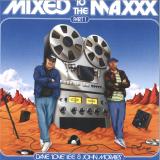
Dave 'Love' Lee & John Morale - Mixed To The Maxxx (PART ONE) (2x12")

Two of the most prolific remixers in the world of Disco,Dave 'Love' Lee and John Moraleshave teamed up for one of their biggest projects to date - 'Mixed To The Maxxx'. After gaining access from the legendary original artists, the pair take the multi-track tapes of many classic Disco, Funk & Soul tracks and re-work them...to the Maxxx!

Where Remixed With Love stands as Dave Lee's own gold-standard body of work, Mixed To The Maxxx sets that legacy alongside Morales' own decades-deep M+M body of work: Lee brings his musically dense, groove-first touch to the likes of Harold Melvin, Syreeta, Lenny Williams and The Brand New Heavies, while Morales applies his extended, dancefloor-built M+M treatment and crushes the likes of Barry White, The Temptations and Loleatta Holloway, plus Dennis Coffey's breakbeat classic "Scorpio" for the DJs and collectors alike. Both work from original tapes, surfacing parts barely audible or entirely unheard in the source mixes, and both know when to let a classic breathe rather than bury it under modern production. It's a pairing a long time in the making. Lee and Morales first talked about working together around a decade ago, and getting Mixed To The Maxxx off the ground took five years of patient work: tracking down usable stems, securing approvals, and navigating a licensing landscape where much of the best material is now tied up with major labels increasingly cautious about clearing remixes. What's landed here is the product of that graft as much as the pair's shared ear for a great record, the sound of two people who know exactly what they're looking for and are willing to put in the time to find it.

A double 12" sampler in summer 2025 previewed the record's range. A bass-driven overhaul ofThe Brothers Johnson's "The Real Thing" and an extended mix of Philly legends Bell & James' "Livin' It Up (Friday Night)" showcased Lee's side, while an anthemic take on Inner Life's "Ain't No Mountain High Enough" and a tempo-lifted Light Of The World"London Town" flew the flag for Morales. Both drew strong early support ahead of the full LP.

out of Stock

Order now and we will order the item for you at our supplier.

Last In: 5 days ago
27,31 €
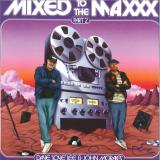
Dave 'Love' Lee & John Morale - Mixed To The Maxxx (PART TWO) (2x12")

Two of the most prolific remixers in the world of Disco,Dave 'Love' Lee and John Moraleshave teamed up for one of their biggest projects to date - 'Mixed To The Maxxx'. After gaining access from the legendary original artists, the pair take the multi-track tapes of many classic Disco, Funk & Soul tracks and re-work them...to the Maxxx!

Where Remixed With Love stands as Dave Lee's own gold-standard body of work, Mixed To The Maxxx sets that legacy alongside Morales' own decades-deep M+M body of work: Lee brings his musically dense, groove-first touch to the likes of Harold Melvin, Syreeta, Lenny Williams and The Brand New Heavies, while Morales applies his extended, dancefloor-built M+M treatment and crushes the likes of Barry White, The Temptations and Loleatta Holloway, plus Dennis Coffey's breakbeat classic "Scorpio" for the DJs and collectors alike. Both work from original tapes, surfacing parts barely audible or entirely unheard in the source mixes, and both know when to let a classic breathe rather than bury it under modern production. It's a pairing a long time in the making. Lee and Morales first talked about working together around a decade ago, and getting Mixed To The Maxxx off the ground took five years of patient work: tracking down usable stems, securing approvals, and navigating a licensing landscape where much of the best material is now tied up with major labels increasingly cautious about clearing remixes. What's landed here is the product of that graft as much as the pair's shared ear for a great record, the sound of two people who know exactly what they're looking for and are willing to put in the time to find it.

A double 12" sampler in summer 2025 previewed the record's range. A bass-driven overhaul ofThe Brothers Johnson's "The Real Thing" and an extended mix of Philly legends Bell & James' "Livin' It Up (Friday Night)" showcased Lee's side, while an anthemic take on Inner Life's "Ain't No Mountain High Enough" and a tempo-lifted Light Of The World"London Town" flew the flag for Morales. Both drew strong early support ahead of the full LP.

out of Stock

Order now and we will order the item for you at our supplier.

Last In: 5 days ago
27,31 €
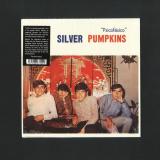
THE SILVER PUMPKINS - PSICOFASICO

THE SILVER PUMPKINS

PSICOFASICO

7"-Vinyl178643
MUNSTER
17.09.2026

"Psicofásicos" by The Silver Pumpkins is a unique document: an EP that is virtually impossible to find in its original edition, offering an essential glimpse into Bolivia's thrilling 1960s rock scene-raw, wild, and unlike almost anything else. Beyond the ubiquitous covers of Cream and Jimi Hendrix recorded by countless South American bands, this EP features the far less common 'Pushing Too Hard' by The Seeds and, most notably, the dark, powerful 'You're Gonna Miss Me' by the 13th Floor Elevators. Bolivia boasts an extraordinary musical legacy of raw, garage-driven '60s sounds. Alongside Peru, it was one of the South American countries where the greatest number of recordings in this style were released-captured with limited resources but overflowing with spontaneity, energy, and attitude. The difficulty of obtaining the records that were shaping the latest Anglo-American rock trends of the 1960s in many Spanish-speaking Latin American countries led to a proliferation of local bands covering their musical heroes. Well-known artists such as Cream, Jimi Hendrix, and Iron Butterfly were reinterpreted by countless groups, making these songs available to local audiences without having to rely on imported records reaching their countries. By doing so, these bands helped spread the cutting-edge rock music already making waves elsewhere in the world. What makes this release particularly unusual is that the band chose to cover second-tier cult acts rather than the obvious classics-groups that only briefly cracked the U.S. Top 50 in the late '60s, such as The Seeds and 13th Floor Elevators. Originally released on the Bolivian Psicofásico label, this exceptionally rare EP pairs The Seeds' garage anthem 'Pushing Too Hard' with the ferocious, immortal 'You're Gonna Miss Me' by Roky Erickson and the 13th Floor Elevators. The raw power of the original songs is pushed even further here by the rudimentary recording techniques and the limited instrumental skills of the very young members of The Silver Pumpkins. The result is a one-of-a-kind document-virtually impossible to find in its original pressing-that helps complete the picture of Bolivia's fascinating '60s rock scene. First-ever reissue.

out of Stock

Order now and we will order the item for you at our supplier.

Last In: 16 days ago
12,82 €
Jesse Malin - Friends of Jesse Malin
  • 1: Shining Down
  • 2: Dance With The System
  • 3: Almost Grown
  • 4: Too Loose
  • 5: I Would Do It For You
  • 6: Bar Life
  • 7: Here's The Situation
  • 8: Keep On Burning
  • 9: Black Haired Girl
  • 10: Everybody Wants To Rock And Roll
  • 11: Don't Let Them Take You Down (Beautiful Day!)
  • 12: Broken Radio
  • 1: She Don't Love Me Now
  • 2: Brooklyn
  • 3: Cigarettes and Violets
  • 4: In The Summer
  • 5: Silver Manhattan
  • 6: Since You're In Love
  • 7: NY Nights
  • 8: Ameri'ka
  • 9: Xmas
  • 10: Wendy
  • 11: Burning The Bowery
  • 12: High Lonesome
  • 13: She's So Dangerous
  • 14: You Know It's Dark When Atheists Start To Pray

Friends of Jesse Malin: I Would Do It For You – Vol. 1 brings together musicians from the worlds of rock, punk, Americana, and the underground to celebrate one of modern rock's most respected songwriters. "I've been a fan of Jesse Malin for decades now so I was thrilled when Valley Lodge was asked to be a part of the tribute album,”says Dave Hill. The song originally appeared on D Generation’s 1996 album, No Lunch. "'Too Loose' has always been one of my favorites—a great and timeless rock song that we had a blast re-interpreting." Produced by Lyle Hysen, Friends of Jesse Malin: I Would Do It For You Vol 1. is the first in a two-volume series of nearly 80 songs (!) recorded by Jesse’s friends and community. Proceeds from the album will benefit Malin’s healthcare as he recovers from a paralyzing spinal stroke. Vol. 2 will feature Thurston Moore, Willie Nile, and many more. "Friends, collaborators, and artists from every corner of Jesse's world wanted to be involved," says Hysen. "The songs just kept coming. What started as a single collection quickly grew into something much bigger, encompassing almost the entire Malinverse. We're excited that this is only the first chapter." The compilation features contributions from Amanda Cross, Bebe Buell, Trapper Schoepp, Valley Lodge, Danny Sage, James Maddock, Gogol Bordello, Ursa Minor, Sami Yaffa, Prima Donna, Das Damen, Rene & Grace Mata, Dead Milkmen, Cat Popper & Sasha Dobson, Robinlee Garber, The Seashore Sharks featuring Jesse and Alexei Sanoff, Derek Cruz, Jill Fiore, Matt Madly & Co., Davey La, American Dream, Joe McGinty, Randy Schrager, Stephen Chopek, Ben Foley, and Kelley Swindall. Friends of Jesse Malin: I Would Do It For You – Vol. 1 will be available digitally, on vinyl, and as a deluxe double-CD edition. The vinyl release features twelve tracks across two sides and includes a download code for the complete digital collection, while the CD edition presents all 26 songs across two discs.

pre-order now11.09.2026

expected to be published on 11.09.2026

26,47 €
MATT WATTS - RESTLESS KIND

The late Matt Watts was an American songwriter/storyteller and performer from Montana residing in Antwerp and Brussels, Belgium. He ws the son of a catholic priest and mother with Cherokee roots in the Carolinas.

He first began using the electric organ to write songs and also recording them on cassettes when he was 11 years old. When he was 13 his mother bought him an electric guitar from a pawn shop in South Carolina. Using a karaoke machine as an amplifier, he began writing and performing and recorded his first album at age 15 in a small studio in Great Falls, Montana.In addition to writing and performing his own music, he began performing and touring with various local Punk & Noise bands.

In 2007 when he was 19, he moved to Antwerp, Belgium. Since his arrival he has worked and performed with Zita Swoon Group, become a member of Rudy Trouvé's I H8 Camera, translated Simon Allemeersch and Rudy Trouvé’s critically acclaimed piece SCREEN into English, formed The Calicos (now Humo’s Rock Rally winners under Quinten Vermaelen) as a one time backing band, worked with many artists and songwriters (including Emillina Torini & The Colorist, The Love Substitutes, ..) and toured and released various widely acclaimed solo albums and a duo album with Nicolas Rombouts on Starman Records.

Highlights for sure were “How Different It Was When You Were There” (2017 - **** De Standaard), produced by Nicolas Rombouts (ex-Dez Mona) and featured guest performances by Nathalie Delcroix and Bjorn Eriksson (Eriksson Delcroix) and Stef Kamil Carlens. Its excellent successor “Queens” (produced by Stef Kamil Carlens and Nicolas Rombouts) featured a.o. the late Sandy Dillon and Jim White.

Sadly Matt Watts passed away too soon in June 2024. “Restless Kind” is the final album readied shortly before his death in a production by Bai Kamara Jr. Another astonishing collection of intimate Americana songs with lyrics as fascinating miniature novels.

pre-order now04.09.2026

expected to be published on 04.09.2026

25,17 €
Various - Tchic Tchic: French Bossa Nova 1963-1974  Colored Edition LP 2x12"
 
22

Ever since the late 1950s bossa-nova revolution, Brazil’s influence on French music has been undeniable. Pierre Barouh, Georges Moustaki and a vast array of lesser known artists, all made the Musica Popular Brasileira (MPB) an axis of promotion at the service of a cool and metaphysical, modern and mixed Brazilian lifestyle. Some were seduced by the poetic languors of the bossa, some were looking for fun, and others just loved the American hybridization of jazz-bossa, jazz-samba.


What is bossa nova? One of its creators, Joao Gilberto said: "Its style, cadence, everything is samba. At the very start, we didn't call it bossa nova, we sang a little samba made up of a single note - Samba de uma nota so .... The discussion around the origins of bossa nova is therefore useless”. It is nevertheless useful to remember that these magnificent Brazilian songs, which the guitarist describes as samba, were shifted and balanced around improbable chords. "I like things that lean, the in-betweens that limp with grace," said Pierre Barrouh, quoting Jean Cocteau.


With emotion, arrangements for violin and supple guitar licks, bossa nova rapidly changed. A transformation that can be heard in the Tchic, tchic, French Bossa Nova 1963-1974 compilation, the result of a cultural reappropriation, which traveled through the United States and supplemented itself in France.

A musical revolution that has remained significant, bossa nova was born in Rio. From 1956 to 1961, Brazil lived through its golden years. In five years, the country had invented its modernist style. Elected president in 1956, Juscelino Kubitschek de Oliveira, an elegant man with a broad forehead, brandished a promising slogan: "Fifty years of progress in five years". He quickly got to work. Not worried about increasing debt, he launched the project for a new federal capital, Brasilia, designed by the communist architect Oscar Niemeyer. Volkswagen opened state-of-the-art factories and created the “fusquinha”, the Beetle. In Rio, the Vespa made its first appearance. The Arpoador Surf Club crew run into the “girl” from Ipanema, Helô Pinheiro - the tanned garota ("chick"), between a flower and mermaid, who at 17 walked by the Veloso bar, where the fiery author and composer, Tom Jobim and Vinicius de Moraes, were getting drunk on whiskey. From then on, bossa symbolized cool.

In 1958, Joao Gilberto recorded Chega de Saudade, which the directors of Philips denied, calling it "music for fagots". The marketing director, who believed in it, secretly pressed 3000 78-inch vinyls and distributed them at schools around Rio, creating a tidal wave.

American jazzmen then took over. In particular, trumpeter Dizzy Gillespie and guitarist Charlie Byrd. In November 1962, the Brazilian Ministry of Foreign Affairs funded a "Bossa-Nova" concert at Carnegie Hall in New York, inviting the genre’s pioneers. Unprepared, the show soon turned to disaster. But the troupe was invited to the White House by Jackie Kennedy. The first lady loved "the new beat" and in particular Maria Ninguem, a song by Carlos Lyra, later covered by Brigitte Bardot.

In Brazil, the 1964 military coup quickly ended this euphoria. The destructive atmosphere that ensued pushed many Brazilian musicians to leave, if not to exile. Thus, Tom Jobim, Sergio Mendes and Joao Gilberto arrived to the United States. In New York, Joao Gilberto met saxophonist Stan Getz. At the time, he was married to the Bahianese Astrud Weinert Gilberto, who had a German father. She had never sung before, but she knew how to speak English. Getz therefore asked her to replace her husband on The Girl From Ipanema. The Getz/Gilberto record with Tom Jobim on piano, was released in March 1964. Phil Ramone, the "pope of pop" was in charge of sound.

Bossa nova arrived in Paris through the classic “guitar-voice” channel (Pierre Barouh, Baden Powell, Moustaki…) But France loved jazz and Paris had already welcomed its American contributors. All these good people were to pass through Saint-Germain-des-Prés. The cabaret l'Escale became the Mecca of Latin American sound where one could find Pierre Barrouh and his friends, such as the Camara Trio, samba-jazz aces, whose only record was published by the Saravah label. With a band strangely called Les Masques (a band that included Nicole Croisille and Pierre Vassiliu, among others), the Camara Trio recorded an interesting Brazilian Sound, including the track Il faut tenir which is present on this tasty compilation of rarities.

Other enlightened musicians can also be found on the compilation, such as Jean-Pierre Sabar (songwriter for Hardy, Auffray, Leforestier ...) and the French pop rock organist Balthazar. In 1975, Sabar recorded Aurinkoinen Musiikkimatka on a Finnish label, which featured the crazy Vai, Vai, included on this record. We are now following the footsteps of Brazilian electronic musicians such as Sergio Mendes, Eumir Deodato or Marcos Valle who created funk and disco sounds on their keyboards and synthesizers. A style that influenced Véronique Sanson when she wrote Jusqu’à la Tombée de la nuit in 1969 for Isabelle de Funès, the niece of Louis and a great friend of Michel Berger - Sanson did end up singing this track on her 1992 Sans Regret record.


The pinnacle of exoticism and travel, Sylvia Fels’ Corto Maltese includes bongos, sea mist and ocean sounds. The title was taken from Jacky Chalard’s concept album written in 1974, Je suis vivant, mais j’ai peur (I am alive, but I am scared), based on Gilbert Deflez’s science fiction novel.


However, bossa nova extended the scope of popularity. "In the 1970s, I was a fan of Sergio Mendes, Getz / Gilberto. I fell in love with this music that I knew because I had been an orchestral singer, " explained Isabelle Aubret, who in 1971 delivered a composite record of covers by the very funky Jorge Ben, Orfeu Negro, Tom Jobim, Vinicius de Morais and Jean Ferrat. "I recorded this album for Meys Records in Paris, far from Brazil, with wonderful musicians, François Raubert, Roland Vincent, Alain Goraguer...". The latter wrote the arrangements for Casa Forte, a very percussive title borrowed from Edu Lobo, one of the initiators of the bossa who spent time in California. "Jazz and bossa came together and produced very rhythmic music. I love singing, it allows me to dream, to have fun, to feel a high on stage, and these songs brought me joy, made me swing, my singing felt like a dance.”


The world tours of French singers and their desire for the tropics, often brought them to Rio with its hills, forests, caipirinhas and tanned bodies. There are surprises though, like this Iemenja (Iemenja is the goddess of the sea in the Afro-Brazilian candomblé religion). Not unlike the composer and musician Jean-Pierre Lang, based in Sao Paulo, Claire Chevalier taught Brazil to Brazil. In 1970, the singer and painter published a 45-inch vinyl, Mon mari et mes amants (My husband and my lovers), under the improbable pseudonym of Clarinha (little Claire). She was then living in Rio, with her husband, Joël Leibovitz, who founded a band called Azimuth, and who owned a record label specialized in "sambas enredos" songs for samba school parades.


For its B side, she asked Pierre Perret to come up with lyrics for a song composed by Carlos Imperial: "Oh goddess of the sea, o goddess Iemenja, I bring a white rose to adorn your long hair ..." . "Perret came to see us, and we had fun, remembers Joël Leibovitz. We wrote Lemenja for fun, we recorded it at the Havaí studio, behind the Central do Brasil the central station. Erlon Chaves, the arranger who worked with Elis Regina, joined us" adding his share of Afro-Brazilian percussions and funky brass to the mix.

There is a common misunderstanding in Franco-Brazilian history: that bossa, admittedly hedonistic, is perceived as funny, even though the poets who wrote the texts are often philosophizing on the human condition. Its French interpreters pull it towards a carnival inspired universe, far removed from its fundamental essence. Thus, Jean Constantin covered the famous Samba da minha terra, an ode to the art of samba written by the classic Bahian composer Dorival Caymmi, renaming it with the enticing title of Pas tant de tchi tchi pompon: "On your pier there is no tchi tchi / when you arch your back, you know everything is alright ”(lyrics by Gérard Calvi). This expedited bossa aims for the absurd, but retains a certain elegance.

Indeed, Jean Constantin was not an idiot, the rather large man had a huge mustache and liked fantasy, (Les pantoufles à papa, Le pacha, inspired by cha-cha-cha-cha, salsa and jazz) but he was also the lyricist of Mon manège à moi interpreted by Edith Piaf, the composer of Mon Truc en plume by Zizi Jeanmaire and the soundtrack of François Truffaut’s 400 Blows. Le Poulpe, published in 1970, from which this bossa is extract, was arranged by Jean-Claude Vannier, an accomplice of Serge Gainsbourg’s Melody Nelson. In short: "There is enough of samba / By looking at the parasol / Because my poor cabeza / Is going to die in the sun".

Even the American actress Marpessa Down, who was at the heart of the bossa nova revolution with her role as Euridyce in Marcel Camus’ film Orfeu Negro, winner of the 1959 Cannes Palme d'or, fed the clichée with Je voudrais parler au petit cuica - "Tell me how you manage to always make people want to dance / It's true, I must admit that I cannot resist your magic" - in consequence, once can hear the cuica, a little drum inherited from the Bantu.


But bossa nova had many angles. Societal, of course, pushing actresses who were symbols of women's liberation like Brigitte Bardot, Jeanne Moreau, or Sophia Loren to engage in the exercise of accelerated bossa. In February of 1963, Sophia Loren made a record in French in Rome, Je ne t'aime plus, featuring the song De jour en jour, a bossa written by two Italians, Armando Trovajoli and Tino Fornai, which was released a little later by Barclay. Bossa accompanied the 1960s, a decade of moral liberation. Ann Sorel, who interpreted La Poupée des favellas, caused a sensation with L’amour à plusieurs, a provocative song written by Frédéric Bottom and Jean-Claude Vannier. As for the actress Andrea Parisy, she displayed her bourgeois cheekiness in Marcel Carné's Les Tricheurs before interpreting Les mains qui font du bien. And Magalie Noël, the friend of Boris Vian, who sung Johnny fais-moi mal, was hired to sing Une énorme Samba, composed by Alain Goraguer (arranger to Gainsbourg, Bobby Lapointe and Jean Ferrat) with lyrics by Frédéric Botton.

But in the end, of what wood is bossa nova made of? The answer is given by Christianne Legrand, daughter of Raymond the conductor, and sister to Michel the composer: "With me, with jà" - jà means "immediately" in Portuguese. In 1972, the singer, an expert in vocal jazz and a member of the Double Six, published Le Brésil de Christianne Legrand. Two songs included on the Tchic Tchic compilation that demonstrate how bossa, jazz, funk, rock, etc. work like a swiss army knife: the music is used to denounce broken systems, or miracles, HLM et ciné roman, Cent mille poissons dans ton filet, two songs from the O Cafona soundtrack, a successful telenovela broadcast, at the time in black and white, on TV Globo. The first was adapted in French by the fighter and friend of the Legrand tribe, Agnès Varda. The second is content with a play on words, jostling them into a summer fun.


Véronique Mortaigne

out of Stock

Order now and we will order the item for you at our supplier.

Last In: 86 days ago
27,31 €
Beatrice M - Sinking Part A/B

Beatrice M

Sinking Part A/B

12inchTECLP028.1
Tectonic
25.06.2026
 
4
also available

C/D Side[18,45 €]

E/F Side[18,45 €]


On June 5th, Tectonic Recordings will release Beatrice M.’s debut LP, Sinking, on a vinyl triple pack and digital download. The vinyl edition will be split across 3 separate 12” vinyl releases, packed in matching printed disco bags. This is part 1 of 3.
Beatrice M. pushes the needle forward for a sound and scene that nestles among a niche that blends UK dubstep, techno, and the golden era of tech house. The Paris-born artist is in their mid-20s and has been building up a grassroots following and plenty of momentum over the last few years, through their Bait label and its output of sonically resonant artists, alongside numerous remixes and collaborative and solo releases for labels such as Tectonic, Tempa, and Rinse. There are plenty of accolades coming in for Beatrice's work too, with notable DJ mixes for respected heavyweights such as Mixmag as well as featuring in Resident Advisor’s best mixes of 2025.
Beatrice is known for making deep explorations into the history of the scenes that have interested them, tracking and highlighting connections between dubstep, tech house, jungle and beyond across various self-produced, one-off radio shows, often taking a journalistic approach to subjects of true passion. They travel across Europe on a packed-out DJing schedule, avoiding air travel, and doing it mainly by train. Many of the LP's tracks started life as sketches put together on these long journeys, as the sights of different countries rolled past the window.
Having taken inspiration from Tectonic artists such as 2562, the label – a home to music that was originally placed in the dubstep-techno crossover spectrum—feels like the perfect place to host Beatrice M.'s debut album Sinking, beginning a new chapter for this kind of sound.
Opening track ‘Ever’ plunges us into deep waters with a sense of dubwise command. The momentum picks up on ‘Ocean’, where the vocal snippet "everyday life" circles around reverbed stabs and intricate hi-hat moves. ‘Motion’ sets the pace with its jumpy but rolling rhythm, leading straight into the eyes-down, party-time energy of ‘Disco Corner’.

out of Stock

Order now and we will order the item for you at our supplier.

Last In: 73 days ago
13,03 €
Beatrice M - Sinking Part C/D

Beatrice M

Sinking Part C/D

12inchTECLP028.2
Tectonic
25.06.2026

On June 5th, Tectonic Recordings will release Beatrice M.’s debut LP, Sinking, on a vinyl triple pack and digital download. The vinyl edition will be split across 3 separate 12” vinyl releases, packed in matching printed disco bags. This is part 2 of 3.
Beatrice M. pushes the needle forward for a sound and scene that nestles among a niche that blends UK dubstep, techno, and the golden era of tech house. The Paris-born artist is in their mid-20s and has been building up a grassroots following and plenty of momentum over the last few years, through their Bait label and its output of sonically resonant artists, alongside numerous remixes and collaborative and solo releases for labels such as Tectonic, Tempa, and Rinse. There are plenty of accolades coming in for Beatrice's work too, with notable DJ mixes for respected heavyweights such as Mixmag as well as featuring in Resident Advisor’s best mixes of 2025.
Beatrice is known for making deep explorations into the history of the scenes that have interested them, tracking and highlighting connections between dubstep, tech house, jungle and beyond across various self-produced, one-off radio shows, often taking a journalistic approach to subjects of true passion. They travel across Europe on a packed-out DJing schedule, avoiding air travel, and doing it mainly by train. Many of the LP's tracks started life as sketches put together on these long journeys, as the sights of different countries rolled past the window.
Having taken inspiration from Tectonic artists such as 2562, the label – a home to music that was originally placed in the dubstep-techno crossover spectrum—feels like the perfect place to host Beatrice M.'s debut album Sinking, beginning a new chapter for this kind of sound.
Given Beatrice M.’s reputation as a prolific collaborator, the LP naturally features a few heavy-hitting joint efforts. Bristol-based Sir Hiss features on the subby, 140bpm techno thumper ‘Juice’, while the LP title track, ‘Sinking’, brings forward Beatrice M.’s fresh take on influences from Tectonic’s past in a bass-driven 4/4 number that demands physical movement. ‘Dear Dubstep’ allows a moment to reflect, placing us in a spacious aqua-cave where atmospheric sounds are punctuated by wumping sub-bass, before we surface with ‘Help’ to catch our breath in the melancholy of the moment.

out of Stock

Order now and we will order the item for you at our supplier.

Last In: 73 days ago
18,45 €
Beatrice M - Sinking Part E/F

Beatrice M

Sinking Part E/F

12inchTECLP028.3
Tectonic
25.06.2026

On June 5th, Tectonic Recordings will release Beatrice M.’s debut LP, Sinking, on a vinyl triple pack and digital download. The vinyl edition will be split across 3 separate 12” vinyl releases, packed in matching printed disco bags. This is part 2 of 3.
Beatrice M. pushes the needle forward for a sound and scene that nestles among a niche that blends UK dubstep, techno, and the golden era of tech house. The Paris-born artist is in their mid-20s and has been building up a grassroots following and plenty of momentum over the last few years, through their Bait label and its output of sonically resonant artists, alongside numerous remixes and collaborative and solo releases for labels such as Tectonic, Tempa, and Rinse. There are plenty of accolades coming in for Beatrice's work too, with notable DJ mixes for respected heavyweights such as Mixmag as well as featuring in Resident Advisor’s best mixes of 2025.
Beatrice is known for making deep explorations into the history of the scenes that have interested them, tracking and highlighting connections between dubstep, tech house, jungle and beyond across various self-produced, one-off radio shows, often taking a journalistic approach to subjects of true passion. They travel across Europe on a packed-out DJing schedule, avoiding air travel, and doing it mainly by train. Many of the LP's tracks started life as sketches put together on these long journeys, as the sights of different countries rolled past the window.
Having taken inspiration from Tectonic artists such as 2562, the label – a home to music that was originally placed in the dubstep-techno crossover spectrum—feels like the perfect place to host Beatrice M.'s debut album Sinking, beginning a new chapter for this kind of sound.
The album's lead single and sole vocal track, ‘In Touch’, showcases Beatrice M.’s split UK-France upbringing. The track unites French MC Kaba and UK MC Jinnal for a bass-driven anthem that seamlessly trades French and English lyrics. Next up is a vinyl exclusive track: the ‘Remedy Mix’ VIP of ‘Poison’, a rolling, bass-driven tech house/techno crossover version of a track originally released on the Tectonic Sound collection from last year.
‘Here’ sees Beatrice M. collaborating with Jay Carder to create a soulful broken-beat flavoured track as ‘Years’ rounds off the journey with contemplative melancholy, providing a deep and dubby closer.

out of Stock

Order now and we will order the item for you at our supplier.

Last In: 73 days ago
18,45 €
FÉLICIA ATKINSON - SANS VISAGE

Atkinson first saw Les yeux sans visage when she was a teenager, around the turn of the century. The film made an impact for its iconic imagery and the way Franju draws on the aesthetics of early filmmaking, from its score that relies on stylistic markers typical of the 1940s or 50s to the decision to shoot in black and white. Even four decades after its first release, it was clear that this was a work that stood outside of the cultural moment that birthed it, speaking through time in ways that were uncanny, but profound.

A quarter-century later, Atkinson was approached by the Belgian cultural center VIERNULVIER to create a new score for Les yeux sans visage for its celebrated Videodroom series, which has seen artists like claire rousay, Mabe Fratti, Lee Renaldo, and many more create new original scores for cult classics and genre cinema. Atkinson's music, with its sublime meditations on space and proximity, its elusive sense of narrative development, mirrors the pacing and mystery at the heart of horror filmmaking. There is a shadow at the heart of her soundtrack to Les yeux sans visage, an ever-shifting wisp and an insinuation of encroaching transfiguration. Echoing a climactic moment in the film, the music obliquely points to "the Beyond," an impossible place of discovery and revelation.

Atkinson envisioned her music as something akin to the air moving throughout and beyond the many cages that appear in the film, unconstrained by the bars and with undefined borders. Those cages hold the victims of a madman surgeon, determined to graft a new face onto his daughter, the protagonist Christiane Génessier, who lost hers in a car accident while he was behind the wheel. Atkinson was reminded of her predecessors at the pioneering French studio the GRM, who approached sound in a less sinister, but similarly surgical manner, and took inspiration from their playful approach to cerebral soundmaking for the electroacoustic topography into which the piano is embedded. As such, Atkinson’s reactions to the larger themes and the minute-by-minute happenings onscreen are both audible simultaneously.

A film about a man who destroys the lives of young women marked by their beauty and similarity to his daughter in a shame-fueled rage has clear, continuous cultural resonance. "Through the music, I decided to bring back their empowerment despite what they endure," says Atkinson. "This is why the record is also dedicated to Gisèle Pelicot, whose trial happened while I was in the process of composing the music and kept thinking of her strength and her decision to share her trial in order to reverse the shame."

This recorded version of the soundtrack is a 34-minute synthesis of the full 90-minute score, presented on LP along with an essay by writer-musician Claire Cronin and drawings by Momo Gordon, together forming a complex reflection on the film's themes. If these sounds move as if the bars of cages are no barrier, they also intimate the freedom and power of those held behind them. Rather than simply mirroring the fear and confinement shown onscreen, Atkinson offers an elusive escape, a beacon for the characters, and the listener, to follow as they reckon with the narrative and move through it.

out of Stock

Order now and we will order the item for you at our supplier.

Last In: 3 months ago
21,43 €
Molen / Harry Wills - Sheffield, London, Montevideo

Next in our original series we’re bringing together two artists from opposite sides of the globe, encompassing various influences which have helped make Seven Hills what it is today. Much like how Uruguayan dance music takes many of its cues from 90’s UK techno, not least the bleep influences from Sheffield, we’ve come full circle by becoming, in-turn, inspired by them too.

The A side is commandeered by Molen, making a welcome return to the label and delivering two groove laden, bass heavy tracks, both suitable for various peak-time situations. Whilst on the B side we’re pleased to have Harry Wills, a producer whose technical prowess we’ve respected for a long time. Harry’s tracks are more contrasting: the monster that is Big in the Backtime for those face melting moments, and Scape, a subdued, heady, space-faring excursion.

out of Stock

Order now and we will order the item for you at our supplier.

Last In: 33 days ago
12,40 €
Calypso - Musical Poetry In The Caribbean 1955-69 (2x12")
  • 1: Lord Cobra y Los Pana Afros – Man On The Moon
  • 2: Young Growler – Pussy Galore
  • 3: Lord Hummingbird – Teenage Bossa Nova Girl
  • 4: Lord Byron & Orquesta Nueva Alegria – Yes Parssin
  • 5: Cyril Diaz & His Orchestra – Voodoo
  • 6: Lord Flea & His Calypsonians – Out De Fire
  • 7: Brownie – The Bed Bug Song
  • 8: Count Zebra and The Seasiders – Cat-O-Nine
  • 9: Carlos Malcolm & His Afro Jamaican Rhythm – Elena
  • 10: Azie Lawrence and The Carib Serenaders – West Indians In England
  • 11: Lord Cobra y Los Pana Afros – Negro Heart
  • 12: Lord Kitchener – Love In The Cemetery
  • 13: Charlie Binger & His Quartet – Jamaica Is The Place To Go
  • 14: Mighty Dougla – Exchange No Robbery
  • 15: Viper – Dog Better Than Man
  • 16: Lord Kitchener – Jamaican Woman
  • 17: JB Williams Band – Gee Bongo Lady
  • 18: Lord Ivanhoe & His Caribbean Knights – Lift The Iron Curtain
  • 19: King Fighter – People Will Talk

Soul Jazz Records’ ‘Calypso – Musical Poetry in the Caribbean’ was first issued in 2014 and has been out of print for nearly 10 years. On its release ‘Calypso’ was voted one of the year’s best 50 reissues in Rolling Stone magazine and received glowing reviews in Pitchfork, The Guardian, Songlines and many more. This new edition has been fully remastered and comes as a one-off limited-edition double vinyl pressing on translucent green vinyl, complete with bespoke inners featuring extensive sleevenotes, notes on all the artists and songs featured, and original artwork and photography. The album is also available in a new card-edition CD package, also with complete notes and text.

Featuring Lord Kitchener, The Mighty Viper, Count Zebra, Lord Flea, Lord Hummingbird, King Fighter, Lord Growler, Lord Byron, Lord Ivanhoe and other members of Calypso’s aristocracy and aristocrats, the album features the music of Calypso in its many styles. Calypso is one of the most exciting and enduring forms of musical expression that first emerged at the beginning of the 20th century – swinging, persuasive rhythms, brilliantly expressive melodies, and lyrics of great humour, wisdom and wit. Here you will find music from Trinidad, birthplace of Calypso, other Caribbean islands including Jamaica and the Bahamas, as well as sounds from the style’s subsequent onwards journey including Britain, Panama and the United States. Calypsonian songs play out a role in society similar to the storytelling Griots of West Africa (and the corresponding music of Kaiso); with their own tales about popular and incredible news items, modern life, local politics all mixed up with sexual innuendo, one-upmanship, comedy and more. At its source, Calypso is intricately and inextricably bound to the social history of Trinidad and its myriad of traditions, beliefs, folklore and fables. As the music spread around the world, both from the diaspora of many of its performers as well as its commercial success, the subjects of songs similarly took on local topics.The most notable singer of Calypso in England was the Trinidadian Lord Kitchener, who came to Britain in 1948 on HMS Empire Windrush, along with fellow Calypsonians Lord Beginner and Lord Woodbine.

pre-order now12.06.2026

expected to be published on 12.06.2026

30,67 €
STUART MOXHAM - WINTER SUN
  • 1: COTTONMILL LANE
  • 2: DAGGER AND PILL
  • 3: BEFORE WE PRAYED
  • 4: HEART OF GLASS
  • 5: THE QUIET ONE
  • 6: ANCIENT TIME
  • 7: A DIFFERENT DAY
  • 8: STATE OF PENITENTIARY
  • 9: DO THE LOCOMOTION
  • 10: STORMS
  • 11: A DIFFERENT DAY II

Few artists arrive as compellingly yet elusively as did Stuart Moxham upon the startling debut of Young Marble Giant's sole studio album, Colossal Youth. Initial excitement was thrust upon the young Alison Statton, who sang songs written by Stuart with a couple of exceptions. The unaffected tone of her voice was in steep contrast to the typical goings-on in that still quite punky time, but it was what she sang that fully sold it. Moxham's lyrics were both intensely personal and woefully oblique. There seemed to be a sort of story in there. Confusingly, that story often felt like it was Alison's rather than the fellow who'd penned it. The unexpected miracle a deal with Rough Trade and the album's subsequent success had the band stymied for a second act and it wasn't long before the group disintegrated, although circumstances often brought members and a few of their peers - among them Debbie Pritchard, Spike Williams, and a third Moxham brother, Drew. - Phil Moxham was the band's bassist - together in odd combinations and pairings. None of the three YMG members have been especially prolific, but it's Stuart's career that has seemed the least straightforward, as if he'd wondered, "What to do when your debut is a nearly perfect artefact?" In the case of his first "solo" full-length in thirty years, Stuart took the unusual step of entering an alien studio with American producer Dave Trumfio (who's also the leader of Pulsars and bassist for Mekons) and allowing him to decide what tracks (of a large number submitted by Stuart) to record, and how they'd be orchestrated. Or not. In this case - save for the writing and composing - it's really Dave's album as much as Stuart's. The tracks went with Dave back to LA, where they were mixed, a few parts added (including subtle backing vocals from the incredible Linda Smith) . . . then later unmixed and reworked by John Henderson and Roni Ayala back in Valencia. Both versions will be made available, and both have a compelling cohesion missing from some of Stuart's work since YMG. Stuart's minimalism is quite intact, the range of emotions quite wide. There are few artists operating today like Stuart Moxham, a composer of the upper echelon of innate talent who combines avant-garde ideas with deceptively forthright personal lyrics, solid hooks, ambience and vaguely off-centre instrumentation which defies the casual marketplace as confoundingly as it ever did to the underground, whatever that is these days. His songs have been admired and / covered by everyone from Lush to Kurt Cobain, adaptations in Japanese and even a French-language hit by Etienne Daho, adaptations by Hole, Galaxie 500, Magnetic Fields, Belle And Sebastian and many others - but a new Stuart Moxham album is a special kind of joy.

pre-order now12.06.2026

expected to be published on 12.06.2026

24,79 €
ANTHONY JOSEPH - THE ARK LP 2x12"

Time To Get On Board A New Black Universal Express.

With each new recording Anthony Joseph presents an imaginative, personal vision of contemporary black culture, and The Ark is yet another compelling album by the award-winning Trinidadian poet and musician. This second part of a sequence of two albums launched with last year’s Rowing Up River To Get Our Names Back, finds Joseph giving full vent to his desire to explore many thought-provoking themes. However, there is a specific thread running through the glorious offering of sounds.

”I was especially interested in the idea of using Afrofuturism as a means of using the future in order to correct the wrongs of the past,” explains Joseph. “And so a lot of lyrics reimage or imagine an alternate black history. At the same time there are elements of autobiography.” The aforesaid cultural phenomenon, a view of the black experience through the prism of science fiction and ancient Egypt and Africa, as mapped out by visionaries from music and literature such as Sun Ra, Parliament-Funkadelic and Octavia E. Butler, has previously inspired Joseph. His 2006 novel The African Origins Of UFOs was a multi-hued work, and the new music shows how Joseph

has, much like all significant artists, gone on to broaden his conceptual palette, creating beguiling new stories and images set to startling rhythms and tones. Tracks such as ‘James’, with its taut, crisp bass and dubbed-up brass, and ‘Transposition Of Space (Glissant)’, a potent evocation of the influential Martiniquan theorist set in a haze of jazz guitar and ambient synthesizers, are marvels of text-sound painting.

As for ‘Baron Samedi’, shaped by a languid, almost wounded guitar line and slow rise of horns that frame Joseph’s journey to the ‘mountain of fire, almost touching the sky’ it is an epic blend of commanding vocal delivery and dramatic sonic tapestry.

Joseph led the Spasm band in the early 2000s and recorded well-received albums such as Bird Head Son and Time, in which songs were largely based on spirituals or chants enhanced by improvisation. But his musical curiosity has naturally led to collaborations, and the new work is produced by Dave Okumu, the prodigiously talented guitarist-vocalist-composer known as the leader of Mercury Music Prize-nominated The Invisible, and who was also a member of the seminal band Jade Fox.

Having first performed together at a show curated by influential saxophonist-flautist Shabaka Hutchings at the storied Total Refreshment Centre In London during lockdown, Joseph and Okumu struck up a rapport that further developed when the former guested on he latter’s album. With the connection made Joseph knew Okumu was the ideal producer for this latest project, which has a freewheeling, almost black psychedelic thing. After sifting through demos and loops the guitarist made on pro-tools the poet started to live with the music. Many months later words began to take shape. Joseph then went into the studio with Okumu’s band and set about creating a magnum opus. Boasting a stellar cast such as vocalist Eska Mtungwazi, trumpeter Byron Wallen and keyboardist Nick Ramm, The Ark is a highly intricate musical mosaic framed by simmering funk grooves, wily jazz improvisation and haunting dub effects. Through the use of many genres the music has simply become its own genre.

The Ark can be perceived as a vessel or means of transport to new worlds, along the lines of Sun Ra’s Ark or Funkadelic’s Mothership, and the material it contains is a unique blend of who Anthony Joseph is and how he sees the world and society in these stimulating, challenging times. “It balances the personal with the universal in a much more vulnerable, accessible way than on previous albums,” Joseph explains.

“It has become less about a personal experience and more about a collective, communal experience in which the artist is conduit, messenger, urban griot.”

pre-order now22.05.2026

expected to be published on 22.05.2026

22,65 €
Radhika - Cine-Pop LP

Radhika

Cine-Pop LP

12inchGLAMLP075
GLASS MODERN
22.05.2026
  • 1: Theme from R.A.D.H.I.K.A (For David Lynch) ft Mitch Mitchell
  • 2: Feline Bandits ft Mitch Mitchell
  • 3: Starry Eyes ft Gerry Love & Mitch Mitchell
  • 4: Sleep w/ Tracyanne Campbell (Camera Obscura)
  • 5: Tum Hi Ho ft Vinita Dade
  • 6: Intermission Theme (Slight Return)
  • 7: Since Yesterday w/Mitch Mitchell/Tracyanne Campbell
  • 8: Cocoa Butter Eyes
  • 9: Future Me
  • 10: Theme from R.A.D.H.I.K.A (For Lalo & Laeticia)
  • 11: Nowhere Near ft Gerry Love & Tracyanne Campbell
  • 12: (Secret Track)

Radhika Meera Dade: “Ever since I entered this realm, music has surrounded me in every way possible. The sounds of magic have been nourishing my soul since birth, the first memories I have as a young child are listening to my dad’s eclectic vinyl collection. I feel so lucky to have been exposed to such a range of music at a really young age: artists from Alice Coltrane to The Go-Betweens, all of these musicians have subconsciously and consciously inspired me musically in many different ways”.

Glass Modern is very proud to present the debut album by Radhika Meera Dade. Cine-Pop is a collection of songs that flow gently and easily in and out of each other - a suite, a short film, everything an album should be. Coming in at 33.3 minutes, it’s the perfect length for an album, it doesn’t short change you, it doesn’t stay too long - it’s designed to be played in one sitting. It’s like being in a friend’s house and noticing the things that are most important in their life - objects, family portraits, records, musical equipment, their curated accumulation. It reflects so many things - culture, community, fandom and the incredible bond between Radhika and her father, Sushil, the Future Pilot AKA. The record spans generations and continents but its home is always Radhika and the family jams she made with Sushil in various garages, bedrooms and garden dens - her soaring voice and love of all kinds of music from Bollywood to Goth Pop to The Glasgow School. The songs are collected from memory and the immediacy of time - one goes all the way back to her 10 year old self penning Future Me, an eco anthem. In different moments other musicians appear - most notably key collaborator, Eric MacDonald, on hazy synth and keys, and Radhika’s mother Vinita, who has a gorgeous voice too. The Glasgow School is very present - Mitch Mitchell (The Pastels) , Gerard Love (Lightships/ ex-Teenage Fanclub) and Tracyanne Campbell (Camera Obscura) all bring their casual magic to the table. Cine-Pop, mostly made in Glasgow at La Chunky Studio with the excellent Colin McGeogh (who also contributes flute, keys and electronics) is a one-off. It’s unrepeatable - there, gone. It’s the world through the eyes of a dazzling young Indo-Scottish woman. Everything she is has gone into it, is part of it and is there for a reason. Following on from the first single, Starry Eyes, which was played multiple times on BBC 6Music and other stations, other singles to be released from the album include Feline Bandits plus a version of the Strawberry Switchblade classic Since Yesterday. Radhika will also be collaborating with Glasgow-based film maker, Laura Meek, on promos and the plan is to play live throughout the year.

pre-order now22.05.2026

expected to be published on 22.05.2026

25,28 €
Various - guerrilla girls! she-punks & beyond 1975-2016
  • A1: GLORIA In Excelsis Deo / Gloria (Version) - Patti Smith
  • A2: SURVIVE - The Bags
  • A3: IAMA POSEUR - X-Ray Spex
  • A4: I GAVE MY PUNK JACKET TO RICKIE - Mary Monday & The Bitches
  • A5: I DIDN’T HAVE THE NERVE TO SAY NO - Blondie
  • A6: YOU’RE A MILLION - The Raincoats
  • B1: POPCORN BOY (WADDLE YA DO?) - Essential Logic
  • B2: EXPERT - pragVEC
  • B3: MY CHERRY IS IN SHERRY - Ludus
  • B4: KRAY TWINS - Mo-Dettes
  • B5: EARTHBEAT - The Slits
  • B6: DAS AH RIOT - Bush Tetras
  • C1: BITCHEN SUMMER (SPEEDWAY) - Bangles
  • C2: SHAKEDOWN - Au Pairs
  • C3: IT’S ABOUT TIME - The Pandoras
  • C4: COME ON NOW - The Pussywillows
  • C5: RULES AND REGULATIONS - We’ve Got A Fuzzbox And We’re Gonna Use It!!
  • C6: HER JAZZ - Huggy Bear
  • C7: BRUISE VIOLET - Babes In Toyland
  • D1: REBEL GIRL - Bikini Kill
  • D2: PRETEND WE’RE DEAD - L7
  • D3: WHAT’S WRONG WITH YOU - Bratmobile
  • D4: LET GO OF THE PAST - The Tuts
  • D5: HOT - The Regrettes
  • D6: SILVER SPOONS – Skinny Girl Diet

• “Guerrilla Girls!”, Ace Records’ much-anticipated first release of 2023, takes us on a thrilling ride from punk’s mid-70s origins, via the left-field post-punk groups, jangly female combos, grunge bands and vigilante Riot Grrrls of the 80s and 90s, to the she-punk bands of recent years – a five-decade alternative to the macho hegemony of rock.

• The collection highlights songs that emerged out of a dynamic underculture of female creative expression. What unites the featured artists is a healthy disregard for the way the music industry ties up its female performers into pretty, neo-liberal packages. From Patti Smith, universal mother of the punk movement, to the Bags, Bikini Kill and Skinny Girl Diet, this music is anti-A&R. Including lesser-known names such as San Francisco street punk Mary Monday and London-based experimentalists pragVec, it shows that, rather than being a few novelty bands existing on the margins, these performers represent a stronger, more three-dimensional version of the female experience.

• Glorious resistance was on display in the first wave of UK female-fronted punk bands. Poly Styrene’s charged vocals on X-Ray Spex’s ‘Iama Poseur’, for instance, were a deliberate refusal to be a pretty punkette. With 15 year-old Lora Logic on saxophone, X-Ray Spex epitomised a fearless, self-defined agency that was at odds with the pastel shades and flowery, submissive Laura Ashley version of 1970s girlhood. By the early 80s, there was a hugely vibrant scene propelled by the diverse rhythms and voices of post-punk feminism. Lora Logic had left X-Ray Spex to form the interweaving textures of Essential Logic, the Mo-dettes mangled ska and off-kilter pop, and Birmingham band Au Pairs sliced political rigour into their lyrics and funky guitar work.

• Some female artists took that elemental energy into pop, creating pop-punk with a twist. We’ve Got A Fuzzbox And We’re Gonna Use It!! made a statement on music technology and female power with a cheeky play on words. Their song ‘Rules And Regulations’ shows that what Guerrilla Girls do well is debunking – taking genres of popular song and turning them inside out – like the way the Pandoras and the Pussywillows would amp up the driving beat and high vocals of the 60s girl group style, and subvert it with a DIY garage element.

• In its fanzine culture, use of montage and DIY music, 90s Riot Grrrl bands such as Bikini Kill and Bratmobile drew direct inspiration from 70s punk, articulated through the prism of Third Wave feminism. Too often, Riot Grrrl gigs were invaded by men intent on heckling “the enemy”. Liz Naylor, manager of British Riot Grrrl band Huggy Bear, says that their concerts became war zones. From the US grunge and Riot Grrrl scenes emerged more female instrumentalists, with bands such as L7 and Babes In Toyland proving that it was possible to recruit cutting-edge drummers, bass players and guitarists. Lori Barbero, whose relentless power drumming is a major element of Babes In Toyland, took the one instrument that has been a staple of male rock’n’roll and made it her muse.

• In the 2000s a new generation of girl-punk bands drew on the Riot Grrrl underculture to form their own sound. London trio the Tuts refashioned C86, Riot Grrrl and lush dream pop on songs like the ironically titled ‘Let Go Of The Past’, while the Regrettes injected shots of ska and doo wop into their explosive West Coast pop-punk. What began with Patti Smith and 70s punk has grown into a vast, spikey infrastructure of girl music. Many take inspiration from their foremothers, like Skinny Girl Diet whose vigilante feminism and punk distortion has been championed in return by Viv Albertine of the Slits. As long as these female artists stay aware of their musical vision and what they are trying to express – in a sense, A&R themselves – the underculture will continue to grow and flower. And this “Guerrilla Girls!” compilation is a celebration of that power.


• The back sleeve of the release features a scene-setting introductory essay by Lucy O’Brien (author of She Bop: The Definitive History Of Women In Popular Music). Each of the two discs come in a swanky inner bag containing a track commentary by compiler Mick Patrick (Ace Records’ long-serving champion of female artists of all persuasions) and exclusive interviews with many of the featured artists by Vim Renault and Lene Cortina (founders of the Punk Girl Diaries webzine).

out of Stock

Order now and we will order the item for you at our supplier.

Last In: 4 months ago
35,25 €
Cloud Management & Vivien Goldman - Whoops Wrong Planet

Cloud Management return to Altin Village & Mine for a unique collaboration with New York writer and creative polymath Vivien Goldman.

A pairing spanning generations and geography, but with a musical overlap that is quite fitting in both process and result. Cloud Management’s jammy, improvisational approach to their dubby electronics blends well with Goldman’s idiosyncratic vocal style, which has its origins in the early days of post–punk and UK dub experimentalism. Cloud Management blend many historical aspects of German electronic music into something distinctly their own, while retaining a view well beyond those borders or any particular era. This approach fits well with Goldman’s deep multidisciplinary career, not easily defined because of its eclectic abundance across disciplines, yet always orbiting around music as its foundation.

When it comes down to it, these are great tracks created in the same way they sound: loose but refined, circling and turning inwards and outwards, back onto themselves. A dub of a dub of a dub, but never falling too far from the source — the minimalism necessary to deliver a direct, steady resolve and a gripping listen.

The B–Side of the record features three remixes by artists from across the globe, all with strong connections to the front line of dancehall, dub, and electronic music experimentalism. Longtime Equiknoxx member Time Cow from Kingston (Jamaica), delivers a version of »Quick Cover Up« that represents a major overhaul of the original. This remix strips away much of the looseness of the source material and leans into a lush yet slightly darker atmosphere, created by layered synths and a masterful use of underlying percussion and melodic stabs.

Up next are Twin Cities, Minnesota–based Feel Free Hi Fi, who take on »Judge Judge.« The duo tighten things up, overlaying weighty vintage string synths and digi–flute melodies. This version feels designed for smoky, late–night dub sound system sessions, harkening back to dub’s foundations.

Last but not least is London’s Pat Orburn. Stripped way down, the remix rides an interplay between alternating minimalism and a more lo-fi but lush exuberance, somewhat reminiscent of a bossa nova–esque minimal synth sound. This version’s lo–fi pop sensibility provides a fitting contrast and completes an eclectic yet copacetic trio of remixes for the record.

out of Stock

Order now and we will order the item for you at our supplier.

Last In: 5 months ago
23,11 €
BCUC - The road is never easy

BCUC – Bantu Continua Uhuru Consciousness – have been channeling the spirit of Soweto for over twenty years. Indigenous funk, hip-hop consciousness, and punk rock energy fused into something utterly original and deeply rooted. Their mantra: Music for the people, by the people, with the people. From humble beginnings rehearsing in a shipping container, a stone's throw from the church where Desmond Tutu organized the escape of the most wanted anti-Apartheid activists, they kept believing in their dream of self-empowerment. Today they command festival stages worldwide: Glastonbury West Holts, Roskilde, Afropunk Brooklyn, WOMAD, Fusion, Sziget, FMM Sines, Beaches Brew, Boomtown, Colours of Ostrava, Couleur Café – to name just a few. In 2023, BCUC were honoured with the prestigious WOMEX Artist Award, an accolade usually reserved for more established artists, in recognition of their fearless work and transcendent live performances.

THE ROAD IS NEVER EASY

The Road Is Never Easy is BCUC's fifth album and their debut on Outhere Records. On this new offering, BCUC take listeners on another Afro-psychedelic journey into the soul of Soweto. It feels like a gospel sermon colliding with a punk concert, "guaranteed to touch untapped corners of your soul" (OkayAfrica). BCUC's music is deeply rooted in history and echoes the voices of the ones who came before. The road was never easy for the people of Soweto who originally came to work in the mines of Egoli, the City of Gold, Johannesburg. When apartheid finally ended after a long struggle, it was hoped that life would improve. But more than 30 years later, many of those initial hopes and dreams are still waiting to be fulfilled. This album is about that struggle. The album contains 10 brand new songs – a record for BCUC, whose previous albums featured an average of 3 songs. It represents the culmination of more than two decades of performing together and building a reputation as a powerful live act. These ten songs encapsulate that same live energy, each one building gradually and drawing you into BCUC's Afro-psychedelic stream of consciousness. It's a seismic tour de force through life in Soweto today. Songs like Amakhandela (Breaking All the Chains) connect history to daily life: "How is this precious metal inflicting so much pain in us," sing BCUC, "this government has been telling us we are free, but we don't benefit from being free." The album also talks about all the hopes and dreams that remain: "I have too many wishes and dreams in my head," BCUC sing in Um duma khanda, "I think I am losing my mind". The album ends with the soothing Matla a rona ke Bophelo, "our strength is life", praising the spirits and thanking the elders for protection. The Road Is Never Easy is about the harsh reality of life in Soweto, where "people always carry heavy loads". BCUC are street poets trying to deal with that burden: sometimes revolutionary, sometimes soothing, but always hopeful and compassionate. "When you are from Soweto you can't retreat nor surrender." (Sebenzela)

RECORDING

The album was largely recorded in Munich, Germany during tour breaks over two sessions, each three days long. It took place in a small studio located in a German WW II bunker converted into rehearsal spaces. The songs were recorded in one take altogether in one room, with only a few overdubs added, mainly backing vocals, by BCUC at Fourways studio in Johannesburg. BCUC have created their own distinctive way of writing, or rather, finding and creating their songs. The recording process is like an improvised live performance. They bring their ideas into a zone where the music, the rhythm and the spirits take over until the song starts to form. In this Afro-psychedelic zone BCUC create their unique poetry that feeds on the dreams still dreamt, the hopes, the fears and the temptations lingering everywhere. BCUC's songs need to breathe and time to build. The right take was the one when the song took over, and just like their live performances, no one knew beforehand where the song would take them. During the recording, BCUC just let it all flow out: inner turmoil, cries of rebellion, but also resilience and a search for healing, love, unity and compassion. You don't have to be from Soweto to feel the deep meaning and impact of this music. In these times of so much hate and division, BCUC are like a campfire for people to gather around.

PRODUCTION & ARTWORK

"BCUC have a unique magic," says Outhere's Jay Rutledge, who produced the album. "It blew our minds. It's like punk and pure gospel at the same time. Their music can make you dance and it can make you cry, all at the same time. And when the song is over, you feel you're not alone in this world anymore. We felt compelled to do this." The album cover is based on a matchbox design, matches being a common household item in South Africa even today. "These were the matches people used to burn government buildings and cars," explain BCUC. Little messages, addresses, or phone numbers used to be scribbled on the back of these boxes; each one a reminder of the strength, resilience, and resistance that once drove the struggle for freedom in Soweto. BCUC keep this flame burning. The Road Is Never Easy is a heavy spiritual road trip, a deep dive into the subconscious of Soweto and a quest for truth, justice and sanity in this crazy world. BCUC tackle the harsh realities of the voiceless, guided by the spirit world of their ancestors. Rather than reinforcing stereotypes of poverty, BCUC's portrayal of Africa is one rich in tradition, rituals and beliefs. "We bring fun and Afro-psychedelic fire from the hood," says vocalist Kgomotso Mokone.

out of Stock

Order now and we will order the item for you at our supplier.

Last In: 5 months ago
19,75 €
Guilty Razors - Complete Recordings 1977 - 1978

UILTY RAZORS, BONA FIDE PUNKS.


Writings on the topic that go off in all directions, mind-numbing lectures given by academics, and testimonies, most of them heavily doctored, from those who “lived through that era”: so many people today fantasize about the early days of punk in our country… This blessed moment when no one had yet thought of flaunting a ridiculous green mohawk, taking Sid Vicious as a hero, or – even worse – making the so-called alternative scene both festive and boorish. There was no such thing in 1976 or 1977, when it wasn’t easy to get hold of the first 45s by the Pistols or the Clash. Few people were aware of what was happening on the fringes of the fringes at the time. Malcolm McLaren was virtually unknown, and having short hair made you seem strange. Who knew then that rock music, which had taken a very bad turn since the early 1970s, would once again become an essential element of liberation? That, thanks to short and fast songs, it would once again rediscover that primitive, social side that was so hated by older generations? Who knew that, besides a few loners who read the music press (it was even better if they read it in English) and frequented the right record stores? Many of these formed bands, because it was impossible to do otherwise. We quickly went from listening to the Velvet Underground to trying to play the Stooges’ intros. It’s a somewhat collective story, even though there weren’t many people to start it.
The Guilty Razors were among those who took part in this initial upheaval in Paris. They were far from being the worst. They had something special and even released a single that was well above the national average. They also had enough songs to fill an album, the one you’re holding. In everyone’s opinion, they were definitely not among the punk impostors that followed in their wake. They were, at least, genuine and credible.

Guilty Razors, Parisian punk band (1975-1978). To understand something about their somewhat linear but very energetic sound, we might need to talk about the context in which it was born and, more broadly, recall the boredom (a theme that would become capital in punk songs) coupled with the desire to blow everything off, which were the basis for the formation of bands playing a rejuvenated rock music ; about the passion for a few records by the Kinks or the early Who, by the Stooges, by the Velvet mostly, which set you apart from the crowd.
And of course, we should remember this new wave, which was promoted by a few articles in the specialized press and some cutting-edge record stores, coming from New York or London, whose small but powerful influence could be felt in Paris and in a handful of isolated places in the provinces, lulled to sleep by so many appalling things, from Tangerine Dream to President Giscard d’Estaing...
In 1975-76, French music was, as almost always, in a sorry state ; it was still dominated by Johnny Hallyday and Sylvie Vartan. Local rock music was also rather bleak, apart from Bijou and Little Bob who tried to revive this small scene with poorly sound-engineered gigs played to almost no one.
In the working class suburbs at the time, it was mainly hard rock music played to 11 that helped people forget about their gruelling shifts at the factory. Here and there, on the outskirts of major cities, you still could find a few rockers with sideburns wearing black armbands since the death of Gene Vincent, but it wasn’t a proper mass movement, just a source of real danger to anyone they came across who wasn't like them. In August 1976, a festival unlike any other took place in Mont-de-Marsan – the First European Punk Festival as the poster said – with almost as many people on stage as in the audience. Yet, on that day, a quasi historical event happened, when, under the blazing afternoon sun, a band of unknowns called The Damned made an unprecedented noise in the arena, reminiscent of the chaotic Stooges in their early adolescence. They were the first genuine punk band to perform in our country: from then on, anything was possible, almost anything seemed permissible.

It makes sense that the four+1 members of Guilty Razors, who initially amplified acoustic guitars with crappy tape recorder microphones, would adopt punk music (pronounced paink in French) naturally and instinctively, since it combines liberating noise with speed of execution and – crucially – a very healthy sense of rebellion (the protesters of May 1968 proclaimed, and it was even a slogan, that they weren’t against old people, but against what had made them grow old. In the mid-1970s, it seemed normal and obvious that old people should now ALSO be targeted!!!).
At the time, the desire to fight back, and break down authority and apathy, was either red or black, often taking the form of leafleting, tumultuous general assemblies in the schoolyard, and massive or shabby demonstrations, most of the time overflowing with an exciting vitality that sometimes turned into fights with the riot police. Indeed, soon after the end of the Vietnam War and following Pinochet’s coup in Chile, all over France, Trotskyist and anarcho-libertarian fervour was firmly entrenched among parts of the educated youth population, who were equally rebellious and troublemakers whenever they had the chance. It should also be noted that when the single "Anarchy in the UK" was first heard, even though not many of us had access to it, both the title and its explosive sound immediately resonated with some of those troublemakers crying out for ANARCHY!!! Meanwhile, the left-wing majority still equated punks with reckless young neo-Nazis. Of course, the widely circulated photos in the mainstream press of Siouxsie Sioux with her swastikas didn’t necessarily help to win over the theorists of the Great Revolution. It took Joe Strummer to introduce The Clash as an anti-racist, anti-fascist and anti-ignorance band for the rejection of old-school revolutionaries to fade a little.

The Lycée Jean-Baptiste Say at Porte d’Auteuil, despite being located in the very posh and very exclusive 16th arrondissement of Paris, didn’t escape these "committed" upheavals, which doubled as the perfect outlet for the less timid members of this generation.
“Back then, politics were fun,” says Tristam Nada, who studied there and went on to become Guilty Razors’ frontman. “Jean-Baptiste was the leftist high-school in the neighbourhood. When the far right guys from the GUD came down there, the Communist League guys from elsewhere helped us fight them off.”
Anything that could challenge authority was fair game and of course, strikes for just about any reason would lead to increasingly frequent truancy (with a definitive farewell to education that would soon follow). Tristam Nada spent his 10th and 11th unfinished grades with José Perez, who had come from Spain, where his father, a janitor, had been sentenced to death by Franco. “José steered my tastes towards solid acts such as The Who. Like most teenagers, I had previously absorbed just about everything that came my way, from Yes to Led Zeppelin to Genesis. I was exploring… And then one day, he told me that he and his brother Carlos wanted to start a rock band.” The Perez brothers already played guitar. “Of course, they were Spanish!”, jokes their singer. “Then, somewhat reluctantly, José took up the bass and we were soon joined by Jano – who called himself Jano Homicid – who took up the rhythm guitar.” Several drummers would later join this core of not easily intimidated young guys who didn’t let adversity get the better of them.

The first rehearsals of the newly named Guilty Razors took place in the bedroom of a Perez aunt. There, the three rookies tried to cover a few standards, songs that often were an integral part of their lives. During a first, short gig, in front of a bewildered audience of tough old-school rockers, they launched into a clunky version of the Velvet Underground's “Heroin”. Challenge or recklessness? A bit of both, probably… And then, step by step, their limited repertoire expanded as they decided to write their own songs, sung in a not always very accurate or academic English, but who cared about proper grammar or the right vocabulary, since what truly mattered was to make the words sound as good as possible while playing very, very fast music? And spitting out those words in a language that left no doubt as to what it conveyed mattered as well.
Trying their hand a the kind of rock music disliked by most of the neighbourhood, making noise, being fiercely provocative: they still belonged to a tiny clique who, at this very moment, had chosen to impose this difference. And there were very few places in France or elsewhere, where one could witness the first stirrings of something that wasn’t a trend yet, let alone a movement.

In the provinces, in late 1976 or early 1977, there couldn’t be more than thirty record stores that were a bit more discerning than average, where you could hear this new kind of short-haired rock music called “punk”. The old clientele, who previously had no problem coming in to buy the latest McCartney or Aerosmith LP, now felt a little less comfortable there…
In Paris, these enlightened places were quite rare and often located nex to what would become the Forum des Halles, a big shopping mall. Between three aging sex workers, a couple of second-hand clothes shops, sellers of hippie paraphernalia and small fashion designers, the good word was loudly spread in two pioneering places – propagators of what was still only a new underground movement. Historically, the first one was the Open Market, a kind of poorly, but tastefully stocked cave. Speakers blasted out the sound of sixties garage bands from the Nuggets compilation (a crucial reference for José Perez) or the badly dressed English kids of Eddie and the Hot Rods. This black-painted den was opened a few years earlier by Marc Zermati, a character who wasn’t always in a sunny disposition, but always quite radical in his (good) choices and his opinions. He founded the independent label Skydog and was one of the promoters of the Mont-de-Marsan punk festivals. Not far from there was Harry Cover, another store more in tune with the new New York scene, which was amply covered in the house fanzine, Rock News (even though it was in it that the photos of the Sex Pistols were first published in France).
It was a favorite hang-out of the Perez brothers and Tristam Nada, as the latter explained. “It’s at Harry Cover’s that we first heard the Pistols and Clash’s 45s, and after that, we decided to start writing our first songs. If they could do it, so could we!”
The sonic shocks that were “Anarchy in the UK”, “White Riot” or the Buzzcocks’s EP, “Spiral Scratch” – which Guilty Razors' sound is reminiscent of – were soon to be amplified by an unparalleled visual shock. In April 1977, right after the release of their first LP, The Clash performed at the Palais des Glaces in Paris, during a punk night organised by Marc Zermati. For many who were there, it was the gig of a lifetime…
Of course, Guilty Razors and Tristam were in the audience: “That concert was fabulous… We Parisian punks were almost all dressed in black and white, with white shirts, skinny leather ties, bikers jackets or light jackets, etc. The Clash, on the other hand, wore colourful clothes. Well, the next day, at the Gibus, you’d spot everyone who had been at this concert, but they weren’t wearing anything black, they were all wearing colours.”

It makes sense to mention the Gibus club, as Guilty Razors often played there (sometimes in front of a hostile audience). It was also the only place in Paris that regularly scheduled new Parisian or Anglo-Saxon acts, such as Generation X, Siouxsie and the Banshees, the Slits, and Johnny Thunders who would become a kind of messed-up mascot for the venue. A little later, in 1978, the Rose Bonbon – formerly the Nashville – also attracted nightly owls in search of electric thrills… In 1977, the iconic but not necessarily excellent Asphalt Jungle often played at the Gibus, sometimes sharing the bill with Metal Urbain, the only band whose aura would later transcend the French borders (“I saw them as the French Sex Pistols,” said Geoff Travis, head of their British label Rough Trade). Already established in this small scene, Metal Urbain helped the young and restless Guilty Razors who had just arrived. Guitarist for Metal Urbain Hermann Schwartz remembers it: “They were younger than us, we were a bit like their mentors even if it’s too strong a word… At least they were credible. We thought they were good, and they had good songs which reminded of the Buzzcocks that I liked a lot. But at some point, they started hanging out with the Hells Angels. That’s when we stopped following them.”

The break-up was mutual, since, Guilty Razors, for their part, were shocked when they saw a fringe element of the audience at Metal Urbain concerts who repeatedly shouted “Sieg Heil” and gave Nazi salutes. These provocations, even still minor (the bulk of the skinhead crowd would later make their presence felt during concerts), weren’t really to the liking of the Perez brothers, whose anti-fascist convictions were firmly rooted. Some things are non-negotiable.
A few months earlier (in July 1978), Guilty Razors had nevertheless opened very successfully for Metal Urbain at the Bus Palladium, a more traditonally old-school rock night-club. But, as was sometimes the case back then, the night turned into a mass brawl when suburban rockers came to “beat up punks”.

Back then, Parisian nights weren’t always sweet and serene.

So, after opening as best as they could for The Jam (their sound having been ruined by the PA system), our local heroes were – once again – met outside by a horde of greasers out to get them. “Thankfully,” says Tristam, “we were with our roadies, motorless bikers who acted as a protective barrier. We were chased in the neighbouring streets and the whole thing ended in front of a bar, with the owner coming out with a rifle…”
Although Tristam and the Perez brothers narrowly escaped various, potentially bloody, incidents, they weren’t completely innocent of wrongdoing either. They still find amusing their mugging of two strangers in the street for example (“We were broke and we simply wanted to buy tickets for the Heartbreakers concert that night,” says Tristam). It so happened that their victims were two key figures in the rock business at the time: radio presenter Alain Manneval and music publisher Philippe Constantin. They filed a complaint and sought monetary compensation, but somehow the band’s manager, the skilful but very controversial Alexis, managed to get the complaint withdrawn and Guilty Razors ended up signing with Constantin with a substantial advance.

They also signed with Polydor and the label released in 1978 their only three-track 45, featuring “I Don't Wanna be A Rich”, “Hurts and Noises” and “Provocate” (songs that exuded perpetual rebellion and an unquenchable desire for “class” confrontation). It was a very good record, but due to a lack of promotion (radio stations didn’t play French artists singing in English), it didn’t sell very well. Only 800 copies were allegedly sold and the rest of the stock was pulped… Initially, the three tracks were to be included on a LP that never came to be, since they were dropped by Polydor (“Let’s say we sometimes caused a ruckus in their offices!” laughs Tristam.) In order to perfect the long-awaited LP, the band recorded demos of other tracks. There was a cover of Pink Floyd's “Lucifer Sam” from the Syd Barrett era – proof of an enduring love for the sixties’ greats –, “Wake Up” a hangover tale and “Bad Heart” about the Baader-Meinhof gang, whose actions had a profound impact on the era and on a generation seeking extreme dissent... On the album you’re now discovering, you can also hear five previously unreleased tracks recorded a bit later during an extended and freezing stay in Madrid, in a makeshift studio with the invaluable help of a drummer also acting as sound engineer. He was both an enthusiastic old hippie and a proper whizz at sound engineering. Here too, certain influences from the fifties and sixties (Link Wray, the Troggs) are more than obvious in the band’s music.

Shortly after a final stormy and rather barbaric (on the audience’s side) “Punk night” at the Olympia in June 1978, Tristam left the band ; his bandmates continued without him for a short while.

But like most pioneering punk bands of the era, Guilty Razors eventually split up for good after three years (besides once in Spain, they’d only played in Paris). The reason for ceasing business activities were more or less the same for everyone: there were no venues outside one’s small circuit to play this kind of rock music, which was still frightening, unknown, or of little interest to most people. The chances of recording an LP were virtually null, since major labels were only signing unoriginal but reassuring sub-Téléphone clones, and the smaller ones were only interested in progressive rock or French chanson for youth clubs. And what about self-production? No one in our small safety-pinned world had thought about it yet. There wasn’t enough money to embark on that sort of venture anyway.

So yes, the early days of punk in France were truly No Future!

out of Stock

Order now and we will order the item for you at our supplier.

Last In: 5 months ago
21,43 €
Dub Pistols & Freestylers - Enter The Sound LP
  • 1: Enter The Sound
  • 2: Power & Sound feat. Tippa Irie
  • 3: Believe Me Now feat. MC Spyda, Persona and Tenor Fly
  • 4: Like We feat. General Levy
  • 5: Whiskey & Water feat. Scarlett Quinn
  • 6: Back On The Circuit feat. Harry Shotta
  • 7: Ska Train feat. JA-13
  • 8: Pull Up feat. Horseman and Seanie T
  • 9: Give You Love feat. Belle Humble
  • 10: All In feat. Too Many T's
  • 11: Put It On feat. Seanie T
  • 12: Hold up your Hands feat. Jonny Osbourne
also available

Black Vinyl[25,00 €]


Two of the UK’s finest party-starters Dub Pistols and the Freestylers team up on ‘Enter The Sound’ to bring you an album of high-grade & high-pressure, bass-heavy cuts. Enter the party, Enter The Sound!

The album is a sonic journey through their diverse influences, blending genres like Reggae, Ska, Breakbeat, Jungle, Hip Hop & Trip Hop. It’s a celebration of their shared musical roots and evolution.
 
The album features an all-star lineup of guest artists, including Johnny Osbourne, Tippa Irie, General Levy, Too Many T’s, Horseman, Belle Humble, Scarlett Quinn, Tenor Fly, MC Spyda, Persona, Harry Shotta  and of course, Seanie T.

pre-order now06.03.2026

expected to be published on 06.03.2026

26,68 €
Submerse, Quaad, Samurai Breaks, Fixate & Tim Reaper - Meeting Of The Minds Vol. 14

And another new volume of the Meeting Of The Minds series is here, with 4 new collaborations I've done with other producers in the jungle scene!

"Casual Loop" is a collaboration that me & Submerse started working on in 2023 but it was another one of the tracks that I had lost due to my computer being stolen in early 2024, & I hadn't fully backed up everything I had done for a few months, including this track. This meant I had to re-do a lot of the work I had done with what Submerse had started but I was lucky enough to get it near identical to how it was sounding and ready for release. Submerse has been on Future Retro London a few times, with his EP release (FR033) & a track featured on the atmospheric VA EP (FR049) that came out late last year, I'm a huge fan of his musicality & his melodies, which made this track really fun to work on, even with all the obstacles faced!

My first interaction with Quaad goes way back to 2013, when he asked me for a guest mix for a radio show called The After Party that was on C89.5FM in Seattle (which is still up on my SoundCloud for anyone curious) and then before he started his current label (Heavy Sounds), he had started a label with Wetman called Vivid Recordings, which he was sending me the releases on (but I think in standard fashion, I kept forgetting to check them!). But it wasn't until 2022 when me & Dwarde played in Seattle with him and I saw his live Amiga set where he was playing a lot of his own music, & from then on, I was better aware of what he was doing & I got to hang out with him & know him a bit better, which is when I then fully started following what he was doing. Then eventually, we ended up doing a track together (he also uses FL Studio, just like me) and "Judge Dredd" is the end result of that.

Samurai Breaks is also someone that I've known of for a long time but didn't really properly connect with until recent years where I saw what he was doing with his label Super Sonic Booty Bangers, which also does events in Sheffield which I played for in 2024. It was quite an interesting collab because I don't think many people would have necessarily expected our styles to really gel well together but I think we managed to hit a nice midpoint between his craziness & mine haha

Fixate is most likely another person that people would not have anticipated as someone that I would collaborate with, mainly because the style of tune people know him for is more tied with the footwork/halftime sound that became popular in the 2010s, as well as his output as 1/2 of dubstep duo Leftlow, but he has made some jungle in the past & I'm always down for the challenge of stepping outside of my comfort zone to work with people who are not mainly based in the newskool jungle scene but have an appreciation for it. I found out about him through the releases he had on Exit Records from 2015 onwards, plus he was also a part of Richie Brains (the project in 2016 involving many artists forming a loose collective) so I was aware of what he was doing but I properly got to know him from when I went bowling with him, Dwarde & LMajor back in 2022 and then he sent me something to work on early last year (another FL Studio producer btw!), which I took my sweet time in starting it but eventually got done & here we are! And for those wondering, the track title (May Contain Traces) alludes to me & Fixate's shared allergy towards nuts (although his is a lot more severe than mine), which was the only thing I could think of to name the track after when it came down to it!

out of Stock

Order now and we will order the item for you at our supplier.

Last In: 3 months ago
16,39 €
Don Leisure - Tyrchu Sain

Don Leisure

Tyrchu Sain

12inchSAIN2864
Sain Recordiau
20.02.2026
  • 1: Y Dechrau (feat. Boy Azooga, Jessy Allen, Earl Jeffers, Andy Brown & Amanda Whiting)
  • 2: Chware Teg
  • 3: Thema Osian
  • 4: Tyrchu (feat. Gruff Rhys)
  • 5: Dŵr y Mynydd
  • 6: Geiriau
  • 7: Tynged
  • 8: Trac Piano
  • 9: Cynnau Tân (feat. Carwyn Ellis)
  • 10: Anturiaethau Pellach Capten Idole
  • 11: Pino ar y Bâs!! (feat. Darkhouse Family)
  • 12: Brân Swît
  • 13: Thema Nia (Ahmed)
  • 14: Sidan Torri
  • 15: Erlid Y Ddraig
  • 16: Dwyrain Cymru
  • 17: Un i Dewi (feat. Andy Brown)
  • 18: Maen Llia
  • 19: Tad a Mab (feat. Dafydd Brynmor Davies)
  • 20: Diolch a Nos Da (feat. Dafydd Iwan)
 
1

Don Leisure has cemented his name as one of the most forward-thinking and experimental beatmakers & producers within the current musical ecosystem. As well as being 50% of Darkhouse Family (alongside Earl Jeffers) he has collaborated with the likes of Angel Bat Dawid, Gruff Rhys, DJ Spinna and First Word label-mates Amanda Whiting & Tyler Daley (Children of Zeus). Garnering serious support from Lauren Laverne, Tom Ravenscroft, Huw Stephens, Gilles Peterson, Huey Morgan, The Vinyl Factory, Clash, Uncut and many more. Following the release of ‘Cynnau Tân (feat. Carywyn Ellis)’ (which gained support across BBC Radio from Tom Ravenscroft, Zakia & Huw Stephens) Welsh beatmaker Don Leisure announces the release of a new album ‘Tyrchu Sain’) as he returns with a new single ‘Tyrchu’ due for release on 22nd January 2025. ‘Tyrchu’ features the soft-spoken vocal stylings of Gruff Rhys over a gently rolling, tape saturated and expertly chopped instrumental, creating (in Gruff’s own words) ‘Shiny new beat-treasures with ghostly reflections of Welsh pop’s past - skillfully dug from Sain Records’ deepest veins’

A dedicated student of music, over the years, Don has amassed a vast encyclopaedic knowledge of music genres and subcultures, including a fascination with Welsh psychedelic folk music from the mid-20th century. This introduction was made by respected musician, producer & selector Andy Votel’s 2005 two-part compilation series ‘Welsh Rare Beat’ (in collaboration with Gruff Rhys and Don Thomas), comprising twenty-five tracks from Sain Records’ back catalogue. Now the oldest independent record label in Wales, Sain is a wildly influential bastion of home-grown Welsh talent, co-founded by Welsh-language folk singer Dafydd Iwan, whose music has seen a cultural resurgence in recent years with his 1983 song Yma o Hyd (We’re Still Here) becoming a huge anthem for Wales football fans. Set up in the Welsh capital, many of Sain’s early releases were recorded at Rockfield Studios in Monmouthshire, but in the early 1970s the record company moved to the Caernarfon area and opened their first recording studio in 1974 near Llandwrog. Announcing a huge digitisation project throughout 2024, Sain Records took on the mammoth task of painstakingly digitising their entire back catalogue spanning 55 years, working in partnership with the National Library of Wales the resulting archive then be submitted for to the National Library of Wales in Aberystwyth, preserving them for future generations to enjoy. Taking this period of rediscovery as an opportunity to reimagine their impressive inventory, Sain invited Don Leisure to dig into their musical treasure chest, creating a sprawling sonic tapestry from the dusty gems within. On this exhilarating excursion, Sain Records founder Dafydd Iwan explains: ‘Imagine someone gave you access to over 50 years of Welsh popular music – almost all of it unknown to you before. It would be a strange experience of discovery, an unknown territory which could baffle and excite. This happened to Jamal (Don Leisure) – and he was captivated by a world of music he barely knew existed, and when he was asked to distill the experience into one album, he immediately warmed to the idea. And this is the result – a kaleidoscope of sounds to encapsulate a half century of Welsh music. To call it unique would be superfluous: no-one could ever recreate this album. Listen, and enjoy.’.

The resulting product is ‘Tyrchu Sain' (translating to ‘Digging Sain’), a fearless and exploratory album, which sees Don put his signature unparalleled and unpredictable skills to work, weaving together moments of forgotten beauty into celestial and otherworldly compositions. The record features appearances by artists from Wales who have a similar obsession as Don Leisure in these classic Welsh rarities including Gruff Rhys, Carwyn Ellis, Earl Jeffers Amanda Whiting and Boy Azooga. A shimmering patchwork quilt of sound, ‘Tychru Sain’ traverses a shifting landscape of acid folk, eerie vocal melodies and interstellar soundscapes, propelled forth by crisp, head nod-inducing drums and grainy textures. Breathing new life into compositions lost to time, and paving a path for new listeners to discover the magic that lies within.

pre-order now20.02.2026

expected to be published on 20.02.2026

26,01 €
Various - Tokyo Riddim 1976-1985 LP

If there is a year zero for the introduction of reggae music to Japan, you’d be forgiven for thinking it was 1979 when Bob Marley and the Wailers toured the country, trailed by an entourage of journalists, photographers and fans ready to spread the message of the music into all corners of Japanese society.

But the story of Japanese reggae is not a linear one, and the music that is collected on Tokyo Riddim 1976-1985 captures the moment J-reggae entered the broader public consciousness, merging commercial city pop style with an infectious backbeat, that has drawn comparisons with the emergence of Lovers Rock in the UK.

Rather than look directly to Jamaica, many producers and artists in Japan were inspired instead by the more approachable sounds of The Police and UB40, their reggae fix arriving pre-filtered through the lens of new wave pop from the UK. Playful and groovy, these album deep cuts have been overlooked for too long.

Among them are Miki Hirayama, the idol singer who borrowed the bassline from Bob Marley’s Natural Mystic on ‘Denshi Lenzi’, Chu Kosaka, who headed to Hawaii to cut the Jimmy Cliff-inspired ‘Music’ and Marlene, the Philippine songstress whose cover of Roberta Flack’s ‘Hittin’ Me Wear It Hurts’ owed much to her producer’s obsession with Sly & Robbie’s Compass Point sound.

Then there was Izumi “Mimi” Kobayashi, who enlisted the Babylon Warriors to perform on a dubbed-out version of her own track ‘Lazy Love’, the city pop-meets-new wave reggae sound of Miharu Koshi’s ‘Coffee Break’, Junko Yagami’s anti-apartheid deep cut ‘Johannesburg’ and Lily, whose ‘Tenkini Naare’ was produced by Ryuichi Sakamoto and closes out the compilation with a flourish.

While these stories may not always conform to neat narratives, they do provide a more accurate reflection of the indirect ways in which styles infiltrate one another and, in their naivety, have the potential to create something beautifully strange and entirely new. Previously only available in Japan, the tracks on this compilation are a testament to that curious alchemy.

Tokyo Riddim 1976-1985 is released on vinyl and as a full album download (no streaming), featuring original artwork by Japanese Fukuoka-based artist Noncheleee, whose cover pays homage to the iconic dancehall album art of Wilfred Limonious.

Released on 1st September, Tokyo Riddim 1976-1985 is part of Time Capsule's Nippon Series, a loose series of compilations exploring different musical scenes from Japan between the 1960s and 2010s.

out of Stock

Order now and we will order the item for you at our supplier.

Last In: 7 months ago
26,68 €
Items per Page:

Language