Duke about this EP: Ironically one of my very first records was a disco sample in 1990 taken from Queen Samantha. I don’t know exactly what inspired me, but likely coming from the Hip Hop world where everything was looped and sampled brought me to doing the same for house and therefore the disco, funk etc samples for the house stuff. The first techdisco EP was done in 1995. I think there may have been a handful of other house records out that sampled disco tracks at the time. Harvey Mason’s Groovin you comes to mind. Sneak also had done a few, but maybe Pal Joey was one of the originals too that used loops, particularly Dance by Earth People. Joey also came from the Hip Hop world so we likely were inspired by the same style of loops.
The main concept was the idea of fusion. I was heavily into fusion jazz in the early 90s and that is really what spawned the techdisco and techfunk series. A mix between genres that hadn’t really been done before. Not saying I was the first, but I did my best to create a new and distich style.
I did everything myself when it comes to the techdisco series. In 1996 I traveled a lot DJing, in the states but mostly in Europe. I didn’t have time for a resicency at that time like I had prior to me being full time DJ/producer/label owner. I did do some remixes back then, but maybe not as many as I would have thought. Perhaps because people looked at me as having my own label and doing my own thing.
Search:too many t s
Recumbent Speech, Ezra Feinberg’s second album, opens with a lament. Named for the Robert Frost poem, “Acquainted with the Night” was written during one of the many devastating spectacles of injustice under our current regime. Repeating flutes and synths beam out of a low-end darkness, reflecting a collective sense of loss and alienation. Rising slowly, thickening with guitars and strings, “Acquainted with the Night” lifts off, and so too does the album from there. The second track, “Letter to my Mind,'' features the dynamic interplay of Feinberg's guitar with the loose and playful drumming of Tortoise's John McEntire, both pushing and pulling atop a looping bass figure. "Palms Up" begins with a lockstep pulse recalling early Terry Riley before jumping into an Ashra-like jam with Afrobeat accents. Side B opens with "Ovation," a tryptic with McEntire on drums which sets a wide lens onto a sweeping landscape, with soaring flutes, wordless vocals, and a hypnotic bassline played on a humming fretless that recalls classic ECM jazz-fusion. The piece plunges into an ambient, interior space before reemerging with a guitar solo fried through an old Space Echo effects processor, conjuring lidded Pompeii-era Pink Floyd. The album's title-track finale, "Recumbent Speech," features the magical pedal steel of Chuck Johnson. Unwinding atop a Balearic analog synth pattern, Feinberg stretches textures of Fender Rhodes and acoustic guitar around Johnson’s lyrical steel, with nods to Japanese ambient legend Hiroshi Yoshimura, as well as Cluster & Eno. Recumbent Speech refers to the possibilities, pleasures, fears, and fantasies that occur the moment the noise dies down, when we are recumbent, in repose but still awake, still speaking, and still aware of ourselves as part of the maddening world. Ezra Feinberg is a guitarist, composer, and psychoanalyst living in Jackson Heights, NY. Feinberg was the founding member of the San Francisco psychedelic rock collective Citay, releasing albums on Important Records and Dead Oceans throughout the 2000s. After relocating to NYC, he issued his first solo record, Pentimento and Others, on his imprint Related States and on cassette on Stimulus Progression in 2018. The release, his first since Citay folded in 2012, earned praise from numerous music outlets including Paste Magazine, The Wire, Stereogum, Vice, and Aquarium Drunkard. In recent years, Feinberg has performed and toured near and far with Jefre Cantu-Ledesma, Steve Gunn, Alexander Turnquist, Cruel Diagonals, Daniel Carter, Jonas Reinhardt, Christopher Tignor, Kath Bloom, Robbie Lee, High Aura’d, Glasser, Ava Mendoza, Buck Curran, Real Estate, and many others, and has ongoing studio collaborations with Jefre Cantu-Ledesma and Arp, contributing both guitar and songwriting to the last Arp album Zebra.
"AVALPBOX4", Limited Edition- 1.000 Copies' 28-Page Hardback-Book: 10" Vinyl, Hand signed Programme, Tour Poster & DVD.
By the time The Beatles travelled to Blackpool for the first time,
they had toured with the legendary American singer, songwriter, Roy Orbison; recorded several BBC radio shows, including Saturday Club, Easy Beat and Pop Go The Beatles; appeared on many, highly popular television programmes; released their debut album, Please Please Me and issued their first three EMI singles, ‘Love Me Do’, ‘Please Please Me’ and ‘From Me To You’.
Their fourth, ‘She Loves You’ had just been recorded and mixed ready for release. It was an exciting time for the band so, when they reached the popular, seaside resort for the first time, on 7th July 1963, optimism was filling the air. This stunning AVA Editions collectors pack contains a 10" Record feat. two appearances made by the Beatles on the ABC television show, Blackpool Night Out; an impressive 28-page book, crammed full of previously unseen colour images of the group and a high-quality reproduction of an original, 1963 concert programme signed by Skiffle legend, Chas McDevitt, who supported the Beatles on several occasions.
Also included is a full colour A3 poster and an exclusive DVD feat. a new, 30-minute interview with him, alongside his previously unseen, candid, colour footage of the group backstage, and in performance at the ABC Theatre in August 1963.
So too is a unique, fully colorized version of their 17-Mins. appearance before the cameras for Blackpool Night Out in August 1965. For Beatles and music fans alike, this pack serves as a wonderful opportunity to own a unique slice of music history.
*** Side A: Recording 19th of July, 1964
*** Side B: Recording 1st August, 1965
- A1: Walkin' My Baby Back Home (Nat King Cole With Orchestra)
- A2: What Does It Take
- A3: Walkin
- A4: I'm Hurtin
- A5: Where Were You
- A6: Angel Eyes
- A7: Nature Boy
- B1: I'd Rather Have The Blues (Nat King Cole In The Charts)
- B2: Unforgettable
- B3: Autumn Leaves
- B4: Pretend
- B5: Mona Lisa
- B6: Too Young
- B7: Smile
- C1: Hit That Jive Jack (The Nat King Cole Trio)
- C2: (Get Your Kicks On) Route 66 (Get Your Kicks On)
- C3: Sweet Georgia Brown
- C4: Straighten Up & Fly Right
- C5: Laura
- C6: Embraceable You
- C7: Dream A Little Dream Of Me
- D1: Besame Mucho (Nat King Cole Goes Latin)
- D2: Rex Rhumba
- D3: Rhumba Azul
- D4: Calypso Blues
- D5: Boulevard Of Broken Dreams
- D6: Rhumba Blues
- D7: Papa Loves Mambo
With the sole exception of Louis Armstrong, Nat "King" Cole was one of therare black artists to enjoy such celebrity in the Forties and Fifties. He began his career as a pianist, forming a trio in 1937 with guitarist Oscar Moore and bassist Wesley Prince, but he was so successful as a singer that he went on to make many recordings as a vocalist.
Capitol, his record label, was quick to capitalize on Nat Cole's velvet tones. The hits came one after another: Straighten Up and Fly Right (1943) sold a million copies, and Nature Boy (1948) and Mona Lisa (1950) sold over three 3 million each. Some of his other (numerous) popular hits can be found on Side B.
Nat Cole's popular songs, however — some were so sentimental they were even slushy — should never conceal his talents as a pianist and musician, which he displayed with the best jazz orchestras around (Side A), his own trio (Side C) or in outings with Latin rhythms (Side D).
His fame earned him his own NBC television show in 1956, while Presidents Truman andKennedy would consult Nat on complex racial issues. He also appeared in some fifty films, and continued to record profusely (at least a hundred of his titles entered the sales charts). Nat "King" Cole deserved his title: not only did he sell over fifty million albums, but he also belongs to those artists who wrote jazz history.
- A1: When Will You Be Mine 4.23
- A2: Please Don't Fall In Love 3.42
- A3: Walk On By 3.56
- A4: Feel No Fret 6.22
- B1: Stop The Rain 4.28
- B2: Atlantic Avenue 3.12
- B3: Ace Of Hearts 3.48
- B4: Too Late To Cry 3.40
- B5: Fire Burning 3.27
Widely and rightly regarded as one of the best ever soul and funk bands, the now legendary Average White Band tore-up the rule book and conquered the US, UK & International charts with a series of soul and disco hits between 1974 and 1980. AWB’s repertoire has been a source of inspiration and influence for many R&B acts and they are one of the most sampled bands in history, remaining relevant today, continuing to reach new generations of younger audiences. Snoop Dogg, Fatboy Slim, Ice Cube, Puff Daddy, TLC, Rick Ross, will.i.am and Mark Ronson amongst countless others, have all borrowed sections of their grooves. ‘Feel No Fret’ is the 8th album by AWB, originally released in 1979. The album reached #15 in the UK and #32 in the USA. ‘Feel No Fret’ includes the singles ‘Atlantic Avenue’, ‘Walk On By’ and ‘When Will You Be Mine’, as well as the much sampled ‘Stop The Rain’. ‘When Will You Be Mine’ reached #33 in the US
This was the Band’s final complete studio album for Atlantic Records, which they produced alongside Gene Paul.
Decha’s Hielo Boca LP was released in early 2019 and quickly was embraced by many as an exceptional experi- mental yet very personal and soulful piece of art. Artist Viktoria Wehrmeister (half of renowned duo Toresch along- side fellow Düsseldorfian Tolouse Low Trax) is already working constantly on her sophomore album for Malka Tuti that will come some time in the near future. In the meantime, longtime fans of Viktoria, many friends of the label asked to participate in the remix project that fol- lowed Hielo Boca. On this record we will present 4 remixes that are as imag- intive, inspirational and clever as the original composition. Tapan, Eva Geist, Khidja & Philipp Otterbach took upon themselves to reconstruct Viktoria’s ideas in very surpris- ing, intriguing and “out of the box” ways.
- A1: My Baby Just Cares For Me
- A2: Mood Indigo
- A3: Don’t Smoke In Bed
- A4: He Needs Me
- A5: Little Girl Blue
- A6: Love Me Or Leave Me
- A7: He’s Got The Whole World In His Hands
- A8: African Mailman
- B1: Good Bait
- B2: Plain Gold Ring
- B3: You’ll Never Walk Alone
- B4: I Loves You Porgy
- B5: Central Park Blues
- B6: For All We Know
Limited edition 180gram premium vinyl pressing and 3 bonus tracks. Released in June 1958, this album (originally issued under the title Little Girl Blue on Bethlehem BCP-6028) was Nina Simone’s first studio recording ever.
Made when she was 25-years old, the album was a huge success and led to a tremendous career that would yield over 80 studio sessions. It was originally issued on the Bethlehem label and features the singer/pianist backed by bassist Jimmy Bond (who had been a member of the Chet Baker Quartet among other groups) and drummer Albert “Tootie” Heath (one of the celebrated Heath brothers, along with saxophonist Jimmy Heath, and bassist Percy Heath). Many of the tracks from this LP would become true classics, among them her perennial versions of “My Baby Just Cares for Me” and “I Loves You, Porgy”. Simone’s piano is well featured throughout the LP, but “Central Park Blues” and “Good Bait” are the only purely instrumental tracks.
We are extremely happy to introduce you to Møzaika's first full-length record titled "Silver Tide". Its healing music has been a constant companion to us over the past two years. 2020 finally seems to be the right time to share it with the world. It is a wonderful album to be listened to as a whole - a continuous piece of music with many exciting turns showing the artist's close connection to nature as well as a deep knowledge of his musical ancestry.
Swedish titan, Eric Prydz, drops two brand new tracks, ‘Valborg’ and ‘The Raid’ under his highly acclaimed techno-focussed moniker Cirez D, via his own Mouseville Records.
Having teased new material at the likes of Tomorrowland and Creamfields last year, many have been eagerly awaiting this 12” and quite rightly too. A double header of big room, synth heavy Cirez D slammers, that take listeners on a hard-hitting techno exploration.
- A1: Let's Face The Music
- A2: Putting On The Ritz
- A3: Top Hat
- A4: Cheek To Cheek
- A5: How Deep Is The Ocean?
- A6: Isn't This A Lovely Day
- A7: I've Got My Love To Keep Me Warm
- B1: Easy To Love
- B2: It's Alright With Me
- B3: What Is This Thing Called Love
- B4: You Are The Top
- B5: Night & Day
- B6: I've Got You Under My Skin
- B7: Too Darn Hot
- C1: The Lady Is A Tramp
- C2: Where Or When
- C3: I Didn't Know What Time It Was
- C4: Ev'rything I've Got
- C5: My Funny Valentine
- C6: Blue Moon
- D1: I've Got A Crush On You
- D2: Fascinating Rhythm
- D3: How Long Has This Been Going On?
- D4: Soon
- D7: The Man I Love
- D5: Somebody Loves Me
- D6: But Not For Me
Ella is the most celebrated of divas, and she dominated the jazz scene for over fifty years, from her first hit A-Tisket, A-Tasket in 1938 to her gradual retirement from the stage in 1989 due to illness. She left her signature on every jazz universe to which she contributed.
The Essential Works 1956-1959 throw light on her talents as a performer of the greatest standards, with songs written by Cole Porter, Irving Berlin, George Gershwin and Rodgers & Hart. Ella succeeded in making popular melodies her own, most often songs taken from musicals that she transformed into as many pearls of vocal jazz.
The four sides of this album bring together the indispensable inner soul of Ella Fitzgerald's recorded work.
Various Artists: Lisene, Hartta, Sourpuss & Interplanetary Criminal
"Banoffee Pies Records" drop the 13th release in the original series. This VA aptly entitled "Common Ground" is a crossover of influences from 4 artists with a selection of tracks all above 150 bpm from producers of a similar generation giving a nod to their youth and early musical journeys, largely inspired by Drum & Bass and Jungle raves across the UK.
The release divided in two with a Dark A side and Light B side offering parallel moods of depth and liquidity. The opening track "Class Of '92" from Lisene, one half of the Space Cadets duo, with previous releases on Seven Hill Records and an EP lined up with Planet Euphorique later this year, pushes complex drum patterns and pulsing synths evolving in energy levels throughout. The A2 from Bristol based Hartta offers a more spooked out bass heavy cut with "Hauntology", ready for powerful system rumbling.
The B side begins with title track "Common Ground", an ode to dusted jungle and liquid drum & bass from Leeds based Sourpuss, known for running the Stretchy Dance Supply parties, - this track serving hedonistic eye rolling gurner euphoria, sounding more like an og 90's prodcution. The last track on the disc "Vapour" comes from Manchester's Interplanetary Criminal. With his UKG EP "Move Tools" on BP010 landing on the label and many dance floors at the end of 2019, this nostalgic drum scattered jungle cut stylishly closes off the compilation. Ltd. Press. BP x
Mastered: Optimum, Pressed: MPO & Distributed by KUDOS.
Presenting Shirley Scott’s deeply personal album, ‘One for Me’ - a defiant tribute to the music she always desired to create but was shrouded by the demands of her vibrant career. Thoughtful curation of the band, tracks, and completely self-funded, this project set off on an innovative trajectory supported by Harold Vick on tenor saxophone and Billy Higgins on drums. Originally released on the revolutionary artist-owned label, Strata-East Records, in January 1975, this unique project will be available to enjoy again on Arc Records from 15th May 2020.
The impetus for this record was a real desire for Shirley to express herself more freely and create something for herself, taking back the power she’d seemingly relinquished throughout her career. Maxine Gordon, Scott’s close friend, and executive producer on the original record, expresses thatthey often had intimate discussions about how Scott was being told what to play, what to wear, how to look and how to speak in public for many years. Having had enough of these restrictions, she created this record to please no one but herself.
As Scott expresses on the back of the original LP sleeve:
“All of the music recorded in this album is both personal and very purposeful to me, because it is the first step toward honesty about what and how I want to play. I’ve done a lot of other albums, a lot of different ways for a lot ofdifferent people and now, with the help of the Creator, in whom all things are possible, I have done one for me too.”
Having self-raised funds to make the record, with complete control over the masters, and with her dream band together, Scott recorded at Blue Rock Studio in November 1974. Harold Vick, often referred to as one of the “unsung tenor saxophonists” of his time, was cherry picked to bring Scott’s vision to life. Throughout his career, he released records on Blue Note, RCA as well as performing and recording with a string of legendary artists such as Ray Charles, and Aretha Franklin. Completing the dream trio was highly sought out drummer Billy Higgins, who is the most recorded drummer in the history of Blue Note Records, having played on 45 Blue Note albums. The key to their success was that Higgins tuned his drums to fit with the organ’s bass sound which, of course, Scott played with her feet.
Scott was also known as “Little Miss Half-Steps,” a name given to her by tenor saxophonist George Coleman, (who wrote a composition by that name in her honor) - she regularly played with both George & Harold. Coleman is known to have admired Scott’s half-steps (when you play two adjacent keys on the organ or piano) and their close bond and mutual respect is solidified on this record through a track titled ‘Big George’ - specifically written for Coleman.
“Queen of the Organ”, Shirley Scott was born in Philadelphia in 1934 and lived there most of her life until her early death in March 2002 at the age of 67. Having mastered the piano at an early age, Scott switched from piano to organ at the tender age of 21. Scott had a legendary recording career as a leaderwith 45 albums mainly released on Impulse and Prestige and is often remembered for her work with Eddie “Lockjaw” Davis and Stanley Turrentine.Boasting a thriving career as a musician and composer, Scott progressed to a professor at Cheyney University in her later years. She was a treasured mother and grandmother, and a cherished friend of music scholar, Maxine Gordon, who’s honour it is to collaborate with Arc Records on shining a new bright light on this monumental body of work.
Chris Korda's new album "Polymeter" is unique as entirely composed in complex polymeter sequences, a unique way to compose music with a new generation of algorithm, inside which Chris injects DNA of neo classical, ambient and jazz music.
This refreshing album will please both those who are into complex musical composition, conceptual music and who are just seeking for a beautiful, emotional and accessible, unique, musical moment.
This is a "In your hearts not the charts" album, as Irdial Discs once said.
Chris Korda is a transgender, vegan and relentless critic of consumerism, leader of The Church of Euthanasia (willing to halt the overpopulation through suicide, sodomy, abortion and cannibalism) and composer/performer of electronic dance music. She has previously released albums on Kevorkian, International Deejay Gigolo Records and Perlon.
Please read below Chris Korda's introduction to his new album "Polymeter":
Polymeter is an album of virtual solo instrumental performances. They're mostly piano pieces, along with a couple of guitar pieces. They sound uncannily similar to human performances, but they aren't. On the contrary, they are algorithmic music, pure applied mathematics.
The compositions are generated by elaborate networks of polymeter modulation. This sounds complicated and will need some explaining. But the most important point is that these are compositions I didn't write in any usual sense of the word. I created systems of rules, and the compositions emerged from those rules. The rules that generated these pieces can be conceptualized as kinetic sculptures that produce intricate non-random patterns of musical interference. The resulting patterns repeat themselves over long periods, measured in hours, days, or in some cases years.
In order to create this album, I had to write my own MIDI sequencer from scratch, because commercial MIDI sequencers lack the necessary degrees of freedom. My sequencer is also called Polymeter, and I started writing it in 1994. I used a relatively primitive version of it to create my earlier techno and electro releases, but the rapid evolution of computer technology made my original so ware hopelessly obsolete by the 21st century. Like its immediate predecessor "Akoko Ajeji" (Perlon) this album was created using a much more sophisticated version of my sequencer. It took me many years to learn the programming skills I needed to modernize my sequencer, which is one reason why such a long hiatus occurred between my older and newer releases.
Chris Korda
- A1: This Is Where I Came In
- A2: Massachusets
- A3: To Love Somebody
- A4: I Started A Hoke
- A5: Jive Talkin
- A6: How Can You Mend A Broken Heart
- B1: I've Got A Message To You
- B2: Run To Me
- B3: Too Much Heaven
- B4: Guilty
- B5: Lonely Days
- B6: Nights On Broadway
- B7: How Deep Is Your Love
- B8: You Should Be Dancing
- C1: Three Kisses Of Love
- C2: Claustrophobia
- C3: Spicks & Specks
- C4: I Don't Think It's Funny
- C5: Turn Around Look At Me
- C6: I Am The World
- C7: Monday's Rain
- D1: I Want Home
- D2: You Wouldn't Know
- D3: Theme From Jamie Mcpheeters
- D6: In The Morning Of My Life
- D7: The Battle Of The Blue & Grey
- D4: Could It Be I'm In Love
- D5: Everyday I Have To Cry
In times of trouble and uncertainty music can provide relief for the soul, and DAVIE’s triumphant Defected debut ‘Testify’ does exactly that. A joyous introduction to the Brooklyn artist, this special 7” release demonstrates an ability to strike the balance between classic and contemporary sounds seamlessly. Steeped in music from a young age, DAVIE followed the path many soul greats did before him, joining the choir in a local church where his father was a pastor. Describing ‘Testify’ as “a dance song, not a gospel song”, the record remains inspired by his upbringing up in the church, radiating all the energy and atmosphere of worship in full flow. On the A-Side rich instrumentation provides the backdrop for DAVIE’s flawless vocals, along with a serious dose of funk, making this label debut nothing short of a future classic. The B-Side features the Accapella, an essential DJ tool.
2x12"
It’s taken Yotam Avni a little while to get to his debut album; almost a decade, really, since his debut 12”, “That’s What The World Needs”, on California’s Seasons Limited imprint. During that time, the Tel-Aviv based producer has refined his productions, tightening the groove and paring everything back to bare essentials; the power in an Avni cut is its combination of piston-pulse propulsion and a deep, but gently applied, musicality. This combination gives his techno productions added heft on the dance floor, but also a lyrical sensibility that places him squarely in a tradition of techno legends who somehow manage to make the four-to-the-floor a space of poetic intensity, of rigorous joy.
Avni’s been on Kompakt’s radar for a while, first appearing on the label last year, with his Speicher contribution, “Mañana Mañana”. (“Track For Agoria”, from that EP, also appeared on Total 19.) The connection immediately made sense – dance music that managed to feel both lush and streamlined across the same great gasp of late-night energy. But with Yotam Avni Was Here, he’s taken a huge leap. After a brief intro, Avni sets his stall with “Beyond The Dance”, which features slow-moving vocal melisma over sculptural, melting tonalities, a tintinnabulating, harpsichord-like two-note phrase pacing out the track. Then “It Was What It Was” comes into view, its strip-light textures suddenly placed into sharp relief by a muted trumpet figure that hangs in the air, melancholy and pensive.
It’s no surprise, at this point, to discover that Avni’s inspirations for Was Here took in the histories of both techno and jazz. “I wanted to try something more around Detroit Techno meets ECM,” he reflects, when explaining the motivating forces behind the album. “Carl Craig’s Just Another Day EP and Kenny Larkin’s Keys, Strings, Tambourines came out during my high school years and had huge impact on me.” Avni’s also appeared on Transmat compilations, and remixed artists like the Midwest’s Titonton Duvanté, and Orlando Voorn – the latter particularly important for the way he connected the Detroit and Amsterdam techno scenes – his career path is marked by ongoing connections, direct and indirect, to Detroit’s storied history.
“I always wanted to go back to those hi-tek soul roots on a full album,” he continues, and he’s definitely exploring that terrain here, with the sky-strafing brass on “Free Darius Now”, morse-code keys on “Vortex” and glitchy, microhouse tickles of “Know Hope” all contributing to an oblique narrative that seems to arc across Was Here – one fleshed out by guest musicians, who include dop and Gerog Levin on vocals, and trumpets by Greg Paulus (of Beirut and No Regular Play). The cover art makes the jazz connection explicit, riffing on the text-based, minimal design of The Modern Jazz Quartet’s 1955 album for Prestige, Concorde. But the way Avni has gathered around him both inspiring musicians and intriguing reference points makes me think of his broader career as well, the collectivism behind his AVADON nights in Tel-Aviv, his many and wide-ranging releases on labels like Innervisions, Hotflush and Stroboscopic Artefacts, and the openness of his productions, which seem to be all about the multiple, the possibilities of cross-pollination, of fusing this with that, of adding and subtracting, all under the pulsating thumbprint of techno.
Good things, after all, are worth waiting for.
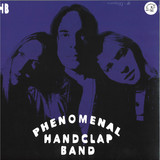
New York’s indie disco funk crew is back with a new album. And it’s the right moment: With new acts like Toro Y Moi, Sault, Parcels, The Internet around… the funky, disco, old school vibe is big in 2020. And The Phenomenal Handclap Band fits perfectly. Probably all these new artists are fans of the Phenomenals. Because The PHB popped up for the first time 10 years ago. Some top knotch musicians from NYC’s funk scene playing dirty discofunk. Some of the bandmembers played in Mark Ronson’s projects and in Amy Winehouse’s backing band. Head of the band: Daniel Collás. Their self-titled debut album on Gomma records 2010 made them many fans in the music scene. A nasty fusion of forward-thinking disco, psychedelic prog rock, and classic soul with a splash of yacht rock. Back then the band took the road, supporting Bryan Ferry and Franz Ferdinand, playing shows at Glastonbury, Wireless, and Latitude… as well as getting praise from Sir Paul McCartney about their album! After the album Collás began to produce other artists in Brooklyn. The band paused. Now they are back. With Daniel Collás in the centre, along with new members multi-instrumentalist Juliet Swango, and vocalist and synthesizer wizard Monika Heidemann. Their sound is still essentially analog dance music, with an emphasis on raw soul, vocal harmonies, African percussion, fuzzy guitars and analog synthesizers.
It goes without saying that the global metal scene would not be the same without Sepultura. For 35 years now, the Brazilian icons are not only a band revered worldwide; they have been, are and forever will be at the very forefront of Thrash Metal, trailblazing ever since they released their long-since legendary debut album “Morbid Visions” in 1986.
While quickly establishing themselves as leaders of the second wave of Thrash already in the late eighties, to this day they never came even close to stagnation. “Quadra”, their mighty new undertaking, is proof of a will unbroken, a thirst unquenched and a quality so staggeringly high it’s a wonder this band doesn’t implode. Now three albums deep into what may very well be their strongest incarnation yet – uniting the talents of old-school members Andreas Kisser (guitars, vocals) and Paulo Xisto Pinto Jr. (bass), vocal force of nature Derrick Leon Green (vocals) and drummer Eloy Casagrande – Sepultura are an unleashed power to be reckoned with, uniting bucketloads of experience and youthful vigour in a totally revived way.
“On ‘Quadra’, we felt the urge to revisit that old thrash feeling of ‘Beneath the Remains’ or ‘Arise“,’ only seen through the eyes of today,” Andreas Kisser utters the magic words. “Add to that the tribal percussion, the orchestral elements, the choirs, the melodies and the clean vocals and you get a thorough run-through of our entire career, backed by a very contemporary approach.” Fuelled by an energy almost uncanny for a band that has been active for so long, Sepultura storm through a contemporary thrash monument, backed by sublime melodies, a very eerie atmosphere and a fiendishly high level of technicality. Kisser is appreciating these compliments, still maintaining his very down to earth approach. “We don’t heed the past and we don’t try to be preoccupied by the future too much,” he shrugs. “We’re in the now, trying every day to make Sepultura a little bit better. That’s what keeping us strong.”
And that’s what they have been doing for the last 30+ years. Album after album, tour after tour, no gap in between records longer than three years. “Music is all we do,” Kisser states matter-of-factly. “If it wouldn’t be for Sepultura,” he laughs, “I would be a sad and lonely guy. Sepultura is what we are.” And “Quadra” is living testimony to that. The old Sepultura echo through the very fibre of the songs in all its raw and morbid splendour, but yet it’s the present, the experienced and refined beast that is Sepultura in 2020 that’s blasting out thrash metal anthems for a fucked-up age.
With now 15 albums under their belts, Sepultura are the work horses of the metal world, always ready to attack. In many ways, “Quadra” broadens the vision the Brazilian thrash troopers had on “Machine Messiah” (2017), again relying on the impeccable talent of Swedish producing giant Jens Bogren and his Fascination Street Studios. “He is so full of passion, it’s unbelievable, man,” Kisser raves. “He’s really there, he really cares about the projects he’s doing. For Sepultura, he’s like the fifth member of the band. The chemistry was so amazing, 99 percent of what we were trying do to actually worked. That was insane!” Even after more than 30 years at the forefront of international thrash, guitarist Kisser sounds positively baffled by working with Bogren. “We felt like we were in our rehearsal room.”
Bringing together a monumental grandeur and a wild, untamed ferocity, Sepultura stepped up their game musically – and conceptually as well. “We were possessed by the number four, by the numerology of it”, Kisser starts to explain. “I divided the album into four parts as if we were doing a double vinyl. Side one is the pure and raw thrash side. Side two brings in the rhythms and percussion from our ‘Roots’ era. Three is getting a bit experimental and four brings forth the melodies and the acoustic guitars.” With John North’s book “Quadrivium” as a further source of inspiration, Sepultura dive deep into a mystical world full of hidden meanings. “You have four seasons and twelve month in a year just to pick one example. A lot of stuff in our culture is divided like that.”
Plus, Quadra also is the Portuguese word for ‘sport court’ that by definition is a limited area of land, with regulatory demarcations, where according to a set of rules the game takes place,” he adds. “We all come from different Quadras. The countries, all nations with their borders and traditions; culture, religions, laws, education and a set of rules where life takes place.” In the Quadra of thrash, however, we all are the same. And we bow our heads in unison to the mighty leader that is Sepultura.
Official Mr Bongo 7” Hip Hop Reissue.
Craft a record iconic enough and, no matter what you’ve sampled to make it, you’re destined to be sampled more yourself. It helps if you’ve got Rakim’s voice, of course. When he and Eric B went into Power Play Studios in New York in 1987 to record ‘I Ain’t No Joke’, their next move was highly anticipated due to the critical success of the duo’s first record, ‘Eric B. Is President’. Rakim was already seen as a masterful MC with a distinctive slow, baritone flow and seamless access to a rich vein of words not often heard in hip-hop.
People’s first exposure to this track was on the landmark ‘Paid in Full’ album, and it was clear this had the potential to jump off as a single. The repetitive, simply scratched sample of ‘Pass the Peas’ by the JB’s was an infectious ear worm that needed a truly strong MC to stand up to it. He did more than that – here Rakim spun timeless lyrics and lines that would go on to be sampled and referred to dozens of times down through hip-hop history. He took one of rap’s great instrumentals and wrestled it to the floor.
Of course, you can’t have Eric B & Rakim without Eric B. The DJ gets his time to shine on the flip, and while he isn’t a man renowned for his dexterity and turntablist skills, the track still knocks. Maybe it’s because Eric B has already realised what many would come to work out later: If you haven’t got Rakim on your record, at least scratch his vocals. This re-release comes with a brand new cover utilising some of Dan Lish’s trademark artwork.