Cerca:too much

Generi
Tutto
Miles Davis - Black Beauty: Miles Davis At Fillmore West LP 2x12"

Dateline: April 10, 1970. Setting: The storied Fillmore West in San Francisco, CA. Context: Miles Davis, three days removed from his first session for Jack Johnson and, with newly recruited soprano saxophonist Steve Grossman in tow, opening shows for countercultural heroes the Grateful Dead on the latter’s home turf. Result: The initial rumblings of a thrilling era in which Davis and his cohorts would again upend jazz and popular conceptions of the genre with music steeped in groove, improvisation, and hang-on-for-your-life adventurousness. All captured on Black Beauty: Miles Davis at Fillmore West.

Mastered at MoFi’s California studio, pressed at Fidelity Record Pressing in California, and housed in a Stoughton gatefold jacket, Mobile Fidelity's numbered-edition 180g 33RPM 2LP set helps bring what went down that spring evening in Bill Graham’s venue to your listening room with exceptional clarity, balance, and presence. Originally only released in Japan in 1973 and unavailable in the United States until the late ‘90s on compact disc, this marks the first time Black Beauty has been issued on domestic vinyl. The wait is worth it.

Benefitting from quiet surfaces and excellent definition, these LPs present the band’s livewire energy and torrential storm of notes with captivating dynamics, pacing, and fullness. At its core, this audiophile reissue takes you into the walls of sound erected by a band learning on-the-fly the sheer power, will, and breadth of the electric jazz Davis was orchestrating and realizing, on the spot, would reach rock audiences that until that point had only a faint awareness of his mad-scientist experimentation. The sense of release and reach conveyed by these carefully restored records make it clear the veteran bandleader was in the process of a permanent shift that he’d chase for the next five years.

Given Davis was only a few months away from releasing the pioneering double album Bitches Brew, it shouldn’t come as a surprise that much of the fare here adheres to similar explorative approaches. Turbulent rhythms, provocative trumpet passages, and rich, saturated tonal colors that seemingly splash against a blank canvas take precedence over any traditional attempts at organization and melody. Davis and Co. intentionally play everything on a line with the bandleader signaling changes with his horn via coded phrases. The group speaks a common language — with each member having gone to achieve iconic status for their career contributions and technical prowess.

In the company of Grossman, Chick Corea (piano), Dave Holland (bass), Jack DeJohnette (drums), and Airto Moreira (percussion), Davis constructs themes around “Directions,” “Miles Runs the Voodoo Down,” “It’s About That Time,” the title track to Bitches Brew, and more from his then most-recent studio works and the in-progress Jack Johnson. His farewell to the popular standards that for nearly two decades remained a part of his repertoire arrive via a brief dalliance with “I Fall in Love Too Easily,” a shortened albeit aggressive “Masqualero,” and the “Theme” finale of “Spanish Key.” Initially, Black Beauty lacked specific track listings due to Davis’ increasing frustration with listeners over-analyzing his music.

In retrospect, it’s difficult to blame anyone for wanting to view what’s on display here with the aural equivalent of a magnifying glass. Leaning in rock directions, yet maintaining an ear for spaciousness and solos, Black Beauty survives as a snapshot of a thrilling moment amid a transitory period in which evolution came fast and furious. Just two months later, Davis would add another instrumentalist to the lineup in the form of organist Keith Jarrett, and the perpetually restless visionary would blast off to a more atmospheric and arguably more chaotic universe.

Consider, then, this live document a bridge to that galaxy and a breathtaking example of the possibilities of jazz itself.

pre-ordina ora30.04.2025

dovrebbe essere pubblicato su 30.04.2025

88,19
CURSIVE - DEVOURER LP 2x12"
  • Botch Job
  • Up And Away
  • The Avalanche Of Our Demise
  • Imposturing
  • Rookie
  • Dead End Days
  • What The F*Ck
  • Bloodbather
  • Dark Star
  • Consumers
  • What Do We Do Now
  • The Age Of Impotence
  • The Loss

Very few bands manage to last decades, and for the ones that do, it's often easy to settle down and get a little too comfortable. But there's nothing comfortable about Devourer, the explosive new album from Cursive. The iconic Omaha group is known for their intensity, ambition, and execution, and has spent 30 years creating a bold discography that's defined as much by its cathartic sound as its weighty, challenging lyrical themes. And Devourer is as daring as ever. Full of intense and incisive songs, the album proves exactly why Cursive have been so influential and enduring-and why they remain so vital today.In the years since their 1995 formation, Cursive developed into one of the most important groups to emerge from the late-'90s/early `00s moment when the lines between indie rock and post-hardcore began blurring into something altogether new. Albums like Domestica (2000) and The Ugly Organ (2003) became essential touchstones whose echoes can still be heard in new bands today. Devourer, as an expansive new double-album, examines humanity's bottomless capacity for consumption through a series of songs that act like vignettes, driven by frontman Tim Kasher's never-ending appetite for both taking in and creating art."I am obsessive about consuming the arts," he explains. "Music, film, literature. I've come to recognize that I devour all of these art forms then, in turn, create my own versions of these things and spew them out onto the world. It's positive; you're part of an ecosystem. But I quickly recognized that the term, `Devourer,' may also embody something gnarly, sinister." Fans have come to expect such heady topics from Cursive, but Devourer sets a new standard.While Cursive's music hasn't gotten any more comfortable, perhaps its being released into a world that's at least a little more shaped in their image. Devourer sounds urgent and fresh, the work of a band still experimenting, still hungering to find new creative heights. On album highlight "Consumers," the protagonist bemoans, "I saw our future and I want to go back." But Cursive are only moving forward.

pre-ordina ora25.04.2025

dovrebbe essere pubblicato su 25.04.2025

26,01
Cosmic Cathedral - Deep Water

Cosmic Cathedral

Deep Water

12inch19802885931
Inside OutMusic
25.04.2025
  • 1: The Heart Of Life
  • 2: Time To Fly
  • 3: I Won’t Make It
  • 4: Walking In Daylight
  • 5: Deep Water Suite I: Introduction
  • 6: Deep Water Suite Ii: Launch Out, Pt. One
  • 7: Deep Water Suite Iii: Fires Of The Sunrise
  • 8: Deep Water Suite Iv: Storm Surface
  • 9: Deep Water Suite V: Nightmare In Paradise
  • 10: Deep Water Suite Vi: Launch Out, Pt. Two
  • 11: Deep Water Suite Vii: New Revelation
  • 12: Deep Water Suite Viii: Launch Out, Pt. Three
  • 13: Deep Water Suite Ix: The Door To Heaven

If you are a celebrated progressive rock musician who has produced dozens of albums, how do you make an album that is different to what is usually expected? One answer is to work with musicians who also have decades of experience and worldwide recognition, plant a few seeds, then stand back and see what happens. For the Cosmic Cathedral project and their debut album ‘Deep Water’, this is exactly what Neal Morse did, joining up with Chester Thompson (Genesis), Phil Keaggy & Byron House. Much of the album was created from jam sessions where Morse’s long-time audio partner Jerry Guidroz put the best parts together, such as for the 38 minute epic, Deep Water Suite. Says Morse, “Time To Fly, also came directly from one of the jam sessions, where we took one of Phil’s ideas and all four of us elaborated on it.” What resulted from all this was a more groove-orientated feel, which Morse calls a “prog meets yacht rock meets The Beatles” kind of album, with an unmistakable jazz fusion influence: “These guys are real groovers: even if they're playing proggy stuff, it has more of a Steely Dan feel to it, but when Phil and I start singing it sounds like The Beatles!” Available as Limited CD Digipak, Gatefold 2LP & as Digital Album.

pre-ordina ora25.04.2025

dovrebbe essere pubblicato su 25.04.2025

34,03
Ibex Band - Stereo Instrumental Music LP 2x12"

The Ibex Band, with Giovanni Rico and Selam Woldemariam at the creative helm, provided the musical backbone for legends like Aster Aweke, Girma Beyene, Tilahun Gessesse, Mulatu Astatke, and Mahmoud Ahmed, including the iconic album Ere Mela Mela, shaping modern Ethiopian music as we know it today. This 1976 album (Ge’ez Year 1968) played a pivotal role in that legacy and has now resurfaced to set the record straight.

There’s a tendency to talk about the seventies as a golden age of Ethiopian music. There are good reasons for that, and just as good reasons against it. However, the notion of a golden past privileges the role of Western explorers and suggests that the pinnacle of Ethiopia’s musical culture is something only a foreigner can appreciate and unearth. It downplays the complexities of Ethiopia’s culture and history, creating an artificial divide between then and now. And it underestimates the constantly evolving sound that has followed.

The legendary musical outfit The Ibex Band, later metamorphosed into The Roha Band, has played a central role in defining the sound of many of the greatest stars on the music scene of Ethiopia from the mid-seventies onwards–but their golden output has never really waned. The story of the origins of the band that provided the musical backbone for greats such as Aster Aweke, Girma Beyene, Tilahun Gessesse, backing the solo career of group member Mahmoud Ahmed as well as backing Mulatu Astatke and many others has yet to be properly told.

Two misconceptions plague the image of Ethiopian music, one is that the music is pure because it is, by some notion, unexploited, the other is that it is all traditional. To begin with, a combination of political changes between the late sixties and the mid-nineties created an environment where only the most dedicated and skilled musicians struggled on and pursued a musical career against fierce odds. The whole Ibex Band, with Giovanni Rico and Selam “Selamino” Seyoum Woldermarian at the creative helm, are arguably the origo of the vibrant scene in the mid-seventies, and the said pair are foremost responsible for not only navigating the band through troubled times, but also modernizing the 6/8 chickchicka rhythm to a contemporary form. Giovanni laid the rhythmic foundation with heavy looped basslines that reinvented traditional melodies as dance music, and with Selamino’s innovative guitar work they influenced scores of musicians from Abegaz Kibrework Shiota to Henock Temesgen. Even Giovanni’s Fender bass and Selamino’s Gibson guitar inspired younger musicians in their choice of instruments. Not only in choice of instruments but also in sound–even as the digital revolution hit Ethiopian music, a lot of popular music still took its cue from the masters from Ibex and Roha.

Ibex emerged out of the ashes of the sixties group the Soul Echos band, adding Giovanni and Selamino to their ranks and taking their cues from a slew of influences, such as Motown and The Beatles, fused with traditional music. A tighter-knit unit than most bands at the time – Ibex has remained six to seven members throughout their whole career, compared to many bands that were as large as fifteen or sixteen men strong when Ibex set out. Their playing has been viciously focused, economical yet heavy. Just a year before the recording sessions of the album in your hands, Giovanni and Selamino made a contribution to the popular musical lexicon of Ethiopia that was simply defining the popular sound: their arrangement and recording of bandmate Mahmoud Ahmed’s solo effort and real commercial breakthrough tune and eponymous album, Ere Mela Mela, from 1975.

Selamino has never limited himself to being an adroit lead guitarist, but has always been a scholar of history, and as such he has probably contributed as much to modern Ethiopian music with his guitar playing and compositions as with a deepened understanding of modern or contemporary – Zemenawi – Ethiopian music. Selamino’s contributions serve as a metaphor for those of the whole band, at one and the same time creating and defining a new, danceable and updated sound anchored in Giovanni’s bass, whilst also elevating the broader scene through their support for others on the scene and on top of that, increasing the understanding of the music.

There is an understandable desire to romanticize the musical heyday Ibex and Roha were at the forefront of, because so much of the output is sorrowfully hard to come by. Ibex creativity was nothing short of ridiculously fierce compared to many of their Western contemporaries. Based on their sheer recorded output alone they could have usurped the title “hardest working in show business” from James Brown, recording more than 250 albums or 2500 songs in the seventies and eighties. Some only surface as cassettes today, others were never given full LP release, and some are simply impossible to find today. In the light of that, it’s nothing short of a miracle that the recording Stereo Instrumental Music from 1976 (Ge’ez Year 1968) has resurfaced. Unearthed in perfect condition on a chrome cassette, this is musical history comes alive–to set the future straight. Stereo Instrumental Music was recorded in collaboration with Karl-Gustav Lundgren, a Swedish national working for the Radio Voice of the Gospel. It took two sessions at the Ras Hotel ballroom in Addis Ababa. The Ibex Band was the first band in Ethiopia to employ a four-track recorder for their recording (the first available in the country, lent by Karl-Gustav). Later the same week, Giovanni and Selamino realized that, lengthwise, the recorded material fell short of what they wished for, so they recorded four more tracks in one more session on a single-track recorder. The Ras Hotel and Ghion Hotel, where the Ibex Band held musical residencies were to Ethiopia in general and Addis Ababa in particular what Motown was to the USA and Detroit a few years earlier – a hotbed of musical creativity and showmanship.

The most astonishing thing about Ethiopian music of the last half century is how tradition and modernity are intertwined. Because of this feature, it’s kind of hard to tell when there ever was or when we are in a “golden age”. So much of music from the past has been criminally neglected, but because of the hardships in the past, it would be an oversimplification to say that said past was a golden age. Probably, the golden age is what we are approaching, because for the first time both the past and future are accessible, and the monumental contributions from before can lay a firm foundation for a thriving music scene today. The Ibex Band stands firmly in the past, present and the future. That, if anything, is golden.

The detailed history of Stereo Instrumental Music is in many ways unique. To begin with, it couldn’t have been recorded earlier (there were no four-track recorders available) and it really couldn’t have been recorded afterwards either, at least not in the years directly following, because of the toll the musical scene took from the unfavorable political climate that followed when the nascent Derg regime and rival groups tried to assert themselves, the musical equipment lent from The Voice of Gospel Radio simply disappeared from Ethiopia when the radio station folded in 1977. Karl-Gustav Lundgren,
the Swedish foreign national who assisted during the recording, worked with the Ethiopian Evangelical Church Mekane Yesus at the time, recalls how they only had about fifteen minutes to get the microphones in place for the recording as to not alert neither the management at Ras Hotel nor the authorities and most importantly, to complete the recording before the curfew came into effect at midnight. In leaping to the opportunity to use previously unavailable equipment to push their sound forward and improvising to meet the logistical challenges, the Ibex Band displayed the very avant-gardism and adaptability that explains their longevity as a band through the years. The recording of Stereo Instrumental Music is from a given time in history, but it sounds as beyond time.
Much of the energy that burst out of the scene that Stereo Instrumental Music came out of dissipated or got sidetracked during the societal changes Ethiopia went through in the 1970s and 80s. Whilst leaders might have professed to be revolutionary, the work ethic of the Ibex Band can truly be described as that. They never called it quits, but adapted, toured extensively abroad in Africa, Europe, and the Middle East, and found ways to work even in the face of the curfew that curtailed a lot of musical life. They even played major arenas in the nineteen eighties, despite said curfew and restrictions. The whole extent of their legacy has never been told, but their music speaks louder than words, so therefore… tune in to the Ibex Band’s Stereo Instrumental Music.

non in magazzino

Ordina ora e ordineremo l'articolo per te presso il nostro fornitore.

24,33

Last In: 10 months ago
SCROUNGE - ALMOST LIKE YOU COULD
  • 1: Higher
  • 2: Pageant Queen
  • 3: Utg
  • 4: Waste
  • 5: Dreaming
  • 6: Corner Cutting Boredom
  • 7: Melt
  • 8: Buzz/Cut
  • 9: Rat
  • 10: Nothing Personal

Almost Like You Could ignites its art punk fire with Lucy Alexander proclaiming, “Everyone wants something to talk about / But not a minute to spare, so be brief.” Not surprising from a song that’s 1:54 (‘Higher’), but the raw honesty in her lyrics ring far after the music ends. Alexander, along with bandmate Luke Cartledge, place the propulsive power of their beliefs at the core of their debut full-length album, and their guiding motivation towards social justice is as fierce as it is welcoming. “Living as part of the queer community, and being queer myself, leads me towards supporting every person’s truth,” Alexander says. Scrounge’s songs skip to a fast beat, electrifying the entire album with a sense of empowerment. Their approach is OG punk: they make music for their peers and themselves. Only now, with a world of connections possible, they’re able to open arms wide for a far-reaching embrace. Alexander’s rich vocals give their sound its central force, anchoring the songs with confessional lines (“If this is the pinnacle, then I need a miracle/ Cause everyone’s laughing at me,” “There’s not much left/ this corpse I have to keep/ Above board.”). They sing about economic inequality, political corruption, environmental destruction, and collective change. “We’re inspired by those around us, and we write about what we care about. Art has always existed for us as a means of catharsis, a way of expressing something we might not be able to otherwise, and we hope our music can be that for other people too,” says Alexander. “I think I’ve actually written a filthy banger,” she states while re-listening to “Buzz/Cut”, a grunge-honoring hammer of a song that takes a journey from disappointment, to self-realization, to release. Alexander and Cartledge’s gratification in making an album they’re proud of mirrors the empowerment conveyed in their lyrics. A follow-up to debut mini-album Sugar, Daddy (Fierce Panda, 2022), Almost Like You Could came together over 18 months, in between “teaching, touring, graduation, and a wedding”, as Lucy explains, for the band always has a handful of shows coming up. It’s a strange outcome for a duo who first bonded over their mutual love of SOPHIE. “She radicalized the structure of sound, and revealed herself through it,” Cartledge explains. “That was a massive inspiration when we started playing together, stripping everything away to open up new possibilities as artists and as people." Having already toured Europe and the States, Scrounge is preparing to be on the road throughout 2025. In a world where the idea of true community is ephemeral, Lucy and Luke seek to foster it everywhere they play. And their belief in change is ultimately buoyed by hope. “I know that it’s never been this good,” they sing.

pre-ordina ora18.04.2025

dovrebbe essere pubblicato su 18.04.2025

23,74
Rhiannon Giddens & Justin Robinson - What Did The Blackbird Say To The Crow
  • 1: Rain Crow
  • 2: Brown’s Dream
  • 3: Hook And Line
  • 4: Pumpkin Pie
  • 5: Duck’s Eyeball
  • 6: Ryestraw
  • 7: Little Brown Jug
  • 8: Going To Raleigh
  • 9: Country Waltz
  • 10: Molly Put The Kettle On
  • 11: Fly Around My Pretty Little Miss
  • 12: John Henry
  • 13: Love Somebody
  • 14: Ebenezer
  • 15: Old Joe Clark
  • 16: Old Molly Hare
  • 17: Marching Jaybird
  • 18: Walkin’ In The Parlor

Rhiannon Giddens reunites with her former Carolina Chocolate Drops bandmate Justin Robinson on What Did the Blackbird Say to the Crow, an album of North Carolina fiddle and banjo music. Produced by Giddens and Joseph "joebass" DeJarnette, the album features Giddens on banjo and Robinson on fiddle, with the duo playing eighteen of their favourite North Carolina tunes: a mix of instrumentals and tunes with words.

Many were learned from their late mentor, the legendary North Carolina Piedmont musician Joe Thompson; one is from another musical hero, the late Etta Baker, from whom they also learned by listening to recordings of her playing. Giddens and Robinson recorded the album outdoors and on location at Thompson’s and Baker’s North Carolina homes, as well as the former plantation Mill Prong House. They were accompanied by the sounds of nature, including two different broods of cicadas, which had not emerged simultaneously since 1803, creating a true once-in-a-lifetime soundscape. The duo, along with four other string musicians including the multi-instrumentalist Dirk Powell, will embark on the Rhiannon Giddens & The Old-Time Revue North America tour in April.

“With the assaults on reality going on in the world today, we wanted to offer another kind of record, like walking back onto a gravel or dirt road while a stampede goes the other way,” Giddens says. “With the cicada choir, this record could’ve only happened at a certain time in the last 120 years. We doubled down on place, time, realness, and old-fashioned front porch music. It’s a reminder that another way exists, with music made for your community’s enjoyment and for dancing–not solely for commercial purposes.

“What is the role of music in our society?” she wonders. “How do we de-couple it from unfettered capitalism, where music is a product and musicians are incidental? How do we use the tools and system that we have been bequeathed in a way that reminds us of other ways of being?” Robinson adds, "Recording this album felt like being back in the saddle. Just this time Joe is not here, and his fiddle is under my chin. The album is about home, the cicadas, the storms, the music, and the people who make it feel like home."

Thompson was one of the last musicians of his era and his community to carry on the southern Black string band tradition. He played a crucial role in the lives of Giddens and Robinson, who, along with their Carolina Chocolate Drops bandmate Dom Flemons, spent their formative years learning from Thompson in traditional apprentice/mentor relationships. His influence has guided all of their artistic journeys as well as their mission to keep the legacy of the Black string band tradition alive.

In further tribute to Giddens’ North Carolina roots, What Did the Blackbird Say to the Crow will arrive just a week before Biscuits & Banjos, the inaugural edition of her first festival, which highlights the deep roots and enduring legacy of Black music, art, and culture while fostering community and storytelling. The sold-out festival will feature a much-anticipated Carolina Chocolate Drops reunion, their first performance together in more than a decade.

pre-ordina ora18.04.2025

dovrebbe essere pubblicato su 18.04.2025

32,35
Yumiko Morioka - Resonance

Yumiko Morioka

Resonance

12inchMTR005-25
Métron Records
17.04.2025

Japanese pianist Yumiko Morioka initially released Resonance, her first and only solo recording, on Akira Ito's ‘Green & Water’ imprint in 1987. Whilst by no means a commercial failure, the album was mostly found in the background of Japanese TV documentaries, maternity clinics and healing shops before drifting into relative obscurity.

By 1994, Morioka had relocated to America and her solo music career had given way to the joys of starting a family and her new life in California. It was, and still is, a shock for her to learn that Resonance had gained the attention of a new audience outside of Japan through blog posts and YouTube album uploads.

After hearing Resonance for the first time ourselves back in early 2017, we tried for months to track Morioka down about a reissue. This news reached her at a particularly trying time in her life following the devastating loss of her home in the 2017 California wildfires.

Her home had recently been razed, destroying all of her possessions, musical equipment, scores and recordings. Morioka was lucky to escape with her life; her quick thinking neighbour raised the alarm in the middle of the night giving her just enough time to escape safely before then tragically watching her home burn to the ground.

In the aftermath, Morioka returned to Japan in an attempt to rebuild her life. She found work writing music for commercial projects and pop acts before recently opening her own chocolate shop in the Jiyugaoka neighbourhood of Tokyo - back where it all began.

‘’Space and time moved at a different speed than now’’ – Yumiko Morioka

A lifelong student of the piano, Morioka was born in Tokyo in 1956. A child prodigy, she took up the instrument under her mother’s tutelage at just three years old and by her teens she had won multiple piano scholarships. Her talent was so obvious that she was invited to train in America, eventually graduating from the San Francisco Conservatory of Music with a piano major during John Adams’ reign as head of composition.

After graduation, Morioka returned to Japan but struggled to find her place musically, working mostly on commercial songwriting assignments. Frustrated, and at times embarrassed by her musical output, she turned to the works of Brian Eno and the surroundings of her coastal home in the Izu Peninsula south of Tokyo for inspiration. It was here that she began to work on the compositions that would eventually become Resonance.

Recorded on a Bösendorfer grand piano, much of Resonance was made in an attempt to soothe her creative soul. Constructed from unwritten improvisations with additional instrumentation added later, Resonance explores the space between notes. As such, it's a record that feels open and inviting, permeated throughout with a sense of confident serenity.

The sparse, delicately played notes are allowed to reverberate and echo through the spaces between themselves, giving each track a feeling of both grandeur and intimacy. Like the great pioneers of classical and ambient music, there's a timelessness to Resonance - a comforting, familiar feeling, as if these melodies have always existed.

Resonance drew influence from the popular environmental music culture prevalent in Japan during the late 80s, but it was also heavily inspired by Western musicians such as the avant-garde Parisian composer Erik Satie. Listening today, it still feels fresh and pertinent; a warm, contemplative reflection of a travelled woman.

Resonance has been lovingly remastered by Séance Centre's Brandon Hocura and given new artwork by Métron Records’ label head Jack Hardwicke.

non in magazzino

Ordina ora e ordineremo l'articolo per te presso il nostro fornitore.

23,11

Last In: 9 months ago
High Fade - Life's Too Fast LP

High Fade

Life's Too Fast LP

Pict-VinylRPNLP001RSD
RPN Records
14.04.2025

Edinburgh-based three-piece funk band High Fade are set to release their debut album 'Life’s Too Fast'.

Capturing the raw, on-stage energy that has been the driving force behind High Fade’s meteoric rise was never going to be easy, but that’s exactly what Harry, Oli and Calvin set out to do with a clear creative vision to record their album live at the iconic RAK Studios in London.

'We recorded in RAK Studios, with the desk built for the Rolling Stones in ‘76, with the same cigarette burns still on the faders. It instantly had a vibe of raw energy and liveliness to it that matched the way we wanted to record - live.' – Calvin

The result? 'Life’s Too Fast' – a blistering 10-track debut from one of the UK’s most exciting bands that manages to deliver the same tight, groove-laden funk rock that has put the group on the radars of Jack Black, Cypress Hill and Rage Against the Machine’s Brad Wilk, has seen them tour with The Cat Empire, and tick off iconic venues including Glastonbury, Jazz Cafe, and Boomtown Festival.

'We decided to record the album live rather than through the normal single track overdubbed method – we felt this would help to fully convey the band’s power, sound and energy across to the listener! More like we’re playing a gig and having it recorded – it was a tough process, but we went about it in the best way for both us and the audience, to ensure they’re getting the most authentic High Fade sound and experience possible.' – Oli

Having spent much of the last three years on the road seeing to a punishing tour schedule, 'Life’s Too Fast' is a chance for the band to stop and take stock, to reflect on their whirlwind success, and create an artistic milestone that demonstrates who High Fade are today. 'It’s the most accurate representation of what High Fade is, what we sound like, and who we are' explains Harry. Telling a clear story that matches their own experiences over the last few years, the album is a snapshot taken by a band who are accelerating towards real success and recognition.

'I’m glad we finally have a body of work that we’re proud of and feels like a collection of songs that nicely represents where we are right now. It’s organised chaos and shows that we like to play, but can also write a catchy tune.' – Calvin

Launching into proceedings with the effortlessly uplifting 'Take Me To The Floor', every track is a demonstration of the band’s technical prowess and broad sonic palette. A forward-facing selection of completely original material, the album also gave the band the opportunity to re-imagine fan-favourite 'Sharpen Up' as a stripped-back cut that reflects the band’s current lineup.

'Honestly, I kinda feel like I could explode with excitement about getting it out for everyone in the world to hear because it has been a long time in the making! A culmination of what all the singles have been working towards! I guess the album represents us and the direction we’re taking the music, it represents us as a trio and the gel that is High Fade.' – Oli

non in magazzino

Ordina ora e ordineremo l'articolo per te presso il nostro fornitore.

29,37

Last In: 8 months ago
Céline Dion - Unison LP

Céline Dion

Unison LP

12inch19802890011
Sony Music
11.04.2025
  • A1: (If There Was) Any Other Way 3:59
  • A2: If Love Is Out Of The Question 3:53
  • A3: Where Does My Heart Beat Now 4:33
  • A4: The Last To Know 4:34
  • A5: I'm Loving Every Moment With You 4:07
  • B1: Love By Another Name 4:52
  • B2: Unison 4:12
  • B3: I Feel Too Much 4:09
  • B4: If We Could Start Over 4:21
  • B5: Have A Heart 4:14
pre-ordina ora11.04.2025

dovrebbe essere pubblicato su 11.04.2025

24,16
MJ Lenderman - MANNING FIREWORKS
  • Manning Fireworks
  • Joker Lips
  • Rudolph
  • Wristwatch
  • She's Leaving You
  • Rip Torn
  • You Don't Know
  • The Shape I'm In
  • On My Knees
  • Bark At The Moon
disponibile anche

Black Vinyl[21,13 €]

White Vinyl[23,49 €]


MJ Lenderman is a songwriter born and raised in Asheville, North Carolina. The anatomy of an MJ record might go something like this: warped pedal steels and skuzzed out guitar; crackin" a cold one with some buds; a voice reminiscent of the high lonesome warble of a choirboy. Songs snake their way from a lo-fi home recording to something glossier made withn longtime friends at Asheville"s Drop of Sun studios, but the recording setting doesn"t seem to matter much - at its core, a Lenderman song rings true. Manning Fireworks is a remarkable development in MJ Lenderman"s story as an incredibly incisive singer-songwriter, whose propensity for humor always points to some uneasy, disorienting darkness. The punchlines are still here, as are the rusted-wire guitar solos that have made Lenderman a favorite for indie rock fans looking for an ernerging guitar hero. There"s a new sincerity, too, as Lenderman Iets listeners clearly see the world through his warped lens.

pre-ordina ora11.04.2025

dovrebbe essere pubblicato su 11.04.2025

23,49
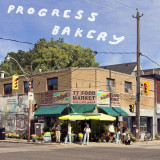
Eliza Niemi - Progress Bakery
  • A1: Do U Fm
  • A2: Novelist Sad Face
  • A3: Green Box
  • A4: Dusty
  • A5: The Linda Song
  • A6: Dm Bf
  • B1: I Tried
  • B2: Melodies Like Mark
  • B3: Wildcat
  • B4: How U Remind Me
  • B5: Pocky
  • B6: Bon Tempiii
  • B7: Pt Basement
  • B8: Alberqurque Ii
  • B9: Mary's
disponibile anche

Yellow Coloured Vinyl[29,37 €]


Kneading dough is tricky – you should know how it’s supposed to feel. If you try too hard you could make it worse. It’s a beautiful practice – creation with a gentle touch, to work at something so it can be left alone. “If it’s too drawn out it’s awful. It’s easy to give too much.” Dance in the mirror. Contemplate your veiny hands. Who do they remind you of?

You begin by mixing flour and water. “What happens when your people die? Why’d they move the rock to the other side of Ulster Park?” Eliza Niemi asks two seemingly unrelated questions in a rising melody with guitar accompaniment, like fingers playing spider up to the nape of your neck. Gentle pressure. Strands of gluten form to bind the mix. A new question lingers in the binding. When she admits “but I don’t know how to tell if I’m feeling it or not,” that question surfaces through the text. It is reiterated throughout the album. When I’m working with dough I think the same thing to myself.

On Progress Bakery, her second album as a solo artist, Eliza knows to leave some questions alone – to let juxtaposition and tension be the proof. It doesn’t have to be hard. The feelings and revelations they provoke rise in the heat. The smell is sweet. Crispy on the outside and soft all the way through. She playfully slip-slides through words and sounds and images, delighting in surprise, skimming ideas like stones cast across clear water, touching down briefly with uncommon grace.

The question provoked between those opening lines resurfaces in the strands between songs – “Do U FM” is fully formed and beautifully layered, while “Novelist Sad Face” is a short, acapella rendering of gentle curiosity. What is holding these ideas together? Some songs demand more, seem to carry a whole load – eventually the skipping stone will halt to sink and resume its idle duty – while others drift in and out of focus, the way thoughts and dreams become interwoven before the mind is sunk into true sleep.

Music and words don’t always have to interact. Where she decides to keep them apart gives a new contour to where and how she puts them together. The kind of thing you’re supposed to take for granted with songs and their singers comes alive in Eliza’s hands – the little miracle of mixing, kneading, stretching, and stopping.

So often on Progress Bakery, Eliza teases out truth and meaning by asking questions. “Do I wanna be crying?” “Do you want me good or do you want me bad?” “Do I need an eye test?” “I’m writing songs in my head while you’re going over stuff with me — is that cruel??” In “Pocky” Eliza ends with a question that feels to me like the actual biography, succinct and revealing:

I don’t wanna be made to see
I just wanna ask “what’s that?”

Grace that ought to be rare, but in its care and precision is offered humbly, with great generosity, and without announcing itself. Eliza’s simple, miraculous music is given further form and shape by a group of collaborators – invaluable guest musicians Jeremy Ray, Evan Cartwright, Steven McPhail, Kenny Boothby, Ed Squires, Carolina Chauffe, Dorothea Paas, Louie Short, and Avalon Tassonyi. Together with Louie Short, who recorded, mixed, and produced the album along with Jeremy Ray and Lukas Cheung, Eliza has cultivated a richness in sound and texture that prods and provokes the ticklish ear. Barely audible guitar tinkering, a brief lo-fi field recording of trumpets, the harmonic clicking of a looped synthesizer, a flourish of reeds, a child’s conversation, each uncanny sound perfectly placed, rippling out under a soft breeze.

Lay in bed alone at night and ask aloud to the stillness,

“What were you doing at the Albuquerque Airport?
What were you doing there??”

And hear your question answered by a dream of swelling, undulating cellos. Try to grasp at the melody and structure. It’s not an answer (if there could be one), but it moves deeper, closer to the weird layer of fleeting moments and disconnected images, barely perceptible at its core. Wait for the dream reel to click into place.

Eliza took me for a ride in Nicole (her beloved Dodge Grand Caravan) and told me she’d been thinking of the album as an embodiment of transition – and I think every transition, known or unknown, carries the weight of new meaning, skittering off the surface tension of life as you know it, creating ripples, sometimes bouncing off and sometimes breaking through. There is a trick you can use to tell if a dough is glutinous enough. You’re supposed to stretch it out as thin as you can without breaking it and hold it up to the light. If you can see through, even if it renders the world murky and uncertain, you should leave it alone. I love this trick. It’s one that Eliza seems to know intuitively: work gently and ask questions and don’t always expect answers, and when you can, take a glimpse at something new, and then leave.

pre-ordina ora04.04.2025

dovrebbe essere pubblicato su 04.04.2025

27,10
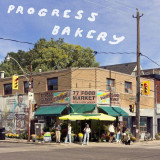
Eliza Niemi - Progress Bakery

Eliza Niemi

Progress Bakery

12inchTAR118SX
Tin Angel
04.04.2025

Kneading dough is tricky – you should know how it’s supposed to feel. If you try too hard you could make it worse. It’s a beautiful practice – creation with a gentle touch, to work at something so it can be left alone. “If it’s too drawn out it’s awful. It’s easy to give too much.” Dance in the mirror. Contemplate your veiny hands. Who do they remind you of?

You begin by mixing flour and water. “What happens when your people die? Why’d they move the rock to the other side of Ulster Park?” Eliza Niemi asks two seemingly unrelated questions in a rising melody with guitar accompaniment, like fingers playing spider up to the nape of your neck. Gentle pressure. Strands of gluten form to bind the mix. A new question lingers in the binding. When she admits “but I don’t know how to tell if I’m feeling it or not,” that question surfaces through the text. It is reiterated throughout the album. When I’m working with dough I think the same thing to myself.

On Progress Bakery, her second album as a solo artist, Eliza knows to leave some questions alone – to let juxtaposition and tension be the proof. It doesn’t have to be hard. The feelings and revelations they provoke rise in the heat. The smell is sweet. Crispy on the outside and soft all the way through. She playfully slip-slides through words and sounds and images, delighting in surprise, skimming ideas like stones cast across clear water, touching down briefly with uncommon grace.

The question provoked between those opening lines resurfaces in the strands between songs – “Do U FM” is fully formed and beautifully layered, while “Novelist Sad Face” is a short, acapella rendering of gentle curiosity. What is holding these ideas together? Some songs demand more, seem to carry a whole load – eventually the skipping stone will halt to sink and resume its idle duty – while others drift in and out of focus, the way thoughts and dreams become interwoven before the mind is sunk into true sleep.

Music and words don’t always have to interact. Where she decides to keep them apart gives a new contour to where and how she puts them together. The kind of thing you’re supposed to take for granted with songs and their singers comes alive in Eliza’s hands – the little miracle of mixing, kneading, stretching, and stopping.

So often on Progress Bakery, Eliza teases out truth and meaning by asking questions. “Do I wanna be crying?” “Do you want me good or do you want me bad?” “Do I need an eye test?” “I’m writing songs in my head while you’re going over stuff with me — is that cruel??” In “Pocky” Eliza ends with a question that feels to me like the actual biography, succinct and revealing:

I don’t wanna be made to see
I just wanna ask “what’s that?”

Grace that ought to be rare, but in its care and precision is offered humbly, with great generosity, and without announcing itself. Eliza’s simple, miraculous music is given further form and shape by a group of collaborators – invaluable guest musicians Jeremy Ray, Evan Cartwright, Steven McPhail, Kenny Boothby, Ed Squires, Carolina Chauffe, Dorothea Paas, Louie Short, and Avalon Tassonyi. Together with Louie Short, who recorded, mixed, and produced the album along with Jeremy Ray and Lukas Cheung, Eliza has cultivated a richness in sound and texture that prods and provokes the ticklish ear. Barely audible guitar tinkering, a brief lo-fi field recording of trumpets, the harmonic clicking of a looped synthesizer, a flourish of reeds, a child’s conversation, each uncanny sound perfectly placed, rippling out under a soft breeze.

Lay in bed alone at night and ask aloud to the stillness,

“What were you doing at the Albuquerque Airport?
What were you doing there??”

And hear your question answered by a dream of swelling, undulating cellos. Try to grasp at the melody and structure. It’s not an answer (if there could be one), but it moves deeper, closer to the weird layer of fleeting moments and disconnected images, barely perceptible at its core. Wait for the dream reel to click into place.

Eliza took me for a ride in Nicole (her beloved Dodge Grand Caravan) and told me she’d been thinking of the album as an embodiment of transition – and I think every transition, known or unknown, carries the weight of new meaning, skittering off the surface tension of life as you know it, creating ripples, sometimes bouncing off and sometimes breaking through. There is a trick you can use to tell if a dough is glutinous enough. You’re supposed to stretch it out as thin as you can without breaking it and hold it up to the light. If you can see through, even if it renders the world murky and uncertain, you should leave it alone. I love this trick. It’s one that Eliza seems to know intuitively: work gently and ask questions and don’t always expect answers, and when you can, take a glimpse at something new, and then leave.

pre-ordina ora04.04.2025

dovrebbe essere pubblicato su 04.04.2025

29,37
R. MAN PRINCE & THE SOUL FOUNDATION - EVERYONE HAS GOT TO

Much sought after “Everyone Has Got To Go”, a militant 1976 roots stepper by Jamaican/Canadian singer Prince Robinson, aka R. Man Prince.

Born in Rockfort, East Kingston, Robinson auditioned, like many other hopefuls at Studio One, in his early teens, but it was not his time and he would not record in Kingston until a decade later.

After migrating to New York and then Canada, Robinson returned to Kingston in 1976 to record two incredible roots anthems at Joe Gibbs studio “Everyone Has Got to Go” and the impossibly rare “Funny Dream”. He was joined by The Soul Foundation, a vocal trio who laid the track's beautiful harmonies plus some of Jamaica’s greatest session musicians, including Sly Dunbar and Robbie Shakespeare, who were not yet superstars.

The track was mixed at Channel One and the explosive “Super Bionic Version!” Dub by Ernest Hookim and Barnabas enters truly apocalyptic territory.

Luckily for all of us, inside a now battered briefcase that he took to Jamaica in 1976, Prince has kept his mastertapes and promo photos in pristine condition, knowing that his music had value and biding his time.

non in magazzino

Ordina ora e ordineremo l'articolo per te presso il nostro fornitore.

13,24

Last In: 13 months ago
Roomer - Leaving It All To Chance LP

With Leaving It All to Chance, Roomer don't quite leave everything up to fate. The Berlin outfit's debut album hums with guitar-driven heartbreak, pairing mind-splitting noise with seductive melodies. Capturing the gritty yet emotive energy of their live performances, the album welcomes in the occasional ear-candy, staying true to the raw physicality of a hazy club show all while sharpening its edges-crafted in true DIY spirit and released by Munich's Squama Recordings.
Roomer is the meeting point of four distinct creative forces in the European music scene, united through long-standing friendships and years of collaboration across projects ranging from avant-garde free improv to ethereal folk and ambient electronica. Inevitably-if surprisingly late-the question arose: why not start a band? In their hands, the rock band format became a canvas for their many musical worlds to collide.

pre-ordina ora04.04.2025

dovrebbe essere pubblicato su 04.04.2025

22,27
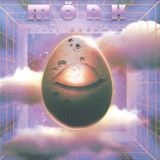
Mörk - Still Dreamin'

Mörk

Still Dreamin'

12inchALBFLP020
Albert's Favourites
03.04.2025

DJ Support: Gilles Peterson (BBC Radio 6 Music), Tom Ravenscroft/Deb Grant – New Music Fix (BBC Radio 6 Music), Huey Morgan (BBC Radio 6 Music)

From Budapest, Mörk (pronounced Merk) play on the boundaries of jazz and soul music. After meeting as students, they created a band that not only toyed with sounds but the methods of delivering them too. They’ve played in kindergardens, climbing halls, tea rooms and living rooms, countering expectations of where and how you find music.

Following April's much loved ‘Astral Visions’ EP, played across Bandcamp Weekly, BBC 6 Music, FIP, Jazz FM and KCRW, their upcoming album ‘Still Dreamin’’ delivers even more soul and uplifting choruses, coupled with the synchronicity of a band that has been through so much together.

non in magazzino

Ordina ora e ordineremo l'articolo per te presso il nostro fornitore.

22,27

Last In: 13 months ago
NADIA STRUIWIGH - X1 SHIFT

Nadia Struiwigh

X1 SHIFT

12inchBP081
Blueprint
02.04.2025

Nadia Struiwigh returns to Blueprint for her second EP "The X1 Shift EP is more than a collection of tracks; it's a story, a refl ection of the shifts I've embraced, and the identity I'm uncovering at my core. I've always felt that music is storytelling, not boxes to be labelled. Whether through ambient textures, techno grooves, or experimental soundscapes, each genre represents a chapter in a bigger story.


The magic lies in weaving them together into something timeless and deeply resonant-much like the origins of electronic music. For me, the essence of being an artist is freedom-creating without limits and exploring the beauty of the unexpected.

This EP represents thatfreedom: the love of pushing boundaries, the courage to evolve, and the joy of stepping into the unknown. Every sound on X1 Shift is intentional, every transition meaningful, yet there's also room for spontaneity.
Technically, the EP features the tools and hardware that inspire me: the Korg Electribe (my heart), Yamaha DX200, NI Maschine+, Arturia Minifreak, and plugins from NI and Plugin Alliance.
These tools became the palette for painting this journey.

Thank you, James, for supporting this music and giving it a second round. Your belief in this, especially something a little out of the box, means the world to me!!
Here's to breaking free, telling stories, and creating from the heart.

In stock dal18.05.2026

12,19

Last In: 54 days ago
AVEC - AVEC

Avec

AVEC

12inch912009129189
Jim Bob Records
02.04.2025

Mit AVEC präsentiert die österreichische Singer-Songwriterin AVEC ein selbstbetiteltes Album, das die bittersüßen und zärtlichen Momente des
Lebens nahtlos miteinander verbindet. Diese Sammlung verkörpert ihre charakteristische Mischung aus sanften Melodien, introspektiven Texten und
cinematischen Klanglandschaften. Roh und intim taucht das Album in die Komplexität menschlicher Beziehungen und persönlicher Introspektion ein
und lädt die Hörer:innen in eine Welt ein, in der Verletzlichkeit auf Widerstandsfähigkeit trifft und Herzschmerz mit Hoffnung tanzt.
Seit 2015 AVECs erste EP “Heartbeats” erschienen ist, rüttelt die junge österreichische Musikerin gekonnt und gut am Bild dessen, was man über
zutiefst ehrliche Popmusik zu wissen geglaubt hat. Die erste, sehr erfolgreiche Single “Granny” hat den Weg zum jugendlich-melancholischen
Debütalbum “What If We Never Forget” geebnet. Es wurde mit mehreren Nominierungen bei den Austrian Amadeus Music Awards (unter anderem
“Künstlerin des Jahres” und “Best Sound”) belohnt: ein erstes, starkes Folkpop-Statement, reduziert, kraft- und eindrucksvoll. So eindrucksvoll, dass
AVEC in weiterer Folge unter anderem Support-Slots für Zucchero, Sting oder The Tallest Man On Earth gespielt hat.

non in magazzino

Ordina ora e ordineremo l'articolo per te presso il nostro fornitore.

28,36

Last In: 13 months ago
Fleetwood Mac - Mirage LP 2x12"
  • Love In Store
  • Can’t Go Back
  • That’s Alright
  • Book Of Love
  • Gypsy
  • Only Over You
  • Empire State
  • Straight Back
  • Hold Me
  • Oh Diane
  • Eyes Of The World
  • Wish You Were Here

If every significant artist has an underrated gem in its catalog, then Mirage is that album for Fleetwood Mac. An obvious return to relative simplicity after the dramatic tension of Rumours and experimental ambitions of Tusk, the 1982 album finds the band re-grouping after a brief hiatus and again climbing to the top of the charts. Extremely well-crafted, well-produced, and well-performed, the double-platinum effort distills the group’s hallmark strengths into a filler-free set that never runs short of addictive pop hooks or daft accents.

Sourced from the original analog master tapes, pressed at Fidelity Record Pressing in California, and housed in a Stoughton jacket, Mobile Fidelity’s numbered-edition 180g 45RPM 2LP set presents Mirage in reference sound for the first time. The efforts co-producers/engineers Ken Caillat and Richard Dashut went to capture the splintered albeit formidable band can be heard with stunning accuracy, range, depth, and detail.

Though Rumours understandably gets a permanent spot in the audiophile hall of fame, the smooth, clear, and dynamic sonics on Mirage confirm that the record that stood as Fleetwood Mac’s last effort for five years deserves a place in the same vaunted arena. The presence and imaging of Mick Fleetwood’s percussion alone on this reissue might have you wondering how this slice of soft-rock bliss has gone under-noticed for decades. Other prized aural aspects — separation, definition, impact, tonal balance — are also here in spades.

Like much surrounding Fleetwood Mac in the 1980s, arriving at Mirage was not easy. Caillat searched for studios located outside of Los Angeles on a mission to change up the vibe of the band’s prior recording sessions. Everyone settled on Le Chateau in France, where relations between some members remained icy — and cooperation with the producers strained. Battles with exhaustion, bitterness, and addiction further informed the proceedings at the 18th century complex in the French countryside, where even communal meals were allegedly eaten in silence.

Inevitably, the feelings that co-producer Lindsey Buckingham, Stevie Nicks, Christine McVie, and company harbored — as well as the situations in which they found themselves — drifted into the songwriting. In its rapid ascent to rock-star royalty status, Fleetwood Mac drifted apart, embarked on solo pursuits, and found it was lonely at the top. Emptiness, the illusion of dreams, the longing for love, the want to escape to bygone times of innocence and happiness: Such themes inform a majority of the narratives. Even if the lyrics regularly take a back seat to easygoing arrangements that allow Mirage to come on like a refreshing breeze on a sunny summer afternoon.

Home to three Top 25 singles in the U.S. and having occupied the pole position of the Top 200 album charts for five weeks, Mirage rightfully resonated with the mainstream and attracted listeners on both sides of the pond. And how, via a smart blend of sugary melodies, warm harmonies, interlaced notes, nimble rhythms, taut structures, and passionate vocals. Not to mention the presence of what arguably remains Nicks’ signature song, the biographical “Gypsy,” a meditation on the loss of her close friend Robin Anderson that teems with majesty, mystery, and mysticism — and which gets an assist from Buckingham’s shaded tack piano and richly strummed guitar chords.

Its ranking as an all-time classic aside, that No. 12 hit has plenty of company when it comes to brilliant pop turns on Mirage. On the subject of Nicks, the raspy singer gets a little bit country on “That’s Alright.” Its clip-clopping pace and two-stepping progression complement subtle vocal swells that emerge during the final verse of a tune that is ostensibly about leaving but still conveys forgiveness and grace. And what would a Fleetwood Mac record be without Nicks drawing on the tools of the supernatural — cards, dreams, wolves, and the like — on the twirling “Straight Back.”

Despite the potency of Nicks’ primary contributions, Mirage seemingly unfolds as a tight competition between Buckingham and McVie — and one that ultimately ends in a draw. Buckingham’s salvos include the contagious “Can’t Go Back,” a yearning to time-travel back to the past that’s complete with hall-of-mirrors backing vocals; “Oh Diane,” out-of- left-field ear candy sweetened with hiccupped vocals and salt-and-pepper-shaken grooves; the chiming “Eyes of the World”; and “Empire State,” a delightfully fluttering track whose high-range vocals, lap harp notes, and ringing xylophones hint at the galaxies of sound that would erupt on Tango in the Night.

Then there’s McVie. As elegant, understated, and coolheaded as she’s ever been on record, she pours her heart out on cuts that revolve around her inevitable split with Beach Boy Dennis Wilson. In the process, she punctuates Mirage with a characteristic not always associated with catchy pop music: emotional weight, and the sense of dreaded acceptance in the face of dreams deferred.

“I wish you were here/Holding me tight,” McVie sings over a delicate melody on the album-closing piano ballad “Wish You Were Here.” Though they hoped otherwise, for the members Fleetwood Mac, distance and separation were always close at hand. Believing otherwise, inviting nostalgia, and pretending everything was fine only amounts to a mirage.

pre-ordina ora31.03.2025

dovrebbe essere pubblicato su 31.03.2025

88,19
THE MERCURIALS - TEND THE FIRE
  • For The Kids
  • Send Some Flowers
  • Sweet Baby Boy
  • In The Club
  • Fire In The House
  • Omnia Sunt Communia
  • Stuck In The Middle
  • Lonely Boy
  • I Don T Wanna Talk About Politics Feat Vic Ruggiero
  • Two Sides Of Me
  • What Is Wrong With Me
  • For The Kids
  • Send Some Flowers
  • Sweet Baby Boy

They are in their thirties, meaning they are "too much too young" to have felt the vibrations of the ska revival of the late 1970s and early 1980s live, when The Specials, The Selecter, Madness and the likes of The Beat were electrifying England at a time when social tensions were running high and were getting brass missiles into the charts, hitting all of Europe. Far too young, it goes without saying, to have experienced the initial shakes of the music that would fuel all that was to come: 1960s Jamaican ska and its later evolutions, bluebeat or rocksteady, from which reggae drew its essence and fever.

pre-ordina ora28.03.2025

dovrebbe essere pubblicato su 28.03.2025

24,33
SPELLLING - PORTRAIT OF MY HEART LP

On Chrystia Cabral's fourth album as SPELLLING, the Bay Area artist transforms her acclaimed avant-pop project into a mirror. Cabral's lyrics for Portrait of My Heart tackle love, intimacy, anxiety, and alienation, trading the allegorical approach of much of her previous work for something pointed into her human heart. The album's thematic forthrightness is echoed in its arrangements, making it the sharpest, most direct SPELLLING album to date. From the dark minimalism of her earliest music to the lavishly orchestrated prog-pop of 2021's The Turning Wheel to this newly energetic expression of her creative spirit, Cabral has proved again and again that SPELLLING can be whatever she needs it to be. The title track, with its propulsive drum groove and anthemic chorus of "I don't belong here," is the most potent embodiment of the album's turn toward emotional directness. Once the main melody emerged, Cabral used the song as a tool to process her anxiety as a performer and opted for a tighter, more rock-oriented composition. This transformation mirrors the album's broader shift toward energy and immediacy, driven by the core band of Wyatt Overson (guitar), Patrick Shelley (drums), and Giulio Xavier Cetto (bass), whose collaboration uncovers new contours of the SPELLLING sound. Cabral still writes and demos in isolation, but presenting the songs for Portrait of My Heart to her bandmates helped her discover their eventual lively, organic forms. So did working with a trio of producers_The Turning Wheel mixing engineer Drew Vandenberg, SZA collaborator Rob Bisel, and Yves Tumor producer Psymun. Key guest contributions further shape the album. Chaz Bear (Toro y Moi) delivers SPELLLING's first duet on "Mount Analogue," Turnstile guitarist Pat McCrory turns Cabral's original piano demo for "Alibi" into the crunchy, riff-y version that appears on the record, while Zulu's Braxton Marcellous gives "Drain" its sludgy heft. These parts aren't just incorporated seamlessly into the album; they feel like an integral part of its universe. Ultimately, though, Portrait of My Heart is nobody's record but Cabral's. She fearlessly draws the curtain back on parts of herself that she's never included in SPELLLING before_her feelings of being an outsider, her overly guarded nature, the way she can throw herself recklessly into intimate relationships and then cool on them just as quickly. "It's very much an open diary of all those sensations," she says.

pre-ordina ora28.03.2025

dovrebbe essere pubblicato su 28.03.2025

23,49
Articoli per pagina:
N/ABPM
Vinyl