quête:too short

Genres
Tout
LYNN WHITE - i don't know why / if i could open up my heart
  • A1: I Don't Know Why
  • B1: If I Could Open Up My Heart

Lynn White hails from Mobile, AL and started singing at the age of six in her local church. She worked in Ike Darby’s record store where she would sing along to the sounds that were playing, and it wasn’t long before the owner decided to record her on his local label Darby Records in 1978 at the age of 25. Three singles and the highly collectable album “Am I Too Much Woman For You” ensued, but they didn’t bring much success to the label, which folded shortly afterwards. They did get married though.

Her sultry bluesy Darby-penned/produced “I Don't Ever Wanna See Your Face Again” was released in 1982 on another local label, Sho-Me Records, and it quickly came to the attention of Willie Mitchell, who signed her immediately to his Waylo imprint. A fruitful period followed with 7 albums and 12 singles released for the Memphis-based label during the rest of that decade. Her mid-paced “See You Later Bye” was a huge favourite with the modern soul scenes in Europe, and it was a pleasure to see White as part of Waylo’s A Memphis Soul Night - Live In Europe in 1990 when she appeared with Otis Clay, Ann Peebles and David Hudson, performing in Amsterdam, Rotterdam, Berlin and London; each artist doing a solo spot then all four joining together for some rousing soul medleys.

By now a Memphis resident, she switched to S.O.H. Distributions in 1990, which gave her more control of her output, and these two sides are from that period; “I Don’t Know Why” (1993), clearly her most popular track was only available as a 12” single, and featured the amazing but uncredited vocals of Farris Lanier Jr., who was lead singer of another Waylo act, Lanier & Co. Now very hard to find, this will be an eagerly awaited release as a 7” single. The flip is a gorgeous stepper written by George Jackson (previously recorded by Otis Clay) and from her CD only album The New Me (1990). White’s version just oozes with soul and makes for an essential double-sider.

pré-commande19.05.2025

il devrait être publié sur 19.05.2025

20,59
KAREN WILLEMS - JUJU LP

Karen Willems

JUJU LP

12inchWERF251LP
DE W.E.R.F.
14.05.2025

"JUJU" drops on May 17th (WERF Records) and is programmed at Gent Jazz Festival (July 11th)


Juju continues the work done on the second album half, with the Terre Sol Four quartet: Willems' voice, drums, percussion objects, keyboards and field recordings accompanied by the saxes of Marc De Maeseneer, Vincent Brijs and John Snauwaert.Juju fits perfectly in Willems' output. Also: in the coherent oeuvre it has become, it is perhaps her most consistent release yet. It's infectious as hell, carefully crafted, packs a punch and more accessible than ever before.


Everything is connected. Not just in the grand scheme of things - politically, culturally, socially,... - but also in the colourful universe of Karen Willems. A lifelong quest for profound experiences through organizing sound led to the crucial Terre Sol-series, four tapes released in 2020. Out of that fertile well, Grichte (2022) was born. A double LP that presented Willems as an original explorer as well as a committed bandleader, it was her boldest statement to date.

While the first (solo) album halfalready received a follow-up in K A A P M I J (2023), another tape release that suggested there's still a lot of ground left to uncover, Juju continues the work done on the second album half, with the Terre Sol Four quartet: Willems' voice, drums, percussion objects, keyboards and field recordings accompanied by the saxes of Marc De Maeseneer, Vincent Brijs and John Snauwaert. It was already something to behold on Grichte, swerving from introspective exploration to expressionist riff rock and semi-Dadaist avant-garde.

On Juju, the four-piece digs even deeper and the results are utterly spellbinding. One of the many attractions of Willems' recent work is that it combines relentless artistic experimentation with a commitment to broader socio-political issues. In essence, the artist tries to set up a discussion with her surroundings, sending out musical invitations to connect and participate, reminding ourselves of responsibilities that are too easily forgotten in these hectic, self-centered times. The refugee crisis is one, ecology awareness another, and it's hard not to consider "Voor De Stranden Verdrinken" ("Before The Beaches Drown") a caustic warning. Things need to change.

As said earlier, the music on Juju remains as adventurous as before, but this time around, the playing feels even more confident, diverse and punchy. If the album opener accentuates its urgency with a throbbing pulse and reed sirens, "Tako Deli" continues with rich vocal arrangements, roaring saxes and sweeping melodies. What follows strikes with vigor and consistency: "Nuuki" is as dense as it is infectious, while "Fuzzy Williams" manages to combine Ellingtonian abundance with Swans-like preaching.

And there's more, much more. Eccentricity and playfulness ("The Woo Woo Room, Dance Back In Style", "In Open Veld") go hand in hand with smoldering exercises in tension and release ("Koortsdromen") and a ridiculously infectious call for connection in antisocial times ("Come Vai"). Guest contributions by Nabou Claerhout, Kapinga Gysel, Esther Lybeert and Filip Wauters enrich the band's sound considerably. By the time you reach album closer "When Daytime Lands", Willems takes you on a short trip through that eerie soundscape-land she previously explored.

In short: Juju fits perfectly in Willems' output. Also: in the coherent oeuvre it has become, it is perhaps her most consistent release yet. It's infectious as hell, carefully crafted, packs a punch and more accessible than ever before. It's the sound of an artist at the peak of her powers, not just expanding her range, but digging deeper with obvious glee. It's not just intriguing; it's inspiring to witness..

pas en stock

Commandez maintenant et nous commanderons l'article pour vous chez notre fournisseur.

21,64

Last In: 11 months ago
BEDRIDDEN - MOTHS STRAPPED TO EACH OTHER'S BACKS (TAPE)
  • Gummy
  • Etch
  • Chainsaw
  • Heaven's Leg
  • Philadelphia Get Me Through
  • Mainstage
  • Snare
  • Uno
  • Bonehead
  • Ring Size

Growing up is painful, brutal, and sometimes beautiful _ something Brooklyn-based indie-rock band Bedridden knows all too well. The band's name is even a nod to that ineffable period between childhood and the jagged edges of the real world. "When I was 21, I kind of lost my home," says frontman/guitarist Jack Riley. "I was couch-surfing. I was having a hard time.The next iteration in the band's maturation, then, is their debut, LP Moths Strapped To Eachother's Backs, 10 fuzzed-out (and sometimes gnarly) ruminations on dating, drugs, and survival out April 11 on Julia's War. The title came from a mysterious missive Riley received on astrology app Co-Star. "Last year I was way too reliant on other people _ my partner at the time, my friends," he says. "I was strapped to them in a weird way _ and flying in circles. This album is about that time."The current incarnation of Bedridden encompasses a patchwork of styles, influences, and friends Riley accumulated over the years. A Chicago native who first started making music at age five on a thrift-store guitar emblazoned with Kurt Cobain's name, Riley moved to New Orleans for college where he dabbled in punk before falling in love with shoegaze. There, he launched the first version of Bedridden. Sebastian Duzian (bass) _ a jazz musician and Pasadena native _ linked up with Riley in NOLA along with his bandmate, drummer Nick Pedroza. Pedroza, from Claremont, grew up on rock, metal, and jazz, honing his style after joining the band. Wesley Wolffe _ a guitarist fed on a steady diet of New Wave and `90s alt _ rounded out the crew just a few months back. Bedridden's previous lineup released their first EP, Amateur Heartthrob, in 2023 _ a noise-washed blend of shoegaze, DIY, and indie that Riley says is a "coming-of-age EP _ these formative stories about not having a bed, dating, being kind of a jackass. I was making fun of myself a lot." That release caught the attention of Douglas Dulgarian from Philly Label Julia's War (and TAGABOW), who signed them for Moths."Some of these songs have been around for years," says Riley, adding that they were recorded last February at Studio G Brooklyn; the album was produced by Aron Kobayashi Ritch (Momma). "As opposed to Amateur Heartthrob, we attempted to blend more clean guitars into a driving sound to capture more clarity _ one that also sounds live_ and raw," Riley says. That rawness thrums through the record, which kicks off with the thrashed "Gummy," about an incident when Riley had to gently fend off a co-worker's unwanted advances while both drunk and high on an MDMA gummy. And then there's mournful rager "Etch," which sees Riley daydreaming about beating up a meddler in his personal life _ in the minor key.The annihilating "Chainsaw" revs in next, a lightning-fast Lemonheads-inspired track that recalls Riley moving in with new roommates who were unnaturally obsessed with purchasing a lamp. "For some reason that pissed me off," he laughs; that rage is evident in the album cover, which shows said power tool demolishing a lampshade. Heavy-shredding "Heaven's Leg" showcases the band's affinity for `90s mainstays like Smashing Pumpkins while telling the tale of a gig at a local church. "The lyrics are about a pastor I had met that had lost his leg," Riley says. "The church had signs about not cussing and I had a feeling that neither of us had anything to talk about without potentially offending the other."The band's not afraid to get confrontational, though, on the anger-fueled, drum-heavy "Philadelphia, Get Me Through," which deals with a dead-end relationship and the mistaken assumption that getting drunk in the titular city would be a balm against the pain. And the nasty, brutist, and short hardcore-adjacent "MainStage"? "It's about being disrespected at a show on New Year's and how I lashed out," Riley says. "I then began to take it out on other people, which was a quality that I despise."Things get contemplative and mournful from here on out _ the emo-edged "Snare" is about bringing flowers to a hospital room where you're not welcome, while the Smiths-inspired "Uno" wrestles with self-loathing. "I guess the big finale of that song was my response to dealing with this recurring experience of feeling like I wasn't good enough by getting really into whippets," Riley says. Nu-metal bop "Bonehead," then, recalls an embarrassing dinner that turned into an argument _ the name applies both to that incident and the delicious simplicity of the guitar parts.After all that turmoil and pain, the band caps everything off with their eyes to the future on the jangle-pop "Ring Size." "All my friends are getting married _ do I follow in their footsteps? Or is it all a waste of time?" Riley says of the song. "At the end, through it all, I guess that's what I've been trying to figure out _ how to grow up, how to move on. I'm trying to navigate things as an adult and I'm not very good at it. But this is just the first record. This is just the beginning."And, hey, at least now he has a bed.

pré-commande09.05.2025

il devrait être publié sur 09.05.2025

14,08
The Crippled - Flower Forming Haze Recordings 1985/86 (TAPE)

The Crippled Flower was a post-punk band from Düsseldorf - and they arrived late. However, unlike many young, unsuspecting, hairsprayed hopefuls from that time, in 1985 they could sense that the end of their era was approaching. They knew too much to want to take the world by storm. They were four individualists searching their own way. Each of the band members only found their calling after the time that they had spent together – but that's exactly what makes The Crippled Flower still seem really interesting today, this static energy that does not discharge, but is simply there.

Searching dreamers should sound like that and that's what they were. Singer Phil Elston, for example, had brought his love of Kraftwerk from England to Düsseldorf. Even his bandmates found this strange, but they were also entangled in their own longings. This is because the times were still so crazy and these searchers were "on fire". A fire that glows in the band's recordings.

Listening to the songs today, The Crippled Flower sound like they are hugely at the height of their game; think of Wire, Felt, Scritti Politti or Minimal Compact. The variety of musical themes, as well as different soundscapes, which the band created can only be listened to in amazement. Often, it is only Phil Elston's Sprechgesang that confirms that this is really the same band. However, it was back in 1985 when, importantly, the catalyst that brought the musicians together - the short lived eclectic record store "Heartbeat" in Düsseldorf Bilk - occured. It was there where post-industrial and pop, melodic minimal music and sound attacks awaited those who wanted to discover music by artists and bands they did not yet know.

Cassette releases. All recorded on 4-Track. The Crippled Flower succeeded in this medium. Firstly, with a cassette just entited The Crippled Flower, working from project-like studio recorded sketches. Four more tracks from the short-lived band appeared in 1986 on "A Heartbeat Rendezvous“. A demo tape submitted to Les Disques du Crépuscule, however, did not lead to a worldwide career and so, unfortunately, it was soon over.

Stefan Krausen moved on to the follow-up project Deux Baleines Blanches with Stefan Schneider, which, in 1994, gave rise to the band Kreidler. Krausen was already drumming with the I-Burnettes on AtaTak and much later he studied painting in Munich. Nina Ahlers moved from Düsseldorf to Paris to study art, because in the 80s it was still the case that Paris was the destination of choice for those really wanting to become an artist – and that's what she did. Her work is characterized by a non-academic minimalism focusing on everyday objects. Stefan Schneider remained connected to music. Only Phil Elston, who helped sabotage fox hunts in England and wrote these observant lyrics about environmental destruction and time travel, seems to have escaped the social-media world. Whether he found Kraftwerk-fulfilment in Düsseldorf or moved on disillusioned remains a mystery to us. And somehow this also fits in with that peculiar, special band. - Oliver Tepel, Köln 2025 (Translation by Philipp Elston)

pré-commande02.05.2025

il devrait être publié sur 02.05.2025

13,03
Miles Davis - Black Beauty: Miles Davis At Fillmore West LP 2x12"

Dateline: April 10, 1970. Setting: The storied Fillmore West in San Francisco, CA. Context: Miles Davis, three days removed from his first session for Jack Johnson and, with newly recruited soprano saxophonist Steve Grossman in tow, opening shows for countercultural heroes the Grateful Dead on the latter’s home turf. Result: The initial rumblings of a thrilling era in which Davis and his cohorts would again upend jazz and popular conceptions of the genre with music steeped in groove, improvisation, and hang-on-for-your-life adventurousness. All captured on Black Beauty: Miles Davis at Fillmore West.

Mastered at MoFi’s California studio, pressed at Fidelity Record Pressing in California, and housed in a Stoughton gatefold jacket, Mobile Fidelity's numbered-edition 180g 33RPM 2LP set helps bring what went down that spring evening in Bill Graham’s venue to your listening room with exceptional clarity, balance, and presence. Originally only released in Japan in 1973 and unavailable in the United States until the late ‘90s on compact disc, this marks the first time Black Beauty has been issued on domestic vinyl. The wait is worth it.

Benefitting from quiet surfaces and excellent definition, these LPs present the band’s livewire energy and torrential storm of notes with captivating dynamics, pacing, and fullness. At its core, this audiophile reissue takes you into the walls of sound erected by a band learning on-the-fly the sheer power, will, and breadth of the electric jazz Davis was orchestrating and realizing, on the spot, would reach rock audiences that until that point had only a faint awareness of his mad-scientist experimentation. The sense of release and reach conveyed by these carefully restored records make it clear the veteran bandleader was in the process of a permanent shift that he’d chase for the next five years.

Given Davis was only a few months away from releasing the pioneering double album Bitches Brew, it shouldn’t come as a surprise that much of the fare here adheres to similar explorative approaches. Turbulent rhythms, provocative trumpet passages, and rich, saturated tonal colors that seemingly splash against a blank canvas take precedence over any traditional attempts at organization and melody. Davis and Co. intentionally play everything on a line with the bandleader signaling changes with his horn via coded phrases. The group speaks a common language — with each member having gone to achieve iconic status for their career contributions and technical prowess.

In the company of Grossman, Chick Corea (piano), Dave Holland (bass), Jack DeJohnette (drums), and Airto Moreira (percussion), Davis constructs themes around “Directions,” “Miles Runs the Voodoo Down,” “It’s About That Time,” the title track to Bitches Brew, and more from his then most-recent studio works and the in-progress Jack Johnson. His farewell to the popular standards that for nearly two decades remained a part of his repertoire arrive via a brief dalliance with “I Fall in Love Too Easily,” a shortened albeit aggressive “Masqualero,” and the “Theme” finale of “Spanish Key.” Initially, Black Beauty lacked specific track listings due to Davis’ increasing frustration with listeners over-analyzing his music.

In retrospect, it’s difficult to blame anyone for wanting to view what’s on display here with the aural equivalent of a magnifying glass. Leaning in rock directions, yet maintaining an ear for spaciousness and solos, Black Beauty survives as a snapshot of a thrilling moment amid a transitory period in which evolution came fast and furious. Just two months later, Davis would add another instrumentalist to the lineup in the form of organist Keith Jarrett, and the perpetually restless visionary would blast off to a more atmospheric and arguably more chaotic universe.

Consider, then, this live document a bridge to that galaxy and a breathtaking example of the possibilities of jazz itself.

pré-commande30.04.2025

il devrait être publié sur 30.04.2025

88,19
HOLY WAVE - STUDIO 22 SINGLES AND B-SIDES
  • Chaparral
  • Time Crisis Too
  • Cowprint
  • Father's Prayer
  • Bog Song
  • Away Here
  • String Performer

In the winter of 2022, Holy Wave had a week off after a short tour that ended with a show in Los Angeles. The band found particular glee in playing those shows at that time, as they weren't sure they'd ever be doing that again just a few months prior_this batch of songs results from hanging out with some very good friends at Studio 22. "The band have fashioned themselves into mainstays in the world of gauzy psychedelia, infusing dream pop soundscapes with colorful instrumentation, lush melodies, and weighty pathos." - Under the Radar Magazine"_narcotic neo-psych with synthed-out bedroom-pop undertones." - Shindig Magazine"_lush-yet-tempered instrumentation that's undeniably pleasant, if not downright attractive." - Flood Magazine"The sound of Austin's Holy Wave has been getting progressively dreamier with each successive release, their music lush and immaculately arranged." - Post-Trash"Wonderful aural tones, meandering genteelly." - Narc Magazine

pré-commande25.04.2025

il devrait être publié sur 25.04.2025

22,65
THE FALL - THE ROUGH TRADE SINGLES

The Rough Trade Singles collects The Fall's four singles recorded for this influential label in 1980 and 1983 – How I Wrote 'Elastic Man' / City Hobgoblins, Totally Wired / Putta Block, The Man Whose Head Expanded / Ludd Gang and Kicker Conspiracy – none of which appeared on any of the band's studio LPs. With 7-inches being the era's vehicle for buzzing communiqués, The Fall would use the format for short-form, standalone works rather than as mere promotional devices for forthcoming albums.

"Totally Wired" is often cited (and rightfully so) as The Fall's most infectious tune – an amphetamine-fueled anthem with stuttering nods to forebears, yet too incisive to have been made by anyone else. "How I Wrote 'Elastic Man'" is another mad hoedown, one reimagined for the post-punk age. While the playful rhythm machine on "The Man Whose Head Expanded" almost suggests danceability, Mark E. Smith's idiosyncratic shriek on "Kicker Conspiracy" pierces through the twin drumming of Paul Hanley and Karl Burns and the group's unpredictable / unmistakable racket. Together these songs remain some of the absolute best material The Fall would ever release.

Superior Viaduct's edition is the first time that The Rough Trade Singles has been available on vinyl domestically. Liner notes by Brian Turner.

pré-commande25.04.2025

il devrait être publié sur 25.04.2025

22,27
Various - BOCCACCIO LIFE - 1987-1993 10x12" LP (Boxset)
 
40

(10x12" box set, limited to 1000 copies, with premium finishing, uniquely numbered, incl. 10 records in individually printed sleeves, a booklet detailing the club's history & exclusive stickers) Boccaccio has secured its place among legendary venueslike Paradise Garage in New York and The Hacçinda in Manchester. Its bold fusion of emerging electronic genres such as New Beat, Acid, House, and Techno was way ahead of its time, drawing music lovers and clubbers from across Belgium and beyond.


Belgian label Music Man Records presents Boccaccio Life 1987-1993, a new compilation offering a fresh perspective on the legacy of the iconic Belgian club Boccaccio - often associated with the short-lived New Beat movement. The 40-track compilation highlights the raw and futuristic early house and techno sounds that were heard in the pioneering club.

Located in rural Destelbergen (Belgium), just a stone's throw from Ghent, Boccaccio has secured its place among legendary venues like Paradise Garage in New York and The Hacçinda in Manchester. Its bold fusion of emerging electronic genres such as New Beat, Acid, House, and Techno was way ahead of its time, drawing music lovers and clubbers from across Belgium and beyond. Sundays at Boccaccio were unlike anywhere else-offering sounds you couldn't hear anywhere else.

Boccaccio Life 1987-1993 is carefully curated by resident DJ Olivier Pieters and club regular Stefaan Vandenberghe, standing as the ultimate testament to a club that was more than just a venue. For those who experienced it, it was a community - a way of life. Hence the club's full name: Boccaccio Life.

This compilation stands as a testament to an innovative time in electronic music, capturing the raw, futuristic sounds of early house and techno. It sheds light on another side of Boccaccio, one that goes far beyond the short-lived New Beat scene. A carefully curated selection of 40 tracks, resonating with those who were there by offering familiar classics, while also reaching a new generation-those who never experienced it firsthand.

With tracks from Blake Baxter, Virgo, Frankie Knuckles, Tyree, and A Guy Called Gerald, the unmistakable influence of black American pioneers is clear-the originators of the firstanalog house and techno sounds. On the other hand, UK sound innovators such as The Orb and LFO bring both sharp textures and rough breakbeats to the table.

Club staple tracks include dreamy excursions from Roger Sanchez under his Egotrip moniker, the relentless basement house of Circus Bells by Robert Armani on Dance Mania, an uplifting take on a hip-house cut from The D.O.C. (Portrait of A Masterpiece in the CJ Ed-Did-It Mix), a timeless remix of UK Formation's Age of Chance from 1994, and an alternate take on The Tape by Boccaccio club regular and Belgian producer Frank De Wulf, taken from his B-Sides project.

While not always the obvious hits, these tracks have gracefully withstood the test of time, and were exclusive to Sundays at Boccaccio. Now, they are finally available to experience together in one collection, offering a timeless snapshot of a unique era.

pas en stock

Commandez maintenant et nous commanderons l'article pour vous chez notre fournisseur.

168,03

Last In: 9 months ago
Ibex Band - Stereo Instrumental Music LP 2x12"

The Ibex Band, with Giovanni Rico and Selam Woldemariam at the creative helm, provided the musical backbone for legends like Aster Aweke, Girma Beyene, Tilahun Gessesse, Mulatu Astatke, and Mahmoud Ahmed, including the iconic album Ere Mela Mela, shaping modern Ethiopian music as we know it today. This 1976 album (Ge’ez Year 1968) played a pivotal role in that legacy and has now resurfaced to set the record straight.

There’s a tendency to talk about the seventies as a golden age of Ethiopian music. There are good reasons for that, and just as good reasons against it. However, the notion of a golden past privileges the role of Western explorers and suggests that the pinnacle of Ethiopia’s musical culture is something only a foreigner can appreciate and unearth. It downplays the complexities of Ethiopia’s culture and history, creating an artificial divide between then and now. And it underestimates the constantly evolving sound that has followed.

The legendary musical outfit The Ibex Band, later metamorphosed into The Roha Band, has played a central role in defining the sound of many of the greatest stars on the music scene of Ethiopia from the mid-seventies onwards–but their golden output has never really waned. The story of the origins of the band that provided the musical backbone for greats such as Aster Aweke, Girma Beyene, Tilahun Gessesse, backing the solo career of group member Mahmoud Ahmed as well as backing Mulatu Astatke and many others has yet to be properly told.

Two misconceptions plague the image of Ethiopian music, one is that the music is pure because it is, by some notion, unexploited, the other is that it is all traditional. To begin with, a combination of political changes between the late sixties and the mid-nineties created an environment where only the most dedicated and skilled musicians struggled on and pursued a musical career against fierce odds. The whole Ibex Band, with Giovanni Rico and Selam “Selamino” Seyoum Woldermarian at the creative helm, are arguably the origo of the vibrant scene in the mid-seventies, and the said pair are foremost responsible for not only navigating the band through troubled times, but also modernizing the 6/8 chickchicka rhythm to a contemporary form. Giovanni laid the rhythmic foundation with heavy looped basslines that reinvented traditional melodies as dance music, and with Selamino’s innovative guitar work they influenced scores of musicians from Abegaz Kibrework Shiota to Henock Temesgen. Even Giovanni’s Fender bass and Selamino’s Gibson guitar inspired younger musicians in their choice of instruments. Not only in choice of instruments but also in sound–even as the digital revolution hit Ethiopian music, a lot of popular music still took its cue from the masters from Ibex and Roha.

Ibex emerged out of the ashes of the sixties group the Soul Echos band, adding Giovanni and Selamino to their ranks and taking their cues from a slew of influences, such as Motown and The Beatles, fused with traditional music. A tighter-knit unit than most bands at the time – Ibex has remained six to seven members throughout their whole career, compared to many bands that were as large as fifteen or sixteen men strong when Ibex set out. Their playing has been viciously focused, economical yet heavy. Just a year before the recording sessions of the album in your hands, Giovanni and Selamino made a contribution to the popular musical lexicon of Ethiopia that was simply defining the popular sound: their arrangement and recording of bandmate Mahmoud Ahmed’s solo effort and real commercial breakthrough tune and eponymous album, Ere Mela Mela, from 1975.

Selamino has never limited himself to being an adroit lead guitarist, but has always been a scholar of history, and as such he has probably contributed as much to modern Ethiopian music with his guitar playing and compositions as with a deepened understanding of modern or contemporary – Zemenawi – Ethiopian music. Selamino’s contributions serve as a metaphor for those of the whole band, at one and the same time creating and defining a new, danceable and updated sound anchored in Giovanni’s bass, whilst also elevating the broader scene through their support for others on the scene and on top of that, increasing the understanding of the music.

There is an understandable desire to romanticize the musical heyday Ibex and Roha were at the forefront of, because so much of the output is sorrowfully hard to come by. Ibex creativity was nothing short of ridiculously fierce compared to many of their Western contemporaries. Based on their sheer recorded output alone they could have usurped the title “hardest working in show business” from James Brown, recording more than 250 albums or 2500 songs in the seventies and eighties. Some only surface as cassettes today, others were never given full LP release, and some are simply impossible to find today. In the light of that, it’s nothing short of a miracle that the recording Stereo Instrumental Music from 1976 (Ge’ez Year 1968) has resurfaced. Unearthed in perfect condition on a chrome cassette, this is musical history comes alive–to set the future straight. Stereo Instrumental Music was recorded in collaboration with Karl-Gustav Lundgren, a Swedish national working for the Radio Voice of the Gospel. It took two sessions at the Ras Hotel ballroom in Addis Ababa. The Ibex Band was the first band in Ethiopia to employ a four-track recorder for their recording (the first available in the country, lent by Karl-Gustav). Later the same week, Giovanni and Selamino realized that, lengthwise, the recorded material fell short of what they wished for, so they recorded four more tracks in one more session on a single-track recorder. The Ras Hotel and Ghion Hotel, where the Ibex Band held musical residencies were to Ethiopia in general and Addis Ababa in particular what Motown was to the USA and Detroit a few years earlier – a hotbed of musical creativity and showmanship.

The most astonishing thing about Ethiopian music of the last half century is how tradition and modernity are intertwined. Because of this feature, it’s kind of hard to tell when there ever was or when we are in a “golden age”. So much of music from the past has been criminally neglected, but because of the hardships in the past, it would be an oversimplification to say that said past was a golden age. Probably, the golden age is what we are approaching, because for the first time both the past and future are accessible, and the monumental contributions from before can lay a firm foundation for a thriving music scene today. The Ibex Band stands firmly in the past, present and the future. That, if anything, is golden.

The detailed history of Stereo Instrumental Music is in many ways unique. To begin with, it couldn’t have been recorded earlier (there were no four-track recorders available) and it really couldn’t have been recorded afterwards either, at least not in the years directly following, because of the toll the musical scene took from the unfavorable political climate that followed when the nascent Derg regime and rival groups tried to assert themselves, the musical equipment lent from The Voice of Gospel Radio simply disappeared from Ethiopia when the radio station folded in 1977. Karl-Gustav Lundgren,
the Swedish foreign national who assisted during the recording, worked with the Ethiopian Evangelical Church Mekane Yesus at the time, recalls how they only had about fifteen minutes to get the microphones in place for the recording as to not alert neither the management at Ras Hotel nor the authorities and most importantly, to complete the recording before the curfew came into effect at midnight. In leaping to the opportunity to use previously unavailable equipment to push their sound forward and improvising to meet the logistical challenges, the Ibex Band displayed the very avant-gardism and adaptability that explains their longevity as a band through the years. The recording of Stereo Instrumental Music is from a given time in history, but it sounds as beyond time.
Much of the energy that burst out of the scene that Stereo Instrumental Music came out of dissipated or got sidetracked during the societal changes Ethiopia went through in the 1970s and 80s. Whilst leaders might have professed to be revolutionary, the work ethic of the Ibex Band can truly be described as that. They never called it quits, but adapted, toured extensively abroad in Africa, Europe, and the Middle East, and found ways to work even in the face of the curfew that curtailed a lot of musical life. They even played major arenas in the nineteen eighties, despite said curfew and restrictions. The whole extent of their legacy has never been told, but their music speaks louder than words, so therefore… tune in to the Ibex Band’s Stereo Instrumental Music.

pas en stock

Commandez maintenant et nous commanderons l'article pour vous chez notre fournisseur.

24,33

Last In: 10 months ago
B-REAL & PSYCHO LES - Real Psycho

B-Real&Psycho Les

Real Psycho

12inchBRPLRP
B-REAL
18.04.2025
  • A1: Real Psycho Intro
  • A2: Doin‘ What You Never Did
  • A3: Laugh 2 Da Bank
  • A4: What We Came To Do (Feat. Too Short)
  • A5: You Might Know Us
  • A6: Put That Work In (Feat. Son Doobie)
  • A7: Excuse Me (Feat. Dj Doo Wop)
  • B1: Once In A Lifetime
  • B2: This Goes Hard (Feat. Big Twins, Demrick)
  • B3: Timbos
  • B4: Lyrical Hammers (Feat. Stephen Carpenter)
  • B5: Stay Calm
  • B6: Kitty Kat
  • B7: Laugh 2 Da Bank Remix
également disponible

Double Black Vinyl[28,15 €]

Clear with Black & White Splatter Vinyl[37,82 €]

Single Yellow Vinyl[27,86 €]

Cassette[16,39 €]


B-Real of Cypress Hill and Psycho Les of The Beatnuts have joined forces for REAL PSYCHO,

a 14-track album that merges their iconic styles into a bold bicoastal fusion. B-Real, known for West Coast classics like "Insane in the Brain,"

blends his Latino-influenced rap with Psycho Les’s hard-hitting production, shaped in Queens on tracks like "Watch Out Now."

The album features guest appearances from Bay Area legend Too Short, Deftones guitarist Stephen Carpenter,

Demrick, and Son Doobie. Singles like "You Might Know Us" and "Lyrical Hammers"—

the latter enhanced by Carpenter’s gritty guitar riffs—offer a preview of the album’s genre-defying sound.

For vinyl collectors, REAL PSYCHO is available in four editions, including black and yellow 1LP versions

and two deluxe 2LP editions in black and limited silver marble vinyl, featuring a gatefold cover and instrumental tracks.

This collaboration celebrates hip-hop’s ability to bridge coasts, eras, and styles, delivering an album that feels both nostalgic and fresh.

pré-commande18.04.2025

il devrait être publié sur 18.04.2025

27,86
B-REAL & PSYCHO LES - Real Psycho LP 2x12"

B-Real&Psycho Les

Real Psycho LP 2x12"

2x12inchBRPLRP-2
B-REAL
18.04.2025
 
14
également disponible

Single Black Vinyl[27,86 €]

Clear with Black & White Splatter Vinyl[37,82 €]

Single Yellow Vinyl[27,86 €]

Cassette[16,39 €]


B-Real of Cypress Hill and Psycho Les of The Beatnuts have joined forces for REAL PSYCHO,

a 14-track album that merges their iconic styles into a bold bicoastal fusion. B-Real, known for West Coast classics like "Insane in the Brain,"

blends his Latino-influenced rap with Psycho Les’s hard-hitting production, shaped in Queens on tracks like "Watch Out Now."

The album features guest appearances from Bay Area legend Too Short, Deftones guitarist Stephen Carpenter,

Demrick, and Son Doobie. Singles like "You Might Know Us" and "Lyrical Hammers"—

the latter enhanced by Carpenter’s gritty guitar riffs—offer a preview of the album’s genre-defying sound.

For vinyl collectors, REAL PSYCHO is available in four editions, including black and yellow 1LP versions

and two deluxe 2LP editions in black and limited silver marble vinyl, featuring a gatefold cover and instrumental tracks.

This collaboration celebrates hip-hop’s ability to bridge coasts, eras, and styles, delivering an album that feels both nostalgic and fresh.

pré-commande18.04.2025

il devrait être publié sur 18.04.2025

28,15
B-REAL & PSYCHO LES - Real Psycho LP 2x12"

B-Real&Psycho Les

Real Psycho LP 2x12"

2x12inchBRPLRPSP
B-REAL
18.04.2025
 
14
également disponible

Single Black Vinyl[27,86 €]

Double Black Vinyl[28,15 €]

Single Yellow Vinyl[27,86 €]

Cassette[16,39 €]


B-Real of Cypress Hill and Psycho Les of The Beatnuts have joined forces for REAL PSYCHO,

a 14-track album that merges their iconic styles into a bold bicoastal fusion. B-Real, known for West Coast classics like "Insane in the Brain,"

blends his Latino-influenced rap with Psycho Les’s hard-hitting production, shaped in Queens on tracks like "Watch Out Now."

The album features guest appearances from Bay Area legend Too Short, Deftones guitarist Stephen Carpenter,

Demrick, and Son Doobie. Singles like "You Might Know Us" and "Lyrical Hammers"—

the latter enhanced by Carpenter’s gritty guitar riffs—offer a preview of the album’s genre-defying sound.

For vinyl collectors, REAL PSYCHO is available in four editions, including black and yellow 1LP versions

and two deluxe 2LP editions in black and limited silver marble vinyl, featuring a gatefold cover and instrumental tracks.

This collaboration celebrates hip-hop’s ability to bridge coasts, eras, and styles, delivering an album that feels both nostalgic and fresh.

pré-commande18.04.2025

il devrait être publié sur 18.04.2025

37,82
B-REAL & PSYCHO LES - Real Psycho

B-Real&Psycho Les

Real Psycho

12inchBRPLRPCV
B-REAL
18.04.2025

B-Real of Cypress Hill and Psycho Les of The Beatnuts have joined forces for REAL PSYCHO,

a 14-track album that merges their iconic styles into a bold bicoastal fusion. B-Real, known for West Coast classics like "Insane in the Brain,"

blends his Latino-influenced rap with Psycho Les’s hard-hitting production, shaped in Queens on tracks like "Watch Out Now."

The album features guest appearances from Bay Area legend Too Short, Deftones guitarist Stephen Carpenter,

Demrick, and Son Doobie. Singles like "You Might Know Us" and "Lyrical Hammers"—

the latter enhanced by Carpenter’s gritty guitar riffs—offer a preview of the album’s genre-defying sound.

For vinyl collectors, REAL PSYCHO is available in four editions, including black and yellow 1LP versions

and two deluxe 2LP editions in black and limited silver marble vinyl, featuring a gatefold cover and instrumental tracks.

This collaboration celebrates hip-hop’s ability to bridge coasts, eras, and styles, delivering an album that feels both nostalgic and fresh.

pré-commande18.04.2025

il devrait être publié sur 18.04.2025

27,86
B-REAL & PSYCHO LES - Real Psycho (Tape)

B-REAL & PSYCHO LES

Real Psycho (Tape)

CassetteBRPLRPMC
B-REAL
18.04.2025

B-Real of Cypress Hill and Psycho Les of The Beatnuts have joined forces for REAL PSYCHO,

a 14-track album that merges their iconic styles into a bold bicoastal fusion. B-Real, known for West Coast classics like "Insane in the Brain,"

blends his Latino-influenced rap with Psycho Les’s hard-hitting production, shaped in Queens on tracks like "Watch Out Now."

The album features guest appearances from Bay Area legend Too Short, Deftones guitarist Stephen Carpenter,

Demrick, and Son Doobie. Singles like "You Might Know Us" and "Lyrical Hammers"—

the latter enhanced by Carpenter’s gritty guitar riffs—offer a preview of the album’s genre-defying sound.

For vinyl collectors, REAL PSYCHO is available in four editions, including black and yellow 1LP versions

and two deluxe 2LP editions in black and limited silver marble vinyl, featuring a gatefold cover and instrumental tracks.

This collaboration celebrates hip-hop’s ability to bridge coasts, eras, and styles, delivering an album that feels both nostalgic and fresh.

pré-commande18.04.2025

il devrait être publié sur 18.04.2025

16,39
ANiML - Star Walk LP

Animl

Star Walk LP

12inchSTSC004LP
Stratasonic
09.04.2025

Enigmatic producer ANiML returns to the freeform Los Angeles-based label StrataSonic to release a six-track mini album, Star Walk. The new body of work, which comes alongside a new music video for “Bruv” (directed by Spanish visual artist YZA Voku), is out now.

Picking up where ANiML left off with “Breather” and “Bruv,” Star Walk elaborates further on that woozy-yet-sophisticated psychedelia, materializing as cinematic trip-hop, cavernous dub, and other unique genre concoctions across its six tracks. “Cherry,” with its free-spirited, delay-soaked guitar riffs, depicts a colorful, post-rock-inspired soundscape. “BabyD,” in step with “Bruv,” features a mischievous marimba melody among ghostly vocal samples, a punchy drumkit, and a slackened bassline.

These scenes are brought to life thanks to YZA Voku, a groundbreaking visual artist who is at the forefront of AI-assisted filmmaking in the animation space (see his work for The Weeknd, Swedish House Mafia, Hï Ibiza, and XG). The new music video for “Bruv,” out today, unfolds in stark black, white, and red, evoking a noir-inspired aesthetic steeped in mystery and intrigue. Shadowy figures move rhythmically through dimly lit alleys and smoke-filled ballrooms, blending calculated steps with hypnotic dance sequences.

The production blended real-life recordings with digital effects like blur, negatives, masks, analog textures, and AI-driven transformations using Runway’s video-to-video tools. AI-generated sequences created with Midjourney and Runway were merged to contrast real footage with synthetic imagery. This type of work is a rejection that AI is simply used as a shortcut in art and comes at a time when musicians are beginning to embrace such tools for the visual components of their products.

pas en stock

Commandez maintenant et nous commanderons l'article pour vous chez notre fournisseur.

12,40

Last In: 12 months ago
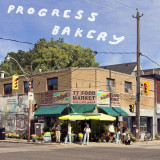
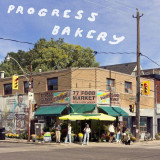
Eliza Niemi - Progress Bakery
  • A1: Do U Fm
  • A2: Novelist Sad Face
  • A3: Green Box
  • A4: Dusty
  • A5: The Linda Song
  • A6: Dm Bf
  • B1: I Tried
  • B2: Melodies Like Mark
  • B3: Wildcat
  • B4: How U Remind Me
  • B5: Pocky
  • B6: Bon Tempiii
  • B7: Pt Basement
  • B8: Alberqurque Ii
  • B9: Mary's
également disponible

Yellow Coloured Vinyl[29,37 €]


Kneading dough is tricky – you should know how it’s supposed to feel. If you try too hard you could make it worse. It’s a beautiful practice – creation with a gentle touch, to work at something so it can be left alone. “If it’s too drawn out it’s awful. It’s easy to give too much.” Dance in the mirror. Contemplate your veiny hands. Who do they remind you of?

You begin by mixing flour and water. “What happens when your people die? Why’d they move the rock to the other side of Ulster Park?” Eliza Niemi asks two seemingly unrelated questions in a rising melody with guitar accompaniment, like fingers playing spider up to the nape of your neck. Gentle pressure. Strands of gluten form to bind the mix. A new question lingers in the binding. When she admits “but I don’t know how to tell if I’m feeling it or not,” that question surfaces through the text. It is reiterated throughout the album. When I’m working with dough I think the same thing to myself.

On Progress Bakery, her second album as a solo artist, Eliza knows to leave some questions alone – to let juxtaposition and tension be the proof. It doesn’t have to be hard. The feelings and revelations they provoke rise in the heat. The smell is sweet. Crispy on the outside and soft all the way through. She playfully slip-slides through words and sounds and images, delighting in surprise, skimming ideas like stones cast across clear water, touching down briefly with uncommon grace.

The question provoked between those opening lines resurfaces in the strands between songs – “Do U FM” is fully formed and beautifully layered, while “Novelist Sad Face” is a short, acapella rendering of gentle curiosity. What is holding these ideas together? Some songs demand more, seem to carry a whole load – eventually the skipping stone will halt to sink and resume its idle duty – while others drift in and out of focus, the way thoughts and dreams become interwoven before the mind is sunk into true sleep.

Music and words don’t always have to interact. Where she decides to keep them apart gives a new contour to where and how she puts them together. The kind of thing you’re supposed to take for granted with songs and their singers comes alive in Eliza’s hands – the little miracle of mixing, kneading, stretching, and stopping.

So often on Progress Bakery, Eliza teases out truth and meaning by asking questions. “Do I wanna be crying?” “Do you want me good or do you want me bad?” “Do I need an eye test?” “I’m writing songs in my head while you’re going over stuff with me — is that cruel??” In “Pocky” Eliza ends with a question that feels to me like the actual biography, succinct and revealing:

I don’t wanna be made to see
I just wanna ask “what’s that?”

Grace that ought to be rare, but in its care and precision is offered humbly, with great generosity, and without announcing itself. Eliza’s simple, miraculous music is given further form and shape by a group of collaborators – invaluable guest musicians Jeremy Ray, Evan Cartwright, Steven McPhail, Kenny Boothby, Ed Squires, Carolina Chauffe, Dorothea Paas, Louie Short, and Avalon Tassonyi. Together with Louie Short, who recorded, mixed, and produced the album along with Jeremy Ray and Lukas Cheung, Eliza has cultivated a richness in sound and texture that prods and provokes the ticklish ear. Barely audible guitar tinkering, a brief lo-fi field recording of trumpets, the harmonic clicking of a looped synthesizer, a flourish of reeds, a child’s conversation, each uncanny sound perfectly placed, rippling out under a soft breeze.

Lay in bed alone at night and ask aloud to the stillness,

“What were you doing at the Albuquerque Airport?
What were you doing there??”

And hear your question answered by a dream of swelling, undulating cellos. Try to grasp at the melody and structure. It’s not an answer (if there could be one), but it moves deeper, closer to the weird layer of fleeting moments and disconnected images, barely perceptible at its core. Wait for the dream reel to click into place.

Eliza took me for a ride in Nicole (her beloved Dodge Grand Caravan) and told me she’d been thinking of the album as an embodiment of transition – and I think every transition, known or unknown, carries the weight of new meaning, skittering off the surface tension of life as you know it, creating ripples, sometimes bouncing off and sometimes breaking through. There is a trick you can use to tell if a dough is glutinous enough. You’re supposed to stretch it out as thin as you can without breaking it and hold it up to the light. If you can see through, even if it renders the world murky and uncertain, you should leave it alone. I love this trick. It’s one that Eliza seems to know intuitively: work gently and ask questions and don’t always expect answers, and when you can, take a glimpse at something new, and then leave.

pré-commande04.04.2025

il devrait être publié sur 04.04.2025

27,10
Eliza Niemi - Progress Bakery

Eliza Niemi

Progress Bakery

12inchTAR118SX
Tin Angel
04.04.2025

Kneading dough is tricky – you should know how it’s supposed to feel. If you try too hard you could make it worse. It’s a beautiful practice – creation with a gentle touch, to work at something so it can be left alone. “If it’s too drawn out it’s awful. It’s easy to give too much.” Dance in the mirror. Contemplate your veiny hands. Who do they remind you of?

You begin by mixing flour and water. “What happens when your people die? Why’d they move the rock to the other side of Ulster Park?” Eliza Niemi asks two seemingly unrelated questions in a rising melody with guitar accompaniment, like fingers playing spider up to the nape of your neck. Gentle pressure. Strands of gluten form to bind the mix. A new question lingers in the binding. When she admits “but I don’t know how to tell if I’m feeling it or not,” that question surfaces through the text. It is reiterated throughout the album. When I’m working with dough I think the same thing to myself.

On Progress Bakery, her second album as a solo artist, Eliza knows to leave some questions alone – to let juxtaposition and tension be the proof. It doesn’t have to be hard. The feelings and revelations they provoke rise in the heat. The smell is sweet. Crispy on the outside and soft all the way through. She playfully slip-slides through words and sounds and images, delighting in surprise, skimming ideas like stones cast across clear water, touching down briefly with uncommon grace.

The question provoked between those opening lines resurfaces in the strands between songs – “Do U FM” is fully formed and beautifully layered, while “Novelist Sad Face” is a short, acapella rendering of gentle curiosity. What is holding these ideas together? Some songs demand more, seem to carry a whole load – eventually the skipping stone will halt to sink and resume its idle duty – while others drift in and out of focus, the way thoughts and dreams become interwoven before the mind is sunk into true sleep.

Music and words don’t always have to interact. Where she decides to keep them apart gives a new contour to where and how she puts them together. The kind of thing you’re supposed to take for granted with songs and their singers comes alive in Eliza’s hands – the little miracle of mixing, kneading, stretching, and stopping.

So often on Progress Bakery, Eliza teases out truth and meaning by asking questions. “Do I wanna be crying?” “Do you want me good or do you want me bad?” “Do I need an eye test?” “I’m writing songs in my head while you’re going over stuff with me — is that cruel??” In “Pocky” Eliza ends with a question that feels to me like the actual biography, succinct and revealing:

I don’t wanna be made to see
I just wanna ask “what’s that?”

Grace that ought to be rare, but in its care and precision is offered humbly, with great generosity, and without announcing itself. Eliza’s simple, miraculous music is given further form and shape by a group of collaborators – invaluable guest musicians Jeremy Ray, Evan Cartwright, Steven McPhail, Kenny Boothby, Ed Squires, Carolina Chauffe, Dorothea Paas, Louie Short, and Avalon Tassonyi. Together with Louie Short, who recorded, mixed, and produced the album along with Jeremy Ray and Lukas Cheung, Eliza has cultivated a richness in sound and texture that prods and provokes the ticklish ear. Barely audible guitar tinkering, a brief lo-fi field recording of trumpets, the harmonic clicking of a looped synthesizer, a flourish of reeds, a child’s conversation, each uncanny sound perfectly placed, rippling out under a soft breeze.

Lay in bed alone at night and ask aloud to the stillness,

“What were you doing at the Albuquerque Airport?
What were you doing there??”

And hear your question answered by a dream of swelling, undulating cellos. Try to grasp at the melody and structure. It’s not an answer (if there could be one), but it moves deeper, closer to the weird layer of fleeting moments and disconnected images, barely perceptible at its core. Wait for the dream reel to click into place.

Eliza took me for a ride in Nicole (her beloved Dodge Grand Caravan) and told me she’d been thinking of the album as an embodiment of transition – and I think every transition, known or unknown, carries the weight of new meaning, skittering off the surface tension of life as you know it, creating ripples, sometimes bouncing off and sometimes breaking through. There is a trick you can use to tell if a dough is glutinous enough. You’re supposed to stretch it out as thin as you can without breaking it and hold it up to the light. If you can see through, even if it renders the world murky and uncertain, you should leave it alone. I love this trick. It’s one that Eliza seems to know intuitively: work gently and ask questions and don’t always expect answers, and when you can, take a glimpse at something new, and then leave.

pré-commande04.04.2025

il devrait être publié sur 04.04.2025

29,37
Peter Matson - Hotel PM

Peter Matson is a Brooklyn, NY based musician, producer, DJ, and founder and leader of the seminal NYC post-punk dance outfit Underground System.

Hotel PMis the debut LP from Matson and third release with Bastard Jazz having released two EPs Short Trips in 2019 and The Right Way in 2022.

Album features a who's who of artists collaborating with Matson including Toribio, Kendra Morris, Pahua, The Phenomenal Hand Clap Band, and core members of The Rapture, Ibibio Sound Machine, Poolside, and Sly5thAve.

Including Bastard Jazz, Matson has released music with Soul Clap, planet e, Razor N Tape, Heist Recordings, Heavenly Sweetness, and Hell Yeah.

Recording, production and mixing by Ross Orton (M.I.A., Arctic Monkeys) and Ewan Pearson (Depeche Mode, Confidence Man) between London, Sheffield, UK, Mexico City and Oaxaca, Mexico and Peter's home of New York City.

Press, Radio, and Sync support include Apple Music's WWDC22 Keynote Speech, Rolling Stone, DJ Mag, NTS, Worldwide FM, BBC Radio 6, KCRW, Ibiza Global Radio and more.

pré-commande04.04.2025

il devrait être publié sur 04.04.2025

22,27
The 7:45s - The Way that I Love You / Too Little Too Late

Manchester-based original soul collective The 7:45s release their debut single.

Named after 7-inch 45-rpm vinyl, The 7:45s write short and snappy soul singles. Their debut is a double A-side, giving you two bops for the price of one. Inspired by Charles Bradley, 'The Way that I Love You' is full of contrasts: the piano chimes and horns respond, a man calls and a woman answers. It's laidback then intense, major then minor, nostalgic then heartbroken. On the flip-side, 'Too Little Too Late' is an upbeat northern soul stomper, featuring an earworm of a vocal hook over an infectious bassline that's sure to ruffle tail feathers.

Recorded with vintage equipment at EVE Studios in Stockport, both songs feature the captivating vocals of collaborator Martin Connor. On 'The Way that I Love You', Connor's vocal rises from a crooning baritone to a fever pitch, culminating in spine-tingling ad libs. Magic moments like this are heightened by songwriter and bassist Sam Flynn's perfectionist arrangements, which feature dozens of musicians: spotlighting vocal harmonies, horns, and even strings on 'Too Little... more

credits

releases March 7, 2025

Been in UK soul chart and played on all the indie soul stations , Starpoint , solar etc

Too little Too Late was Played on BBC radio six Craig Charles Funk and soul show twice and the Way That I Love You was played on BBC radio six Craig Charles day time show

Track of the week on Simon Phillips Jazz FM

Featured in Blues and Soul and Echoes Mag

pas en stock

Commandez maintenant et nous commanderons l'article pour vous chez notre fournisseur.

18,07

Last In: 13 months ago
Articles par page:
N/ABPM
Vinyl