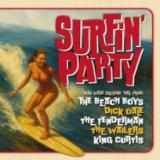
- The Beach Boys - Surfin' Safari
- Duane Eddy His Twangy Guitar And The Rebels - Ramrod
- Johnny & The Hurricanes - Crossfire
- The Fireballs - Bulldog
- The Marketts - Surfer's Stomp
- The Fenderman - Torture
- Joe Jones - California Sun
- The Gamblers - Moon Dawg!
- The Ventures - Lullaby Of The Leaves
- Dick Dale - Surf Beat
- The Tornadoes - Bustin' Surfboards
- Belairs - Mr. Moto
- Johnny Bond - Hot Rod Lincoln
- Dick Dale - Peppermint Man
- Ritche Valens - La Bamba
- Surfmen - El Toro
- The Champs - Tequila
- The Wailers - Tall Cool One
- King Curtis And The Noble Knights - Beach Party
- The Beach Boys - Surfin
quête:tort
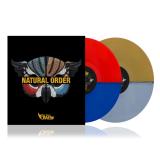
The second album from Big Owl, Bird T, Rusty Take-Off & Deformed Wing has been repressed on an all new 2 x 12” ‘Mask’ colourway (never to be repressed in this colourway).
Home to classics including ‘Assassination’ feat. Dirty Dike, ‘Old Earth’ and the legendary ‘Think Twice’ produced by DJ Premier, the 16-track album changed the game for the Owls and is a certified High Focus classic.
Limited edition pressing of 500 copies.
2025 Reissue.
Münchenbuchsee, a suburb of Bern, Switzerland. Stephan Eicher is the youngest of three children. His father, a radio and TV repairman, is also a jazz violinist and a sound tinkerer in his spare time. In the family home's converted fallout shelter turned studio, Mr. Eicher experiments with homemade sequencers, tortures handcrafted drum machines, and abuses reel-to-reel tape recorders—all under the fascinated gaze of young Stephan.
The boy quickly develops a musical curiosity, exploring sound through various experiments and wanderings. Alongside his younger brother Martin, Stephan crafts audio plays on a homemade multi-track recorder (essentially several cassette decks hooked together!), which they write, record, add sound effects to, and perform for family and friends. Just a couple of nice kids, really...
Then comes 1972, and Lou Reed's Transformer album changes everything for the Eicher kids. For 13-year-old Stephan, it's a revelation—especially "Vicious", the opening track, which he plays on repeat for months. He convinces his father to buy him an electric guitar. Not stopping there, his father also builds him a tube amp using an old radio.
Then comes adolescence. A rough one. Stephan leaves home at 16 and moves to Zurich. With obvious artistic talent, he persuades his art teacher to help him get into F+F, a radical, alternative art school—despite his young age. Accepted, he starts learning video techniques, determined to become a filmmaker.
At F+F, Stephan organizes Dada-style happenings and concerts with a group of friends known as the Noise Boys. Among them: one of his teachers on bass, Veit Stauffer on drums (who would later found ReR/Recommended Records), his girlfriend Sacha on vocals, and Stephan on guitar. In one of their early performances, they release a remote-controlled mouse covered in dull razor blades into the audience to create panic and chaos. Keeping with this aggressive, confrontational spirit, they once played a concert while wearing headphones blasting Tristan and Isolde, trying to perform their own songs simultaneously—to maximize the cacophony. The goal was always the same: clear the room.
Their “songs,” if you can call them that, followed suit. Take "Hungeriges Afrika", for instance—performed entirely with power drills and some drum feedback.
To make ends meet, Stephan returns to Bern on weekends to work as a waiter at the Spex Club, the city’s main punk venue. On September 16, 1980, during a show by proto-electro group Starter, the police raid the club and arrest everyone. Stephan, who manages to avoid arrest, seizes the opportunity to “borrow” Starter’s gear left behind. He suddenly finds himself in possession of a Roland Promars synth, a Korg MS20, and a gorgeous CR78 drum machine, which he runs through a Big Muff distortion pedal to get that perfect gritty sound.
He then sets out to reinterpret some Noise Boys tracks, reworking them during impromptu sessions recorded on a dictaphone (yes, a dictaphone—now the lo-fi sound makes more sense, doesn’t it?). He ironically titles the resulting cassette "Stephan Eicher spielt Noise Boys" ("Stephan Eicher plays Noise Boys"). This gem features seven tracks, which are the ones reissued here.
Back in Zurich, he visits his friends Andrew Moore and Robert Vogel, who have a DIY cassette duplication setup. They make 25 copies of Stephan Eicher spielt Noise Boys for Stephan and his friends. Robert encourages him to visit Urs Steiger of Off Course Records and play him the tape.
Without much hope, Stephan shows up at Urs’s office. But Urs is instantly hooked and suggests releasing a 7” single. Due to space constraints, they reluctantly drop two of the seven tracks ("Hungeriges Afrika" and "One Second"). As for the musical score featured on the cover—it was randomly chosen and remains a mystery to this day. Calling all music theory nerds!
The 7-inch is pressed in 750 copies and released in the first week of December 1980—a date Stephan remembers well, as it’s the same week John Lennon was killed. Smartly, Urs sends a promo copy to François Murner, Switzerland’s answer to John Peel, who hosts a show on alternative station Sounds. Murner falls in love with the record and starts giving it airtime. To Stephan’s surprise, sales follow—and people actually seem interested in his music.
Even this modest underground success scares Stephan a bit. He stops making music for a year and moves to Bologna, where he works as a programmer at Radio Città, a feminist radio station.
Meanwhile, Stephan’s younger brother Martin, who’s also involved in the punk scene, joins the band Glueams as a singer and guitarist. Glueams, named after the fanzine run by two of its members (drummer Marco Repetto and bassist GT), eventually rebrands as Grauzone. Stephan is invited to their shows to project hacked Super 8 visuals live on stage.
Urs Steiger, now working on a compilation titled Swiss Wave – The Album, asks Grauzone to contribute alongside bands like Liliput, Jack and the Rippers, The Sick, and Ladyshave (Fall 1980).
For the album, Martin tasks Stephan with producing their recording sessions. Under Stephan's artistic direction, two tracks emerge: "Raum" and "Eisbär". During "Eisbär", Martin plays a minimalist bass line borrowed from post-punk band The Feelies (just an open string). Drummer Marco Repetto struggles to keep time. Later that evening, unhappy with the takes, Stephan builds a four-bar drum loop from a ¼-inch tape and uses it instead of the flawed original. He then adds bleepy synths and wind sounds to complete the track’s icy vibe before handing it over to Urs.
The Swiss Wave – The Album compilation is released quietly at first, but things snowball thanks to "Eisbär", which eventually becomes a smash hit—selling over 600,000 singles.
Meanwhile, Stephan plays in a rockabilly band called SMUV (named after Switzerland’s social security agency) and begins producing artists, including the debut album of Starter (1981), which includes a more pop-oriented version of "Minijupe".
By early 1982, Stephan starts spending time with the post-punk girl band Liliput (formerly Kleenex). They’re older than him, and he happily drives them around in his Renault Major, acting as their roadie.
By 1983, Grauzone—signed to the major label EMI, which turned out to be a misstep—is falling apart. Stephan begins to pivot toward a more mainstream pop sound with his debut solo album Les Chansons Bleues.
But that... is already another story.
Relapse presents a remastered reissue from the undisputed king of Japanese noise-MERZBOW. "Pulse Demon" is one of the most celebrated releases of Masami Akita's storied 4 decade long career. Composed entirely by live noise concrete and the use of a fuzz box, "Pulse Demon" eschews all overdubs and studio trickery, laying MERZBOW bare. What follows in these recordings is the pure essence of unfettered noise. The rawness in "Pulse Demon" is palpable; praised as "genuinely extreme, downright torturous sounds that are strangely compelling in their shredding intensity." (A.V. Club) upon its original release in 1996. Remastered by James Plotkin (ISIS, ELECTRIC WIZARD, FULL OF HELL, and more,) the "Pulse Demon" reissues features "Extract 1", a never-before released track that was recorded as part of the original "Pulse Demon" sessions.
Ultra Clear Vinyl[29,37 €]
Black Vinyl[28,15 €]
What's the point of the howl of string to speaker, the hammering of stick-on skin? Is it transcendence, elevating the human spirit by catharsis in sound? Or is it summoning chaos, a purgatory in which to bask in all that’s unclean, the better to feel alive?
Why not both? Because that’s what’s on offer on Diet Of Worms, the second Rocket release by The Shits, Leeds via Newcastle’s titans of disgust and deliverance. This is a feast for the senses in the worst way possible - primal rock boiled down to its essence and flung full in your face. Using repetition, tortured vocal invective and heads-down intensity as blunt instruments, these eight tracks are an unprecedented torrent of acidic salvation. Whilst lurking somewhere on the decadence-destruction axis between the nihilism of prime Stooges and the bloody blackout of Braimbombs, Diet Of Worms is possessed of a legitimately uncompromising hostility that both elevates and debases it to co-ordinates unknown.
There are revelations here in the riffage and the rancour, even if they are the kind that occur in the bleary miasma of the lock-in, or witnessing the streetlight blur of the subsequent stagger home. Even more single-minded and remorseless than the band’s Rocket debut ‘You’re A Mess’, this is a record that demands full immersion. Whether it’s ‘Then You’re Dead’ hammering on a pulverising garage-stinking riff until it begs for mercy, or ‘Change My Ways’, whose Creedence-In-Hell swagger and lurch is that of abjection transmuted into joy, this is psychedelia forcibly removed from its comfort zone of pastiche, and thrust into a bad-trip realm of the vivid and nightmarish.
But rarely has the process of making beauty and horror indivisible seemed like so much fun. If Werner Herzog was right, and the only harmony in the universe is that of overwhelming and collective murder, then The Shits are the true music of the spheres.
- 1: Miami
- 2: United By Hatred
- 3: Violence Condoned
- 4: Electric Torture
- 5: Meaning Of Pain
- 6: Stabbed In The Back
- 7: Shotgun Justice
- 8: Parricide
- 9: American Luck
- 10: Brass Knuckles
- 11: Burning The Bridges
- 12: Concussion
- 13: Cranial Stomp
- 14: The Pugilis
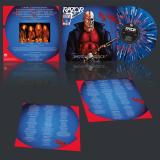
Splatter Vinyl[23,32 €]
Razor, a thrash metal legend! The most valuable Canadian export since the Toronto Maple Leafs. When Dave Carlo and his band took to the stage at the legendary Headbangers Open Air Festival a few years ago, the crowds went completely wild. This enthusiastic reaction suggests that Razor may have more fans today than they did in their heyday in the mid-1980s. So the re-release of “Shotgun Justice” on vinyl comes just at the right time. The album comprises 14 tracks and features immortal classics such as “United by Hatred,” “Stabbed in the Back,” and “Brass Knuckles.” Shotgun Justice was originally released in 1990 on CD only on Dave Carlos' own label, Fist Fight Records (distributed in North America by Fringe Records). It was the first Razor album with Bob Reid on vocals (who had replaced Stace McLaren, aka Sheepdog).
- A1: Dj Tennis - Hello Hello
- A2: Rudy With A Hoodie - Lovelovelove
- B1: Dj Tennis & Ashee - I Wanna Know
- B2: Easttown - Bubblicious
- C1: Josh Wink - Higher State Of Consciousness (M-High Edit)
- C2: Andre Zimmer - Simpli-City
- D1: Paurro - Bubbles
- D2: Vitess - Insane
- A | Redrago - She Got It Wrong (10")
- B | Redrago - Free The Drums (10")
Manfredi Romano, founder and A&R of Life and Death Records, has been a pivotal figure in electronic music for over two decades. This year marks an important milestone as he is invited to curate the upcoming fabric presents mix for fabric Records, a release that highlights his instinctive storytelling and the distinct musical identity he has cultivated throughout his career.
Manfredi’s journey began in Italy around the turn of the millennium, tour-managing punk bands and organizing left-field music events before completing his studies in computer science at the University of Pisa. He went on to form DAZE, Italy’s first booking agency dedicated exclusively to electronic music, laying the groundwork for what would become a globally influential presence in the scene.
In 2010, he shifted focus to his own artistic project, DJ Tennis, which quickly gained international recognition for its emotive blend of house, techno, and disco. Renowned for creating intimate atmospheres in even the largest spaces, DJ Tennis has performed at leading clubs such as Circoloco Ibiza, Fabric London, and Panorama Bar Berlin, and at major festivals including Sonar, Timewarp, Primavera Sound, and Coachella. His 2022 residency at Phonox in London further showcased his ability to shape dancefloors with nuance and depth. Since 2017, he has also co-founded and curated Rakastella, the celebrated Art Basel Miami festival created in partnership with Life and Death and Innervisions.
As a producer, DJ Tennis draws from early relationships with post-rock pioneers such as Godspeed You! Black Emperor, Tortoise, and Fugazi, channelling their influence into intricately layered electronic compositions. His work has appeared on respected labels including Kompakt, Rhythm Assault, Running Back, !K7, Cercle Records, Aus Music, and Circoloco Records, alongside frequent releases on Life and Death. His remix portfolio includes collaborations with Diplo, Boys Noize, Loco Dice, WhoMadeWho, and Acid Pauli, among many others. He has also previously contributed a DJ-Kicks mix, bringing his eclectic sensibilities to one of electronic music’s most beloved series.
After extended periods living in Miami, Berlin, and Barcelona, DJ Tennis now resides in Paris. Outside the studio and club environment, Manfredi is a passionate chef who has curated menus for charity events and collaborated with Beatport at ADE, Pioneer, and Resident Advisor. He is also an avid collector of bicycles, vintage action figures, and vinyl — his record collection now surpasses eleven thousand pieces.
With the forthcoming fabric presents DJ Tennis release, he offers a deeply personal, narrative-driven statement that reflects decades of crate-digging, boundary-pushing selections, and a lifelong devotion to sound. It marks a new chapter in his artistic evolution and stands as one of the year’s most anticipated entries in the iconic series.
The first single from DJ Tennis is a collaboration with long-time studio partner Ashee, and it immediately sets the tone for the mix: warm, seductive, rhythm-driven, and emotionally charged.
“I Wanna Know” is a sleek club track built around a pulsing groove and a steady, hypnotic rhythm. The low end is rounded and warm, giving the track a driving but understated momentum. Percussion is crisp and minimal, allowing the bassline and vocal elements to take center stage. The repeating, robotic earworm of a vocal hook, “I wanna know’ is the lynchpin to the track and will remain in your head long after the track has finished.
It’s the kind of record that warms up a room early in the night, sets the tone for a sunset beach set, or adds a lush, emotional peak during a more leftfield club moment.
- Apocalyptic Warriors (Chapter Final)
- Sentenced For Life
- Nearer From Death
- Intro
- Apocalyptic Warriors
- Final Holocaust
- Dream Of Violence
- Troop Of Death
- Outro
- Intro: March Off / Apocalyptic Warriors
- Toxic War
- Legion Of Torture
- The Day Of Massacra
Clear vinyl 2LP reissue of the definitive demo collection from French Death/Thrash legends, Massacra! "Day Of The Massacra" captures the relentless energy of France's leading early-90s death/thrash act. This release compiles these foundational tracks - ranging from the punk-influenced Legion of Torture to the more developed Nearer From Death - showing the evolution of a band that pushed the boundaries of extreme music.
- A1: ) Colour Chant
- A2: ) Still & Moving
- A3: ) The Reader’s Lamp
- A4: ) Sun In My Room
- A5: ) Carry A River In Your Mouth
- B1: ) Catch Up, Isobel
- B2: ) A Ship In The Sky
- B3: ) Some Circling
- B4: ) There Was Always A Golden Age
London quartet The Leaf Library return with their bold new album After The Rain, Strange Seeds. A luminous collection of pastoral indiepop, drawing inspiration from suburban isolation, unreliable memories and the surreality of the weather. Their most immediate and melodic work to date, the richly evocative songs brim with chiming guitars, buzzing organs and warm, dulcet strings, evoking Yo La Tengo’s more contemplative moments, The Clientele’s autumnal jangle pop and early Stereolab’s motorik melodicism. The sound of the album is defined by mixer John McEntire, whose work with Stereolab and Yo La Tengo (as well as a member of Tortoise/The Sea And Cake) have been major inspirations to the band.
The album explores themes of memory and place, albeit through an abstract haze – returning again and again to specific moments frozen in time: midsummer bright hot days in the Chilterns (“Sun In My Room”), meteorology and the strange movement of the weather (“Colour Chant”), red kites circling over suburban motorways (“Some Circling”), and the uncanny feeling of dusk and nighttime creatures on “The Reader’s Lamp” (titled by celebrated film director Peter Strickland). The lyrics are vivid yet elliptical, strung with abstract ideas and imagery, conjuring a gently unsettling, though never unwelcoming atmosphere. Not quite trusting your own recollection of things, while marvelling at the oddness of the natural world, the album’s title a good summation of the mix of strangeness and hope contained within.
As on past albums the band - founded by singer Kate Gibson and ex-Saloon guitarist Matt Ashton in the mid 2000s, and now completed by drummer Lewis Young and bassist Gareth Jones - have involved their extended musical family, including guitarist Mike Cranny (of fellow drone pop travellers Firestations) and keyboardist Irina Shtreis, both members of the Leaf Library live band. The album also sees the return of James Underwood’s Iskra Strings, a quartet that features on 4 tracks, with sumptuous arrangements by Daniel Fordham, as well as regular contributor Melinda Bronstein on vocals and Will Twynham (Dimorphodons) on harpsichord. They also welcomed Paddy Milner (on Hammond organ) and Scott McKeon (guitar) – both current members of Tom Jones’ band – for a startlingly delicate rolling crescendo to closing track “There Was Always A Golden Age”.
After The Rain, Strange Seeds is their 4th studio album. The result is The Leaf Library’s most accomplished and affecting work, John McEntire’s mix bringing a bold clarity to the band’s meticulous arrangements – closer to how they sound live than anything they’ve done before.
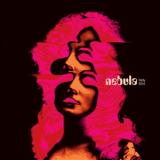
Nachauflage auf schwarzem Vinyl. 22 Jahre nach ihrer ersten Veröffentlichung und 10 Jahre nach ihrem letzten Album sind Nebula wieder da. Wenn du jetzt "Holy Shit!" denkst hast du es ziemlich genau getroffen. "Holy Shit" ist Nebulas erste LP seit "Heavy Psych" (2009), und beantwortet schnell die Frage die sich stellte, seitdem Gitarrist/Sänger Eddie Glass, Bassist Tom Davies und Schlagzeuger Michael Amster 2017 die Reformierung der Band angekündigt haben: Nebula sind immer noch Nebula. Seit den Tagen der 1998er Let it Burn EP und dem mittlerweile klassischen To the Center Debütalbum waren Nebula immer nur ein wenig gefährlicher. Nur etwas mehr aus den Angeln gehoben. Holy Shit zeigt diesen von vorne nach hinten für den wesentlichen Teil ihres Charakters, der er ist, und doch versucht er nicht, etwas zu sein, was sie schon einmal getan haben, sei es bei diesen frühen Ausflügen oder Heavy Psych or Charged (2001), Apollo (2003) oder Atomic Ritual (2005). Es ist ein sechstes Nebula-Album - etwas, worauf selbst die leidenschaftlichsten Fans kaum gehofft hätten. Die Grundtracks wurden in zwei Tagen aufgenommen, aufgenommen in den Mysterious Mammal Studios in L.A. mit Matt Lynch (ebenfalls von Snail) am Steuer. Leads und Loops und Feedback-Effekte wurden von Glass and Davies live aufgenommen, als sie die Basic-Tracks aufnahmen, genau so, wie sie es auf der Bühne tun würden, und Overdubs folgten bei Bedarf. Eine Fülle von Material wurde produziert und auf den Kern dessen, was man hier hört, reduziert. Ein sechstes Nebelalbum. Und wenn du es hörst, wirst du feststellen, dass du diesen Titel immer wieder sagst. Cover Art von ROBIN GNISTA
Nachauflage auf senfgelbem Vinyl. Limitiert auf 300 Exemplare. 22 Jahre nach ihrer ersten Veröffentlichung und 10 Jahre nach ihrem letzten Album sind Nebula wieder da. Wenn du jetzt "Holy Shit!" denkst hast du es ziemlich genau getroffen. "Holy Shit" ist Nebulas erste LP seit "Heavy Psych" (2009), und beantwortet schnell die Frage die sich stellte, seitdem Gitarrist/Sänger Eddie Glass, Bassist Tom Davies und Schlagzeuger Michael Amster 2017 die Reformierung der Band angekündigt haben: Nebula sind immer noch Nebula. Seit den Tagen der 1998er Let it Burn EP und dem mittlerweile klassischen To the Center Debütalbum waren Nebula immer nur ein wenig gefährlicher. Nur etwas mehr aus den Angeln gehoben. Holy Shit zeigt diesen von vorne nach hinten für den wesentlichen Teil ihres Charakters, der er ist, und doch versucht er nicht, etwas zu sein, was sie schon einmal getan haben, sei es bei diesen frühen Ausflügen oder Heavy Psych or Charged (2001), Apollo (2003) oder Atomic Ritual (2005). Es ist ein sechstes Nebula-Album - etwas, worauf selbst die leidenschaftlichsten Fans kaum gehofft hätten. Die Grundtracks wurden in zwei Tagen aufgenommen, aufgenommen in den Mysterious Mammal Studios in L.A. mit Matt Lynch (ebenfalls von Snail) am Steuer. Leads und Loops und Feedback-Effekte wurden von Glass and Davies live aufgenommen, als sie die Basic-Tracks aufnahmen, genau so, wie sie es auf der Bühne tun würden, und Overdubs folgten bei Bedarf. Eine Fülle von Material wurde produziert und auf den Kern dessen, was man hier hört, reduziert. Ein sechstes Nebelalbum. Und wenn du es hörst, wirst du feststellen, dass du diesen Titel immer wieder sagst. Cover Art von ROBIN GNISTA
Yuvi Havkin aka Rejoicer returns with an exceptional collaborative album, California Space Craft. On this aptly titled record, he joins forces with seasoned LA bass polymath Sam Wilkes — known for his inspired studio work with Sam Gendel and his dynamic live performances alongside Louis Cole and KNOWER — and drummer Tamir Barzilay, completing the LA-connected trifecta alongside a select handful of key featured guests. The idea for California Space Craft was born out of a series of inspired live sessions in Los Angeles between 2019 and 2022, notably at Listen to Music Outside in the Daylight Under a Tree, where the trio’s natural chemistry first began to bloom. The resulting recordings encompass a wide variety of inspired sound stylings, as one would expect from any of these accomplished artists on their own; however, the sum is truly greater than the parts here, with the fluidity of their freeform improvisations over a dedicated three-day recording session feeling remarkably focused as a cohesive whole. Opening track “Traveling Light” sets the LP’s tone with equal parts Sly & Robbie-style, space echo– drenched rhythms and the cozy kosmische, guitar-led feel of early-2000s genre-fluid explorers like Tortoise. As we continue on to “Ritual in G#,” we are reminded that this is indeed a unique and timeless sonic space the trio has created, as Havkin’s crisp Rhodes chords anchor an ever-evolving psychedelic sound bed. The soaring trumpet of Avishai Cohen adorns the Afrobeat-indebted “Lion Water,” with Barzilay laying down a proper Allen-esque groove, while “Further (with you),” featuring Nitai Hershkovits on keys, offers a defining look at the titular concept of the album — with pure Cali feels coalescing effortlessly into sciNew Release Information fi narrative modes and a proper dose of Rejoicer futurism. Elsewhere, “Her Hair in the Air” shines with fresh polyrhythmic intention, illustrating the balanced bond between the three collaborators at their conversational peak, and the brisk synth strokes of “Early Porpoises,” alongside LP closer “Oceanic Friends” — again ideally named — double as a grand, in-stereo ride into the blissful Pacific sunset horizon. California Space Craft embodies the power of open, collective intention and musical kinship, offering memorable, uplifting moments and an aural glimpse of hope, warmth, and loving melodious calm in an otherwise quite chaotic time for humanity.
- 1: Come Down To The Square
- 2: Fire
- 3: Ships
- 4: I Passed Your House
- 5: They Recognised Him
- 6: Woking
- 7: Plodder
- 8: The Last Days Of Watchmaker Joe
- 9: Doer Undoer
Pink Vinyl[23,32 €]
London-based Irish singer-songwriter Seamus Fogarty returns with 'Ships', his most expansive and uplifting album to date, released March 6, 2026 on limited-edition 12” coloured vinyl, CD and digital formats. Praised for crafting “magical journeys through fable and modern life and back again, often in the same song” (----- – The Guardian), Fogarty blends motorik rhythms, folk traditions and leftfield electronics into a richly detailed collection that channels influences from Tortoise to early ’90s hip hop. Following 2023’s 'Hee Haw EP,' 'Ships' is packed with poignant, funny and deeply human vignettes touching on love, loss, DIY coffins, chance encounters and the quiet determination required to keep going.
Written in the wake of 'A Bag Of Eyes' and road-tested on tour with Lisa O’Neill, 'Ships' was brought to life with an esteemed cast of collaborators including Emma Smith, Chris Vatalaro, Aram Zarikian, Joe Auckland, Leo Abrahams and Mike Lindsay. Recorded across London, St Leonards-on-Sea and Margate, and fine-tuned in Fogarty’s Walthamstow home studio, the album moves effortlessly from the urban hum of ‘Come Down To The Square’ to the romantic sweep of the title track ‘Ships’ and the defiant crescendo of closing track ‘Doer Undoer’. “There’s something strangely uplifting about this collection,” Fogarty says. “It’s more honest than anything I’ve released before.”
London-based Irish singer-songwriter Seamus Fogarty returns with 'Ships', his most expansive and uplifting album to date, released March 6, 2026 on limited-edition 12” coloured vinyl, CD and digital formats. Praised for crafting “magical journeys through fable and modern life and back again, often in the same song” (----- – The Guardian), Fogarty blends motorik rhythms, folk traditions and leftfield electronics into a richly detailed collection that channels influences from Tortoise to early ’90s hip hop. Following 2023’s 'Hee Haw EP,' 'Ships' is packed with poignant, funny and deeply human vignettes touching on love, loss, DIY coffins, chance encounters and the quiet determination required to keep going.
Written in the wake of 'A Bag Of Eyes' and road-tested on tour with Lisa O’Neill, 'Ships' was brought to life with an esteemed cast of collaborators including Emma Smith, Chris Vatalaro, Aram Zarikian, Joe Auckland, Leo Abrahams and Mike Lindsay. Recorded across London, St Leonards-on-Sea and Margate, and fine-tuned in Fogarty’s Walthamstow home studio, the album moves effortlessly from the urban hum of ‘Come Down To The Square’ to the romantic sweep of the title track ‘Ships’ and the defiant crescendo of closing track ‘Doer Undoer’. “There’s something strangely uplifting about this collection,” Fogarty says. “It’s more honest than anything I’ve released before.”
- A1: Nocturnal Hell Side
- B1: One Foot In The Grave
- B2: Tortured Souls
Nach zwei erfolgreichen Demo-Tapes, »Bloody Karnage« (1984) sowie »Surrender Or Die« (1985), begaben sich Torontos Slaughter im Februar 1986 erneut ins Studio, um ihre Debüt-Single »Nocturnal Hell« aufzunehmen, die aus dem Titeltrack, “One Foot In The Grave” und “Tortured Souls” bestand. Die Besetzung bestand aus dem Gitarristen und Sänger Dave Hewson, Bassist Terry Sadler sowie Schlagzeuger Ron Sumners. Die Originalpressung der 7“ Single erschien auf Brian Taylors Label Diabolic Force in einer limitierten Auflage von 1.000 Stück. Der hektische Death/Thrash Metal von Slaughter traf voll den Zeitgeist wurde von den Fans sofort ins Herz geschlossen. 1987 folgte auf »Nocturnal Hell« das legendäre Debütalbum von Slaughter, »Strappado« (ebenfalls auf Diabolic Force veröffentlicht). „Sämtliche Stücke von »Nocturnal Hell« wurden schon in der Session zum »Strappado«-Album mit aufgenommen“, erklärt Dave Hewson heute. „Die Aufnahmen und der Mix nahmen insgesamt ganze zwei Tage in Anspruch und kosteten lächerliche 500 US-Dollar. Eine 7“ war eigentlich nie geplant. Aber ich glaube mich erinnern zu können, dass Diabolic Force/Fringe Records in finanziellen Schwierigkeiten steckten und deswegen die Single vor der »Strappado«-LP herausbrachten, die dann ein Jahr auf sich warten ließ. Das Album wurde im Februar 1986 aufgenommen, kam aber erst 1987 heraus. Wir waren sehr froh darüber, wie die Scheibe geklungen hat, super heavy nämlich. Das Schlagzeug ist im Mix vielleicht ein wenig zu laut gewesen, aber insgesamt waren wir wirklich zufrieden mit dem Sound.“ Rechtzeitig zum 40-jährigen Jubiläum legen High Roller Records nun die inzwischen sehr gesuchte »Nocturnal Hell«-Single in ihrer ursprünglichen Fassung noch einmal neu auf.
- A1: Beaten Metal
- A2: Filibuster X
- B1: Sanctuary
- C1: Hilo
- C2: War Hero
- D1: I.c.e
- D2: Age
Antibalas established themselves in the late 1990s as a burning, tough, horn, bass and drum driven Afrobeat ensemble cut from the Fela Kuti mold, who were politically savvy and socially conscious. Their live shows have been incendiary events where rhythm and perspiration from completely crazy, booty-shaking audience members shared something deeper and wider than the music itself. Security is Antibalas' fourth album. It was co-produced by the band with John McEntire from Tortoise.
The group, whose name means "bulletproof" in Spanish, has indeed proved they possess the mettle to not only survive but also thrive by employing a musical arsenal that has become known worldwide. Initially using the revolutionary blueprint of afrobeat as a launching pad, the dozen-strong members of Antibalas weave a rich tapestry of latin, jazz, classical, funk and soul into their horn-driven mix. Words fail in trying to describe the result: simultaneously polyrhythmic and political, independent and contagious, and the reason why many have credited the band for introducing afrobeat's framework to a new generation.
Security is available as a numbered limited edition of 500 copies on white vinyl and is packaged in a gatefold sleeve.
Alistair Colling vs. Tortured Soul featuring Sabina
When You Find Your Love…Hold On 25th Anniversary Mixes
25 years ago, at the turn of the millennium, downtown NYC was spoiled with record stores. In this pre-digital age, vinyl was king for club DJs, and shops such as Downtown 161, Dance Tracks, and Vinyl Mania peppered lower Manhattan, thriving businesses that supported an expanding scene of local and international DJs. Perhaps the largest and most established of these was Satellite Records, an institution of club sounds that also spawned multiple record labels, including the deep-house imprint Central Park Recordings.
At this time, Central Park Recordings and Satellite Records owner Scott Richmond signed a demo in need of a vocal from young British producer Alistair Colling, and enlisted John-Christian Urich to write it, who had just had a massive hit with “I Might Do Something Wrong” the debut Tortured Soul single on Central Park. He in turn brought in Sabina Sciubba of then newly-formed band Brazilian Girls to record the vocal, and with Jon Cutler on remix duties the record was complete. Tortured Soul went on to release numerous deep house classics like “Fall In Love,” “How’s Your Life” and have continued to tour as a groundbreaking live-house act to this day (of which RNT co-founder JKriv was bassist and collaborator for 10 years).
For the 25th anniversary of this turning point release, Razor-N-Tape has rebooted and remastered the original and classic Jon Cutler mixes, which have never been reissued in any format since the original release. RNT also commissioned two new exemplary remixes from DJ Spinna and musclecars, connecting the dots between the deep-house lineage of the past and present. Presented in a gorgeous jacket that calls back to the graphical style of the original Central Park Recordings aesthetic, this 12” is an absolute essential for any lover of soulful club sounds or purveyor of NYC dance music history.
- A1: Blind Eye
- A2: Lady Whiskey
- A3: Errors Of My Way
- A4: Queen Of Torture
- B1: Handy
- B2: Phoenix
Wishbone Ash's self-titled debut album, released in 1970, introduced a distinctive sound that would become highly influential in British rock. This re-issue faithfully replicates the original UK release in it's gatefold sleeve and is pressed on 180gm vinyl. Blending blues-rock, folk melodies, and emerging progressive elements, the album is defined by the bands signature twin-lead guitar approach, with Andy Powell and Ted Turner weaving melodic, harmonized lines rather than relying on a single dominant lead. Tracks like Blind Eye and Queen Of Torture balance hard-edged riffs with spacious, reflective passages, while acoustic moments add a pastoral, almost medieval atmosphere. The rhythm section, understated yet precise, allows the guitars to breathe and develop organically. Rather than chasing commercial immediacy, the album favours mood, texture, and musical interplay, giving it a thoughtful, exploratory character. As a debut, Wishbone Ash feels confident and forward-looking, laying the groundwork for the bands later classics and helping to shape the twin-guitar sound later adopted by countless rock and metal acts.