Anonymous British funk studio outfit Ultrafunk was spearheaded by Blues & Soul magazine proprietor John Abbey, who ran a fashionable record shop and label called Contempo in London’s West End during the 1970s; he conceived of the group as the UK counterpart to US studio bands like Mfsb. Arranger Gerry Shury, who had worked with Barry White and Maurice Gibb of the Bee Gees, drafted guitarist Chris Rae and bassist Frank McDonald (who often composed library music together) and future Rubettes drummer John Richardson to form the group, in situ. A lack of band photos, suggestive song titles and a predilection for American cover tunes led many to believe the band was US-based. Their self-titled debut LP is where the myth all begins, with a number of truly atmospheric and cinematic hard funk instrumentals, given added textural depth through full orchestration, including covers of Bill Withers’ “Use Me” and Stevie Wonder’s “Living In The City.” Though not quite as compelling as the better-known follow-up set, Meat Heat, there is still plenty to savour on Ultrafunk, making this debut companion disc a must-have for all true funk aficionados.
Buscar:trading places
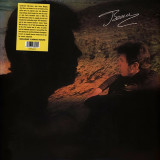
- A1: Welcome
- A2: Imagination
- A3: 1917 Revolution
- A4: Soldier In The Willow
- A5: Fishing Song
- A6: The Painted Vase
- A7: Pillar Of Economy
- B1: A Nation's Pride
- B2: The Sun Dancer
- B3: Rain
- B4: Morning Sun
- B5: The Summer Has Gone
- B6: The Ways Of Winter
- B7: Welcome-Tag Piece
- B8: Sleeping Town (Bonus Track)
- B9: Time (Bonus Track)
Leeds-born folk-rocker John Trevor Midgely, alias Beau, was known for his deft twelve-string guitar work, his poignant voice and distinctive song-writing, which brought him onto the roster of John Peel’s Dandelion label in 1969. His self-titled debut album is arguably his best and includes the outstanding single ‘1917 Revolution,’ said to have inspired America’s smash, ‘Horse With No Name,’ the LP ably demonstrating that all the artist needed was his voice, his guitar, and his individual approach to song writing, the work bearing his haunting hallmarks throughout. In short, an unjustly obscure release that is ripe for current reappraisal. Including 2 Bonus Tracks
After performing together in the skiffle-oriented band Good Earth, singer-songwriter Ray Dorset and keyboardist Colin Earl formed Mungo Jerry, whose breakthrough single, “In The Summertime,” remains a stone-cold anthem of the early 1970s. With Paul King on banjo and jug, Mike Cole on string bass, Earl on ragtime piano and with Dorset’s humorous vocals upfront, “In The Summertime” was skiffle-tinged rock at its best. The reissue of this uncommon 12-inch also features Dorset’s “Mighty Man,” with King’s kazoo and harp, as well as a great cover of Woodie Guthrie’s “Dust Pneumonia Blues.” A must-have!
The American psych pop quintet Paper Garden had established a solid reputation performing to university students in their native New York and in surrounding states in 1967-68 before being commissioned to cut a debut LP with British producer Geoff Turner for Musicor, the resultant sessions yielding a self-contained concept album of totally new work. With sitars and tabla on some songs trading places with baroque elements and orchestrated interludes, the breezy psych pop gets pulled in all manner of directions and often sounds closer to the British psychedelic sound than anything Stateside. A rare and rich listening experience!
Dando Shaft’s third LP continued their explorations into the progressive and psychedelic strands of folk, now with shifting time signatures evidencing an increasing sophistication, as well as an ongoing commitment to experimentation; more varied in theme than their previous releases, there were shades of blues in places and an array of new instruments in the mix, including harpsichord, accordion, and slide guitar, yet the progressive folk that was always at the core of the group is still intact. With original copies costing in the hundreds, this is another worthy exploration for Dando Shaft fans, and all lovers of progressive folk music.