
In Stock
On Stock and ready to ship
Last In: 23 months ago
13,40 €
On Stock and ready to ship

Veerus makes his Drumcode debut, after an impressive contribution to Truesoul's VA EP in 2017.
The Italian has built up an impressive discography over the last decade, dropping records on labels including Terminal M, Octopus, Filth on Acid and his own Le Club imprint. His collaborative with Maxie Devine 'My Train' was a highlight of Solomun's classic Boiler Room in Tulum, which has clocked 37 million views. In late 2017 he linked up with Brits OC & Verde for the fantastic 'Naaki' that featured on Truesoul's first Various Artists EP, ensuring he was an artist well and truly in Adam Beyer's sights.
His maiden outing for Drumcode mines 20 years of history, taking inspiration from classic trance and acid from the '90s, which he distils to create powerful modern techno works. 'Hypnosis' was a huge highlight of Beyer's Awakenings show at Gashouder during ADE. It's characterised by an engrossing call-and-response dynamic Veerus builds between the 303 acid warbles and the melodic stabs that run throughout. A track custom made for big moments. 'Apocalypse', like its name, is more menacing. Veerus constructs the work to mimic the dramatic theatre of a gladiatorial scene in a film, as heart-fluttering chord progressions, a piercing synth line and dystopian melody mark this memorable track.
On Stock and ready to ship

Born in Burlington, Vermont, and conservatory-trained in the US, the cellist Tristan Honsinger moved from Montreal to Amsterdam in 1974, quickly linking with Han Bennink and Misha Mengelberg, and opening a long and fruitful musical relationship with Derek Bailey. Recorded in 1976, Duo displays a performative musical approach already characterised by the lack of inhibition which would later endear him to The Pop Group: he is knockabout, exclamatory, explosively rhythmic; burping Bach and folk melodies with spasmodic lyricism, in amongst the garrulous textures and accents of his scraping, bowing and plucking, and gibbering like a monkey; throwing out his arms and stamping the floor, grappling with his instrument like an expert clown, always on the lookout for new ways to trip himself up. You can hear Bailey revelling in the company, as he ranges between scrabbling solidarity and an askance skewering of his partner's antics, on prepared (nineteen-string) and standard electric guitars — and a Waisvisz Crackle-box, for the garbled, quizzical, cross-species natter which closes The Shadow. Throughout, the spirited interplay between laconic, analytic wit and guttural, sometimes slapstick physicality is consistently droll, often laugh-out-loud funny; vigorously alert, alive and gripping.
On Stock and ready to ship

For those unfamiliar with the Atipic releases, it may seem that Buenos Aires' Jorge Savoretti has chosen to swim upstream on the latest Atipic installment. As for a trained ear, the apparently bipolar approach, elegantly touching quite a few electronic influences from different decades, has a cohesive unity in all the 3 tracks presented.
Hidden under the sharp cut filters from the happy side A tune or building the groove to be unleashed in full swing on Side B, it is up to the dancefloor characters to find these elements.
Rather unconventional, yet totally subjective, Atipic004 is a proof of concept on how different angles can generate twisted and unexpected perspectives on modern electronic music.
On Stock and ready to ship

Based on the Irvine Welsh novel of the same name, the film version of 'Trainspotting' directed by Danny Boyle became a cult sensation. Focused on the heroin subculture of Edinburgh in the 1980s, the film is occupied with surrealism, black comedy and features a great soundtrack. This album includes tracks from Iggy Pop, New Order, Blur, Underworld and many more.
To celebrate the 20th anniversary of the iconic drama, the original soundtrack is being reissued on CD and vinyl. Having been out of print for a long time, the 180g vinyl features replica original artwork that includes special silver spot finishes throughout - front, back, booklet and picture labels, as well as bright pantones. There will be a limited run on orange vinyl before moving to black once sold out.
On Stock and ready to ship

Honey Soundsystem releases 'Cosmologist', the latest offering from our Resident DJ: Robert Yang aka Bézier. A multi-instrumentalist, Robert was trained in saxophone starting at age 10, before moving onto a Fender Telecaster after high school. After being exposed to Southern California rave culture in the late 90s, he moved onto DJing and collecting records. By the time he planted his roots in San Francisco in 2005, Robert had built an impressive analog synth-based studio, which also serves as the creative hub for his riveting live performances.
'Cosmologist' explores Robert's personal universe with three tracks that connect his varied musical lineages. "Cosmos", a celebration of the late 80s/early 90s KIIS FM universe, is built around an infectious freestyle hook that morphs into a seven minute tour of intersecting styles. "Ether" begins as gothic night-driving electro, but breaks into fantasy-scapes inspired by Italo and 1980s Japanese anime theme songs. The final track, "d. Quelle", clocks in at over 11 minutes, incorporating bebop jazz solos drawn from his early exposure to improvisation techniques by Charlie Parker, Cannonball Adderley, and Stan Getz. All songs have been mixed by Mark Pistel (Meat Beat Manifesto, Consolidated) at Room 5, San Francisco and EQed for vinyl by George Horn at Fantasy Studios.
On Stock and ready to ship

The grand opening of the new label serie Obscura Europa Sampled Artists', a various artists 12' EP serie to present darkwave bands that escapes a little from the usual electronic sound of the label. On this volume 1 we will find a 90's ultra classic darkwave hymn of the dissolved german band Behind The Scenes, uncomprehensively never pressed on vinyl to date. On the other hand, the Polish solo act Undertheskin shows with 2 cold but extremely rhythmic tracks why his acclaimed debut mini album is one of the most exciting and interesting proposals of 2015. All tracks have been analogically remastered specially for this vinyl version. Only 200 copies are available for distribution. Including Fate' of Behind The Scenes and Cold' and tRain' of Undertheskin.
On Stock and ready to ship

"Collect Records welcomes Byron the Aquarius to the family! Hailing from Alabama, Byron the Aquarius has established himself as one of the most respected names in contemporary underground house music. Classically trained as a pianist, his productions effortlessly blend deep house, jazz, soul and broken beat, earning support from artists such as Theo Parrish, Moodymann, Gilles Peterson and Floating Points, while releasing on labels including Sound Signature, Wild Oats, Shall Not Fade and Atjazz Record Company. Last Dance in Church features five original productions that perfectly capture Byron's unmistakable sound, warm, soulful and deeply musical. From stripped-back dancefloor grooves to rich harmonic compositions, the EP is a timeless journey through deep house, house and jazz-infused rhythms."
This item has not yet been released. You can pre-order the product now.

New edition; printed on transparent & red vinyls.
This album is the soundtrack to Absolum, a fully hand-drawn universe with a unique story, created by the team behind Streets of Rage 4, TMNT: Shredder's Revenge, and more.
Known for Ori and the Blind Forest and Halo Infinite, lead composer Gareth Coker brings his signature emotional depth, blending dark fantasy orchestration with medieval-inspired themes and somber atmospheres.
From orchestral soundscapes to thrilling boss battle themes, this soundtrack features guest tracks from Mick Gordon (DOOM 2016, Wolfenstein: The New Order, Atomic Heart), Yuka Kitamura (Elden Ring, Dark Souls III, Dark Souls II), Motoi Sakuraba (the Dark Souls series, Mario Golf, Star Ocean), and Rachel Hardy (Stray Gods, Eternal Strands), setting the tone for the events unfolding in this cute yet twisted fantasy world.
Magic may be forbidden in these lands, but the music is no less enchanting!
expected to be published on 25.09.2026

Founded in Germany in 2019, CONSVMER. have spent the last few years carving out a space that’s entirely their own: progressive metal, beatdown, and metalcore delivered entirely in German, with an unflinching focus on subjects most people would rather look past. Their 2024 record Seelenfrieden turned heads inside and outside the German metal scene, with coverage from outlets including Nik Nocturnal and a collaboration with Paleface Swiss that confirmed the band were operating at a level far beyond their years. Live, they have earned their place on stages at Summer Breeze, Core Fest and Bembel X Core Festival. Now, with new vocalist Jacques Gronert and a vision sharpened to a point, CONSVMER. return with Abgrund.
Where Seelenfrieden refined the template, Abgrund dismantles it. Across eleven tracks the band push further into territory that feels genuinely unique and uncompromising: the title track opens the record on collective collapse and a society steering towards the edge with no intention of stopping, while songs like "Gier" tear into systemic greed and exploitation with brutal clarity, "Willenlos" descends into dissociation and the erasure of identity, and "Sucht" confronts addiction and self-destruction with a rawness that is hard to shake. Closer "Gottverlassen" leaves the listener exactly where the title suggests. The collaboration with brutal deathcore veterans Acranius on "Sucht" hits like a freight train, their English-language verses locking into CONSVMER.'s German delivery to devastating effect. Fellow German hardcore outfit DOGBITE also appear, adding another dimension to a record that never loses focus.
expected to be published on 25.09.2026
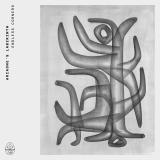
Ariadne's Labyrinth returns with Endless Corners on Adepta Editions. Classically trained yet shaped by London's illegal rave scene, her distinct sonic language is born from live improvisation. Following acclaimed releases on Detroit Underground and Touched Music, this EP seamlessly intertwines the dense, physical pulse of underground club culture with breathtakingly beautiful string arrangements. It is a visceral journey, bridging heavy dancefloor tension with vulnerable, chamber-esque introspection.
This item has not yet been released. You can pre-order the product now.
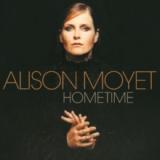
expected to be published on 25.09.2026
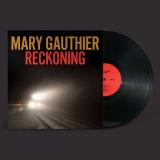
Reckoning is a dense, carefully nuanced, profoundly complex text, though all nine songs are presented as directly as possible: Mary's voice, her guitar, bits of harmonica. Folk music, of a kind, but not a broadside. Nothing so easy as that. Topical songs with a long view, because she's seen and lived too much of it. Mary's most celebrated songs — “I Drink,” “Mercy Now,” “Drag Queens in Limousines” — are confessional stories, closely observed, clear-eyed and compassionate. She sings with the unmistakable languor of her native Louisiana, writes with the bluntness of Boston, where she was once a successful restauranteur, and rewrites with the fierce precision of Nashville, her home for many years. Her 2018 release, Rifles & Rosary Beads, co-written with wounded Iraq war veterans, received a Grammy nomination for Best Folk Album, and an Americana Music Association nomination for Album of the Year. During Covid she wrote and saw published (by MacMillan) Saved by a Song: The Art and Healing Power of Songwriting, part memoir, part reflection on songwriting, through the lens of her most impactful songs. “A reckoning,” Mary Gauthier writes on the outer sleeve to her newest album, “can be personal, political, or spiritual. These songs inhabit all three realms at once.”
expected to be published on 25.09.2026
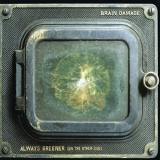
"The grass is greener_ elsewhere_" Brain Damage told us with their debut album, released in 2002. Yet here, they've reached full maturity. Rarely has a "made in France" dub album strayed so far from the Jamaican model while still harboring, in every detail, so many references and tributes to the inventors of the style (King Tubby / Lee Perry), as well as to many of the key figures in its evolution (Tikiman / Rhythm & Sound, Dub Syndicate, etc.). The recording studio, 7/11 Laboratory, is used here as a true musical instrument. The optimal use of three-dimensional stereo effects will immerse the listener in soundscapes ranging from classic space echoes and Mont Blanc tunnel-style reverberations to crackles, electronic interference, exogenous samples, and other parasitic noises coming straight from Babylon. For this album, continuing in the vein of his previous collaborations with the international dub scene (Zion Train, Alpha & Omega, Disciples, Spectre, Lab°_), Brain Damage traveled to London to record two tracks at Conscious Sounds Studio with Jamaican-born singer Tena Stelin. With the melancholic "Spirit World," one is reminded of the fruitful collaborations between Massive Attack and Horace Andy, while on "Genetic Weapon," the tone becomes more overtly assertive. Two vocal tracks, then, woven into these ten compositions, where the emotional moods and atmospheres will shift with each listen. "Always Greener (On the Other Side)" emerges as the manifesto of music conceived as cinema for the ear...
expected to be published on 25.09.2026

Some recordings herald the future in ways that are impossible to see in real time. Teodros Makonnen With His Organ (ቴዎድሮስ መኮንን ከኦርጋኑ ጋር), by the artist Teodros Makonnen, also known as Teddy Mak, is one of those. Today, electronic sounds, synthesizers, and digital production are taken for granted in Ethiopian music, but in the early 1980s, they were novelties that polarized opinion. Even to this day, the story of Teodros Makonnen’s legacy has never been properly told. He played a decisive role in defining the sound of the digital era of Ethiopian music that emerged in the 1980s and beyond, both as a keyboard player and as a producer, songwriter, performer, and sound designer.
Ethiopian music was at a crossroads in the early 1980s. Much like music in the rest of the world, technology and automation heralded either a quantum leap in musical development or the annihilation of musicianship, depending on who you’d ask. The changes were incremental nonetheless, but with the benefit of hindsight one can clearly see that the changes meant different things in different contexts. Drum machines and electric organs came to replace many hotel bands because, all of a sudden, one musician could control drums, melody, and accompaniment. Teodros was one of the first musicians in Ethiopia to explore the possibilities this opened up.
Teodros’ father, Captain Makonnen Beri, was a chief pilot at Ethiopian Airlines and a music enthusiast at that. This would prove important to his development, as Makonnen brought back a piano from Germany, which would lead to the first steps in Teodros’ long musical career. Captain Makonnen’s work as Head of Flight Operations and as a pilot exposed him to the wider world that was far from commonplace for most Ethiopians. In a house where music captivated the whole family, the piano gave Teodros’ talent an outlet. Not only was a piano at home rare in Ethiopian households, his father also brought an Indian teacher to their home to teach Teodros and his brother, Captain Samuel Makonnen, music theory (solfeggio or ear training) and piano. Teodros and his youngest brother, the late great Dereje, a member of both the legendary Ibex Band and the Ethiopian reggae group Dallol, took up music from that point onward, with Teodros beginning to develop his proficiency at the age of eight. His father encouraged him to practice tirelessly at home, and Teodros later received musical schooling at the German School in Addis Ababa.
His obvious talent led to studies and formal education at the Yared School of Music, followed by continued studies in American jazz at Northern Virginia Community College in Virginia. Teodros cut his teeth professionally in his mid-teens, not only as a keyboardist, but also as an arranger for the Wabi Shebelle and Dahlak bands in the 1970s. He mastered electronic sequencing early, rising to prominence through the midnight recording sessions held during the military curfew. The pressures imposed by the curfew required precise and disciplined recordings, and Teodros delivered just that. This, in turn, led to collaborations with iconic artists such as Mulatu Astatke, Aster Aweke, Menelik Wossenachew, Tilahun Gessesse, Mahmoud Ahmed, and Alemayehu Eshete.
In those days, he sat in as a keyboardist with the Dahlak Band when Dawit Yifru took a hiatus to study in Russia, and also with the Ethiostar Band. He secured a residency at the Wabi Shebelle Hotel with the Shebele Band, together with Zelalem Tadese (drums), later succeeded by Elias Bekele, Mulugeta Hailu (bass), Teferi ‘Bibisha’ Mengesha (guitar), Kumelachew G/Selassie (trumpet), and Teshome Deneke (saxophone). A friendly competition developed between the bands associated with the Ras Hotel (the Ibex Band), Ghion Hotel (the Dahlak Band), and Wabi Shebelle Hotel (the Shebele Band). The music scene at Wabi Shebelle saw teenagers commanding the spotlight in an industry otherwise dominated by musicians of an older generation.
At the Wabi Shebelle Hotel, Teodros met a diplomat from Saudi Arabia and later visited him at his home in Addis Ababa, a meeting that had unexpected musical consequences. The man owned a Yamaha double-deck keyboard. That evening, they recorded Teodros Makonnen With His Organ (ቴዎድሮስ መኮንን ከኦርጋኑ ጋር) in one take. This recording, a cornerstone in the early digital sound of Ethiopian music, came about almost by chance, simply because Teodros got the opportunity. Traditional Ethiopian songs were cast in a wholly electronic style.
Once freed from backing duties, Teodros’ keyboards could explore dreamlike soundscapes that took Ethiopian music in new directions. Even though the cassette contained well-known Ethiopian songs, they were given highly original arrangements, performed on an electric organ with drum machine backing and rhythm patterns that left the listener with suggestive, lingering sounds. “Libesh Kabashen” (also known as “Anchi Bale Game”) and “Odu Gol Golesa” wrap you in the very stuff that dreams are made of.
Originally released on cassette only, this recording exudes a mystique that surpasses even some of the most obscure Ethiopian recordings of the day. It remained more or less unknown outside of Ethiopia until now. Some of the tracks, like “Addis Fikir,” are permeated with an almost naive buoyancy, free-floating sounds that lost contact with the ground the moment they were conceived. Others, like “Meche New Hageren Yemayew” and “Lelitu Alnega Alegn,” carry a moodier, quirkier timbre, with pulsating rhythms in the background. Yet even the darker pieces contain an unmistakable wave, something essentially Ethiopian. If most recordings of Teodros’s contemporaries at the time were teeming with atmosphere, his songs seem instead at home in the stratosphere, almost ethereal. Some of the music here could be filed under “lullabies,” were it not for the recurring, almost brooding feeling that engulfs the listener on the aforementioned tracks. You could easily be forgiven for drifting into a blissful haze as the music washes over you.
Up to the advent of electronic music production, Ethiopia was totally dominated by big bands on the one hand, and small groups on the other. The former were tied to large institutions such as the military, the latter emerged from the entertainment industry, in hotel bars and nightclubs. These groups were commercially driven, and bands ultimately had to foster a mercenary approach to employment, albeit not to the passion for music. In the light of this, Teodros’ musical legacy can be seen in two ways. On the one hand, he is a key player in Ethiopian music from the 1970s onwards, leaving an indelible mark through hundreds of compositions and arrangements, including soundtracks for numerous documentary films and advertisements for different companies. On the other hand, the way he and others employed electronics brought Ethiopian music onto a fork in the road.
The replacement of traditional instruments with electronic equipment was seen as impending doom by some. Others, like Teodros, saw new avenues for performance, production, and creativity. Just as later producers like Abegasu Shiota of Admas, Teodros was a trailblazer who opened paths that it took Ethiopian music as a whole more than a decade to rush into. The hotel scene had already been pushed toward electronic music by financial necessity and cost-cutting. Today’s revived global interest in Ethiopian music from the seventies and eighties, alongside a broader resurgence, has changed the reasons for using digital means of music production. They have become tools for musical dreaming. This is where the dreaming began.
Order now and we will order the item for you at our supplier.

Vinyl LP[21,81 €]
Cello player and electronic artist Martina Bertoni returns with her 2nd album for Karl: Hypnagogia delivers six new, masterfully crafted tracks between experimental ambient, drone and modern composition.
Cellist and composer Martina Bertoni started playing the cello at a very young age. Classically trained, her career further developed around experimental and film music, for which her cello has been featured in numerous records, works and soundtracks for films and series. After two EPs and her debut full length All The Ghosts Are Gone (2020), Bertoni joined the Karl roster where she released Music For Empty Flats in January 2021 to critical acclaim (a.o. one of the Top Ten drone albums of 2021).
On her new album Hypnagogia she continues to explore the sonic possibilities of her cello which she uses as primary source for composition and sound processing through reverbs, feedbacks and sub-bass frequencies, thus crafting sonic sculptures, rich of atmospheres and frictions, fed by ambient as much as drone and modern composition.
In the words of Martina Bertoni:
"The six tracks that constitute Hypnagogia have been written during 2021 and partially inspired by the reading of Stanislaw Lem's book Solaris. The title refers to a transitional state of consciousness from wakefulness to sleep, during which one might experience sensorial hallucinations and lucid dreaming, and can tap into the pristine structures of the subconscious. Hypnagogia portraits an imaginary cosmic journey of the Self that crash ends into a blinding sun."
expected to be published on 21.09.2026

expected to be published on 21.09.2026

A long-lost Japanese acid folk gem, Niningashi’s 1974 private press debut Heavy Way shimmers with originality, deft song writing and a dream-like groove.
Although he was training as a pharmacist, Kazuhisa Okubo was much more interested in prescribing musical medicine.
A coming-of-age album, Heavy Way captured a turning point in Okubo’s life, and Japanese society more widely as a nostalgia for the pastoral calm of the traditional life, met the cosmopolitan thrill of coffee, sex and cigarettes in the big city.
Intoxicated by Tokyo, driven by a passion for music and surrounded by a thriving acid folk scene, the young student filtered his experiences through a psychedelic cocktail of soulful influences from the US and Japan.
Niningashi was his first band, and Heavy Way was their only album. It was honest and raw, deep and strangely funky, in an off-beat kind of way. Across nine tracks, Okubo and the 6-piece band put their own spin on the new folk sound of Japan, combining witty lyrics with electric guitar-driven solos and crisp, understated grooves.
Melancholy and profound, opening track ‘Ameagari’ feels like a synthesis of Harvest-era Neil Young and Haruomi Hosono’s Happy End. Then there’s the whimsical washboard country sound of ‘Semai Boku No Heyade’; the moody, low-lit charm of ‘Restaurant’; and ‘Hitoribotchi’, a sensitive portrayal of childhood, steeped in memories of rainfall that will resonate with fans of Woo and Mac Demarco.
While Okubo would go on to taste success with psychedelic folk bands Neko and Kaze, the latter of which scored three #1 albums, little is known about his mysterious debut with Niningashi.
Self-released by Okubo in 1974, and featuring album artwork by his brother, it has slowly generated a cult following online, intrigued by its soft and enchanting sound. So few records were ultimately pressed that those remaining have fetched up to £1,500 online.
Featured on Time Capsule’s era-spanning collection Nippon Acid Folk, Niningashi’s Heavy Way is a deep-cut grail of a vibrant time in Japan’s musical history, where even the pharmacists were making jams.
Order now and we will order the item for you at our supplier.

Issued on Crystal Clear vinyl is Max Richter’s emotive and minimal score to Damon Lindelof’s TV series about a post-apocalyptic global event where 2%
of the world’s population disappears without explanation. Richter’s approach explores the feelings of the protagonist’s family, the Garveys, through intimate,
small scale music. He tackles this psychological landscape by bringing a ritual quality to the score, while themes of departure and loss are represented by
a sense of sonic decay, relying on the instrumentation of a few sustained tones on pianos, harps and celesta.
Max Richter is a classically trained composer that defies boundaries. Trained at the Royal Academy of Music and finishing his studies under the tutelage
of avant-garde composer Luciano Berio in Florence, Richter’s career has followed many paths. His musical output ranges from ballets
(Wayne MacGregor’s Infra), reinventions of classical works (Vivaldi’s Four Seasons), collaborations with The Future Sound Of London, Roni Size and
Vashti Bunyan to writing scores for film and TV (Waltz With Bashir, Lost and Found, Last Days on Mars) and solo work.
expected to be published on 18.09.2026

Blue Vinyl[33,57 €]
Sibling duo Wasia Project chart a new sonic hinterland with their debut album Nocturne. Across 12 tracks, Olivia Hardy and Will Gao alchemise their classical training with kinetic club-adjacent dance music, soulful electronica, and cinematic piano-pop. Nocturne arrives as a bold evolution, scaling the success of their early EPs and a string of dewy-eyed singles that has built them a global following of 1.2M+ and 200M+ streams to date. A definitive Gen-Z narrative, it captures the friction and frisson of youth today, turning coming-of-age angst into a cathartic journey represented within the hours of dusk until dawn, from heady twilight introspection to the euphoric commune of the dancefloor.
expected to be published on 18.09.2026
expected to be published on 18.09.2026

Could it be that the world is finally ready for the tempestuous folk-rock opera that is "All the Leaves are Gone?" In 2004, only the truly informed and forward-thinking heads "got" this mini masterpiece. Critics scratched their heads and usually resorted to comparisons of past artists, like ol Grace Slick and her Great Jefferson Society, Fairport Convention (but which era? SURELY Judy Dyble's early reign?), and at best, Shirley Collins. A few fans attempted to connect the record to even more obscure "freak folk/rock" like Mellow Candle, Fear Itself, or Trees. "All the Leaves are Gone" was made by unique personalities not concerned with influences or copying any bygone era. Surely, some things are in our DNA or even early childhood, as Josephine Foster's roots in opera manifest themselves as much as any other influence in this organic song cycle. Sure, guitarist Brian Goodman may have heard Richard Thompson before, but his alchemical and molten guitar spray is purely his own, in tunings and intervals still not meant for normal humans to understand, mostly because his 2004 guts were poured into every sublime note (I think even Brian himself never even understood how good he was). That fiery emotion is also in every nuance of Foster's songs--like life, there's disquieting, jagged moments of unease, and there's calm both before and after the storm. There are moments of utter gentleness along the journey---because yes, every concept album should be a voyage, and this is one everyone should take. - Steve Krakow.
expected to be published on 18.09.2026
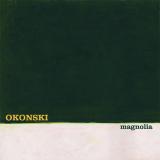
The studio at 122 West Loveland Avenue was not an unfamiliar space for Steve Okonski, the leader of his eponymous trio Okonski. Ever since the Colemine label set up shop in Loveland, Ohio it has been a host to a number of groups passing through town, including Durand Jones and the Indications who all of this trio's members have connections to. After setting aside some time in winter of 2020, Okonski, trained initially as a classical pianist, invited Michael Isvara "Ish" Montgomery and Aaron Frazer to work on an album that was initially planned to be beat driven and fully composed trio instrumentals.
After finishing this first session with some improvisations, a second week was booked in the summer of 2021 to try and capture some more of that spontaneous energy. During this session, the tracks were all improvised and recorded live to a Tascam 388 during several late nights at the Colemine HQ. They were structured to allow the group's collective intuition to fully shape the melodies and arcs of the music.
The album opens with Runner Up, where a triumphant yet melancholic melody in the piano leads to a more reserved B-section driven by the drums and bass of Frazer and Montgomery. As you journey through the remainder of the album you are met with a plethora of evoked and explored emotions. The calmness one has walking down a moonlit street after midnight, the connection one has for a person who comes into their world for just a moment or a lifetime, and the nerves and catharsis one feels when starting upon a new, unknown journey.
Magnolia closes with Sunday, a track that was recorded late into the night at the close of their first recording session. Without the spontaneity of Sunday, the remainder of Magnolia would likely have never come to fruition.
Magnolia was composed from the heart and from the spirit of those in the studio those late nights in Loveland. It is the culmination of an emotional and artistic release that was not afforded or recognized before the band sat at their instruments, and because of that it is introspective, meditative, spiritual, and new.
expected to be published on 18.09.2026

REBIRTH is the debut EP from grime/nu-metal sensation Native James, the Ipswich-based artist making his way through festival stages such as Glastonbury and Download and support slots for everyone from letlive., Skidred, and Don Broco to Hyphen, Bob Vylan and Nova Twins. This non-stop onslaught of energy features fan-favourites "Hammer" and "Power".
expected to be published on 11.09.2026
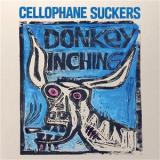
Donkey Inching', the Cellophane Suckers' ninth studio album, is set for release in September 2026. Unwavering and stubborn as a donkey, the Cellophane Suckers follow their very own path at their very own pace. The band, decried as "lead-swallowing" high-speed rock 'n' rollers, stoically let chords linger and celebrate feedback, reducing rather than harmonising, then picking up the speed when you least expect it and slowing down shortly afterwards to roll on in a Dadaist fashion the drums become a machine, the guitars increasingly embodying yin and yang. With "Execution Day", they pay tribute to Spencer P Jones, whom one might well cite as a musical influence, and Neil Young is also honoured, whose Wall of Sound goes down well with the Suckers. The fact that a text by Charles Bukowski is also "set to music" may be down to their love for red wine "Donkey Inching"... creeps stoically and stubbornly, like a donkey, into your ears. In July 2026, the Cellophane Suckers will once again be touring Brittany, and in September they'll be hosting a release party at the Sonic Ballroom in Cologne. Further concert weekends are planned for autumn/winter 2026...
expected to be published on 11.09.2026

Transparent Blue Vinyl[27,31 €]
Jess By The Lake’s fully analog sophomore album out in September Jess By The Lake’s highly anticipated second full-length album, HUMAN, will be released on September 11th via Svart Records. Jasmin Lempinen, the former vocalist of Jess And The Ancient Ones, is now focusing on her solo career and has this to say about the upcoming album. “This album is an analog counterattack and a celebration of live band music. It’s a statement against everything that modern society seems to be churning out from every nook and cranny: disposable, soulless, plastic, mindless output meant to be swallowed without question. The album is a carefully crafted work of art from start to finish and a tribute to both its creators and its listeners. In making it, we’ve strived for the best possible performance and sound quality that we were capable of at the moment of recording. And in that moment, we truly lived and channelled all our energy into it, which we hope will also reach the listeners. It unashamedly pays homage to the past, to the traditions of rock music.” The band began working on the album in 2019, when the first songs were written, and it was recorded live on magnetic tape in the summer of 2023 at the legendary Höyrybaari in Lapinlahti, Finland. The recording was handled by Tommi Saikkonen and the band’s guitarist Sampo Leksis, who also mixed the album. The old railway company’s log warehouse resonated beautifully, and at times the tape also picked up the rumbling of a train on the tracks right behind where the band was playing. However, making the album took time due to changing life circumstances and new additions to the family. Keeping the album entirely analog has also delayed the process
expected to be published on 11.09.2026

Black Vinyl[26,47 €]
Jess By The Lake’s fully analog sophomore album out in September Jess By The Lake’s highly anticipated second full-length album, HUMAN, will be released on September 11th via Svart Records. Jasmin Lempinen, the former vocalist of Jess And The Ancient Ones, is now focusing on her solo career and has this to say about the upcoming album. “This album is an analog counterattack and a celebration of live band music. It’s a statement against everything that modern society seems to be churning out from every nook and cranny: disposable, soulless, plastic, mindless output meant to be swallowed without question. The album is a carefully crafted work of art from start to finish and a tribute to both its creators and its listeners. In making it, we’ve strived for the best possible performance and sound quality that we were capable of at the moment of recording. And in that moment, we truly lived and channelled all our energy into it, which we hope will also reach the listeners. It unashamedly pays homage to the past, to the traditions of rock music.” The band began working on the album in 2019, when the first songs were written, and it was recorded live on magnetic tape in the summer of 2023 at the legendary Höyrybaari in Lapinlahti, Finland. The recording was handled by Tommi Saikkonen and the band’s guitarist Sampo Leksis, who also mixed the album. The old railway company’s log warehouse resonated beautifully, and at times the tape also picked up the rumbling of a train on the tracks right behind where the band was playing. However, making the album took time due to changing life circumstances and new additions to the family. Keeping the album entirely analog has also delayed the process
expected to be published on 11.09.2026
There is a pivotal scene in “August in the Water” (dir. Sōgo Ishii, 1995) where the surface of a pool turns into a stone wall. The water that gave the protagonist's life its meaning becomes a threat. As you fall through this stone wall, you appear in a set of underwater coral-reef corridors, and one of the most beautiful musical themes begins to play: Aquatic Ambience, composed by David Wise for Donkey Kong Country (1994). It's a theme that represents the weightless vibe of your new deep-sea life, where you go about your mundane errands, collecting bananas while driving on a swordfish, or, as HerzMayhem put it: "Poor monkey... always swimming, never going anywhere..."
Synthetic Water Music is the second of three compilations, following Synthetic Bird Music and timed to mappa's 10th anniversary. As with the birds, it gathers friends of the label, artists who have released with mappa or played our shows. Most of the music is new, made to measure for this compilation, much of it from Central and Eastern European hands. Birds and water mix well, so please feel invited to play them together, creating your own environments.
Where the birds were in one flock, water is dispersed across four chapters. You live your life as a droppity drop: vapour in the heavens, condensing in clouds, falling into a swamp, trickling into the deepest sea.
Tlālōcān (Cassette 1, Side A)
A place of eternal spring, of aquatic energy that nourishes everything and allows all things to bloom. Bubbly and splishy-sploshy, it is full of dripping sounds and moist caverns (“Emerald Pool” by Pauline Anna Strom), a landscape filled with living fountains (“Oh, to be a Fountain” by Eva Sajanová) and winding streams that flow through the area, forming part of its organic architecture. It is also a paradise reserved for those whose deaths were water-related, where the aquatic and terrestrial beings live in symbiosis and perspectives shift rapidly, from observing a single droplet (Shakali, Lau Nau) to dew (Feronia Wennborg & Lucy Duncombe) and on to flowing currents (Visible Cloaks) that gradually transform into river music (Ursula K. Le Guin & Todd Barton).
Nephelora (Cassette 1, Side B)
A celestial anti-gravity sound world made of evaporation, steam and the formation of clouds, as if looking at “The Sky At The Bottom of the Well” (by Natalia Beylis) or at “The Cloud That Never Rains” (by Henrique Vaz).
If a cloud never rains,
it is not a cloud at all, but a veil that parches the earth with its gaze.
It generates only its own shadow —
a looming mass of suspended longing,
a sky that hoards but never yields,
a reservoir that swallows every river and returns nothing but echoes.
The water in this world is often invisible but sometimes all the more present, as Bint Mbareh describes it: “Recently been obsessed with invisible waters because I come from a place where you have to imagine the water is there even though you cannot see a river, a sea, usually no rain, so water is in the air, the voice and the imaginal realm, drought is imagined to be negotiable.”
Žaboglach Zha-bo-glahch (Cassette 2, Side A)
A fusion of Scottish lochs and Slovak ponds: a misty, foul-smelling, swampy realm, the kind of place that swallowed Artax from The NeverEnding Story. Stagnant waters full of decay become a blooming habitat for sirens (“thereby losing the weightless delight of being swept along with it” by Adam Badí Donoval) and beings straddling the line between fauna and flora, inventing their own communication systems (“Water-lily phase” by Action Pyramid).
R'lyeh (Cassette 2, Side B)
A brooding sunken city at the bottom of the ocean. It’s a journey to get there. Let this chapter guide you, from the shore down to the depths, to the gates of an unexplored world that is inherently dark, unfathomable, and beyond the limits of human perception: starting with seasickness ("Seasick" by Nikolaienko), passing through a classic Poe-esque maelstrom ("Flurry at the Whirl-pull" by Atte Elias Kantonen), a gateway into the darkness and emptiness of the ocean floor, and finally traversing the city itself (“last waves of 2025” by Jules Reidy).
But what is pulling you to a place like this that only a few explore and even fewer leave? Maybe “the darkness that water can contain, the expanse of things we don't know and that can trigger fear instincts even as we try to rationalise them and think we are in control of the rest of nature” (“supercritical fluids” by Diane Barbé).
Dive in and surface wherever you like. Always swimming, never going anywhere. Just don’t forget to take water breaks.
P.S. Birds, then water, can you guess what comes next? Synthetic Soil Music, an elegy for insects and worms? Synthetic Glaciers, or maybe Pollinators? Which sounds would you miss the most if they disappeared? Or what if the third one never comes at all, and somebody, or something, makes Synthetic mappa Music instead. Don't you worry, with the right training data, it can all be replicated, better than the real thing.
expected to be published on 11.09.2026

Symbiotical Records brings together Paris-based producer Dust Yard, whose classically trained background feeds into a sound spanning deep tech house and minimal dub, with Finnish dub techno veteran TM Shuffle, head of Vuo Records, who steps in for the remix. A tight, atmospheric EP rooted in dub house and deep house. Pressed on 140g black vinyl.
This item has not yet been released. You can pre-order the product now.

Father's Children, die der schwarzen Musik ebenso treu waren wie dem schwarzen Islam, sind aus dem Dreck und Schmutz von Washington, D.C. hervorgegangen. Ihr gefühlvoller Funk-Stil fand vielleicht seine großartigste Bühne auf ihrem selbstbetitelten ,Debüt" von 1979 bei Mercury - ein Album, das den rauen Soul der Band mit einer Schicht erstickenden L.A.-Glanzes überzog, kaum Aufmerksamkeit erregte und den Anfang vom Ende für Father's Children markierte. Jahre bevor sich der Kokainstaub gelegt hatte, war bereits Material für ein weiteres Album aufgenommen worden - jene kreative Supernova, die die Gruppe schon Jahre zuvor ins nationale Bewusstsein hätte rücken sollen. ,Who's Gonna Save the World" ist diese Explosion aus dem Jahr 1973, die verfrüht konzipiert und dann erst Jahrzehnte später nach einer langen Reifezeit in der Garage von Produzent Robert Hosea Williams am Vorort-Ringstraßenrand entdeckt wurde. Bisher unveröffentlicht, ist dieses echte Debüt von Father's Children ein Werk, das sich aufrichtig mit seiner eigenen Zeit und seinem eigenen Ort auseinandersetzt und kometenartigen Funk, sonnige Gruppenharmonien, Fuzz-Gitarrensoli, schimmernde Keyboards, sprudelnde Percussion, spirituelle Prophezeiungen und Dub-Experimente vereint.
Order now and we will order the item for you at our supplier.

Social Distortion's third eponymous album from 1990 turned out to be their best-known work and would come to spawn the most hits, with singles 'Ball And Chain', 'Story Of My Life' and the Johnny Cash cover 'Ring Of Fire'. It mixed Punk with Rockabilly, Blues & Country, and split the difference between Rockabilly and Ramones-style Punk. It is albums like this that prove why Social Distortion was able to survive the demise of the LA Hardcore scene with flair and come out on top!
Order now and we will order the item for you at our supplier.

For the past decade, Personal Trainer has served as the ever-evolving creative outlet for frontman and songwriter Willem Smit, growing from Amsterdam's underground scene into an internationally successful touring band An electrifying force in modern indie rock, Personal Trainer blend sharp wit, chaotic energy, and irresistible hooks. Their upcoming third album Human Assholes balances playful absurdity with a quiet undercurrent of doubt, Smit has been ever reluctant as the quote unquote frontman of a band.
expected to be published on 04.09.2026

Minions & Monsters is the brand new 2026 installment in the popular Minions franchise. The animated adventure follows the Minions as they find themselves caught up in a world of larger-than-life creatures, unexpected challenges, and the kind of chaotic situations that have made the franchise a global success. The film expands the Minions universe while staying true to the humor and charm that audiences have come to love.
The movie’s original score is composed by Oscar-nominated composer John Powell, whose work on How To Train Your Dragon, Shrek, and Kung Fu Panda has earned him a place among the most acclaimed composers working in film today. For Minions & Monsters, Powell delivers a lively orchestral score that complements the Minions on their adventure and brings it to life.
Minions & Monsters is available as a limited edition of 1,000 copies on yellow (LP1) and turquoise (LP2) vinyl, and includes a 4-page booklet with liner notes by John Powell.
expected to be published on 04.09.2026

Richard Laviolette (1982–2023) released his second record "a little less like a rock, a little more like home" on CD in 2006 on Burnt Oak Records, an artist-run co-operative and independent record label co-founded by Brad MacInerny, Ryan Newell and jiaqing wilson-yang, active between 2005 and 2007. Burnt Oak was based out of a rented house at 127 Grange Street in Guelph, Ontario, where the collective lived, rehearsed, hung out, and hosted all ages shows, also recording each others’ music, packing and mailing CD orders, and silk-screening and sewing the covers for the albums they released.
Combining folk, rock, and country influences, a little less like a rock, a little more like home is a beloved lo-fi classic of brilliant songwriting and powerful vocals, animated by Richard’s deeply held anti-capitalist, anti-colonial, DIY, and community-based ethos. It includes some of Richard’s most timeless songs and performances, including the unclassifiable magic of Qq, the shockingly intimate and utterly cosmic Ants vs. Universe, and the beautifully fingerpicked folk-song Oncoming Trains.
You’ve Changed Records is proud to present this first ever vinyl pressing of "a little less like a rock, a little more like home" . This Limited Edition LP features audio newly mastered for vinyl by Kevin Parks, recreated artwork by artist sophia bartholomew, and includes a full lyric insert
expected to be published on 04.09.2026
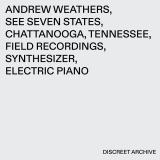
Poem by Alea Coble (February 2026) - Written for Andrew Weathers, Chattonooga Recording Project
Listen to my story and everything will come out true. - Bessie Smith
35° 02' 44.27" N -85° 18' 34.85" W:
Howl. Hammer strikes firing pin. Its echo ricochets over river bend. The woodpecker’s syncopated pop-pop-pop clink and thwap in time with cops practicing prayer at the firing range.
Quick. Sketch a few constellations onto a postcard: empty shotgun shells, these pre-forgotten fossils snaking rusted railroad spikes, like snagged rosary, fallen poplar petals draped over cerulean glass ashtray scattered along glittering fractures, ignored like a treaty. Train tracks reverberate necrophilic boomerang-hunger for mountain air without that coal dust. Eat. Eat. Everything is real estate. Even the air is for sale. Buy it cheap while I.C.E. carves through the valley along the Trail of Tears in unmarked SUVs, traffic stops.
Howl. Callback to estranged entanglements oscillating over holler and highway. Meet on the porch. Haint-blue ceiling. Some ghosts can’t get through anyway. They got tied up on the Walnut Street Bridge by a mob of white spit. Howl. The South should scare you.
But the woodpecker is still nesting, hungry, typing uncannied punctuation marks into black oak: a deed. Home? Takes a side-eyed knowing to call by name. The moon sickles in a sweating glass of iced tea.
Speculation cycle: symmetry as ancient as sour-dank betrayal of the tongue, bitter bones binding blood and lead, alchemical forgetting like I found a hairbrush in the yard while planting wild irises, like someone is charging $10 for an old glass Coke bottle, like semicolons itching restless under new sod from no-one-knows-where. Howl. Sing back. History is soil-in-stereo.
How will this line end? Like riverbank? Like atlatl arching hope smash-through a stained glass window? Words fall out of the sky, and 30 American flags snap at attention on the bridge. Howl. A shift in the wind gallops through the streets tossing her head back, laughing.
Tennessee River, who once kissed Pangea, how she softens at the knuckle-suck of it all, that secret-sweet stowed in the feathers of sandhill cranes lifting up on warm summer breeze: slow-shooting stars bending toward unbothered brevitas.
Howl. The red wolf knows her truest kin is always her shadow’s shadow.
expected to be published on 04.09.2026
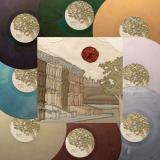
“The first three are innocent in a way, because we didn’t have an audience when we were making them,” Oberst says. “But from Lifted on, I was definitely aware of an audience. Lifted was well-received right away, and then everything happened with Wide Awake and Digital Ash.” Those two albums came out simultaneously. And their lead singles – “Take It Easy (Love Nothing),” from the austere, remote Digital Ash, and “Lua,” from the warm, folky Wide Awake – debuted in the top two slots on the Billboard Hot 100. “First Day of My Life,” also from Wide Awake, would later be voted the Number One love song of all time by NPR Music’s reader’s poll. Bright Eyes had officially broken through. It was a heady, exciting time, but also fraught and tense, both because of the band’s careening new fame, and because of the state of the world. When Bright Eyes made their Tonight Show debut in 2006, they chose to perform none of their shiny new hits, instead delivering a searing, harrowing rendition of their caustic anti-Bush anthem, “When The President Talks To God.” These days, Oberst is still amusing himself by messing with the extremes Bright Eyes baked into this era’s releases, extremes that reflected the polar, with-us-or-against-us, fractious feel of the times. The reworked Digital Ash tracks, originally so clean and elegant, are, on the companion EP, full of “harmonica and mandolins – folky vibes,” Oberst says. While the analogue sweetness of the Wide Awake songs have been put through a detached nihilism filter.
expected to be published on 04.09.2026

Across two song cycles separated by nearly four decades – Richard Wagner’s »Fünf Gedichte für eine Frauenstimme« (the »Wesendonck Lieder«) and Johannes Brahms’ late »Vier ernste Gesänge« (»Four Serious Songs«) – Wagner’s songs, written under the spell of his relationship with Mathilde Wesendonck and already pointing towards »Tristan und Isolde«, and Brahms’ final composition, which gives the album its name and was shaped by grief, illness, and meditations on biblical texts, circle the same existential questions.
Desire and mortality, ecstasy and resignation appear less as opposites than as mirrored states. The voices of Wesendonck’s poetry seem to answer the solemn reflections of Ecclesiastes and Corinthians, revealing an unexpected dialogue across time.
Without seeking historical authenticity or revisionist spectacle, »Serious Songs« listens for what still resonates beneath these works: the suspended moment where love, loss, and transcendence become indistinguishable. The harp assumes the role of the piano as the foundation, pulse, and emotional compass. The vocal line, liberated from classical convention, inhabits a contemporary expressive space without severing its bond to the original scores. It is Romantic music viewed through the acoustics of the present. The project emerged from a moment of professional disillusionment familiar to many classically trained musicians. This led to a confrontation with some of classical music’s traditional flaws that became an invitation to reimagine it.
Sissi Rada approaches the spinal properties of the Romantic Lieder, fragile enough to transform and resilient enough to survive. Intimate, lucid, and quietly radical.
expected to be published on 04.09.2026

In Walter Benjamin’s seminal essay “Art in the Age of Mechanical Reproduction”, he posits that the aura of art objects is destroyed by the ability to photographically reproduce them. When you had to make a pilgrimage to a work it remained elusive, charged, ever distant; but when you can easily see a reproduction, such aura dissipates. What Benjamin did not anticipate is that in the age of AI and the frictionless fount of digital content, we have imbued mechanical and analog means of media production with aura. Film cameras from the last 100 years are in high demand (the point and shoot Olympus Mju I featured in Wim Wenders film Perfect Days still sells for $200), vinyl sales continue to grow year by year, 35mm and 70mm film screenings have become aura-drenched events people travel across country for, and as to the world of vintage and analog synthesizers, when a friend asked for the price on the Yamaha CS-80 synth used on Toto’s “Africa”, the answer was a cool $60,000.
Despite the ability to simulate almost any synthesizer on a computer, the original physical units retain their mystique. Perhaps this lies in the physical process, many of these synths are temperamental and difficult to fully utilize, and the effort and ingenuity can be felt in ways that will always be absent from easy digital simulacra. Perhaps there is an aura in their imperfection, as Brian Eno wrote: “Whatever you now find weird, ugly, uncomfortable and nasty about a new medium will surely become its signature. CD distortion, the jitteriness of digital video, the crap sound of 8-bit - all of these will be cherished and emulated as soon as they can be avoided.” Some may call this nostalgia, but such sonic imperfections are the sounds of humans interacting with the physical world, and it is understandable to feel a pang of emotion and attachment in a time of exponential alienation.
Marche 22 was recorded over a week at the Museo Del Synth Marchigiano in Macerata, Italy. The museum is filled with rare and obscure synths (especially CRB, GEM & Elka) as well as salvaged materials from a nearby shuttered Farfisa organ factory, including MARS, an unfinished realtime audio processing application developed by IRIS - similar to the now well known MAX/MSP. Kyle Dixon and Michael Stein play a suite of pieces that encompasses the last sixty years of synthesizer music—there are nods to Cluster, Tangerine Dream, Jean Michel Jarre, and Morton Subotnick. Dixon and Stein are like jazz masters playing the American songbook with their own riffs and quotations. What shines through in these varied works that are sometimes rhythmic, sometimes melancholic, and sometimes both, is a soul, a spirit, an emotion vibrating through the tones like the charge of coming rain or the thrum of a distant train on the tracks. - Neil Fauerso
expected to be published on 28.08.2026

When everything around is racing blindly toward ruin, change direction and spin as fast as you can until you defy gravity and rise above the ground into blissful madness. "K-drone", the debut album by three renegades—Jakub Šimanský, Michal Vaľko, and Ján Podracký—is like a hallucinatory Calvary with five stations. Each station is a time-loop capsule, a tiny utopia sneering at the phantom progress of the world outside.
The opening track, "Speedrone", is pure vertigo; for seven long minutes, there's nothing to hold onto. Šimanský’s banjo cuts through the air, Vaľko’s hurdy-gurdy sounds like someone scraping a rusted sheet of metal with a handful of nails, and Podracký’s bass recorder hums like a slowly intensifying migraine. "Sine" is like a train journey through a barren wasteland, where the images outside the window constantly repeat like a bad trip. "Pro DJ" starts like a gig in a bar at the end of the line—a gig that never actually goes anywhere. It’s as if all three are locked in a spasm, their repeated motifs turning into haunting earworms. "Alien Radigue" shifts into a strange idyll in a clearing in the middle of the forest, where an unknown bird species trills in the background. The end and definitive dissolution come in "Slush", where everything suddenly slows down. Šimanský plucks a simple guitar melody, Podracký’s harmonica drifts from side to side like a boat gently rocking by the shore, and Vaľko’s hurdy-gurdy drones like a drunken mosquito buzzing around.
"K-drone" sounds like an acid anti-western movie recorded in a tucked-away burrow, like smoke-soaked folk and experimental campfire songs echoing through a deep forest. It evokes Third Ear Band's "Alchemy", it screeches and repeats like some of Henry Flynt's experiments, and you could easily imagine hearing it drifting from one of the windows on the cover of Hala Strana's eponymous album.
Jakub Šimanský is the bard of Czechoslovak guitar primitivism, an earthy folk sommelier whose fingerpicking you may also know from the duo Šimanský Niesner. Michal Vaľko, aka Line Gate, needs no introduction to fans. He has released three albums on mappa, and his hurdy-gurdy meditations hold an important place in the drone and minimalist music scene. "Den", "Apex", and "Trap" have become essential listening. Ján Podracký is a self-taught composer and musician whom you might know from various participatory music projects, such as an orchestra where all the players play diatonic harmonicas. Besides harmonicas, he has long explored a wide range of flutes. In short, a pied piper who will guide you through other worlds.
expected to be published on 28.08.2026
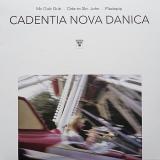
John Tchicai (1936 – 2012) was one of the most important free improvising saxophonists of the 20th Century: an artist of rare vision and aptitude whose lines soared and stood out even in the most hallowed company, and whose body of work as a leader / composer is among the most singular and distinct within the entire canon of that music. But Tchicai’s importance doesn’t end there. Born in Copenhagen, Denmark, to a Danish mother and a Congolese father, his life and career represent a crucial bridge between the European and American traditions of free jazz. Initially trained on violin as a child, Tchicai shifted his focus to the clarinet and alto saxophone during his mid-teens, and began touring Europe as a professional musician by his early 20s, which landed him at a socialist youth festival in Helsinki, Finland, where he met the trumpeter Bill Dixon and saxophonist Archie Shepp. Impressed by what they heard, Dixon and Shepp encouraged the young saxophonist to move to New York, and in so doing changed the history of jazz forever.
Tchicai’s arrival in New York marks the rare occurrence of a European player joining the intimate circle that was first wave of American free jazz. Following his landing in the city in November of 1962, in addition to regularly sitting in with Don Cherry’s group, Tchicai began playing with Bill Dixon's band alongside Archie Shepp and Roswell Rudd, forming the nucleus of the foundation of the New York Contemporary Five - one of the most important groups of the era - which counted Tchicai, Shepp, Cherry, Don Moore, and J. C. Moses as its members. From the ashes of this group, Tchicai would go on to found the legendary ensemble, New York Art Quartet, with Roswell Rudd, Milford Graves, and Lewis Worrell, as well as working within Albert Ayler's band, recording “New York Eye and Ear Control”, Shepp’s band, recording “Four for Trane”, the ensemble that recorded John Coltrane's “Ascension”, and the Jazz Composer's “Orchestra”.
By the time he decided to return to Denmark in 1966, had Tchicai chosen to record little else, his legacy within the history of music would have been ensured. Incredibly ambitious, his arrival home marked the beginning of an incredible period of activity which saw him radically expanding his creative explorations, which by the end of the decade would include becoming a founding member of Amsterdam's Instant Composers Pool and helping to record John Lennon and Yoko Ono's “Unfinished Music No.2: Life with the Lions”. This, however, was proceeded the formation of a new orchestra, Cadentia Nova Danica, led by Tchicai, dedicated to radical cross-disciplinary exploration. Remaining together between 1966 and 1971, the group and its shifting membership regularly fell into collaboration with artists and composers, notably Musica Elettronica Viva, who existed beyond the realms of jazz, as well as participating within multi-media events that incorporated the visual realms.
Cadentia Nova Danica’s only two LPs - “Cadentia Nova Danica” (Polydor, 1968), and “Afrodisiaca” (MPS, 1969) - are effectively Tchicai recorded efforts as a leader, and are legendary. There’s little mystery, once heard, why the later landed on Thurston Moore’s iconic “Top Ten from the Free Jazz Underground”, published by Grand Royal in 1996. Sadly, despite playing extensively during their five year run, with exception of a CD documenting a performance at Jazzhus Montmartre, in 1966, until now there has been no other publicly available recordings that allow us to capture a glimpse of this astounding band at work. Alga Marghen / Formalibera’s vinyl pressing of a never before released body of recordings, made in Copenhagen between 1969 and 1970, changes that in the most exciting of ways.
Comprising three pieces - “Mc Gub Gub, (I–VIII)”; “Ode to Skt. John”; and “Pladepip” - the material on this stunning LP comes from two specific events. The first, which encompasses the first side, “Mc Gub Gub, (I–VIII)” was recorded by Cadentia Nova Danica - in this instance, Tchicai, Sune Weimar, Theo Rahbek, Christian Kyhl, Niels Holt, Jørgen Thorup, Michael Schou, Morgens Bollerup, Allan Gregersen, Ole Matthiessen, Pierre Dørge, Willy Jaegert, Anthony Barnett, and Jon Finsen - on May 29th, 1969, at the ABC-Theatre in Copenhagen. Penned by Tchicai, the piece is a sprawling, evolutionary composition at the outer reaches of free jazz, rooted in large blocks of colliding tonality and rhythm - a sound only accessible to larger ensembles - that push territories explored by Charles Mingus to previously unimagined heights, threaded by moments of hard blown fire. Writhing like a stormy sea - skronking and devilish - “Mc Gub Gub, (I–VIII)” is a work of profound complexity that singlehandedly illuminates not only Tchicai’s singular vision as a composer, but also the power and uniqueness of Cadentia Nova Danica during the band’s most vital period.
The two pieces - “Ode to Skt. John” and “Pladepip” - taking up the flip side, were recorded on February 21st, 1970, at the Danish Broadcasting Corporation’s Radio House, and are the outcome of Cadentia Nova Danica’s extended residency there between 1969 and 1970. In many ways, these two recordings offer some of the best insights into the broad collaborative approaches that defined the band, in this case encountering them working with Danish experimental composer, Svend Erik Werner, who was among the earliest in his country to embrace stylistic pluralism and the use historical forms within a modern context. “Ode to Skt. John” - based on aspects of Gregorian music - was penned by Werner, incorporating heady improvisation by the members of Cadentia Nova Danica, this time made up by Tchicai, Sune Weimar, Hugh Steinmetz, Theo Rahbek, Christian Kyhl, Michael Schou, Morgens Bollerup, Ole Kühl, Torben Enghoff, Mauritz Tchikai, Kjeld Ipsen, Willy Jaegert, Ole Matthiessen, Ole Thilo, Pierre Dørge, Steffen Andersen, Jon Finse, and Clause Bøje. The piece is a fascinating binary of the composed and improvised, utilising the band’s large scale to introduce a remarkable sound within its slow progressions and furious, driving free moments, in this incredible meeting of worlds.
The album’s final piece, “Pladepip”, is arguably its most historically significant: an entirely singular piece, unlike anything in Tchicai’s recorded canon as his foray into musique concréte. Drawing upon two recordings of full-band improvisations by Cadentia Nova Danica, for its creation Tchicai also gouged the surfaces of 78rpm records in his collection to skip and create repeated phrases and patterns, creating a stunning sound collage of hard angles and abrupt phrase, that creates a striking counterpoint to the band’s flowing improvisations that bookend those passages. The result is an engrossing listen and easily one of the most unique and culturally important gestures in the entire history of musique concréte.
Truly incredible, Alga Marghen / Formalibera’s vinyl pressing of this never before released body of recordings, made by John Tchicai’s Cadentia Nova Danica, in Copenhagen between 1969 and 1970, offers an unprecedented window into one of the most important groups working in Europe during that period, significantly expanding their rare and slim discography to date. Accompanied by extensive exploratory liner notes by veteran jazz writer, Ed Hazell, this is easily one of the most historically important archival releases of the year and is impossible to recommend enough. Absolutely essential on every count.
expected to be published on 28.08.2026
