The debut release on the Finnish occult themed insignia Summon Titans sees label manager New Gods take an introductionary journey to the abyss. The intensely built EP travels through various styles of techno with influences from electro, EBM, 90's trance and breakbeat.
Buscar:trance lab
It's great to see Mark Sherry putting vinyl out again, especially via the Record Republic.
This three-track vinyl EP is delivered on limited edition transparent blue vinyl, with a full colour 3mm spine sleeve with plain black inner sleeves.
Mark Sherry achieved mainstream chart success in the 90's with Public Domain.
Since then, relentless touring on the world stage together with no 1 releases on the credible download stires and a successful label with Outburst has kept him on the top of the tree when it comes to the harder edge of tech trance.
Heels & Souls Recordings’ fifth reissue sees them reach across the Atlantic to Vancouver, pressing up Pilgrims Of The Mind’s 'What’s Your Shrine?' for the first time ever on vinyl, 25 years since its CD-only release on Map Music. A departure from the label’s previous releases, the LP is a beautiful smorgasbord of styles - progressive house, downtempo, ambient, tech house and trance all nestle together, a wiggling journey of sonic delight from the mind of Stéphane Novak.
Turn the dial back to ‘97 and Vancouver's underground had a distinctive buzz to its rumblings, an amalgamation of scenes and styles gave rise to a cohort of producers that were unconstrained by genre, offering up a heady mix of sounds to expand the mind. ‘Welcome To Lotus Land’ the key 1996 compilation on Robert Shea’s seminal Map Music, championed much of this output including two cuts from POTM. Stéphane then released his first and only full-length album, ‘What’s Your Shrine?’ on the same label the following year.
Picking out choice moments from an album as considered and complete as this is tough. Those horizontally inclined will be drawn to the ambient dwellings of ‘Sandcastle’ & ‘Following the Sofuto Kuriimo’, tracks like ‘Nothing Can Pull Us Apart’ and ‘L’Amour? Encore?!’ are perfectly suited to warming up limbs on the dancefloor, ‘My Baby Likes Rum’ and ‘Loosejaw’ prime for one in full swing. Yet to pick individual tracks misses the stunning sum of its parts that this 70+ minute cruise is, surely one of the finest albums from the American West Coast during its halcyon days of the ‘90s.
Digging deep in his vaults, Stéphane managed to uncover the original unmastered DATs that have been given a fresh mastering by Justin Drake at the Bakehouse Studios. This beautiful, double-disc gatefold comes complete with liner notes from Ciel, words from Stéphane himself, plus never-before-seen photography - the complete package this music always deserved.
Transparent Vinyl[25,63 €]
Zenith
Flowers Of Intelligance
Black Vinyl[22,90 €]
2023 repress
Lobster welcomes Berlin based bubbler, Shedbug, back with open arms. Co-Founder of 'Salt Mines' record label, the DJ and Producer offers up spell-binding trance, techno and weirdo whomps. ‘Timeframe’ EP drops December 13th via Lobster Theremin. Stripped back, bass-laced opener, Ambroxitil, is as hypnotic as it is dynamic, perfect for both big rooms and tiny basements. Timeframe picks up the pace - wobbly jelly, trance goodness layered with a kickin’ beat to stomp the blues away. On the flip, Strive For More is eerie and enigmatic, a driving cut for late-night trips. Techy magic on Waouu will leave you in a daze, while Voiski rounds out the EP, giving Timeframe a brain-tickling re-rub. 5 killer cuts - if you don’t hear this out, you’re in the wrong spots!
Drumcode’s beloved A-Sides compilation makes a welcome return after a two-year absence, with a mammoth 25-track feast covering every shade of the techno spectrum split across seven, 12 inch parts. The project was devised in 2012 as a way of showcasing the wealth of strong material Adam Beyer receives each year, which due to Drumcode’s busy release schedule, might not otherwise find a home on the label. Since then, it’s grown to become an essential fixture on the techno release schedule and a marker for where the genre stands in any given year.
For part four, Nicolas Taboada cranks the dial on ‘Circles’ melding breakbeats with modulated vocal samples and underlying techno power, as BEC hits with ‘Vibration’ a ferocious, siren signalling rocket.
On the flip, Avision’s ‘Find Myself’ leads listeners into a state of hypnosis with warped vocal refrains, storming kicks and rising synths. Closing out the EP Cosmic Boys unleash a robot wielding, trance flavoured whirlwind.
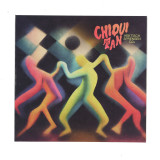
Terra Magica Rec. first 7’’ release „Chiqui Tan“ by the label heads Hektisch Sprengen DJs will be limited to 250 copies. The A-side hits the listener with some 1980s early Electronic-Downtempo-Cumbia-Colombian-Venezuelan-Tablemountain-Dub-Grooves. This reminiscence is leading to an extra full blown up 21st century Bass-Queen alert. And these HSDJ dials hit you into a stripped naked sample of Nigerian-Swedish DJ-dentist-mainstream-star Dr. Alban and his Eurotrash-90s-Pophouse-anthem “No Hash Hash, No Cocaine”. This is for sure no “Ottonormal”-90s-revival thing!
On the flip side Hektisch’s haptic wood razzle move covers the classic 1994-Liquid-Deep-Netherlands-Trance-House-Track “Paper Moon” by 51 Days which back then sampled the rare 1972-MPB-Funk-Cover-Version of Carol Kings “Corazón”. Guess what! It drops like a late 1990s-Ed-DMX-London-classic gone Electroboogie-Miamibass-Break with a SH101-baseline and Sprengen’s take on Spanish-90s-Trance-Vocals. Watch out 4 TERRAMs “Asi me gusta” title caps series as well! Trigger warning: That hidden Sequential Circuit Sixtrack loves you like a windy horse on Acid. Loads to experience on this little innocent wax disc!
- A1: Maggie's Theme 1
- A2: Juke Box Source
- A3: Evelyn Story
- A4: Beetle Search*
- A5: Rosehaven Motel
- A6: Trip To La
- A7: Maggie's Theme 2
- A8: Stressed Out/Choked Up
- A9: Janet's Mazurka
- A10: Maggie Retraced
- A11: Factory Vibe
- A12: A Wet Nothing
- A13: Suspense*/Wills' Trance Pt. 1
- A14: Bell Signals
- A15: Taken Away
- A16: Radio Source
- B1: Fm Groove
- B2: Forest Finale
- B3: Penultima Trance
- B4: Parking Lot Shuffle
- B5: Dialatone
- B6: Wills’ Trance Pt. 2/Wills’ Trance Pt. 3
- B8: Gratitude
- B9: Empty Torch/Mailman/Phone Voice
- B10: On The Move
- B11: Wills' Last Trance
- B12: End Credits
- B13: Radio Source Rhythm
- B14: Juke Box Source
By the time Lalo Schifrin composed the soundtrack for Frank Perry's psychological thriller in 1974, starring Cliff Robertson and Joel Gray (who'd just won an Oscar for his role in Bob Fosse's Cabaret) he was Hollywood royalty having worked on such iconic films as Bullitt and Dirty Harry. Perry on his side, had caused a stir with The Swimmer in 1968 starring Burt Lancaster (although he would dismiss the film after being fired from the production) and followed up with a string of great cult movies including ‘Last Summer’ (1969), Diary of a Mad Housewife (1970) starring Carrie Snodgress - whom Neil Young famously fell in love with upon seeing the film and "Play It as It lays" in 1972, adapted from Joan Didion's eponymous novel.
Breaking from the social dramas from of his previous films, Perry decided to shoot a thriller based on journalist William Arthur Clark's book "The Girl on The Volkswagen Floor." The film follows a police officer investigating a murder with the help of a strange ambiguous clairvoyant played by Gray. For the score Perry went to Lalo Schifrin who'd just come out of a bad experience on The Exorcist working with William Friedkin who'd rejected his music in favour of Tubular Bells by Mike Oldfield! The score was recorded in LA with the Wrecking Crew and, although the full line up is not known, it included Emil Richards, Howard Roberts, Bud Shank and of course Schifrin on piano.
'Man on a Swing' is pure undiluted Schifrin from the early 70s. The score plays like a long suite alternating Bossa Nova ("Juke Box Source"), Lounge Jazz ("Trip to LA") and groove ("FM Groove") with superb "suspense” soundscapes like "Rosehaven Hotel". The label has gone back to the Paramount 3-track tape transfers and come up with an updated tracklist (a CD version briefly appeared in the 2010s) - re-sequenced and augmented with a handful of bonus tracks and alternate takes. A highlight is certainly "Radio Source Rhythm" which, losing the guitar and organ, reveal a jaw dropping funk breakbeat that is in the league of Dirty Harry and Enter the Dragon. This and the whole soundtrack, will ravish all the funk diggers and Lalo Schifrin fans around the world.
John Askew is an icon of the trance scene. Well known for his intense and hammering productions and live performances as well as being the head of highly acclaimed collective and label VII, his illustrious career spans more than 2 decades.
The Record Republic are very excited to bring you 'Six of Seven'; an exclusive selections of six John Askew highlights from his back catalogue on the mighty VII label, never before pressed to vinyl!
From the mental 'Mezcal' to the riotous 'Recalibrate', this 12" double pack release is everything you need when it comes to Askew's driving VII sound.
After a devastating opening salvo of 19 modernist rave mutations on a double tape pack for Sneaker Social Club, Minder lands on Hypercolour with another 19 cybernetic fever dreams still reeling from the open season NRG of hardcore.
If you need to understand where Minder wants to take you, strap in for the labyrinth narrative of ‘Knotted’, a smudged, 15-minute breakbeat suite barrelling through lurid dystopian street scenes with only a blown-out bass sprite as a guide. Throughout Sanctuary, bass is the constant when all else is chaos. It comes in thick, warped Reese tones on ‘Simulated Hunt’, gets twisted out through angry filters on ‘Popcorn Lover’, comes on wobbly in true 2-step style underneath grimey garage anti-anthem ‘Ard’.
There’s a lot to take in across the spread of Sanctuary. It’s the sound of every rave genre slowly digested over 30-plus years, until the lactic acid metabolises every snare rush, every searing lead line, every chipmunk vocal lick, and everything gets mashed up and spat back out into a gnarly signal chain at the flash point of inspiration. The time taken is key – this is the sound of a life in front of the speaker stack manifesting in something too wild and weird to be derivative. You’ll hear snatches of familiarity thrown into unfamiliar contexts, but for all the detectable lineage, Minder’s sound is unsettling in its originality.
Dislodged ragga jungle techno, muffled hardcore nightmares, hard n’ haggard acid trance, junked up jump up – you could write an essay on the sounds you can spot and the way they’ve been twisted. Aside from the omnipresent low-end, it’s the unflinching honesty of Korron’s repeat appearances on the mic throughout which bring Minder’s disturbing patchwork into focus. For all the futurism attached to these sounds, it’s also caked in a very human filth which can only come from this earth. The roots run deep, and the fruit is rotten, and isn’t that how it should be?
Our next foray into the world of 12” vinyl sees three classic cuts from Tyrome - aka Kris Vanderheyden and Pascal Deneef, remastered for today’s standard and pressed onto glorious wax for that nostalgic feel. Tyrome formed in 1996 and quickly gained a following with their brand of electronic dance music. Their first outings appeared on the famous Bonzai Trance Progressive label where they’d deliver these three top-notch joints before appearing on other labels. Kris is a Belgian techno and electronic music producer who is considered one of the leading pioneers of the Belgian techno scene. He is also known by his stage name Insider, as well as The Assistant and he belonged to a host of groups including Quick Reverse, Cherry Moon Trax and Tripomatic Allstars to name just a few and he contributed heavily to the Bonzai sound of the 90’s. Pascal is also a name synonymous with the 90’s techno sound in Belgium. He worked closely with Kris on several projects including Indicator, Technodrive, Total Remedy and Quick Reverse. His repertoire also includes the monikers Big Jim and Emoryt (Tyrome spelt backwards) and has appeared on a raft of labels over the years.
On the A-side we get a taste of Tyrome’s most famous groove, the 1998 joint ‘Electric Voodoo’, with its instantly recognisable vocal sample. A highly charged and energetic slice of trance with a nice techno edge that always gets the crowd moving. On the flip, the B1 slot holds the much deeper grooves of ‘Noxious’ which saw the light of day in 1996. Dark and mysterious, the beat mesmerizes as a melodic siren fades up to the backdrop of erotic voices. A definite contender at any late-night session to keep the party flowing. Concluding the release in the B2 slot, the 1997 cut ‘Monkey Way’ has the honours. A feisty number with a driving groove thanks to a powerful bassline and rhythmic percussions. The track is laden with stabbing synths and pent-up energy just waiting to be unleashed onto the floors.
Neapolitan producer Partenope certainly wears a big Underground Resistance influence on his sleeve in the case of 'Odysseia' - it's even mentioned in the press release, and we're not going to argue either. But it's no bad thing, especially as it's a general love of the soulful, uplifting, musical end of the techno scale rather than a creative plunder of any UR track in particular. The label has pulled out the big guns with a Gerd Janson remix to accompany it too, and Janson certainly warm acid trance
Pals FM: Floor Materials Vol.2 is the second dance music compilation from WALLS AND PALS. The aim is to share various ideas of dance floors instead of lingering on a certain genre or style, and while being DJ Friendly, it also serves as an exchange ground where production techniques of artists co-exist. All four tracks in Vol.2 correspond with the common purpose of bringing out ‘Floor Materials’, keeping distinct identity from each musician. In ‘Cofrica’, rapper and producer Simo of Y2K92 injects his long-time affection of Detroit flavor into a minimalistic form. Conversely, DOTT from the Thai label More Rice brings intricate and complex rhythms centered around the step sequencer in ‘Antibody Movement’, walking a fine line between House and Techno while the essence of Tech House is preserved . And in ‘Pump It Up’, ACIDWORK demonstrates what the outcome would be when Electro runs through digital instruments and samplers. Last but not least, Seo John, who put out his first EP DIVE last year from the label GODDEZZ, follows up with ‘miQro’, creating a different side of Trance that is more adequate for clubs or concrete spaces rather than outdoor raves or festivals. In the same manner with the preceding release Pals FM: Floor Materials Vol.1, Vol.2 is a compilation executed by fellow Asian musicians across the region. Beyond the reopened borders, and just like the excitement and stimulus at unusual events, this compilation serves to contribute to the dancefloor as an interesting ‘Material’ than simply as a ‘Tool’.
Infinite Machine is proving again it's a label that refuses to sonically sit still. Having released everything from code-based compositions to bass-heavy techno in 2022, the imprint is readying the release of the black metal-tinged Ehkta by BOLT RUIN later this month. A musician whose work has been described as 'apocalyptic' more than once, on this new mini-album, the Belgian producer blends field recordings, twisted samples and rave signifiers with an eerie tonality born out of his nocturnal production sessions and time spent absorbing the silence of his studio garden.
Bridging the gap from his previous record to this one, 'Sktone' is a cinematic opener that unfolds like a bad dream in slow motion. Warped samples of Bulgarian choirs glide over synths wired in closed-circuit loops which feed back on themselves, degrading for infinity. Texture and space is added via field recordings of waves crashing over the ruins of Brighton West Pier. This track exemplifies the unexpected influence BOLT RUIN took from the wildlife he witnessed in the garden of his urban studio when working on Ehkta. Adapting to the material at their disposal, weasels and blackbirds create nests from organic waste and human trash - an astute metaphor for the Belgian producer's compositional approach.
Next up, BOLT RUIN drives up the tempo with the rave-ready 'Nehng', where a frenzy of trance arpeggios and frantic drum programming builds and intensifies over its 5-minute duration. Inspired by Yves Klein's 'Leap Into a Void', 'Nehng' definitely evokes that bodily rush of freefalling into the unknown. 'Nehng''s driving rhythm is switched out for the brooding 'Tzarhk' - an ode to the soundtracks of B-movies composed on a vintage Roland SH-2 (a prominent character of the Stranger Things soundtrack). BOLT RUIN runs thick, syrupy synth slabs and punishing drum patterns through a rain-soaked limiter the producer found lying on the street by chance.
Another master-class in self-destructive arrangements comes in the form of 'Rfohmdrá' as delicate pianos and synth tones atrophy through daisy chained pedals which erode the signal. Valgeir Sigurðsson's mastering skills shines through here, taking BOLT RUIN's sci-fi-meets-metal sonics and amping them up to a scale on par with the Björk or Ben Frost records he's previously worked on.
Conceived of as the mirror reflection of the LP's opener, 'Maevr' pushes the approach of 'Sktone' to an even more nightmarish extreme. Embracing chance, the clattering layers of beats are sampled of a knocked mic on a window as BOLT RUIN attempted to capture a recording of rain from his studio. A happy and very effective accident for the foreboding mood of the track!
BOLT RUIN rounds off Ehkta with 'Ekztamnh'; an ode to that specific sensation of entering through a corridor to a rave and hearing the rumble of a soundsystem from afar. Snarling melodies are run through a reverse granular delay effect which fragments the signal, reverses it and plays them back in irregular order; much like the shattered memories of a late night in a warehouse.
A musical magpie who finds inspiration in the most unlikely of sources, Ehkta is a restless exploration of salvage-punk aesthetics where doom-laden black metal melodies, amen breaks and an experimental approach to sound design sit in an irregular and uneven musical apocalypse. For fans of Blanck Mass or Caterina Barbieri - this is a must-listen material from a fresh producer establishing himself with a singular musical voice.
A travelogue that unites physical and inner space, a series of trance states rendered in vivid colour, a delirious portal into the ether.
Marlene Ribeiro’s first albumunder her own name is all of this and much more. Toquei No Sol is a fresh new chapter for this unique artist, by far the most melodic and transcendent outing yet for her hypnotic dreampop.
This is only the latest release in a long history of sonic experimentation for Marlene, which includes her previous work as Negra Branca across a series of releases on labels such as Tesla Tapes and Zamzam and a long period as a member of audial iconoclasts and Rocket mainstays GNOD, not to mention collaborations with the like of Valentina Magaletti and Thurston Moore.
Toquei No Sol is also a record with a very distinctive and potent sense of place, paradoxically despite having been woven together from recordings made in Ireland, Wales, Portugal, Madeira and Salford.
It’s genesis came via a visit to Marlene’s maternal grandmother Emilia, whose influence as well as the sounds of her kitchen in Portugal.
can be heard on the album’s first track ‘Quatro Palavras’.
“Emilia ended up getting excited about me being able to record things there and then and - total news to me - told me she used to sing a lot when she was younger to the point of getting offered studio time but refusing it as she was fearful of what that could imply in those times” relates Marlene “From that point I planned to include her in this record as sort of the chance she never had of getting her voice out there.”
Elsewhere, a disarmingly catchy and irresistible grace is married to
a utilitarian approach to sound and texture. The ritualistic “Sangue De Lua de Lobo” (first released on a Sofia records compilation Songs Of The Lunar Eclipse) contains random objects from Marlene’s then-garden in Ireland, whereas on the drifting, beatific ‘Forever’ the percussion tracks are constructed from the sounds of pots and pans in her own Salford kitchen.
Yet at all times her fleet-footed approach to melody rings through even as the tracks conjure visions of heat-hazes, meditative spaces and late-night epiphanies. Although listeners may hear echoes of the
loop-driven psychedelia of Panda Bear’s Person Pitch or the incantatory ululations of Pocahaunted in these beguiling soundscapes and magick-strewn mantras, the truth is that the aesthetic here is
very much Marlene’s alone.
“It’s all a big misty haze of nostalgia, playfulness, self-reflection and hopefulness” is what Marlene reckons herself. Yet Toquei No Sol
is also a transporting vision from an artist both returning to her roots
and looking out to new celestial horizons.
Repress!
Tarenah was one of only two singles pressed under the nom de plume of Psychedelic Research Lab - a collaboration between Scott Richmond and John Selway which began while the pair were attending music conservatory at SUNY Purchase College, in upstate New York. Scott produced the first version of the track for a modern dance performance in 1993. A mix of electronics and room full of live musicians, the session featured an afro-cuban percussionist, a Bangladeshi vocalist / tabla player, a classical flautist, and a reggae guitarist, with Scott on keys and engineering, and John on multiple TB-303s. The duo played the piece to a pal, who said, “Listening to your music is like being in a psychedelic research lab” and the moniker was born. DJ Jonathan Kadish, the chill out resident at pioneering NYC rave, NASA, championed the track and subsequently commissioned four remixes for his label, Gyroscopic Recordings.
The tune has been elevated to legendary status in certain circles - due to it being a firm favourite of “The Godfather Of Chill-out”, the late DJ Jose Padilla. Jose at this time had a penchant for “ambient breaks / breakbeats” - seminal stuff like the work of San Francisco's Hardkiss crew and other Bay Area artists. According to close friend Phil Mison, drawn to the Chill Mix, Jose Padilla played and played Tarenah at Ibiza`s Cafe del Mar. It was a daily constant in Jose`s sets for several seasons, and he eventually included the track on the second volume of his essential compilation series honouring said White Isle shrine - put together in the mid-90s for the label React. Sealing the tune`s fate and making Tarenah forever synonymous with Jose and the golden, halcyon, San Antonio, Cala Des Moro, sunsets he soundtracked.
The 3rd Floor Mix, named after the location of the SUNY Purchase studio, is tribally-tinged uplifting progressive house - taking its cues from the contemporary Dutch imprints, Fresh Fruit and Touche. John Selway’s Remix (titled “Spy’s Sub Mix” on the original pressing) strips the track back to a cool, more minimal, jack - heavily influenced by the “bleep” sound of Sheffield`s Warp Records. The Sleepwalker Mix is beatless. Tailored from twisting, intertwining, 303 drones.
Following Tarenah, Scott and John continued devoting their life to dance music. Scott went behind the scenes, founding - alongside Jonathan Kadish - the famous Satellite Records dance music record store chain. He also ran the house and trance labels, Central Park and Pitch Black. In recent years, Scott has worked in artist management, and within the global music festival scene, primarily with Vh1 Supersonic and Ticket Fairy India, which has taken him to Mumbai, Goa, and Pune. John has had an amazingly prolific electronic music career, building a vast, and varied catalogue of productions - both solo, and through collaboration. From Disintegrator and working on Deep Dish`s debut single, to Smith & Selway and The Rancho Relaxo Allstars. Along the way finding the time to run labels such as Serotonin and CSM. Currently John is teaching and mentoring the next generation of electronic music artists at 343 Labs music school, while still producing forward-thinking techno and electro.
This is the first time Tarenah has been reissued in full on vinyl, and Midnight Drive are very proud to present this sublime underground classic once more. Reissued in full conjunction with John Selway and Scott Richmond, remastered by Curvepusher, London and distributed worldwide by Above Board distribution 2022.
- A1: Logic System - Unit
- A2: Kraftwerk - Computerwelt (2009 Remastered
- B1: Whodini - Magic's Wand
- B2: Rocker's Revenger - Walking On Sunshine (Feat Donnie Calvin
- C1: Klein & Mbo - Dirty Talk (European Connection
- D1: Liaisons Dangereuses - Los Niños Del Parque
- D2: Yello - Bostich
- E1: The The - Giant
- F1: The Residents - Kaw-Liga
- G1: Clan Of Xymox - Stranger
- G2: A Split - Second - Flesh
- H1: Severed Heads - Dead Eyes Opened
- H2: The Weathermen - Poison!
- I1: New Order - Blue Monday
- J1: Anne Clark - Our Darkness
- J2: 16 Bit - Where Are You?
- K1: Phuture - We Are Phuture
- K2: Model 500 - No Ufo's (Vocal
- L1: Frankie Knuckles Feat Jamie Principle - Your Love
- L2: Quest - Mind Games (Street Mix
- M1: Jasper Van't Hof - Pili Pili
- N1: Guem Et Zaka Percussion - Le Serpent
- N2: Hugh Masekela - Don't Go Lose It Baby
- O1: Sly & Robbie - Make 'Em Move
- Q1: The Ecstasy Club - Jesus Loves The Acid
- R1: Foremost Poets - Reason To Be Dismal?
- S1: Lhasa - The Attic
- S2: A Guy Called Gerald - Voodoo Ray
- T1: M/A/R/R/S - Pump Up The Volume - Usa 12" Mix
- T2: Bobby Konders - Nervous Acid
- U1: Meat Beat Manifesto - Helter Skelter
- V1: Raze - Break 4 Love
- W1: Sueño Latino With Manuel Goettsching Performing E2-E4 - Sueño Latino (Paradise Version
- X1: Off - Electrica Salsa
- O2: Brian Eno - David Byrne - Help Me Somebody
- P1: Primal Scream - Loaded (Andy Weatherall Mix
For this uniquely personal retrospective spread over twelve vinyl discs, Sven Väth takes us back to the early days of his DJ career. On What I Used To Play we meet great pioneers of electronic music, gifted percussionists, obscure wave bands, and innovative producers of a bygone 'new electronic' era. Rough beats and irresistible grooves from the identification stage of house, techno, and acid remind us not just how far electronic music has evolved over the past four decades, but how great it was to dance to EBM, techno, and house for the very first time.
If there is one protagonist of the electronic music scene who has remained curious, innovative and at the very cutting edge of music for over four decades, it's Sven Väth. His multi-layered artist albums and Sound of the Season mix compilations have been defining the genre for over two decades, and even today, he is constantly on the lookout for the next top tune to add to the highlights of his next set. At least, that's the case when he's not producing them himself as an artist or remixer. "Actually, it's always been part of my DNA to think ahead," and nothing had been further from his mind than looking back at his past, but when in spring of 2020 the international DJ circuit had to be scaled down to virtually zero, the 'restless traveler' suddenly had time. Time to stop and reflect on "how it actually was back then, at the very beginning of my career..."
"It was a great trip and with every track, beautiful memories came flooding back".
In the London apartment, he had just moved into, Sven has set up a "little music room", where he cocooned himself for several days, "to look way back for the first time and review my musical journey through the eighties, so to speak."
The interim result was six thematically oriented playlists with a grand total of 120 tracks from 'early 80s' to 'Balearic late 80s', together with excursions into afrobeat, European new wave, and EBM sounds and a few epochal techno/house tracks from the USA in between. From these 'Best of Sven Väth's favorites', the project What I Used To Play crystallized. Sven remembers how the Cocoon team reacted to his proposal: "They found the idea of making a compilation out of it MEGA from the beginning and everyone said 'Sven, go for it', but then, of course, the work really started, namely, to clear the rights and to get clean sounding masters of the up to 40-year-old tracks. There was also disappointment, of course. We couldn't clear certain titles because the rights holders in the USA had fallen out with each other or simply disappeared from the scene. In short, it wasn't easy, but now I can safely say we got the most important tracks."
Finally, after two years of research, curation, design, and administrative fine-tuning, the "little retrospective" from 1981 to 1990 is available. The exquisitely packaged, and three-kilo heavy box set is not only physically impressive, WIUTP is also the definitive record of Sven Väth's musical development. On each of the twenty-four sides of vinyl, you can trace track by track, what influenced him during which phase, and how he took off as a DJ from his parents' Queen's Pub straight into the spotlight at Dorian Gray. There and at Vogue (later OMEN), Sven became the style-defining player in the DJ booth that he still is today.
1981 - 1990: Future Sounds of Now
In the early eighties, the crowd in clubs like Vogue and Dorian Gray danced to what nowadays we call 'dance classics' - mainly disco, funk, soul, and chart pop. It was up to a new generation of DJs, including Sven Väth, the youngest protagonist in the Rhine-Main area at the time, to create their own club-ready music mix. Good new tracks and potential floor-fillers were rarities that had to be sought out and found, in order to prove oneself worthy.
Without MP3s, internet streaming, or other digital download possibilities, music didn't just gravitate to the DJ, instead, it had to be tracked down. In well-stocked record stores in Frankfurt and Wiesbaden or even in Amsterdam, London, or New York, Sven and friends sourced the material for countless magical nights. On WIUTP we can follow Sven's very personal journey through this wild, innovative era in which synth-pop, funk, hip-hop, and disco were successively replaced as 'club music' by house, techno, acid, and breakbeat. By the end of the decade, it was clear to see that these once exotic 'fringe' phenomena would soon become 'mass' phenomena.
Early 80s
Dirty Talk by the Italian-American duo Klein & M.B.O. represents the most innovative phase of the Italo-disco genre in the early eighties like no other track. Mario Boncaldo (I) and Tony Carrasco relied entirely on the original synthetic drum and percussion sounds of the Roland TR-808, coupled with the raunchy vocals of Rossana Casale and guitar accents of Davide Piatto. Of course, other tracks from this period were also influential in style, most notably Unit by Logic System, which worked as the perfect soundtrack to the laser lighting system at the legendary Dorian Gray club. With stomping beats and robotic rap interludes, Bostich by Yello also belongs on Sven's eternal playlist - after all, it caught the attention of Afrikaa Bambaataa, who invited the Swiss duo to perform at the Roxy in New York in 1983.
EBM Wave - Mid 80s
From today's point of view, the almost ten-minute-long, downtempo track Giant by Matt Johnson's band project The The, would probably not be considered an obvious club classic. However, a closer (re)listen reveals the rhythmic intricacies of the percussion overdubs by JG Thirlwell (aka Foetus) on Johnson's composition, and it becomes clear why this exceptional piece of music is one of Sven's absolute favorites. Other classics from this phase include Kaw-Liga by the mysterious The Residents, the hypnotic-synthetic Our Darkness by Anne Clark (and David Harrow), and last but not least, the somber, monotonous anthem Where Are You? by 16Bit, one of Sven Väth's projects together with Michael Münzing, Luca Anzilotti from 1986.
US House - Late 80s
You certainly can't talk about Chicago house without mentioning Frankie Knuckles. The resident DJ at the Warehouse not only gave the name to an entire genre, but also produced epochal floor fillers on the Trax label like the timeless Your Love, sung (and moaned) by Jamie Principle. Acid house protagonists Phuture also hail from Chicago, and on We Are Phuture (also released on Trax) we hear the chirping acid sounds of the legendary Roland TB-303 in full effect. Another featured classic is No UFO's by Detroit's Model 500 aka Juan Atkins, who is rightly considered the 'Godfather of Techno' even if the genre-defining track from 1985 still breathes with the spirit of hip-hop and electro from the first breakdance era.
Afrobeat
Le Serpent, by Algerian-born Abdelmadjid Guemguem, is a track that sounds completely different from everything else on WIUTP. Made in 1978, it's a monumental, rousing groove created without bass or synths, just with five congas! Even though Guem sadly passed away in 2021, his immortal, acoustic beats are understood all over the world and will continue to enrich many thousands of DJ sets for years to come. Another classic that not only Sven appreciates beyond measure is Hugh Masekela's Don't Go Lose it, Baby. In addition to being one of the most important jazz pioneers, the trumpeter and freedom fighter from Johannesburg was very experimental, integrating electronic sounds into his music in later years, in a similar vein to Miles Davis and Herbie Hancock. Dutch jazz pianist Jasper van't Hof's afrobeat project Pili Pili has also aged well. The trance-like, almost sixteen-minute-long track of the same name, manages to fill a whole side on the seventh of twelve vinyl discs in the WIUTP box.
UK-US-Euro - Late 80s
Time for a change of scene, in the truest sense of the word, and from a musical perspective, this section is like landing on another planet. First up is Andrew Weatherall's classic remix of Primal Scream's Loaded, featuring the iconic Peter Fonda sample (lifted from the 1966 biker film Wild Angels) that came to personify the mood triggered by the British Second Summer of Love in the late eighties: "We wanna be free to do what we wanna do, and we wanna get loaded...". This period also saw the emergence of M/A/R/R/S whose only single, 1987's Pump Up The Volume, became a club classic with support from DJ legend CJ Mackintosh. In this most eclectic of sections, we also encounter New York house and reggae producer Bobby Konders and his seminal Nervous Acid.
Balearic - Late 80s
Those who know him, know that Sven had already lost his heart to the 'magic island' of Ibiza as a teenager, so with that in mind, the WIUTP project couldn't end without a Balearic chapter. Inspired by Manuel Göttsching's E2-E4, the immortal, eponymously titled Sueño Latino belongs in there without question. Equally popular on the island was, and still is Break 4 Love by Raze, which thinking about it, would also fit perfectly into the house chapter. Last, but not least, there's an overdue reunion with Sven Väth himself, in his role as frontman of the successful Frankfurt trio OFF. Together with Michael Münzing and Luca Anzilotti (later of Snap!) this 'Organization For Fun' created the off-the-wall club hit Electric Salsa in 1986 which incidentally turned into an international chart smash, putting Sven in the enviable position of having to decide between pop stardom and a DJ career. Well, we all know how that decision turned out and the rest, as they say, is history. A not insignificant part of his story is What I Used To Play. Enjoy!
Part 2[11,39 €]
Announcing the release of Len Faki’s extended debut album, Figure x34 is the first in a series of special EPs that give a glimpse into the body of work which the label head has put together as Fusion over the course of the last two years. Using the double album format, Faki finally found himself free to explore the whole breadth of electronic club culture, inspired by decades worth of his own experiences as a DJ and clubgoer.
Don’t be Stupid Day, centered around the namesake vocal, is a slow-burning, deep techno roller, while Hymn (In The Name of Fantasy) contrasts a dreamy, wisp-like melody with heavy punches of broken up bass. Both cleverly represent the wide variety of sounds found on the more ambient and house-leaning disc 2 of the album.
Disc 1 is a contemporary take on the techno that has defined Faki’s life and career since the 90s. Hymn (In The Name Of Freedom) borrows on the trancey lead synths and booming bass from those early days, making for an unusually euphoric and uplifting Faki track. Finally, Tempel aligns with his reputation as a DJ, steadily layering mechanic percussion for an ever-increasing sense of rhythmic urgency.
A bold introductory statement, Figure x34 already gives an exciting taster of what is to be expected on the full double LP Fusion coming later this year.
Watch out for two more special EPs (x35 / x37) to be released ahead of the final album drop!
Kode9's most ambitious work yet as a multi-disciplinary artist, `Escapology' is the soundtrack album to the sonic fiction `Astro-Darien', itself soon to be released on Hyperdub sub-label Flatlines. Already available as a special edition CD and digital album, we now offer a 1000 piece limited pressing on lucent orange vinyl, in spot-gloss sleeve with additional artwork by Optigram. `Escapology' reconfigures `Astro-Darien's tense, off-world atmospheres into slices of high definition, asymmetric club rhythms, woven through thrilling sound design and vertiginous sonics. "A record brimming with ideas and novel sounds, departing from genre exercises to offer something genuinely different." - Album of the Month -DJ Mag "Kode9's most dextrous and intuitive club music yet, full of mind-bending rhythmic nuggets. He's still the brilliant master behind the scenes, quietly one-upping everyone else." - Resident Advisor "The 15 tracks become proper dancefloor scorchers _ `Escapology' builds a futuristic jumble of aesthetics and sound design." - The Wire