London-based folk-psych-country band The Hanging Stars return with their eclectic third studio album, A New Kind Of Sky, due out on 21 February 2019. Carrying on their exploration of transatlantic psychedelic folk and cosmic country, the new album blends twelve-string, harmony-laden lullabies with soft rock anthems to create a guilded box of bucolic folk-rock. As well as the band’s signature wistful pastoral escapism, there are lyrical concerns about the recent past; the systematic division of people, values, facts and humanity in The West in general - and the UK in particular. The band weave the same thread they have always woven but this time with a more unified vision, creating a kaleidoscopic poncho for these times.
The Hanging Stars comprise songwriter, singer and guitarist Richard Olson, Sam Ferman on bass, Paulie Cobra on drums, Patrick Ralla on guitars, keys and vocals, and renowned pedal steel player Joe Harvey-Whyte. Returning guest Collin Hegna from Brian Jonestown Massacre plays an instrument called a Marxophone on “Choir of Criers”. They also welcome Sean Read of The Rockingbirds and Dexy's Midnight Runners, who adds horns to “Three Rolling Hills” and “I Was A Stone”.
The main bulk of the recording for the new album was done live in the studio at Echozoo in Eastbourne with Dave Lynch. For the first time, the band decided to dive straight in to the recording studio following their German tour in 2018. Having lived in each other’s pockets and playing their new songs every night, the band were as tight and primed as they could possibly be. There ensued a few, very long, days of recording, capturing the essence of the band in their element.
The songwriting process was even more collaborative for this album, with the usual co-writes between Richard Olson, Sam Ferman and Patrick Ralla enhanced by Joe Harvey-White’s arrangements and Paulie Cobra’s harmonies. The biggest difference is that Sam Ferman sings lead on the first single “‘(I’ve Seen) The Summer in Her Eyes”, a song about lost love and self doubt channeled through two and a half minutes of garage pastoralism.
The album’s title track “A New Kind of Sky” tells a story from the point of view of somebody who idealises a past that never existed. The band go glam-rock on the stand-out track “I Will Please You”, a tale of a cult leader/world leader and his irresistible (for some) charm from the point-of-view of his most recent victim and “Heavy Blue” is a country music tale of drunken debauchery seen through the eyes of an inexperienced young man. The triumphant trumpet-driven song “These Rolling Hills” is a minor-key tale of a journey into the hills of Marin County, California undertaken by Paulie and Richard to visit friends Asteroid No. 4, with a most interesting outcome.
The Hanging Stars released their debut album Over the Silvery Lake in 2016, which received plaudits from broadsheets such as The Times, who described it as; "An album with enough of a hazy, sun-dappled charm to make the capital's dreariest weather bearable”, as well as The Guardian, who said; “Mersey-laced harmonies and just a whiff of the Gun Club.” They picked up a good amount of support at 6 Music and “The House on the Hill” scored a much-coveted 10/10 by John Robb on Steve Lamacq’s Roundtable.
Their second album Songs For Somewhere Else in 2017 received critical acclaim from the likes of Uncut (Revelations article), Shindig (several features and 4* review) as well as The Quietus and The Line Of Best Fit, plus radio support from Gideon Coe and Bob Harris (they performed an Under the Apple Tree Session for Bob Harris in January 2019).
Whilst playing their own successful sold-out headline dates, the band were invited to share the stage with Teenage Fanclub, The Clientele, Wolf People, The Long Ryders and GospelbeacH, as well as playing festivals such as Liverpool’s International Festival of Psychedelia, Red Rooster, Ramblin' Roots, UK Americana Festival and The Long Road.
Cerca:trans am
Kaitlyn Aurelia Smith is an American composer, performer and producer, originally from Orcas Island and currently based in Los Angeles. After several self-released albums, Smith was signed to independent record label Western Vinyl in 2015, who released her first official album, Euclid, in January 2015. Her latest album, T ides: Music for the Meditation and Yoga , was released in January 2019.
Smith grew up and was home-educated on Orcas Island, Northwestern Washington. She left the island to study composition and sound engineering at Berklee College of Music in Boston, before returning to the island after her graduation.
It was after returning home that Smith discovered synthesizers, when a neighbor introduced her to the Buchla 100 Synthesizer. Having originally intended to use her voice as her primary instrument, and then moving to classical guitar and piano, Smith switched to the use of synthesizer after being leant and experimenting with the Buchla 100 for a year.
Smith formed indie-folk band Ever Isles whilst still at Berklee but left the project after discovering the Buchla 100, explaining, “I got so distracted and enamored with the process of making sounds with the Buchla’s potential that I abandoned the next Ever Isles album”.
When developing her composition skills, Smith used visual aid as inspiration for her music. She has said that she is always composing to a visual in her head, explaining, “Sometimes I let the sound create the image for me and then I build off that. Or vice versa: I come up with imagery that is inspiring to me, or I see something that is inspiring, and then create sounds that I feel match it”.
Recorded in 2013, Tides is a glimpse into the early phase of what has become Kaitlyn Aurelia Smith’s signature approach to electronic music. Composed and played on a Buchla Music Easel––the modular synthesizer that gives Smith’s music its organic feel––this collection of instrumentals is at once uplifting, transportive and meditational.
'IMB12001' shipping to You in a designed Uni Cover with a Sticker of the Label "The Inbeciles" on it!
This is the music for our times; our darkening times. The Imbeciles are making the soundtrack for the world we really live in, which is set to become increasingly angry, unhappy, unfair, and messed up. “The world is slowly imploding.” That’s the warning from The Imbeciles, and the message behind its first album. The idea of what to do emerged like a surprise attack.
“I don’t even know where it came from… it ambushed us,” says Butch Dante, of the band’s forthcoming self-titled debut album. “To us it looks like mankind will endgame itself in this millennium, and probably within the next 100 or 200 years. The Imbeciles as harbingers of that fall. We’re pointing out that the world is imploding, for many reasons — environmental, political, technological, and ultimately because human beings themselves forgot how to be humane, how to be kind.”
“Saying we are political would infer that we have some faith in the political system. We don’t. Or that we have answers, a solution to prevent this coming slow apocalypse. But we don’t. We are sitting at the side of an innocent-looking pool saying: hey, you’re drowning but you don’t even know it. And we’re giving you some music to listen to as you go down.”
Inspired by the likes of Wire, Devo, Gang Of Four, but utterly unique, a new form of avant-garde art punk, against greed and mendacity. The band’s forthcoming album was recorded deep down at Sonic Ranch on the Texas/Mexico border. All analogue, in seven days. Produced by Calvin Voltz.
Latest single “D.I.E.” is “a lament for the end of the world. With references to global endgames. They’re grim. All self-inflicted. The chorus is epic when played live. It’s incredibly passionate. People really get into it.” And now it’s been remixed.
Red Rack'em's take on is wonderfully curveball as one might expect; homing in on one unique part of the vocal and making it the fullcrum, from which his psychedelic, deep-house, hardcore jazzathon is then able to blossom and unravel before your very eyes. Atmospheric, experimental and hooky too - clever business from the Bergerac boss.
Next up we have the amazing Oliver Ho and his Broken English Club. Here we witness a more flagrant and faithful use of stems, and through layering both the band's parts, and instruments of his own design - he transforms 'D.I.E.' into a towering slab of dark and raw, industrial EBM.
Wewantsounds is delighted to continue its Akiko Yano reissue program with the reissue of her superb double album recorded with YMO at a time when she was part of the group’s touring line up between 1979 and 1980. The album is pure Akiko Yano featuring her superb singing and piano playing, enhanced by touches of YMO’s synth-pop sound (check her cult version of YMO’s classic, “Tong-Poo”). It is the first time the album is released outside of Japan and the deluxe 2-LP set features the original artwork with gatefold sleeve and 4-page insert.
When "Gohan Ga Dekitayo" came out in 1980, Akiko Yano had been touring with Yellow Magic Orchestra for more than a year. She'd play keyboards alongside the three founding members, Haruomi Hosono, Ryuichi Sakamoto and Yukihiro Takahashi, plus guitarist Kenji Omura and Synth wizard programmer Hideki Matsutake (as part of the 1980 North American tour, she'd also feature in the group's cult TV appearance on Soul Train for a memorable rendition of "Tighten Up") and they are all present on "Gohan Ga Dekitayo."
The double LP, whose title could be translated by "Dinner is ready," was co-produced with Ryuichi Sakamoto and recorded at two legendary studios: Tokyo's Alfa Studio "A" and Los Angeles' Sound City. It was Akiko's first shift towards a fuller synth sound following four studio albums mixing Pop and Jazz Funk, including her landmark debut from 1976, "Japanese Girl". A shift that would continue with the release of "Tadaima" in 1981, also featuring the YMO musicians.
?The fourteen tracks featured on "Gohan Ga Dekitayo" find Akiko in top form mixing her singer-songwriter's sensitivity with the electro-pop sound of YMO. It's interesting to note though that it is very much an Akiko Yano album even if the group is present on the album (interestingly they do also play analog instruments on the album). Akiko is clearly the one in charge with a string of beautiful compositions and the rendition of one of the group's classics, "Tong Poo" which she reinvents as a slower, less metronomic-paced song adding her own lyrics.
?Other highlights on the album include "Dogs Awaiting..." an hypnotic composition featuring fascinating electro arrangements or "Coloured Water" sung in English by Akiko accompanying herself on Fender Rhodes with subtle percussion by Tatsuo Hayashi and electronics by Ryuichi Sakamoto.
There are many more great moments on this superb album which announces the further experiments of "Tadaima". "Gohan Ga Dekitayo" is an album that urgently needs to be (re)discovered by her growing international fanbase and Wewantsounds is happy to reissue it worldwide for its 40th anniversary.
Samuel Rohrer CONTINUAL DECENTERING With his Arjunamusic label and a growing catalog of categorydefying releases, Samuel Rohrer continues to quietly, yet confidently, make a name for himself as a genuinely unique Gigure within the European electronic music realm. In the current era, talk of blurring boundaries between musical genres and attitudes is more the rule than the exception, but not always something done with any degree of success. Rohrer is one of those rare alchemical explorers to have truly created a hybrid which is all his own, one that does not just exist to melt distinctions for its own sake, but is a natural result of years of experimentation with both the determination of electronic music and the ludic spirit of ‘free improvisation.’ On his newest offering, Continual Decentering, this vision is applied to a set of mostly in real time (live) performed explorations. In keeping with his many years’ worth of fruitful collaborations, the tonal palette on this new record is one that is expectedly rich for those familiar with his work, yet still surprising in terms of how exactly the differing tonal colors come together. Representative tracks like Spondee and The Fringe are brimming with dub pulses, noir shivers and blooming timbral variations that are in many places carefully isolated / focused and in other places blended together in vivid fusions. In terms of the emotional atmosphere created here, the pensive and questioning tone hearkens back to the ‘wide open’ state of electronic music in the mid-late 1990s, yet with a greater clarity and maturity of vision that makes this music feel like a possible answer to aesthetic questions being raised at that time. As with Rohrer’s most recent solo work, like the Range of Regularity LP, Continual Decentering showcases the artist’s skill in turning the drum kit into a lead instrument. While the term “lead instrument” denotes a kind of exuberant “Glash,” or a clear separation from the rest of the voices in an ensemble, we can take the term to mean something different throughout this listening program of 13 short vignettes: that is to say, everything else within the audible environment exists to complement the character of the percussive playing rather than to stand apart from it. It helps that Rohrer has, in fact, developed a unique and complex hybrid system in which drum hits trigger modular synthesizer processes, the use of which makes for an incredibly fluid response time between distinct sonic events. In contrast to the previous Range... LP, this new offering is propelled less by interlacing threads of intensity and more by a shared sense of deep listening. As displayed on pieces like All Too Human, there is a profound sense of attention to silences or thoughtful pauses that maybe hints at another crucial aspect of Rohrer’s style: over the course of this program, we tend to hear the player not only playing but listening, an activity which makes perfect sense given the sense of instrumental dialogue already mentioned. All of the above come together to give Continual Decentering a “live”-ness that will easily translate from recorded document to dynamic performance.
ACID CUBIK
Banging tribe acid Masterpiece of a kind ! With a solid 303 Abuse :
The ambiance is defenitly hesitating between Transcore and HardTechno, with is very rare with these kind of music... And therefore very usefull for a DJ. Because it's still quiet minimal and evolutive, with a "take your time" sprit.
Once again the Label confirm it's multiples faces, keeping on exploring how different ACID can be !
Cut & Mastered at The Exchange
AIRCHINA is a weightless instrumental machine music, sometimes ghostly anthropomorphized with a hushed voice or a synthetic choir. AIRCHINA is playful-melodious electronic music of and for today, which also takes its cue from global ambient and pop music from the end of the 1970's to the end of the 1980's. AIRCHINA is a solo project by Nikolai Szymanski. 'LP 2' is his second release, his debut album 'LP 1' was released in summer 2018 on ITALIC.
Nikolai Szymanski (*1986, Düsseldorf) is an artist living and working in Cologne and Düsseldorf, Germany. He uses a wide variety of media with a focus on film/video, performance and music - whereby all areas give each other impulses. In a narrower artistic framework (exhibition, gallery) he stages his works site-specifically and installatively. Performative interventions (for example at BER - Berlin Brandenburg Airport, Summer 2019) from the soft transition to his musical work.
Together with Lucas Croon and Martin Sonnensberger Nikolai Szymanski is a founding member as well as singer of the band Stabil Elite. After concerts in China, Szymanski created the video work AIRCHINA, the title he uses as a name for his current solo project; in his musical work Nikolai Szymanski is responsible for composition, lyrics, production, singing and performance, paying attention to a stringent appearance from cover design to stage appearance.
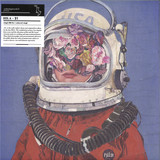
"21" is the well-crafted, sharp and original first album by the duo HILA, composed by American cellist Artyom Manukyan (who already worked with Kamasi Washington, Daedalus, Flying Lotus, Run DMC, Gretchen Parlato, Raphael Saadiq, Clive Lowe Mark...) and french producer Dawatile.
The combination of jazz, Los Angeles beat-scene and the vibrations of 80s and 90s Soviet Armenia make it a striking and unprecedented fusion. These kind of nostalgic and unconventional references forcefully shake the codes of mainstream culture to create a sincere, raw and intimate expression.
"HILA" was born from a spontaneous and intense creative impulse between Artyom Manukyan, a Los Angeles-based Armenian celloist and his partner in crime, David Kiledjian aka Dawatile, a French multi-instrumentist of Armenian descent. This project is proving to be a true master stroke given that it only took 21 days for the duo to make it a reality.
"HILA" was made in less a moon cycle but captivates and electrifies audiences upon its first outings. "H.I.L.A" colors the warmth of the Californian "High" with Armenian vibes. The artists chose this name for their creation since both have a close and valuable connection to these locales. This journey began in 2007, on the day Dawatile went to Yerevan, the capital of this small country in the Caucasus mountain to realize a first fusion project centered around local folkloric music genres.
There he was introduced to local musicians including the Armenian Navy Band, one of the country's foremost groups in which Artyom played the bass and cello. In this context, he also met many musicians such as Tigran Hamasyan and Norayr Kartashyan. This will be the beginning of connections between Lyon, Yerevan and Los Angeles. The following year, the two artists will be be seen performing next to Taylor Mc Ferrin at the Jazz à Vienne festival. More recently, they partnered up again when the cellist, who had freshly relocated in California, invited Dawatile to produce his album. As soon as the studio’s threshold was crossed, they decided to postpone this record and create a joint project: Hay (as the Armenians call themselves) / High In Los Angeles. HILA was born at the end of these 21 days of intense creation. The association of Artyom Manukyan and Dawatile is the combination of two visions, two versions of Armenia, two personalities, the reunion of the Eastern and Western blocs.
One grew up nurtured by the sounds of hip-hop and jazz in Europe and the other by art music and Russian-influenced 1980s Armenian folkloric music before moving to L. A., Ca. The cornerstone of it all, the glue that unites everything : Armenia and music. They generate a new identity synthesizing two perceptions, their complicity transcending these cultural discrepencies. To achieve this, they will scour through images of Artyom’s childhood, within the popular culture of Soviet Armenia. Together, they revisit this decidedly retro vibe, based on the work of Caucasian groups inspired by African American music. This background is rehashed and fused with ancestral Armenian sounds. The DNA of the album "21" is molded by these dear influences.
We can also hear the ancestral sounds of Armenia, a country at the edges of both Europe and Asia. The presence on two tracks of Armenian music Master Norayr Kartashyan, infuses the languor of past melodies and traditions. These purposeful anachronistic sounds offer a fantastic depth to this powerful opus. Listening to the album, one can appreciate the successful fusion of styles and influences. Those combinations, however, manage to preserve individual identities only to enhance the art through an adamant musical dialogue.
Being driven by the urge to transpose Armenian musical traditions into a unique universe, the daring artists, offer an innovative combination by blending, for the first time, these ancestral sounds with the world of Los Angeles beat-scene and jazz. An invention largely fueled by the magic strings of Artyom and maestro Miguel Atwood-Ferguson, a pillar of the genre in Los Angeles combined. These associations resonate with a triumphant equilibrium. HILA is musical uncharted territory in which Artyom's cello strings intertwine to ignite the harmonies of keyboards, the machines, the vocals and electronic layers Dawatile pieced together. HILA plays the soundtrack of an adventure set between Armenia around the end of the Soviet era and a mysterious near future.
Artyom Manukyan grew up in Armenia in the 90s. At the time, he studied Russian classical music while learning jazz with assistance by his father, a music journalist. Being an unconditional music lover, he went on to sharpen his skills at the prestigious Berkelee College of Music. Subsequently, he’s been lucky enough to travel the world touring with numerous acts and mainly with the Armenian Navy Band. The group has fostered alacritous success honored by a BBC Award as a crowning achievement. He moved on 10 years ago and made his way to L.A. with his cello on his back. In the City of Angels, he quickly became a popular figure of the jazz and hip-hop scenes thanks to his first album "Citizen". He’s accompanied prestigious musicians such as Kamasi Washington, Melody Gardot, Daedalus, Flying Lotus, Run DMC, Gretchen Parlato, Raphael Saadiq, Clive Lowe Mark, or Vulfpeck. He released his solo album on the cello, "Alone" in October 2019.
Dawatile is a bold producer and multi-instrumentist as well as a passionate and resolute musician molded by jazz. As a versatile artist, he handles and juggles the saxophone, the keys, the bass and composition. Simultaneously, Dawatile produces cross-over projects and soundtracks for the movie industry. He, as well, has had the opportunity to be a part of many tours, including with his electro hip-hop band, Fowatile and more recently with the "Future Kreyol" trio, Dowdelin. Being the ever workaholic, he has under his belt a string of prestigious collaborations with the likes of Talib Kweli, Foreign Beggars, Roy Ayers, Tigran Hamasyan, Mathieu Boogaerts, Voodoo Game and Piers Faccini. His taste for developing new musical recipes and his know-how in production make him a much sought-after album producer. In concert, the HILA duo offers a sober, precise and rhythmic performance. "21" is an aerial and lively album taking the audience on an at times joyous and sometimes melancholic dreamlike journey. The magic of "HILA" operates at the speed of light and positions it already as an avoidable group.
Dick Verdult, a.k.a Dick el Demasiado is the Philip K. Dick of multi-disciplinary art, the Moby Dick of “cumbia lunática”, and the Charles Dickens of literature and experimental cinema. He first fell in love with cumbia when he heard his nursemaid singing the classic “La pollera colorá”. From this moment on, he adopted the genre and reinvented it, in a perpetual degeneration called Cumbia Lunática, twisting up the elements of traditional cumbia, the “cumbia of the mucamas”, to create an anarchotropical vertebral rhythm, one which supports every moving part.
Celulitis Illuminati is the powerful debut of the anarchotropical gentleman knight of the abstract, Dick el Demasiado, eight dangerous tracks recorded for the first time on vinyl, songs that, upon listening, will liposuck all that grotesque accumulation of adipose tissue out of buttocks and brain. They interweave an amalgam of South American folklore and the cables of electronic music, the plugged-in Ranqueles indians, as in “Asi Que Los Que Sí” (“So That Those Who Yes”) on Side A, surrealist and lugubrious beats, poetry made song and “the dead man’s drool is good for painting watercolors”, as he sings in “Búho Sin Un Ratón” (“Owl With No Mouse”).Euphony that will abduct you away to a viscous street party with “Son Cosas De Hoy” (“They’re Things For Today”) and to an eclectic and excessive dimension with “pero bien bweno” (“but very proper”).
Side B is pure dynamite: “Mecha flan” (“Pudding Fuse”), “Sábado cultural” (“Cultural Saturday”) and “En la jeta” (“In the face”) represent the perfect blend of Lucho Argain (La Sonora Dinamita) and Muslimgauze (Bryn Jones). On top of this, the album includes an as-yet unheard gem, “Llama Mi Abogado” (“Call My Lawyer”), produced by Dick himself and Manuel Schaller, the telepathic mage of the Theremin. When the Dutchman stepped off the boat and onto the block, as well as offering us the TV set, the sculpture of a deranged English woman who devours islands like they were sandwiches, the synthesizer, the sound effect, the African drum, the maraca, the indigenous whistle, he obtained for us the song and the stanza, he provided us with the language and the poetry, the truthful, the epic of the ugly. Cellulite for mortals, cumbia lunática for the enlightened ones! Alfredo Padilla (Trans. Komurki)
Mysterious German producer His Master's Voice makes his debut on Delsin Records. With three mind bending originals plus an absorbing Vril rework his entry on the Delsin e-series is a deeply immersive beat trip into another dimension. The roughed edged ambiance of 'Fire Red' opens the dance in soothing yet engaging fashion with superbly spacious soundscapes pulling you in and slowly involving into a foggy kick drum extravaganza. 'Eve' then offers a deep and propulsive electro groove with glitchy atmospheres. Lead track 'Transition' hits hard, an intergalactic trip on turbulent stuttering drums and whipping synths. To finalize an immersive EP, close friend Vril jumps in for a rework of 'Eve' where he smoothly connects the dots between his typical dark bass lines and blistering dub chords.
Cynosure returns with OHMS, a playfully uplifting collaboration from Mike Shannon and Ohm Hourani. The three-track EP features two originals laced with twisted drums and slippery synths, equally fitting for intergalactic exploration or a beachside sunrise. The original tracks’ intimately minimal production is complimented by a remix from Akufen of elegant deep house, making for a record that is both contemporary and classic. “Hightower PSA" slips out the gate with a carefree ambling baseline over a slow, swelling tide-like pad. Breezy, pulsing synth stabs pull the groove together while precise, quick hats and snares weave around buzzing tones like alien chatter. “Nova In The Sun” moves into steadier and darker territory: the bass hops between a stark kick-snare, with hats tastefully drizzled on top.
But when singer Ilhem’s sultry voice cues subtle hand drums and squiggly echoes, the track transforms from a slick minimal affair into a soulful throwback. “Nova In The Sun (Akufen’s Aldo Nova In The Sun mix)” takes the female voice of the original and jumps right in with an upbeat staccato piano and swirling violins. A full-blown house arrangement ushers in lush strings, electric piano chords, and loosely fitting open hats and snares, all conspiring to bring a splash of joy to any peak-time crowd. On the whole, OHMS deliver a versatile EP that swaggers with a smile.
- A1: Laurent Garnier - Water Planet
- A2: Mono Junk - Beyond The Darkness
- B1: Psychick Warriors Ov Gaia - The Valley
- B2: Melody Boy 2000 - Plenty Of Love
- C1: Drax Ltd Ii - Amphetamine
- C2: Dan Curtin - 3Rd From The Sun
- C3: Front 242 - U-Men
- D1: The Prince Of Dance Music - E3 E6 Roll On
- D2: Pan Sonic - Lahetys/Transmission
- D3: Burial - Archangel
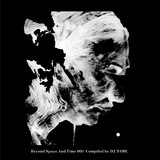
Beyond Space And Time is the new record label from Japanese music festival, Rainbow Disco Club (RDC). RDC has been welcoming music loving people to Japan for over a decade. Throughout the festival's history, RDC have been fortunate to constantly encounter performers and DJs who've collaborated with them in establishing a beautiful dance floor year in, year out. These relationships have lead RDC to start their own label, and now gives them the opportunity to reveal one of the best-kept secrets: What is in a DJ's record bag?
This time around, festival regular DJ Nobu kindly opens up his collection and shares the music he loves with us all. On visual duty we welcome Senekt - his representational yet contemporary drawing illustrates the emotion we feel from DJ Nobu.
We have much more music to come in future from artists that we trust and respect.
▼ DJ Nobu describes 10 tracks this way ▼
A1. Laurent Garnier - Water Planet
Highly respected French DJ/Producer Laurent Garnier has been releasing tracks for decades capturing the very essence of Detroit Techno and Breakbeat. He always manages to create something truly emotional. This is not his biggest hit, but it's my favorite.
A2. Mono Junk - Beyond The Darkness
This track represents the very early days of Techno with it's ravey atmosphere. It has a primitive feel, and the obscure mixdown sounds almost unbalanced. That said, this one really stands out when DJing. Very cool.
B1. Psychick Warriors Ov Gaia - The Valley
It was always my intention to include this track in a compilation if were I ever to do one. It has a fat underlying groove, with some indigenous spices thrown in. The whole thing is put together beautifully. No complaints!
B2. Melody Boy 2000 - Plenty Of Love
I wanted to include a track that had Jacking feel to it - that is my definition of dance music. This track mixes well in both Techno and House DJ sets.
C1. Drax Ltd. II - Amphetamine
This is my all time favorite track by Thomas P Heckman. It asks questions and strikes down all the boring 'wanna be cool' techno tracks. It is obviously a well known tune already, but I include it here because I'm often asked for it's track ID from new kids in the game. This is a classic that should be passed down.
C2. Dan Curtin - 3rd From The Sun
Curtin's refined synth grooves and bass lines make this a true timeless classic. It do not get tired of listening to his rhythms and melodies - he always gets it just right.
C3. Front 242 - U-Men.
The originator of Electric Body Music. Their husky vocals, hard rhythms and strong synth basslines made the group very popular at the time, and they are still to this present day. To me, this track represents what the Belgian New Beat scene is all about.
D1. The Prince Of Dance Music - E3 E6 Roll On
This is the track I played the most up until around 2006. It is a genuine house track that cuts through trends in music. A hidden floor killer.
D2. Pan Sonic - Lähetys / Transmission
Electronic music has existed for decades, and if you are to choose some of the best from all scattered & hidden places, Pan Sonic's 'Lähetys / Transmission' must be considered. The track emerges beautifully - breaking structures and transcending the past. Every layer of the piece is produced with such delicacy and care, that as a whole it magically drags you into the world of the unknown.
D3. Burial - Archangel
This track merges melancholic emotions with technological prowess at the highest level, and deeply impacted the dance music scene on it's release. I recently played this track at the end of my set at the forward thinking Terraforma Festival in Milan. It faded out to huge applause from the open minded crowd. A moment to be remembered.
Ism opens audaciously with the spiritual mic-check “You Are Free To Choose,” a track that features bassist Junius Paul alongside Vincent Davis (drums), Justin Dillard (piano), and Corey Wilkes (horns). This is by no accident. In many ways, “You Are Free To Choose” captures the spirit of Junius Paul’s artistic roots. Corey, Justin, and Vincent were among the multigenerational cadre of Chicago musicians present when Junius chose to follow his own path of creative discovery at the storied Velvet Lounge on the South Side of the city in 2002.
Though he began learning his craft playing in church, Junius’s creative voice really developed during jam sessions at clubs like The Velvet alongside members of the AACM. It was iron sharpening iron, the most natural form of knowledge transfer. He explained The Velvet’s vibe in 2018: “It’s like in Africa.... If you had this society of diviners or medicine people, or you know, sages… The Velvet stuff is not secret; but there are certain aspects of it… if you weren’t there, you weren’t there.” The Velvet Lounge closed in 2010. But, of course, the spirit of the Velvet Lounge is not dead. “Tune No. 6,” recorded live at the Co-Prosperity Sphere in Chicago, is a sweet interlude here to remind us that jazz is alive, bristling with what’s yet to come.
As Junius pushes forward as a creative musician, he is careful to carry with him the spirit and the knowledge he’s gathered from those who have come before him. He is very literally a bridge between generations of the Chicago vanguard, currently playing in a handful of combos with Makaya McCraven (who produced several of the tracks on Ism) as well as a few of Roscoe Mitchell’s working groups – most notably the Art Ensemble of Chicago – in addition to fronting his own band.
"3x12" - Vinly Only.
The second instalment of minimood's multidisciplinary fusion series features Die Wilde Jagd with an extensive rework of the neo-romantic ’Morgenrot’ as well as a vast array of diverse remixes by Ancient Methods, CV313, Luigi Tozzi, Roman Flügel, Rude 66, Steve Bug, The KVB, Vactrol Park, and Variant. This gatefold 3x12" vinyl only release is visually enhanced with intricate hand-drawn artwork including inlay by Dusseldorf based artist Susanne Giring. Written and recorded by Sebastian Lee Philipp with his Uhrwald Orange studio collaborator Ralf Beck, ’Morgenrot’ originally appeared on Die Wilde Jagd's debut album in 2015.
For this release, Philipp and Beck re-visited the song: the ensuing ‘Fangschuss Version' enjoys an augmented arrangement, additional instrumentation and a haunting guest vocal by New- Zealand based singer Nina Siegler. In Philipp’s words, the 'Fangschuss Version' constitutes “a venture to capture the spirit that has been guiding this fusion release - a desire to explore the concepts of friendship, time, distance and memory. An attempt to unveil fragments of the unseen and to reveal the surge of a distant remembrance in an embracive listening experience." 'Morgenrot' subsequently gets a highly varied remix treatment by a range of carefully selected artists.
While Vactrol Park navigate the original audio material into beautiful ambient territory, Ancient Methods showcase an epic masterpiece of enchanting medieval-vibed techno. The KVB turn the track into a dreamy cold-wave trip and Rude 66 dives into a dark, primetime, anthemic dimension. For Roman Flügel, it’s a slow, organic, starry-eyed approach and Luigi Tozzi transforms 'Morgenrot' into hypnotic & loopy, minimal, deep techno. The rework by Steve Bug plays with the original's melody and a danceable kosmische-infused house cut emerges.
The final two remixes are both crafted by legendary Echospace Detroit mastermind Stephen Hitchell: absorbing deep trips into mesmerizing dubtechno by CV313 and into foggy lo-fi ambient by Variant.
Radically shapeshifting and surrealist, as spinning sonic prisms taunting the ears, 'Cercle Vicieux' and 'Cercle Vertueux' channel Fluxus artistry, straying past jazz-licked drones, avalanching low end and blood red scatting. Scenes both condescending and anxious -- this release is carried by its interwoven conflicts, where strange attractors reveal knots at each listen. The fifth Plafond is a special joint project tying the synchronicity of two contemporary minds. Both Zoe Mc Pherson and Rupert Clervaux are known to actively transgress art forms, reconstituting production methods through respective audiovisual and literary pursuits. The listener is relocated in their musical interzone, bordered by avant-garde experimentalism on one side, and bass-heavy club mutations on the other. This ambiguation lays out a gateway, one through which modern producers can re-adopt the revolutionary energy of those who unraveled conventions on music and sound in the first place -- a 'Cercle Vertueux', indeed. Comes in a hand printed sleeve with multiple tints grey and silver, including an Obi-strip, by the BAKK Interzone Alcazar.
Following the release of his debut album, ‘sketches of transition’, UK house devotee Seb Wildblood has curated a brand new collection of remixes, inviting a cast of artists to reimagine tracks from the LP - featuring contributions from Suzanne Kraft, object blue, Ciel and Jenifa Mayanja. Running Back and ESP Institute affiliate Suzanne Kraft opens into the collection, offering a typically atmospheric, Italo-inspired take on sombre pop cut ‘amelia’.
Breakthrough experimental club producer and DJ, object blue, warps the easy-going pace set out in ‘sketches’, drawing focus to its woozy mood with muffled vocals and disjointed percussive hits. Swirling synths and a rich ambient tapestry make for an intoxicating rework.
On the B-side, Bumako Recordings boss Jenifa Mayanja puts a percussive deep house spin on the technicolor minimalism of ‘small talk’. A live bass groove pops beneath the track’s swaying synth beds and melodic chimes, making for the most “classic” dancefloor take of the bunch.
Discwoman affiliate and DJ/producer extraordinaire, Ciel, bathes ‘bahn’ in fluttering psychedelic percussion. Invoking the likes of Orbital, Boards of Canada and The Black Dog, with an emotional candour shining through the foggy atmosphere.
I remember the first time I read W.E.B. DuBois eclectic masterpiece The Souls of Black Folk. The way in which this Weberian scholar flowed from personal account to prose to sociological analysis to music and even political intervention has had a lasting impact on my own work as a cultural anthropologist. It made me understand that as scholars we must use different means in order to give expression to the totality of the lived experience: There is only so much in an academic text.
The experience of alienation has always been at the heart of my scholarly and artistic practice. I have used academic writing, lecturing, theatre performance and electronic improvisation to understand and represent it as a theoretical concept, postcolonial condition and lived experience. I believe, some issues need to be told like a story, some analyzed in most abstract terms and others need to be sung like a gospel. The medium changes the message.
In this sense, I guess, I’m a singing cultural anthropologist.
For some time now I have been engaged in the use of dystopian themes and sounds to paint a sonic picture of structural racism and whiteness of our present. But recently I have grown weary of this Ballardian idea of Future Now and the resulting phantasmagorian aesthetics myself and others have been invested in. The widespread availability of Digital Audio Workstations, sequencers, loopers and delay pedals has lead us into a futuristic cul de sac best described by Mark Fisher as the very absence of future.
Likewise, I am most skeptical of the “naturalist” countermovement, the return of folk. Especially in Germany, I am convinced there is no such thing as an innocent or progressive folk musical expression as it is always connected to the idea of the homeland (“Heimat”) which in turn produces the colony. It seems to me, the current zeitgeist is stuck between a “museum of a dystopian future” and a “museum of an idealized past”, but I wanted to sing about the present.
So, I involuntarily returned to pop music in its two-folded meaning of something popular and addressing not an essentialist notion of “Volk” or its woke cousin “communities”, but society as a whole.
I entered the studio just with a few lo-fi sounding melodies and rhythms from my circuit bent CASIO synthesizer. I had no clue what the finished product would sound like. But as soon as Markus started drumming, in a way strangely reminding me of CAN’s Ethnographic Forgery Series, my uptight sounds were suddenly embedded within a warmer global sound spectrum. The alien at home and abroad and the strange overlapped: We were seeing one and the same sound differently but were gently held together by Tobias’ producing.
Making music is about building coalitions. It’s about suggesting an articulation of styles, sounds and people, that hasn’t materialized, yet, but may help us in the current crisis: I wanted Amon Düül II to send their drug induced archangel thunderbird to rescue the refugees, that had tried to escape the police by climbing up a tree in Munich in 2016. I wanted Sun Ra to taunt far-right protesters in Chemnitz in 2018. And I wanted to mourn the loss of a former kebab shop cum discotheque that served as proof that there is such a thing as a minoritarian universalism.
SCHLAND IS THE PLACE FOR ME is a pop album featuring songs of alienation, not only as a tragic experience, but as a pop-cultural promise. Maybe Bill Callahan sung it best, “I am Star Wars today, I am no longer English grey”. I want those who suffer from alienation to stand in alliance with those who seek alienation, and vice-versa. A coalition, that tolerates the possibility that we are moved by the same groove for contrary reasons.
Fehler Kuti
Munich, Autumn 2019
Music by Julian Warner, Markus Acher & Tobias Siegert
Saxophone on RINDERMARKT by Franz Brunner
Trombone on RINDERMARKT and IL by Matthias Götz
Recorded and mixed by Tobias Siegert in Munich.
SONTAGSFAVORIT mixed by Dario Albiez in Dusseldorf.
Mastered by Duphonic in Augsburg.
Artwork by Atelier Grande, Munich.
Beastly sounds for a zombie nation as classic 80s gaming soundtrack Shadow of the Beast gets debut vinyl edition with a recording taken from the original platform game, and new artwork from acclaimed illustrator Keith Rankin.
Composed by David Whittaker for the 1989 Amiga platformer of the same name, Shadow of the Beast sees its first ever vinyl release courtesy of the UK's Lag Records, presented in also its first mastered edition as directly taken from the original game system.
A prolific VGM composer, Whittaker holds more gaming soundtracks to his name than any other, with titles such as Lazy Jones to his name, as (in)famously sampled for the 1999 club hit Zombie Nation.
Shadow of the Beast remains a prime example of his pioneering hands-on approach, programming music directly with instrumental samples of his own on a Korg M1 synthesizer. The tunes make for a singular combination of Spaghetti Western-style tension mixed with world beats. Tracks like The Plains play with harder rhythms like warped speed techno, while a hard-to-miss melancholy pervades the Underground suite.
The fiendishly difficult Shadow of the Beast itself was an interesting example of game design for its time, recorded at a frame rate to match arcade machines as opposed to monitors, and loaded with a 128 colour palette. Two sequels later followed in the 1990s, along with a 2016 remake for the Playstation console.
The soundtrack comes ready for a 2019 audience with mastering courtesy of Jerome Schmitt at the AirLab, and brand new artwork from acclaimed illustrator and musician Keith Rankin in collaboration with artist Ellen Thomas. Shadow of the Beast will also come on transparent purple vinyl, in standard LP format.
Skyf Connection (pronounced skAyf) was a short lived project by long time friends Anthony Mthembu and Enoch Nondala. At the time they were working for Annic Music, an independent label run by married couple Anne and Nic Blignaut. Although the label was known mostly for Zulu, Sotho, Tsonga and other traditional styles, they had a few Disco releases on the label including groups like Keith Hutchinson’s Focus and Enoch’s discovery Lena, who went on to have huge success under the name Ebony a few years later.
In 1984, when an artist didn’t show up for a booked session they decided to make use of the studio time and began working on a demo. At the time Anthony and Enoch had been playing for a year at a new club called Gamsho, located on a farm on the outskirts of Kliptown Soweto. Along with Blackie Sibisi, Sepate Mokoena and Elijah “chippa” Khumalo they made up the resident house band. Due to cultural boycotts and American artists refusing to perform in the country, locals took it upon themselves to fill the market with the American sound the crowds demanded. The demo they recorded at Blue Tree Studios was going to be their product they could use to promote their brand of the American sound. They then took the demo to Universal Studios where their friend and trusted engineer Jan “fast fingers” Smit was working. It would be here that they would polish their demo into something they could take to their bosses and have pressed. Equipped with a DX 7, Linn Drum and some Juno synthesizers they were on their way. Jan lived up to his name and programmed the drums, it is rumoured he could program in almost real time, a skill that translated to the local arcade where he held high scores on many machines. Enoch would be singing and playing guitar while Anthony would do all the Bass and Keyboards. The result was 4 funky party anthems with synth work like no other recording at the time. Their take on what they believed the crowd would want to hear at the beloved club they called home.
From start to finish the 4 tracks portray what would have been a standard night at the Gamshu. Although the club would open earlier and the standard hours of most clubs was 6 to 6 , the band would start playing at 10pm. With their standard set time and Anthony and Enoch unique view on what a Disco should be, they chose the motto Ten to Ten as the album title because those were the hours when they were the stars and Disco ruled the dance floor. To get to the club was a bit difficult, you needed to drive along an empty road where thieves waited for any patrons trying their luck walking after dark. Since there was no transport during the night, the safest way to get home was to wait till the next morning to walk home. Even though in the summer months of Johannesburg light begins to peek in just after 4am, crowds refused to leave and stayed enjoying good music and company until 10am. The lead off track “Let’s Freak Together” has powerful lyrics encouraging people to let go of their worries, put aside any differences and let the music bring everyone to freak and dance together. The whole album is about the joy we can all feel when we share the same moments and how music can bring people together in a unique way, a philosophy shared with the original nightclubs of 70s New York. This approach to music is where the name Skyf Connection comes from, translating from slang to mean the connection we create through sharing, in this case Music and good times.
Skyf Connection would go on to play at Gamsho till the club’s closure in 1986. In those years their popularity lead to being booked for private events like weddings and birthday parties, as well as gigs in some other venues like Mofolo Hall. They would share the stage with many artists through the years learning artist’s songs and providing support as a backing band. After the club closed Anthony would go on to join the house band at The Pelican, another famous club located in Orlando East, as well as dabbling with songwriting for artists like Phumi Maduna and helping Enoch on many projects through the years. Enoch would ditch live music altogether and immerse himself in studio work, starting full time as a house producer and A&R for the recently formed Ream Music. He would go on to produce hit albums for pop artists like Percy Kay and Makwerhu but made his mark discovering countless artists that would become stars in the traditional market. They would remain friends until Anthony’s passing in 2016 and although Anthony is no longer with us his spirit lives in the grooves he left on this one of a kind record. His wife Vinolia will be accepting his portion of the profits on his behalf.
"The Red" EP by Dominique Fils-Aimé released on vinyl for the first time with new cover art. Special edition Black Friday 2019 pressing.
Dominique Fils-Aimé is a Polaris Music prize-nominated singer-songwriter from Montreal who draws inspiration from soul icons of the 40's and 60's such as Billie Holiday, Etta James, and Nina Simone. While her musical roots are grounded in early soul and jazz, her sound transcends contemporary urban soundscapes.
Dominique's self-produced debut, "The Red" EP, was originally released in 2015. This new version from KingUnderground has been fully remastered and includes a live version of "Love of Yours" as well as two bonus instrumentals.
Sultry vocals follow melancholy guitar and organ on "Like Mama Said." Dominique's calming voice is akin to a meld of Sade and Amy Winehouse. While the edgy 'When You See Me'' has a hypnotic, catchy groove and chorus, she shows off her versatility with a stripped down, acoustic blues-tinged piece on "Ok With You."
The songs were recorded live in the studio in only a few takes with minimal overdubs to capture the unconstrained depth of expression and natural impulse. The faintest of imperfections in the recordings were preserved in an effort to speak the truth, as the nature of her songs reflect on the vulnerability and strength in each of us and their delicate balance. Dominique unifies each song on the record with empowering lyrics, bringing such a commanding voice and precise delivery, you could almost imagine her singing the theme for a new Bond movie.
This cinematic RnB & jazz-inflected debut by one of Montreal's finest soul singer-songwriters is available for the first time on high-quality vinyl.