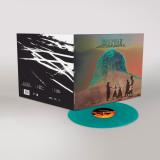
From the heart of Tamanrasset in South Algeria, Imarhan transcend Tuareg tradition, weaving hypnotic synths into desert blues. The result is a timeless work—deeply respectful of their roots, yet alive with a stirring sense of modernity.
ESSAM is the band’s fourth album, recorded with the same core lineup, but marks a significant shift in their sound and approach. Musically, it marks a departure from the rocky, bluesy, psychedelic Tuareg guitar-driven sound influenced by Tinariwen’s heritage — moving toward something more open, modern, and exploratory.
For the first time, their long-time sound engineer Maxime Kosinetz stepped in as producer. He travelled to Tamanrasset with Emile Papandreou (of the French duo UTO), a multi-instrumentalist who introduced electronic elements by sampling live instruments and reprocessing them in real time with a modular synthesizer — subtly reshaping the band's sonic identity.
The album was recorded mostly live, in one big room at Aboogi Studio — the band’s own rehearsal and recording space in Tamanrasset. The studio, a converted concert hall, has become a kind of cultural hub for the local youth. Friends dropped by during the sessions to contribute handclaps, vocals, and just be part of the energy. It’s a space where people gather, hang out, play dominoes, smoke chicha — a rare communal spot in a city that doesn’t offer many for young people, somewhat like a youth and community center.
This context — the creative shift, the live recording process, the atmosphere around Aboogi — might be interesting threads to explore in the conversation.
quête:trans am
- A1: Train's Leavin
- A2: Burn In Hell
- A3: Deathwish
- A4: Sins
- A5: Pusherman
- A6: The Biggest Little City In The World
- A7: El Dorado
- A8: Down Bad
- B1: Desert Storm
- B2: Watch My Daddy Die
- B3: Walk Away
- B4: House Of The Rising Sun
- B5: Dakota
- B6: Devil's Grip
- B7: The Only Time It Rains In Hollywood
RENO, the debut album from Red Leather, is a scorched-earth confession wrapped in the swagger of classic rock and the soul of Americana. Written in the aftermath of addiction, heartbreak, and self-reckoning, it’s an unflinching look at what it means to burn your life down and start over. Across its 14 tracks, Red Leather howls through desert nights and neon cityscapes, blending grit and grace in equal measure. Songs like “Deathwish,” “Burn in Hell,” and “The Only Time It Rains in Hollywood” are raw, cinematic, and deeply human—each one a snapshot of pain, defiance, and redemption. Equal parts road trip and resurrection, RENO cements Red Leather as one of the most compelling new voices in modern rock. 1xLP, Single Pocket Jacket, Pressed on Translucent Red Vinyl
American singer, songwriter and guitarist Boz Scaggs rose to fame in the 1970s with several top 20 hit singles in the United States. In 1976, he teamed up with a group of session musicians who would later form Toto and recorded his seventh album, Silk Degrees, which became a huge hit. The album reached #2 on the US Billboard 200, #1 in a number of countries around the world, and spawned three hit singles: “Lowdown,” “Lido Shuffle,” and “What Can I Say,” as well as the MOR standard “We’re All Alone,” which was later recorded by Rita Coolidge and Frankie Valli.
Silk Degrees is available as a limited edition of 750 copies on translucent blue coloured vinyl and includes an insert.
Notti Senza Fine is the second album by the post-avant-garde theater company Magazzini Criminali, released in 1983 on the independent label Riviera Records and now reissued for the first time by Soave Records in a very limited edition of 200 copies. This work breaks away from linearity and meaning, creating a dizzying collision of voices and sounds that blend theater, punk, and experimental elements. Through montage and collage techniques inspired by the visual arts and poets such as Antonin Artaud, the album explores a dense and layered soundscape.
Composed by Federico Tiezzi, Sandro Lombardi, and Marion d'Amburgo, “Notti Senza Fine” uses sounds and fragments to create an experience that transcends conventional music. The song titles evoke geographical spaces without clear definition, while the sound textures, which include tribal percussion and synthesizers, intertwine without resolution. The album is a “meaningful object,” a musical vehicle that challenges conventions and rejects institutional distribution channels, remaining a rarity appreciated by collectors for over forty years.
The cover, designed by Mario Schifano, adds another layer of meaning to the work, making it a timeless sonic and visual experience.
- Said The Spirit
- Kool Aid On The Rocks
- Pieces Of Eight
- Failsafe
- Matador
- Split
- Ambient Brain
- Cosmic Circus Escapees
- Dream Catcher In The Rye
- The Psychedellic Shooter
- Blast Radius Blues
- Zero Gravity
SACRED COWBOYS are a moody hard rock band with a dry sense of humor. They started playing in murky Melbourne dive bars in 1982 attracting a rabid following. With the release of their iconic first single, Nothing Grows in Texas, they were catapulted to national TV notoriety on Countdown, Australia's version of Top of the Pops. 2025 saw founders Garry Gray and Mark Ferrie enlist Timothy Deane, Anthony Paine, and Damian Fitzgerald. You will soon be holding in your hands the new album, 'In the Manifesto.' 'In the Manifesto' was mastered by Mikey Young, who worked on the last six Mark Lanegan records and plays in Eddie Current Suppression Ring. All new songs are written by Garry and the band. 'In the Manifesto' shows the Sacred Cowboys do not indulge in one musical style. It's a complex, atmospheric soundtrack with Gray's uber cool delivery over sometimes sparse, sometimes weaving guitars and rich harmonies. Channeling a Sonic Youth ethos and grinding the gears in the engine room of the Cosmos Factory, 'In the Manifesto' is as wide and expansive as the Australian desert skies. Radio 3CR's Paul 'Dr Gonzo' Elliott got a sneak preview and says. "Garry Gray returns with Sacred Cowboys and a brand-new album . a 12-track tour de force titled, 'In the Manifesto'. The Sacred Cowboys have performed intense live shows and transported that energy and mood onto this new album, 'In the Manifesto.' It is all killer and a tour de force. Garnering the attention of Andrew McGee at Torn & Frayed Records, Australia and combining with French allies Seb Blanchais and Romain Michon at BEAST Records, France, the rest is about to become history.
- A1: Train's Leavin
- A2: Burn In Hell
- A3: Deathwish
- A4: Sins
- A5: Pusherman
- A6: The Biggest Little City In The World
- A7: El Dorado
- A8: Down Bad
- B1: Desert Storm
- B2: Watch My Daddy Die
- B3: Walk Away
- B4: House Of The Rising Sun
- B5: Dakota
- B6: Devil's Grip
- B7: The Only Time It Rains In Hollywood
RENO, the debut album from Red Leather, is a scorched-earth confession wrapped in the swagger of classic rock and the soul of Americana. Written in the aftermath of addiction, heartbreak, and self-reckoning, it’s an unflinching look at what it means to burn your life down and start over. Across its 14 tracks, Red Leather howls through desert nights and neon cityscapes, blending grit and grace in equal measure. Songs like “Deathwish,” “Burn in Hell,” and “The Only Time It Rains in Hollywood” are raw, cinematic, and deeply human—each one a snapshot of pain, defiance, and redemption. Equal parts road trip and resurrection, RENO cements Red Leather as one of the most compelling new voices in modern rock. 1xLP, Single Pocket Jacket, Pressed on Translucent Red Vinyl
- A1: Bleach
- A2: Ether
- B1: In Bloom
- B2: Opiate
- B3: Halogen
The Italian music scene is enriched by an intriguing new jazz trio: Chromogen.
Led by bassist and composer Matteo Magnaterra, the project features three members: tenor saxophone, bass, and drums. Using an unconventional lineup, they pursue a well-defined exploration of sound and timbre, creating ample space for dialogue and experimentation. They
pave the way for a new, holistic jazz style, clearly defined in their first album, "Chromogen."
The name is inspired by a parallel passion of the artist-composer: analog photography.
Chromogen is, in fact, the English name for the chemical compound capable of transforming a negative image, dyeing it with color. Those
same colors will then animate the artist's songs, developing imagery tied to his way of observing, portraying the world around him in vivid
colors.
CREDITS
Matteo Magnaterra: compositions, electric bass
Matteo Diego Scarcella: tenor saxophone
Vincenzo Messina: drums
Jacopo Trapani: recording, mixing
Francesco Brini: mastering
- A1: Madre Terra
- A2: Destino
- A3: Occhi Fissi Feat. Madbuddy
- A4: Viaggio Nella Musica
- A5: L’attesa (Skit)
- A6: No Drama Feat. Claver Gold
- B1: Sott’ E Sop’
- B2: Sulle Nuvole
- B3: La Multa (Skit)
- B4: Funk4Ass
- B5: Riti Oscuri
- B6: Per La Mia Gente
- B7: L’attimo (Bonus Track)
Joe Allotta's solo project (drummer, composer, and singer) was born from his need for freedom of expression after numerous experiences
as a session musician for artists such as Davide Shorty, Johnny Marsiglia, Funk Shui Project, Mario Biondi, Leburn Maddox, Giles Robson,
Amy True, and Imaani (Incognito).
His compositions embody the desire to make jazz, in its various forms and influences, accessible to the widest possible audience without sacrificing the impact of an engaging and captivating live performance.
Joe Allotta blends hip hop, funk, and drum 'n' bass with contemporary jazz, perfectly blending vocals with his performances. He combines
his rhythmic exploration with a sweet and surprising voice, capable of lending further emotional depth to his music.
"Transition" is a musical journey that reflects a life in constant motion, where everything seems fleeting, fast, and fleeting, immersed in the
frenetic rhythms that surround us every day. The title also encompasses a more intimate dimension: the growth of his artistic identity. Joe is
no longer just a drummer and composer, but also a singer. His intense and surprising voice intertwines with his drumming in a continuous
dialogue, opening up new expressive possibilities and adding further depth to his musical language.
The album was produced in the studios of the Sghetto Club in Bologna, where Joe, together with his producer Jacopo Trapani, spent weeks
researching and experimenting: rehearsing, playing, processing and synthesizing sounds, developing and arranging ideas, thanks also to
the collaboration of extraordinary musicians. The result is a work that blends instinct and research, intimacy and openness, movement and
transformation: exactly what Transition aims to convey.
CREDITS
Giuseppe "Joe" Allotta: Compositions, Vocals, Drums, Bass, Keyboards
Jacopo Trapani: Compositions, Recording, Mixing
Chicco Allotta: Piano (Track 1)
Giovanni Galdo: Bass (Track 1)
Riccardo Dalle Vedove: Trombone (Track 1)
Piergiorgio Perrella: Guitar (Tracks 2, 5, 8, 9)
Elijah Lee Last Jacinto: Piano (Track 6)
Matteo Diego Scarcella: Sax (Track 6) Francesco Brini: Master
- 1: Sunshine Kisses
- 2: Louisiana Hound Dog
- 3: Two Of Hearts
- 4: Anything Without You
- 5: Baby, Please Don't Go
- 6: I Went To The Levee
- 7: Deep River
- 8: Tall Lonesome Cowboy
- 9: Lovely Lonely
Sabine McCalla creates her own version of multi-cultural American roots music. It's a sound that crosses borderlines, pulling everything from Brazilian samba to southern soul to British rock & roll into its orbit. On Don't Call Me Baby, Sabine filters those influences through the lens of her Haitian heritage and her music community of New Orleans, creating a debut album that's every bit as multi-faceted as the woman who wrote its songs.
The daughter of first-generation Haitian immigrants, Sabine was raised in the suburbs of New York City, where she grew up alongside her sister Leyla McCalla (Sons of Our Native Daughters, Carolina Chocolate Drops). Introduced to chamber music at an early age, Sabine began playing classical violin in orchestras, music camps, and conservatory classes as an 8 year old. Back at home, she filled her head with Motown classics, girl group hits, Bob Marley albums, Beatles standards, and Haitian folk music. It was a wide constellation of sound that spanned more than a half century, and Sabine made it all her own, drawn to the connections binding everything together.
Don't Call Me Baby shines a light on those connections. The follow-up to her critically-acclaimed Folk EP, whose pre-war sound earned her a slot at the Newport Folk Festival in 2019, the album transcends genre and generation, creating a raw, rich mix of country, R&B, folk, and soul that exists on its own timeline. Co-produced by Sam Doores of the Deslondes and featuring a cast of New Orleans’ most spirited and gifted (including guest vocals from Riley Downing, Leyla McCalla, and The Lostines), Sabine McCalla reaches beyond her beloved New Orleans Americana scene with Don't Call Me Baby, building a bridge between the world-spanning sounds that have captured her attention.
- 1: Three-Four Vs. Six-Eight Four-Four Ways
- 2: Off My Back Jack
- 3: Hope So Elmo
- 4: Almost Like Me
- 5: Din-Ka Street
- 6: Pay Not Play Not
- 7: To Inscribe
The Max Roach Trio Featuring the Legendary Hasaan is an album by American jazz drummer Max Roach with pianist Hasaan Ibn Ali, recorded in 1964 and released 1965.
This is a classic of its kind, and it is fortunate that it was made, but it is a tragedy that Hasaan would not record again and that he would soon sink back into obscurity
This is the only record where you can hear pianist Hasaan.
But beyond the historic nature of the session comes the music and for that the word “legendary energetic” seems more appropriate.
This album is available as a limited edition of 750 individually numbered copies on translucent green coloured vinyl
High Roller Records, 2. Pressung, 425 g/m² schwerer Kartonumschlag, Beilage, Poster, 180 g schwarzes Vinyl, limitiert auf 500 Stück Original-Vinyl-Transfer von Marcus Mossmann (R.I.P.) bei PHONOGRAPHIC ARTIFACTS im März 2014. Audio-Reinigung und Mastering von Patrick W. Engel bei TEMPLE OF DISHARMONY im März 2022. Schnitt von SST Germany auf Neumann-Maschinen für optimale Qualität auf allen Ebenen... Die ultimative Neuauflage! Sacrilege wurden im Juli 1984 in Birmingham gegründet. Die ursprüngliche Besetzung bestand aus Sängerin Tam, Gitarrist Damian Thompson, Bassist Tony May sowie Schlagzeuger Liam Pickering. Im Sommer 1985 wurde Pickering durch Andy Baker ersetzt. Nach einigen lokalen Auftritten nahmen Sacrilege erste Demo-Tapes auf, die in der englischen Punk/Hardcore-Szene sowie auch in Metal-Kreisen durchaus auf offene Ohren stießen. Daraufhin zeigte das Kleinstlabel C.O.R. (Children Of The Revolution Records) Interesse an der Band. Sacrilege begaben sich ins Studio, um die sechs Songs “Lifeline”, “Shadow From Mordor”, “At Death’s Door”, “A Violation Of Something Sacred”, “The Closing Irony” und “Out Of Sight” für die Mini-LP »Behind The Realms Of Madness« einzuspielen. Musikalisch folgten sie damit dem Beispiel von englischen Gruppen wie Broken Bones, English Dogs sowie Discharge, indem sie die Energie von Punk/Hardcore mit der Finesse des Metal-Riffings fusionierten. Von der Originalpressung auf C.O.R. sollen zum Erscheinungszeitpunkt alleine in Europa 11.000 Exemplare abgesetzt worden sein, dazu kamen noch einmal 15.000 Kopien über Pusmort in Amerika.
- A1: First Sequence
- A2: Second Sequence
- A3: Third Sequence
- A4: Fourth Sequence
- A5: Fifth Sequence
- A6: Sixth Sequence
- B1: Seventh Sequence
- B2: Eighth Sequence
- B3: Ninth Sequence
- B4: Tenth Sequence
- B5: Eleventh Sequence
- B6: Twelfth Sequence
- C1: Symmetry Systems (Porcelain)
- C2: Symmetry Systems (Gold)
- C3: Symmetry Systems (Amber)
- C4: Symmetry Systems (Violet)
- D1: Symmetry Systems (Indigo)
- D2: Symmetry Systems (Emerald)
- D3: Symmetry Systems (Shadow)
- D4: Symmetry Systems (Midnight)
- E1: Imagine The Truth
- E2: Axiom Haze
- E3: Discrete Time
- E4: Reality Engine
- E5: Blissgrid
- F1: State Space
- F2: Principle Dilution
- F3: Everything & Nothing
- F4: Echo Diffusion
- F5: Beyond The Hyperreal
Threewave is the complete synth trilogy from 36 and it unites three releases into a single, evolving statement shaped over five years. Spanning the Wave Variations, Symmetry Systems and Reality Engine releases, the project is rooted in self-imposed limitations and a carefully refined melodic palette that gave rise to a suite of interconnected transmissions. Minimalist sketches give way to warm, AI-era-inspired nostalgia, but always grounded by a distinctly human sensibility. Melancholic keys and glowing atmospheres balance precision with emotion before expanding into themes of perception, artificial intelligence and imagined realities. Together, these works make for a defining chapter in 36's partnership with the legendary Past Inside the Present.
DJ Support by Fabrizio Mammarella, Sean Johnston (ALFOS), Erol Alkan, Ame, Fango, Jaye Ward, SHMLSS, Camilo Miranda, Marco Passarani, Logan Fisher, Massimiliano Pagliara, Otto (Bordello a Parigi), Phil Mison, Giulia Gutterer, Pete Herbert, Franz Scala, Lauer, Pedro Bertho, Feel Fly ...
New music from legendary Adriatic DJ and producer Verdo is as rare as an MP3 in the golden age of disco. Which is why you should be hella excited for GRATIS CLUB, his first full-length album and a love letter to the iconic club he once called home in Senigallia.
A true Loyal Hell Yeah Recordings member and consummate musician, Verdo brings his signature piano melodies to Italo disco, hi-NRG, and trance magic across X cuts that are equal parts dancefloor propulsion and cosmic exploration.
GRATIS CLUB captures the energy, eccentricity and euphoria of the club Verdo played and directed, translating the pulse of a local institution into a timeless, high-voltage record. With previous releases on Danny Was A Drag King and this label, including his 2020 Symmetry EP, Verdo continues to prove he’s one of Italy’s best-kept secrets with this new album.
Opener and lead single ‘Let In The Light' is pure Italo disco adrenaline: shimmering arps soar over lush chords and retro analogue drums, igniting the dancefloor. Second single ‘Boulevardier’ is introspective yet radiant with rugged synths spiralling inward while shiny 80s chords inject colour and retro soul, all carried by supple, marching drums. 'Eyes Melody' is an ascent to a higher state with acrobatic drums and bass and more luminous synth magic, 'Ballad' has a more downbeat and late-night feel with pensive pads and sad vocoder, then the title cut is bold, bright and unabashed in its stomping disco brilliance. 'Our Love Come Back' has a sense of yearning that surely translates the sadness felt at the closing of Gratis Club, then 'Lest We Forget' is a reminder of how pumping and sweaty the main room got with Verdo in the booth. 'Little Blue's is the gentle comedown and comforting hand that leads you home in a reverie.
GRATIS CLUB is a pure hit of unbridled Italo disco joy.
Força Maior combines the vital saxophone explorations of Pedro Alves Sousa with the infinitely subtle electronic processing of Pedro Tavares. Sousa (aka Má Estrela) is known for manipulating his woodwind through guitar pedalboards & amplifiers, creating far-from-ordinary sonics rooted in unceasing curiosity. For his part, Tavares (aka funcionário) conjoins video & sound work to create space for the pensive wanderings where memory and imagination interlace.
The album Morte Lilás was recorded over a week in June 2023 in Pedro Alves Sousa's family farm, located in the village of Ferreirim, near Lamego, in Portugal. The partly abandoned farm served as the residency, studio, and inspiration for the album: it is a 400-year-old granite farm that belonged to a member of the "40 conspirators"—a group that led the revolution for Portugal's independence from Spain in the 17th century.
Morte Lilás is a remarkable album of committed meditation. Each day on the farm was a recording day for the two Pedros: Sousa on sax & electronics, Tavares on sampler & processing. Apart from slight sonic incursions from the surrounds—the birds on 'Quinta à tarde'—and the sporadic use of sine tones, the source sounds all start from the saxophone. It is then processed both by Sousa & Tavares. The album unfolds as a saxophonic tapestry that breathes with quiet intensity. Each piece invites close listening, revealing fine gestures and tonal shifts that shape a contemplative, ambient space. Força Maior move with calm precision.
The album opens with the unhurried overture 'Quinta à Tarde' a Portuguese pun on Eno's Thursday Afternoon that announces the textures at play. Sousa's breathy entrance is paired with a soft, delicately shifting, backdrop. As the track progresses, time seems to stretch. The arrangement resists urgency, favouring subtle evolution over dramatic turns. Pensive layers shift & drift, creating a sense of suspended motion that brings the listener into the environs of Morte Lilás. 'Quinta à Tarde' is a long-form fade, shifting emphasis from Sousa to Tavares.
'Cubos' continues the gauzy feel, but with a more up-tempo tilt. Rhythmic clicks & pings setup a swung time for the sax to interpose melodic lines that are fed back & bent with cascading delays. Força Maior in distilled form.
Força Maior is in top form on the title track 'Morte Lilás', a sprawling centrepiece that showcases their command of atmosphere & emotional pacing. By turning up the reverberation & leaning into a continuous format, they dissolve the gap between hypnotic trance & articulate reverie. Then, a moment of stillness. The track pauses, not abruptly but like a tide pulling back, revealing the contours beneath. What follows is a return to the album's more relaxed architecture: understated rhythms, softened textures, and a sense of spaciousness that opens space for reflection. It is a transition that feels organic, as if the song itself needed to exhale before settling back into its contemplative groove.
'Menta' is another short-form miniature of the band's signature contours: beautiful loops of air pressure gradients that carry an emotive weight & light.
The album closes with 'Cascata do Inferno'. The title suggests violence, but the music whispers instead—an atmospheric cascade of breath & tone that emerges in slow, deliberate waves. Short melodic cycles are matched by shimmering electronic chords. It's a piece that rewards patience, draws the listener in to drift downstream, eyes closed, into the serene turbulence of its current.
- A1: Let Us Dance (Movement One)
- A2: Ever New (At Hotel2Tango)
- A3: Laughter In Summer Feat. Elizabeth Glenn-Copeland
- A4: Children's Anthem Feat. Elizabeth Glenn-Copeland
- B1: Harbour (At Hotel2Tango) Feat. Elizabeth Glenn-Copeland
- B2: Middle Island Lament Feat. Elizabeth Glenn-Copeland
- B3: Shenandoah
- B4: Prince Caspian's Dream (At Hotel2Tango)
- B5: Let Us Dance (Movement Two)
Mit Laughter In Summer präsentiert die legendäre Singer-Songwriter-Ikone Beverly Glenn-Copeland (bekannt durch das Kultalbum Keyboard Fantasies) ein zutiefst berührendes neues Werk – entstanden in Zusammenarbeit mit seiner Partnerin, der Künstlerin und Produzentin Elizabeth Copeland. Das Album ist ein musikalischer Liebesbrief, der Erinnerung, Hingabe, Verlust und Freude miteinander vereint.
In neun emotionalen Songs – allesamt in One-Takes aufgenommen – entfaltet sich eine außergewöhnliche Intimität, getragen von Glenns charakteristischer Stimme, warmen Chorarrangements und einem unverwechselbaren Gefühl spiritueller Verbundenheit. Der Sound reicht von kontemplativen Balladen wie „Children’s Anthem“ bis zu leuchtenden, hoffnungsvollen Momenten wie „Let Us Dance (Movement One)“.
Produziert wurde das Album von Elizabeth Copeland und Alex Samaras (Hotel2Tango / Howard Bilerman). Es folgt auf Glenns gefeiertes Album The Ones Ahead (2023) und seine Zusammenarbeit mit Sam Smith für Ever New (2024).
Laughter In Summer erscheint auf rosefarbenem Vinyl, als limitierte Dinked Edition auf milchklarem Vinyl inklusive Bonus-7" mit Coverversionen von Marvin Gaye – „What’s Going On“ / „Save The Children“ – sowie digital und auf CD.
Für Fans von Alice Coltrane, Terry Callier, Joanna Newsom, Sam Amidon und spiritueller Folk-Avantgarde.
Konfiguration: 140g Pink 12" vinyl, 3mm spined sleeve, Gloss machine varnish, 12" printed insert, Gloss machine varnish
Swiss artist Lukas Traxel releases his powerful debut album One-Eyed Daruma on We Jazz Records, March 10. The trio features Traxel on double bass, Otis Sandsjö on sax and Moritz Baumgärtner on drums. Compact, deep, and organic to the bone, Traxel & co's sound echoes the innovations of rhythmically driven avantgarde jazz while keeping things moving at all times. There's both drive and freedom to this sound.
ONe-Eyed Daruma features eight new compositions by Traxel, who crafted the outline for the album while dealing with the loss of his father. The group came together after an open invitation from the Zurich jazz club Moods to present a new group. The trio of Traxel, Sandsjö and Baumgärtner creates a full, symphonic, and powerful body of sound despite the instrumentation without a harmony instrument. The trio functions as a collective where the boundaries between composition, melody, and accompaniment are in flux, while keeping the common goal of creating new music together in sight at all times. Traxel reports that after playing bass in various groups with guitar and/or piano, he wanted to create a counterpoint of sorts with his new group and specifically go about it with a more sparse setup. As One-Eyed Drama proves, the idea behind the trio dynamic is a strong one and the unit makes use of their extra space in creating evocative, moody, swinging creative jazz with a distinguishable fingerprint of its own.
Lukas Traxel says:
"The process of composing this music while dealing with the loss of a loved one resulted in a writer's block at first. The notes would just not flow out of my pen until I noticed a mysterious-looking figure in the right upper corner of my piano. It was a daruma, an eyeless figure that in the Japanese tradition brings luck and prosperity. According to the myth, the first eye must be drawn onto the figure while expressing a wish. The second eye can be added only if the wish comes true. My daruma is meant to stay one-eyed as my wish, strongly connected and intertwined with my now gone father, is not meant to be fulfilled. The feeling of unfulfillment and imperfection of life serves as a common thread throughout this album, right down to its title. In a similar fashion, a composition remains incomplete until it is interpreted by musicians, and given form as music. That being said, for me playing together with this trio symbolises the upside: the sense of fulfillment in music and life.
Our musical influences include the American composer and singer Caroline Shaw, Swiss pianist Colin Vallon's trio, and composer/singer-songwriter Gabriel Kahane. In addition, I have listened a lot to the trio albums of Jimmy Guiffre and Sonny Rollins. Besides that, my musical heroes like Charlie Haden, John Coltrane, and Keith Jarrett always flow into the music. Another very important influence in the music is the work of American visual artist Agnes Martin, in whose works the imperfection of a multiplicity of repetitions results in a lively big whole in the end. (See "Wild Flower")
Live, the trio takes a lot of freedom in interpreting this music, yet we have a deeper, almost pop-like attitude towards the live performance as an experience. For me it's always important to build a strong narrative with the band while on stage."
One-Eyed Daruma by Lukas Traxel is released on 10 March 2023 by We Jazz Records on LP/CD/digitally. The LP edition is shelved in an inside-out sleeve and pressed on white vinyl. The CD is housed in a cardboard digisleeve with UV lacquer finish.
- Sevastopol
- Magazine
- Try Saying
- Dodecahedron
- A Brighter Tomorrow
- Life Hex
- Ist Halt So
- Sicko! Ft. Billy Woods
- Cursive
- I'll Ask Her
Für Mandy, Indiana, ist die Wahrheit der einzige Weg. Auf "URGH", ihrem ersten Album bei Sacred Bones präsentiert, sich das Quartett - bestehend aus Sängerin Valentine Caulfield, Gitarrist und Produzent Scott Fair, Synthesizer-Spieler Simon Catling und Schlagzeuger Alex Macdougall - als eine Kraft von unheimlicher Natur, die ein Album geschaffen hat, das ebenso sehr ein Aufruf zum Handeln ist wie eine Reise in die Vergessenheit und Transzendenz. In den zehn Tracks verwebt die Band ihre eigene unkonventionelle Sprache zu einem Mantra für Selbstbestimmung und Widerstandsfähigkeit und schafft so eine Vorlage für eine bessere Zukunft, bevor alles in Dunkelheit versinkt. Ein Großteil des Albums wurde während eines Aufenthalts in einem unheimlichen Studiohaus am Stadtrand von Leeds geschrieben und anschließend in Berlin und Greater Manchester aufgenommen. Es war eine intensive Umgebung, was zum Teil auf die gesundheitlichen Probleme zurückzuführen war, mit denen Caulfield und Macdougall während des Schreib- und Aufnahmeprozesses zu kämpfen hatten. Dennoch bleiben Mandy, Indiana kompromisslos. Caulfield setzt ihre Stimme als verzerrtes Instrument und Waffe ein, die zwischen verspielt und vernichtend oszilliert. Der pulsierende Sirenenton von ,Magazine" steht neben dem zerhackten Vocal Fry von ,try saying" und der sich wandelnden Wildheit von ,ist halt so", das die Dringlichkeit von Protestbewegungen kanalisiert, auf den Widerstand gegen den Völkermord in Gaza verweist und gleichzeitig allgemeinere Kämpfe thematisiert, während der letzte Track ,I'll Ask Her" eine bewusste Direktheit ist, die die toxische Boy-Club-Kultur anprangert, und eine hartnäckige Abrechnung, die über dem gesamten Album schwebt. Obwohl es immer noch unbestreitbare ,Knaller" gibt (wie der zerfetzte Rap von ,Sicko!" mit Billy Woods), wirkt "URGH" oft wie präzise geschnitztes Kino. Vom sprühenden Techno von ,Cursive" bis zu den dekonstruierten Feedback-Loops von ,Life Hex" bewegt sich das Album zwischen industrieller Katharsis und filmischer Unruhe und spinnt eine Spannung, die Fair als ,Remix seiner selbst" beschreibt. Diese kontrastreiche Palette ist sowohl ein notwendiger Aspekt des Albums als auch das zugrunde liegende Bindeglied. Obwohl "URGH" sehr persönlich ist, spiegelt es den gewalttätigen, zerbrochenen Zustand der Welt wider. Caulfields Texte setzen sich mit Gewalt, systemischer Gleichgültigkeit und der Allgegenwart von Schmerz auseinander, betonen aber auch Momente der Schönheit und Solidarität. URGH gehört in die physische Welt, und das Artwork von Carnovsky mit einer anatomischen Illustration von Andreas Vesalius unterstreicht die viszerale Auseinandersetzung des Albums mit dem Körper und seinen Grenzen. URGH ist sowohl jenseitig als auch physisch und kathartisch, sowohl ein erster Schritt zur Heilung als auch eine Weigerung, das Gespräch sterben zu lassen.
- A1: Atomic Rotary Grinding God ~ Quicksilver Machine Head (15:44)
- B1: Loved And Confused (17:03)
- C1: Phantom Of Galactic Magnum (18:57)
- D1: Atomic Rotary Grinding God ~ Blues For Black Bible (Live) (19:36)
We’ve purged the Acid Mothers Temple archives once again, resurrecting another classic album ‘Electric Heavyland’.
Originally released in 2002 on CD only (via Alien 8 Recordings), ‘Electric Heavyland’ is presented here for the first time on vinyl, remastered and with a whole bonus live side!
Housed in a beautiful gatefold sleeve with heavy use of the original black and metallic silver ink artwork
“Suddenly, my world explodes as the band pounces on the joint with some hell-blues, laced with sci-fi laser transmissions. Jesus H. Fuck, this is loud. There comes a point when heavy jamming and pure noise meet, and that point is tearing shit up at this very moment.” Pitchfork
Of key note for AMT diehards/collectors. Side D was recorded live at at the 2nd Acid Mothers Temple Festival December 13th 2003 with Yamazaki Maso (Masonna) as a guest.
Makoto says "we have played this song, Atomic Rotary Grinding God live only once, this is that recording"
Produced, engineered and mixed by Kawabata Makoto live recorded by Takayama Manabu (original source is VHS video tape)
- A1: Emanuel Satie - Happy
- A2: Alican - Everything To Me
- B1: Aera - Y E.a.h
- B2: Julian Koerndl - All You Need
- B3: Mehill - It Is What It Is New
- C1: Skatman - V A.m.p
- C2: Basti Grub - To My Babe
- C3: Claudio H - Seasons
- D1: Deer Jade - Firmament
- D2: Agustin Giri - Transient Enigma
- E1: Jonathan Kaspar - On The Line (Raw Edit)
- E2: Santiago Garcia, Sam Farsio - Back To Basics
- F1: Dodi Palese - Tom' S Toy
- F2: Moritz - Lethal Industry
Being a musical playground for Dixon and Âme since the beginning of the label. Our Secret Weapons series symbolizes a constantly forward moving train of both artistic expression and musical exploration. With the aim of showcasing tracks that circled through the sets during the year and will do beyond. Part 17 finally available on 3LP.
Für Mandy, Indiana, ist die Wahrheit der einzige Weg. Auf "URGH", ihrem ersten Album bei Sacred Bones präsentiert, sich das Quartett - bestehend aus Sängerin Valentine Caulfield, Gitarrist und Produzent Scott Fair, Synthesizer-Spieler Simon Catling und Schlagzeuger Alex Macdougall - als eine Kraft von unheimlicher Natur, die ein Album geschaffen hat, das ebenso sehr ein Aufruf zum Handeln ist wie eine Reise in die Vergessenheit und Transzendenz. In den zehn Tracks verwebt die Band ihre eigene unkonventionelle Sprache zu einem Mantra für Selbstbestimmung und Widerstandsfähigkeit und schafft so eine Vorlage für eine bessere Zukunft, bevor alles in Dunkelheit versinkt. Ein Großteil des Albums wurde während eines Aufenthalts in einem unheimlichen Studiohaus am Stadtrand von Leeds geschrieben und anschließend in Berlin und Greater Manchester aufgenommen. Es war eine intensive Umgebung, was zum Teil auf die gesundheitlichen Probleme zurückzuführen war, mit denen Caulfield und Macdougall während des Schreib- und Aufnahmeprozesses zu kämpfen hatten. Dennoch bleiben Mandy, Indiana kompromisslos. Caulfield setzt ihre Stimme als verzerrtes Instrument und Waffe ein, die zwischen verspielt und vernichtend oszilliert. Der pulsierende Sirenenton von ,Magazine" steht neben dem zerhackten Vocal Fry von ,try saying" und der sich wandelnden Wildheit von ,ist halt so", das die Dringlichkeit von Protestbewegungen kanalisiert, auf den Widerstand gegen den Völkermord in Gaza verweist und gleichzeitig allgemeinere Kämpfe thematisiert, während der letzte Track ,I'll Ask Her" eine bewusste Direktheit ist, die die toxische Boy-Club-Kultur anprangert, und eine hartnäckige Abrechnung, die über dem gesamten Album schwebt. Obwohl es immer noch unbestreitbare ,Knaller" gibt (wie der zerfetzte Rap von ,Sicko!" mit Billy Woods), wirkt "URGH" oft wie präzise geschnitztes Kino. Vom sprühenden Techno von ,Cursive" bis zu den dekonstruierten Feedback-Loops von ,Life Hex" bewegt sich das Album zwischen industrieller Katharsis und filmischer Unruhe und spinnt eine Spannung, die Fair als ,Remix seiner selbst" beschreibt. Diese kontrastreiche Palette ist sowohl ein notwendiger Aspekt des Albums als auch das zugrunde liegende Bindeglied. Obwohl "URGH" sehr persönlich ist, spiegelt es den gewalttätigen, zerbrochenen Zustand der Welt wider. Caulfields Texte setzen sich mit Gewalt, systemischer Gleichgültigkeit und der Allgegenwart von Schmerz auseinander, betonen aber auch Momente der Schönheit und Solidarität. URGH gehört in die physische Welt, und das Artwork von Carnovsky mit einer anatomischen Illustration von Andreas Vesalius unterstreicht die viszerale Auseinandersetzung des Albums mit dem Körper und seinen Grenzen. URGH ist sowohl jenseitig als auch physisch und kathartisch, sowohl ein erster Schritt zur Heilung als auch eine Weigerung, das Gespräch sterben zu lassen.