Unreleased electronic / jazz / madness from two titans of jazz and experimentation: JOHN SURMAN and KARIN KROG.
I could now write a load of blown up puffery about how amazing this is, but everyone does that, and a lot of the time it’s all a load of bollocks. But basically this was sent to me by Karin / John when I asked if they had anything hanging about that had not been released. This came through and blew my tiny mind. Like something from prime Annette Peacock “Pony” period. Here is what John Surman said…
John Surman writes:
Back in 2012/13 there had been some talk about a big futuristic open air urban dance/theatre production for about 80/100 actors/dancers with lasers and all kinds of lighting effects on different stages. I was invited to get involved and, together with Ben and Karin, we eventually decided to get to work on some ideas. I think that the original plan was that in performance there would be a mixture of live music and electronica.
Not altogether surprisingly, bearing in mind the complexity of the project, it never moved forward and developed into anything more than an interesting idea. It was probably over ambitious & I guess the funding never came through.
The only information I that I can find relating to the production refers to two silent movies made in 1927/1928 by the filmmaker Eugene Deslaw, entitled `La Marche Des Machines´ and `Les Nuits Électriques.These were clearly intended to act as inspiration for the project.
After months turned into years it became obvious that the project was going nowhere, and so the recorded music laid around gathering dust until Johnny Trunk asked Karin if she had any interesting music that he might be interested in releasing. One thing led to another and so, finally, Electric Element found a home!
For anyone interested in the equipment used this will have to be an approximation since the memory might be playing tricks. Karin was probably using a Yamaha Rex50 f/x unit, a Roland VT-3 Voice Transformer and an Oberheim Ring Modulator. I was playing Bass Clarinet and Contrabass Clarinet through various f/x units together with a Yamaha WX5 wind synth. All the instruments and voice were also processed through Ben´s equipment. After writing this I asked Ben for his recollections and he came up with the following:
John, Karin and I created this music in 2 or 3 days in the winter of 2013 at their studio in Oslo, Norway. I followed up with another 2 or 3 days of mixing, editing and post-processing . We kept a collaborative, improvisational and free-form approach to the sessions. I grew up immersed in music such as Cloudline Blue, the 1979 duo album of Krog/Surman, and this felt like a similar approach. I have mixed sound for many of their live duo concerts and I would use effects and electronics as an
accompaniment and counterpoint to the performed music. The relation of organic and artificial sound sources in music has always fascinated. In this case, I used some contemporary digital signal processing to introduce my own aesthetic into the conversation, in particular using granular synthesis to recombine small 'clouds' of sound into alternate forms. Some of the software tools I used included Ableton Live, Max/MSP and Reaktor.
Buscar:trans am
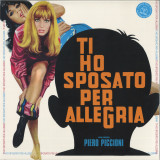
“Ti Ho Sposato Per Allegria” (1967) is a comedy directed by Luciano Salce, taken from the theatrical play of the same name (1965) by Natalia Ginzburg. The main characters are Pietro and Giuliana, respectively interpreted by Giorgio Albertazzi and Monica Vitti. A lawyer from a good family, serious, accustomed to a calm and regular life who got married to a indolent and dazed girl with a difficult past a month after meeting her at a party. Despite Giuliana's inability to transform herself into a good housewife, his relationship with Pietro continues to flourish, because he seems to find enjoyment in each of his wife's many mistakes. The reason for their union lies not in love but, perhaps, in a genuine sympathy, as strong as it is mutual. The story has become a minor classic with each new representation. On both stage and screen the themes of everyday life, and the more complex and existential ones, are addressed. The subtle irony of the work relies on recounting problematic events in a carefree tone: realities such as abortion, death, separation and the couple's incommunicability are underplayed with naturalness. The funny events of the film are commented on by Piero Piccioni's music, published for the first time on vinyl by Musica Per Immagini, with an harmonious tracklist. For this first orchestra rehearsal with the director, which will be followed by other important soundtracks, the composer makes an effective and elegant synthesis: on the one hand he reworks moods and aesthetic intuitions of some previous and happy experiences, while on the other he identifies and anticipates the first bars of that unmistakable sound between bossa nova, funk and lounge nuances that will characterize almost all the production of the Seventies. In fact, the Turin-native artist simplifies in a positive sense the articulated harmonic structures that have always distinguished his authorial figure – where the so called jazz features are to be considered more than central in the musical texture, as prominent elements of the harmonic syntax – and he tries a melodic reduction that will make the compositions more catchy or memorized, but not easier for this. Lightness of spirit and rarefied elegance are the keys of this new Dionysian world.
Senselessness 1/2 is the very first solo issue of the Swiss electronic composer Robin Félix, on his own label De l’Aube (Of Dawn), the occasion for him to prove that field recordings can be (or should be?) an integral part of the global matter, when so often they are just something hovering in the background because it’s “nice” or reminds the artist of a place he loves.
Throughout the length of these four tracks, they are litterally central; moreover, they are electronically transformed, manipulated, skewed and twisted in order to form some sort of framework, a backbone on to which sounds and genres intertwine. On Cluster, violins and cellos (recorded in the gardens of the Venice Biennale) are soon transmuted into the abrasions of the electroacoustic realm, until the pulse of a relentless bass introduces a pure and pristine electronic music that knows and uses the roots of dub, drum’n’bass and the meticulousness of Jan Jelinek’s Glitch aesthetics. A tad “housy”, Chi comes as a second pulse where a modified didgeridoo and African percussions (recorded in a Swiss forest) lead the listener to a sort of tribal mode, as suited to dancers than to those who prefer inner journeys; here, the spatial dub of King Tubby moves from background to foreground.
The more abstract Boiler verges on the IDM and the heady, elegant and spartan Detroit techno – headphones reveal its numerous minute and delicate details. Based on the recording of insects, of which one can hear the actual rubbing of elytras, the closing Swarm ends the record with and intricate blend of ambient, which in some way winks to the Aphex Twin and The Future Sound Of London. Overall Senselessness 1/2 is a mesmerising and concise update of the famous Deutsche elektronische musik of old, that gathered on its way the other genres that made Robin Félix tick. Since field recordings have hardly been that meaningful, one wonders where Senselessness 2/2 will lead us to
YES! Originally released in 2000, Mark de Clive-Lowe's Six Degrees captures the early essence of what would later be known as broken beat, club-jazz and future soul; bridging the sounds of 70s jazz-fusion, jungle, hip-hop, house and Afro-Cuban rhythms. With fender rhodes, synths and an MPC2000 at the core of his production, de Clive-Lowe blended live musicianship with beat-driven sensibilities in a way that was ahead of its time.
Originally released in New Zealand via Kog Transmissions, the album found its way onto the global stage when Universal Jazz UK picked it up. Now, 25 years later, Be With is proud to present a special anniversary vinyl reissue, celebrating a landmark album that laid the foundation for an international career spanning continents, collaborations, and countless musical evolutions. Limited to just 400 copies for the world, these are gonna fly.
In 1998, a 23-year-old Mark de Clive-Lowe set off on a year-long journey that would shape his career and musical identity. Fuelled by an insatiable curiosity and a grant from New Zealand supporting emerging artists, he traveled across the globe — digging through record stores in San Francisco, immersing himself in the rhythms of Havana, collaborating in London’s underground studios and experiencing the jazz legacy of New York. Along the way, he crossed paths with pioneers, mentors and kindred spirits who would deeply influence his sound.
Six Degrees is the sonic diary of that transformative year — a musical world tour distilled into one groundbreaking album. It's both a snapshot of a pivotal moment in de Clive-Lowe’s life and a timeless statement of creative exploration.
The jazzy jungle vibes of "Roundtrip" opens proceedings, inspired by de Clive-Lowe's deep love of drum & bass. It kicks off with a rhythm pattern picked up in Havana, combined with Lonnie Liston Smith-style Rhodes textures and a rolling jungle breakbeat. Sublime. Up next, "La Zorra" is a moving tribute to the folkloric 6/8 rhythms he was surrounded by in Cuba. Afro-Cuban music had a huge impact on his sound and this track reflects those deep grooves brilliantly. Hip-hop has also been a major influence since de Clive-Lowe's teenage years and Manuel Bundy’s scratches bring an essential turntable element to "Melodious Funk", giving it that raw boom-bap edge.
Underground favourite "El Día Perfecto" came about by de Clive-Lowe wanting to write something as catchy as Incognito’s "Colibri", combined with his deep love for Lonnie Liston Smith. Effortless as it sounds, it pretty much wrote itself, seemingly. "Cosmic Echoes" is a nod to house music, but on the chiller side. Named after Lonnie Liston Smith’s band, with bouncy bass, a steady 4/4 groove and chopped tabla percussion, the mood this track conjures up is special. The deeply soulful "Day By Day" became the biggest track from the album, partly thanks to DJ Spinna’s remix and Café del Mar featuring it on their compilation. Cherie Mathieson’s vocals shine here. The lyric came to de Clive-Lowe while hanging out at Cause Célèbre in Auckland: “Day by day, side by side, hand in hand, no turning back.”
"Restless" is a jazz-funk jam built on a classic drum break, heavily influenced by Roy Ayers and the Mizell Brothers. Named in homage to Phil Asher’s Restless Soul moniker, his impact on de Clive-Lowe's journey can’t be overstated. Following on, "Mindscape" is a darker, rawer drum & bass track. The chopped-up drum break and moody synths channel everything he loved about the deeper, more atmospheric side of the genre. "Control" continues the jungle influence — this one’s all about the heavy grooves and deep bass, inspired by nights out listening to Jumping Jack Frost and Grooverider in packed basement clubs.
"Por La Mañana" is a musical snapshot of walking the Malecón in Havana in the morning sun. The city had such a profound impact on de Clive-Lowe and this track captures some of that energy and movement. Penultimate gem "Motherland" is a nod to his Japanese heritage. The melody draws from Japanese scales, shifting between moody introspection and uplifting harmony. Built on a chopped live drum break he recorded in Tokyo years earlier. We end with "El Día Perfecto (Reprise)", a stripped-down reprise featuring percussion, vocoder, Rhodes and synths — leaving the listener with a warm, uplifting final moment.
Speaking to Be With, de Clive Lowe explained just how much celebrating the 25-year anniversary of this album means to him: "Since then, I’ve released so much more music, but Six Degrees still resonates — it captures a really special moment in my life. A turning point, a fork in the road that ultimately changed everything. It’s amazing to reflect on where this journey has taken me, and I’m incredibly grateful for it. I still remember the night I finished "El Día Perfecto". I took a minidisc of it to my friend Cian’s DJ set at Galatos in Auckland. He plugged it in, and I watched the dancefloor move to something I’d just created hours earlier — it was a magical moment.
When Six Degrees was first released, the internet was still in its early days. There was no YouTube, no streaming, no instant global access to new sounds. The album was my way of bringing together all the music and places I had experienced over that year, blending them into something uniquely mine. It introduced me to listeners around the world and opened the doors to a career that would take me to more countries, collaborations and experiences than I ever imagined.
25 years later, I’m so grateful for everything this record set in motion. It’s a document of a moment in time, but it still feels alive — and I’m thrilled to share it again in this special anniversary edition."
Mastering for this 25 year vinyl edition was overseen by Be With regular Simon Francis and it was cut by the esteemed Cicely Balston at Abbey Road Studios to be pressed in the Netherlands by Record Industry. The original artwork has been lovingly brought back to life by de Clive-Lowe himself, with updated liner notes written specially for this landmark reissue.
It has been almost seven years since the release of Alpestres, the impressive debut by Matthias Puech on Hands in the Dark. While that first experience took us on a mystical journey through fascinating fictional landscapes, 'Cabanes' lets its narrative unfold in a confined space: eight pieces each resembling small structures or makeshift shelters that, while enveloping and isolating the listener, remain open to their surroundings. These are not merely interiors; they are handcrafted spaces through which we gain insights into the world. Yet they allow the light from the outside to seep in, reminding us of reality.
According to Puech, each composition has a distinctive two-part story that are both clear and intriguingly interconnected. The first one often revolves around the anecdotal and tangible aspects of instrumental "play," showcasing a technical exploration with his tools, the discovery of sounds in a library, and the serendipitous encounters that inspired them. The second part, however, delves into the more elusive yet profound state of existence that the French artist experienced while engaging with these sounds, reflecting on the moments he listened and re-listened to them, ultimately deeming them worthy life companions. These two narratives, perhaps reshaped over time like distant memories, interact in ways that can either clash or complement each other, creating a lasting impact on the listening experience.
A significant aspect of the compositional process involves distancing oneself from these connections to creation, allowing for the rediscovery of a state of listening that is free from prior emotional influences—what one might call "pure" listening. This method enables the transformation of a sequence of events into a narrative that is independent of its original intent, resulting in a universal object. After spending considerable time with the attached pieces and attempting to induce a form of amnesia to reconstruct an artificial narrative, Matthias Puech has ultimately chosen to relinquish this pursuit. Thus, the album is aptly termed “Cabanes” (“Huts”): fragile structures whose design clearly reflects the intention behind their creation, showcasing all the signs of considerate craftsmanship.
- Floating At Distance
- Still Quiet
- Fall Of Illusions
- Will You Follow
- When All Is Gone
- Can You See Me Now
- Will You Find A Way
Introducing "Still Quiet", the latest sonic exploration from The Soundbyte, the innovative project of guitarist and composer Trond Engum from the legendary The 3rd and The Mortal. The album Still Quiet transcends musical boundaries, seamlessly blending Norwegian folk traditions with electroacoustic textures and metal influences, creating a sound that defies conventional categorization. Central to the experience are Trond Engum's distinctive guitar style and Rune Hoemsnes' (The 3rd and The Mortal, Manes) signature drumming. They are joined by a carefully chosen ensemble of renowned musicians whose contributions complement the captivating vocal performances of Kirsti Huke and Andreas Elvenes. The album weaves together unsettling rhythms, innovative guitar work, haunting soundscapes, and strong melodic lines-each track forming part of a greater whole. The music captures the fragile tension between stability and uncertainty, shifting effortlessly from quiet melancholy to uncompromising rawness and intensity. Still Quiet invites listeners into a moving and immersive sonic experience, challenging musical norms and rewarding those who revisit it again and again. With this album, The Soundbyte deliver their most compelling and ambitious work yet.
- A1: Return The Curse
- A2: Saviour Destroyer
- A3: Worm Vision
- B1: They Have Bodies
- B2: On A Hill
- B3: Inside The Horror Mask
With this, their fourth album Black Helium find themselves widening the parameters of their take on heavy psychedelic rock, with probably their most baked and hook-laden material to date.
From the no-safety-net freak out of ‘Return the Curse’, to the sawtooth groove of ‘Up on a Hill’, ‘The Animals Are Coming’ LP is Black Helium at their most exploratory and focused.
Recorded one sun-drenched week in late June 2024, this time at Axe and Trap Studios with Ben Turner (Hey Colossus, Part Chimp). ‘The Animals Are Coming’ is the band sweating it out in a room, fueled by “party foods “and vintage amps. Digging deeper towards the source, no matter how transcendent, no matter how dark.
Black Helium are a psychedelic power trio, based in London. Never afraid to stray from the beaten path, they traverse aural hallucinatory soundscapes; from detuned Neanderthal rock to deep oceans of introspective blissed out psychedelia.
The band consistently gig across the UK (including a two week tour with Japanese label mates Hibushibire late 2024), and have recently started ventures into mainland Europe. And plan to continue throughout 2025.
- Mission Creep
- Lonely Town Feat. Emma Anderson
- High Teens
- A Porsche Shaped Hole
- Swiss Air Feat. Emma Anderson
- I Don’t Know How To Sing
- Messengers Feat. Verity Susman
- 1988:
- Motor Boats
Neon Green Vinyl[27,94 €]
Ride bassist Steve Queralt’s debut solo album Swallow is a beautifully brooding nine-track collection that combines the darkly textured soundscapes of early M83 and Sigur Rós with an electronic sheen reminiscent of Boards Of Canada. It also features guest vocals from Sonic Cathedral labelmate Emma Anderson (formerly of Lush and Sing-Sing) and Verity Susman (Electrelane, Memorials).Swallow has been slowly but surely pieced together between Ride albums and tours over the past five years and, perhaps as a result, has a slightly dystopian, Blade Runner feel that reflects the liminal spaces in which it was created.Despite the fact that the majority of the album is instrumental, there is plenty of power and emotion poured into these moody, moonlit soundtracks. When words do appear, an underlying anger and political slant emerges and amplifies the album’s dark intensity. This is most notable on the closing track, ‘Motor Boats’, where he overlays words from Julie Sheldon’s polemic poem The Same Boat (“We’re all in the same boat they say, but I would disagree”). According to Steve, these simple words of rejection “capture the reality of our times perfectly”. However, it was the collaborations with the two guest vocalists that tied the whole thing together and paved the way to the finished album. “After a few false starts, I had started to doubt the project altogether. It was going nowhere,” says Steve. “Then, out of the darkness, Emma got in touch to tell me that she’d found her voice and could I send her some tracks. A few files back and forth and an afternoon in the studio later and we had ‘Lonely Town’ and ‘Swiss Air’.”In the meantime, Verity from Electrelane had added vocals to the song ‘Messengers’ and transformed the track. Matthew Simms, now her bandmate in Memorials, would go on to mix the finished album.“Swallow has turned out so much better than I had hoped,” enthuses Steve. “I’d fallen out of love with it so many times I was thinking of calling it Loveless. But then, that wouldn’t be the whole story.”
- 1: Glóà°
- 2: Klettur
- 3: Blóà°Berg
- 4: Mór
- 5: Andrá
- 6: Skel
- 7: Gold
- 8: Fall
- 9: 8
- 10: Ylur
Limitierte Auflage, transparentes 140-g-Vinyl.
Nach seiner überraschenden digitalen Veröffentlichung ist Sigur Rós’ erstes neues Studioalbum seit zehn Jahren, ÁTTA, ihr bisher intimstes und emotional direktestes Album.
Nur wenige Bands dringen so durch den Lärm und die Ablenkungen der Welt und vermitteln eine reine, elementare Wahrheit und ein Gefühl wie Sigur Rós. Wie man auf ÁTTA hört, spürt man in der Band einen neuen Antrieb und eine neue Dynamik, die mit der neuen Besetzung einhergeht. Multiinstrumentalist Kjartan Sveinsson ist zurück – nachdem er die Band 2012 verlassen hatte – und schließt sich Frontmann Jónsi und Bassist Georg Holm an.
Aufgenommen auf mehreren Kontinenten – im Sundlaugin Studio der Band in Island, im legendären Abbey Road Studio in Großbritannien und in mehreren Studios in den USA – ist „ÁTTA“ stark orchestral ausgerichtet und berührt alles, was Sigur Rós mit fast zehn Millionen verkauften Alben zu einer der ambitioniertesten und gefeiertsten Bands der letzten Zeit gemacht hat. Gleichzeitig weist es auf eine spannende und weitreichende Zukunft hin. Auf „ÁTTA“ sind das London Contemporary Orchestra unter der Leitung von Robert Ames sowie Blechbläser des langjährigen isländischen Bandpartners Brassgat í bala prominent vertreten. Gemischt und koproduziert wurde das Album von Paul Corley, einem weiteren häufigen Kollaborateur der Band
Enjoy The Toons Records in partnership with Paramount
Pictures proudly presents Teenage Mutant Ninja Turtles:
Out of the Shadows (Music from the Motion Picture),
Score by Steve Jablonksy. Michelangelo, Donatello,
Leonardo, and Raphael are back to battle bigger, badder villains,
alongside April O’Neil (Megan Fox) and a newcomer:
the hockey-masked ally Casey Jones (Steven Amell).
After supervillain Shredder (Brian Tee) escapes custody,
he joins forces with two dimwitted henchmen, Bebop
(Gary Anthony Williams) and Rocksteady (WWE's Sheamus),
to unleash a diabolical plan to take over the world. As the Turtles
prepare to take on Shredder and his new crew, they find themselves facing an even greater threat with similar intentions: the notorious Krang (Brad Garrett). Teenage Mutant Ninja Turtles: Out of the Shadows (Music from the Motion Picture) features music by Steve Jablonsky (Transformers film series, The Sims 3, Gears of War 2). Jablonsky's signature sound is present, with a unique call-back to the original theme and fun, exciting orchestration for the 2016 film score. Teenage Mutant Ninja Turtles: Out of the Shadows (Music from the Motion Picture) is a 2xLP, housed in a gatefold jacket and pressed on colorful themed vinyl. The pressing is limited to 750 copies across 3 color variants. –
After the explosive Comme à la radio, infused with the free jazz energy of the Art Ensemble of Chicago, Brigitte Fontaine and Areski Belkacem released six albums together or separately between 1972 and 1977. Their music, often stripped down to voice, guitar, and percussion-or performed a cappella-stood in stark contrast to the orchestrated French pop of the time. This minimalist and spontaneous approach highlighted the poetic power of the lyrics and the intimacy of the melodies, earning them recognition in the counterculture and underground scenes. By the end of the 1970s, Fontaine sought to make her work more visible without losing its originality. The Baraka album marked this transitional moment, initially recorded in a home studio without external musicians. Its title (meaning "blessing" in Arabic) hinted at a desire for success. Mixing introspection, absurd humor, and bold stylistic choices, the album was technically ambitious, featuring stereo duets and layered vocals, and lyrically rich, tackling everything from metaphysical themes to playful nonsense. However, the project ultimately veered off course. After moving the recordings to the massive Studio Davout and bringing in producer and guitarist Martial "Mimi" Lorenzini, the album lost its original intimacy. Overproduced arrangements clashed with the simplicity of Fontaine and Belkacem's initial intent, resulting in an album-renamed Les églantines sont peut-être formidables-that the artists later disowned, refusing to allow its commercial release. Recently rediscovered demo tapes, stripped of their bombastic layers, reveal the raw, emotional core of the songs-showcasing the duo's voices with a rare authenticity. These recordings bridge a missing link in their discography, between their experimental lo-fi years and their later, more accessible work. Decades on, Fontaine and Belkacem remain defiant originals, never settling into a formula, always evolving, and continuing to shake the foundations of French chanson.
- Ember
- Torn
- Chameleon
- Bardo
- Bishop
- Elegy
- Drift
- Breath
- Spectre
- Flare
- Iso
- U.s.d.d.o.s
Mit an der Spitze der Shoegaze-Revivalisten steht ohne Zweifel die Band TRAUMA RAY aus Fort Worth, Texas, die die Komplexität, Intensität und ausdrucksstarke Verwüstung des Shoegaze virtuos beherrscht. Seit sie 2018 mit einer selbstbetitelten EP erstmals Wellen schlugen, haben die fünf Texaner ihr Live-Set auf immer abenteuerlicheren Amerika-Touren verfeinert - sie stapeln Verstärker und verdrehen Köpfe bei jeder Show, was ihnen in kürzester Zeit eine riesige Anhängerschaft eingebracht hat. Die drei Gitarren der Band sind eine Wucht, abwechselnd wütend, wild und gespenstisch, durchtränkt von präziser Verzerrung. Das Kern-Songwriter-Duo Uriel Avila und Jonathan Perez hat die Vision und das Handwerk des Projekts erweitert und verfeinert, was nun in ihrem 12-Track-Debüt für das Label DAIS, "Chameleon", gipfelt. Abgerundet durch Bassist Darren Baun, Schlagzeuger Nicholas Bobotas und Gitarrist Coleman Pruitt, synthetisiert und transzendiert das Album seine Einflüsse, eine stürmische Verschmelzung von Downer-Hooks, apokalyptischer Schönheit und Bulldozer-Riffs. Der Name TRAUMA RAY wurde in klassischer Shoegaze-Manier von dem deutschen Wort für "Tagtraum" oder "Traumzustand" inspiriert. Avilas Hintergrund in einer frommen Pfingstgemeinde verleiht seinen Texten über Schuld, Fegefeuer und den Übergang auf die andere Seite eine emotionale Authentizität, die sich durch das majestätische Volumen der Musik zieht. "Chameleon" ist ein Meisterwerk des Handwerks, der Ausgewogenheit, der Melodie, der Lyrik und der Schwerkraft, das eine neue Vision von "Laut-Leise-Laut"-Architekturen und den schwindelerregenden Tiefen von gesprengten Harmonien bietet. Von SLOWDIVE über DEFTONES bis hin zu HUM und darüber hinaus absorbieren und erweitern TRAUMA RAY ihre Einflüsse zu einer seltenen und hingebungsvollen Alchemie. TRAUMA RAYs cineastischer Sturm ist ein sich aufbauender Orkan, der sich gerade erst zu bewegen beginnt.
- A1: Scene 1: Welcome 2 Collegrove; Narrator – 50 Cent
- A2: G6
- A3: Big Diamonds; Featuring – 21 Savage
- A4: Presha
- A5: Long Story Short
- B1: Scene 2: Duffle Bag Boys; Narrator – 50 Cent
- B2: Millions From Now
- B3: Crazy Thick
- B4: Transparency; Featuring – Usher
- B5: Significant Other
- C1: Scene 3: Ladies Man; Narrator – 50 Cent
- C2: P.p.a.; Featuring – Fabolous
- C3: Oprah & Gayle; Featuring – Benny The Butcher*
- C4: Shame
- C5: Bars
- D1: Scene 4: No Fent; Narrator – 50 Cent
- D2: Godzilla; Featuring – Vory (2)
- D3: Crown Snatcher 2:36
- D4: Can’t Believe You; Featuring – Rick Ross
- D5: Scene 5: Never Was Lost; Narrator – 50 Cent
- D6: Moonlight; Featuring – Marsha Ambrosius
- A1: Premier Contact
- A2: Le Manège Des Vanités
- A3: Dead Hip Hop
- A4: Avec Les Larmes
- B1: Autour D’un Café
- B2: Ne Plus Y Croire
- B3: Toute La Vérité
- B4: Poussière D’enfants
- C1: Le Rendez-Vous Manqué
- C2: De L’amour À La Haine
- C3: Sous Le Signe Du V
- C4: Un Peu Seul
- D1: Baise Les Gens
- D2: Peut-Être Un Verre ?
- D3: Pas Stable
- D4: Depuis Que J’étais Enfant
- D5: Perspectives
- D6: Il Faut Qu’on Parle
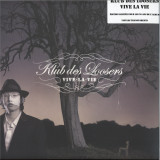
A l’occasion des 20 ans de cet album devenu culte, Record Makers réédite une version spéciale anniversaire limitée (vinyles transparents – 500 exemplaires) qui ravivera la flamme des fans de la première heure, des nouveaux fans et des collectionneurs. "Vive la Vie" est aujourd’hui un album référent pour les amateurs de rap, reconnu par ses pairs lyricistes, c’est un de ses albums qui marquent à jamais une époque, celle des années 2000 et de son rap aux rimes fines et puissantes.
Le 15 novembre 2004 sortait "Vive la Vie" le premier album du Klub des Loosers.
On ne présente plus le Klub des Loosers et son unique membre Fuzati. Pourquoi ? parce qu'on en a un peu honte quand même. Imaginez un jeune versaillais que tout prédestinait à devenir écrivain maudit ou chanteur d'un groupe de pop répétant dans le garage parental le dimanche de 16h à 20h. Le genre de type qui passait ses samedis après-midi à la bibliothèque municipale, ses samedi soir à boire de la bière dans les squats de jeunes où on recense une fille pour dix mecs et où la phrase qui revient le plus souvent est "qui roule un joint ?"
Imaginez maintenant que ce type ait une illumination, au milieu de ces jeunes que tout prédestine à la réussite (HEC, science-po) et qui lorsqu'ils se retrouvent ensemble ne savent pas faire autre chose que de se défoncer. "Nous sommes un klub de loosers".
Comme il n'aime pas trop les gens, Fuzati fondera un klub dont il sera le seul membre. Comme il n'a pas de guitare que le hip hop est son seul ami il se dit qu'il fera ça comme musique. Bah oui c'est sympa le hip hop. Comme on lui a dit qu'il n'avait pas une tête de rappeur et que les casquettes à l'envers lui vont mal il ne montrera jamais son visage et portera un chapeau. S'en suivra un parcours classique de MC underground qui rappe pour la rue (mais aussi les avenues) et représente ses refrés illégalement enfermés derrière les murs des prépas t'as vu. Mixtapes, nombreux freestyles dans l'émission Greckfrite diffusée sur la chaine internet Canalweb, concert à la MJC de Versailles mais aussi dans un entrepôt désinfecté à Dunkerque.
En 2003 Il signe sur le label parisien Record Makers parce qu'on lui a appris qu'il ne fallait pas trop se mélanger avec les gens d'autres milieux. Sortiront deux EP, "Baise les Gens" et "La Femme de Fer" qui sont déjà des classiques pour au moins 32 personnes. La même année sort également l'album de l'atelier "Buffet des Anciens Elèves" auquel il participe avec Tékilatex du groupe TTC, James Delleck, Cyanure et deux producteurs de talent, Tacteel (Lex Records) et ParaOne (Institubes). En juillet 2004 sort le maxi du Klub des Loosers où collaborent MF DOOM, légende hip hop, et Jean-Benoit Dunckel, moitié du groupe AIR.
Khadim is a stunning reconfiguration of the Ndagga Rhythm Force sound. The instrumentation is radically pared down. The guitar is gone; the concatenation of sabars; the drum-kit. Each of the four tracks hones in on just one or two drummers; otherwise the sole recorded element is the singing; everything else is programmed. Synths are dialogically locked into the drumming. Tellingly, Ernestus has reached for his beloved Prophet-5, a signature go-to since Basic Channel days, thirty years ago. Texturally, the sound is more dubwise; prickling with effects. There is a new spaciousness, announced at the start by the ambient sounds of Dakar street-life. At the microphone, Mbene Diatta Seck revels in this new openness: mbalax diva, she feelingly turns each of the four songs into a discrete dramatic episode, using different sets of rhetorical techniques. The music throughout is taut, grooving, complex, like before; but more volatile, intuitive and reaching, with turbulent emotional and spiritual expressivity.
Not that Khadim represents any kind of break. Its transformativeness is rooted in the hundreds upon hundreds of hours the Rhythm Force has played together. Nearly a decade has passed since Yermande, the unit's previous album. Every year throughout that period — barring lockdowns — the group has toured extensively, in Europe, the US, and Japan. With improvisation at the core of its music-making, each performance has been evolutionary, as it turns out heading towards Khadim. “I didn’t want to simply continue with the same formula," says Ernestus. “I preferred to wait for a new approach. Playing live so many times, I wanted to capture some of the energy and freedom of those performances.” Though several members of the touring ensemble sit out this recording — sabar drummers, kit-drummer, synth-player — their presence abides in the structure and swing of the music here.
Lamp Fall is a homage to Cheikh Ibra Fall, founder of the Baye Fall spiritual community. The mosque in the city of Touba is known as Lamp Fall, because the main tower resembles a lantern. Soy duggu Touba, moom guey séen / When you enter Touba, he is the one who greets you. After a swift, incantatory start Mbene sings with reflective seriousness. Her voice swirls with reverb, over a tight, funky, propulsive interplay between synth and drums, threaded with one-two jabs of bass. Cheikh Ibra Fall mi may way, mo diayndiou ré, la mu jëndé ko taalibe... Cheikh Ibra Fall amo morome, aboridial / Cheikh Ibra Fall shows the way forward, he gives us strength, he gathers his disciples... Overflowing with grace, Cheikh Ibra Fall has no equal.
Interwoven with Wolof proverbs, Dieuw Bakhul is a recriminatory song about treachery, lies, and back-biting. Over moody, roiling synths and ominous, lean bass, Mbene throws out fluttering scraps of vocal, as if re-running old conversations in her head. The music shadows her despair to the verge of breakdown, at one moment seemingly so lost in thought and memories, that it threatens to disintegrate. Bayilene di wor seen xarit ak seen an da ndo... Dieuw bakhul, dieuw ñaw na / Stop judging your friends and companions... A lie is no good, a lie is ugly.
Khadim is a show-stopper; currently the centrepiece of Ndagga Rhythm Force live performances. The song is dedicated to Cheikh Ahmadou Bamba, aka Khadim, founder of the Mouride Sufi order. Serigne Bamba mi may wayeu / Serigne Bamba is the one who makes me sing. The verses name-check revered members of his family and brotherhood, like Sokhna Diarra, Mame Thierno, and Serigne Bara. Though Islam has been practised in Senegal for a millennium, it wasn’t until the start of the twentieth century that it began to thoroughly permeate ordinary Senegalese society, hand-in-hand with anti-colonialism. The verses here recall Bamba’s banishment by the French to Gabon, and later to Mauritania, in those foundational times. During exile, his captors once introduced a lion to his cell: gaïnde gua waf, dieba lu ci Cheikhoul Khadim / the lion doesn’t budge, it gives itself over to Cheikh Khadim. Deep, surging bass, steady kick-drum, and simple, reverbed chords on the off-beat lend the feel and impetus of steppers reggae. A reed plays snatches of a traditional Baye Fall melody; the dazzling polyrhythmic drumming is by Serigne Mamoune Seck. Mbene compellingly blends percussive vocalese, narrative suspense, exultant praise, introspection, and grievance.
Nimzat is a devotional tribute to Cheikh Sadbou, a contemporary of Bamba, buried in a mausoleum in Nizmat, in southern Mauritania. Way nala, kagne nala... souma danana fata dale / I call upon you and wonder about you... If I am overwhelmed, come to my aid. The town holds special significance for Khadr Sufism. An annual pilgrimage there is conducted to this day. The rhythm is buoyantly funky; the mood is sombre, reined-in, foreboding. Punctuated by peals of thunder, Mbene sings with restrained, intense reverence; huskily confidential, steadfast. Nanu dem ba Nimzat, dé ba sali khina / Let us go to Nimzat, to seal our devotion.
Mbene Diatta Seck: vocals.
Bada Seck: bougarabou, thiol, mbeung mbeung bal, tungune.
Serigne Mamoune Seck: bougarabou, khine, mbeung mbeung, tungune.
Text by Mark Ainley (Honest Jons).
Mastered by Rashad Becker.
Everything else by Mark Ernestus.
F.G.S.–the musical project of Los Angeles artist Flannery Silva–announces the first-ever vinyl release of her debut album ‘Tinker Bell’s Cough’, arriving May 27 via Scenic Route. Alongside the release comes a new single, ‘The Punisher (Tinker Bell’s Edit)’, and an exclusive vinyl-only live track, ‘Passions (Live at Tinker Bell’s Clubhouse)’.
Co-created with musician and producer Chase Ceglie, ‘Tinker Bell’s Cough’ is a surreal Americana record that filters the language of girlhood, heartbreak, and fantasy through a warped, theatrical lens. It’s Lana Del Rey meets David Berman in a cartoon whirlwind, with traces of Dolly Parton, Arthur Russell, and David Lynch.
Silva describes the record as “fairy tale theatre”. It’s packed with alt-universe country hits (‘Beth’s Deth’, ‘American Shield’), uncanny ballads (‘I’m Growing A Cross Around My Neck’), and leftfield pop songs rooted in character and place. ‘Passions’, the opening track, was inspired by Mary MacLane’s ‘I Await the Devil’s Coming’, while the title track imagines Tinker Bell herself singing a lullaby to God.
New single ‘The Punisher’ is an anthemic road song about loneliness and transcendence. “It’s about driving north on I-5 in California, worrying my car will overheat, bargaining with God, and falling in love with dust tornados,” Silva says.
Raised in the woods of upstate New York and formerly one half of the cult duo Odwalla88, Silva brings a visual artist’s sensibility to music. She studied art in Baltimore and continues to make sculpture and performance work that informs her songwriting. ‘Tinker Bell’s Cough’ was written on the Rhode Island coast, where she and Ceglie met weekly to write and record—drawing from old texts, visual references, and poetry.
F.G.S. has drawn praise from NTS, The FADER, Gorilla vs. Bear, The Line of Best Fit, Artforum, Sex Magazine, and more. With the reissue of ‘Tinker Bell’s Cough’ and the release of ‘The Punisher’, Silva continues to expand the strange, magnetic world of F.G.S., one that feels both deeply American and entirely her own.
- Through The Heat Waves
- Eight Miles High Alone 07:46
- In Motion
- Inhale
- Crystalline 06:38
- Exhale
- One More Rush
- Silence Is Gliding 05:56
- Cloud Surfing
Marconi Union, one of the most influential names in contemporary ambient and electronic music, announce their twelfth studio album, The Fear of Never Landing, set for release 6th June via Just Music. The news is paired with the release of first single Eight Miles High Alone, out 20th March on all major streaming platforms.
Known for their ability to craft cinematic, immersive soundscapes that blur the lines between ambient, electronic, and experimental music, the Manchester-based duo once again push the boundaries of sonic exploration. The Fear of Never Landing takes us on a dynamic journey that’s atmospheric, diaphanous and never short of mesmerising. While the new record is certainly infused with a sense of hope, there’s more than a soupçon of anxiety too, as the title suggests.
A 55-minute odyssey presented as one seamless piece divided into nine movements, they transcribe the nexus of modern living into a mostly wordless odyssey. The album encapsulates Marconi Union’s ability to translate the complexities of the human experience into sound, all while maintaining a stunning sense of cohesion.
While the music feels effortless, the creative process was anything but. During the two years it took to complete the album, members Jamie Crossley and Duncan Meadows faced creative struggles that even led them to briefly question the band’s future. A pivotal moment came when they performed a live soundtrack to the 1975 skateboarding film Downhill Motion, rekindling their connection to atmospheric composition. By testing new material live and returning to their roots, Marconi Union redefined their creative process, leading to some of their most emotionally impactful work to date.
“We’ve always made atmospheric music but we had started to lose that aspect. Other than some rough ideas, we had no sense of what we were doing anymore, a kind of musical wilderness. Eventually a couple of things fell into place, and it was like, ‘Ah, okay.”
With a foundation to build upon, they went back to basics and decided to take their time going forwards. “We tried out a few new tracks live which gave us the opportunity to see what worked and what didn’t. We've never given ourselves that luxury before.”
The first track to be shared, Eight Miles High Alone, is a mesmerizing sequencer-driven track that builds an immersive, atmospheric soundscape. Its hypnotic pulses and intricate layers evoke a sense of solitude and weightlessness, perfectly capturing the album’s blend of tension and introspection. “Eight Miles High Alone was the first piece that we managed to complete and helped to inform our approach to the rest of the album.”
Formed in Manchester in 2003, their debut album, Under Wires and Searchlights (2003), introduced their signature sound, but it was their 2011 release of Weightless that brought international acclaim. Developed in collaboration with a sound therapist, Weightless was scientifically recognised as “the world’s most relaxing song”, praised for its ability to reduce anxiety and heart rates. With over 900 million streams and widespread coverage across media, the track remains a cultural phenomenon.
Over the years, Marconi Union has continued to evolve, producing critically acclaimed albums such as Signals (2021), Ghost Stations (2016), and Tokyo+ (2017). Their work has been hailed for its emotional resonance and sonic depth, with The Quietus noting their ability to find “beauty in the bleakest places” and The Sunday Times describing them as “amongst today’s most talented musicians.”
Beyond their studio albums, Marconi Union has collaborated with visual artists, provided soundtracks for installations, and remixed notable acts like Max Richter and Vök. Their invitation by Brian Eno to perform at Norway’s Punkt Festival further cemented their reputation as innovators in the ambient music sphere.
With The Fear of Never Landing, Marconi Union once again showcases their unmatched ability to create immersive soundscapes that resonate deeply. The album reaffirms their position as masters of atmosphere and emotional storytelling, making it an essential addition to their storied catalog.
- 1: Don't Lie Back
- 2: (That's When) It's Worth It
- 3: Instant Touch
- 4: Sex Without Stress
- 5: Fiasco
- 6: Intact
- 7: Tongue In Cheek
- 8: Stepping Out Of Line
- 9: Shakedown
- 10: America
Sense and Sensuality (1982) was the second and final album by seminal British post-punk band The Au Pairs. The four-piece group from Birmingham were very much in tune with the early 80s growth pangs from the first punk explosion - stripping down their music from their debut LP to a funkier, more rhythmic essence, and shifting the focus of their lyrics to the personal rather than the political.
The addition of horns and imaginative synthesizers allowed for more satisfying sonic diversity, from the disco-informed dance-punk of “Instant Touch” to the cabaret swing of “Tongue in Cheek”. While “That’s When It’s Worth It” takes several elements of popular post-punk - looping auxiliary percussion rhythms and a sporadically used horn section - and crafts them into a wild sound that’s equal parts dance, psychedelia, punk and art pop.
Their distinctly punk take on sex and gender politics, meanwhile, was their strongest thematic strain - and that’s truly where Sense and Sensuality shined. Despite only reaching #79 in the UK when first released, it’s now widely seen as one of the best post-punk albums ever.
Sense and Sensuality is now available as a limited numbered edition of 750 copies on translucent magenta coloured vinyl and contains an insert.
- Circle
- Eye Contact
- Seventeen Nights
- My Waterfall
- Wasting Time
- Final Lap
- Eraser Ii
- Shipwrecked
- Open Shadow
- Like A Stone
Neo Gibson, born in Virginia and based in New York City, records, performs, and produces as 7038634357. This numerical alias, under which Gibson has been releasing work since 2016, offers a window into the careful ambivalences of the musical project. It conjures the impersonal_the opacity and randomness of data, a number that is hard to remember or even say out loud_while also suggesting a direct line of communication with the artist, down to an area code indexing their biography. 7038634357 uses a restricted palette to achieve music that is formally precise and emotionally direct. Their digital-native approach to production, in which frank melodies cross paths with heavy distortion, contains traces of both trance's maximalist arcs and a songwriterly intimacy. Expressive details may appear submerged or abraded, subjected to a canny sense of dynamics and textural specificity. Waterfall Horizon, Gibson's second vinyl record with Blank Forms Editions under the moniker 7038634357, was written for live performance and workshopped over successive shows during their 2022 European tour. Here, hallmarks of their earlier, studio-crafted recordings_digital distortion that obfuscates their lyrics and a slow-burning ambience_are noticeably pared back. Instead, Waterfall Horizon takes on a pop inflection, adopting more traditional lyric scaffolds so that the interstices from verse to chorus or track to track can flourish within their limited tonal range.Across recordings and performances, Gibson activates wide-ranging mechanisms of audience connection: from the relative anonymity of internet platforms to live experiments with the spatial effects of amplification. They have a particular interest in site-specific performances in non-musical spaces, and have performed in a variety of contexts, including the mezzanine of the West 4th Street subway station in New York City and INA GRM/Radio France's Présences électronique festival. Under their own name, Gibson has maintained a longstanding collaboration with the artist Charles Stobbs, working primarily with FM transmission and techniques derived from the early-seventeenth-century English tradition of change-ringing bells. The first 7038634357 vinyl record, Neo Seven, was released on Blank Forms Editions in 2023; previous releases include self-released cassettes and CD-Rs, as well as a pair of EPs on Genome 6.66 Mbp (2018, 2019).
- 1: Ana Turn The Lights On
- 2: Flashbulb Memory (Ft Violeta Vicci)
- 3: He'll Become A Buddha
- 4: Separate Ways
- 5: In Absentia
- 6: The 4Th Eye
- 7: The Librarian
- 8: The Shiver (Ft. Alex Paterson)
- 9: Fourteen Pilgrims Over The Sava
- 10: Twin Towers (Ft. Violeta Vicci)
- 11: Sally Satellite (Ft. Alex Paterson)
- 12: The Turning Dime
"Los Angeles-born music producer, artist, and DJ DF Tram is thrilled to announce the release of his highly anticipated new album, Bittersweet Afternoon on Orbscure Records. Orbscure Records, founded by Alex Paterson of the legendary electronic act The Orb, continues its tradition of championing innovative and boundary-pushing artists with this remarkable release. About DF Tram DF Tram is a leading figure in the global downtempo electronic scene, celebrated for his meticulously crafted audio-visual performances and immersive storytelling through sound. His work seamlessly blends ambient, sampling, spoken word, vocals, and psychedelia into genre-defying sonic journeys, offering listeners a unique and transformative experience. Bittersweet Afternoon Written and recorded between DF Tram’s Zagreb and Vienna studios during the pandemic and finished last year. Bittersweet Afternoon represents the next chapter in his storied career. The album surprises listeners with his vocals, bittersweet lullabies, and signature collage and spoken word style. Featuring atmospheric soundscapes and cinematic influences, the project reflects the spirit and playfulness of Alex Paterson and Orbscure’s commitment to fostering experimental, forward-thinking music. Adding to the album’s rich tapestry are collaborations with Alex Paterson himself on two tracks, as well as contributions from multi-talented contemporary classical violinist Violeta Vicci on another pair of songs. The first single and video, "The Librarian," offers an immersive glimpse into the world of DF Tram and “Bittersweet Afternoon”. Available on a limited edition transparent blue vinyl, card gatefold CD.