After collaborating with Answer Code Request on Delsin early 2024, Amotik now strengthens the relationship with a first solo EP for the Amsterdam based label. Delsin is known for working the sweet spot in between emotive electronica and dancefloor functionality, and it feels like the perfect place for Amotik's new EP 'Raat'. The Berlin based producer has been pushing his highly effective techno tools via his own imprints for over a decade and doesn't make an appearance on external labels often. So for this special occasion he adds new layers of deepness and emotion to his palette. An effortless combo of punchy techno grooves and soothing pads together form a well rounded pack of dancefloor euphoria. The remarkable bleeps and playful rhythms of Amotik's highly effective techno are deftly transformed into four pieces of excellent eyes-closed techno felicity.
Buscar:transform
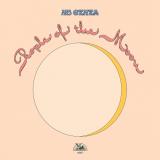
After the acclaimed Bar Mediterraneo, Massimo Di Lena and Lucio Aquilina return with People Of The Moon, expanding their sound into a space of creative freedom. The “People of the Moon” are not fictional, but a dimension within us all: a deeply personal yet universal force, an alternative mindset that emerges when freed from social constraints.
Under moonlight, the album explores anxieties and aspirations through groove and rhythm, expressed in Neapolitan, Arabic, English, Spanish, and Portuguese. It moves fluidly from Afro-Cuban influences in “Celavì” to Anatolian textures in “Ma Tu Che Bbuò”, blending highlife guitars with Nu Genea’s signature mandolins-new rhythms filtered through an Italian lens.
The first single “Sciallà” (2025) introduced this direction: dance as catharsis, not escape. The title track reflects a quiet resilience-persistent rather than triumphant. “Onenon”, featuring Tom Misch, channels Mediterranean brit-funk, while “Acelera”, with María José Llergo, evokes a flamenco-tinged pursuit of the unattainable.
“Puleza” recalls Nuova Napoli with driving energy and vintage synths, while “Shway Shway”, sung by Celinatique, captures the album’s orbital flow-measured, rich, and rhythmically complex, echoing afrobeat explorations with Tony Allen.
Melody remains central, as in “Carè”. Across ten tracks, falling, flying, and dancing merge in a suspended groove. Gabriel Prado’s “Ondas Do Mar” embodies this pull: a cyclical motion, like the tides—irresistible, transformative, and alive within us.
Swiss sound artist Zimoun continues and transforms the material from his solo project 'One & Two' with Taylor Deupree on 'Wind Dynamic Organ, Deviations.' Both albums were created entirely from recordings of the Wind Dynamic Organ (Prototype III), an extraordinary instrument housed in Bern Minster and developed by Daniel Glaus and his team at the Bern Academy of the Arts. Unlike a traditional organ, this prototype allows the wind pressure and air volume of each pipe to be shaped in real time and produces tones that breathe and blur at their edges. On Deviations, the pair push these organic tones into new territory by layering, bending and re-contextualising them into evolving ambient structures. A quietly radical exploration.
Following the release of their album, Soulwax return with ‘All Systems Are Lying / Run Free (Nite Versions)’. A reimagined evolution of their sound. Driven by deep basslines, hypnotic synths, and the duo’s signature sound, these Nite Versions transform the originals into electrifying, immersive soundscapes built for the nightclub.
- A1: Promise
- A2: Underwater
- A3: We Never Choose (Ft Life On Planets)
- A4: The Stranger (Ft Cor.ece)
- A5: Now Or Never (Ft Marcus Harmon)
- A6: Kiss (Ft Julieanna Marie)
- A7: Moment Of Silence (Ft Brandon Markell Holmes)
- A8: Freaks (Ft Ninjasonik)
- B1: Safe And Sound
- B2: Speed (Ft Kas)
- B3: Nightcap (Ft Jarv Dee)
- B4: Home
- B5: Love Will
- B6: Static
- B7: Take My Lovin&Apos; (Ft Marcus Harmon)
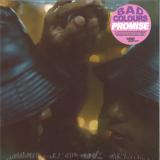
PROMISE is the latest album from Brooklyn-based producer Ibe Soliman, aka Bad Colours. Known for his blend of house, proto-techno, rap, and soul, Bad Colours delivers a dynamic, emotionally resonant record. Driven by hypnotic rhythms and personal storytelling, PROMISE explores themes of vulnerability, desire, and transformation. It's a versatile album designed for both dancefloors and introspective listening.
PROMISE is the fourth LP from Bad Colours on Bastard Jazz, following 2024's collaborative album with Cor.ece, Been Here Before. Soliman's career spans over a decade—DJing alongside artists like James Murphy, Mark Ronson, and Q-Tip, and producing for Kendrick Lamar, Faith Evans, Keyshia Cole, and Rick Ross. His work has received support from KCRW, KEXP (including multiple Midnight in a Perfect World mixes), and CBC Radio 3, and has charted on both the NACC Top Electronic and Top 200 charts. Bad Colours has been featured in press outlets like NYLON, Nonderland, Resident Advisor, Electronic Groove, and Fusicology. His music has appeared in Netflix's Escape from Spiderhead, Hulu's Woke, Disney's Chang Can Dunk, Showtime's American Gigolo, Valorant's Rising Stars, and more.
After several remixes for the label, Sestrica returns with her first solo EP — A Way to Ananda. Across three emotionally charged compositions, Sestrica unfolds an intimate sonic journey that mirrors her own path of transformation.
From the raw energy of “Intuitions” to the emotional depth of “Letting You Go” and “Way to Ananda,” the EP captures transformation, freedom, and bliss.
“This EP is my experience of coming back to life after divorce,” says Sestrica. “Intuition was knowing it was the right decision. Letting You Go was leaving my past behind. Ananda is the new bliss I’ve found.”
Closing the release, Not Even Noticed deliver a sophisticated remix—minimal yet powerful, sharp drums and refined sound design perfectly sealing this chapter.
After three years of releasing singles and remixes across the electronic scene, Belaria makes a grand return to her label, Binding System, with a more introspective format: Dynamic State. A conceptual EP exploring the benefits of body movement on the mind, psyche, and emotional well-beng, it
unfolds through a two-sided narration where physical and mental energy gradually resurge. Balancing tension and release, control and liberation, Dynamic State translates movement into sound. This EP includes two powerful remixes: VEL delivers an ultra-textured, psychedelic reinterpretation, while Kendal transforms another track into a trance-infused, rave-ready floor-filler.
Blue Lake reveals his most ambitious album yet, which finds its visionary creator Jason Dungan harnessing the collective alchemy of his band, with ten spirited tracks that resonate with a powerful directness, evoking an ecological connection to the wider world.
The solo project (Blue Lake), now on its fifth album, found its name and inspiration via Don Cherry's 1974 live album, sparking a creative epiphany in Dungan, who set off on a path into his own untapped sonic world, guided by what he cited as the emotional potential found within non-lyrical composition. With a newly inspired ethos aimed toward creating direct and simple instrumental music imbued with a deep sense of feeling, Jason began combining an array of musical elements that gave rise to his highly revered album 'Sun Arcs' (2023), with its "ornate, zither-led lattices" (Pitchfork, Best New Music). Conceived in the blissful isolation of a Swedish cabin set in the woods, this was music that soundtracked spring in full bloom. Then, in contrast to the solitary approach of 'Sun Arcs', the highly lauded mini-album 'Weft' (2025) began to set the tone for a more band-oriented approach to delivering the Blue Lake sound. Jason had by this time experienced a special collective energy with his band during a swathe of live performances, which he then sought to harness and distill on 'The Animal', leading him to take the project into a traditional recording studio (The Village) and its limitless potential along with his gifted cohorts.
'The Animal' at its core vividly celebrates human collaboration and is deeply rooted in a sense of community and non-hierarchical connectivity. The group's creative alchemy transcends outwards and beyond the musicians performing together, to summon an inclusive, existential and ecological connection to the wider world and its inhabited spaces. The album contemplates the idea of the human as an animal as Dungan explains: "I'm quite fascinated in thinking about humans more as part of the animal environment and not as something that's so separated into a "human" realm, or sitting on top of a hierarchical pyramid. So the Animal is also me, or us - that we are just living, existing, in the same way as a piece of moss or a sparrow or a cow.
'The Animal' is a form of musical metamorphosis, still acoustic, yet more amplified, elevating it to new dimensions. The Blue Lake project takes on a new lease of life to encompass collaboration with Jason Dungan bound in a universal connectivity, resulting in his most ambitious album to date. A harmonious rejoicing that cements his reputation as a transformative presence in contemporary music.
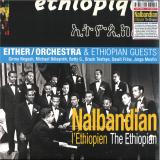
The Éthiopiques series returns! Essential archive recordings from an extremely fruitful period in Ethiopian music.
Before “Swinging Addis” took over the world, there was Moussié Nerses Nalbandian — the Armenian-born composer who shaped modern Ethiopian music. Mentor, arranger, and pioneer, he laid the foundations of Ethio-jazz.
This Éthiopiques volume revives his forgotten legacy, recorded live by Either/ Orchestra First issue ever with new exclusive photos and in depth liner 8-page insert.
“Ethiopian jazzmen are the best musicians that we have seen so far in Africa.
They really are promising handlers of jazz instruments.”
Wilbur De Paris
(1959, after a concert in Addis Ababa)
አዲስ፡ዘመን። *Addis zèmèn* **A new era.**
The time is the mid-1950s and early 1960s, just before "Swinging Addis" bloomed – or rather boomed – onto the scene. Brass instruments are still dominant, but the advent of the electric guitar, and the very first electronic organs, are just around the corner. Rock’n'Roll, R’n’B, Soul and the Twist have not yet barged their way in. Addis Ababa is steeped in the big band atmosphere of the post-war era, with Glenn Miller's *In the* *Mood* as its world-wide theme song, neck and neck with the Latin craze that was in vogue at the same period. Life has become enjoyable once again, with the return of peace after the terrible Italian Fascist invasion of Ethiopia (1935-1941). The redeployment of modern music is part and parcel of the postwar reconstruction. *Addis zèmèn* – a new era – is the watchword of the postwar period, just as it was all across war-torn Europe.
The generation who were the young parents of baby boomers** were the first to enjoy this musical renaissance, before the baby boomers themselves took over and forever super-charged the soundtrack of the final days of imperial reign. Music is Ethiopia's most popular art form, and very often serves as the best barometer for the upsurge of energy that is critical for reconstruction. Whether it be jazz in Saint-Germain-des-Prés or the *zazous* who revolutionised both jazz and French *chanson* after the *Libération*, be it Madrid's post-Franco Movida, or Dada, the Surrealists and *les années folles* that followed World War I, the periods just after mourning and hardship always give rise to brighter and more tuneful tomorrows. Addis Ababa, as the country's capital, and the epicentre of change, was no exception to this vital rule.
**Two generations of Nalbandian musicians**
Nersès Nalbandian belonged to a family of Armenian exiles, who had moved to Ethiopia in the mid-1920s. The uncle Kevork arrived along with the fabled "*Arba Lidjotch*", the** "*40 Kids*", young Armenian orphans and musicians that the Ras Tafari had recruited when he visited Jerusalem in 1924, intending to turn their brass band into the official imperial band. If Kevork Nalbandian was the one who first opened the way of modernism, pushing innovation so far as to invent musical theatre, it was his nephew Nersès who would go on to become, from the 1940s and until his death in 1977, a pivotal figure of modern Ethiopian music and of the heights it. Going all the way back to the 1950s. Nothing less. And it is Nersès who is largely to thank for the brassy colours that so greatly contributed to the international renown of Ethiopian groove. While the younger generations today venture timidly into the genealogy of their country's modern music, often losing their way amidst a distinctly xenophobic historiographical complacency, many survivors of the imperial period are still around to bear witness and pay tribute to the essential role that "Moussié Nersès" played in the rise of Abyssinia's musical modernity.
Given the year of his birth (15 March 1915), no one knows for sure if Nersès Nalbandian was born in Aintab, today Gaziantep (Turkiye/former Ottoman Empire) or on the other side of the border in Alep, Syria... What is certain is that his family, like the entire Armenian community, was amongst the victims of the genocide perpetrated by the Turks. Alep, the place of safety – today in ruins.
Before Nersès then, there was uncle Kevork (1887-1963). For a quarter of a century, he was a whirlwind of activity in music teaching and theatrical innovation. *Guèbrè Mariam le Gondaré* (የጎንደሬ ገብረ ማርያም አጥቶ ማግኘት, 1926 EC=1934) is his most famous creation. This play included "ten Ethiopian songs" — a totally innovative approach. According to his autobiographical notes, preserved by the Nalbandian family, Kevork indicates that he composed some 50 such pieces over the course of his career. This shows just how much he understood, very early on, the critical importance of song as Ethiopia's crowning artistic form. Indeed, for Ethiopian listeners, the most important thing is the lyrics, with all their multifarious mischief, far more than a strong melody, sophisticated arrangements or even an exceptional voice. (This is also why Ethiopians by and large, and beginning with the artists and producers themselves, believed for a long time — and wrongly — that their music could not possibly be exported, and could never win over audiences abroad, who did not speak the country's languages).
Last but not least, one of Kevork's major contributions remains composing Ethiopia's first national anthem – with lyrics by Yoftahé Negussié.
Nersès Nalbandian moved to Ethiopia at the end of the 1930s, at the behest of his ground-breaking uncle. Proficient in many instruments (pretty much everything but the drums), conductor, choir director, composer, arranger, adapter, creator, piano tuner, purveyor of rented pianos,... he was above all an energetic and influential teacher. From 1946 onwards, thanks to Kevork's connexion, Nersès was appointed musical director of the Addis Ababa Municipality Band. In just a few years, Nersès transformed it into the first truly modern ensemble, thanks to the quality of his teaching, his choice of repertoire, and the sophistication of his arrangements. It was this group that would go on to become the orchestra of the Haile Selassie Theatre shortly after its inauguration in 1955, which was a major celebration of the Emperor's jubilee, marking the 25th anniversary of his on-again-off-again reign.
At some point or other in his long career, Nersès Nalbandian had a hand in the creation of just about every institutional band (Municipality Band, Police Orchestra, Imperial Bodyguard Band, Army Band, Yared Music School…), but it was with the Haile Selassie Theatre – today the National Theatre – that his abilities were most on display, up until his death in 1977. To this must be added the development of choral singing in Ethiopia, hitherto unknown, and a sort of secret garden dedicated to the memory of Armenian sacred music, and brought together in two thick, unpublished volumes. Shortly before his death (November 13, 1977), he was appointed to lead the impressive Ethiopian delegation at Festac in Lagos, Nigeria (January-February 1977).
His status as a stateless foreigner regularly excluded him from the most senior positions, in spite of the respect he commanded (and commands to this day) from the musicians of his era. Naturally gifted and largely self-taught, Nerses was tirelessly curious about new musical developments, drawing inspiration from the very first imported records, and especially from listening intensely to the musical programmes broadcast over short-wave radio – BBC *First*. A prolific composer and arranger, he was constantly mindful of formalising and integrating Ethiopian parameters (specific “musical modes”, pentatonic scale, and the dominance of ternary rhythms) into his “modernisation” of the musical culture, rather than trying to over-westernise it. It even seems very probable that *Moussié* Nerses made a decisive contribution to the development of tighter music-teaching methods, in order to revitalise musical education during this period of prodigious cultural ferment. Flying in the face of all the historiographical and musicological evidence, it is taken as sacrosanct dogma that the four musical modes or chords officially recognised today, the *qǝñǝt* or *qiñit* (ቅኝት), are every bit as millennial as Ethiopia itself. It would appear however that some streamlining of these chords actually took place in around 1960. It was only from this time onward that music teaching was structured around these four fundamental musical modes and chords: *Ambassel*, *Bati*, *Tezeta* and *Antchi Hoyé*. A historical and musical “details” that is, apparently, difficult to swallow, especially if that should honour a *foreigner*. Modern Ethiopian music has Nersès to thank for many of its standards and, to this day, it is not unusual for the National Radio to broadcast thunderous oldies that bear unmistakable traces of his outrageously groovy touch.
Brixton Heights Records proudly presents the brand new single ‘Am I the Same Man?’, a soulful roots-reggae gem featuring a heavyweight all-star lineup including: Mafia & Fluxy on drum and bass respectively, the Ital Horns on brass, Gussie Clarke on mastering and Gaudi on falsetto vocals + BVs, dub mixing, piano and co-production alongside The Brixton Heights Orchestra.
Drawing inspiration from the timeless instrumental groove ‘Soulful Strut’ by Young-Holt Unlimited, the track channels vintage soul through a deep lovers-rock lens. A fresh and earnest reinterpretation of Barbara Acklin’s 1968 classic ‘Am I the Same Girl?’, this version flips the narrative with an adaptation on the lyrics voiced by none other than Gaudi singing in falsetto, resulting with a smooth, dub-infused love song that combines classic soul and international reggae into a modern masterpiece.
Gaudi is not stranger to falsetto-singing and backing vocals, in fact he has lent his distinctive vocal talent to albums by reggae giants such as Steel Pulse, Horace Andy, Lee “Scratch” Perry, Don Letts, Johnny Clarke, Mad Professor, Hollie Cook, Michael Rose, Creation Rebel, Africa Unite, Awa Fall, African Head Charge, Lion D & Capleton.
Mixed and co-produced by Gaudi at his Metatron Studio in London UK and mastered by Gussie Clarke at Anchor Studios in Kingston Jamaica, ‘Am I the Same Man?’ is more than a cover version, it’s a heartfelt transformation that captures the emotional core of the original song while creating a whole new vibe that speaks to today’s lovers and soul seekers alike.
The B-side presents a meticulously crafted dub version by Gaudi, produced exclusively with analogue equipment and vintage studio hardware. The mix brings forward the intricacies of the original instrumentation and enhances the lyrical elements through spacious delays and warm, analogue textures. Last but not least, in order to maintain the highest level of authenticity and an organic sonic texture, all recordings were done at 432Hz, tuned to resonate naturally.
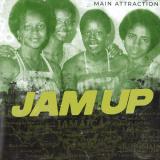
Emerging from the University of the West Indies (UWI) in Jamaica during the late 1970s, Main Attraction was a group of talented singers whose music captured the social and political energy of their time. With a sound that blended reggae and soulful ballads, their songs were both a reflection and a response to the challenges of the era.
The group originally featured Sonia Copeland, a gifted writer, arranger, and back-up singer, alongside Sharon Jones, whose velvet voice led many of their reggae tracks. They were joined by Allison Smith, Marjorie Smith, and Shahiba Ali, forming the group’s first lineup. As time passed, Michelle Thompson and Lileth O’Connor joined, further enriching the group’s dynamic harmony.
Main Attraction’s musical journey began with their debut recording, a cover of Once Upon a Time, produced by David Haughton under the management of Clayton Downie. Later, with Owen Palmer as their manager and producer, the group expanded their horizons, performing in cabaret gigs with the band Mind Benders and embarking on an overseas tour that showcased their talent in New York City. While Sharon Jones led reggae tracks like Jam Up, Allison Peart and Shahiba Ali brought their soulful touch to R&B songs, creating a rich, versatile repertoire that captivated audiences.
Jam Up was the group’s first original recording, composed and arranged by Sonia Copeland. Performed as part of the Reggae Song Competition during Carnival in 1978, the song is a rallying cry for unity and progress. With powerful lyrics and a Shaka rhythm, Jam Up calls on Jamaicans to come together, strive for economic growth, and uplift the nation collectively.
Sonia’s vision was clear: that Jamaicans from all walks of life would find inspiration in the song’s message, motivating them to improve their standard of living and contribute to the country’s growth and prosperity. Decades later, the lyrics remain just as relevant — a timeless call to action for social and economic strength.
Hold this record in your hands, let the music play, and feel the enduring power of reggae music to transform, uplift, and connect.
- A1: Shokran - Léna C
- A2: Bossa Nova Rico Suave - Moar & The Badlibs
- A3: B Boy Love - Funky Bijou Feat. Carla Vallet
- A4: Comfortable - Terem & James Gardin Feat. Sareem Poems
- A5: Téhéran - The Big Knife
- B1: Scrabble - Medline
- B2: I Grab The Power With My Hands - The Excitements
- B3: Minéralité - Lou Blic & Prof Jah Pinpin
- B4: My Way - Joël Brown Feat. Mackenzy Bergile, Johjohmusic & Tribuman
- B5: Gabriel - Dj Mat
Second volume of the "Rebirth of jazz" series, VISIONS explores an even wider sound territory, which connects the 90s to today, between hip-hop, soul, electro and hybrid jazz. More than just a compilation, the album brings together generations of artists able to transform their influences into sensitive, generous and singular works. From Léna C. to Dj Mat and The Excitements, through Moar, Lou Blic & Prof Jah Pinpin or Joël Brown, each piece draws a soundscape where spirituality, groove and organic poetry intersect. A musical manifesto open to emotion and beauty, like the vision of the Rebirth On Wax label.
Darwin's new label Biofield Records launches itself into the musical ether with a four-track EP from French producer A Strange Wedding. For this inaugural offering, the artist sets the tone with tunes that treat music as an energetic field, with low-end frequencies guiding us toward transcendental states. 'The Null Zone (feat NP)' weaves ritualistic atmospheres with bass-driven momentum into a heady and full-bodied trip. 'Breach Vector' continues the producer's knack for blurring boundaries between the physical and the spiritual while exploring liminality and transformation, and 'Hyperdimension' keeps I dark and minimal while moving at pace. This is a fine first it of curation from Biofield.
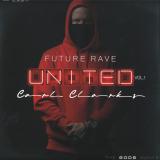
Am 19. Dezember 2025 erscheint über ZYX Music das mit Spannung erwartete Debütalbum Future Rave United Vol. 1, das die Zukunft der elektronischen Tanzmusik neu definiert.
Auf 10 energiegeladenen Tracks präsentiert das Album eine unvergleichliche Mischung aus treibenden Beats, hypnotischen Melodien und futuristischen Soundlandschaften.
Die Tracklist setzt sich zusammen aus:
HYPERLOOP | BLACKLIGHT | ULTRANOVA | ALPHA | IN MY HO U SE HOUSE | THE FUTURE RAVE (PLATZ 2) | UNITED FAMILY | XTC | TITAN | UNITED DJs OF THE WORLD
Jeder Track auf Future Rave United Vol. 1 ist ein Statement: von pulsierenden Club-Hymnen über emotionale EDMErlebnisse bis hin zu epischen Future-Rave-Sounds, die jede Tanzfläche in eine unvergessliche Partyzone verwandeln. Mit diesem Album richtet sich der Künstler direkt an Fans von elektronischer Musik, die den Puls der Zukunft fühlen wollen.
Future Rave United Vol. 1 ist nicht nur ein Album – es ist eine Bewegung, eine Feier der Einheit in der globalen DJund Clubszene und ein Muss für alle, die den Sound der kommenden Jahre erleben möchten.
On 19 December 2025, ZYX Music will release the eagerly awaited debut album Future Rave United Vol. 1, which redefines the future of electronic dance music. Across 10 energetic tracks, the album presents an incomparable mix of driving beats, hypnotic melodies and futuristic soundscapes.
The tracklist consists of:
HYPERLOOP | BLACKLIGHT | ULTRANOVA | ALPHA | IN MY HOUSE HOUSE | THE FUTURE RAVE (PLACE 2) | UNITED FAMILY | XTC | TITAN | UNITED DJs OF THE WORLD
Every track on Future Rave United Vol. 1 is a statement: from pulsating club anthems to emotional EDM experiences to epic future rave sounds that transform any dance floor into an unforgettable party zone. With this album, the artist addresses fans of electronic music who want to feel the pulse of the future.
Future Rave United Vol. 1 is not just an album – it‘s a movement, a celebration of unity in the global DJ and club scene, and a must-have for anyone who wants to experience the sound of the coming years
After years of shaping the UK underground from behind the scenes, Alex Nut steps out with his first official solo EP, serving up an intoxicating blend of Spiritual Jazz, Deep House, Dub, Hip Hop and analog electronics. The Present Under Construction EP is rooted in a deep musical language and future-facing energy, it captures a moment of creative transformation and exploration.
Built up over a few years from rough sketches made on an old MPC2000XL, the tracks were revisited, reshaped and eventually brought to life in the studio with longtime friend and collaborator Sam Crowe (Cleo Sol, Lianne La Havas). Together, they added a range of analogue sounds using the Dave Smith Prophet Rev 2, a Fender Rhodes, and a Moog Sub 37. Those recordings were then chopped, resampled, and restructured into the versions you hear on the record today. The records lead track 'andthenitstarted' features saxophonist James Mollison (Ezra Collective, Nala Sinephro) and includes remixes from Detroit House legend Patrice Scott and fellow Eglo Records alumni Last Nubian.
Best known as a DJ, broadcaster, curator and co-founder of Eglo Records, Alex has spent over a decade championing soulful underground music, through fabled Radio shows to legendary club nights, his fingerprints are all over a scene that continues to evolve. Initially making noise alongside the likes of Floating Points, Steven Julien, and Fatima, Alex Nut has long been a cornerstone of the UK's soulful underground. His work continues to champion the evolution of Jazz, Soul, House, and Broken Beat — nurturing a generation of artists now reshaping the global soundscape.
- A1: The Village Circle
- A2: The Facilitator
- A3: The Offering (Feat. Sypha)
- A4: The Mountain Top
- B1: The Initiates Piece (Feat. Billy Woods)
- B2: The Cleansing
- B3: The Ama (Feat. The Stooky Bros)
- B4: The Shadow Dancer (Feat. Sypha)
- C1: The Burial (Feat. Talibah Safiya)
- C2: The Farmer
- C3: The Serpent Charmer
- D1: The Serviceman
- D2: The Poet Pours Liberations
- D3: The Shamans (Feat. Shabaka Hutchings)
- D4: The Home Celebration
Temple Needs Water. Village Needs Peace." is a philosophical exploration into the essence of community, spirituality, and transformation.
This 15-track collaboration between producer Real Bad Man and Memphis rapper LUKAH medi-tates on themes of unity, leadership, sacrifice, and renewal. With contributions from billy woods (Armand Hammer), Adrian Utley (Portishead), and Shabaka Hutchings, this album ascends through personal and spiritual achievements, delves into the duality of knowledge, the unseen forces, and the cyclical nature of life and death.
The album reflects on growth, resilience, duty, ancestral wisdom, and the healing power of words, culminating in a celebration of inner peace and communal harmony. With a backbone of musically ambitious beats and soul-baring verses, this album carves its mark as the year's most enthralling listen.
There are many reasons why summer always feels like the invincible season, and one certainly is its ability to sketch colorful pictures of life rife with options. Now Sebastian Mullaert and Layla Rehana are drawing one themselves. And they use solar paint for it.
Coming from completely different backgrounds - Sebastian, a sound explorer with a history of exploring musical textures and moving dancefloors while the work of vocalist Layla weaves intuitive healing and subconscious reprogramming - they were immediately ready to take creative chances as first improvised sessions already felt like everything is perfectly keeping up with their very own sensibilities.
The resulting LP for Bigamo offers a collection of patient and almost meditative tracks that feel as natural as breathing. Everything is interconnected. Glowing. Soothing. Like a memory, everything is now and then. It’s the equivalent of laying on your back and watching fair weather clouds as they gently transform and eventually disappear. It’s when you realize that love is all there is, is all you know of love. Although we’re slowly but steadily entering the annual phase of shorter and darker days, their sun clearly sets only to rise and shine again.
Makyo taps into his love of roots reggae for this deep, dark and dreamy cover of Things Ah Get Tough by the legendary Bristol band Talisman. The Tokyo-based producer transforms the original, while keeping true to the essence of the original, whose lyrics meditate on the greed and destruction caused when corporations benefit from a nation’s downfall.
Makyo has charted his own course through the world of dub, often with an eastern or tribal twist, since the early 90s, working with collaborators like Bill Laswell, Natacha Atlas and Muslimgauze, but with this release, he’s entering a new phase.
“I’ve listened to this song for years,“ notes Makyo, “and it just felt more relevant than ever when I started working on it in 2024, with all the wars, election madness, wildfires, inflation and nuclear posturing. The mood just seemed to reflect where people were at.”
Having overcome crippling tinnitus and hyperacusis (to the point that he couldn’t even listen to music for several years), Makyo’s finding joy in the past whilst looking to the future, with this sparse and bittersweet version of Talisman’s tune the first in a series of contemporary covers he has planned.
The Loon EP by Rubinskee unfolds like a lucid dream — a surreal voyage through shifting moods, hidden meanings, and subconscious awakenings. Each track opens a portal into a distinct emotional landscape, weaving hypnotic rhythms with deep introspection. The journey begins with “The Loon” (ft. DJ Raw), a haunting call from the subconscious — disorienting at first, then transformative once you surrender to its pull. Soos’ XTC Mix elevates this awakening into euphoria, turning chaos into clarity in a moment of pure transcendence. With “Zona Roja,” the listener descends into a feverish groove — a jungle where rhythm devours reason. “El Siguiente Paso” pulses with momentum and resolve, a reminder that evolution demands movement. Finally, “Estás Engañada (Niterói Mix)” closes the trip like a cinematic crossing — nostalgic, unrestrained, and beautifully alive in motion.