Since its founding back in 2014, Blume has carved a unique place in cultural landscape, issuing free-standing works, spanning the historical and contemporary, that represent singular gestures of creativity within the field of experimental sound. Joining their broad efforts in building networks of context and understanding that already includes the works by Werner Durand, Sarah Hennies, Bruce Nauman, John Butcher, Jocy de Oliveira, Mary Jane Leach, Valentina Magaletti, Alvin Curran, Julius Eastman, Alvin Lucier, and following the first ever vinyl release to attend to James Tenney's legendary Postal Pieces, the label now presents the first LP published by the visionary Swiss composer Jürg Frey. Drawing from the transformative power of breath and resonance, this release represents one of the most profound explorations of musical metamorphosis to emerge from the contemporary experimental landscape.
The completed work represents a "conjunction of these two artists" that has "activated a transformative form of experimentalism." These renderings "dance with an airy lightness, humour, and play, imbuing them with a beauty and emotiveness that can be rare within experimental music." They exist as "breaths, carrying the curiosities of life, belonging to no time and all time, to no one and everyone: a human music to be inhaled and pondered, for which the outcome remains unknown." In this liminal space between composition and interpretation, between breath and resonance, Zurria and Frey have created something that transcends the boundaries of experimental music itself, offering what might be called a metaphysical cartography of sound in its most essential form. As Bradford Bailey observes in his penetrating liner notes, "music is rarely a fixed entity," existing instead in a state of perpetual flux, "taking on the influences of its interpreters and performers." This fundamental truth finds its most eloquent expression in the transformative collaboration between Italian flutist Manuel Zurria and Frey, longtime member of the Wandelweiser Group. Where conventional recordings might preserve a definitive version, this release activates what Bailey calls "states of unknowing and continued experimentation," allowing Frey's compositions to evolve into entirely new dimensional territories. The original string quartet and piano works dissolve into breath-carried architectures of sound, where "the original remains in a constant dialogue with its transformation." This is not mere arrangement but ontological metamorphosis - an alchemical process through which crystalline harmonies are reborn as atmospheric phenomena.
The metaphysical dimensions of this transformation become clear through detailed analysis of the musical result. Where Frey's original compositions operate through what he calls "basic confidence in the clear and restricted material," Zurria's interpretation activates entirely new perceptual territories. Space holds almost atomic sense of weight against the airy punctuations of timbres, textures, and tones, creating "suspensions of time within which questions and identities posed by instrumentation fade." The Extended Circular Music pieces - each comprising "a small number of bars to be repeated an undetermined number of times" - become organizations of sound that defy being definitive or fixed. Originally scored for different combinations of violin, viola, cello, and piano, these works now exist as pure phenomena of breath and resonance, where "hanging, breath-length utterances dance and intertwine amongst complex harmonic clusters and conjunctions."
The philosophical implications of this transformation illuminate a lineage of composers who have moved "away from abstraction and responding to the need to create" something beyond mere technique. Drawing parallels to Morton Feldman's understanding of non-functional harmony, Zurria's approach represents "a transformative form of experimentalism" that activates what Frey calls the "thaumaturgic power" of music - its capacity to heal and transform consciousness itself. The result is "a radical reimagining of ambience: sprawling sonorities and resonances adrift in space, carrying the liberated traces of the work's former incarnations and their truths." In Zurria's interpretation, Frey's String Quartet n.3 becomes something approaching "an organ played in slow motion, its seals leaking," while the Extended Circular Music pieces transform into "glacial chords from a diverse palette of voicings, harmonies, timbres, and tones."
Performed by Manuel Zurria. Recorded and mixed by Zurria at BigCardo, Catania between 2022-2024, with mastering by Bruno Germano at Vacuumstudio, Bologna, this Blume release represents a profound exploration of musical transformation.
Suche:transform
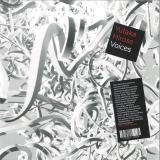
WRWTFWW Records is very excited to announce its third release from visionary Japanese ambient/experimental/environmental composer/producer Yutaka Hirose, this time with brand new album Voices, available on limited edition heavyweight-sleeved double LP as well as double CD, both with liner notes from the artist.
Voices finds Yutaka Hirose expanding his signature spatial layering into a three-dimensional videography of sound, blending field recordings, electronic manipulations, and abstract narratives. The 12-track album is a journey through a crumbling library where books whisper, history collides, and sonic textures weave new realities. Chaos, memory, and transformation – Hirose’s voices echo throughout the space, creating a fully immersive sonic experience.
The pioneering experimental and abstract electronic piece with deep hints of ambient and IDM is beautifully represented by the original artwork by Koji Shiroshita and Mifuku gracing the double LP and double digipack CD sleeves.
Voices marks Yutaka Hirose’s third full-length release on WRWTFWW Records, following his kankyõ ongaku classics Nova + 4 (an expanded version of his genre defining Soundscape 2: Nova album) and archival compilation TRACE: Sound Design Works 1986-1989, both available in vinyl, CD, and digital formats.
- I'm | Getting Sick
- Evicted | 05 24
- We've | Made It This Far
- Undercurrent
- King | Of Swords
- Omw
- Happy | Is Hard
- Tired
- Keep | Driving
- I'll | Be Here 03 56
Vines, the solo project of New York-based multi-instrumentalist and composer Cassie Wieland, offers a window into her inner world through expansive swaths of sound. She pieces together a celestial mix of synths, percussion, strings, and vocoded voice, making music that is at once deeply personal and cinematic in scope. This diaristic approach first took shape with her 2023 EP Birthday Party, and is crystallized on her debut LP, I’ll be here. With the sweeping and vulnerable I’ll be here, Vines arrives fully formed as an artist who crafts deeply resonant and open music–the kind that invites listeners in to listen, reflect, and share in the journey of learning through living.
“It was through making music that I was able to meet myself,” Wieland said. “Anything I’m going through or feeling is something that somebody else out there can relate to, and that’s really special to me.”
I’ll be here is both a culmination of years spent creating gossamer soundscapes and an opening to a new journey for Wieland as an artist. The album grew out of her years as a composer and songwriter, and builds on the language she developed on Birthday Party, which transformed the tumultuous feelings of the passing of time into minimalist meditations. It was just a start, though–a prologue, a development of the kind of language and ideas she wanted to express. With I’ll be here, she digs deeper and writes music that feels more sprawling, further solidifying her singular voice.
Wieland’s musical composition process is similar to journaling, lending itself to the music’s honesty. When she writes, she makes room for all the ideas she has; in these sessions, there are no wrong ideas, and she allows the music to be attuned to the experiences she’s having at the time. With I’ll be here, Wieland zeroes in on themes of anxiety, loneliness, navigating human connection, and having to grow up from a young age, ultimately coming to a place of acceptance. And though it began as a journal written in solitude, her collaborators shape the music with her.
Working with friends, in fact, was a crucial part of bringing the record to life. “Everything that was supposed to happen came together so easily because of the people involved,” Wieland said. I’ll be here was co-produced and recorded with Wieland’s longtime collaborator Mike Tierney, a four time Grammy-nominated engineer who has worked with artists across the contemporary classical and experimental scene like minimalist pioneer Steve Reich, LA’s preeminent classical ensemble Wild Up, and various bands on Bang on a Can’s Cantaloupe Music label. Percussionist and composer Adam Holmes and violinist Adrianne Munden-Dixon are two other longtime collaborators who are frequent fixtures of her live show. Holmes plays synths, drums, and banjo; in live settings, his kit is loaded with elements of the songs that are then triggered by MIDI, making the music an interactive, evolving experience. The album’s gentle, filamented edges are colored by Munden-Dixon, whose poignant string melodies elevate Wieland’s introspective compositions, as well as cellist Helen Newby, saxophonists Julian Velasco and Jordan Lulloff, and bassist Pat Swoboda.
Wieland takes an economic approach to writing music, building the swirling and immersive landscapes of Vines through short melodies, lyrics, and phrases. As each element layers and interweaves, they grow into sprawling webs of ghostly sound. Prior to Vines, Wieland composed pieces for other people to play using a minimalist’s sensibility, writing slowly unfolding melodies for instruments like violin and saxophone. In recent years, she sharpened her solo style across a variety of singles and covers which have garnered significant attention on social media for their emotional resonance (“being loved isn't the same as being understood” in particular went massively viral on TikTok in 2024). Birthday Party, her debut as Vines, brought her writing to a much more intimate space, centering on her vocoded voice cloaked in feathery reverb. A series of recent singles, meanwhile, including “I am my home,” showcase the way that Wieland’s music is born from the story of her innermost feelings, extending far beyond just the self.
Though Wieland’s music often deals with dark themes, it unfolds with tender melancholy, the kind that feels like a warm embrace. On “Evicted,” Wieland wonders if she’s getting sick or moving on, if she’s lost or found. Her vocals expand with each lyrical repetition, as the instrumentals slowly encircle and the music’s rhythm grows and bursts into a heart-wrenching, yet radiant wave reminiscent of post-rock bands like Explosions in the Sky. “Tired” follows a similar trajectory, building from a looping, melancholy rhythm and floating lyrics into a solemn resignation. Elsewhere, Wieland takes a more ruminative approach: “Omw” begins with twinkling piano and melancholy strings that gradually transform into an undulating mass. It is a song born out of the warm feeling of reminiscence, the slight return of hope that comes with nostalgia.
With any searching journey, there is also a point of understanding. The title track closes the album with the freedom of acceptance. A marching drum beats steadily beneath Wieland’s open vocals, moving forward, ever onward as it flies into the ether. In Wieland’s delicately textured music, there is room to come into yourself, and learn to love whomever that is. I’ll be here is a special space that can be all your own, one in which to feel what needs to be felt. “This is music for your story,” Wieland said. “I want you to use it how you need it.”
Whispers of Granite is the exciting new collaboration between Norwegian vocalist and vocal composer Trude Eidtang and German keyboardist and composer Andreas Hack. Their debut album, Liquid Stone, offers a unique fusion of melancholic folk, indie and progressive rock, enriched by Trude's expressive vocals and Andreas' atmospheric instrumentation. Trude Eidtang is renowned for her evocative, haunting voice and deep emotional resonance within the progressive rock genre. She first gained recognition as the lead vocalist of White Willow, later founding her own project When Mary, where she crafts vocal-driven organic-electronic music that blends art-pop, indie, and conceptual storytelling. Andreas Hack is a celebrated German composer and keyboardist known for his innovative work in progressive rock. As a founding member of Frequency Drift, Andreas helped shape the band's distinctive, atmospheric sound. He has also expanded his creative range through projects like Feeling of Presence, which delves into ambient and post rock, and most recently, Haven of Echoes, known for its progressive and evocative sound. The collaboration between Trude and Andreas in Whispers of Granite brings together their individual strengths to create a compelling and immersive musical experience, drawing influences from folk, indie, and cinematic music, combining melancholic progressive rock with lush, atmospheric textures. Trude's vocals are at the heart of the music, intertwining seamlessly with Andreas' atmospheric keyboard work and intricate guitar arrangements. Together, they craft a sound that balances melancholy and hope, fragility and strength. The album's title, Liquid Stone, reflects the thematic duality that runs throughout the project. It symbolizes the tension between fluidity and permanence, capturing the transformational shifts Trude explores in her lyrics. The fusion of organic and industrial elements in the music mirrors the interplay between raw human emotion and the rigid structures of the world. Liquid Stone marks a bold step into new musical terrain.
The discovery of Doris Dennison's score represents a genuine musicological breakthrough—what once would have been "a tree falling in the woods" thirty years ago now holds the potential to render "a thunderous clap in our minds." While researching Anna Halprin's lesser-known collaborators, scholar Tom Welsh uncovered the archives of AA Leath, one of Halprin's principal dancers. Buried within these materials was Dennison's handwritten score for Earth Interval, dated May 1956. Born in Saskatchewan, Canada, in 1908, and raised near Seattle, Dennison (1908-2009) encountered John Cage while teaching Dalcroze eurythmics at the Cornish College of the Arts. She joined Cage's earliest percussion quartet—alongside Margaret Jansen, the composer and his wife Xenia—in the group widely regarded as having performed the first complete concert of percussion music in the United States. This historic December 1938 concert was followed by tours and the landmark May 1941 performance at the California Club, comprising Cage and Lou Harrison's Double Music, the premiere of Cage's Third Construction, and Harrison's 13th Simfony.
As Bradford Bailey observes in his extensive liner notes, Earth Interval demonstrates "an extraordinary balance of elements that imbues the piece with a sense of clarity, directness, and constraint that is both distinct and ahead of its time." The work's most remarkable innovation lies in its approach to extended techniques, particularly Dennison's notation for the central movement: "In 2nd movement, 1st player lowers + raises a gong into a tub of water while beating." This technique, absorbed from Cage's experimental vocabulary, generates what Bailey describes as "fields of acoustic abstraction that bend and warp time through sustained resonances, beat, and space." The temporal sophistication of these manipulations anticipated Karlheinz Stockhausen's Mikrophonie I (1964) and Annea Lockwood's water-based sound investigations by over a decade. After joining Mills College as dance accompanist, Dennison maintained crucial connections to the Bay Area's experimental scene, collaborating with figures like Merce Cunningham and programming Cage's music throughout the 1950s.
Comprising three movements—Land Form, Air Tide, and Earth Play—Earth Interval is scored for recorder, drums, gongs, maracas, muted gongs, and bowl gongs. In total, the piece is just under eight minutes: "a fleeting glimmer of moment in time, a life spent at the cutting edge, and a singular creative vision that packs a powerful punch." When viewed in historical context, placed in contrast to roughly contemporaneous avant-garde percussion works by Cage, Harrison, Louis Thomas Hardin (Moondog), and Harry Partch, or important precursors like Edgard Varèse's Ionisation (1931) and Henry Cowell's Ostinato Pianissimo (1934), it's clear that Dennison was following her own path. Earth Interval is not derivative. It is a precursor to what was yet to come, alluding to developments of avant-garde and experimental music that wouldn't begin to appear on the cultural landscape until the 1970s and '80s, with the emergence of Post-Minimalism and more idiosyncratic artists and ensembles like Midori Takada, Ros Bandt, Peter Giger, Frank Perry, Christopher Tree, Michael Ranta, Gamelan Son of Lion, and Niagara.
This recording by Chicago's Third Coast Percussion, captured in March 2022, represents the first complete documentation of this pioneering work. The ensemble's interpretation reveals the piece's remarkable contemporaneity while maintaining its historical specificity. Where Cage, Harrison, and Partch employed "self-consciously off-kilter polyrhythms," Dennison's rhythmic sensibility anticipates minimalist developments by nearly a decade, yet integrates "forceful rests, as well as sharp shifts in sonic character, tempo, and meter, that break the momentum and breathe a sense of life into the piece's structure." This positions her work closer to Post-Minimalism decades before its emergence. The architectural approach demonstrates Dennison's understanding that "the composer almost entirely disappears" in favor of phenomenological listening experience, creating what might be called an egoless music that places its realities and meaning entirely in the ear of the beholder. The present recording, realized by Chicago's distinguished Third Coast Percussion ensemble, represents a significant achievement in experimental music scholarship and performance practice. As specialists in the Cage tradition and contemporary percussion repertoire, Third Coast Percussion approached Earth Interval with the historical sensitivity and technical precision required to illuminate Dennison's subtle compositional innovations. The March 2022 recording sessions, engineered by Colin Campbell, capture both the work's intimate chamber music qualities and its bold exploration of extended techniques. The ensemble's interpretation reveals the piece's remarkable contemporaneity—its ability to speak directly to current musical concerns while maintaining its historical specificity.
This recording serves multiple scholarly functions: it provides the first complete documentation of Dennison's compositional voice, offers insight into the broader network of experimental music practitioners surrounding Cage and Harrison, and demonstrates the sophisticated level of compositional thinking that was occurring within the Bay Area's dance-music collaborations of the 1950s. The work's emphasis on phenomenological listening—what might be called an "egoless" approach to musical experience—places it within a lineage of American experimental music that prioritizes perceptual process over compositional personality. The work's original obscurity—limited to AA Leath's performances at venues like the 1957 Pacific Coast Arts Festival at Reed College—paradoxically allowed it to remain "entirely on its own terms," free from the constraints of historical categorization. Drawing on Jacques Derrida's Archive Fever, the argument emerges that "the archive can acknowledge, celebrate, and resurrect" overlooked voices, transforming our understanding of experimental music history. The present Blume edition, featuring Third Coast Percussion's authoritative interpretation, includes a lavishly illustrated 16-page booklet designed by Bruno Stucchi / dinamomilano, containing complete scholarly apparatus, historical photographs, and detailed production notes. This recording enables "cross-temporal intersectionality," allowing Dennison to "belong to a newly formed and more dynamic understanding of the present and past," demonstrating how forgotten voices can reshape entire historical narratives when given proper scholarly attention and performance advocacy.
This new "Experimental Chapter" by DJ Narciso comes as no surprise, really. Autonomous in the motorization of his music, pushing for progress within the framework of an undeniable (inescapable?) heritage. Twisting and bending sound every step of the way, Narciso definitely keeps in touch with the dancefloor, offering the always much needed transcendence through distinctive, non-linear melodies and patterns. The artist pursues a direct link with bodies in motion but seldom in the expected, institutionalized way club culture is being largely promoted.
This is challenging dance music, proud statements of difference. Narciso's previous record was named "Diferenciado". Now we get "Dificuldades", a track that simultaneously carries the weight of being somewhat odd and the difficulties of life. Check how the piano is venting, freestyle, communicating a feeling, and then lets itself get stuck in a loop, but that's exactly when the groove really starts flowing. And then another layer. It's like direct speech.
A common assertion of pride is found in the origin of the artists. The ghetto as a place where any transformation projects more power precisely because of... inherent difficulties. As others (including himself) did in more or less obvious ways, Narciso clearly states "I come from the ghetto" ( "Não Sabes" ). Twice the value. At least. Almost every segment of music in this album ends up sounding heavily emotional, reaffirming what may be - perversely - a well-known characteristic of Portuguese music: melancholy.
"Não Quero" begins side B as a march maybe more significant than a thousand words, such is the ominous tone of its texture. Next track is another lunar tarraxo, pulling down the shades. Then, "Dor de Barriga" lets things loose again, steering clearly off road, shouting this way and that until a peaceful resolution comes. In "Livra-me Desta", vocal snippets blend into synth snippets, disembodied voices abandon all traces of humanity and finally mutate into different entities that, towards the end, again sound vaguely human but now we find ourselves doubting. Closer "Bob" is a rather classic percussion track with plenty of echo, reverb and an unconscious nod to dodecaphonic music. Unlikely? No, the structural ADN of this music is made up of elements western and eastern, southern and northern. To say all-over-the-place is usually not flattering but in this case the expression translates as wonder, surprise, The Unexpected, and reveals Narciso perfectly at ease inside the nucleus of creation.
- A1: Intro
- A2: Roma
- A3: Abrázame Fuerte
- A4: La Vida Y Sus Cosas
- B1: Una Como Tu
- B2: Te Hice Una Balada (Feat. Robi)
- B3: Aiunii
- B4: Nsqmq
- C1: Aveces Siempre
- C2: Casita
- C3: Track Loading…
- C4: Dañao Pa Siempre
- D1: Nota (Feat. Omar Courtz)
- D2: Verte Por Ahí
- D3: Te Amo (Feat. Shantty)
GIRASOLES is the ninth studio album from multi-platinum singer-songwriter Jay Wheeler. In what many will find is some of his most personal work to date, it’s clear that music is his refuge, with the album representing the birth of a renewed version of himself. The moving 15-track album musically represents three stages: difficulties faced in life (represented by planting a seed), a period of transformation (growth), and maturity (a full bloom). GIRASOLES represents the feeling of being stuck, life’s challenges and the moments where personal growth seems impossible. However, as you mature through time, overcoming challenges and obstacles, you bloom into something beautiful. The message is clear: “Never settle and keep working on yourself, show love to others, and continue to evolve despite difficulties, just as sunflowers continue to grow toward the light,” Wheeler expressed. “People talk about outcomes, but no one talks about the process of getting there. This is ‘Girasoles,’ an album full of emotions, showing my evolution as an artist and a man. I want fans to identify with each track and make it their own,” shared Jay Wheeler about “Girasoles”, an album dedicated to the three most important women in his life: Zhamira (his wife), Aiunii (his daughter), and his mother. 2xLP, pressed on Canary Yellow Vinyl and housed in a Gatefold Jacke
Named after the old district where Jesse lived during one of the most vibrant years of his life, La Pavonia EP captures the warmth, unpredictability, and deep musical curiosity that define him. Drawing from memories of joy, love, and discovery—and echoing the floral name linked to Runas' Spanish roots—the EP unfolds across four distinctive cuts.
“Crystal Swamp” opens the journey with eerie pads, buzzing synths, and a groove shaped by introspective winter days. “Body Blaster” follows with a raw, body-moving rhythm, born from a shift between Electro and Progressive moods and anchored by a punchy TX-81Z bassline. On the flip, “Warp” plays with imperfection and transformation, turning a single synth and stretched percussion sample into something strangely human. The EP closes with a remix of “Warp” by Belgian-Peruvian producer DC Salas who transforms Warp into a slow-burning, groove-heavy trip, layering thick basslines, subtle percussive shifts, and a progressive pulse. It's a hypnotic rework that keeps the original’s raw textures while opening it up for late-night floors and deeper moments.
Feedasoul Records is proud to welcome South African deep house craftsman KaySoul with his debut full-length LP, Black Rose. A ten-track body of work, with six cuts specially selected for a limited vinyl release, Black Rose is as personal as it is profound - a record that reflects KaySoul’s journey into fatherhood, love, responsibility, and self-transformation.
THE INFINITE STREAM TO ETERNITY LAYS IN THE UNDERSTANDING OF THE WHIRLING ASCENT TO PERFECTION’
Jon Tye, aka Ocean Moon is a man who truly needs no introduction. For the last 30 plus years, the founder of LO RECORDINGS has consistently been a part of some of the most seminal and groundbreaking sonic excursions of our time — MLO, Seahawks, Cherry Garcia, and Brain Machine, to name a few.
After his recent album for Music From Memory, ‘Ways To The Deep Meadow’, Ocean Moon now sets his controls for the heart of the sun and takes the listener on an epic journey into a world of vibration, wild oscillations, molecular transformation and altered states of consciousness.
Inspired by the kaleidoscopic majesty of 4 Hero, Terre Thaemlitz, and Alice Coltrane combined with the the wonders of the cosmos, 'SHIMMERING STATES' is an electronic symphony that feels like a magical sonic voyage into deep space.
- A1: Pray For Me Part 1 (Dub Version) Ft Neone The Wonderer
- A2: Battle Isn’t Over (D’n’b Version) Ft Horseman
- A3: Woman (Dancehall Version) Ft Skillful Kxng
- A4: So Mi Stay (Amapiano Version)
- A5: Carry Me (Uk Garage Version) Ft Seun Kuti
- B1: Reach My Soul (Bassline Version)
- B2: Breeze (Dub Version)
- B3: Find Your Flame (Jungle Version)
- B4: Slow Breath (Afro-Fusion Version) Ft Mamani Keïta
Nubiyan Twist present NT Soundsystem - Dubplate Inferno, a new 9 track album reimagining tracks from their critically acclaimed album ‘Find Your Flame’, transforming them into bass-heavy, dub-infused dancefloor killers. Produced by band leader Tom Excell alongside singer Aziza Jaye, the remixes channel the raw energy of the band’s live performances, blending their signature fusion of jazz, afrobeat, soul, and reggae with the gritty, immersive sound of traditional UK soundsystem culture.
The album features some extra guests on vocals, legendary MC Horseman appears on a drum & bass version of ‘Battle Isn’t Over’ whilst newcomer SkillFul Kxng from Kingston, Jamaica, breathes some Dancehall fire on ‘Woman’, adding to contributions from the original record including Seun Kuti, Mamani Keita & NEONE the Wonderer.
This project is a celebration of collective musical innovation, paying homage to the UK’s rich soundsystem heritage while pushing boundaries with their genre-defying style.
Nubiyan Twist have built up a name as one of the forerunners of the UK Jazz scene, fusing together global grooves, soul and jazz; intertwined with electronic elements, horn-led melodies and spontaneous improvisation.
The influence of soundsystem culture has been ever present in their music, from dub sessions the band used to attend in Leeds to jungle raves of East Anglia in the 2000’s. Band Leader Tom Excell has a history of DJing and producing dance music, including with reggae side-project Chief Rockas, working with reggae giants such as Super Cat, Luciano & Turbulence.
Nubiyan Twist’s lead singer Aziza Jaye was born of Jamaican heritage and has grown up around soundsystem culture, boasting an incredibly versatile vocal style and large catalog of work alongside a plethora of producers, including recent work with Mungo’s Hi-Fi.
HOLLY JOLLY A good shot of swing, a splash of Las Vegas, served on a silver platter by world stars Frank Sinatra, Dean Martin and Sammy Davis Jr. create a very special Christmas mood. With all the important Christmas songs and some extraordinary treats, the Rat Pack transforms Christmas into an ent- ertaining party with ‚Holly Jolly Christmas‘. The genius of Sinatra, the charm of Dean Martin and the non- chalance of Sammy Davis set standards as the Rat Pack to this day for an extraordinary entertainment cul- ture and the realization of the „American Dream“. Oh, By Gosh, By Golly It‘s Time For Mistletoe And Holly...
DJ I.V.’s debut vinyl EP, “Primus,” delivers a raw vision of modern Detroit techno, but it’s SCAN 7’s remix of “Machine” that grounds the release in lineage. Their rework is a commanding blend of militant rhythm and emotional depth, reinforcing techno’s roots while pushing it forward. With SCAN 7’s presence, "Primus" transforms from a debut into a dialogue with Detroit’s legacy.
- A1: Share This Love
- A2: Made Through Ritual
- A3: In Due Time
- A4: Free Spirit
- B1: Shades Of Light
- B2: Freedom’s Call
- B3: Cosmic Dust
- B4: Children Of The Drum
Strut present the first international release in over 30 years by legendary Afro-jazz group Oneness Of Juju with their new album Made Through Ritual on 11th July 2025.
In 1975, the late DJ / producer and jazz distributor Jimmy Gray and James “Plunky” Branch joined a musical revolution, founding Black Fire Records and releasing the label’s debut album, the classic African Rhythms by Oneness of Juju. This July, Plunky brings this important musical relationship full circle with Made Through Ritual, produced by Plunky’s son Jamiah “Fire” Branch and Jimmy’s son Jamal Gray.
The album takes a novel approach to beat culture. Working from demos created by Jamal using a selection of original jazz samples, Plunky took the tracks, replayed and re-interpreted the arrangements using live musicians. “The album explores the art of deconstruction and reconstruction in music - sampling, sequencing, and live improvisation merge with multi-track recording to craft intricate harmonies and arrangements,” explains Plunky. “The process became a ritualistic expression of creativity and transformation.”
The resulting album is a fascinating listen. Opening with the meditative soul chant ‘Share This Love’ voiced by regular Oneness vocalist Charlayne “Chyp” Green, the album opens out into a series of jazz vignettes including the title track, ‘In Due Time’ and ‘Free Spirit’. The powerful album closer, ‘Children Of The Drum’ celebrates black culture and legacy through the poetry of Roscoe Burnem.
Released on 1LP and 1CD with specially commissioned cover artwork by contemporary Ivorian artist Maxime Manga, Made Through Ritual represents an important new chapter in the Oneness story. The album will be supported by a selection of European tour dates during Autumn and Winter 2025.
Recorded live in one session at age 18, this album helped launch Tania Maria's career as an acclaimed Brazilian jazz artist, celebrated for her virtuoso combination of piano and vocals. Produced by Romeo Nunes (Meirelles e Os Copa 5, Rio 65 Trio, Elis Regina, Elza Soares), the album features the pioneering Edison Machado, who transformed samba and was instrumental in the development of Bossa Nova through his groundbreaking "samba no prato" (samba on the cymbals) technique. His work helped shape the sounds of Jobim, Getz, and Milton Nascimento. On guitar is the legendary Neco, who played on over 500 albums. Initially self-taught, he later studied under maestros Guerra Peixe and Moacir Santos. He collaborated with icons like Elis Regina and Chico Buarque, and was a member of Os Ipanemas, Os Catedráticos, and Os Gatos. His solo work includes Velvet Bossa Nova (1966), which became an acid jazz favorite. The album features compositions by Caetano Veloso and Marcos Valle,alongside early samba classics.
Blending Brazilian rhythms with elements of samba, bossanova, and jazz fusion,it captures the early development of Tania Maria's signature style. Born in São Luís, Brazil in 1948,Tania Maria began playing piano at age seven. She learned samba, jazz, and chorinho through her father's weekend jam sessions. Leading her own band by age13, she performed across the region while collecting records from influential artists. Though she earned a law degree and started a family,her passion for musicu ltimately won out—she left law to pursue music full-time.
- A1: No Way
- B1: 54-46 Was My Number
From the sunny shores of Miami, Florida, Fat Produce is leading the charge in today's soul-jazz scene. Their latest release features two classic tracks, "No Way" and "54-46 Was My Number," which are beautifully molded into Fat Produce's unique sound led by guitarist Addison Rifkind and drummer Michael Duffy. This limited 7" single offers a preview of what’s to come from this rising trio.
The influence of Boogaloo Joe Jones is undeniable, so incorporating his 1970s classic "No Way" into their repertoire was a fitting tribute for the band. With a deeper sound and an infectious groove, Fat Produce pays homage to this musical giant, guaranteed to get everyone moving on the dance floor. On the flip side, "54-46 Was My Number" is a reimagination of a Toots & The Maytals original, transformed into the instrumental style of a soul-jazz guitar trio. Rifkind's lyrical guitar work breathes new life into Toots' original vocal melodies, embodying the essence of soul-jazz and crossing genres to keep the spirit of feel-good music alive.
Both tracks were recorded on a Tascam 388 at Studio Del Sol in Boca Raton, Florida, by Travis Acker and mixed at The F-Spot HQ in Los Angeles by D.M.C. With upright bassist Nestor Del Prado joining the duo on this album, Fat Produce's forthcoming sophomore LP is set to be released in October 2025.
- Vanity (Feat. Rachel Goswell)
- Cape Perpetua
- The Skin And The Glove
- Yield To Force
The latest EP from Drab Majesty marks the start of a stirring new chapter in the band's majestic legacy. Written during a 2021 retreat to the remote coastal Oregon town of Yachats, Deb Demure leaned into the neo-psychedelic resonance of a uniquely bowl-shaped 12-string Ovation acoustic/electric guitar. After early morning hikes in the rain, Deb would record ambient guitar experiments the rest of the day, tapping into "flow states," letting the sound lead the way. These sessions were then refined or recreated, and later elevated further with key collaborations by Rachel Goswell (Slowdive), Justin Meldal-Johnson (Beck, M83, Air), and Ben Greenberg (Uniform, Circular Ruin Studio). An Object In Motion is true to its title, capturing the chrysalis moment of an artist evolving, reborn and untethered, silhouetted against an open horizon."Cape Perpetua" kicks off the collection's divergent palette: sparkling acoustic finger-picking refracted through delay, equal parts raga and reverie. Melodies and moods congeal and dissipate, at the threshold of rustic American primitivism, brooding neo-folk, and pastoral melancholia. "The Skin And The Glove" deploys jangle to different effect - baggy, soaring, grey-skied kaleidoscopic pop in the spirit of Stone Roses, Primal Scream, and The Glove. Rachel Goswell lends her iconic freefall voice to The Cure-esque ballad, "Vanity," infusing poetic gravity to the doomed refrain: "If the valve breaks / then the earth quakes / and history finds a way / to put you in your place.""Yield To Force", the closing track of the EP, may be the most anomalous offering of the set. A 15-minute instrumental odyssey of cyclical strings, ominous slide guitar, and simmering synthesizer, the piece sways and spirals like a long zoom into distant storm clouds. Demure finesses the guitar with a restless but regal grandeur, unfolding a panorama of peaks, shadows, and plateaus. It's music both intuitive and prophetic, tracing the slow swing of pendulums across an endless plain. Taken as a whole, An Object In Motion presents a showcase of potential futures from Drab's evolving domain, their sound poised to bloom at the precipice of transformation.
- Gulch
- Evergreen
- Indelible
- Specific Resonance
- Cascading Crescent
- Pining For Ever
- Flickering Stillness
- Wantering Mind
Pelican has always been a band that's not just from Chicago, but distinctly of Chicago. Formed in 2000 by guitarists Trevor Shelley de Brauw and Laurent Schroeder-Lebec alongside brothers Bryan and Larry Herweg on bass and drums respectively, Pelican's foundation was built upon the rule-free, genre-agnostic scene synonymous with the Fireside Bowl. "The `90s in Chicago was a free-for-all. Everyone was just coming from a place of pure creativity," says Shelley de Brauw. With Schroeder-Lebec returning to the band following Dallas Thomas' departure in 2022, this reunified version of Pelican allowed the band to tap back into the spirit of their formative era and build something distinctly new with Flickering Resonance. While longtime Pelican fans will recognize the album as an update to the band's ethos_one that's been constantly evolving since their very first EP_their new partnership with Run For Cover Records emphasizes something that's always been implicit to the Pelican formula. These songs take as much inspiration from titanic `90s post-hardcore, space-rock, and emo as they do traditional metal, showing that though Godflesh and Goatsnake records occupied the shelves of Pelican's songwriters, so too did Quicksand, Christie Front Drive, and Hum. "A lot of people didn't hear it at first," says Schroeder-Lebec. "I was like, well, I guess the metal world is where we fit. But now, we're more willing to acknowledge all the suits we're wearing."On Flickering Resonance, Pelican doesn't attempt to reinvent itself as much as emphasize the elements that were so often overlooked. Though Pelican's thick sonic backbone remains intact, the songs on Flickering Resonance show a more humanistic side of the band. Tracks like "Evergreen" and "Indelible" tease Pelican's doom-metal roots, but these songs feel equally, ebullient and truthful, playing like Texas Is The Reason songs transmuted into a post-rock landscape. Recorded with longtime musical compatriot Sanford Parker, who recorded their first EP, Pelican begins this new chapter of their career with an album that's neither full reinvention nor back-to-roots revivalism. After so much time apart, and with so much life having been lived between the original Pelican lineup's last recording sessions together, the band approached it with renewed vigor and a more communal spirit."There was more room for openness and critique with the understanding that we're all trying to craft the best song possible and that every suggestion is valid until it's proven invalid," says Shelley de Brauw. That process allowed everyone to embrace the material with a shared vision. "We didn't move forward unless we all wanted to move forward, and that felt like real community building," says Schroeder-Lebec of this unified approach. "I went from seeing it as my art and my craft to our craft that we were shaping together."In doing so, Pelican allowed themselves to look at their music less as a means of hard-earned catharsis and more as an appreciation for the glimmers of joy that occur even in the bleakest landscapes. Songs like "Cascading Crescent" and "Indelible" don't languish in what's been lost, these tracks see the band embracing what remains in their hands instead of lamenting what's slipped through their fingers. It's a concept that's mirrored in the artwork of Christian Degn that graces the cover of Flickering Resonance. It's a piece built off the concept of flame meditation, and how the smallest flames can often bring about the biggest transformations. A song like "Flickering Stillness" exemplifies this feeling through its sonic expanse, putting the band's sonic density and hyper-focused clarity on display, but with an emphasis on the profound human connections that have kept Pelican going all these years. "When Laurent left and we were able to carry it through, there became a real sense of gratitude for the fact we still have this artistic outlet and a community of people who want to be a part of it" That feeling of deep, grounded appreciation isn't just one that's within the band members, it's expressed in every track on Flickering Resonance. Because at the very core of Pelican, are four individuals who have grown both separately and together, and always will.Like a distant light faintly glowing in the darkest night, Flickering Resonance is a reminder of all that has passed us by, but also all that is still to come.
The Kinks kündigen den dritten und letzten Teil ihrer ganz besonderen Anthologie-Reihe an: „The Journey
– Part 3“.
„Part 3“ behandelt ihre transformative RCA/Arista-Zeit von 1977 bis 1984, eine Zeit, in der die Band
endgültig in Amerika durchbrach, ihre legendären Pop- und Experimentalphasen hinter sich ließ und zu
einem frischen und prägnanten Stil des klassischen Songwritings zurückkehrte, der von ihrem eigenen,
ausgeprägten britischen Selbstverständnis zeugt.
CD 1 / LP 1 enthält Klassiker und Hits aus dieser Zeit, persönlich von der Band ausgewählt und von den
Original-Sampler- und Produktionsbändern remastert, darunter „Come Dancing“, „Destroyer“ und „Living
On A Thin Line“.
CD 2 / LP 2 enthält bisher unveröffentlichte Aufnahmen des Hit-reichen Auftritts der Band in der Royal
Albert Hall im Juli 1993, darunter fesselnde Interpretationen von „You Really Got Me“ und „Till The End
of the Day“ und vielen anderen.
Sowohl unsere 180-g-Doppel-LP als auch die Doppel-CD enthalten Track-by-Track-Kommentare der Band
sowie neue Linernotes von Phil Alexander.
- A1: The Blue Planet
- A2: Family Theme
- A3: Surfing Dolphins
- A4: Abyssal Plain
- A5: Mobula Rays
- A6: Race To Feed
- B1: Albatross Flight
- B2: Big Blue
- B3: Turtle Spa
- B4: Ducks & Currents
- B5: Humboldt Squid
- C1: A Foresta Awekens
- C2: Scavengers Of The Deep
- C3: Kobudai Transformation
- C4: Clownfish
- D1: Baby Turtle
- D2: Weedy Sea Dragon
- D3: Portuguese Man Of War
- D4: Walrus The Right Piece Of Ice
A sequel to the 2001 series Blue Planet, it took 4 years to complete this seven part new exploration of the underwater worlds, with 125 expeditions across
39 countries and 6000 hours of underwater filming. The series was broadcast on BBC One on 29 October 2017 with viewing figures exceeding 10m and
its exposure of plastic pollution in our oceans has started a global conversation about reducing plastic waste, now more relevant than ever.
With over 120 soundtracks to his credit which have grossed 24 billion dollars at the box office, Hans Zimmer has been honoured with many accolades:
an Academy Award, two Golden Globes, three Grammys, an American Music Award, a Tony Award and The Henry Mancini Award for Lifetime Achievement.
His Academy Award nomination for Interstellar marked his 10th Oscar nomination.
The composition is completed by Jacob Shea and David Fleming from Emmy and BAFTA nominated Bleeding Fingers Music. Bleeding Fingers has created
original music for productions including the Fox’s The Simpsons, BBC’s Planet Earth II, National Geographic’s Princess Diana In Her Own Words, NBC’s hit
Little Big Shots, Sony’s Snatch (TV), Amazon’s American Playboy, AMC’s The Making Of The Mob, Netflix original Roman Empire and History Channel’s Mountain Men.