Secret Vault is a new and already essential edit label from what is rumoured to be a group of Far Eastern otakus - a collective term in Japanese for obsessive interests in niche hobbies, in this case, disco. This second drop kicks off with the impossibly joyous and uplifting A-side, with trilling strings that just go up and up and up as the funky drums and elastic male vocals match that energy. Flip it over for an equally euphoric B-side with funky, knotted bass riffs, instrumental grooves and a steamy female vocal. Both are no-brainers for anyone looking to inject big heart into their sets.
Поиск:trill bass
Все
2026 Repress
Cerrone's live and DJ sets have often featured these two red-hot edits from The Reflex, who has been a master of the form since day dot. Now they get pressed up to this special, limited edition slab and sound as good as ever. 'Hooked On You The Reflex Revision' is all languid, funny bass, tropical percussion and deep cut disco-house swagger at a slow, seductive pace. On the flip, he turns his attention to 'Look For Love', a much more lavish disco sound with excitable strings and trilling melodies that all explode out of a fat groove with even fatter bass. Lovely stuff.
Also Playable Mono, the nom de guerre of Rafał Lachmirowicz, channels musical greats and the romance of Italy with the Firenze EP. “Neverland” reimagines Giorgio Moroder’s iconic introduction of “I Feel Love”, undulating arpeggios and clean kicks giving way to an addictive tongue-in-cheek melody of laser futurism and eastern influences. “Firenze” follows. Broad analogue bars call to mind the works of Patrick Cowley, disco funk flirting with a spoken word tribute to Florence in this bright and bold track. Our next stop off is “Bergamo.” Low-slung, this smoky number is primed for the night. Thick thrums of bass are punctured by piano keys and toms, robotic pulses and trills adding a 1970s sci-fi groove to the proceedings. Turning the tables is “Breakfast Date.” Slow and dreamy, this early morning lounge affair lowers the tempo. Considered and thoughtful, meandering melodies border the blurred lines of jazz and funk. The words of “Firenze” are left in the wings for the instrumental close, Lachmirowicz’s synthesizers taking the limelight in this uplifting finale. A 12” that encapsulates the expansive sound of Also Playable Mono.
As the tenth candle flickers atop the torta alla panna, Archeo Recordings play the Uno reverse card, breaking with tradition to give us a gift in celebration of its birthday: the first in a series of exquisite EPs on which the label's favourite contemporaries pay homage to past masters. Each re-polished gem is plucked either directly from the beatific back catalogue of the fine Florentine label or is at least Archeo-adjacent, perhaps a sign of future wonders to come. Like a musical version of Janus, who can be found at the heart of Bertoldo di Giovanni's frieze in the Medici villa, Archeo Recordings will continue to look forwards and backwards to provide sublime sounds for us all.
Pepe Maina officially joined the Archeo family in 2019 with the much-needed reissue of his 1979 masterpiece Scerizza (AR015), but his astounding music has been a constant companion to label head Manu for much longer. An inter-dimensional, multi-instrumental maverick, Maina weaves the frayed edges of prog rock, new age, organic jazz and global minimalism into a shimmering tapestry all of his own. The results are spread across fifty years and almost as many albums, largely self-released and always absolutely untarnished by commercial concerns.
Based in a small village in the hills of Brianza, just north of Milan, Maina translates the beauty of his surroundings into transformative tone poems, and the folkloric fusion of "The Infinite", originally released on his 2014 CD Tales From The Hill, is the perfect example of his practice. It opens with a recitation of Giacomo Leopardi's 1825s poem "L'Infinito" by famed Italian actor Vittorio Gassman. A leading figure in the romantic movement, Leopardi explores the idea of time and space within the natural world, and the peace that comes with an appreciation of the immensity of eternity. Manu, longtime digger and now a burgeoning producer, expands upon the original with tribal percussion, chirping electronics and a spheric bassline, folding Maina's elegant strings and gossamer pads into a new arrangement suited for a slow dance under the stars.
Unless you had a well-trained ear tuned to Italy's avant-jazz scene, chances are your first encounter with innovative flautist Roberto Aglieri came via the 2017 Archeo reissue of hisalmost untraceable LP Ragapadani (AR011). It's a true testament to Manu's digging credentials that he snatched this masterpiece out of the esoteric atmosphere and brought it attention it so richly deserved. A delicate union of digital synthesis and versatile flute - be it soft and silvery or
brilliant and clear - the 1987 album was a shapeshifting masterpiece, replaying scenes from Virgil, Verdi, Visconti and Pasolini with a neon glow. Quintessentially Italian, but uncanny and previously unimagined - Penthouse and Portico perhaps. Powered by a percolating prototechno sequence, cascading keys, hallucinogenic vocal snippets and a variety of tonal timbres from Roberto's reed, "Danza N. 1" long deserved the praise reserved for Jean-Luc Ponty's pinnacle, so many thanks to Manu for our collective introduction. The tall task of reinterpreting this particular paragon falls to Perugian polymath Daniele Tomassini AKA Feel Fly, whose peerless skills as both producer and musician have delighted DJs and dancers alike. Hot on the heels of his diverse and definitive remixes of Tony Esposito for AR027, Daniele delivers a radical rework of "Danza N. 1" perfect for both day rave sunshine and full moon party alike. Enhanced by snapping breaks and a rattling kick, the bassline gurgle emerges as a progressive powerhouse, laying the foundation for the trilling flute and circular keys to cast a psychedelic spell. As the slow-Goa revival picks up pace, this one is way ahead of the pack.
Archeo take us all the way back to the start of its story here - well almost. Though it bore the stamp AR001 (2015), this Radio Band reissue actually hit shelves months after Tony Esposito's "Je-Na' / Pagaia"; a false start perhaps but a true classic all the same. Radio Band were a group of DJs from Florence who all sailed the airways of Radio Fantasy in 1984 and whose one and only release was this super groovy slice of Italo-boogie. Following the example of Milanese DJs Band of Jocks but far surpassing their formulaic funk fizzle, Radio Band employed an intergalactic bassline, cosmic keys and that undeniably Italian style of rapping to deliver a sophisticated party-starter which even found its way to disco deity Ron Hardy. Back to the here and now, and if you've found yourself pumping an ecstatic fist to a supercharged Italian epic of late, chances are its from the mind of the mysterious Radiomarc. Operating on the ascendent Popcorn Groove imprint, this shadowy figure steers his country's lost classics into peaktime territories, finding a sweet spot between late Italo-disco, early Italo-house and contemporary cool. Pushing the tempo with a club-ready 4/4, setting the sequencer to stun and supplementing the original melodies with a series of synth riffs, the mystery producer send this one into orbit. Radio Band - Radio Rap - Radiomarc, the circle is complete.
Few have done more to develop cross-cultural musical exchange than Futuro Antico. A collaborative venture from musician, archeologist and ethnomusicologist Walter Maioli, keyboardist and tonal theoretician Riccardo Sinigaglia and multi-disciplinary artist and composer Gabin Dabiré, Futuro Antico formed in Milan in 1979, combining ancient international folkloric traditions with otherworldly electronics. The result is an arresting melange of Mediterranean, African and Asian instrumentation, mimicked by esoteric synth tones and hypnotic minimalism, which the group perfected on their acclaimed 1990 LP Dai Primitivi All'Elettronica. The meditative and transportive "Pan Tuning" belongs to their largely overlooked 2005 CD only release Intonazioni Archetipe, and has been amongst Manu's most loved tracks from the first moment he heard it. Who else is better placed to reshape this evocative opus into an immersive, transcendental dance floor journey than label favourites Mushrooms Project? The duo sows the original elements into a sprawling fifteen minute fusion of séance and science, at times propulsive with a ritualist rhythm of tuned percussion and crunching drum machine at others drifting off into ethereal ambience. Mushrooms Project continue to push the boundaries of the Afro-cosmic style, and this remix marks a new zenith.
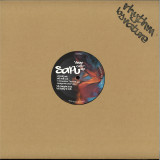
Following the resounding success of Rythm by Nature's first release by Nail, the imprint's second outing, "Deep Cuts", builds upon the previous momentum and introduces label owner SaPu for his first solo EP. "Deep Cuts" features three groove-drenched original works and a foot-stomping remix from Berlin-based groove master and sound wizard Tripmastaz.
Drawing from his 15+ years of experience in the scene, "Deep Cuts" displays SaPu's impeccable production skills and evident passion for deeper house grooves and hypnotic rhythms — the ideal music for extended dancing marathons. The EP's first track, 'Roll Out' (A1), is a classic, tech-house-infused banger: funky bass, filtered samples, and snappy percussion elements. Tripmastaz's version, 'Don't Let Joe Change the Name Dub' (A2), adds new layers of depth to the original, infusing it with dubby, sample-based elements and warm chords. SaPu's inclination for old-school grooves shines through on 'Clappin Iron' (B1), delivering Detroit tribal vibes punctuated by stabby synths and rolling basslines. Closing off the EP, 'Keep it Trill' (B2) provides a relatively stripped-down approach, allowing SaPu to demonstrate his innate skill in dubby sample manipulation.
Feedback Waves - the new imprint from independent label Rings of Neptune - is proud to present Trill, the first and only album by Palomatic. Almost thirty years after its original release on CD in 1995, this beautiful nine-track work is now available on vinyl for the first time.
Palomatic is an alias of Koji Takahashi, an active member of the bubbling Japanese electronic music scene of the early-to-mid 90s. Besides his solo work, he was a core member of Takahashi Tektronix (with Nic Yoshizawa) and Mutron (with Kiyoshi Hazemoto, aka Interferon), as well as working as a synth programmer for supergroup Denki Groove.
Following the release of his debut track 'Halo' on Syzygy Records in 1993, Takahashi made a series of contributions to compilations on the scene-defining Transonic label. His first and only full-length album, Trill, combined these tracks with original material to form an absorbing and versatile standalone statement of the Palomatic sound.
From the oscillating lilt of 'Flutter', which opens proceedings at a measured 104bpm, through to the symphonic epilogue of 'Soar', Trill is rooted in the fertile territory between organic and synthetic sounds - ground that was nourishing the work of many likeminded producers worldwide at the time. West Coast psychedelia and East Coast funk, the moody bass weight of Bristol trip-hop and Sheffield bleep, and the chemical rush of German techno and Belgian trance: with a distinctly Japanese sensibility, Trill drew these strands together into an elegant musical tapestry. The result is timeless - indeed, album centrepiece 'Foaming Waves' would sound right at home on the faster-paced dancefloors of today.
This double LP features an alternative artwork by Feedback Waves co-founder Max Binski.
After the success of Cosmoba’s debut release ‘Lost In The System’, label owner Kalcagni returns with another 4 tracker of vibey electro and breaks.
Kicking off with ‘Mute Mode’, which channels deep house and acid influences, laced over chunky breaks and a warm analog bass. ‘Up Here (In The Head)’ follows up with another 303 workout, layered with infectious bass hooks and effected synth trills.
On the flip side, ’System Addict’ ups the BPM’s and flexes a more upfront electro groove, with beefy drums, gnarly melodic stabs and a twisted, resonant bassline. Whilst ‘Worn Out Version’ provides a more mellow and alternative vibe to close
You Can Can is an echoed affirmation, an album which traces song forms around silence, field recordings, and degraded analog memories. This is folk music transmogrified and mutated, as if recorded and reconstructed in Pierre Schaffer’s GRM studio.
Not your typical Mariposa folk duo, the group is comprised of Toronto avant-music scene stalwarts, vocalist Felicity Williams (Bernice, Bahamas) and bricolage artist and synthesist Andrew Zukerman (Fleshtone Aura, Badge Epoch). The album feels like a somnambulant conversation, fragmented and half-remembered with Williams’ vocals traveling through a landscape of field recordings and Zukerman’s saturated concrète topographies. It is an electro-acoustic assemblage, both analog and digital, comprised of air, electricity, minerals, wood, and water. Although the album nods towards traditional forms of folk and musique concrète (if at this point it can be called a traditional form), it is outwardly and inwardly contemporary; non-linear, citational, opaque, and sui generis. In a way it feels like a sonic index of the narrative experiments found on the infamous Language school-related publisher The Figures, in the work of Lyn Hejinian, Clark Coolidge, and Lydia Davis. In the musical continuum, the album picks up where Linda Perhacs left off in the early 70’s—explored by Gastr Del Sol in the ‘90s—a convergence of rural acoustic idioms and urban avant-electronics. This is country music for the discerning cosmopolitan citizen of the 21st Century.
RIYL: Luc Ferrari, Brannten Schnüre, William Basinski, Oval, Eric Chenaux, Emmanuelle Parrenin About Everything In Time and Failure Figures, Felicity Williams says:
Everything In Time is indebted to the language of Brazilian author Clarice Lispector (as translated by Alison Entrekin). Drawing on insights from psychoanalysis, we trace the roots of melancholy to render them available to consciousness; words from the ghostly realm of the transpersonal filter through dreams and shine a beam of light onto a lone trillium in a forest at night. Other influences include the experience of not knowing, of being subject to a gestation outside of one’s control. This is an ode to the power of naming to obliterate, to set free.
Failure Figures is a meditation on the radical contingency of reality and the vicissitudes of the will. With Slavoj Zizek as my guide (think: “Hegel for dummies” - I’m the dummy in this scenario), I wander through the valley of the shadow of death, and take heart. The last verse refers to an experience I had recording at a studio in Brussels. I was singing in French, with which I have some fluency, and the producer was complaining to the artist whose song it was that my delivery was not convincing. Thinking I was out of ear shot, he said in French, “c’est comme elle n'est pas là”; I was pronouncing the words correctly, but I failed to express anything. So what or whom is responsible for conveying meaning, if not the form of the word itself? And if the connection between meaning and form is broken, how do we fix it?
Gratitude to Thom Gill (guitar) and Daniel Fortin (bass) who joined us on the recording of Failure Figures. Thanks as well to my old roommate Christopher Willes, who unwittingly left behind his hand bells deep in the hall closet. We unearthed them by accident, and the bells became an important sound element. Thanks to other past roomies Robin Dann and Claire Harvie, whose childhood piano and guitar respectively still reside with us, and were used in the recording. Field recordings were made in Toronto, Canada and Celestún, Mexico in 2020.
Two musicians, two different folk music traditions, two soundscapes hundreds of miles apart and one nightingale song. Nightingale melodies inspired this intoxicating folk album by Slovakian flautist Michaela Antalová and Norwegian double bassist Adrian Myhr. The Oslo-based duo’s album follows their meditative 2021 debut Zvony (Bells), which featured harmonium, field recordings of crickets and a Slovak male choir.
Sing Nightingale is a translation of ‘Zaspievaj Slavicku’, a traditional Slovakian song. The duo experiments with this theme of the songbird; exploring instrumentation from around the world and its rich tonal textures. On ‘Night Singing’, Michaela plays a Slovakian fujara, a tall, upright wooden bass flute originally played by shepherds. The fujara’s smooth, deep tones are laid over a recording of a nightingale by musicologist Tomáš Šenkyřík, with Michaela’s flute mimicking the bird’s nocturnal chirps and warbles to attract a mate. Michaela is carefully imitating the bird, who is in turn improvising his melody. In ‘Worm Moon’, named after the springtime full moon in March, when nightingales return from Africa where they have spent the cold winter, Adrian’s slow and resonant double bass is brightened by the sweet trills of a real nightingale and Michaela’s fujara.
The Norwegian Hardanger fiddle or hardingfele, features on two specially written songs; ‘Lament’ and ‘Rosenhave’ (rose garden) which bring together the nightingale’s symbolic associations with undying love, sacrifice, deep sorrow and loss. Celebrated Hardanger fiddle player Helga Myhr plays alongside Adrian’s double bass and Michaela’s seljefløyte or willow flute. Helga also plays on ‘Flagre’ (Flutter) and ‘Dance Nightingale’. The seljefløyte is very similar to the Slovak overtone flute koncovka. By using this Norwegian instrument, Adrian and Michaela’s new compositions are reminiscent of both countries’ folk traditions. Folk music often comes from unknown sources; the original writer may not be known and the melodies are typically passed down orally. Michaela and Adrian’s project merges the different folk musics from their respective countries, finding common ground in the sonic qualities of instruments and evolving a new hybrid folk style, authentic in its own right.
For the stunning adaptation of the traditional Slovakian fujara song ‘Dolu Ovce Dolinami’ (‘Sheep down the valleys’), Adrian’s friend Javid Afsari Rad plays the Iranian santur, similar to the traditional Slovak string instrument cimbalom. By coincidence, Iran’s national bird is the nightingale, making another unexpected connection to the symbolic bird. These 11 tracks are a beguiling fusion of traditional folk styles, approached by musicians from an avant-garde, improv and jazz background. The album pays tribute to a hugely expressive bird and finds a strange, soothing universality in the folk sounds of different countries.
Hot on the heels of Luv (LuvLuv) comes a sublime new Drum Chums from midland's madlads Wrekin Havoc.
Over the years we've shared great tunes, fun times and A-grade dance floor debauchery with these permanent party people (our first encounter almost exactly like that Spiderman pointing meme) so it made more sense than we usually do to invite them aboard the V*nga bus for some Balearic-Disco edit excellence.
Things kick off with the sexy throb of 'Shine A Light', a stonewashed funk workout complete with Paisley guitars, Troutman bass grunts and some big time blue-eyed soul vocals. It's a bit like an extended and unheard collaboration between George Michael and Tears For Fears recorded immediately after a particularly heavy night at Future. Unsurprising perhaps that this one's been getting a whole lot of love from DJ Harvey.
'Mars Bar Party' grabs you by the hips from the first bar of its swaying Mediterranean house rhythm, then tugs at every single one of your heartstrings with melancholic pads and a silken vocal croon. Fuuuuuuckin' hell! Sorry, was totally bewitched by the primal power of piano house magic - it's like John Rocca was in the room for a second. Armed with an awesome arrangement and clocking in at ten massive minutes, this may be the ultimate Balearic house journey.
If all this wasn't enough to have you stocking up on 5-HTP and sinus rinse, those crafty cats close the set out with the shimmering disco euphoria of 'Leccy Meet Her'. The bottom end pulses endlessly, Cowley synths trill and a crystal clear Vox soar above, sending us far off into mirrorball orbit. If this isn't a hit at Horse Meat, we'll neck a bottle of poppers and never eat a tomato again.
Each and every track Wrekin Havoc touch is a pearler, but we're particularly chuffed with ourselves for snapping this top trio up.
100% Drum Fun Guaranteed. .
South Africa Amapiano powerhouse, De Mthuda, releases “world’s first major amapiano release on vinyl”.
“The Landlord – Vinyl Cuts” is a carefully curated selection of 6 of De Mthuda’s best tracks, released during ‘The Landlord’ era from 2021 – 2023.
Bringing the unique joy and spirit of Amapiano to the world - all tracks have been remastered for vinyl to present the unique bass rhythm, log drum and flow, synonymous with the genre that has taken the world by storm.
- To Know Me/To Love Me
- Call You Back
- Honey
- 7: Months
- Spit
- Springboard
- Make Me
- Barnard
- Bluff
- Don't Go Looking
Eines wollen die Forth Wanderers vor der Veröffentlichung ihres dritten Albums "The Longer This Goes On" klarstellen: "Wir sind nicht zurück", sagt Gitarrist Ben Guterl mit Nachdruck. Das ist vielleicht eine unerwartete Aussage für das erste Album der Band seit ihrer Trennung vor sieben Jahren, aber die Band besteht darauf, dass es eine ehrliche Antwort ist - sie haben sich zusammengefunden, um die zehn kompliziert konstruierten Perlen aufzunehmen, die dieses neue Album ausmachen, und sie sind immer noch dabei herauszufinden, was es für sie bedeutet, in Forth Wanderers zu sein. Wenn man sich diese Songs anhört, von denen jeder einzelne ein glitzerndes Fest der eindringlichen und intuitiven Texte von Sängerin Ava Trilling und der natürlichen musikalischen Chemie der Band ist, hat man allerdings kaum das Gefühl, dass irgendetwas ungesagt bleibt. Das Album ist voller glänzender Melodien, klingender Gesangsharmonien und schlüpfriger, schräger Rhythmen und ist mehr als nur eine Rückkehr zur alten Form. Die Band scheut sich nicht, den Umweg über eine Hook zu gehen, indem sie instrumentale Schnörkel übereinander legt, um die leeren Stellen zu füllen, Raum für Trillings eindringliche Stimme zu schaffen oder ein Riff oder einen Text zu wiederholen, bis er zu einem Zen-Koan wird. Auf "The Longer This Goes On" klingen Forth Wanderers selbstbewusster und selbstsicherer als je zuvor. Man sollte es nur nicht als Comeback bezeichnen. Der Weg zu "The Longer This Goes On" begann im Sommer 2021 in einem Café in Brooklyn. Dort trafen sich Guterl und Trilling zum ersten Mal seit der Auflösung der Forth Wanderers im Jahr 2018. Die drei Jahre, die sie voneinander getrennt waren, hatten den Druck, den die Band während der Tourneen mit ihrer früheren Musik verspürte, teilweise abgebaut: "Wir fühlten uns alle frei, herumzualbern und Spaß zu haben", sagt Guterl. Die Wiedervereinigung mit dem Bassisten Noah Schifrin, dem Gitarristen Duke Greene und dem Schlagzeuger Zach Lorelli führte dazu, dass sich das Spielen so gut anfühlte, wie seit der Gründung der Band nicht mehr. "Es fühlte sich an, als wären wir wieder in der High School". Die Band hat die Art und Weise, wie sie bisher gearbeitet hat, neu definiert. "Dies ist das erste Mal, dass ein Großteil der Musik organisch entstanden ist", erklärt Schifrin. "Alle fünf von uns haben wirklich auf eine Art und Weise zum Schreibprozess beigetragen, wie wir es in der Vergangenheit nicht getan haben", fügte Guterl hinzu. Das daraus resultierende Album, das unter dem wachsamen Auge von Dan Howard produziert wurde, zeigt die Band so präsent und unbelastet, wie sie ihren Sound zum ersten Mal in Echtzeit geschaffen hat. Die Texte sind vollgepackt mit Bekenntnissen, die so breit gefächert sind, dass sich jeder, der sich in den Wirren einer unsicheren romantischen Vorhölle verirrt hat, verstanden fühlt, und doch so präzise geschrieben, dass sie eindeutig aus eigener Erfahrung stammen müssen. Das ist genau das, was Forth Wanderers sowohl so universell nachvollziehbar als auch so speziell macht. Auf "The Longer This Goes On" haben sie diese Fähigkeit, mit minimalistischen Texten und üppiger Instrumentierung an den starken Fäden der romantischen Langeweile zu ziehen, noch vertieft. Forth Wanderers sind sich nicht sicher, was als Nächstes kommt - sie wissen nicht, ob sie weiterhin neue Musik aufnehmen werden oder ob sie diese Songs jemals live aufführen werden. Diese Aufnahmen sind also zehn flüchtige, aber unschätzbare Eindrücke aus der Zeit, die sie als Band verbracht haben; das Wiederaufleben von Freundschaften zwischen Highschool-Kumpels, deren Träume sie ins Rampenlicht katapultiert haben, bevor sie alt genug waren, um Auto zu fahren; Songs, die die Ungewissheit der Zukunft ebenso einfangen wie ihre Musik ihr eigenes Selbstvertrauen in der Gegenwart zementiert. Auf "The Longer This Goes On" machen die Forth Wanderers Musik zu ihren eigenen Bedingungen.
Black Vinyl[24,33 €]
Clear Vinyl[27,52 €]
Faye Blue Vinyl[27,52 €]
Cassette[14,50 €]
Die Songs von Faye Webster sind ein direkter Draht zum menschlichen Unbewussten, und "Underdressed at the Symphony" dokumentiert, was passiert, wenn man beginnt, aus den Trümmern der alten Routinen ein neues Selbst aufzubauen. Schon ihre zuvor veröffentlichten Songs "But Not Kiss" und "Lifetime" zeigen das selten erforschte Gebiet emotionaler Intimität, in dem Verlangen und Leidenschaft im Konflikt mit Trost, Verständnis und sogar platonischer Liebe stehen. Diese Themen finden sich in "Underdressed at the Symphony" wieder, zusammen mit hyper-spezifischen Symbolen, die ein Bild von Websters Leben zeichnen, wie z.B. "eBay Purchase History" oder die physischen Objekte, die sie begehrt bei "Lego Ring". Eine Art Unbeschwertheit, allerdings mit melancholischem Rückgrat, ist die treibende Kraft hinter dem Song "Lego Ring", auf dem Atlanta-Multikünstler Lil Yachty als einzige Gaststimme auf dem Album zu hören ist. An einigen Stellen schwebt sein gespenstisches Trillern direkt unter Websters Stimme und sticht durch die Leere über einem tiefen Grollen des Basses. Es ist die Art der klanglichen Zusammenarbeit, die auf der Grundlage eines langen gegenseitigen Verständnisses und einer engen Freundschaft gelingt, die bereits seit Schulzeiten besteht. "Underdressed at the Symphony" wurde mit ihrer langjährigen Band in den Sonic Ranch Studios in Texas aufgenommen und schwelgt in Experimentierfreudigkeit, Verspieltheit und Abenteuerlust. Vocoder-Momente, Schnörkel eines Orchesters, gruselige Harmonien und Synthesizer kommen zum Vorschein, ohne die räumliche Qualität von Websters früherer Musik zu beeinträchtigen, sodass ihre Texte nach wie vor genügend Raum haben, mit zusätzlichen Bedeutungsebenen an die Oberfläche sprudeln. Matt "Pistol" Stoessels Pedal Steel-Klänge sorgen für genau den richtigen Schimmer, während Nels Cline von Wilco seine unbestreitbar gefühlvollen Fingerfertigkeiten zu einer Reihe von Songs beisteuert. Das Zusammenkauern an der buchstäblichen Grenze zwischen den USA und Mexiko bot den Musiker*innen Raum zum Isolieren, Konzentrieren und Experimentieren. Alle Songs auf diesem Album sind Live-Aufnahmen, von denen einige bereits beim ersten oder zweiten Take aufgenommen wurden und Websters Talent zeigen, aus einem ganz bestimmten, scheinbar kleinen Moment eine universelle Erfahrung zu ziehen.
We interrupt our regular Drum Chums programming to bring you a little V/A tackle via the 'Percussion Pals' project.
These razor sharp cuts come from friends near and far, old and new, each one primed to upgrade your record collection.
Debuts abound on the A-side, first via international man of mystery DJ Poufsouffle and his Balea-rock disco stomper "Totally Manic". Brimming with Flash & The Pan style pub-rock wonk this one boasts a growling vocal, sparkling keys and an uplifting chorus which doesn't quite break the spell of extreme silliness.
On the A2, Bristol's Spice Route rescue a nebulous reggae gem from Library obscurity, swinging the scalpel and working the desk to turn out an unstoppable groover.
Built around an irresistible rhythm section, "Gruler Dub" keeps on getting higher as the space-based vocals and trilling synths turn your brain inside out.
The B1 brings the return of Drum Chum extraordinaire Neil Diablo, who follows the Balearic brilliance of his last label outing with a cosmic caper into pure oddball pop. "Starry Night" slinks along in a chromed out catsuit, purring weirdo vocals over robo-chug and mechanical drums before indulging in a catchy chorus packed with addled innuendo. Not only is this as arch as Gina X doing a forward fold, but it also boasts some serious bass weight in the later stages - you have been warned.
We're delighted to finally feature a little magic from Australian Italo wizard Hysteric, who brings the curtain down in utterly emotional fashion via AOR disco dream "Pinball". A steady beat, infectious bassline and glistening chords play host to a swooning vocal, which reminds us to go with the flow and follow fun at all times.
100% Drum Fun Guaranteed.
goat (JP) are renowned for two albums released in 2013 and 2015 that took Kraftwerk’s man-machine concept back to its roots with swingeing, inch-tight drums, bass and guitar patterns that needed to be heard to be believed. For their long-in-the-making new album ‘Joy In Fear’, band leader Koshiro Hino (YPY, KAKUHAN) describes the process as “90 percent pain” - and we can well believe it - few other records we can think of transmute DAW-composed rhythmic precision into such an expressive instrumental performance. It really is a feat of determination, skill and execution that seems to defy human dexterity.
Make no mistake - an academic exercise it ain’t - in the most visceral sense, goat (JP) make BODY music, for dancing, flailing, for losing yourself in completely. As usual, Hino plays guitar, backed by bassist Atsumi Tagami, while Akihiko Ando joins on saxophone, while Takafumi Okada and Rai Tateishi step in to handle percussion, with the latter moonlighting on flute. Every sound is sculpted into a fragment of cadence: guitar and bass prangs alternately echo and dance between the drums, and Ando's sax is mutated into a respiratory slobber of guttural smacks and phantom breaths.
In some respects, it's tempting to label it jazz, but the kind of jazz that Miles Davis spearheaded on the game-changing 'On The Corner', the blueprint for so much post-punk, electronic music and avant rock. goat (JP) take that raw alloy and sharpen it like a blade, mangling the template with the knotty metrics of Autechre or Ryoji Ikeda. The accuracy is galvanic; it's almost impossible to comprehend each player keeping a mental note of the mathematical time signatures, and yet they floss them out with trills and icy stutters that seem to evaporate around the thick, taiko-like thuds.
They practically get our teeth gnashing with the bruxist rictus chatter of ‘III I IIII III’ , before ‘Cold Heat’ introduces subtly harmonised, new aspects to their sound with slivers of Hassellian flute and ringing overtones of their percussion, while the winding sensuality of ‘Warped’ slips down very nicely. Their links to OG no-wavers like Glenn Branca & Wharton Tiers’ Theoretical Girls - is manifest in the 8 mins of chipping stop/start pulse and parry to ‘Modal Flower’, while a total left turn into Mark Fell-meets-Ligeti-esque messed up metronomics in ‘GMF’ ties it off with a properly beguiling flourish.
The vinyl edition of Klein's 2022 album: »STAR IN THE HOOD« plays like a cracked, tarnished mirror of contemporary numbing music, replacing long-form expression with tighter, more explosive and sometimes completely freeform transmissions that will wake you up from your overly comfortable environmental music slumber. Opening with cycling ghost drones, dialog and piano motifs that blur into heartfelt noise, »black star« is all loping, looping piano and chthonic vocals spiked with cheese-grater noise and chipmunked chirps. It’s Klein’s delirious vocal runs that push the album to the next level though; like her style-defining »Lagata« and the Hyperdub-released »Tommy,« she subverts the raw material that makes up R&B, turning memorable hooks into blurry impressions that will glue to your mind like a diva moment on a Suburban Bass cut.
She keels into longform on »schooled,« fogging organ drones into hazed clouds that gust into imposing shapes over a 10-minute duration, rekindling the dialog between contemporary noise and gospel music. Grandiose classical sounds receive a similar treatment on ‘Friend in the Mirror’, pulled into disorienting shapes that dispel any notions of class gatekeeping; in the final third, Klein’s voice interrupts the mood, before machine-gun percussion reminds us not to get too comfortable. If yr in search of beauty, »postcode wars« finds Klein fuzzing euphoric chords into an afterparty woosh of half-heard voices and dribbling synths. She simultaneously channels rapture and wrath, poignantly torching the contemporary societal skeleton without losing her near-at-hand community in the process.
Midway through the album there’s a thematic pivot signalled by the brief »shorty alert,« a trilling mass of carnivalesque vocal quirks that sound like spiders spitting DMT into yr eardrums. From here, things get darker and more unsettling: there’s doomed subterranean ambience on »signed and delivered«, Disney-esque piano motifs, blown-out lo-fi outsider rawk on »Swerve,« and speaker garbling free eccentric soul on »brand new day,« each struck through with that unmistakable high-vs-low culture posturing. It all brings us to the album’s unsettling one-two punch of ‘haha hehe business’, maybe the foamiest track we’ve heard from her this year, and the zonked »winter« - a piece that’s as crystal clear as Klein gets, an unprocessed heartstring-tugging vocal performance over acoustic guitar twangs.
Pressed On Clear Vinyl! To celebrate the 25th Anniversary of UGK's first album, Get On Down goes the extra mile, presenting it for the first time ever on vinyl. AND 2LP clear vinyl at that, giving the strutting, funky grooves the chance to really stretch out on your system. Back in 1992, Southern hip-hop was still proving to the world that it could sustain a fan base that was chiefly raised on rap from New York and LA. The Geto Boys and 2 Live Crew had made strong cases by the earliest '90s, and Pimp C and Bun B were ready to make their own. Most of the trunk-bumping bass comes from drum programs and basic sampling on these tunes - in later years they would build their sound into something even fuller and deeper. Self-produced with additional work from Houston locals Bernie Bismark and Shetoro Henderson, the tracks here are minimal, slow and menacing, which matched their lyrical approach quite nicely. You can hear the beginnings of the group's true greatness in these early lyrical workouts - several taken from the regional cassette-only EP The Southern Way that got them signed to Jive - with tales of street hustles, relationships and self-reliance in a world stacked against them. They may have been done early-on, but that doesn't mean they aren't crucial to UGK's legacy - cases in point being the three singles: Something Good', a charismatic update to Bill Withers' Use Me Up', and Pocket Full Of Stones' (the latter featured on the Menace II Society soundtrack). Beyond the singles, deeper cuts like I'm So Bad,' Feels Like I'm The One Who's Doin' Dope' and Cramping My Style' made it clear to the world that this crew had the attitude and charisma to make even bigger waves in the years to come.
1979 Linda Williams gold from the Arista archives gets a much welcomed official, remastered reissue.
With an intro that does exactly as its title suggests, 'Elevate Our Minds' became a huge rare groove record in the mid to late '80s. Produced by the late, great Richard Evans who worked with the very best in the business, from Gene Chandler and Marlena Shaw, to Ramsey Lewis and Ahmad Jamal, it's supremely arranged, blending a Bossa Nova beat and trumpet trills with Linda's distinctly New York authenticity that comes through in the vocals. Like a trip to the blissful beaches of Rio whilst bringing a touch of the New York disco glam along for the ride. Exotic yet familiar, all in the same breath.
On the flip, 'City Living', a straight up New York disco killer - oozing with funk, dripping in brass blasts, off beat hats and spruced up synths, it's a primetime ode to the hustle and bustle of the city. Williams' glorious tones, assisted by a majestic troupe of backing singers, glisten alongside the classy drumming and polished bass badness that lays behind it.
The endlessly prolific and unpredictable Richard Youngs returns to Black Truffle with Modern Sorrow. As any Youngs fan knows, one of the great pleasures of following his career comes from not being able to predict what the next entry in his inexhaustible string of releases will bring: Unaccompanied voice? Country songs? Shakuhachi? Guitar pieces played with his feet? Shredding fuzz bass over the top of hyper-speed distorted drum machine beats? Continuing in the grand Youngs tradition of exploring new techniques, instrumentation and approaches while bringing to all of them his idiosyncratic touch, Modern Sorrow serves up two sides of twistedly elegiac, radically stark takes on contemporary pop production. The side-long title track is built from a piano sample, synthetic bass notes and organ swells, and an iterative blurt that seems to have wandered out of a 90s jungle track. Eventually joined by a shuffling drum machine, the track moves very slowly through a series of chords, each delayed long enough that its arrival comes as a major event. Over the top, Youngs’ heavily pitch-corrected voice is heard. The processing paints his signature wandering melodic improvisations with shades of contemporary R&B; at the same time, it cuts the natural swoops and glides of Youngs’ melodies into rapid microtonal trills, giving his voice a quavering, middle eastern feel. Unfolding languorously over more than 17 minutes, the piece’s final minutes make room for an extended drumless coda, returning to the stark palette of its opening moments. On the second side, the two parts of ‘Benevolence’ push this minimalism ever further, its first half consisting of nothing more than a remarkably slow drum machine hit, bass-heavy chords and pitch-corrected voice, here so heavily processed that it starts to resemble a shawn solo. In its second part, the harmonic foundation drops out from under the piece while two more voices join; at some moments the voices pause, leaving nothing more than isolated, metronomic drum hits. Though Youngs has explored the sound worlds associated with dance music and contemporary pop in previous work, here these elements are radically reduced, foregrounding a meditative bed of silence with a boldness equal to any more academically inclined contemporary composer. Embracing the accessible digital tools of contemporary music production just as at another moment he would pick up a kazoo, like much of Youngs’ work Modern Sorrow uses simple DIY tools to generous ends, producing formally radical music that remains both free from pretension and deeply moving.
A new 6-track mini album from a musician with a long list of credits including South African trumpet legend Hugh Masekela, afrobeat co-creator Tony Allen and Ethiopian jazz originator Mulatu Astatke as well as many Brit-jazz and international roots artists. "It's Time" blends spiritual Afro-jazz groove with free improv, spoken poetry and other-worldly atmosphere, with lyrics and titles hinting at unorthodox takes on reality and the times we live in.
Phil Dawson is a top London guitarist who has worked and schooled himself extensively in many different African, Latin and Brazilian music traditions together with styles that more typically cross the radar of someone with a similar British background: roots reggae, punk rock, blues, soul, R'n'B, jazz and funk. As a sideman, he's played with a host of living legends of Afro-fusion music including South African jazz trumpet giant Hugh Masekela, Nigerian afrobeat co-creator Tony Allen, Ethiojazz pioneer Mulatu Astatke, the Algerian "king of rai" Khaled, and London based Ghanaian afro-rock dons Osibisa. Heavy company for sure.
Now he's releasing a new mini 6 track album of original compositions under his own name and band - Phil Dawson ٤-tet - and he's joined by a stellar cast of London's finest players who include Rowland Sutherland (flutes - Airto Moreira, David Murray, Carla Bley), Khadijatou Doyneh (spoken word - The Heliocentrics, Danny Keane), Gaspar Sena (drums - Alfa Mist, Maria Chiara Argiro), Marius Rodrigues (drums - Oriole, Hermeto Hermeto Hermeto), Lekan Babalola (percussion - Cassandra Wilson, Ali Farka Toure) and Matheus Nova (bass - Antonio Forcione, Ed Motta, Jazzinho). Phil himself features on guitars, Fender Rhodes and piano.
'This is great' - Gilles Peterson, BBC Radio 6 (on 'It's Time)
'Beautiful' - Kassin (producer Caetano Veloso, Sonzeira etc) (on 'It's
Time')
'Rapid-fire guitar work with variety and energy' – The Guardian, UK
'A great guitarist' – Tony Allen
'An absolute killer - irresistible' - Snowboy (on 'Gnostic Hilife')
'Phil Dawson and his (quintet) are really smoking at the mo. No wonder the London jazz young guns are ripping it up with bands
like this leading the way. Miss them at your peril' – Russ Jones (Future World Funk)
Jazzwise Review
The British guitarist Phil Dawson is a fixture of a plethora of Brit-jazz bands and international roots outfits; his nuanced stylings have graced the work of A-listers from Ethio-jazz guru Mulatu Astatke to such late African greats as Tony Allen and Hugh Masekela. Like any an in-demand session player worth his chops Dawson also fronts his own trio/quartet/quintet, all of which allow him to stretch out and do his own thing, which – with his quintet - he does to pleasing effect here.
Buoyed by flute, bass and percussion, It's Time is a six-track brew combining free improv and spoken word with Afro-spiritual groove and a far-out esotericism befitting these strangest of times. Opener 'It's Time (Radio Edit)' is a psychedelic romp through a beneficent cosmos where ringing chords and woodwind trills underpin Khaditjatou Doyneh's pathos-laden musings on love and the universe and one of three variations on a theme. Over three minutes longer at 9:34, 'It's Time (aka Ougama)' is a freewheeling instrumental made dazzling by Dawson's silver-fingered guitar work; Doyneh resumes her pronouncing on the more dissonant but equally mind expanding 'It's Time (Fully Spoken)'. Then there's 'Gnostic Hilife', whose three interpretations each juxtapose the structures of this West African lingua franca in ways tight, spacious and inventive