Second Lp From French Electronic Talent Thylacine
Regardless Of Whether Or Not The Thylacine, A Species Of Marsupial With A Tiger-striped Back, Still Lives
In Tasmania Or Not, It Is In Argentina That This Young Star Of The French Electro Scene Decided To
Record His Second Album. To Create A Follow Up To Transsiberian, His Brilliant First Album That He
Recorded In 2015 Aboard The Train That Links Moscow To Vladivostok, William Rezé, Aka Thylacine,
Bought A 1972 Trailer, One Of The Famous All-aluminum Airstreams.
After Painstakingly Transforming The Trailer Into A Recording Studio, He Put His Beautiful American On
A Freighter Across The Atlantic And Got It Back A Month Later In Buenos Aires.
He Was Drawn To South America By The Pull Of The Unknown, The Absolute Absence Of Reference. He
Wanted To Immerse Himself In Desert And Lunar Landscapes, Explore Multicolored Canyons, Sand
Dunes, Giant Cacti Forests, Snow-capped Peaks... And Write, Alone, In The Intimacy Of His Nomadic
Studio.
After Making Stops In The Middle Of Nowhere, He Returned With Ten Tracks That Marvelously Combine
Moderat's Aerial Melodies, The Solar Touch Of Nicola Cruz, And The Techno Power Of Paul Kalkbrenner.
His Electronica Is Often Laden With Saxophonehis Instrument Of Choice, Which He Started Playing At
The Age Of 6 At A Conservatoryand Features Vocals From Julia Minkin (of Kid Francescoli), Clara
Trucco (a Member Of The Trio Femina), And Juana Molina, "considered The Argentinian Björk," Says
Thylacine.
Mission Accomplished: The Young Angevin's Vaporous Layers Are Tinged With Charango, A Local
Instrument, And Melodies Inspired By Traditional Argentinian Songs. "i Wanted To Go Back To A Music
With A More Acoustic Sound."
And The Tracks Follow One Another, Telling The Story Of His Extraordinary Odyssey: The Hypnotizing the
Road Expresses The Miles Of Road Traveled; The Captivating Tale Of santa Barbara Evokes The Close
Ties Between Inhabitants Of A Tiny Village In The Andes; And The Rhythm Of 4500 M, Cut By The Flow Of
The American Rapper J. Medeiros, Recalls The High Desert Where Thylacine Once Had To Sleep, Forced To
Stop For The Night By Storms Of A Rare Intensity.
Three Months And Ten Thousand Kilometers Later, This "concept Album" Is Ready; It's Called Roads Vol.
1, And Its The First Installment Of A Collection That The 26-year-old Thylacine Expects To Add To As He
Continues His Travels. His Itinerant Studio, Ingeniously Equipped With Solar Panels, Will Take Him,
Hopefully, Very Far.
quête:trüby trio
With one of the hippest jazz albums of recent years under their belt, Jukka Eskola Soul Trio is back with a fresh new single. It's truly a double-sider of the highest order, as both of the tracks deliver a completely distinct flavor.
"Tiny B" on the A side is a neat bossa jazz number, and as usual in top of the genre, the lightness serves only as a facade. The composition starts to evolve before the listener gets too comfortable, transitioning into a beautiful cinematic section, which is followed by tight solos by Eskola on trumpet and Mikko Helevä on organ. The trio rises beyond its numbers, as the maestro Teppo Mäkynen overdubs his drumming with added percussion and vibes.
Hiding on the B side is a furious jazz dance burner, which sees the trio rise to energy levels that surpass even Five Corners Quintet in their tightest form. "Stick of a Branch" is highly syncopated business that takes its cues from a sound refined by 1970's independent afrocentric jazz groups. It's a style, which is inherently modernist, without a slightest interest in mass appeal, and firmly rooted in the blues.
If you need some no nonsense organic jazz on your turntable, it's hard to go wrong with this single.
Jac Berrocal, David Fenech and Vincent Epplay return with Ice Exposure, their second album for Blackest Ever Black. A sequel and companion piece of sorts to 2015's Antigravity, its title couldn't be more apt: sonically it is both colder, and more exposed - in the sense of rawer, more volatile, more vulnerable - than its predecessor, capturing the combustible energy and barely suppressed violence of the trio's celebrated live performances with aspects of noir jazz, musique concrète, no wave art-rock, sound poetry and spectral electronics all interpenetrating in unpredictable and exhilarating ways. While there are moments of great sensitivity and even a cautious romanticism, the prevailing mood is one of anxiety, paranoia, and mounting psychodrama: close your eyes and Ice Exposure feels like a dissociative Hörspiel broadcasting from the seedy backstreets of your own troubled mind. Before he picks up an instrument or opens his mouth, Berrocal's unique and compelling presence can be felt: a combination of studied, glacial cool and anarchic, in-the-moment intensity that has served him well over a long and storied career. It was honed during his time as a theatre and film actor, and in the 70s Paris improv scene, it powered his influential Catalogue group in the 1970s, numerous seminal, sui generis solo sides, and far-sighted collaborations with the likes of Nurse With Wound, Lol Coxhill, Pascal Comelade and James Chance which have seen him come to be valorised by two generations of avant-garde agitators and eccentrics. Now in his eighth decade, it comes with an added gravitas, perhaps, but no less energy or vitality. On Ice Exposure, his lyrical, instantly recognisable trumpet playing is a key feature - see especially the ghostly, dubwise take on Ornette's 'Lonely Woman', the dissolute exotica of 'Salta Girls', and the sublime echo-chamber soliloquy 'Opportunity'. But more often it's his voice that commands centre-stage, whether casually discharging surreal poetic monologues or moaning in animal despair - a vocal tour de force that transcends language and culminates in the Dionysian frenzy of 'Why', Berrocal's half-spoken, half-howled exclamations jostling with David Fenech's slashes of dissonant guitar, over Badalamenti-ish, panther-stalk drums. Fenech's origins are in the mail-art scene of the early '90s, when he led the Peu Importe collective in Grenoble, and since then, in addition to his own recordings he has worked as a software developer at IRCAM and played with Jad Fair, Rhys Chatham and many others. Together with Vincent Epplay he is responsible for Ice Exposure's inspired arrangements and vivid, vertiginous sound design. Epplay is a visual artist and composer with particular interest in aleatory composition, concrete, and the reappropriation of vintage sound and film material. He and Fenech fashion a remarkable mise-en-scene for Berrocal to inhabit, one that embraces cutting-edge electronics while also paying homage to the best traditions of outlaw jazz and libidinous rock'n'roll ('Soundcheck' invokes the brutish spirit of Berrocal's hero Vince 'Rock N Roll Station' Taylor). On 'Blanche de Blanc', Berrocal's voice is framed by a groaning, ghoulish orchestra of industrial drones, while 'Equivoque' evokes the most humid and hostile Fourth World landscapes and 'Panic In Surabaya' lives up to its name, a hectic, pulse-quickening concrète collage that leaves you gasping for air. This is a searching and singular trio operating at the absolute peak of their powers, with an interplay that transcends studio and stage and occurs at an almost telepathic level. Ice Exposure is a triumph of that group mind, an underworld dérive as life-affirming as it is unnerving and psychologically precarious.
Panic In Surabaya
Dark Entries is honored to release a 4-track EP by Swiss musician Carlos Perón, founding member of Yello. Carlos was born in 1952 in Zurich and began collecting music at a young age. Inspired after attending a concert of Karlheinz Stockhausen in the 1960s, he began to compose Musique Concrete pieces using a 4-track reel to reel and found sounds. In 1979 Perón founded the trio Yello with musician Boris Blank and vocalist Dieter Meier. Yello released their first album in 1980 and the following year Carlos released his first solo album 'Impersonator'. In 1983 Carlos left Yello in order to pursue a solo career and released the soundtrack to Die Schwarze Spinne" and 1984 his second solo album Nothing Is True, Everything Is Permitted'. In 1988, Belgian label LD Records released a 4-song EP of instrumental tracks from 1984 that predated, influenced and became staples in the New Beat scene.
Dirty Songs' is a collection of songs from Carlos Perón recorded between 1980 and 1986. The recordings were made with the core set up of an ARP 2600, Roland's Drumatix, TB-303 and TR-808. Nothing Is True, Everything Is Permitted (Instrumental)' recorded in 1984 is a slow burner with dark, gloomy atmospherics, presented here in an extended version with a bonus intro. The song was inspired by William S. Borroughs' Naked Lunch' and paints a bleak futuristic landscape. Breaking In (Instrumental)', from 1984, is a crossover of electronic body music and pitched down Chicago acid house featuring overplayed snares by hand though an Ovomaltine Box. Originally featured on the soundtrack for Die Schwarze Spinne', the song is about breaking into a large pharmaceutical company to steal drugs. On the B-side is A Dirty Song (Instrumental)', originally recorded in 1986 and released by Play It Again Sam in 1988. The song uses one of the earliest Roland SH synthesizers, the SH-1 A, as a solo instrument and is strikingly aggressive with percussive rhythms. Et' was recorded in 1980 on a 4-track and later and remixed to 8-tracks in 1984 for the Frigorex' EP, which is where this extended version comes from. Featuring eerie, cut up vocals and Dadaist lyrics by Isa Nogara atop a proto-Techno beat.
All songs have been remastered for vinyl by George Horn at Fantasy Studios in Berkeley. The jacket features a never before seen black and white photo of Carlos taken in 1988. Each album includes an double-sided postcard featuring the cover art from the Frigorex' EP. Prepare to make your own movie to the Swiss John Carpenter soundtrack vibes of Carlos Perón.
German electronic originator Gudrun Gut's latest solo collection distills a lifetime of persuasions and obsessions into a compelling 14-track statement: "Moment." Stark, somber, sultry, and clever, the sides slide between ballad and lament, synth-pop and spoken word, anthemic and abstract.
Gut's background as a key figure in Berlin's first-wave industrial uprising still casts an aura in the music's mechanized rhythms and frozen emotional palette but decades of improvisation and collaboration have deepened her sense of composition and melody beyond any easy genre categorization.
If anything "Moment" finds Gut's muse at its most enigmatic, threading shades of motorik hypnosis, technoid laboratory, coldwave pop, glitchy gauze, and even a gender-bent Bowie cover ('Boys Keep Swinging') into its eclectic web. It also showcases the depth and detail of her voice, reserved but suggestive, intoning blunt truths and opaque poetry in both German and English.
This is music of history and heartache, modernity and desire, alienation and expression, by a singular creative committed to the complexities of sound. - Britt Brown
Gudrun Gut's story spans many years, scenes, and sounds, from the 'ingenious dilettantes' subculture of early 1980's Berlin as part of Mania D, Einstürzende Neubauten, and Malaria! to her twilit industrial pop trio Matador into an expansive solo catalog of later work scoring films, videos, and radio plays. Her talents extend beyond musician, however, to include founding record labels (the influential imprints Moabit Musik and Monika Enterprise), club nights (progressive electronic pop collective Oceanclub), and experimental feminist collaborations (Monika Werkstatt).
Gut also works extensively in the technical sector of the recording industry, as a producer. Recent projects have included collaborations with Antye Greie (AGF) and Hans-Joachim Irmler of Faust, participating on the advisory committee for Musicboard Berlin, and performing at The Royal Albert Hall with Âme as part of an Innervisions label night.
For this third release on Dais, Drew McDowall reaches into concept, ritual, and immersion, in an exercise of unravelling the DNA of hallucination. The Third Helix is McDowall's product of deconstructive exploration, twisting the fibers of being into new structure, shape, pattern, and pulse, without reconstituting its inscribed template.
The result is a true third act,in McDowall's career, that has seen him peregrinate from the late-70s art-punk of the trio Poems to his work with Psychic TV and Coil throughout the 80s and 90s, into his current home of New York City, where he has composed with CSD, Compound Eye, as well his solo work. That triangulation is central to The Third Helix, as it begins with his dive into the existence of a sensory toolkit unique to McDowall before twisting faculties and reconfiguring consciousness by honoring inherent power, cognizant of memory yet agnostic of context.
With the tenet that journey is rarely linear, but rather an omnipresent oscillation of matter, sound is stripped to salient and primal, propelled by McDowall's boring into the core of memory and impulse, suturing together the silent awareness of excogitating experience.
Featuring eight new tracks of McDowall's dark, experimental electronics, including the opener "Rhizome", The Third Helix is a churning descent into emotion, provoking thought and reflection while carving out haunting space only to fill it with baffling and wondrous structures of layered sound. McDowall solidifies himself as an architect who transforms otherworldly materials into something fascinating and challenging in the process.
Unnerving, trancelike anthems for nervous meditation and anxious relaxation, fans of Coil will immediately connect and immerse, while the complex compositions welcome listen for drone and ambient enthusiasts.
Packaged within a thick sturdy matte sleeve jacket featuring artwork/design by artist J.S. Aurelius (Ascetic House/Marshstepper).
Cat.no.: DAIS 122 LP
Tracklisting
For this third release on Dais, Drew McDowall reaches into concept, ritual, and immersion, in an exercise of unravelling the DNA of hallucination. The Third Helix is McDowall's product of deconstructive exploration, twisting the fibers of being into new structure, shape, pattern, and pulse, without reconstituting its inscribed template.
The result is a true third act,in McDowall's career, that has seen him peregrinate from the late-70s art-punk of the trio Poems to his work with Psychic TV and Coil throughout the 80s and 90s, into his current home of New York City, where he has composed with CSD, Compound Eye, as well his solo work. That triangulation is central to The Third Helix, as it begins with his dive into the existence of a sensory toolkit unique to McDowall before twisting faculties and reconfiguring consciousness by honoring inherent power, cognizant of memory yet agnostic of context.
With the tenet that journey is rarely linear, but rather an omnipresent oscillation of matter, sound is stripped to salient and primal, propelled by McDowall's boring into the core of memory and impulse, suturing together the silent awareness of excogitating experience.
Featuring eight new tracks of McDowall's dark, experimental electronics, including the opener "Rhizome", The Third Helix is a churning descent into emotion, provoking thought and reflection while carving out haunting space only to fill it with baffling and wondrous structures of layered sound. McDowall solidifies himself as an architect who transforms otherworldly materials into something fascinating and challenging in the process.
Unnerving, trancelike anthems for nervous meditation and anxious relaxation, fans of Coil will immediately connect and immerse, while the complex compositions welcome listen for drone and ambient enthusiasts.
- A1: Thore Pfeiffer - Alles Wird Gut
- A2: Coupler - A Plain Of Reeds
- A3: The Black Frame - The Uncertainty Principle
- B1: Kenneth James Gibson - Gone Too Soon
- B2: Morgen Wurde Feat. Maria Estrella - Schien Immer
- C1: Gregor Schwellenbach - Rot 2
- C2: Last Train To Brooklyn - Bluebird
- C3: Max Würden Feat. Luis Reichard - Zweitens
- C4: Thomas Fehlmann - Karenina
- D1: Leandro Fresco - Araña De Vidrio
- D2: Yui Onodera - Cromo 3
- D3: Triola - Adren
- D4: Max Würden - Core
Boum Boum Boum! 25 years of KOMPAKT. When a record label still thrives after a quarter of a century thanks to a focus of what was expected to be a short lived music phenomenon called TECHNO, then it stands to prove two things; that it techno has taken its place amongst serious, multilayered musical genres like rock'n'roll, pop and folk music. And that KOMPAKT has never been only for techno, but KOMPAKT stands as a broad-minded, genre-defying entity that has set out to cross-pollinate all kinds of musical inventions within the realm of electronic music. Through its course, KOMPAKT has sent 'Around The World', all kinds of sub-genres, concept series and crossover adventures based on the non- negotiable 4/4 beat. And back again.
Without a doubt, the 100% kickdrum-free POP AMBIENT series is the most endearing and enduring concept that I have had the pleasure to curate. From the start, I felt there was a strong need to add a certain pop- elegance - ensouled by discourse as much as hedonism - to a sound that was recognized as 'Chill Out' music that could be heard in seedy techno club back rooms and forgotten festival areas. Over the years, I like to imagine that POP AMBIENT has crystallized into a highly recognizable trademark sound and a multi-facetted musical universe of its own.
So once again, I had the pleasure to put together this year's edition by plowing through an ocean of sonic jewelry that had been submitted from all over the world by new and old friends. The task was clear: for this special edition, I must create a homogenous listening experience that would both appeal to our trusting followers, to continue our tradition while integrating new micro facets , variations and influences from neighboring musical universes as possible. Obligatory while being innovative. Conspirative while being cosmopolitan. Albeit the headline 'Ambient' might sound a little too humble for a compilation that encompasses aspects of neo classic, atonal music and the most beautiful aural kitsch imaginable, it still helps as a necessary means of orientation in the best possible sense. Same goes for another dear tradition: Veronika Unland's abstract-floral cover design that keeps on pleasing our sore eyes year after year.
Although each and every POP AMBIENT edition doesn't shy away from diving into the relevant question of 'What is contemporary discourse music' - in the end it all boils down to that elevated moment where all theory dissolves into ambient air, into a higher state of cosmic bliss. POP AMBIENT is sacral music for non-believers.
Wolfgang Voigt Cologne, October 2018
Bum Bum Bum. 25 Jahre KOMPAKT. Wenn ein Musiklabel, das seine inhaltliche Ausrichtung im Wesentlichen auf den anfangs als schnelllebig und vor allem kurzlebig apostrophierten - hype' Techno setzt, nach 25 Jahren in jeder Beziehung immer noch voll im Saft steht, dann zeigt das zwei Dinge: Das erstens mittlerweile jeder bemerkt haben du¨rfte, dass Techno eben kein kurzftristiger hype ist, sondern vielmehr ein vielschichtiges, ernstzunehmendes Genre, das sich ebenso wie Rock'n'Roll oder Schlager fest in der Musikgeschichte etabliert hat.
Und zweitens, dass KOMPAKT nie nur ein reines Technolabel war und ist, sondern ein nach vielen Seiten aufgeschlossenes Experimentierfeld, das sich von Anfang an der Grenzu¨berschreitung und dem musikalischen Erfindungsreichtum verschrieben hat. U¨ber die Jahre wurden unter dem KOMPAKT-Signet etliche Subgenres, Konzeptreihen und Crossoverwagnisse auf Basis der unverhandelbaren geraden Bassdrum - around the world' und wieder zuru¨ck geschickt.
Eine der wohl scho¨nsten und nachhaltigsten Konzeptreihen du¨rfte wohl die bassdrumfreie POP AMBIENT-Serie sein, die ich als KOMPAKT-- Altvorderer' nach wie vor die ja¨hrliche Freude habe, zu kompilieren. Dabei hat sich u¨ber die Jahre aus dem anfa¨nglichen Bedu¨rfnis der seit den fru¨hen 90er Jahren in den sogenannten - Chilloutrooms ' grossra¨umiger Technoclubs, - Lounges' und - Muzakkneipen' entstandenen - Entspannungsmusik' etwas entgegenzusetzen, eine eher von Pop-Eleganz, Diskurs und Hedonismus beseelte, eigene Spielart ambienter Musik, eine vielschichtige programmatische Musik mit hohem Widererkennungswert entwickelt.
So hatte ich auch im Jubila¨umsjahr einmal mehr die Qual der Wahl, aus den aus aller Welt kommenden, grossartigen Klangpreziosen guter alter sowie neuer Freunde die subjektiv besten zu einem homogenen Ho¨rerlebnis zusammenzufu¨hren. Dabei ist mir immer sehr wichtig, einerseits den Erwartungen der treuen Ho¨rerschaft im Bezug auf Traditionsverpflichtung gerecht zu werden und andererseits auch immer mo¨glichst viele Mikrofacetten, Varianten und Einflu¨sse angrenzender Stile und Universen aufzugreifen. Innovativ und verbindlich. Konspirativ und weltoffen. Auch wenn der U¨berbegriff Ambient, fu¨r eine Kompilation die sowohl Aspekte von Neuer Klassik, Atonalita¨t und Kunstmusik mit den allerscho¨nsten Seelenkitschklangwelten zu vereinen sucht, zu eng gefasst ist, so hilft er doch bei der notwendigen Orientierung im besten Sinne. Ebenso wie die Tradition gewordenen, wunderscho¨n abstrakt-floralen Kunstblumenwelten der von Veronika Unland gestalteten Cover, die ein ums andere Jahr auch die Augen in Verzu¨ckung versetzten.
Auch wenn jede Kompilation sich aufs Neue an den relevanten Fragen zeitgema¨sser Diskursmusik abarbeitet, so ist der erhabene Moment am Ende doch der, in dem sich alles zu Gunsten eines - ho¨heren, kosmischen' Ho¨rerlebnisses, im wahrsten Sinne des Wortes in ambiente Luft auflo¨st.
POP AMBIENT ist die sakrale Musik der Ungla¨ubigen.
Wolfgang Voigt / September 2018
Billy Milligan Trio, 3rd release of the label Lowlife Cartel, collects new ambient music that reflects our present moment. The musical aesthetic is described as a unified primitive/futuristic sound combining features of world ethnic styles with advanced electronic techniques. Predominant melancholic atmosphere, work on textures and hybridation with acoustic inherited by experimental jazz. Its title "Billy Milligan Trio", is a reference to sci-fi book from Daniel Keyes "The Minds of Billy Milligan".
The EP begins with "The Sky Was Pearl Grey" , by Shcaa (Archipel, Sharingtones), track, without beat, a guitar note accompagnied by a drone lament releases a trippy and introspective atmosphere. A light vocal, by Shcaa himself, comes subty at the middle of this gloomy exploration.
"Useless Man" by Mårble (Hair Del Records) is a leftfield saturated complaint, mixing jazzy and electronic elements. A distorted voice accompagnied by a piano as the key melody. "Para La Olimpiada" by Mårble is defined by fourth world music genre. The release ends with "Toll Fraud", by L:E:R (Archipel), cut from a full electronic live session, oscillating between a minimal beat and slightly evolving ambiance. In its entirety Billy Milligan Trio is a spirograph of uniquely experimental artists merging together to create something even more beguiling. A truly arresting listen.
In the sweltering North-Eastern Brazilian state of Pernambuco lies the coastal city of Recife, where Amaro Freitas is pioneering the new sound of Brazilian jazz. For the prodigious young pianist, the spirit of his hometown runs deep. From the Afro-Brazilian maracatu born on the sugar plantations of slavery, to the high intensity carnival rhythms of frevo and baião, Amaro's heavily percussive approach to jazz is as indebted to these Pernambuco traditions as it is to Coltrane, Parker and Monk.
As with many of the greats before him, Amaro began playing piano in church aged 12, under the instruction of his father, leader of the church band. As his natural talents became obvious, the young prodigy quickly outgrew his father's instruction. He won a place at the prestigious Conservatório Pernambucano de Música but had to drop out as his family could not spare the money for the bus fare. Undeterred, Amaro gigged in bands at weddings and worked in a call centre to fund his tuition. The transformative moment came at age 15 when Amaro stumbled across a DVD of Chick Corea concert, 'he completely blew my mind, I'd never seen anything like it but I knew that's what I wanted to do with a piano'.
Despite not actually owning a piano, Amaro devoted himself to studying day and night - he would practice on imaginary keys in his bedroom, until eventually striking a deal with a local restaurant to practice before opening hours. By the age of 22 Amaro was one of the most sought-after musicians in Recife and resident pianist at the legendary jazz bar Mingus. It was during this time he met and begun collaborating with bassist Jean Elton and the pair went in search of a drummer. 'We kept hearing about this crazy kid who was playing in 7/8 or 6/4, we knew we had to meet him'. Hugo Medeiros joined, and the Amaro Freitas Trio was born.
'I want to show the simplicity of music, to break the stigma that the piano is for a particular social class. Yes, it's a difficult instrument, which many people do not have access to, but with it you can express everything.'
Following his critically acclaimed debut album Sangue Negro (black blood), the title of his sophomore release Rasif is a colloquial spelling of Amaro's home town. A love letter to his native northeast, Amaro explores its traditional rhythms through the jazz idiom, employing complex mathematical patterns reminiscent of some of the most challenging works by fellow Brazilian masters Hermeto Pascoal, Egberto Gismonti and Moacir Santos.
Preferring to see the piano as a though it were a drum with 88 unique tones, Amaro's intelligence and emotion intertwine on every track, from album opener 'Dona Eni': a scorching reconstruction of the baião rhythmic structure, played in seven measures instead of two, to the serene homage to the coastal reef and its ecosystems on the title track 'Rasif'. 'Aurora' is a suite of three parts, representing the sun's journey from the light and soft of the rise, to the aggressive dissonance at its midday zenith and descending chromatic cadences as the sun sets.
Due for an Autumn release on Far Out Recordings, Rasif sees Amaro Freitas take a deserved step onto the world stage. Having already made a name for himself in Brazil, Amaro and his phenomenal band will embark on their first European tour later this year.
Amaro Freitas - Piano
Hugo Medeiros - Drums & Percussion
Jean Elton - Double Bass
Henrique Albino - Baritone Sax, Flutes & Clarinet
All compositions by Amaro Freitas
Produced by Amaro Freitas
Recorded by Bruno Giorgi @ Carranca Studio, Recife, Brazil
Mixed and mastered by Bruno Giorgi @ Quarto Studio, Rio de Janeiro, Brazil
Executive producer and management: Laercio Costa
Southern Lord Is Excited To Bring Forth The Debut Album By Los Angeles-based Rock Trio, The Primals, Founded By Current And Former Members Of Darkest Hour, The Explosion, Dead To Fall, And More.
All Love Is True Love, The Primals' Debut Album, Features Ten Infectious Tracks Produced By John Reis (rocket From The Crypt, Drive Like Jehu, Hot Snakes) And Completed With Cover Art By Laura K. Giron.
Fans Of Wand, Ty Segall, Nirvana, And The Pixies Are Especially Recommended To Tune In.
he band's first full-length, All Love Is True Love, will see release on September 7th, the label this week sharing the first single, 'Fortune & Sons.' 'Fortune & Sons' Now Streaming
About the track the band note, ''Fortune & Sons' is one of the heaviest songs on the record. Though the album offers a plentiful dose of dynamic variety, we wanted to kick you off with a ripper.'
The Primals is comprised of vocalist/guitarist John Henry (vocalist for Darkest Hour), bassist Chad Fjerstad (formerly of Dead To Fall), and drummer Andrew Black (formerly of The Explosion). The band's fuzzy execution is equal slabs ripping guitar heaviness and infectious pop sensibility. Concocted by a seasoned group of thrashers with a historical backbone in D.C. punk community. The disintegrated spirit of grunge rises from the ashes, revitalized in a new light.
Francis Harris' exceptional run of releases for his own labels Scissors & Thread and Kingdoms now extends to this perfectly formed EP for hafendisko, which sees him rework some of hfn music's finest moments of the last two years. Harris, the Brooklynite whose feel for subtlety and space seems to infuse all his work, takes on three of the Hamburg label's cannon - kicked off with Kasper Bjørke's 'Cloud 9', featuring Urdur. Here Harris deconstructs the original and reforms it into a some quite removed from its origins - shuffling drum machines bring about a Kraftwerkesque feel, before beautiful tones and atmospheres reveal themselves. The track seems to develop along two paths simultaneously, somehow creating a truly affecting piece of leftfield electronica.
Null + Void's huge Dave Gahan-featuring-track 'Where I Wait' has been heavily remixed over the past months, but also gets the Harris treatment. Completely flipped form the original, this is a haunting remix with tough and funky underbelly, utilizing Gahan's vocals only sparingly.
Danish alt-pop trio ticktock have their single 'Hatefuck' refixed also, and Harris zones in on the glitchy vibe and adds layers of claustrophobic depth to the production.
The Song Says - Bruno Pronsato´s label restarts after 4 years of hiatus with a Vinyl Version of his seminal "Lovers Do"
It's been fours years since the original release of Lovers Do. For the first time now finally released on vinyl. In the meantime he's kept very busy--primarily with side projects. First there was Others, his experimental house outfit with Daze Maxim. Then came Public Lover, his duo with the French artist Ninca Leece that debuted last year on thesongsays (Bruno's label). He's continued to join forces with Sammy Dee as Half Hawaii, playing live shows around Europe and putting out tracks on Perlon and Diamonds & Pearls. As half of the duo Ndf, he coproduced Since We Last Met, a single that marked his debut on DFA and landed in Pitchfork's top tracks of the year. But while he was juggling all these different projects, one piece of music was slowly taking shape: his third and most immersive album, Lovers Do. Like much of Bruno's work to date, Lovers Do is experimental without being snobby--or to use his own term, accidentally avantgarde'-- but this one takes it further than the others. It has a looseness that's truly rare in techno, scrapping formulaic verses and breaks, it winds along like an abstract sketch, guided by intuition instead of logic. Some songs are fraught with nervous tension, others are soothing and rich with detail, from dappling rhodes to orchestral swells, jazzy drum fills and wet hand claps. Human voices swirl in and out of the mix, serving only to make things more surreal. Many of the tracks stretch well beyond ten minutes, one bows out after less than three. The album overall is delicate and subtle, but it also features Bruno's best club tune in years, the eerie and delirious Feel Right.' Brian Eno once described his own
Woven Entity are Patrick Dawes, Lascelle Lascelles and Paul May, three percussionists and drummers with a huge range of playing experience between them, from dance music to jazz, rock and folk to free improvisation and all points inbetween.
Their credits have included Groove Armada, Brand New Heavies, Campag Velocet, The Herbaliser, Petra Jean Phillipson, Richie Havens, Duke Garwood, Beth Orton to name a few.
Woven Entity is an improvisational group, inspired by a diverse range of influences from 70s free jazz to Krautrock to post punk to dub, Afrobeat and Tropicalia. They make a lush, joyful noise that tickles the brain and mobilises the body at the same time. Loose clothing is advised when listening.
Joining the core trio on a regular and irregular basis are keyboardist Ben Cowen, trumpeter Andy Knight, bassist Peter Marsh, saxophonists Alan Wilkinson, es, Lascelle Lascelles and Paul May, three percussionists and drummers with a huge range of playing experience between them, from dance music to jazz, rock and folk to free improvisation and all points inbetween.
Their credits have included Groove Armada, Brand New Heavies, Campag Velocet, The Herbaliser, Petra Jean Phillipson, Richie Havens, Duke Garwood, Beth Orton to name a few.
Woven Entity are Patrick Dawes, Lascelle Lascelles and Paul May, three percussionists and drummers with a huge range of playing experience between them, from dance music to jazz, rock and folk to free improvisation and all points inbetween.
Their credits have included Groove Armada, Brand New Heavies, Campag Velocet, The Herbaliser, Petra Jean Phillipson, Richie HavensWoven Entity are Patrick Dawes, Lascelle Lascelles and Paul May, three percussionists and drummers with a huge range of playing experience between them, from dance music to jazz, rock and folk to free improvisation and all points inbetween.
Their credits have included Groove Armada, Brand New Heavies, Campag Velocet, The Herbaliser, Petra Jean Phillipson, Richie Havens, Duke Garwood, Beth Orton to name a few.
Woven Entity is an improvisational group, inspired by a diverse range of influences from 70s free jazz to Krautrock to post punk to dub, Afrobeat and Tropicalia. They make a lush, joyful noise that tickles the brain and mobilises the body at the same time. Loose clothing is advised when listening.
Joining the core trio on a regular and irregular basis are keyboardist Ben Cowen, trumpeter Andy Knight, bassist Peter Marsh, saxophonists Alan Wilkinson, , Duke Garwood, Beth Orton to name a few.
Woven Entity is an improvisational group, inspired by a diverse range of influences from 70s free jazz to Krautrock to post punk to dub, Afrobeat and Tropicalia. They make a lush, joyful noise that tickles the brain and mobilises the body at the same time. Loose clothing is advised when listening.
Joining the core trio on a regular and irregular basis are keyboardist Ben Cowen, trumpeter Andy Knight, bassist Peter Marsh, saxophonists Alan Wilkinson,
Woven Entity is an improvisational group, inspired by a diverse range of influences from 70s free jazz to Krautrock to post punk to dub, Afrobeat and Tropicalia. They make a lush, joyful noise that tickles the brain and mobilises the body at the same time. Loose clothing is advised when listening.
Joining the core trio on a regular and irregular basis are keyboardist Ben Cowen, trumpeter Andy Knight, bassist Peter Marsh, saxophonists Alan Wilkinson,
Sun Yellow Vinyl[19,29 €]
Helsinki's We Jazz Records Presents "y-otis", The Debut Lp From Berlin-based Swedish Saxophonist/composer Otis Sandsjö, Joining Forces With Keyboardist Elias Stemeseder, Bassist Petter Eldh And Drummer Tilo Weber. The Album Is A Forward-reaching, Multilayered Collection Of Eight Originals Penned By Sandsjö And Produced By Sandsjö And Eldh. What You Get Is A Form Of "liquid Jazz", Born In An Era Where The Understanding Of Jazz As A Musical Language Has Evolved Way Beyond The Concept Of The Previous "modern". Informed By Hiphop And Electronic Music, "y-otis" Is Pure Jazz In That The Quartet Stays True To Its Constant Mission Of Creating A New Form Of Musical Communication. Sandjö's Circular Sax Riffs, The Album's Rich Production Touch, And The Chopped-up Jazz Form Creates A Musical Concept Which Stays Melodic And Beat-laden While Being "free" Right To The Edge Of Avantgarde. It's As If The Music Is Sampling Itself, Constantly Keeping Ahead Of The Curve In The Musical Lineage Of Jazz.
Otis Sandsjö (b. 1987) Hails From Gothenburg, Sweden. He Is Known Previously For Example For His Inspired Work On Singer Lucia Cadotsch's Globe-trotting Trio Formation "speak Low", Also Featuring "y-otis" Co-producer And Bassist Petter Eldh. Elias Stemeseder Was Dubbed One Of The Top 15 Young European Musicians To Watch By All About Jazz In 2017. Tilo Weber Ranks Among The Most Creative Young Drummers In The Scene. Stemeseder Is Currently Based In New York, While The Remaining Three Musicians Here Live In Berlin. Live On Stage, The Band Performing The Material On The New Release Is Called Y-otis.
Cassette[10,29 €]
Helsinki's We Jazz Records presents "Y-OTIS", the debut LP from Berlin-based Swedish saxophonist/composer Otis Sandsjö, joining forces with keyboardist Elias Stemeseder, bassist Petter Eldh and drummer Tilo Weber. The album is a forward-reaching, multilayered collection of eight originals penned by Sandsjö and produced by Sandsjö and Eldh. What you get is a form of "liquid jazz", born in an era where the understanding of jazz as a musical language has evolved way beyond the concept of the previous "modern". Informed by hiphop and electronic music, "Y-OTIS" is pure jazz in that the quartet stays true to its constant mission of creating a new form of musical communication. Sandjö's circular sax riffs, the album's rich production touch, and the chopped-up jazz form creates a musical concept which stays melodic and beat-laden while being "free" right to the edge of avantgarde. It's as if the music is sampling itself, constantly keeping ahead of the curve in the musical lineage of jazz.
Otis Sandsjö (b. 1987) hails from Gothenburg, Sweden. He is known previously for example for his inspired work on singer Lucia Cadotsch's globe-trotting trio formation "Speak Low", also featuring "Y-OTIS" co-producer and bassist Petter Eldh. Elias Stemeseder was dubbed one of the top 15 young European musicians to watch by All About Jazz in 2017. Tilo Weber ranks among the most creative young drummers in the scene. Stemeseder is currently based in New York, while the remaining three musicians here live in Berlin. Live on stage, the band performing the material on the new release is called Y-OTIS.
Sun yellow vinyl, comes with download.
Airplay: Worldwide FM
- A1: Henry Mancini - The Evil Theme
- A2: Roger Webb - Moonbird
- A3: Eden Ahbez - Eden's Island
- A4: Lee Hazelwood - The Nights
- A5: Nora Dean - Ay Ay Ay Ay (Angle-Lala)
- B1: Yello - Great Mission
- B2: Quarteto Em Cy With Tamba Trio - Aleluia
- B3: Lena Platonos - Bloody Shadows From A Distance
- B4: Ray Davies - I Go To Sleep
- B5: Alfred Schnittke - Piano Quintet, V
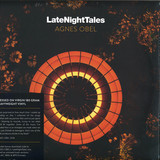
- C1: Agnes Obel - Stretch Your Eyes (Ambient Acapella)
- C2: The Bulgarian State Radio & Television Female Choir - Pilentze Pee (Pilentze Sings)
- C3: Agnes Obel - Glemmer Du
- C4: Agnes Obel - Bee Dance
- C5: Sibylle Baier - The End
- D1: Michelle Gurevich - Party Girl
- D2: Can - Oscura Primavera
- D3: David Lang - I Lie
- D4: Nina Simone - Images (Live In New York 1964)
- D5: Agnes Obel - Poem About Death
to Me, Sounds Have Always Been More Interesting Than Words,' Says Agnes Obel. i Love It When The Voice Becomes An Instrument And You Almost Forget It's A Human Voice.' Never Is This More Apt Than On This Beautifully Programmed And Bewitching Selection Of Music.
Agnes' 2010 Debut Album Philharmonics Went Platinum In France And Belgium And, Unsurprisingly, Quintuple Platinum In Her Native Denmark, Where She Also Won Five Danish Music Awards (equivalent To The Brits) In 2011. The Follow-up Aventine, Released In Late 2013, Was Imbued With The Same Measured Calmness As Her Debut. It Went Platinum In Belgium And Gold In Denmark And France.
For The Mix You Have In Your Hands It Feels Almost As If Agnes Has Scoured The World Looking For Kindred Spirits - Or Kindred Songs. There's A Quietude About It All, The Antithesis Of A Rush Hour, Like A Frozen Lake On A Sunday Morning. This Is Aided By A Veritable Cornucopia Of New Obel Material, Including A Haunting Reading Of Danish Song 'glemmer Du', Inger Christensen's 'poem About Death' Set To Original Music, And An Agnes Original, 'bee Dance'.
Among Them, There's The Enigmatic Jamaican Singer Nora Dean Who Weighs In With The Hypnotic And Slinky Duke Reid Production, 'ay Ay Ay Ay (angie-lala)' And The Sparse, Sardonic 'party Girl' By Michelle Gurevich, So Good It Inspired The Eponymous French Movie. There Are The Plangent Voices, The Bulgarian Folklore Choir, Nina Simone, Ray Davies And Agnes Herself, Ringing True. Somehow, Ms Obel Makes Even Makes The Electronic Tracks Bow To Her Needs As With Yello Whose 'great Mission' Is More Martin Denny Than Underworld And Cult Greek Composer Lena Platonos' 'bloody Shadows From A Distance' Pulses Gently Rather Than Throbs And Can's Recently Rediscovered 'obscura Primavera', Unusually Hushed.
"i Was Surprised At How Much Time I Ended Up Spending On This. I Collected All The Songs Together With My Partner Alex And We Just Spent Time Listening To Records, Trying To See What Would Fit Together. Some Of The Music I've Included Here Is On Mixtapes We Made When We Were Just Friends As Teenagers. Each One Of The Tracks Produces Stories In My Head." - Agnes Obel, February 2018
Max Loderbauer, who has so far made consistently engaging contributions to the Arjunamusic family, is back to lend his unique interpretive skills to the master recordings for the Brightbird album by João Paulo Esteves da Silva, Mário Franco and Samuel Rohrer. Loderbauer has set himself up for a chal- lenge, since the original album's completely improvised flow of small-ensemble, conversational jazz feels complete enough without outside intervention. However, Loderbauer's role as electronics operator in the similarly attuned Ambiq trio has already shown that, through his mastery of tone color, he has a talent for teasing out the additional hidden details within an apparently 'complete' sonic environment. It's a task he mana- ges to accomplish without ever overriding or contradicting the cohesive message provided by his collaborators.
Adding to the challenge here, Loderbauer chooses to re- mix using only sounds from the original recordings. By doing so, it might seem he is willfully denying himself the chance to use his own signature tools and turn Brightbird's source materi- al into stunningly new electro-acoustic hybrid blooms. Yet Loderbauer succeeds here by becoming something more like a translator than an augmenter - he finds a way to make mea- ningful syntactical changes to the trio's rich and versatile vo- cabulary, and once again unveils a verdant world of hidden details in the process.
The A-side 'Trusting Heart/Cosmos' has an anxious tone introduced by a set of Doppler-effected piano notes that seem to melt in the sun, and is soon complemented by a va- riegated, chattering rhythm line. Here Loderbauer builds up a tactile tension between rhythmic certainty and sharp-angled, de-tuned, and occasionally scrambled instrumentation, framing a disorienting (yet engaging) virtual space where ob- jects' bright hues rapidly change as they contract and expand along multiple dimensions. For the b-side 'Noontide', Lo- derbauer switches to a more focused and streamlined idiom with an uncanny ease, riding along steady waves of sequencer patterning and silvery, resonant shiverings. Reverberating, ho- lographic piano again provides the tonal center here, and the notes ring with a forward-thinking optimism not far removed from classics of the 'Krautrock' era.
Current supporters of all the artists involved will find this to be an invigorating synopsis of their work to date, while newcomers will be treated to a soundworld where skillful fu- sion (the act itself, rather than the music genre with the same name) is constantly on display.
Face Time is the second release from the trio of Oren Ambarchi, Kassel Jaeger, and James Rushford, following on from their 2016 debut Pale Calling. Recorded at the GRM studios in Paris in June 2017, the record immediately returns to the idiosyncratic sound-world of the trio's first release, a simmering stew of electronic smears, pitched-down animal moans, and mysteriously emotive microtonal organ chords. But before long the record takes an unexpected turn, as sounds that initially enter as occasional percussive pitter-patter build to a halting rhythm. Equally reminiscent of Basic Channel-style dub techno and the sound of a microphone loose in a pocket, these stumbling rhythmic figures provide the framework for the remainder of the record's two sides, occasionally receding into the background to allow squelching electronics, chiming bells, distorted autoharp, inchoate grunts and the sound of a Cristal Baschet to take centre stage, but each time returning with the inevitability of a an idée fixe.
Eschewing any clear sense of form, the two side-long pieces move seamlessly through episodes with the organic flow of improvisation, embracing the happy accidents of events conjoined by chance and lingering on liminal moments. Gradually washing out into a cavernous roar, the record's final moments are suddenly enlivened by shimmering metallic percussion and a sequence of woozy synth chords, combining with the muted rhythms and a distant thunderstorm to become a sort of oneiric tribute to the work of Wally Badarou. Bringing together three of contemporary experimental music's most individual voices, Face Time is an essential slice of outsider electro-acoustics. Cover design by Stephen O'Malley. Mastered and cut by Rashad Becker at D&M, Berlin.
Faitiche releases the album Improvisations And Edits, Tokyo 26.09.2001 on vinyl for the first time. For the original 2002 CD on Soup-Disk and Sub Rosa (Audiosphere), Jan Jelinek and the Japanese trio Computer Soup (Satoru Hori - trumpet, Osamu Okubo - toys & electronics, Kei Ikeda - toys & electronics) presented eight tracks all recorded one afternoon in the trio's living room in Tokyo. They are excerpts from a joint group improvisation that subsequently underwent rudimentary editing, on which Jelinek and Computer Soup worked separately.
Jelinek met the three musicians at his first concert in Japan in 2001, at Tokyo's Yellow club, where Computer Soup performed as the support act. Delighted by their free improvisation on pocket-sized electronic toys, trumpet and oscillators, he arranged to meet Hori, Okubo and Ikeda a few days later for a session at their apartment. The resulting three-hour recording, made on their living room floor, formed the basis for Improvisations and Edits. A few days later, Jelinek returned to Berlin. Over the following months, they separately chose passages from the recording that were then edited and assembled into an album.
Formed in Tokyo in 1996 as a quintet (including Shusaku Hariya and Daisuke Oishi), Computer Soup began by performing with acoustic instruments on the streets of Shibuya. Ikeda und Okubo soon switched instruments, and from then on the group's minimalistic but densely woven sound was defined by electronic toys, oscillators and Satoru Hori's trumpet. Their first album was released in 1997 on the Japanese label Soup Disk. Eight further releases followed.
From the reviews of Improvisations and Edits, Tokyo 26.09.2001 in 2003:
"The mind-blowing first track Straight Life is perhaps the best example of what the album has to offer. Jelinek's trademark smears and washes occupy the midrange, like ghosted images of Joe Zawinul's electric piano floating quietly in the wind. DSP jazz modes are set against a walking bassline (possibly computer generated) and a gently tooted trumpet complete with Harmon mute, a dead ringer for Miles Davis' Prestige-era ballads. The effect is something like a three-dimensional film, with different realities on each layer, images of what jazz was manage to interact with a real-time demonstration of all it could be."
pitchfork, 2003
"Improvisations and Edits is a warm and mellow Ambient release with beautiful glitch fragments, static noise bursts and real trumpet intersections. However, there are times where it is the exact opposite, mainly effect-laden, overdriven and bouncy with a lack of melodies and focus, so be aware of these specific tracks."
ambientexotica, 2003
"Often deliciously dreamy and hazy, Improvisations and Edits is like listening to an exceptional instrumental jazz performance while half-conscious or under some sort of chemical influence. Computerised blips and bleeps, loops and treatments and murky sonic skips curl up around desolate horn notes and scattered instrumental noises that culminate in elegant music."
exclaim.ca, 2003