It’s 2024 and Egyptian-born artist of South Sudanese origin Sam Alfred has had a monstrous 12 months. A new year means stepping in a new zone with new tunes. This is Forward Step.
First is the title track “Forward Step (Journey Mix)”, an epic cow-bell-laden house hammer that blooms into a euphoric flower. Running with a 90’s club flavour, Sam lays airy synths over punchy piano and rave stabs while an all-powerful speech plays out, celebrating the idea that we’re all in control of writing our futures. There’s a bubbling over of excitement on this one as it builds and builds and builds!
Up next is “Care 4 U” – a crunchy drum club roller paired with fuzzy bass tones and a super hooky vocal loop. A section that’s been lodged in our brains from the moment we heard it. Toss in airy pads and a key melody that’s also impossible to forget and this track’s got you hook, line and sinker. In true Sam Alfred style, “Care 4 U” is yet more proof that this lad is a wizard at writing jacked-up club cuts, each full of fizz.
Third in line comes “Keep It” a relentless hypnotic piece of techno. Outer space synths drone while shuddering percussion rumbles beneath. It’s here where the EP takes a darker turn. The curtain closer and focus track for the EP drop is “Distance” – an acidic house track to seriously lock and load to. Characterised by sharp hi-hats and lively keys, as its name suggests this one goes and goes and goes.
Cerca:tru tones
We’re excited to present you Yurk’s First Vinyl album on Chomp! Chomp! This six-track all original music by Yurk, is diverse and rhythm heavy across the electronic genres. Kicking off the album with “Delay Tech,” this 90s-inspired acidic house track is festival-ready with big energy. Then we dive into “Bustin’” - a bouncy Tech House with punchy and multiform tones. Follow by “Sin Control,” warm Jazzy House grooves accompanied by delayed filled Trumpet theme. On the B side, “Cosita” - a hard-hitting Detroit-inspired dub techno composition that treks into 90s territory. Follow by “El Nuevo Jazz”, a playful and dynamic track which combines punchy percussive electro breaks with a high-spirited bassline. To conclude the album - “Satori,” takes us on a spaced-out acid house journey, inspired by the Japanese Buddhist term for awakening, offering a psychedelic and uplifting finale.
Yurk is a dynamic producer and DJ from Puerto Rico, now making waves in Brooklyn's music scene. Blending Latin rhythms with global electronic beats, he has released music with local labels like Mechanical in Queens, NY. As the head of Organized Disorder, Yurk hosts a biweekly radio show, along with an all vinyl monthly Saoco! Party focused on Caribbean and outernational music.
All Tracks written and produced by Yurk. Mixed and mastered by Justin Van Der Volgen. A3 trumpet by Robert PM. B1 vocals by Timo Lee. Album Art by Bráulio Amado. "Dedicated to Erik and my beloved mother Laura, whose spirits guide every note with love and grace.” -Yurk
Warehouse Find!
Swedish DJ/Producer Christian Nielsen debuts on Maceo Plex's Ellum imprint with the ‘Love Struck’ EP this May.
The four track EP continues a strong start to 2020 with releases from Raxon and Avision and, true to the label’s form, is all about weighty, characterful cuts from Nielsen, an artist who has previously chalked up releases for the likes of Kompakt, Of Unsound Mind and Play it Down.
The titular opener of ‘Love Struck’ is a swaggering, low slung affair with a growling bassline underpinning a pitch shifted vocal refrain and piercing rave stabs - a mutant beast which fuses techno, Garage and rave aesthetics in anthemic style. The skeletal rhythms and gritty acid flair of ‘For Myself’ follow in a track that, through some nifty builds, manages to pull off a big room energy as much as it does a basement vibe. ’Switch’ is next up and, with a rock solid groove, vocal sample and subaquatic tones, displays just how well Nielsen can create a monster with few elements. The heaviest track, ‘Pulse’, rounds off ‘Love Struck’ with a huge, padding kick drum and resonant percussive lead doing the heavy lifting while counterpointed by judiciously employed warm, cossetting jazz flute licks
- A1: Blunt Later For It (Stephen Brown Remix)
- B1: Vincent Desmont Thrust It (Markus Suckut Remix)
- B2: The Cruiser The Venue (Sawlin Remix)
- C1: B+A+D Moon, Sea And Waves (Alek S Remix)
- C2: B+A+D Moon, Sea And Waves (Alek S D-Town Edit)
- D1: Blunt 1Non1 (Joe Metzenmacher Remix)
- D2: Vincent Desmont Archensweet (Ashcaa Remix)
- E1: Ashppe Flexit (Drexl Remix)
- E2: Ashppe Fudge It (Simon Ferdinand Remix)
- F1: Ashppe Let's Do It (Alpha Gpc Remix Dub Mix)
- F2: Ashppe Let's Do It (Redrop Remix)
VDR Remixes: Beyond Music
The concept for this remix album evolved gradually through various encounters and exchanges. Despite its complexity, the project would not have come to fruition without the firm dedication of each artist involved.
Artists were given the freedom to select any track from my discography for their remix. With no directives, the LP's magic emerged from their unique styles and creative visions, resulting in a diverse palette of tones and rhythms.
The first record opens with Stephen Brown's electrifying remix of Blunt's "Later For It," originally released on Bright Sounds. Stephen's reinterpretation infuses the track with dark, captivating techno.
On the B-side, Markus Suckut presents his masterful adaptation of "Thrust It," a track marking my first release. Following this, Sawlin transforms "The Venue" from The Cruiser series, infusing it with his signature 'Made by Sawlin' style.
The second record continues with two compelling versions of "Moon, Sea and Waves" by Alek S. These reinterpretations—one dub techno and the other Detroit-oriented—offer a unique and immersive vision of the B+A+D tracks, originally released on Newmont.
On the flip side, Joe Metzenmacher delivers a daring electro remix of "1NON1" on D1, followed by Sicaa's bass music rendition of "Archensweet" on D2.
The third record is entirely dedicated to remixes of the Ashppe series, which I hold dear. Drexl provides a powerful breakbeat cut of "Flexit," a true bomb. Simon Ferdinand from Polycarp Records, with whom I had the pleasure of working, captures the punch and melancholy of "Fudge It". The LP concludes with two Dub 3.0 adaptations of "Let's do it" by Anthony Cacharron, using the aliases Alpha GPC and Redrop, ending on an exploratory high note.
A heartfelt thank you to all the remixers for their boundless creativity and commitment to this project
Dawson’s latest offering, The Tinnitus Chorus, is an album of wide-eyed collaborations. He is joined by an inspired cast of revered friends and kindred strangers including Suso Saiz, M. Sage (Fuubutsushi), Eli Winter, K. Freund, (Trouble Books / Lemon Quartet), Dasom Baek, Lina Langendorf (Langendorf United), Vumbi Dekula, Jairus Sharif, Yutaka Hirasaka, and his bandmates in Peace Flag Ensemble. The collection is bookended by two pieces with Michael Grigoni. From birdsong and decaying tape to Western sprawl, each of Dawson’s previous solo records have moved in a singular direction but here he approaches things through a kaleidoscopic lens. While his weathered ambient sketches serve as a through line, they are woven with all manner of instrumentation from clarinet and modular synth to steel guitars and flugelhorn. Improvised Congolese guitar nuzzles next to American experimental folk. Handmade electronics give way to spiritual sax. M. Sage contributes something referred to as a “mystic music box”. The result is a strange and beautiful journey that feels lost between genres and yet wholly unified. Dawson reflects on the genesis of album with a smirk and a shrug. He has been marred by ear troubles in recent years and had been struggling to complete an album of solo material. The clicks, ringing tones, and hiss in his ears had been drowning out the ringing tones, clicks, and hiss in his studio. When he reached out to We Are Busy Bodies to provide an update on the record he was met with an unsuspecting proposal that perhaps he shift focus to an album of collaborations. The truth is he had been ruminating on the idea for years and the nudge from WABB proved to be the motivation he needed to shelve his insecurities and invite artists he admires to join him for The Tinnitus Chorus.
Black Truffle is thrilled to present a Song for two Mothers / Occam IX the first ever solo release from Laetitia Sonami. Born in France in 1957, Sonami studied with Éliane Radigue in Paris before moving to California in 1978 to study electronic music at Mills College, going on to make important innovations in the field of live electronics interfaces and multi-media performance. Sonami is perhaps most closely associated with one of her inventions, the Lady’s Glove, an arm-length tailored glove fitted with movement sensors allowing the performer fluidly to control digital sound parameters and processing, as well as motors, lights and video playback. Having performed with the Lady’s Glove for 25 years, Sonami retired it in 2016, turning her attention to the interface/instrument heard and pictured here, the Spring Sprye.
In Sonami’s own description, “The Spring Spyre is composed of three thin springs that are attached to reverb tank pickups, mounted on a metal ring. The audio generated when the springs are touched, rubbed or struck is analyzed in Max/MSP. The extracted features are then used to train machine learning models in Wekinator and Rapidmax and control the audio synthesis in real time. We never actually hear the springs.” After decades of aversion to documenting her work on recordings, a Song for two Mothers / Occam IX treats listeners to two side-long performances with the Spring Spyre: the very first piece developed for the instrument and the most recent, the two contrasting remarkably in sound palette, energy and form. A Song for two Mothers (2023) spins an intricate web of rippling synthetic burbles, rapid sweeps and fizzing textures. Performed in real time with the sensitive and partly uncontrollable Spring Sprye ("a bit tyrannical," Sonami calls it), the music is delicate yet chaotic. Abrupt gestures hover against a backdrop of silence, "devoid of spatial or temporal direction". After several minutes, the sound-world becomes metallic and percussive, tapping and ticking in pointillistic flurries before a wavering harmonic cloud emerges, sprinkled with resonant drips and pops.
Occam IX is a radically different proposition. At the outset of Sonami’s exploration of the Spring Sprye, she asked her former teacher Éliane Radigue to compose a piece for it—and her: like all of Radigue’s work since she ceased working with analogue electronics at the beginning of the 21st century, Occam IX is written not only for an instrument but also for a particular performer. These scores are developed verbally, through meetings and conversations between performer and composer; each is grounded in an image (usually kept from listeners, to avoid influencing their experience); all magnify the subtlest acoustic phenomena and require great commitment and patience from the performer. Sonami’s is one of the few Occam pieces to make use of electronics, bringing it closer to Radigue’s famous longform pieces for ARP 2500. Beginning from a rumbling low tone, the listener is gradually immersed in slowly lapping waves of synthetic tones, eventually thinning out into delicate bell-like pings against a background of white noise, reminiscent of one of the most beautiful sections of Kyema from the Trilogie de la Morte.
Accompanied by notes from Sonami, her longtime collaborator Paul DeMarinis, and Radigue, and illustrated with scores, photographs and images of the Spring Spyre, a Song for two Mothers / Occam IX is an essential document celebrating an under-recognised pioneer of electronic music and performance.
Dutch artist LEYO delivers his debut album via Cécille Records this September, comprised of eight originals and featuring collabs with Toman and Thierry Ganz.
LEYO is a project based out of Amersfoort in the Netherlands, marking its beginnings here with an LP composed utilising a
full band set up, vocals from Thierry Ganz and a singular collaborative appearance from fellow Dutch artist, Toman. The debut album showcases LEYO’s depth of influences, straddling the lines throughout between soulful electro-pop and funkinfused disco jams through to more raw house and sun drenched lounge cuts.
Opener ‘Hello (Intro)’ sets the tone with bumpy drums, psychedelic guitar tones and a dreamy phone call voice before
‘Don’t Do It’ picks up the pace, blending funky guitar lick, organic percussion and resonant synth leads with sporadic vocal
chants. Thierry Ganz first appearance on the album follows with ‘Know Your Name’, merging together Ganz hypnotic vocal
stylings with choppy bass stabs, cinematic strings and crisp disco drums. ‘Open Up The Trunk Do It’ then shifts gears into
jazz-tinged raw house territory via twinkling keys, saturated drums and a vacillating low-end drive.
Up next LEYO welcomes both Toman and Thierry Ganz into the mix for ‘That Booty’, a high octane disco house jam fuelled
by swinging drums, soulful vocals and tension building atmospherics. ‘That’s Why’ then brings down the pace to a more
dreamy aesthetic with fluttering keys and wandering synths intertwined with congas and breathy vocals. The final full
length track ‘Without You’ then lays down a shuffled rhythm section and plucked guitar lines with hypnotic chords and
filtered vocals throughout its six and a half minute duration before ‘On My Mind ft. Thierry Ganz (Outro)’ concludes the
package in a fully- fledged funk fashion, Ganz lays down his signature vocal style uttering the tracks title while underpinned
by wandering bass notes, bouncy drums, wandering guitar notes and Moog style synth licks.
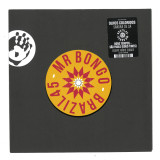
Two 1980s Brazilian boogie bombs from Sandra de Sá and Equipe Rádio Cidade get a remastered reissue as part of Mr Bongo Brazil 45’s series.
Sandra de Sá’s ‘Olhos Coloridos’ is an ‘80s MPB/boogie jam, taken from her self-titled 1982 LP on RGE Brazil, that sits perfectly alongside the likes of Tim Maia, Marcos Valle, Robson Jorge and Lincoln Olivetti. No surprise then that Lincoln Olivetti and Robson Jorge feature on the track, backed by some of the members from Banda Black Rio. A joyous combination of funk basslines and dreamy Rhodes that marry with jubilant horns and Sá’s incredible vocal tones.
On the B side, Equipe Rádio Cidade ‘Bons Tempo Sao Paulo (Good Times)’ was originally released on a rare promo only 7 inch from 1980. Giving a Brazilian boogie makeover to Good Times by Chic / Rapper’s Delight by Sugarhill Gang, the track is voiced by radio DJs from Sao Paulo wishing their listeners a Merry Christmas and Happy New Year.
This replayed version, heavy on the clavinet with a samba-infused, cuica-laced percussion breakdown, gives a true Brazilian spin on one of the most distinctive melodies out there.
Remastered with refreshed artwork.
A slick techy dance-floor banger featuring the sultry tones of US Vocalist ‘Brutha Basil’.
Hand Made has been a go-to number from Abel’s well-received ‘Cosmic Law’ album. Taking a deeper and much more techy approach to sound design, Abel and Atjazz enlisted the brilliant ‘Brutha Basil’ to lay down some truth about ‘doing this music thing for the right reasons’. With some incredible remixes from Peacey who swipes things up to a new energy level, Rocco Rodamaal whose punchy re-work takes us way back to NYC’s early days of house music, and South Beach Recycling’s Chicago and Detroit-inspired late-night groover. This is one of those releases that will stay on target for a long time, no doubt!
Celebrating their 10th anniversary, Slowly Rolling Camera's sixth studio release, 'Silver Shadow,' is inspired by the dynamic interplay of film montages—infused with soul-stirring rhythms, magnetic melodies, and a lush spectrum of emotional tones.
Since bursting onto the scene in 2013, Cardiff's Slowly Rolling Camera has crafted a distinctive niche in the European jazz tapestry, effortlessly weaving together soul-stirring rhythms, magnetic melodies, and a rich palette of emotional hues. Known for alchemical compounds of jazz finesse, cinematic gravitas, and electronic flair, Slowly Rolling Camera fashions sound, perpetually pushing the boundaries of musical creativity.
"This album reflects our fascination with the cinematic approach, not just in sound, but in how we construct our music". SRC’s latest album, 'Silver Shadow,' delves even deeper into that cinematic realm. Inspired by the visual and musical interplay infilm montages, 'Silver Shadow' centers around a fictional protagonist, encapsulated both in the album’s narrative arc and its striking artwork. The tracks, concise and emotionally consistent, mark a departure from earlier long-form composition, aiming instead for more immediate impact.The core trio of Dave Stapleton (keys), Deri Roberts (sound design & production), and Elliot Bennett (drums) drive the band's collective ethos, further ornamented by a vibrant ensemble of collaborators including Jasper Høiby on bass, Josh Arcoleo onsax, Stuart McCallum on guitar, and Verneri Pohjola on trumpet. The band’s genre-defying approach and profound emotional depth has earned comparison with iconic groups The Cinematic Orchestra and GoGo Penguin and captured the hearts ofmany thousands of fans worldwide.
2024 Repress
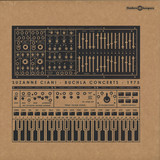
Finders Keepers invite you to witness the incredible first ever Buchla synthesiser concerts/demonstrations providing a distinctive feminine alternative to The Silver Apples Of The Moon if they had ever been presented in phonographic form. This is history in the remaking.
This spring Finders Keepers Records are proud to release an archival project that not only redefines musical history but boasts genuine claim to the overused buzzwords such as pioneering, maverick, experimental, groundbreaking and esoteric, while questioning social politics and the evolution of music technology as we've come to understand it. To describe this records as a game-changer is an understatement. This record represents a musical revolution, a scientific benchmark and a trophy in the cabinet of counter culture creativity. This record is a triumphant yardstick in the synthesiser space race and the untold story of the first woman on the proverbial moon. While pondering the early accolades of this record it's daunting to learn that this record was in fact not a record at all... It was a manifesto and a gateway to a new world, that somehow never quite opened. If the unfamiliar, modernistic, melodic, pulses, tones and harmonics found on this 1975 live presentation/grant application/educational demonstration had been placed in a phonographic context alongside the promoted work of Morton Subotnick, Walter Carlos or Tomita then the name Suzanne Ciani and her influence would have already radically changed the shape, sound and gender of our record collections. Hopefully there is still chance.
In short, Suzanne was a self-imposed twenty-year-old employee of the Buchla modular synthesiser company, San Francisco's neck and neck contender to New York's Moog. Buchla was run by a community of festival freaks and academic acid eaters whose roots in new age lifestyles and the reinvention of art and music replaced the business acumen enjoyed by its likeminded East Coasters. In the eyes of the consumer the creative refusal to adopt rudimentary facets like a piano keyboard controller rendered the Buchla synthesiser the more obscure stubborn sister of the synth marathon, steering these incredible units away from the mainstream into the homes and studios of free music aficionados, art house composers and die-hard revolutionaries. Championed and semi-showcased by composer Morton Subotnick on his albums The Bull and Silver Apples Of The Moon, Buchla's versatility began to open the minds of a new generation, but the high-end design features and no-compromise modus operandi was often confused with incompatibility and, in the pulsating shadow of Moog's marketing, the revolution would not be televised nor patronised. Suzanne Ciani, as one of the very few female composers on the frontline (and also providing the back line) did not lose faith.
These concerts' are the epitome of rare music technology historic documents, performed by a real musician whose skills and academic education in classical composition already outweighed her male synthesiser contemporaries of twice her age. At the very start of her fragile career these recordings are nothing short of sacrificial ode to her mentor and machine, sonic pickets of the revolution and love letters to an absolutely genuine vision of and 'alternative' musical future. In denouncing her own precocious polymathmatic past in a bid to persuade the world to sing from a new hymn sheet, Suzanne Ciani created a bi-product of never before heard music that would render the pigeon holes ambient' and futuristic' utterly inadequate. Providing nothing short of an entirely different feminine take on the experimental records' of Morton Subotnick and proving to a small, judgmental audience and jury the true versatility of one of the most radical and idiosyncratic musical instruments of the 20th century. These recordings have not been heard since then.
The importance of these genuinely lost pieces of electronic musics puzzle almost eclipses the glaring detail of Suzanne's gender as a distinct minority in an almost exclusively male dominated, faceless, coldly scientific landscape. Those familiar with Suzanne's work, a vast vault of previously unpublished non-records', will already know how the creative politics in her art of being' simultaneously reshaped the worlds of synth design, advertising and film composition before anyone had even dropped a stylus in her groove. Needless to say this record, finally commanding the archival format of choice, courtesy of the Ciani and Finders Keepers longstanding unison, was not the last first' with which this hugely important composer would gift society, and the future of a wide range of exciting evolving creative disciplines.
You have found a holy grail of electronic music and a female musical pioneer who was too proactive to take the trophies. With the light of Buchla and Ciani's initial flame Finders Keepers continues to take a torch through the vaults of this lesser-celebrated music legacy shining a beam on these non-records' that evaded the limelight for almost half a century. You can't write history when you are too busy making it. With fresh ink in the bottomless well, let's start at the beginning. Again. You, are invited!
Limited edition "Coke Bottle Cloud" color vinyl with etched b-side. Australian duo Armlock make music for having your head in the clouds. On new album Seashell Angel Lucky Charm, Simon Lam and Hamish Mitchell bring you on a steady ascension through compressed and heavenly sonic realms. The band's second proper release, and first for Run For Cover Records, showcases the songwriters' experimental electronic roots through an indie rock lens. Free from distortion or overindulgence, Seashell Angel Lucky Charm is a collection of consistent rhythms decorated with clean guitar tones and eccentricities. Through playful layers of vocal harmony and minimal arrangements, Armlock capture the inventive and uncomplicated essence of Pinback or Alex G. Self-described as "indie rock with a touch of spirituality and emo", Armlock's journey into a higher realm is seeped with the looming confusion that comes with exploring the unknown. With an introverted demeanor, Armlock explores the human desire to find guidance in a world much bigger than its people. Every sound on Seashell Angel Lucky Charm feels precise and intentional, making the anthemic choruses on tracks like "Fear" and "El Oh Ve Ee'' feel expertly placed and pop-oriented. These two songs show Armlock's savvy with harmony as they use octaves of angelic sounds to stretch a simple one-word chorus until it soars with meaning. Unlike most indie rockers, Armlock use guitar as a tool in their belt rather than a vessel for songwriting. Where their 2021 EP Trust set foundations in downtempo acoustic guitar, Lam and Mitchell's evolved songwriting is a testament to where an electric guitar can amplify a song's groove, or usher in sonic space.
Cloudy Vinyl[25,00 €]
Baby Blue & Halloween Orange Vinyl. In their decade-plus together, the four-piece_Julia Shapiro (guitar, vocals), Lydia Lund (guitar, vocals), Gretchen Grimm (drums, vocals), and Annie Truscott (bass, vocals)_have created a resonant body of work. Live Laugh Love is a natural continuation. Against the bizarre backdrop of the past few years, Chastity Belt remained a supportive space for the members to grow and experiment, drawing on the ingredients most essential to their process since the beginning: authenticity and levity. Recorded over three sessions in as many years (January 2020, November 2021 and 2022), the focus became more about enjoying their time together in the studio than making it feel like work. Their ease and familiarity with engineer Samur Khouja in LA, who also recorded their last album, made for a particularly enjoyable process. Once completed, they returned to renowned engineer Heba Kadry who mastered the album.Album opener "Hollow" sets the tone with a gently driving rhythm while guitar layers stream like sun rays through an open car window. A warmth radiates through Shapiro's voice, even while grappling with feeling lost and stuck. "The older I get," Shapiro says of the lyrics, "the more I realize that I might just always feel this way, and it's more about sitting with the feeling and accepting it, rather than trying to fight it." That wisdom seems to anchor Live Laugh Love. Chastity Belt has never shied from navigating the spectrum of difficult emotions, and an existential thread weaves throughout the subject matter. And yet the songs feel more grounded than ever; there's a sense of quiet confidence and self-assurance that comes with being less numb and more present. Facing discomfort takes more fortitude, after all.Live Laugh Love finds the members in their prime as musicians. Their parts trace intricate patterns over one another, but there's room to breathe between the layers. Everyone contributes to the writing, sometimes switching instruments, and for the first time, all four members sing a song. It's never been more apparent that they are creative siblings, cut from the same belt. "We've been playing music with each other for over a decade," says Shapiro, "so it really does feel like we're all fluent in the same language, and a lot of it just happens naturally.""Laugh" seeks in the balm of friendship, aware of the anticipatory nostalgia that hits during a good time that you're already missing before it's gone; the heavier guitar tones on "Chemtrails" streak ominous chord progressions over Grimm's precision timekeeping, lamenting memories that won't fade easily. During a transitional time, Truscott came across a note in their phone that read, "it's not hard all day, just sometimes," which inspired a poignant line in the chorus of "Kool-Aid," their first song as lead vocalist on a Chastity Belt recording. Another standout, "I-90 Bridge" shines with a silvery melody that soars as Lund belts one of the most resounding moments on the album: "Tell your girlfriend she's got nothing to fear/I'm set in my head/My body's a different story." The track "Blue" saunters nonchalantly with a wink; you can almost hear Shapiro's smile as she sings "Faking it big time/So I can hit my stride/Man, it feels good to be alive," channeling early Chastity Belt channeling early '90s before channeling the late Elliott Smith in a spiral of distortion and insight: "Don't get upset about it/It's gonna pass/Tell all your friends about it/They're gonna laugh.""We have such a strong sense of each other's musical inclinations" says Lund. "I think this allows for a lot of playfulness_we can kinda surprise each other, like a good punchline would."
10-piece UK afro-fusion outfit TC & The Groove Family are proud to share their new EP ‘We Have Each Other’. Releasing on Friday 7th June via Bridge The Gap, the project sees the band refine the sound debuted on their 2022 album ‘First Home’. Returning to work once again with producer Tom Excell (Nubiyan Twist, ONIPA), the project explores a darker sonic palette, channelling a deep appreciation of UK bass and electronic music alongside afro-jazz sounds and hip-hop sensibilities.
The record documents a time of change within the group - a new lineup, plus members living in different cities and pursuing various paths - whilst also reflecting the turbulent socio-political climate, and the major shifts and changes on the horizon for humanity. However, despite the heavy subject material, the band strike an optimistic, uplifting tone, with MC Franz Von channeling the music into a message encouraging listeners to look around and embrace
community, whatever that may look like. Bandleader Tim Cook shares:
“Our collective purpose is to craft music that empowers and energises individuals to embrace their true selves with pride, celebrating the unity and strength we radiate as one community. No one needs to be alone when they are striving for common humanity. No one should be lonely when we celebrate each other, drawn together by a sound that says it’s good to be me, it’s better to be us. As our MC, Franz Von says, music brings peace, love & energy”.
Opener and lead single ‘Stand Strong’ is a love letter to afrobeat, creating a contemporary twist with its Khruangbin-esque guitar lines and weaving horns, whilst ‘Here, Now’ takes the tempo down to an atmospheric haze of dubbed-out ambient effects, pierced by uplifting horn melodies. ‘Blessed’ sees the group welcome Nubiyan Twist’s Aziza Jaye for a dancehall-meets-North African-flavoured feature, subtly reimagining what Elephunk era Black Eyed Peas would
sound like today.
At the EP’s centre-point and emotional peak, title track ‘We Have Each Other’ showcases the band’s jazz fusion, Latin and dark electronic influences. The tracks growling, subbed-out bass tones return as a theme for ‘Wile Out’ - a UK hip-hop & jungle tinged collaboration with SANITY complete with virtuosic, tight-knit grooves, furious horn lines and a whirlwind of immersive turntablism.
Originally formed in Leeds, TC & The Groove Family’s sound reflects the diverse musical and cultural backgrounds at the core of the project, with songs exploring grooves and genres including afrobeat, broken beat, jungle, jazz and grime. Their music has drawn widespread acclaim, supported by tastemakers including Jamz Supernova and Craig Charles on BBC Radio 6, BBC Introducing West Yorkshire, Jazz FM, Rinse FM, Radio FIP and more. The group have performed at the likes of Glastonbury, We Out Here, Greenman and Boomtown, and will embark on a UK tour across May & June in support of the release of ‘We Have Each Other’.
Two Italians step into the Bordello. Both are armed. Their weapons of choice? The synthesizer sounds of italo, new beat and wave. LVCA and Otis have been raised on the sounds of their homeland, adopting its analogue sound while adapting it to their own style. The result is a brooding mix of addictive lines and vocoder fire.
“Ritmo Electronico” opens with a steel-edged snare driving smeared synths through the city dusk, robotic lyrics menace this sleazy neon-stained scene of cracked mirrorballs and flaring machines.
Listeners are pulled into the underbelly of A Promise In The Cold Night with the murky “Tanzen”. Alex Vincent’s words are shrouded in glitch, bright burbling bars and a clean clap offering a path of light to help the listener navigate their way. The true coldness of the night arrives with the stabbing keys of “Synthesised Emotion”. Through a haze of hi-hats, an electrical smoke of blacks and greys fizz with juddering volts as passions pour through cable and wire. That haze grows thick in the close. Through a mist of distortion, a “Sphere Of Light” penetrates. Pin-pricks of percussion are dowsed in aquatic tones before a syrup of static is poured across proceedings, lost vocals ghost in this fog of bending bodies and forms.
Black Truffle is pleased to announce Resonant Trees, the first vinyl release from French composer-performer Léo Dupleix. An active member of the international community of younger musicians working with just intonation, Dupleix has composed works for solo instrumentalists and ensembles in Europe and Japan, as well as performing extensively on harpsichord, piano and electronics. His music is distinguished by a formal clarity and elegance of surface, gently shaping pure intervals into delicate melodic patterns and shimmering harmonic planes.
Resonant Trees presents two side-long pieces for harpsichord and ensemble, both setting slowly repeating patterns played on harpsichord and guitar within an environment of sustained tones. Dupleix performs on a French double manual harpsichord (tuned to a just intonation scheme of his own devising) and Prophet synthesizer, joined by Juliette Adam (bass clarinet), Johanna Bartz (traverso flute), Cyprien Busolini (viola), Fredrik Rasten (6- and 12-string guitars), and Mara Winter (traverso flute). The harpsichord begins Resonant Tree I alone, slowly sounding out a series of arpeggiated chords that emphasise the unique (and for unaccustomed listeners, sometimes unsettling) harmonic and timbral qualities of justly tuned intervals. Long tones from synthesiser, bass clarinet, viola and Baroque traverso flutes slowly creep into the spaces between the arpeggiated chords, joined after several minutes by delicate patterns of harmonics played by Rasten on acoustic guitars.
On Resonant Tree II, a similar structure and ensemble (without the flutes) are used with quite different results. We again hear only the harpsichord at first, but this time playing a series of flowing melodic lines, each of which is repeated several times. Joined again by long tones from the ensemble, here the viola is particularly prominent and its interplay with the harpsichord creates fascinating acoustic effects. In both pieces, repetition gives the music a static, stable quality while, at the same time, the exact shape of the repeating patterns remains difficult to grasp. As Dupleix writes, these pieces dream of music as ‘space and a sound that one could grasp in one’s hand.’ As the near-static quality of the repetitions and long tones with little incident make these two stretches of musical time feel like spaces for the listener to inhabit, the small variations on a narrow range of related material act like a three-dimensional object whose each facet is examined in turn. At once austere and seductive, Resonant Trees takes its place beside the work of contemporaries like Catherine Lamb, while also calling up the languorous melodic world of Mamoru Fujieda, the dignified melancholy of Satoshi Ashikawa’s classic Still Way and the espaliered chamber atmospherics of the Obscure catalogue.
"Remembering is not the opposite of forgetting," Casey MQ sings at the start of Later that day, the day before, or the day before that, his new LP and Ghostly International debut. It's a phrase fittingly misremembered from something the LA-based, Canadian-born composer came upon as he spiraled into unconscious and subconscious-led writing sessions at the piano. Casey's known for his 2020 breakthrough release babycasey, which gave voice to songs seen through the lens of childhood, various film score work and collaborations with artists such as Oklou (who returns here), Eartheater, and Vagabon. His gifts as a producer and songwriter are rooted in textural world-building and the excavation of personal truth. With Later that day... he questions what is true entirely, understanding our mind's tendency to bend and project onto pictures of the past. Across vivid, baroque pop balladry, Casey MQ reorients his recording project and point of view under the notion that memories are malleable. All the joy, pain, love, and loss housed within remembrance is open to interpretation and deconstruction, which he does deftly, with curiosity and complete artistic freedom. "It's a memory album," Casey puts it simply, winding up for the deeper unpacking, "and it might be a breakup album, too_there are more questions than answers." Engaging his dreams and sitting with sheet music at his newly acquired piano, he looked to new and old inspirations including the works of Claude Debussy, Joni Mitchell, and Joe Hisaishi's beloved Studio Ghibli film scores. "Since I was young, I always wanted to write a piano album." babycasey's studied electronic sound isn't wholly abandoned on Later that day... instead, it comes through like an atmosphere, giving Casey's more spacious, minimal arrangements a distinct luster and sheen. The textures and tones shift from song to song as if mirroring the way our minds constantly recontextualize, remember, and forget. Cathartic opener "Grey Gardens" _ its title derived from a dream abstractly related to the Toronto restaurant, but not the 1975 film, which he cites as another coincidental false memory _ presents the record's plaintive, haunted feeling. "Even if not reading into lyrics, sonically I wanted it to feel like you're being pulled into a universe. Not fantasy or otherworldly per se, something more tangible, of the body and mind," Casey says. "Hearing it back, I realized this track was the key to unlocking it." His tender falsetto hovers above ambient washes and echoed keys, each word falling carefully in the crevices. "Asleep At The Wheel" unfolds on arpeggiated synth before a burst of symphonic color; the synth returns inverted to harmonize with the outro, "I love a car crash, I love a story, I love a memory, I swear it's real..." Casey leans into digital imagination on the warm, introspective "Me I Think I Found It." Subdued, stuttered percussion underscores the singer as he cycles through pixelated imagery _ screenshots, smiles, streetlights _ searching for higher meaning through love. Built on ascendent chord distortions, "Dying Til I'm Born" gives the record one of its boldest pulses of emotion. The back half stretches out; "Is This Only Water" is sparse and foggy, "Baby Voice" is intimate and desperate for something to remain. "Words For Love" grooves on guitar, and "Tennisman9" aches in heartbreak. French musician Marylou Mayniel, aka Oklou, appears as the collection's only guest for the closing duet, "The Make Believe," a bright and buoyant send-off that gives Later that day... both a sense of resolve and cyclical-motion. "We are young, under the sun," they sing together, a parting image brimming with lightness.
Tangential Music is pleased to present the new album from veteran Spanish DJ and producer, Dj Toner (aka Antonio Herrera). Alongside his co-writer/arranger Daniel Molina and with guests that include the legendary Blue Note Records innovator Erik Truffaz and Grammy winning flautist and saxophonist Jorge Pardo, he has created a 10 track collection of slow-burning instrumentals that straddle the worlds of hip hop, jazz and electronica.
With a personal, precision tooled approach to his craft, the Andalusian has offered up an album of finely modelled downbeat moods.
At first glance, ‘Out Side’ is made up of recognisably superior hip hop instrumentals but if you listen carefully, and with patience, one can hear a craftsman at work. A wooden box is just a box until you look closer. The hidden joints, the perfect lining up of the grain, the years of artisanal graft and laser-focussed attention to detail that go into making something that has nothing present, that doesn’t deserve to be there. This is how Dj Toner operates.
The two singles that preempt the album’s release reveal different sides of his craft. ‘Camina’ struts with tough intentions. Soundtrack-y in an exploitation police drama manner, the get-out-of-my-way drum break and tension-filled chords suggest the bad cop, Erik Truffaz’s piercing lyrical trumpet lines, the good. The Afro-jazz horns led second release ‘Surprise’ is an altogether more playful, sunbaked affair. Sensual and slow-burning, there’s still an edge but it’s too hot to quarrel.
Dj Toner’s minimalist attitude to creation is shared with his co-composer Molina - an individual’s contribution may be cut to the bone, leaving just its aura or tone. The echo of a piano, a single blast of tuneful wind from a flute, a perfectly positioned drum hit.
Since the Wu-Tang Clan’s RZA began applying his beatmaking prowess to movie soundtracks, the hip hop instrumental has been acknowledged as something to listen to, as much as being used as a DJ tool or backing for an MC. Dj Toner’s instrumentals can, therefore, be seen as soundtracks. Soundtracks to his life and craft, vignettes of his environment in both the urban sprawl and the wider and slower spaces of “el campo”.
The sweet-tempered jazz-blues of ‘La Rimosa’ is a gentle welcome to the album. A simple, laid back groove with the most romantic of piano hooks that one could imagine Common dropping rhymes on. You’re kept on your toes with the odd purposeful moment of discordant interruption but the tender heart of the composition is never far away.
‘O’Beat’ hints at John Coltrane with the sparse but full-sounding upright bass before a head-snap break leads into a curious piano groove, a vintage organ swirls into a psychedelic fractal, whilst the bluesy female vocal snippets add the spice, that zing in the Granadan gazpacho.
The flamenco guitar driven ‘Flama’ is an excellent example of intricate sample placement and musicality. Old school (school yard) scratch interludes, sweet piano hooks, a minimalist but knife sharp flute contribution from Jorge Pardo, and the crunchiest of drums taking us for an intriguing walk round the corner.
We’ve mentioned them before but it’s on ‘Sweetband’ that we can feel that Wu-Tang dread hanging off its shoulders. A brooding orchestral number with powerful horns and a cavernous piano hit. The title of the piece is in stark contrast to the dark shadows of the tune.
Erik Truffaz returns in fine form on the super lethargic jazz-funk-hop of ‘The Day’. His instantly identifiable muted trumpet sound paints dazzling colours over the more earthy tones of the filtered down keys as a rubbery upright bass keeps the forward momentum. Dj Toner’s ‘Blessed Are The Weird People’ album, was rated in Jazz Magazine as one of the 20 jazz albums of 2021, so he isn’t some dilettante when it comes to playing with the complex hues of jazz but he does like to strip it to its bare essentials.
‘Fanega’ sees a gorgeous flute contribution from Jorge Pardo. An eerie boom-bap groove with sprinkles of electronic pulses and washed out chords is the canvas on which the award-winning multi-instrumentalist evokes the heat shimmer of the savannah.
‘Esperanza’ translates as ‘hope’ in English and this lovely slow, swinging jazzy groove really does provoke feelings of positivity and belief. Sublime vibraphone and another stunning trumpet offering from Erik Truffaz, take us on a journey of warm days and possibilities, the shuffling drums and sweet chord patterns are nicely finished off by a tranquil horn chorus towards its unhurried end.
‘Under Beat’ ends on a beefy boom-bap groove with a liquid funk bassline, elegant synth strings and old school scratching. Again, there’s that undisputable soundtrack edge, action and motion, the smell of the city.
There you have it, 10 tracks that go beyond the surface, deep into the dedicated craft of Dj Toner. Decades of experience and collaboration purified and refined into beat-heavy emotions, listen closely or crank it up, it’s down to you!
New music from Philadelphia’s recently rediscovered soul powerhouse Ron Aikens and his backing band the Hip Tones is a soon-to-be classic double sider. Following in the traditional “soul 45 rpm” single format, a ballad side with a funk side on the flip, here is the first physical release from the forthcoming LP “Ron And The Hip Tones”. The lowrider soul feel on “Tear On My Chin” comes from a brainstorming session with Ron, producer P. Maxwell Ochester, and the two main songwriters Dave Cope & Fred Berman.
It tackles heartache, pain, and loss coupled with the slow grinding groove only true heartache can produce. On the flip, you will find a nod to Ron’s former band, Power Of Attorney, and their breakout single “Changing Man” which inspired the uptempo groove and sweet flute part. Hinting at the classic Philly Soul style, there are lush strings and as a bonus, the impactful and powerful message delivered by Philadelphia poet Ursula Rucker.