The writer Max Sebald often pondered over the nature of human memory, specifically, how our thoughts and desires - and their results - overlap and mutate over time. In A Place in the Country, he writes of the significance of what see as “similarities, overlaps and coincidences”. Are they the “delusions” of the self and senses, or manifestations of “an order underlying the chaos of human relationships, ... which lies beyond our comprehension”?
Song of the Night Mists, the new album by post-classical composer Stefan Wesołowski, often feels it draws on Sebald’s premise.
On a simpler plane, the one where the market dictates the neatly ordered information we consume, Song of the Night Mists can be described thus: recorded in the main by Stefan Wesołowski in Gdańsk, both in his studio and in Saint Nicholas' Basilica, the album incorporates acoustic instruments - piano, violin, double bass - and classic synthesizers such as the Roland Jupiter-8, the Soviet Polivoks. A Roland Space Echo RE-150 tape delay was also pressed into service as an instrument. We also hear the basillica’s organ and field recordings from the Tatra Mountains. Other musicians were Maja Miro, who played the flute parts on ‘Glacial Troughs’ and brother Piotr Wesołowski, who played the organ on ‘Wilhelm Tombeau’. Sound engineer was Marcin Nenko, who was also on hand to record the basilica organ parts. The album was mixed in New York by Al Carlson (Oneohtrix Point Never, Jessica Pratt, Zola Jesus, Lady Gaga, and Liturgy) and Rafael Anton Irisarri handled the mastering.
Ostensibly, Song of the Night Mists is the last in a trilogy, following on from albums Liebestod (2013) and Rite of the End (2017). All three deal with existential matters such as love, death, decay and “an ultimate end”; apocalyptic and Promethean in spirit, and betraying very human conceits. The Sebaldian nature of the new record starts to make itself felt when Wesołowski talks of how he used sampling. One element is unexpected, that of sampling himself: “I go back to dozens of my own unused sketches and recordings, treating them as raw material to cut, slow down, reverse, and transform in every possible way.” Memory as sound, to be reemployed by the listener through their own imaginings.
Another set of samples made by Wesołowski plays another role. These are field recordings, originally created for an audio illustration of the formation of the Tatra Mountains, and used in a film by sound designer Michał Fojcik. Wesołowski: “You can hear cracking ice, streams, footsteps in the snow and the wind, and a real avalanche, recorded from the inside.” The “Tatra connection” on the album is also found in samples referencing composer Karol Szymanowski. The album’s title alludes to a poem about the mountains by Polish poet, Kazimierz Przerwa-Tetmajer.
Wesołowski’s Tatra recordings are “about a world without humans - about the fact that the world existed, was beautiful, and had meaning long before people arrived, and for the vast majority of its history, it was a place without us.” Wesołowski, using one iteration of the natural world, plays out in sound Sebald’s idea of another order, underlying the chaos of human relationships lying beyond human comprehension.
These feelings play themselves out on the five album tracks. Sonorous and rich, they illustrate tectonic shifts we have no control over. Wesołowski hints that the overall sound is a “meditation on the metaphysics of the non-human set against the spirituality that human presence has brought into it.” In that light, the opening number, ‘Core’, with its slow build, and crackling and straining sound effects, create an effect of the earth groaning into life in a creation myth. Once the piano part raps out a simple melody and modulated tonguing trumpet samples add to the overall atmosphere, the listener can certainly find a cue in the “spiritual”, or “human” side of the story. Human versus nature: from the strains and harmonic muscle stretches of the second number, ‘Glacial Troughs’, through to the powerful and filmic ‘Stalagmite’ and heart-on-sleeve romance expressed in closer, ‘Wilhelm Tombeau’, we listeners are cast as Friedrich’s wanderer, looking out over a landscape that will appear only if we engage with it.
Formations of melody appear incrementally, almost appearing by chance - like hidden footings in the rock shelves to give us something to grasp onto. Rhythms are used sparsely: the prolonged percussive taps on ‘Glacial Troughs’ are an anomaly and maybe there to give pace to the album to come; essentially to keep the listener strapped in. Elsewhere, percussion is used as an aid to mood, the two thudding, timpani-style passages on ‘Peak’ there to offset the short, beautiful, kosmische passage that splits them.
Elements of the borderline religious spirit that drove German electronic music in the late 1960s and 1970s also find a place on Song of the Night Mists. The swells and recessions of the organ find their emotional climax on ‘Wilhelm Tombeau’, a track which summons up echoes of the “mountain magic” vistas created by Popol Vuh or Tangerine Dream, especially with the slightly atonal wobble of the Mellotron that counters it.
This is a dramatic album, but it does feel a strangely short, or curtailed listen on ending, evoking the feeling one gets when waking from a dream, and, for all its incipient grandeur, a track like ‘Stalagmite’, for instance, ends on a minor note. Wesołowski admits that Song of the Night Mists is born of the all too human process of temptation, doubt and recalibration - Sebaldian overlaps and coincidences forming something that must live another life, away from its creator. In Wesołowski’s words, the album is “a newborn foal must stand up and walk right after birth.” Now it is yours to ponder.
Search:tru tru song
What happens when you combine SUMAC: a band that uses the volume, distortion, and guitar-centric approach of metal to make music that has the malleability of jazz and textural exploration of noise with Moor Mother: a poet and sound artist that has deconstructed hip hop to a point where it"s less about rhyme and rhythm (though obviously both are present in her work) and more about oratorical cadence and power.
The Film is an album that takes attributes of both artists" work and finds common ground in shifting musical patterns, and expressive force. The record is a musical thumbing of their noses at the more traditional approaches of their respective fields, an innovative, powerhouse of an album. The Film"s moniker speaks to the fact that it is conceived and delivered as a complete album, a full story or narrative. Moor Mother puts it best: "The idea is to create a moment outside of the convention. This is a work of art.
Thinking about the work as a Film, instead of an album or a collection of songs. This task is impossible in an industry that wants to force everything into a box of consumption. You won"t understand or get the full picture until the artwork is completed. This work is developing and is requesting more agency within the creative process." The Film is just such a work, a nebulitic collaboration between SUMAC and Moor Mother.
This 1998 album compiles unreleased sessions from the late 70s featuring Weldon Irvine, Don Blackman and a young Marcus Miller. Known for his rare groove classics like Spirit Man in 1975 and Sinbad in 1976, Irvin's work shines here and highlights come thick and fast. They include the soulful 'Morning Sunrise' which was famously sampled by Jay-Z and Drake, the jazzy funk of 'The Sisters' with Miller's bass and Tom Brown's trumpet and the smooth 'Heard It All Before' which mixes urban sophistication with mellow fusion. Toni Smith's dynamic vocals on the funky 'Think I'll Stay A While' is another doozy which makes this masterpiece rich with jazz, soul and funk goodness.
A name that breathes, a voice that whispers and howls in soliloquy. Collecting the echoes that follow—field recordings from Colombia, murmured poems, the spectral songs of birds—she stitches together a sonic diary, an audible thread between past and present.
Like the shifting landscapes of Colombian magical realism, she bends nature as memory bends truth. From this alchemy arises Un Pensiero Intrusivo: seven folk incantations, captured live in Cagliari, Italy.
A new genre, steeped in something unnameable—a haunted flamenco, spectral invocations, a piano unmoored from time.
The air thickens, the horizon tilts. A slow descent into vertical tropics, where distant sensibilities collapse into a single, hypnotic pulse.
Swimming Paul's first album is available again as a new edition.
In the vibrant city of London, a talented French producer named Swimming Paul made his mark. While he had already spent several years producing music for others, Swimming Paul felt a strong calling to embark on his own creative project—one that would redefine the concept of dance music and infuse it with meaning.
Paul drew inspiration from the early days of house music, recognizing it as more than just a genre. It represented a cultural movement that united people from diverse backgrounds. Motivated by this spirit, Swimming Paul sought to create music that not only made people dance but also brought them together and conveyed powerful messages.
With each composition, Paul approached his work as an artist would approach a blank canvas. He poured his heart and soul into every beat, melody, and rhythm, meticulously crafting a sound that blended elements from various genres while bearing his own unique touch. His music pulsated with the infectious energy of a crowded dance floor, yet it also possessed the ability to evoke deep emotions and provoke introspection.
Swimming Paul’s vision extended far beyond mere entertainment. He aspired to establish a space where people could connect, express themselves, and find solace in the universal language of music. Every track he produced served as an invitation to embrace the present moment, to let go of inhibitions, and to discover the transformative power of music.
- A1: Maya - Lait De Coco (Dub)
- A2: Nst Cophies - Segregation
- A3: Paul Fathy - Funky Baby Love
- B1: Judy Carter - Listen To The Music
- B2: Janet N'diaye Lokamba - Funky & Fire
- B3: Kke - Money
- C1: Caramel - L'amour Toujours L'amour
- C2: Yannick Chevalier - Ecoute Le Son Du Soleil (Instrumental)
- C3: Jekys - Looking For You
- D1: Silence - Un Peu D'amour
- D2: Wally & Shane - Give Back My Song
- D3: Zorgus - Flash
- D4: Joel Dayde - Qu'est Ce Que Tu Fais Par Amour
Repress
They say that good things come in threes... it must be true and Favorite Recordings also proudly presents the third edition of its acclaimed French Disco Boogie Sounds compilation series.
Like on prior volumes, the complete tracklist is selected by label head honcho, Charles Maurice (aka Pascal Rioux), who's unearthed 13 more forgotten and hidden tracks, all produced whether in France, in French, or by French artists between 1977 and 1987.
With most of these titles now very hard to find in their original edition and unknown by many, this compilation should be a must have for any Disco-Boogie-Funk music lover and collector.
Fully remastered from originals at The Carvery Cut (UK), French Disco Boogie Sounds Vol.3 (1977-1987, selected by Charles Maurice) is presented by Favorite Recordings in a gatefold vinyl double LP and as CD.
2025 Repress
It's rare that a certain sound is entirely an artist's own. Although undeniably a stew of impeccable influences - from blues to folk to Latin to dusty funk, soul and hip-hop - one cannot hear a Tommy Guerrero song without immediately recognising it as his - and his only.The cult skater from San Francisco is globally renowned as one of the original members of the legendary "Bones Brigade" team. And as an accomplished multi-instrumentalist, his laid-back soul is beloved by all who've basked in its blissful glow.There's something elemental about this music that really stirs the soul. Strikingly beautiful and instantly addictive, it's a kind of funk-fuelled, melody-driven, groove-based magic. There's a serenity and heart in the playing that radiates warmth and splendour, as if crafted for endless sunsets. His albums that surfaced on Mo Wax at the turn of the century have been treasured since their release and it's two of his most vital LPs that we're honoured to reintroduce.The originals were quietly pressed on to a single piece of vinyl so we've worked closely with Tommy this year to bring you these fresh, limited editions. They have been lovingly remastered, cut nice and loud on to heavyweight double vinyl and presented in deluxe gatefold jackets.A Little Bit Of Somethin' is a quietly majestic gem. Brimming with Guerrero's horizontal "loose grooves", these brief but innovative instrumentals demonstrate a rich variety and, as such, comprise an LP that is aptly titled. An enchanting start-to-finish listen, it was instantly regarded as essential upon release via Mo Wax in 2000. It has aged remarkably well.Throughout this inspired collection, simplicity is key. In deploying it, Guerrero presents a beautifully crafted melodic soundscape. The distinctive, mellifluous approach of his guitar style, blending Brazilian, Cuban, Mexican, soul and jazz motifs, is at once startlingly new and tantalisingly familiar. Set against unrushed percussion, the music releases a crystal clear stream of healing frequencies to create a fragile, hypnotic atmosphere.Each track clocks in at around three minutes and, with a lack of studio polish or commitment to traditional song structure, it's a wonder how this enigmatic record demands your attention. However, through its gentle dynamism and impressive playing, it does just that. Whilst resolutely low-key, this lo-fi aesthetic feels genuinely organic and remarkably personal, its powerful intimacy truly connects. It's what makes this album so beloved of those lucky enough to be already familiar with it. From Margaret Kilgallen's truly iconic cover artwork to the music contained within, it's all brilliantly effortless.Guerrero's musical ideas are consistently compelling throughout, making it impossible to select highlights. The album's laconic drift touches upon jazz-fusion workouts and slow-mo hip-hop drums, Tortoise-style experimental post-rock and cinematic sound textures. It's at once hazy, light and bouncy yet sombre and bluesy. The Latin soul of El Chicano blends with the breezy jazz of Grant Green. By employing guitars and drum machines to create a stripped down rhythmic tapestry of spellbinding, addictive songs, there are even traces of The Durutti Column. A little bit of country, a little bit of rock & roll. A Little Bit Of Somethin', indeed.
Netherlands-based artist Jonny Nash returns to Melody As Truth with his new solo album, ‘Once Was Ours Forever.’ Building on 2023’s ‘Point Of Entry,’ this collection of eleven compositions draws us further into Nash’s immersive, slowly expanding world, effortlessly connecting the dots somewhere between folk, ambient jazz and dreampop.
While ‘Point Of Entry’ was characterised by it’s laid-back, daytime ambience, ‘Once Was Ours Forever’ arrives wrapped in shades of dusk and hazy light, unfolding like a slow-moving sunset. Built from layers of gentle fingerpicked guitar, textural brush strokes, floating melodies and reverb-soaked vocals, moments come and go, fleeting and ephemeral.
From the cosmic Americana of ‘Bright Belief’ to the lush, layered shoegaze textures of ‘The Way Things Looked’, Nash’s versatile guitar playing lies at the heart of this album, gently supported by a cast of collaborators who each add their unique touches. Canadian ambient jazz saxophonist Joseph Shabason makes a return appearance, providing his delicate swells to ‘Angel.’ Saxophone is also provided by Shoei Ikeda (Maya Ongaku), cello by Tomo Katsurada (ex-Kikagaku Moyo) and Tokyo acid folk artist Satomimagae (RVNG) lends her haunting multilayered vocals to ‘Rain Song.’
As with much of Nash’s work, ‘Once Was Ours Forever’ deftly finds an equilibrium between softness and weight, offering the listener ample space to interpret and inhabit the music on their own terms. Through his uncanny ability to blend the pastoral and the profound, the idyllic and the insightful, ‘Once Was Ours Forever’ arrives as a tender and understated offering, infused with warmth and compassion.
Mercury Rev"s 1991 debut album Yerself is Steam was a critical success, and quickly followed up by the Car Wash Hair single. The releases persuaded the band to perform their very first live gig - then their third gig was on the main stage at Reading Festival and their fourth was supporting Bob Dylan - an auspicious start to their decades-long career. Despite the plaudits resulting in strong sales and regular tours, it was not until their fourth album, Deserter"s Songs that they gained a mainstream audience. The band is currently touring the world in support of their most recent album, Born Horses.
A pioneering force in African music, Jo Tongo has always been on top of the game. Since the late 60s he has been recording music under his early Jojo L'Explosif moniker. His debut album "Jo Tongo" was released 1976 on Fiesta/Decca and features classic tracks like Jangolo and Piani. Now, after decades of underground influence and global recognition, his second album Sa Discossa (1980) is re-released for the first time. Being an electrifying fusion of African rhythms, disco, makossa, reggae and funk it is reflecting his lifelong journey of musical exploration and cultural storytelling and claims its place as an essential recording in the Afro-disco movement.
Jo Tongo's music is inseparable from his life's story-a journey that spans continents, struggles, and victories. From his early years as a leading African musician before the global rise of Afrobeat, to his deep roots in classical training, and his time performing in France and Germany, his sound is shaped by a rich blend of influences. Having played in bands across Europe, from American military bases in Germany to the jazz and soul circuits of Paris, he absorbed the pulse of multiple musical worlds, creating a sound uniquely his own.
"My music is my life. I never saw it as a way to become a star-I am a simple man," Tongo explains. "I came into music to say something, to tell about life, to share my experiences with the world." His perspective on fame and artistry is deeply rooted in his Cameroonian background. "I wasn't interested in business. I wanted to build something with music, to create a sound that was mine."
But Jo Tongo's music has always carried a deeper message. His work reflects his strong political stance against colonialism, social injustice, and oppression. "I cannot stay silent while my people suffer," he says. "Music is a way to resist, to stand strong, and to remind people of their dignity and their power." Throughout his career, Tongo has used his platform to advocate for African identity and independence. His songs, layered with messages of social consciousness, have continued to resonate with younger generations who recognize the relevance of his words even today.
Sa Discossa is more than just a disco record. It embodies Jo Tongo's philosophy of resistance, identity, and celebration. The title itself is a blend of "disco" and "makossa," reflecting the seamless fusion of African groove and the dancefloor energy that defined the era. Tracks like Bunya, sung in his native language, carry messages of love, gratitude, and resilience-sentiments that remain as relevant today as they were nearly 50 years ago. As Tongo describes it, "Every day, give thanks and praise to your Lord. Every day, show me your love. Every day, let me show you my tender love."
Tongo's musical journey also took him through the world of reggae, inspired by his exposure to American and Caribbean artists. "At first, I didn't like reggae-it was too slow for me," he admits. "But then I heard Bob Marley, and I realized the power in its simplicity. The rhythm, the
message-it was all connected to something bigger." He later found himself embracing reggae as an essential part of his musical DNA. "I realized that my music and reggae shared the same roots. We are all connected, all telling the same story in different ways."
Having spent much of his career performing across Europe, Jo Tongo reflects on his connection with international audiences. "I've played everywhere-from Africa to Germany, from Paris to other cities in France and what I've learned is that music speaks a universal language. You don't need to know the words to feel the message."
Despite taking a step back from the stage in recent years, he remains open to new possibilities. "Music is like a fire-it never truly dies. I have a lot to say, and music is the best way to say it."
For Jo Tongo, music is more than entertainment-it's a language of truth, a testament to history, and a bridge between cultures. The rhythm of Sa Discossa lives on, stronger than ever. With Sa Discossa returning under the African Edge series on The Outer Edge label, Jo Tongo's legacy continues to resonate, proving that real music never fades.
- A1: Design - Premonition
- A2: Vision - Lucifer’s Friend
- A3: Richard Bone - Alien Girl
- A4: John Howard - I Tune Into You
- A5: Ian North - We’re Not Lonely
- A6: Selwin Image - The Unknown
- B1: Harry Kakoulli - I’m On A Rocket
- B2: Rich Wilde - The Lady Wants To Be Alone
- B3: Billy London - Woman
- B4: Alan Burnham - Science Fiction
- B5: The Microbes - Computer
- B6: The Goo-Q - I’m A Computer
- C1: Gerry & The Holograms - Gerry & The Holograms
- C2: The Warlord - The Ultimate Warlord
- C3: Die Marinas - Fred From Jupiter
- C4: Dee Jay Bert & Eagle - I Am Your Master
- C5: Peta Lily & Michael Process - I Am A Time Bomb
- C6: Sole Sister - It’s Not What You Are But How
- D1: Alasdair Riddell - Do You Read Me?
- D2: Karel Fialka - Armband (The Mystery Song)
- D3: John Springate - My Life
- D4: Incandescent Luminaire - Famous Names
- D5: Disco Volante - No Motion
- D6: Dream Unit - A Drop In The Ocean
Compiled by Philip King
“And then came the rise of synth pop : blokes with dodgy haircuts hunched over keyboard-operated
machines stuffed with wires and do-it-yourself tone oscillators making sounds like a brood of geese
passing gas in a wind tunnel. Whoopee! This is the way the ‘70s ended : not with a blood-curdling bang
bang but with a cheap, synthesized, emasculating whimper.”
NICK KENT, NME.
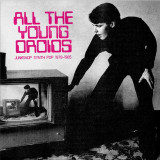
All The Young Droids: Junkshop Synth Pop 1978-1985 is a new compilation that charts the
underbelly of the epoch-defining sound of the synthesiser in 80s popular music. Compiled by Philip
King (previously seen compiling All The Young Droogs, Glitterbest and Boobs - The Junkshop
Glam Discotheque), the music here connects the dots between DIY synth enthusiasts grappling with
new, cheap synthesisers at the tail-end of punk and wannabe, jobbing songwriters enthral to the new
music pioneered by Gary Numan, Depeche Mode and Daniel Miller’s Mute Records. Featuring rare
tracks of auto-didactic progressive pop music, proto-techno punk, shoot-for-the-stars-land-in-the-gutter
chart flops and heralded, underground synth classics, School Daze paints a picture of beautiful failure.
Complete with extensive sleeve notes written by King and never before seen imagery, all 24 tracks
were remastered by RPM in-house engineer Simon Murphy, many from vinyl copies due to lost master
tapes. The story told on All The Young Droids is one of the dawning opportunity presented by both the
emergence to the market of cheaper analog synthesisers and the distribution networks plus indie labels
that exploded with the advent of punk music in 1976. While the music that sprouted out all over the
globe in the wake of these factors was decried as fake, plastic, a refutation of punk’s guitar-led
revolution, it’s telling that much of the music on All The Young Droids.. was created in bedrooms,
ramshackle studios and home-made set ups with often borrowed equipment. In the era of record labels
jumping to capitalise on the success of The Sex Pistols, The Clash (both on major labels, of course)
these artists struggled to stand out from a new gold-rush with next to no budget or PR team. With radio
and labels desperate for the new Yazoo, what resulted was a testament to necessity being the mother
of invention.
At the time, the synthesiser was the music of the future, a shiny new machine that could paint like an
orchestra with a single finger and a 4-track. In the hands of Manchester avant-pranksters Gerry & The
Holograms it’s a pulsing, sardonic weapon.. the only instrument on the Messthetics classic lampooning
of New Wave fashion. In Hamburg, a 16 year old Andreas Dorau used it to write and record (with his
female classmates on vocals) a global smash in Fred Vom Jupiter (later licensed to Mute Records).
The hard-to-find English version (Fred From Jupiter, natch) is included here. Many artists with alreadystoried careers caught the bug and recorded synthesiser-fuelled peons to space, computers, the future
and, of course, love-interests. Harry Kakoulli, late of Squeeze, recorded a solo album in 1979 that
included the incredible power-synth-pop smash-that-never-smashed I’m On A Rocket. Similarly, Ian
North of Neo and American Power Pop stalwarts Milk ’n’ Cookies bought a Korg MS20 and used a
tape machine to record We’re Not Lonely, an absolute lost-classic of minimal synth pop. We’re Not
Lonely also features on the Junkshop Synth Pop sampler 7” twinned with John Howard unreleased
track You Will See, released April 12th 2025.
There are plenty of compilation debuts in evidence. Sole Sister were a mysterious trio who were
featured on the Scaling Triangles compilation of female-fronted, queer-adjacent post-punk /
underground music that also featured The Petticoats. Selwin Image were from San Francisco and
featured members of the recently defunct power pop/punk group The Pushups. Their stupidly catchy
The Unknown fizzes with New Wave energy - think XTC to Sparks but remains unreleased until now.
Dream Unit’s A Drop In The Ocean is an early synth wave cut, positively teaming with Joy Division
instrumentation, previously only released on a long-forgotten and super rare, self-released EP.
Incandescent Luminaire’s Famous Names belies an archetypal struggle of a small-town trying to
make it in a cruel industry but is a thrilling New Romantic-Synth Wave cross over with a OMD
gloominess that’s a joy to hear. Feminist Minimal Wave track I Am A Time Bomb by performance artist
Peta Lilly and Michael Chance is a revelation destined for new found cult status. It was released on 7”
and lost until now.
The flipside to the subterranean, never-made-it synth pop mentioned above are the ambitious, even
fruity attempts at success that have a perennial elegance to their confidence. New Jersey-ite Billy
London (real name Ed Barth) tried to cash in on the synth boom with Woman, released by a major
label, a lurching new wave track built on the Louie Louie rhythm and a wonderfully camp Lou Reedstyle sleazy vocal before exploding in the synthesised chorus. The song bombed but with a chorus like
this, you have to wonder why? Ex-Glitter Band member John Springate’s My Life is truly epic, with
doomed chord progressions and massive sounding drums turning into at least 3 different songs in the
course of the track. Before you wonder what’s going on the song resolves with a glorious return to the
main refrain.
The dry-ice-dressed dance floor is well catered for too. Design’s Premonition and Vision’s Lucifer’s
Friend are stone-cold minimal synth bangers, well loved but given a new lease of life here. The
Warlord’s The Ultimate Warlord was released in 1978, a homespun proto Hi NRG banger that was
later re-recorded by The Immortals in Canada who had a club hit with it. One-man- band Disco
Volante’s No Motion was re-issued by Synth wave label Medical in 2012 but makes its first vinyl
compilation appearance here. Close your eyes and you can imagine what Lawrence of Felt would have
sounded like with some cheap Korgs a little earlier in his career. Gibraltar-based trio The Microbes
imagined a computer programming people to dance - how prescient - and ended up with a propulsive,
robo-funk track with splendid rubbery bass playing over a tectonic drum machine. Previously picked up
by Belgian label Stroom TV, Dee Jay Bert & Eagle’s heavily Euro-accented I Am Your Master
demands the listener to “come to paradise!” In a frankly terrifying manner.
All The Young Droids is the first compilation to peel away from the narrative that dour, Minimal Synth
and Cold Wave were the only musical children of the first rush of synth pop. Philip King and School
Daze Records describe a much more complicated world: along with the austere, Brutalist children of
Daniel Miller (who produced Alan Burnham’s Bowie-Low-influenced Science Fiction here) was a
plethora of desperate cash-ins, accidental mainstream hits, ambitious pop dramas and major label
punts that went nowhere. Crucially, the compilation blurs the line between junk and treasure. What if the
two things are interchangeable. What if it’s all science fiction?
Nautilus are back again, back to the future, with their teaser for the upcoming studio album in 2026! The first single for the theme-based release deals with a true anime icon and a legendary soundtrack, which Nautilus imaginatively and skillfully reinterprets in their typical groove sound. In the feature, Japanese singer and sanshin virtuoso Anna Sato beams the song into a next dimension with her singing.
The single is rounded off by a master of club remixes, DJ and producer Delfonic from Berlin, a highly respected artist by Gilles Peterson, who gives the piece a magical touch for every deep dance floor with heavy beats.
Be quick on this unique release.
"Space is infinitely large and anything is possible in this universe."
Captain Future
Betino’s Records is taking pride in releasing Lucas Moinet Trio debut album. Entitled "Time Travel", it takes us on a deep journey into Jazz Fusion, Funk, Boogie, and 70's inspired vocoder love songs. Lucas Moinet invited his music friends to be a part of the project : Camille Frillex, on bass and Lulu Jems on drums plus a few guests like Illa on vocals, Donald Devienne on trumpet, Lucas Piette on saxophone and Stupid Flash for some additional production. Being a multitalented musician, he composed, arranged the music and recorded the Fender Rhodes piano, guitars, Korg MS20, string machine & vocoder parts in the studio. Through the vocoder, he turned Jazz Fusion into love songs, from the funky "Close to You" to the organic "Crescendolls Are Missing", paying tribute to the Rhodes and vocoder masters from the 70's. Herbie Hancock, Patrice Rushen and Alain Mion to name a few…
The album explores a lot of different styles with the downtempo bossa nova track "Soupir de Caracole" or the deep and atmospheric "New Morning".
Everything was composed, recorded, arranged and mixed at Lucas Moinet's Studio 937 in Paris. The production and recording process took a long time and after many years, the band is really proud to introduce "Time Travel".
Featuring: Coby Sey, Mica Levi and Mark Pell (Good Sad Happy Bad / Micachu & The Shapes)
‘Affectionately’ is the debut album by London based songwriter and musician Raisa K. With self produced instrumentals supporting Raisa’s signature vocal performance, the record delves into the intricate emotional cycles of relationships with heartfelt sincerity. Melodies appear simple and direct, while the themes explored present a great level of complexity. Whether about trust, kindness, doubt, frustration, annoyance, regret, honesty, insecurity, loneliness or friendship, each of the album’s twelve songs lie somewhere in between a diary and a letter.‘Affectionately’ is almost entirely produced on Raisa’s laptop and written in her home in London, as well as finding small pockets of time on trains and buses, during breaks at work, during the kids' nap-times, at the playground, in the park. The production's backbone is formed by a synthesiser sample, weaving together a range of recordings and sonic textures.
This creates a consistent expression where diverse electronic styles merge with Raisa's crisp, candid vocals in unique and personal songwriting. Some listeners might recognise Raisa’s voice and musical language from records by the band Good Sad Happy Bad, which she is a part of. While ‘Affectionately’ certainly moves in its own space, a kinship with fellow London artists is also present, as the record includes a feature with Coby Sey as well as instrumental contributions from long-time collaborators Marc Pell and Mica Levi.
A multifaceted artist, who over his career has traversed between singer-songwriter, hit producer, DJ and curator, Ben Westbeech now arrives on Glitterbox Recordings with a fully realised artistic vision on his new album Everything Is Within You.
Encapsulating Ben’s appreciation of the power we all have within us to achieve joy and peace, as conveyed sonically by all the musicians involved, Everything Is Within You came together organically. His first full length solo LP since the acclaimed There’s More To Life Than This on Strictly Rhythm in 2011, Everything Is Within You showcases Ben’s artistic development as a songwriter, curator and producer as he steps into his role as producer and arranger, away from lead vocalist.
“This album is about speaking the truth. The truth from within. Luckily, I have been blessed to come across the paths of other artists that shared the same sentiment over the seas that dwell. These artists all feature heavily on this record. It isn’t about me or you. It’s about everything that is within.” – Ben Westbeech
Spotlighting featured artists such as Dames Brown (recorded by Moodymann in Detroit), RAHH, Karen Harding, DAVIE and Obi Franky, with co-production credits including Honey Dijon, Luke Solomon and Chris Penny, as well as Mousse T., the record was born out of a Glitterbox writing camp in London at Defected’s studios. The collection of records that were made that week became a catalyst for the full album, now arriving on Defected’s Glitterbox Recordings.
An artist with a rich musical history, from the release of his mature debut album Welcome to the Best Years of Your Life for Gilles Peterson’s Brownswood, to his chart-topping club records as Breach, and work as The Vision on Defected, the path to this new album has included periods of sobriety, self-work, spiritual exploration and the integration of a healthier outlook all round. Now based in Ibiza, the omnipresent energy of the magical island has permeated into the music on his new album, as well as the influence of his personal and spiritual growth.
Exploring a range of genres across the LP, from neo soul to house influences, the breadth of Ben’s musical knowledge is demonstrated throughout the eight tracks. From the blissed-out piano grooves of ‘Times Are Changing’, since remixed by house royalty Louie Vega and Josh Milan as Two Soul Fusion, to the uplifting ‘Do Me Right’ and the emotional soundscapes of ‘So Good To Me’, Everything Is Within You puts the emphasis on the guest vocalists. With exquisite live instrumentation and songwriting that give the record an evergreen feeling, this is a timely album that exudes a contagious, positive feeling throughout, something the world needs right now.
Mr Bongo proudly presents the third album by Melbourne/Naarm multi-instrumentalist, Don Glori, entitled ‘Paper Can’t Wrap Fire’. A kaleidoscopic genre-surfing odyssey that brings together the worlds of jazz, soul and funk. Feeling both contemporary and classic, familiar yet novel, it’s an assured third release that sees an artist in full flight, showcasing their creative prowess and the uniqueness of their musical voice.
Steering in a new direction, Don Glori (aka Gordon Li) has delved headfirst into his songwriting with ‘Paper Can’t Wrap Fire’. Deftly showcasing his talents as a writer and bandleader, he brings with him a whole host of friends from the creative crossroads that is Naarm. It’s an album enriched with more soul, R&B, and funk-oriented songs than his previous jazz-rooted productions, yet there’s still plenty of jazz material for those familiar fans of Don's earlier works.
The album’s title is an old Chinese proverb, roughly translated as 'you can’t deny the truth'. This underlying thread is woven between the songs. “A lot of them are in some way about truth-seeking, observations and the masks you put on to deal with life (hence the cover art)”, Don mentions. Take, for instance, the sensational soul single 'Brown Eyes' featuring silky lead vocals by ML Hall. A dissection of the minority experience, and the power and comfort in building those communities. Elsewhere, 'Disaster' is a satirical take on the structures serving everyone but the artists, and 'Flicker' tackles notations of truth and clarity after introspection.
To marry that meaning with the level of musicianship on these tracks is what really stands out. Don has set out his stall here as an artist who can write songs that hit home in the heart, as much as they do in the head. It’s a journey infused with a glistening jazz finesse, layered with nourishing vocal harmonies and powered by an instantly relatable human soul.
Recorded over two hot summer days in Rolling Stock Studios in Collingwood, Naarm, the lineup of musicians is built up of Don's friends and family. Featuring the backbone team of Tim Cox, Al Kennedy, Joel Trigg, Robyn Cummins and Lachlan Thompson, who were part of Don's touring band before he relocated to London, and a stunning selection of vocalists in the form of ML Hall, Ruby Dargaville, Isadora Lauritz, and Bianca Kyriacou. Also gracing the album are trumpeter extraordinaire Audrey Powne, saxophonist Joshua Moshe, and Alcides Neto who sprinkles some Brazilian magic into the record.
Taking influence from artists including Azymuth, SAULT, Jordan Rakei and Lynda Dawn, as well as from London musical beacons such as NTS and Total Refreshment Centre, Don has run with this, leaned in and come out with a record truly unique to himself and his distinctive core, with no mask necessary.
Limited 2025 Repress
Black Truffle is pleased to announce the release of Ichida, the first release from the duo of two important yet often underappreciated musicians, Eiko Ishibashi and Darin Gray. Ishibashi is a singer-songwriter, keyboardist, drummer, and multi-instrumentalist, known in Japan both for her own elaborately conceptual solo albums and for her frequent collaborations with figures such as Jim O'Rourke, Merzbow, and Phew. Darin Gray is a bassist and multi-instrumentalist known for a multitude of collaborations (with O'Rourke and Loren Connors, among many others), for On Fillmore, his cinematic post-exotica project with Glenn Kotche, and as one half of Chikamorachi with Chris Corsano, one of the finest free-jazz rhythm sections around. Presenting the entirely of a live set performed at Tokyo's Super Deluxe in March 2013, the set begins as a duet for Ishibashi's flute and Gray's upright bass. Calmly melodic yet harmonically inventive, with shades of 'spiritual jazz', the pair's acoustic ruminations are gradually joined by Ishibashi's lush electronics, which randomly flicker between chords in a manner recalling the classic work of David Behrman. As the electronics build into a gloomy fog of slowly cycling loops, Gray lays his bass aside and turns to making strangely mournful interjections on a mouthpiece. Eventually Ishibashi moves to the piano, enveloping the audience in rippling pools of sustained, octave-doubled melody, provided by Gray's bass with a fluid and dynamic foundation. For much of the second side, both Ishibashi and Gray turn to electronics, ultimately arriving in a bizarre space of melancholic arpeggios and random sputter and sizzle, oddly reminiscent of 70s outsider prog acts like Wapassou. An uneasy coda of rich piano chords ends the set. Captured in warm room ambience and beautifully mixed by Jim O'Rourke, Ichida is a rare combination of improvisational acumen and emotional directness, both adventurous and immediately accessible.
Thirteen years, four months and twenty-seven days after the shock wave caused by their first EP "Polishing Peanuts", the irreducible moustachus of Deluxe return with their seventh album: "It’s a pleasure", to be released on April 25, 2025. Like the band that never stops evolving, this record is a real emotional and musical kaleidoscope, oscillating between overflowing energy and melancholic introspection.
This album is distinguished by a vertiginous stylistic richness: a classical fugue for saxophone sneaks into the heart of a whirlwind of pop-rocky-pop songs, while varied inspirations like the Brazilian variety (with Luizga on " Windows Open "), nostalgic punk (" Where the f*ck is Jason? " featuring Mr. J Medeiros) or reggae hip-hop (" Caliente " featuring Twan Tee) shake up the codes. True to themselves, the six Southerners ...
Hard Times continues its legacy of championing house music’s finest with another landmark release that brings things full circle. This time, the label welcomes none other than Leeds legend Paul Woolford - one of the most prolific and versatile electronic artists of today - to reimagine one of house music’s most cherished anthems, Karen Pollard’s ‘Reach Out To Me.’
Originally released in 1996, ‘Reach Out To Me’ quickly became a club classic and an archetypal vocal house anthem. Now, Woolford - known for his ability to straddle both underground credibility and mainstream success with ease - boldly takes on the challenge of remixing the iconic track, delivering not one but two impressive reworks that showcase both sides of his production persona.
“‘Reach Out To Me’ has always been one of my favourite US garage records, so when the opportunity to rework it came up one hazy summer evening last year, I knew it had to be done,” says Woolford. “Both mixes have been road-tested and have caused havoc in all sorts of situations, from warehouse raves to basement afters to peak-time sessions and beyond.”
The first remix sees Woolford take the track deep and epic, building to a soaring, anthemic breakdown that pays homage to the song’s timeless energy. Meanwhile, his breakbeat-driven Special Request version adds a UKG twist, built for peak-time destruction in the hands of all selectors.
A true labour of love, these remixes breathe new life into the beloved classic while staying true to its soulful roots. Hard Times fans, house heads, and bass-driven ravers alike can now experience Woolford’s masterful reimagining of ‘Reach Out To Me.’
- A1: So I Don’t Forget (Intro)
- A2: Nothing’s Gonna Fill You Up
- A3: No Joke
- A4: Catch Me
- B1: Pocketful Of Paranoia
- B2: Lay Low
- B3: Before It’s All Over
- B4: The Love That I Feel
- C1: Motel
- C2: Sell My Memories (Interlude)
- C3: Get Me Some Grief
- C4: I’m Alive
- C5: Caught (Catch Me Reprise)
- D1: Won’t Let This World Break My Heart
- D2: No One
- D3: Mallet Groove
DJ Support: Jamie Cullum (BBC Radio 2), Huey Morgan (BBC Radio 6), Gilles Peterson (BBC Radio 6), Deb Grant (New Music Fix, BBC Radio 6)
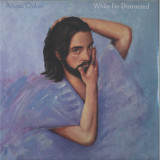
On debut album ‘While I'm Distracted’, London-based New Zealander Arjuna Oakes draws inspiration from contemporary soul and jazz, touches of global folk, electronica, modern classical, and post-rock, with dynamic arrangements and production. ‘While I'm Distracted’ is an album about fighting for your innocence and right to be a vulnerable and honest human. Arjuna’s songwriting explores themes of identity, depression, existentialism, social media, loss of innocence, and finding hope for the future through artistic expression.
'I'm obsessed with albums,' says Arjuna. 'I've made seven EPs, but needed time to tackle a full length record. I was using the EPs to learn the craft of how to make a great album, much like a director will make short films before they make a feature. I wanted to take the listener on a journey and spark their imagination. Hopefully the album expresses complex emotions, rather than having an intellectual concept. I'd rather ask questions than answer them'.
Across the album, Arjuna performs vocals, piano, keyboards, synths, production, and wrote the string arrangements. He’s joined by Harrison Scholes on bass, Jo Jenkins and Andre Smith on guitar, Sam Notman on drums, Louisa Williamson on saxophone, Nathan Haines on flute, Kate King on french horn, Leah Thomas on clarinet, Hilary Hayes and Emma Colligan on violin, Chris Van Der Zee on viola, Charley Davenport on cello, Zane Hawkins on percussion, James Macewan on trumpet, and additional production by Callum Mower.