Tucked away in a corner of northwestern Europe and so small you could drive through it in minutes without noticing you were ever there, Luxembourg is often overlooked. This is also true for Luxembourg’s music scene, and even more so in the early 1980s. Aside from a string of victories at the annual Eurovision song contest or the mighty Radio Luxembourg that had for decades been blasting jazz, rock and other modern music into stolid Western European ears, very little else seemed to be going on. But even in a country of barely 350,000 people, musical adventurers had picked up on the spaced-out jazz-funk of bands like Return to Forever, Herbie Hancock’s Mwandishi, Weather Report, George Duke, and the electric Miles Davis. Under the leadership of trumpet player Gast Waltzing, a handful of them put together a band called “Atmosphere” and used the sound of their inspirations as a launchpad for their own musical exploration.
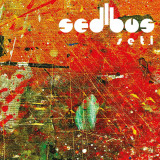
What you hold in your hands is a “best of” the Atmosphere band, which released two albums and a 7” single between 1981 and 1986. Privately pressed and long out of print, with original copies very hard to come by even in their country of origin, these records have for years been unheard by anyone outside hardcore collector circles. With no master tapes available, it was a real labor of love to track down the best quality vinyl copies and to reissue a selection of our favorite tracks in professionally remastered form.
Editions de Lux is a new label dedicated to unearthing and releasing records we love and believe deserve more attention, with a focus on Luxembourg and the surrounding countries. We are just the latest in a long line of immigrants who have come to work in Luxembourg and who are trying to find our own path into the heart of this mysterious little country that has much more to it than dark forests, medieval castles, rusting steel mills, and shadowy banks.
Search:tru west
Soft Walls is the solo recording project of Dan Reeves, who has spent his entire adult life kicking around in the dust of the UK's underground music scenes. Cutting his teeth in the South West's post-hardcore scene; centred around Exeter's The Cavern club, before moving to the South East and forming his own record label; Faux Discx, and the propulsive post-punk band: Brighton via London's Cold Pumas. Projects have come and gone over the years, but Reeves' Soft Walls has remained, an outlet for whatever musical whim takes his fancy.
'True Love' is Soft Walls' 4th album. Written and recorded at home, during breaks in work. During the aftermath of you-know-what.
For this album Dan leaned heavily in to his guitar playing, searching for those purest moments of true emotion and connection. Aiming to strike an instant blow. "Emotional guitar music. But not Emo." The result of falling in love with an instrument again and playing for the joy of it, much like he did as a teenager. Just older, wiser(?) and certainly more world-weary / teary-eyed.
Thematically, 'True Love' revels in stating its love for everything that is dear to Reeves. Odes to marriage, romance, unconditional love, parenthood and creativity pierce through the record's down-swings that tackle existential crisis and the feeling of falling in to depression. Each song attempts to encapsulate a vivid feeling, be it positive or negative. It's all part of a life worth living.
Although recorded at home, this album marks a leap in to digital mid-fidelity for Soft Walls, embracing a wider, richer sound beyond the tape hiss of earlier releases. That same spirt is still in the mix, but is presented wide-eyed and caffeinated in to clarity. Elevated by the input of a handful of collaborators contributing to the performances and helping to shape it sonically, 'True Love' ends up being the truest version of Soft Walls committed to (digital) tape thus far.
Limited orange vinyl. We've all heard the axiom, "if you ignore it, maybe it'll go away." That goes double for a lot of people who wish to apply that saying to rap music. But when it comes to the West Coast "gangsta rapper" genre made popular by the likes of NWA, Eazy E, Ice-T and his Rhyme Syndicate cohort, King Tee, the truth is hard to ignore. King Tee aligns producer DJ Pooh on this Bass EP consisting of tracks recorded in 1987. They're joined by The Compton Posse that includes the late Mixmaster Spade and J-Ro from Tha Alkaholiks. This EP sharpens the skillful word play King Tee made famous on his debut album Act A Fool. From song to song, this EP has a superior sheen, a tightness and cohesiveness between rhyme and music. Born in Los Angeles and now a resident of the infamous West Coast rap capital, Compton, California, King Tee truly is a product of the streets. He openly admits to running with gangs in his youth, causing his mother endless embarrassment and frustration. So much so that, in a desperate attempt to turn his life around, she turned King Tee into the authorities when she discovered him stealing from her. Once out of jail, King Tee ran of to Houston, Texas. Trouble is that he was underage atthe time, so his mother again had King Tee locked up in a juvenile camp. When King Tee finally realized why his mother did what she did, he decided to turn his life around by dedicating himself to music. He listened obsessively to the radio and chose to become a DJ. When King Tee was released from juvenile camp he secured a mixing gig at KSU and then KYOK in Houston. Between station gigs he handled the mix at various venues and clubs. After gaining the necessary experience behind the tables, King Tee moved back to Los Angeles and hooked up with Ice-T. In rapid succession, King Tee met Du Pooh who enlisted him into his rap group (after King Tee bugged Pooh for months), then Pooh introduced Tee to DJ Unknown with whom he made several 12" records for the Techno Hop labelwhich is now released on this EP for the first time since then. Ice-T's influence brought Rhyme Syndicate Management's Jorge Hinojosa into the picture. King Tee eventually signed with Hinojosa who then secured a contract with Capitol Records for King Tee. The result was 1988's Act A Fool.
Warehouse Find!
Azymuth drummer Ivan 'Mamao' Conti's forthcoming self-titled solo project, remixed by West London broken beat pioneer IG Culture for a scorching club monster, alongside three future-funk remixes from 22a records family Tenderlonious, Reginald Omas Mamode IV and Jeen Bassa.
Ivan 'Mamao' Conti is one of the greatest drummers on earth. A true rhythmic innovator, he is Brazil's answer to Tony Allen, Steve Gadd, and Bernard Purdie (no small claim considering the country's famed samba connection). Known by most as one third of Azymuth, his career spans far beyond with over half a century's worth for recordings with the likes of Milton Nascimento, Eumir Deodato, Marcos Valle, Hyldon, Gal Costa and Jorge Ben. More recently Mamao recorded an album with hip-hop royalty Madlib under the shared moniker 'Jackson Conti'.
Now aged seventy, Mamao's work ethic is as strong as ever. In anticipation of a new Ivan Conti solo album set for release in 2017, Far Out Recordings have commissioned a series of remixes to be spread across two separate 12's. The first is a strictly London affair, with a fiery broken-boogie club monster from West London pioneer IG Culture, joined by the signature future-funk of 22a Records family Tenderlonious, Reginald Omas Mamode IV and Jeen Bassa. The second 12' will host remixes from Max Graef, Glenn Astro and Contours.
Reggae and Jamaican music have long embraced a symbiotic relationship with the movies. Rooting back to the island's golden era, countless arrangements have either been direct covers, or inspired by, the musicality and mood found in both cinema and television. These reinterpretations would become part of the backbone of the instrumental sound that accompanied the Jamaican record industry's acceleration from the mid-60s and beyond. Talented young musicians, rising from Alpha Boys School and the early studios of Coxsone, Duke Reid and others, found a showcase for their unique playing style on hundreds of different recordings, while appealing to the country's own love affair with Westerns, James Bond canon, and other rebellious themes and motifs that were projected from Hollywood during this time.
In this same tradition, in a new interval, arrives the debut release of Anant Pradhan and Larry McDonald, the latter a master percussionist with direct participation in some of Jamaica's earliest recordings. McDonald, although often uncredited, was a legitimate influence in helping to bridge the Afro-Caribbean sound from calypso into ska and later reggae with his iconic style on hand drums and percussion. A kindred spirit of McDonald, despite 50 years separating them, Anant Pradhan is a bonafide member of the next generation. Although this is his first "solo" record, the talented saxophonist has already played on dozens of incredible sessions for the likes of Victor Axelrod, The Inversions, Andy Bassford, Channel Tubes, Ralph Weeks and Combo Lulo. As an official member of the current touring group of the legendary Skatalites, Pradhan has honed his musicianship under some of the greats of reggae music. His particular soulful, instrumental arrangements are an homage to that influential era of Jamaican music. Pradhan and his band's performance retain the skill and innovation of the old vanguard, and like the generations before, capture a magic that may only be possible when cinema goes reggae.
A cult favorite from A Nightmare Before Christmas, Danny Elfman's "Sally's Song" was immortalized in Tim Burton's 1993 classic stop-motion film. It's immediately recognizable in all its haunting charm, and now, Pradhan and McDonald have managed to transform it into an irrefutable reggae classic, reinvented with its melancholic lead sax and bombastic percussion. The prolific Henry Mancini is already entrenched in the Jamaican canon, yet nobody has knowingly attempted to recreate one of his most magical numbers, "Meglio Stasera" aka "It Had Better Be Tonight," that of the riveting one-take scene in 1963's The Pink Panther. The galloping percussion of the original is transposed through a cloud of smoke, slow and low in a roots style at the hands of McDonald. Pradhan's sax leads the way over the locked-in rhythm section, both deep and cheeky all at once. These first two productions of Anant Pradhan and Larry McDonald are a deserving entry into the canon of reggae covers, and are equally adept to be heard on the screen and or at the dance alike.
It’s a family affair. One formed almost thirty years ago, back in the mid-nineties, when the pair joined seminal French jazz combo Olympic Grammofon. For twenty-four years they have worked together as Bumcello, each complementing the other, echoing polar opposites. The Boom in Bumcello is none other than Cyril Atef, incisive drummer, relentlessly pushing beats towards new horizons. The Cello is Vincent Ségal, cellist without blinkers and extraordinary musical alchemist. Since 1999, these two die-hard music fans, coming together for mercurial results, have released one record after the other whilst conquering the hearts of their live audiences, old regulars as well as new recruits. We have all been seduced by the way their music leapfrogs categories - these two experts are much more interested in kindred spirits than pigeonholing, and this very spirit is celebrated on more than one track of this ninth record, whose concept is original to say the least.
Everything began with an idea by Cyril Atef - a soundtrack based upon drawings penned by Marin, Vincent’s son, architect and visual artist. The musicians involved then coached their reaction to these images on a score, and the pair were charged with collating and adjusting the results. These thirteen ink drawings, in a heroic fantasy vein, constituted a matrix which was then to serve as a guide, like a roadmap through a singular and multi-faceted labyrinth. The key to this sonic fresco is in Bumcello’s image – an eclectic aesthetic twinned with a great sense of contrast. Herein lies the trademark of this entity animated by the gift of musical ubiquity, gorged on scales and rhythms, capable of a slap as much as a gentle caress. From classical music to electronics, from improvised music to sophisti-pop, everything is allowed with no preconceived ideas. They can even reclaim the traditions of others, all the better to propel them towards new horizons - this is how the very history of music has always panned out.
If you listen between the lines and look at the details, more than one piece bears witness to the moments and individuals that have impacted the criss-crossing lives of Vincent and Cyril. The track Crash is the perfect excuse to create a Jamaican-style jam with New York inflections, and we can see, in capital letters, the name Hilaire Penda, playing alongside Bumcello at the Apollo Theater in the associated drawing. This bass player from Cameroon, who died on 5th November 2018, was more than just a friend for the two Frenchmen. He was one of the family. Similarly, they give a nod to another Cameroonian, and another departed friend - singer of rock band les Têtes brûlées, Zanzibar, through the vocals of fellow countryman Zanzi. The ghost of Rémi Kolpa Kopul, emblematic voice of Radio Nova, haunts the margins of Spark Av, in a vocal sample with a smattering of effects. As for I Remember Tim, it directly honours the memory of Timothy Jerome Parker, aka The Gift Of Gab, another friend who left us in 2021. Tim is depicted in a drawing with the docks of Oakland in the background, and it’s his alter ego within Blackalicious, Chief Xcel, who remotely added his signature to the track, notably by adding the words of Lateef The Truthspeaker to brass and woodwind sounds.
These are the only additions to Bumcello’s original nucleus, all the better to create a genuine musical concoction where Vincent Taurelle is in charge of production and mixing sessions recorded live and direct. He is also invited for a twinkle on the keys (piano, synths, Wurlitzer, organ), on a handful of tracks. Already at the commands of previous opus Monster Talk, always taking care over the slightest detail, the one that makes all the difference, this pianist is now also part of the family. “Everything he brings is perfect, whether added though slight touches or through very important choices”, say the two members of a combo which today, appears to us under the guise of a trio, adding an extra dimension to a far-reaching mix, in the image of the veiled or more explicit tributes making up the cornerstones of this release.
Booker, a drawing where we see the musicians enter a club, honours James Booker, great pianist from New Orleans who has always fascinated Vincent, in a genre that is off-beat and gender defying. Her Story was created by Cyril in support of the Iranian women’s movement. Aysyen Kampe evokes, even in the original drawing, a tradition that remains impactful for Bumcello – Haitian mysticism, and Ouï Khouïette Ouï conjures up the beats of the Allaoui, a war dance from Western Algeria, one they have taken part in in the past with the help of Cheikha Rabia. They deliver a metal version, original and surprising, especially as Marin Ségal’s drawing features the Nicholas Brothers, those iconic dancers of the 30s jazz scene!
Resolutely hard to pin down, Bumcello’s beats can initially take on the structure of disjointed house, though Sangre begins like a film soundtrack, “in a Mexican style” adds Vincent, who was at the origin of this track. A delicate alap on the cello can open up onto afrobeat rhythms, a well-pitched voice can enchant, like on the amazing The City Has Eyes which has everything of a hummable pop hit. Emblematic of this manner of encompassing all music without being exclusive, Le Grand Sommeil, a direct reference to the Howard Hawks movie inspired by Raymond Chandler, a precursor of David Lynch, begins nice and smooth but ends on a wild tempo, on a drum’n’bass tip, as in the good old days of Cithéa, when this Party story began in the other century.
Oceanic White & Blue Vinyl, limited to 300 copies. The band's name is borrowed from the legend of the Cailleach, the ancient witch god of winter from Scottish Celtic mythology. The story goes that she lives at the bottom of an enormous whirlpool, Corryvreckan, which lies between some of the western isles of Scotland and lends its name to this album. As the herald of winter, she rises from the depths to wash her plaid (cloak) in the waters of the Corryvreckan. Once washed and restored to a bright white, she casts it across the earth where it lands as snow. This is done at the start of Samhainn (beginning on 31st October, which was the Celtic precursor to Halloween and the name of the band's debut album). Her reign ends as spring arrives with the festival of Bealltainn in May, and she turns to stone to await the next winter. The Cailleach is depicted in various, contradictory ways - both as a symbol of death, loss and despair, as well as a source of nurturing and protection. Taking inspiration from all this, the music that HAND OF KALLIACH creates is centred around these dual concepts of benevolence and malevolence, all against the backdrop of the history, mythology and land/seascapes of the Scottish islands. The threads of Celtic and Gaelic folk music and folklore weave throughout the album, against a backdrop of spectral, melodic death metal. Blending the robust brutality of death metal with the ethereal wisps of folk is an intoxicating brew. Corryvreckan was recorded with Wynter Prior at Sphynx Studios, Brighton, UK. The resulting album is a phantasmagorical journey through ancient tales and truly progressive modern metal, with an unmatched eye for detail that brings every single element of Corryvreckan to life.
With "Onaida", Natascha Rogers shares a liberating folk spell that draws inspirations from Yoruba spirits, Afro-Latin rhythms and her Native American ancestry. Born in the Netherlands to a Dutch mother and a father with Amerindian origins, Natascha Rogers dares to be intimate and unveils a highly spiritual chiaroscuro record, raising purity, care and reconciliation to the level of the art, through folk enchantments. Sensitive to the ancestral call of the drums, she travelled the Black Atlantic for several years and received the teachings of the greatest Mandingo and Afro-Cuban master percussionists. As a distinguished percussionist and vocalist, she has graced the stage and has accompanied artists around the world, but for Onaida she set out on her own, retreating to a studio to escape the noise, rush and fast information cycles of our modern world. This album marks a rebirth for Natascha Rogers, as it symbolizes her return to the piano, her first instrument. Channelling these inspirations for Onaida, Natascha Rogers, has created a space of her own, where themes of humanity, spirituality, nature and womanhood are centre stage while also paying tribute to her ancestors. Sung in English, Spanish, or Yoruba, the album is a tapestry of intimate ballads and universal prayers, drawing inspiration from dreams, Amerindian poetry (Joy Harjo), and Cuban santería with ritualistic batá drum pulsations. On the powerful folk-tinged song "The West", she invited gifted singer-songwriter Piers Faccini. Onaida is a true initiatory experience, a second birth for Natascha Rogers who finds balance and accuracy with this singular opus. Natascha Rogers headed to the quiet commune of Pommerit-le-Vicomte, to write this new release, accompanied by sound engineer Joachim Olaya and published on acclaimed French imprint No Format!
- A1: Porcelain Id Feat. Emma - Habibi (R U Alone?)
- A2: Porcelain Id - Low Poly
- A3: Porcelain Id - You Are The Heaven
- A4: Porcelain Id - Adam Coming Home
- B1: Porcelain Id - Moon
- B2: Porcelain Id - Feeling
- B3: Porcelain Id Feat. Emma - Brilliant
- B4: Porcelain Id - Cellophane
- B5: Porcelain Id - Man Down!
- B6: Porcelain Id Feat. Youniss - Reach Me/Reaching Higher
- B7: Porcelain Id - Lights!
You just moved to the big city, you end up at a party where you don't know anyone and someone walks up to you and asks: "Hey, are you alone here?". That is exactly the feeling that Porcelain id describes on their debut album Bibi:1, short for the Arabic pet name Habibi. Porcelain id is the pseudonym under which Hubert Tuyishime (they/them/their) has been unleashing unique songs since 2020.
The album - inspired by their move from a quiet provincial town to Antwerp - is the soundtrack to walking into city traffic during rush hour and trusting to get out of the chaos in one piece. It is an ode to exciting encounters with complete strangers and to the friends you can come home to afterwards. A story about being a stranger in a city you've romanticized for so long, the rejection that comes with it, and the false nostalgia with which you look back on it all later on.
At first hearing, the completely English-language Bibi:1 may seem like a brusque farewell to the autobiographical intimacy and lo-fi singer-songwriter music on the previously released EPs Mango and Reprise, and especially on songs like Vlaanderen. But to Porcelain id it feels like an organic evolution. One towards more abstraction, experimentation and electronics, but never detached, and still building on the core of Porcelain id.
The new sound is the result of an intense collaboration with producer and partner in crime Youniss Ahamad, who, despite their different musical backgrounds, immediately felt challenged after Porcelain id's legendary elevator pitch: 'I want to make something that is situated between Nick Cave and the Bad Seeds and Yeezus by Kanye West'.
Together they drew the blueprint for Bibi:1 in Youniss' home studio. Track by track, without looking back. A sporadic, but rigid process that added to the intensity of the album. In the studio, the songs were taken to a higher level. The two invited a pack of talented friends and young musicians to the studio to add parts, a stark contrast to the solitary approach of previous EPs. Aram Abgaryan (recording engineer/synths/vocals), Nard Houdmeyers (guitar), Tim Caramin (drums), David Idrisov (bass), Alban Sarens (sax) and Emma Hessels (vocals) came by. Aram Santy was at the controls during the mixing sessions.
The result sounds like the ultimate symbiosis of Porcelain id and Youniss. Lofi, but ambitious. Fragile, but rough. Poppy, but disruptive. Sometimes challenging. Then welcoming again. Sometimes even danceable. Each song forms a small vignette that is part of a diverse, but coherent unity. Adam Coming Home and Low Poly are closest to the melancholy of Porcelain id's earlier work, while Lights! strikes a new path. First single Man Down, on the other hand, is inspired by the Antwerp students who drown every year and sounds like a wandering nightly stroll through the city. For Brilliant, David Idrisov was asked to 'play bass as if Chet Baker were not a trumpet player, but a bass player', a bizarre assignment that he accomplished with verve. And Cellophane flirts with emo trap and was sung with raspberries between the teeth, to simulate the effect of grills.
The Silhouettes Project was founded by community organisers Jaden & Asher (aka Eerf Evil & Asher Kosher), and is a platform for the new generation of underground hip-hop, jazz, and soul artists in the UK. It aims to shine a light on artists who are making ground-breaking music but who are in need of a solid structure to work within - artists who they felt deserved more recognition. This led to the name ‘The Silhouettes Project’, as they wanted to shine a light on those artists in the shadows. In 2020, they released a number of singles that culminated in their self-titled debut LP, which has gained 65 million streams to date, & featured some of London’s foremost underground rappers & singers like ENNY, Lex Amor, & Kofi Stone. They will be releasing their second album in Q1 2024, The Silhouettes Project Volume II, starting the campaign this September with 'Knocked Down'. All proceeds from the album will go back into the organisation to support and sustain its running, its artists, and the non-profit studio ROOT 73 where the project was created. The contributors all receive an even split of the album, rather than of their specific track, which stays true to their ethos.
- A1: Ale Hop - Head Transplant
- A2: Daniela Huerta - Tza Tun Tzat
- A3: Debashis Sinha - For The Waters Ever Taste The Heavens Up Parts I-V
- B1: Hexorcismos - ¿Acaso De Veras Se Vive Con Raíz En La Tierra?
- B2: Hexorcismos & El Irreal Veintiuno - Interferencias
- B3: Jessika Khazrik - Gebera
- C1: Khyam Allami - Mix V6
- C2: Kloxii Li - Anhaga
- C3: Kmru - Hidden Options
- C4: Maf - What's Heard Once Entered (Nommo)
- D1: Portrait Xo - Mutualism_151122
- D2: Simina Oprescu - Granularities
- D3: Visions Of Lizard - Barranca Del Muerto
For the last seven years, sound artist, technologist, and electronic musician Moisés Horta Valenzuela (aka Hexorcismos) has been studying artificial intelligence and generative art, wondering how these new technologies might be augmented into his musical process. Born in Tijuana and currently based in Berlin, Hexorcismos has long attempted to break down the permeable borders between musical styles and expressions, using the spaces in between to reinforce his politics and worldview. And on 'MUTALISMX - becoming sonic network', he expands his vision, inviting artists from across the globe to collaborate on work that questions the biases inherent in AI models, offering a collective alternative that could serve as a blueprint for further research.
The majority of AI art at this stage works with "big data", taking ideas from the cultural canon and muddying them with our contemporary reality. But if we accept that mass culture is always politically biased, always swaying towards historical prejudices, then there must be a counter-narrative. Hexorcismos began to develop a bottom-up approach, using "small data" to interrogate his idiosyncratic approach to art; he built a tool called SEMILLA.AI based on neural audio synthesis that could not only mimic his sonic fingerprint but transform it into another. So when he offered the synth to his network of collaborators, he gave them the option of either using only their data or sharing the signatures of each other artist involved in the project, blurring their identities into a mutual voice.
The result is a compilation that unspools with the coherence and fluidity of a single-artist album or adventurous DJ mix, genreless and boundless but unified by a singular message. Hunanese-American artist Kloxii Li for example takes rugged percussion and tense, industrial ambience, smudging her soundscape into a swirling gust of ghostly dissonance. Hexorcismos himself contributes two compositions: the lengthy, hypnotic 'Acaso de veras se vive con raíz en la Tierra', an AI-powered scramble of his pointed tribal guarachero experiments; and 'Interferencias', a collaboration with Mexican club veteran Bryan Dálvez, aka El Irreal Veintiuno that drives intense dancefloor rhythms into a dense haze of frozen drones and radio static. Elsewhere, Berlin-based Lebanese artist and writer Jessika Khazrik dissolves her voice into a mesh of obscured rhythms and dissociated whirrs, blending the organic with the artificial but retaining an overpowering sense of humanity.
Some artists were drawn to the nebulous aspects of the technology, searching for truth in a soup of different sounds, while others, such as KMRU, used Hexorcismos's synthesizer the examine their output. On 'hidden options', the Kenyan sound artist fed his immense catalog into the neural net, bringing out his mannerisms and tendencies in the process. Each track is singular but myriad, prompting both mutual respect and a sonic becoming, a feedback process between the artist and the tool, the individual and the collective. Data sets are made by people, and by engaging directly with musicians, Hexorcismos suggests a new way of utilizing a technology demonized and glorified without careful examination. Each artist owns their AI model, and alongside the album Hexorcismos will release SEMILLA.AI to the public (with custom-made models to start the process), allowing anyone to access this revolutionary technology.
Even the album's artwork reflects the political message, conceptualized by Chilean duo hypereikon, who used AI processes to develop a visual reflection of the technology and its possibilities. Operating outside of academia and capitalist enterprises, MUTUALISMX proposes an alternative future - one without borders that's not beholden to the Western canon, where independent labor can be prioritized and celebrated, and where creativity can truly flourish.
The star-studded Sai Galaxy project returns, bringing together West African legends Steve Monite and Rob with multi-instrumentalist Simon Durrington, guitar maestro Alfred Bannerman and Egypt 80 trumpet player Bade for a second EP of vital Afro-disco and soul.
The EP follows up 2022’s Get It As You Move EP, blending layers of vocal harmonies and synth washes with a rock-solid disco base. The sound stays faithful to the analogue production techniques of the 70s and 80s, adding a modern touch informed by Durrington’s Digital Afrika project.
Lead single ‘Hold You Tonight’ features Nigerian disco icon Steve Monite (best known for his mega hit ‘Only You’), revisiting his 80s origins with a dancefloor-ready slice of dubbed out boogie. ‘Rich Man Poor Man’ (featuring Ghana’s very own ROB) slows down the tempo and brings the highlife influence to the fore, while ‘Sometimes It Rains’ brings a neo soul bump with the Omar-esque sound of Fijian vocalist Kaivili.
- Ifetayo
- You People
- Save D Musician
- Kilimanjaro
- Aspire
- Umbala
- Imo
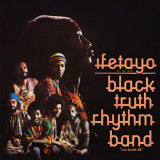
Soundway presents a long-awaited remaster and re-cut of the 1976 album ‘Ifetayo’ by Black Truth Rhythm Band, an important and overlooked chapter in Trinidad’s rich musical history that blends West African influences with jazz, funk and the social commentary of the calypso tradition.
Led by the charismatic Oluko Imo, the group drew on the strong connections to Yoruba culture and Orisa traditions in Trinidad, looking to Africa for inspiration and reflecting the burgeoning Black Power movement of the time.
- A1: Gary's Gang - Keep On Dancin’
- A2: John Davis & The Monster Orchestra - I Can't Stop - Album Version
- A3: Rhyze - I Found Love In You
- A4: B B.c.s. & A. - Rock Shock
- B1: Greg Henderson - Dreamin
- B2: Vicky 'D' - This Beat Is Mine
- B3: Convertion - Let's Do It
- B4: Komiko - Feel Alright
- C1: John Davis & The Monster Orchestra - Love Magic
- C2: Gary's Gang - Let Lovedance Tonight
- C3: Lucy Hawkins - Gotta Get Out Of Here
- C4: Mike & Brenda Sutton - Anyway You Want My Love
- D1: John Davis & The Monster Orchestra - Up Jumped The Devil
- D2: K I.d. - Hupendi Muzik Wangu?! (You Don’t Like My Music)
- D3: Steve Shelto - Don't You Give Your Love Away
- D4: Glen Adams Affair - Just A Groove - Single Edit
This is the story of the one the great disco labels, a legendary label who were at the forefront of a genre during it fruition and creative peak. Sam Weiss started SAM Records in Long Island City, New York in 1976. Sam, and his brother Hy, were born in Romania before moving to the Bronx in New York City when they were young. Sam and his brother were no strangers to the music business having been in the industry since the mid-50s running labels Old Town and Parody Records. • During the mid-1970s Disco took New York by storm and emerged into a revolutionary musical force that re-shaped the face of the City. It was however a genre major labels largely ignored initially. It was the smaller, independent labels that led the way in disco’s early years. Founded in 1974, Salsoul was the first. Sam’s new label SAM Records arrived a year later, followed by West End and Prelude in 1976: four labels from which umpteen disco classics emerged. • This compilation compiles all of the classic material that SAM release during the years 1975 and 1983. Offering up a treasure trove of disco essential this compilation features tracks from Gary’s Gang, John Davis & The Monster Orchestra, Komiko, Rhyze, Convertion, Vicky “D”, Greg Henderson alongside deeper cuts by Lucy Hawkins, K.I.D and more. • The audio used here has been sourced from the SAM archives and in many cases the mixes are appearing in their truest 12-inch form. The set is complete with extensive liner notes by The Guardian’s chief music critic and disco authority Alexis Petridis. • SAM Records has forever left its footprint on the Disco and music history, and this compilation is an essential addition to anyone’s collection.
What Do We Do Now is the fifth solo studio LP recorded by J Mascis since 1996. This is obviously not a very aggressive release schedule, but when you figure in the live albums, guest spots, and records done with his various other bands (Dinosaur Jr., The Fog, Heavy Blanket, Witch, Sweet Apple, and so on), well, to paraphrase Lou Reed, "J's week beats your year." What Do We Do Now began to come together during the waning days of the Pandemic. Utilizing his own Bisquiteen Studio, J started working on writing a series of tunes on acoustic with a different dynamic than the stuff he creates for Dino. "When I'm writing for the band," he says, "I'm always trying to think of doing things Lou and Murph would fit into. For myself, I'm thinking more about what I can do with just an acoustic guitar, even for the leads. Of course, this time, I added full drums and electric leads, although the rhythm parts are still all acoustic. Usually, I try to do the solo stuff more simply so I can play it by myself, but I really wanted to add the drums. Once that started, everything else just fell into place. So it ended up sounding a lot more like a band record. I dunno why I did that exactly, but it's just what happened." Two guest musicians are playing this time out; Western Mass local Ken Mauri (of the B52s) plays piano on several tracks. Since J himself has some experience with keys, when asked why he needed a hired gun, he says, "Ken is great, and he plays all the keys. I tried playing some keyboards on the first Fog album, but I'm really only comfortable playing the white notes, so it's kind of limiting. laughs Nowadays, I could just turn the pitch on a mini Mellotron to play different sounds, but black keys just seem hard. For whatever reason, I just like banging on the white ones. Seems like it's harder to figure out how to stretch your fingers around the other ones." Mauri has no such qualms and plays all the keys very damn well. He sounds especially great on "I Can't Find You," where he is Jack Nitzsche to J's Neil Young, creating one of the album's loveliest tunes. The other guest musician, Matthew "Doc" Dunn, is also prominent on this track. Dunn's steel guitar manages to both widen and soften the musical edges of the music, giving it a full classicist profile. Dunn is an Ontario-based polymath who J met through Matt Valentine. After J played on Doc's great 2022 Sub Pop single, "Your Feel," he figured it was time for payback. Both Dunn and Mauri add beautifully to the songs here, helping to transform them from acoustic sketches into full-blown post-core power ballads. What Do We Do Now is the finest set of solo tunes J has yet penned, and the way they're presented is just about perfect. Asked if he would be touring to support the album, J says he'll be doing some weekend dates, but he probably won't be putting a band together. And I'm sure these songs will sound great solo and acoustic, but the arrangements on this album are truly great and put a cool, different spin on Mascis' instantly Recognizable approach to making music. So, what do we do now? Not sure. But apparently, what J does is to make one of his most killer records ever. Hats off to him. - Byron Coley
Steeped deep in the waters of memory, Privacy dreams up visions of electro music's past, present and future on his inaugural EP for TRUST. The revered Australian producer (of Klakson and Klasse Wrecks fame, half of Negroni Nails with Steffi) channels the energy of his genre-busting DJ sets into four tracks that straddle a set of influences as diverse as discoid techno, West Coast electro, and far fiction dubstep in deliriously asynchronous fashion.
All true improvisation involves an element of chance: the coming together of a nexus of influences impulses and actions that result in spontaneous creation. Often in the world of jazz these creative sparks blaze briefly in performance, and then disappear as the sonic vibrations fade from the air, but sometimes chance intervenes again, and moments thought to be gone forever can resurface in unexpected ways. As master drummer Jeff Williams sorted through his archive of cassette tapes from his extensive international career, he had no idea that hidden within it would be a recording of a 1991 evening when he joined storied NYC legend David Liebman for a set of spontaneous performances. Reunited together fifteen years after the breakup of their seminal band Lookout Farm in 1976, the two players reaffirmed their deep musical bond with a set of free-flowing exploratory dialogues in front of a receptive audience. Believed lost for many years, these performances can now be experienced again, with all their fearless freshness and pure committed musicianship undimmed by the passage of time.
Jeff Williams has established a formidable reputation as a drummer, composer, educator and bandleader on both sides of the Atlantic. His relationship with Liebman was forged in the exciting, expansive atmosphere of the New York scene in the early 70s: the meeting of Williams, the laid back Midwesterner, and Liebman, the mercurial, quintessential New Yorker, was an inspired coming together of opposites that always made the creative sparks fly. Williams remembers the journey that led to the Bar Room 432 on that 1991 evening:
“Just as I was leaving my home town of Oberlin, Ohio to move to New York City in 1971, I was given David Liebman’s phone number by someone who told me that Dave had started an organisation for jazz musicians there. I knew of Dave, from Ten Wheel Drive and John McLaughin’s My Goals Beyond, but I couldn’t have imagined what a significant role he would play in my musical life. Shortly afterwards, Dave would leave Elvin Jones and Miles Davis to start his own band, with Richie Beirach, Frank Tusa, and myself, (later adding Badal Roy), naming it Lookout Farm. We released two albums on ECM and one on A&M to wide critical acclaim, and toured across Europe, Japan, India and the US.”
“Following the dissolution of Lookout Farm, Dave and I embarked on a short duo tour opening for Gary Burton. That would be the last time the two of us would play until the occasion of this recording, fifteen years later.”
“Fast forward to 1991 when I discovered an attractive bar located on the far West Side of 14th Street in Manhattan. Bar Room 432 would become a six night a week jazz club for a few years, providing me, and many others, with the opportunity to perform our music. Catching wind of this, Dave suggested we do a duo performance there.”
“Luckily, I recorded it.There was no preparation, no set music to be played - we simply improvised, picking up where we’d left off. David’s mastery of the soprano saxophone is in full bloom here, as well as his incredibly resourceful musical mind.”
The performances are revelatory, moving in pure improvisation from clear, songlike melody to furious density, from ambience to pulsing groove, from light into darkness and back again. Cleaned up and remastered by Alex Bonney, the sound of the tape captures the warm, wood-lined ambience of the room, allowing the full power and dynamics of William’s drums and the warmth and fullness of Liebmans’ soprano sax to sing out, engaging the contemporary listener just as it engaged the hip Manhattan crowd thirty three years ago.
MONO’s beloved debut album finally available again on vinyl, note the new price. Remastered for vinyl by Bob Weston at Chicago Mastering Service. Features all-new cover art // One of the most distinctive bands of the 21st century.” – Pitchfork // “Essential, really” – Exclaim! // “MONO have now well and truly sealed their place in the pantheon of rock history.” – Rock Sound // Under The Pipal Tree is the debut album by now-legendary Japanese experimental rock band, MONO. Released in 2001 on avant-garde icon John Zorn's Tzadik label, Under The Pipal Tree showcased a young Japanese quartet whose wide range of influences - most notably Sonic Youth, Mogwai, The Velvet Underground, and Neil Young's Crazy Horse - were on ferocious and ambitious display. Though MONO would eventually become known for their expert marriage of metal and classical genres, Under The Pipal Tree highlights the band's psychedelic roots. Long stretches of hypnotic, melodic washes give way to scorching guitar freakouts that evaporate into haunting silence. It's remarkable not just for its earnest exploration, but for its startling execution. Fifteen years and eight albums later, Under The Pipal Tree stands as one of the great debut albums by a seminal underground band. Finally released on vinyl for the first time ever, Under The Pipal Tree has been remastered for vinyl by longt ime friend and tour mate, Bob Weston at Chicago Mastering Service. The double album is packaged in all new artwork, and is pressed onto audiophile-quality 100% virgin vinyl. This stunning album has never looked, sounded, or felt better