Jatinder Singh Durhailay and David Edren released Tea Notes as a cassette back in April of 2018. London-based Jatinder Singh Durhailay is a painter and student of Indian Classical music. He has trained in both the sitar and the Hindi singing technique, Dhrupad. He also plays two traditional Sikh instruments; the bowed, stringed Dilruba and Taus. Poetic Pastel Press issued his solo debut, The Last Ballad Of Mardana, in 2017. David Edren`s expertise lies with machines and modular synthesis. His Kosmische and New Age-Inspired electronics have featured on numerous cassettes, and compilations, produced for imprints from the current Belgian underground, such as Jj Funhouse, Social Harmony, and Ultra Eczema. These recordings appearing, since the turn of the millennium, either under his own name, or the moniker DSR Lines. Jatinder and David’s collaboration, Tea Notes, is a celebration, a meditation, on both the beverage, and the communal time shared imbibing. The coming together to partake in its ritual. Each of the six tracks represents a different infusion. The opening piece is a tribute to semi-oxidised Oolong, from China`s Wuyi Mountains, with hammered dulcimer-like glissando. Gongs shimmering, gently crashing, as if signaling a change in the weather. A calm of thin, stretched synths and Ai angels introduces Tulsi from India. The Holy Basil of Hinduism, used in the worship of Vishnu, Krishna, and Rama. A traditional herb of Ayurveda and Siddha medicine. Automated arpeggiated sequences raising a vibrating wall of hallucinatory sound. Pairing swooning strings with a racing robot heart. Ceylon is a modern twist on the classical raga. Serving to tell the story of a tea smuggled into Sri Lanka in the 19th century. Plants stolen from South West China, where the brew had been enjoyed since the days of the Shang Dynasty (1766 to 1122 BC). The contraband founding fresh industry in its new home when the indigenous coffee crops failed. Muted organ and sleepy, treated sine wave microtones describe Kava, the Polynesian fireweed root, whose extract serves as both sedative and euphoriant.Shincha are the first young leaves of the season. Picked in Southern Japan and steamed to prevent oxidization, retain their flavour and green / gold colour. Their musical counterpart finds Edren establishing an ecclesiastical drone, while Durhailay`s strings chart an ancient romantic ache. Sonic stars shine. Singing out to the infinite, the universe, before dissolving into knots of Radiophonic Workshop noise.Melodies treated with subtle sustain and delay denote Pu-Ehr, from the Yunnan province. The only truly fermented black tea - made distinctive by the action of bacteria, moulds, and yeasts. Its musical themes hovering in the vapour trails, the atmospheres, they themselves create. Spiraling, soaring, reaching for the heavens, while pretty music box glitches - tiny chimes turned in on themselves. Catching, reflecting, like light at play on fresh running water. (words: Robert Harris)
Buscar:tru west
The rarest of all exotic LPs, like Eden Ahbez but with extra added death. This bizarre, rarely heard masterpiece brings together jazz, ancient manuscripts and a convicted murderer…
Issued originally in 1959 it originates from Pheonix, Arizona. The concept behind the recording was unusual - to brings together two unconnected worlds: the jazz genius of Buddy Collette with the academic oriental studies and translations of A.I Groeg.
Little can be found of A.I. Groeg, But before the LP was recorded A.I Groeg had translated several Polynesian and Japanese manuscripts. These form the basis of the dark narrations and lyrics across the album.
Sublime vocalist Marni Nixon (the voice of Maria in West Side Story) was brought in for two songs and fledgling actor Robert Sorrels (now a convicted murderer) supplied the strangely unsettling and almost otherworldly narration.
The original LP states that “Buddy was given carte blanche with the material. After six months of composing and studying with the voice soloists, the results were two instrumentals and two songs on side one, and tone poems on side two. The latter represents a new musical genre. They are musical descriptions, preceded by spoken lines, and they become tone poems or musical illustrations inspired by the islanders, their words and marvelous simplicity. The mood is complete, yet hovers strangely in the air like a vague tantalizing dream.”
I’d first heard the album in about 2010 on a bizarre bootlegged CD (edited strangely with exotic library music), and spent the next few years desperately trying to find an original pressing. About one copy turns up a year, it seems to be far rarer than the legendary Eden’s Island album and occupies a similar musical space. But this album has a little more death.
Heaven knows what new listeners will think of Polynesia, but it sure is a dark and weird musical trip. One I feel everyone should take.
Jonny Trunk 2019
Woolfy vs Projections (aka Simon James and Dan Hastie) strike back with their new album on Permanent Vacation. “Destinations” is their fourth studio album, which makes WVP the longest running artists on the label from their debut release back in 2007. Once again, Woolfy vs Projections make California (one of the few places where endless summer isn’t just a hollow phrase) an outpost of the Balearic islands and proof that they’re truly one of the greats of the genre. Over the past decade Simon and Dan created a prolific catalogue of modern day classics with tracks like “Absynth” (described by Resident Advisor as “Air covering ?Steely Dan?"), “Neeve", “Set Me Loose” or “Set It Up". “Destinations” definitely follows suits. 10 tracks that combine the classic West Coast sound, a twist of dark disco, with a deep balearic twilight vibe.??
Related items
- A1: A Roller Skating Jam Named Saturdays - De La Soul Featuring Q-Tip & Vinia Mojica
- A2: Bonita Applebum - A Tribe Called Quest
- A3: Sunshine Men - The Freestyle Fellowship
- A4: Mistadobalina - Del Tha Funkeé Homosapien
- A5: What's Up Doc? (Can We Rock?) (K-Cut's Fat Trac Remix) - Fu-Schnickens With Shaquille O’neal (Shaq-Fu)
- B1: Doowutchyalike - Digital Underground
- B2: Peachfuzz - Kmd
- B3: Doin' Our Own Dang - Jungle Brothers
- B4: Mama Gave Birth To The Soul Children - Queen Latifah Featuring De La Soul
- B5: O.p.p. - Naughty By Nature
- C1: Where I'm From - Digable Planets
- C2: It's A Shame (My Sister) - Monie Love Featuring True Image
- C3: K Sera Sera - Justin Warfield
- C4: All For One - Brand Nubian
- C5: Case Of The P.t.a. - Leaders Of The New School
- D1: My Definition Of A Boombastic Jazz Style (Album Version) - Dream Warriors
- D2: The Choice Is Yours (Revisited) - Black Sheep
- D3: Age Ain't Nothin' But A # - Chi-Ali
- D4: We Run Things (It's Like Dat) - Da Bush Babees
- D5: You're Not Coming Home (Mase's Funkay Recall Mix) - Groove Garden
It wasn’t really a movement, barely even a moment, but the Daisy Age was an ethos that permeated pop, R&B and hip hop at the turn of the 90s. Playfulness and good humour were central to De La Soul’s 1989 debut album, “3 Feet High And Rising”, which would go on to cast a long, multi-coloured shadow over rap.
In Britain, the timing for “3 Feet High And Rising” couldn’t have been better. The acid house explosion of 1988 would lead to a radical breaking down of musical barriers in 1989, and its associated look – loose clothing, dayglo colours, smiley faces – chimed with the positivity of De La Soul and rising New York rap acts the Jungle Brothers and A Tribe Called Quest, all at the heart of a growing collective called Native Tongues.
The Native Tongues’ charismatic, summery aura quickly spread west to the Bay Area’s similarly-minded Hieroglyphics crew (Del Tha Funky Homosapien’s ‘Mistadobalina’); Canada’s Dream Warriors (‘My Definition Of A Boombastic Jazz Style’) used “3 Feet High”’s colour palette and borrowed Count Basie and Quincy Jones riffs; Naughty By Nature (OPP) were mentored by Native Tongues heroine Queen Latifah, while Londoner Monie Love was also adopted by the collective, resulting in her Grammy-nominated ‘It’s A Shame (My Sister)’.
It wasn’t built to last, but the Daisy Age reintroduced Multiplication Rock, bubble writing and the gently psychedelic into the charts. It was a brief, but extraordinarily warm and optimistic moment. The songs on this collection promised that the 90s would be a lot more easy-going than the 80s.
Available on CD and double LP.
- A1: Friendly Fires
- A2: Dirty Disco
- A3: C.p
- A4: Loose Talk (Costs Lives)
- A5: Inside Out
- A6: Melt Close
- B1: Hit
- B2: Babies In The Bardo
- B3: Be Brave
- B4: New Horizon
- C1: Knew Noise
- C2: Up To You
- C3: Girls Don’t Count
- C4: After Image
- C5: Human Puppets
- D1: Charnel Ground
- D2: Haunted
- D3: Je Veux Ton Amour
- D4: One True Path
- E1: Loose Talk (Costs Lives) (Live)
- E2: Human Puppets (Live)
- E3: Knew Noise (Live)
- E4: Friendly Fires (Live)
- E5: Girls Don’t Count (Live)
- F1: New Horizon (Live)
- F2: Haunted (Live)
- F3: You’re On Your Own (Live)
- F4: One Step Backward (Live)
- G1: Always Now
- G2: Visitation
- G3: Regions
- G4: The Wheel
- G5: No Abiding Place
- G6: Once Before
- H1: There Was A Time
- H2: Wretch
- H3: Sutra
- I1: Fallen Monument
- I2: Are You There?
- I3: Virtually Everything
- I4: Tape Loop
- I5: Subferior
- I6: In The Garden Of Eden
- I7: Cry
- J1: Red Voice
- J2: Floating
- J3: Reading Uni Jam With New Order 1981
Factory Benelux is proud to present a deluxe 5 disc vinyl box set edition of Always Now, the debut album by cult Factory Records group Section 25, produced by legendary sonic architect Martin Hannett and sleeved by Peter Saville.
All tracks are newly re-mastered from the original quarter-inch tapes. The first 1000 copies of the box set are pressed in coloured vinyl: disc 1 (black); disc 2 (clear); disc 3 (yellow); disc 4 (red); disc 5 (silver). The outer case in printed in PMS 123 with spot varnish.
The 16 page booklet features unseen images by noted photographer Philippe Carly and texts by founder members Larry and Vin Cassidy. Also included is the first ever interview with guitarist Paul Wiggin, whose sudden departure in late 1981 saw Tony Wilson try (and fail) to recruit pre-Smiths teenager Johnny Marr as replacement.
Recorded as a trio at Pink Floyd’s Britannia Row studio in London in January 1981, Always Now combined austere post-punk rhythm and noise with elements of Can, Krautrock and modern psychedelia. Key tracks include Friendly Fires, Dirty Disco and New Horizon, along with C.P. (a collaboration with Hannett) and Hit (extensively sampled by Kanye West for the track F.M.L. on his 2016 album The Life of Pablo).
Disc 2 gathers together several non-album singles from 1980 and 1981, including Charnel Ground, Je Veux Ton Amour and debut EP Girls Don’t Count – the latter produced by mentors Rob Gretton and Ian Curtis (of Joy Division).
Disc 3 offers a complete live show professionally recorded at Groningen (Netherlands) on 26 October 1980, as part of a Factory package tour.
Disc 4 is part-improvised second studio album The Key of Dreams, recorded and produced by the band themselves a few months after Always Now, and released by Factory Benelux in June 1982.
Disc 5 consists of further experimental material recorded in 1981 and self-released on a cassette called Illuminus Illumina. This final disc closes with an extended (and previously unreleased) live encore jam recorded with all four members of New Order at Reading University on 8 May 1981.
“One of the best albums Britain's second city has unleashed” (Uncut);
“In 1980 their bass-driven mantras were thoughtlessly dismissed as second-rate Joy Division, but hindsight judges them more kindly. The wind-dried skeins of their blasted guitar harmonics and skimped electronics gauntly cling to the songs’ skeletal frames. With telltale titles like Babies in the Bardo their Buddhist interests hang heavy over these early stirrings. But, combining a bass-led drone with a characteristic groaning vocal, Charnel Ground succinctly pins down Section 25's pre-disco appeal” (The Wire)
incl. Download Code
- A1: Pata Pata (Mono Version)
- A2: Ha Po Zamani (Mono Version)
- A3: What Is Love (Mono Version)
- A4: Maria Fulo (Mono Version)
- A5: Yetentu Tizaleny (Mono Version)
- A6: Click Song Number One (Mono Version)
- B1: Ring Bell, Ring Bell (Mono Version)
- B2: Jol’inkomo (Mono Version)
- B3: West Wind (Mono Version)
- B4: Saduva (Mono Version)
- B5: A Piece Of Ground (Mono Version)
- C1: Pata Pata (Stereo Version)
- C2: Ha Po Zamani (Stereo Version)
- C3: What Is Love (Stereo Version)
- C4: Maria Fulo (Stereo Version)
- C5: Yetentu Tizaleny (Stereo Version)
- C6: Click Song Number One (Stereo Version)
- D1: Ring Bell, Ring Bell (Stereo Version)
- D2: Jol’inkomo (Stereo Version)
- D3: West Wind (Stereo Version)
- D4: Saduva (Stereo Version)
- D5: A Piece Of Ground (Stereo Version)
Strut presents an all-time classic of South African music, the definitive remastered edition of Miriam Makeba’s ‘Pata Pata’, her first album recorded for Reprise in 1966.
The album marked a significant international breakthrough for Makeba. Moving to the US after the anti-apartheid film ‘Come Back, Africa’ gained international attention and staying there in exile, she quickly built her career in New York during
the ‘60s, mentored by Harry Belafonte. Signing with Reprise after a period with RCA, she returned to one of her older songs: “I wrote ‘Pata Pata’ back in 1956, back in South Africa,” remembered Makeba in her autobiography. “It was a fun little song and I was thinking of a dance that we do at home (“pata” means ‘touch” in Zulu and Xhosa).” Originally a hit in South Africa with her early vocal harmony group the Skylarks, the new recording, produced by Jerry Ragovoy, brought a lighter uptempo R’nB arrangement, adding some English lyrics. “It was my first truly big seller. All of
a sudden, people who never knew I had been in America since 1959 were asking me to be on their television shows and play at their concert halls during 1967. In the discotheques, they invented a new dance called the ‘Pata Pata’ where couples dance
apart and then reach out and touch each other. I went to Argentina for a concert and, across South America, they are singing my song.” The track peaked on the Billboard Hot 100 at no. 12 and the album. Other songs In the album included a version of the traditional Xhosa classic, ‘Click Song Number One’ (‘Qongqothwane’), the atmospheric ‘West Wind’, later famously
covered by her friend Nina Simone, and a version of Tilahun Gessesse’s ‘Yetentu Tizaleny’ which Makeba learned on a trip to Addis to perform for Haile Selassie at the Organisation Of African Unity. Mastered by The Carvery from the original reel to reel tapes, ‘Pata Pata’ is released in its mono and stereo versions for the first time. Physical formats feature brand new sleeve notes alongside rare photos from the time of recording and session details.
The album is released on 6th September on 2LP, 1CD, streaming and digital
Legitimately available again on vinyl for the first time since its original release in 1983, Outernational Sounds proudly presents a major statement from a crucial figure on the Los Angeles jazz underground – pianist Nate Morgan’s spiritualised deep jazz classic, Journey Into Nigritia.
How many 16 year olds would have the confidence to walk up to a revered bandleader at a gig, and inform him that one day they’d be playing together? As improbable as it sounds, this is how pianist Nate Morgan introduced himself to the great Horace Tapscott, founder of the Pan Afrikan Peoples Arkestra. The teenage Morgan had heard Tapscott’s Flying Dutchman LP The Giant Is Awakened being played by Greg Kufahamu on local Los Angeles radio station KUSC, and Arthur Blythe’s wailing sax had gone ‘straight to the heart. It was a spiritual experience.’ Morgan showed up to all the Arkestra shows he could find. He was already studying with Joe Sample and Hampton Hawes and playing in local bands, but the draw of the Tapscott’s band was too much for the gifted young pianist:
‘I could only take about two or three more concerts before I had to run up on stage. When I first introduced myself to Horace, he tells everybody that I said, “Yeah, I’m Nate Morgan. I’m going to play with you all.” Not that I want to, but that I’m going to.’
Over the next decade and beyond, Morgan would become a central figure in Tapscott’s UGMAA (Union Of God’s Musicians and Artists Ascension’), bringing new figures into the fold (it was Morgan who first hipped Jesse Sharps to Tapscott’s circle; they were lifelong friends), running jam sessions, and eventually being given the task of organising the Arkestra songbook. During the early 1970s he also worked commercially, doing a stint with Rufus and Chaka Khan and appearing on Willie Hutch’s Foxy Brown soundtrack. Into the 1980s and 1990s he remained active, keeping the UGMAA flame alive in late night jams and private sessions, and working tirelessly around LA, including collaborations with Bone Thugs N’ Harmony; he was also part of the early 2000s LA jazz collective Build An Ark. A true musician’s musician, Morgan died in 2013.
Journey Into Nigritia, featuring firebreathing reedsman Dadisi Komolafe, was the first of two LPs Morgan recorded for Tom Albach’s storied Nimbus West imprint. A committed, spiritualised work that showcases Morgan’s heavy composing as well as his McCoy Tyner- influenced and technically flawless playing, Journey features dedications to Coltrane (‘He Left Us A Song’) and Cecil Taylor (‘Study In C.T.’). Surging, modal jazz from the LA undergound, Journey Into Nigritia is a crucial recording by an unsung jazz legend.
West Coast mainstay Dave Aju continues with his own varied style and pace, coming correct once again on Circus Company
with a truly special three-tracker of straight up dance floor bombs. This San Francisco DJ/producer is a master sampler, groove
innovator and jazz influenced artist who has been with this label for ten years. In that time, he has turned out plenty of timeless
LPs and EPs that have earned him a deserving reputation as a truly cultured craftsman.
Just in time for the warm summer months ahead, these pieces are fit for maximum daytime, nighttime, and after-hours pleasure
respectively. The releas kicks off with title track ‘Love In Zero Gravity’, one of those raw undefinable Dave Aju grooves, loaded
with soul and unique musicality. It builds in bass-heavy intensity, bright epic bursts and ecstatic waves like we've never heard
from him before. Next up the voodoo stylings continue on ‘Aubergine Dream’ but in a much deeper mode, where ultra-sweaty
basement funk collides with the darkest shades of purple imaginable, all laced-up with otherworldly lysergic lines. Finally,
‘Gatadu’ rounds things out with pure class, a bouncing robust house cut done-up with generous helpings of live percussion, rich
textures, and Aju's velvety vox - the perfect recipe to keep dancing long into Sunday's sun rays, all smiles and sing-a-long vibes
for the real heads and lovers. This is another superb offering from one of dance music’s most fascinating artists.
Don't let the date fool you, released back in 1983 this modal to slightly free jazz outfit from California takes you on a journey back to the late 60s and very early 70s, into the spiritual realms of greats like John Coltrane, Pharoah Sanders, John McLaughlin and Miles Davis among others. A soul jazz treasure from the LA scene of the early 80s - a fantastic record that I rank with the best Strata East sides of the time! The group's led by alto saxophonist Dadisi Komolafe, and features vibes by Ricky Kelly, piano by Eric Tillman, bass by Roberto Miranda, and drums by Sunship Theus - all working together in a style that's infused with soulful, post-Coltrane exploratory energy, never going too far outside, and always staying true to the rhythmic pulse at its core. Kelly's vibes are really great - sparkling underneath solos by Komolafe that remind me a lot of Gary Bartz's earliest work.
- A1: Bees Around The Lime Tree
- A2: Memory Gore
- A3: Confession Bay
- A4: It`s A Low
- A5: Decompression
- A6: Carcass
- B1: The Golden Bough
- B2: Palm Hex Arndale Chins
- B3: Babes Of The Plague
- B4: Four Bibles
LIME W/ SMOKE Vinyl[20,97 €]
Coming out of London and the South West of England, Hey Colossus are one of Europe's great live bands. Since 2003 the 6-piece has been driving around the continent with their “pirate ship” backline of broken amps and triple-guitar drang, elevating audiences in every type of venue imaginable; a doctor’s waiting room in Salford, an industrial unit in Liege and a vast field next to a river in Portugal. Wherever they may roam.
Four Bibles is their twelfth studio album and the first to be released by London label ALTER, whose sole proprietor (the electronic producer Helm) encountered the group at their first gig in 2003. Recorded by Ben Turner at Space Wolf Studios in Somerset, it's their most direct album yet and follows a well-documented trajectory of evolution that began (in the truest sense) with 2011’s RRR for Riot Season and continued across three albums for Rocket Recordings. Lead vocalist Paul Sykes sounds more in focus than before, dialling down the effects and using reverb / delay to carry his lyrics rather than smother. The band has also fine-tuned to leave some room for extra depth. Piano, electronics and violin (by Daniel O'Sullivan of This is not This Heat / Grumbling Fur) all find a way in amongst a familiar mesh of interlacing guitars, wrapped round a taut rhythm section. Like every other Hey Colossus record before, the line-up has altered and the sounds reflect this.
From the weight of “Memory Gore”, to the subtlety and swag of “It's a Low”, via the sonic extremes of “Palm Hex/Arndale Chins” this is exactly as the band are live; raging & rail-roading but somehow in control. Grooves for those who want to dance or for those who want to hug a wall and nod...bleak dystopian imagery submerged in relentless rhythms and low-end rattle. The songs breath life and soul - Hey Colossus have never sounded fresher or more on point.
fter Liquid Liquid disbanded in 1985 I continued to record electronic music at my home studio inEdison,New Jerseybut I decided to mix the songs for "Concepts" at another studio so I could have another set of ears to help with the mixes. I was lucky when I looked in the local music ads that I to find Gabriel Farm Studios inPrinceton,New Jerseyowned and operated by Andy Gomory. Andy was a true talent, a keyboardist and arranger, we hit it off immediately. After he recorded my mixes we would record songs together. Andy played drum machines and keyboards while I played percussion, keyboards, & guitar and we both sang. When Andy and I parted ways in the late 1980's I decided to add both drums and percussion as well as overdubs from guest musicians many of which are included on this album. The albums timeframe ends in the year 2004. The later recordings have a jazz feel to it yet still had dance music elements mixed in. The title track "Primitive Substance" really sets the tone as you hear the great playing of Michael Gribbrook on Frugel horn/Trumpet and Gerry Carboy on bass. Also, my favorite song on the recording "Forgiveness" has David Axelrod (not the famous one) playing beautiful melodic bass guitar thru out.
Special thanks to Euan Fryer of "Athensof the North" for releasing this album. As I listened to the songs I decided to use for this recording it brought back memories of the hours spent adding the extra sounds and instruments to the point where I wanted to listen to them again and again to see what I missed hearing . Keep a close ear this might happen to you after hearing "Primitive Substance".
Thanks for listening!
Dennis Young/April 2019
Black Truffle is honoured to announce the first ever vinyl reissue of David Rosenboom’s legendary Brainwave Music, originally released on A.R.C. Records in 1975 and here expanded to a double LP with the addition of over 40 minutes of contemporaneous material. Pioneer of live electronics, innovator in music education, collaborator with artists as diverse as Jon Hassell, Jacqueline Humbert, Terry Riley and Anthony Braxton, Rosenboom is renowned for his ground-breaking experiments with the use of brain biofeedback to control live electronic systems.
Each of the three pieces that make up the original Brainwave Music LP integrates biofeedback with musical technology in different ways. In the side-long opening piece “Portable Gold and Philosophers’ Stones”, four performers have electrodes and monitoring devices attached to their bodies to receive information about brainwaves, temperature, and galvanic skin response. This information is analysed and fed into a complex set of frequency dividers and filters, manned by Rosenboom, but essentially played by each of the performers through their psychophysiological responses to the situation. The result is a slowly unfolding web of filtered electronic tones over a tanpura-esque fundamental, possessing the unhurried, stately grandeur of an electronic raga. In “Chilean Drought”, three different variations of a text about a drought in Chile, each read by a different voice in a different style, are associated with the Beta, Alpha, and Theta brainwave bands. Alongside an insistent piano accompaniment, we hear a constantly shifting combination of the three vocal recordings controlled by the relative preponderance of each of the brainwave bands in the soloist whose brainwaves are being monitored. “Piano Etude I (Alpha)”, the earliest piece included here, is based on research into the link between Alpha brain wave production and the execution of repetitive motor tasks. As Rosenboom plays a very rapid, incessantly repeated pattern in both hands – deliberately designed to be difficult to execute without being in an alert, non-thinking state similar to that associated with strong Alpha brainwave production – two filters controlled by monitoring his brainwaves process the piano sound, moving gradually higher in frequency as the average Alpha amplitude increases, resulting in a hypnotic, constantly shifting blur of repeated notes reflected through the shimmering, watery lights of the filters. For this reissue, the original LP is supplemented with an additional LP containing an unreleased 1977 live recording of Rosenboom’s “On Being Invisible”, in which the composer himself performs on an array of electronics that are fed information from his brainwaves. Stretching out over 40 minutes, the piece begins in similar territory to “Portable Gold and Philosophers’ Stones” but eventually becomes far wilder, building up to pointillistic bleeps and dense layers of electronic fizz that unexpectedly cut to near-silence. As Rosenboom explains, the piece creates a situation in which the ‘performer’s active imaginative listening became one of the ways to play their instrument, as well as an active agent in how self-organizing musical forms might emerge.’ Enriched with archival images and new notes from the composer, this expanded reissue of Brainwave Music is essential listening for anyone interested in the history of live electronic music and alive to the possibilities it might still contain.
Eno Williams, frontwoman of Ibibio Sound Machine, uses both English and the Nigerian language from which her band's name is derived for the dazzling new album Doko Mien. Long lauded for jubilant, explosive live shows, Ibibio Sound Machine fully capture that energy on Doko Mien, the followup to their Merge debut Uyai.
In a glowing piece in the New York Times, those songs were praised for following 'in the tradition of much African music, [making] themselves the conscience of a community.' By pulsing the mystic shapes of Williams' lines through further inventive, glittering collages of genre, Ibibio Sound Machine crack apart the horizon separating cultures, between nature and technology, between joy and pain, between tradition and future. That propensity for duality and paradox seems common in people whose lives span continents.
Williams was born in the UK, but grew up in Nigeria, always steeped in her family heritage. She obsessed over West African electronic music, highlife, and the like, but was equally empowered by Western genres such as post-punk, disco, and funk. The London octet have enveloped themselves in that maximalist quilt proudly since their 2013 formation. Though it can often bring with it news of stress and uncertainty, the modern world further brings all these disparate traditions into connection.
'Everyone has everything now,' says multi-instrumentalist Max Grunhard. 'Everyone has immediate access to every genre, picking things up from everywhere—like magpies.' And while they haven't suddenly left their African roots behind, Doko Mien does find increased representation of English lyrics in the ratio. By sharing more directly with more universal lyrics, the record feels more anthemic, reaching for grander heights.
'We wanted to give people a reason to sing along, to find their soundtrack every day,' Williams says. 'We wanted everyone to feel as if they're part of the music as well.'
Late album highlight 'Guess We Found a Way' addresses the change with a coy smile. 'Guess we found a way to speak to you/ Guess we found a way to say what's true/ To say what's real,' Williams coos over glistening chains of reverberant synth and diamond dust percussion, before returning to Ibibio in the chorus. Perhaps the best example of the group's ability to convey meaning across language and tradition, to blend past and future into a singular present comes on 'She Work Very Hard'. The traditional Ibibio folk tale bobs over the waves of tuned percussion, chunky synth, and pinprick highlife-esque guitar, while Jose Joyette's drums and Derrick McIntyre's bass funk groove bring everyone to the dance floor. 'These stories won't be forgotten. Feel the music: it speaks to everybody,' Williams says. 'We can travel back in time together, while convening on a futuristic, present tense. We hope that we can give people that reason to wake up, that one song to sing and dance and be happy.'
Doko Mien: Tell me everything. On their new album, Ibibio Sound Machine provide the perfect companion, ready to digest as much as possible and then further unfurl beauty and hope. They remember and honor the past and charge forward toward the future, all while intensely expanding the present.
Back in 2007 Names You Can Trust was launched with an EP from Greenwood Rhythm Coalition. For NYCT's landmark 50th single release, the group returns, drawing on the same long-simmering stew of African, Caribbean and American funk and dancefloor vibes that flavored that first release, but with a sound more deeply infused and farseeing than anything they've done before. The spacey, arcing cut is woven through with guitar that blurs the lines between western twang and soukous popcorn and anchored by cabinet-rattling low end. Spread over two sides of a seven-inch single or available in unedited form digitally, "Jewels" is hypnotic and quite uncategorizable, except to say that sitting still will not be an option when it spins. Adventurous DJs, headphone journeyers, underground dancers, postmodern tropicalistas, and all those whose musical tastes dwell somewhere in the magical twilight of imaginary cities, take note.
'Quasi' is Ariwo's second album, after the release of
their first self-titled album in 2017:
Despite Ariwo's diverse mix of musicians
(Cuba/Iran/Canada/UK) their music doesn't belong to any specific genre. In
''Quasi', Ariwo use the building blocks of deep bass, afro-Cuban polyrhythms,
carnival melody and immersive live electronics as a starting point to engage
with key players on London's jazz scene.
The result is a hypnotic journey for the listener from techno
to avant-garde jazz via West Africa and the Caribbean. 'Quasi' aims to mirror
the evolved direction of Ariwo's live set, which after extensive touring over
the past three years has gradually become more stripped back and club-oriented.
Many of the building blocks for this album started life as improvisations in
live sets and have been developed into full tracks on 'Quasi'.
The album features guest appearances from MOBO winning saxophonist
Binker Golding (Binker & Moses) and acclaimed UK keys player Joe Armon-Jones
(keys). Cuban trumpet players Thommy Lowry Garcia and Yelfris Valdes also
feature on the album, bringing carnival melodies that interweave through the
percussion and electronics.
Ariwo have used songs from 'Quasi' to create the music
for 'Portals' - a tour of Carlos Acosta's new contemporary dance company
'Acosta Danza' in Havana.
Alt-rock icon Josephine Wiggs is best known as bassist in The Breeders, rising to superstardom in the '90s and continuing to draw crowds and critical acclaim in the wake of their 2018 album All Nerve.
But over the years, Wiggs has released several of her own albums, all of which delightfully defy genre. Her new solo record, We Fall, is both a departure and a distillation of an enduring personal aesthetic: moody and spare but also melodic, at once contemporary and nostalgic.
Some influences are clear: We Fall is reminiscent of the experimentalism of Brian Eno's Another Green World and recalls the delicate, languid minimalism of Harold Budd. The album's classical inflections, sharpened by a dialog with electronic elements, evoke Alva Noto and Ryuichi Sakamoto. This is an album of juxtapositions: minimalist at moments, richly layered in others; ambient while also sharply focused; melancholy yet resolute.
There's something both dreamy and scientific about We Fall. Wiggs, an enthusiastic amateur mycologist, has an impressive collection of mushrooms she's photographed in her travels. We Fall could be the soundtrack to what can't be captured in a single photo—the growth and decay of miraculous creatures that a less astute and sensitive eye might overlook entirely.
Composed, performed and recorded by Wiggs, with drums and electronics by her longtime friend and collaborator Jon Mattock (Spacemen 3, Spirit , We Fall is a lyrical, bucolic album with an undercurrent of disquiet. Think of a wintertime walk in the woods as dusk falls too soon. True to the classic album form, the 10 almost entirely instrumental tracks on We Fall form a compelling whole: a crystalline meditation on paths not taken and words unspoken, an elegy for moments lost and last embraces.
JOSEPHINE WIGGS BIO
Josephine Wiggs grew up in an unconventional family north of London. Returning home from a summer holiday with a donkey riding in the back of the family's 1927 Rolls Royce was not considered at all bizarre. Wiggs studied cello as a child, segued from college in London to undertake a master's degree in Philosophy, and then, in a move few would have predicted, joined a rock band.
After making three albums with The Perfect Disaster (1987-1990), Wiggs left to join Kim Deal (Pixies), Tanya Donelly (Throwing Muses), and Britt Walford (Slint) in forming indie supergroup The Breeders, whose debut album Pod came out in 1990. Following a shift in line-up—with Kelley Deal on guitar and new drummer Jim Macpherson—The Breeders released Last Splash in 1993; with its hit single 'Cannonball' and 'Divine Hammer,' they became alternative rock superstars.
During the same period, Wiggs released two lower-key albums with Jon Mattock (Spacemen 3, Spiritualized): Nude Nudes (1992) under the name Honey Tongue, and Bon Bon Lifestyle (1996) using the moniker The Josephine Wiggs Experience. She also recorded and produced Klassics with a K (1996), the beloved and only album by the Kostars (Luscious Jackson's Jill Cunniff and Vivian Trimble). During a brief run of shows, Wiggs joined the band on drums, showing her range of musical ability.
In the late '90s Wiggs collaborated with Vivian Trimble as Dusty Trails, whose eponymous 2000 album is an homage to neo-noir soundtracks, spaghetti westerns, and Gallic pop. Time Out described it as 'one of the most subtly suggestive, understatedly elegant...things likely to have caressed your cochlea in years.'
Allusions in Dusty Trails to film music foreshadowed the next stage of Wiggs's career, writing scores for feature and documentary films—from Happy Accidents by Brad Anderson in 1999 to Appropriate Behaviour by Desiree Akhavan in 2014. Her new album We Fall began as a suite of short pieces for the documentary film Built on Narrow Land. Wiggs has also composed and recorded music to accompany live performance and short films by the acclaimed Brazilian choreographers chameckilerner.
In 2013, following the 20th anniversary of Last Splash, the classic lineup of The Breeders reunited for a world tour. Five years later in 2018 they released All Nerve, with Wiggs co-writing two songs and singing lead on the standout track 'Metagoth.' We Fall, Josephine Wiggs' third album of her own design and ninth album in a career spanning three decades, will be released on vinyl and available for download and streaming on April 12, 2019 by Sound of Sinners.
- A1: Rain Of Terror (Prince Fatty Dub)
- A2: We Must Be Sacred (Prince Fatty Dub)
- A3: How Many Bullets (Prince Fatty Dub)
- A4: Certain Images (Prince Fatty Dub)
- B1: The Music (Prince Fatty Dub)
- B2: Understand What Black Is (Prince Fatty Dub)
- B3: What I Want To See (Prince Fatty Dub)
- B4: North, East, West, South (Prince Fatty Dub)
Last year saw The Last Poets celebrate their 50-year anniversary with the righteous, politically-charged poetic record, "Understand What Black Is". Now to continue the party, Brighton production-maestro Prince Fatty has reworked the album with a fresh twist and blend of smooth, dub-delights. Set to land on the 29th March, the revolution marches on - this is "Understand What Dub Is".
After Prince Fatty's involvement in the production of the original project, he was the perfect person to help update the record with five decades of experience for a new audience to enjoy. The ten tracks of "Understand What Black Is" depict a relevant, historical philosophy of identity and race that has followed The Poets over the last 50 years. Since the origins of the civil rights movements back in the late 60's, Abiodun Oyewole and Umar Bin Hassan (two of the longest-standing group members) have provided social commentaries and a voice to African-American consciousness that has now been heard on a global scale.
Their raps, exploitations and insights quickly evolved into the origins of hip-hop in Harlem, New York back in 1968, and now in 2019 they continue to voice their dedication to the cause with the backing of slick rock-steady infused beats to keep things moving. Having had their work sampled by the likes of NWA, Dr Dre, Kanye West, Snoop Dogg and countless others is just a testament to the timeless sounds and prophecy they have created, and now Prince Fatty has stepped up to put his stamp on it.
Prince Fatty's ever-reliable work gives "Understand What Black Is" another lease of life as he maintains an undeniably slick groove throughout. Both therapeutic and warm, the soulful rhythms of "Understand What Dub Is" provide the perfect platform for The Last Poets to delve into everything from Trump's inauguration, nods to Biggie Smalls and respect to Prince. The calm, collective and downright thought-provoking words go hand-in-hand with the roots-driven reggae medleys with ease - this is dub in its rawest form.
Not only do these songs explore personal struggles and individual endeavours, they also represent a collective of deprived aspects of humanity and socialism, that perhaps now need to be pointed out more than ever. Although there is a variation of sound, the overlying topics remain a constant - it is time to "Understand What Black Is" once more.
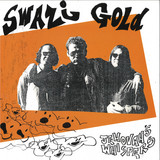
Swazi Gold have created a debut album that shimmers like the coast. There are six songs, two created by each member; through pure collaboration and participation. Swazi Gold are a true democracy.
Formed by the chief songwriters from Melbourne bands Crepes, Dreamin' Wild and Sagamore, this new band brings old friends together. Chris Jennings and Sam Cooper grew up in the Victorian coastal towns of Barwon Heads and Ocean Grove, while TimKarmouche was an inland man, hailing from Ballarat in the state's north-west
"We've been playing together for so long; in different mediums and in different bands. We've played our own key roles, but now we know what each other wants. Swazi Gold shows off our relationship from over the years, which is really cool," says guitarist and bassist Jennings.
Swazi Gold's other guitarist and bass player, Cooper, has a theory about the unifying power of their regional origins:
"It's this kind of small town thing where you strive to be different and creative. Because you're more isolated, you focus on your creativity and align yourself to similar people. I think growing up down the coast has meant I've continued to be drawn to people from other isolated places," he says.
It's this togetherness that's at the heart of Swazi Gold's debut album,Jehovah's Whispers.Recorded in a single weekend in 2017 at the Cooper's family home in Ocean Grove (affectionately termed the "Cooper Ranch")Jehovah's Whisperscaptures a musical intimacy and deep friendship between the three members.
"The bond with all the tracks on the album isn't necessarily lyrical, but it's 100% sonic. The simplicity of the instruments we use and the set-up we have is what's really rad," says Jennings.
"It's a fantasy of what we imagined Jehovah might be whispering in your ear," he adds, grinning.
Drawing from their collective love of African music, American funk, and quirky, melody-driven pop music, the album explores the space between conventional genres and styles of production.
"Using drum machines has made the song-writing process a lot quicker and opened up a whole new avenue stylistically.
- A1: Candyman, Yeyo Pã©Rez - Burn Di Chalice (The Bang Riddim)
- A2: Gappy Ranks - We Got Each Other (Di Land Riddim)
- A3: Spectacular - Seat Tight (Modern Times Riddim)
- A4: Alerta Kamarada - Canto Infinito -Mujer- (So Deep Riddim)
- B1: Sistah Maryhane, Alerta Kamarada, Franco Verã³N - Showdown (The Bang Riddim)
- B2: Pipo Ti, Mr. Karty - More Culture (West Town Riddim)
- B3: Luciano, Polyfamous - My Youths (Modern Times Riddim)
- B4: Brother Wildman - Same Question (So Deep Riddim)
- C1: Polyfamous, Maga Lion, Julio Beltrã¡N - Champion (The Bang Riddim)
- C2: Luciano, Emeterians - Take Me There (Di Land Riddim)
- C3: Morodo, Mikey General - Tell The Truth (West Town Riddim)
- C4: Yeyo Pã©Rez - Tiempo Sin Fin (So Deep Riddim)
- D1: Hugh Mikes, Pipo Ti - Man A Real Ras (The Bang Riddim)
- D2: Utah Bassum - ¿Qu㩠Fue De?
Double Vinyl Lp 16 Tracks
The Bang Riddim, Di Land Riddim, So Deep Riddim, Modern Times Riddim, West Town Riddim...
d3 Brother Wildman - Jah Jah Warrior (Modern Times Riddim)
| d4 Alerta Kamarada - Save The Children (Bonus Track)
d3 Brother Wildman - Jah Jah Warrior (Modern Times Riddim)
| d4 Alerta Kamarada - Save The Children (Bonus Track)
d3 Brother Wildman - Jah Jah Warrior (Modern Times Riddim)
| d4 Alerta Kamarada - Save The Children (Bonus Track)
d3 Brother Wildman - Jah Jah Warrior (Modern Times Riddim)
| d4 Alerta Kamarada - Save The Children (Bonus Track)
d3 Brother Wildman - Jah Jah Warrior (Modern Times Riddim)
| d4 Alerta Kamarada - Save The Children (Bonus Track)
d3 Brother Wildman - Jah Jah Warrior (Modern Times Riddim)
[|] d4 Alerta Kamarada - Save The Children (Bonus Track)
[] d3 Brother Wildman - Jah Jah Warrior (Modern Times Riddim)
[|] d4 Alerta Kamarada - Save The Children (Bonus Track)
[] d3 Brother Wildman - Jah Jah Warrior (Modern Times Riddim)
[|] d4 Alerta Kamarada - Save The Children (Bonus Track)
[] d3 Brother Wildman - Jah Jah Warrior (Modern Times Riddim)
[|] d4 Alerta Kamarada - Save The Children (Bonus Track)
[] d3 Brother Wildman - Jah Jah Warrior (Modern Times Riddim)
[|] d4 Alerta Kamarada - Save The Children (Bonus Track)
[] d3 Brother Wildman - Jah Jah Warrior (Modern Times Riddim)
[|] d4 Alerta Kamarada - Save The Children (Bonus Track)
[{] d3 Brother Wildman - Jah Jah Warrior (Modern Times Riddim)
[|] d4 Alerta Kamarada - Save The Children (Bonus Track)
" I used to live in rue de Clignancourt, and remember as a kid going to the 14th of July West Indian ball organized by my father rue André Del Sartre in Montmartre every year. There I would meet, among others, saxophonist Robert Mavounzy. Sticking to the area, my older brother had a band and often played at the famous venue La Cigale, where even Henri Salvador joined him for a jam from time to time."Since childhood Serge Fabriano bathed in music, to-ing and fro-ing between his native Guadeloupe and Paris where he grew up. He attended the music conservatory, learnt how to play bass, met and played with many musicians and was ultimately angling for a career as a music teacher. But Serge had wanderlust; he lived to meet new people and was passionate about travel.Thus, it was in a squat located rue de Flandres in the 19th district of Paris that Serge Fabriano met by chance zarb player Djamchid Chemirami, one of Iran's greatest percussionists, who invited him to the Arts Festival of Shiraz-Persepolis. After a month-long motorcycle journey, he and his guitar teacher, Roger Bénichou, arrived in Tehran. Sadly their guitars didn't survive the journey. It was there that he met, among others, Woody Shaw, Max Roach and his wife Abbey Lincoln. Serge also formed a friendship with saxophonist Gary Bartz and stayed on a month playing with the cream of the musicians who'd attended to the Festival.During the mid-70's, he alternated between teaching classes and live gigs, and performed in Germany with a funk band comprised of ex-GIs from the US Army. He also met the members of Chick Corea's group, Return to Forever, and especially Stanley Clarke who became a great source of inspiration to him.From 1978 onwards, Serge Fabriano put aside teaching and devoted more time to music. He became a musician's musician, doing studio recordings with rock bands. He also played with members of the Caribbean diaspora, which included the great drummer Marcel Lollia (known as Velo), Patrick Jean-Marie, Guy Conquette, Winston Berkley, Mino CineluDuring the "Ayatollah Comédie" musical comedy tour organized by the Journal Liberation, Serge met actor Pierre Clémenti (Il Gattopardo, Belle De Jour, The Conformist). This was a game-changer : "I was trying to record my first record. Clémenti suggested the Studio Beaubourg in Paris. "The group Fabriano Fuzion - Fabriano Unit Zion - was born.The band brought together some of the Caribbean's most inspired musicians: Martinican-born Mario Canonge on the piano (his first appearance on an album), Alain-Jean Marie on the synthesizer, Edouard and Pierre Labor on saxophones, Claude Vamur (Kassav ') on the drums, singer/percussionists Marie-Reine Lamoureux and Marie-Céline Lafontaine, percussionists Roger Raspail, Sully Cally and Hector Ficadière (Tumblack, Vent Levé) on Ka percussions.It is precisely the Gwo Ka - this ancestral 'root' music deeply embedded in the heart of the Guadeloupe musician - which constitutes the rhythmic backbone of this first opus. The Gwo Ka, the jazz, the poetry and the spiritual vibe are gathered here to form a splendid album; one of the true masterpieces to emerge from the French West Indies.Rarely will a band have borne its name so well than Fabriano Fuzion - its music is a multiple and collective work in which each element brings its identity and its richness, conferring to this major work a truly fusional dimension.