As funny as it may sound, Anaïs Mitchell has spent the past 15 years in some kind of hell. OK, not actual hell, but the multi-faceted world of Hadestown, a musical project she began in Vermont in 2006 that has grown into a Tony®- and Grammy®-award-winning Broadway phenomenon with touring editions now delighting audiences as far away as South Korea.
“I experienced so much joy working on Hadestown, but it just kept ramping up and up and requiring more and more attention,” Mitchell admits. “I had to become so single-minded and really put blinders on to my other creative life.” As it did for many artists, the COVID-19 pandemic unexpectedly offered Mitchell a blank slate to reconnect with her own music. The result is a new self-titled album made with close collaborators from Bon Iver, The National and her own band Bonny Light Horseman, Mitchell’s first collection of all-new material under her own name since 2012’s Young Man in America.
“I was nine months pregnant when the pandemic reached New York, so we made an 11th hour decision to leave and have the baby in Vermont,” Mitchell recalls. “We left the city and had the baby a week later, and then like everyone, we were in the midst of this unprecedented stillness. It felt like I could see behind me: oh, there’s New York City. There’s Hadestown. There’s my life with just one kid. A certain kind of stress and expectations. In Vermont, we moved onto my family farm and lived in my grandparents’ old house, with a new baby. I’d look at pictures on my phone from a few months earlier and wonder, whose life was that? This record, and the songs that are on it, came out of that time. I got into a flow again that I hadn’t felt in a really long time.”
Dubbed by NPR as “one of the greatest songwriters of her generation,” Mitchell is a master of the worlds of narrative folksong, poetry and balladry. Those talents are evident from the first moments of the new album, as Mitchell narrates what she calls “an unbearably romantic” trip over the Brooklyn Bridge colored by Bon Iver member Michael Lewis’ heartstring-tugging saxophone accompaniment. “Having left New York, I was able to write a love letter to it in a way I never could when I was living there,” she says. “It was like, fuck it. This is how I feel. There is nothing more beautiful than riding over one of the New York bridges at night next to someone who inspires you.”
Produced by Mitchell’s Bonny Light Horseman bandmate Josh Kaufman, the album proceeds to chronicle Mitchell’s reconnection with the Vermont roots that have been so formative in her life and music. “Bright Star” finds her making peace with the idea of being at peace in the familiar setting of her grandparents’ house, while “Revenant” was inspired by paging through a box of journals and letters belonging to herself and her grandmother — “a very pandemic activity,” she says. “That house is literally my happy place. I can picture myself as a kid, in this house, laying on the carpet with a sunbeam coming through the sliding glass door. There’s something about it that is really connected in my mind to my childhood and a very free, imaginative, creative time. “Revenant” has a lot to do with that house and reconnecting with my childhood self.”
Mitchell concedes that she tends “to be someone who thinks it has to be hard in order for it to be good or beautiful,” but that feeling has changed, partly thanks to her deep connection with musicians she’s met through the 37d03d collective established by The National’s Aaron and Bryce Dessner and Bon Iver’s Justin Vernon. During the pandemic, some of those artists participated in a “song a day” writing group — an idea Mitchell says is usually “totally opposite of how I roll. But it really helped me to gain access to some kind of trust and intuition and flow. I began a bunch of these songs while doing that.”
“It unlocked something that allowed me to finish a bunch of songs I’d been sitting on, and feeling a bit paralyzed about how to finish them,” she continues. “Because no one was touring, it’s not like I was playing them for anyone before we were in the studio. In other times, I’ve trotted things out in advance. Here, it was like, here’s all these brand new songs. Let’s discover what they can be. That was really exciting.”
That discovery process took flight at Dreamland Recording Studios outside Woodstock, N.Y., which Mitchell describes as “this weird, janky, beautiful church - it’s my favorite studio in the world.” Kaufman, Lewis and Big Red Machine drummer JT Bates formed a core band around Mitchell, while Aaron Dessner and Thomas Bartlett joined the sessions mid-week on guitar and piano, respectively.
After the appropriate COVID tests came back negative, “it was a pretty extraordinary feeling to hug, kiss and share the same space playing together,” Mitchell says. “We went into that world for a week and didn’t leave the studio for any reason. I felt very safe with all those guys. It was warm and joyful.”
Mitchell says this environment brought out unexpected details in the material, which was recorded almost entirely live together in the room. “Sometimes we tried separating things out, like vocals, but we always ended up back in the room together,” she says. Indeed, after spending the better part of a day recording overdubbed versions of “Little Big Girl” that nobody loved, the musicians gave up and tracked it again live. “We got so frustrated that we went in and I was like, I’m just going to sing this as hard as I fucking can. It felt like that’s what the song wanted to be,” Mitchell says. “It felt like all those songs wanted to be recorded as live as possible.” The exception to the rule was Nico Muhly's arrangements for strings and flute, which were added from New York City afterward.
Mitchell will debut the new material during various headline tours in the U.S. and Europe in 2022, at which she’ll be accompanied by players from the album. On stage, she can’t wait to further hone the sights, sounds and scenes that bring the songs to such vivid life. “I’ve spent a lot of time trying to write in the voice of other characters, especially with Hadestown. It’s fun for me, but these songs are not that,” she says. “Weirdly, they’re all me. The narrator is me. That’s why it felt right to self-title the album. It felt like after so many years of working on telling other stories, now here are some of mine.”
quête:try
As funny as it may sound, Anaïs Mitchell has spent the past 15 years in some kind of hell. OK, not actual hell, but the multi-faceted world of Hadestown, a musical project she began in Vermont in 2006 that has grown into a Tony®- and Grammy®-award-winning Broadway phenomenon with touring editions now delighting audiences as far away as South Korea.
“I experienced so much joy working on Hadestown, but it just kept ramping up and up and requiring more and more attention,” Mitchell admits. “I had to become so single-minded and really put blinders on to my other creative life.” As it did for many artists, the COVID-19 pandemic unexpectedly offered Mitchell a blank slate to reconnect with her own music. The result is a new self-titled album made with close collaborators from Bon Iver, The National and her own band Bonny Light Horseman, Mitchell’s first collection of all-new material under her own name since 2012’s Young Man in America.
“I was nine months pregnant when the pandemic reached New York, so we made an 11th hour decision to leave and have the baby in Vermont,” Mitchell recalls. “We left the city and had the baby a week later, and then like everyone, we were in the midst of this unprecedented stillness. It felt like I could see behind me: oh, there’s New York City. There’s Hadestown. There’s my life with just one kid. A certain kind of stress and expectations. In Vermont, we moved onto my family farm and lived in my grandparents’ old house, with a new baby. I’d look at pictures on my phone from a few months earlier and wonder, whose life was that? This record, and the songs that are on it, came out of that time. I got into a flow again that I hadn’t felt in a really long time.”
Dubbed by NPR as “one of the greatest songwriters of her generation,” Mitchell is a master of the worlds of narrative folksong, poetry and balladry. Those talents are evident from the first moments of the new album, as Mitchell narrates what she calls “an unbearably romantic” trip over the Brooklyn Bridge colored by Bon Iver member Michael Lewis’ heartstring-tugging saxophone accompaniment. “Having left New York, I was able to write a love letter to it in a way I never could when I was living there,” she says. “It was like, fuck it. This is how I feel. There is nothing more beautiful than riding over one of the New York bridges at night next to someone who inspires you.”
Produced by Mitchell’s Bonny Light Horseman bandmate Josh Kaufman, the album proceeds to chronicle Mitchell’s reconnection with the Vermont roots that have been so formative in her life and music. “Bright Star” finds her making peace with the idea of being at peace in the familiar setting of her grandparents’ house, while “Revenant” was inspired by paging through a box of journals and letters belonging to herself and her grandmother — “a very pandemic activity,” she says. “That house is literally my happy place. I can picture myself as a kid, in this house, laying on the carpet with a sunbeam coming through the sliding glass door. There’s something about it that is really connected in my mind to my childhood and a very free, imaginative, creative time. “Revenant” has a lot to do with that house and reconnecting with my childhood self.”
Mitchell concedes that she tends “to be someone who thinks it has to be hard in order for it to be good or beautiful,” but that feeling has changed, partly thanks to her deep connection with musicians she’s met through the 37d03d collective established by The National’s Aaron and Bryce Dessner and Bon Iver’s Justin Vernon. During the pandemic, some of those artists participated in a “song a day” writing group — an idea Mitchell says is usually “totally opposite of how I roll. But it really helped me to gain access to some kind of trust and intuition and flow. I began a bunch of these songs while doing that.”
“It unlocked something that allowed me to finish a bunch of songs I’d been sitting on, and feeling a bit paralyzed about how to finish them,” she continues. “Because no one was touring, it’s not like I was playing them for anyone before we were in the studio. In other times, I’ve trotted things out in advance. Here, it was like, here’s all these brand new songs. Let’s discover what they can be. That was really exciting.”
That discovery process took flight at Dreamland Recording Studios outside Woodstock, N.Y., which Mitchell describes as “this weird, janky, beautiful church - it’s my favorite studio in the world.” Kaufman, Lewis and Big Red Machine drummer JT Bates formed a core band around Mitchell, while Aaron Dessner and Thomas Bartlett joined the sessions mid-week on guitar and piano, respectively.
After the appropriate COVID tests came back negative, “it was a pretty extraordinary feeling to hug, kiss and share the same space playing together,” Mitchell says. “We went into that world for a week and didn’t leave the studio for any reason. I felt very safe with all those guys. It was warm and joyful.”
Mitchell says this environment brought out unexpected details in the material, which was recorded almost entirely live together in the room. “Sometimes we tried separating things out, like vocals, but we always ended up back in the room together,” she says. Indeed, after spending the better part of a day recording overdubbed versions of “Little Big Girl” that nobody loved, the musicians gave up and tracked it again live. “We got so frustrated that we went in and I was like, I’m just going to sing this as hard as I fucking can. It felt like that’s what the song wanted to be,” Mitchell says. “It felt like all those songs wanted to be recorded as live as possible.” The exception to the rule was Nico Muhly's arrangements for strings and flute, which were added from New York City afterward.
Mitchell will debut the new material during various headline tours in the U.S. and Europe in 2022, at which she’ll be accompanied by players from the album. On stage, she can’t wait to further hone the sights, sounds and scenes that bring the songs to such vivid life. “I’ve spent a lot of time trying to write in the voice of other characters, especially with Hadestown. It’s fun for me, but these songs are not that,” she says. “Weirdly, they’re all me. The narrator is me. That’s why it felt right to self-title the album. It felt like after so many years of working on telling other stories, now here are some of mine.”
25TH ANNIVERSARY OF GAVIN HARRISON'S DEBUT ALBUM REISSUED
Gavin Harrison has established himself as one of the most revered
drummers in the progressive rock scene in recent years
As a member of Pineapple Thief, Porcupine Tree & King Crimson at one time or
another, as well as guesting on numerous acclaimed recordings, he has secured a
reputation as one of the most thrilling drummers around.
In 1997 Gavin released 'Sanity & Gravity', an impressively ego- free debut solo
release featuring performances from a stellar line-up including Mick Karn, Richard
Barbieri, Jakko Jakszyk (21st Century Schizoid Band) & Dave Stewart (Egg,
National Health). Avoiding making a typical 'solo' drum album as a means of
demonstrating his prodigious technique, Gavin created an expressive & emotional
album that is strong on both groove & melody.
In his own words, "faced with the prospect of making a 'solo' drum album I
decided I would take a more experimental approach to playing my instrument,
rather than make a record of fast fashy solos & flls to try & show off my
technique. I felt there was a way to express emotion from the drums played with
the attitude of "blowing" on a saxophone or "twiddling" around on a piano."
The original album has gone on to gain legendary status in the 25 years following
its original conception with the CD fetching high sums on the resale market.
Kscope is now thrilled to present the album reissued & remastered with an
exclusive bonus track & new original artwork for the anniversary. Essential
listening!
'SANITY & GRAVITY' WILL BE ISSUED VIA KSCOPE
On August 27th 2021 The Third Sound released their fifth album ‘First Light’ on Fuzz Club Records and it is now being given a second pressing after selling out upon release the first time aorund. Dealing in a hypnotic blend of neo-psychedelia, post-punk and new wave, The Third Sound is a Berlin-based band led by the Icelandic musician Hákon Aðalsteinsson, who is the guitarist in Brian Jonestown Massacre and formerly played in the cult rock’n’roll outfit Singapore Sling. A mainstay of the European psych underground in his own right, not just through his collaborations with the likes of Anton Newcombe and Tess Parks, The Third Sound has been Hakon’s primary solo endeavor since the release of his self-titled debut on Newcombe’s A Recordings a decade ago. Arriving following 2018’s ‘All Tomorrow’s Shadows’ LP, ‘First Light’ marks an evolution into a brighter and at times uplifting sound. Marrying moments of light and dark, the result is The Third Sound’s most dynamic full-length to date. Talking about the album, Hakon said: “This album is definitely less gloomy than the previous one, although some ghosts from the past are lurking in the background. We always try to make something new on each album and never make the same album over again, but this feels like an even bigger change than usual, especially regarding the mood. Something new is beginning although the past is not forgotten. I think the title, First Light, describes the overall feel of the record pretty well.” ‘First Light’ is the fifth full-length from The Third Sound and arrives off the back of 2018’s ‘All Tomorrow’s Shadows’, 2016’s ‘Gospels of Degeneration’, 2013’s ‘The Third Sound of Destruction and Creation’ and their 2011 self-titled debut. With Hakon Aðalsteinsson leading the group on vocals and guitar, the rest of the band is currently comprised of Robin Hughes (Guitar / Organ), Fred Sunesen (Drums) and Andreas Miranda (Bass). With a number of European tours in tow, the band have previously shared the stage with the likes of the Brian Jonestown Massacre, The Warlocks, Singapore Sling, Crocodiles, Clinic, Tess Parks and more.
Martina Topley Bird’s new studio album ‘Forever I Wait’, features collaborations and arrangements from Robert Del Naja of Massive Attack, Euan Dickenson, Rich Morel, Christoffer Berg, Benjamin Boeldt and Tiadiad.
'Forever I Wait' is Topley-Bird’s fourth long awaited studio album and her very first self-produced and curated piece of work to date. The album, set for a digital release on September 10th, with a vinyl LP available to pre-order now, captures an extensive journey confronting, exploring, analysing and reflecting on the devastating fragilities of life as it ultimately seeks to make peace with what life is.
A sentient and sensual presence framed Tricky’s trip-hop pioneering white label debut release, Aftermath. Hauntingly unique and immediately recognisable, that voice became the defining timbre of a new music movement. Behind this voice was mysteriously soft-spoken, London-born Martina Topley-Bird, whose exquisite voice came to inspire and infuse other pioneering artists across all genres.
“It’s a trip through different emotional states and frequencies, mostly dark, from insecurity and desire, all the way through to serenity and acceptance with themes that resonate from my young teens all the way through till today. Things that I’ve seen and things I’ve felt and worked through, although sometimes I sense them trying to return”
“Forever I Wait”, as the title alludes, was written and re-written over a long period of time.
“I had to change my way of relating to music and the music industry in order to make the record I wanted to make.…and that took time. And I took the time I needed. I started in London, moved and lived in America for the first time in my life, then briefly moved back to London and finished the record in Spain.”
“After trying to work on a new record for a couple of years, I came to a realisation that in order to move forward I had to separate the concept and vision I had for this record from me as a person. I had to shift my perspective. That was a big personal win and the beginning of “Forever I Wait.”
'Forever I Wait' leans on a multitude of tense sounds, dubby atmospherics and natural instrumentation to demand the listeners attention leading to over two decades of observations, experiences and musical sacrifices. It is a bi-product of the new perspective featuring carefully selected and tailored supporting arrangements from a handful of collaborators including Robert del Naja (Massive Attack), Rich Morel (Deep Dish), Christoffer Berg (Fever Ray) and Benjamin Boeldt (Adventure).
A truthful expression of desire and heartache “Forever I Wait “Is Topley Bird’s most precise and accurate album to date.
Includes A3 poster print by Frank West . . .
Welcome denizens of disaster, one and all - please make yourselves uncomfortable.
Did anyone ever tap you on the shoulder as you were walking through an unfamiliar land, just to tell you to watch where you’re going? In this interlinked age of protocol-onies and networked nations, the only territory you can’t rely on is your own state of mind.
Mapped-out by a series of second guesses and double takes, Catastropheland is the one place you’re welcome to try and expand your diminished reality. In Catastropheland, the road signs are all traps, the charts are the wrong way round, the jokes fall flat, and it always rains upwards.
Meanwhile, nine tracks of virtual shapes are bounced off the dishes of an orbiting Syncom 7 and beamed straight into your personal space. The quest for the augmented self might not lead to the results you expect, but as a citizen of Catastropheland, your residency permit is never up for review, and you’re only a shipwreck away from being washed-up on a melting shoreline.
The music was performed by Montel Palmer in Cologne during summer 2018
Mastered by The Bastard
This set is a straight remastered reissue, cover art and all, of 1975's Al Green's Greatest Hits LP, which collected his ten biggest singles. Nothing beats Al Green when it's time to sip your Courvoisier on your white pleather couch, be it alone or with that special someone... Ten classic tracks from 1975. Try it. Satisfaction guaranteed..
HIFILOFI SCIFIWIFI is the debut solo album from Gale P, best known as the co -founder, guitarist and occasional singer of acoustic-indie stalwarts Turin Brakes.
Born in Tehran, based in Brixton, Gale Paridjanian was raised in the multicultural melting pot of South London in a family home full of musical instruments. He picked up a guitar at a young age and launched himself onto his musical arc.
A lockdown break from touring provided the space to explore fresh creative directions, inspirations and collaborations. Gale brought all these into his home studio to stitch together into a compelling set of personal songs; “I’d go around London looking for inspiration, bring it back to my garden shed and create freely, attempting to turn into sound what I’d seen that day - a painting, a fight, a story overheard. But sometimes I’m just trying to make music I want to hear, like a home-made Shazam playlist.”
Everything is tied together by Gales’ authentically lo-fi production, intimate vocals and sultry acoustic guitar, floating across dreamily trashy beats and subtle offbeat electronics.
Angel Olsen covers “Something On Your Mind,” while Karen Dalton’s version is found on the flip.
The latest release in Light in the Attic’s 7" Covers Series.
Artwork by Los Angeles-based fine artist Robbie Simon.
Pressed at Third Man Pressing. Non-Returnable.
Didn’t you see, you can’t make it without ever even trying? — Dino Valenti, lyrics from “Something On Your Mind”
Light in the Attic is honored to be releasing Angel Olsen’s gorgeous cover of Karen Dalton’s moving interpretation of ‘Something On Your Mind,’ a song that enduringly underscores the unspoken thoughts, painful truths and buried emotions between people and within oneself. Thematically, the song is universal and resonates as much with listeners today emerging from a post-pandemic world as it did for Karen Dalton when she first recorded it in 1971 for her second and final studio album, In My Own Time. “‘Something On Your Mind’ for me is about letting yourself face something that keeps setting you back,” says Angel Olsen, who has come to the forefront of Karen Dalton appreciators around the world, both in her contribution of this new interpretation and as the voice of Dalton’s personal journals in the recent documentary, Karen Dalton: In My Own Time. As part of the latest installment of LITA’s long-running cover series, Angel’s cover is found on the a-side, while the flip includes Karen’s 1971 version.
Previous singles in Light in the Attic’s Covers Series includes musician, poet, and author Leslie Winer collaborating with Manchester-born composer Maxwell Sterling on a truly gorgeous cover of Tim Buckley’s 1967 forlorn love song “Once I Was,” Bill Callahan & Bonnie ‘Prince’ Billy covering Johnnie Frierson’s beautiful and inspiring tune “Miracles,” BADBADNOTGOOD with Jonah Yano covering “Key To Love (Is Understanding)” by Milwaukee’s funk/soul pioneers Majestics, Charles Bradley & the Menahan Street Band covering Sixto Rodriguez, Mac DeMarco covering Haruomi Hosono’s “Honey Moon,” and Iggy Pop with the Zig Zags transforming Betty Davis’ dirty funk into a heavy Sabbath grind, amongst many others.
- A1: Matador
- A2: She Is Gone
- A3: Your Memory Won't Die In My Grave
- A4: I'm Not Trying To Forget You Anymore
- A5: Too Sick To Pray
- A6: Mariachi
- A7: I'm Waiting Forever
- B1: We Don't Run
- B2: I Guess I've Come To Live Here In Your Eyes
- B3: It's A Dream Come True
- B4: I Thought About You, Lord
- B5: Spirit Of E9
- B6: Matador
Black[26,01 €]
Newly remastered audio.
LP pressed on black vinyl & housed in a gatefold jacket.
Willie Nelson’s 1996 album Spirit is an emotional concept album illustrating the forlorn tale of a man abandoned by the great love of his life. We follow him down the path of loss as he confronts grief, gets back on his feet, and eventually finds solace in acceptance. While producing Spirit, Nelson assuredly knew the commercial risks behind releasing an album this melancholic. After all, in 1973 he himself wrote: “sad songs and waltzes ain’t selling this year.” Beloved by those familiar with Nelson’s deep catalog, Spirit largely slipped through the cracks in the mainstream, but remains highly revered amongst critics and fans alike.
Backed by legendary country fiddler Johnny Gimble (of Bob Wills and His Texas Playboys), sister Bobbie Nelson on piano, and his longtime touring guitarist Jody Payne, the song-cycle is anchored by lilting Spanish-inspired instrumentals that absorb a lonesome gravity when placed next to ballads that tug at even the most unwavering heartstrings. Likened to Bob Dylan’s Time Out Of Mind or Waylon Jennings’ Right For the Time, Spirit sees Nelson maturing most gracefully: he trades rousing sing-alongs and saloon tunes for gut-wrenching lyrics and instrumentation of greater precision and skill, proving this release as deep and as challenging as his career-defining albums released twenty years before.
Originally released by Island Records in 1996, Spirit is newly remastered and housed in a gatefold jacket. This is a chance to own this unique album in its most beautifully presented form.
Martina Topley Bird’s new studio album ‘Forever I Wait’, features collaborations and arrangements from Robert Del Naja of Massive Attack, Euan Dickenson, Rich Morel, Christoffer Berg, Benjamin Boeldt and Tiadiad.
'Forever I Wait' is Topley-Bird’s fourth long awaited studio album and her very first self-produced and curated piece of work to date. The album, set for a digital release on September 10th, with a vinyl LP available to pre-order now, captures an extensive journey confronting, exploring, analysing and reflecting on the devastating fragilities of life as it ultimately seeks to make peace with what life is.
A sentient and sensual presence framed Tricky’s trip-hop pioneering white label debut release, Aftermath. Hauntingly unique and immediately recognisable, that voice became the defining timbre of a new music movement. Behind this voice was mysteriously soft-spoken, London-born Martina Topley-Bird, whose exquisite voice came to inspire and infuse other pioneering artists across all genres.
“It’s a trip through different emotional states and frequencies, mostly dark, from insecurity and desire, all the way through to serenity and acceptance with themes that resonate from my young teens all the way through till today. Things that I’ve seen and things I’ve felt and worked through, although sometimes I sense them trying to return”
“Forever I Wait”, as the title alludes, was written and re-written over a long period of time.
“I had to change my way of relating to music and the music industry in order to make the record I wanted to make.…and that took time. And I took the time I needed. I started in London, moved and lived in America for the first time in my life, then briefly moved back to London and finished the record in Spain.”
“After trying to work on a new record for a couple of years, I came to a realisation that in order to move forward I had to separate the concept and vision I had for this record from me as a person. I had to shift my perspective. That was a big personal win and the beginning of “Forever I Wait.”
'Forever I Wait' leans on a multitude of tense sounds, dubby atmospherics and natural instrumentation to demand the listeners attention leading to over two decades of observations, experiences and musical sacrifices. It is a bi-product of the new perspective featuring carefully selected and tailored supporting arrangements from a handful of collaborators including Robert del Naja (Massive Attack), Rich Morel (Deep Dish), Christoffer Berg (Fever Ray) and Benjamin Boeldt (Adventure).
A truthful expression of desire and heartache “Forever I Wait “Is Topley Bird’s most precise and accurate album to date.
- A1: 4 A While
- A2: Next Door
- A3: Mule
- A4: Obscure
- A5: Out Of Control
- A6: Red And Yellow
- A7: I Don´t Care
- A8: Sleeping Alone
- A9: U Know
- B1: Job
- B2: My Hope Is Fading
- B3: Fernando
- B4: More Flute
- B5: Break Again
- B6: New Life
- B7: Trouble Dub
- B8: Everything Is Blue
- C1: Word´s Don´t Say Much
- C2: Drunk Again
- C3: As We
- C4: Babies Laugh
- C5: For The System
- C6: Get It
- C7: Pattern Select
- D1: That Easy
- D2: Till The Sun Comes Up
- D3: Try My Organ
- D4: Love Ocean
- D5: Murphy Combo
- D6: After The Lights
- D7: Go On
- D8: Ahahahaha
- D9: Every Man Has To Carry
- D10: Kaputtnick
- C8: Ach
- C9: Dream Chaserc10 | All Good
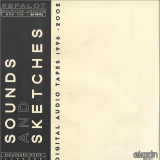
Lo-Fi was rather an involuntary attribute in the 90s. 90s hip hop instrumentals with the sound aesthetics of old 12-bit samplers are the blueprint for everything that runs under chill and lo-fi beats today. For this double LP, SEPALOT dug deep into his demo box, listened to countless DAT cassettes and dug up 36 pearls from the period 1996 - 2002.
Sepalot: "I had to laugh a lot at times and was sometimes embarrassed, but the innocence of the early days also has an insane power. The best beats demos and sketches from my early days now get their moment."
This release is a special one; a moment where the two halves of the Mr Bongo record label unite, our heritage re-issues and our contemporary artists roster.
Minoru Muraoka’s 'The Positive and the Negative’ is a firm favourite at Mr Bongo. It sees a master of the shakuhachi, a traditional bamboo Japanese flute, flex his prodigious skill resulting in a unique mix of breakbeat jazz and Japanese folkloric music. 'The Positive and the Negative’ featured on the 1970 'Bamboo’ album, which Mr Bongo reissued in 2019. Heralded by DJ Shadow, Cut Chemist, Egon, and many others. The record’s cult status had us thinking how could we pay further homage to a sublime track such as this. The opportunity came to us in an email from Melbourne’s Surprise Chef with a link to the fabulous reinterpretation of the track which they had just recorded.
"Minoru Muraoka’s ‘Bamboo’ LP has long been a fixture in our record bags, mostly for the killer shakuhachi funk cut The Positive and The Negative. The record is possibly our favourite from Mr Bongo’s extensive catalogue of reissues, and certainly the most influential to Surprise Chef; The Positive and the Negative’s cinematic atmosphere paired with the wonky drum feels and dramatic performance makes it a near-perfect amalgamation of what we try to capture on Surprise Chef records. We’ve borrowed an element or two from the tune over the last few albums (such as the percussion on ‘The Limp’), so it felt right to go head first into reinterpreting the entire track for ourselves. We recorded the tune in Karate Boogaloo’s attic studio with our man Henry Jenkins at the controls and Hudson Whitlock on percussion. We spent an entire day trying to get the take; we felt such a deep responsibility to capture the intensity of the original, we must have done 20 or 30 takes before we were finally happy. We stuck a fork in it late into the night, satisfied that we’d had our best crack at paying homage to a masterpiece by the great Minoru Muraoka.” - Surprise Chef
Forged in their signature sound, "The Chef" have made 'The Positive and the Negative' their own whilst simultaneously treating the original with utmost respect. The shakuhachi and koto have been replaced by synths and guitars, but the breakbeat psychedelic vein flows richly through both instruments
The 7" vinyl format was the right fit for this release, so the original Minoru Muraoka recording which clocks in over nine minutes has been edited into a 7” version to accompany Surprise Chef’s new take.
His partnership with the label has already resulted in a collaboration with Modern Heads, as well as one of the first entries in the Monad series, and now a fascinating new EP that showcases his talent for testing the limits of perception.
Alistair Wells is a producer whose current work is synonymous with a kind of benevolent intensity: he excels at sculpting tonally rich and percussively complex tracks that seem to both enlighten and confront. Under his most well-known alias as Perc, he has established a deep roster on his Perc Trax label to carry out a similar-minded program, and has built up a formidable arsenal of EPs and singles in the wake of enigmatic LPs like 2011's Wicker & Steel. His 'eclectic-yet disciplined' methodology practically guaranteed he would eventually come into the orbit of Stroboscopic Artefacts. His partnership with the label has already resulted in a collaboration with Modern Heads, as well as one of the first entries in the Monad series, and now a fascinating new EP that showcases his talent for testing the limits of perception.
The ominously titled opener "Death of Rebirth" - a title hinting at some form of hellish repetition - starts things off with a sense of dark premonition. Yet, in signature Perc style, that aura of uneasiness beckons listeners to explore further rather than to flee from it: in this context, the reliable 4/4 kick drum throb is the only means of orienting oneself or angling through a glassy and metallic labyrinth where foreign objects conspire to make previously unimagined percussive noises. "Negative Space" is a variation upon this theme of trying to maintain focus within a foreign environment bristling with strange enticements and potential dangers: with the kick pattern from the previous pice still acting as a trusty guide, new sound forms arise at every turn: a novel sort of hybridized piano / gamelan tone, a shuddering assembly line, and snaking delay feedbacks. Like dub music meant to be listened to in a hall of mirrors, "Negative Space" induces a heady feeling of multiplying realities.
The closing "Ma", if translated into Japanese, can mean "space / pause" and thus acts as a nice complement to "Negative Space." However, this massive, side-long audio force field dispenses with the previous tracks' steady pulse, and suggests a rigorous act of ritual contemplation taking place in the midst of phenomenal chaos and challenging blows to the body. "Ma" succeeds in modernizing the industrial-era rhythmic invocations of artists like Z'ev, achieving an almost classical solemnity without sacrificing Perc's usual love for cleverly maniuplated electricity. Altogeher, 'Ma' is an eye-opening, ear-infliltrating statement that will warp your understandings of time and space in a most exquisite way.
There’s an element of emotional abstraction and also something very intimate simultaneously on ‘Break into Blossom’. The stories find characters experiencing (and trying to make sense of) certain circumstances, but there’s at the same time a kind of distance from those experiences — a kind of cognitive reckoning that eventually gives way to understanding and actually feeling them.
Like picking up a tiny stone from the bottom of a riverbed. Turning it over in your hand. Holding it up to the sun. Inspecting it from every angle. But instead of a rock, it’s memories, dreams, relationships, losses, desires, anxieties, triumphs.
I took the title of the record from a poem called “A Blessing” by James Wright (1927-1980).
In the poem, the narrator is experiencing a moment of sublime beauty that’s also colored with a tinge of loss and of loneliness. The poem ends with, “Suddenly I realize That if I stepped out of my body I would break Into blossom.”
When you’re wading in the river, it may be gold… or it may just be a plain old rock. And that’s okay. Sometimes the loss itself creates a space for something profoundly beautiful.
So you keep going out and digging around, nonetheless. That’s the important thing.
As the world circles the abyss at gathering speed, WIEGEDOOD have returned to provide a perfectly vicious soundtrack. Formed in 2014, the Belgian trio have built an unassailable reputation as purveyors of visceral and bleak black metal in its purest and most destructive form. Since unveiling their debut album “De Doden Hebben Het Goed” in 2015, WIEGEDOOD have blazed an unending trail for musical darkness, bolstering their burgeoning notoriety with some of the most apocalyptic live performances in recent memory, and producing two subsequent albums – “De Doden Hebben Het Goed II” and “III”, released in 2017 and 2018 respectively – which hammered home the band’s unique creative powers. Emerging once more, this time from the involuntary solitude of a plague-bound world, WIEGEDOOD are back with their fourth studio album, “There’s Always Blood At The End Of The Road”. A ferocious tour-de-force, born of frustration and the ever-burning flame of hatred for the modern world, the new record marks a significant departure for this most ruthlessly singular of modern metal bands. “Musically I think we’ve made our most uncomfortable record so far. It’s once again faster than anything we’ve done before, and more unforgiving than the whole trilogy combined”, says vocalist/guitarist Levy Seynaeve. “To me, it feels like a soundtrack, for a movie yet to be made. A movie about the filthiest and most disgusting parts of human nature and society, and about the struggle we lead within, trying to overcome the fact we are all made from that same filth.” “There’s Always Blood At The End Of The Road” is available as: Ltd. CD Edition, 2x 180g LP (with etching on side D) that come in a Wide Spined Sleeve and 2 printed Discobags, Digital Album.
- A1: 1/4 Dead
- A2: Blissful Myth
- A3: The Psycho Squat
- A4: Rotten To The Core
- A5: Poppycock
- A6: Cosmic Hearse
- A7: The Cloud Song
- A8: Vampire State Building
- A9: Blasphemy Squad
- A10: When You Are A Martian Church
- A11: Pig In A Blanket
- B1: Inside
- B2: Nothing But A Nightmare
- B3: Flesh Crucifix
- B4: Slimy Member
- B5: Love Is Not
- B6: Radio Schizo
- B7: Happy Farm
- B8: Alice Crucifies The Paedophiles
- B9: Army Of Jesus
- B10: Dutchmen
The words legendary, seminal, and classic get thrown around at will these days, but Rudimentary Peni’s debut album is all of them. Recorded over two days at Southern Studios by John Loder and originally released in 1983 by CRASS off-shoot label Corpus Christi, “Death Church” showed a band moving away from the urgency of their two early 7”s and into their own realm. Creating a template that bands have been trying to replicate ever since, while ticking all the boxes to become a genre-defining album. Iconic artwork, a unique sound and their own lyrical universe. All merging seamlessly. Sonically the album is full of Nick Blinko’s extraordinary vocals and equally remarkable guitar, Grant Matthews’ big meandering driving basslines and Jon Greville's tight and relentless drum work which together made something intricate and hard hitting, with a sequence that makes the 21 songs on the album flow perfectly. Visually, the album is every outsider art lover’s wet dream. A six-panel poster sleeve with every inch covered in Nick Blinko’s claustrophobic black and white line drawings, while lyrically the songs deal with madness, religion, death, and questioning humankind from a dark poetic place rarely found in any art form. Remastered from the original master tapes by Arthur Rizk and housed in a replica poster sleeve, including the original insert, “Death Church” is back in print in LP, CD and cassette after nearly a decade of no official reissues.
Buckle in for an orgasmic Italo trip, courtesy of Argentinian duo Furor Exótica. The result of a sweaty and shaky journey in their Buenos Aires studio, here they deliver two stir-crazy babies, crafted for dancing lovers worldwide.
The title track ‘Macchina Bum Bum’ builds energy gradually from minimal beginnings, adding spine-tingling vocoder vocals, shimmering synth melodies and a familiar sample as it builds towards a euphoric climax. Prime sunset material.
Meanwhile ‘Fractal’ is a hot and heavy chugger, with its throbbing bassline, trippy vocals, and euphoric synth melodies swelling and swirling together. You can practically smell the sweat on leather.
On remix duties, Donald’s House kick things off with a brilliant reimagining of ‘Macchina Bum Bum’, complimenting the vocals with a squiggly, wiggly, funky and propulsive retro-futurist instrumental. Just try not to throw your hands in the air when the synth melody comes in around the halfway mark! A certified stone cold banger, ready for peak-time deployment.
Bringing things home, label founders Kayroy and GREETINGS deliver a dreamy, psychedelic rework of ‘Fractal’. The vocals are transformed into a trippy, gated refrain, taking center stage alongside mellow, warm synth lines, and underpinned by a robust 808 kick. The track ends in a final crescendo, which should please dancers in a club or lovers in a broom closet alike.
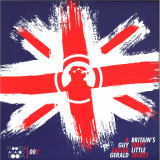
For a number of years now, A Guy Called Gerald has largely made music only for himself. But this special EP is borne from Gerald’s unique and long-lasting friendship with Analog Room founders Mehdi Ansari, Siamak Amidi and Salar Ansari. They first met in 2013 when Siamak booked Gerald to play his Analog Room party in Dubai – a leading underground light in the UAE’s then emergent scene. Away from the glossy VIP hotels and expensive bottle service parties
typically associated with Dubai, Analog Room only deals with quality bookings of the caliber of Move D, Roman Flügel, Moritz Von Oswald and the likes. Gerald immediately fell in love with the party. Its strict music-first, no-nonsense policy appealed to him and he’s returned many times over the years.
By then, of course, A Guy Called Gerald’s musical legacy was already assured. The Manchester icon is best known for his 1988 hit single Voodoo Ray – the touchstone of his hometown’s dawning acid house scene. As well as being an early member of 808 State, Gerald embraced breakbeat and jungle, ran his own Juice Box Records label and worked with the likes of Columbia, Perlon, K7! and many other vital labels. His skills on everything from synths to keys, samplers to
drum machines stood him apart then – and still do today.
“This release is based on a real friendship,” Gerald explains. “I feel part of the Analog Room family. Back in the early days, that’s how it was. These days, it’s like, ‘Oh, you’re famous, let’s do something.’ I’m not interested in that. I’m not interested in being a celebrity or living that life. I’m the same as I was 30 years ago, all I care about is the music. With Mehdi, we have spent hours jamming in private in Dubai, we have partied together. We’ve vibed together for so long and he’s shown me new parts of the world I should be making and playing music in, away from the trendy scenes in other places. So this is an exclusive just for him.
I’m not looking at doing anything else with anyone, and the music is just about celebrating individuality rather than trying to fit in anywhere.”
When Iranian-born Mehdi decided to start Moozikeh Analog Room – which translates from Farsi as “the music of the Analog Room” – Gerald was one of the first artists he asked to release on the label. It might have taken some time for Britain’s Dirty Little Secret to materialize, but boy it’s been worth the wait.
Says Mehdi, “The magic comes through proper relationships and friendships.
That’s why Analog Room worked. It was a great room, an amazing sound system, with amazing artists doing their thing. Bookings were so on-point because we had agents around the world, on the dancefloors, spying up artists who were killing it,
and Gerald was one of them. He was a perfect fit from the first gig and our friendship grew from there. He’s always been very kind to me. We have this common language of music without any bullshit, and that is where this EP comes from.”
The EP is a mixture of different things. Some of it is unreleased material from the vaults revisited, some of it is brand new. It opens up with the devastating Old Skool – a writhing, physical track with naughty bass. The drums hark back to Gerald’s early days of making jungle but reimagined through a modern perspective. As the synths spray about the mix and the percussion bounces atop the jostling drums, muttered vocals draw you in deeper. Sugoi is an experimental
track that fuses ambient synth design with the spacious and eerie atmospheres of jungle. Nimble drums get you on your toes as the spangled synths twist and turn in all directions. It is a thrillingly original, impossible to define track.
Flash Fight is built on a captivating rhythm that sits in the area where house, techno and jungle intersect. It is warm and cavernous, physical yet elegant as it bounces on rubbery kicks and lithe synths roam in and out of earshot. Perfect for those sweaty, cozy back rooms, it’s another masterclass from Gerald. Closing out the EP is False Religion, a deep-rooted house track with elastic drums and
haunting, wispy pads. As a subtle acid bassline rises and falls way down below,
Gerald’s own mystic whispers leave listeners hypnotized.
Following on from Analog Room co-founder Salar Ansari’s debut release on the label, this EP is a statement of intent. More releases will follow from some of Analog Room’s most frequent international guests, but only when the time is right. Moozikeh Analog Room is a label of love, one that is focused on putting out the best possible music at all times rather than chasing hype.
A timely reminder of why A Guy Called Gerald is one of the world’s most enduring electronic artists.