Absolutely stunning second album from Trees Speak new on Soul Jazz Records. Trees Speak's new album 'Shadow Forms' is a blend of 1970s German electronic and 'motorik' Krautrock instrumentals (think Harmonia, Can, Cluster, Popul Vuh, Neu!), haunting and powerful 1960s & 1970s soundtracks (think Italian prog-rock Goblin and John Carpenter horror movies, Morricone and existential John Barry spy movies), together with a New York no wave electronic synth and guitar analogue DIY-ness (think Suicide, anything on Soul Jazz's New York Noise series or Eno's New York No Wave)! Trees Speak' segue together all these elements into 'Shadow Forms,' which follows on from their critically-acclaimed debut LP 'Ohms,' released on Soul Jazz Records less than six months ago. Trees Speak are Daniel Martin Diaz and Damian Diaz from Tucson, Arizona and their music often draws on the cosmic night-time magic of Arizona's natural desert landscapes. 'Trees Speak' relates to the idea of future technologies storing information and data in trees and plants - using them as hard drives - and the idea that Trees communicate collectively. The album includes an exclusive bonus 45 single 'Outtake' and 'Transmitter' that will only be available with the first order of this amazing and ground-breaking new album.
Buscar:tuc
There's a mystical place in the heart of Rotterdam, oddly tucked in between the corporate buildings. Bright light boards and red velvet carpets, it's a small cinema that still breaths its old-school grandeur. That's where the Cinerama Adventures project was born, lead by its staff supervisor DJ Overdose. The result are two tracks that go from modern flavored freestyle to sleazy darkroom experiments, both accompanied by the instrumental versions.
- A1: The Devil In Me 3:24
- A2: Hey Queenie 4:08
- A3: Betty Who? 3:57
- A4: You Can‘t Dream It 3:10
- B1: My Heart And Soul 5:13 (Long Version)
- B2: Get Outta Jail 3:18
- B3: Do Ya Dance 2:44
- B4: Isolation Blues 3:36
- C1: I Sold My Soul Today 2:37
- C2: Love‘s Gone Bad 4:35
- C3: In The Dark 3:08
- C4: Motor City Riders 3:54
- D1: Can I Be Your Girl 3:34 (Bonus Track)
- D2: Desperado 3:37 (Bonus Track)
yellow/black vinyl![25,17 €]
Denn leichtfertig würde die amerikanische Rocksängerin solche Superlative wohl kaum in den Mund nehmen. Suzis Begeisterung für ihr neuestes Werk hat viele Gründe, genau genommen 12. Denn exakt ein Dutzend Songs befinden sich auf The Devil In Me, auf dem vom Opener/Titelsong bis zum finalen ‚Motor City Riders‘ jede Nummer ein echtes Highlight ist. Die Gründe für Suzis bemerkenswerte Kreativexplosion: einerseits der Lockdown, der sie ab Frühjahr 2020 von ihrem gewohnten Tourleben abhielt, andererseits die erneute Kooperation mit ihrem Sohn Richard Tuckey, die bereits auf dem Vorgänger No Control glänzend funktioniert hat. Suzi: „Ab Frühjahr 2020 wurden fast 100 meiner Shows gecancelt, und auch Richard wäre eigentlich mit seiner Band unterwegs gewesen, wenn nicht alle Konzerte abgesagt oder verschoben worden wären. Also sagte ich zu ihm: ‚Wir sollten die freie Zeit nutzen, um neue Songs zu schreiben und uns von dem inspirieren lassen, was sich in der Welt derzeit abspielt.‘ Ich wusste, dass Richard und ich ein tolles Team sind, denn No Control war ein riesiger Erfolg und eine für uns ganz besondere
Scheibe. Allerdings hatte ich nicht damit gerechnet, dass wir sie sogar noch übertreffen könnten. Doch alle, die The Devil In Me gehört haben, und diejenigen, die am Vorgängeralbum beteiligt waren, sagten uns: ‚Diese Scheibe ist noch stärker!‘“
Life and Times is part of a series of 1972 – 1974 Catalogue Reissues of the Legendary Jim Croce, which are now back in print on CD & 180g Black Vinyl.
The set of reissues includes 3 Top 10 Gold Certified Studio Albums & Top 5 Platinum Certified Greatest Hits Release, featuring 10 Billboard Hot 100 singles, including 8 Top 40, 5 Top 10, and 2 Number 1 Classics.
Life and Times was Croce’s 4th Studio album, released in 1973, and is certified GOLD.
It Features the GOLD #1 single “Bad, Bad Leroy Brown”, plus the hit “One Less Set Of Footsteps” (#37).
American music icon releases her 50th solo studio album via Sony Legacy. The record premieres 13 new recordings of a career spanning selection of songs illuminating her vast repertoire. Collaborators include Reba McEntire, Carrie Underwood, Margo Price and Tanya Tucker. Lead single 'Still Woman Enough' is receiving specialist radio airplay. A superb 4* lead review in Mojo magazine and other strong reviews across country music specialist publications, plus broadsheets. Online/social media activity. Poster campaign and database mailout.
BACK IN 2001, when Detroit exploded all over the airwaves, the Dirtbombs’ released this album.. it flew out.. and here it is again on glorious vinyl format. Mick Collins and his merry band of Dirtbombs (which, this time around, features Bantam Rooster's Tom Potter and Detroit studio wiz Jim Diamond) bring the soul on their sophomore album Ultraglide In Black, named after Ultraglide in Blue, a cool late-nite flick from your youth. All the influences that helped shaped his sonic psyche are in the forefront here - Sly & the Family Stone, Marvin Gaye, Curtis Mayfield, Stevie Wonder, Parliament, the Miracles and host of others too obscure to mention all have their presence felt. If the Temptations owned fuzz pedals and read too many comic books they might've sounded something like this. There are a lot of young bands claiming to be creating "soul" music and "testifying" (we won't name names) but this here is the authentic item - accept no substitutes. "The Dirtbombs' combination of squealing feedback-driven guitar, dual drumming and walloping bass presence rivals that of the Velvet Underground. Imagine the Velvets, Gories and Oblivians battling to the death inside a tuna fish can, their raw and ultra crude instrumentation blazing away with hell-bent fury. Led by Mick Collins (who spent time fronting the Gories and the rockabilly grunge outfit Blacktop), the Dirtbombs' distinctive Motown howl and wicked axe slingin' escapades shred like one of Dolemite's rapid-fire, X-rated monologues.… Collins executes some snarling, self-professed "cyclone" guitar riffs underneath the stomping, mummified mayhem. These Detroit cavemen have found their place in a fuzz-drenched, garage band sound reminiscent of Question Mark and the Mysterians fused with the sonic annihilation of the Stooges." -Tucson Weekly
Every shop /home NEEDS THIS ALBUM.
In early 2018, Nathan Jenkins returned from the coast of Arrábida to his new home studio in a cottage tucked behind the grand hotel setting of Wim Wenders’ Lisbon Story. Breaking for lunches under a Datura tree in the garden and a far cry from the Finsbury Park basement flat he rented the previous year, a set of recordings followed that galvanised into an EP - ‘We Had A Good Time’. Music informed by out-of-town trips in a 1987 Renault 9 Super, Pitchfork attributed “remarkable healing powers” to lead song ‘Hula’.
After leaving London for a spell in Portugal, Nathan lost his taste for the night life and drew a line under a long-running NTS radio show. Much of the time spent abroad was dedicated to a longstanding collaboration with Westerman, whose album they recorded in a remote part of the Algarve countryside in 2019. Nathan’s own discography opened in 2007 with ‘Pet Sounds: In The Key Of Dee’, before pivoting in a more electronic direction via ‘Get Familiar’ and ‘Young Heartache’. From the sampledelia of 2011’s ‘Too Right’, the new wave and rave of ‘Say Arr Ee’ to the Robert Wyatt-influenced ‘Love Me Oh Please Love Me’, he’s mapped a deliberately peculiar path. 2015’s ‘Rooster’ was Eno & Byrne’s ‘Bush Of Ghosts’ given a shangaan-electro lick and clip. While Nathan’s partnership with fellow out-there pop auteur Jesse Hackett, as Blludd Relations, staggered like a half-cut Prince.
Collaged, rhythmic alternatives. Syncopated avant-garde sambas. Off kilter Sci-Fi jazz. Think Asha Putli in the spot at the Star Wars cantina. Arty, angular. Rich, but uncluttered. Frenetic, electric, blurring the boundaries between what is sampled, what is played. Nathan’s is a wilfully weird Pop, showcased in 2016 on his album ‘Loop The Loop’. Wayward but woven with hooks that come out of nowhere. Lyrical, often beautiful, solos on violin, oboe and desiccated guitars. Songs that demonstrate a nose-thumbing playfulness, a refusal to sit still. Where there’s always the urge to interrupt a carnival beat with a burst of galloping horse hooves. Or juxtapose ambient chords with a kazoo.
A roll call of Nathan’s broader musical adventures encompasses work with Paul Epworth, Sampha, Westerman and Nilüfer Yanya. Commissioned remixes reach from Dita Von Teese to Model 500, Tricky, Todd Terje and Lee “Scratch” Perry. Solo efforts gracing labels Honest Jon’s, R&S, Young Turks, Whities and The Trilogy Tapes. ‘Blue Pedro’, on the latter, making it into Crack Mag’s Top 100 Tracks Of The Decade.
In 2012 Nathan started his own label, DEEK Recordings, assuming the role of inhouse producer to collaborators. The imprint’s tagline and aesthetic - Pop, not slop! - is illustrated by an ongoing playlist of the same name and further explored in a series of compilations where Nathan and friends cover and reinterpret unsung ‘unclassics’ from alt. country to obscure 80s European arthouse scores, bouncing between Captain Beefheart, The Pixies, Sade and Mazzy Starr. DEEK’s roster is equally eccentric, non-linear and pop-literate. Laura Groves and Nautic - the realization and crystallization of a shared love for the Cocteau Twins.
12” pressed on crystal clear vinyl.
The roots of hard rock act Tucky Buzzard lie in psychedelic group, The End, who supported The Rolling Stones on an early tour, leading Bill Wyman to produce their sole LP. The band then morphed into Tucky Buzzard, now with scorching lead guitar licks and Hammond organ parts to the fore, and Wyman still on board as producer and manager. For their final album, Buzzard, released on Deep Purple’s Purple imprint in 1973, there is a mix of hard-edged blues rock, with a fine interpretation of perennial classic, “Who Do You Love,” and wistful originals like “Hanging On In There.” As ever, Wyman’s sterling production and presence on acoustic and electric piano makes this one a must for all Stones fans.
Waking the Dreaming Body is the follow-up to Tucson artist Karima Walker's 2017 standout album Hands In Our Names, which garnered praise from Pitchfork, MOJO, and Bandcamp. The album includes dense harmonic arrangements of synthesizer, guitar, piano, percussion, field recordings, tape loops and Karima's dulcet singing voice. The final result is a 40-minute dream-narrative of her conscious and subconscious minds that oscillates between the rich textures of her ambient work and the melody and poetry of her melancholic, Americana-tinged songwriting, their ebb and flow recalling liminal states of half-sleep where images and emotions are recalled and forecasted from the previous night's dreams. Night falls in regular intervals throughout the album, forming a natural dialogue between waking and dreaming.
Swing From The Sean DeLear is the new four song 12-inch by Kid Congo & The Pink Monkey Birds on In The Red Records. It celebrates a dreamlike bridge between life and memory. Recorded and mixed with Jim Waters (Jon Spencer Blues Explosion, Sonic Youth, etc.) at Waterworks Recording in Tucson AZ, the track “Sean DeLear” is a tribute to the late, magical, and ubiquitous Los Angeles underground institution named Sean DeLear. This rocking song uses the metaphor of those passed on as swinging from a chandelier, a festive image everyone hopes is true! Side two of this 12-inch is a fourteen-minute psych, Chicano-groove titled “He Walked In.” The text is based on a visceral fever dream Kid had about his friend and Gun Club bandmate Jeffrey Lee Pierce, who passed away in 1996. Leading the listener back to the theme of feelings sustained between life and memory, the song dreams on as the band spreads their monkey bird wings, featuring Mark Cis-neros on flute, and guest tambourine-queen Cesar Padilla—lost in music but found in sound. In such uncertain times, one thing is most certain—Kid Congo & The Pink Monkey Birds will always bring the party...and the other world
Trumpeter Bill Hardman (1933-1990) was a long-time front-line Jazz Messenger.
This New York session from the summer of 1989 became Hardman’s last recording and saw him joined by tenor saxophonist Junior Cook and trombonist Robin Eubanks.
Plus the rhythm section of Mickey Tucker (piano), Paul Brown (bass) and Leroy Williams (drums). Bill Hardman was one of the leading trumpeters in the hard bop era of 50s playing with Art Blakey, Horace Silver, Charles Mingus among others. Hardman lived in Paris in the last years of his life. “(Hardman) has cultivated a strikingly personal style, which emerges on this album.”
(Birger J rgensen - Arhus Stiftstidende on What’s Up)
“In 1989 he made an excellent sextet album, What’s Up (SteepleChase), reuniting with Cook and adding Robin Eubanks’ trombone. At about the same time he moved to Paris, where he died Dec. 5th, 1990 of a cerebral stroke at 57.” (from the article Lest We Forget by George Kanzler - New York City Jazz Record, Dec. 2020)
Hunt & Gather’s debut vinyl release comes by way of Pezzner’s cryptic moniker “The Native Language”. Written as a quasi-homeless man living off the rich in the San Juan Islands who writes music once per year to suffice his own delusions.
Walking the streets in these damp, anxious days that all run together lately, I was approached by a man who would blend right into the neighborhood, layered in flannel and sweatshirts for sleeping.
Rough, but for his shoes. (Never cheap out on anything that separates you from the ground.) “Pezzner,” he called out, from a safe distance. “What did the mangrove say to the marauding hordes.” My soul left my body for a moment and my voice responded on its own. “Petrichor.”
He caught my eye, nodded, left a padded envelope on the ground and vanished. The envelope had passed through many hands, slipped into the bed of a ferry-bound truck, passed from one fellow traveler to another, stashed under the counters of anarchist bookstores, left tucked between books at Little Free Libraries. The greenish stains suggested that at one point it had been swum across a lake. Another DAT, contents encoded here unabridged, and a letter from someone who called himself The Sentinel.
The Vessel lived out his days on Shaw Island, under a canopy of trees that gets smaller and smaller every season. His condition the same, any electricity lit his brain on fire, could only bring himself to compose one day a year, only at night, out of sight. Until he met The Angel, an eccentric with means, who built for him a device.
A Faraday Cage to block all electromagnetic emissions. Burlap walls, for atmosphere. A system of pulleys and levers, wood and rope, all running into a box that sat outside. An entirely mechanical control surface. No electrons in here. The Vessel lit fires, watched the shadows dance, closed his eyes and disappeared into the motion for hours at a time. The Sentinel came every morning to change the tapes. The Angel watched and pondered, his plans unknown.
The box sat sealed, bare except for another set of ideograms, scratched in day by day over time. Inside, the usual bedroom-producer shit. Outside, the ideograms told a story, passed from the Vessel to the Sentinel and drawn by the Angel, of a man who became another creature. Alert to the lowest frequencies, feeling music deep in the soil below their feet. Music that brings messages, from distant friends, warning of new creatures and the danger they brought. Skin alive to the world, so sensitive it can detect the landing of a single fly. A mind capable of keeping a map of the world inside. A mind that can look in a mirror and see a soul it knows well. A mind that can grieve.
After processing its contents, I filled the envelope with granola bars and walked it down to the market. The clerk gave me a knowing look as I placed it on the counter behind a stack of pork rinds from the previous century. As I walked out, a young man carrying a plastic bag and wearing impeccable shoes walked in.
LP Ltd edition PINK Vinyl (300 copies) + BONUS Fire Records Compilation CD. A Powys trio whose free-spirited invention and exuberant intensity flows through experimental pop: hypnotic, exhilarating and defiantly unique. The Welsh band Islet return with the release of their long-awaited new album, and now available on Ltd edition Pink Vinyl. Eyelet was recorded at home tucked away in the hills of rural Mid Wales. It took form the months following the birth of band members Emma and Mark Daman Thomas' second child and the death of fellow band member Alex Williams' mother. Alex came to live with Emma and Mark, and the band enlisted Rob Jones (Pictish Trail, Charles Watson) to produce. 'Caterpillar' described by Emma as "a song for my unborn child". It's followed by syncopated lullaby 'Good Grief' with its haunting keyboard hook and icy percussion thawed by Emma's yearning vocals about the quiet strength of generations of women. With nods towards Arthur Russell and Jenny Hval, 'Geese' is a mini symphony of driven electronica inspired by Welsh cultural theorist Raymond Williams' novel People Of The Black Mountains. Young Fathers inflected rhythm can be heard on 'Radel 10' that accompanies the multi-tracked variations of Emma and defiant lyrics that were inspired in part by The Good Immigrant - the landmark anthology of essays on race and immigration by BAME writers. "One of the best albums to come out of the UK in years" Louder Than War // "Unhinged, euphoric, wonderful." Pitchfork // "They create an ideology that fuels creativity" The Quietus // "They invigorate life on the margins with this whirlwind of psychedelic pop" The Guardian // "Full of reflective, explorative psych wonderment" ???? The Line Of Best Fit // Short listed for Welsh Music Prize 2020 // ????? The Vinyl District // ????? Buzz // ????? God Is In The TV // ???? AllMusic // Track
There is a blink-and-you’ll-miss-it anecdote tucked into one of
the many fine documentaries about seminal 20th Century artist
Jean-Michel Basquiat regarding the habits of his studio practice.
As we watch inspiring footage of Basquiat darting from one
piece to the next with rapid-fire brush strokes, a friend or
gallerist in a voice over says that it was not unusual for
Basquiat to be working on several paintings in the same
moment as several radio stations and televisions played in the
background. Not much more time is spent on the anecdote but
it feels like a skeleton key into Basquiat’s endlessly alluring,
neoexpressionist work.
And while Bryan Devendorf’s solo curio ‘Royal Green’ doesn’t
possess the only-in-New York vibe of Basquiat’s work, there is
something shared in its many-channels-open style of creation.
Satellite signals, strange voices from lost television
documentaries and radio operas are all woven into its fabric -
like it’s using these endless tides of media and information to
unlock the subconscious. Even its covers - Bob Dylan,
Fleetwood Mac, The National (with a nice big wink), The
Beatles - are like stunning, albeit satanic takes on hymns, or
like American standards almost dragged into the underworld.
Like the best of Spacemen 3, Sparklehorse or massively
underrated San Fran band Skygreen Leopards - the music
makes you queasy in one movement and lulls you into
blissmode in the next. It’s the very edge of outsider pop
songwriting.
For all the amphitheaters and festival fields Devendorf has
played to over his career, ‘Royal Green’ almost feels like an unlearning and a newfound love of homemade/found/fractured
sounds - and how, if collaged just so, detritus can become
stunningly gorgeous and surreal. And not without hooks. Look
no further than ‘Frosty’, which could be Little Billy Corgan’s
decayed demo tape from just before the Smashing Pumpkins
appeared on the scene. And the unspooling, slightly unglued
dream-pop of ‘Breaking the River’ is as rapturous as it is
sinister. And that’s probably where Devendorf wants it.
There is a blink-and-you'll-miss-it anecdote tucked into one of the many fine documentaries about seminal 20th Century artist Jean-Michel Basquiat regarding the habits of his studio practice. As we watch inspiring footage of Basquiat darting from one piece to the next with rapid-fire brush strokes, a friend or gallerist in a voice over says that it was not unusual for Basquiat to be working on several paintings in the same moment as several radio stations and televisions played in the background. Not much more time is spent on the anecdote, but it feels like a skeleton key into Basquiat's endlessly alluring, neoexpressionist work. And while Bryan Devendorf's solo curio `Royal Green' doesn't possess the only-in-New York vibe of Basquiat's work, there is something shared in its many-channels-open style of creation. Satellite signals, strange voices from lost television documentaries and radio operas are all woven into its fabric _ like it's using these endless tides of media and information to unlock the subconscious. Even its covers _ Bob Dylan, Fleetwood Mac, The National (with a nice big wink), The Beatles _ are like stunning, albeit satanic takes on hymns, or like American standards almost dragged into the underworld. Like the best of Spacemen 3, Sparklehorse or massively underrated San Fran band Skygreen Leopards _ the music makes you queasy in one movement and lulls you into blissmode in the next. It's the very edge of outsider pop songwriting. For all the amphitheaters and festival fields Devendorf has played to over his career, `Royal Green' almost feels like an un-learning and a newfound love of homemade/found/fractured sounds _ and how, if collaged just so, detritus can become stunningly gorgeous and surreal. And not without hooks. Look no further than "Frosty" which could be Little Billy Corgan's decayed demo tape from just before the Smashing Pumpkins appeared on the scene. And the unspooling, slightly unglued dream-pop of "Breaking the River" is as rapturous as it is sinister. And that's probably where Devendorf wants it.
ROLE MODEL - a.k.a. Tucker Pillsbury - finds a perfect hybrid of observant hip-hop, clever pop, and cinematic alternative inside of his own personality flaws, cracks, and imperfections. With nearly 70 million total streams by 2020 and acclaim from i-D, HIGHSNOBIETY, Complex, and more, this approach consistently endears him to fans and tastemakers alike. Maine-born, LA-based musician, songwriter and vocalist ROLE MODEL releases his new EP ‘our little angel’. The project is the follow-up to last year's ‘oh, how perfect’ EP, which Ones To Watch noted "sets a new precedent for bedroom pop," and includes the previously released singles ‘going out’, ‘blind’ and for the people in the back’, This release is a 6 track white coloured vinyl 12" EP. "ROLE MODEL is moving into fresh, uncharted spaces" - CLASH "It's this genuine expression of emotion which makes ROLE MODEL's music connect" - Coup De Main "Pillsbury is the wholesome boyfriend that you deserve"- Highsnobiety "ROLE MODEL is evolving into a new kind of pop star" - Pigeons & Planes
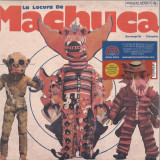
- A1: Samba Negra - Eberebijara
- A2: King Somalie - Monkey 'S Dance
- A3: El Grupo Folclórico - Tamba
- A4: Los Viajeros Siderales - El Campanero
- A5: Rio Latino - Ayu
- B1: Aníbal Velásquez - La Mazamorra Del Diablo
- B2: La Francachela - Mosquita Muerta
- B3: El Grupo Folclórico - Juipiti
- B4: King Somalie - Le Mongui
- C1: El Grupo Folclórico - El Tornillito
- C2: Samba Negra - Long Life Africa
- C3: La Banda Africana - Te Clavo La... Mano
- C4: Myrian Makenwa - El Platano
- D1: El Grupo Folclórico - Tucutru
- D2: Grupo Bola Roja - Caracol
- D3: El Grupo D'abelard - Otro Perro Con Ese Hueso
- D4: Conjunto Barbacoa - Wabali
La Locura de Machuca is the story of one man’s bizarre odyssey into Colombia’s coastal music underground, and the wild, hypnotic sounds he helped bring up to the surface.
One night in 1975, a successful tax lawyer named Rafael Machuca had his mind blown in Barranquilla’s ‘Plaza de los Musicos’. Overnight he went from a high ranking position in the Columbian revenue authority to visionary production guru of the newly formed record label that bore his name, Discos Machuca, and for the next six years he devoted his life to releasing some of the strangest, most experimental Afro Psychedelia Cumbias ever produced. La Locura de Machuca is the story of one man’s bizarre odyssey into Colombia’s coastal music underground, and the wild, hypnotic sounds he helped bring up to the surface.
The Colombian music industry was thriving in the mid-seventies, but while homegrown bolero and vallenato tunes were doing well on the charts, it was imported African records that were setting crowds on fire at the picos – the sound-systems that fuelled neighbourhood parties – and wherever those records were played there were always a handful of groups who were inspired to plug traditional Cumbia directly into the electric currents coming from across the Atlantic.
It was these obscure bands, who fused Colombian and African rhythms with the swirling organs and psychedelic guitars of underground rock, that fired Machuca’s imagination. While the label made its money releasing popular hits by legends such as Alejandro Durán and Aníbal Velásquez, that money was poured back into a unique run of experimental releases by fringe artists such as La Banda Africana, King Somalie, Conjunto Barbacoa, and Abelardo Carbono, one of the godfathers of Champeta Criolla.
When Machuca couldn’t find groups to realise his particular vision, he simply created them himself. Drawing on a fearsome roster of musicians associated with the label, he assembled bands that lasted only as long as it took to record an album ,and unleashed the results – complete with arrestingly unusual album covers – under a series of different names such as Samba Negra or El Grupo Folclórico. This unorthodox approach led his longtime recording engineer, Eduardo Dávila, to describes Machuca’s productions as the “B-Movies of Colombian music.”
The story of Doctor Machuca and his eccentric exploits tells of one of Colombia’s most atypical and peculiar record companies; a defining pillar of Afro-Caribbean psychedelia. His productions have come to represent the roots of Champeta and set the pedigree standards for Afro and Costeño avant-garde. The seventeen tracks on La Locura de Machuca, harvested from the darkest, strangest corners of the Discos Machuca catalogue, sound like little else recorded before or since.