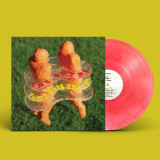
Recorded in 1973 at the Church of Saint Mary Magdalene in Paddington, London, Unfinished Picture is Rupert Hine's second LP. The songs where all composed by Hine with lyrics by David McIver and Simon Jeffries. On its sessions, Hine was surrounded by a host of outstanding musicians that included Simon Jeffes (Penguin Cafe Orchestra), Mike Giles (Giles, Giles & Fripp / King Crimson), Mick Waller (Cyril Davis, The Steampacket, Jeff Beck Group), Ray Cooper (Eric Clapton, Elton John) among others.
Rupert Hine's recording adventures started with the release of a 7" 45 by the folk duo Rupert & David "The Sounds Of Silence". In 1971 he was approached by Purple Records for the release of his debut solo LP Pick Up A Bone, which despite its lack of commercial success featured a strong collection of critically acclaimed compositions that made Purple Records want him to record a second album - Unfinished Picture, on which Hine showed a fantastic evolution to a more conceptual, cinematic approach. Echoes of Ray Davies, Kevin Ayers or hints of Nick Drake taken to a more 'happy' territoire mix with beautiful strings by The Martyn Ford Orange Ensemble and even some ARP synth explorations to build a fantastic collection of sounds that take the listener on a trip through the worlds of folk, psych and prog.
Hine's career would soon take off as a famed producer, he did work with Kevin Ayers, Milla Jovovich, Jonesy, Steve Tilston, Anthony Phillips, Camel, Saga, Rush, Tina Turner, Howard Jones, Bob Geldof, Suzane Vega, and many others.
The Altons turn up the heat with another platter produced by the Inland Empires's own, Bosco Mann. A soulful duet at its core, “Float” finds the group exploring new realms of pop excellence. The sophisticated arrangement and instrumentation gives the tune a cinematic feel that builds to a crescendo of psychedelic, swirling of strings – immersing the lsitener in a wash of Morricone-tinged euphoria. A track that wouldn't be out of place in the next 007 blockbuster. On the flip is “Cry for Me”, a latin-tinged mover featuring Adriana Flores on lead vocal. Her pleading, soulful delivery gives the bouncy, hook-laden tune a seriousness that's simultaneously uplifiting and heartbreaking.
out of Stock
Last delivered 3 years ago available to reorder, subject to availability
Often credited as the “Mother of Hip-hop”, Sylvia Robinson was a seminal blues-turned-soul singer, producer, and writer who released a slew of sultry and sensually charged records in the 1970s as a solo act and in the duo Mickey & Sylvia. Pillow Talk remains her most intoxicating work; a steamy bedroom funk record featuring her illustrious breathy, intimate vocals embedded with silky acoustic guitars, lush orchestral strings, piloted by a series of soft, subtle, and seductive clubby rhythms that still sounds fresh and entrancing today.
Sophomore album from the singer who NPR are calling "the Next Queen Of Americana Folk." Boomerang Town marks a bold step forward for this country-folk-leaning singer-songwriter. It is an arresting, ambitious song-cycle that explores the generational arc of family, the stranglehold of addiction, and the fragile ties that bind us together as Americans. This is a record that understands that love and grief are two sides of the same coin. Jaimee Harris turned 30 during the pandemic. It’s a milestone that is a rite of passage even during normal times. But for this Texas-born singer-songwriter, it came in the midst of one of the strangest and most tumultuous periods in American history. When the world stopped during lockdown, Harris, like many others, found herself gazing back into the past, ruminating on the nature of her hometown and family origins, and reckoning with their imprint on her. The term ‘nostalgia’ derives from the Greek words nostos (return) and algos (pain), and if Harris’s Boomerang Town can be regarded as a nostalgic album, it is only nostalgic in the sense that the longing for home is a desire to return to the past and heal old wounds. For Harris, the album began gestating around 2016, a time of great loss for many in the Americana community, with the songwriter losing several musicians close to her. The shift in the nation’s political landscape had ushered in a new level of polarization that saw whole swaths of cultural life being demonized. For someone who grew up in a small town outside of Waco, Harris believed the values instilled in her by her parents were not entirely in line with how many on the left were viewing — and vilifying — Christians, citing them as responsible for the new change in leadership. As a person in recovery, Harris has had to re-evaluate her own connection to faith and find strength in a higher power (“Though he’s not necessarily a blue-eyed Jesus,” she laughs), though she certainly knows what it’s like to “be told how to vote” in a Southern church setting. It was from the intersection of these social, personal, and political currents the album was born. And while much of the material on Boomerang Town was inspired by personal experience, the songs on this collection are far from autobiographical xeroxed copies. More than anything, they come from a place of emotional truth. “My goal is to just write the best possible song I can write,” Harris says, “and I wanted to have ten songs that made sense together sonically.
On Origins Chris Bartels takes on the role of singer-songwriter for the first time under his Elskavon moniker, unveiling a voice that wouldn't sound out of place next to vocal-forward artists like Justin Vernon, Jónsi, or Baths, who master the balance between conventional songcraft and bold, idiosyncratic experimentation. Origins is vast yet intimate, fluttering yet cohesive, tattered yet clean, a little like rainfall during sunlight. Shedding the ambient-classical confines of his previous output, the album's opener and title track, offers a swirling mosaic of acoustic textures that recall the beloved duo The Books, laced with warped vocal utterances flitting in and out of a club-friendly beat. "Origins" is followed by the equally danceable "Coastline," which drives home the smiling melodies and intricate sound-design that form the spine of Origins, keeping Bartels' voice in a largely decorative and impressionistic role up to this point. "Blossom and the Void" dissolves the introductory tension as Bartels comes out lyrically swinging, his digitized voice chanting widely over the mutated New Wave-esque anthem. Here, Bartels shows his instinct for dynamics by rising to bombast and quickly dispelling it, making steep yet grace- ful descents into skillfully delicate sound-design. Throughout Origins, the patient glacial aesthetic of his previous work is still discernible-- there are wordless, expansive panoramas that stretch out patiently for minutes at a time and smartly resist the impulse to pack each moment with a persona made even more impactful when Bartels chooses to wield it. At other times, his spokesmanship is woven discreetly into a larger tapestry, like on "See Out Loud" (and its ambient reprise) where Bartels' voice shimmers from a distance, covering the scene in diffuse splendor. "There is so much warping, mangling, re-sampling, reversing and pitching," Bartels says of his intricate vocal manipulations. "I printed a lot of the vocal recordings onto a tape machine from the `60s, first at one speed, and then I'd halve, or double the speed going back into my comput- er," he elaborates, illustrating how this kind of analog processing freed him from his habits. "Sometimes I'd do this multiple times on one recording or layer-- it gave me such a unique and unexpected sound. At this point, I threw away any inhibition on what type of vocals to have, or not have, on the album." This newfound freedom is palpable in the peaks of soaring grandeur that dot the emotional landscape of Origins. "All These Years" cathartically reaches one such summit in its second half after laying a path of gently plodding indie-IDM in its first. The cinematic vignette "Dreymur Aftur" provides pause for reflection amid its brisk procession of string plucks and rhythmic synthesizer while marching wordlessly into album-closer "This Won't Last Forever." Here at the end, Bartels' guitar playing is laid bare in the mix, skeletally framing a single ribbon of his voice as it unfurls into the atmosphere. Though the track isn't expressly lyrical, its starkness still exemplifies the new leaf of vulnerability Bartels has turned over on Origins, an album that documents his hard-won evolution from musician, to producer, to composer_ and finally_ his confident arrival in the role of songwriter.
In the midst of a wave of hybridizing ambient, drone, folklore and experimental electroacoustic music, Roxane Métayer has gained a cult following with only a couple of releases to date. Following her debut album (Éclipse Des Ocelles) for Morc with a split EP and a limited cassette for Wabi-Sabi, Roxane now turns to Marionette with her intimate narrative based multi-instrumental recordings, a match made in the heavens if you ask us. With her violin, woodwind, voice and various effect pedals, Métayer takes the listener on a newfound journey into the ancient, medieval, and primordial.
Perlée de sève is Métayer’s second full length, a sophomore to the critically acclaimed Éclipse Des Ocelles, where Métayer continues to sonically realize the map of the fictional habitats that inhabit her mind. Coming from a background of studying narration and different animation mediums, it’s no surprise that her recordings evoke vivid imagery and carry a trace of the environment they were conceived in. The instruments morph as extensions of her body and ultimately become new organs, a means of communicating these bio-memetic stories and creating a dialogue between herself and her surroundings. Meandering melodies intertwine with accompanying drones, mantra-like fragments and a handfeel percussion lend themselves as living and breathing elements in Roxane’s beguiling and spellbinding anecdotes.
Roxane is an observer of the world, her projects conceived from elements that inform her reality, such as the organic imagery and sounds of nature, then transforming that into a strangely familiar parallel universe that would not exist otherwise. Whether it's active research or taking her instruments to the forest, Métayer opens up her imagination by taking this mental journey to discover locations, creatures, and time periods then channeling that into her own fairy tales. The album and track titles act as a portal into those worlds, like chapters in a book where the protagonists are animalia, plantae, and fungi. As Métayer wrote in an interview: “Stories are a privileged way to create an awareness of a specific subject.”
Cat Clyde’s 3rd album Down Rounder is a wonder of deeply felt songwriting, a record that finds the Canadian singer-songwriter marveling at what’s around her while considering her own place within it all. With ten songs on the album, Down Rounder possesses an intimate and personal feel, transporting the listener to the recording studio as Cat performs these hair-raising tunes with confidence and passion. Cat joined producer Tony Berg in Los Angeles’ famed Sound City studios to lay down the entirety of Down Rounder in six days flat. The record sounds both lively and lived-in, with Clyde’s malleable singing voice—spanning an appealing twang to a lovely, plaintive croon and anywhere in between—espousing an essential connection between our spiritual center and the natural world that surrounds us. The album is an exploration and expression of self, patterns in the natural and unnatural world, connecting to nature, the turning wheel of life, shedding old selves, embracing new selves, and the ever changing, expanding and contracting nature of love and life. After racking up millions of streams across multiple platforms with previous releases, Down Rounder sounds like the work of someone who’s found themselves artistically and holistically, while extending a hand to any listener who wants to follow Clyde on her singular and thrilling path.
Impatiently returning to the golden age of Ecuadorian musica national, this second round of retrievals is more of a selectors’ affair: less reverent, more free-flowing, with more twists and turns. There is no let-up in musical quality, maintaining the same judicious, heart-piercing balance between emotional desolation and dignified endurance, the same bitter-sweet play between affective excess and musical sublimity.
This time around, the woman steal the show. Laura and Mercedes Suasti were child stars, with an exclusive Radio Quito contract. Unlike nearly all the men here, they lived long and prospered: Mercedes died last year, at the age of 93. Gladys Viera and Olga Gutierrez both came to Ecuador from Argentina. To start, Gladys plugged the scandalous new Monokini swimwear; Olga performed for visiting British royalty in 1962. Olga was glamorous but tough. She would make little of the amputation of one of her legs: ‘I don’t sing with my leg.’ She is accompanied on our opener by quintessentially reeling, sultry musica national: haunted-house organ, twinkling xylophone, Guillermo Rodriguez’ heart-plucking guitar-playing, and lilting, dance-to-keep-from-crying double-bass. ‘Sometimes I think that you will leave me with no memories,’ she sings, ‘that you hold only disappointments in store for me… In the future your love will search me out, full of regret. By then it will be too late, there will be no consolation, only disappointment awaiting you.’
Other highlights include the two contributions of Orquesta Nacional: Ponchito Al Hombro, like an off-the-wall forerunner of the Love Unlimited Orchestra, beamed into the tropics from an unknowable time and space; and the tone poem Atahualpa, a mystical yumbo invoking Quito’s most ancient inhabitants, the Kichwa. Also the tremulous, gypsy-flavoured violin-playing of Raul Emiliani, who arrived in Quito from Italy, suffering PTSD from the Second World War; the inscrutable, sardonic experimentalism of organist Lucho Munoz; and the mooing and whistling of Toro Barroso — school of Lee Perry — in which a muddy bull dashes home to his darling chola, fearless, full of desire.
Lavishly presented, with a full-size, full-colour booklet, with transporting art-work and expert notes. Luminous sound, by way of Abbey Road, D&M and Pallas.
Originally released in May 2006 through the German label Karaoke Kalk, »Osaka Bridge« was an album that captured the joyful amateurism of Tori Kudo's free-spirited Japanese collective Maher Shalal Hash Baz and Bill Wells’ rich, wistful and easy sense of melody. Approaching brass band and jazz music with a knack for making playing imperfectly feel perfectly right, »Osaka Bridge« became nothing short of groundbreaking when it was released to critical acclaim, becoming an instant classic among musicians and fans alike. Coinciding with the release of the second LP of Wells’ on-going collaboration with Danielle Price on tuba, »The Sensory Illusions«, Karaoke Kalk makes this highly sought-after record available again on vinyl for the first time in 16 years.
The pairing of the prolific Scottish pianist and composer and the fluctuating collective active since the mid-1980s was an easy, natural one—a union particularly apt and complementary. But this is not to say that the 15 recordings which made up »Osaka Bridge« were in any way seamless. The horns played by these self-taught musicians strain and struggle with Wells’ luscious arrangements; each note is given all the stiff emphasis that you’d expect of a high school brass band at its first rehearsal. Songs fall in and out of rhythm, and a track like »Poxy« misses its intended swing feel by a country mile. Of course, this is all part of the magic. Maher Shalal Hash Baz take Wells’ melodies and strip them back to their emotional core, disallowing all artifice and revealing a stark, serene beauty.
Particularly affecting are »On The Beach Boys Bus«—described by colleague Jens Lekman as the »the most beautiful melody I’ve ever heard«—and »Time Takes Me So Back«, the two tracks sung by Kudo’s wife Reiko. Inspiration for both pieces came to Wells in dreams. The former was sung by a group of tanned Californians on the way to a Beach Boys convention, the latter by his grandmother shortly before she passed away. Reiko’s voice gives each song a haunting fragility that enhances their phantasmagoric character. »Cowtail Calypso«, on the other hand, was born when Wells asked Tori Kudo to sing Roger Miller’s »King Of The Road« over a syncopated, propulsive melody. Kudo’s ambiguous response (»maybe,« which according to Wells usually translated to »forget it«) resulted in a brief, idiosyncratic track that nevertheless exceeded all of Wells’ expectations.
Of the instrumental tracks, »Liquorice Tics« stands out for its rolling rhythms and circular melody, while »Family Sighs« creates a brooding atmosphere which perfectly encapsulates the conflicting feelings many people have for their immediate family. For the most part, the instrumentals are concise—a melody stated once and then dispensed with—but their brevity only heightens the impact. Even (or especially) 16 years later, »Osaka Bridge« continues to be an almost accidentally timeless document that captured fleeting moments and personal revelations at their most spontaneous and unaffected. As someone put it so aptly in a Discogs comment a few years back, »this is the album which is able to make aliens understand what humankind is about.« You better turn up the volume so that everyone can hear it everywhere.
out of Stock
Last delivered 3 years ago available to reorder, subject to availability
Following up last year's orchestral album opus “Overtones For The Omniverse", Mocky has been releasing a number of upbeat and uplifting instrumental tracks and now collects them as "Goosebumps Per Minute, Volume 1" on classic vinyl and digital. Putting his vocals and songwriting to the side for this project, Mocky employs harps, horns, and 70’s analogue synths to provide a funky soundtrack that spreads a little of that California sunshine in the listeners direction. Built around Mocky's signature basslines and ensemble vocal arrangements that include his son Telly and his daughter Lulu, all recorded to his vintage ampex tape machine, Mocky did away with the normal metronomic BPM calculations in modern production and instead measured his music in "GPM" (the tempo at which music transmits Goosebumps) - and on top of a multitude of summery bass, drums & strings perfection, Vicky Farewell drops a blistering Rhodes solo on "Flutter" and Carlos Niño lends a percussive hand on the sublime "Iridescence”. Todd M. Simon handles the horn duties, and Liza Wallace infuses the dance tracks with live harp which recalls the floating approach of Alice Coltrane. Titles like "Refractions", "Wavelengths" or "Conduction" are hinting at a scientific approach to creating the conditions for "Goosebumps Per Minute" - his own calculus for the timing of how and when to hit and strum the things in his studio to make it raw & funky.
The songs were also inspired by his time hanging out at the Goldline bar in LA’s Highland Park. “Throughout the pandemic it was the one place I could go and sit outside and hear incredible music as I listened to my friend DJ Phonecalls playing from the Goldline's vinyl collection. He would be dropping these uplifting funk and disco cuts - and at the end of the night I would go home to my studio and make a track and upload it to my Bandcamp and the streaming services immediately … It reminded me of my time in Tokyo's vinyl bars so "Goosebumps Per Minute" owes a lot to that inspiring culture as well“.
About Mocky:
Performer, producer, songwriter, composer and multi-instrumentalist, Dominic "Mocky" Salole came to prominence in the Berlin electronic scene of the mid 2000s, releasing three acclaimed solo albums and co-writing and producing classics like Jamie Lidell's "Multiply" and Feist's "The Reminder". In 2009, his music took a jazz-inflected turn to the acoustic with the release of "Saskamodie" and in 2011 Mocky relocated to Los Angeles, where he quickly established himself as a co-writer with uncommon credentials collaborating with L.A.’s brightest breakthrough artists like Kelela, Joey Dosik, Vulfpeck or Moses Sumney. Mocky channeled those new creative energies into his fifth full length album "Key Change" and four digital mixtapes/EPs "The Moxtapes" Vol. IIV. After co-producing and co-writing Feist's "Pleasure" and Kelela's "Take Me Apart", in 2018 Mocky released two albums: "Music Save Me (One More Time)" and "A Day At United", an instrumental jazz album, recorded in a single day. In 2019 Mocky delved into soundtrack work by collaborating with legendary Anime director Shinichiro Watanabe on the first two seasons of the breakthrough show “Carole and Tuesday” (Netflix) for which he won Best Score at the Anime Awards. In 2020 he started a new Single series with 2 releases featuring the portugese singer Liliana Andrade and in 2021 he released his orchestral album "Overtones For The Omniverse" and started a series of funky instrumentals under "Goosebumps Per Minute".
out of Stock
Last delivered 16 months ago available to reorder, subject to availability
Dublin-based producer Moving Still further blends both his Saudi Arabian and Irish heritage on 'Kalam Hub', a triumphant new EP that marks the fifth release on CWPT/Cooking With Palms Trax. Following a series of 12” edits and original productions that have put his sounds in the record bags of DJs including Hunee, Nabihah Iqbal and Esa Williams, 'Kalam Hub' presents an ambitious expansion of the Moving Still sound, delving into his identity and background to open up imaginative, universal new corners for club culture.
This potent musicality is immediately evident from the first notes of 'Kunafa King'. Taking its title from a traditional Arabic dessert, analogue midi sounds deliver a skewed take on the traditional Saudi rhythms of the artist's youth, before expanding into a wistful diversion for any self-respecting dance floor. It's a trick Moving Still pulls off again on the pulsing 'Hayati 89', which transforms from a traditional aesthetic into a blistering, neon-tinted Italo banger, the kind of track designed to compliment an accelerated spin in the car gracing the eye-catching cover of ‘Kalam Hub’, a collaboration with the artist alongside Manchester-based graphic design studio, Dr. Me.
Concluding the record's A-side, the rhythms take a trippier turn for the duration of 'La Titasil Feeya'. Translating to “don't call me!” and making sonic reference to teenage years immersed in rock, metal and general angst, it unfolds as something akin to Middle East-tinted techno with a formidable kick drum, before exploding in colourful, organic breakbeats. Immediately on the flip, the sense of wonder returns in a sonic mirage for 'My Bosa Is For You', weightless rhythms blending with an electric organ and charming, lightly psychedelic breakdowns.
Further sonic tricks fall from Moving Still's delicately-tailored sleeves on 'Haram Odyssey', where an almost impossibly tight bass line provides the function for contrasting synthesis and unpredictable percussion, drawing parallels between the sometimes confusing aspects of the artist's dual-cultural life as a child, through to the music he makes as an adult. Fittingly, the record concludes with ‘Kalam Hub', a triumph of minimalist percussion and traditional instrumentation that pays tender tribute to the Moving Still's grandmother, translating simply to “Love Talk”.
out of Stock
Last delivered 8 months ago available to reorder, subject to availability
Everything changed for The Beths when they released their debut album, Future Me Hates Me, in 2018. The indie rock band had long been nurtured within Auckland, New Zealand’s tight-knit music scene, working full-time during the day and playing music with friends after hours. Full of uptempo pop rock songs with bright, indelible hooks, the LP garnered them critical acclaim from outlets like Pitchfork and Rolling Stone, and they set out for their first string of shows overseas. They quit their jobs, said goodbye to their home town, and devoted themselves entirely to performing across North America and Europe. They found themselves playing to crowds of devoted fans and opening for acts like Pixies and Death Cab for Cutie. Almost instantly, The Beths turned from a passion project into a full-time career in music.
Songwriter and lead vocalist Elizabeth Stokes worked on what would become The Beths’ second LP, Jump Rope Gazers, in between these intense periods of touring. Like the group’s earlier music, the album tackles themes of anxiety and self-doubt with effervescent power pop choruses and rousing backup vocals, zeroing in on the communality and catharsis that can come from sharing stressful situations with some of your best friends. Stokes’s writing on Jump Rope Gazers grapples with the uneasy proposition of leaving everything and everyone you know behind on another continent, chasing your dreams while struggling to stay close with loved ones back home.
"If you're at a certain age, all your friends scatter to the four winds,” Stokes says. “We did the same thing. When you're home, you miss everybody, and when you're away, you miss everybody. We were just missing people all the time.”
With songs like the rambunctious “Dying To Believe” and the tender, shoegazey “Out of Sight,” The Beths reckon with the distance that life necessarily drives between people over time. People who love each other inevitably fail each other. “I’m sorry for the way that I can’t hold conversations/They’re such a fragile thing to try to support the weight of,” Stokes sings on “Dying to Believe.” The best way to repair that failure, in The Beths’ view, is with abundant and unconditional love, no matter how far it has to travel. On “Out of Sight,” she pledges devotion to a dearly missed friend: “If your world collapses/I’ll be down in the rubble/I’d build you another,” she sings.
“It was a rough year in general, and I found myself saying the words, 'wish you were here, wish I was there,’ over and over again,” she says of the time period in which the album was written. Touring far from home, The Beths committed themselves to taking care of each other as they were trying at the same time to take care of friends living thousands of miles away. They encouraged each other to communicate whenever things got hard, and to pay forward acts of kindness whenever they could. That care and attention shines through on Jump Rope Gazers, where the quartet sounds more locked in than ever. Their most emotive and heartfelt work to date, Jump Rope Gazers stares down all the hard parts of living in communion with other people, even at a distance, while celebrating the ferocious joy that makes it all worth it -- a sentiment we need now more than ever.
Solaire, Siegfried Kessler, that is the least we can say! Aged 4: learns piano. Aged 6: his first concert. After this: studies classical music like everyone else... until the jazz of Jack Diéval and Stan Kenton turned everything upside down. So it was goodbye to Bach...
...And hello to Dexter Gordon, Joe Henderson, Ted Curson and Archie Shepp (who he would accompany over a long period). In 1969, with Yochk’o Seffer, Didier Levallet and Jean-My Truong, he formed a group which would mark history and create a sensation: Perception. If French free jazz exists, its thanks to Kessler (and company).
The following year, the pianist recorded his first album: Live at the Gill’s Club. On this one-night concert date can also be heard Barre Phillips and Steve McCall. But it was in 1971 that Kessler would record his greatest album; still in a trio setting, but this time with bassist Gus Nemeth and percussionist Stu Martin: Solaire. Five tracks of extraordinary music, moving back and forth between modal jazz and contemporary music.
Let’s begin at the end, with the title track Solaire, on which Kessler plays a melody on flute and piano which resists all onslaughts. It sends out powerful waves, Kessler’s jazz, bubbling like hot oil (Persécution, Drum), shaking modal jazz to its roots (De l’Orient à Orion) or upsetting the memory of a cantata (Bach Hcab). The piano is an instrument which can provide a tendency towards, demonstrative technique; with Kessler, it is something else: a joyful persecution!
"I begin our sixth album by exploring melodies that take me to the boundaries of my voice. I write myself into my highest highs and lowest lows. There is a precariousness in the outer limits of my range that demands vulnerability. As our demos take shape, I realize this will be our first album without any belting, the first time I can’t force my way through the notes," recalls Tennis' Alania Moore. "In the studio, Patrick compresses the shit out of my mic and I sing with the gentleness of breathing. In that softness, lyrics take shape. We want to write a big album—something suited for radio, but our songs don’t follow conventional pop structures. Instead of choruses with universal themes, I write with a specificity that is new to me, narrowing in on the smallest details of our lives. The more we try to broaden our scope, the more we turn inward." "We name the album Pollen. It is about small things with big consequences: a particle, a moment, a choice. It is me in a fragile state; sometimes inhabited freely, sometimes reacted against. It is striving to remain in a moment without slipping into dread. It is about the way I can be undone by a very small thing." Tennis is Alaina Moore and Patrick Riley. Pollen is their sixth album. The two met in the philosophy department at the University of Colorado in 2008 after dropping out of their respective music programs. In the years after graduating, they got involved in Denver’s DIY music scene. Through house shows, they were connected with Underwater Peoples and Firetalk. The band went blog-viral nearly overnight, landing them a record deal with Fat Possum and then Communion Records, but with shifting labels and new interests, Tennis chose an alternate path for their band and career. In 2016, Moore and Riley formed the label Mutually Detrimental and began self-releasing. Their newfound freedom allowed them to return to their sailboat to write their next full-length, this time in the Sea of Cortez. Yours Conditionally, released in 2017, became their most commercially successful album–charting at #4 on Billboard’s Independent list and in the top 100 highest selling vinyl releases that year. They played Coachella and opened for artists like The National, Father John Misty and The Shins–proving their DIY roots as a cornerstone to their sound and narrative. Their follow up Swimmer (2020), was recorded in their home studio with Moore and Riley producing and engineering. The pair brought their long-time touring member Steve Voss in for the second time to drum on record. The singles, Need Your Love and Runner, were Tennis’ most successful releases to date.
Known for their dynamic sound and complex song structures, De Beren Gieren deliver an extravagant blend of polyrhythmic soundscapes and elitist twists, showing an ability to change mood in a way that constantly holds the listener’s attention. They effortlessly shift from more rigidly styled compositions to improvised sections and thus reveal the pulsating and ominous futuristic sound of a new world.
Produced by Dijf Sanders and Frederik Segers, ‘Less Is Endless’ is an ode to a universe teeming with life. Seen as an extension to the critically acclaimed 2017 album ‘Dug Out Skyscrapers’, it searches for vents through which life can emerge and evolve. The secret of communicating creativity can be found in the cultivation of the unfinished; the missing piece of the puzzle tickles the imagination more than the perfect end result.
From the psychotropic opener ‘A Funny Discovery’ and off-kilter piano rhythms of ‘Animalcules’ to the impressionist melodies and harmonic soundscapes of ‘Tuin’, De Beren Gieren give the music the space to breath and grow with every unexpected twist and turn. Elsewhere, ‘Guggenheim House’ is a lesson in the avant-garde, while ‘Gentse Leugentjes’ is a far cry from the traditional piano-bass-drum set-up, before the affecting ‘Moments Never a Moment’ and 18-minute ‘A Random Walk’ is an adventure in improvisation and electronics that defies any logical convention.
Forming in 2009, Fulco Ottervanger (piano, fx, synths), Lieven Van Pée (double bass, electric bass) and Simon Segers (drums, fx) quickly built a reputation across the Benelux region with their ‘must-see’ live shows and have since taken their transcendental live energy across Europe, Morocco and Japan and have performed at North Sea Jazz, Jazz Middelheim, Trondheim Jazzfestival, Ljubljana Jazz Festival, Moers Festival, Gent Jazz, Kanazawa Jazz Street and Eurosonic.
The trio’s breakthrough came with second album ‘A Raveling’ (2013) which received rave reviews, and the following year, a live recording with Portuguese trumpet player Susana Santos Silva was released as ‘The Detour Fish’ (2014) on the Clean Feed label, gaining De Beren Gieren further widespread recognition. Their 2015 release ‘One Mirrors Many’ was lauded by Dutch magazine Jazzism and signalled the beginning of their electronic quest, finding its maturity in ‘Dug Out Skyscrapers’ (2017). In 2019, they celebrated their 10th anniversary, releasing the limited edition ‘Broensgebuzze EP’.
De Beren Gieren have collaborated with renowned jazz artists including Louis Sclavis, Ernst Reijseger, Joachim Badenhorst, Marc Ribot, Jan Klare and Jean-Yves Evrard.
out of Stock
Last delivered 5 years ago available to reorder, subject to availability
The pioneer of electric pop music, Giorgio Moroder (born April 26, 1940 in Ortisei, Italy) is an internationally acclaimed songwriter and producer who left his trace also in Finnish popular music. Several Moroder’s compositions and productions were released in Finland with Finnish lyrics in the 1970s and 1980s, when Moroder had his most creative peak. This compilation includes twelve Finnish Moroder covers from early bubblegum pop to electronic disco. Giorgio Moroder began his musical career as a singer. He gained success performing bubblegum pop in the late 1960s. He wrote some of his hits himself, but he also sang songs written by others. During his singer years he succeeded with songs Looky Looky (1969) and Son of My Father (1971). The latter became well known also in Finland, where it was covered by one of the most famous Finnish singers in 1960s and early 1970s, Ilkka Lipsanen alias Danny. The song found its way to Finland via Britain, where British band Chicory Tip had covered it first and made it to the charts with the song. Danny was not the only Finnish singer in the early 1970s who looked at Moroder’s repertoire when searching for good songs. Koivistolaiset was a singing and dancing duo of sisters Anja and Anneli Koivisto who were well-known celebrities in 1970s Finland. They released Moroder’s composition Good Grief Christina as On siitä aikaa in 1973. This song was also discovered from Chicory Tip’s repertoire. Cheerful and danceable bubblegum pop was an early 1970s phenomenon and in Finland it was the most popular music played in discos during those years.
out of Stock
Last delivered 3 years ago available to reorder, subject to availability
Following up on reissues of the 2000 compilation »Multila« and 2001’s »Anima,« Sasu Ripatti has thoroughly revisited the classic »Whistleblower« for its first ever vinyl issue on the German Keplar label. Ripatti created entirely new mixes of previously unheard-of alternative versions of the tracks that first appeared on CD through his own Huume imprint in early 2007. He thus shines a new, different light on a record that was as much an expression of reaching a turning point in his life as it also showcased a new, more direct and perhaps more abrasive side of his Vladislav Delay project. »Whistleblower« was marked by the insertion of more noise and disruptive elements into Ripatti’s slowly moving take on intricate electronic music that heavily leaned on dub techniques. Fittingly for an album written at the threshold between one life and the other, »Whisteblower« seems at once melancholic and forward-looking in both tone and style.
»Whisteblower« was the follow-up record to 2005’s »The Four Quarters« and produced in the German capital. »I had quite a hard time in Berlin towards the end and I'm sure the track titles and the music reflect some of that uneasiness,« Ripatti says 15 years later. Changes in his personal life had a profound impact on him when making the record. The fifth track, »Lumi,« was dedicated to his daughter who was born shortly after the album was finished. »I had to reconsider what my life had been,« he recalls this watershed moment in his biography. Having already previously embraced a sober lifestyle—hinted at with the last piece’s title, »Recovery IDea«—Ripatti started questioning his life choices more thoroughly. This is also expressed in »He Lived Deeply,« a track inspired by Miles Davis’s love for Duke Ellington whose title can be read as an implicit question that Ripatti nowadays paraphrases thusly: »Had I been living fully, or fully not living?«
The seven tracks also marked a musical turning point in Ripatti’s work as a producer, not only because it was the last one for which he primarily used analogue and vintage equipment. They are also more straightforward on a music level, more demanding and at times more concerned with subtle rhythms than with the thick textures that were so integral to his earlier work. »Whisteblower« represented the first step in a process of focusing less on sonic abstraction and more on direct (self-)expression. While Ripatti admits that he found working on the album difficult back then, he also points out that he was surprised to hear how »gentle and peaceful« it sounded when he started revisiting the original files he used as a basis for these newly mixed versions. »It probably proves how much more comfortable I had become with sound.«
out of Stock
Last delivered 4 months ago available to reorder, subject to availability
Brussel's beat smith DC SALAS is back on the block - the Robert Johnson block that is! His 3rd release for LIVE AT ROBERT JOHNSON is also his 20th official release so far - so we have two things to celebrate spread over Diego Cortez Salas' powerful four-tracks EP called »Voces«.
Let's start with the title track: »Voces« is a call to alarm right from the beginning with its stabbing synth bass line and sirens. Add a couple of drum breaks and a heavy beat - et voilà: You have the first of four tunes to jump up and down to. Et oui, Salas surely knows how to build tension in a track - even in a voiceless track named »Voces«.
Next up is »The Lights« - and oh boy does Salas turn them on! These are quite trippy lights with a sound that could easily come from a twisted didgeridoo … The beat of »The Lights« is (of course) groovy as f*** - excuse our French. So let's turn on »The Lights«!
B-side opener »Metallic Glow« does just that: The track glows in bright metallic from the first second and features plenty of crazy sounds to do a crazy dance. Did we mention the groove? No? Well … just listen.
For »Safe Pace« Diego pulls out beautiful percussive elements and the 303 thus surfing on a not-so-safe pace to be honest: The last track of »Voces« is as fast and demanding as all the others.
DC Salas again managed to build four really solid stompers here to set any dancefloor on fire - without using any voice or vocal - these are REALLY SERIOUS SOUNDS you all should listen and dance to. NOW.
out of Stock
Last delivered 9 months ago available to reorder, subject to availability
Repressed On translucent blue vinyl! Too many people sleep on Tougher Than Leather, Run-DMC’s fourth album. But hear us out as we plead the case for this amazing LP. By 1988 there was a lot more competition in the rap game – Public Enemy, Boogie Down Productions, Eric B. & Rakim, Ice-T and many more had given Hollis, Queens’ prodigal sons lots of competition. But Joe, Darryl and Jay were still at the top of their game, and hip-hop fans should never let this classic – chiefly produced by their Queens neighbor, DJ and multi-instrumentalist Davy DMX – get lost in their crates. For starters, the album’s first single, “Run’s House” b/w “Beats To The Rhyme” is arguably the most powerful one-two punch of the trio’s career, showing contenders to the rap throne that they could still destroy a beat, tag-teaming with power at any speed. Not to be lost in the shuffle, fans were also reminded on both sides that Jam-Master Jay remained one of the world’s best DJs, flexing the pinnacle of what would be called “turntablism” a decade later. Both songs show a musical telepathy between all three that has rarely been equaled. The second single, “Mary, Mary,” driven by an infectious Monkees sample, took a different approach, shrewdly ensuring that pop fans who jumped on the Raising Hell bandwagon had something to chew on. But, like “Walk This Way,” the song wasn’t just bubblegum – there was an edge to it, and the lyrical gymnastics were very real. It wasn’t selling out, it was allowing fans to buy in. “Papa Crazy,” driven in concept and by a sample from the Temptations’ “Papa Was A Rolling Stone,” followed a similar pop-leaning path. Overall, the lyrical content on the album was a step up from the group’s first three LPs. It’s easy to infer, looking back, that they were feeling the heat from their younger competitors in the rap game. The genre was changing fast, and they were up to the challenge. On cuts like “Radio Station” they bring substance to the grooves, by attacking Black Radio for its continual denigration of rap. “Tougher Than Leather” reminds the world that they were still the Kings of Rock, with hard guitars to drive the point home. And “They Call Us Run-DMC” and “Soul To Rock And Roll” both bring things back to their early days, with sure-fire park jam rhymes and killer cuts. Tougher Than Leather, which went platinum up against a lot of competition, perfectly bookends the ‘80s output of one of the decade’s most important groups. It encompasses the full range of the trio’s capabilities, and reminds us that Run-DMC should never be forgotten as both pioneers and party-rockers. And so, we say, long live Joe, Darryl and Jay! A1. Run's House A2. Mary, Mary A3. They Call Us Run DMC A4. Beats To The Rhyme A5. Radio Station A6. Papa Crazy B1. Tougher Than Leather B2. I'm Not Going Out Like That B3. How'd Ya Do It Dee B4. Miss Elaine B5. Soul To Rock And Roll B6. Ragtime
Yellow Vinyl
Over their six albums The Go! Team have taken sonic day trips to other lands - musically dipping into other cultures. But now on this, their seventh - they"ve bought a round-the-world ticket.... Benin, Japan, France, India, Texas and Detroit - all stops along the way. Wildly different voices from wildly different cultures side by side but all still sounding unmistakably Go! Team. Setting the course for a kaleidoscopic, cable access, channel hop. On the vocal roll call there"s Star Feminine Band, an all-girl group from West Africa, the Indian Bollywood playback singer Neha Hatwar, Kokubo Chisato from J-Pop indie band Lucie Too, 19 year-old Detroit rapper IndigoYaj, Hilarie Bratset (ex-Apples in Stereo), Brooklyn rapper Nitty Scott, and a whole host of others, alongside Go! Team staple Ninja. Picking up from 2021"s "Get Up Sequences Part One", Part Two continues the feeling of Technicolour overload. It"s a journey spanning Cyclone Tracey wig-outs, chroma key sitar psychedelia, Casiotone anthems, spoken word melodrama and kalimba callouts. Brill building melodies lead into musical handbrake turns, four track into panoramic. Eighteen years after their debut LP The Go! Team are still unlike anyone else and on "Get Up Sequences Part Two" they sound as fresh as a club soda....
Over their six albums The Go! Team have taken sonic day trips to other lands - musically dipping into other cultures. But now on this, their seventh - they"ve bought a round-the-world ticket.... Benin, Japan, France, India, Texas and Detroit - all stops along the way. Wildly different voices from wildly different cultures side by side but all still sounding unmistakably Go! Team. Setting the course for a kaleidoscopic, cable access, channel hop. On the vocal roll call there"s Star Feminine Band, an all-girl group from West Africa, the Indian Bollywood playback singer Neha Hatwar, Kokubo Chisato from J-Pop indie band Lucie Too, 19 year-old Detroit rapper IndigoYaj, Hilarie Bratset (ex-Apples in Stereo), Brooklyn rapper Nitty Scott, and a whole host of others, alongside Go! Team staple Ninja. Picking up from 2021"s "Get Up Sequences Part One", Part Two continues the feeling of Technicolour overload. It"s a journey spanning Cyclone Tracey wig-outs, chroma key sitar psychedelia, Casiotone anthems, spoken word melodrama and kalimba callouts. Brill building melodies lead into musical handbrake turns, four track into panoramic. Eighteen years after their debut LP The Go! Team are still unlike anyone else and on "Get Up Sequences Part Two" they sound as fresh as a club soda....
Over their six albums The Go! Team have taken sonic day trips to other lands - musically dipping into other cultures. But now on this, their seventh - they"ve bought a round-the-world ticket.... Benin, Japan, France, India, Texas and Detroit - all stops along the way. Wildly different voices from wildly different cultures side by side but all still sounding unmistakably Go! Team. Setting the course for a kaleidoscopic, cable access, channel hop. On the vocal roll call there"s Star Feminine Band, an all-girl group from West Africa, the Indian Bollywood playback singer Neha Hatwar, Kokubo Chisato from J-Pop indie band Lucie Too, 19 year-old Detroit rapper IndigoYaj, Hilarie Bratset (ex-Apples in Stereo), Brooklyn rapper Nitty Scott, and a whole host of others, alongside Go! Team staple Ninja. Picking up from 2021"s "Get Up Sequences Part One", Part Two continues the feeling of Technicolour overload. It"s a journey spanning Cyclone Tracey wig-outs, chroma key sitar psychedelia, Casiotone anthems, spoken word melodrama and kalimba callouts. Brill building melodies lead into musical handbrake turns, four track into panoramic. Eighteen years after their debut LP The Go! Team are still unlike anyone else and on "Get Up Sequences Part Two" they sound as fresh as a club soda....
Doomsday Outlaw return with their third studio album Damaged Goods, set for release on 3rd February 2023 via Republic of Music.
As Doomsday Outlaw began work on this album, they knew they wanted to step up to the next level and deliver on the promise of their previous albums, keeping the heaviness and the soulful vocals, and turbo-charging it all with some retro rock feelgood vibes.
Channelling Skynyrd, Aerosmith and The Faces through their signature heavy blues stomp, the band worked to expand their signature sound.
Working with Chris D’Adda at Vale Studios (Temples, Deaf Havana) and Dave Draper (The Wildhearts), to put them through their paces, the band have pulled together their best work yet.
Lyrically, the album is a very personal insight into vocalist Phil Poole’s life and motivations. Speaking about Damaged Goods, vocalist Phil Poole said: "This album is a continuation of the stories of my life – played out for all to see, filled with heartbreak and redemption. My own version of therapy, Damaged Goods is the latest chapter in my life."
Bassist Indy added: “It’s been a hard slog these last couple of years with Covid cutting short our European adventures, and generally waiting for live music to see the light at the end of the pandemic tunnel, but these new tunes have kept us going. The excellent response we’ve had to playing the songs live has been great to see, and we can’t wait to get everything out there for people to hear.”
Doomsday Outlaw return with their third studio album Damaged Goods, set for release on 3rd February 2023 via Republic of Music.
As Doomsday Outlaw began work on this album, they knew they wanted to step up to the next level and deliver on the promise of their previous albums, keeping the heaviness and the soulful vocals, and turbo-charging it all with some retro rock feelgood vibes.
Channelling Skynyrd, Aerosmith and The Faces through their signature heavy blues stomp, the band worked to expand their signature sound.
Working with Chris D’Adda at Vale Studios (Temples, Deaf Havana) and Dave Draper (The Wildhearts), to put them through their paces, the band have pulled together their best work yet.
Lyrically, the album is a very personal insight into vocalist Phil Poole’s life and motivations. Speaking about Damaged Goods, vocalist Phil Poole said: "This album is a continuation of the stories of my life – played out for all to see, filled with heartbreak and redemption. My own version of therapy, Damaged Goods is the latest chapter in my life."
Bassist Indy added: “It’s been a hard slog these last couple of years with Covid cutting short our European adventures, and generally waiting for live music to see the light at the end of the pandemic tunnel, but these new tunes have kept us going. The excellent response we’ve had to playing the songs live has been great to see, and we can’t wait to get everything out there for people to hear.”
Our first vinyl release of 2023 sees two classic tracks from Groove Park take centre stage. Hit The Bang and Carrousel first came to the fore in 1995 as separate releases and, after a few solid remixes, our Bonzai Classics imprint resurrected both tracks along with top-notch remixes in 2002. 21 years later we bring to you the original versions of both tracks on glorious 12” vinyl. André Strässer and Sharam Jey aka Sharam Nickjey Khososi make up the dynamic duo that is Groove Park. They were also the brains behind massive projects such as 16C+, Three n One and Johnny Shaker to name just a few. The tracks found a unique place in clubland, having a diverse structure that spanned genres flawlessly. The A side features Hit The Bang with its hybrid progressive/techno flow. The relentless bass groove, distinct voices and stabbing synths gave rise to a powerful, energetic and mesmerizing moment that lives on. On the flip, Carrousel takes up the B1 slot opening with that infectious woodblock sequence alongside pumping kick drums. A groovy bassline joins the party as old skool pianos come through. The track reels us in with many twists and turns, from wide, epic progressive parts to energetic trance, all wrapped up in a warm, nostalgic glow. A proper piece of dance music history and a must for the serious collector.
out of Stock
Last delivered 2 years ago available to reorder, subject to availability
Once upon a time Mr. Cauliflower made his way to Amsterdam and met his friend Jo Bissa (one half of the electronic duo Umoja).
Mr. Cauliflower dropped an Lp on the turntable and played "Casa da Arvore" from Nomade Orquestra. The sound was deep and went direct to Jo's heart.
It sounded like gipsy music, but had a funky feeling; it had some reggae elements, but with a latin heart. That's the mixture of styles that better represent the Nomade Orquestra's signature sound.
A quartet that has since swollen into a decet from their beginnings in 2012, Brazilian band Nomade Orquestra musicians pride themselves on stretching far and beyond their jazz roots to create a sound that's hard to pinpoint, but inclusive of various cultures across the world.
While listening to the song Jo Bissa knew immediately how to twist it with a remix, and created an electro cumbia dancefloor killer!
The result is a tasty 7" inches called "Veggie Tales Vol. 5"!!
We hope you'll enjoy as much as we did.
Buon appetito!
out of Stock
Last delivered 3 years ago available to reorder, subject to availability
White Vinyl Only
Once upon a time Mr. Cauliflower made his way to Amsterdam and met his friend Jo Bissa (one half of the electronic duo Umoja).
Mr. Cauliflower dropped an Lp on the turntable and played "Casa da Arvore" from Nomade Orquestra. The sound was deep and went direct to Jo's heart.
It sounded like gipsy music, but had a funky feeling; it had some reggae elements, but with a latin heart. That's the mixture of styles that better represent the Nomade Orquestra's signature sound.
A quartet that has since swollen into a decet from their beginnings in 2012, Brazilian band Nomade Orquestra musicians pride themselves on stretching far and beyond their jazz roots to create a sound that's hard to pinpoint, but inclusive of various cultures across the world.
While listening to the song Jo Bissa knew immediately how to twist it with a remix, and created an electro cumbia dancefloor killer!
The result is a tasty 7" inches called "Veggie Tales Vol. 5"!!
We hope you'll enjoy as much as we did.
Buon appetito!
out of Stock
Last delivered 3 years ago available to reorder, subject to availability
Lady in Satin was released in 1958 on Columbia Records, catalogue CL 1157 in mono and CS 8048 in stereo. It is legendary singer Billie Holiday's penultimate album completed by the singer and released in her lifetime (her final album, Billie Holiday, being recorded in March 1959 and released just after her death).
AllMusic says: "The feeling and tension she manages to put into almost every track set this album as one of her finest achievements. 'You've Changed' and 'I Get Along Without You Very Well' are high art performances from the singer who saw life from the bottom up."
The song material for Lady in Satin derived from the usual sources for Holiday in her three-decade career, that of the Great American Songbook of classic pop. Unlike the bulk of Holiday's recordings, rather than in the setting of a jazz combo Holiday returns to the backdrop of full orchestral arrangements as done during her Decca years, this time in the contemporary vein of Frank Sinatra or Ella Fitzgerald on her Song Books series. The album consists of songs Holiday had never recorded before.
Bandleader Ray Ellis used a 40-piece orchestra, complete with horns, strings, reeds and even a three-piece choir. It would turn out to be Holiday's most expensive music production. Soloists on the album included Mel Davis, Urbie Green, and bebop trombone pioneer J. J. Johnson.
Now with our 45 RPM release, mastered from the original analogue tape by Bernie Grundman, and pressed by our own Quality Record Pressings, the best-sounding version of this historic album gives listeners an even richer sonic experience. The dead-quiet double-LP, with the music spread over four sides of vinyl, reduces distortion and high frequency loss as the wider-spaced grooves let your stereo cartridge track more accurately.
Original album produced by Irving Townsend, and engineered by Fred Plaut.
With One Day, Fucked Up have delivered one of the most energizing and intricate albums of their career, a massive-sounding record that arrives in deceptively small confines. The Canadian hardcore legends have been known for their epic scale in the past, so it might be a surprise that Fucked Up’s sixth studio album is their shortest to date, written and recorded in the confines of one literal day (hence the title). Don’t mistake size for substance, though: The band’s sound has only gotten bigger, more hard-charging, with even denser thickets of melody. “I wanted to see what I could record in literally one day.” That singular idea came to mind for guitarist Mike Haliechuk in the closing months of 2019. Haliechuk got himself into a studio and proceeded to write and record the record’s ten tracks over three eight-hour sessions, reconnecting with the core the band’s songwriting essence in the process. Initially, Fucked Up vocalist Damian Abraham was also set to complete his vocals in similar fashion—that is, before the lockdowns of 2020 took place. As it turns out, the isolation yielded creative dividends, as Abraham returned to contributing lyrics as well for the first time since 2014’s Glass Boys. “It almost felt like it might be the last time I’d ever get to record vocals for anything,” Abraham says of the stakes he felt while putting his part to tape, before reflecting on how he approached the lyrical process: “What do I want to say to friends who aren’t here anymore? What do I want to say to myself?” Over swarms of tuneful noise that evoke Sonic Youth circa Daydream Nation, Abraham lets loose on gentrification in “Lords of Kensington,” which was inspired by an “incredible” Toronto neighborhood that was regularly subject to life-ruining police surveillance and structural violence. “The police chief during that era he just opened a cannabis store,” Abraham explains. “It’s so cynical and gross, what society has come to but by being in a band, we’re culpable in changing the neighborhood, too, since the punk spaces and cool happenings that pop up are part of gentrification. Are you building a culture? Or are you ruining something that’s already been there?” Then there’s the dusky burn of “Cicada,” a sonic cousin to Dose Your Dreams’ excellent standout “The One I Want Will Come for Me” that features Haliechuk taking lead-vocal duty. The song is dedicated to lost friends, and in his words, it’s about “what life is like after you lose people, and our responsibility to carry them forward into the future, using the things they taught us as a light. I like to imagine the sound of cicadas as a metaphor for our strange life in the subculture we all just live these weird little hidden lives under the dirt, and then once in a generation, one of us gets to bust out of the dirt and intone their song so loud that it can be heard all over.” One Day is an undeniable work of confidence from a band that continues to operate at the top of their game, making music that’s guaranteed to last a lifetime and beyond.
• To celebrate Kent’s 40th birthday (admittedly a month late, due to pressing times), we are releasing our first ever box set of singles. This is due to getting access to the Loma vaults and finding some previously unheard soul gems to augment the best of the soul dance tracks from the esteemed imprint.
• Starting with THE discovery of the soulful ‘20s we present LA soul group the Marvellos, whose ‘It’s Your Love That I Need’ – written by the great Willie Hutch – is a Motownesque dancer whose arrangements and melodies are so stunning we also issued the backing track as its instrumental B-side.
• The Invincibles were another fabulous Los Angeles outfit whose four Loma releases were ballads but two great dance tracks, the sublime ‘Heartstrings’ and the manic ‘Got A Thing Goin’’ showed they could really turn it up when needed.
• Ben Aiken’s ‘Satisfied’ is a stone classic Northern Soul dancer - finding the more subtle ‘If You Should See Her’ and ‘That’s All You Gotta Do’ in the vaults makes the Philly singer the best represented artist of the set.
• New York-based Carl Hall is another singer with a released classic - ‘Mean It Baby’ and a great unissued tape vault find – ‘Like I Told You’. The pair sit well together on their new 45 pressing.
• The Enchanters cut several tracks after they left Garnett Mimms; ‘Just A Little Longer’ is a great Drifters-sounding number which we’ve coupled with the beautiful ‘I’ll Find A Way’ by Bobby Reed.
• ‘See The Silver Moon’ by west coast girl group the Apollas would have wowed them at Wigan. The poptastic number has the perfect stomping dance beat, beloved of the Casino’s patrons. Alas it was not heard until 2012 when researcher and co-compiler Alec Palao unearthed the master tape. We paired it with Larry Laster’s terrific ‘Go For Yourself’ which shares the backing track of fellow Northern monsters ‘Lighten Up Baby’ and ‘Somebody Somewhere (Needs You)’, more than holding its own.
1000 black vinyl LPs. London-based ‘indie-supergroup’ SUEP announce their long-awaited debut mini-album Shop, a collection of 6 oddball, car-boot-sale pop songs with a sprinkling of theatrical storytelling. Led by Georgie Stott (of Porridge Radio, Garden Centre) and Josh Harvey, SUEP was born out of a near-decade of playing in sheds and barns with like minded personnel, holding a mutual love for Paul McCartney, Jona Lewie, the B-52s, Devo and other performative freaks enjoying themselves. Following a move to London from Brighton, the pair added George Nicholls (The GN Band, Joanna Gruesome, The Tubs), Will William Deacon (PC World, Garden Centre), and Ollie Chapman (Boil King) to the line-up. The 5 piece take turns writing songs and taking the lead vocal duties in a wonderfully playful but coherent collaboration, with their debut being a kaleidoscopic off kilter pop ride, taking the listener through haunted castles, deprived encounters, days lost to the imagination in bed, and through the integral friendships that give SUEP the energy to keep dancing to their own beat. The album was arranged and recorded in the Red Lion Boys Club, an ex-youth centre in which Georgie and Josh both lived. Using equipment collected by Josh in his travels as a bootsale and market trader, the sports hall was transformed into a makeshift studio for a few days, with sessions conducted by producer Matthew Green (Sniffany & The Nits, The Tubs, etc.) Mark Riley (BBC 6 Music) described SUEP’s debut single and album opener, ‘Domesticated Dream’ (2021) as “perfect pop music.” The joyfully kitsch track brims with a 70s Yamaha disco beat, deep bass, nostalgic drum machines, and hooky melodies. Possibly the most psychedelic and infectious track born out of lockdown, it tackles homelife, drinking too much, and making big plans that never come to fruition, but with a big technicoloured positivity for the future of the human-race, with the chorus’ refrain, “the psychedelic 4000s,” predicting the return of the psychedelic Age of Aquarius in a couple of millennia time. The following single ‘Misery’ (2021) is pure cosmic swing-pop wizardry in part inspired by spy music and The Supremes. Ollie, The track’s baritone vocalist, describes it as “A love song disguised as a song about loss. It's about cherishing the things that matter but it’s also about having the courage to say goodbye,” with each line of the song a small story about a different character. Whilst latest Shop taster ‘In Good Health’ is darkly euphoric like a pleasantly strange meeting of Siouxsie Sioux and Jona Lewie. It’s a playfully discombobulating mix of 80s jangly guitar, chirpy keyboard and moody post-punk tackling mental health, drug addiction, and the power of friendship, written after the song’s vocalist Georgie came out of hospital following a mental health crisis. “I wanted to write a song that encapsulated how important my relationships with my friends and boyfriend were at that time” she explains “…and one that also felt dark like I did at the time. I couldn’t go outside due to anxiety surrounding my health so I stayed inside for weeks. People would visit and watch films with me or let me tattoo them or make music with me. My community helped me recover.” Elsewhere on Shop is ‘Just The Job’ fronted by Harvey and described by him as “About the relief of accepting a menial existence, and allowing life to be boring - but (within that) how the small things are the important ones, how pulling a sicky or extra long lunch break are important things to do for yourself. It’s an anthem for working people who’ve had enough - and a crowd favourite at SUEP gigs. The darker undertones and post-punk angles of the Georgie-fronted ‘Onions’ is inspired by the crapness of cliques, with the band calling the song “A cry of welcome to all;” and finally the hooky ‘Friend of Mine,’ described as “A love letter to all the people that come and go throughout your life no matter how long you know them”. SUEP have received coverage in Independent & Clash, (among many others), with big support from Mark Riley and Steve Lamacq (BBC 6 Music) for early singles.
Monks Road Social are an ever-changing collective of artists (some well-known, some just starting out) all with one thing in common - a love of making music.
Following the three genre bending albums MRS has already released this time round Richard Clarke turned to WONDERFULSOUND head honcho Miles Copeland to navigate the the vibe alongside mainstay of the band, the inimitable Dr Robert of Blow Monkeys fame.
Miles first showed up on debut album Down The Willows with the dreamy 'Golden Day' featuring Isle Of White favourite Angelina.
First single 'I’ll Keep On Searchin’ featuring Dr Robert on vocals is a lilting soulful slice of summer pop combining sweet melancholy and wistful chord changes.
Dr Robert explains “The song came from a piece of music Miles presented to me. It put me in mind of “Friends” era Beach Boys or early Smokey so the song came very quickly. Lyrically its informed by a kind of yearning. A desire for change, growth and connection. The things we’ve all been missing so much that give life meaning”
Miles continues…
“The idea for this single came about from these 2 loops sampled from some charity shop record creating this infectious lazy, jazzy groove but I knew the music needed to change and become its own thing… so when the Monks Road Social posse came knocking I knew the calibre of musicians involved would be able to flip it around, and that’s how a majority of the LP was written”.
Honoring the craft and the ones that came before him through undeniably infectious beats that brace the weight of his choice samples and original layers. Getting his chops up through his younger days, Shane spent his time developing instrumental obstacle courses for local emcees to dance around including Gift Of Gab (Blackalicious), Spills (NY) Kinetic Source (Ozomatli) and Cashus King (LA.) By the age of 21 Shane threw himself into the ring of the Stones Throw beat making contest. To only the surprise of himself, Shane walked away twice as a weekly winner of the battles. After a small hiatus due to the birth of his daughter Clementine, Shane jumped back on the pads and began crafting the instrumentals for what would become Apostolos. With the instrumentals in flux Shane reached out via Instagram to an upcoming emcee out of the Duck Down Camp, a prodigy of the late, great Sean Price, Rim. After chatting back and forth for a small time, making sure Rim knew Shane was in this project for the right reasons, Rim jumped on board and even helped land other up and coming NY emcees like Eddie Kaine & Spills. From there everything snowballed. One feature led to another and soon enough the album was taking shape with features from not only Rim and Eddie Kaine, but hip-hop heroes such as Masta Ace, Planet Asia, A.G. of D.I.T.C. and Geechi Suede. With a few more instrumentals and spaces to fill Shane reached out to long-time bay area engineer/producer Deegan Mack Adams to help with the mixing and mastering and overall release of the project. Apostolos gets its namesake and back cover imagery from Shane Sounds' great great Grandfather, Apostolos Christakis who immigrated to the United States from Greece at the turn of the 20th century. The documents you see on the back cover are Apostolos’s army registration documents only a week after coming to the United States. We pay our respects to the ones who came before us and allowed us to be here to create this project. Salute!
Space Dimension Controller’s first release in 2023 is also his first outing to Running Back. Needless to say that it pushes all the right buttons. Warm and playful, but forcing and with fresh jive, Neuclidea and its siblings revolve around classic SDC values. Nevertheless, the Irish melodist is also moving on to new pastures. Hardware sequencing, vintage digital synthesizers via analogue processing spawn a sound that pirouettes as much around the lost cyber-hippie poetry of Border Community as it’s the effigy of fast balearic euphoria – if Ibiza would have been a party scene in Gattaca. Completing this treasure chest is a remix by Hodge for the pragmatic minded out there. Using some heavy drums of the west, his version of Neuclidea extracts the trance-like elements of the original and turns it into a floor-polishing brush. To sum up: music for heartbroken and lovesick victims alike.
out of Stock
Last delivered 2 years ago available to reorder, subject to availability
We would like to invite you on an excursion of sorts:
Close your eyes, leave the grey wash of daytime TV and ready meals behind, and let the whiskey-soaked Automatic Tasty be your spirit guide.
Slowly you will drift over multi-coloured hills, then over vermilion seas, rising in the sky following the Sun until you reach the very edges of Ideaspace itself. What lies beyond that boundary is entirely up to you.
Returning to Realplace temporarily, you should find a burning desire to turn something in your life upside-down. Again you will dive thru the mists of imagination. This time bring back gifts: shining, lustrous pearls; seeds which may grow to provide brain-fruit if properly tended to.
On future journeys, gather your friends around the twin-headed god of music and invite them to join you & Automatic Tasty, for this is truly Social media.
out of Stock
Last delivered 17 months ago available to reorder, subject to availability
We would like to invite you on an excursion of sorts:
Close your eyes, leave the grey wash of daytime TV and ready meals behind, and let the whiskey-soaked Automatic Tasty be your spirit guide.
Slowly you will drift over multi-coloured hills, then over vermilion seas, rising in the sky following the Sun until you reach the very edges of Ideaspace itself. What lies beyond that boundary is entirely up to you.
Returning to Realplace temporarily, you should find a burning desire to turn something in your life upside-down. Again you will dive thru the mists of imagination. This time bring back gifts: shining, lustrous pearls; seeds which may grow to provide brain-fruit if properly tended to.
On future journeys, gather your friends around the twin-headed god of music and invite them to join you & Automatic Tasty, for this is truly Social media.
out of Stock
Last delivered 3 years ago available to reorder, subject to availability
DOKKEN’s million selling worldwide charting first 4 studio albums in one collection as a 5LP or 5CD set. All albums feature the classic line up of Don Dokken, George Lynch, Jeff Pilson & “Wild” Mick Brown. All 4 albums newly remastered. LP Box Features 180g Black Vinyl.
Both LP & CD box sets include:
• Breaking The Chains (1983) – US #136
Includes: “Breaking The Chains” (#32 US Rock) and “Paris Is Burning (Live)”
• Tooth And Nail (1984) - PLATINUM – US #49
Includes: “Into The Fire” (#21 US Rock), “Just Got Lucky” (#27 US Rock) and “Alone Again” (#64 US Hot 100, #20 US Rock)
• Under Lock And Key (1985) – PLATINUM – US #32
Includes: “The Hunter” (#25 US Rock), “In My Dreams” (#77 US Hot 100, #24 US Rock)
• Back For The Attack (1987) – PLATINUM – US #13
• Includes: The Theme From Nightmare On Elm Street 3, “Dream Warriors” (#22 US Rock), “Burning Like A Flame” (#72 US Hot 100, #20 US Rock), and “Prisoner” (#37 US Rock)
Cacophony is the second Rudimentary Peni album. Released after the band returned from their first hiatus following a series of personal events that changed the band forever. The thirty track LP keeps turning heads 34 years after its release. Far from writing another “Death Church” the band embarked on a truly bizarre quest - to record an album based on the life and writings of horrors absolute king H.P. Lovecraft. A dense cacophony of total free songwriting. Dark, gothic, intricate, unexpected head-scratching punk. The short bursts of music twist and turn at every corner - the vocals are part classic Blinko and part spoken word, the guitar is full of distorted awkward tones and the very inventive bass and drums are locked together creating a truly unique album. Cacophony is the benchmark of outsider Punk and the influence and cult nature of this album grows with every passing year. This reissue stays close to the original version, with Nick Blinko’s incredible cover art, including a 11” x 11” 8-page lyric booklet.
Cacophony is the second Rudimentary Peni album. Released after the band returned from their first hiatus following a series of personal events that changed the band forever. The thirty track LP keeps turning heads 34 years after its release. Far from writing another “Death Church” the band embarked on a truly bizarre quest - to record an album based on the life and writings of horrors absolute king H.P. Lovecraft. A dense cacophony of total free songwriting. Dark, gothic, intricate, unexpected head-scratching punk. The short bursts of music twist and turn at every corner - the vocals are part classic Blinko and part spoken word, the guitar is full of distorted awkward tones and the very inventive bass and drums are locked together creating a truly unique album. Cacophony is the benchmark of outsider Punk and the influence and cult nature of this album grows with every passing year. This reissue stays close to the original version, with Nick Blinko’s incredible cover art, including a 11” x 11” 8-page lyric booklet.