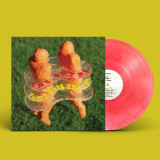
China's leading post rock band Wang Wen are releasing their 12th album on March 10th, the follow-up to much acclaimed 2021's "100.000 Whys" "Wang Wen's new album Painful Clown & Ninja Tiger is named after the traditional Chinese method of chronology year name (DEDF & DEDD).The two years just passed by. The sexagenarian cycle of the Chinese calendar is like the FE- against-FD polyrhythm in music. Two separate paths that travel six times through the Heavenly Stems and five times through the Earthly Branches and then reunite. However, this is just a superficial interpretation. The reality is the dark side has been approaching and countless miserable accidents occurred in front of us. All the savage and dictatorship come back, repeating itself over and over again in a dead loop in the history, which becomes less distant and fuzzy nowadays. They are not just "years","people" or "places" that we read in books. They jump out suddenly in front of us, turning into vivid and bare details that we are confronted with every day. To put it simply: this album was composed and recorded in those two years, and it records the life experience of the band in those two years, hence the name. For fans of RADIOHEAD, MONO, 1099, RADARE, CONDOR GRUPPE, GODSPEED YOU! BLACK EMPEROR, CASPIAN, IF THESE TREES COULD TALK Limited (130 copies ww) Single Colour (Transparent Orange) Edition!
Lovesick – everyone knows it, everyone hates it. Everyone feels alone. Everyone questions the previous relationship and what has been said during it. Everyone tries to numb the pain of this all-encompassing suffering with alcohol and drugs. Everyone calls at four in the morning and leaves embarrassing love confessions on the answering machine that will be never heard. Everyone feels alone and tries to find solace in casual acquaintances in bars, only to be turned away for being pushy. Everyone lays up for weeks stalking the likely reason this relationship ended, oh! It didn’t have to end, it was all so nice and this new one can’t be good and he/she won’t be good if the plans I’ve been making here for nights come true…oh how nice would this be! Oh it can’t be, maybe I just can’t be loved… maybe I just should…
Everybody knows it.
But from now on you never have to go through all that heartbreak alone again because we Herzschmerz Versicherungen have the solution! We are a band from Stuttgart, somehow only classified as dilletantic strange in the genre. We are at your side and take care of you when your heart hurts!
Book one of our numerous insurance packages today, or just listen to our songs – that helps too!
“Denn wenn du dir nicht sicher bist und deine Liebe bald zerbricht: Komm, schöner Mensch und kauf doch eine Versicherung bei mir, Bei Herzschmerz bin ich dann immer da, bei dir!”
Iassen Markov & Jannik Haller
out of Stock
Last delivered 3 years ago available to reorder, subject to availability
In the 1950s, Jamaican dancehall regulars were crazy about the haunting sounds of American Rhythm & Blues. But in the mid-1950s, Rock 'n' Roll began to replace RnB in America, and Jamaican dancehall owners like Duke Reid and Clement Dodd turned to local musicians to record their own versions of American RnB.
The trend of covering foreign hits exploded during the Ska heyday of the early 60s and continued through the Rocksteady and Reggay eras. Jamaican musicians have covered virtually every genre of music, from jazz and rock to film scores, television soundtracks, pop, classical music and more. Over the years, they have also recorded many "versions" of already existing covers. Cover of cover of cover…
Admittedly, some of these covers were futile but many were sublime as this new and eclectic collection of Ska, Rocksteady and Reggay nuggets, compiled by the very competent and very charming D.J. Héléa, brilliantly demonstrates. Attention we are here "undercover", there are no well-known covers. Some of the tracks selected are rare, others unknown or forgotten - but all are excellent and blended in an impeccable mix, in line with previous the Harlem Shuffle compilations... All Killer, No Filler!
REGGAY UNDERCOVER is an exciting musical kaleidoscope of Jamaican and Reggae music from the early 60s through to the mid 70s.
We hope you will enjoy listening to this album as much as we had composing it for you.
All aboard for REGGAY UNDERCOVER!
Repressed again. On the West Coast, gangsta rap held sway in hip-hop as the 21st century began. The alternative and conscious rap music of the early-to-mid-90s had all but faded into the underground. The scene was set for a comeback, perhaps as a backlash to the perceived violence and misogyny of gangsta rap's content. Leading the resurgence of alternative hip-hop were groups like Jurassic 5, and recent signees to Capitol Records; a West coast trio that had been building steam underground since the early 90s called Dilated Peoples. Anticipation was high for the release of the debut album from Evidence, Rakaa, and DJ Babu. (Of the influential turntablist collective Beat Junkies.) When The Platform arrived in May of 2000 it was met with critical and underground acclaim, as well as affording Dilated Peoples their first Billboard chartings. It featured a back-to-basics sound with a heavy debt to the old-school hip-hop ethos, the kind of sound that harkened back to the early days of legends like De La Soul & A Tribe Called Quest. Hits like "No Retreat" and "The Platform" were bolstered by Evidence & Rakaa's subtle, abstract wit, and swift, adroit wordplay, while DJ Babu provided production chops and dextrous scratches. On The Platform the trio were joined by the likes of B-Real, Tha Alkoholiks, Everlast, Planet Asia, and many more providing guest vocals, while boasting guest production from The Alchemist & Kut Masta Kurt, among others. Since its 2000 release this influential record, which heralded the return of alternative hip-hop, has never seen a vinyl reissue. With that, Get On Down-always on top of giving the greatest hip-hop albums their due-is proud to present this re-release of The Platform. The rhymes are still fresh, the production is still pristine, and the album is now back on vinyl for the first time in 17 years.
out of Stock
Last delivered 2 years ago available to reorder, subject to availability
After an interminable wait due to the vinyl manufacture crisis, Mercury 200 is back stronger than ever, supplying some homegrown material that is conceivably as potent as GOTG001. This time they teamed up with 2 legendary OG's, Apoc Krysis & MCR-T, to spice up your musical experience and bring you the best of the two worlds. Dealing at the intersection of breakbeat, Ghetto tech and trance, this record will definitely catch your attention. Parental Advisory Explicit Content. Legally available only on prescription.
For the first track of the vinyl, they teamed up with the Atlanta based rapper Apoc Krysis to blend two opposite genres in a Memphis rap infused techno banger. This unique collaboration put on the table whats the both side has the best to offer: powerful and lethal flow. This track is here to pick you up and put you back on your feet after a breakup. When nobody's there for you, this track is.
Full of fast and filthy grooves "Caramelo" is the track that will make you sweat. A heavy stomping beat with devilish vocals ready to make your ghetto inner self dance. Heavy grooves and a powerful bassline this track will slap you into consciousness. 100% Floor impact guaranteed.
On the flip side we start with an outstanding collaboration with Berlin most notorious player in the ghetto house-techno scene: MCR-T. An uplifting, instant serotonin booster.
Building up the tension at the start with a breakbeat and OG (original gangsta) lyrics, the tracks eventually turns into four to the floor house infused groove. Party killer guaranteed!
Last track but not the least consists in a classic mercury 200 signature breakbeat track. A fine blend of trancy and infectious melodies with a short rap hook and chest punching drums.
out of Stock
Last delivered 19 months ago available to reorder, subject to availability
When the pandemic hit, Hannah van Loon adopted a dog named Gizmo, who became a much-needed companion while the Bay Area musician wrote her second album as Tanukichan. Aptly Named after her new four-legged friend, GIZMO is an exercise in release, whether from situational hindrances—a forced lockdown, for one—or from self-imposed hedonistic coping mechanisms.“ A theme I always had floating around was escape,” van Loon explains of her follow-up to 2018’s Sundays. “Escaping from myself, my problems, sadness and cycles.”
To channel the more uplifting spirit she wanted for GIZMO, van Loon turned to the radio pop-rock of her childhood: “I was struck by the in-your-face positivity of the lyrics,” she adds,referencing artists like 311, The Cranberries, and Tom Petty. “I wanted to bring that positivity while writing about the sad and helpless emotions I’d been grappling with.” But GIZMO’s lightheartedness doesn’t make it shallow: “I think that I could let it go, as beautiful as snow,” she murmurs on “Don’t Give Up,” a nu metal-meets-Cocteau Twins groove about the sudden awareness that all the relationships you depend on could vanish instantaneously. Van Loon’s main collaborator on GIZMO was Toro y Moi’s Chaz Bear, and the jangly pop earworm “Take Care” showcases the heavily distorted, in-your-face guitar work reminiscent of Bear’s own psych joints What For? And Mahal. On the hypnotic, wall-of-sound-rocker “Thin Air” featuring Enumclaw, van Loon channels the triumphant grit of The Smashing Pumpkins as she ponders the impermanence of even the most impactful relationships: “I’ll always have the memories/Of how you used to make me see/Until they fell in the ocean/They’re not swimming/They’re not floating.”
Existentialism aside, GIZMO also sees van Loon break out of her sonic comfort zone. “One ofthe main changes of how I’m approaching music now is that I want to have more fun in the process,” she says, and she walks the line between melodrama and whimsy gracefully: “I can learn something because I’ve been here before,” she sings on the soaring, bittersweet “Been Here Before.” Deftones-inspired thrash drums and screeching electric guitars are gracefully contrasted with van Loon’s hypnotic, almost deadpan vocal style and a crystal clear acoustic guitar she describes as “cute.” Gizmo the dog suddenly passed away right as van Loon finished the album, but he’s immortalised with his photo on the cover—a fitting emblem of this new era of Tanukichan.
Electronic music legend and head of Editions Mego, Peter Rehberg, teams up with zeitkratzer mastermind Reinhold Friedl. 3 side-long pieces melting electronic / contemporary avantgarde. Uncompromising.
When Peter "Pita" Rehberg and Reinhold Friedl first met each other, they did not like each other "at all," as Friedl emphasises with a hearty laugh. The two would however eventually bond over the years thanks to a mutual respect for each other's music. In the summer of 2021, they entered the studio together for the first time. Their joint album for Berlin's Karlrecords is a faithful document—no editing, no overdubs—of their improvisations during two recording sessions shortly before Rehberg's sudden and untimely passing on July 22nd of that year. The three pieces see Rehberg working with electronics and Friedl with his inside piano, proving that they had indeed managed to find a common ground—up to a point where it at times becomes hard to tell who plays what on this record.
Friedl ran into Rehberg in Zbigniew Karkowski's tiny Tokyo apartment in 1999 while organising the first edition of the Off-ICMC that was set to take place in the following year. "I came uninvited and slept a night at Zbigeniew's before Peter arrived and I had to move out," remembers Friedl, who ended up inviting the Mego founder to perform at the Off-ICMC even though he found it hard to relate to his music. "We had very different backgrounds: he came from industrial and I had roots in classical music and improv, a high-brow prick!" After having met several times at different concerts without ever really speaking to each other in the following years, a concert in Vienna in the late 2010s marked a turning point in their relationship (or lack thereof). Playing their sets back to back and loving every second of what the other was doing, the two finally clicked on musical level. "We met for dinner on each of the three following nights!," remembers Friedl.
The two would go on to become good friends, meeting regularly to discuss music and everything else while both were living in Vienna just a few minutes away from each other. Rehberg put out Friedl's collaboration with Eryck Abecassis, "Animal Électrique" on his Editions Mego label in 2020 and eventually they entered the studio twice for sessions that were completely improvised with no prior preparation. "Caciara," "Chiasso," and "Clamore"—named retrospectively after three Italian words for "noise"—capture the spontaneity of two artists who had always been outliers in their respective fields finding a common ground in sprawling dynamics and sonic intensity as well as enabling each other to expand their individual sound palettes. "Peter gave me cover," explains Friedl. "I had the feeling that I was able to do things I otherwise wouldn't play."
With her hypnotizing voice and vivid lyricism, Jackie Mendoza makes fantastical, intimate electro-pop propelled by ukulele-based dance grooves. Having grown up between her birthplace of Chula Vista, California and Tijuana, Mexico, the 29-year-old singer-songwriter and multi-instrumentalist bridges these two worlds with dynamic soundscapes that pull from Latin pop, electronic music, and indie pop. She creates a musical universe that exists beyond strict borders of genre and geography, giving her the space to traverse the vast expanse of her interiority. Mendoza first started performing in 2014 as the vocalist for Brooklyn dream pop bands Gingerlys and Lunarette. She then broke out as a solo artist with her 2016 pop hits "Islands" and "La Luz," which showcased her imagery-packed, yet deeply introspective lyrics. On LuvHz, her 2019 adventurous debut EP that was initially inspired by a painful breakup, she turned her personal experiences into songs that observe greater truths about the world around her. As a result, the project became a broader reflection on varying forms of love, in relationships with your partner, your culture, and the natural environment. Mendoza expands this approach on her debut album, Galaxia de Emociones (Galaxy of Emotions), which sees her exploring a great range of feelings, from depression, celebration, outrage, numbness, hopelessness, and thrilling love. She uses each emotion as a portal to convey the intricacies of her experience as a queer, first-generation Mexican American woman, who actively defies and criticizes machismo and the Christian culture she was surrounded by. Brought up in the suburban border town of Chula Vista, she recalls being told by her parents to not mix English with Spanish, but speaking "spanglish" quickly became inevitable. It wasn't until high school, that learning to play ukulele and singing in school musicals allowed her to authentically express herself. "This album is about finding the courage to not only face my emotions, but also sharing them by singing them out loud." Mendoza says. The project was co-written and co-produced by Mendoza and Rusty Santos (Animal Collective, Panda Bear), with a contribution from Grammy winning producer and accordionist Ulises Lozano. As Galaxia de Emociones cruises from shimmering indie pop to accordion-laced electronic norteño, Mendoza proves there is both power and tenderness in embracing the fullness of your being and not doubting your instincts that might have been discouraged by society. She says it all in the opening song, "Natural," which blooms with spacey synths and twinkling ukulele plucks. "There is no use in controlling what comes natural to you," she sings in Spanish in a spellbinding loop. With her new album, she hopes that listeners can connect with her words and look within to explore their own galaxy of emotions.
Rare Groove Collection Explore the fusion of world music with soul, funk and disco through the Rare Groove Collection. With this new volume, discover unique groove tracks straight from Jamaica! Fully remastered original versions Jamaican Rare Groove From the beginning of the 60s to the end of the 80s, Jamaica had a worldwide influence with ska, rocksteady, dub and reggae, but the small Caribbean island did not escape the global trends of funk, soul and disco. This mix of influences has given birth to unique groove songs, highlighted by this Jamaican Rare Groove. Double vinyl Jamaican Rare Groove From the beginning of the 60s to the end of the 80s, Jamaica had a worldwide influence with ska, rocksteady, dub and reggae, but the small Caribbean island did not escape the global trends of funk, soul and disco. This mix of influences has given birth to unique groove songs, highlighted by this Jamaican Rare Groove.
Kate NV's WOW offers listeners a prismatic shift in perspective and scale, a parallel dimension in which the mundane becomes funny, unfamiliar, and altogether sensational. Turning the contents of her 2020 album Room for the Moon upside down and spilling them across a floor checkered with intrigue and surprise, Kate places sound, object, and ritual under the microscope to magnify the delight hidden in plain sight of everyday life. WOW is Kate Shilonosova's fourth full-length release as Kate NV in six years, and third for RVNG Intl. Her prolific musical output aligns with a highly attuned aesthetic and a deep commitment to visual world building. WOW is one of many of these worlds in which music is fully saturated with color, deeply tactile and textural. Shiny, sproingy, plastic. Where Room for the Moon embraced structure (abstractly speaking) and veered pop, WOW happily abandons conventional song shapes, parsing the experience of musical time into ecstatic fragments. It's difficult to imagine a more fitting album title: pure exclamation, an organic pitch of delight leaving the mouth, with no clear etymological links. On Room for the Moon, Shilonosova's voice was layered and lyrical, with sweeping and urgent melodies. WOW finds her as a peripheral purveyor of high jinks, peeking out from the corners, commenting on her surroundings in non-verbal, and arguably non-human, utterances. Instead of employing lyricism, Shilonosova steps outside of language, and rewards us with a gum ball machine of textures: soda fizz and wind-up teeth and scraps of bubble wrap become comically huge, as if heard from an insect's perspective. Words are tasty plosives, onomatopoeias, percussive chirps and one-liners, and singing serves as another form of what Shilonosova refers to as "funny tiny sounds." WOW skews and skitters, trips over its own feet and laughs about it, plays out of tune on purpose, tilts and leans like a top-heavy flower. Shilonosova is a longtime user of Found Sound Nation's Broken Orchestra sample pack, a sound catalog of over one thousand dilapidated instruments sourced from Philadelphia public schools. These perfectly imperfect instruments are tightly spliced into WOW's patchwork of synthesizer and reworked snippets of Shilonosova's friends playing clarinet, flute, and marimba. It's central to the record's internal logic: a disregard for what is, and isn't, broken, what is, and isn't, a sentence or a song. A commingling of subject and object, with a firmly new wave sensibility. Shilonosova has long had an unusual relationship with inanimate objects (citing her bicycle as her best friend), as if the joys they evoke for her are personality traits of the objects themselves. On WOW, she evinces a kind of inverted anthropomorphism: she shrinks her voice and becomes an object among multitudes, toylike in size and perspective, cohabitating with sedentary, indifferent roommates. This pursuit of childlike perspectives is a thread that runs through much of her catalog, and places her work on a plane with that of her personal hero Nobukazu Takemura, who for decades has treated his music as a portal to childlike curiosity, both in subject matter and tone. With an invitation to pursue this curiosity, WOW further confirms Kate NV's deeply inventive, fluid and technically dizzying artistry. By refusing constraints and rules, Shilonosova embodies a profound freedom, allowing objects, sounds, and processes to unfold organically; or, as she puts it, a commitment to "accepting randomness." She succeeds terrifically at a breed of auditory defamiliarization that is all her own, and the rewards for listeners are many: through her lens, the small becomes monstrous, the abstract becomes sensorial, and the old becomes new. Kate NV's WOW will be released on February 10, 2023 on vinyl and digital formats. On behalf of Kate NV and RVNG, a portion of the proceeds from this release will benefit War Child, an organization that supports children and their families impacted by conflict, and working to build sustainable peace for generations to come.
out of Stock
Last delivered 3 years ago available to reorder, subject to availability
Kate NV's WOW offers listeners a prismatic shift in perspective and scale, a parallel dimension in which the mundane becomes funny, unfamiliar, and altogether sensational. Turning the contents of her 2020 album Room for the Moon upside down and spilling them across a floor checkered with intrigue and surprise, Kate places sound, object, and ritual under the microscope to magnify the delight hidden in plain sight of everyday life. WOW is Kate Shilonosova's fourth full-length release as Kate NV in six years, and third for RVNG Intl. Her prolific musical output aligns with a highly attuned aesthetic and a deep commitment to visual world building. WOW is one of many of these worlds in which music is fully saturated with color, deeply tactile and textural. Shiny, sproingy, plastic. Where Room for the Moon embraced structure (abstractly speaking) and veered pop, WOW happily abandons conventional song shapes, parsing the experience of musical time into ecstatic fragments. It's difficult to imagine a more fitting album title: pure exclamation, an organic pitch of delight leaving the mouth, with no clear etymological links. On Room for the Moon, Shilonosova's voice was layered and lyrical, with sweeping and urgent melodies. WOW finds her as a peripheral purveyor of high jinks, peeking out from the corners, commenting on her surroundings in non-verbal, and arguably non-human, utterances. Instead of employing lyricism, Shilonosova steps outside of language, and rewards us with a gum ball machine of textures: soda fizz and wind-up teeth and scraps of bubble wrap become comically huge, as if heard from an insect's perspective. Words are tasty plosives, onomatopoeias, percussive chirps and one-liners, and singing serves as another form of what Shilonosova refers to as "funny tiny sounds." WOW skews and skitters, trips over its own feet and laughs about it, plays out of tune on purpose, tilts and leans like a top-heavy flower. Shilonosova is a longtime user of Found Sound Nation's Broken Orchestra sample pack, a sound catalog of over one thousand dilapidated instruments sourced from Philadelphia public schools. These perfectly imperfect instruments are tightly spliced into WOW's patchwork of synthesizer and reworked snippets of Shilonosova's friends playing clarinet, flute, and marimba. It's central to the record's internal logic: a disregard for what is, and isn't, broken, what is, and isn't, a sentence or a song. A commingling of subject and object, with a firmly new wave sensibility. Shilonosova has long had an unusual relationship with inanimate objects (citing her bicycle as her best friend), as if the joys they evoke for her are personality traits of the objects themselves. On WOW, she evinces a kind of inverted anthropomorphism: she shrinks her voice and becomes an object among multitudes, toylike in size and perspective, cohabitating with sedentary, indifferent roommates. This pursuit of childlike perspectives is a thread that runs through much of her catalog, and places her work on a plane with that of her personal hero Nobukazu Takemura, who for decades has treated his music as a portal to childlike curiosity, both in subject matter and tone. With an invitation to pursue this curiosity, WOW further confirms Kate NV's deeply inventive, fluid and technically dizzying artistry. By refusing constraints and rules, Shilonosova embodies a profound freedom, allowing objects, sounds, and processes to unfold organically; or, as she puts it, a commitment to "accepting randomness." She succeeds terrifically at a breed of auditory defamiliarization that is all her own, and the rewards for listeners are many: through her lens, the small becomes monstrous, the abstract becomes sensorial, and the old becomes new. Kate NV's WOW will be released on February 10, 2023 on vinyl and digital formats. On behalf of Kate NV and RVNG, a portion of the proceeds from this release will benefit War Child, an organization that supports children and their families impacted by conflict, and working to build sustainable peace for generations to come.
out of Stock
Last delivered 14 months ago available to reorder, subject to availability
Rare Groove Collection Explore the fusion of world music with soul, funk and disco through the Rare Groove Collection. With this new volume, discover unique groove tracks straight from Jamaica! Fully remastered original versions French RARE GROOVE This "French Rare Groove" volume offers us a oneâÇ`way ticket to France from the late 60"s to the early 80"s. From confidential releases to forgotten movie soundtracks, discover the grooviest tracks from the french scene. Have a good trip!
Belgian-Japanese piano wizard Alex Koo seemed destined for a career as a classical concert pianist, but in his teens, he became completely enamored with jazz. Driven by his passion, he moved to New York, where he studied and taught at the renowned NYU Steinhardt. There he came into contact with jazz greats Mark Turner and Ralph Alessi, with whom he released the album "Applebueseagreen" in 2019, which was promptly included in the prestigious list of "Best Albums of 2019" by the legendary Downbeat Jazz Magazine with the words "Stunningly original". Domestically, too, one blazing review upon another: "Belgium is too small for pianist Alex Koo" or "We are stunned ", we read in national newspapers De Tijd and Le Soir.
With his brand new Etudes for Piano, composed for and commissioned by BoZar Brussels, he shows how his passion for both worlds - jazz and classical - merge perfectly. Adventurism and virtuosity go hand in hand with melancholy and elbow work (literally, for those who really know Koo knows). His music sounds like a marriage between Debussy, Chopin, Reich, Rachmaninov on the one hand and Keith Jarrett, Craig Taborn, Brian Eno and Philip Glass on the other. Alex Koo is a conjuring natural born storyteller on piano.
The word Babble brings two things to mind: A person pouring out their thoughts with reckless abandon, or a gentle sound coming from water cascading over rocks as it flows past. In the case of this reissue from Kendra Morris, Babble is a sublime melding of these two meanings. The original release in 2016 came in the form of a self-released EP. A fan cult favorite; it has now grown to include three additional tracks: Playing Games, Dial Back and Ride On. The journey through human emotion is accomplished through Kendra's songs, bringing us, the listeners, into her enchanted world of pain and strength, feeling renewed on the other side. The ability to take trepidation, desire, and insecurities and turn them into comfort and make you want to get up and move with them is a selfless gift she grants to us. With the support of Karma Chief Records (A division of Colemine Records), Babble is getting the official release it deserves.
If you find the time, please come and stay a while in abracadabra’s beautiful neighbourhood; a magically wonky wonderland where strangers leave as friends to a block party soundtrack as eclectic as it is infectious. The California duo’s album shapes & colors is a dazzling collage of psych-fuelled synthscapes and contemporary Baroque-pop of anti-capitalist movements and escapism, precisely pieced around their own working lives in a blue-collar town.
In the heart of Oakland’s industrial Jingletown above a former auto-repair shop in what was once a mechanics’ break room where poker rounds ensued, Hannah Skelton (Vocals, Synthesizers) and Chris Niles, (Bass, Synthesizers) constructed the angular 80s-tinged anthems (think John Hughes montages to Talking Heads) of their new album, to positively offset the pandemic’s amplification of dysfunctional society. “It reflects our current reality: a huge mess that is systematically broken but isn’t entirely lost,” Hannah tells. “We’re inviting listeners to conjure up every drop of hope and willpower left inside them, pour that into the giant vat of anger and frustration bubbling inside us all, and with this potion collectively enact the necessary change to bring love and light into this dark space.”
When Covid forced Hannah from her salon in San Francisco to become a backyard mobile hairdresser, what she saw inspired them both and the lyrical foundations for their new record. “I’d drive to mansions and people would complain about how hard the pandemic had been next to their swimming pool and tennis courts.” First meeting after the album’s co-producer Jason Kick (Mild High Club, Sonny and the Sunsets) recruited the pair for a Halloween band covering Eurythmics’ art-rock debut ‘In The Garden,’ the pair hit it off and shapes & colors is a product of the years that followed. It combines Chris’ own rhythmic demos following years on the road touring and opening for Amon Tobin, Matthew Dear and Generationals in Maus Haus with Hannah’s lyrical musings honed from project Cassiopeia, so even when topics are as heavy as the beats, they’re met with luminously positive arrangements of hope and warmth.
The by-product of a psychedelic New Year’s Eve escaping a monotonous 2020 reality, the title track itself captures fireworks over East Oakland as viewed from the pair’s couch whilst listening to Mort Garson’s Plantasia for 6 hours straight. The daydream collage of ‘inyo county’ is “a little souvenir taking me back into the bottled-up essence of a slow lazy morning, waking up in bed far from home,” Hannah tells recalling those enforced stay-at-home days. “It fell out of me because I was craving that blissful flavour.” Meanwhile ‘dawn of the age of aquarius’s new parallel reality evolved from a happy accident when their demos had reset to a drone which Jason reworked into a Laurie Anderson-esque breathy vocoder effect. Even bloops and beeps from a forgotten recording session at the Vintage Synthesizer Museum in Emeryville can be heard, where the pair used Mini Moog, Fairlight EMI and ARP 2600 to arrange their sound into shapes whilst distortion and dirt from mixing on 1979 Neve 5313 Console added to the recordings’ color.
Casting a brighter rainbow still, in all its pastel-hued glory, Hannah, also illustrated a self-portrait of the band for the album artwork. “It reflects our makeshift recording studio to encapsulate all aspects of that time and space,” she shares of their abode where, over an intense two-week period and fuelled by the aroma of fermenting vino from the winery below, their single chord, bass and drum-heavy, groove-first momentum took them on an unexpected journey whilst the next-door couple would fire pizzas in their yard and a grandfather across the road would sweep the street clean. “We’d drink coffee and start the day, consistently working, without interruption,” Chris tells of finding their flow. “The loft is a cool space with skylights, tall ceilings and no shared walls so we could be as loud as we wanted to be.”
Just as well. Diving into decades of electronica and crunchy sound effects, field recordings and animal sounds, blended with an infectious Latin influence, shapes & colors is bolstered by live percussionists Greg Poneris (drums), K. Dylan Edrich (Vocals, Percussion: congas, bongos, chimes, cow bells and wood blocks, tone drum and tri-tone whistle) and Tom Smith (Guitar, Synthesizers, Vocals).
NIMBY crews grab those earplugs now. abracadabra is your new noisy neighbour, and there’s no turning this party down.
out of Stock
Last delivered 3 years ago available to reorder, subject to availability
Anne's 7th Opus in 13 Years, Containing 6 Fantastic Covers and 6 of Her Own Songs, Recorded in One of the Most Prestigious Studios in Montreal with Her Original Blue Mind Team
Fresh from the success of her single "Killing Me Softly" from her previous album Keys to My Heart, Anne Bisson, singer-songwriter and jazz pianist, decided to perform and record more standards from the American jazz songbook, as well as new arrangements of classic songs that were so much a part of her teenage years.
Be My Lover, Anne's seventh album is, therefore, a savoury feast of original compositions and classic songs in her own bold new arrangements for acoustic trio. While still in the 'Smooth Jazz' genre, the presence of a Fender Rhodes, the legendary '70s keyboard, along with an electric bass, impart the album with quite a unique tone.
After over 18 months of musical experimentation and other creative endeavours, Anne once again brought together master drummer Paul Brochu (Gino Vanelli, Michel Legrand, UZEB) and proficient bassist Jean-Bertrand Carbou from France, for a series of informal sessions to explore the songs that were being considered for this seventh release.
These two musicians have been valuable collaborators for several years now. Paul has been featured on many of Anne's albums, notably Blue Mind, which made a huge splash when it appeared, with over 35,000 hard copies sold, while Jean-Bertrand's playing has also graced several of her albums.
Since 2009, the three have performed at several important venues, including Le Festival International de Jazz de Montréal, as well as other festivals in the United States and Mexico.
What holds them together is an evident complicity which is present from the very first notes. Their musical contributions are precise and deeply heart-felt. Their virtuoso playing greatly enhances these songs without turning them into mere technical exercises.
With precision playing, subtlety and attention to detail, as well as being recorded in impeccable High Definition, these songs will definitely please Anne's audiophile fans, while also appealing to a wider audience.
All About Ultimate High Quality CD (UHQCD)
Many years have passed since the birth of the Audio Compact Disc (CD) back in 1982. By use of High-Quality materials and a totally different manufacturing method, the definitive version of audiophile audio CD was born. Playable on any CD player, the Ultimate High Quality CD greatly surpasses all previous CDs before it!
The Ultimate High Quality CD (UHQCD):
UHQCD is a radical change to the CD manufacturing process itself. The conventional wisdom about CD manufacturing, which had remained largely unchanged across the world for over 30 years, has been exhaustively questioned. Through this effort, the ultimate in quality was attained - a level of quality that is certainly impossible to achieve with existing CD discs.
The Ultimate High Quality CD was developed through an effort to improve audio quality by simply upgrading the materials used in ordinary CDs to higher quality materials. For the substrate a high-transparency and high-fluidity polycarbonate (a type of plastic) of the type used for LCD panels was used, while for the reflective layer, low-cost, common aluminium was replaced with a unique and expensive alloy of high-reflectivity.
Differences in manufacturing methods:
Conventional CDs are produced using the technique of injection moulding to form "pits" of data on polycarbonate material. Metal plate on which "pits" representing audio source data are formed is used as a die. This is called the "stamper." Polycarbonate is melted at high temperature and poured into the die to duplicate the pit patterns on the stamper.
This method is efficient because it enables high-speed production, but it does not enable totally accurate or complete duplication of the pits on the stamper. As a melted plastic, polycarbonate is inevitably viscous, so it cannot penetrate completely into every land and groove of the tiny pits of the stamper.
The Ultimate High Quality CD photopolymer is used instead of polycarbonate to replicate the pits of the stamper. In their normal state, photopolymers are liquids, but one of their characteristic properties is that they harden when exposed to light of certain wavelengths. The advantage of this property, perfect replication of very finely detailed pits was achieved. Photopolymers in the liquid state are able to penetrate into the tiniest corners of pits on the stamper so that the pattern of the pits is reproduced to an extremely high level of accuracy. The Ultimate High Quality CD reproduces audio with greater precision and at a level that is impossible to achieve using conventional CD production technology!
”Look up, into the light” she said, while the camera shutter clicked. ”Like this? Does it look holy?” His neck felt stiff. Her reply: ”Yes, just like that. What do you mean holy? Like religious? ”No, more like trying to look very far, somewhere beyond what we can see.” ”Okay, stand still, I’m going to come close to you now. The light hits your face great.” *click, click, click.
He noticed her fingernails. They were not polished. Natural. Even somewhat rugged, as if something wore out the fingers slightly. What had these hands held besides the camera? What made the edges of her fingernails drift off?
He thought it’s weird to look straight into the camera. The photographer had closed her left eye, the one not looking into the lens. Then it opened, she looked up, perusing the surroundings, then she closed her eye again, then looked up, closed, looking up, very quickly. It all seemed very professional. Maybe she calculated the light, making sure it’s close to perfect. ”What will these photos look like?” – the thought popped into his head briefly. It was liberating to think it wouldn’t matter.
”What’s that song playing?” he asked. ”Wait a sec, Ol’ Dirty Bastard?” she replied. ”Oh yeah, right. But the sample?” ”Hey, could you look up again, like that. No, lower.”
New directions: ”Look out from the window, turn left.” ”My left or yours?” ”Yours, I always try to think from the direction of my model.” How professional! This is a good shoot, so natural. Should I worry about how the photos look like? No, I don’t want to. His thoughts bounced around. What would the story be like? It’s a big newspaper, everyone will read it. Maybe someone drinks coffee and eats a stroopwafel while they do it. Will they place the waffle on top of the mug for a brief while, so that it gets hot and the syrup melts a little? Then it feels wet, and you can bend the cookie.
She broke his train of thought off midway through: ”Now turn right, but look left, and slightly up, but don’t turn your face right.” ”Umm, like this? Sounds like a set of pilates instructions.” she laughed ”You do pilates?” ”Yeah, it’s hard sometimes. Have you tried?” ”No”, she said. ”I’m not good for sports that are done in groups.” ”Yeah, but in pilates you can just be inside your mind, drowning in your private thoughts.”
”What are you thinking in pilates?” she asked, taking more photos. ”Well, mostly just which way is right. And which left.” *click, click.
With his new album, Gecko Turner confirms that he is a standout artist in the global groove scene, a must for the outernational sounds aficionados.
Somebody From Badajoz is the fifth studio album in his much lauded discography and his first in seven years, eagerly anticipated by both his fans and himself: "this business of dedicating yourself to music and making songs... it's a long game."
With the release of his first two, remarkable, albums, Guapapasea! (2003) and Chandalismo Ilustrado (2006), Gecko started cultivating what one astute journalist defined as Afro-maduran soul—the "maduran" bit referencing Extremadura, a region in central-western Spain.
Badajoz, Gecko's birthplace, is the biggest city in the area, on the border with Portugal, by the Guadiana River. It is a place that oozes history, where there is constant movement at the border, and people's character is friendly and open-minded with foreign habits.
Gecko's Afro-maduran soul isbuilt on Afro-American music and drenched in Brazilian, African, Latin American and Jamaican sounds. There are also echoes of a youth marked in equal parts by our man's admiration for the Beatles and the flamenco that could be heard everywhere in Badajoz in the seventies. It makes for a singular sound and a musical language of its own—spicy, succulent, full of nuances, but with a very personal flavour.
The album opens with the Nigerian talking drums of Twenty-twenty Vision, (neo) soul in a magical falsetto, carried by a sumptuous orchestral arrangement with a cinematic flavour: "I'd been thinking about doing something called 'Twenty-twenty Vision' for some time, making a play on words with the vision we have of the world after the year 2020 and the medical expression, which, in ophthalmological terms, means 'normal or complete vision.' Beyond that particular song, I think that's the mood of the album: a look at society in the twenties of the 21st century and the feelings and demons it produces."
It's followed by De Balde, a very special song born from a posthumously discovered lyric by the great writer Carlos Lencero, a regular collaborator of Camarón, Pata Negra, and Remedios Amaya, and also from Badajoz. While conceived as a fandango, Gecko has moulded it into his sound in such a seamless way it now seems as if the words could only have been written to be embraced by the percussion, brass, and backing vocals heard on the album. It's the only lyric on Somebody From Badajoz not written by Turner, still it sits rather comfortably with the rest, sharing the same emotivity and sensitivity, as well as the trademark humour and irony.
Other tracks see more protagonism for the rhythm.The beat-driven Ain't No Fun Preachin' to the Choir features Gecko's vocals walking the thin line between singing and talking over a phenomenal afro-disco-funk-infused trailblazer. In Am I Sad? it's impossible to not bob your head to the queen of Papatosina's mongrel rhythm, as close to the banks of the Guadiana river as it is to the shores of the Mississippi. Qué Siesta Tan Buena, He Babeao Y To! is an ode to the snooze in true Afro-Maduran fashion. And in Come And Try, the Caribbean influence is evident—lovers' rock that invites you to dance in good company.
In these songs, and throughout the album, for that matter, the musicians accompanying Gecko, who himself plays many of the instruments as well, shine brightly. All hailing from Extremadura, Javi Mojave (percussion), Álvaro Fdez 'Dr. Robelto' (bass), and Rafa Prieto (guitar) have been carrying him with delicate forcefulness since he started out as a solo artist. At the same time, the wonderful and essential voices of Deborah Ayo, Astrid Jones, Fani Ela Nsue, and Miriam Solís give the album a sunny variety of colours. And there are many more—a sensational group of musicians contributes dazzling harmonic bursts to many of the songs. The palette of sounds is very diverse and rich in textures and nuances, including, for example, the ngoni, bells, and various repurposed kitchen utensils.
The groove is always around, moving between the magical border sound of Everybody Knows Somebody From Badajoz and Little Dose, the silky soul of The Sibariteo Appreciation Society, and the exultant celebration of End Of The World (which surprisingly sees Gecko turning to the occasional use of autotune), a piece that could be used for the final credits of a Monty Python film and, in fact, closes the album.
Gecko Turner has done it again with Somebody From Badajoz, looking to the future without losing sight of the roots. In times of upheaval all over the globe, when people are looking for purity, he delivers a formidable piece of work: risky, optimistic in spite of everything, and with a decidedly bastard sound. Let's rejoice.
* Nothing Lasts But Nothing Is Lost was the 3rd incredible installation of the Shpongle epic released in 2005 on Twisted Records. Now remastered for 2019.
It proved to be yet another masterclass in the psychedelic fusion of the worlds between musical genre and sonic geometry.
Simon Posford & Raja Ram interweave an impossible myriad of melodies on guitars, vocals, oud and horns with hifidelic sounds of masterfully manipulated glitchy synths and Raja’s inimitable Flute and otherworldly vocal mutations to create these majestic musical soundtracks.
The album famously features 20 tracks (which on vinyl appear as 8 separate tracks) designed so that every one flows seamlessly into another, continuously evolving like a musical hologram. Each new sonic world reflecting a psychedelic spectrum of the uniquely altered states of audio reality that Shpongle are renowned for.
With every track opening doors to new musical vistas, we are blessed to witness the ever changing sonic scenery that constantly shapeshifts in tone, timbre, tempo and time signature.
Opening with kaleidoscopic mandalas of a mythical music box that morphs into psychedelic funk on “Botanical Dimensions”, we know when Raj’s twisted vocal breaks that we are deeply in “Outer Shpongolia”. The diversity of musical sound surfing is unparalleled, touching on both established and newly invented genres such as latin glitch funk, arabic trance, psyfidelic dub, psychedelic samba massive with massive brass band riffs in “The Stamen of The Shamen” and even snake charmer techno- breaks on “Turn Up the Silence”. Nothing Lasts But Nothing Is Lost effortlessly and seamlessly emerges from one to the next and is a musical journey of such gargantuan portions that they barely fit into a 1 hour epic audio adventure!
On the third fantastical instalment of the Shpongle story, Raja & Simon tickle the synapses and kicking up the dust as evolutionary psychedelic textures and other worldly spaces meld with an irrepressible 4 to the floor of the Kickdrum liberally sprinkled throughout the album.
The mystical maestros undeniably delivered another astounding audio adventure, flipping the sonic switch for tripping without a hitch and earning its rightful place of any psychedelic connoisseur.
out of Stock
Last delivered 8 months ago available to reorder, subject to availability
Pure Adult are a Brooklyn-based experimental rock duo formed
by Jeremy Snyder and Bianca Abarca. At the centre of their
music is the far-left political ethos and DIY attitude the pair
share.
Having grown up in the unusually sheltered environment of a
church-turned-cult, Snyder has always found himself drawn to
the harsh, dissonant music that was off-limits during his
formative years. In 2017, he and contemporary dancer and
visual artist Bianca Abarca formed Pure Adult, who released
their debut EP, ‘Pure Adult I’, in 2019. Now they are set to
release their debut album, ‘II’, on FatCat Records.
After leaving the church in 2007, Jeremy began studying
religion, philosophy and politics whilst working as a sound
engineer. “I ended up touring with some small pop rock bands,
while my studies brought me through an array of beliefs and a
far-left political worldview. While I’ve identified as a communist
for almost 20 years now, I didn’t fully give up on religious belief
until around 2010. A fundamental element to our belief system
was this sort of unverifiable feeling that must be something and,
because I’ve experienced that feeling, virtually nothing can
make me deny it. And it’s comforting, in a world of quantifiable
uncertainty, a guise of certainty,” he says.
In more recent years, Jeremy has become the engineer of
choice to internationally acclaimed acts such as Mdou Moctar
and IDLES, both of whom are big fans of Pure Adult. IDLES
lead singer Joe Talbot says of the band’s forthcoming album:
“Pungent chaos that serves no pomp, instead it throws around
dark innuendo like a rag doll to the cadence of fury and fucking.
The best album I’ve heard in ages. The best band you haven’t
seen. Go dig, it’s beautiful at its worst.”
As well as the release of their debut album at the start of 2023,
Pure Adult are also preparing to release a collaborative EP with
Gustaf, Thank and Heavy Lungs in the Spring. They will support
Gilla Band on tour in the US early next year.
“Blown-out, hyperactive, aggressive, and danceable rock
informed by punk and post-punk.” - Brooklyn Vegan
“A furious piece of work” - Steve Lamacq, 6 Music
Kouslin returns to Livity Sound with a second collection of slippery club tracks after the 2020 Vision E.P. With an emphasis on head-twisting sound design and a detailed line in percussive programming, the London-based producer continues to reach into intriguing new areas without forsaking soundsystem-ready physicality.
The tracks which make up the Patterns E.P. stemmed from a period of personal experimentation, where Kouslin returned to making music for its therapeutic benefits rather than a fixed purpose. The loops and sketches he returned to and expanded upon for this EP bristle with originality at every turn.
There is a continued exploration of dancehall rhythms on ‘King’, while ‘Five Four’ toys with time signatures for a jagged, fast-paced abstraction of techno. ‘Why Don’t You Don’t’ is harder to pin down thanks to its knotty beat and mutant synthesis, and ‘Michael’ flips the script further with an unexpected swerve into pearlescent melodic lead lines – the perfect demonstration of the honest and instinctive approach Kouslin took when making these tracks.
Livity Sound is a label set up by Peverelist in 2011 as a vehicle for a raw and exploratory strain of UK techno, rooted in the heritage of UK dance music and sound system culture. It has since become one of the UK's foremost protagonists for cutting edge underground electronic music.
out of Stock
Last delivered 22 months ago available to reorder, subject to availability
West Midlands five piece MACHIAVELLIAN ART follow up their self released and self titled cassette only album with their first release proper, ‘Indoctrination Sounds’ released February 24th via Riot Season Records, with an eye popping promo video to go with it.
A Maximalist blowout of Sax-honking Noise Rock, Doom Metal, Hardcore Punk, and Shoegaze, with Industrial Noise, Howls, Paranoid Rambles, and pure Disdain for oneself and the rest of you layered on top.
Indoctrination Sounds was conceived in various practice spaces in Digbeth throughout 2020 and 2021 and recorded at Ian Boult's Stuck On A Name Studios in Nottingham in the Summer of 2021, despite the best efforts of a global pandemic. Will Killingsworth mastered the record at Dead Air Studios.
Serotonin Problem opens the record with a huge sludge bass riff before the rest of the band pile in on top to create an all-encompassing and oppressive low mood that continues for the rest of the album. Next, we spiral down into the more open and atmospheric post punk of Faceless Voices - the collective bad feelings of a nation in decline reach boiling point. Indoctrination Sounds, for which the record is named, is a hardcore punk song regarding the clear and easily understood ways that humanity in the Western World is indoctrinated into the death-cult of capitalism under fear of violence, soaked in misinformation and conspiracy. Revolution is a call to action as guitars shift and glide uncertainly around, in a menacing inversion of shoegaze's dreamy safety. Side A is finished - a brief respite.
Side B opens with the more introspective Let Down, as the band play out a pounding homage to Iggy and the Stooges with Fenriz taking a turn on the drums. The drum intro to We're Not Gonna Take It gives way to a Rusted Shut bassline as the band turns their disdainful gaze to the violent pornography that is the 24-hour news cycle and reality TV in Watch Them Crawl. The album closes with Digbeth B5, an improvised piece on the gentrification of Digbeth. During the pandemic one of the band's practice spaces was turned into an overpriced ping pong bar for yuppies. As our culture is softened and cleaned up to make profit, so are our communities and cities.
Machiavellian Art are : Amy Murphy - Bass Guitar Benjamin Thomas - Vocals and Saxophone Joe Parkes - Guitar and Noise John Andrews - Guitar and Vocals Sam Hunt – Drums
In 1976 Michael Hoenig had a brief collaboration with Ash Ra Tempel's
Manuel Gottsching in Berlin; A 48-minute recording of one of the
sessions, which was released in 1995 under the title "Early Water" on
Bernd Kistenmacher's Musique Intemporelle label.The album was deletedand unavailable for a long time
Now, finally, a re-issue of "Early Water" will be available again.
Michael Hoenig still remembers: "While I had been working on the "Departure From The Northern Wasteland" album, Manuel Gottsching had asked me if I would team up with him for some concerts in France, since his group had just gone through one of its hibernation
periods. We rehearsed in my place for three or four weeks. One evening we got a call regarding some missing guarantee, which ultimately led to the decision to cancel the tour. Just for fun, we played one of the planned sets for a last time.
Even though I do not recall pressing a record button, somebody recently dug up a Revox tape of that very set. After performing some digital sonic archaeology on it, it was just released under the very appropriate title Early Water."
And Manuel Gottsching adds: "Unfortunately, some of the concert dates were not confirmed in time and we had to cancel the complete tour just on the day before we wanted to leave for France.
On that evening, nevertheless, we recorded our last rehearsal "just in case". It turned out as a flowing harmonic piece, reflecting much of the optimistic air of 1976. Michael made his 'departure' to Los Angeles in the early 1980ies. When we met again in November 1994 I proposed to release this old track of ours. Michael took the original tape to Los Angeles, lovingly restored it and - well, here is it again!"
The Altons turn up the heat with another platter produced by the Inland Empires's own, Bosco Mann. A soulful duet at its core, “Float” finds the group exploring new realms of pop excellence. The sophisticated arrangement and instrumentation gives the tune a cinematic feel that builds to a crescendo of psychedelic, swirling of strings – immersing the lsitener in a wash of Morricone-tinged euphoria. A track that wouldn't be out of place in the next 007 blockbuster. On the flip is “Cry for Me”, a latin-tinged mover featuring Adriana Flores on lead vocal. Her pleading, soulful delivery gives the bouncy, hook-laden tune a seriousness that's simultaneously uplifiting and heartbreaking.
out of Stock
Last delivered 3 years ago available to reorder, subject to availability
Often credited as the “Mother of Hip-hop”, Sylvia Robinson was a seminal blues-turned-soul singer, producer, and writer who released a slew of sultry and sensually charged records in the 1970s as a solo act and in the duo Mickey & Sylvia. Pillow Talk remains her most intoxicating work; a steamy bedroom funk record featuring her illustrious breathy, intimate vocals embedded with silky acoustic guitars, lush orchestral strings, piloted by a series of soft, subtle, and seductive clubby rhythms that still sounds fresh and entrancing today.
Impatiently returning to the golden age of Ecuadorian musica national, this second round of retrievals is more of a selectors’ affair: less reverent, more free-flowing, with more twists and turns. There is no let-up in musical quality, maintaining the same judicious, heart-piercing balance between emotional desolation and dignified endurance, the same bitter-sweet play between affective excess and musical sublimity.
This time around, the woman steal the show. Laura and Mercedes Suasti were child stars, with an exclusive Radio Quito contract. Unlike nearly all the men here, they lived long and prospered: Mercedes died last year, at the age of 93. Gladys Viera and Olga Gutierrez both came to Ecuador from Argentina. To start, Gladys plugged the scandalous new Monokini swimwear; Olga performed for visiting British royalty in 1962. Olga was glamorous but tough. She would make little of the amputation of one of her legs: ‘I don’t sing with my leg.’ She is accompanied on our opener by quintessentially reeling, sultry musica national: haunted-house organ, twinkling xylophone, Guillermo Rodriguez’ heart-plucking guitar-playing, and lilting, dance-to-keep-from-crying double-bass. ‘Sometimes I think that you will leave me with no memories,’ she sings, ‘that you hold only disappointments in store for me… In the future your love will search me out, full of regret. By then it will be too late, there will be no consolation, only disappointment awaiting you.’
Other highlights include the two contributions of Orquesta Nacional: Ponchito Al Hombro, like an off-the-wall forerunner of the Love Unlimited Orchestra, beamed into the tropics from an unknowable time and space; and the tone poem Atahualpa, a mystical yumbo invoking Quito’s most ancient inhabitants, the Kichwa. Also the tremulous, gypsy-flavoured violin-playing of Raul Emiliani, who arrived in Quito from Italy, suffering PTSD from the Second World War; the inscrutable, sardonic experimentalism of organist Lucho Munoz; and the mooing and whistling of Toro Barroso — school of Lee Perry — in which a muddy bull dashes home to his darling chola, fearless, full of desire.
Lavishly presented, with a full-size, full-colour booklet, with transporting art-work and expert notes. Luminous sound, by way of Abbey Road, D&M and Pallas.
On Origins Chris Bartels takes on the role of singer-songwriter for the first time under his Elskavon moniker, unveiling a voice that wouldn't sound out of place next to vocal-forward artists like Justin Vernon, Jónsi, or Baths, who master the balance between conventional songcraft and bold, idiosyncratic experimentation. Origins is vast yet intimate, fluttering yet cohesive, tattered yet clean, a little like rainfall during sunlight. Shedding the ambient-classical confines of his previous output, the album's opener and title track, offers a swirling mosaic of acoustic textures that recall the beloved duo The Books, laced with warped vocal utterances flitting in and out of a club-friendly beat. "Origins" is followed by the equally danceable "Coastline," which drives home the smiling melodies and intricate sound-design that form the spine of Origins, keeping Bartels' voice in a largely decorative and impressionistic role up to this point. "Blossom and the Void" dissolves the introductory tension as Bartels comes out lyrically swinging, his digitized voice chanting widely over the mutated New Wave-esque anthem. Here, Bartels shows his instinct for dynamics by rising to bombast and quickly dispelling it, making steep yet grace- ful descents into skillfully delicate sound-design. Throughout Origins, the patient glacial aesthetic of his previous work is still discernible-- there are wordless, expansive panoramas that stretch out patiently for minutes at a time and smartly resist the impulse to pack each moment with a persona made even more impactful when Bartels chooses to wield it. At other times, his spokesmanship is woven discreetly into a larger tapestry, like on "See Out Loud" (and its ambient reprise) where Bartels' voice shimmers from a distance, covering the scene in diffuse splendor. "There is so much warping, mangling, re-sampling, reversing and pitching," Bartels says of his intricate vocal manipulations. "I printed a lot of the vocal recordings onto a tape machine from the `60s, first at one speed, and then I'd halve, or double the speed going back into my comput- er," he elaborates, illustrating how this kind of analog processing freed him from his habits. "Sometimes I'd do this multiple times on one recording or layer-- it gave me such a unique and unexpected sound. At this point, I threw away any inhibition on what type of vocals to have, or not have, on the album." This newfound freedom is palpable in the peaks of soaring grandeur that dot the emotional landscape of Origins. "All These Years" cathartically reaches one such summit in its second half after laying a path of gently plodding indie-IDM in its first. The cinematic vignette "Dreymur Aftur" provides pause for reflection amid its brisk procession of string plucks and rhythmic synthesizer while marching wordlessly into album-closer "This Won't Last Forever." Here at the end, Bartels' guitar playing is laid bare in the mix, skeletally framing a single ribbon of his voice as it unfurls into the atmosphere. Though the track isn't expressly lyrical, its starkness still exemplifies the new leaf of vulnerability Bartels has turned over on Origins, an album that documents his hard-won evolution from musician, to producer, to composer_ and finally_ his confident arrival in the role of songwriter.
50 years after the genre turned the music world upside-down, GRADE 2 bring the raw power of old school punk to a new generation. Their second release on Tim Armstrong’s legendary Hellcat Records is a thumping 15 track tour de force melding the uncompromising ethos of punk with the howl of contemporary injustice, personal identity and frustrations of Gen-Z youth, authentically told by three lads with punk
coursing through their veins.
Formed on their native Isle of Wight when they were just 14 years old, Jack Chatfield (guitar & vocals), Jacob Hull (drums) and Sid Ryan (bass & vocals) honed their craft covering punk pioneers before creating a sound uniquely theirs: ten years on, the eponymous Grade 2 is their magnum opus.
The new album was produced by the band along with Tim Timebomb (Armstrong) and T.J. Rivers at Armstrong’s Ship Rec Studio in Los Angeles. “Returning to Ship Rec Studio resparked that magic dynamic” says guitarist Jack Chatfield. “When we’re in there I feel like we reach our full potential.
Tim would offer tweaks and tips for some songs, while others he’d compliment as finished first time we played them.” “We worked flat-out recording this record,” says drummer Jacob Hull, “but we never felt pressured, Tim keeping us in the zone to make the best tunes of our lives.
50 years after the genre turned the music world upside-down, GRADE 2 bring the raw power of old school punk to a new generation. Their second release on Tim Armstrong’s legendary Hellcat Records is a thumping 15 track tour de force melding the uncompromising ethos of punk with the howl of contemporary injustice, personal identity and frustrations of Gen-Z youth, authentically told by three lads with punk
coursing through their veins.
Formed on their native Isle of Wight when they were just 14 years old, Jack Chatfield (guitar & vocals), Jacob Hull (drums) and Sid Ryan (bass & vocals) honed their craft covering punk pioneers before creating a sound uniquely theirs: ten years on, the eponymous Grade 2 is their magnum opus.
The new album was produced by the band along with Tim Timebomb (Armstrong) and T.J. Rivers at Armstrong’s Ship Rec Studio in Los Angeles. “Returning to Ship Rec Studio resparked that magic dynamic” says guitarist Jack Chatfield. “When we’re in there I feel like we reach our full potential.
Tim would offer tweaks and tips for some songs, while others he’d compliment as finished first time we played them.” “We worked flat-out recording this record,” says drummer Jacob Hull, “but we never felt pressured, Tim keeping us in the zone to make the best tunes of our lives.
In the midst of a wave of hybridizing ambient, drone, folklore and experimental electroacoustic music, Roxane Métayer has gained a cult following with only a couple of releases to date. Following her debut album (Éclipse Des Ocelles) for Morc with a split EP and a limited cassette for Wabi-Sabi, Roxane now turns to Marionette with her intimate narrative based multi-instrumental recordings, a match made in the heavens if you ask us. With her violin, woodwind, voice and various effect pedals, Métayer takes the listener on a newfound journey into the ancient, medieval, and primordial.
Perlée de sève is Métayer’s second full length, a sophomore to the critically acclaimed Éclipse Des Ocelles, where Métayer continues to sonically realize the map of the fictional habitats that inhabit her mind. Coming from a background of studying narration and different animation mediums, it’s no surprise that her recordings evoke vivid imagery and carry a trace of the environment they were conceived in. The instruments morph as extensions of her body and ultimately become new organs, a means of communicating these bio-memetic stories and creating a dialogue between herself and her surroundings. Meandering melodies intertwine with accompanying drones, mantra-like fragments and a handfeel percussion lend themselves as living and breathing elements in Roxane’s beguiling and spellbinding anecdotes.
Roxane is an observer of the world, her projects conceived from elements that inform her reality, such as the organic imagery and sounds of nature, then transforming that into a strangely familiar parallel universe that would not exist otherwise. Whether it's active research or taking her instruments to the forest, Métayer opens up her imagination by taking this mental journey to discover locations, creatures, and time periods then channeling that into her own fairy tales. The album and track titles act as a portal into those worlds, like chapters in a book where the protagonists are animalia, plantae, and fungi. As Métayer wrote in an interview: “Stories are a privileged way to create an awareness of a specific subject.”
Originally released in May 2006 through the German label Karaoke Kalk, »Osaka Bridge« was an album that captured the joyful amateurism of Tori Kudo's free-spirited Japanese collective Maher Shalal Hash Baz and Bill Wells’ rich, wistful and easy sense of melody. Approaching brass band and jazz music with a knack for making playing imperfectly feel perfectly right, »Osaka Bridge« became nothing short of groundbreaking when it was released to critical acclaim, becoming an instant classic among musicians and fans alike. Coinciding with the release of the second LP of Wells’ on-going collaboration with Danielle Price on tuba, »The Sensory Illusions«, Karaoke Kalk makes this highly sought-after record available again on vinyl for the first time in 16 years.
The pairing of the prolific Scottish pianist and composer and the fluctuating collective active since the mid-1980s was an easy, natural one—a union particularly apt and complementary. But this is not to say that the 15 recordings which made up »Osaka Bridge« were in any way seamless. The horns played by these self-taught musicians strain and struggle with Wells’ luscious arrangements; each note is given all the stiff emphasis that you’d expect of a high school brass band at its first rehearsal. Songs fall in and out of rhythm, and a track like »Poxy« misses its intended swing feel by a country mile. Of course, this is all part of the magic. Maher Shalal Hash Baz take Wells’ melodies and strip them back to their emotional core, disallowing all artifice and revealing a stark, serene beauty.
Particularly affecting are »On The Beach Boys Bus«—described by colleague Jens Lekman as the »the most beautiful melody I’ve ever heard«—and »Time Takes Me So Back«, the two tracks sung by Kudo’s wife Reiko. Inspiration for both pieces came to Wells in dreams. The former was sung by a group of tanned Californians on the way to a Beach Boys convention, the latter by his grandmother shortly before she passed away. Reiko’s voice gives each song a haunting fragility that enhances their phantasmagoric character. »Cowtail Calypso«, on the other hand, was born when Wells asked Tori Kudo to sing Roger Miller’s »King Of The Road« over a syncopated, propulsive melody. Kudo’s ambiguous response (»maybe,« which according to Wells usually translated to »forget it«) resulted in a brief, idiosyncratic track that nevertheless exceeded all of Wells’ expectations.
Of the instrumental tracks, »Liquorice Tics« stands out for its rolling rhythms and circular melody, while »Family Sighs« creates a brooding atmosphere which perfectly encapsulates the conflicting feelings many people have for their immediate family. For the most part, the instrumentals are concise—a melody stated once and then dispensed with—but their brevity only heightens the impact. Even (or especially) 16 years later, »Osaka Bridge« continues to be an almost accidentally timeless document that captured fleeting moments and personal revelations at their most spontaneous and unaffected. As someone put it so aptly in a Discogs comment a few years back, »this is the album which is able to make aliens understand what humankind is about.« You better turn up the volume so that everyone can hear it everywhere.
out of Stock
Last delivered 3 years ago available to reorder, subject to availability
Following up last year's orchestral album opus “Overtones For The Omniverse", Mocky has been releasing a number of upbeat and uplifting instrumental tracks and now collects them as "Goosebumps Per Minute, Volume 1" on classic vinyl and digital. Putting his vocals and songwriting to the side for this project, Mocky employs harps, horns, and 70’s analogue synths to provide a funky soundtrack that spreads a little of that California sunshine in the listeners direction. Built around Mocky's signature basslines and ensemble vocal arrangements that include his son Telly and his daughter Lulu, all recorded to his vintage ampex tape machine, Mocky did away with the normal metronomic BPM calculations in modern production and instead measured his music in "GPM" (the tempo at which music transmits Goosebumps) - and on top of a multitude of summery bass, drums & strings perfection, Vicky Farewell drops a blistering Rhodes solo on "Flutter" and Carlos Niño lends a percussive hand on the sublime "Iridescence”. Todd M. Simon handles the horn duties, and Liza Wallace infuses the dance tracks with live harp which recalls the floating approach of Alice Coltrane. Titles like "Refractions", "Wavelengths" or "Conduction" are hinting at a scientific approach to creating the conditions for "Goosebumps Per Minute" - his own calculus for the timing of how and when to hit and strum the things in his studio to make it raw & funky.
The songs were also inspired by his time hanging out at the Goldline bar in LA’s Highland Park. “Throughout the pandemic it was the one place I could go and sit outside and hear incredible music as I listened to my friend DJ Phonecalls playing from the Goldline's vinyl collection. He would be dropping these uplifting funk and disco cuts - and at the end of the night I would go home to my studio and make a track and upload it to my Bandcamp and the streaming services immediately … It reminded me of my time in Tokyo's vinyl bars so "Goosebumps Per Minute" owes a lot to that inspiring culture as well“.
About Mocky:
Performer, producer, songwriter, composer and multi-instrumentalist, Dominic "Mocky" Salole came to prominence in the Berlin electronic scene of the mid 2000s, releasing three acclaimed solo albums and co-writing and producing classics like Jamie Lidell's "Multiply" and Feist's "The Reminder". In 2009, his music took a jazz-inflected turn to the acoustic with the release of "Saskamodie" and in 2011 Mocky relocated to Los Angeles, where he quickly established himself as a co-writer with uncommon credentials collaborating with L.A.’s brightest breakthrough artists like Kelela, Joey Dosik, Vulfpeck or Moses Sumney. Mocky channeled those new creative energies into his fifth full length album "Key Change" and four digital mixtapes/EPs "The Moxtapes" Vol. IIV. After co-producing and co-writing Feist's "Pleasure" and Kelela's "Take Me Apart", in 2018 Mocky released two albums: "Music Save Me (One More Time)" and "A Day At United", an instrumental jazz album, recorded in a single day. In 2019 Mocky delved into soundtrack work by collaborating with legendary Anime director Shinichiro Watanabe on the first two seasons of the breakthrough show “Carole and Tuesday” (Netflix) for which he won Best Score at the Anime Awards. In 2020 he started a new Single series with 2 releases featuring the portugese singer Liliana Andrade and in 2021 he released his orchestral album "Overtones For The Omniverse" and started a series of funky instrumentals under "Goosebumps Per Minute".
out of Stock
Last delivered 16 months ago available to reorder, subject to availability
Dublin-based producer Moving Still further blends both his Saudi Arabian and Irish heritage on 'Kalam Hub', a triumphant new EP that marks the fifth release on CWPT/Cooking With Palms Trax. Following a series of 12” edits and original productions that have put his sounds in the record bags of DJs including Hunee, Nabihah Iqbal and Esa Williams, 'Kalam Hub' presents an ambitious expansion of the Moving Still sound, delving into his identity and background to open up imaginative, universal new corners for club culture.
This potent musicality is immediately evident from the first notes of 'Kunafa King'. Taking its title from a traditional Arabic dessert, analogue midi sounds deliver a skewed take on the traditional Saudi rhythms of the artist's youth, before expanding into a wistful diversion for any self-respecting dance floor. It's a trick Moving Still pulls off again on the pulsing 'Hayati 89', which transforms from a traditional aesthetic into a blistering, neon-tinted Italo banger, the kind of track designed to compliment an accelerated spin in the car gracing the eye-catching cover of ‘Kalam Hub’, a collaboration with the artist alongside Manchester-based graphic design studio, Dr. Me.
Concluding the record's A-side, the rhythms take a trippier turn for the duration of 'La Titasil Feeya'. Translating to “don't call me!” and making sonic reference to teenage years immersed in rock, metal and general angst, it unfolds as something akin to Middle East-tinted techno with a formidable kick drum, before exploding in colourful, organic breakbeats. Immediately on the flip, the sense of wonder returns in a sonic mirage for 'My Bosa Is For You', weightless rhythms blending with an electric organ and charming, lightly psychedelic breakdowns.
Further sonic tricks fall from Moving Still's delicately-tailored sleeves on 'Haram Odyssey', where an almost impossibly tight bass line provides the function for contrasting synthesis and unpredictable percussion, drawing parallels between the sometimes confusing aspects of the artist's dual-cultural life as a child, through to the music he makes as an adult. Fittingly, the record concludes with ‘Kalam Hub', a triumph of minimalist percussion and traditional instrumentation that pays tender tribute to the Moving Still's grandmother, translating simply to “Love Talk”.
out of Stock
Last delivered 8 months ago available to reorder, subject to availability
The long-awaited reissue of the best ever album of rare Eastern and psychedelic Jazz music by this famous Hungarian guitarist
Gabor Szabo, originally released in 1968. For the first time as extended edition with 2 bonus tracks: radio versions of Fire Dance
/ Ferris Wheel from the 1969 7” single 7”. Deluxe 8-sided Digipak CD and Gatefold Vinyl come with long, exclusively written
inner notes by the famous researcher and biographer Douglas Payne. Remastered by Martin Bowes at Cage Studios (UK).
Gabor Szabo was one of the most original guitarists to emerge in the 1960s, mixing his Hungarian folk music heritage with a deep
love of jazz and crafting a distinctive, largely self-taught sound. Born in Budapest, on March 8, 1936, Szabo was inspired by a Roy
Rogers cowboy movie to begin playing guitar when he was 14 and often played in dinner clubs and covert jam sessions while still
living in his hometown. He escaped from his country at age 20 on the eve of the Communist uprising and eventually made his way
to America, settling with his family in California.
He attended Berklee College (1958-1960) and in 1961 joined Chico Hamilton's innovative quintet featuring Charles Lloyd. Urged
by Hamilton, Szabo crafted a most distinctive sound; as agile on intricate, nearly-free runs as he was able to sound inspired during
melodic passages. Szabo left the Hamilton group in 1965 to leave his mark on the pop-jazz of the Gary McFarland quintet and the
energy music of Charles Lloyd's fiery and underrated quartet featuring Ron Carter and Tony Williams.
Szabo initiated a solo career in 1966, recording the exceptional album, Spellbinder, which yielded many inspired moments and
"Gypsy Queen," the song Santana turned into a huge hit in 1970. Szabo formed an innovative quintet (1967-1969) featuring the
brilliant, classically trained guitarist Jimmy Stewart and recorded many notable albums during the late '60s. The emergence of
rock music (especially George Harrison, Eric Clapton, and Jimi Hendrix) found Szabo experimenting with feedback and more
commercially oriented forms of jazz.
During the '70s, Szabo regularly performed along the West Coast, hypnotizing audiences with his enchanting, spellbinding style.
From 1970, he locked into a commercial groove, even though records like Mizrab occasionally revealed his seamless jazz, pop,
Gypsy, Indian, and Asian fusions. Szabo had revisited his homeland several times during the '70s, finding opportunities to perform
brilliantly with native talents. He was hospitalized during his final visit and died in 1982, just short of his 46th birthday.
out of Stock
Last delivered 3 years ago available to reorder, subject to availability
The long-awaited reissue of the best ever album of rare Eastern and psychedelic Jazz music by this famous Hungarian guitarist
Gabor Szabo, originally released in 1968. For the first time as extended edition with 2 bonus tracks: radio versions of Fire Dance
/ Ferris Wheel from the 1969 7” single 7”. Deluxe 8-sided Digipak CD and Gatefold Vinyl come with long, exclusively written
inner notes by the famous researcher and biographer Douglas Payne. Remastered by Martin Bowes at Cage Studios (UK).
Gabor Szabo was one of the most original guitarists to emerge in the 1960s, mixing his Hungarian folk music heritage with a deep
love of jazz and crafting a distinctive, largely self-taught sound. Born in Budapest, on March 8, 1936, Szabo was inspired by a Roy
Rogers cowboy movie to begin playing guitar when he was 14 and often played in dinner clubs and covert jam sessions while still
living in his hometown. He escaped from his country at age 20 on the eve of the Communist uprising and eventually made his way
to America, settling with his family in California.
He attended Berklee College (1958-1960) and in 1961 joined Chico Hamilton's innovative quintet featuring Charles Lloyd. Urged
by Hamilton, Szabo crafted a most distinctive sound; as agile on intricate, nearly-free runs as he was able to sound inspired during
melodic passages. Szabo left the Hamilton group in 1965 to leave his mark on the pop-jazz of the Gary McFarland quintet and the
energy music of Charles Lloyd's fiery and underrated quartet featuring Ron Carter and Tony Williams.
Szabo initiated a solo career in 1966, recording the exceptional album, Spellbinder, which yielded many inspired moments and
"Gypsy Queen," the song Santana turned into a huge hit in 1970. Szabo formed an innovative quintet (1967-1969) featuring the
brilliant, classically trained guitarist Jimmy Stewart and recorded many notable albums during the late '60s. The emergence of
rock music (especially George Harrison, Eric Clapton, and Jimi Hendrix) found Szabo experimenting with feedback and more
commercially oriented forms of jazz.
During the '70s, Szabo regularly performed along the West Coast, hypnotizing audiences with his enchanting, spellbinding style.
From 1970, he locked into a commercial groove, even though records like Mizrab occasionally revealed his seamless jazz, pop,
Gypsy, Indian, and Asian fusions. Szabo had revisited his homeland several times during the '70s, finding opportunities to perform
brilliantly with native talents. He was hospitalized during his final visit and died in 1982, just short of his 46th birthday.
out of Stock
Last delivered 3 years ago available to reorder, subject to availability
Everything changed for The Beths when they released their debut album, Future Me Hates Me, in 2018. The indie rock band had long been nurtured within Auckland, New Zealand’s tight-knit music scene, working full-time during the day and playing music with friends after hours. Full of uptempo pop rock songs with bright, indelible hooks, the LP garnered them critical acclaim from outlets like Pitchfork and Rolling Stone, and they set out for their first string of shows overseas. They quit their jobs, said goodbye to their home town, and devoted themselves entirely to performing across North America and Europe. They found themselves playing to crowds of devoted fans and opening for acts like Pixies and Death Cab for Cutie. Almost instantly, The Beths turned from a passion project into a full-time career in music.
Songwriter and lead vocalist Elizabeth Stokes worked on what would become The Beths’ second LP, Jump Rope Gazers, in between these intense periods of touring. Like the group’s earlier music, the album tackles themes of anxiety and self-doubt with effervescent power pop choruses and rousing backup vocals, zeroing in on the communality and catharsis that can come from sharing stressful situations with some of your best friends. Stokes’s writing on Jump Rope Gazers grapples with the uneasy proposition of leaving everything and everyone you know behind on another continent, chasing your dreams while struggling to stay close with loved ones back home.
"If you're at a certain age, all your friends scatter to the four winds,” Stokes says. “We did the same thing. When you're home, you miss everybody, and when you're away, you miss everybody. We were just missing people all the time.”
With songs like the rambunctious “Dying To Believe” and the tender, shoegazey “Out of Sight,” The Beths reckon with the distance that life necessarily drives between people over time. People who love each other inevitably fail each other. “I’m sorry for the way that I can’t hold conversations/They’re such a fragile thing to try to support the weight of,” Stokes sings on “Dying to Believe.” The best way to repair that failure, in The Beths’ view, is with abundant and unconditional love, no matter how far it has to travel. On “Out of Sight,” she pledges devotion to a dearly missed friend: “If your world collapses/I’ll be down in the rubble/I’d build you another,” she sings.
“It was a rough year in general, and I found myself saying the words, 'wish you were here, wish I was there,’ over and over again,” she says of the time period in which the album was written. Touring far from home, The Beths committed themselves to taking care of each other as they were trying at the same time to take care of friends living thousands of miles away. They encouraged each other to communicate whenever things got hard, and to pay forward acts of kindness whenever they could. That care and attention shines through on Jump Rope Gazers, where the quartet sounds more locked in than ever. Their most emotive and heartfelt work to date, Jump Rope Gazers stares down all the hard parts of living in communion with other people, even at a distance, while celebrating the ferocious joy that makes it all worth it -- a sentiment we need now more than ever.
"I begin our sixth album by exploring melodies that take me to the boundaries of my voice. I write myself into my highest highs and lowest lows. There is a precariousness in the outer limits of my range that demands vulnerability. As our demos take shape, I realize this will be our first album without any belting, the first time I can’t force my way through the notes," recalls Tennis' Alania Moore. "In the studio, Patrick compresses the shit out of my mic and I sing with the gentleness of breathing. In that softness, lyrics take shape. We want to write a big album—something suited for radio, but our songs don’t follow conventional pop structures. Instead of choruses with universal themes, I write with a specificity that is new to me, narrowing in on the smallest details of our lives. The more we try to broaden our scope, the more we turn inward." "We name the album Pollen. It is about small things with big consequences: a particle, a moment, a choice. It is me in a fragile state; sometimes inhabited freely, sometimes reacted against. It is striving to remain in a moment without slipping into dread. It is about the way I can be undone by a very small thing." Tennis is Alaina Moore and Patrick Riley. Pollen is their sixth album. The two met in the philosophy department at the University of Colorado in 2008 after dropping out of their respective music programs. In the years after graduating, they got involved in Denver’s DIY music scene. Through house shows, they were connected with Underwater Peoples and Firetalk. The band went blog-viral nearly overnight, landing them a record deal with Fat Possum and then Communion Records, but with shifting labels and new interests, Tennis chose an alternate path for their band and career. In 2016, Moore and Riley formed the label Mutually Detrimental and began self-releasing. Their newfound freedom allowed them to return to their sailboat to write their next full-length, this time in the Sea of Cortez. Yours Conditionally, released in 2017, became their most commercially successful album–charting at #4 on Billboard’s Independent list and in the top 100 highest selling vinyl releases that year. They played Coachella and opened for artists like The National, Father John Misty and The Shins–proving their DIY roots as a cornerstone to their sound and narrative. Their follow up Swimmer (2020), was recorded in their home studio with Moore and Riley producing and engineering. The pair brought their long-time touring member Steve Voss in for the second time to drum on record. The singles, Need Your Love and Runner, were Tennis’ most successful releases to date.
Known for their dynamic sound and complex song structures, De Beren Gieren deliver an extravagant blend of polyrhythmic soundscapes and elitist twists, showing an ability to change mood in a way that constantly holds the listener’s attention. They effortlessly shift from more rigidly styled compositions to improvised sections and thus reveal the pulsating and ominous futuristic sound of a new world.
Produced by Dijf Sanders and Frederik Segers, ‘Less Is Endless’ is an ode to a universe teeming with life. Seen as an extension to the critically acclaimed 2017 album ‘Dug Out Skyscrapers’, it searches for vents through which life can emerge and evolve. The secret of communicating creativity can be found in the cultivation of the unfinished; the missing piece of the puzzle tickles the imagination more than the perfect end result.
From the psychotropic opener ‘A Funny Discovery’ and off-kilter piano rhythms of ‘Animalcules’ to the impressionist melodies and harmonic soundscapes of ‘Tuin’, De Beren Gieren give the music the space to breath and grow with every unexpected twist and turn. Elsewhere, ‘Guggenheim House’ is a lesson in the avant-garde, while ‘Gentse Leugentjes’ is a far cry from the traditional piano-bass-drum set-up, before the affecting ‘Moments Never a Moment’ and 18-minute ‘A Random Walk’ is an adventure in improvisation and electronics that defies any logical convention.
Forming in 2009, Fulco Ottervanger (piano, fx, synths), Lieven Van Pée (double bass, electric bass) and Simon Segers (drums, fx) quickly built a reputation across the Benelux region with their ‘must-see’ live shows and have since taken their transcendental live energy across Europe, Morocco and Japan and have performed at North Sea Jazz, Jazz Middelheim, Trondheim Jazzfestival, Ljubljana Jazz Festival, Moers Festival, Gent Jazz, Kanazawa Jazz Street and Eurosonic.
The trio’s breakthrough came with second album ‘A Raveling’ (2013) which received rave reviews, and the following year, a live recording with Portuguese trumpet player Susana Santos Silva was released as ‘The Detour Fish’ (2014) on the Clean Feed label, gaining De Beren Gieren further widespread recognition. Their 2015 release ‘One Mirrors Many’ was lauded by Dutch magazine Jazzism and signalled the beginning of their electronic quest, finding its maturity in ‘Dug Out Skyscrapers’ (2017). In 2019, they celebrated their 10th anniversary, releasing the limited edition ‘Broensgebuzze EP’.
De Beren Gieren have collaborated with renowned jazz artists including Louis Sclavis, Ernst Reijseger, Joachim Badenhorst, Marc Ribot, Jan Klare and Jean-Yves Evrard.
out of Stock
Last delivered 5 years ago available to reorder, subject to availability
Solaire, Siegfried Kessler, that is the least we can say! Aged 4: learns piano. Aged 6: his first concert. After this: studies classical music like everyone else... until the jazz of Jack Diéval and Stan Kenton turned everything upside down. So it was goodbye to Bach...
...And hello to Dexter Gordon, Joe Henderson, Ted Curson and Archie Shepp (who he would accompany over a long period). In 1969, with Yochk’o Seffer, Didier Levallet and Jean-My Truong, he formed a group which would mark history and create a sensation: Perception. If French free jazz exists, its thanks to Kessler (and company).
The following year, the pianist recorded his first album: Live at the Gill’s Club. On this one-night concert date can also be heard Barre Phillips and Steve McCall. But it was in 1971 that Kessler would record his greatest album; still in a trio setting, but this time with bassist Gus Nemeth and percussionist Stu Martin: Solaire. Five tracks of extraordinary music, moving back and forth between modal jazz and contemporary music.
Let’s begin at the end, with the title track Solaire, on which Kessler plays a melody on flute and piano which resists all onslaughts. It sends out powerful waves, Kessler’s jazz, bubbling like hot oil (Persécution, Drum), shaking modal jazz to its roots (De l’Orient à Orion) or upsetting the memory of a cantata (Bach Hcab). The piano is an instrument which can provide a tendency towards, demonstrative technique; with Kessler, it is something else: a joyful persecution!
The pioneer of electric pop music, Giorgio Moroder (born April 26, 1940 in Ortisei, Italy) is an internationally acclaimed songwriter and producer who left his trace also in Finnish popular music. Several Moroder’s compositions and productions were released in Finland with Finnish lyrics in the 1970s and 1980s, when Moroder had his most creative peak. This compilation includes twelve Finnish Moroder covers from early bubblegum pop to electronic disco. Giorgio Moroder began his musical career as a singer. He gained success performing bubblegum pop in the late 1960s. He wrote some of his hits himself, but he also sang songs written by others. During his singer years he succeeded with songs Looky Looky (1969) and Son of My Father (1971). The latter became well known also in Finland, where it was covered by one of the most famous Finnish singers in 1960s and early 1970s, Ilkka Lipsanen alias Danny. The song found its way to Finland via Britain, where British band Chicory Tip had covered it first and made it to the charts with the song. Danny was not the only Finnish singer in the early 1970s who looked at Moroder’s repertoire when searching for good songs. Koivistolaiset was a singing and dancing duo of sisters Anja and Anneli Koivisto who were well-known celebrities in 1970s Finland. They released Moroder’s composition Good Grief Christina as On siitä aikaa in 1973. This song was also discovered from Chicory Tip’s repertoire. Cheerful and danceable bubblegum pop was an early 1970s phenomenon and in Finland it was the most popular music played in discos during those years.
out of Stock
Last delivered 3 years ago available to reorder, subject to availability