Gruff Rhys is pleased to announce his new album "Sadness Sets Me Free" which will be released by Rough Trade Records on 26.01.2024. This incredibly will be the 25th album he has released in his 35 year career individually, collaboratively and as a member of various bands. "Sadness Sets Me Free" is also the follow up to 2021"s "Seeking new Gods", his first solo top ten record. The album will be available in a range of formats including a unique Dinked edition on "honeycomb neo-neapolitan" vinyl, an LP sleeve with "container doors" and a bonus 7" with exclusive audio for the first 1500 copies. A gatefold soft pack CD also includes a pull out poster. Lead-off single "Celestial Candyfloss" is a telling four minute glimpse of the forthcoming album, revealing the heady wonders and classic pop sounds within. Soaring strings carry the sweet melodies along, anchored by just enough necessary melancholy to add emotional ballast. The eye-popping video was created by long-time collaborator Mark James and compliments the scope and style of the song on a galactic scale. "Celestial Candyfloss" is, Gruff says, "an attempted pocket symphony about the cosmic lengths that people will travel in the pursuit of love and acceptance. Mark James has brought the Sadness Sets Me Free album cover to life & managed to place me watching TV interference in a shipping container that"s lost in space. For what is apparently the 25th album I"ve had a hand in writing I"ve reverted to a rich seam of inspiration relating to shedding some light on sadness and the general terror of cosmic loneliness." And so it was that Gruff and his band - Osian Gwynedd (piano), Huw V Williams (double bass) and former Flaming Lips drummer turned Super Furry Animals archivist Kliph Scurlock (drums) piled into a van driven by the late, legendary tour manager "Dr" Kiko Loiacono and raced from Dunkirk, where they had just played the final show of a tour of Spain and France, to the outskirts of Paris in the early hours of a March morning in 2022. There, in La Frette Studios, a recording facility installed in a 19th-century house, Gruff and his road-hardened group tracked "Sadness Sets Me Free" in just three days. Backing vocals were added along the way by Kate Stables from This Is The Kit along with additional strings and orchestration and it was mixed between Marseille and Cardiff. What finally emerged from these intense bouts of cross-continental activity was Gruff"s most accomplished and beautiful record to date. In a career that has taken him from the slate-mining towns of north-west Wales, down to the expat communities of Patagonia, up to the Mandan tribe of the Great Plains of North America and across to the Tuareg rock groups of the Saharan Desert, Gruff Rhys, one of Britain"s most beloved and successful singer-songwriters, has always been willing to follow an opportunity, wherever it may lead him. "At this point I quite like working with serendipity," he says. "Not in a cosmic way, but I try and leave things open to chance encounters and chance geography. As I"m around 25 albums in I"m always looking for ways to make a different-sounding record".
Cerca:turn me up
With her captivating voice and richly detailed songwriting, Sarah Jarosz has emerged as one of the most compelling musicians of her generation. A four-time Grammy Award-winner and ten-time nominee at the age of 30, the Texas native started singing as a young girl and became an accomplished multi-instrumentalist by her early teens. After releasing her full-length debut Song Up in Her Headat 18-years-old, she went on to deliver such critically lauded albums as Follow Me Down, Build Me Up From Bones, and Undercurrent, in addition to joining forces with Sara Watkins and Aoife O’Donovan to form the acclaimed folk trio I’m With Her. Her fifth studio album, World On The Ground, produced by John Leventhal, went on to win the Grammy award for Best Americana Album. In 2021 Jarosz released the Grammy-nominated Blue Heron Suite, a much-anticipated song cycle which she composed after being the recipient of the FreshGrass Composition Commission.
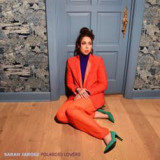
The seventh album from Sarah Jarosz finds the highly decorated songwriter at the apex of change. A Texas native, she’s spent most of her adult life living in New York City, but shortly before writing the album Jarosz left her adopted home to join her soon-to-be husband in Nashville, TN. The geographic shake-up led to a sonic one as well for Polaroid Lovers. For the first time in her career she opened herself up to collaborators, leading to writing sessions with Daniel Tashian, Ruston Kelly and Natalie Hemby. The creative reorganization of her writing process evolved to include a much richer and more electric sound in the studio and being in Nashville meant access to a world of hot shot players. She tapped guitarist Rob McNelley (Miranda Lambert, Carrie Underwood), Tom Bukovac (Tom Petty, Vince Gill) on guitar and organ, her husband- bassist Jeff Picker (Nickel Creek), and drummer Fred Eltringham (Sheryl Crow, Lucinda Williams) for the album recording. Tashian took the helm as producer and the whole album was laid down at the legendary Sound Emporium.
As it goes with all change, Jarosz’s major life events had her feeling contemplative. While sitting on the precipice of adulthood, Polaroid Lovers finds her reflecting on past loves, childhood dreams, the places she lived in and all the versions of herself that she’s been. Although the listener experiences the sonic shift forward, the album’s subject matter is a photo album of the past. Jarosz has never sounded more assured. Polaroid Lovers is filled with the kind of confidence that comes from hard won life experiences and the conviction of someone who truly knows herself.
Early Life Forms is a new quartet fronted by Belgian guitarist and sound wizard Vitja Pauwels, and on the 26th January, they are set to release their self-titled debut album via W.E.R.F. Records; a stunning, one-off live show recorded with American guitarist Marc Ribot (Robert Plant, Tom Waits, Wilson Pickett, Marianne Faithfull, The Black Keys, John Zorn).
Having already earned his spurs as a sideman with artists including Naïma Joris, Bombataz and Lara Rosseel, rising Belgian star Pauwels released his debut album 'Day at Half Speed' in 2019, which explored the possibilities of acoustic guitar and live electronics. This experiment became a new artistic path for Pauwels and showcased his musical versatility, with second album 'Drift By, Sink In', released to critical acclaim in 2022.
The same year, Pauwels was invited as special guest by the BRAND! Festival, Mechelen, to showcase new material and he came up with the idea of putting together his 'dream' live band which included his hero Marc Ribot, one of world's most accomplished and acclaimed guitar players. Reaching out to him via videos and early demos for this new recording project, Ribot liked what he heard and agreed to perform with Pauwels and his new project Early Life Forms in what would be the band's first ever live show.
Joined by Frederik Leroux (baritone guitar), Laurens Dierickx (Hammond organ) and Casper Van De Velde (drums), during the lead up to the festival, Pauwels wrote a number of songs he felt would work for the live show, with the only agreement being that there would be no rehearsals ahead of the performance, only a brief soundcheck beforehand with Ribot. The music was stripped down to its essentials - compelling melodies, themes, and clear forms but with the possibility to change direction at any given moment. "The music was played and heard for the first time, and it felt like a birth of something that needed to be alive. We felt connected in the right state of mind - relaxed and focused - and it all happened in a rush of shared energy. No ego's or fear, only connection and the music", states Pauwels.
Drawing on latin, jazz, cuban, and rock with a touch of exoticism and cinematic explorations, 'Early Life Forms' cites Ry Cooder, Henry Mancini, Los Lobos, Ennio Morricone and of course Ribot, as heavy influences. There is something existential, primary, something epic and at the same time youthfully uncomplicated, which is strongly associated with the music. From the mischievous and imaginative 'My Little Renaissance' to the adventurous and hypnotic 'Latin Dancer', 'Early Life Forms' is overflowing with sharp twists and turns, with Ribot's heavily rhythmic, distorted guitar amplifying the cinematic feel to the sound. The on-stage relationship between each member of the band and Ribot is childishly uncomplicated, something primary but always epic. The music is left to the moment and the magic of their first encounter with their hero Ribot. "Marc's commitment in the music was better than I could have hoped for. What he played was with 200% intention, putting the rest of us in a state of hyperfocus. Given the fact that it was a one-time thing and a recording, we took risks without 'overplaying' or overthinking it. Right before the gig, we felt an urge to play, Marc said, "Let's rock!!" and we hit the stage", says Pauwels.
The vinyl edition of Klein's 2022 album: »STAR IN THE HOOD« plays like a cracked, tarnished mirror of contemporary numbing music, replacing long-form expression with tighter, more explosive and sometimes completely freeform transmissions that will wake you up from your overly comfortable environmental music slumber. Opening with cycling ghost drones, dialog and piano motifs that blur into heartfelt noise, »black star« is all loping, looping piano and chthonic vocals spiked with cheese-grater noise and chipmunked chirps. It’s Klein’s delirious vocal runs that push the album to the next level though; like her style-defining »Lagata« and the Hyperdub-released »Tommy,« she subverts the raw material that makes up R&B, turning memorable hooks into blurry impressions that will glue to your mind like a diva moment on a Suburban Bass cut.
She keels into longform on »schooled,« fogging organ drones into hazed clouds that gust into imposing shapes over a 10-minute duration, rekindling the dialog between contemporary noise and gospel music. Grandiose classical sounds receive a similar treatment on ‘Friend in the Mirror’, pulled into disorienting shapes that dispel any notions of class gatekeeping; in the final third, Klein’s voice interrupts the mood, before machine-gun percussion reminds us not to get too comfortable. If yr in search of beauty, »postcode wars« finds Klein fuzzing euphoric chords into an afterparty woosh of half-heard voices and dribbling synths. She simultaneously channels rapture and wrath, poignantly torching the contemporary societal skeleton without losing her near-at-hand community in the process.
Midway through the album there’s a thematic pivot signalled by the brief »shorty alert,« a trilling mass of carnivalesque vocal quirks that sound like spiders spitting DMT into yr eardrums. From here, things get darker and more unsettling: there’s doomed subterranean ambience on »signed and delivered«, Disney-esque piano motifs, blown-out lo-fi outsider rawk on »Swerve,« and speaker garbling free eccentric soul on »brand new day,« each struck through with that unmistakable high-vs-low culture posturing. It all brings us to the album’s unsettling one-two punch of ‘haha hehe business’, maybe the foamiest track we’ve heard from her this year, and the zonked »winter« - a piece that’s as crystal clear as Klein gets, an unprocessed heartstring-tugging vocal performance over acoustic guitar twangs.
"Cross My Heart" is a tribute to the harmonica player and singer James Cotton, one of Boney Fields" heroes and companions on the road, is certainly the most representative track of this thrilling groove mood that authentic blues musicians know how to infuse. Boney Fields possesses that almost funk tone matured enough to tickle our ears and make us tap our feet. By revitalizing, for example, "The Thrill Is Gone" in the spirit of its original author (Roy Hawkins), Boney Fields perpetuates the tradition of spirited orchestras of yesteryears without compromising the modernity of its irresistible tempo. Much more personal than all his previous albums, "Just Give Me Some Mo" is also the expression of introspection, that of a man who remembers without drowning in dark nostalgia. He thinks of the courage of his mother bravely facing obstacles in an unequal America. "Back in the Day" is not a sad song. It makes one stronger and nurtures faith in the future. This melody is certainly the most touching of the six compositions written by Boney Fields. From "Control of you" to "Something" holding me" or "I know yes I Know" he invites us into his intimate biography, the story of a large family shaken by inevitable upheavals that must be faced, the destiny of a combative musician who resists adversity. Boney Fields chose to let his soul speak. This effort of truth had to be supported by the artistic direction of a master. By enlisting Sebastian Danchin for the production of this album, Boney Fields turns to a historian of African-American culture whose keen ear has already won over Little Milton, Mighty Mo Rodgers, Toni Green, and Jean-Jacques Milteau, among others... Their exchanges uncovered a perfect understanding of "Chicago Blues" the brassy vigor of which they experienced firsthand 40 years ago. Surrounding oneself with the right people is quite a challenge. Fortunately, Boney Fields knows how to spot true talents. He was convinced that the Senegalese guitarist Hervé Samb would also be a good musical director. Hadn"t he been the first to highlight the expressive power of this luminous composer and arranger? The enduring vitality of the blues, when narrated with precision and insight, always manages to find its legitimacy. The months of reflection, of questioning, will not have been in vain. They have given substance and depth to this thrilling record which, we wager, will be a milestone. Boney Fields has waited long enough. Does he want more? We will give him more! "Just Give Me Some Mo" will now be a shared leitmotif, that of an insatiable conductor and that of enlightened admirers.
REISSUE ** Black Vinyl ** 500 Copies // The AK47's or the Tottenham AK47's formed in the late 80's / early 90's in North London. They turned up on the London squatting gig scene fully formed and ready to go, fusing punk, ska and reggae with a strong and simple political, socio-anarchist message. The band were instantly popular in London and sat very much next to Radical Dance Faction, Back to the Planet and Culture Shock. Their one and only release was the album "Don't call me Vanilla" which was originally released in 1991 by Rugger Bugger Discs. The album was recorded and produced at The Refuge studio in Reading by Jim Warren. Built around a solid dub-punk backdrop with some atmospheric flute squalls and FX's weaving in and out of the mix while lyrically remaining true to their anarcho roots. Over the years the album's legacy has grown and yet has never been reissued. Finally 32 years after its release the band, Sean from Rugger Bugger and Not Lost reissue this gem in an exact replica. No coloured vinyl - just black vinyl with the same Lyric Insert. This reissue has been remastered from the original tapes.
Here it finally is, the first ever official reissue of all recorded material by Zyklome A, and as a bonus one unreleased track plus unreleased live recordings! One of Belgium’s earliest and most primitive hardcore punk bands’ legendary ‘Made In Belgium’ LP has been one of the rarest artifacts in the genre, and although it was bootlegged many times, the reason why an official reissue on vinyl has never been published is complicated. Zyklome A’s story starts in the middle of nowhere: in Bonheiden in early 1980, above a bank office. Brothers Bie and Toon Puttemans started shredding and terrorizing ears and minds with Markus Verbeeck, without any knowledge of anything close to a scene or other people doing what they were doing. Completely isolated, they were struck by lightning with the genius idea of speeding up punk, playing Ramones chords backwards and letting the bank office’s fire alarm go off with their wall of noise. When drummer Bie got to hear other hardcore records through a school mate, he was baffled to hear there were other folks out there doing what they were doing as well. After a fire alarm and family drama too many, the trio moved to a tiny shed in the garden of the Verbeeck family to refine their special blend of primal hardcore. The rest is history! For just 5 years they became one of Belgium’s most active HC bands, befriending many other classic main stays such as The Dirty Scums, Moral Demolition, Vortex, Wulpse Varkens etc., creating pits everywhere, and turning many a nazi skin’s skulls into pulp! When guitarist Toon “forgot” to fulfil his army service, he had to flee Belgium, and as the police harassed the other band members constantly about this, it became next to impossible to maintain Zyklome A. Zyklome A morphed into Ear Damage, with different members. In a later, army free future, a reunion of Zyklome A was not possible due to Toon’s heroin problem. It is strange, and sad to say, that the cards played differently when Toon passed away. Zyklome A played 2 reunion gigs in 2016 with guitarist Pieter Coolen (of Toxic Shock fame) before Markus’ severe back pain sadly also led to his passing. This record is dedicated to Toon and Markus, whose spirits live on through their incredible music. You will find the entire first album plus an extra LP with their part of the split single Moral Demolition, their tracks of the ‘Alle 24 Goed’ compilation LP, their tracks of the ’Second Time Around’ compilation cassette, an unreleased track and a live recording at the height of their game from 1984 in Deventer (which includes covers such as ’These Boots Are Made For Walking’ and ‘Rock ’n Roll Rebel’) and a 76 page book filled with tons of archive material such as flyers, lyrics, drawings, pictures and a lengthy interview with Bie Puttemans on this most possibly last Ultra Eczema release, Zyklome A’s ‘Uitgesproken (1980-1985)’.
Luigi Madonna's record label, Contempo welcomes a raw and hypnotic techno EP from Backbone.
Backbone is a Portuguese producer who has been turning heads with his driving style of techno with trippy
sounds and fast-paced rhythms.
He has previously featured on labels such as Ed Davenport's Counterchange and Nastia's NECHTO Records.
Contempo is a record label that Luigi Madonna has set up to express the underground side of his tastes,
and along with his own music the imprint's catalogue also includes tracks and remixes by the likes of Alarico, Manuel Di Martino and Lobster.
"Ceasefire" opens the release with its slamming percussion and modulating synth line, before "Twiddly Phases" takes control with hallucinogenic atmospherics that create ominous intensity.
"Just a Sunny Day" is third on the release, and it's got a warped bassline layered with muffled vocals and a pounding kick drum.
"Ciphered Realities" is a stripped-back track with eerie tension and fluttering melodies, then "Wanksta Yard" closes the release with breakbeat rhythms and a menacing bassline.
Two sublime unreleased scores from Basil Kirchin. Need we say more.
So here we are. The next Trunk / Kirchin assignment. Basically some more unreleased music from the unpredictable and slightly chaotic Kirchin Tape Archive.
Very Limited Black Vinyl.
These tapes were labelled up as follows:
Assignment K (with lots of pencil scribbles everywhere). The Strange Affair (with lots of pen scribbles everywhere).
As usual with Basil tapes / things there is little else to go on, no tracklist, no list of musicians, no singer names, no dates or anything. I have actually tried to establish the name of the singer on the song from Side One (we have called it “Love Is To Walk Away “ as it is unnamed) but having played it to a handful of knowledgeable collectors and enthusiasts who I would count as experts in this field, no one has a clue who it might be. If you think you know please get in touch. We know who it isn’t.
We can tell you that Assignment K dates from 1968, was a film about a toy maker who has a double life as an international spy. It was directed by Val Guest, who’d just finished trying to rescue the cinematic hotchpotch that was Casino Royale - he had been brought in by the Bond producers after Peter Sellers had walked off the movie. We imagine Assignment K may have been a slightly less stressful few months of shooting. As for the Kirchin score that we have here, we can tell you very little indeed, apart from the fact that the bass player was Ron Prentice (an ex blacksmith turned musician and craftsman) who worked on several Bond scores, but we know little else. And we only know this because it says so in the academic tome “Jazz On The Screen” by David Meeker.
The Strange Affair is also from 1968, and was not only controversial but also a reasonably unsuccessful movie. Directed by David Greene who also directed, amongst other films, I Start Counting and the quite brilliant Sebastian. In this rather grubby flick a policeman called Peter Strange (played by Michael York) falls for an underage girl (played by Susan George), finds himself compromised by a pair of pornographers and gets lured into an errand for a smack gang. We can tell you little else because I have no more information about it all.
But we do know that this music has all the classic Kirchin mid-period sonic hallmarks that have always set him apart.
Few bands have burst quite so brilliantly onto the scene as Clap Your Hands Say Yeah. Fewer still can say their debut album defined a scene, a time, and marked a paradigm shift in the music industry. But the then five-piece, fronted by the enigmatic Alec Ounsworth, managed all this and more; no wonder their self-titled record is still considered one the finest, and most influential, indie releases of the 2000s.A heady blend of left-field pop and melodic, exuberant indie rock, the record repurposed a number of classic new wave references for a new generation of music fans. Fun-loving and quirky, the band achieved that rare alchemy - synthesising a dizzying array of styles and influences into something wholly their own. And that something was utterly glorious, full of buzzing synths, trebly guitars, bustling drums, and lilting, wailing vocals. The record's raw, ramshackle sound was an integral part of its appeal; time has merely magnified that charm. In `The Skin Of My Yellow Country Teeth' and `Upon This Tidal Wave Of Young Blood' Ounsworth wrote two of the most uplifting, celebratory tracks of this millennium, obvious highlights on an album of consistent excellence, and one rightly lauded for re-writing the rules of what indie bands could be.
- A1: Turn Of The Century
- A2: Holiday
- A3: Red Chair Fade Away
- A4: One Minute Woman
- A5: In My Own Time
- A6: Every Christian Lion Hearted Man Will Show You
- A7: Craise Finton Kirk Roval Academy Of Arts
- B1: New York Mining Disaster 1941
- B2: Cucumber Castle
- B3: To Love Somebody
- B4: I Close My Eyes
- B5: I Can't See Nobody
- B6: Please Read Me
- B7: Close Another Door
The group takes a psychedelic turn, adding lush orchestral arrangements to the group’s tight harmonies and narrative lyrics. The album was recorded at the famed IBC Studios in London. Barry Gibb commented that their recording process was one of impromptu creativity, in which they’d “think up a subject, then write a song on the spot.” The instrumental parts were added later, adding a fullness to the songs. For instance, ‘Bee Gee’s 1st’ opens with strains of oboe and harpsichord on the whimsical “Turn of the Century,” while “Every Christian Lion Hearted Man Will Show You” begins with dark Gregorian chants.
Amazing floaty modern soul / disco goodness out of late 70s Queens, NY. 'Love Is The Same' two brilliant and different versions, both dancefloor fire…
Mark Beiner met Ben Iverson in 1976 when I was 17 years old, at the time he was a junior at Newtown High School in Elmhurst, Queens. Mark had taken a part time job as a Produce Clerk at Walbaum's Supermarket on Northern Boulevard in Jackson Heights, Queens, where I met Ben Iverson, the "Frozen Food Manager."
Back then Mark remembers, 'I was going to work early just to talk to him about his musical background and his time spent in the 50's and 60's with the Ohio Doo Wop Group, "The Hornets", or better known as, "Ben Iverson and The Hornets."'
In 1978 after Ben and I discussed getting together and composing music, I started writing poetry and expressing in writing my break-up with my college girlfriend, Paula. Ben and Mark went on to writing two albums worth of material, which in turn gave us a lot of time and presence on stage at our live gigs.
The regular Coast to Coast Band members consisted of Ben Iverson on Lead Vocals, Rhythm Guitarist and Co-Executive Producer, Joe Crowley, who is known today as "New York Congressman Joe Crowley." Carl (Woody Wood) Morton on Bass Guitar, Jimmy Johnson on Keyboards. Lead Guitarist, Lou Jimenez, currently owns his own recording studio, Music Labs in Elmont, Long Island. On Drums, Eddie Byam, on Alto Sax, Jay Cohen, who in the 70's used to record for "Gary U.S. Bonds." Gary Pevols on Trumpet. On Bone, Scott Burrows, Trumpet player, Steve Becker, along side Neil Levine, Stan Stockley, Tom Russo.
The concept of naught (Ø) has challenged Salvatore Mercatante throughout his musical career, specifically, trying to understand how the idea of ‘nothing’ fits into the realm of sound, and at the same time, exist in a world of influence at every turn. In the absence of everything, are we able to create something truly free?
As a lifelong New York-based musician, Mercatante’s influences and productions run a wide spectrum. Just as happy producing 80s-inspired horror soundtracks as he is refining acute drum patterns over and over again, Salvatore is the first to ask himself, where next? When a musician’s output can be influenced today by so much, and there is no self-defined or perceived artistic goal in mind, how do you start from a place of nothingness, again and again?
This approach has born many minimal and experimental albums of note in the past, but with Ø, Salvatore ended up with an almost controlled maximalist approach. Beginning with open spaces and allowing sonic textures to live and evolve past where you may expect, Ø allows the space between notes to become equally as important as the notes themselves. Walls of noise, soaring soundtracks, dense techno, glittering IDM, and minimal glitch, sit side-by-side to present an all-encompassing palette of sonic possibility.
Often, even without any intent, what can be born from nothing will somehow transpire back into something more recognizable. It’s human nature after all. A subtle fingerprint, as a sequence, melody, pattern, or drum kick. Whether Salvatore intended for this record to represent his defining sound or not, only time will tell.
Mastered by Giuseppe Tillieci @Enisslab, Rome, Italy.
Artwork by Brandon Locher
Written and produced by Salvatore Mercatante
- A1: Please Come Out
- A2: Wicked
- B1: Working With
- IB2: N My Head
- C1: Got Your Money
- C2: Didn't You Know
- D1: Two-Door
- E1: Memory Lane
- E2: Good Girls And Boys
- F1: All I Want From You
- F2: Don't Sell Rock
- G1: What Yours
- G2: Tweets
- H1: You Check
- H2: Hero Forever
- I1: Don't Pick Up
- I2: You Don't Know Me Anymore
- J1: Tenderly With You
- J2: Now Let's Wait
Sasu Ripatti's complete "Dancefloor Classics" series. Music for imaginary dancefloors, released on Ripatti's own label Rajaton.
”Look up, into the light” she said, while the camera shutter clicked. ”Like this? Does it look holy?” His neck felt stiff. Her reply: ”Yes, just like that. What do you mean holy? Like religious? ”No, more like trying to look very far, somewhere beyond what we can see.” ”Okay, stand still, I’m going to come close to you now. The light hits your face great.” click, click, click.
He noticed her fingernails. They were not polished. Natural. Even somewhat rugged, as if something wore out the fingers slightly. What had these hands held besides the camera? What made the edges of her fingernails drift off?
He thought it’s weird to look straight into the camera. The photographer had closed her left eye, the one not looking into the lens. Then it opened, she looked up, perusing the surroundings, then she closed her eye again, then looked up, closed, looking up, very quickly. It all seemed very professional. Maybe she calculated the light, making sure it’s close to perfect. ”What will these photos look like?” – the thought popped into his head briefly. It was liberating to think it wouldn’t matter.
”What’s that song playing?” he asked. ”Wait a sec, Ol’ Dirty Bastard?” she replied. ”Oh yeah, right. But the sample?” ”Hey, could you look up again, like that. No, lower.”
New directions: ”Look out from the window, turn left.” ”My left or yours?” ”Yours, I always try to think from the direction of my model.” How professional! This is a good shoot, so natural. Should I worry about how the photos look like? No, I don’t want to. His thoughts bounced around. What would the story be like? It’s a big newspaper, everyone will read it. Maybe someone drinks coffee and eats a stroopwafel while they do it. Will they place the waffle on top of the mug for a brief while, so that it gets hot and the syrup melts a little? Then it feels wet, and you can bend the cookie.
She broke his train of thought off midway through: ”Now turn right, but look left, and slightly up, but don’t turn your face right.” ”Umm, like this? Sounds like a set of pilates instructions.” she laughed ”You do pilates?” ”Yeah, it’s hard sometimes. Have you tried?” ”No”, she said. ”I’m not good for sports that are done in groups.” ”Yeah, but in pilates you can just be inside your mind, drowning in your private thoughts.”
”What are you thinking in pilates?” she asked, taking more photos. ”Well, mostly just which way is right. And which left.” click, click.
Q&A with Sasu Ripatti:
1) Tell us something about the EP series ”Dancefloor Classics”, what’s the idea and what can we expect?
I’ve been slowly writing these sort of dance music pieces and finally curated them together for a conceptual release. I like to create music for a dancefloor that exists only in my imagination and doesn’t try to suck up to the standardized reality.
2) Your vinyl format is 10” which is quite special (as opposed to LP / 12”). Why did you choose it?
It’s my favourite format, absolutely. The size is perfect, and you can make it sound really good @ 45 rpm. And you still can make great artwork.
3) You seem interested in sampling/repurposing, what does it mean to you as an artist to approach something already existing from a new angle? How does the source material inform you about the approach to take?
I guess i could flip it around and just say I’ve outgrown synths or electronic sounds to a great extend, and having gotten rid off all my synths already good while ago I’ve used samples as my main source material a lot. It’s obvious on this series that i’ve sampled existing music, but I also sample instruments and things in the studio and resample my own library that I have built over the years, it’s quite large. To me the end result matters, not so much how I get there. Once I have something on my keyboard and play around, it’s all an instrument, though with sampling other music it becomes a really interesting and complex one as you’re possibly playing rhythm, but also harmonic content and maybe hooks or whatever, all at once.
I never sample premeditadedly, like listening to records and looking for that mindblowing 3 sec part. I just throw the cards in the air and see what lands where, just full intuition and hopefully zero mind involved, playing tons of stuff, trying things, just recording hours of stuff. Then comes the interesting part to listen to hours of mostly crazy stuff and finding that mindblowing 3 sec part.
4) What is your relationship with the dancefloor (conceptually and/or in experiences / as a performer)?
Very complicated. I have never really felt comfortable on a dancefloor but have always wanted to. There’s something in club music, in theory, that really speaks to me. It has never really materialized for me – speaking mainly from a performer’s point of view who goes to check on a dancefloor for a moment after a concert. I never have DJ’d or felt much interest towards it. But again, I love the idea and concept of DJing. As well as producing music for imaginary DJs. Lately, as in the past 10+ years, I haven’t even performed in any sort of club spaces. So my relationship to the dancefloor is quite removed and reduced, but there’s quite a bit of passion and interest left.
All tracks composed and produced by Sasu Ripatti.
Artwork & photography by Marc Hohmann.
Mastering by Stephan Mathieu for Schwebung Mastering.
Vinyl cut by SST Brueggemann.
Publishing by WARP Music Ltd.
Good things take time. What’s 17 years? Not even a quarter of Keith Richards! 17 years lay between Heiko Voss’ debut album “Call Me Killer” and the incredible follow-up “3:30 Minutes To Live”, which saw the light of day in 2022 on Michael Mayer’s “other label” IMARA. There are serious voices saying that the 80s were only really complete with the release of this album. Now it took the blink of an eye of a year for the remixes to be finished. And they turned out so well that Michael Mayer from KOMPAKT licensed the “3 Remixes for Heiko Voss” without further ado.
Running back guru GERD JANSON was an early adopter of the album. Highly motivated, he twirls “Follow Your Line” rhythmically somehow in the direction of Kate Bush’s “Running Up That Hill”. How did he do that? Never mind. It grooves like crazy and keeps even larger floors moving.
ADA, the Hamburg grand dame of techno pop, has taken on the in tongue speaking funk banger “Talking Man” and dipped it in fairy dust. The result is probably the most sensational, soulful club track ever. Honestly.
The package is rounded off with a powerful Dub Version of “Follow Your Line” by the IMARA and KOMPAKT boss himself. Because he can do it.
Open your heart, let the remixes in.
Gut Ding will Weile haben. Was sind schon 17 Jahre? Nicht mal ein Viertel Keith Richards! 17 Jahre lagen zwischen Heiko Voss’ Debutalbum “Call Me Killer” und dem unglaublichen Nachfolger “3:30 Minutes To Live”, der 2022 auf Michael Mayers “anderem Label” IMARA das Licht derWelt erblickte. Es gibt ernstzunehmende Stimmen, die besagen, dass die 80er Jahre eigentlich erst mit der Veröffentlichung dieses Albums vollendet waren. Nun hat es einen kurzen Wimpernschlag von einem Jahr gedauert, bis die Remixe fertig waren. Und die sind so gut geworden, dass Michael Mayer von KOMPAKT die “3 Remixe für Heiko Voss” kurzerhand lizenziert hat.
Ein “early adopter” des Albums war Running Back Obermotz GERD JANSON. Top motiviert zwirbelt er “Follow Your Line” rhythmisch irgendwie in Richtung Kate Bush’s “Running Up That Hill”. Wie hat er das nur gemacht? Egal. Es groovt wie Bolle und hält auch größere Floors in Bewegung.
ADA, die Hamburger Grand Dame des Techno Pop hat sich des in Zungen sprechenden Funk Kloppers “Talking Man” angenommen und ihn ordentlich in Feenstaub getunkt. Dabei entstand der wohl sensationellste, soulfulste Club Track ever. Ehrlich.
Abgerundet wird das Paket mit einer kräftigen Dub Version von “Follow Your Line” vom IMARA bzw. KOMPAKT Boss selbst. Weil er’s kann.
Herzklappen auf, Remixe rein.
- A1: Brian Bennett – Image 4 29
- A2: Neil Richardson – The Little Orphan 2 27
- A3: David Gold / Gordon Rees – Paradise Island 2 19
- A4: David Gold / Gordon Rees – Forbidden Fruit 2 19
- A5: David Gold / Gordon Rees – The Enchantress 2 56
- A6: David Gold – Phenomena 2 41
- B1: John Scott – Infinite Expanse 1 46
- B2: John Scott – Static Objects 2 31
- B3: John Fiddy – Metamorphosis 2 37
- B4: Neil Richardson – Cubist Pictures 2 12
- B5: Neil Richardson – Analysis 2 04
- B6: Neil Richardson – Crystal Ball 2 38
- B7: Steve Gray – Gliding Through Clouds 2 55
Impossible to find in the wild, KPM's Image is exactly that; this record paints extraordinary, hyper-vivid scenes with music, in the way only the library greats can. Originally released in 1974, Image is an absolutely stunning listen from start to finish, and arguably the most wanted KPM grail that's still not been reissued - until now! Just too good…
Worth the price of admission alone, and likely the reason you're all already drooling about this release, the mellow, dramatic beat of "Image", Brian Bennett's opener and title track, is a Jaylib-sampled firecracker. A reflective, scenic underscore which grows to full orchestra and ends as it begins - it's just beautiful. Next up, swoon to "The Little Orphan" by Neil Richardson featuring strings and harp. It's a deeply emotive, sweeping orchestral piece. Just straight gorgeous. It's followed by "Paradise Island", a lush, horizontal Balearic gem courtesy of Gordon Rees and David Gold; it'll send you into a blissful reverie with its elegant strings and gentle drums. From the same pair, "Forbidden Fruit" is, again, string-drenched but the strings are more insistent, stabbing even, and, with drums and Blaxploitation guitars high up in the mix, it's definitely a funkier proposition. "The Enchantress", again a Rees-Gold special, is a slower, groovy, synthy wonder. Closing out the A-Side, "Phenomena" is a mysterious gem, a Gold solo effort set at a breezier tempo with propulsive percussion and head nod, fast-paced breaks with ace keys.
Flip over for "Infinite Expanse", John Scott's dramatic panorama adorned with proud, triumphant horns. Scott's "Static Objects" paints patient, pastoral scenes; there's a serenity and stillness to the proceedings. Next up, Be With favourite John Fiddy delivers shifting shapes and patterns with his wonderful "Metamorphosis", all wah wah, harps, dramatic percussion and strings. It's by turns billowy and blasting. "Cubist Pictures" follows, Neil Richardson's brilliant nebulous, fragmentary piece. Better yet, Richardson's gorgeous, beatless "Analysis" follows, and it's an orchestral beauty featuring cello, harps and woodwind. It's no exaggeration to describe this as transcendental. His "Crystal Ball" presents more static scenes with cello, twinkling percussion and strings, before Steve Gray's fantastically-titled softly-ace "Gliding Through Clouds" closes out this remarkable set.
As with all of our KPM re-issues, the audio for Image comes from the original analogue tapes and has been remastered for vinyl by Be With regular Simon Francis. And as usual, the sleeve reproduction duties were handed over to Richard Robinson, the current custodian of KPM’s brand identity.
When it comes to wild men of rock, they didn’t come any wilder than Newcastle’s Animals and their larger-than-life frontman Eric Burdon. His distinctive rasp was instrumental in taking the group to the top of the transatlantic charts; 1964’s ‘House Of The Rising Sun’ . followed by ‘I’m Crying’, and covers of Nina Simone’s ‘Don’t Let Me Be Misunderstood’, Sam Cooke’s ‘Bring It On Home To Me’, and Mann & Weil’s ‘We Gotta Get Out Of This Place’.
Despite splitting from his four bandmates in late 1966 and relocating to the USA, Eric retained the group name and put together a different line-up. These New Animals, turned in some searing Acid-Rock in the shape of ‘Spill The Wine’ and ‘San Franciscan Nights’, the latter a paean to Burdon’s adopted home that made the Top Ten Charts on both sides of the Atlantic.
The Vampisoul chicas are back. And for the third time. And, although collectors and connoisseurs have never stopped playing the songs by these Spanish female singers, here they are again, sounding as vibrant as they did half a century ago. Because these children of their times, the musical decades of the 60s and 70s covered by this compilation, boldly ventured into the limited spaces of freedom open to female artists back then. And they did so with attitude, in search of the right repertoire, proudly presenting new, daring personal projects often breaking away from the demure tone adopted by mainstream local female singers. And they were canny about it too. Realizing that the censors working back would just listen to the song that the record company flagged up as the listening target on the A side and not bother to flip the single over, they recorded many of their racier songs on the B side. That exciting dark side of singles, which have long tempted collectors. Lacking the freedom and visibility enjoyed today, these daring records by these female singers went as far as they could and a few managed to go beyond. The songs on this compilation tell everyday stories, narrating small socio-musical conquests revolving round the enduring theme of young love. Sass, sex, boy-girl rivalry, the defense of liberating women's fashion and, saying what women think loud and clear, all characterize these grooves. Performed in a variety of musical styles ranging from ye-yé, twist, disco, beat, popcorn, flamenco pop to Northern Soul, and, even more surprisingly, sung in an everyday, natural and self-assured tone that must have ruffled some feathers. As in previous volumes of "¡Chicas!", this third compilation includes female singers from outside Spain but whose career, their decision to sing in Spanish or their long tours and local stays, and occasionally permanent residence, meant their albums were created, recorded or produced here in Spain. It's a winning proposition for everyone. Take the band Los Bravos, four of the singers that passed through the ranks of this quintessentially Spanish group were foreigners. It's part of our open-door policy. Spain is different. In every sense. But let's get down to the serious stuff and the ritual: vinyl on the turntable and needle poised ready to play. Third volume of Vampis' ¡Chicas! series, an irresistible collection of ye-yé, twist, disco, beat, popcorn, flamenco pop and even Northern Soul! From the early 60s and in the middle of a difficult political and social context, Spanish female singers - and those who moved to Spain - disregarded conventions and overcame all barriers to be part of a music movement that shook the Spanish society of the period. Many of the 24 tracks are reissued for the first time, including very hard-to-find records. It includes extensive notes by Vicente Fabuel featuring all the original record sleeves and artist photos.
- A1: ドロボウ兄弟登場 The Thief Brothers Appear Kohei Tanaka
- A2: サンジ大ピンチ! Sanji's In A Big Pinch! Kohei Tanaka
- A3: 恐怖のキング砲 Terror Of The King Cannon Kohei Tanaka
- A4: ボロードの告白 Boroodo's Confession Kohei Tanaka
- A5: 怒りのベアキング Bear King's Rage Kohei Tanaka
- A6: 気迫の剣士ゾロ Spirited Swordsman Zoro Kohei Tanaka
- A7: 命かけなきゃ! Bet Your Life On It! Kohei Tanaka
- A8: 母、そして旅立ち Mother, Then Setting Off Kohei Tanaka
- A9: バトラー一味登場! Butler And His Henchman Appear! Kohei Tanaka
- A10: 迫りくる敵? An Enemy Is Coming! Kohei Tanaka
- A11: サンジVsヘビー Sanji Vs Snake Kohei Tanaka
- B1: 大ゲンカ! Big Fight! Shiro Hamaguchi
- B2: 激闘!ゾロ&サンジ Fierce Battle! Zoro & Sanji Shiro Hamaguchi
- B3: シュライヤVsニードルズ Shuraiya Vs Needles Shiro Hamaguchi
- B4: ゴーイングメリー号、飛ぶ!! Going Merry, Fly! Shiro Hamaguchi
- B5: ガスパーデの能力 Gasparde's Power Kohei Tanaka
- B6: シュライヤの過去 Shuraiya's Past Kohei Tanaka
- B7: 生きていればこそ As Long As You're Alive Kohei Tanaka
- B8: ルフィ登場! Luffy Appears! Shiro Hamaguchi
- B9: 雄叫ぶ海軍剣士 The Marine Swordsman's Battle Cry Shiro Hamaguchi
- B10: 行動開始! Action Starts Shiro Hamaguchi
- B11 3: つの塔 Three Towers Shiro Hamaguchi
- B12: ルフィ猛攻! Luffy's Fierce Attack Shiro Hamaguchi
- B13: リゾートアイランド? Resort Island Kohei Tanaka
- B16: 思いだけじゃ届かない… Thoughts Don't Reach Far Enough Kohei Tanaka
- C1: カラクリ防衛システム、起動! Karakuri Defense System, Activate! Yasunori Iwasaki
- C2: カラクリ防衛システム、発動! Karakuri Defense System, Deploy! Yasunori Iwasaki
- C3: とんでもないものが目覚める! Something Terrible Awakens! Kohei Tanaka
- C4: 目覚めた!! It Awakens! Kohei Tanaka
- C5: 母の想い A Mother's Love Kohei Tanaka
- C6: 金の冠はある! The Golden Crown Exists! Kohei Tanaka
- C7: ラチェットの野望 Ratchet's Ambition Yasunori Iwasaki
- C8: カラリ城、変形! Karakuri Castle, Transform! Yasunori Iwasaki
- C9: 麦わら海賊団、反撃開始! Straw Hat Pirates, Begin Counterattack! Kohei Tanaka
- C10: 巨大要塞、発進!! Giant Stronghold, Takeoff!! Yasunori Iwasaki
- C11: カラクリに気をつけろ! Karakuri On Guard! Kohei Tanaka
- C12: ルフィVsラチェット Round1 Luffy Versus Ratchet Round 1 Yasunori Iwasaki
- C13: ゾロVsマジ将軍 Zoro Versus General Maji Yasunori Iwasaki
- C14: サンジVsホンキ大佐 Sanji Versus Captain Honki Yasunori Iwasaki
- C15: ルフィVsラチェット Round2 Luffy Versus Ratchet Round 2 Yasunori Iwasaki
- D1: おれはお前を越えていく!!! I Will Surpass You!!! Kohei Tanaka
- D2: 黒ひげ海賊団の猛襲 Conviction Of The Blackbeard Pirates Kohei Tanaka
- D3: うるせェ!!!いこう!!!! Shut Up!!! Let's Go!!!! Kohei Tanaka
- D4: ダフトグリーン ~悲劇とその理由~ Daft Green ~Cause Of Tragedy~ Kohei Tanaka
- D5: 集結 ~絶望の前の希望~ Gathering ~Last Desperate Hope~ Shiro Hamaguchi
- D6: 作戦開始 ~襲われる村~ The Operation Begins ~The Village Is Destroyed~ Kohei Tanaka
- D7: 迫り来る巨大生物 ~それでなくても大変なのに~ Terror Of The Giant Animals ~Things Were Already Bad!~ Shiro Hamaguchi
- D8: サンジ 風脚 ~これがイーストブルーの恋の味~ Sanji's Leg Of Wind ~This Is A Taste Of East Blue Love~ Shiro Hamaguchi
- D9: 最後の戦い ~渾身の巨人の雷斧(ギガント・トールアックス)~ The Final Battle ~Gigant Thor Axe~ Shiro Hamaguchi
- D10: 勝利の雄叫び ~島は海へ 人は空へ~ Song Of Triumph ~The Islands Fall To The Sea, The People Fly To The Sky~ Shiro Hamaguchi
- B14: 沈む… Sinking... Kohei Tanaka
- B15: 気をつけろ Be Careful Kohei Tanaka
New World[40,29 €]
Immerse yourself in the musical universe of ONE PIECE MOVIES - BEST SELECTION! Enjoy over 70 minutes of music from the One Piece films for the first time on vinyl, taking you on a journey through the adventures of the famous Straw Hat crew.
Fully licensed.
Luffy, a mischievous boy, dreams of becoming the king of the pirates by finding the "One Piece", a fabulous and mysterious treasure. But, inadvertently, Luffy one day swallowed a "magical devil fruit" that turned him into a rubber man. Since then, he is able to contort his elastic body in all directions, but he has lost the ability to swim, the height for a pirate! Over the course of ever more incredible adventures and chance encounters, Luffy will gradually compose his crew and multiply friendships with the peoples he discovers, while facing formidable enemies.
Kohei Tanaka worked on the composition and arrangement of this album.
Black Vinyl[45,34 €]
- New repress Edition - Pressed on Metallic Silver Wax - LP housed in an expanded gatefold jacket - Includes lyric insert and repro archival newspaper fold-out // Reissue of the pioneering group's debut album First Issue. In 1976 Johnny Rotten and the Sex Pistols set the agenda for punk's year zero with 'Anarchy In The UK', a song that summed up the spirit, sound and attitude of the band in one shocking package. Two years later, the Sex Pistols were in tatters, but Rotten was as unsentimental as you'd hope. He reverted to his real name - John Lydon - and set about forming a band whose very identity kicked against press and media manipulation. Featuring bassist Jah Wobble, drummer Jim Walker and guitarist Keith Levene, his new group were Public Image Limited. The public image would be limited. PiL were a very distinct prospect from the Pistols, founded with a greater thought for rhythm, and with a sound that turned the page from snarling punk to a more experimental sound fusing rock, dance, folk, ballet, pop and dub. But that's not to say Lydon's new outfit lacked vitriol. 'Public Image' hits out against the notorious British tabloid press, who never gave Lydon an easy ride, and against his own Sex Pistols public image - "You only saw me for the clothes I wore". The debut single (and the album that followed) operated as a theme song and a manifesto: "_my entrance/My own creation/My grand finale/My goodbye," as the lyrics had it. It is, essentially, the sound of four people letting loose in a studio - and not caring what anyone else thought.


