Limited Whirlpool Blue Vinyl! Auckland, New Zealand post-punk group Guardian Singles return to Trouble In Mind for their follow-up to 2021's debut with "Feed Me To The Doves", a ten-track socio-political burner addressing our collective spiritual chaos that pulls influence from across the history of punk & permeates it into something decidedly Aotearoan & uniquely their own in ways that are both personal & universal. "Feed Me To The Doves" is the first album to feature the current, long-standing lineup of Thom Burton (guitar, vocals), Fiona Campbell (drums), Yolanda Fagan (bass), and Durham Fenwick (lead guitar). The band has been playing live together now for a few years & it shows. The songs herein vary from the deeply personal, to sketches or postcards, as Burton says "_scribbled while watching the dregs of a delirious culture war play out through broken smartphones and praline vape clouds." Expertly recorded at Neil Finn's Roundhead Studios in Auckland by engineer Steven Marr, who Burton says had a "great sense of being able to keep the urgency of the songs while adding lushness and keeping things sounding like they're about to break at any second". Marr helped turn the album's scrappy beginnings into something more cohesive and beautiful.
Search:turn me up
She’s out of this world…
Maltese musician & producer Joon’s galactic debut arrives on our shores fully formed a decade after she first set sail. 12 cuts of uniquely addictive Synthesized Pop twist & turn on the rocky waters of life.
Her story begins after a life-changing car crash on the streets of Malta many moons ago. She was lucky to walk away in one piece. “That car crash was a wake-up call,” she says. “It made me realize how precious life is & I started living the life I felt was worth living.” Inspired to finally pursue her love of music full time, she began collecting instruments. Starting with a Stylophone& a vintage rhythm box, she started documenting ideas. Returning home to Malta after a few years in London, she only met one other woman making electronic music on the island. Driven by the desire to make music possible & accessible for the next generation, Joon co-founded the Malta Sound Women’s Network.
Ten years later, she sends us messages in a bottle from across the Mediterranean Sea. Armed with a Moog & her ethereal voice, she transmits hope & joy from a bedroom somewhere between Sicily & North Africa. Her music is right at home alongside outsider pioneers like Fever Ray, Grimes, Laurie Anderson & Molly Nilsson. Dream Again glides across heavy rhythms & eclectic electro. Telling stories of alienation with a throbbing heartbeat & space-age melodies, she lets us into her ultra-vivid world where anything is possible. Produced by Johnny Jewel, the album shines bright like comet orbiting the label’s dark sky, a much-needed vision of light on the horizon.
“Even if I’m sad or heartbroken, I remain optimistic. I want to grow old with no regrets.”
It’s time to Dream Again…
Light in the Attic Records is proud to present the next installment of the Nancy Sinatra Archival Series with the first ever reissue of the classic 1972 album Nancy & Lee Again. Recorded during a 1972 reunion between Nancy and the enigmatic Hazlewood, the album contains some of the pair's most enduring and ambitious duets including the epic "Arkansas Coal (Suite)," the sensual "Paris Summer" and the incredibly powerful Dolly Parton-penned "Down From Dover." Equal parts daring, psychedelic, cinematic, and sweet, Nancy & Lee Again reveals with each track a timeless, natural chemistry between two artists who would remain influential for generations to come. Nancy & Lee Again is available in a variety of formats, including vinyl and CD. The vinyl LP is presented in an expanded gatefold jacket and is accompanied by a 20-page booklet, featuring an array of photos from the legendary singer, actress, and activist's personal collection, as well as in-depth Q&A with Nancy Sinatra, conducted by the reissue's GRAMMYr-nominated co-producer, Hunter Lea (also available in the CD package). All formats have been beautifully designed by Darryl Norsen of D. Norsen Design, and include two bonus tracks, "Machine Gun Kelly" (first time on vinyl) and the previously unreleased "Think I'm Coming Down." Nancy, the eldest daughter of Frank Sinatra, had been working with the Oklahoma-born songwriter since 1965, when she topped the pop charts with "These Boots Are Made For Walkin'." Over the next five years, the two artists forged a prolific relationship in the studio, with Hazlewood writing and producing many of Nancy's solo hits. Soon, the duo found success with a series of duets, including "Sand," "Summer Wine," and "Some Velvet Morning" - all of which appeared on their highly-influential 1968 debut. Not long after the critical acclaim and chart success of Nancy & Lee died down, however, Hazlewood unexpectedly relocated to Sweden, leaving his musical partner in the proverbial dust. America, meanwhile, was in the midst of a cultural shift, as the Vietnam War waged on. By the turn of the decade, the musical landscape had changed significantly. "Trivial music and not profound music became unimportant," recalls Nancy, speaking to Hunter Lea. "It was a tough time." And yet, despite the circumstances, the stars somehow aligned for the duo to record some of their most magnificent music together. Returning to Los Angeles for the project, Hazlewood - who reprised his role as producer - chose to take a new direction with the duo's sophomore album. Nancy recalls, "It was more dramatic; it was more fun to do, more challenging to do_. It was more grandiose." Nancy & Lee Again remains a creative high point in the careers of Sinatra and Hazlewood and, upon its release, garnered rave reviews from Billboard, Record World, and Cash Box, among others. Yet, Nancy & Lee Again never received the spotlight it so utterly deserved. "We didn't have label support at all in those days," recalls Nancy. "Without the strength of a label, records die. We were old. We were old-fashioned. We were just not what was happening. It's a very ageist kind of business." Nevertheless, she adds, "I think it's a very good album. I think it's timeless." Now, after years of being a sought-after rarity, this gem in the Sinatra-Hazlewood canon can finally get its due.

When we established Balmat in 2021, neither of us could have imagined that within two years, we’d be putting out an album by one of our musical heroes: Mike Paradinas, aka µ-Ziq. The British producer has been an inspiration to label co-founders Albert Salinas and Philip Sherburne since the 1990s. In fact, his album-length remix project The Auteurs Vs µ-Ziq was one of the very first pieces of electronic music that Philip bought, way back in 1994. To have the opportunity to release his music now feels like a real full-circle moment.
Paradinas, of course, needs no introduction. Under a slew of aliases, chief among them µ-Ziq, the British artist revolutionized leftfield electronic music in the 1990s—coincidentally, this year marks the 30th anniversary of his debut album, Tango N’ Vectif, for his friend and sometime collaborator Aphex Twin’s Rephlex label—and his label Planet Mu has built up a formidable catalog of visionary, forwardlooking records, mapping virtually every corner of the electronic spectrum. With 1977, he turns the clock backward in a sense, and not just with the album’s title: Rooted in classic ambient and electronic sounds, these 15 tracks evoke the anything-goes spirit of the early ’90s, before the tools and tropes had calcified into cut-and-dried styles.
There’s no shortage of familiar sounds on 1977. There are echoes of raves and chillout rooms and transmissions from the fringes of techno; there are detuned synths and glistening reverb tails and, above all, gauzy vox pads, the eerie glue that holds it all together. The title, he says, is meant to invoke a general sense of nostalgia, bookmarking a year in his boyhood when he became more selfaware. More than anything, 1977 sounds like µ-Ziq distilled: Stripped of his signature breakbeats and customary chaos, Paradinas’ first-ever strictly (well, mostly) ambient album presents the essence of his music in a whole new light.
Along the way Paradinas touches on dark-ambient drones (“Marmite”), horror-film themes (“Belt & Carpet”), jungle breaks (“Mesolithic Jungle”), and even house music (“Houzz 13”), which marks the first bona fide dance-floor moment on Balmat to date). Yet the album never—to our ears, anyway— feels expressly retro. Rather, Paradinas plucks timeless sounds out of the ether and gives them a gentle tap, spinning them into unexpected new orbits. At times, 1977 feels like an experience of extended déjà vu: When we first listened to it, we had the sense that we already knew this music. It was as though we had heard it years ago, perhaps on a battered cassette tape lent to us by a friend, and been searching for it ever since. We hope you feel the same.
All the best music has a community underneath it. The extended family around London’s Total Refreshment Centre (TRC) connects continents and generations, creating the rich relationships in full effect on Transmissions From Total Refreshment Centre. It’s an eclectic and electric collection that draws from new school jazz, hip hop, dub, soul, funk, and drill: sounds you’ll hear trailing out of cars as they spin up the Kingsland Road or spiraling out of doorways like so much smoke. Turn it up loud to hear the widescreen young cousins of Guru’s landmark Jazzmatazz in full effect: top players from London, Chicago, and Melbourne seeking out new collaborations, new ways of working, or just new tunes, always coming back to that central truth – that we all need each other.
Let's get it straight: "This is" is THE album by Ghia. It catches the band at its peak and features 10 songs, including not only their impeccable hit, "What's Your Voodoo?" but a full arsenal of yet unheard, timeless, and soulful music without equal. The songs on the album, which were recorded between 1988 and 1991, could be considered forerunners of the downtempo genre, with one foot in the late 1980s street soul direction but sparkling with touches of synth pop and contemporary jazz-funk. Genre limitations aside, all that Ghia ever wanted to do was create music-good music-and you will hear this in the depth of the compositions.
The album starts with "Keep Your House In Disorder," which has yet again become another classic song from the band's catalog since it was featured as the B-side of the "What's Your Voodoo?" reissue. The song is about a relationship in which the woman has trouble adapting to her boyfriend's turn in life. He tells her to "keep your house in disorder," meaning don't take things too seriously, don't stand still, and you will do better to take the sideroads in life.
"This Is" continues with the downtempo numbers "Crystal Silence" and "Close to You." Both are deep, one-of-a-kind, and previously unissued street soul ballads. On these two tracks, you can still hear the band's roots in jazz-funk. Hence, as a follower of the band's output may have yet recognized, instrumentals of these two tracks can be found on their first LP, "Curaçao Blue." In fact, "Close to You" was one of the band's first compositions. Earlier recordings of the song exist with different singers and different vocals, but it wasn't perfect until Lisa laid down the final version and a choir was added. It's difficult for us to recall any late-80s soul tune as beautiful and intriguing as this one. The final section, which begins with "so much baby we can say," sounds ahead of its time, reminiscent of mid-90s contemporary R&B.
Next up is "Eskimo," an equally brilliant and soulful downtempo composition, but with more focus on synth sounds than the previous tracks. Once more, it showcases the creative lyricism of the song writers, Boberg and Simon, imagining a train ride during a rainy and cold night: "feeling like an Eskimo in an igloo in New York."
Eskimo leads to the aforementioned classic, "What's Your Voodoo?" Originally released in 1991 on the small Mikado label, it was reissued on our label in 2019. We already called this "one of the most wonderful and mystic slow motion synth pop tunes ever recorded"-and we still mean it! Let's face it: this was done before British bands like Massive Attack, Tricky, and Portishead laid the foundation of trip-hop. Dare we call Ghia's music "proto trip-hop"? As a special bonus, the digital version of the LP features a previously unreleased mix of the song, which includes added samples; this should clarify how close Ghia actually was to the sound of the mid-'90s.
"Angel On Your Shoulder" and "L O M E" are two more completely unissued and great tracks from the band's shelved works. Being a bit more uptempo than the rest of the album, they fall between contemporary soul/R&B and synthesized pop music. And of course, another downtempo hit needed to be featured on the album: "You Won't Sleep on My Pillow." It was the original A-side of their single release in 1991, and since then it has been featured on various compilations.
The album concludes with a really strong ballad entitled "I Haven't Got The Power." Here we hear only pianist and keyboardist Lutz Boberg with Lisa Ohm, without further instrumentation. Basically recorded in a live session, this showcases once more the talent and ingenuity within the Ghia project.
Whether you agree or not, "This is" may easily be considered one of the best German late 80s/early 90s soul pop and downtempo albums ever recorded. Cautiously, it may even be submitted as the missing link between mid/late 80s soul by bands such as Sade, and later trip-hop groups like Massive Attack. Let us celebrate Ghia and their music, which had been shelved for more than 30 years but has now finally been released on The Outer Edge.
Damage and Their Slices” is a collaborative album NVST and Theo Muller, in which they invite the listeners to a deep dive into an esoteric universe where dark magic meets political revolt.
The Swiss artist NVST shouts, preaches, stirs up and questions the consciences of his audience with a deluge of words about this sick society, the capitalist infection and the abuse of power. In tune with this mantra of georgeorwellian rhetoric, the music by Frenchman Théo Muller turns the malaise of the content into form: paranormal psychedelia, arcane dub, industrial ectoplasms, esoteric ambient and paranormal drones. In short: a friction of electronic sounds that Kraftwerk, years ago, unwittingly defined as metal on metal. Live, this call to action to necromancy and revolution takes on an amphibious, organic, almost cathartic and revealing form.
Heels & Souls Recordings’ fifth reissue sees them reach across the Atlantic to Vancouver, pressing up Pilgrims Of The Mind’s 'What’s Your Shrine?' for the first time ever on vinyl, 25 years since its CD-only release on Map Music. A departure from the label’s previous releases, the LP is a beautiful smorgasbord of styles - progressive house, downtempo, ambient, tech house and trance all nestle together, a wiggling journey of sonic delight from the mind of Stéphane Novak.
Turn the dial back to ‘97 and Vancouver's underground had a distinctive buzz to its rumblings, an amalgamation of scenes and styles gave rise to a cohort of producers that were unconstrained by genre, offering up a heady mix of sounds to expand the mind. ‘Welcome To Lotus Land’ the key 1996 compilation on Robert Shea’s seminal Map Music, championed much of this output including two cuts from POTM. Stéphane then released his first and only full-length album, ‘What’s Your Shrine?’ on the same label the following year.
Picking out choice moments from an album as considered and complete as this is tough. Those horizontally inclined will be drawn to the ambient dwellings of ‘Sandcastle’ & ‘Following the Sofuto Kuriimo’, tracks like ‘Nothing Can Pull Us Apart’ and ‘L’Amour? Encore?!’ are perfectly suited to warming up limbs on the dancefloor, ‘My Baby Likes Rum’ and ‘Loosejaw’ prime for one in full swing. Yet to pick individual tracks misses the stunning sum of its parts that this 70+ minute cruise is, surely one of the finest albums from the American West Coast during its halcyon days of the ‘90s.
Digging deep in his vaults, Stéphane managed to uncover the original unmastered DATs that have been given a fresh mastering by Justin Drake at the Bakehouse Studios. This beautiful, double-disc gatefold comes complete with liner notes from Ciel, words from Stéphane himself, plus never-before-seen photography - the complete package this music always deserved.
Darling West decamped for a tiny island on Norway’s west coast to begin writing what was to become Cosmos, their fifth studio album. For the first time, the band’s core – married couple Mari and Tor Egil Kreken – have included band members Thomas Gallatin and Christer Slaaen in the songwriting and production process. As a larger united, Darling West has really evolved. Cosmos is indeed the sound of expansion. West coast, cosmic folk, americana… Call it what you will – there are even hints of afro blues on here – but where the band once fit firmly in the folk/americana category, you might as well just call it pop these days. Cosmos was recorded and produced in its entirety by Darling West. Vocal guests on the album include Matthew Logan Vasquez (Delta Spirit) and Jarle Bernhoft, while David Wallumrød, Lars Horntveth and Torjus Vierli all excel on keys. Finally, the one and only Rob Moose (Paul Simon, Bon Iver, Sufjan Stevens, Phoebe Bridgers) provides strings on “Till Night Turns to Day” and “Old Man”. The listener is also awarded plenty of what we’ve come to love from Darling West: Mari Kreken’s gorgeous voice and Tor Egil Kreken’s incredibly versatile playing (guitar, bass, banjo, etc.) playing. The sum of these parts makes up a magical record, with songs and melodies that will stay on your mind for the unforeseeable future. While many struggled to keep their heads up during the pandemic, the band did their best to contribute positively, and came out on the other side with a growing, dedicated fanbase, due to their incredibly popular “Family Sessions” on Youtube. A recurring concept where they featured a host of friends and other artists, thus creating a community – or family – which is still going strong. The music on Cosmos searches outward, while the lyrics look inward. The resulting record includes elements of pop, while it pushes the envelope for what Norwegian americana can sound like. Cosmos is also about loving yourself, and there are of course a handful of love songs about shaky relationships – as we’ve come to expect from Darling West. The band continues to develop their unique musicianship and Cosmos is indeed another masterstroke from the band.
Introducing a brand new artist on Skep Wax Records, MARLODY releases debut album I’m Not Sure At All. Limited edition white vinyl LP plus digital DL and signed postcard. Marlody’s first album I’m Not Sure At All takes anxiety, weakness, fear - and turns them into strength: powerful melodies, the sweetest harmonies you ever heard, and lyrics that insist on the possibility of hope, without losing sight of the possibility of despair.
Dominated by her extraordinary keyboard playing, Marlody’s songs are illuminated - and sometimes made sinister by occasional bursts of programmed percussion, submarine bass and distant, chiming digital bells. These are deep, darkly beautiful pop songs. When she was a girl, Marlody was one of the higher-achieving classical pianists of her generation, winning competitions and destined for greatness.
She hated it, and threw it all away. In the intervening years, putting more and more distance between herself and her classical origins, she listened to Yo La Tengo and Shellac and a hundred other things that took music to new, untutored extremes. I’m Not Sure At All is the outcome. Marlody’s painful personal journey is not glossed over in the lyrics: Words is about the debilitating effect of psychiatric medication; Malevolence is about the horrible urge to commit inexcusable violence;
Friends in Low Places is a remarkable hymn of solidarity with all those people who’ve contemplated taking their own lives. But the songs are strangely uplifting: they offer up their truths so calmly and are so generously wrapped in harmonies that they feel like gifts. There are great stories here too: Summer takes a child’s point of view, describing the beginnings of new life after the loss of a parent.
Wrong relates the history of an adulterous affair, with a piercing sympathy for the emotional state of the adulterer. There are musical echoes: the infectiousness and daring of some of the vocal melodies might remind you of Kate Bush, the intimacy might remind you of Cate Le Bon, the stabs of anger and pain might remind you of Liz Phair. The keyboard is sometimes as smooth as Fleetwood Mac; other times it’s as raucous and distorted as Quasi. The harmonies are from another place again – you could imagine hearing them in an Unthanks recording. I’m Not Sure At All will be released by Skep Wax on limited edition white vinyl and all digital services.
Nearly five years on from their acclaimed debut, Bennett Wilson Poole reveal the follow up. It's been a long time coming, but...
That eponymous first album was only ever intended as a one-off collaborative project — a serendipitous series of events which began with a late evening session where the trio wrote ‘Hate Won't Win’. A response to the murder of MP Jo Cox, it was something of a fresh take on Crosby Stills Nash and Young’s classic protest song ‘Ohio’. The release saw Bennett Wilson Poole embraced by the Americana community, playing live on the Andrew Marr show and crowned as ‘UK Artist of the Year’ at the 2019 UK Americana Awards, in front of a watching crowd including Graham Nash himself.
The new album came together in similar fashion; Robin (Bennett) and Danny (Wilson) started writing new songs late into the night whilst on tour to promote the first record — a tour which unfolded from a three-night residency in a London pub into a year-long odyssey culminating in a headline show in Hall One at King’s Place — and before they knew it, there were enough songs to begin recording an unplanned second album.
Where the first record drank deep from 70s US west coast folk-rock, the second has been heavily spiked with 1960s British psychedelia, even featuring a cover by legendary counterculture artist John Hurford (whose credits include 60s artwork for Oz Magazine and International Times).*
Tony Poole’s meticulous and inspired production has spun Robin and Danny’s fresh batch of songs into a delicate web of musical delight. Fans of the ‘spot the reference’ game Tony started on the first record won’t be disappointed this time either, as there are plenty more to be found here.
As with the first album, the lyrics don’t shy away from current affairs – by the end of that year of touring, the band were already playing “I Wanna Love You (But I Can’t Right Now)”, reflecting on the state of US politics, yet optimistic that the problems are only temporary.
Many of the tracks on the new album feature live rhythm section Fin Kenny (drums) and Joe Bennett (bass) for the first time on a BWP record.
The title of the album comes from the lyrics of ‘Help Me See My Way’, the first single, a prayer for strength in difficult times, the trippy animated video for which was originally issued during lockdown. The dreamy positivity of the line "I saw a star behind your eyes" is tempered with the plea "don't let it die away", a message which feels as important as ever two years on.
All three collaborators have had critical acclaim in their own right. Danny Wilson’s credentials go back to his days in Grand Drive with brother Julian, and his consistent high calibre output with his Champions of the World led them to sweeping the board at the first UK Americana Awards with Album, Artist and Song of the year awards richly deserved; Tony Poole’s Starry Eyed and Laughing were hailed as “the English Byrds” on the back of their two CBS-released albums in the mid-seventies and he has since built an enviable reputation as producer and engineer; Robin Bennett has been relentlessly turning out timeless songs from his Oxfordshire base in bands from Goldrush to The Dreaming Spires
Cairo, late 2013. In a city in turmoil, where the curfew had just been lifted after a second coup d'état, where the walls were still covered in dreams and revolt, where even the clubs of the city-centre echoed with anti-Islamist and anti-army slogans, I was deeply touched by the voice of Abdullah Miniawy at the 100Copies music studio, a stone's throw from Tahrir Square. A singer, writer, poet, poetry-slammer and student from the El-Fayoum oasis, this spokesman for Egyptian youth was shaking up the music scene and social networks with his hypnotic voice and unique blend of electro, sufism and jazz music, both punk and psychedelic, secular and avant-garde. Three months later, Abdullah's first on-stage revelations took place at the La Voix est Libre festival in Cairo with the "Jimi Hendrix of oud", Mehdi Haddab, followed by his first meeting with composer and saxophonist Peter Corser at the D-CAF festival (Downtown Contemporary Art Festival), created in the aftermath of the revolution by leading figure in theater Ahmed El-Attar. After three years of administrative battles, while censorship was making a comeback in Egyptian artistic circles, Abdullah finally arrived in Paris where he recorded an initial version of Purple Feathers with Peter Corser, which was broadcast on Soundcloud.
In 2017, gripped from the very first seconds by these soaring vocal and instrumental performances, Erik Truffaz accepted our invitation to become involved with Peter's hypnotic loops and Abdullah's electric vocals, and was soon joined by the visceral strings of cellist Karsten Hochapfel. Five years later, Le Cri du Caire is still turning heads, and often moving audiences to tears. Both free and spiritual, sensitive and elusive, their music elevates the soul to giddy heights and flies towards what may well be one of the shortest paths from zero to infinity.
METALLIC SILVER VINYL[31,72 €]
- 2023 Edition - Pressed on Clear Red Wax - LP housed in an expanded Stoughton tip-on gatefold jacket - Includes fold-out poster, sticker and insert, along with a download card for full album, non-album single B-side "The Cowboy Song" and an unedited October 1978 BBC audio interview with John Lydon // Reissue of the pioneering group's debut album First Issue. In 1976 Johnny Rotten and the Sex Pistols set the agenda for punk's year zero with 'Anarchy In The UK', a song that summed up the spirit, sound and attitude of the band in one shocking package. Two years later, the Sex Pistols were in tatters, but Rotten was as unsentimental as you'd hope. He reverted to his real name - John Lydon - and set about forming a band whose very identity kicked against press and media manipulation. Featuring bassist Jah Wobble, drummer Jim Walker and guitarist Keith Levene, his new group were Public Image Limited. The public image would be limited. PiL were a very distinct prospect from the Pistols, founded with a greater thought for rhythm, and with a sound that turned the page from snarling punk to a more experimental sound fusing rock, dance, folk, ballet, pop and dub. But that's not to say Lydon's new outfit lacked vitriol. 'Public Image' hits out against the notorious British tabloid press, who never gave Lydon an easy ride, and against his own Sex Pistols public image - "You only saw me for the clothes I wore". The debut single (and the album that followed) operated as a theme song and a manifesto: "_my entrance/My own creation/My grand finale/My goodbye," as the lyrics had it. It is, essentially, the sound of four people letting loose in a studio - and not caring what anyone else thought. The album was never officially released in the USA back in the day, its sound considered too un-commercial by major-labels for an American release. First Issue has been lovingly reproduced from the original UK 1978 release and this special reissue also comes with a clutch of post-punk era treasures. The 2023 LP edition includes an expanded gatefold jacket, an archive replica fold-out poster, a PiL sticker, insert, and Download Card for the album, the archival BBC interview, and "The Cowboy Song." All of which were approved and coordinated with John Lydon and his personal management.
- 1: Intro (Ghetto Kumbé Remix)
- 2: Sola (Les Enfants Sauvages Remix)
- 3: Vamo A Dale Duro (Uproot Andy Remix)
- 4: Djabe (Monte Remix)
- 5: Pila Pila (Trooko Remix)
- 6: Cara A Cara (Dj Firmeza Remix
- 7: Tambo (Nickodemus Remix)
- 8: Esta' Pillao (Studio Bros Remix)
- 9: Pide Mas (Montoya Remix)
- 10: Lengua Ri Suto (Cero39 Remix
- 11: Bomba Feat. Walshy Fire (Sky Monroe Remix)
There's no denying the power of the drum. It's primal, it cuts across borders and most importantly, it makes you want to move. Ghetto Kumbé don't just understand that_they celebrate it, and it's why the tambor was at the heart of the Bogotá-based trio's 2020 self-titled debut album. Rooted in mysticism and the Afro-Caribbean rhythms they'd grown up with all their lives, the critically acclaimed LP thrillingly updated the traditional Latin template, folding in elements of modern hip-hop, house and bass music while also delivering a transportive Afro-futurist vision. On Clubbing Remixes, that vision has been further amplified, as Ghetto Kumbé_who were already one of Colombia's most prominent alternative acts_have now gone fully global; enlisting an all-star roster of artists from four different continents, they've put together a fresh version of their debut album that's been specifically geared to the world's diverse slate of dancefloors. As the title implies, the new LP is meant for the club, which is why Ghetto Kumbé have turned to Latin music heavyweights like Trooko_a multiple Grammy winner whose resume includes work with Lin-Manuel Miranda and Residente_and Monte (a.k.a. Bomba Estéreo founder Simón Mejía), along with top-shelf DJs like Nickodemus and Uproot Andy, two NYC artists who've spent decades championing Afro-Latin rhythms. True to the LP's global spirit, the record also includes reworks from batida maestro DJ Firmeza, fellow Afro-Portuguese outfit Studio Bros and Parisian house groovers Les Enfants Sauvages, plus genre-blurring remixes from sonically adventurous Colombians Montoya (himself another ZZK artist) and Cero39. Even the artwork on Clubbing Remixes is a remix, as Ghetto Kumbé have tapped Uganda's Denzel Muhumuza to transform the cover of their debut album into a new, explicitly Afro-futuristic illustration. Depicting a strong Black face and glowing neon fauna beneath a sparkling moonlit sky, the fantastical image speaks to both the ritual magic and Afro-indebted heritage of Ghetto Kumbé's music, and thanks to Clubbing Remixes, the group's passionate, drum-fueled sounds will soon be blasting out of sound systems around the globe.
Anish Kumar shares “Bollywood Super Hits!”, a five-track compendium of pulsating Bollywood turned house-and-disco cuts that have been turbo-charging Kumar’s recent DJ sets.
The introductory “Asha” bursts open the doors to the project with thumping four-to-the-floor rhythms and the saunter of sampled electric guitar melodies. Followed swiftly by “Sadhana”, a stomping, effervescent jaunt that’s received widespread club-support from the likes of industry stalwarts Daphni and Four Tet. “Nazia” is delightfully percussive and steeped in analog warmth, a soon-to-be disco anthem that yearns for peak time warehouse usage. The penultimate track, “Ananda”, is laced with wandering basslines and hair-raising vocal sampling, leading steadily into the project's conclusory cut “Lata”. Nocturnal and pressurised, the final track rises like a crescendo of razor-sharp techno synthesis and sheer vocal prowess.
“'Bollywood Super Hits!' is a compilation of 5 Bollywood flips I've been playing out in my sets. Classic Bollywood is a genre that holds great importance to me as I grew up listening to many of the hits from that era. It's been amazing to see faces in the crowd light up when they recognise, for instance, a hook from a track that is commonly played at Indian weddings, or the haunting vocal of an old
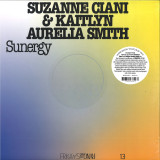
Sunergy brings together synthesists Kaitlyn Aurelia Smith and Suzanne Ciani for the thirteenth installment of FRKWYS, RVNG Intl.'s intergenerational collaboration series. For this edition, a panorama of the Pacific Coast provides the place and head space for a musical appreciation and consideration of a life-giving form vast and volatile with change. Fortuitously (as is the freaky way), Smith and Ciani were discovered to be neighbors in the small coastal community of Bolinas, California. The two had become close friends, bonding over their experience as woman musicians and, more unusually, their shared passion for the Buchla synthesizer. The music of Sunergy embraces this kinship, with Ciani and Smith respectively performing on the Buchla 200 E and the Buchla Music Easel, two modern configurations of the innovative instrument developed in the '60s by Don Buchla.
Sunergy was recorded in the Bolinas home where Ciani has lived for the last twenty-four years. Her living room overlooks the Pacific Ocean from a cliffside perch, creating an idyllic, inspired setting for music making. Setting up their synths side-by-side, Ciani and Smith took turns keeping time and freely improvising for the album sessions. As a complete piece, Sunergy is shaped by slow, pulsing forms and sinuous, melodic sequences that conjure both an oceanic world and the unlimited sound made possible by modular processing.For her part, Ciani has long been a Buchla voyager. Suzanne proselytized the potential of Don's synthesizer instruments in the '60s and '70s, performing her own compositions before introducing synthesized jingles and sound effects to household audiences. Ciani then achieved wide recognition for her debut album Seven Waves, a collection of colorful, classical song-like melodies fluidly working with harmonic textures and sounds of the ocean shore. Since its 1982 release, Seven Waves has become an important chapter of the ambient canon within which contemporary artists like Smith have developed their own synth syntax. Smith was born just a few years after the appearance of Seven Waves, growing up in Orcas Island, Washington. A place of profound natural beauty, the islands would inform Tides, her first instrumental collection from 2014. Smith composed Tides as an accompaniment for Yoga classes, ultimately freeing her from conventional songwriting into the exploratory, synth-based compositions demonstrated in ecstatic variety on 2016's Ears. Despite the serene setting where Sunergy was realized, the album does not romanticize a complete oneness with nature. Smith and Ciani use their collaborative ground to reflect on the unstable forces at play across the Bolinas horizon. Sunergy takes stock of Bolinas in the 21st century, a once-thriving artist's refuge now vulnerable to real estate pressure extending from affluent San Francisco, and more irreparably, the specter of climate change erasing its many waterfront habitats.
A diametric dynamic is present in Sunergy, a somber meditation amidst the intense cultural and solar forces transforming the landscape, and a hopeful assertion of the surviving creative culture of Bolinas. Far from rehashing the gentle grace of the artists' seminal works, Sunergy instead seeks to awaken and bear witness, employing the Buchla waveforms to mirror the infinite rhythms of the ocean and our essential relationship to it.
Kaitlyn Aurelia Smith and Suzanne Ciani's Sunergy will be released on September 16, 2016 on LP, CD, and digital formats. An accompanying documentary by Sean Hellfritsch will be offered in tandem.
Disco Segreta reissues another uber rare 70s Italian disco holy grail !
“Stripiz (Strapazzo)” – a made-up word meaning “Scramble” – was originally recorded in 1978 for the tiny Roman label SGR by Lele Pathà, moniker of musician Emanuele Degni, for what will be his only release, only issued on 45 in just a few hundred copies, specifically targeted to a clubbing environment.
“Stripiz” is a truly unique record in the panorama of Italian 1970s disco during its climax years and is nothing short of pure madness: a fully instrumental track made out of synthesizers, moog lines, bells, drums topped by a male voice that goes “Striiiipiiiiiz”, a picture perfect portrait of the immensely free Italian creative outpour in disco music at the end of the 1970s, not to mention the wonderfully lisergic cover art!
The first ever 12” reissue of “Stripiz” comes lovingly remastered, respectful of the actual tracks’ 70s vibe, and features the original 45 version plus a contemporary reintepretation by Italian mastermind Marcello Giordani DJ that turns “Stripiz” into a dark disco monster!
Note this is a strictly limited edition and – as with all of our 2023 releases – will NEVER be reissued again.
MONO have long drawn equal inspiration from the light and dark of life, spawning more than two decades of musical turbulence and melodic transcendence. Heaven Vol. 1 marks the beginning of a new annual tradition from MONO: A new EP released on Christmas Day each year, leaning into the light at precisely the time when we need it the most - surrounded by loved ones and hopeful for what the turn of the calendar may bring us. Recorded by Takaakira `Taka' Goto at his home studio in Japan (with drums recorded by Amak Golden at Golden Hive Studio in Prague) - and mixed by Rafael Anton Irisarri and Jeremy deVine at Black Knoll Studio in New York - Heaven Vol. 1 finds MONO at their most hopeful and cinematic. Of each of Heaven Vol. 1's three tracks, MONO offers these words: Lucia: "This song was written when our beloved longtime partner Jeremy (the owner of our American label Temporary Residence Ltd.) welcomed his second child. The song is constructed with two parts; the first part celebrates the birth of a new life and the second part heads towards dreams and hope. We wrote this song with the feeling of Santa Claus riding a sleigh through the snowstorm, smiling, jumping into the swirl of pure white light and carrying many dreams." Smile: "We drew upon the snowy scenery of Christmas that we experienced when we were young. Your exhaled breath is white. Your heart is dancing in the endless silvery white world, and when you are about to grab the snow with your hands and turn around, your parents look back at you with a smile. We wrote this song whilst remembering moments like this." Silent Embrace: "Time passed and we became adults. Life is like climbing and descending many steep mountains, but the reason we're still able to continue walking is because of our loved ones, colleagues, friends and family who quietly stand by us and giving us courage and strength. We wanted to express our gratitude with this song." Limited (220 copies ww) Single Colour (Purple Vinyl) Edition!