GER NOFX waren sauer (sind es möglicherweise immer noch) und wollten uns das wissen lassen! Ursprünglich 1999 veröffentlicht, war "The Decline" ein mutiges Werk und markierte einen großen Wendepunkt für NOFX. Der Song, der weithin als eines ihrer Meisterwerke gilt, ist ein 18-minütiges Punkrock-Spektakel, das die Entertainmentqualitäten, den lyrischen Witz und die Musikalität der besten Punkrockband aller Zeiten richtig zur Geltung bringt. Der Song, der den Zustand Amerikas satirisch darstellt und die gleichgültigen Massen und Politiker gleichermaßen aufs Korn nimmt, ist auch im Jahr 2026 natürlich leider noch aktuell und kritisiert somit weiterhin die Mächtigen auf eine Weise, zu der nur wenige Künstler den Mut haben. Die Vinyl-Single enthält auf der B-Seite die erste Version von "Clams Have Feelings Too" (das später auf dem Album "Pump Up The Valuum" wieder auftauchte) und ist ein Muss für jeden NOFX-Fan. Erneut auf schwarzem Vinyl wieder da und und limitiert in neuem farbigem Vinyl. Inklusive Beilage mit Texten und Bildern. NOFX were pissed off (possibly still are) and they wanted to let us know! Originally released in 1999,The Decline, was a brave release and marked a huge turning point for NOFX. Widely regarded as their magnum opus, the song is an 18-minute punk rock spectacle that showcases the showmanship, lyrical wit, and musicality of the best punk rock band of all time. Satirizing the state of America and skewering the indifferent masses & politicians alike, the song is eerily relevant in 2026 and continues to critique the powers that be in a way few artists have the courage to do. The vinyl adds first version of "Clams Have Feelings Too" (later resurfacing on the Pump Up The Valuum album) on the flip, the 12" is an essential release for any NOFX fan. Back on black and colored vinyl (ltd), includes insert with lyrics and pics.
Suche:turning point 8
- A1: In Comedy (And I Music)
- A2: Rude Crude Lude
- A3: True Story
- A4: Laughter (Is The Best Medicine)
- B1: In Comedy (And I Music) Ii Feat. Ala.ni
- B2: Punchlines
- B3: Punchlines Ii
- B4: How Do You Write A Joke?
- B5: What Is Stand-Up? Feat. Ala.ni
- C1: A First Lady
- C2: Marina
- C3: Stand-Up Like Richard. Feat. Vic Mensa
- D1: A Raunchy Comedian
- D2: Dulce
- D3: Killed By Police
- D4: L.o.l
Funny How? is Christophe Chassol’s fifth album.
While it builds directly on his work with the “Ultrascores,” it also marks a turning point: a more contemporary sound, broader songwriting, and more explicitly political and social themes make Funny How? his most accomplished album to date. It’s also his most accessible: inspired by American stand-up comedy, Funny How? sounds like a joyful mix of all the music that inspires the artist: soul, jazz, rap, musicals… Thus, throughout the album, major stand-up figures like Dave Chappelle, Marina Franklin, Dulcé Sloan, and Tiny Thickemz appear alongside emerging comedians filmed in more intimate comedy clubs, composing a moving portrait of the new American scene.
Drawing on archival footage and sequences shot for the project in New York and Chicago, and true to his principle of harmonizing reality, he reveals its hidden notes, replaying and developing them throughout a fascinating process. The result is a major work, a choral, political, and deeply musical narrative. In concert, the work unfolds majestically through a hybrid performance where music and images respond to and converse with one another.
The premiere of Funny How? on April 17 and 18, 2026, at the Cité de la Musique in Paris is already sold out. The album is scheduled for release on May 22, 2026.
Peach’s Soak Vol. 1 is a cross-Canadian link-up with Mood Hut that moves through slower, deeper waters.
The mini-LP was written after a tour through Asia that opened up something new in how Peach approaches making music. The turning point, as she tells it, came during a visit to a neighbourhood sento in Tokyo, while surrounded by steam rising in suspended time, something clicked about the relationship between the body and the sounds she wanted to make.
She’d been learning about cycle synching and working out with the phases of her hormonal cycle, respecting energy fluctuations throughout the course of a month, and decided to apply the approach to writing music. She allowed shifts in energy to guide tempo, density, and emotional tone rather than strictly answering to the floor.
Soak came out of this exploration, sketched and layered with field recordings from her trips to Vietnam and the Philippines during a challenging time in her life. Fragments of heat, air, and shoreline are absorbed into the music itself. Vapourous pads, low-end weight, fractured percussion, and melodies hover at the edge of dissolution. Water runs structurally through the record in surges, in tidal pacing, in the slow accumulation of texture.
Wherever this music finds you, please enjoy the Soak.
- A1: Worms In (Feat Laraaji)
- A2: Beneath The Overpass (Feat Shuta Yasukochi)
- A3: Gravel (Feat Loris S Sarid)
- A4: Highway At Night (Feat James Bernard & Marine Eyes)
- A5: Fading Form (Feat Kmru)
- A6: Death Display (Feat Diatom Deli)
- A7: Bloat (Feat Haruhisa Tanaka)
- A8: Larvae (Feat Ki Oni)
- A9: Autolysis & Putrefaction (Feat Green-House)
- B1: Clouded (Feat Golden Brown)
- B2: Countless Wheels Keep Turning (Feat Early Fern)
- B3: Everyone Passing (Feat Gregg Kowalsky)
- B4: Ways To Be Remembered (Feat Kallie Lampel)
- B5: Fur & Exhaust (Feat Ben Seretan)
- B6: Active Decay (Feat Patricia Wolf)
- B7: Melting Into Asphalt/Springing From The Earth (Feat Nailah Hunter)
- B8: Worms Out (Feat Laraaji)
Constellation Tatsu welcomes US artist Brendan Principato aka Saapato for what is a hugely conceptual new album based around decomposition. It was sparked when Saapato saw a dead fox lying by the side of the road on his way home from a job in a local warehouse. He used that as a jumping-off point to interrogate "transformation, interconnectedness, and renewal" and the five stages of decomposition, namely fresh, bloat, active decay, advanced decay and dry/remains. Several collaborators help him on his way as he sketches out various instrumental textures which variously have occasional shards of light, lingering melancholy and a subtle sense of hope.
- 1: Lake Walk
- 2: Lazy Daisy
- 3: Ups & Downs
- 4: Silently
- 5: There Was A Nice Sunset
- 6: Somewhere Good
- 7: Slow Island
- 8: Movin’ On
If – in some parallel universe (or perhaps a not-so-distant-future version of the one we’re already sentenced to living in) – the evil overloads of artificial intelligence were actually successful in their attempts to create convincingly enjoyable “original music,” more specifically tasked with wholly encapsulating my own personal tastes by data-chugging some cocktail of – oh, I don’t know – the posters on my wall, the records in my “most listened to” pile, the mixtapes I made for others, intensive physical scans of my auditory cortex, amygdala, hippocampus, heart strings, whatever else they have splayed out on their autopsy table with the intention of generating one all-encompassing “perfect band” based on the fruitful sum of their findings – that band, for me, would be (or would at least sound exactly like) the Tara Clerkin Trio. It is, quite simply, without exception, the music I wish to hear.
Formed in Bristol UK (where none of them are from yet all of whom are deeply engrained) in 2020, the Tara Clerkin Trio – as it somewhat democratically exists today, despite the singular authority implied by its name – consists of the titular Tara Clerkin, her partner Sunny Joe Paradisos, and Sunny’s brother, Patrick Benjamin. I’ll confess, I don’t know what their respective roles are within the operation and there’s only a very small part of me that cares to learn, as one of my favorite qualities in an objective listening experience is the mystery of who is playing what, which sounds are “authentic” versus synthesized, which chunks are performed “live” in a room together versus meticulously Frankenstein’ed from measure to measure, or how exactly the overall sound is so (seemingly) effortlessly achieved. Though, I suspect, if and when I do witness a live performance by this band at any point, my enjoyment of the music will not be lost in my better understanding of it.
With two extraordinary mini-albums – In Spring (2021) and On The Turning Ground (2023) – making a splash on London’s formidable World of Echo label in wake of their self-titled 2020 debut, this upcoming Somewhere Good LP is, in many ways, the band’s most realised work. In running their usual gauntlet of idiosyncratic (*an overused adjective for which here there is regrettably no sufficient alternative) approaches, Clerkin & co. colour in and outside of compositional lines over the course of 40+ celebratory minutes - never wallowing, despite inherently somber subject matters of self-defeat, disease, displacement, restlessness, gentrification - allowing their arrangements and improvisations ample space and time to situate, stretch out, breathe, cross-pollinate, and ultimately take deeper hold on the listener’s imagination – all while somehow sounding more like themselves than ever before.
Of course, there are traceable influences herein, if one felt that such comparisons were necessary to properly examine and enjoy this music (they aren’t)… Being the big dumb American from the small boring town that I am, cornfed on ‘90s alternative radio with the enchantingly exotic sounds of Maxinquaye and Mezzanine emanating from my chunky tube television, I can’t help but to make a blatantly obvious reference to a “Bristol sound”, ie the whole trip-hop trip, the pastoral crooning over the suggestive urban grime of cracked electro/piano treatments, the digitally-yet-primitively reconstructed James Bond soundtrack string-beats, etc.. But the Tara Clerkin Trio is so infinitely much more than that. There are elements of avant-pop, modern classical, kraut-folk, audio verité, dare I say indie rock (and not of the beer guzzling, masturbatory fuzz-flex variety but perhaps more like a Trish Keenan-fronted Faust, Adrian Sherwood at the mixing desk of If You’re Feeling Sinister, or – in expanding on our alternate reality – a world in which High Llamas cut a full-length for Warp Records with Andrew Weatherall on coffee duty).
The hazy, unmappable skyline-mirage of droning harmonium, upright bass, peculiarly accentuated wind instruments, acoustic guitar, hushed yet literally mighty keys combine to hypnotizing effect. The band may make underlying nods to jazz, sure, but it’s not appropriation, it’s that they have the actual chops to build it out. Beneath the janky samples and oddball percussive embellishment lies actually great drumming. Beyond the manipulated vocal witchery and woefully reflective plain-spoke moments are Tara’s subtly inspired melodies, sung with what might honestly be the glue to the whole crazy equation. A calming consistency throughout the otherwise unpredictably dynamic, boldly intuitive, uniquely British exploration of this (their own) universe in song. – Ryan Davis (Chicago, February 2026)
- A1: Rocking Chair
- A2: Le Train
- A3: Golden Sun
- A4: Miroir
- A5: Voyage Mental
- A6: Surprises
- B1: Je Comprends Pas
- B2: Respire
- B3: Sentimental Lies
- B4: Force Invisible
- B5: C’est Quoi Ces Gens
- B6: My Two Hours Of Sleep
- B7: Astrale Maison
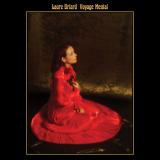
Every so often in music, we come across voices that achieve a certain timelessness, so naturally do they encapsulate both past and present. Laure Briard is one of these voices, retro in form but contemporary at heart, spanning a career rich in aesthetic twists and turns, never without her signature magic, a special kind of eternal filter. Her first album, Révélation (2015), reveals her yé-yé influences, a testament to her love for ‘60s French pop music. Her second studio album, Sur la piste de danse (2016), follows in this vein and finds Laure accompanied as always by her long-time bandmates who share an affinity for warm, catchy arrangements that never lose their appeal. Her tour of Brazil marks a turning point in her career, introducing her to the local indie scene and thus launching her collaboration with the band Boogarins, as well as inspiring the release of multiple EPs composed and performed in Portuguese. Today, her music is embellished by touches of bossa nova and a folk sensibility, boasting increasingly intricate arrangements, as exemplified by her 2019 release, Un peu plus d'amour s'il vous plaît. Several years later, the Californian desert captures the musician’s imagination with Ne pas trop rester bleue, a poignant musical journey inspired by the rich history of Western legends and the role they play in shaping our collective consciousness.
In Voyage Mental, Laure Briard draws upon an inner energy unearthed during a new stage in her life, where the thrill of spontaneous adventure is not accessible in quite the same way. The result is a collection of sophisticated, introspective songs, narrating a young mother’s quest for balance in the face of routine. The album, nostalgic but always tethered to the present moment, is also the fruit of her collaboration with Gaëtan Nonchalant, a talented musician known for coaxing poetry out of the mundane. The two of them co-wrote and recorded five tracks at Studio Nocturne, accompanied by her long-time sidekick Pieuvre, aka Vincent Guyot, Léo Blomov, Pierre-Louis Vizioz, and Hedi Bensalem. The gentle pop opener “Rocking Chair” sways steadily to the rhythm of dynamic drums, followed by “Train,” a ballad that extends an invitation to set sail and daydream alone. The folk escapade continues with “Golden Sun,” a duet featuring the 1960s cult American musician F.J. McMahon, who Laure contacted via the internet on a whim. “Golden Sun” is an unlikely encounter between two generations and two cultures, giving new life to an old forgotten demo on the other side of the Atlantic. And while Laure sings of wide open spaces, cowboys, and sunsets sinking into the sea, we feel the city surrounding her in “Miroir,” a song composed by Hedi Bensalem that laments the suffocation of living in a crowded metropolis where the sky is a distant gray smudge. This pressing need for air, this search for rest and total disconnection, is one of the album's central themes. It may also explain the ever-present sense of nostalgia that pervades the songs, a welcome respite in our current era of doomscrolling and darkness. Along the way, Laure soothes us with melancholy guitar, delivers poetry set to scattered piano notes, and takes us by the hand during lively, uptempo passages. We climb onto her wings, never straying too far from the ground, soaring joyfully above her moods.
Andalusian emerging-talent producer GAZZI, a young yet influential figure within the broader Spanish electronic scene, presents an LP that feels like a quiet turning point in his career. Rooted in ambient and new-age minimalism, the record drifts through piano-based textures, soft pauses, and spacious moments that invite deep introspection.
Across its delicate arrangements, GAZZI captures the sensation of slowing down in a world where everything feels fleeting. These tracks hold space for reflection-offering nostalgia, stillness, and the subtle suggestion that hope remains at the edges of even the most ephemeral moments. Each piece unfolds like a landscape suspended in time, shaped by restraint, emotional nuance, and a profound sense of presence.
Presented by Glossy Mistakes, the release reflects the label's ongoing commitment to uplifting a new wave of contemporary Spanish artists, highlighting creators who are redefining the country's sonic identity through experimentation, sensitivity, and forward-thinking sound design.
In GAZZI's own words:
"These songs were made to sit with the wound - to let you drift, to feel scattered, contemplative; they're meant to keep you from thinking too much - or maybe to make you think a lot."
The result is a meditative, deeply personal body of work-one that not only marks a cornerstone in GAZZI's artistic path but also extends Glossy Mistakes' mission to showcase innovative, emotionally resonant voices from Spain's evolving music landscape.
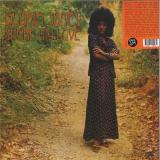
Released in 1973 on Motown’s label, Share My Love is a richly layered and deeply expressive record that captures Gloria Jones at a creative crossroads. After years working behind the scenes as a songwriter and session vocalist, penning material for The Tams, The Marvellettes, and others, Jones finally takes center stage with a collection that radiates confidence, vulnerability, and undeniable soul.
Known to many for her original 1964 version of “Tainted Love,” later immortalized by Soft Cell, Jones brought to Share My Love a seasoned understanding of both the heartbreak and hope that lie at the core of great soul music.
More than just a product of its time, Share My Love feels like a declaration, a turning point where one of soul’s great, often-overlooked voices stepped into her own light. It remains a moving document of artistic self-assurance and one of the most heartfelt releases to emerge from Motown’s early ’70s era.
Between electronic shadows and cinematic textures, this new album from QUENUM draws its influences from the likes of Massive Attack, Archive, and Burial. Started and produced in London, it reflects a change of time — both in the climate and within.
This project represents a personal and artistic turning point for QUENUM. He wanted to experiment with new ideas, not necessarily music for the club. The album was created in close collaboration with his son Zac, a talented musician who contributed both as a singer and instrumentalist on several tracks. They shared wonderful moments creating this album together.
He also worked hand in hand with his long-time friend Christophe Calpini, who played a key role in mixing and in developing the textures and atmospheres that shape the album’s sound. The result is an intimate, personal, and timeless journey, deeply rooted in the now.
Quenum elaborates: “The idea for my album was born during Covid in London, when concerts, museums, and social activities suddenly stopped. To cope, I started running daily and spending hours in the studio creating music. In our garden cabin I worked alongside my son Zac who was practicing piano, preparing for his entry into Trinity Laban Conservatoire. He listened to my tracks, and eventually contributed vocals with his ex-partner on two songs, ‘Blue Sky’ and ‘Never Like Before’. The album’s dark atmosphere reflects that period. Once it was complete, I asked my longtime friend Christophe Calpini to handle arrangements and mixing.”
A true pioneer of electronic music, QUENUM has been shaping the global techno and house scene for over two decades. One of his most celebrated tracks, “Orange Mistake”, co-produced with Luciano in 2001, became a turning point in his career. The success of this collaboration led them to launch the legendary Cadenza label, which rapidly grew into one of the most recognisable and respected imprints in the scene, known for its vital releases and unforgettable parties worldwide.
Over the years, QUENUM has continued to explore new creative paths and refine his artistic identity, constantly reinventing his sound while maintaining his unique musical signature. His insatiable curiosity and openness to new influences have kept him consistently in demand, from intimate underground venues to the world’s most respected festivals and clubs.
Alistair Colling vs. Tortured Soul featuring Sabina
When You Find Your Love…Hold On 25th Anniversary Mixes
25 years ago, at the turn of the millennium, downtown NYC was spoiled with record stores. In this pre-digital age, vinyl was king for club DJs, and shops such as Downtown 161, Dance Tracks, and Vinyl Mania peppered lower Manhattan, thriving businesses that supported an expanding scene of local and international DJs. Perhaps the largest and most established of these was Satellite Records, an institution of club sounds that also spawned multiple record labels, including the deep-house imprint Central Park Recordings.
At this time, Central Park Recordings and Satellite Records owner Scott Richmond signed a demo in need of a vocal from young British producer Alistair Colling, and enlisted John-Christian Urich to write it, who had just had a massive hit with “I Might Do Something Wrong” the debut Tortured Soul single on Central Park. He in turn brought in Sabina Sciubba of then newly-formed band Brazilian Girls to record the vocal, and with Jon Cutler on remix duties the record was complete. Tortured Soul went on to release numerous deep house classics like “Fall In Love,” “How’s Your Life” and have continued to tour as a groundbreaking live-house act to this day (of which RNT co-founder JKriv was bassist and collaborator for 10 years).
For the 25th anniversary of this turning point release, Razor-N-Tape has rebooted and remastered the original and classic Jon Cutler mixes, which have never been reissued in any format since the original release. RNT also commissioned two new exemplary remixes from DJ Spinna and musclecars, connecting the dots between the deep-house lineage of the past and present. Presented in a gorgeous jacket that calls back to the graphical style of the original Central Park Recordings aesthetic, this 12” is an absolute essential for any lover of soulful club sounds or purveyor of NYC dance music history.
The new album by the collective that for
over 25 years has been among the most
representative names of the Italian dance
and electronic scene worldwide.
“BLOOOM”, this is the title of the new release,
will be available in all traditional stores and
on digital platforms starting January 16.
Set against the soundscapes that have become
the Planet Funk trademark, the lyrics by Dan
Black attempt to give voice to a fragile and
contradictory condition of our time: an
intensified sensitivity that, instead of
turning into openness and connection, often
becomes emotional overload. A generation
constantly overwhelmed by excessive stimuli,
relentless information, anxieties, and fears,
called upon to find its way in a world thaoffers neither pauses nor silence. In this paradox, sensitivity is no longer just a natural gift, but
a daily effort: staying open and receptive without being overwhelmed, trying to preserve a human and
vulnerable gaze in order, despite everything, to fully appreciate life and the present moment.
The single’s artwork—like that of the album—curated by Nationhood, visually conveys this tension: the
distant sirens of a city that amplifies feelings of disorientation and loneliness even when we are
surrounded by thousands of people.
“BLOOOM”, preceded by the single “FEEL EVERYTHING”, arrives at the end of an intense, creative year
full of music, which saw Alex Neri (DJ, keyboards, synthesizers), Marco Baroni (keyboards, piano,
programming), Dan Black (vocals and guitar), and Alex Uhlmann (vocals and guitar) engaged between
studio work, collaborations, and live performances in Italy and abroad. A journey that today
transforms into new energy, into an even more open vision oriented toward the future.
Exactly one year ago, PLANET FUNK released “Nights in White Satin”, a single that reached the top
positions of the radio charts and launched a season rich in concerts and DJ sets in Italy and around
the world. The subsequent “I Get a Rush”, the collaboration with Alfa and Manu Chao on the remix of
their hit “A me mi piace”, and the track “È Naturale” together with Francesca Michielin, confirmed
Planet Funk’s ability to renew themselves and engage with different musical worlds while always
remaining true to their own identity.
Throughout this journey, music has inevitably intertwined with life. The memory of Sergio Della Monica
and Domenico “Gigi” Canu, pillars and founding souls of the PLANET FUNK project, is a living part of
this new chapter. Their vision, creative spirit, and way of understanding music continue to be a
constant guide, a deep root from which new ideas and new directions can grow.
“BLOOOM” is also this: a personal and artistic blossoming that, starting from the legacy left by
Sergio and Gigi, transforms into a living process of growth, metamorphosis, and discovery. An album
that does not look back with nostalgia, but forward with awareness, momentum, and a desire for
renewal.
Founded in 1999, for over 25 years PLANET FUNK have represented one of the most important, solid, and
influential realities in the international electronic music scene. Born from the meeting of Souled
Out! (Domenico “GG” Canu and Sergio Della Monica) and Kamasutra (Marco Baroni and Alex Neri), and
following their debut with “Non Zero Sumness” in 2002 (a gold record and a turning point for the
band), PLANET FUNK have managed to reinvent themselves over time while maintaining a unique sonic
identity. This has led them to collaborate with internationally renowned artists, deliver iconic
performances around the world, create soundtracks and international advertising campaigns, and
continue to demonstrate constant creative vitality
„SUMMER 1987 - DATA BITS RACING THROUGH YOUR PROCESSOR. BREAKING INTO THE CYBER WORLD AND TURNING THE WORLD UP SIDE DOWN. THE DAWN OF THE DIGITAL ERA HAS JUST BEGUN AND ITS CORE BRAIN EXPANDZ A HACKING COMMUNITY THAT CHANGES THE C64 WORLD. THE SOFT PIONEER, A LIL TEENAGE HACKING DUDE BLOWS UP THE COMPLETE SCENE BY USING THEIR OWN HACKING WEAPONS AND POINTING THEM AGAINST THEMSELVES. THE RESULT IS AN ANGRY FREAKED OUT CONSPIRACY TO KILL THE SOFT PIONEER. THE HUNT HAS JUST STARTED...“
2026 Repress
Temudo - Meteora (FUSE06) by Noah Hocker
A leader of the Portuguese wave in techno co-founding Hayes Collective while boasting acclaimed releases on Klockworks, Blueprint, and Soma, Temudo grabs the reins to take club music back to its days of audacity and risk taking. A more than promising up-and-comer turned modern reference, Temudo defends his reputation with a release showcasing depth in his various sonic universes and a deep understanding of his music's history. For its seventh release, Temudo's 'Meteora' is a logical next step for the club's direction - a sweet spot between dancefloor efficiency and enduring aesthetic.
Combining the intrigue of mental soundscapes with the reliability of imposing rhythm, 'Meteora' finds itself collected, expressing effect through restraint. The title track, claiming the EP's A1, is just that - a force of interweaving sound design and powerful micro transitions. Some believe the best techno records are able to express emotion and attitude despite its dissonant and machinelike nature; if that's the case then Temudo has mastered the craft. 'When I Grow Up', however, puts the focus back on the body. What sounds like warbling tape modulation over a percussive lead makes this record an addictively delirious ride from start to finish, fitting in with the track before while shifting to different priorities. Proving his versatility, 'Vrthng' at first seems reminiscent of the minimal Berlin style with a higher pace, but quickly progresses into something intensely euphoric. With experience and measure, an out of the box approach can really pay off, and the added emotion in 'Vrthng' is certainly a turning point in the EP. This mindset is clearly carried over in the project's conclusion : 'It's Always Past'. A surprising use of harmony and storytelling, this final chapter ends with Temudo sealing his style with confidence. The track is mystified by its chords, ending 'Meteora' with a question mark that leaves us in anticipation for what Temudo dares to do next.
- A1: Intro
- A2: Young Boy
- A3: Virginia
- A4: Grindin’
- B1: Cot Damn (Feat Ab-Liva & Roscoe P. Coldchain)
- B2: Ma
- B3: I Don’t Love Her (Feat Faith Evans)
- B4: Famlay Freestyle (Feat Famlay)
- B5: When The Last Time
- C1: Ego
- C2: Comedy Central (Feat Fabolous)
- C3: Let’s Talk About It (Feat Jermaine Dupri)
- C4: Gangsta Lean
- D1: I’m Not You (Feat Jadakiss, Styles P & Roscoe P. Coldchain)
- D2: Grindin’ (Bonus Remix Feat N.o.r.e., Baby & Lil’ Wayne)
- D3: Grindin’ (Bonus Selector Remix Feat Sean Paul, Bless & Kardinal Offishall)
The first act signed to The Neptunes' newly formed Star Trak label was a Virginia based duo known as the Clipse. The first single “Grindin’” impacted the streets with its bare boned but infectious drum beat in the same way that “Sucker MC’s” did almost 20 years earlier. These brothers - Pusha T and Malice combined with The Neptunes groundbreaking production sent a clear message to the rap world – “we are not the same” (as rapped by Malice on his opening verse on “Cot’ Dam”). Clipse brings an authentic Virginia sound into the game and created a movement, with not only their darkly layered raps but The Neptunes as well. Pharrell Williams and Chad Hugo were able to combine their cyberpunk production with just the right group to create a street masterpiece. Following in the footsteps of such rap criminologists as Kool G Rap, Nas, Jay-Z, and Mobb Deep, the Clipse offer the Virginia hustler's viewpoint with clever, hard-hitting lyrics that is sprinkled throughout the entire album. With so many standout tracks on Lord Willin’ the album starts pulling no punches. On Track 1 simply (or maybe not) titled “Intro” you get a very personal and deep testament of crack and the drug game, a theme that is throughout this album…HEAVY. Songs like “Virginia” or “I’m Not You” (featuring Jadakiss, Styles P and Roscoe P Coldchain), have lyrics that play as a musical notes alongside The Neptunes tailored beats. “Young Boy”, “Comedy Central”… all fit perfectly alongside “When the Last Time” and “Cot Dam” as each song plays its part as chapters to the Lord Wilin’ masterpiece. “Gangsta Lean” (another one of the albums standout tracks) features a slightly lighter feel while paired with Pharrell's trademark falsetto hook. The truth of it is, it’s hard to just pick one track, or point out which is the albums star. Each song on Lord Willin’ is essential to making it the classic that it is. The Neptunes (who were busy turning out every other Pop hit on the radio) crafted an album that was deemed an instant classic, and cemented Clipse as Rap’s newest superstars.
- A1: When I Sing, I Slip Into The Microphone. Into That Void, I Bring Comrade "Prayers", Then, Turning To Face The Outside, Together We Explode. Part I
- B1: When I Sing, I Slip Into The Microphone. Into That Void, I Bring Comrade "Prayers", Then, Turning To Face The Outside, Together We Explode. Part Ii
- C1: When I Sing, I Slip Into The Microphone. Into That Void, I Bring Comrade "Prayers", Then, Turning To Face The Outside, Together We Explode. Part Ii (Continued)
- D1: When I Sing, I Slip Into The Microphone. Into That Void, I Bring Comrade "Prayers", Then, Turning To Face The Outside, Together We Explode. Part Ii (Conclusion)
- D2: When I Sing, I Slip Into The Microphone. Into That Void, I Bring Comrade "Prayers", Then, Turning To Face The Outside, Together We Explode. Part Iii
Among the true Keiji Haino devotees, Nijiumu’s Era of Sad Wings (released on P.S.F. in 1993) has always held a special place in the pantheon. Operating for only a few years in the early 90s and apparently only performing a handful of shows, Nijiumu operated at the opposite end of the dynamic spectrum to Haino’s famed power trio Fushitsusha, dwelling in a hushed, meditative realm of mysterious droning sonorities and free-floating melodies that occasionally erupts into violence. Black Truffle is pleased to announce a new double-LP edition of a lesser-known 1994 Nijiumu recording, When I sing, I slip into the microphone. Into that void, I bring comrade “prayers”, then, turning to face the outside, together we explode. Here, Nijiumu is the trio of Haino, Tetuzi Akiyama and the obscure Takashi Matsuoka, the three performing on a wide variety of string, wind and percussion instruments, as well as electric guitar and bass, and Haino’s unmistakeable voice.
Like on the early solo Haino album that shares the group’s name (released on P.S.F. in 1993), the instrumentation swims in reverb (the use of which Akiyama recalls as ‘a kind of point of the band’), often obscuring the instrumental sources. On the short opening piece, a distant reed instrument arcs long buzzing melodies over a bed of cymbals and gongs, like a psychedelic take on Tibetan music. The epic second part, occupying almost 50 minutes, begins as a splayed, near-formless cloud of electric guitar and bass, shadowed by bowed and plucked strings, the three elements working through twisting atonal shapes. At various points in the recording, we hear what seems to be the sounds of musicians moving between instruments, their shuffling and bumps fitting seamlessly into this radically open music. Eventually, what sounds like electric guitar moves closer to the foreground, fixing on a repeated melodic cell around which hover mysterious clouds of long tones and a sporadic shaker. At the half-hour mark, the music begins to build to a violently emotive climax, Haino’s impassioned vocal cries punctuating a lumbering, bass-heavy murk, contrasted at points by what sounds like a tin whistle. Suddenly, the volume drops to a near-whisper, opening the way for the stunning final moments, which touch on the slow-motion balladry of Haino’s classic Affection, here given an eccentric twist by an occasional woodblock hit. The third piece opens with a hazy trio of rumbling bass, bowed strings and abstracted slide guitar, the latter calling to mind some of Akiyama’s later solo work. Eventually joined by Haino’s voice, its fragile, haunted tone might remind the listener of the man in black’s documented love of the madrigals of the murderous Count Gesualdo, before the recording abruptly breaks off mid-note. In this new edition, the Nijiumu trio recording is supplemented by a piece recorded solo by Haino in 1973, a bracing electronic blowout stretching almost half an hour. Using a homemade electronics setup to unleash a barrage of crunching distortion and shuddering harmonic fuzz, it takes its place in the canon of extreme live electronics next to Robert Ashley’s Wolfman and Walter Marchetti’s Osmanthus fragrans, looking forward to extreme noise years before Merzbow. Taken as a whole, these four sides of music are a stunning document of some of the lesser-known waystations of Haino’s singular creative path.
After two albums inspired by vast northern landscapes, the forces of nature, and an ever-present sense of duality, Glass Museum shifts gears. The Brussels-based group-originally formed in 2016 by pianist Antoine Flipo and drummer Martin Grégoire-welcomes bassist Issam Labbene as an official third member, opening up a richer, more immersive sound and setting its sights on the rhythms of the modern city.
A true turning point in Glass Museum's career, the new album 4N4LOG CITY twists the codes of electronic music, explores the depths of jazz, and asserts its eclecticism through a fresh and infectious groove.
Signed to the forward-thinking Belgian label Sdban Records, the group shapes its identity within the vaulted ceilings of Volta, a creative hub in Brussels frequented by the vanguard of Belgium's "new scene." Sharing space with acts like ECHT!, Lander & Adriaan, and Tukan, the band continues to push its boundaries through collaboration and reinvention.
Recorded between the French countryside of Drôme, the industrial edges of Brussels, and Volta, 4N4LOG CITY features striking guest appearances. Swiss drummer Arthur Hnatek-known for his work with Tigran Hamasyan and Erik Truffaz, and praised by Gilles Peterson and Laurent Garnier-drives the opener "GATE 1" into hypnotic, krautrock-inspired territory. Meanwhile, rising vocalist JDS lends soulful grace to "Call Me Names", evoking the emotive textures and elegance of vintage soul-jazz reminiscent of the likes of Jordan Rakei or Tom Misch & Yussef Dayes.
Without abandoning their melodic roots and foundational approach, the trio takes daring steps into new terrain. The experimental centerpiece "III" explores the piano as a textural and rhythmic force, drifting between ambient and breakbeat. Elsewhere, the gritty "VAN GLAS"-a hip-hop-tinged track featuring rapper JAZZ BRAK of STIKSTOF-the band ventures far beyond their comfort zone, injecting streetwise lyricism in their mix of electronics and jazz.
Fueled by the heartbeat of the city, 4N4LOG CITY captures the mechanical ebb and flow beneath concrete towers-the anonymous rhythms of daily life moving over the asphalt, and the fleeting, meaningful connections made along the way. Produced by Antoine Flipo and mixed by Elsa Grelot (Avalanche Kaito), the album stands at the intersection of human emotion and urban architecture-a post-modern, deeply cinematic work that asserts Glass Museum's place at the cutting edge of European music.
Plying refracted rhythms with an exacting poise, Aerae arrives on Samurai Music with a fully formed sound that plumbs the depths between techno immersion and D&B beat science.
An accomplished, palpable tension runs throughout Nefanda, Aerae's second solo release. Following up on the meditative pulse of her debut album on Annulled Music last year, the Paris-based artist digs deeper into ominous atmospheres filled with evocative reverb decays and taut, dynamic drum work - tools she wields to Redner tracks with specific meaning, coded by the Latin framing that runs through all aspects of her musical output. Contemplating the ancient language as an inescapable part of her European roots, on Nefanda Aerae ruminates on external trials and inner impulses, and conjures a jaw-clenching soundtrack to match.
'Mons' (translation: 'Mountain') speaks to challenges, strength and spiritual ascent, marked out by an urgent thrum of conga slaps and a 4/4 kick around the 170 BPM mark that finds power in minimalism even at the relatively high tempo.
The title track opts for a more broken framework, pivoting pointed percussion around a deft sub pulse while turning up the intensity with an exacting poise.
'Nefanda' translates as 'unspeakable,' or 'too horrific to name,' and the fraught, synthetic wraiths contorting through the track convey the dread the title implies.
'Fovea' (translation: 'pit') burrows deeper into spatial design with a looming low end rumble and subliminal sound sculpture, shaping out a dark, introspective chasm tipped towards disassociation. It's a powerful statement in any setting, but the all-consuming bass feels especially crafted for full, physical sound system immersion.
'Phrenesis' (translation: 'frenzy') rounds the EP out in fierce form, building up a high-pressure arrangement from ambient beginnings with ruthless control. There's a sense of duality in motion between half-time and double-time rhythmic elements, every incremental shift adding to the intensity of the track with the elegant, impactful touch that has fast become Aerae's calling card.
Finding her own language within the dialogue between techno, D&B and dark ambient, Aerae's music makes a vivid impression thanks to the ideas and intention that drive her in the studio. Nefanda confirms her status as a leading light in deep, psychedelic dance music, making something extremely personal that also reaches out beyond notions of the self like all the best transcendental music.
Jeff Parker’s 2016 album The New Breed was a turning point for both Parker and for International Anthem, changing the trajectory of his solo career as well as drawing an abundance of attention to our fresh imprint despite our then very limited catalog. Most importantly though, the album is the first to give voice to Parker’s wholly unique take on sample-based beat construction augmented by a crack squad of improv-savvy LA breezers—the high-level crew of Paul Bryan (bass), Josh Johnson (alto sax), and Jamire Williams (drums), augmented by Jay Bellerose (drums) and Ruby Parker (vocals).
What began as Jeff’s interest in understanding his own idea of hip-hop processes (and how they related to his work in jazz) expanded into a blueprint for much of his work since then. (see also: The New Breed’s rock-solid followup Suite For Max Brown, the gentle deconstructionist solo guitar of Forfolks, and the long-form slow bloom dub improvisation of The Way Out of Easy—all released via International Anthem)
The IA11 Edition LP features our IARC 2025 obi strip, plus a new 16-page 11x11" insert booklet with unpublished session photos, new liner notes by New Breed bassist / co-producer Paul Bryan, and an in-depth conversation between JP and IARC co-founder Scott McNiece.
“...equally rooted in jazz and funk, and built upon beat-making experiments…”
- Jason P Woodbury, Aquarium Drunkard
Subterranean stalwart and Underground Quality boss Jus Ed reworks a trio of archive tracks on his 'Mash Up' EP, embracing production with newfound freedom as he continues his ceaseless creative journey. The Bridgeport native has been turning out raw, uncompromising house jams for decades, routinely delivering dancefloor fire. Here, the freak flex of '209 Remix' powers over a relentless synth hook, with vocal cuts, rhythmic bleeps and emotive pads completing the stripped-back sonic landscape. The brooding dub traction of 'Back To Basics' sees hypnotic chords drift over sleazy drums as vocal delays roll into the distance before Ed gets some gripes off his chest via 'Fack Ass Muthafukas' i sending a disapproving message to someone or other, with pointed spoken words jibing over a sinister bass hook.
Twenty-four years on from its original release, Monolake's seminal Gravity receives its first vinyl pressing courtesy of Field Records. Occupying its own space at the intersection of dub techno, minimal and electronica, it's an ageless album of staggering vision and technological prowess which has matured into an all-time pillar of electronic music. This edition, remastered by the album's key architect Robert Henke, follows on from the recent reissue of Monolake's first album, Hongkong.
Arriving just after the turn of the millennium, Gravity marked a turning point for Monolake. With co-founder Gerhard Behles moving on to other ventures, Henke produced most of the album solo and journeyed deeper into spatial exploration and the dub-informed principles that underpinned their project from the start. Minimalism and negative space run through the whole record, from the keen slithers of percussion pinging through lattices of delay to the hypnotising pulse of subliminal basslines anchoring the tracks. Gravity is a record which hangs on techno's linearity as a form of meditation, but the crystalline clarity of the mix allows every micro-fluctuation in rhythm and sound to cut through.
Compared to a lot of overly sterile digital music released in the early 2000s, Gravity endures thanks to the warmth and texture Henke elicited from his processes — even when leaning into none-more-digital effects like bit reduction. He described the ninth-floor view over Berlin from his studio at night as a key influence on the sound of the record, but the space Gravity shapes out feels thrillingly implacable. Unbound by the standard conventions of time and space, Gravity stands proud as a true original and finally gets the ceremonious vinyl pressing it so richly deserves.