Part 1 of a retrospective of sorts, compiled from dozens of unreleased tracks from literally two decades of producing, these gems were collecting dust in the vaults of Ekman. Evocative and eerie electro from the Dutch master. We think we can let the music speak for itself in this case, as it's unique and instantly recognizable.
Поиск:two electro
Все
Part 1 of a retrospective of sorts, compiled from dozens of unreleased tracks from literally two decades of producing, these gems were collecting dust in the vaults of Ekman. Evocative and eerie electro from the Dutch master. We think we can let the music speak for itself in this case, as it's unique and instantly recognizable.
A tale of two Indians recorded in Cologne, Stockholm & Berlin.
Anurag Choudhary & Pawas Gupta are Non Solo.
Friends from more than two decades, these gentlemen decided to bring together their knowledge of music at Anurag's apartment in Stockholm back in 2008. Anurag’s life journey took him to Stockholm,
Sweden and Pawas’ culminated in Berlin, Germany; both cities a cultural and a musical powerhouse in their own right. Anurag, a professionally trained Flautist (bamboo Flute or “Bansuri”) in the traditional Hindustani Classical Music and Pawas, someone who has been exploring the realms of electronic music since 1997 as a DJ and releasing records under different monikers since 2007 decided to bring in their forces on a gloomy Stockholm afternoon.
You may ask, why Non Solo? Well, for obvious reasons!
In traditional Indian classical music you are trained as a soloist, mastering a single instrument and each instrumentalist has a deep understanding of the common syntax and rules of engagement that produce some brilliant duets. Both Anurag and Pawas have been pursuing their solo music careers and mastering their craft. However, ‘Non solo’ brought these two (soloists) together to collaborate on something that has not been done before in this way so two soloists coming together and forming NON SOLO.
It all started over a “Fika” which translates to “ a concept, a state of mind, an attitude and an important part of Swedish culture. Many Swedes consider that it is almost essential to make time for fika every day.
It means making time for friends and colleagues to share a cup of coffee (or tea) and a little something to eat” in Anurag’s favourite Cafe, not to forget his exquisite palette for Coffee. After a short brainstorming on how to create something new and fresh without it being too cliched and with the help of impeccably roasted coffee beans that were freshly brewed, the men decided to jam it out to see where this goes.
The first attempt resulted in the second track on the record “Svar” which means “note or tone” which was a one take track. Motivated and excited, they both decided to continue working on this project.
A few months later Anurag visited Pawas' previous Studio in Cologne to record, where Sarang, Tandav and Bhoop were born. Even though the creation had happened, they felt it wasn't the right time to put
it out there just yet. However, time flew by and after almost 14 years of waiting, the men came back to what they had created and decided it was now the time to release it.
The title track “Sarang” is inspired by raga Brindavani Sarang, where Anurag infuses the romantic and mystical flavour of this raga with his flute and Pawas brings his deep repertoire of electronic grooves and
atmospheric sounds to create an intelligent track that touches the listeners.
Svara is inspired by raga Hansadhwani (translated ‘svan song’ or ‘sound of swan’) is an endearing melange of Indian classical and house music.
Tandav is a high energy track based on a variation of Sarang raga. With Pawas’ in-depth knowledge of both Indian classical percussion and electronic music….. This track combines multiple rhythmic layers
manifesting in one exhilarating track that is filled with polyrhythmic cadence and interludes.
Bhoop is melancholy and nostalgia infused into one melodious offering inspired by raga Boopali laid over a bed of organic drums and bass.
The Feel:
Svara is falling in love, the feeling you get when you are walking after that first wonderful date, smile on your face and so much anticipation and joy in the heart for all that excitement that is about to come.
Sarang is being in love, when you start to experience all those emotions you didn’t know even existed inside your heart. It is a complete journey.
Bhoop has a tinge of melancholy, longing and missing each other , while Taandav is coming back together after a long time away from each other. Re-discovering each other and re-experiencing all those
emotions at an even deeper level and celebrating the togetherness, be it in friendship or relationship.
Non solo is first in its kind to bring the melodious/musical depth inspired by the raga traditions to the exhilarating rhythmic world of deep house and electronica.
Available now in your favourite digital store and on limited edition Vinyl with an exquisite typographic artwork by Shantanu Suman in collaboration with Masala Movement's Manoj Kurian!
Lost soul phenomenon Lewis Taylor's Numb finally arrives on double vinyl! One of UK soul’s most fascinating artists, most enigmatic figures and most under-appreciated talents, Andrew Lewis Taylor is a prodigious multi-instrumentalist and eclectic polymath. He enjoys a fiercely loyal following which, over the years, has included celebrity champions like Bowie, Elton and D'Angelo. Numb is Taylor's sixth album, initially released on his own label Slow Reality (an anagram of his name) and licensed to Be With for this long-awaited physical edition. It captures Taylor's wholly unique, intoxicating take on lush, late-night psychedelic soul music.
Lewis wrote and recorded these 10 brand new tracks after a 17 year break from making music, although the album came together over a two-year period. The years away have done nothing to dull Taylor's unique musical vision. He still astounds. The lyrical themes, however, have shifted. Understandably, more than a decade and a half of soul searching and unflinching self-examination cannot fail to influence this most honest of songwriters, and boy does it show. Numb marks a return to the darker, more mysterious side of his output: "Brian Wilson-channels-Smokey Robinson atmospheres", as Mojo put it recently.
After playing a rapturously received gig at the Bowery Ballroom in NYC in 2006, Lewis unceremoniously walked away from music and disappeared completely. An interview in 2016 shed light on some of the reasons for Taylor’s withdrawal from the business, but there was no hint of a return anytime soon. Then in June 2021, news emerged out of the blue that he was readying new music alongside Sabina Smyth with whom he had worked first time around.
On Numb, Lewis deftly balances stark, soul-bearing lyrics with moody mid-tempo pop-soul sheen. He deals candidly with depression, mental turmoil, even thoughts of suicide - clearly more personal than Taylor's earlier songs. The music is rich, warm and layered, with infectious melodies and hooks that stick with you. A true grower of an LP, it really does reward repeated listens. As Jim Irvin in Mojo reflected, "despite the depths these plumb, it's a curiously uplifting experience, unfurling like a concept album about life's challenges with an optimistic beauty at its heart."
Triumphant dubwise horns ring out yet, almost instantly, “Final Hour” takes on a dark, downbeat vibe. With lyrics that confront (and, seemingly, confound) death head-on, Lewis ensures the groove is still there, the beats still swing and your head still nods, strings glissade. Woven around delicate yet insistent piano and subtle strings over a killer bassline, the title track “Numb” is a good example of the lyrical themes throughout the album. As Taylor reflects, "So removed I feel no pain / And for all I know I could be having the time of my life" with a coda that feels very much in conversation with Brian Wilson's finest harmonies. "Feels So Good" is sophisticated 90s-sounding soul of the highest order. The music and vocals feel simultaneously optimistic and despondent. Downlifting. A neat trick, and one Lewis has been so adept at over the years. "Apathy" is a mini-epic, a symphonic-soul gem which builds and glides and, eventually, soars. “Worried Mind" is another slow-builder, creeping out the gate in a sketchy, discordant fashion before climbing to half-crescendo but never quite breaking free of its disorientating restraint.
The brighter "Please" presents a more hopeful mood, with the refrain "I still believe" ringing out as Lewis harmonises with himself. "Brave Heart" quietly struts from step one, as Lewis's falsetto swaggers over a downtempo backdrop with ace echoey drums, beautiful strings and serene electric guitar. Closing out Side C, "Is It Cool" answers its own (non-) question with a spellbinding five and a half minutes of swoonsome deep soul that oscillates between a restrained, barely-there backdrop and a lushly full musical accompaniment of acoustic and electric guitar and organ over bass and slick drums. The penultimate track "Nearer" is a magical, soul-stirring ballad in which Lewis sings of reaching a sweet salvation and achieving a peace of mind. If the hairs on the back of your neck aren't standing up by the midway point, you might need to check your pulse. Album closer and true tear-jerker "Being Broken" places Lewis's gorgeous voice high in the mix and the wordless falsetto and melodies invite you to ponder what Pet Sounds might sound like if it were refashioned as a dubby 21st Century electronic soul album. Astonishing.
Simon Francis’s vinyl mastering spreads out the ten tracks over a double LP so, as ever, nothing is compromised. And as usual, the records have been cut by Cicely Balston at Air Studios and pressed at Record Industry. Turn it up and let the Lewis Taylor sound envelop you.
Stoned Part I was the first self-released album from lost soul phenomenon Lewis Taylor. His third album proper, it was initially released on his own label Slow Reality in 2002 and it's been licensed to Be With for this long-awaited double LP release, its first ever vinyl edition. The songs are varied, hook filled and outstanding. Beloved by his legions of diehard fans, it's nothing short of a masterpiece.
After parting ways with Island, and without a label deal, Lewis went back to his home studio and began to record Stoned Part I in 2001. Co-written and co-produced with longtime collaborator Sabina Smyth, Lewis sings and plays all the instruments on this beautiful, emotional and very human album. It represents Lewis at his most accessible and finds him in the middle ground between his two Island releases. In some ways, Stoned Part I distills the best of his musical sensibilities. The flawless production is dense, layered and very early-2000s slick. The bottom end is thick, funky and sexy.
The complex, proggy-soul of title track "Stoned" opens the album and instantly captivates. Deep swinging funk with truly sweet soulful vocals, complemented by wah-wah guitar and swelling acidic synths. As Lewis himself told us, the ad libs at the end of the track were a nod to Paul McCartney at the end of "Hey Jude". Fan favourite "Positively Beautiful" has shades of Curtis and Marvin; its richly layered harmonies propelled by a simple, metronomic click-track that gives way to a more fully fleshed beat for the magnificent coda.
The slow, sweeping majesty of "Lewis IV" is all moody atmosphere, featuring dense, richly textured music and heavenly multi-tracked harmonies. The stop-you-in-your-tracks incredible "Send Me An Angel" could have been a huge AM radio hit, beautifully crafted sophisticated soul-pop songwriting in the vein of the very best Sade records. Yep! *That good* The smooth, psychedelia-lite "Til The Morning Light" is a gorgeous, sun-dappled love song, layered with Lewis' distinctive honey drenched vocals and, again, the type of record you could've easily heard all over the radio at the time of initial release.
The remarkable, wide-eyed "Shame" packs so many shifting styles into one song, it has to be heard to be believed. Opening in a laconic, breezy style, not unlike a Dallas Austin or Rodney Jerkins produced R&B hit of the day, it morphs into a heavy psych-soul Soulaquarians wig-out (the solo bearing an uncanny resemblance to Carlos Santana’s on "She’s Not There") before elegantly sliding into string-assisted symphonic soul and then back around again. And again. Sheer brilliance. The sublime, gentle head-nod funk-soul of "When Will I Ever Learn" (Part 1) is a strikingly well-turned-out tune, a neat, sweet bass-driven guitar-soul jam that ensures our jaw won't be leaving the floor anytime soon. "Lovin’ U More" sounds like a classic turn-of-the-century Neptunes production, the likes of which they'd lay on for JT BITD. A Latin-tinged groover with more than a little Nile Rodgers-driven slick funk stylings, it's yet another instant Lewis bomb with those gorgeous harmonies and chart-friendly irresistible key-changes to boot. Another indisputable (non-)HIT!
The funky seductive swagger of "From The Day We Met - Part II" opens the final side of wax, giving way to the gigantic buzzing synth-funk beast "Lovelight", a track so insouciantly mighty it should have been a massive hit for someone. Wait, what's that? Robbie Williams covered it? Ah, OK, well, I guess that says something about the effortless pop genius contained within. Containing a seemingly unnoticed nod to Kraftwerk’s "Computer World", it's Lewis's favourite song on the album. It's easy to hear why: "Sabina’s production totally nails it. I love the restraint and the subtlety, and that mixture of warmth and sweetness from the singing against the slightly cold, yet beautiful airy-ness of the backing track." To close this phenomenal album, the twisted electronic soul of "Sheneverdid" marries Lewis's beautiful falsetto to his virtuoso playing and an easy-cum-ominous musical backdrop. Stunning.
Simon Francis’s vinyl mastering, approved by Lewis himself, presents the eleven tracks over a double LP so, as ever, it sounds sensational. The records have been cut by Cicely Balston at Air Studios and pressed at Record Industry. Allow Lewis Taylor to get you Stoned.
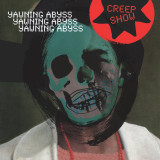
In the five years since Creep Show’s acclaimed Mr Dynamite album was released it’s fair to say that we’ve all been through a fair bit. Sitting here, in 2023, things don’t seem to be getting any better. There’s the cost of living crisis and political meltdowns; we're in deep water with global warming and to top it all there’s a war on our doorstep.
Back in 2018 everything seemed less complicated. Sure, there was stuff to get riled about, but we knew nothing about what was to come. Mr Dynamite was a fairground ride into the dark corners of a world that was on the brink of being blitzed in a blender. It was a record teetering on the edge. Five years down the line you’d expect the follow-up, Yawning Abyss, would double-down and bring the white-knuckled, teeth-gritted fury of the last five years to the boil. And yet….
A quick recap? No problem. Wrangler + John Grant = Creep Show. And Creep Show? “A band of musical misfits who have found a voice or two”, says Wrangler’s Ben “Benge” Edwards, whose Bond villain studio on the edge of a moorland is Creep Show Grand Central as well as home to an analogue synth arsenal that could sink ships.
Wrangler have known each other for a while. Tunng’s electronics wizard Phil Winter and Cabaret Voltaire’s trailblazing, pioneering frontman Stephen Mallinder go way back, while Phil and Benge crossed paths in the 21st century when they seemed to be increasingly in the same venues at the same times. Meanwhile, Mal had been living in Australia since the mid-90s and when, in 2007, he returned to the UK his old pal Phil suggested he meet Benge and the three of them immediately began working together.
Wrangler collectively bumped into Grant at their soundcheck for Sheffield’s Sensoria Festival in 2014 where they were playing with Carter Tutti. A friendship blossomed and when they were invited to perform together for Rough Trade’s 40th anniversary show at London’s Barbican in 2016, well, they jumped at the chance... and Creep Show was born.
Let’s talk about the new album... What is the ‘Yawning Abyss’? You might well ask. According to Mal, it’s “a cosmic event horizon that I can see from my attic window when stand on a chair”. Yeah. Thanks.
“On this album”, offers Benge, feet firmly on the floor, “Wrangler wrangled some vintage synths, mostly Roland, Moog, and the ‘Crystal Machine’ - then John Grant joined in the fun at Memetune Studios where lots of musical experiments were carried out. Then Mal and John ran off to Iceland with the master tapes and recorded a load of madcap vocals. Back at Memetune, me and Phil were left to try and make sense of it all. Which wasn’t hard because what they did in Iceland was totally magnificent.”
Which kind of brings us back to where we began. You’d imagine ‘Yawning Abyss’ would be blowing steam out of its furious ears. Mr Dynamite but kicking a wasps nest. Repeatedly. And yet…
Opener ‘The Bellows’ comes on like a modular ‘Radio Ga Ga’, the singalong ‘Moneyback’ (“You want your money back? / I didn’t think so”) sounds like Godley & Creme’s ‘Snack Attack’ meets Prince Charles And The City Beat Band (“Pennies, pounds, dollar bills, signed agreements, death wills”). ‘Yahtzee!’ is an unhinged electro breakdance party in four minutes and nine seconds.
Where Mr Dynamite was menace, a mélange of mangled voices, with Grant and Mallinder being heavily treated, pitched up or down, rendering their contributions largely indistinguishable, Yawning Abyss takes a more direct approach. You hesitate to say feelgood, but there’s a skip in the step here for sure.
The title track plays John Grant’s vocal straight. Completely. It’s good, so very good. Like ‘Axel F’ covered by Vangelis. The delicious shimmering synths of ‘Bungalow’ also plays those Grant pipes with a straight bat. ‘Matinee’ delves into darker, very funky territory. With Mal upfront it comes on like ‘The Crackdown’. Choice lyric: “You are starting to breakdown / And it’s so fun for me to see / You should have thought of that / You should have come prepared / You can see what’s happening and you look a little scared”.
So, you know, not all feelgood. But it does feel good. It’s probably best to draw your own conclusions... This is Creep Show after all.
*The product of a move from South Carolina to Berkeley, CA and the subsequent extended separation from loved ones, Toro Y Moi's third full-length, Anything in Return, puts Chaz Bundick right in the middle of the producer/songwriter dichotomy that his first two albums established.
*There's a pervasive sense of peace with his tendency to dabble in both sides of the modern music-making spectrum, and he sounds comfortable engaging in intuitive pop production and putting forth the impression of unmediated id.
*The producer's hand is prominent- not least in the sampled "yeah"s and "uh"s that give the album a hip-hop-indebted confidence- and many of the songs feature the 4/4 beats and deftly employed effects usually associated with house music. Tracks like "High Living" and "Day One" show a considerably Californian influence, their languid funk redolent of a West Coast temperament, and elsewhere- not least on lead single, "So Many Details"- the record plays with darker atmospheres than we're used to hearing from Toro Y Moi. Sounding quite assured in what some may call this songwriter's return to producer-hood, Anything in Return is Bundick uninhibited by issues of genre, an album that feels like the artist's essence.
*Born and raised in Columbia, South Carolina, Chaz Bundick has been toying with various musical projects since early adolescence. Having spent his formative years playing in punk and indie rock acts, his protean Toro Y Moi project has been his vessel for further musical exploration since 2001. During his time spent studying graphic design at the University of South Carolina, Chaz became increasingly focused on his solo work, incorporating electronics and allowing a wider range of influences- French house, Brian Wilson's pop, 80s R&B, and Stones Throw hip-hop- to show up in his music. By the time he graduated in spring 2009, Chaz had refined his sound to something all his own. Music journals across the board touted his hazy recordings as the sound of the summer, and he released his debut album, Causers of This in early 2010.
*Since then, Bundick has proven himself to be not just a prolific musician, but a diverse one as well, letting each successive release broaden the scope of the Toro Y Moi oeuvre. The funky psych-pop of 2011's Underneath the Pine evinced an artist who could create similar atmospheres even without the aid of source material and drum machines. His Freaking Out EP, a handful of singles and remixes, and a retrospective box-set plot points all along the producer/songwriter spectrum in which he's worked since his debut, and Anything In Return is another exciting offering that shows he's still not ready to settle into any one genre.
On June 16th, 2023, Steven Julien and Kyle Hall return with their first EP together in ten years, CROWN. The record follows earlier EPs the duo created under their former alias Funkinevil, 2013's Ignorant and 2012's Night/Dusk. The record once again brings together two artists from opposite sides of the pond—Julien hailing from London and Hall representing Detroit—with a shared love for soul in its purest essence.
Opening "Page 1", a pitched-down vocal by James Massiah pronounces, "My plan—won't let you take it from hand." That alone could be considered the nut graph of a record about taking ownership, created by two vanguards in the electronic music scene that, a decade ago, insisted on infusing their music with soul in a commercial club circuit lacking in it.
Assembled from a few years-worth of studio jams in Julien's studio, Crown dials up the staticky warmth present on earlier Funkinevil tracks like "Dusk" and "In The Grid." Across seven songs, Funkinevil shaves off some of their tougher elements, instead shooting for pastoral melodies and funky basslines, like on "Page 2", where Vicky Flint's flute flutters sleepily over breaks and a groovy Korg synthesizer. But the atmosphere on the EP is also grander than ever—on "Page 5," Cloud's wistful melisma soars over Flint's bleating saxophone and wandering sci-fi synths.
With all this attention to funky musicality, it's only fitting that two legends specializing in the craft would land on the B-side—Däm Funk revs up "Page 3" with a slamming kick and his unmistakable coolness, and Reggie B turns "Page 5" into a sludgy, jazzy dance party.
In the words of Julien, "I think a lot of people have forgotten about what this whole thing is about. Musically, artistry and everything. So I'm happy this is what we represent on this project."
Boheme is the second studio album of the French duo Deep Forest. The album combines samples of Eastern European gypsy songs with electronic music. It became the duo's most successful album, selling over 4 million copies, achieving Platinum, Gold, and Silver certifications in multiple countries and winning the Grammy Award for Best World Music Album in 1996.
"Here is our first album. A gleeful and quaint celebration, expressing our love for making music together."
This album simply named ‘MUSIC’ by ROLROLROL (Jameszoo & Niels Broos) is a puttylike exercise in pop, modern jazz and electronic music. Building on an already extensive and longtime collaboration ranging from their work on Jameszoo’s three albums for ‘Brainfeeder' and Niels Broos’s two EP’s for ‘Alpha Pup’.
‘MUSIC’ was created over the span of some years, working out of multiple places occasionally joined by friends.
Andrius Arutiunian’s debut album »Seven Common Ways of Disappearing« was first conceived as an installation for the Armenia Pavilion at the Venice Biennale in 2022. The Armenian/Lithuanian artist and composer uses hybrid forms of music, focusing on sonic vernaculars, hypnotic musical forms, and aural cosmologies. Arutiunian is known to work with installations, sound objects, and time-based collaborations with ensembles and performers. The piece on this record was written for two musicians, a retuned piano and analogue electronics, and it borrows an enneagram as its score—the world-ordering model introduced by the controversial Armenian-Greek mystic and composer G.I. Gurdjieff. The result is an album that is both aesthetically and spiritually intoxicating music of the spheres, at once reminiscent of the masterpieces of minimal music and improvised, if not stochastic music. G.I. Gurdjieff was one of the first thinkers and (quite possibly charlatans) to introduce a syncretic idea of Eastern philosophy into the West. His unique way of teaching was based on an esoteric blend of Middle Eastern, Buddhist, and Dervish philosophies, and oscillated between a genuine search for enlightenment and a complex form of trickery. Borrowing from Gurdjieff’s writing on the world ordering and musical tuning, Arutiunian used the enneagram to organise the musical and structural matter of the piece that was originally conceived as a live performance.»Seven Common Ways of Disappearing« is written for a grand piano—the epitome of Western composition and musical production—and follows a simple set of rules: the two musicians have to navigate the topography of the score, rendering the piece in a different configuration each time. In a sense, this gripping recording is thus only one of the potentially infinite versions of how it could be played, but also seems to take on different shapes and forms with each new listen. It documents a truly mystical composition that follows its own logic
- A1: Jpye & E11E - Freedom Ain't Free
- A2: Jpye & Da Roc - You Freak Out
- A3: Jpye & E11E - Shiver
- B1: Jpye & Da Roc - Xcuse My French
- B2: Jpye & Renato - Va La-Bas (Feat Michael T)
- B3: Jpye & Renato - Tutto Ok
- C1: Jpye & Leonidas - Lazyjack
- C2: Jpye & Renato - Take Off
- C3: Jpye & Da Roc - Spinnaker
- D1: Jpye & Iamrobd - Fingers Crossed
- D2: Jpye - Freedom Ain't Free (Instrumental)
- D3: Jpye & Da Roc - Spinnaker (Instrumental)
Jean-Philippe Altier’s first full-length excursion as Jpye, 2021’s Samba With You, was heralded a contemporary Balearic pop gem – a superbly summery, sun-kissed set full of atmospheric instrumentation, colourful synth sounds, strong songs and star turns from a wide variety of musical friends and guest performers.
Bleu Your Mind, his hotly anticipated follow-up, takes a similar sonic approach to its predecessor, with Altier being joined in the studio by friends old (vocalist e11e, keyboardist Michael T and fellow Twonk members Leonidas and Renato Tonini all reprise their roles from ‘Samba With You’) and new (Da Roc and Iamrobd) on a set that effortlessly mixes and matches elements of nu-disco, jazz-funk, laidback synth-pop, Italo-disco and Balearic beats.
Those who savoured ‘Samba With You’ will feel at home right away, as e11e sings softly and sweetly atop the gentle Latin infused shuffle, dusk-ready instrumentation and chiming vibraphone solos of ‘Freedom Ain’t Free’. French composer and keyboardist Da Roc make’s his first appearance on the following track, the duelling electric pianos and synths of sun-splashed instrumental Balearic pop gem ‘You Freak Out’, before e11e returns on the throbbing and suspenseful ‘Shiver’– a re-imagined and genuinely glassy-eyed cover of Marie Laure Sachs’ sleazy 1978 Italian disco jam of the same name. So, it continues, with Altier and his collaborators painting scintillating sonic pictures in kaleidoscopic colours.
Impeccable arrangements and pin-sharp instrumentation work in perfect harmony with seductive grooves that pack plenty of subtle swing. Even more impressively, ‘Bleu Your Mind’ is an album that genuinely rewards repeat listens, with each successive spin revealing more musical touches and cannily crafted melodic motifs. As a result, highlights come thick and fast throughout, from the delay-laden jazz-funk-goes-electrofunk fizz of ‘Xcuse My French’ (with Da Roc), and the humid afternoon heat of ‘Va Là-Bas’ – a gorgeous and immersive, sunset-ready affair produced alongside Renato and featuring dazzling kets from Michael T) – to the slow-motion Gallic/Italian reggae-pop of ‘Tutto OK’ (a nod to the tropical-tinged reggae sounds created in France during the 1980s), and the slap-bass sporting, smoothed-out (but low-down) grooves of Renato hook-up ‘Take Off’.
As ‘Bleu Your Mind’ progresses, the musical details become more refined, the grooves drowsier and the mood more horizontal. This subtle shift can be heard in Leonidas co-production ‘Lazyjack’ – all chiming lead lines, languid bass guitar, snappy drum machine beats and glistening guitar motifs – the vocoder-sporting stoner funk of ‘Spinnaker’, and the yearning brilliance of ‘Fingers Crossed’. The album’s most emotive and immersive moment by some distance, ‘Fingers Crossed’ sees Altier and collaborator Iamrobd (also a fellow Twonk member) tease out a slow-motion groove in combination with lilting Spanish guitar solos, ultra-dreamy chords, twinkling pianos and delay-laden drum machine hits. Bittersweet and brilliant, it’s a track guaranteed to send shivers down your spine. By the time it fades out, via a sustained piano chord, you’ll be sat or stood in wide-eyed, open-mouthed wonder.
Damian Lazarus’ Secret Teachings imprint welcomes a unique project from Malian and French pairing Siraba, unveiling their debut single ‘Ngana Fôlly’ alongside remixes from Philou Louzolo and Peaking Lights. Meaning ‘The Great Path’ in Bambara, Siraba - the duo consisting of Malian hunter Boubacar Samake and Damien Vandesande, one half of French electronic band dOP - are on a path of bringing the traditional sound of the Wassoulou to the world. They met in 2003 when Damien visited Mali to work with local artists and met Boubacar’s father - the legendary Sibiri Samake. Working together on multiple occasions, the two promised to work with one another and Boubacar on a project one day, and 17 years later, the two connected to begin to develop their unique sound and showcase their shared universe.
Inspired by the music of the master hunters from across Mali, the ‘Dozo’, the project transmits values based on justice and righteousness, love and respect for others, moral and spiritual rectitude and protection for everyone. Debuting on Damian Lazarus’ Secret Teachings imprint, an outlet for the Crosstown Rebels boss to delve deeper into musical realms outside of the norm and away from the dance floor, the pair will release their debut album in September, with a series of live performances set to be announced. Their first single arrives in early June with ‘Ngana Fôlly’
A spiritual and hypnotic production rooted within Dozo musical tradition, featuring Boubacar playing the Ngoni while singing in Bambara, ‘Ngana Fôlly’ is a resonant and rich production combining organic textures with warping synths, rich bass and sweeping electronics, capturing the magical essence of Mali across a fascinating journey. Providing the first remix on the package, Dutch DJ/producer and DJ Mag ‘Artist To Watch for 2023’ Philou Louzolo harnesses Boubacar’s vocal and places it at the heart of his soaring remix as stripped-back percussion and a commanding low-ends guide sweeping synths, before handing over to San Francisco husband-and-wife pairing and Dekmantel signees Peaking Lights who tip things down a bright and blissful rabbit hole of soundscapes as vibrant guitar riffs and twisting leads work amongst off-kilter melodies and acid flecked tones for an eight-minute trip.
- A1: Carlos Picklin - La Charanga Del Espacio
- A2: Tito Chicoma - Cumbia A Go Go
- A3: Choche Merida - El Rock De Los Chinos
- A4: Benny Del Solar, Melochita, Ita Branda - Rumba Espanola
- A5: Lucho Macedo - Rock & Roll Mambo
- A6: Nallye Fernandez - Batijugando
- A7: Nelson Ferreyra - Twist En Guaracha
- B1: Los Kintos - Kintos Boogaloo
- B2: Patty Pastel - Computador Electronico
- B3: Luciano Luciani - A Bailar Bump
- B4: Willy Marambio - Trompeta A Go Go
- B5: Los Vikingos - Go Go En Patines
- B6: Edgar Zamudio - Dia De Pago
- B7: Lucha Macedo - El Maestro Del Rock & Roll
Exotica, ye-yé cumbia, guaracha infused twist, rock’n roll mambo, Spanish rumba, boogaloo beat, tropical garage and other unexpected bastard genres are featured in this festive compilation of bizarre hits taken from the glorious catalog of records released during the 60s and 70s on the Peruvian label Discos MAG. Some clearly unite genres, others are projects with creative names, but all are bold musical initiatives that got and will always get people onto the dance floor. “Sabroso Go Go” brings together fourteen musical mixes created in the recording studios of Manuel Antonio Guerrero (MAG), in which music directors combine rhythm with alchemy in a quest to find the philosopher's stone of the dance. Exotica, ye-yé cumbia, guaracha infused twist, rock’n roll mambo, Spanish rumba, boogaloo beat, tropical garage and other unexpected bastard genres are featured in this festive compilation. Although this compilation begins in 1957, experiments like this (some more memorable than others) were not new in Peru. The songs on this album were however much more successful hybrids. Some clearly unite genres, others are projects with creative names, but all are bold musical initiatives that got and will always get people onto the dance floor. At the end of the fifties, rock music shook the foundations of Peru, and orchestras rushed to cover hit songs and explore the possibilities of mixing them with tropical music. Lucho Macedo's orchestra took up the mantle and reinterpreted a well-known guaracha by Celia Cruz ('Rock and Roll') in mambo style, renaming it 'Rock and roll Mambo'. 'Maestro de Rock and Roll', a hit by the Cuban Conjunto Casino, received similar treatment. Another mix in this vein is the rock tune 'El Rock de los Chinos' by the Mexican Manolo Muñoz (author of 'Speedy González') recorded by the Chilean Choche Mérida for MAG in 1961. The following year, Chubby Checker’s 'The Twist' hit the scene and was immediately fused with guaracha by maestro Nelson Ferreyra. A legendary MAG musician, Carlos Pickling, composed 'La Charanga del Espacio' in 1963. The space sounds are produced by Pickling and his inseparable Hammond. He himself is the one who leads the orchestra that accompanies Benny Del Solar, Lita Branda and Pablo "Melcochita" Villanueva in the tropicalized version of Spanish Rumba, when the beats of the Iberian rumba were still exotic in South America. Around that time, the Chilean Willy Marambio was already living in Lima. In the track included on this album, the go-go style showcases his virtuosity on the trumpet. Another outstanding trumpet player, Roberto "Tito" Chicoma from Chiclayo, played as a session musician with MAG from 1959. A few years later, he became one of the most popular Colombian cumbia players, a talent he demonstrates in the song on this compilation, which blends the fun of go-go with yé-yé beats. 'Batijugando' was a hit from Mexico and was played in all the rhythms played across the Hispanic world since 1967. Inspired by the "Batman" series, it was performed at MAG by the Betico Salas orchestra, with vocals by the Panamanian lady crooner Nallye Fernández. 'Computador Electrónico' is another surprise on this album, performed by Panamanian vocalist Patty Pastel, it is the only known version in Spanish of 'Der Computer Nr. 3', originally sung in German by France Gall. Two other songs feature Edgar Zamudio. The versatility of Zamudio y Los Vikingos (originally a Chilean group) is demonstrated in the guitar-heavy song composed specifically for the late sixties skate fashion ('Go Go en Patines') and in his idiosyncratic protest song ('Día de Pago') performed in beat style. In the mid-seventies, Los Kintos, led by guitarist Francisco Acosta, developed different harmonic ideas in an instrumental track that veers from boogaloo to salsa, the fashionable rhythm of the day. Finally, in 1976, when the bumping hips dance craze swept the continent, Manuel Guerrero was quick to jump onto the bandwagon, composing a Bump song, together with his son Carlos. The Italian musician based in Lima, Luciano Luciani performed the song 'A Bailar Bump' backed by his band of local musicians Los Mulatos.
Following on from the well-received release of Toc De Breaks earlier this year, Spanish duo JP Sunshine and Guim return with a full collaborative EP, Toc De Jaume, released on Steel City Dance Discs.
Coordinating a masterful blend of funk-infused instrumentals, melodic breakbeats and acid-tinged basslines, Toc De Jaume is unique in its character, which bears its defining traits from its two creators, JP Sunshine and Guim, whose partnership is nothing newfound, yet, in light of this EP, feels as fresh as ever.
Toc De Jaime contains a vast variation of sounds within its entirety, from the funky, acid dripped breakbeat of La Fiesta, which was released earlier this year, to tracks like JP Sunshine’s I Want To Stay, released in 2020, which offer a more melodic, feelgood aspect to this EP, and the sound of both artists as a whole.
Through Toc De Jaime, JP Sunshine and Guim present an EP that feels like an ode to the sounds of their shared native homeland; sounds which the duo manipulate and rework within the confines of an electronic dance music context, resulting in a perfect marriage of diverse sounds.
A double 12" album with brand new music produced in collaboration between DJ Fett Burger and Dama. All produced between April to October 2021.
An explosive creative collaboration between the two artists.
Unfinished sketches by Dama have been reproduced, reworked and remixed in various ways, and new tracks have been created. There have already been released three digital singles on DJFB's Digitalised Planet B, now the double album on vinyl, Emotional Tripper.
A tripped out left field house and techno record, with experimental and ambient elements. Early Italian dance music meets UK and Norwegian percussive house. Techno, electro and minimal elements all in their place. A pure mix of influences mixed and reworked together in a creative, fun and surprising way. Staying true to their original influences and moving towards something new and original.
Timo Kaukolampi, frontman for Finnish electronic rock group K-X-P and tireless sonic wanderer, is releasing his second solo album, this time on Optimo Music. Exquisitely rendered, shadowy, curiously claustrophobic and even occasionally paranoid, Inside The Sphere is an album wholly deserving of its name.
A sense of paranoia is one of the threads through this glittering, winking electronic maze. Kaukolampi says “I came up with this metaphysical concept of the “sphere”. When you are manipulated you are ‘Inside The Sphere’. It’s like this dome of ‘undue influence’ that you don’t know exists around you. It’s a bit like the inside of a cult.”
Indeed, it’s amazing the effects achieved with a few sparse electronic textures, the odd smattering of studio trickery, and two or three well-placed synthesizer parts. Though the result might sound ostensibly simplistic, Inside The Sphere is an album of reduction rather than addition. The rhythmic and textural scaffolding is based around what’s not there, rather than what is. Take ‘VCS3’. At first listen, it seems forged from a few synth lines and a simple percussion part – so far, so simple. But listen closer, enter the sphere, look behind the mask – notice the slightly detuned drones, the chattering percussive textures, that distant swell of bass, the way the central fugue shifts and mutates somehow statically, like a barber’s pole.
Might we be listening to an album within an album, a more complex song cycle hiding within the folds of an ambient electronic album? This ties in with another of Kaukolampi’s thematic frameworks – that of the mask. He references Oscar Wilde’s quotation that “Man is least himself when he talks in his own person. Give him a mask, and he will tell you the truth.”
Inside The Sphere is not a one-note album. For every moment where a clammy ambient space enters, a buttery analogue bassline is there to fill it. This clash seems to be the album’s engine room, its power supply.
Timo references devotional and choir music as an influence on this album. The paranoia and foreboding is tempered by these headier aspects. Kaukolampi mentions “empty and hollow spaces” in relation to several of the songs. Perhaps this is the very space behind the mask, where outward disguise merges with inner reality. Perhaps inside the sphere is not always such a bad place to be.
The Complex Inbetween is a mesmerising journey inspired by the spirit of krautrock early electronic music and experimental rock. JeGong return with their second full- length album which sees them continue their musical journey inspired by the spirit of krautrock, early electronic music and experimental rock. With The Complex Inbetween Dahm Majuri Cipolla (MONO, Watter) and Reto Ma"der (Sum Of R, Ural Umbo) put a dazzling spin on the timeless music of genre innovators like Can, Faust and Neu!, incorporating noisier and more abrasive elements to create a mental odyssey into the uncanny. Born from the collision of the most unreal moments of Ma"der's free-flowing musical associations with Cipolla's stick-wielding hands, these eight compositions form the duo's own mythical realm after the rhythm has been set. As the cradle of electronic music, krautrock is often viewed by outsiders in terms of the mechanical rather than the human, yet Ma"der and Cipolla manage to uncover a human side that has always been present in the music of their forebears. That driving beat which powers album opener «Come To The Center» was never meant to be called `Motorik', as explains its inventor Klaus Dinger of Neu! in one interview. "It is very much a human beat. I like to call it the endless straight. It's a feeling like a picture." With Cipolla behind the kit the machine becomes human, testifying to the power that rhythm can hold over us as a deeply communal obsession. Like their debut, The Complex Inbetween shows the profound knowledge these two musicians have of their source of inspiration as well as their tremendous skill in applying its principles. With the piece «Night Screaming Moves» JeGong expands their sound with atmospheric drone rock elements. A feedback laden guitar motif surrounds the oscillations of mellotron sounds, behind it pounds a slow motion drum beat that is reminiscent of dragging, shuffling footsteps in the dark of night. Evoking feelings of trench coat wearing film-noir or the cloying darkness of cult 70s horror flicks, «Night Screaming Moves» shows that not only are the duo of Ma"der and Cipolla experienced musicians, but cinephiles and soundtrack lovers with a strong sense for moods and emotions. RIYL Neu!, Cluster, Tangerine Dream, Swans, Mogwai, Sonic Youth, John Zorn Ltd Coloured Vinyl!
After a ten year pursuit, Efficient Space finally presents Late, Late Show, the last recordings of influential Sydney-via-Newcastle band pel mel. Taped in the mid-’80s, these charmingly unvarnished sessions pare the combo back to their core, producing blue-collar sophisti-pop to a danceable LinnDrum beat. From the funky disco-not-disco of ‘Mr President’ to the effortless pop perfection of ‘Fool’s House’, the six tracks reveal a creatively open and well-oiled pel mel before they inevitably disbanded.
Formed in early 1979 as a misfit sextet from steel and surf town Newcastle, pel mel were inspired by New York and UK’s post-punk imports. Cutting their teeth speeding through originals and Joy Division, Wire and The Buzzcocks covers every Friday night to a regular turnout of dole bludgers, students and the under-age, the band would also cross-pollinate with electronic-leaning support act The Limp. In 1980, they decamped to Sydney to join the city’s flourishing alternative music scene alongside the likes of Laughing Clowns, Tactics, The Reels, Wild West and the M Squared crew, making an indelible mark with two albums and several singles as the only domestic signee of Factory’s Australasian licensee GAP Records. Catchy and intelligently experimental without being noisy, their musicianship and enduring legacy continues to be lauded by peers.
Undoubtedly some of their strongest output, this previously unreleased demo suite documents pel mel free from the pressures of a commercial outcome, naturally elevating them to a class alongside Orange Juice, Antena and Young Marble Giants.
Following the partnership between Altrimenti and Quindi for a suite of remixes of Cabaret du Ciel, the two Italian labels collaborate once again to explore three vivid versions of tracks from Woo's exquisite album Paradise In Pimlico. The verdant, delicate musicality of Woo's original material offers an abundance of riches for remixers, and the results are true to Altrimenti's stated purpose to explore and experiment in the fusion of different approaches to electronic music.
On the A side, Joseph Tagliabue offers up a snaking, psychedelically charged dancefloor vision of 'Cadenza d'Innocenza'. Milan-based Tagliabue has developed a potent sonic signature across releases for labels like Invisible Inc. and Sound Metaphors before starting his own Blue Sea Studio as an outlet for his expanding work into the field of contemporary soundtracks. That cinematic sensibility comes through in waves on this subtly trance-licked epic - a soaring set piece for the most dramatic of party situations.
On the B side, Leeway opens proceedings with his remix of 'Even More Notes'. As the founder of Wain Records and the Scram club night, the London-based producer is fostering a culture of leftfield dance music with an organic sensibility. On his interpretation of Woo, he offers up a more experimental, dub-informed strain of 4/4 club rhythms.
Completing the set, Other Lands & Linkwood join forces for their approach to 'Gold Star'. Other Lands is also known as Fudge Fingas, and alongside Linkwood he helped shape the warm, deeply rooted house sound of seminal label Firecracker Recordings. The duo's affinity for soulful musicianship and the disco roots of house music comes through in this spiralling, hazy rendition perfectly pitched at moments when a softer, more spiritual approach is needed without losing the guidance of an insistent groove.
Once again the overarching theme on this collection of remixes remains quality - a pursuit of meaningful expression, originality and open-hearted musicality. From the source material to the resulting remixes, the pursuit was a successful one.