Step One is the debut album by British pop group Steps. It was released in the UK and Europe on 14 September 1998. The album charted at number two on the UK Albums Chart upon its release, going on to spend 64 weeks in the chart. It was beaten to number one by This Is My Truth Tell Me Yours by Manic Street Preachers, who also beat Steps' single "One for Sorrow" to number one on the UK Singles Chart with the song "If You Tolerate This Your Children Will Be Next". In February 2000, the album was re-released in the US, containing songs from both Step One and its successor, Steptacular. The tracks "5,6,7,8", "Last Thing on My Mind", "One for Sorrow", "Heartbeat" and "Better Best Forgotten" were released as the singles in UK. The album contains some covers; "Last Thing on My Mind" was originally released in the 1980s as a single by British girl group Bananarama, while "Love U More" was originally recorded by techno/house band Sunscreem. "Experienced" was originally recorded by boybands The Bario Boys & Worlds Apart, and "Stay With Me" appears on Romeo's Daughters' self-titled début album.
Search:two from street
Step One is the debut album by British pop group Steps. It was released in the UK and Europe on 14 September 1998. The album charted at number two on the UK Albums Chart upon its release, going on to spend 64 weeks in the chart. It was beaten to number one by This Is My Truth Tell Me Yours by Manic Street Preachers, who also beat Steps' single "One for Sorrow" to number one on the UK Singles Chart with the song "If You Tolerate This Your Children Will Be Next". In February 2000, the album was re-released in the US, containing songs from both Step One and its successor, Steptacular. The tracks "5,6,7,8", "Last Thing on My Mind", "One for Sorrow", "Heartbeat" and "Better Best Forgotten" were released as the singles in UK. The album contains some covers; "Last Thing on My Mind" was originally released in the 1980s as a single by British girl group Bananarama, while "Love U More" was originally recorded by techno/house band Sunscreem. "Experienced" was originally recorded by boybands The Bario Boys & Worlds Apart, and "Stay With Me" appears on Romeo's Daughters' self-titled début album.
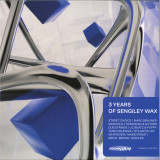
- A1: Uc Beatz & Poppy - Fraise Des Bois
- A2: Swales - Day Dream
- A3: Dub Striker - What's Going On
- B1: Manuold - Ritual Manuold
- B2: Scruscru & Guydee - After Noor
- B3: Mario Penati - Hot 4 U
- C1: Denyl Brook - Along The Dike
- C2: Marc Brauner - Spreekanal
- C3: Yann Polewka - Circulation
- D1: Street Choice - Smokeу Dokey
- D2: Dylan Dylan - Bring Me Back
- D3: Whatever - Two Man
Today we are proud to present you our new release - double vinyl, dedicated to the third anniversary of our label with house and breaks music, which we focus on from residents. This collection is a real gift for all connoisseurs of high-quality electronic music.
Inside you will find 12 tracks from lively and reputable producers such as UC Beatz & Poppy, Swales, Dub Striker, Manuold, Scruscru & Guydee, Mario Penati, Denyl Brook, Marc Brauner, Yann Polewka, Street Choice, Dylan Dylan, WHATEVER, which cover all facets of house music. Powerful-groove house, stylish breaks, express deep tech and thoughtful deep house - each track on this vinyl is a unique story that you will want to listen to again and again.
Our label has existed for three years, and during this time we have made a huge step in the development of electronic music. Our resident team works to ensure that every release is special and memorable.
We are confident that this double vinyl will be a real treasure for all house music lovers. Every track on this album is a true dance banger that will last in the club or on your turntable forever.
So don’t wait, place an order for our new release and get a unique opportunity to hear the best tracks from our residents.
Thank you for supporting our label.
- Chance Is Her Opera
- Heatwave Pavement
- Green Ray
- Orange Zero
- Late July
- Darkness-Blue Glow
- Mono Valley
- Coastal Lagoon
- Alkaline Eye
- 3: Am Walking Smoking Talking
- Three Fires
- Disc 2
- She Smiled Mandarine Like
- Under The 3000 Foot Red Ceiling
- Orange Zero (Single)
- Chance Is Her Opera (Demo)
- Late July (Demo)
- Alkaline Eyed (Demo)
- She Smiled Mandarine Like (Demo)
World Of Echo are proud to announce the long-awaited reissue, on 17th February, of the self-titled debut album by Bristol’s Movietone. Originally released in 1995 by Planet Records and reissued on CD in 2003 by The Pastels’ Geographic Music imprint, this is the first time Movietone has been reissued on vinyl. An expanded double-LP edition, it includes the extra tracks from the 2003 CD (their first two singles, and an unreleased demo of “Chance Is Her Opera”), and adds three more unearthed gems: demos of “Alkaline Eye” and “She Smiled Mandarine Like”, and an early take of “Late July”, recorded in a garden by Dave Pearce (Flying Saucer Attack) in 1993. Taken together, this is the definitive collection of music from the first phase of one of Bristol’s most remarkable groups.
Movietone was the cumulation of a series of events, explorations, and discoveries, starting at secondary school – the group’s core membership of Kate Wright, Rachel Brook, Matt Elliott and Matt Jones met at Cotham School in Bristol. As for many other groups, their early years were all about experimenting, and finding ways to ‘make do’, a DIY sensibility that would inform Movietone through their decade-long lifespan. From formative rehearsals in a shed in the garden of Brook’s family home, to recording early material to four-track in Redland Library, and on into the Whitehouse and Mr Grin’s studio sessions for their debut album, Movietone’s music fell together in a creatively unpredictable, yet conceptually rigorous manner.
By the time they released Movietone, they’d found a home with Bristol’s Planet, run by author Richard King and James Webster, who had both released their first two singles, “She Smiled Mandarine Like” and “Mono Valley”. There was other music happening around them in Bristol, too, from the Jones brothers’ avant-rock outfit Crescent (who were Movietone’s closest conspirators), through Elliott’s jungle/electronica project Third Eye Foundation, and Brook and Elliott’s membership of Flying Saucer Attack. A closely knit community, Movietone are the centre of this nestling architecture of groups.
The vision in the music, mostly, belongs to Wright, but Movietone ran in democratic creative consort. Listening back to Movietone, you can hear this democracy in action through the wildness of the music, which is balanced by the poetics of Wright’s lyrics and melodies. Full of half-captured memories and entangled abstractions, there’s an elliptical, ruminative quality to much of the writing here that shows the deep influence of the Beat Generation writers, along with a twilight environment captured in the songs that’s pure third-album Velvets, Galaxie 500, early Tindersticks, Codeine. Unpredictable interventions – the crashing glass in “Mono Valley”, the sudden explosions of “Orange Zero” – point towards the noise blowouts of My Bloody Valentine, the unpredictability of Sonic Youth; Wright’s understated vocal cadence suggest a deep, embodied understanding of John Cage’s Indeterminacy.
Movietone would go on to make three fantastic albums for Domino – Night & Day (1997), The Blossom Filled Streets (2000) and The Sand & The Stars (2003) – and their Peel Sessions were released early in 2022 by Textile. Still held in high regard by artists like Steven R. Smith, and The Pastels, whose Stephen McRobbie once described them as “one of the great unknown English groups,” it’s an absolute thrill to listen to Movietone anew – still inspired, still seductive, still magic, still mysterious.
Stev, Sull, Rock og Rull is the third studio album from the norwegian rock group Saft. It was originally released in 1973, and got a norwegian grammy for it the following year. Three of of the songs on the album was recorded live on the legendary Ragnarock festival that took place in Oslo same year. These songs where performed together with the norwegian folk musician Sigbjorn Bernhoft Osa. Compared to the two first prog rock leaning records, they were experimenting with more folk influenced music on this one. Well rooted in both norwegian and american folk music. By many fans this is counted to be their best record.
Bristolian producer Claude Cooper returns with hot new single ‘Stay A While’, inspired by the vinyl discoveries made from months of digging and cataloguing the bulging inventory of Bedminster’s Friendly Records record shop.
‘Stay A While’ introduces some delightful twists to Cooper’s psychedelic-funk sound. Blurring the lines between sampling and performance, lush string flourishes are sliced with 6Ts girl-group vocals and rollicking piano chords resulting in a dreamy, end of night, lights up anthem in-the-making. The track is backed with the insistent ‘Dance Tonight’, a ragged bass-boogie surf-rocker that doesn’t take no for an answer.
Cooper’s irrepressible debut album ‘Myriad Sounds' (Jan ‘22) caught the attention of the UK's press and radio alike. Mojo's four star review described it as “Bristol’s beat scene backdrops late night jams”, Uncut enjoyed the "rugged psych-funk romp" and Louder than War declared "it’s vital and vibrant and exactly what we need to kick start the year”. BBC radio DJs including Cerys Matthews, Gideon Coe, Huw Stephens, Jamie Cullum, Lauren Laverne, Stuart Maconie, Tom Ravenscroft rinsed the singles, with Huey Morgan inviting Cooper to contribute a Block Party Mix for his show.
Bonus round 'More Myriad Sounds' (Apr ‘23) added Brooklyn vocalist Brain Fog to the melange with a bounty of pyretic vocal performances. DJ Mag called it “A fierce, kaleidoscopic trip” while Bandcamp Daily said “This album of cross-genre influences is as likely to get it included in any number of best-of columns, with the theme of serious fun as their common element”.
Behind the release is Friendly Records, the best little record shop in Bristol and now a burgeoning record label. Opened by Tom Friend on North Street in 2016, it’s gone on to become a hub of the local musical community. As well as Claude Cooper, the label has reissued two of Alison Cotton’s albums, 'The Twenty-Three Views' by outernational ambient jazz project Floating World Pictures, and Christian Madden & The Enemy Chorus’s organ heavy ‘The Extra Weight’.
Claude Cooper will return with a new album on Friendly Recordings this year.
***After birthing Street Riffs, their hi-definition, hi-energy, statement from 2020, CCR Headcleaner turned inward. The retreat from the pro-studio to the home studio was partially by design and partially decided by global events. Cleaner is very much a pandemic album, more of a homespun head trip than its predecessors. At the same time guitarist, songwriter and spiritual center of the group, Lacey Emmanuel, left the Bay for the shores of Lake Michigan. By most accounts an apocalyptic live-band became by and large a home recording animal. This is most apparent when Headcleaner turns up the balladry. “Don’t Feel the End” is a proto-metal campfire anthem, and “Everyday” hovers somewhere between keyboard misfit John Bender and the White Album. Make no mistake, the record will still be filed under “Punk” at your local record shop. It kicks off with “the brining pt. 2” the hottest slice of Funhouse free-rock that the band has committed to record. “Too Much” gives us its jail abolition rap over a two chord hardcore stomp. In a town (San Francisco) that is experiencing something of a DIY pop renaissance, Headcleaner has always fought to establish the fact that they have actual songs. This is no 70s throwback, but instead an attempt to up the ante. Without all the rock histrionics, technical arrogance and misogyny can the rock riff deliver on its ultimate promise: heavy music for total liberation. All tracks were mixed and lovingly fucked with by none other than Eric Bauer at his Bauer Mansion (RIP) Chinatown SF.
- A1: Forever Xp
- A2: 1 Way Ticket
- A3: The Turkey Bag Diaries
- A4: Just Like That
- A5: Pch Pacific Coast Highway
- A6: Million Dollar Bag
- A7: Magnifying Glass
- B1: Forever Xp (Instrumental)
- B2: 1 Way Ticket (Instrumental)
- B3: The Turkey Bag Diaries (Instrumental)
- B4: Just Like That (Instrumental)
- B5: Million Dollar Bag (Instrumental)
- B6: Magnifying Glass (Instrumental)
After two EPs with his punk-jazz duo La Récré, a recent solo album on Born Bad Records and two soundtracks for Monia Chokri films "Babysitter" and "Simple Comme Sylvain", Forever Pavot is everywhere yet never where you expect him to be. He now returns to BMM with a new rap album titled "Forever XP".
On the other side of the globe, LA-based rapper and street activist XP The Marxman received a beat with a nice sample from one of his producers. XP traced the sample back to Forever Pavot, and decided to reach out to him to collaborate.
That's how the atypical Forever XP album was born. Pavot's first time working with a rapper was also XP's first time working with a composer, yet they managed to blend both their universes in such a flawless way that it's like they were meant to create music together.
Record Kicks presents two northern soul belters on limited edition 45 from The Tibbs
Record Kicks presents a new Soul 45 from Dutch combo The Tibbs that features two northern soul belters taken from the new album "Keep It For Yourself". The 45 will hit the streets on January 12. On the A side the soul stomper "Ain't It Funny" which is also the first single taken from the upcoming album, while on the B side "Give Me a Reason" an uptempo R&B soul stomper. Copies are limited to 500 worldwide, which makes it an instant collector's item and an essential buy for soul fans and djs.
Produced by Paul Willemsen (Lefties Soul Connection, Michelle David & The Gospel Sessions) both tracks are taken from the new album Keep It to Yourself, the third Long Play from The Tibbs that is set for release on January 26th on LP, CD and digital format. Based around Amsterdam, The Tibbs took off in 2012 working right from the start with producer Paul Willemsen (Beans & Fatback, Lefties Soul Connection, Michelle David & The Gospel Sessions). In 2016, their first LP Takin' Over marked their debut with Milan-based imprint Record Kicks. The release of Takin' Over delivered the band rich rewards, like playing sold-out shows and wonderful festivals across Europe. In late 2018, singer Elsa decided to focus on a solo career and The Tibbs duly began their search for a truly worthy successor, bringing astonishing vocalist Roxanne Hartog and the band together for the first time with their sophomore album Another Shot Fired, released in November 2020. Now, with new recordings in the bag and an astounding third album ready to be released, The Tibbs are once more ready for lift off.
All true improvisation involves an element of chance: the coming together of a nexus of influences impulses and actions that result in spontaneous creation. Often in the world of jazz these creative sparks blaze briefly in performance, and then disappear as the sonic vibrations fade from the air, but sometimes chance intervenes again, and moments thought to be gone forever can resurface in unexpected ways. As master drummer Jeff Williams sorted through his archive of cassette tapes from his extensive international career, he had no idea that hidden within it would be a recording of a 1991 evening when he joined storied NYC legend David Liebman for a set of spontaneous performances. Reunited together fifteen years after the breakup of their seminal band Lookout Farm in 1976, the two players reaffirmed their deep musical bond with a set of free-flowing exploratory dialogues in front of a receptive audience. Believed lost for many years, these performances can now be experienced again, with all their fearless freshness and pure committed musicianship undimmed by the passage of time.
Jeff Williams has established a formidable reputation as a drummer, composer, educator and bandleader on both sides of the Atlantic. His relationship with Liebman was forged in the exciting, expansive atmosphere of the New York scene in the early 70s: the meeting of Williams, the laid back Midwesterner, and Liebman, the mercurial, quintessential New Yorker, was an inspired coming together of opposites that always made the creative sparks fly. Williams remembers the journey that led to the Bar Room 432 on that 1991 evening:
“Just as I was leaving my home town of Oberlin, Ohio to move to New York City in 1971, I was given David Liebman’s phone number by someone who told me that Dave had started an organisation for jazz musicians there. I knew of Dave, from Ten Wheel Drive and John McLaughin’s My Goals Beyond, but I couldn’t have imagined what a significant role he would play in my musical life. Shortly afterwards, Dave would leave Elvin Jones and Miles Davis to start his own band, with Richie Beirach, Frank Tusa, and myself, (later adding Badal Roy), naming it Lookout Farm. We released two albums on ECM and one on A&M to wide critical acclaim, and toured across Europe, Japan, India and the US.”
“Following the dissolution of Lookout Farm, Dave and I embarked on a short duo tour opening for Gary Burton. That would be the last time the two of us would play until the occasion of this recording, fifteen years later.”
“Fast forward to 1991 when I discovered an attractive bar located on the far West Side of 14th Street in Manhattan. Bar Room 432 would become a six night a week jazz club for a few years, providing me, and many others, with the opportunity to perform our music. Catching wind of this, Dave suggested we do a duo performance there.”
“Luckily, I recorded it.There was no preparation, no set music to be played - we simply improvised, picking up where we’d left off. David’s mastery of the soprano saxophone is in full bloom here, as well as his incredibly resourceful musical mind.”
The performances are revelatory, moving in pure improvisation from clear, songlike melody to furious density, from ambience to pulsing groove, from light into darkness and back again. Cleaned up and remastered by Alex Bonney, the sound of the tape captures the warm, wood-lined ambience of the room, allowing the full power and dynamics of William’s drums and the warmth and fullness of Liebmans’ soprano sax to sing out, engaging the contemporary listener just as it engaged the hip Manhattan crowd thirty three years ago.
Sonor Music Editions proudly presents "A TEMPO DI JAZZ" by Maestro Piero Umiliani. This lost gem captures the formative years of Modern Jazz in late 1950s Italy - alongside the legendary Basso-Valdambrini recordings in the early 1960s, as well as the early years of Piero Umiliani's long and prolific career as a composer with over 190 soundtracks, 40 library albums, and 35 TV title themes recorded.
A TEMPO DI JAZZ includes seven original compositions by Piero Umiliani recorded in 1959. Here, at the age of 33, he lays a perfect ground with himself as a pianist, accompanied by some of the best Italian soloists at the time: Marcello Boschi on alto saxophone and flute, Ivan Vandor on tenor saxophone, Peppe Carta on bass, and the American trombonist Bill Gilmore. With plenty of room for improvisation, the sextet fuses Big Band moods with West Coast experimentation of Latin American rhythms and Modern Jazz ballads that sit perfectly between his soundtracks for the films "I Soliti Ignoti" (Big Deal on Madonna Street) from the same year that attained him international recognition, and his masterpiece "Smog" (featuring Chet Baker and Helen Merrill) from 1962.
Five compositions are outtakes from Piero Umiliani's mega-rarity "Tempo Jazz", released on RCA Custom in 1960, while 'Tema In Blues' has been published on the two - impossible to obtain - 45 releases "Moderato Swing" (RCA Camden 45CP 112) and "Tema In Blues" (RCA Custom 45 R3) from 1960 as well as the previously unreleased track 'Mezza Cottura.'
The music has been transferred and remastered from the original master tapes and lacquer cut in MONO, preserving the original sound of the recordings.
In the midst of the pandemic, Enjoy Jazz Festival has developed a musical project whose members will be recruited new every year and then debut at a concert on UNESCO International Jazz Day, April 30. The members come from the jazz scene of the German state of Baden-Württemberg. "We wanted," festival director Rainer Kern stresses, "not only to revitalize the fragile network of outstanding creative minds, but also to rethink it artistically as a rolling system." Two experienced and renowned band leaders, Alexandra Lehmler and Erwin Ditzner, now curate an annually changing ensemble of outstanding artists of the most diverse provenance. As part of a voluntary commitment, the ensemble is to be organized in a sustainable, diverse, and, in three years at the latest, completely gender-equal
and climate-fair manner. Thus, as a commitment to the goals of the "European/Local Green Deal" (and with reference to the jazz standard "On Green Dolphin Street"), the name Green Dolphin Orchestra was created. Another special feature: The renowned Oriental Music Academy Mannheim (OMM), a long-standing partner of the Enjoy Jazz Festival, receives a white card, so that musicians with a migration background or protagonists from other musical cultures are always part of this "orchestra of many" and constantly expand its sound language.
The project has a free improvisation approach with changing personnel. "We actually even thought of drawing lots for the different formats within the band pool," explains saxophonist Alexandra Lehmler. "We decided against it in the case of the first concert and instead put together curated formations." And drummer Erwin Ditzner adds, "In principle, however, this procedure remains an option." It was important to the two of them to also mix the genres represented by the individual musicians in such a way that free space for something truly new could emerge. "We wanted to challenge ourselves," Lehmler sums it up. The only restriction: a time code was assigned to each sub-project. "Each formation was given a time limit, although it was possible to virtually override this limit by spontaneous
reshuffling," says Ditzner, explaining one central of the few rules. "In concrete terms, this meant that after eight minutes, the improvisation in progress was either ended or new musicians simply joined in the ongoing creative process, while others took themselves out of the game."
Alexandra Lehmler summarizes the artistic impact of the ensemble as follows: "We really cross-fertilize each other. In order to push this process even further, we forced ourselves when putting together the ensemble not to fall back on our 'favorite playing partners', i.e. musicians with whom one feels particularly at home. In other words, we consciously wanted to step out of our comfort zone with this project." The present pieces were recorded live in Heidelberg during the ensemble's premiere concert on the occasion of International Jazz Day on April 30, 2022.
This EP contains six tracks previously released as three 7" singles in 2003, and have not been available for almost two decades. Emerson Kitamura played his favourite songs from different eras and places with his organ equipped with bass pedals and accompanied by the legendary drum box TR-808.
Having had a long career playing keyboards in bands and sessions, Kitamura came to the fore in Japan with his self released 7" on his Bubblingnotes label. In 2018, he burst onto the international scene with his EP for EM Records, The Countryside Is Great, which gave him an opportunity to stretch out his inimitable style to make a bass/dub re-work of the Thai hit. The EP also debuted his collaboration with the guitarist/singer/songwriter/ mmm, with their cover of George McCrae's Rock Your Baby. The duo went on to release their LP Chasing Giants on Kitamura's label, and to grace Europe with a few legendary gigs.
This EP represents Kitamura's roots, with two Jackie Mittoo covers, some jazz evergreens, and a stellar version of the Lou Rawls classic
From acclaimed director James Carney (‘Once’, ‘Sing Street’, ‘Begin Again’, ‘Modern Love’). Album features tracks performed by the film’s actors, including Eve Hewson, Joseph Gordon- Levitt and Oren Kinlan, with additional vocals by Lianne Carr Wyllie, Adam Hunter and Gary Clarke.
Starring Eve Hewson (‘Bad Sisters’, ‘Behind Her Eyes’, ‘The Knick’, ‘Robin Hood’), Oren Kinlan (‘Sunlight’, ‘Taken Down’), Jack Reynor (‘Midsommar’, ‘Sing Street’, ‘Glassland’) and twice Emmy-winner Joseph Gordon-Levitt (‘Create Together’, ‘HitRECord on TV’, ‘The Trial of the Chicago 7’, ‘Lincoln’).
Two tracks submitted for Oscar consideration - ‘Meet In The Middle’ and ‘High Life’.
- A1: Let 'Em Know
- A2: Live And Let Live
- A3: That’s When Ya Lost
- B1: A Name I Call Myself
- B2: Disseshowedo
- B3: What A Way To Go Out
- B4: Never No More
- C1 93: Til Infinity
- C2: Limitations (Feat. Casual & Del Tha Funkee Homosapien)
- C3: Anything Can Happen
- D1: Make Your Mind Up
- D2: Batting Practice
- D3: Tell Me Who Profits
- D4: Outro
Consisting of MCs A+, Phesto, Opio and Tajai (with production by A+, Domino, Del the Funky Homosapien, Jay Biz and Casual), East Oakland’s Souls of Mischief burst onto the scene in the early 90s with an impact that few other West Coast artists had at the time. Culminating in the release of their classic debut, they created a bouillabaisse that was most parts West Coast swagger but - similar to The D.O.C. and Cypress Hill - with a sonic approach that could just as well have stepped off the streets of New York City. Recorded in less than two weeks at San Francisco's Hyde Street Studios, 93 ‘til Infinity doesn’t suffer from a single freshman jitter or misstep. It’s a fully-realized effort, packed from start to finish with ridiculous lyricism - all carried out in impressive four-part, tag-team style - and backed by a wide range of musical possibilities, from hard boom-bap to 70s CTI-jazz-sprinkled grooves. But without worthy music, the group’s high-level lyricism could have fallen by the wayside. Digging deep into crates that other producers had yet to mine, the production crew gave the quartet exactly what they needed, with unpredictable rolling basslines, dusty drums and jazz keyboard and horn stabs and swirls. Non-singles like Disseshowedo (produced by Domino and Jay Biz), Batting Practice (Casual), Limitations (Jay Biz, with Del and Casual contributing verses) and What A Way To Go Out (Domino) made sure that the fast-forward button remained untouched. Get On Down is proud to present a 30th Anniversary pressing of this west coast Hip-Hop classic on cloudy blue and cloudy yellow vinyl, packaged in a gatefold jacket with liner notes and a commemorative 30th Anniversary stamped numbered OBI.
Music For Dreams are proud to announce the release of Jacob Gurevitsch’ new album El Terreno. It is the fourth LP from the Danish guitarist with the Spanish guitar, whose world of misty, Mediterranean romance is charming listeners all over the world.
El Terreno is named after the neighborhood in Palma, Mallorca, in which Gurevitsch wrote it over the past couple of years. The tranquility and beauty of this setting is reflected in the music: eight songs of Gurevitsch’ Spanish guitar meandering through the cobblestone streets, idling on town squares frozen in the afternoon sun, drifting on the perfumed evening air.
Two special guests feature on the album. On ‘For Your Love’ the legendary Cuban jazz trumpetist Arturo Sandoval is invited to play along. And on ‘Santa Teresa’ the esteemed Danish rock singer Annisette lends her characteristic smoky phrases to the drama. Throughout the album, Gurevitsch’ Spanish guitar is accompanied by a band of drums, percussion, bass and keyboards.
Two highly sought after tracks from Jackie Mittoo's legendary 'Showcase' album, originally released on Studio One in 1980.
Hypnotic, blissed-out funky reggae from Jamaica's finest – Bagga Walker on bass, Leroy 'Horsemouth' Wallace on drums, Ernest Ranglin on guitar and, of course, the inimitable Jackie Mittoo on keyboards.
Cut super loud on a 12" single, it’s literally impossible to find a copy of this album, and if you did it would set you back hundreds of £s.
Housed in a heavyweight card Studio One sleeve these won't be around for long! Very Limited edition 1000 copies worldwide 12” pressing.
SOURCED FROM THE ORIGINAL MASTER TAPES: 2LP SET PRESENTS 1991 ALBUM IN 45RPM SPEED FOR FIRST TIME.
PCM Digital Master to Analog Console to Lathe.
Dire Straits never made a big to-do about its final run. In classic understated British fashion, the band simply let its music speak for itself. And how. Originally released in September 1991, On Every Street became the group’s swan song – a lasting testament to the influence, musicianship, and integrity of an ensemble whose merit has never been tainted by cash-grab reunions or farewell treks. It remains an essential part of the Dire Straits catalog and a blueprint of the distinctive U.K. roots rock the collective played for its 15-year career.
Sourced from the original master tapes, housed in gatefold packaging, and pressed at RTI, Mobile Fidelity’s 180g 45RPM 2LP set of On Every Street presents the album like it has always been meant to be experienced: in reference-grade audiophile sound. Recorded at AIR Studios in London and produced by Dire Straits leader Mark Knopfler, it features all of the band’s sonic hallmarks – wide instrumental separation, visceral textures, seemingly limitless air, broad soundstages, atmospherics that you can almost reach out and feel. Each element is made more vibrant, physical, and lifelike on this collectible reissue, which marks the first time this 60-minute work has been available at 45RPM speed.
Afforded generous groove space and black backgrounds, the songs from On Every Street burst with nuanced details and vibrant colors. Dire Straits’ playing appears to float, their intricate performances organized amid hypnotic, fluid, three-dimensional arrangements. Mobile Fidelity’s definitive-sounding set also brings into transparent view Knopfler’s finely sculpted guitar lines, expressive tones, and laid-back vocals – as well as the balanced accompaniment from his band mates. Here’s a record on which you can hear the full blossom and decay of individual notes, and imagine the size and shape of the studio. It is in every regard a demonstration disc. And it happens to be filled with timeless fare.
Remarkably, On Every Street almost never came to light. Dire Straits initially dissolved in September 1988 after touring behind its blockbuster Brothers in Arms and suffering the departure of two members. At the time, Knopfler professed his desire to work on solo material; bassist John Illsley also explored side projects. But Knopfler’s decision in 1989 to form the country-leaning Notting Hillbillies reignited a spark to reconvene his primary band and craft a fresh batch of songs. Six years removed from Brothers in Arms, Knopfler, Illsley, keyboardist Alan Clark, and keyboardist Guy Fletcher teamed with A-list session pros – steel guitarist Paul Franklin, percussionist Danny Cummings, saxophonist Chris White, guitarist Phil Palmer included – to create what still stands as an unforgettable farewell.
The platinum record brings the band full circle in that it returns Dire Straits to a quartet formation; finds the group refreshingly out of step with the era’s prevailing trends; and sees Knopfler and Co. knocking out song after song with the deceptive ease of a punter tossing back a pint at a pub. That subtle cool, clever poise, and innate control – signature traits that no other band ever matched – dominate On Every Street. Knopfler’s clean, virtuosic six-string escapades unfurl with dizzying melodicism and economical efficiency. Led by his winding fills and focused solos, Dire Straits traverse a hybrid landscape of rock, jazz, country, boogie, blues, and pop strains with near-faultless prowess.
More than any other entry in the group’s oeuvre, On Every Street welcomes quick detours down back alleys and into the depths of human souls. What makes it more brilliant is its staunch refusal to cater to commercial expectations or take advantage of prior successes; every passage feels true, every measure echoed in the service of song. It’s evident in the humorous satire of “Heavy Fuel,” closeted desperation of the witty “Calling Elvis,” and shake-and-bake bounce of “The Bug.” It pours from the album’s darker corners, as on the high-and-lonesome melancholy of the title track and bruised emotionalism of “When It Comes to You.”
Hinting at the open-minded approaches and boundless curiosity he’d embrace as a solo artist, Knopfler doesn’t limit himself when it comes to style or subject matter. Look no further than “You and Your Friend,” a shuffle whose all-inclusive lyrics encourage an array of interpretative meanings. Another of the album’s deep cuts, “Iron Hand,” comes on as one of the band’s most memorable moments – the narrative addressing the abuses of power at the 1984 Battle of Orgreave during the U.K. miners’ strike. Given cinematic heft by the expert production, the true-fiction account puts into perspective the richness, poetry, and depth of On Every Street.
“Every victory has a taste that’s bittersweet,” sings Knopfler on the title track. At least that bittersweetness seldom sounded so damn good on record.
- A1: Main Theme
- A2: Walking Music
- A3: Dragon's Tale
- A4: Happy Music
- A5: Jungle Music
- A6: Walk To The Castle
- A7: The Feast
- A8: Hurry Music
- A9: Balloon Music
- A10: Laughing Music
- A11: Underwater Music
- A12: Cowboy Music
- A13: Circus Music
- A14: Circus Play-Off
- A15: Landscape
- A16: Gloomy Pirate
- A17: Shanty
- A18: Street Scene
- B1: Main Theme
- B2: Walk To The Shop
- B3: Road Activity
- B4: Mr Benn
- B5: Rome
- B6: Gladiator Prison
- B7: Panther
- B8: Slow Benn
- B9: Chase
- B10: Chariot Walk
- B11: Before The Contest
- B12: Emperor's Arrival
- B13: The Arena
- B14: The Arena V2
- B15: Chariot Walk V2
- B16: Emperor's Departure
- B17: Hurry Music
- B18: Walking Home
- B19: Thoughtful Benn
All the music from the iconic Mr Benn cartoons, available for the only time. Recorded in two sessions - Olympic Studios in 1969, and Gateway Studios in 2004. All the music was written by Duncan Lamont, and featured some iconic session musicians including
Kenny Wheeler, Ray Swinfield and Duncan Lamont himself. Ray Swinfield used the same instruments as he used on The Beatles Penny Lane on these recordings. Mr Benn has an enduring popularity, and was shown on The BBC every year from 1971 - 1999, then on Nick Jnr till 2010. The sessions have ben fully remastered, and sound fabulous! It was due to Nick Jnr that a 14th Mr Benn cartoon was made, and the second session features re-working of some of the original tunes as well as lots of new tunes for Gladiator.
The packaging features an insert with Mr Benn dressed in all his adventure outfits, and a game to match all the souvenirs to each adventure. Not to be missed. A must for everybody that grew up with Mr Benn. All the sleeve notes have been written by The Mr Benn cartoon producer Clive Juster, and are full of insights from the recording sessions.
Seven Steps to Heaven arrived at a crucial junction in Miles Davis' career. Recorded at two separate locations in spring 1963, it served as Davis' first release in more than a year – a layoff that was then unprecedented for the jazz visionary who had issued at least one LP a year since debuting in the early '50s. Equally notable, Seven Steps to Heaven marks the point at which the core of Davis' Second Great Quintet started to assemble. The twice Grammy-nominated effort is also Davis' final studio record to blend standards with originals. And it happens to be one of the expressive, well-played albums in the jazz canon.
Sourced from the original master tapes, pressed at RTI, and housed in a Stoughton gatefold jacket, Mobile Fidelity's 180g SuperVinyl LP of Seven Steps to Heaven adds yet another step (or more) towards the bliss suggested by the album title. Playing with standout clarity, detail, tone, and balance, this audiophile reissue pulls back the curtain on the instrumentalists. Afforded the tremendous advantages of SuperVinyl – including a nearly inaudible noise floor, dead-quiet surfaces, and superb groove definition – this numbered-edition version presents Davis and Co. amid a wide, deep soundstage whose dimensions and solidity help bring the record's historical importance and musical merit into focus. Warm, organic, and present, the SuperVinyl LP of Seven Steps to Heaven is what great-sounding hi-fi is all about.
And there's nary a passage on this 1963 landmark that isn't great. That Davis manages to make it feel so cohesive and seamless is a testament to the inspired performances and engaging compositions. Davis didn't draw it up the way it unfolded. No matter. He held trump cards that stayed up his sleeve for the next three decades: A drive to be nothing less than superb, a refusal to settle for mediocrity, and standards to which nearly no other composer or player could match. "The toughest critic I got, and the only one I worry about, is myself," Davis wrote in the liner notes. "The music has to get past me."
Davis' demanding approach partly explains why he switched up his band between the first and second sessions – and underscores how fast his mind was racing with new ideas. Seven Steps to Heaven acts as the stable bridge between the transitional period that followed the dissolution of his First Great Quintet and formation of the Second; without it, Davis perhaps doesn't invite then-23-year-old Herbie Hancock and a still-teenage Tony Williams into the fold. The trumpeter not only got his men – he preserved in amber for the only time (well, magnetic tape anyway) the chemistry and vibe he achieved with pianist Victor Feldman, drummer Frank Butler, tenor saxophonist George Coleman, and bassist Ron Carter.
That line-up gels for half of the six songs on Seven Steps to Heaven. Captured in Los Angeles April '63, the quintet stretches out on a luxurious reading of the late '20s New Orleans staple "Basin Street Blues"; lays on the romance for a candlelit stroll through the '40s standard "I Fall in Love Too Easily"; and explores the rounded contours and melodic crevices of the early blues "Baby Won't You Please Come Home." The performances are refined, elegant, emotional; the band lets the feelings linger and gives the listener time to absorb the colours and textures.
A month later, Davis returned to New York City with Coleman and Carter, and partnered them with Hancock and Williams. Tellingly, the quintet tried its collective hand at the title track and "Joshua" – Feldman-penned songs already recorded in Los Angeles – as well as the yearning "So Near, So Far." Those are the tunes that comprise the other piece of Seven Steps to Heaven, with the revised quintet's liquid pulse, articulate dynamics, and timing shifts a harbinger of things to come.
It's also worth mentioning that the interpretations of the bounding "Seven Steps to Heaven" – a showcase for Davis' trumpet – and interlocking "Joshua" netted considerable radio airplay and attracted the attention of other contemporaries who covered the songs. Keeping Carter and Williams as the rhythmic engine, and Hancock as the anchor between solo flights and structural motifs, Davis would soon soon welcome Wayne Shorter into the family and transform jazz. Again. The aptly – and, in hindsight, perhaps prophetically titled Seven Steps to Heaven – is how he got there.