Two Ike & Tina Turner sought-after classics on either side of a 7 inch. The A side sees the ice cold early funk jam ‘Bold Soul Sister’ featuring the trademark funk guitar stylings of Albert Collins, originally released on the Blue Thumb in 69 and favoured by hip hop producers for its wealth of sampling gold. The flip side houses ‘Somebody (Somewhere) Needs You’ a rare and pricey Northern Soul number penned by Motown songwriter Frank Wilson that goes for £150+ on Discogs. A 50 year anniversary release in a picture sleeve.
out of Stock
Last delivered 21 months ago available to reorder, subject to availability
Limited edition white vinyl. Two signature Average White Band funk bombs, much danced to and sampled across the years - but nothing beats the originals and the first time either have been pressed on 12".
The A side houses 'Pick Up The Pieces' an essential sax laden gem loved by hip hop producers the world over, for that melt in the mouth funk hook. The flip a cover of the incredible Ned Doheny anthem 'Get It Up For Love', featuring the mighty Ben E. King on lead vocals.
out of Stock
Last delivered 21 months ago available to reorder, subject to availability
Off the back of their stunning reissue of Minnie Riperton – Les Fleur / Oh By The Way, Selectors Series hit you with a 7 inch reissue of two straight from the heart, Philly Soul gems by none other than Bettye Swann.
Released on Atlantic Records in 1974 on separate 7 inch’s, the A side houses ‘When the Game Is Played on You’ a quintessential soul number with a bold and passionate message that Swann’s exquisite voice effortlessly delivers. “How does it feel baby, when the game is played on you”... payback of the sweetest kind.
Flip it over to find the smooth, soulful ‘Kiss My Love Goodbye’, a Spinners-esque track with stirring vocals that hit the heartstrings from the off.
Although late bloomers in the Northern / Modern soul scenes they became bona fide classics. Further interest was aroused when Tom Moulton remixed both songs in the ‘00s, igniting dancefloors wherever they were played. Not surprising though when you look at the credits on both tracks.
The Young Professionals were the new crack production team in Philadelphia at the time. Made up of the masterminds Phil Hurtt, LeBaron Taylor, Bunny Sigler and Tony Bell their incredible studio prowess shines bright in both these Bettye Swann recordings.
out of Stock
Last delivered 5 years ago available to reorder, subject to availability
Spaziale Recordings is born. Setting their sights on reissuing highly sought-after, obscure records, alongside providing fresh new interpretations of these classic gems, they kick things off with a bang.
Presenting an official remastered limited edition reissue of a classic cosmic disco 12”, featuring extended disco versions of three superb Afro and Latin-flavoured tracks taken from John Ozila’s 1979 killer funk album ‘Boogie Salsa’.
- Released on French label Disques Vogue, the A side offers the highly
infectious afro groove of ‘Funky Boogie’, treasured by the likes of
Horse Meat Disco, Dekmantel Soundsystem and Jack J.
- Previously a fiercely-guarded record collectors’ secret, the flip
houses two great afro-cosmic, obsure disco versions of “Let’s Go
Boogie” and “L’Orange Bleue” previously only available as album
versions on the “Boogie Salsa” LP.
- Now fully remastered and cut loud and proud to 12 inch for
maximum audio pleasure.
out of Stock
Last delivered 10 months ago available to reorder, subject to availability
The larynx or voice box is a small organ located towards the top of the neck in humans and some other animals. Constructed largely of cartilage, it houses the vocal folds that allow for the manipulation of pitch and volume, which are essential for the phonation of spoken speech. It is also involved in bringing air to the lungs when we breathe and it protects the windpipe when we swallow. However, those unfortunate to experience the potentially fatal malignant tumours of laryngeal cancer will have their larynx removed, resulting in a traumatic loss of speech; thankfully, as this rare record issued by Smithsonian Folkways in 1964 demonstrates, removal of the larynx does not necessarily spell the end of speech for such blighted individuals. Instead, through developments in artificial voice creation, patients could learn to employ modes of vocal communication again. The album was recorded by physician Harm A. Drost at the Phonetic Laboratory of the Ear, Nose and Throat Dept of the University Hospital, Leiden, in the Netherlands, working under the direction of Professor H. A. E. van Dishoeck. As the advances were fairly new and surprisingly varied, Drost felt a phonograph album demonstrating the techniques would be useful for those in the field. The album thus features a narrator explaining aspects of several different techniques, followed by examples of patients employing them. Buccal speech (limited to certain consonants), parabuccal speech (collecting air in a space between the upper jaw and the cheek), glosso-pharyngeal speech (a method deemed obsolete where air is forced between the tongue and the palate), esophageal voice (made by reconditioning one’s esophagus via swallowing, suction or injection), various injection techniques and devices such as the larynxophone, pipa di tichioni and “western electric” are all explored here, along with other aspects of the larynx and its absence. Speech After The Removal Of The Larynx is definitely one of the strangest albums ever given a commercial release!
out of Stock
Last delivered 6 years ago available to reorder, subject to availability
Good For You present a special Paradise Garage inspired 12 Inch sampler from the upcoming ‘Paradise Garage : Inspirations’ compilation, featuring two of Kenny Summit's collaborations with the Director's Cut duo, and Godfathers of House, Frankie Knuckles and Eric Kupper. Neither of these tracks have ever been pressed to vinyl, so this is your chance to own these masterful tracks cut loud and proud on either side of a 12 inch.
The A side houses the last ever Frankie Knuckles production, a project Frankie and Summit worked on with Eric Kupper - remixing 'You'll Never Find Another Love Like Mine' by the legendary Lou Rawls – pure soulful house brilliance from the very first second. On the flip you’ll find a further Kenny collaboration with the dynamic duo entitled ‘Loving You’ – the trio teaming up to deliver a stunning Motown inspired dance floor stomper with an uplifting vocal by the one and only Yasmeen. Two certified anthems that have had heavy rotation with DJs like Cajmere, Grant Nelson, Sonny Fodera, Quentin Harris, Robert Owens, Tony Humphries, Danny Rampling, John Morales, Graeme Park, Pete Tong and still continue to get played the world over.
These tracks form part of a wider compilation, ‘Paradise Garage : Inspirations’ that contains unreleased remixes of iconic club tracks like Loves Last Episode‘s remix of Deee-Lite‘s ‘Power Of Love’, and seminal club classics like the Masters-At-Work remix of Todd Terry‘s anthem ‘Sume Sigh Say’ and Francois K’s “Time & Space.”
Both this sampler and the full compilation feature a masterpiece of cover art designed by Alexander Juhasz, the artist behind the award winning films The Little Prince and The Babadook.
out of Stock
Last delivered 22 months ago available to reorder, subject to availability
Available on vinyl for the first time in 40 years, Outernational Sounds proudly presents a cornerstone document from the Los Angeles jazz underground, Flight 17 – the first appearance on record of the legendary Pan-Afrikan Peoples Arkestra, led by their founder and mastermind, Horace Tapscott.
"The Arkestra would allow the creativity in the community to come together, would allow people to recognize each other as one people and ask, “Now what can we do to make this community better? What can we do for this community together?”...That’s how the Pan-Afrikan Peoples Arkestra – the Ark – began, with the knowledge that we wanted to preserve the black arts in the community."
Horace Tapscott
Horace Tapscott’s Pan-Afrikan Peoples Arkestra (P.A.P.A.) was one of the most transformative, forward-thinking and straight-up heavy big bands to have played jazz in the 1960s and 1970s. Countless musicians passed through its ranks, and in Tapscott it was led by a musical visionary who should be ranked with the very greatest names in the music. If P.A.P.A. doesn’t have the interstellar rep of that other famous Arkestra, and if the name Tapscott doesn’t ring bells like Monk or Tyner, there’s a reason why: in an industry dominated by record labels, a band that doesn’t record doesn’t count. And the Pan-Afrikan Peoples Arkestra didn’t record for nearly twenty years. But recording success was never their concern – they weren’t about that.
First formed as the Underground Musicians Association in the early 1960s, Tapscott always wanted his group to be a community project. From their base in Watts, UGMA got down at the grassroots. They played for the people, organising fundraisers in parks and coffee houses, hosting teach-ins and workshops for young and old, and mixing it with radical theatre groups, firebrand poets, political radicals, Black separatists, community groups and churches. They lived communally, supporting each other and their people, and built an ark for the Black arts in the heart of the city. The group was renamed the Pan-Afrikan Peoples Arkestra in 1971, and soon after they established a monthly residency at the Immanuel United Church of Christ which ran for over a decade, while still playing all over LA and beyond. But through all this, they never released a note of music.
It was the intervention of Tom Albach, a fan of Tapscott and the group, that finally got them on wax. Determined that their work should be documented, Albach founded Nimbus Records specifically to release the music of Tapscott, the Arkestra, and the individuals that comprised it. The first recording sessions in early 1978 yielded enough material for two albums, and the first release was Flight 17. From the surging avant-gardism of Herbie Baker’s title track to the laid- back summertime groove of Kamonta Lawrence Polk’s ‘Maui’, or Roberto Miranda’s uptempo Latin jam ‘Horacio’, Flight 17 showcased the radical voices of the Arkestra’s members. Led out by Tapscott’s hard-swinging piano, this is the first flight on wax of the West Coasts’ foundational community big band – energised, hip and together. Open up the gates and prepare for departure!
This edition of Flight 17 contains two tracks previously only available on the 1997 CD edition: ‘Coltrane Medley’ and ‘Village Dance’, recorded live at the Immanuel United Church of Christ. It is released as a limited vinyl-only edition on a 180g pressing by Pallas. Fully licensed from Nimbus West founder Tom Albach.
out of Stock
Last delivered 7 years ago available to reorder, subject to availability
WRWTFWW Records is blissful to announce the expanded reissue of one of the most fascinating Japanese ambient/environmental albums ever made, NOVA + 4 by Yutaka Hirose. The double LP includes the album known as Soundscape 2: Nova, sourced from its original masters, as well as 50 minutes of never-released-before recordings. It comes in a beautiful gatefold sleeve, packed with liner notes from the artist in English and Japanese. NOVA + 4 is also available on double digipack CD.
Initially released in 1986 as part of the Soundscape series* commissioned by Misawa Home Corporation for use in their prefabricated houses, Yutaka Hirose's NOVA has grown to become a mythical piece of the Japanese minimalist/ambient/environmental scene of the eighties. Initiated around the enchanting landscapes of the two first tracks recorded for the project, "Nova" and "Epilogue", Yutaka Hirose's magnum opus serenely blends vintage synth with nature sounds, exploring soothing palettes and organic backdrops. For "Slow Sky", Hirose explains he "went for a pointillism-like sound, and tried to express a scenery of awakening, where the portal of a heart is opening up", while on "Humming The Sea", he "tried to compose a kind of music that expresses the daily, lazy life of child-like innocence in a summer vacation in some small town."
The bonus LP gathers four long unreleased pieces created around the same period of time for installations, described by Yutaka Hirose as "not music per se but rather sound sculptures", and including the haunting "Shadow Of A Water Droplet" which was recorded for an Ikebana exhibition.
All in all, NOVA + 4 is a transcendent experience of nature in the urban context, an oeuvre which, much like Midori Takada's Through The Looking Glass or Satoshi Ashikawa's Still Way, holds the power to appease the soul in turbulent times. As one inspired YouTube commenter once said when describing Yutaka Hirose's masterstroke: "I can't tell if the birds are singing inside or outside! Thank you!"
*The Soundscape series also includes Hiroshi Yoshimura's Surround album.
out of Stock
Last delivered 7 years ago available to reorder, subject to availability
In her varied career that would combine art gallery installations, major film soundtrackings and commissions for Atari, Suzanne Ciani’s earliest experiments remain some of her most challenging, beguiling and timeless... Flowers Of Evil ticks all the above boxes and flicks switches that would power-up a new uncharted universe of her own musical modernité. Finders Keepers present the first-ever release of these vital archive recordings.
As a genuine vanguard of electronic music composition at the forefront of the modular synthesiser revolution in the late 1960s, Suzanne Ciani’s forward-thinking approach to new music would rarely look to the past for inspiration, which makes this unheard composition from 1969 a rare exception to the collective futurist vision of Ciani and synthesiser designer Don Buchla. In choosing to adapt the controversial prose of French poet Charles Baudelaire, Suzanne would join the ranks of ongoing generations of pioneering musicians like Olivier Messiaen, Karlheinz Stockhausen, Serge Gainsbourg, Etron Fou Leloublan, Celtic Frost and Marc Almond (not forgetting Star Trek’s William Shatner!), all equally inspired by the 19th century writer’s works of “modernité” (modernity), a self-coined term dedicated to capturing the fleeting, ephemeral experience of life in an urban metropolis, best exemplified in his symbolic, erotic and macabre ode to Parisian industrialisation, Les Fleurs du mal (Flowers Of Evil).
In her varied career that would combine art gallery installations, major film soundtrackings and commissions for Atari, Suzanne Ciani’s earliest experiments remain some of her most challenging, beguiling and timeless... Flowers Of Evil ticks all the above boxes and flicks switches that would power-up a new uncharted universe of her own musical modernité. For the many enthusiasts that have already drawn the parallels between Baudelaire’s writings and experimental/electronic music (a relationship rivalled only by the likes of J. G. Ballard and Aldous
Huxley) some might instantly recognise an unconscious sistership between this recording and another 1969 electronic adaptation of Flowers Of Evil by celebrated female electronic composer Ruth White. An interesting distinction of White’s excellent version of Flowers Of Evil (released via Limelight records, home to the likes of Fifty Foot Hose and Paul Bley) is that its dark tone generation and vocal manipulation was created with a Moog synthesiser, the commercially triumphant
rival to Suzanne and Don’s Buchla Systems (Buchla and Moog’s historic, simultaneous, neck-and-neck synth developments are well documented.) The fact that Ciani’s version was never intended for commercial release (not unlike her 1975 Buchla concerts, which could easily have taken Morton Subotnick’s Bull by the horns!) is also poetically reflective of the nature of Ciani and Buchla’s alternative perspective. The choice to present this extract from Flowers Of Evil in its intended French language further distances Ciani’s faithful reaction from some of its better-known variations. Having attempted to voice the poem herself, the multilingual Italian-American composer’s French accent did not meet her own standards, resulting in the request for a fellow unnamed French student who lived on campus at Mills College in Oakland to accurately verbalise the section of Baudelaire’s collection entitled Élévation.
out of Stock
Last delivered 7 years ago available to reorder, subject to availability
Almost four decades since it’s domestic release, Karen Marks’ 1981 single Cold Café has finally reaped it’s deserved international credit to become one of Australia’s most recognised minimal wave recordings. Efficient Space now showcases the Melbourne artist’s brief but entire discography, including two previously unheard demos, all produced with experimental synthesist Ash Wednesday (The Metronomes, Modern Jazz, Thealonian Music). A rarity in the then male dominated industry, Marks found her footing in music, first through rock journalism and then in band management. Formally of Adelaide, newly arrived synth-punks JAB (Johnny Crash, Ash Wednesday and Bodhan X) approached her for representation, subsequently contributing tracks to seminal 1978 snapshot Lethal Weapons and playing the Crystal Ballroom’s opening night. Wednesday and Crash would soon dissolve JAB, enlisting Mark Ferry and Sean Kelly to create Models. Still under Mark’s management, Models became one of the fastest rising new bands of the punk movement, playing to full houses of dedicated and frenzied fans everywhere. Sadly, internal frictions forced Wednesday and Marks to leave after two years, with Crash following three months later. Her creative relationship with Wednesday fortified with the co-production of his 1980 machine-pop prank Love By Numbers, her swooning chorus uplifting his deadpan count to 100, before the two collaborated on Marks’ own recording persona. Immortalised by the icy Oz wave of Cold Café, her Astor issued 7″ also boasted the caffeinated flip Won’t Wear It For Long - a should be hit with guitar from future Icehouse member Robert Kretschmer.
out of Stock
Last delivered 7 years ago available to reorder, subject to availability
Following on from the standout D.J. Rogers release, South Street Disco turn their sights to reissuing two seminal and much sought after '70s jazz funk Loft classics. One side houses Miroslav Vitouš' cosmic disco delight 'New York City', the other uncovers the Latin infused whirlwind 'Whistle Bump' from Eumir Deodato.
First up, the Czech jazz bassist and founding member of Weather Report, Miroslav Vitouš, supplies the infectious vibrations of 'New York City'. Harnessing the spirit of the bubbling NYC underground club scene of the mid '70s, Vitous lays down a proto Arthur Russell flavoured jam, that blends whirling new-wave-esque vocals and brazen basslines over trademark cosmic keys from the master, Herbie Hancock. Combined with tight drumming and fiery, overdriven riffs it paved the way for this to become a dancefloor hit and a clear precursor to the early house scene. With originals trading hands for £120+ it's high time 'New York City' got an official remastered reissue.
On the flip side, a timeless Brazilian instrumental jazz-funk gem from Eumir Deodato that likewise became a certified classic through heavy rotations on New York's revered dancefloors, most notably via David Mancuso at The Loft. Feel good feelings amplified by spirited Rhodes, psychedelic strumming and that sure-fire Latin infused bongo / whistle carnival combo. Carefree, unbridled energy that sees Pops Popwell's funk bass perfectly accompanying blazing guitar solos and a horn section from heaven, it's impossible not to get down to. Pure South American sunshine bottled up and ready to be supplied at will.
out of Stock
Last delivered 9 months ago available to reorder, subject to availability
Fifteen track completion of deep biguines and Gwo Ka from the '60s French West Indies. The vinyl edition included a 4 page booklet + download code.
Biguine is a rhythmic style of music that originated in Guadeloupe and Martinique in the 19th century, which fuses 19th-century French ballroom
dance steps with African rhythms. Gwo Ka is found among all ethnic and religious groups of Guadeloupean society.
It combines responsorial singing in Guadeloupean Creole, rhythms played on the Ka drums and dancing. Gwo Ka is the musical and cultural product of the
region's African ancestry, forcibly brought to the Caribbean through slavery. Gwo Ka exists only in Guadeloupe, which is a very different island from much of
the Caribbean, in that it remains a 'department' of its original colonial master, France. Here the currency is the Euro and the baker sells croissants and café
au lait. This constant 'European-ising' of the island means that Gwo Ka plays a fundamental and important role in the defining of Guadeloupean identity.
'Antilles' Méchant Bateau', a low-tempo number with a bolero feel, indeed a pure case of the blues, and a terrific saxophone solo. What else would you
expect to set the tone for this selection, in which beguine regains its original colours, in the darkness of the Gwo Ka drums. This 45 by André Mahy, released
under the Aux Ondes sublabel, was recorded in the 1960s at Célini's, one of Guadeloupe's two main houses. Through its drum rolls and harrowing chant, it
recalled how, long before the mid-1960s, the Antilles' history was written in an ocean of teardrops - namely the Black Atlantic.
They don't get much more anthemic than Idris Muhammad's 'Could Heaven Ever Be Like This' and who better to rework it than edit royalty, Late Nite Tuff Guy. Subtle in his touches yet incorporating a more DJ friendly, dancefloor orientated beat and tension building intro which teases elements of this classic, before that instantly recognisable bass riff and staccato guitar chords come into play.That subtlety is key when it comes to handling a record as epic as this, elements are accentuated and looped, delicate effects are woven in, but the soul and feeling of Idris' music is lovingly maintained by LNTG.
And for the purists out there, the flip houses the original mix so you've got two paths to heaven to choose from.
out of Stock
Last delivered 5 days ago available to reorder, subject to availability
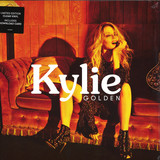
Includes 12' Vinyl and Deluxe CD album, 30 page hard back book
Now that I've been to Nashville,' Kylie Minogue says with audible affection, I understand. It's like some sort of musical ley-line...'
Golden, Kylie's fourteenth studio album, is the result of an intensive working trip to the home of Country music, a city whose influence lingered on long after the pop legend and her team returned to London to finish the record: We definitely brought a bit of Nashville back with us,' she states. The album is a vibrant hybrid, blending Kylie's familiar pop-dance sound with an unmistakeable Tennessee twang. It was Jamie Nelson, Kylie's long-serving A&R man, who first came up with the concept of incorporating a Country element' into Kylie's tried-and-trusted style. That idea sat there for a little while, with Minogue and her team initially unsure about how to bring it to life. Then, when Grammy-winning songwriter Amy Wadge's publisher suggested Kylie should come over to collaborate in Nashville, a city Kylie had previously never visited, something clicked. You know when you're so excited about something,' she recalls, that you repeat it an octave higher and double the decibels I was like that. 'Nashville! Yes! Of course I would!'. I hoped it would help the album to reveal itself. I thought 'If I don't get it in Nashville, I'm not going to get it anywhere.''
Kylie's Nashville trip involved working alongside two key writers, both with homes in the city. One was British-born songwriter Steve McEwan (whose credits include huge Country hits for Keith Urban, Kenny Chesney and Carrie Underwood), and the other was the aforementioned Amy Wadge, another Brit (best known for her mega-selling work with Ed Sheeran). It was then a truly international project: Golden was mainly created with African-German producer Sky Adams and a list of contributors including Jesse Frasure, Eg White, Jon Green, Biff Stannard, Samuel Dixon, Danny Shah and Lindsay Rimes, and there's a duet with English singer Jack Savoretti.
However, the album's agenda-setting lead single Dancing was, significantly, first demoed with Nathan Chapman, the man who guided Taylor Swift's transition from Country starlet to Pop megastar. If anyone knows how to mix those two genres, Chapman does. Nathan was the only actual Nashvillean I worked with. He's got a huge studio in his house, which is probably due to his success with Taylor... there's plenty of platinum discs of her, and others on his walls.' There's something of the spirit of Peggy Lee's Is That All There Is, of Dylan Thomas' Do Not Go Gentle Into That Good Night, even of Liza Minnelli's Cabaret about Dancing, a song which not only opens the album but sets out its stall, providing a microcosm of what is to come. You've got the lyrical edge, that Country feel, mixed with some sampling of the voice and electronic elements, so it does what it says on the label. And I love that it's called 'Dancing', it's immediately accessible and seemingly so obvious, but there's depth within the song.'
The experience of simply being in Nashville was an overwhelming one, before Kylie had even arrived. Once I knew I was going to Nashville, people talked about the place with such enthusiasm. They said without doubt I would love it and, I would come back with songs. They were sending lists of restaurants, coffee shops and bars. It really was a beautiful and genuine response and it felt like I was about to have a life changing experience and in a way, I did.' The reality came as something of a surprise, when she found a far more modern metropolis than the vintage one she'd envisaged. I thought it would be like New Orleans: little houses and bars, with music spilling out onto the street. It reminded me more of Melbourne: apartment blocks going up everywhere! The main strip, Broadway, where the honky tonk bars are, that's where the street was filled with music and it was just amazing.' Mainly, Minogue remembers the heat and humidity. It was 100 degrees. It was like it was raining with no rain.' She also relished the chance to wander around unrecognised, visit a few venerable music bars and soak in the atmosphere. I didn't get to the Grand Ole Opry or the music museums but I managed to go to a couple of the institutions there like The Bluebird Cafe and The Listening Room, and just by being there, through some kind of osmosis, you get this rejuvenated respect for The Song, and the writing of The Song. There's no hoo-hah around it. There's a singer-songwriter there, talking about the song and singing the song, to an audience who are there to listen. Although, I have to confess I was guilty of starting to clap too soon during a long pause at the end of one of the songs. The guy made a bit of a joke out of it and got a laugh from it, but I thought 'Of all people in the audience, no...''
It's probably no coincidence, therefore, that every track on Golden is a Kylie co-write, making it arguably her most personal album to date. The end of 2016 was not a good time for me,' she says, referring to well-documented personal upheavals, so when I started working on the album in 2017, it was, in many ways, a great escape. Making this album was a kind of saviour. I'd been through some turmoil and was quite fragile when I started work on it, but being able to express myself in the studio made quick work of regaining my sense of self. Writing about various aspects of my life, the highs and lows, with a real sense of knowing and of truth. And irony. And joy!'
The songwriting process allowed Kylie to get a few things out of her system. Initially, she admits, it was cathartic, but it also wasn't very good. I think I was writing too literally. But I reached a point where I was writing about the bigger-picture, and that was a breakthrough. It made way for songs like Stop Me From Falling and One Last Kiss. It also meant I had enough distance to write an autobiographical song, like A Lifetime To Repair, with a certain amount of humour. The countdown in that song: 'Six-five-four-three, too many times...'. I don't know if that will be a single, but I can just imagine a girl with framed pictures of past boyfriends, and kind of going 'Oh god, when am I going to get this right'' When she listens back to Golden, Kylie can vividly hear the Nashville in it. It is, she'll agree, probably the first time that a Kylie album has sounded like the place it was made. You wouldn't normally relate my songs to the cities. Can't Get You Out Of My Head sounds more like Outer Space than London. But Shelby '68, for example, was written in London but it was done with Nashville in mind. It's about my Dad's car, and my brother recorded Dad driving it! I don't think I'd have written a number of the songs, including Shelby '68 and Radio On without having had that Nashville experience.'
The latter, she says, is about music being the one to save you.' Throwing herself into the making of the record, she says, crystallised that idea. If there's one love that will always be there for you, it's music. Well, it is for me, anyway.' That song, in particular, carries nostalgic echoes of the golden age of Country, as heard through Medium Wave transistors and tinny home stereos in the distant past. Like any child of the Seventies, Kylie had a basic grounding in Country music, mainly absorbed from older family members. My Step-Grandfather was born in Kentucky and though he lived most of his adult life in Australia, he never stopped listening to his beloved Country artists.' If there's any classic Country singer whose imprint can be heard on Golden, it's Dolly Parton.
Kylie saw Dolly live for the first time at the end of 2016, at the Hollywood Bowl. It was like seeing the light,' she beams. It was incredible. Everyone, whether they know it or not, is a Dolly Parton fan. When I was in Nashville, I did pick up a T-shirt that said 'What Would Dolly Do' Maybe that should be my mantra.' And, whether consciously or otherwise, there's a timbre and trill to Kylie's vocals on Radio On that is distinctly Parton-esque. My delivery is quite different on this album,' she says. A lot of things are 'sung' less. The first time I did that was with Where The Wild Roses Grow. On the day I met Nick Cave, when I recorded my vocals, he said 'Just sing it less. Talk it through, tell the story.' This album wasn't quite to that extreme, but a lot of the songs were done in fewer takes, to just capture the moment and keep imperfections that add to the song. I remember on my last album, a lot of producers were trying to take out literally every vibrato they heard. And that's not natural to my voice. I mean, I can make myself sound like a robot, but it's nice to sound like a human!' Working within the Country genre also gave Kylie permission to write in the Nashville vernacular. Because we were going there, I wasn't afraid to have lines like 'When he's fallen off the wagon we'd still dance to our favourite slow song', 'Ten sheets to the wind, I was all confused', 'I'll take the ride if it's your rodeo'. The challenge of bringing a Country element to the album made the process feel very fresh to me, kind of like starting over. I started to look at writing a different way, singing a different way.'
If ever Kylie lost confidence in the Country-Pop concept, and found herself pondering This is great, but back in the real world - my real world - how will this work', Jamie Nelson was there to badger her into sticking to the path. We found a way to make it a hybrid with what we'll call my 'usual' sound. It had to stay 'pop' enough to stay authentic to me, but country enough to be a new sound for this album. The closer we zoomed in, and the more we honed it, I knew Jamie was right. We sacrificed good songs that weren't right for this album, because we wanted it to be as cohesive as possible. The songs that were hitting the mark were these ones, so we decided to be strong, and that's how we wrapped up the album. What he said, that stuck with me, was that 'I'd hate to get to the end of this and really wish we'd gone for it.'' Having worked with Kylie for so long, Nelson was able to put this latest shift of direction into perspective. He said 'You've traditionally done it throughout your career. You had your PWL time, then you did a complete turn when you went to deConstruction, then another complete turn with Spinning Around, and R&B dance-pop, and then another turn with Can't Get You Out Of My Head, icy synth-pop, and this is another one.' He was right. It felt like the right time to have a change sonically. New label, new stories to tell, and a new decade almost upon me.'
Kylie Minogue will, it's scarcely believable, turn 50 this year. This looming milestone is partly behind the album's title, and title track. I had this line that I wanted to use: 'We're not young, we're not old, we're golden' because I'm asked so often about being my age in this industry. This year, I'll be 50. And I get it, I get the interest, but I don't know how to answer it. And that line, for my personal satisfaction, says it as succinctly as possible. We can't be anyone else, we can't be younger or older than we are, we can only be ourselves. We're golden. And the album title, Golden, reflects all of this. I liked the idea of everyone being golden, shining in their own way. The sun shines in daylight, the moon shines in darkness. Wherever we are in life, we are still golden.' One of the album's shiniest moments is Raining Glitter, an exuberant banger which ventures closest to Kylie's traditional dance-pop comfort zone. Eg White, who is one of the producers and writers and a great character, was talking about disco one day. I said 'I love disco, but you know the brief.' We needed to be going down the Country lane, so to speak. But we managed to bring them both together. When I wrote it, I was thinking about the Jacksons video for Can You Feel It where they're sprinkling glitter over everyone. And I think there's a Donna Summer record that's got that feel to it. I think that's my job: I basically leave a trail of glitter after every show I do anyway.'
Kylie is looking forward to the challenge of incorporating the Golden material into her live shows. Mixing these songs in with my existing catalogue is going to be fun. And it could be fun to do some of those songs with just a guitar. It'll make my acoustic set interesting...'Her incredibly loyal fans - to whom one Golden song, Sincerely Yours, is intended as a love letter' - will, she believes, have no problem with her latest stylistic shift. My audience have been with me on the journey, so I shouldn't be afraid that they won't come with me on this part. I've had fun with it, and I'm sure they will too.'
The time spent making Golden has, Kylie says, been a time of creative and personal renewal. I've met some amazing people, truly inspiring writers and musicians. My passion for music has never gone away, but it's got bigger and stronger.' And if there's an overriding theme to the record, it is one of acceptance. We're all human and it's OK to make mistakes, get it wrong, to want to run, to want to belong, to love, to dream. To be ourselves.'
I was able to both lose and find myself whilst making this album.'
Alien Ensemble's trombone man Mathias Goetz caused quite a splash when he released his eponymous debut LP under his Le Millipede moniker back in 2015: The multi-instrumentalist's initial offering was clearly something else, impossible to grasp, a musical vessel beyond genre, beyond style or era, seemingly beyond space and time even, a vessel that carried an almost cosmic kind of song-craft - music with no fixed stamp of origin, though it did somehow feel like an Alien Transistor release. Followed by remix album Mirror Mirror, which comprised reworks by 1115, Protein, LeRoy, Olaf Opal, and Saroos, to name a few, it's now time for album #2: The Sun Has No Money.Let's face it: There's nothing as majestic as the sun. At least not in our world. If it runs out of juice one day, it's game over: The End. Light's out. For everyone. At that point, it wouldn't even matter if you're rich or poor. We're all equal under the sun. Same level. And yeah, this might not be major news, but then again... we're talking about the sun. The sun! Guess it's about time to acknowledge its power and superiority, right In fact, you can feel it on your bicycle: pedaling at night, when it's on duty in other hemispheres, and you're working hard at the dynamo, sweating, you can actually feel how powerful it is. In the end you get off the bike all recharged, a tune on your lips - and somehow feeling like a miniature version of the sun yourself. And whenever you feel like that, that's exactly the right moment to grab a melodica and get to work.Following an initial warm-up round sans electricity, this new album soon begins to glow: Mathias Goetz aka Le Millipede doesn't need pedals, he boosts circulation by single-handedly* playing tons and tons of different instruments - it actually feels like thousands, easily. And thus begins a show that has countless levels to it: There are various sonic illusions... and yet Le Millipede doesn't hide anything: He's also willing to show the inner workings, the actual recording process and everything else. In short: he goes meta. Makes songs about making songs. That's right: why not use all these beautiful means to address the issue of money It's not the sun that casts shadows, all it does is recharge, fuel: growth & thriving, that's the sun's area of responsibility. And yet there came a man whose plan was simple: steal the fruit from your garden, only to sell it right back to you, for money. We can hear the sea gulls crying in the distance, as somebody is throwing breadcrumbs up into the wind that carries their voices...It's not the sun that casts shadows - all it does is radiate light. And yet there came a time when someone blocked those rays of light. Now if you're some kind of Diogenes, you'll simply say, Move at least a little out of the sun.' But if you're a teacher, you'll maybe light up your pipe and use that to lighten up. What matters is that the percussion parts, in this case, resemble some serious musique concréte. The sun doesn't know shadows - all it knows, is itself. And yet somebody entered the picture and built an entire city. A city full of streets, so that houses can cast shadows into these avenues. Plus, there's music in the streets, music originally written inside the walls of said houses.One of those streets is known as the Tin Pan Alley: a place that got its name from a music writer who compared the sound of so many pianos to the banging of tin pans. That sound: that's one side of the road that is this album. Some of these melodies appear to be shadows of earlier tunes, dating back to, say, 1898 or even before that, melodies that were first registered in the Tin Pan Alley publishers' offices back in 1912 or 1917. We actually get to see this Alley at that point in time. We see the ropes, the workings. How things come together, the actual act of creation. Suddenly, we can hear the shadows!
Okay, so one side of this street is America. The US of A. The opposite side: Russia. And smack dab in the middle: Europe. A pothole in the center. All the back-and-forth that occurs between these two poles ultimately depends on the movement of the sun. Night and day, taking turns, commuting in and out of sight. We get to meet Prokofiew's and Scriabin's ghost, among other spirits, reframed and published by Le Millipede's own imaginary label imprint on the historic Tin Pan Alley. Indeed there are moments on this album when Le Millipede seems to be playing Scriabin's clavier a` lumie`res (tastiera per luce), when his performance seems to be based on synesthesia, a wild cross-pollination of colors and sounds. In case you didn't know this: In the States, Prokofiew goes by the name Brian Wilson, and Scriabin's also known as Sun Ra - yet another guy who's usually broke, but gets to spend a lot of time out in the sun. Together, these assorted protagonists ask the people of the Antilles for Mutabor dance-tokens and send postcards to Moondog in Germany, right back into the darkness. On the postcards you can see people dancing the Biguine...Firing foreign fossil fuels from all pipes (Brennelementsteuer!), Le Millipede controls the very center of this hustle and bustle: going as far as to employ some southern Chopped & Screwed styles, he's 100% current and zeitgeisty! Houston, we've got a problem: there's some kind of myriapod, centi- or millipede on the loose! Well, give me another sip of lean, sizzurp, dirty Sprite, and on goes the journey in the Pullman coach. Let's follow the sun! Keep on moving, keep things motorik! Here comes the Trans-Eureka-Express. Cherish the backpacking days! A piercing rhapsody of sound (bohrende Rhapsodie), we'll remember them fondly! And thus things move on, the sun, the days, the earth: rise, set, action, round and round... onwards eternally. The sun: the biggest loop known to mankind. As if it was some kind of sonic Rube Goldberg contraption, time seems to be stretching out while listening to that hmmm. After all: time is a lot (a lot!) more than just money. And yeah, the sun is the real big shot on (or rather: above) Planet Earth. Le Millipede's live line-up also includes Markus & Micha Acher (The Notwist etc.), Nico Sierig (Joasihno), and Manuela Rzytki (G. Rag & die Landlergschwister, Kamerakino etc.).
*sole exception: Evi Keglmaier (Zwirbeldirn, Hochzeitskapelle) plays the viola. Words/sun worship: Pico Be
Remixes from Ruede hagelstein & Amin Fallaha, Scuba, Julien Bracht and Tom (Alt-J) Hymn to the Night is the debut album from rising electronic post-punk duo, Lea Porcelain. The album was writt en and recorded over a two year period in Berlin's FUNKHAUS, a broadcasti ng house created under Soviet supervision that now houses the world's biggest recording studio. We are proud of what we have made and we have learned a lot through the process,' recall the band. The spectrum of the album is extremely wide.
Every song works together, playing with very different moods. We would describe it as atmospheric, cinemati c and melancholic'. Including the singles, 'Bones', 'Out Is In', and 'Warsaw Street' The song is rich in vibrant synthesizers and gentle vocals laced with percussion as lively as a marching band, creati ng a track as quixoti c as a lucid dream. - Stereogum
Ominous motorik kraut rumblings and the thudding electronic trickery of prime era Underworld. - Godisinthetvzine
Music-wise, we're thinking of smooshing together Joy Division with Echo & The Bunnymen (sure) coupled with the modern-downbeatness of The XX. So everything dressed in black basically. Brilliant stuff . - Killing Moon
An electronic duo from Frankfurt, Lea Porcelain have a dark, twisted yet oddly enti cing sound. - Clash Magazine