Buscar:two make one

Estilos
Todo
Beau Zwart - Beyond Two Souls EP

Along with its sister imprint Fluid Electronics - dedicated to all things more muscularly 4x4 oriented, from house to techno via ambient, Fluid Funk will offer a platform of choice for creators and lovers of soulful house, hip-hop, jazz, funk, disco et al. The goal of the label is to bring a community of like-minded people together, cleared from the complexities that sometimes hamper the good course of the label-artist relationship.

First to grace Fluid Funk's dance floor-ready grooves is Rotterdam-based emerging talent Beau Zwart. Fresh off a choice inaugural sortie on INI Movements that hit the streets a few weeks ago, Beau steps in with his debut 12", "Beyond Two Souls" - an infectiously smooth and solarpowered six-track platter featuring Dutch duo Fouk on remix duty.

Expect lavishly orchestrated cascades of ankle-twisting breaks, prismatic synthwork and summer-flavoured melodies to wrap your ears around as your feet and body give in to the power of that funky bass. Brewing elements of fuzzy pop, pixelated soul and tropicalised rhythms, Beau Zwarts sound takes us on a wildly enjoyable ride across luxuriantly flowered scapes and fluttering cosmic house horizons. Interlaced with sugary Rhodes stabs and 8-bit harmonics a la "Floating Points", Sykes' warm vox intonations shows us the way into a pulsating heart of wonky, bop-infused boogie.

Expanding to further out-there, club-optimised bravura, Fouk's take on the title-track is the kind of track that'll make an impact in the sweatbox as well as in a more cabaret-like setting. Pulling out the weirdo harmonics and left-of-centre jazz aerobatics, "Ixodus" lets its free spirited sense of playfulness take over completely. Flip sides and here's "Marble Book" unbolts the spacious pads and whirling alien riffs as a sturdy sub-bass and gut-churning kicks beat time onto further estranged
dimensions.

A slightly more muscular but thoroughly sensuous workout, "Bustin Out" fuses classical two-step-indebted breaks with lascivious "P-Funk" tropes into one compelling club heater, before the EP's sluggish closer "Illustrate My Way" sends us into orbit for good with its slowed down romanticism and otherworldly piano fantasy.

No en stock

Haga su pedido ahora y le encargaremos el artículo en nuestro proveedor.

9,45

Ültimo hace: 8 Meses
Linda “Babe” Majika - Don’t Treat Me So Bad

Linda “Babe” Majika’s insanely brilliant Don’t Treat Me So Bad is a tight six tracks of blistering electro-flavoured bubblegum and synth-drizzled solar-powered machine-funk. It has become increasingly hard to find, with copies currently moving for over £200. But this is definitely a case of eye-watering price equalling heart-thumping quality.

Once of the Hot Soul Singers, Don’t Treat Me So Bad was Linda’s debut LP as a solo artist. It was produced by Ace Mbuyisa of boogie-funk maestros Freeway and was originally released on Umkhonto Records in South Africa in 1988.

The enormous “Let’s Make A Deal” is probably the best known track here, and it’s definitely the best one if you ask us. Linda’s vocals drip with attitude over warm, breezy synths and an urgent, edgy electro beat to create a timeless club-ready bomb that sounds as fresh as ever. But the rest of the album is far from filler.

Opening track “Kunzima (Tabalaza Mjita)” instantly brings the sunshine vibes, strutting out the gate with that unmistakable South African steppers groove. It’s a deceptively simple song, with multiple instrumental elements arriving and taking leave with admirable restraint.

“It’s Our Home” is a powerful showcase for Linda’s vocals, enhanced by some life-affirming call and response backing vocals throughout. In fact they’re a joyous presence on the whole album. The insistent pipes and swirling, bubbling synths of title track “Don’t Treat Me So Bad” follow. A spacious proto-piano house banger that closes out the first side in phenomenal fashion.

Arriving as track two on the second side, “Unga B’Omthemba Umuntu” has the unenviable task of following the huge “Let’s Make A Deal”. It does the job with class, bringing the tempo down to a mid-paced tropical bounce with lilting harmonies and welcome traces of hi-life guitar. Wonderful stuff. “Playboy” is is another unbeatable head-nod groover rounds out the set wonderfully. That bassline high in the mix is to die for, and the chorus will make any dancefloor smile.

As ever, Simon Francis on mastering duties elevates this release, adding heft and elegance in all the right places with his customary deft touch. The memorable cover art, in which Linda appears straight out of the 1950s with her polka dot skirt and butter-wouldn't-melt pose, has been faithfully restored. But don’t let the innocent styling fool you - Don’t Treat Me So Bad is the work of one badass woman who can hold her own, and then some.

No en stock

Haga su pedido ahora y le encargaremos el artículo en nuestro proveedor.

20,63

Ültimo hace: 5 Años
Fuzzy Duck - Fuzzy Duck

Fuzzy Duck

Fuzzy Duck

12inchBEWITH082LP
Be With Records
31.08.2020

A memorable name with an outstanding cover, Fuzzy Duck is a classic slice of underground London art rock and melodic psychedelia. Originally released on MAM in 1971, it’s truly a musical force of infectious riffs and fiery solos, sharp tempo changes, a tight rhythm section and heavy, Hammond-drenched grooves. With echoes of Spencer Davis Group, early Grand Funk and Vanilla Fudge, it comes on like a heavier Soft Machine or Caravan. No wonder Fuzzy Duck’s cult appeal has endured.

The album features Mick Hawksworth (Five Day Week Straw People, Andromeda) on bass, acoustic 12-string, electric cello and some of the vocal duties, and also Roy “Daze” Sharland (Crazy World of Arthur Brown, Spice) on organ and electric piano. Accompanying those two were Paul Francis on drums and percussion, and Grahame White on guitars and the rest of the vocals.

Originally released in an edition of 500, Fuzzy Duck became legendary all over the world through a holy trinity of scarcity, personnel and its sheer brilliance.

The album kicks off with a heavy, bass-fuelled, Hammond rocker titled “Time Will Be Your Doctor”. This is pure hard-edged blues rock, brilliantly played. Its drum break intro was sampled by DJ Premier for Gang Starr’s “Mostly Tha Voice” on 1994’s legendary Hard To Earn. And we can hear its personality all over Harvey and Thomas Bullock’s Map Of Africa.

Rollicking highlight “Mrs. Prout” follows. At nearly 7 minutes long, it incorporates more psych-leaning guitar and drawn-out keyboards à la Ray Manzarek with the band effortlessly switching from jazzy rhythm section to a progressive one. That magnificent instrumental jam that starts half-way and continues through to the end is a true wonder.

“Just Look Around You” is propulsive folk-rock with a soaring, proto power-pop chorus, backed by frenetic organ and heavy bass high in the rich, intoxicating mix. Back comes the heavy, strung-out psych to both close out side one with “Afternoon Out” and kick off side two with “More Than I Am”. Both tracks are improvisational winners that stylistically nod to the late sixties and “More Than I Am”’s guitar hook, catchy organ and memorable chorus would’ve surely made it a great single.

“Country Boy” quenches the thirst for rhythm and melody, only the lyrics and vibe are wonderfully creepy. The sudden cut of the groove and the drop into a more sinister tempo will make you stumble, before the band pick up speed and toss you back again into the opening jam, this time with a badass organ to ride you home. The final, fully fleshed out track is the majestic “In Our Time”, which oscillates between endless organ-driven boogie and heavenly, genuinely moving vocals. Just stunning.

Infamous instrumental cut “A Word from Big D” rounds out the album. Yes, that’s the band jamming with duck quack sound effects accompanying the music. “Ducking vocals” as the sleeve says. You know, just in case the whole “duck” theme had passed you by. It’s an appropriate closer for what sounds like an album that must have been *a lot* of fun to record. It’s definitely fun to listen to.

Mastered by Be With’s chief sound duck Simon Francis and cut with glee by the veteran Pete Norman, this reissue of Fuzzy Duck’s one-and-only LP sounds as mighty as it should. That unforgettable sleeve artwork has been carefully restored and the records pressed by the wonderful Record Industry in the Netherlands. Essential.

No en stock

Haga su pedido ahora y le encargaremos el artículo en nuestro proveedor.

20,63

Ültimo hace: 3 Años
Stikdorn & MK Braun - HENK03

For the third installment of Henk, the two DJ’s and producers from Cologne, Germany showcase once again a wide variety of styles in their production. With the A1 being a collaboration of the two, the 3 other tracks are solo works by Stikdorn. “Reset” quickly makes it’s way into any raver’s heart. Fast-paced drums and percussions meet mellow pads and 90’s vibe arpeggio’s, making this a sure shot on any dancefloor in summer. It’s clear that the A-Side on this one is reserved for the bangers once you dive into “Come Closer”. A haunting 303 acid line garnered by steadily pounding drums and vocal snippets reminding you of the early hardcore days making this a must-have for any DJ-Set. On the B-Side things slow down significantly. But only in tempo, not in deepness for sure. “Anemia” is one of these tracks that evolve while floating through space and time, taking you to the trippier and more thoughtful places, either on the dancefloor or wherever you are. “Low Lights” highlights Stikdorn’s affinity for breakbeats once again. Perfectly suitable to take your DJ-Set into another direction or for the early/late hours in the club.

No en stock

Haga su pedido ahora y le encargaremos el artículo en nuestro proveedor.

8,87

Ültimo hace: 5 Años
Bodyjack - Measure Twice, Cut Once EP

House and techno focussed FINA sister label FINA WHITE comes through with more direct dance floor grooves from Bodyjack, aka Chris Finke. The veteran artist serves up two killer tracks, one dub and four locked grooves that provide serious heat for DJs and dancers.

Before now, former DMC competitor Finke has established himself with his Bodytrax label in association with the Clone.nl crew, standout mixes for Radio 1 etc and EPs on the likes of UTTU, Hypercolour and DEXT, all while being a famous former resident of titanic techno party Atomic Jam and playing the world's finest clubs for years.

Arresting opener 'Measure Twice, Cut Once' is a big, buoyant techno monster with warped acid lines and raves vocal stabs all adding fuel to the fire. The locked grooves serve up scintillating breakbeats that are hugely powerful and ripe for abuse in the club, and then 'Enfant Terrible' is a dark and eerie warehouse monster. The bass is loud, the kicks rock solid and an echoing female vocal lost in the midst of it all draws you in deeper. Closing things out, the dub versions strip things back to gritty chords and heavy, well-swung kicks that make you march.

This is high class, high functioning techno from one of the finest in the game.

No en stock

Haga su pedido ahora y le encargaremos el artículo en nuestro proveedor.

9,45

Ültimo hace: 5 Años
Stand High Patrol - Our Own Way

New album of one of the biggest Reggae/Dub french soundsystem starring MacGyver, Rooty Step & Pupajim (who worked with Alpha Steppa, Biga Ranx, High Tone, Mungo's Hi-Fi ...).

Available as super limited edition including 60x60cm Poster !

Since their inception at start of the 2000s, Stand High Patrol have rocked sound systems to their own riddim, assimilating and re-purposing the codes of the genre in their own unique style. From tiny bars in Brittany to huge festival stages, on independent radio or across national airwaves, the crew have quietly trod their own path, never compromising their core value of independence. Connoisseurs have long recognised Stand High’s credentials both as a dub group and a leading sound system, but they stand out from the crowd because of their ability to deliver the unexpected, whether live or on record. Their ability to draw such a diverse audience is testament to this atypical approach to making music.

In 2020, almost 20 years since their humble beginnings, the collective presents their fifth album, “Our Own Way”. As with their first two albums “Midnight Walkers” and “Matter Of Scale”, now considered as classics in their genre, this new opus asserts itself as the latest representation of the crew’s versatile approach to crafting sound. Their music, a blend of its own known as “Dubadub”, has always borrowed influences from multiple sources, and over the course of their career their roots in dub and reggae have intertwined with hip-hop, jazz, new wave, trip-hop and numerous other genres. The ‘Dubadub Musketeers’ have never ceased experimenting, forever seeking to increase the sonic territory they cover, day after day. Both live and recorded, they’ve made it a point of honour to never offer up the same thing twice. Any resemblance that “Our Own Way” might bear to those first two albums is a consequence of this obvious creative continuity, rather than of going “back to basics”.

In contrast to the last two Stand High Patrol records, the hip-hop inspired “The Shift”, or the Bristol indebted “Summer On Mars”, “Our Own Way” doesn’t have a unifying concept or theme. Rather than being limited to a single aesthetic, the LP pays respect to the entire canon of Jamaican music, all unified under Stand High’s inimitable production values. With the wealth of experience gained during the recording of their last two records, the collective decided to aim for a freer project, letting themselves be guided by their own music and their own instincts. The end result is a musical portrait of what Stand High Patrol is in the present moment.

The tracks that make up the new LP burst out of the studio, each born out of unbridled, impulsive creativity. Previously unheard compositions and specially re-tooled dub plates have been assembled into a tracklist that shifts and moves like a classic Dubadub Musketeer live set. Each step of the process has been refined by years of practice : composition, effects, and the final mix. Throughout “On Our Way”, the brutal dub stepper, though still a favourite for sound system sessions, is noticeable by its absence. Instead, it’s the full weight of the crew’s reggae heritage that’s expressed in the mix. It's not just the depth and weight of each tune that strikes the listener, but also the spaces heard between the notes that grab and hold their attention.. The sense of a trip, whether musical, internal or geographic, is omnipresent throughout the LP, linking each track to those before and after. “Our Own Way” finds Stand High Patrol exploring as usual, yet also narrating their journey as they’ve rarely done before

No en stock

Haga su pedido ahora y le encargaremos el artículo en nuestro proveedor.

23,91

Ültimo hace: 5 Años
Ron Geesin - Pot-Boilers – Ron Geesin Soundtracks To Stephen Dwoskin Films, 1966 - 1970

Sublime, unique, sexy and peculiar unreleased scores by electronic and jazz pioneer Ron Geesin, made for the sublime, unique, sexy and peculiar films by maverick director Stephen Dwoskin. There. we’ve said it. And if you have not heard of one or either of these two dudes it doesn’t really matter. Geesin made great music and worked with Pink Floyd. Dwoskin made odd films, most of them are in the BFI permanent collection. They are great and a bit strange.
These superb unreleased soundtracks come from a fascinating, progressive and important period in British film history. They represent an intriguing collaboration between the lively Ron Geesin from Scotland and the American Stephen Dwoskin, who both met in London.
Musically they are minimal, charismatic and quite groundbreaking. Here is the story…
HISTORY:
Steve Dwoskin arrived in London in 1964, aged 25, with several 16mm films in his trunk, shot in the cold-water flats of Greenwich Village. He had been on the fringe of the Factory scene, and some of his films starred Beverly Grant, ‘the queen of the underground’. But they had scarcely been seen, and they didn’t have soundtracks. For almost a year they stayed in the trunk, and stayed silent. Then he met Ron Geesin, somewhere around Portobello Road.
‘Slept last night, completely dressed after working over 12 hours on sound tracks at Ron’s,’ wrote Dwoskin in his diary for 29 July 1965. ‘My films are not anywhere near being anything. I need more energy, more concise and positive ideas and less inhibition. And of course space, money and people.’ Dwoskin, who taught and practised graphic design by day, had recently decided to stay in London beyond the term of the Fulbright scholarship that had brought him there.
Ron, living with Frankie in a basement flat in Elgin Crescent – they would marry the next year, with Dwoskin as best man – was about to leave the Original Downtown Syncopators, the trad jazz band he had joined aged seventeen-and-a-half, and was trying to go solo. On stage he would make vigorous use of piano and banjo; at home Frankie had bought him a new kind of instrument – a tape recorder. ‘Soon I had one tape recorder, two tape recorders, three tape recorders.’

Ron, wrote Dwoskin in his unpublished autobiography, ‘loved to record, and to cut and splice the quarter-inch recording tape to make new sounds. This triggered in me the idea of getting back to my films and finishing them’. Soon he was living in a dank basement in Denbigh Road, a few minutes’ walk from Elgin Crescent. Ron’s soundtracks for Dwoskin’ films, recorded in the Geesins’ flat, encompassed Ron’s very eclectic range of styles – madcap piano and fretted banjo as well as tape manipulation.
Aside from Ron’s soundtracks, some of which belong to films that no longer exist (including Pot Boiler), Frankie would act in one of the films that Dwoskin either lost or never finished during these years. He was disabled, having contracted polio as a child, and Ron and Frankie were both carers and collaborators; Ron had met him when he was struggling into his car.
There was no London equivalent to the underground film scene that Dwoskin had known in New York, and his films remained unseen until such a scene began to come into being, in the autumn of 1966. Some of them made their debut at the Mercury Theatre, near Notting Hill Gate, that September. Dwoskin wrote that Alone, starring Zelda Nelson (from Ron Rice’s Chumlum), and Chinese Checkers, with Beverly Grant and Dwoskin’s friend Joan Adler, went over best.
Soon both Dwoskin and Geesin became involved in the nascent London Film-Makers’ Co-op, which put on screenings in Better Books on Charing Cross Road – ‘if you can call them screenings,’ Ron recalls; ‘I’d call it fifteen blokes in various stages of disarray, peering through the smoke’. One or more of the films had been ‘striped’ with magnetic audiotape; with others ‘we had no means of direct syncing to the picture, so he started the film and I started the tape recorder’.
In the same autumn, Dwoskin moved into a flat almost opposite the Geesins on Elgin Crescent. More collaborations followed, including Naissant, on which Gavin Bryars, whom Geesin had met during a stint on the northern club circuit with novelty act Dr Crock and His Crackpots, played double bass.
Around the end of 1967 Geesin released his first solo LP, A Raise of Eyebrows, and Dwoskin won recognition the Fourth Experimental Film Competition, aka EXPRMNTL 4, an occasional film festival staged at Knokke-le-Zoute in Belgium. By now the films had optical soundtracks.
It was only after this that Dwoskin completed his first ‘British’ films, including Me Myself and I, with Barbara Gladstone, an American dancer who had appeared in Barbara Rubin’s Christmas on Earth, and with whom Dwoskin and Geesin had at one point devised a stage show, never produced. For Moment, a single-shot film, Geesin provided his most experimental score yet. At the time of its debut in 1970, Dwoskin and the Geesins were sharing a house in Ladbroke Grove.
By then, Ron was working with Pink Floyd, and soon afterwards he and Frankie moved out to the country, to be replaced by Bryars both in the house and as Dwoskin’s principal collaborator.
Until now these scores have remained part of the Geesin Archive and have never been issued.

No en stock

Haga su pedido ahora y le encargaremos el artículo en nuestro proveedor.

15,92

Ültimo hace: 5 Años
AVERAGE WHITE BAND - ON THE STRIP
  • A1: Let’s Go ‘Round Again
  • A2: Whatcha' Gonna Do For Me
  • A3: For You, For Love
  • B1: If Love Only Lasts For One Night
  • B2: Miss Sun
  • B3: Shine
  • C1: Kiss Me
  • C2: Catch Me (Before I Have To Testify)
  • C3: Into The Night
  • D1: Wasn't I Your Friend
  • D2: Love Gives, Love Takes Away
  • D3: Growing Pains
  • D4: Love Won’t Get In The Way

• Widely and rightly regarded as one of the best ever soul and funk bands, the now legendary Average White Band tore-up the rule book
and conquered the US, UK & International charts with a series of soul and disco hits between 1974 and 1980.
• AWB’s repertoire has been a source of inspiration and influence for many R&B acts and they are one of the most sampled bands in
history, remaining relevant today, continuing to reach new generations of younger audiences.
• Snoop Dogg, Fatboy Slim, Ice Cube, Puff Daddy, TLC, Rick Ross, will.i.am and Mark Ronson amongst countless others, have all borrowed
sections of their grooves.
• After the success of 1979’s ‘Feel No Fret’, the band went into the studio record their next album and in 1980, ‘Shine’ was released with
the worldwide Chart and Club hit ‘Let’s Go ‘Round Again’, reaching #14 in the UK Albums Chart. However, there was a back-story
behind the album’s release, which Alan Gorrie and Hamish Stuart have annotated in the LP notes.
• To celebrate the 40th Anniversary of ‘Shine’, AWB (past and present) have reconfigured the album as they had originally intended,
bringing in the four tracks that they had to ‘leave’ behind when they changed record labels. In addition, due to separate behind the
scenes situations, two further tracks were unable to be included on the album and remained unreleased until this century.
• ‘On The Strip – The Sunset Sessions’ is what ‘Shine’ could have been; a slightly longer 2LP set, heralding in the new decade.
• The album includes the singles ‘Let’s Go ‘Round Again’ and ‘For You, For Love’, as well as ‘Whatcha’ Gonna Do For Me’, which later
become synonymous with Chaka Khan, who recorded it the following year, having sung on an early-take for AWB, when they were
recording the album. ‘Miss Sun’ makes it long-awaited inclusion on the album for which it had been recorded until fate dealt another
hand, with permission being withheld then appearing as the lead track on Boz Scaggs’ ‘Hits’ LP; reaching #14 on the Billboard Hot 100.
• 40 years on, Average White Band still ‘shine’ brightly and remain highly influential for today’s groove-merchants and EDM DJs.

Reservar07.08.2020

debe ser publicado en 07.08.2020

23,32
Emma Jean Thackray - Um Yang  / Night Dreamer Direct-to-Disc
 
2

Emma-Jean Thackray, an outstanding figure in the UK jazz scene, releases Um Yang, her long-dreamed project dedicated to the Taoist philosophy of duality and harmony. Ahighly ambitious and personal record that sees Thackray leading a septet featuring
Soweto Kinch and Steam Down’s Wonky Logic, recorded straight to vinyl. An accomplished trumpeter, beat-maker, singer, composer and DJ, Thackray draws on far wider influences than jazz. Her sound is distinctive; in the words of The Guardian like “Bitches Brewera Miles entering the dub chamber with a New Orleans marching band – in a good way”. Since debuting in 2016, Thackray has directed the London Symphony Orchestra, performed at the NY Winter Jazz Fest, played Glastonbury five times in 2019 alone, and launched her own record
label, Movementt (in association with Warp). Championed by Gilles Peterson, Theo Parrish and Jamie Cullum, Thackray has firmly cemented her place among a new wave of exciting young
musicians, collaborating with Makaya McCraven, Junius Paul and Angel Bat Dawid, and still finds time to host her monthly radio show on Worldwide FM. Raised in Yorkshire, Thackray inherited a grounding in Taoism from her father, and approaches her music with the same pursuit of harmony between Um & Yang (the Korean Ying & Yang), balancing melody and rhythm, groove and free improvisation, cerebral and physical. For this one-off recording, Thackray has applied this ideology in every sense, even down to the ensemble itself featuring not one but two percussionists. Um commences with ethereal interplay between keys, percussion, and Thackray’s trumpet, recalling the spiritual jazz of Alice Coltrane’s classic records. As the piece builds, an earthy groove emerges. On both trumpet and vocals,
Thackray leads the ensemble further out until the piece peaks with an epic breakdown. On the flip, Yang starts on the same cacophonous note but progresses to a joyful groove before returning to a peaceful state again, balance restored.

No en stock

Haga su pedido ahora y le encargaremos el artículo en nuestro proveedor.

17,61

Ültimo hace: 5 Años
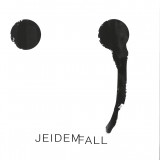
Tolouse Low Trax - Jeidem Fall

The man in the crowd is a wonderer with relaxed habits. In him the course of things and movement of the city is reproduced. The Düsseldorfer Detlef Weinrich is such a man in the crows. Some one who is constantly listening to future winds through rushes of the past. He loves the night for its free will. And his music tells stories about it. You might know him as a member of the band Kreidler. As a solo artist he goes under the name Tolouse Low Trax. And he's already got three Eps and two albums under his belt. His first solo album „Mask Talk“ thrives on a feathery beat frequency and cool new-wave-strength. His recently released piece „Corridor Plateau“, which appeared as a limited edition to accompany the exhibition „Corridor Plateau“ contains percussive electronics and Industrial sounding like its from the second industrial revolution. His third album „Jeidem Fall“, is also not from here. It sounds like music brought down to earth from the heavens. But its a dark cosmos in which there are only fleeting glimpses of light. All eight tracks were composed in a short space of time over the period of just a few months and fit together perfectly atmospherically. With a musical expressiveness that undoubtedly twists your emotions, „Jeidem Fall“ attacks the subconscious and clouds the mind. The drums have more movement that on „Mask Talk“. Along with the constant tapping of drumsticks goes melodical arpeggios dancing dark and dirty. At times longing vocals drift abstractly through the room, as on „Sa Seline“ or „Geo Scan“, without telling any obvious story.

To sound like stylistic cross references from the present and past is all just speculation for nothing on „Jeidem Fall“ really sounds like anything that has gone before. You could compare the dark minimal timbre of the drum computer aesthetic with Craig Leon's first reductive album „Nommos“. There is also a hint of the minimallist industrial of the Spanish band Esplendor Geometrico in the bubbly textures. But Tolouse Low Trax is still looking from the present into the future and filter and filters all his personal preferences through his MPC and his small synth setup to make them come alive here and now in a new way. Again Tolouse Low Trax has created a truly mysteriously vibrating drum computer music which offers hypnotic magic for the shadowy dance floor. Only a little light should illuminate the whole thing and the bodies that move above them should have no fear from threatening percussion which are displaced into a misty trance. A dark swaying shadowy mass, ideal for a journey at the end of the night and all those non-places where longing sleeps and the last romantics dance while getting drunk.

No en stock

Haga su pedido ahora y le encargaremos el artículo en nuestro proveedor.

18,11

Ültimo hace: 5 Años
Cucina Povera & ELS - The Oystercatcher

The Oystercatcher is the first collaborative LP from Cucina Povera (Maria Rossi) and ELS (Edward Simpson)

Recorded in London over two days, hours' worth of improvisations have been edited down to form these six tracks.

A fragile interplay is at work between Maria's drifting vocals and the ominous churn of Edward's modular synth. Each sonic element takes a turn at leading the way.

The opening track 'Mantle' is formed from sparse, monolithic electronics, woven gently with a thread of vocals. In the closing track 'Eon' Maria's voice shepherds spontaneous bursts of sounds, almost Rave-like if order were imposed, through 15 minutes of turmoil and resplendent until the end.

Maria's vocals make their own trails amongst the noise, bringing to mind the the exploratory language from Ursula K. Le Guin's album 'Music and Poetry from the Kesh', recalling the same understated mystery.

The overall effect of this collaboration is a completely unique creation albeit within a recognisable lineage of predecessors.

The artwork reflects the vision of these two artists, collaged together. Both images are from a trip to Helsinki. Edward's photograph of Tulips caught after dark are reviled by a flash. Maria's seemingly abstract drawing is a graphite rubbing taken from a granite slab of a pavement somewhere in Kallio. Together the two images represent two different methods for capturing a city's haptic landscape.

The album moves with a feeling of transience, which is no surprise given that the idea to collaborate was formed in Helsinki, realised in London and edited together in Rotterdam.

The Oystercatcher tells a fragile tale, one that spins out into the unknown. A cold union of voice and machine, still tentative and probing, learning to co-exist. A kind of fundamental shift whereby shared moments have been turned to sound.

The Oystercatcher is a bird that can freely travel between the earth, sea and sky. The motif is taken from a Tove Jansson short story. A dead bird washes ashore, two different versions of events are presented to how the bird came to die. The album feels like two different stories being presented on top of one another but ultimately coming to the same tragic conclusion.

Cucina Povera is Maria Rossi - Vocals
ELS is Edward Simpson - Synthesisers
Recorded in London across two days during the Summer of 2019
Mastered by Russell Haswell

No en stock

Haga su pedido ahora y le encargaremos el artículo en nuestro proveedor.

21,81

Ültimo hace: 5 Años
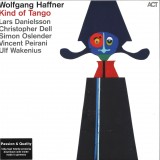
Wolfgang Haffner - Kind Of Tango

Wolfgang Haffner

Kind Of Tango

12inchACTLP9899-1
ACT
28.07.2020

‘Kind of Tango’ is a kaleidoscope of shifting emotions. Wolfgang Haffner’s conception of tango has drama and propulsion in it but also melancholy and longing, with room for frenetic outbursts too. All this is unified by his inimitable groove and feel that commentators have called “an absolute dream,” “magical” and “profoundly relaxed.” Alongside trusted co-protagonists Christopher Dell and Lars Danielsson, he has two guests with him who defy all the clichés associated with tango: guitarist Ulf Wakenius cut his teeth musically in Oscar Peterson’s band and his Swedish heritage always shines through in his playing; Vincent Peirani is one of the leading innovators on the accordion and he finds new ways to define the instrument’s role in the tango. Also, young pianist Simon Oslender makes a first appearance with the band. Jazz and tango find a natural yet constantly shifting equilibrium - to be heard particularly effectively on ‘Close Your Eyes And Listen’ by Astor Piazzolla. In addition to compositions by Haffner himself and by his band members, pieces by the celebrated Argentinian bandoneon player and composer are the focal point of the album. Piazzolla’s innovations with the tango, such as bringing jazz into it, date from around 1955. Haffner and the tango
seem perfectly matched to each other. Tango is no longer a fixed style nowadays, it is above all an attitude to playing and an attitude to life. Wolfgang Haffner’s approach to tango is both authentic and new. It is his and his alone and it is irresistible.

No en stock

Haga su pedido ahora y le encargaremos el artículo en nuestro proveedor.

24,33

Ültimo hace: 5 Años
Amm - Ammmusic

Amm

Ammmusic

12inchBT018LP
Black Truffle
24.07.2020

Re-release of the record originally released on 2016-02-05!

Remastered and cut by Rashad Becker at D&M Berlin and presented in an exact replica sleeve of the original 1966 release by Stephen O'Malley.

sales information: Black Truffle is honoured to present the first vinyl reissue of the classic debut album from AMM, AMMMusic. Coinciding with the 50th anniversary of its recording in 1966, this reissue makes one of the cornerstones of the experimental music tradition available again in its original form, replete with Keith Rowe's beautiful pop art cover and the terse aphorisms by the group that served as its original liner notes. A testament to the interaction between the experimental avant-garde and the countercultural underground, the album was originally released on Elektra, recorded by Jac Holzman (the label's founder, responsible for signing The Doors, Love, and The Stooges) and produced by DNA, a group that included Pink Floyd's first manager Peter Jenner. (Pink Floyd paid tribute to AMM's influence on their improvisational sensibility with the track 'Flaming' on their debut album, named after the piece that occupies AMMMusic's first side, 'Later During a Flaming Riviera Sunset').

Formed in 1965 by three players from the emerging British jazz avant-garde - Keith Rowe and Lou Gare had played with the great progressive big band leader Mike Westbrook and Eddie Prévost played in a post-bop group with Gare - AMM quickly evolved from a free jazz group into something decidedly more difficult to categorise. By the time these recordings were made, two more members had joined the group: another Westbrook associate, Lawrence Sheaf, and the radical composer Cornelius Cardew. Then at work on his masterpiece of graphic notation Treatise, Cardew brought with him extensive experience of the post-serialist and Cageian currents in contemporary composition. Using a combination of conventional instruments and unconventional methods of sound production (most famously Keith Rowe's prepared tabletop guitar, but also prepared piano and transistor radio), the group performed improvised pieces often running for over two hours and ranging from extended periods of silence to terrifying cacophonies.

Evan Parker famously described the improvisational logic of AMM's music as 'laminal', in contrast to the 'atomistic' approach more common among the generation of British improvisers (Bailey, Rutherford, Stevens and co.) to which he himself belonged. AMM improvised in layers: layers of sound subtly rising and falling or abruptly starting and stopping without being propelled by the implied pulse of free jazz improvisation. Rather than a pulse, AMM's music began with the sound of the room in which it was played, the Cageian anarchy of silence. By embracing the non-synchronous simultaneity of layered sound, AMM was able to create a musical container into which nearly anything could be incorporated at any moment: on AMMMusic, long tones sit next to abrasive thuds, the howl of uncontrolled feedback accompanies Cardew's purposeful piano chords, radios beam in snatches of orchestral music (and, on the LP's second side, an extended fragment of 'Mockingbird').

AMM's clearest break with jazz-based improvisation concerned the idea of individuality. Where improvised music has tended to foster the development of idiosyncratic stylists who move freely from one group to another, AMM, initially through an engagement with eastern philosophy and mysticism and later though a politicized communitarianism, sought to develop a collective sonic identity in which individual contributions could barely be discerned. In the performances captured on AMMMusic

the use of numerous auxiliary instruments and devices, including radios played by three members of the group, contribute to the sensation that the music is composed as a single monolithic object with multiple facets, rather than as an interaction between five distinct voices.

- Francis Plagne

No en stock

Haga su pedido ahora y le encargaremos el artículo en nuestro proveedor.

13,07

Ültimo hace: 5 Años
Eiko Ishibashi - Hyakki Yagyō

Black Truffle is pleased to announce a new solo album by Eiko Ishibashi, her first for the label, following on from the duo recording Ichida alongside bassist Darin Gray. Hyakki Yagyō (Night Parade of One Hundred Demons) was produced for the ‘Japan Supernatural’ exhibition at The Art Gallery of New South Wales, Sydney focusing on ghost stories and folklore from the Edo period onwards. As with The Dream My Bones Dream (Drag City, 2018), the album is a response to troubling questions about Japanese history, and the influence of the past upon the present, but finds Ishibashi shifting further away from her earlier piano-led songwriting and showing a deepening interest in electronics and audio collaging.

The two sidelong parts of Hyakki Yagyō feature layered synthesisers, acoustic instrumentation, recited verse and field recordings, at times densely mixed but always with a subtle interplay of changing elements. The influence of European and American forerunners as diverse as Alvin Curran, David Behrman and Strafe Für Rebellion can be traced, yet at the same time Ishibashi evokes the flute and string sounds associated with Japanese storytelling, and draws directly on the subversive literary tradition of Kyoka (‘mad poetry’) with a verse by the 15th-century poet Ikkyū Sōjun repeated throughout the album. Revisiting what has gone before, re-thinking what is possible musically, as a way of articulating what else might be possible in the future.

As Ishibashi’s liner notes make clear, the album reflects an attention to persistent dangers, myths and evasions in Japanese culture – as well as the lurking uncertainties that might threaten positive change. This would seem to be manifested in the emerging melodies soon met by dissonance, erratic collisions and near silence, as well as the eerie manipulation of the double-tracked vocals. Ishibashi’s underlying concerns ring true more widely of course. Hyakki Yagyō is a work of multiplicities, and mystery, a landscape where nothing is as it seems at first, and everything is vulnerable to sudden violent interruptions.

The album was produced with regular collaborators Jim O’Rourke (double bass) and Joe Talia (percussion), and features dancer and choreographer Ryuichi Fujimura performing Ikkyū’s satirical tanka. O’Rourke’s immersive mix creates a three-dimensional effect, with Ishibashi’s various sound sources enmeshing and interacting in captivating ways.

Pressed on coloured vinyl and presented in a deluxe package with an inner sleeve featuring and artist portrait and liner notes from Eiko Ishibashi. Cover and label design by Shuhei Abe.
Back cover design by Lasse Marhaug. Mixed and mastered by Jim O’Rourke.

key selling points:

- Black Truffle is pleased to announce a new solo album by Eiko Ishibashi, her first since her acclaimed 2018 Drag City release The Dream My Bones Dream.

- This album finds Ishibashi shifting further away from her earlier piano-led songwriting and showing a deepening interest in electronics and audio collaging.

- Hyakki Yagyō (Night Parade of One Hundred Demons) was produced for the ‘Japan Supernatural’ exhibition at The Art Gallery of New South Wales, Sydney focusing on ghost stories and folklore from the Edo period onwards and is a response to troubling questions about Japanese history, and the influence of the past upon the present.

- Produced with regular collaborators Jim O’Rourke (double bass) and Joe Talia (percussion), O’Rourke’s immersive mix creates a three-dimensional effect, with Ishibashi’s various sound sources enmeshing and interacting in captivating ways.

- The two sidelong parts of Hyakki Yagyō feature layered synthesisers, acoustic instrumentation, recited verse and field recordings, at times densely mixed but always with a subtle interplay of changing elements, hinting at an influence of European and American forerunners as diverse as Alvin Curran, David Behrman and Strafe Für Rebellion.

- Pressed on coloured vinyl and presented in a deluxe package with an inner sleeve featuring an artist portrait and liner notes from Eiko Ishibashi. Mixed and mastered by Jim O’Rourke.

No en stock

Haga su pedido ahora y le encargaremos el artículo en nuestro proveedor.

17,61

Ültimo hace: 5 Años
Queen - Complete Studio Collection

Queen

Complete Studio Collection

12inch4720288
UMC
24.07.2020
 
51

Universal Music are proud to release all hit Queen studio albums sourced from the original master tapes mastered by Bob Ludwig. This 18 vinyl LP box set comes with a lavishly illustrated 12 x 12 inch 108 page hardback book which features introductions to each album, quotes from Queen themselves, hand-written lyrics, rare photograhs, memorabilia, and information on singles and videos. *Re-press

No en stock

Haga su pedido ahora y le encargaremos el artículo en nuestro proveedor.

472,06

Ültimo hace: 6 Años
ELLA FITZGERALD & LOUIS ARMSTRONG - ELLA & LOUIS - THE ESSENTIAL ALBUMS

Waxtime Boxset Series Ella Fitzgerald & Louis Armstrong - The Essential Albums ‘Ella & Louis’ and ‘Ella & Louis Again’ Louis Armstrong and Ella Fitzgerald were capable of producing magic that few jazz singers could match.

Their infrequent studio collaborations yielded true masterpieces. After cutting several sides backed by big bands for Decca in the late forties and early fifties, Ella and Louis were summoned by producer Norman Granz in 1956-57 to make three albums that would become legendary jazz classics. This 3-LP set compiles their two complete small group albums, Ella & Louis (Verve MGV4003) and the 2LP set Ella & Louis Again (Verve MGV4006-2).

Ella & Louis *****Down Beat “Ella & Louis is one of the very, very few albums to have been issued in this era of the LP flood that is sure to endure for decades.” (Nat Hentoff) Voted number 636 in Colin Larkin’s All Time Top 1000 Albums

Ella & Louis Again (2lp Set) ***** Down Beat “This set is more relaxed and more successful than their previous cooperative venture. It can hardly fail to break sales records for them both.” (Leonard Feather)

No en stock

Haga su pedido ahora y le encargaremos el artículo en nuestro proveedor.

42,23

Ültimo hace: 5 Años
DEE DEE BRIDGEWATER - AFRO BLUE

Dee Dee Bridgewater

AFRO BLUE

12inchMRBLP216
Mr Bongo
02.07.2020

If you collect vintage 70's soul-jazz vinyl, there is a good chance that you already own a record that features the amazing vocal talents of Dee Dee Bridgewater. Whether it be Roy Ayers, Norman Connors, Billy Parker or Carlos Garnett - Dee Dee is the glue that fuses these artists together. Although best known for her jazz work, Dee Dee has had a wonderfully rich and varied career encompassing soul, musicals, gospel, and underground disco from the 70's to the present day. She is still active as a vocalist, composer, and producer and remains one of our favourite vocalists at Mr Bongo HQ. We take things back to the early years of Dee Dee's career with her debut album 'Afro Blue'. Recorded in Tokyo in 1974, the album was released exclusively in Japan via two different Japanese labels (Trio Records in 1974 and All Art in 1985 respectively). Each release had unique cover art and we have opted to present the album in its original 1974 form.

'Afro Blue' features an exquisite collaboration of American and Japanese musicians, such as Cecil & Ron Bridgewater, Motohiko Hino and producer Takao Ishizuka. The result is a sublime deep soul-jazz masterpiece with timeless versions of 'People Make The World Go Round', 'Love From The Sun', and 'Afro Blue'. It is arguably one of the finest albums in its genre. This record has long been a sought-after item for DJs and collectors alike, so we are delighted to finally make this wonderful music from an understated great available to all.

No en stock

Haga su pedido ahora y le encargaremos el artículo en nuestro proveedor.

25,42

Ültimo hace: 5 Años
THE BEES - MAMEZALA / NEVER GIVE UP

The Bees are a textbook case of the chew and spit cycle that was the late 80’s South African music industry. Although their unknown story is likely unique, it is just as likely that it is no different to that of many other young artists who dreamed of getting their music heard at the time.

By 1988, the independent record label was no longer as uncommon as it had been at the beginning of the decade. As the 80s went on, more seasoned A&R reps and Producers that had gained experience and connections from their work under major labels would be trying to cash in on a market they helped create. Without the need of big rooms or expensive recording equipment, the digital advancements allowed many Producers to open or work in smaller studios and promote unknown artists under their own imprints. They would then have their catalogs marketed and distributed by the same major labels they had been working for just years prior. This would open up the possibility of a new era of stars as potential talent no longer had to be pitched to major labels in hopes of them taking a chance on a new signee over their already established artists. With the market growing and a struggle to keep up with the demand for new sounds this agreement would allow the major labels to put new emerging artists or groups on their catalog with little investment and high reward if it happened to be a hit.

ON Records was just one of the independent players at the time. Ronnie Robot had just signed the unlikely trio The Bees in hopes of adding a hit group to his label roster that consisted of solo acts. Despite the debut’s fresh house inspired sound, it failed to catch on was outsold by the bubblegum disco the label was known for. Over the years unsold back stock and promos would build up with the distributor. Luckily this allowed sealed copies from the label’s catalog to survive into the 90s when the distributor’s stock was unloaded and picked up by legendary Johannesburg jazz shop Kohinoor. Here sealed copies of the Bees first attempt sat under appreciated for over 20 years before becoming a hot title after they started circulating online and became club staples. This is how the first album of an unknown group with no success was able to become a collectors item and earn a reissue over 25 years later.

With their first record behind them The Bees were ready move forward and get back into the studio. A suggestion from producers had the trio change camps and go work with the newly formed Creative Sound Recordings, the label that promised “Music for the Future” and ended up being an essential studio in the early years of Kwaito. They would work with producer Chris Ghelakis and guitarist George Vardas, while a young Marvin Moses sat behind the desk. Musically the sophomore album was as good as a follow up as you could get. Building on the first album, Mashonisa delivers catchy melodies backed by heavy drum programming that would score points with any Pantsula. The Black Box inspired “ Never Give Up” was one of two tracks chosen to be pressed as the promo for the album, hoping to trick listeners with their catchy version of the hit( A year later the label would release their first volume of Black Box covers sang by neo soul diva BB, it would be a great seller). The label printed up an unknown amount of these in a last attempt to push the release in Shabeens and on Radio. The cheaper route of flooding the market with promo copies would only pay off 25 years later when unplayed copies started being rediscovered and had survived the years in a quantity that original run of the full album could not. Once again it was clear that with no mainstream appeal, the quality of the music on its own was not enough to garner any success at the time. The album flopped worse than their first and failed to make it past it’s initial run, making it one of the harder titles to get from the CSR catalog.

Mashonisa would be the last attempt from the Bees. They would disappear from the scene as quickly as they appeared. Of the three members it is only known that lead Singer Solomon Phiri continued in music fronting a wave dance group before he mysteriously vanished in 1993, never to be heard from again. Through a combination of luck and circumstance the group, which is unknown in South Africa to even the most plugged in musicians, producers and radio hosts of the time, managed to finally get some of the recognition they deserved 30 years later. Unfortunately this small blip of fame would happen with none of the band members present to give their side of the story, or even aware of how their two albums became popular enough to be printed on different continents in a new millennia. The Bees suffered the same fate as countless other artists of the time, who thanks to emerging independent labels and willing producers were given an opportunity to have a short career, only to be replaced by the meat grinder of the music industry when they failed to produce a hit.

No en stock

Haga su pedido ahora y le encargaremos el artículo en nuestro proveedor.

13,32

Ültimo hace: 4 Años
Sleaford Mods - Key Markets

Re-Issue on Extreme Eating. Housed in a gatefold sleeve designed by Steve Lippert, mastered by Matt Colton at Alchemy. Everything else was done by Sleaford Mods. From Original Press Release 2015 "Key Markets was a large supermarket bang in the centre of Grantham from the early 1970's up until around 1980," explains Jason Williamson. "My mum would take me there and I'd always have a large coke in a plastic orange cup surrounded by varnished wood trimmings and big lamp shades with flowers on them. Beige bricks with bright yellow points of sale and large black foam letters surrounded you and this is why we called the album 'Key Markets'. It's the continuation of the day to day and how we see it, the un-incredible landscape." "The album was recorded in various periods between summer 2014 through to October of that year. We worked fast as we normally do, the method was the same as the other albums and like the other two, the sound has naturally moved itself along. 'Key Markets' is in places quite abstract but it still deals heavily with the disorientation of modern existence. It still touches on character assassination, the delusion of grandeur and the pointlessness of government politics. It's a classic. Fuck em." 1/Live Tonight 2/No One's Bothered 3/Bronx in a Six 4/Silly Me 5/Cunt Make It Up 6/Face To Faces 7/Arabia 8/In Quiet Streets 9/Tarantula Deadly Cargo 10/Rupert Trousers 11/Giddy on the Ciggies 12/The Blob

No en stock

Haga su pedido ahora y le encargaremos el artículo en nuestro proveedor.

19,79

Ültimo hace: 5 Años
Maximum Joy - Station M.X.J.Y.

Maximum Joy

Station M.X.J.Y.

12inch1972-05
1972-
24.06.2020

A focal point for the unique punk-funk that was coming together in Bristol as the bridge from the 70s to the 80s arrived, Maximum Joy was formed by Glaxo Babies multi-instrumentalist Tony Wrafter and 18 year old vocalist Janine Rainforth. Soon they drafted in additional Glaxo Babies in the form of drummer Charlie Llewellin and bassist Dan Catsis, along with guitarist John Waddington, fresh from The Pop Group. The group set about making a one-of-a-kind mix of funk, punk, pop, jazz, dub, soul, afrobeat and reggae; creating a brilliant burst of danceable tunes wrapped around elastic basslines and complex percussion, punctuated by melodic horns and stabs of guitar, all of it highlighting Rainforth’s naturally enthusiastic vocal style. They immediately took their place on the rosters of influential labels like Y and 99 with iconic debut single Stretch, as the band had clearly captured something special.

Entering 1982, Kevin Evans had replaced Catsis as Maximum Joy set out to make what would be their only full length LP. Recording at Berry Street and The Lodge with producers Adrian Sherwood (On-U-Sound legend), Dave Hunt (Flying Lizards, Pigbag, This Heat) and Pete Wooliscroft (Kate Bush, Talk Talk, Peter Gabriel, OMD, This Heat) the band would mix practiced grooves with imaginative improvisation. The results were absolutely jaw-dropping.

Station M.X.J.Y. kicks things off with Dancing On My Boomerangand promptly sets forth the blueprint for bands like !!! and The Rapture to capitalize on nearly twenty years later. In fact, those bands can only dream of the mix of driving percussion and spectral shards of guitar that Maximum Joy has clearly already mastered. Do It Todayannounces itself immediately with Rainforth delivering a looping and infectious vocal melody that the others dance around playfully, as handclaps keep the stomping groove intact, leaving a dancehall hit for outer space circling your turntable.

If you ever wondered what it would sound like if ESG and The Slits combined forces, Let It Take You There has the answer for you. Llewellin periodically delivers a cascade of marching band percussion while Waddington’s classic R&B riffs are transformed into a slithering snake trying to keep pace with Evans locked in groove as Rainforth’s singsong vocals are reduced to whispered echoes. They close out side one with the delicious slab of pop that is Searching For A Feeling. Clearly pronouncing the band’s intention to find the positives in a dire time for England, they look to rally those around them to focus on making real change in the face of opposing voices via one of Rainforth’s most delightful deliveries.

Side two sees Wrafter stretching out on Where’s Deke?, showcasing what had already been obvious, as he is the band’s secret weapon, often coloring each tune with his horns, sometimes in several styles just seconds apart. He underlines that feeling with the raucous and bouncy Temple Bomb Twist, before they hit a straight groove in Mouse An’ Me, like a dub infected Train In Vain. Well, if The Clash had ever allowed themselves to properly lose their minds on the dancefloor.

A funky afrobeat flute and guitar battle breaks out (way cooler than it sounds) before Rainforth rallies the troops to not only fill up the disco, but also the surrounding streets in political resistance to Thatcherism via All Wrapped Up. It is entirely genuine and their activism has none of the menace of the others in their scene, but rather a feeling of sharp optimism amongst this danceable masterpiece. It is that optimism that always set Maximum Joy apart, and makes their grooves all the more irresistible today.

Sadly, the upward trajectory of the band was cut short as Rainforth left the group, and soon afterwards seemed to stop making music altogether. The reasoning seemed destined to remain a mystery, until earlier this year when she gave a brave interview to The Guardian where she revealed that an assault by someone in the industry caused her to retreat entirely from music for nearly three decades. Luckily, Janine has embraced music once again, and she refuses to let the magic that was Station M.X.J.Y. be lost as well.

No en stock

Haga su pedido ahora y le encargaremos el artículo en nuestro proveedor.

22,65

Ültimo hace: 4 Años
Artículos por página
N/ABPM
Vinyl